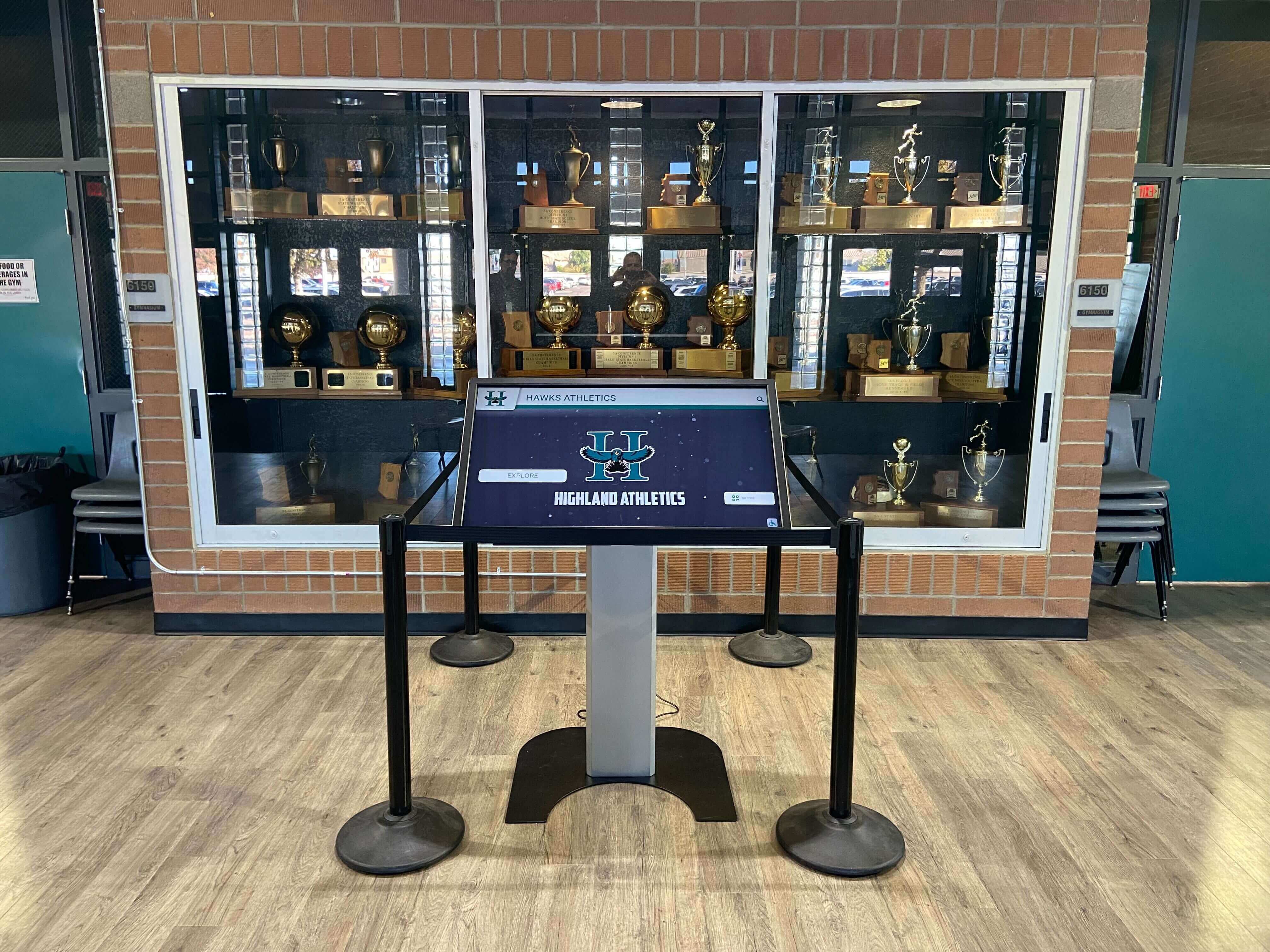




Every year, athletic directors and communications staff at schools across the country face the same hidden time sink: reconciling conflicting roster information that arrived from a dozen different sources. One coach submitted a spreadsheet with first names only. Another handed in a Word document with jersey numbers but no grade levels. The sports information coordinator emailed a PDF. By game week, nobody is confident the version on the school website matches what the athletic office has on file.
A sports roster template solves this problem before it starts. When every coach submits data using the same field structure and naming conventions, the downstream work—publishing to the school website, printing programs, loading profiles into a digital display, archiving for future reference—compresses from hours into minutes. More importantly, the data is accurate the first time rather than corrected after it goes public.
This guide walks through exactly what a school sports roster template should contain, how to structure the collection workflow, how roster formats vary by sport and program level, and how the data you gather today feeds the athletic archives and recognition displays that tell your program’s story for decades.
Standardizing roster data is not just an efficiency play. It is the foundation of consistent athlete recognition across your entire communications ecosystem—from the school newspaper to the trophy case hallway to a searchable digital hall of fame.

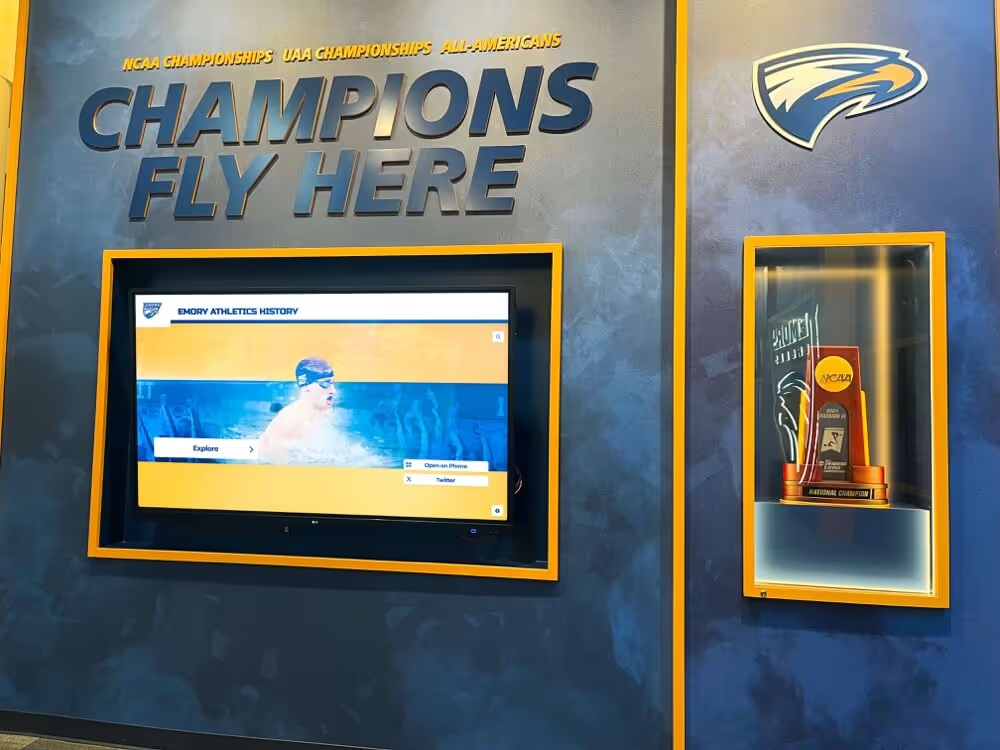
Recognition technology connects current roster data to decades of program history—but only when that data was captured consistently from the start
What a School Sports Roster Template Should Contain
The most common mistake in roster collection is capturing too few fields up front and scrambling to fill gaps later. A well-designed sports team roster template collects everything useful in one submission and nothing it will never need.
Core Fields Every Template Needs
The following table covers the minimum viable set for a scholastic sports roster. Fields marked “Required” should block publishing if missing. Fields marked “Conditional” apply only when the column is relevant to a particular sport or display context.
| Field | Format / Notes | Required? |
|---|---|---|
| Last Name | Uppercase; match official school records | Required |
| First Name (and preferred name) | Separate columns; display name may differ from legal name | Required |
| Jersey Number | Numeric; store as text to preserve leading zeros (e.g., "00") | Required |
| Grade Level | 9, 10, 11, 12 (or Fr/So/Jr/Sr); use numeric for easier sorting | Required |
| Position(s) | Use standardized abbreviations per sport (see sport-specific section) | Required |
| Height | Feet-inches (e.g., 6-2) or centimeters; pick one unit and enforce it | Conditional |
| Weight | Pounds or kilograms; mark N/A when not publicly displayed | Conditional |
| Hometown / Hometown School | City, State for collegiate; often omitted at K-12 for privacy | Conditional |
| Academic Year / Class Year | Graduation year (e.g., 2026); enables long-term archive sorting | Required |
| Photo Reference | Filename only (e.g., smith_john_2026.jpg); do not embed images in spreadsheet | Required for display |
| Captain / Leadership Designation | Boolean (Yes/No) or role label (Captain, Co-Captain) | Conditional |
| Transfer Status | New / Returning / Transfer; relevant for eligibility workflows | Conditional |
| Academic Honors | Honor roll, NHS, dean's list; drives recognition cross-reference | Conditional |
| Roster Status | Active / Injured Reserve / Walk-On / Manager | Required |
Staff and Coaching Section
A complete sports roster template includes the coaching staff on a separate tab or clearly labeled section within the same document:
- Head Coach (name, title, years with program, contact email)
- Assistant Coach(es)
- Volunteer or Graduate Assistants
- Athletic Trainer assigned to the team
- Team Manager(s) if recognized in public-facing materials
Keeping staff data in the same template prevents it from existing only in email signatures or the athletic director’s memory—both unreliable sources when a yearbook deadline hits in February.
Team Roster Template Formats: Which to Use When
Schools collect roster data in several formats. Each has legitimate uses and predictable failure modes.
Spreadsheet (CSV / Excel)
The most portable format and the easiest to import into downstream systems. A spreadsheet sports roster template works best when:
- You need to sort and filter across the full program (all sports, all levels)
- You will import data into a school website CMS, athletic management software, or digital display platform
- You want to run year-over-year comparisons for returning athletes
Common failure mode: Coaches modify column headers or add free-text notes in data cells, breaking downstream imports. Lock the header row and use data validation to constrain entries to approved values.
Web Form (Google Forms, Microsoft Forms, JotForm)
A form enforces field-by-field validation at the point of entry, which is its primary advantage over email-submitted spreadsheets. Form-based collection works best when:
- Coaches or athletes are submitting their own information
- You want consistent formatting without policing spreadsheet hygiene
- Photo uploads can be handled in the same submission
Common failure mode: Form responses accumulate without anyone reviewing them. Designate a single staff member to review and approve each submission before data flows into a published roster.
PDF Template
Useful for printing and signing (physical clearance workflows, media guides) but poor for data management. Avoid using PDF as the primary collection format for anything that needs to be imported into another system. If your state athletic association requires a specific PDF form, fill it from your spreadsheet—not the other way around.
Athletic Management Software Exports
Platforms like FinalForms, DragonFly, and similar systems can generate roster exports once athletes have completed their registration and eligibility submissions. These exports are authoritative for compliance purposes. The limitation is that they rarely capture every display-ready field (photo references, position abbreviations formatted for your website, captain designations) without custom configuration.
For most schools, the practical workflow combines these: use athletic software for compliance-critical fields and layer your own display-ready template on top.

When roster data is collected consistently year after year, it feeds directly into permanent team history displays that celebrate entire program legacies
Step-by-Step Roster Publishing Workflow
A standardized template is only as good as the process that governs it. Here is a practical workflow schools can adapt to their own calendars and staffing.
Phase 1: Template Distribution (2-3 Weeks Before Season Start)
- Send the template to every head coach with a submission deadline set 10 days before the first game. Attach the photo naming convention document (e.g.,
lastname_firstname_year_sport.jpg). - Provide one example row completed correctly so coaches can pattern-match rather than interpret instructions.
- Designate one person who receives all submissions. If submissions go to multiple inboxes, versions will diverge.
Phase 2: Review and Validation (1 Week Before Season Start)
- Check required fields for completeness. Any row missing jersey number, grade, or photo reference should be flagged back to the coach immediately.
- Verify name spelling against official school records. A misspelled name on the website is a trust problem; a misspelled name in a printed program or yearbook is permanent.
- Confirm jersey number uniqueness per sport and level. Duplicate numbers are common when numbers were reassigned mid-offseason and two coaches submitted at different times.
- Cross-reference active roster status with the eligibility list maintained by the athletic director. An athlete with a pending physical should not appear as Active on the public-facing roster.
Phase 3: Approval and Staging
- Route the validated roster to the athletic director for sign-off before publication. This single approval step creates a clear record of who authorized the information.
- Stage the roster in your CMS or display platform with a draft status so the communications coordinator can review layout before going live.
Phase 4: Publication and Archive
- Publish simultaneously across all channels using the same data: school website, digital signage feed, printed game programs, and yearbook submission.
- Archive the final approved spreadsheet in a named folder following your school’s record retention policy. Naming convention example:
2025-26_Varsity_Football_Roster_FINAL.xlsx. - Lock the archived file to prevent accidental edits after the season begins.
Phase 5: In-Season Updates
- Track changes in a log tab, not by overwriting rows. If a player transfers in at week four, add a new row with a date-stamped change note rather than editing the original submission.
- Publish updates on a defined schedule (weekly, or after each roster move) rather than ad hoc. Stakeholders will check once they learn updates are reliable.
Sport-Specific Roster Template Variations
Position nomenclature and display priorities differ meaningfully across sports. A single template can accommodate all of them through conditional fields and sport-specific lookup tables.
Football
Football rosters are the most complex because of platoon systems and large squad sizes. Key variations:
- Position codes are highly specific: QB, RB, FB, WR, TE, OL, C, OG, OT, DE, DT, LB, CB, S, K, P, LS
- Two-way players should list both offensive and defensive positions
- Roster sizes often exceed 60 players at the varsity level, making weight a relevant published field
- Offensive and defensive depth charts are separate from the official roster and should be managed in a distinct document
Basketball
Roster sizes are small (10-15 players), making individual spotlight content more feasible. Key variations:
- Height is a standard published field; weight is typically omitted
- Starting lineup designations change game-to-game and should not be embedded in the roster template itself
- Coaches often want a “Class of” column to highlight seniors in recognition ceremonies
Soccer and Lacrosse
Field positions have less standardization in abbreviated form. Establish your school’s preferred abbreviation set (e.g., GK, D, M, F for soccer) and document it in the template’s instruction tab so it stays consistent across coaching staff changes.
Track and Field / Swimming / Gymnastics
Individual-event sports require a different template structure because “position” does not apply in the traditional sense. Substitute an Events column listing the athlete’s primary events (e.g., “100m, 4x100m relay”). Sorting by event creates a useful internal reference for coaches and announcers.
Volleyball
Libero designation is an important roster distinction in volleyball and should be a dedicated field, not folded into position notes.
Fall, Winter, Spring Season Overlap
Schools with year-round athletic programs should maintain a master athlete file that persists across seasons, with a sport-season join table. This prevents re-entering biographical information for a multi-sport athlete each semester and ensures recognitions like youth sports awards can reference complete career participation across all sports a student played.

Portrait cards built from standardized roster data give schools a visual archive of every athlete who wore the uniform
Connecting Roster Data to Athletic Archives and Recognition Displays
The effort invested in roster standardization pays compounding dividends when that data feeds long-term recognition infrastructure. Roster data collected systematically over multiple years becomes the raw material for:
Yearbook Athletic Sections
Yearbook advisers working from a standardized spreadsheet export can populate athlete profile pages, team group photos with name captions, and statistical highlights without manual transcription. Schools using a consistent template report substantially fewer correction requests after proof review.
Digital Athletic Record Boards
Schools building digital record boards need accurate historical context—the year a record was set, the athlete’s full name as it appeared on the official roster that season, their grade at the time. That information only exists reliably if it was captured in a standardized roster when the record was current. Exploring hall of fame tools for athletics programs shows how digital systems can surface this historical data in interactive lobby displays.
Hall of Fame Nominations
Hall of fame committees face a recurring research problem: building a case for an inductee from fragmentary historical records. A school with decades of standardized roster archives can produce complete career statistics, team affiliations, and championship appearances in minutes. Schools without that infrastructure spend weeks reconstructing information from old programs and yearbooks. The best hall of fame tools connect directly to historical roster data when it exists in a structured, searchable format.
Interactive Touchscreen Displays
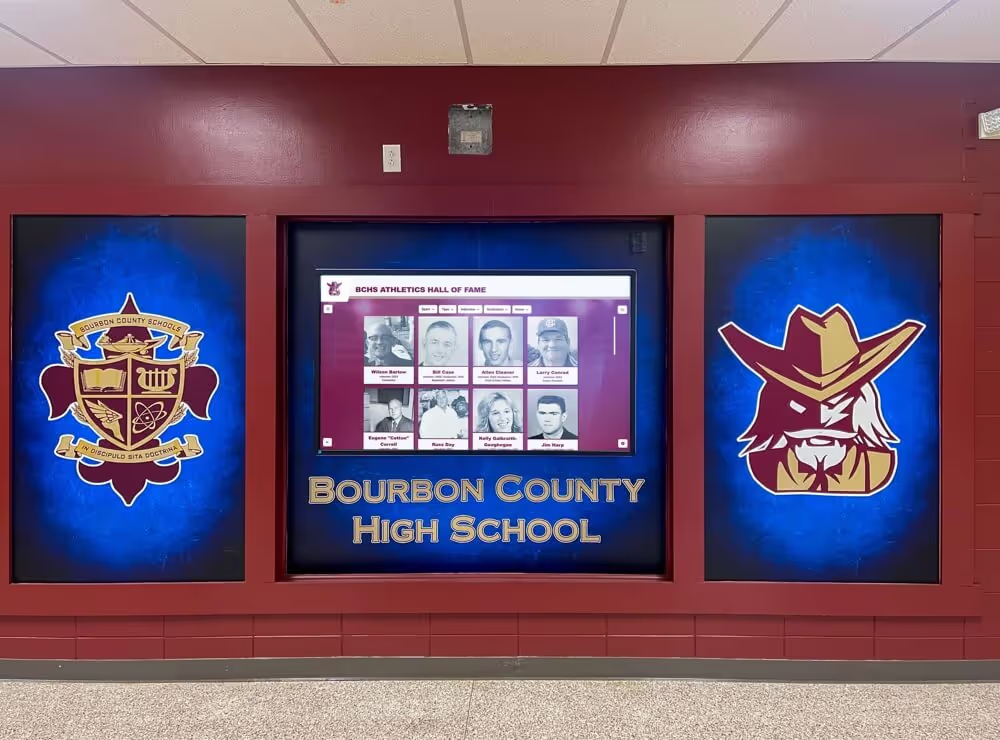
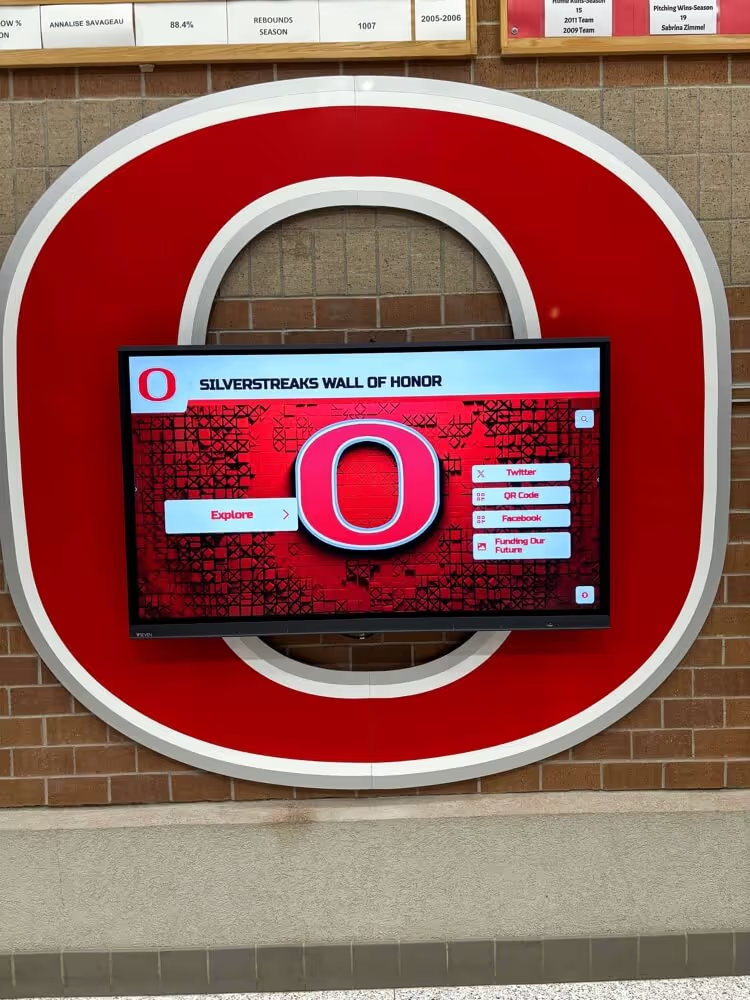
Touchscreen recognition walls—installed in lobbies, athletic hallways, and trophy case areas—can display roster-based profiles when the underlying data was collected to a consistent standard. An athlete’s profile card showing name, sport, year, jersey number, position, and photo requires every one of those fields to have been captured reliably. Schemas that break—inconsistent photo naming, missing class years, abbreviated names—produce broken cards and incomplete search results.
For schools evaluating hall of fame display solutions, the platform conversation often reveals how much historical roster work needs to happen before the display can be populated. Starting that standardization now reduces the onboarding effort significantly.
Alumni Reunions and Anniversary Events
Schools hosting athletic reunion events—ten-year, twenty-five-year, or program anniversary celebrations—rely on historical rosters to identify and contact former athletes. A structured archive makes it straightforward to pull a complete participant list for the 1999 state championship team. Without it, reunion coordinators work from memory and old yearbooks, inevitably missing people. Schools planning these events can find planning frameworks in resources on high school reunion traditions and logistics.

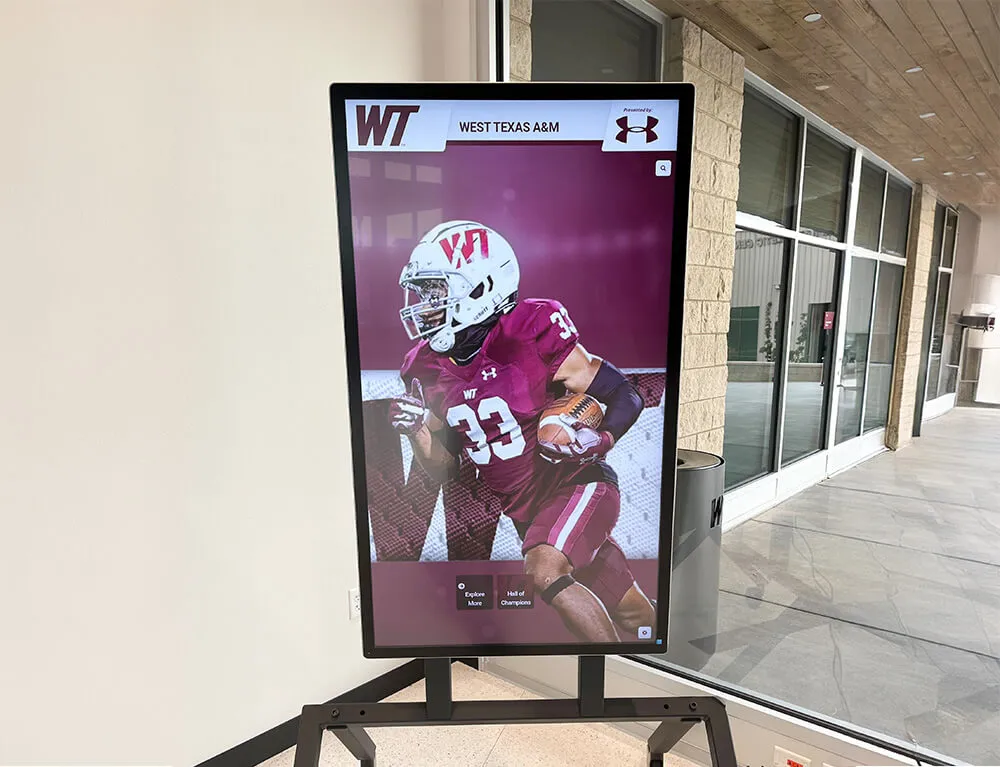
Athlete profile cards on touchscreen displays draw directly from the same structured data that lives in a good sports roster template
Roster Data Governance: Keeping the Template Useful Over Time
A template that coaches abandon within two seasons is worse than no template at all—it creates a false impression of standardization. Governance is what sustains the system.
Assign Ownership
One person should own the master template: typically the athletic director, sports information coordinator, or designated administrative assistant. That person controls the template file, reviews submissions, and publishes updates. When ownership is shared or undefined, templates drift.
Version the Template Annually
At the start of each school year, create a new version of the template rather than overwriting the previous one. Add the academic year to the filename. This preserves the schema that was active when each season’s data was collected, which matters when you are reconstructing records five years later.
Document Your Conventions
Maintain a one-page reference document alongside the template explaining: position abbreviation standards, photo naming convention, how to handle multi-sport athletes, and what to do when a player’s eligibility status changes mid-season. This document is what makes the template survivable through coaching and administrative turnover.
Audit Annually
Each spring, before the next cycle begins, pull one roster from each sport and audit it for completeness and consistency. Look for: missing photos, non-standard position abbreviations, free-text entries in columns that should use controlled values, and any fields that were never used. Use the audit to update the template instructions before distribution the following fall.
Roster Templates and Recognition Award Planning
Well-structured roster data also supports end-of-season recognition. When every athlete’s season statistics, academic standing, and leadership designations are captured in a single file, award selection becomes a data task rather than a memory exercise.
Schools using roster templates as an input to their youth sports award programs find that nominators can run objective comparisons across candidates rather than relying on recollection. The result is more defensible selections and fewer conversations about who was overlooked.
Athletic programs that invest in comprehensive youth sports award ideas and recognition report higher athlete retention and more engaged families—outcomes that are easier to achieve when the underlying data infrastructure makes systematic recognition possible.
Larger programs exploring how to recognize athletic and donor communities comprehensively can reference recognition and hall of fame resources that cover everything from annual awards to permanent legacy installations.
Programs developing robust donor recognition alongside athletic recognition can also explore how donor and athletic recognition walls bring both communities together in a shared physical or digital space.

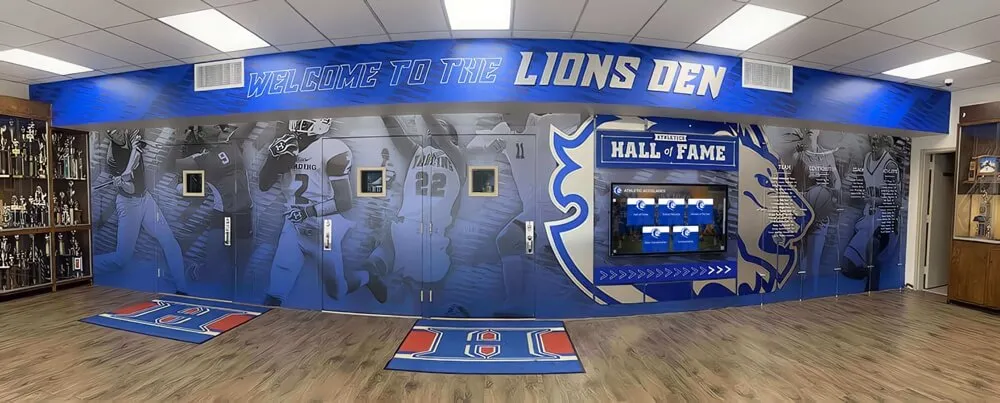
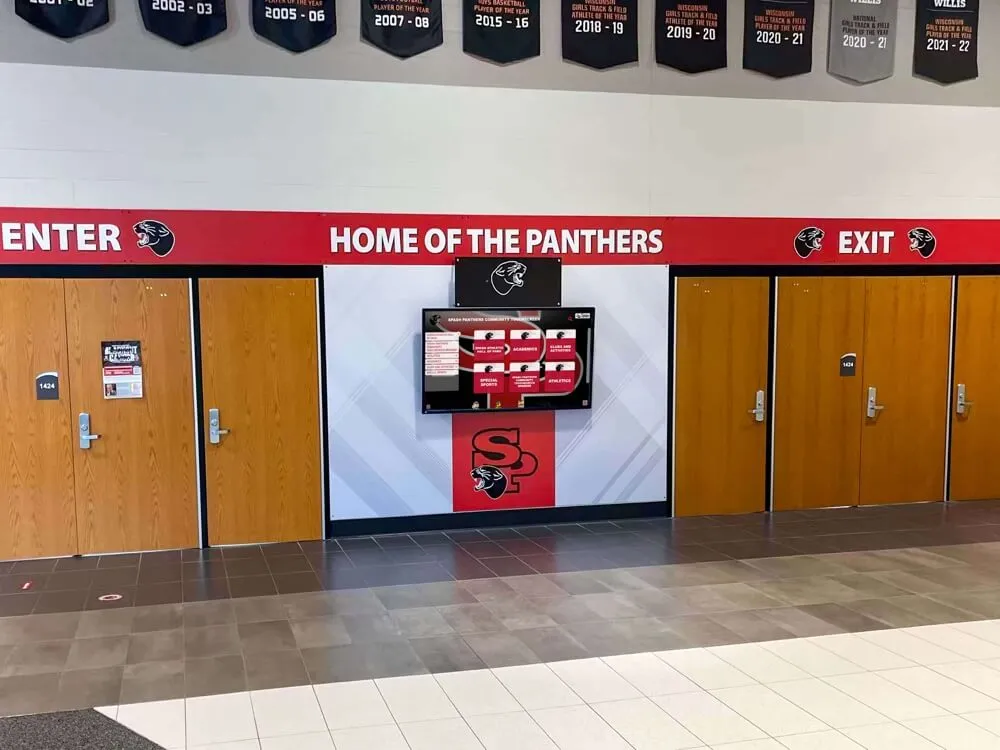
Permanent athletic record boards in school hallways draw directly from structured historical roster and performance data collected over many seasons
FAQ: Sports Roster Templates for Schools
What is the difference between a roster template and an active roster?
A roster template is the blank structure—the fields, formatting rules, and submission instructions—that coaches use to submit athlete information. An active roster is the completed, approved instance of that template for a specific team and season. You maintain one template per program level (or one universal template with sport-specific tabs) and generate a new active roster from it each season.
How often should the published roster on the school website be updated?
At a minimum: once before the season opens (with the final approved roster) and once at the end of the season (to reflect any mid-season changes). Programs that experience frequent roster moves—transfers, injuries, late additions—benefit from a clear update schedule communicated to stakeholders so they know when to expect current information.
Should height and weight be published on a K-12 school roster?
This varies by school policy and community expectations. Many high schools omit weight entirely and publish height only for sports where it is a widely expected data point (basketball, volleyball). Collect both fields internally for completeness; decide publication on a sport-by-sport basis with the athletic director’s approval.
How do we handle athletes who play multiple sports?
Maintain one biographical record per athlete (name, grade, photo, contact) and link it to multiple sport-season records. This prevents inconsistencies—a student listed as a junior in the basketball roster and a sophomore in the baseball roster because they updated their grade in one submission and not the other. Athletic management platforms handle this natively; if you are working from spreadsheets, a separate “athlete master” tab with a unique ID column solves the problem.
How long should we retain historical rosters?
Retention requirements vary by jurisdiction, but from a program heritage standpoint, permanent retention of finalized season rosters is advisable. Championship years especially. Rosters are the primary source for verifying records, populating hall of fame nominations, and producing materials for alumni events. The storage cost of a spreadsheet archive is negligible compared to the research cost of reconstructing records that were never preserved.
What file format is best for long-term roster archiving?
Export a copy to CSV at the end of each season in addition to preserving the native spreadsheet file. CSV is format-agnostic and will be readable regardless of which applications exist in ten years. Store both versions.
Can a sports roster template feed a digital recognition display automatically?
Yes, when the template follows the field schema expected by the display platform and photos are named and stored according to that platform’s conventions. Some schools maintain a direct integration between their roster management system and their recognition display platform. Others export periodically and upload manually. Either approach works when the upstream data is clean and consistently structured.
Turn Your Roster Archive Into a Living Athletic Legacy
Schools that collect roster data consistently have everything they need to build a recognition display that tells their program’s complete story—every team, every athlete, every season. Rocket Alumni Solutions helps schools connect that historical data to interactive touchscreen walls of fame, digital record boards, and lobby displays that inspire current athletes and honor the generations who came before them.