



When the final buzzer sounds, the confetti falls, and your team hoists the state championship trophy, that moment represents the culmination of years of dedication, countless hours of practice, and unwavering commitment from athletes, coaches, and entire communities. But how do you ensure that singular achievement receives the lasting recognition it deserves—that the memory of that championship season inspires athletes for decades to come?
Schools across the country face this meaningful challenge every year: how to celebrate state championship victories in ways that honor the achievement appropriately, create memorable experiences for winning teams, and establish permanent recognition that transforms fleeting moments into enduring institutional pride. The most successful celebration strategies combine immediate post-victory festivities with thoughtful long-term recognition systems that keep championship memories alive for current students, future athletes, and alumni who return years later to relive their glory.
This comprehensive guide explores how schools honor their state champions—from planning victory celebrations and designing meaningful ceremonies, to implementing permanent recognition displays that celebrate achievement while inspiring the next generation of championship-caliber athletes.
State championships represent the pinnacle of high school athletic achievement. Schools that develop systematic celebration and recognition strategies discover these programs deliver far-reaching benefits: they strengthen school pride and community identity, enhance athletic program reputation supporting recruitment, motivate current athletes through visible championship tradition, and create lasting alumni connections generating sustained graduate support.

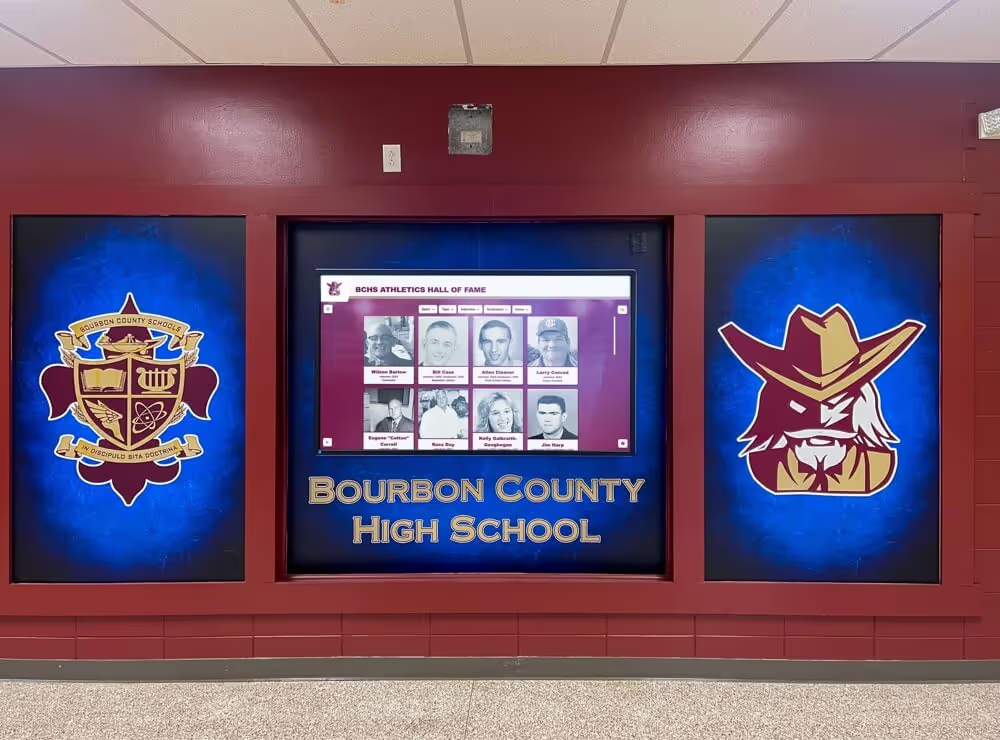
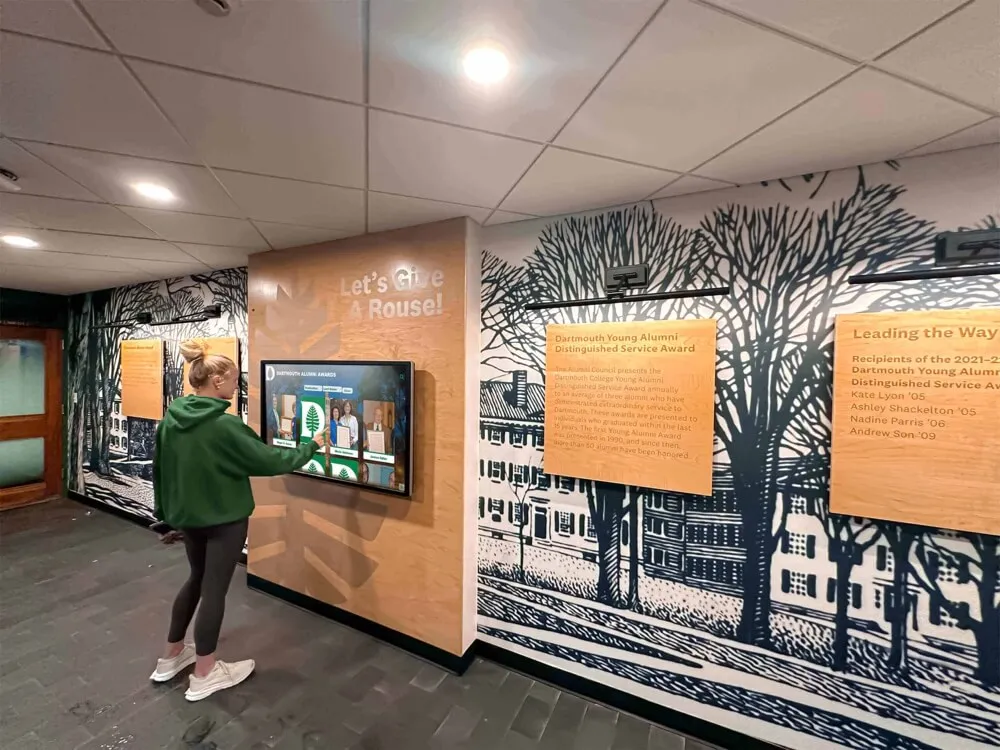
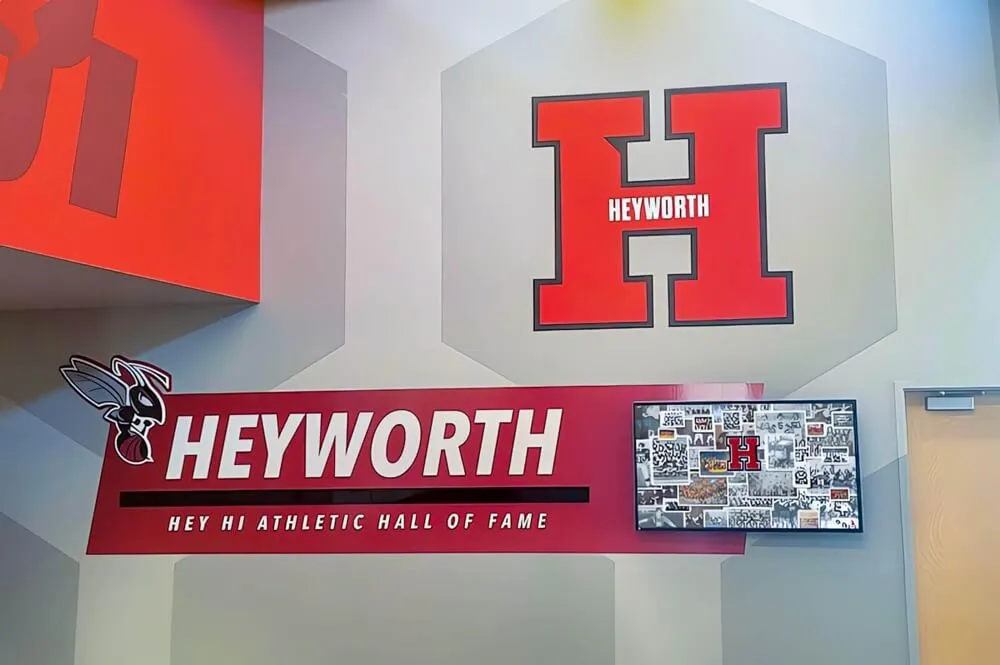
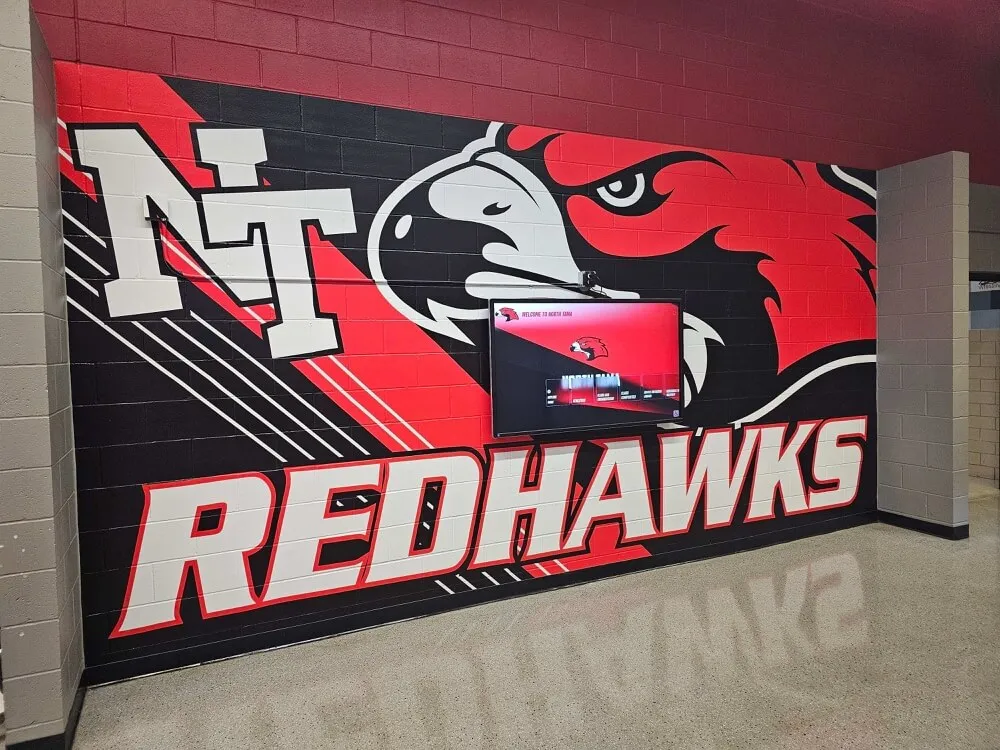
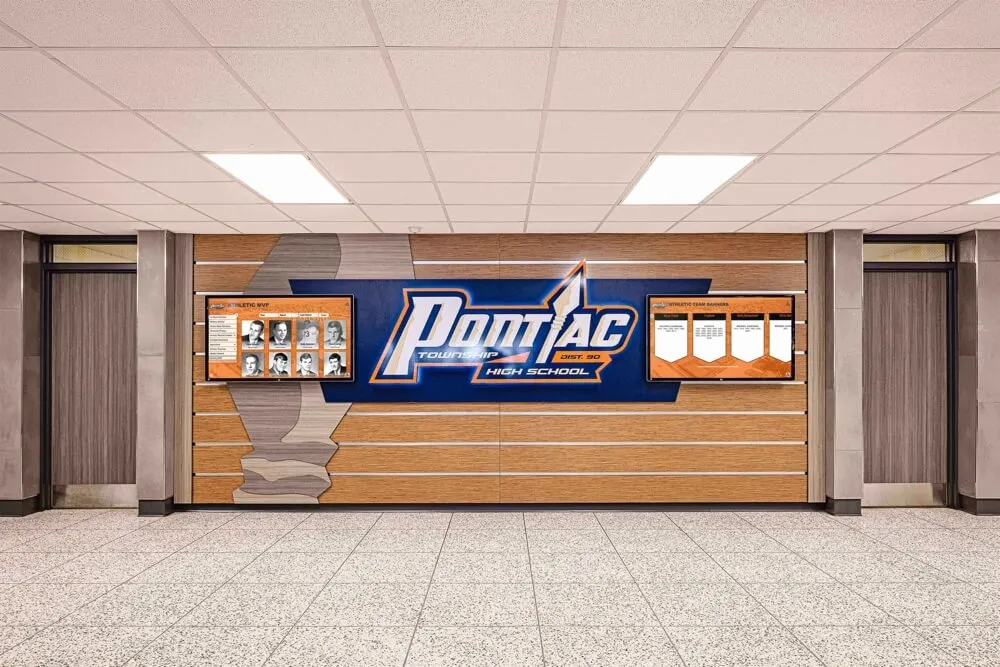
Dedicated championship walls create focal points celebrating state title victories through trophy displays and comprehensive team recognition
Understanding the Significance of State Championships
Before designing celebration strategies, recognizing what state championships mean to schools and communities provides essential context for creating appropriate recognition.
Why State Championships Deserve Special Recognition
State championships occupy a unique place in high school athletics hierarchy:
Ultimate Competitive Achievement
State titles represent the highest level most high school athletes will ever reach in competitive sports. Unlike conference championships that acknowledge regional excellence or playoff appearances that celebrate qualification, state championships definitively establish teams as the best in their entire state classification—an achievement requiring sustained excellence throughout an entire season culminating in tournament success against the state’s top programs.
This ultimate competitive validation carries profound meaning for athletes who’ve dedicated years to their sport, coaches who’ve built championship-caliber programs, and communities that’ve supported teams through countless seasons before finally achieving the ultimate goal.
Rarity and Distinction
State championships occur infrequently even for successful programs. Most schools celebrate conference titles or playoff victories regularly, but state championships might happen once per decade—or once per generation—for many athletic programs. This rarity amplifies their significance, making appropriate celebration and permanent recognition particularly important.
Schools with multiple state titles across different sports or eras should celebrate each individually rather than allowing any championship to become routine—every state title represents extraordinary achievement deserving distinctive honor regardless of program tradition.
Community Impact Beyond Athletics
State championship victories create community-wide celebration extending far beyond athletic department boundaries. Local media coverage brings visibility to entire schools, community businesses display championship congratulations, municipal governments honor teams through proclamations or celebrations, and school pride strengthens across all students whether athletically involved or not.
This broad impact justifies comprehensive celebration strategies engaging entire school communities rather than treating championships as exclusively athletic department achievements.
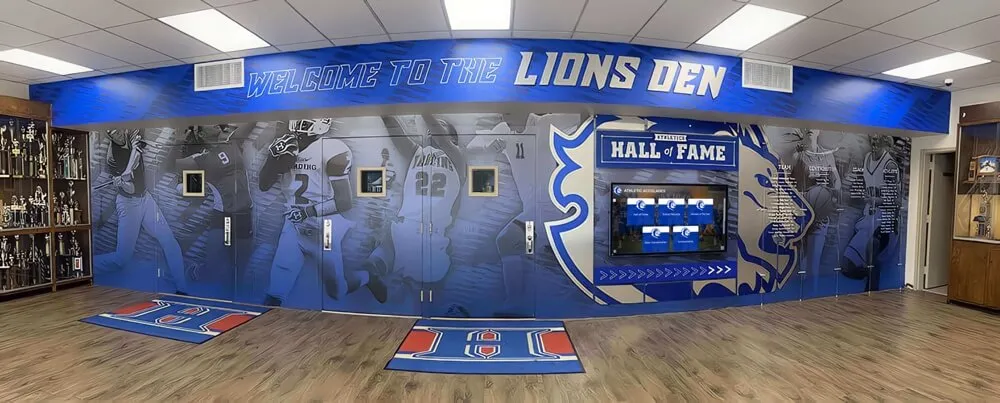
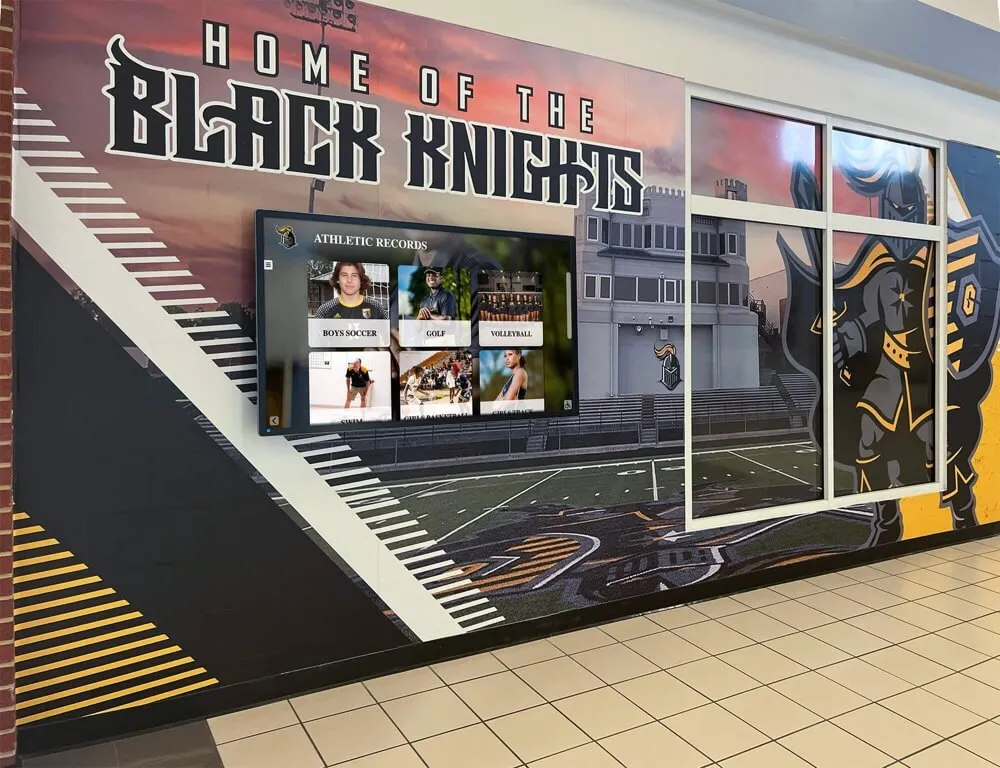
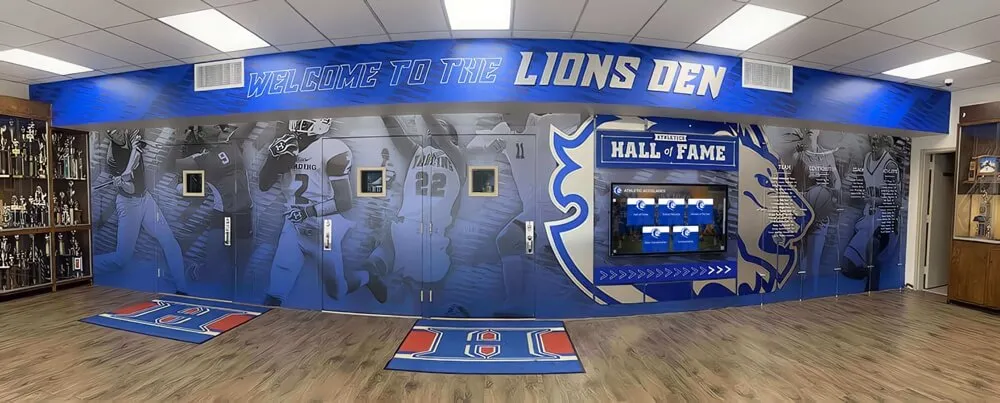
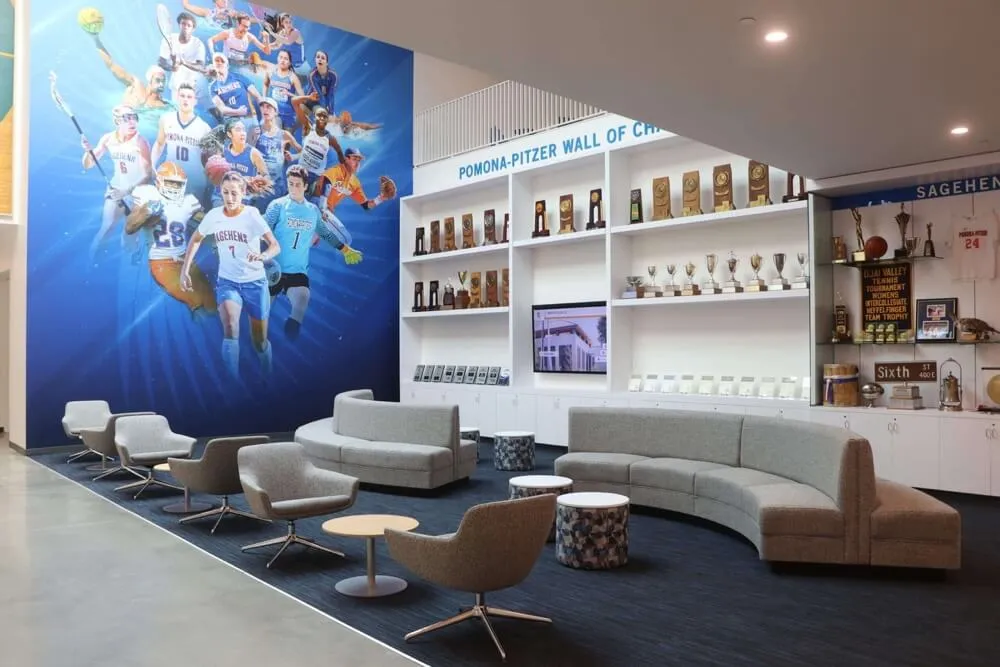
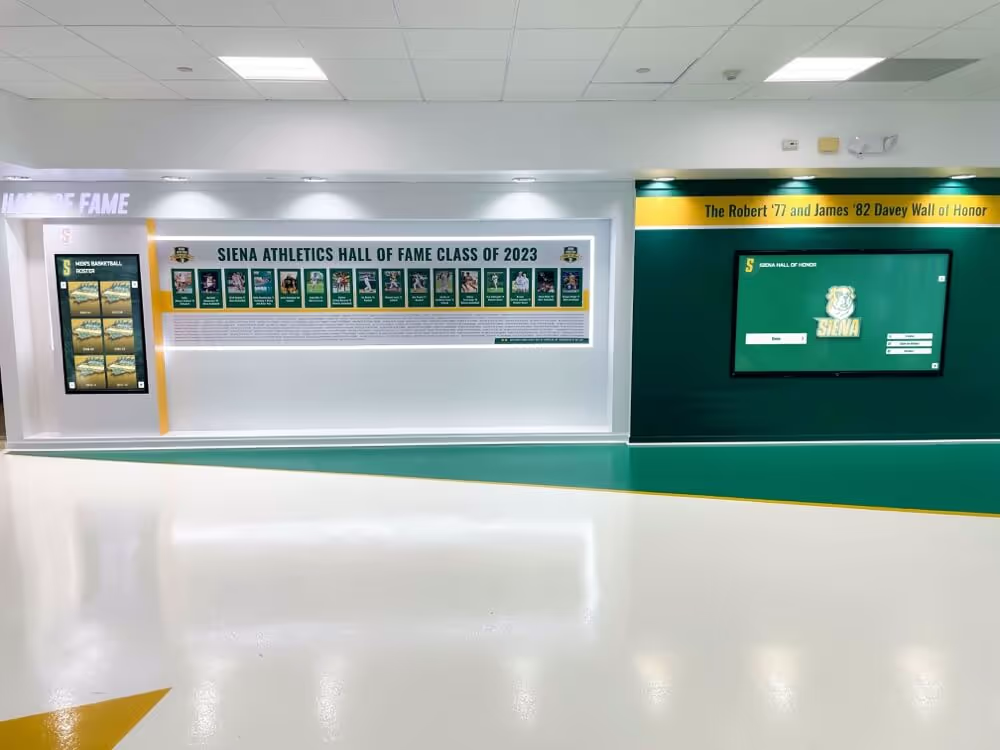
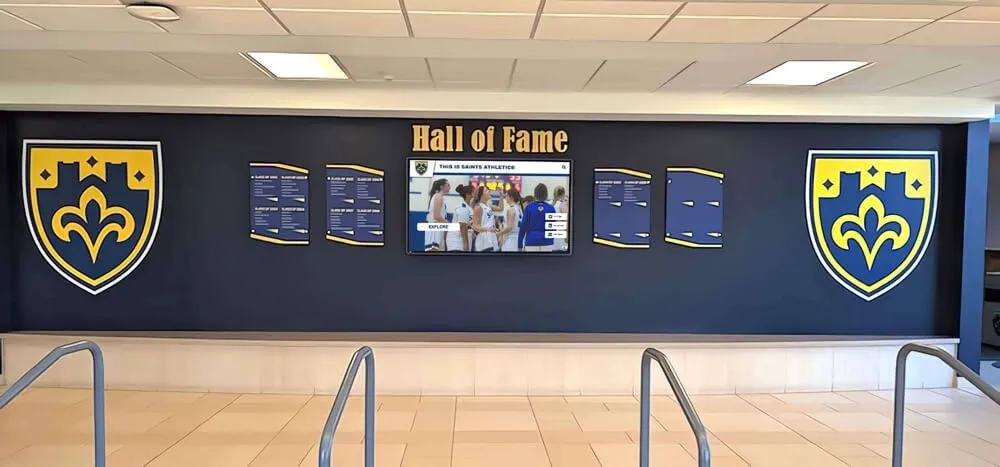
Dedicated athletic spaces combine branded environments with championship displays creating comprehensive celebration venues
What Champions Remember Most About Recognition
Understanding athlete perspectives ensures celebration strategies create meaningful, lasting memories:
Personal Connection and Individual Acknowledgment
Championship team members consistently report that individual recognition within team celebrations creates most meaningful memories. While team achievement matters profoundly, athletes remember when coaches acknowledged their specific contributions, when communities learned their names beyond jersey numbers, and when recognition systems documented their individual role in championship success.
Effective celebration strategies balance team accomplishment emphasis with individual athlete acknowledgment—ensuring every roster member receives personal recognition rather than only starring players or team captains.
Ceremony Meaning and Emotional Resonance
Athletes remember championship celebrations that created genuine emotional experiences through thoughtful ceremony design, meaningful speeches from respected coaches or community figures, involvement of families who supported their athletic journey, and recognition moments that felt authentic rather than perfunctory or rushed.
Schools should invest in ceremony planning ensuring recognition events honor achievement appropriately rather than treating them as administrative obligations requiring minimal time or resources.
Lasting Visibility and Legacy Connection
Championship teams want to see their achievement permanently recognized through facility displays that remain visible years after they graduate. Athletes report deep satisfaction returning to schools as alumni and seeing their championship documented through trophy displays, banners, or digital recognition systems that celebrate their accomplishment.
This lasting visibility transforms championships from isolated seasonal achievements into permanent institutional legacy—connecting championship teams to current athletes who see that recognition and aspire to similar success.
Immediate Post-Championship Celebrations
The hours and days immediately following state championship victories require thoughtful coordination creating appropriate celebration while managing logistics.
Victory Night and Travel Home Celebrations
Championship victories typically occur away from home schools, requiring immediate celebration planning:
Post-Game Celebration Moments
Immediately following championship victories, schools should create structured celebration opportunities including trophy presentation ceremonies with team photos capturing the moment, locker room celebrations allowing teams private bonding time, media interviews with coaches and key athletes sharing their experience, and social media documentation sharing victory with broader school community unable to attend in person.
Many championship venues provide designated areas for post-game celebration and team photography—schools should coordinate with event organizers ensuring adequate time and space for these important moments before departing venues.
Coordinating Victory Travel
Championship teams returning home deserve celebratory experiences matching their achievement. Schools commonly arrange police or fire department escorts from community boundaries to school facilities, coordinate arrival timing enabling community members to greet returning champions, organize spontaneous pep rallies or gathering opportunities at school facilities, and communicate arrival information through social media enabling broad community participation.
These homecoming celebrations create powerful community experiences while providing additional recognition opportunities beyond championship game venues—strengthening connections between athletic achievement and broader school community.
Managing Safety and Logistics
Excitement surrounding championship victories requires thoughtful safety management including crowd control planning when large community gatherings occur spontaneously, coordination with local law enforcement ensuring safe travel and public celebration, communication with parents regarding timing and safety protocols, and appropriate adult supervision preventing celebration from becoming unsafe or inappropriate.
Schools should establish championship celebration protocols in advance rather than improvising during emotional post-victory moments—ensuring safety while enabling appropriate celebration.
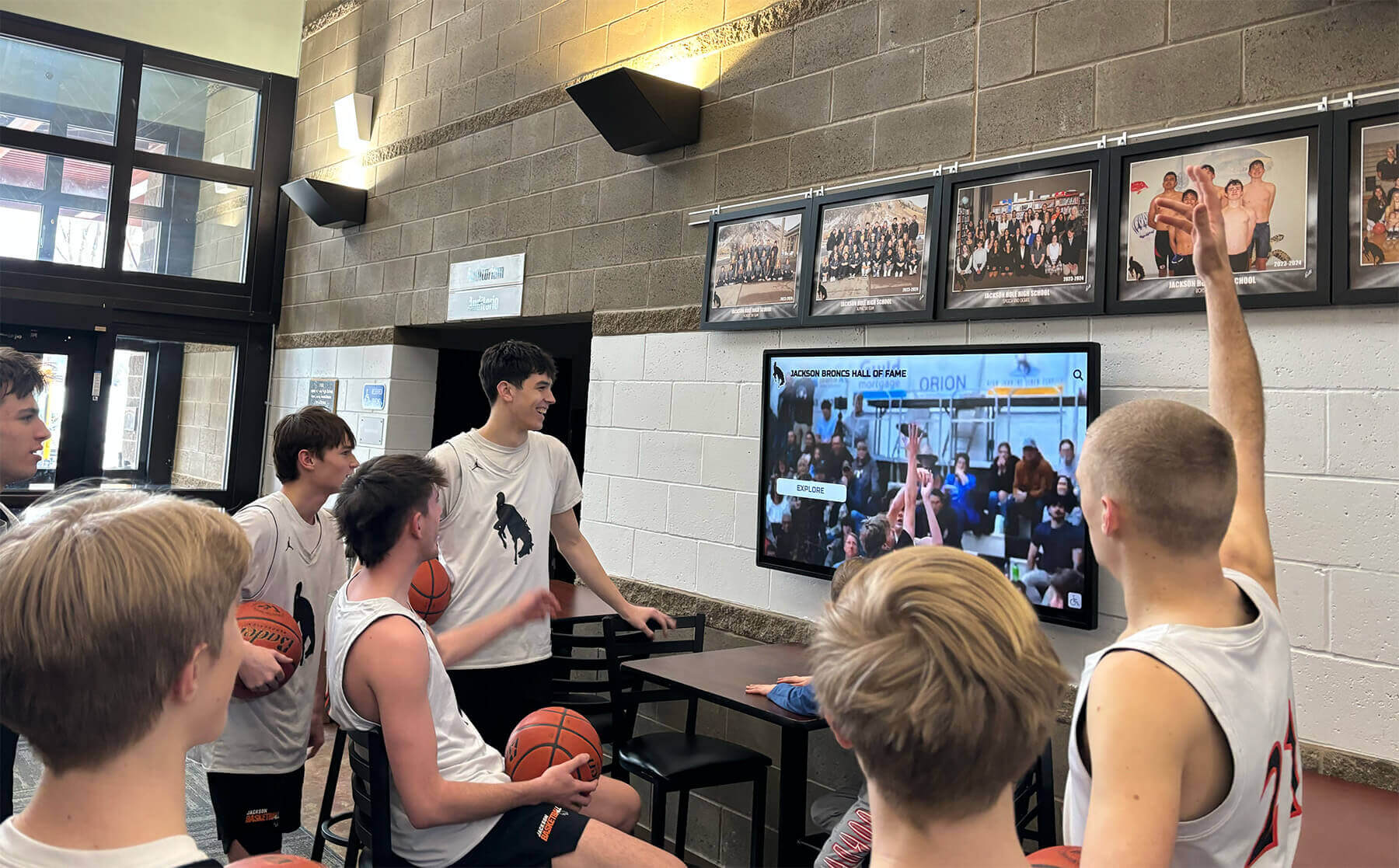
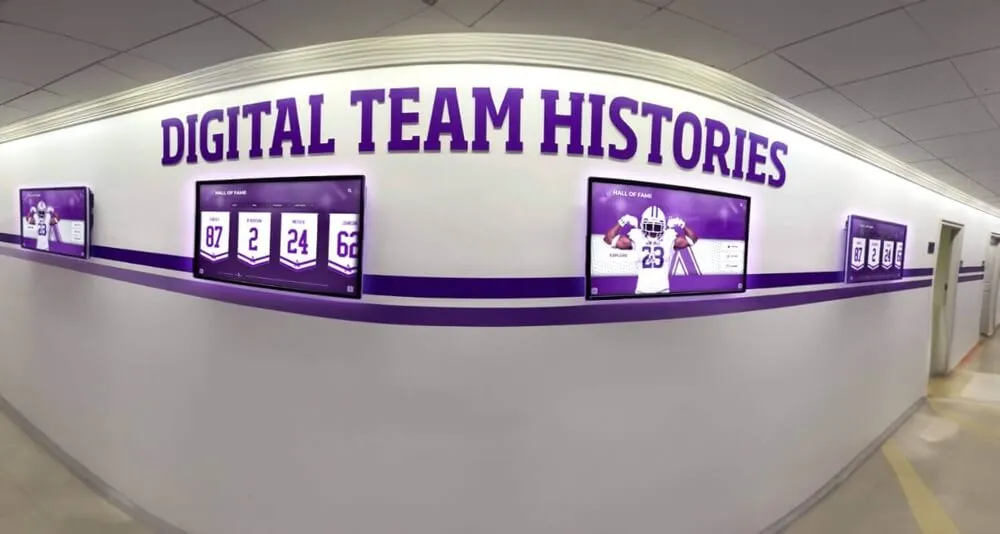
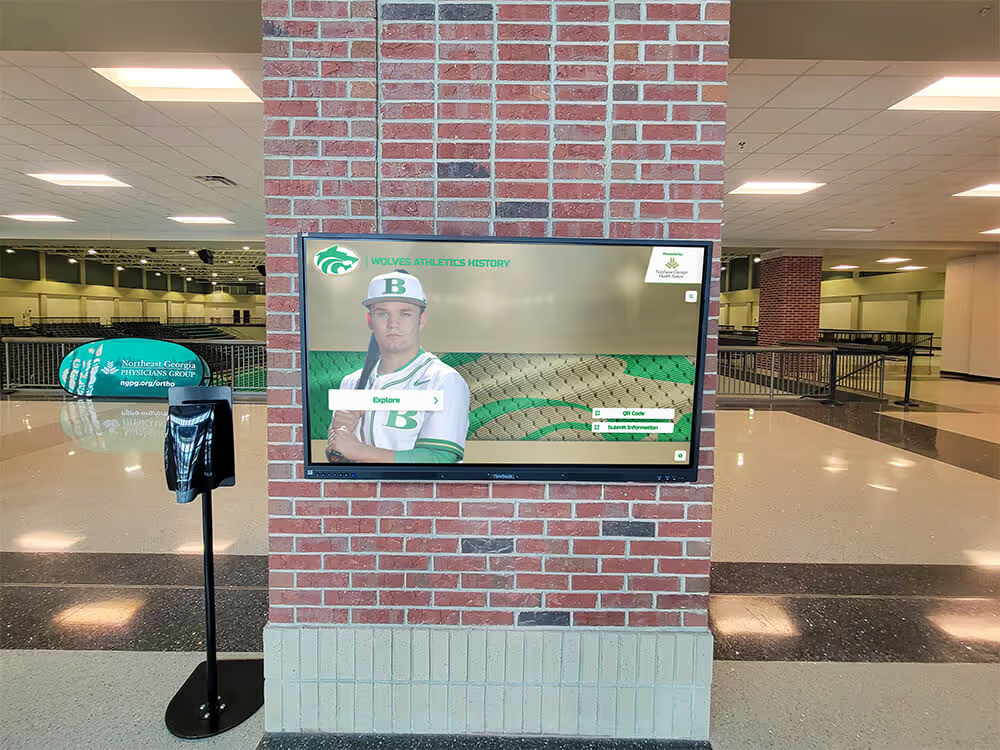
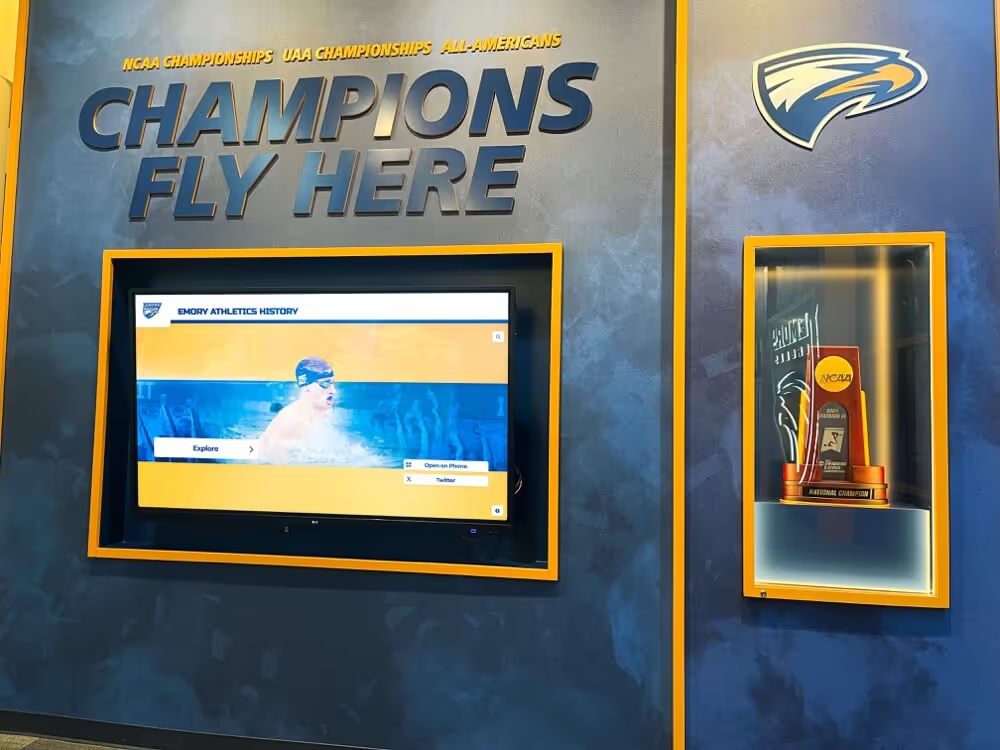
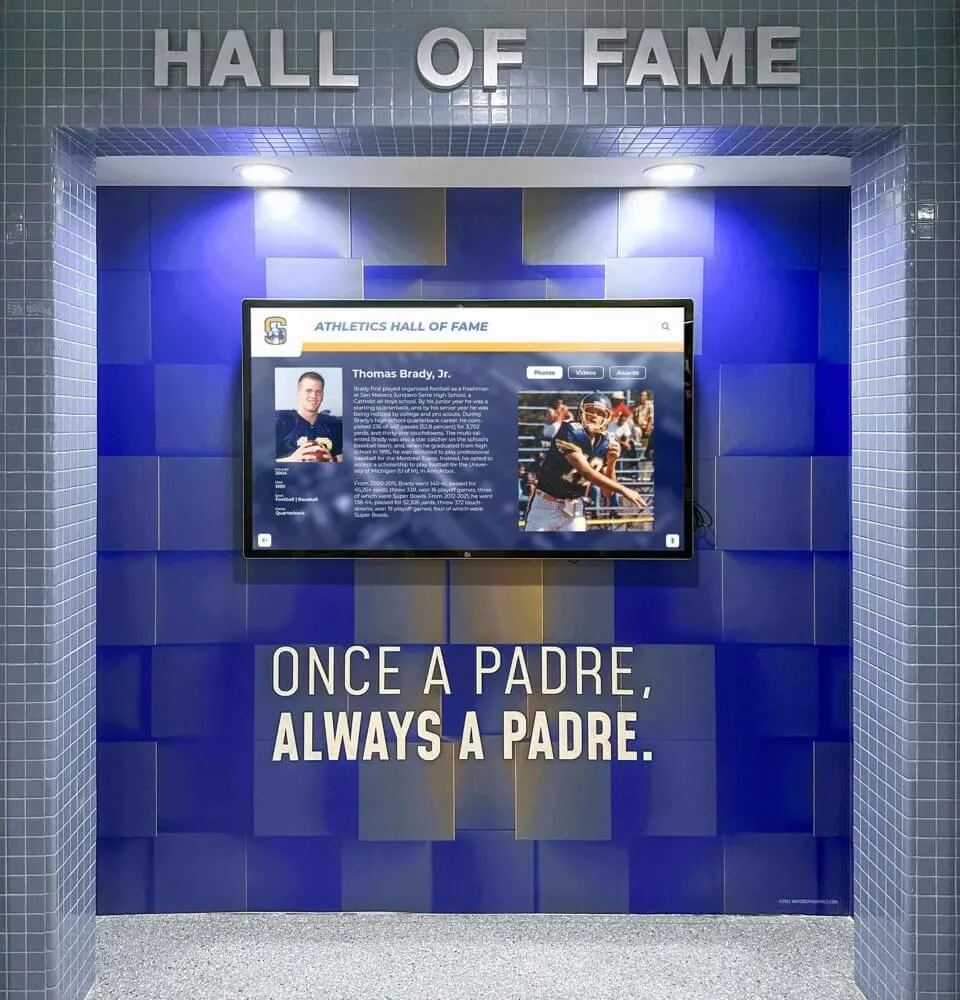
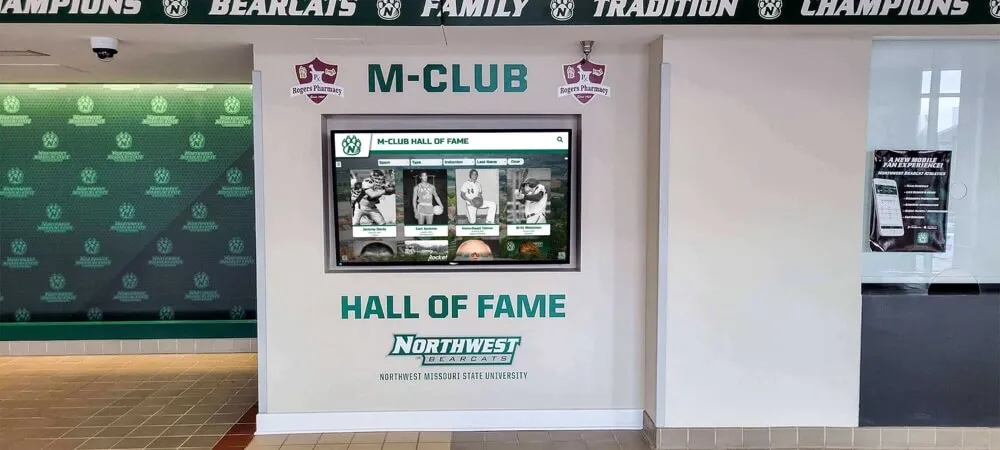
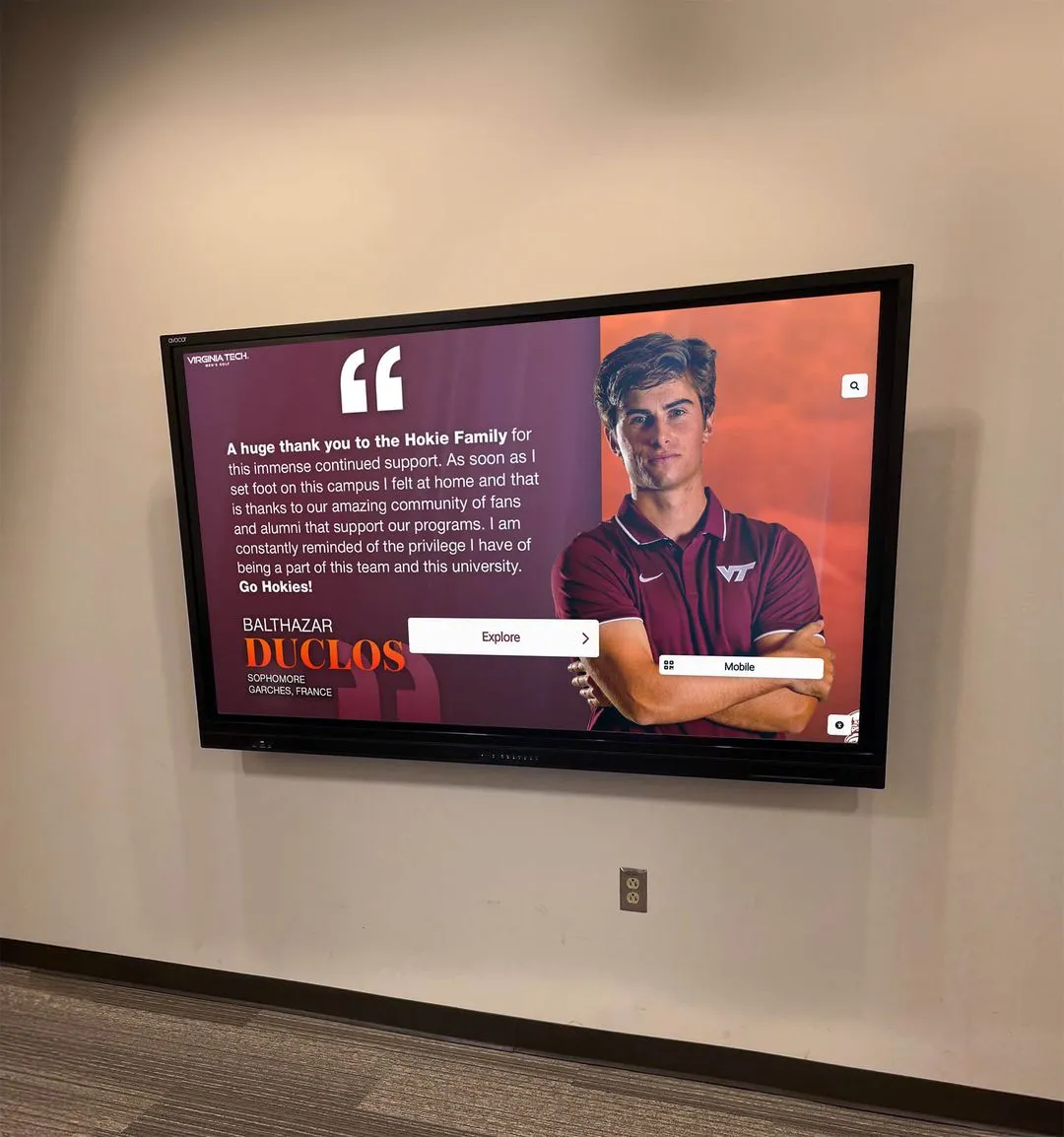
Digital displays enable teams to relive championship moments through highlight videos and game footage
School-Wide Recognition and Community Celebrations
Days following championship victories provide opportunities for broader celebration:
School Assembly Recognition
Formal school assembly recognition honors championship teams before entire student bodies through trophy presentation and team introduction, coach remarks sharing championship journey, athlete speeches or reflections when appropriate, video highlight presentation showing championship game or season moments, and student body celebration led by cheerleaders or pep squads.
Assembly recognition communicates that championship achievements belong to entire school communities rather than exclusively athletic departments—strengthening school-wide pride while celebrating specific team success.
Municipal and Community Recognition
Many communities honor state champions through official channels including city council or county commission proclamations recognizing championship achievement, downtown parades or public celebrations, business district banner displays congratulating champions, and media features in local newspapers or television news.
Schools should proactively coordinate with municipal officials and community organizations ensuring championship teams receive public recognition they deserve while building positive school-community relationships.
Social Media and Digital Celebration
Contemporary celebration requires comprehensive digital strategy including championship announcement posts shared across all school social media platforms, athlete spotlight features highlighting individual team members, behind-the-scenes content showing locker room celebration or travel home experiences, and community engagement encouraging sharing and commenting celebrating achievement.
Digital celebration extends recognition reach far beyond those physically present at games or ceremonies—enabling alumni, extended family members, and broader communities to participate in championship celebration regardless of geographic location.
Understanding how schools showcase athletic achievements digitally provides additional context for contemporary celebration strategies.
Championship Banquets and Formal Recognition Ceremonies
Formal recognition events create structured celebration honoring all contributors:
Planning Comprehensive Celebration Events
Championship banquets typically occur weeks after victories, allowing proper planning through venue selection accommodating teams, families, and program supporters, professional catering or meal service, award presentations recognizing individual and team achievement, multimedia presentations documenting championship season, and guest speakers providing meaningful context and congratulations.
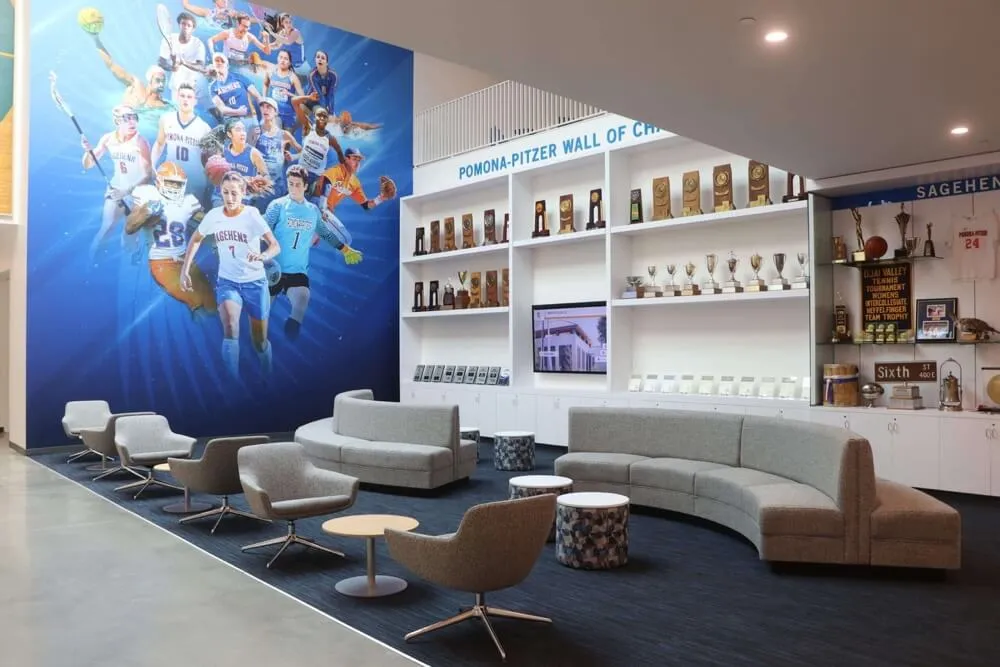
Dedicated athletic lounges provide appropriate venues for championship banquets and team celebrations
Balancing Team and Individual Recognition
Effective banquets honor both collective achievement and individual contributions through team championship trophy presentation, individual championship medals or rings when budget permits, MVP and position-specific awards recognizing standout performers, character awards honoring leadership and sportsmanship, and senior recognition celebrating graduating athletes.
This balanced approach ensures every team member feels individually acknowledged while maintaining appropriate emphasis on collective championship achievement.
Creating Memorable Ceremony Experiences
Beyond standard banquet formats, memorable ceremonies incorporate championship video highlights professionally edited showcasing season journey, athlete testimonials sharing personal perspectives on championship experience, coach reflections providing context about achievement significance, photo displays documenting season progression from early practices through championship victory, and keepsake programs commemorating the evening and championship season.
Investment in ceremony quality communicates appropriate respect for championship achievement while creating experiences athletes and families remember positively throughout their lives.
Permanent Championship Recognition and Display
While immediate celebrations create memorable experiences, lasting recognition ensures championships inspire future generations.
Traditional Physical Recognition Approaches
Conventional championship celebration utilizes time-tested physical recognition methods:
Championship Banners and Gymnasium Displays
The most visible traditional recognition involves championship banners suspended from gymnasium rafters or mounted on facility walls. Effective banner programs include consistent design standards maintaining visual cohesion across years, prominent placement in high-traffic areas ensuring visibility, chronological organization helping viewers understand program history, and weather-appropriate materials for facilities without complete climate control.
Championship banners create immediate visual impact when visitors enter facilities while providing constant inspiration for current athletes training and competing beneath visible program tradition.
Trophy Cases and Physical Award Displays
Dedicated trophy cases showcase championship hardware through hallway installations in high-traffic locations, protected display preventing theft or vandalism, proper lighting highlighting trophy details, contextual information identifying championship details and team rosters, and systematic organization enabling multiple championships display across different sports and years.
Physical trophy display allows visitors to see and appreciate actual championship hardware—creating tangible connection to achievement impossible with purely digital or photographic recognition.
Championship Rings and Individual Keepsakes
Many programs provide championship rings or medals creating personal recognition athletes keep throughout their lives. While rings involve significant expense ($100-300+ per athlete), they provide deeply meaningful personal recognition validating years of commitment and celebrating ultimate achievement.
Budget-conscious alternatives include championship medals, engraved watches, commemorative coins, or custom gear like championship jackets maintaining recognition value while controlling costs.
Approaches to wrestling awards and recognition demonstrate sport-specific adaptation of general championship celebration principles.
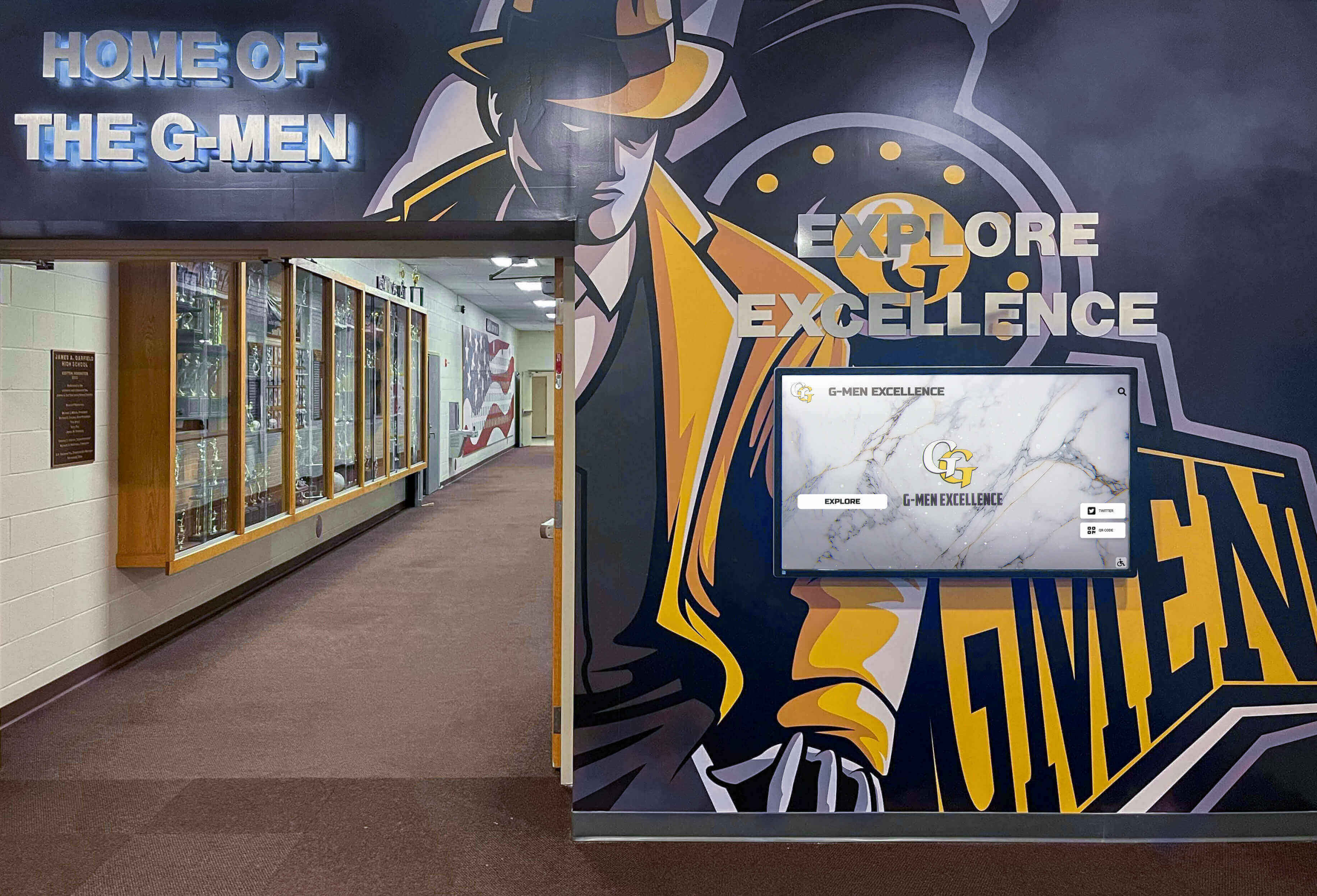
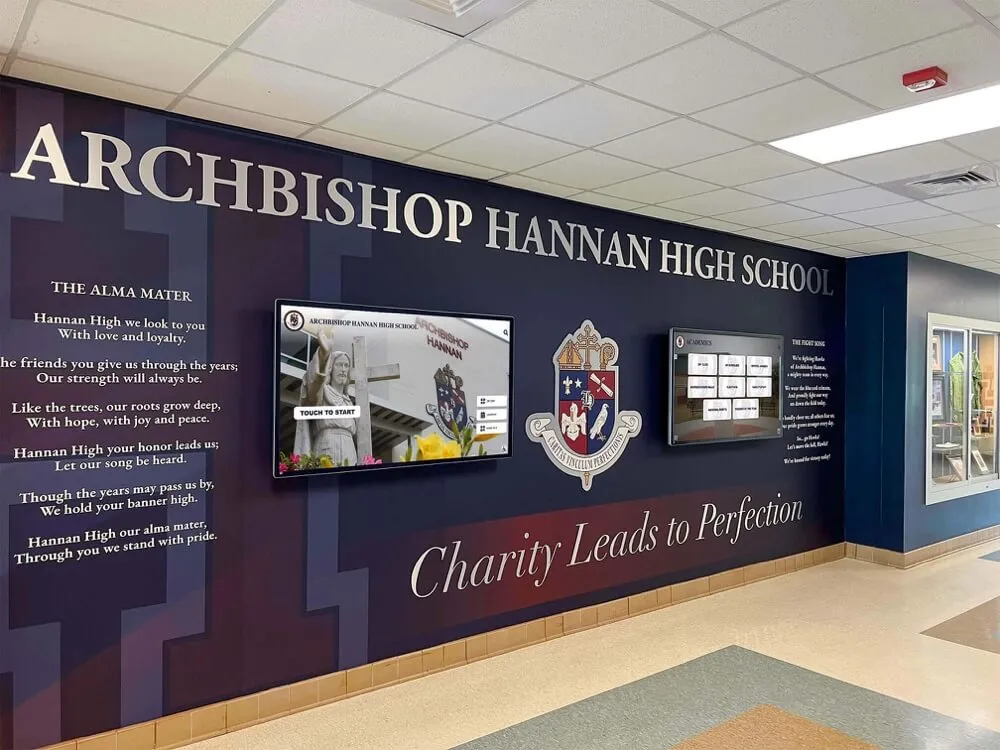
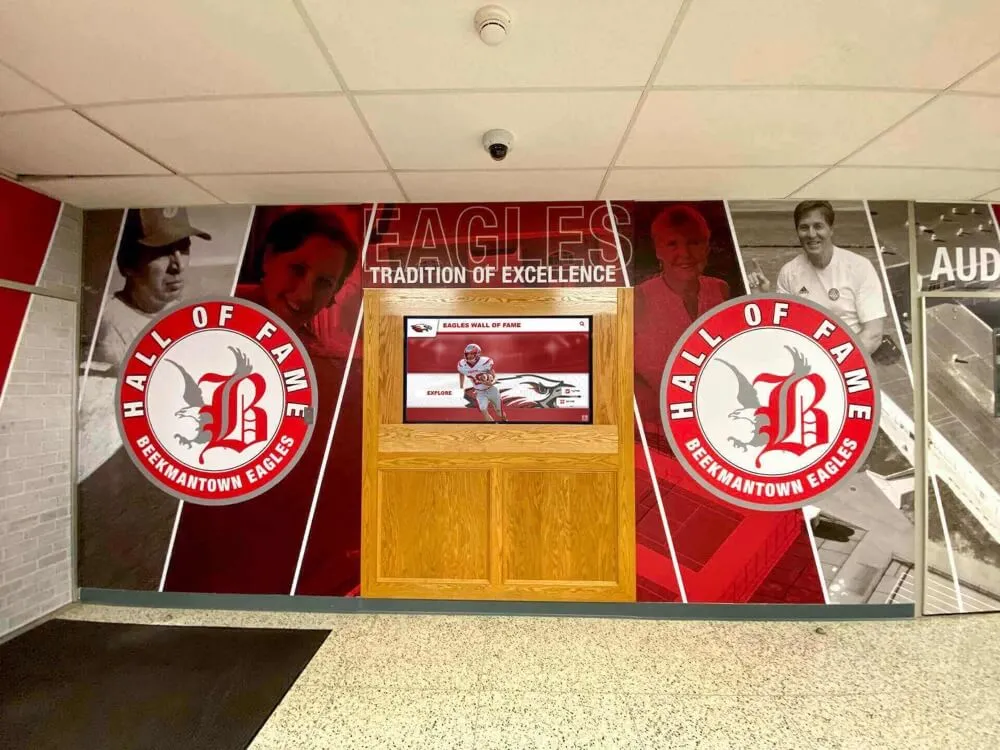
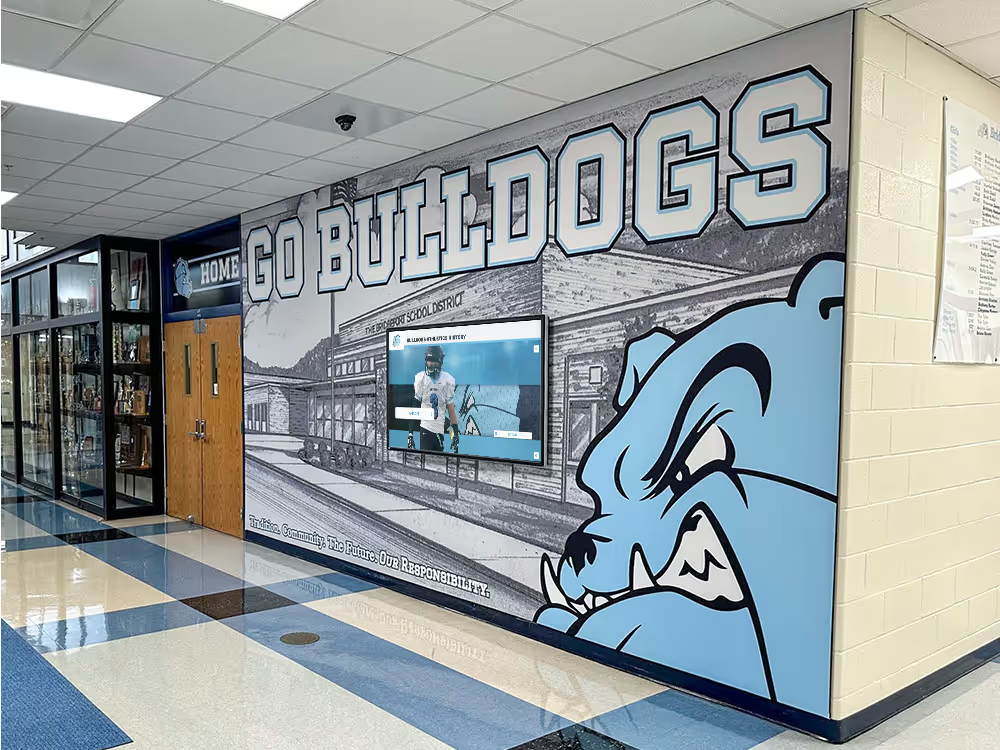
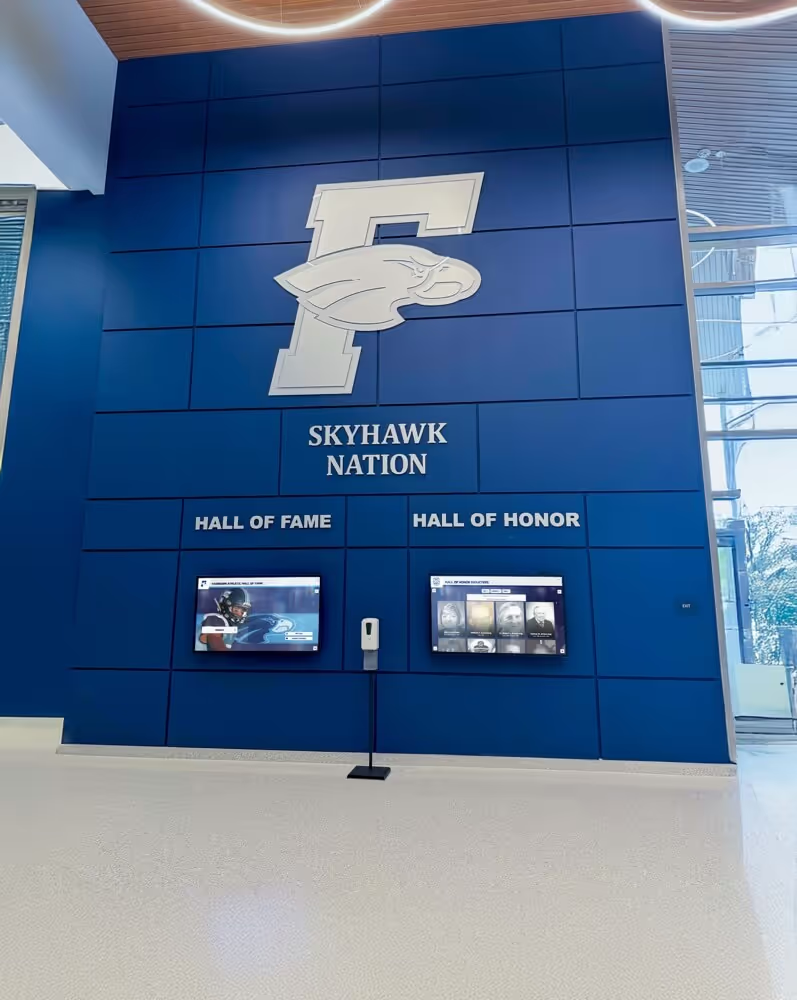
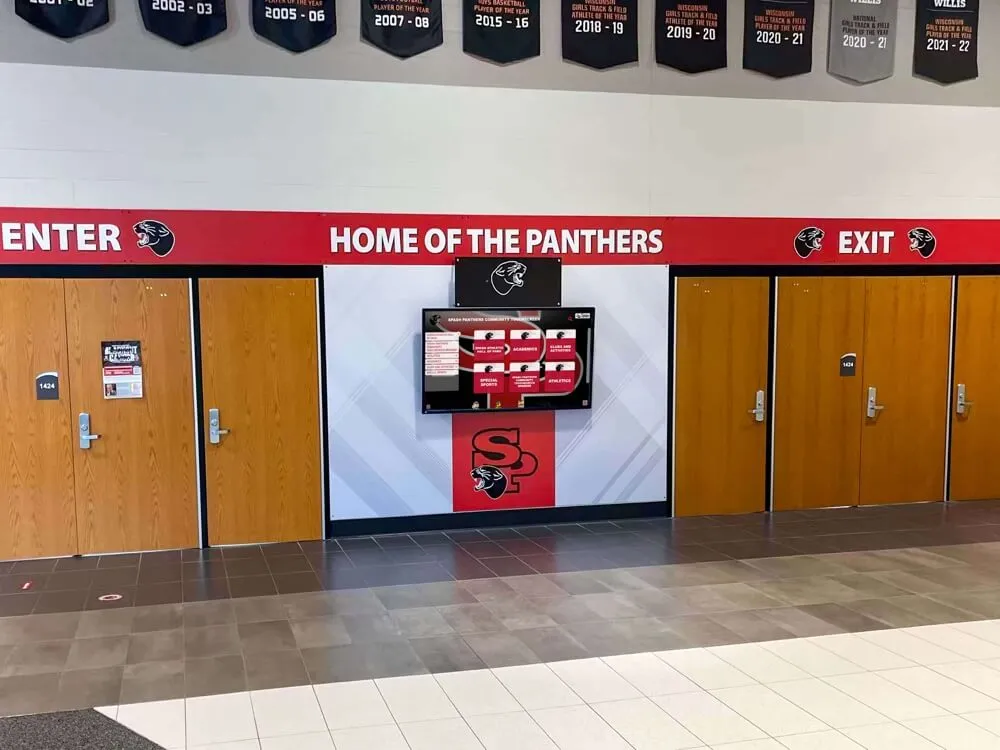
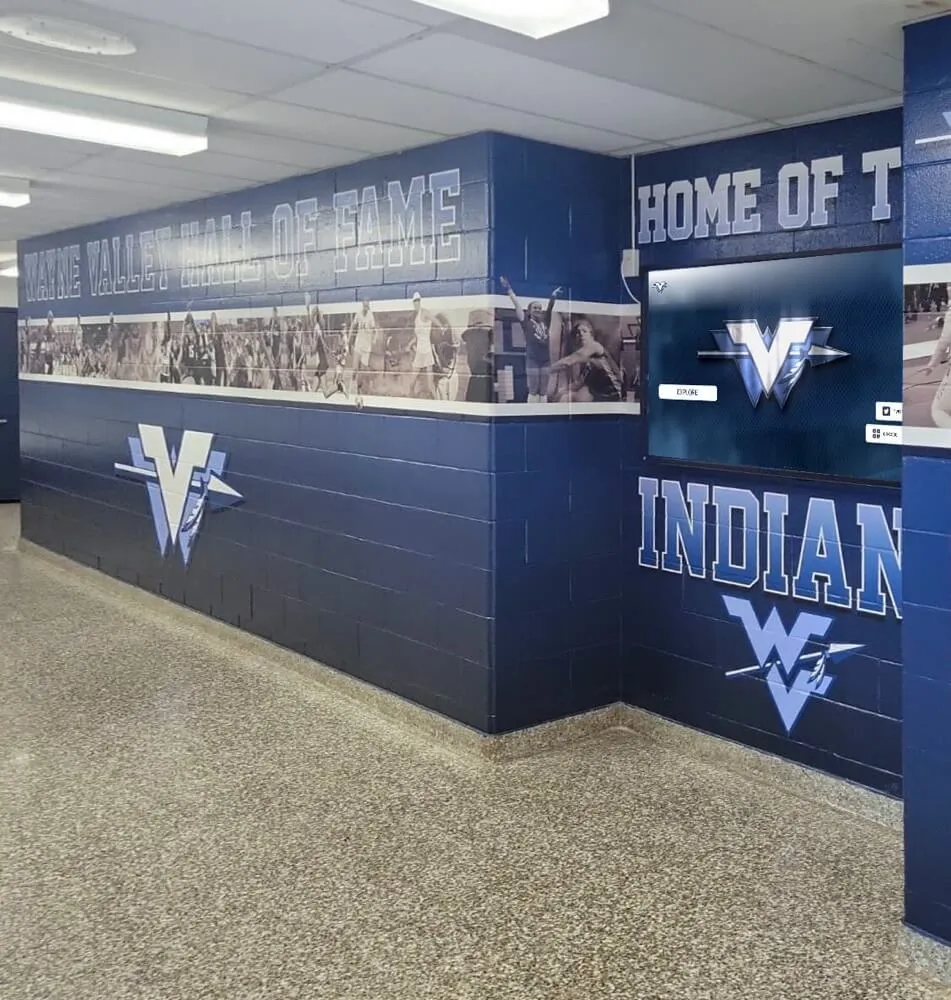
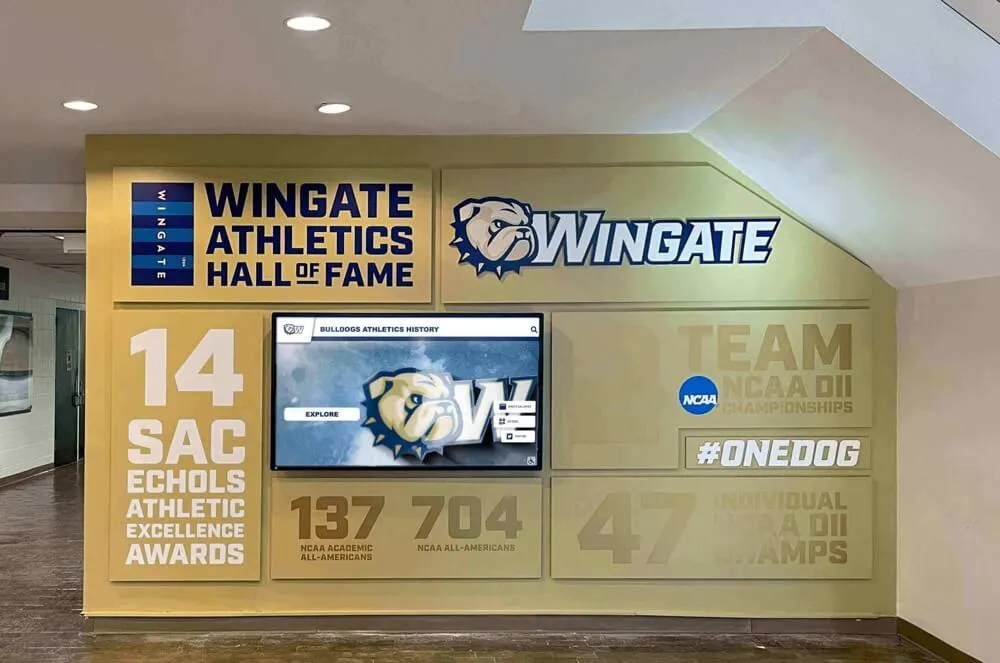
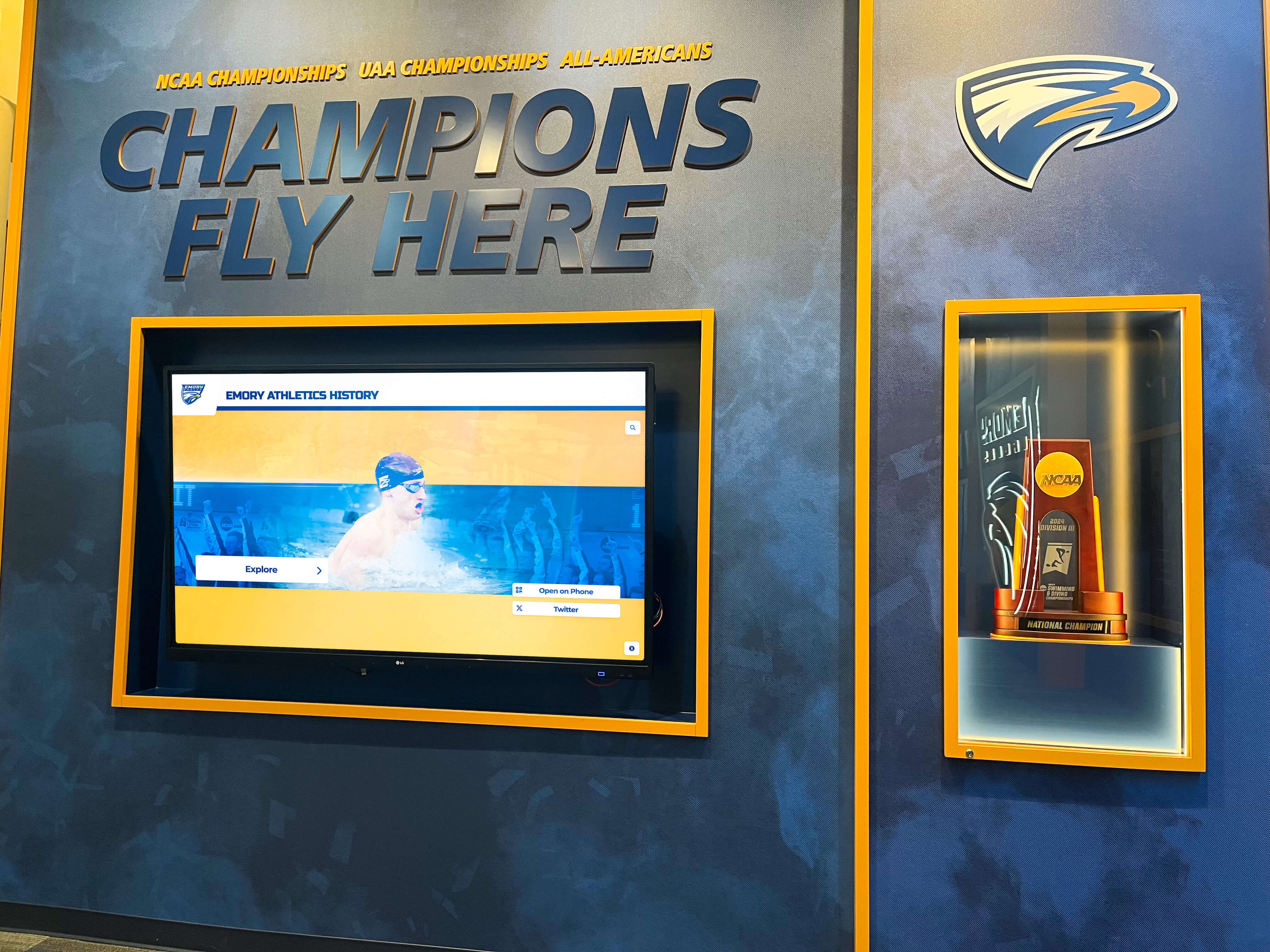
Modern recognition environments integrate traditional trophy cases with branded murals and digital displays
Modern Digital Recognition Solutions
Technology provides powerful alternatives addressing traditional recognition limitations:
Unlimited Recognition Capacity
Physical display space inevitably fills as programs accumulate championships across multiple sports and years. Digital recognition platforms eliminate space constraints through unlimited championship documentation capacity, comprehensive athlete profiles impossible on physical plaques, detailed season narratives and game-by-game results, statistical documentation and record preservation, and multimedia integration including photos, videos, and audio interviews.
Solutions like Rocket Alumni Solutions provide purpose-built championship recognition platforms specifically designed for comprehensive athletic celebration without physical space limitations.
Rich Multimedia Storytelling
Digital platforms transform championship recognition from basic information display into engaging storytelling experiences through championship game video highlights, season progression photo galleries, coach and athlete interview footage, media coverage compilation from local news sources, and social media integration showing community celebration.
This rich content creates far more engaging recognition than static plaques or banners—particularly resonating with contemporary audiences expecting interactive digital experiences.
Dynamic Content and Easy Updates
Unlike physical displays requiring significant effort to update or modify, digital recognition enables immediate championship addition following current season victories, error correction when information inaccuracies are discovered, content enhancement as new materials emerge, anniversary highlighting featuring historical championships, and search and filtering capabilities helping visitors find specific championships or athletes.
This flexibility ensures recognition remains current and comprehensive without requiring physical display modification or replacement.
Accessible Anytime, Anywhere
Web-based recognition extends beyond physical campus enabling alumni to explore championship history remotely regardless of location, families to share athlete profiles through social media, prospective students and athletes to research program tradition during recruitment, and media to access information for historical features or anniversary coverage.
This accessibility dramatically expands recognition reach compared to physical displays limited to on-campus visitors during facility operating hours.
Information about high school wall of fame programs demonstrates comprehensive digital recognition implementation strategies.
Hybrid Recognition Combining Traditional and Modern Approaches
Many schools discover optimal strategies combine physical and digital recognition:
Strategic Physical Recognition for Premier Achievements
Schools can reserve physical banners and trophy displays for state championships and other premier accomplishments while using digital platforms for comprehensive documentation of all achievements including conference titles, playoff runs, individual athlete honors, and complete season statistics.
This hybrid approach preserves traditional banner recognition prestige while eliminating space constraints that would otherwise force difficult decisions about which achievements merit permanent physical display.
Digital Enhancement of Physical Displays
QR codes integrated into physical trophy cases or banner areas can link to comprehensive digital content including championship game video footage, complete team rosters with player profiles, detailed season narratives and statistics, photo galleries documenting championship season, and then-and-now features showing where athletes are today.
This integration preserves traditional aesthetic while enriching recognition through modern capability impossible with purely physical displays.
Coordinated Design Creating Unified Recognition Environments
Effective hybrid installations maintain visual consistency through color schemes and branding matching across physical and digital elements, coordinated placement positioning digital displays near traditional recognition, complementary content where physical displays highlight major achievements while digital systems provide comprehensive detail, and unified navigation helping visitors understand complete recognition ecosystem.
Thoughtful integration creates recognition environments greater than the sum of individual components—leveraging each medium’s unique strengths while minimizing inherent limitations.
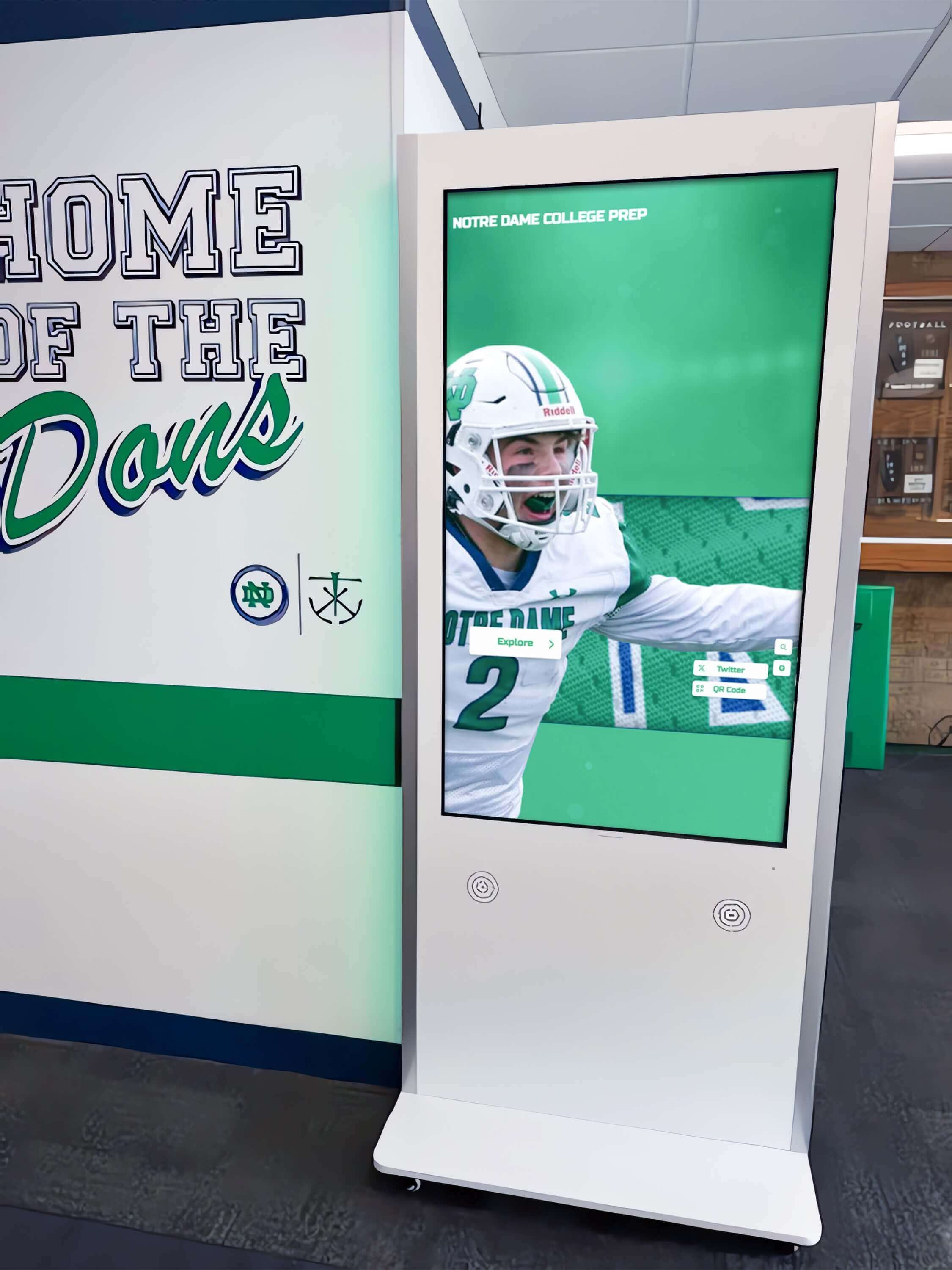
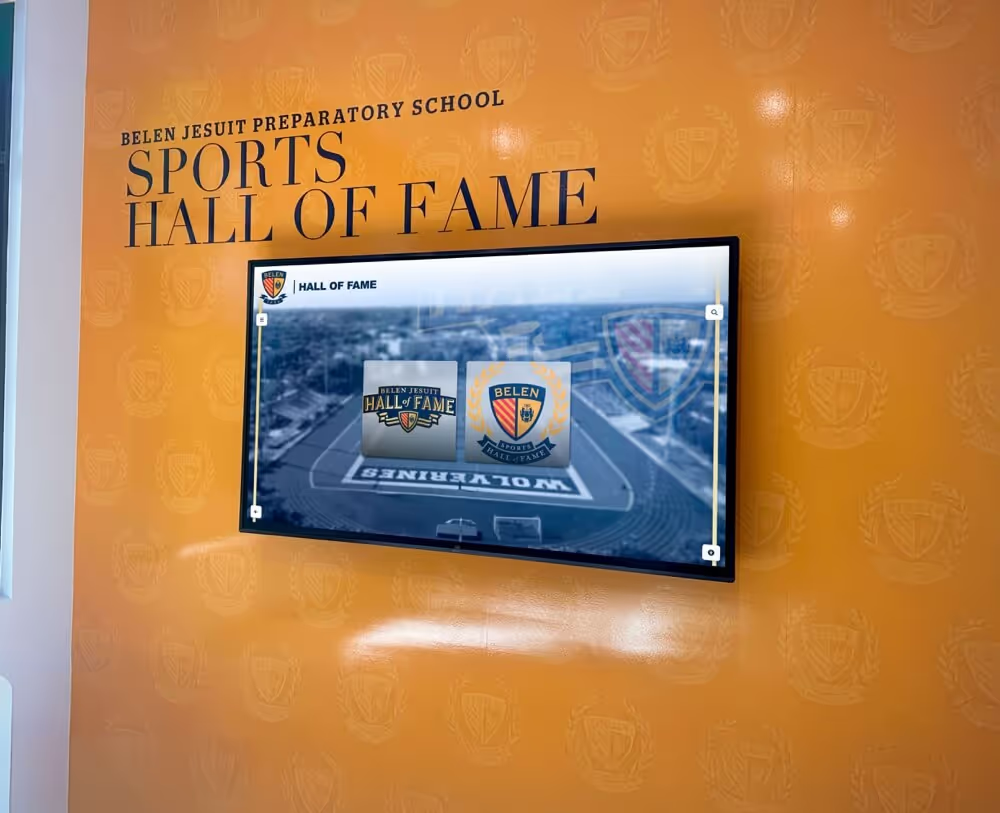
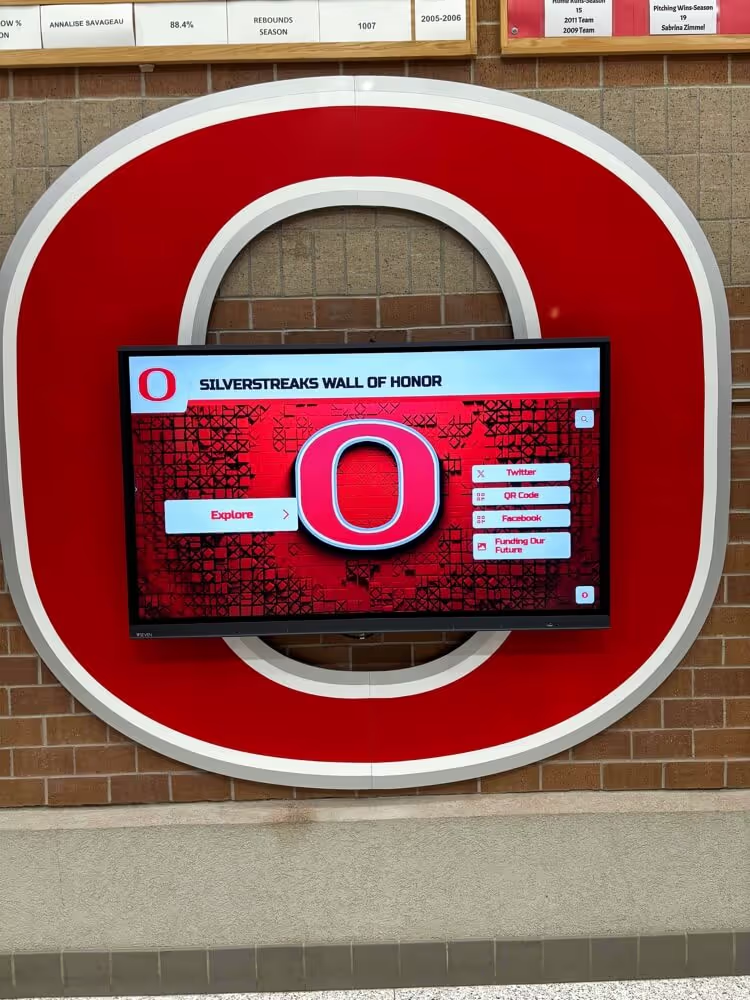
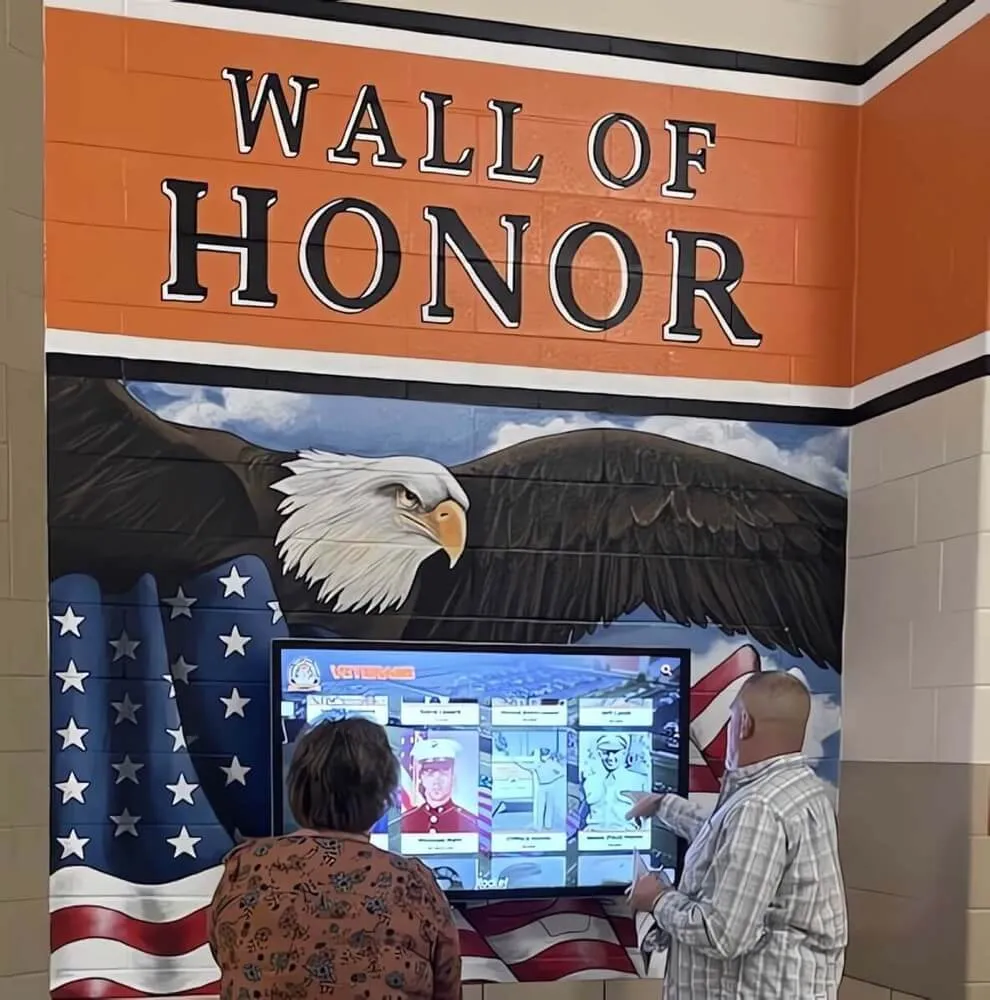
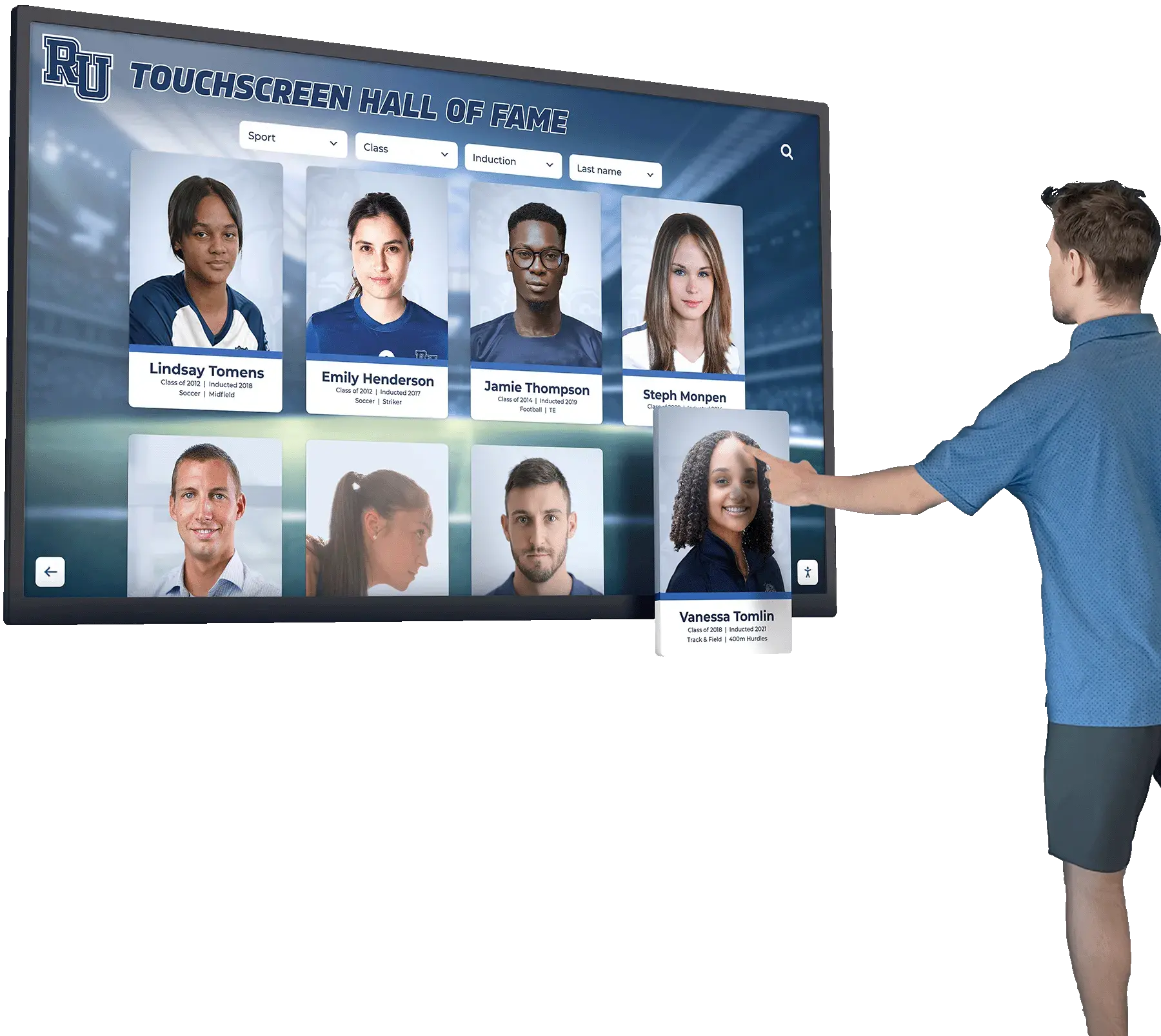
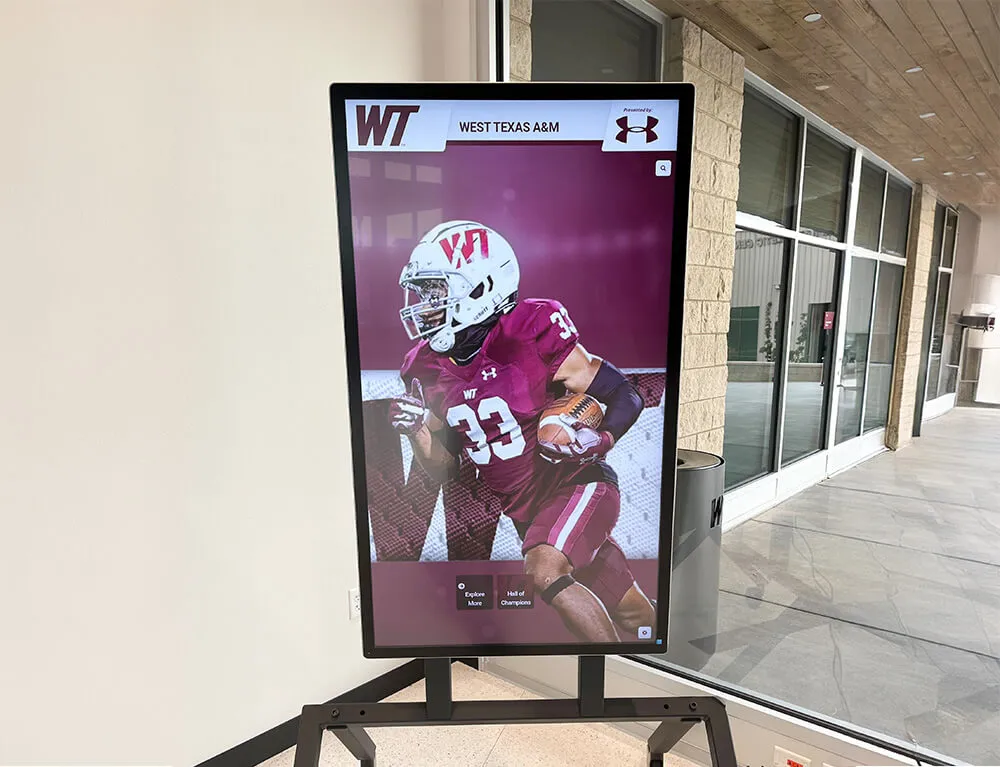
Interactive kiosks enable deep exploration of championship history through intuitive touchscreen interfaces
Documenting Championship Seasons for Lasting Recognition
Quality recognition requires comprehensive information gathering and content development:
Capturing Championship Moments and Stories
Systematic documentation during championship seasons ensures rich recognition content:
Photography and Video Documentation
Schools should designate photographers capturing practice and preparation moments showing championship team development, game action from regular season through playoffs, sideline celebration and emotional moments, locker room team bonding and celebration, community celebration and homecoming events, and formal team and individual portraits for recognition displays.
Comprehensive visual documentation during seasons prevents permanent gaps where important championship moments lack photographic or video record—materials that become increasingly precious as years pass and memories fade.
Gathering Athlete and Coach Perspectives
Championship stories become richer through personal perspectives collected via post-season interviews with coaches reflecting on season journey, athlete testimonials sharing individual experiences and memories, parent reflections describing family perspectives on championship season, manager and support staff insights from unique vantage points, and community member reactions from dedicated fans and supporters.
These personal narratives transform statistical championship records into human stories that engage recognition audiences far more effectively than pure factual documentation.
Statistical and Historical Documentation
Complete championship records require systematic information gathering including final season records and tournament results, individual and team statistical leaders, game-by-game results with scores and key performances, award recipients and post-season honors, roster information with athlete grades and positions, and coaching staff documentation.
Detailed statistical record prevents information loss that occurs when key personnel leave schools or memories fade over time—ensuring future recognition efforts have complete source material.
Resources about academic recognition programs provide parallel examples of systematic documentation supporting comprehensive recognition.
Creating Compelling Championship Narratives
Effective recognition tells stories rather than simply listing achievements:
Season Journey Storytelling
Championship narratives should document complete seasonal arcs including preseason expectations and team building, regular season progression with key victories and challenges, playoff qualification and tournament advancement, championship game details and defining moments, and post-championship impact and legacy.
This narrative approach helps audiences understand championships as earned achievements requiring sustained excellence rather than isolated tournament victories—providing context making recognition more meaningful.
Individual Athlete Stories Within Team Achievement
While championships represent team accomplishments, effective recognition includes individual athlete profiles highlighting player backgrounds and athletic journey to championship, specific contributions and defining performances, personal challenges overcome during championship season, post-high school outcomes and continued success, and current reflections on championship experience years later.
Individual stories create personal connections helping current students and prospective athletes see championships as achievable goals pursued by real people rather than abstract historical achievements.
Contextualizing Historical Significance
Championship recognition becomes richer through historical context including program history before championship, how victory changed program trajectory, comparative context to other program achievements, community impact and broader significance, and lasting legacy on current programs.
This contextualization helps audiences appreciate championships appropriately rather than viewing all titles as equivalent regardless of circumstances or historical significance.

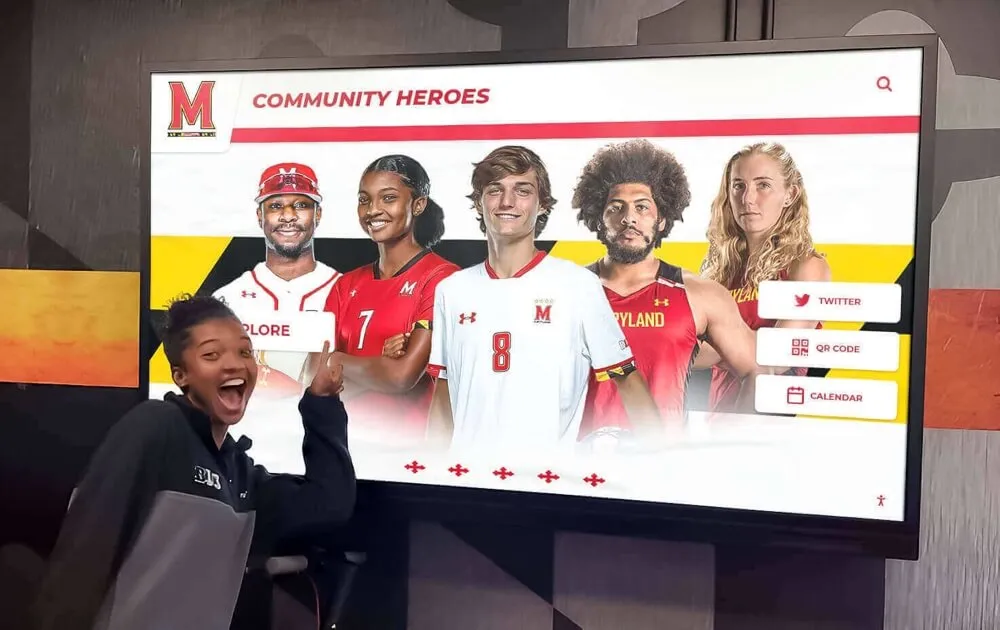
Intuitive card-based interfaces enable natural exploration of individual athlete profiles within championship teams
Leveraging Championship Recognition for Program Development
Strategic championship celebration creates value extending beyond simple acknowledgment:
Recruiting and Program Marketing Benefits
Visible championship tradition enhances competitive positioning:
Showcasing Championship Culture to Prospects
Prospective athletes evaluating schools consider program competitive history and championship potential. Comprehensive recognition systems demonstrate sustained excellence through documented championship history, individual athlete development within championship programs, visible facility investment signaling institutional commitment, and alumni success connecting program participation to positive outcomes.
Championship recognition visibility during campus tours and recruiting communications influences athlete recruitment decisions—particularly when comparing programs with similar competitive levels or academic offerings.
Social Media Content and Digital Marketing
Championship recognition generates compelling marketing content including throwback features celebrating historical championships on anniversaries, championship highlight videos for social media promotion, athlete spotlight profiles from championship teams, comparison content showing program evolution across championship eras, and anniversary reunion events bringing championship teams back to campus.
Systematic recognition provides continuous authentic content supporting athletic program marketing without requiring separate content creation infrastructure.
Building School Pride and Community Support
Championship recognition strengthens broader institutional culture through visible facility displays exposing all students to athletic excellence, school assembly celebrations honoring champions before entire student body, media coverage extending recognition to broader community, and social media engagement reaching families and community members.
Strong championship recognition creates school-wide pride strengthening overall institutional reputation and community connection—generating value extending beyond athletic department boundaries.
Understanding digital showcase strategies for school class officers provides additional context for comprehensive digital recognition across different school programs.
Alumni Engagement and Development Opportunities
Championship recognition creates natural alumni connection points:
Reunion Events and Championship Anniversaries
Championship anniversaries provide powerful alumni engagement opportunities through milestone celebration events (10th, 25th, 50th anniversaries), reunion gatherings bringing championship teams together, updated recognition highlighting where athletes are today, oral history projects capturing championship memories while participants can still share them, and integrated fundraising appeals leveraging nostalgic connection.
Championship alumni consistently demonstrate strong institutional loyalty and engagement when schools invest in meaningful recognition honoring their achievement—creating natural development constituencies.
Recognition-Based Fundraising Strategies
Many programs leverage championship recognition as development vehicle through naming opportunities where donors fund specific recognition components, memorial gifts honoring deceased championship team members or supporters, giving societies providing recognition for sustained financial support, and capital campaigns for comprehensive recognition systems funded through targeted alumni appeals.
Championship athletes often demonstrate willingness to financially support programs celebrating their contributions—creating fundraising opportunities aligned with recognition initiatives.
Mentorship and Current Program Support
Championship alumni recognition facilitates ongoing program involvement through mentorship relationships connecting former athletes to current players, volunteer coaching assistance sharing championship experience, career networking helping current athletes with college selection or professional development, and advocacy supporting program resources and institutional investment.
These ongoing connections strengthen current programs while honoring championship alumni through meaningful engagement extending beyond simple recognition display.
Information about donor recognition walls demonstrates parallel recognition strategies applicable to championship celebration contexts.

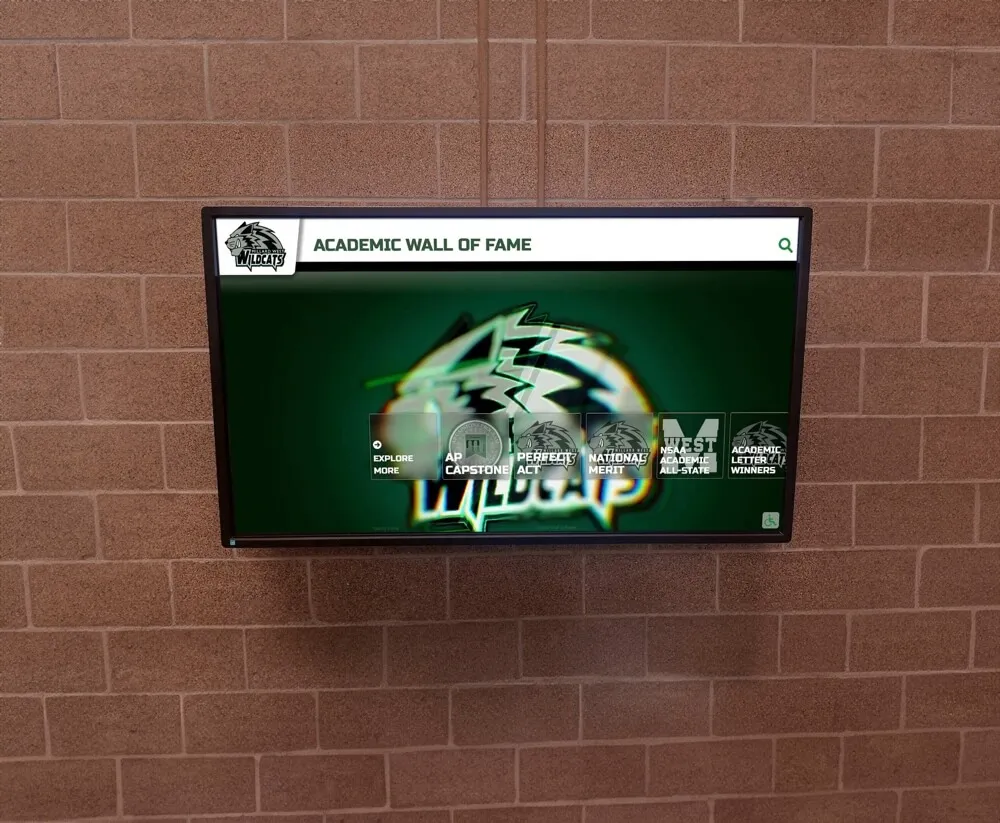
Responsive web platforms extend championship recognition beyond physical campus enabling remote access from any device
Best Practices for Sustaining Championship Recognition Programs
Long-term recognition success requires systematic management beyond initial implementation:
Establishing Recognition Standards and Criteria
Clear guidelines ensure consistent, equitable championship celebration:
Defining Recognition Levels
Schools should establish transparent standards determining which achievements receive specific recognition levels including state championships receiving premier recognition (banners, dedicated displays), conference championships receiving secondary recognition (trophy case inclusion, digital documentation), playoff achievements receiving acknowledgment (season documentation, roster preservation), and individual post-season honors receiving appropriate celebration (all-state teams, player of year awards).
Documented standards prevent inconsistency where recognition reflects changing personnel preferences rather than coherent institutional frameworks.
Maintaining Consistent Design Standards
Recognition quality depends on visual consistency through standardized banner sizes and design templates across years, coordinated color schemes and branding, consistent information included in all championship documentation, uniform quality standards for materials and production, and compatible physical and digital design languages.
Professional design standards ensure recognition looks polished and intentional rather than haphazard collections reflecting budget fluctuations or changing staff aesthetic preferences.
Equitable Recognition Across All Sports
Comprehensive athletic departments must ensure fair recognition including proportional investment across boys’ and girls’ sports meeting Title IX requirements, comparable recognition regardless of sport profile or revenue generation, championship recognition for all competitive levels (varsity, JV when applicable), and clear communication about recognition standards applicable to all programs.
Visible commitment to equitable recognition strengthens athletic department culture while preventing division from perceived favoritism toward particular programs.
Budgeting and Resource Planning
Sustainable recognition requires long-term financial commitment:
Ongoing Recognition Costs
Schools should budget for championship banners or physical displays ($200-500+ per championship), trophy case maintenance and expansion ($1,000-5,000+ periodically), digital platform subscription and support ($1,000-5,000+ annually), championship ceremony and banquet expenses ($2,000-10,000+ per championship season), and championship rings or athlete keepsakes when provided ($5,000-30,000+ per championship team).
Multi-year budget projections demonstrate sustainable funding rather than launching recognition programs lacking long-term financial models.
Alternative Funding Strategies
Championship recognition funding can come from athletic department operational budgets as program priority, booster club support specifically designated for recognition, alumni fundraising appeals leveraging championship nostalgia, sponsorship opportunities where businesses support recognition for visibility, and memorial giving programs funding recognition honoring deceased community members.
Diversified funding reduces pressure on single budget sources while building broad stakeholder investment in recognition programs.
Cost-Effective Recognition Approaches
Budget-conscious schools can maintain quality recognition through digital platforms eliminating ongoing physical display costs, hybrid strategies reserving expensive physical recognition for premier achievements, standardized design templates reducing custom production costs, phased implementation spreading investment across multiple years, and volunteer contribution of photography, design, or content development services.
Strategic resource allocation enables meaningful recognition even within constrained budgets—ensuring championship celebration remains priority regardless of financial circumstances.
Information about hall of fame online management provides additional context for comprehensive recognition program administration.
Content Management and Program Administration
Recognition quality depends on systematic ongoing management:
Assigning Clear Responsibilities
Effective programs designate specific roles including athletic director oversight ensuring program consistency, designated staff managing day-to-day recognition administration, coach responsibilities for providing team information and documentation, volunteer coordinators when utilizing community or alumni support, and technical support for digital platform management when applicable.
Clear responsibility assignment prevents recognition from falling through cracks when everyone assumes someone else is managing programs.
Establishing Update and Maintenance Workflows
Systematic processes ensure recognition remains current through post-season information gathering templates, content development standards and timelines, approval workflows preventing errors before publication, scheduled maintenance reviews identifying needed updates or corrections, and archival procedures preserving historical information.
Documented workflows enable continuity through personnel changes while ensuring consistent recognition quality regardless of staffing fluctuations.
Building Institutional Memory and Documentation
Long-term program success requires preserving organizational knowledge through comprehensive record-keeping documenting all championship information, procedure manuals capturing recognition processes and standards, vendor and technical documentation enabling future administration, historical research materials supporting retrospective recognition, and lessons learned documentation improving future recognition efforts.
This institutional memory prevents information loss and enables sustainable programs transcending individual personnel tenure.
Conclusion: Creating Championship Recognition That Inspires Excellence
State championships represent the pinnacle of high school athletic achievement—rare accomplishments requiring sustained excellence, overcoming adversity, performing under pressure, and achieving ultimate competitive success within entire state classification systems. These extraordinary achievements deserve recognition matching their significance through immediate celebrations creating memorable experiences for championship teams, thoughtful ceremonies honoring athletes and families appropriately, and permanent displays ensuring championships inspire future generations long after victorious athletes graduate.
The most effective championship recognition programs share fundamental characteristics: they balance immediate celebration with lasting visibility, they honor both team achievement and individual athlete contribution, they maintain professional quality reflecting championship significance, they provide equitable recognition across all athletic programs and both genders, and they evolve sustainably through organizational changes and accumulating championships.
Transform Your Championship Recognition
Discover how modern digital recognition solutions enable comprehensive state championship celebration with unlimited capacity, engaging multimedia storytelling, and sustainable management systems. Create recognition programs that inspire current athletes while honoring championship traditions for decades to come.
Explore Championship Recognition SolutionsTraditional championship recognition through banners, trophy cases, and physical displays will always hold special significance—their tangible presence and permanent visibility create powerful connections between current athletes and program legacy. Yet modern digital alternatives offer compelling advantages addressing space constraints, enabling multimedia storytelling impossible with physical displays, providing immediate updates celebrating current championships, and creating interactive experiences resonating with contemporary audiences. The schools creating most effective recognition combine both approaches, preserving tradition while embracing innovation in service of comprehensive championship celebration.
Every state championship your program achieves—whether your first title in school history or the latest in a storied tradition—represents extraordinary accomplishment worthy of prominent, lasting recognition. The athletes who dedicated years to their sport, the coaches who built championship-caliber programs, the families who supported athletic commitment, and the communities who cheered their teams to victory all deserve celebration matching the magnitude of championship achievement.
Your championship recognition program tells your athletic program’s story. Make that story compelling, comprehensive, and worthy of the championships you’re celebrating. Whether your trophy case displays one cherished state title or dozens accumulated across generations, thoughtful recognition ensures those achievements inspire excellence for decades to come.
Ready to enhance your championship recognition? Explore state championship bracket display strategies, discover software products for athletic administrators managing recognition programs, learn about interactive digital boards for athletic facilities, and understand high school football playoff recognition approaches celebrating championship tournament achievements.