



Every spring, high school track and field athletes across the country chase a defining goal: qualifying for their state championship meet. Unlike team sports where entire squads advance through playoff brackets, track presents a uniquely individual challenge—athletes must hit specific performance benchmarks earning the right to compete among their state’s elite. State track meet qualifying standards establish these measurable thresholds separating regional competitors from state-level championship contenders.
Understanding how qualifying standards work—from how they’re determined and when they’re published, to strategic approaches for achieving qualifying marks and what happens after qualification—proves essential for athletes, coaches, and families navigating championship season. Standards vary significantly across states, events, and competitive classifications, creating complex requirements demanding strategic planning throughout entire seasons rather than hoping for breakthrough performances during final qualifying windows.
This comprehensive guide explores everything athletes and coaches need to know about state track meet qualifying standards. From understanding standard-setting methodologies and typical benchmark ranges across events, through training strategies targeting qualification and managing the verification process, to celebrating qualifiers through modern recognition displays that honor championship-level achievement, you’ll discover actionable frameworks ensuring athletes maximize their state meet opportunities while schools appropriately recognize those reaching this prestigious competitive threshold.
For athletes who achieve state meet qualification, the accomplishment represents validation of year-round training dedication and competitive excellence. Schools celebrating qualifiers through visible recognition—from traditional bulletin boards to modern digital displays—honor these athletes while inspiring younger competitors to pursue similar goals. Strategic recognition creates powerful motivation connecting current performance with aspirational championship standards.

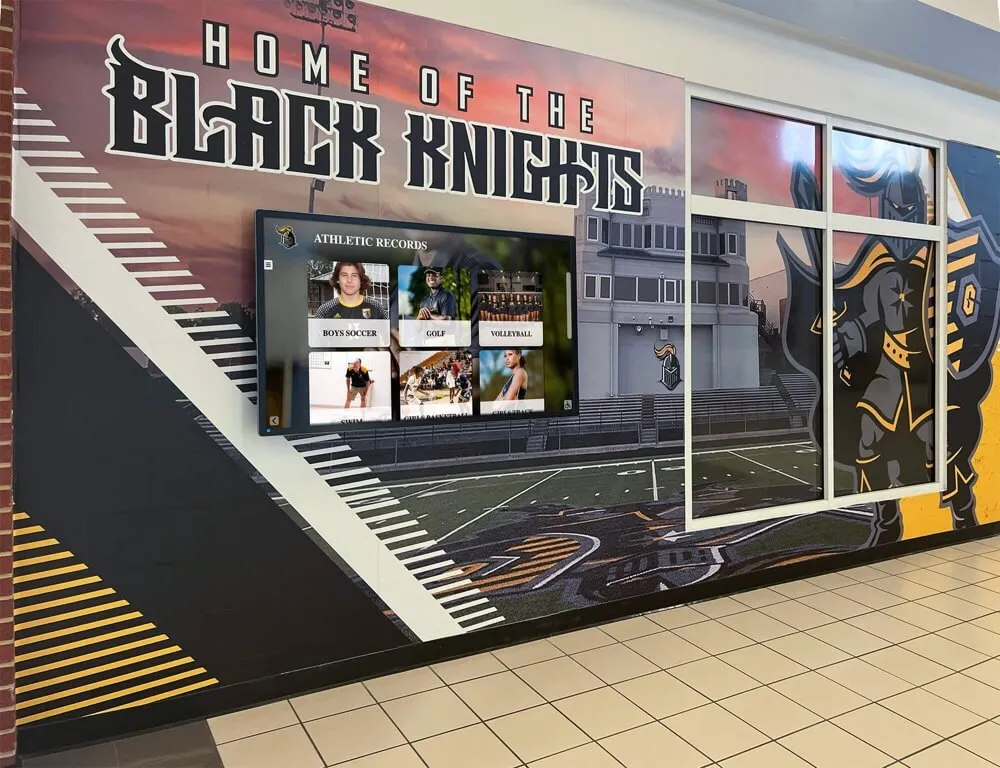
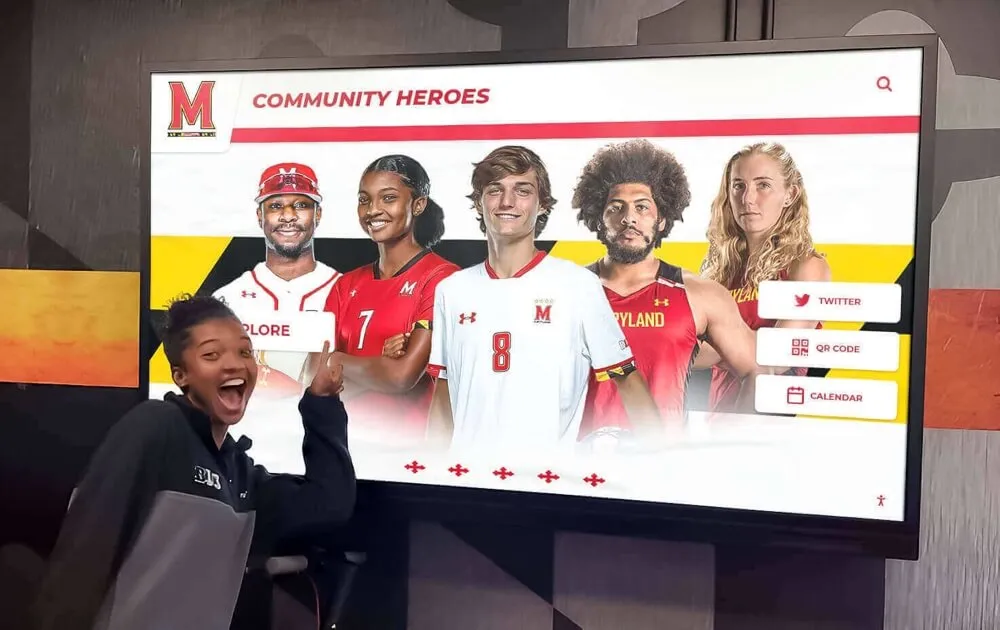
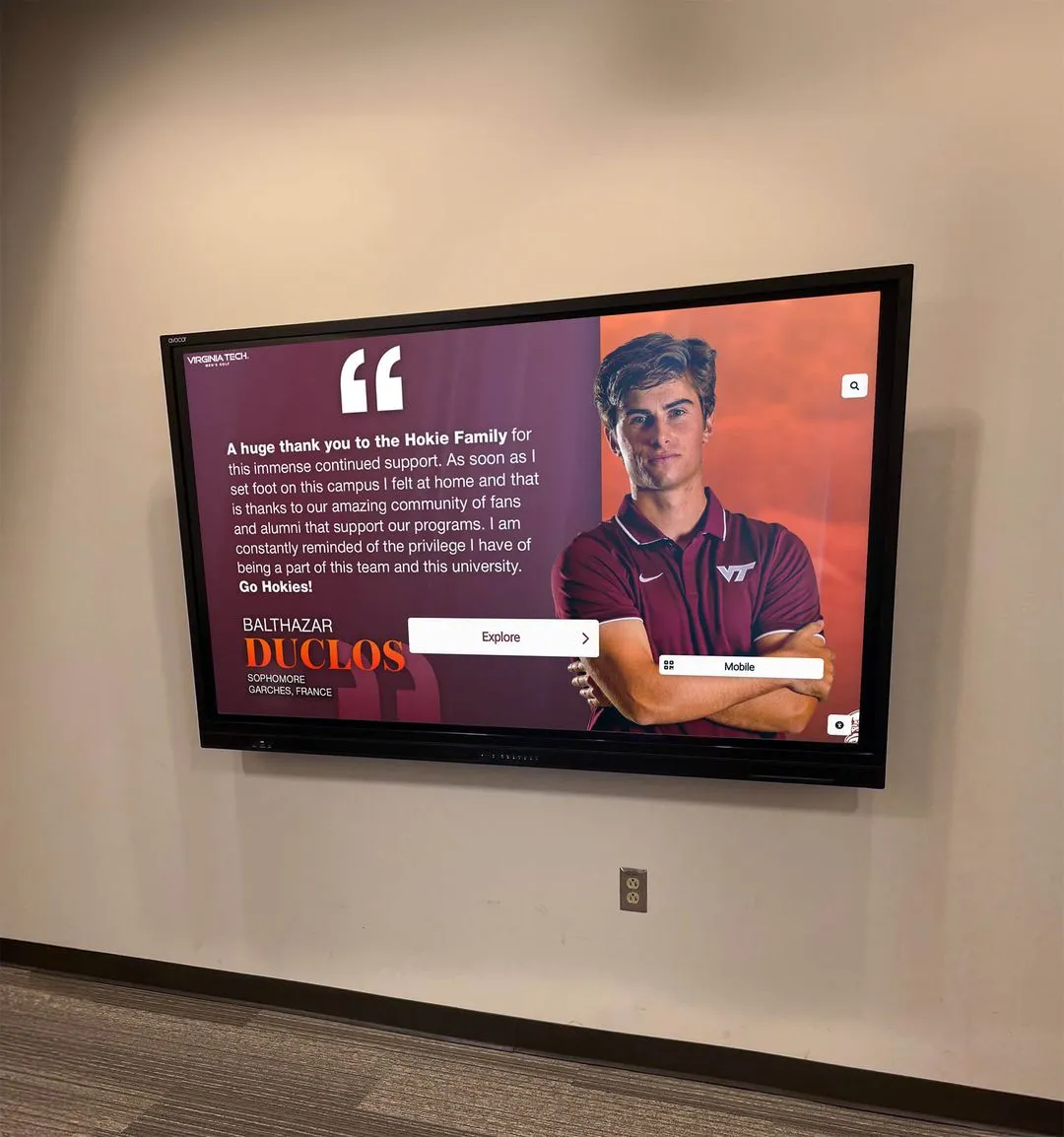
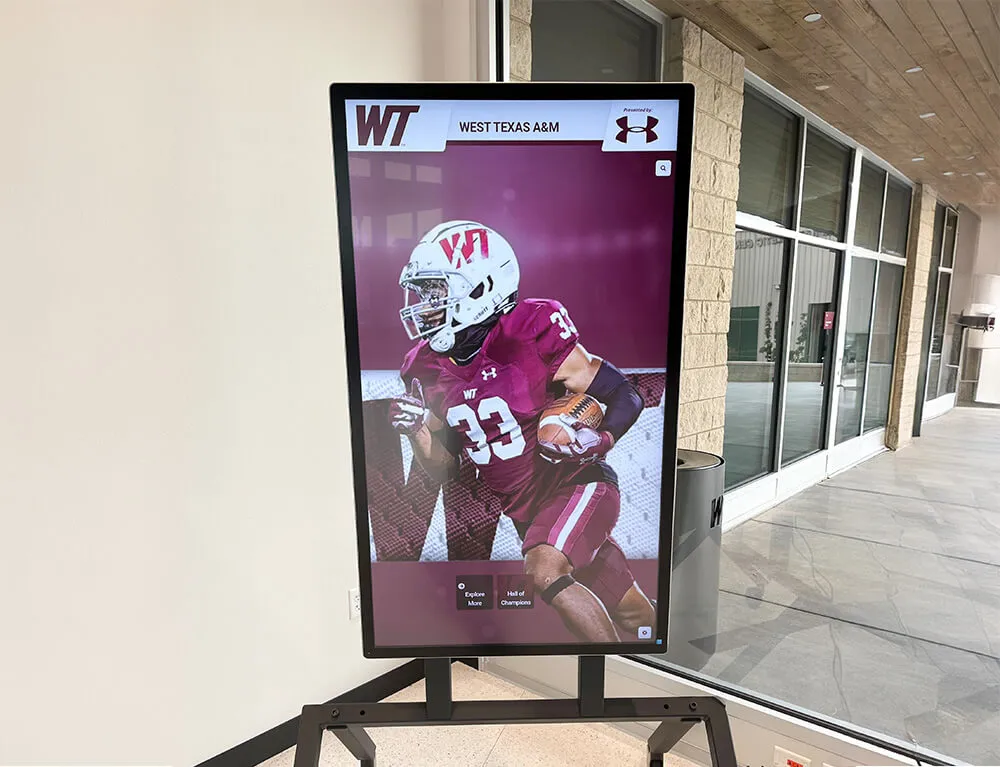
Interactive displays celebrate individual track athletes through detailed profiles documenting event specializations, personal records, and championship qualifications
Understanding State Track Meet Qualifying Standards
Before athletes can target state meet qualification, understanding how standards function and where they originate proves essential.
How Qualifying Standards Are Established
State athletic associations use systematic approaches determining performance thresholds balancing competitive excellence with reasonable opportunity:
Historical Performance Analysis
Most states establish standards by analyzing previous years’ championship meet results including reviewing final qualifying lists from recent state meets showing how many athletes competed per event, examining performance distributions revealing natural separation between elite and competitive athletes, identifying performance levels producing manageable field sizes enabling efficient meet operations, and considering facility capacities where stadium track lanes and field event areas limit simultaneous competition.
Standards typically target admitting the top 16-24 athletes per event creating competitive heats while preventing overcrowding that would require preliminary rounds consuming additional competition time. This balance ensures state meets celebrate genuine excellence while maintaining practical operational requirements.
Classification Adjustments
States with multiple competitive classifications establish separate standards reflecting different competitive levels:
- Large school divisions (Class 6A, Division I) set faster/higher/farther standards reflecting deeper talent pools and specialized training programs
- Small school divisions (Class 1A-3A, Division III) apply more accessible standards acknowledging limited roster sizes and fewer specialized athletes
- Gender-specific standards account for physiological differences creating appropriate competitive thresholds for male and female athletes
- Regional variations in some states where geographic sections establish preliminary standards before state-level competition
Classification systems prevent situations where talented small-school athletes never experience championship competition because standards reflect only large-school performance capabilities, ensuring equitable access to state meet experiences across all program sizes.
Annual Review and Adjustment
Athletic associations periodically review standards ensuring appropriate competitive levels through analyzing whether previous standards admitted too many or too few qualifiers relative to operational targets, tracking performance trends revealing whether athletes collectively improve requiring higher standards, considering rule changes or equipment evolution affecting performance capabilities, and gathering coach and stakeholder feedback about standard appropriateness and competitive balance.
Most states adjust standards every 2-4 years rather than annually, providing consistency enabling multi-year training strategies while preventing outdated benchmarks misaligned with current competitive levels.
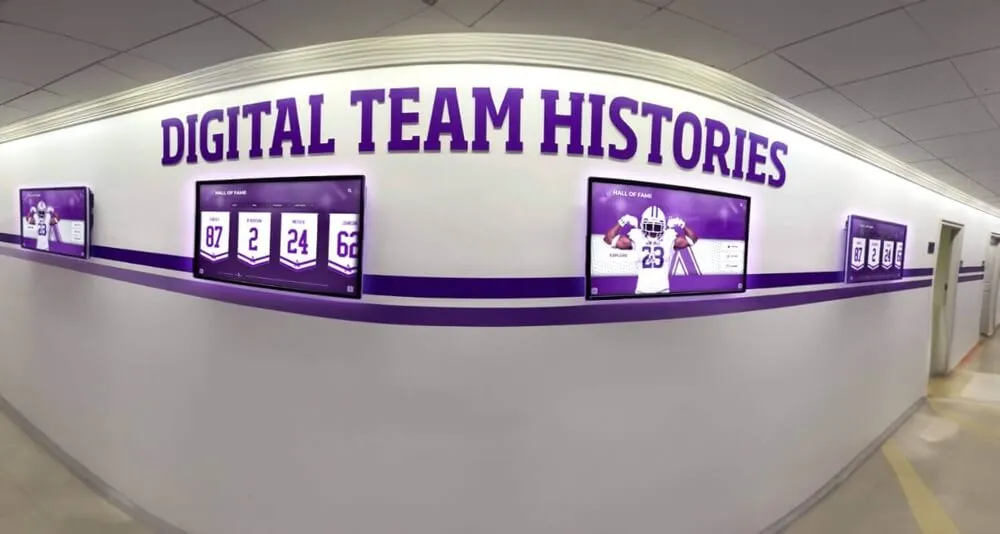
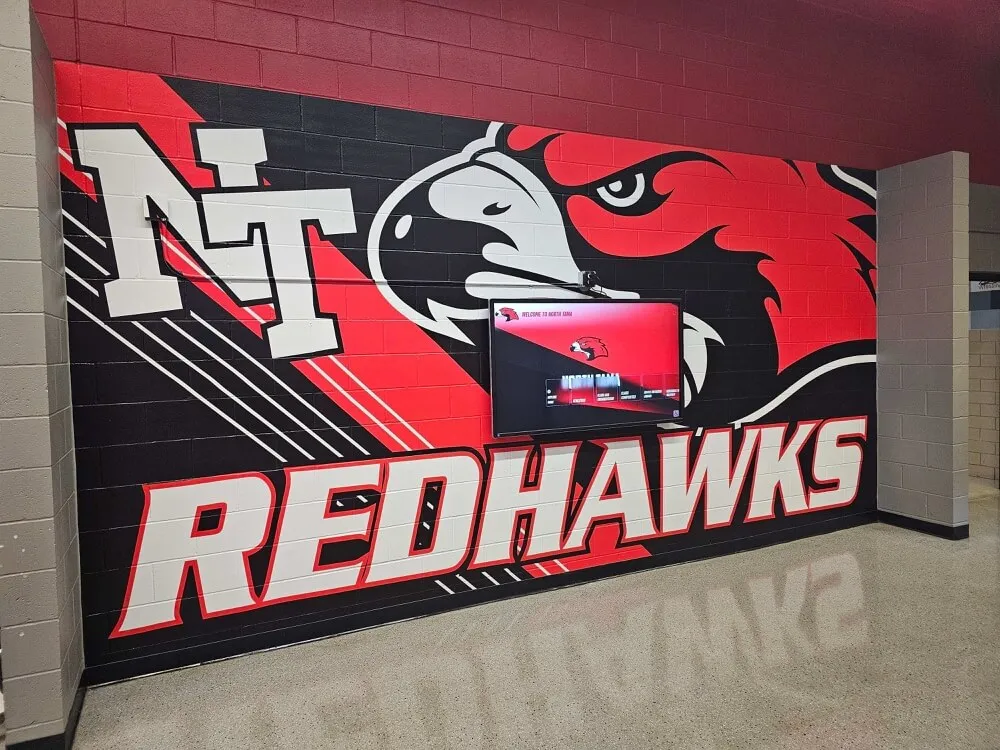
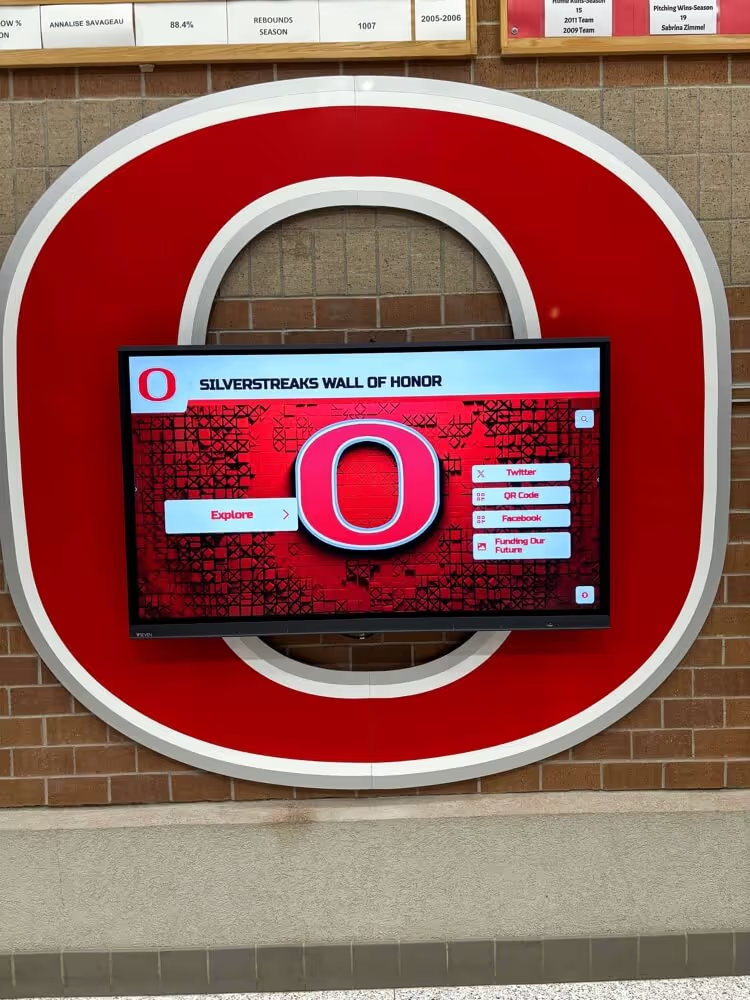
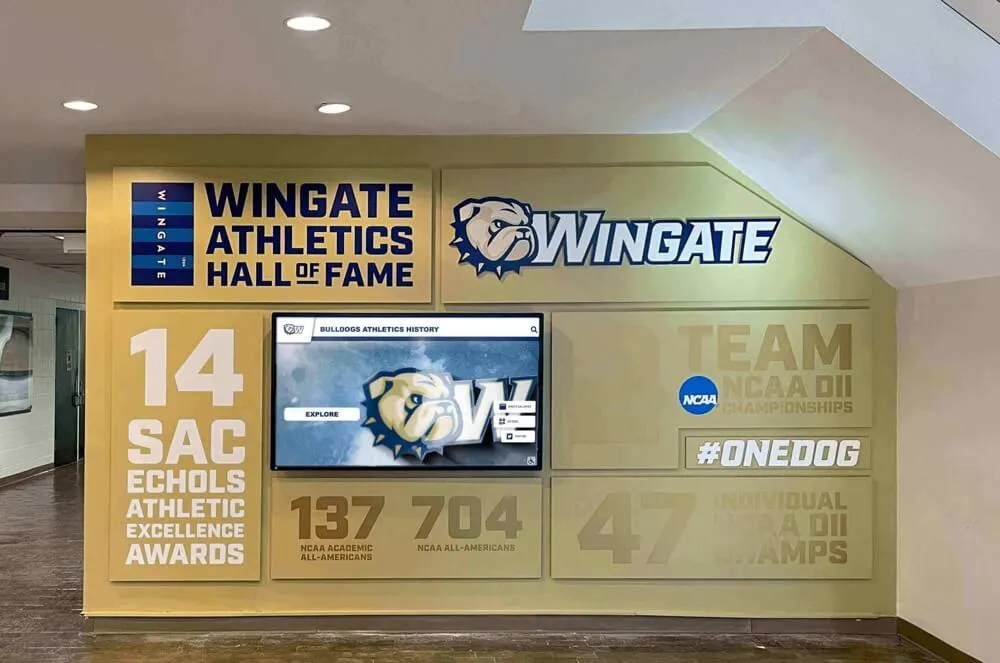
Comprehensive athletic recognition environments celebrate championship qualifiers alongside conference and state title winners through coordinated display systems
Standard Publication and Communication
Understanding where to find official standards and when they’re released enables strategic season planning:
Official State Association Websites
State athletic associations publish authoritative qualifying standards through dedicated championship meet pages listing complete standards across all events and classifications, downloadable PDF charts enabling coaches to share with athletes and families, updated calendars showing qualifying windows and deadline dates, and rule clarifications explaining verification procedures and special circumstances.
Coaches should bookmark state association championship pages at season start, checking regularly for updates or clarifications rather than relying on secondhand information or outdated previous season standards that may no longer apply.
Typical Publication Timeline
Most states follow consistent annual schedules including fall publication (September-November) for following spring season providing maximum advance planning time, winter confirmation (January-February) as seasons begin confirming no last-minute adjustments occurred, and mid-season reminders (March-April) as qualifying windows open emphasizing deadlines and verification requirements.
Early publication enables training program design targeting specific performance goals rather than generic fitness development, allowing coaches to establish realistic athlete expectations and helping families understand championship qualification likelihood before seasons begin.
Event-Specific Standard Variations
Track and field encompasses diverse events requiring different standard expressions:
- Running events use time-based standards (example: 100m ≤ 11.50 seconds)
- Throwing events establish distance minimums (example: shot put ≥ 45 feet)
- Jumping events set height or distance thresholds (example: high jump ≥ 6'2", long jump ≥ 21'6")
- Combined events (multi-event competitions) may use total point minimums rather than individual event standards
Understanding standard notation prevents confusion about whether faster times represent better performance (running/swimming) or slower times (not applicable in track), and whether higher numbers indicate better achievement across different event categories.
Resources on Oregon high school track and field records provide state-specific examples showing historical performance progression and record-setting achievements contextualizing qualifying standard difficulty.
Typical Qualifying Standard Ranges Across Events
While standards vary by state and classification, general patterns emerge revealing relative difficulty across event categories:
Sprint Events (100m, 200m, 400m)
Sprint qualifying standards typically represent performances approximately 1-2 seconds slower than state record times, enabling the fastest 16-24 athletes to qualify while excluding regional-level competitors who haven’t achieved championship-caliber speed. For example, if a state record stands at 10.5 seconds in the 100m, qualifying standards might fall around 11.0-11.5 seconds for large schools and 11.5-12.0 seconds for smaller classifications.
Distance Events (800m, 1600m, 3200m)
Distance standards show larger absolute time gaps from records reflecting longer race durations. A state with 1600m records around 4:15 might set qualifying standards at 4:30-4:40 for large schools and 4:40-4:55 for smaller classifications. Distance events often produce more qualifiers than sprints due to deeper competitive fields in many programs.
Hurdle Events (100m/110m hurdles, 300m/400m hurdles)
Technical hurdle events typically feature more selective standards reflecting specialized skill requirements. Many states admit fewer hurdle qualifiers compared to flat sprint events since fewer athletes develop proficient hurdling technique, creating naturally smaller competitive pools even before standards apply.
Field Events
Field event standards vary dramatically based on equipment, facilities, and technique complexity:
- High jump and pole vault use incremental height standards (often 3-6 inch differences between classifications)
- Long jump and triple jump establish distance minimums typically 1-3 feet below state records
- Shot put, discus, and javelin set weight throw distances accessible to athletes demonstrating proper technique and adequate strength development
Field events present unique strategic considerations since performance depends significantly on competition conditions, technique consistency, and equipment quality potentially creating greater variability than track events.

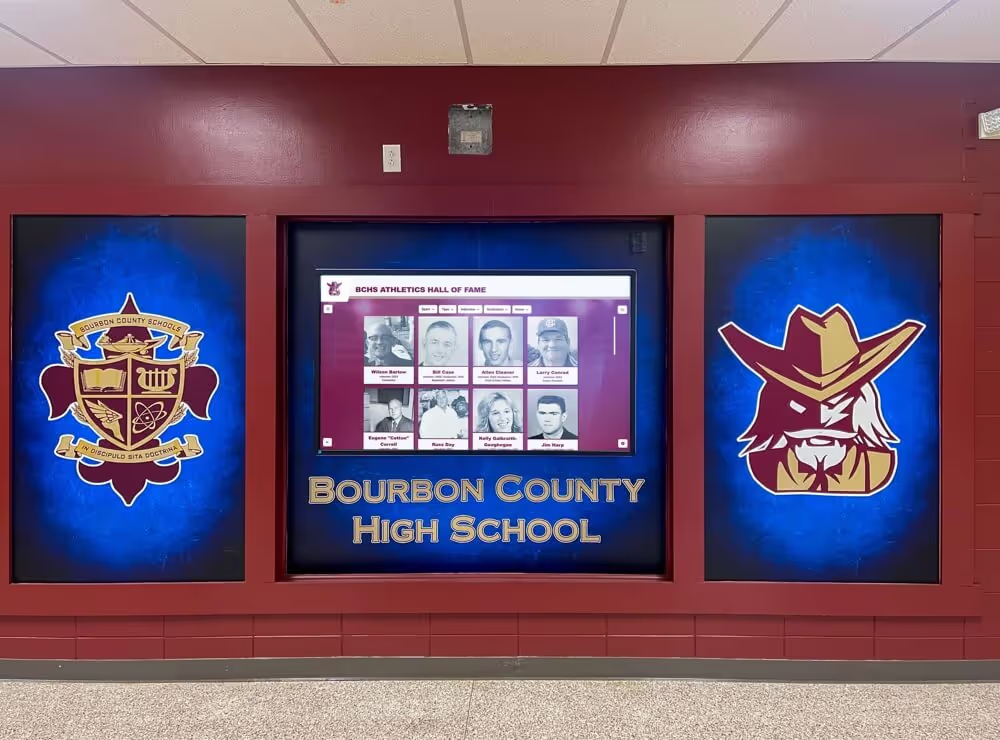
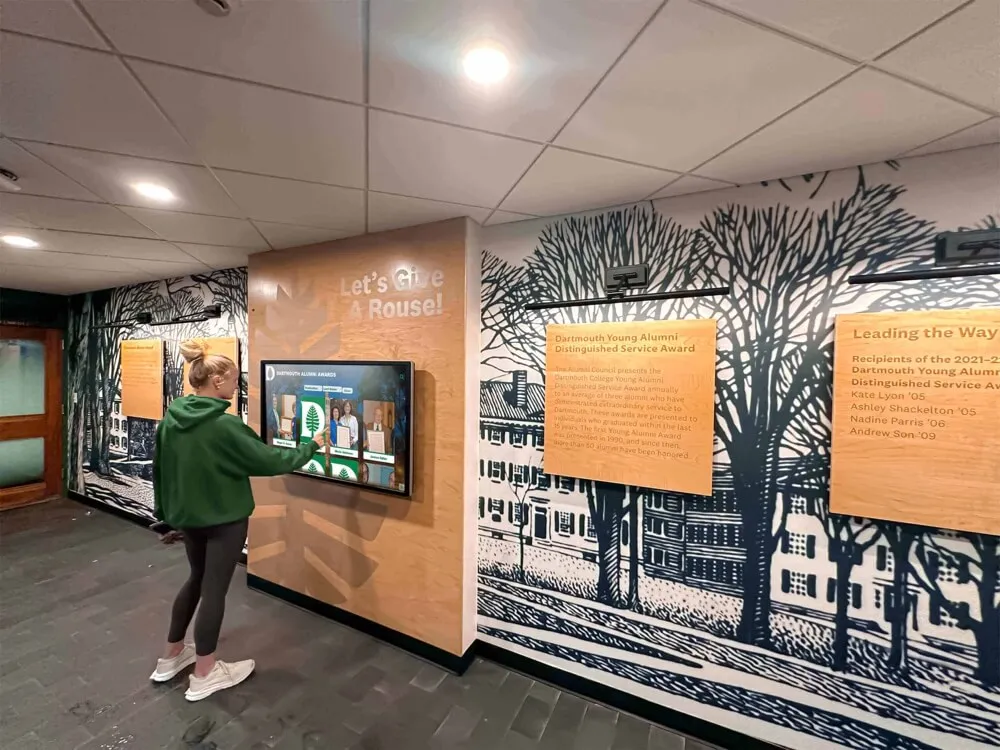
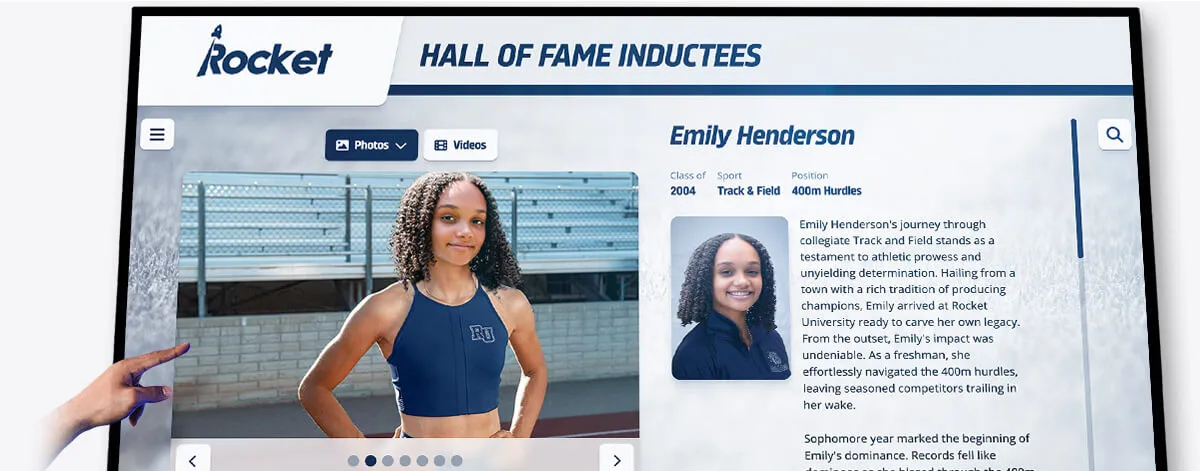
Card-based athlete directories enable efficient browsing while providing quick access to individual achievement profiles documenting qualifying performances
Strategic Approaches to Achieving Qualifying Standards
Understanding standards represents just the beginning—systematic training and competition strategies maximize qualification opportunities.
Season-Long Planning Targeting State Meet Qualification
Rather than hoping for late-season breakthroughs, successful qualification requires deliberate preparation:
Early Season Assessment and Goal Setting
Begin seasons by establishing realistic qualification targets through reviewing previous season performances identifying events where athletes came closest to standards, analyzing current physical condition and training progression determining improvement likelihood, discussing athlete motivation and commitment levels affecting training consistency, and prioritizing 1-2 primary events for focused qualification pursuit rather than spreading effort across too many disciplines.
Athletes within 3-5% of qualifying standards entering seasons represent realistic qualification candidates warranting targeted training investment. Those significantly farther from standards may pursue qualification as aspirational goals while maintaining realistic expectations about probability.
Periodized Training Programs
Effective qualification preparation follows systematic training cycles including base development phases (early season) building general fitness and technique foundations, specific preparation (mid-season) emphasizing event-specific conditioning and competitive sharpness, and championship taper (late season) reducing training volume while maintaining intensity for peak performances during qualifying windows.
Coaches should mark critical qualifying meet dates early, working backward to structure training ensuring athletes reach optimal fitness at crucial moments rather than peaking too early or arriving at championship opportunities undertrained or fatigued.
Competition Strategy and Peak Performance Timing
Smart athletes approach qualification windows strategically through entering early-season meets for baseline performance assessment and competitive experience, targeting mid-season competitions offering fast tracks, ideal conditions, or weak fields providing qualification opportunities, maintaining championship meet entry as primary qualification target, and preserving backup opportunities at invitational meets extending qualifying windows beyond single-chance scenarios.
Multiple qualification attempts reduce pressure and provide adjustment opportunities when weather, injuries, or competitive circumstances affect individual meet performances.
Event Selection and Specialization Decisions
Athletes face important strategic choices about event focus and qualification targeting:
Primary Event Concentration vs. Multiple Event Pursuit
Track and field allows athletes to compete across multiple events, but qualification strategies benefit from focused specialization through dedicating primary training emphasis to 1-2 events offering highest qualification probability, developing secondary events where natural ability or complementary training provides additional opportunities, and avoiding excessive event distribution that compromises performance quality across all disciplines through insufficient specialized preparation.
For example, talented sprinters might focus 400m qualification while maintaining 200m as secondary opportunity since training transfers effectively between events. Pursuing 400m, long jump, and triple jump simultaneously might spread training focus too thinly, reducing qualification probability in all events.
Identifying Competitive Advantages
Successful qualification often requires honest assessment of competitive positioning within state fields through analyzing state rankings and seasonal performance lists showing where athletes rank relative to standards, identifying events with weaker state-level competition offering better qualification odds, recognizing physical or technical advantages suggesting particular event focus, and considering facility and equipment factors where home venues provide advantages or disadvantages relative to state meet conditions.
Athletes ranking 25-40th in one event but 15-20th in another should consider emphasizing the event offering higher qualification likelihood even if personal preferences favor the more competitive event where qualification remains unlikely.
Understanding Multi-Event Opportunities
Some athletes maximize state meet participation through combined events including heptathlon/decathlon competitions where cumulative performance across multiple disciplines generates qualifying scores, relay events where team qualification depends on combined performance rather than individual standards, and managing individual event qualification alongside relay opportunities potentially providing multiple state meet competitive experiences.
Multi-event specialization can offer qualification pathways for versatile athletes who might not reach individual event standards but excel at combined competition formats rewarding balanced capability across multiple disciplines.
Resources on track and field awards and recognition demonstrate how schools celebrate diverse achievement including state meet qualification across multiple event categories.
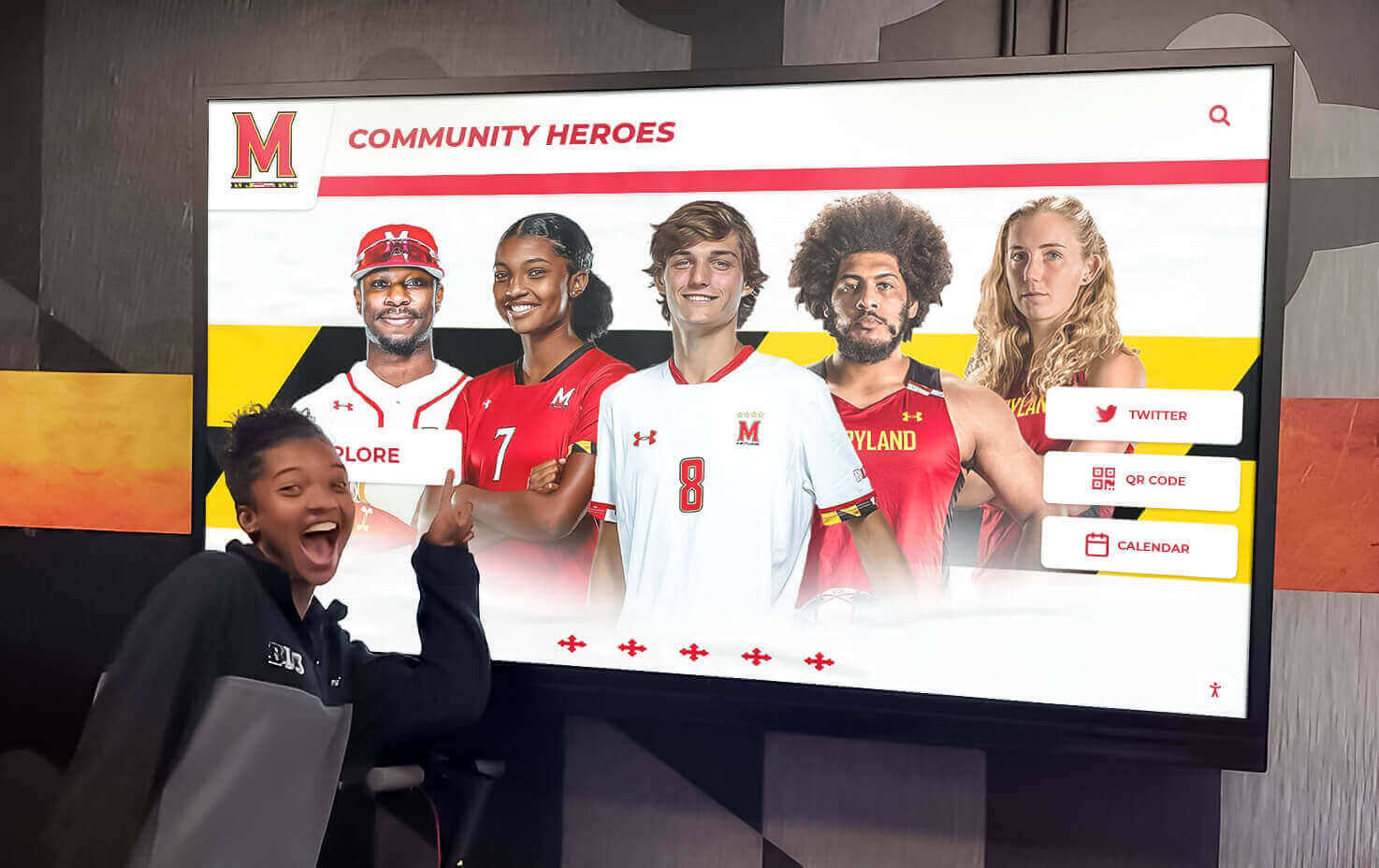
Accessible recognition displays inspire younger athletes by showcasing championship-level achievement and state meet qualifiers serving as role models
Performance Verification and Qualification Confirmation
Achieving qualifying performances requires proper documentation and verification:
Meet Eligibility and Timing Requirements
States establish specific rules about which competitions count toward qualification including sanctioned meets hosted by member schools or approved organizations, certified timing systems using electronic timing for running events rather than hand-held stopwatches, verified officials ensuring proper measurement and rule compliance for field events, and deadline dates establishing qualification windows—typically concluding 1-2 weeks before state meets.
Performances at unsanctioned meets or competitions lacking proper timing/measurement systems won’t count toward qualification regardless of achievement quality, making advance verification of meet standards essential before athletes rely on specific competitions for qualification attempts.
Documentation and Submission Procedures
Qualifying performances require systematic verification through official meet results posted on timing company websites or state athletic association databases, coach certification confirming athlete identity and performance legitimacy, qualifying list monitoring where athletes and coaches verify accurate inclusion on official state meet entry lists, and clarification processes for resolving discrepancies or missing performances before final entries close.
Coaches should maintain detailed records of athlete performances throughout seasons, proactively confirming qualifying mark submissions rather than assuming automatic inclusion based on achieving standards during sanctioned competition.
Wind-Aided Performance Considerations
Sprint and horizontal jump events face special wind restrictions since excessive tailwinds artificially inflate performances:
- Wind gauge maximums typically allow +2.0 meters per second tailwind for performances to count toward qualification
- Wind-aided marks (those exceeding +2.0 m/s assistance) may not qualify athletes even when times/distances surpass standards
- Alternative qualifying opportunities become necessary when athletes achieve standards under illegal wind conditions
Wind-aided performances create frustrating situations where athletes demonstrate qualifying-level ability but must repeat performances under legal wind conditions for official recognition—emphasizing importance of multiple qualification attempts across different meets and weather scenarios.
Appeal Processes and Special Circumstances
State associations typically provide procedures addressing unusual circumstances including performances achieved at out-of-state competitions under specific conditions, athletes recovering from injuries affecting participation in standard qualifying meets, transfer students or late-season roster additions with limited qualifying opportunities, and measurement or timing disputes requiring official review.
Understanding appeal procedures before encountering special circumstances enables appropriate documentation and timely submission when exceptional situations arise requiring association consideration.

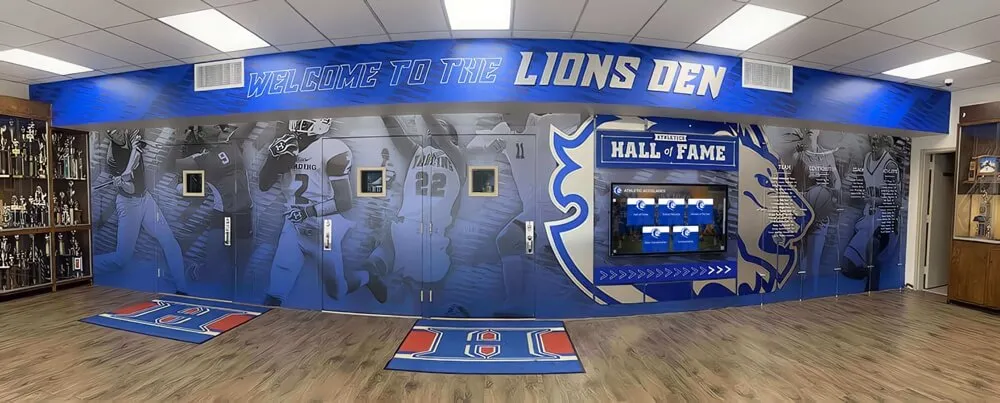
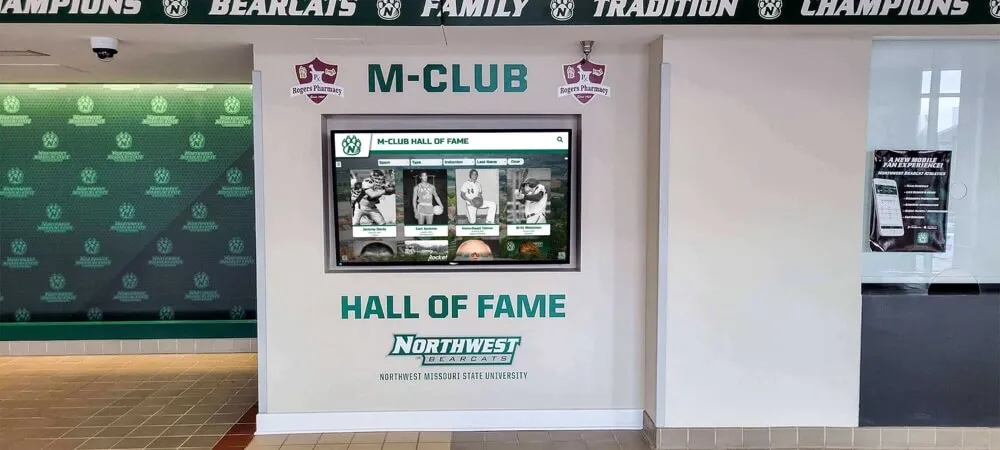
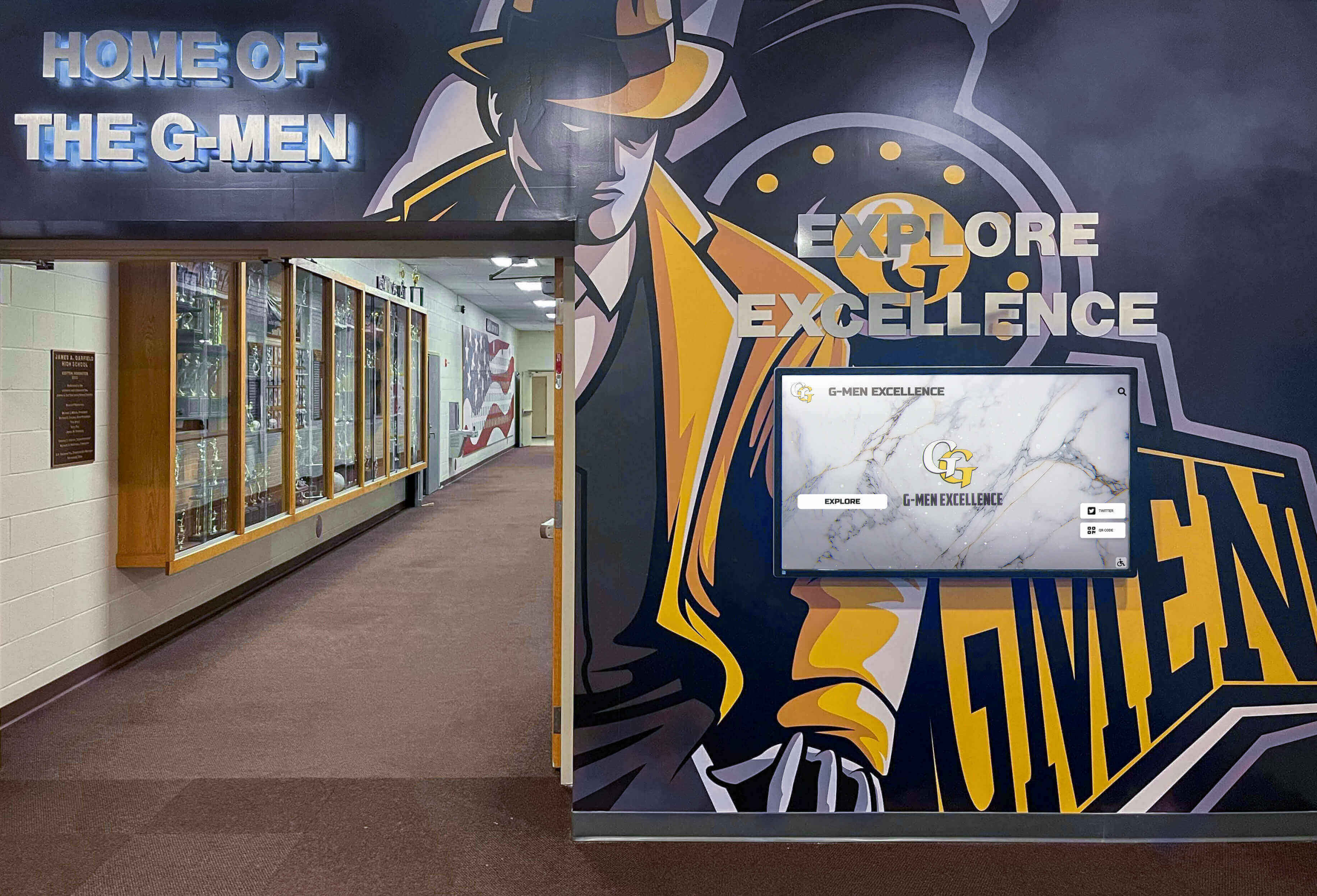
Dedicated recognition environments combine physical trophies with digital displays creating comprehensive celebration spaces honoring championship qualifications
Preparing Athletes for State Championship Competition
Qualification represents just the beginning—championship meet preparation determines competitive outcomes.
Understanding State Meet Formats and Expectations
State championship meets operate differently than regular season competitions:
Competition Structure and Scheduling
State meets typically compress competition into 1-3 days depending on classification systems and entry sizes through preliminary rounds (heats) determining lane assignments or competition orders for finals, semi-final rounds in events with large qualifier numbers reducing field sizes before final competitions, and final rounds determining place finishes and championship recognition.
Athletes should understand when their events schedule, how many rounds they’ll compete through, and minimum recovery time between preliminary and final rounds affecting race strategy and energy management approaches.
Performance Environment Differences
Championship meets present unique competitive circumstances including higher-quality competition fields featuring state’s fastest athletes creating more challenging tactical situations, larger crowd environments potentially affecting athletes unaccustomed to significant spectator attention, professional meet management with stricter protocols, timing, and official procedures, and prestigious venue facilities often representing best tracks and equipment in state.
These environmental factors affect athlete mindset and performance—some athletes thrive under championship pressure while others struggle with increased intensity and attention. Understanding individual athlete psychology helps coaches prepare appropriate mental preparation strategies.
Championship Performance Strategy
Competing effectively at state meets requires adjusted approaches from regular season competition:
Preliminary Round Strategy
Athletes competing in multiple rounds face important strategic decisions through understanding automatic advancement criteria determining how many athletes per heat advance automatically, utilizing time-based advancement positions where athletes advance based on overall times even when not placing within their heat, managing effort levels during preliminaries conserving energy for finals while running fast enough to advance, and avoiding tactical errors like poor positioning or excessive early pace that might cause elimination despite adequate fitness.
Preliminary rounds reward smart racing rather than maximum effort—athletes should advance to finals in good position while preserving physical and mental energy for subsequent rounds where championships are decided.
Managing Multi-Day Competition
Athletes competing across multiple days must carefully manage recovery and preparation through proper warm-up routines adapted for multiple daily sessions, nutrition and hydration strategies supporting repeated high-intensity efforts, adequate sleep despite travel, excitement, and nervous energy affecting rest quality, and mental freshness preventing emotional exhaustion from sustained high-pressure competition environment.
Multi-day meets test overall athletic development and maturity beyond single-competition performance capabilities—successful championship athletes demonstrate consistent preparation and recovery skills maintaining peak condition across extended competition schedules.
Handling Pressure and Championship Mindset
Mental preparation often determines championship outcomes when physical capabilities reach comparable levels through pre-competition routines establishing familiar patterns reducing anxiety and uncertainty, visualization techniques rehearsing successful performances building confidence, focus strategies maintaining concentration on controllable performance factors rather than opponents or outcomes, and resilience skills recovering from mistakes or disappointing preliminary performances to compete effectively in subsequent rounds or events.
Championship competition reveals which athletes possess mental toughness executing under pressure when recognition, team scoring, and personal goals create high-stakes situations testing psychological preparation alongside physical capabilities.
Guidance on Iowa state track meet experiences provides state-specific insights into championship meet formats and competition expectations athletes encounter.

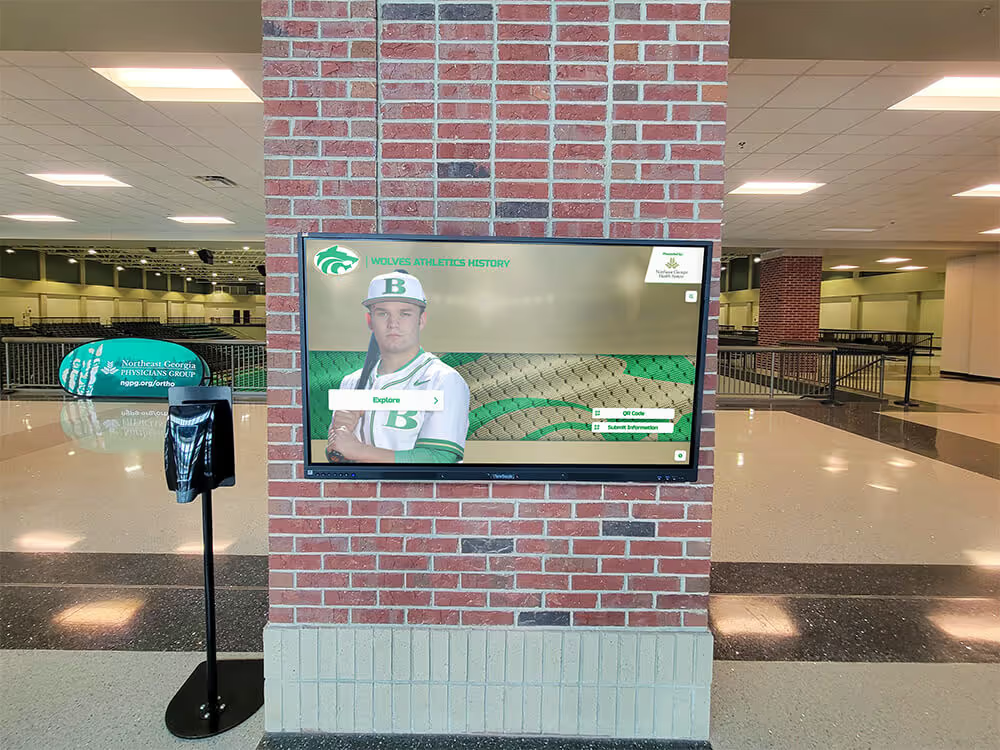
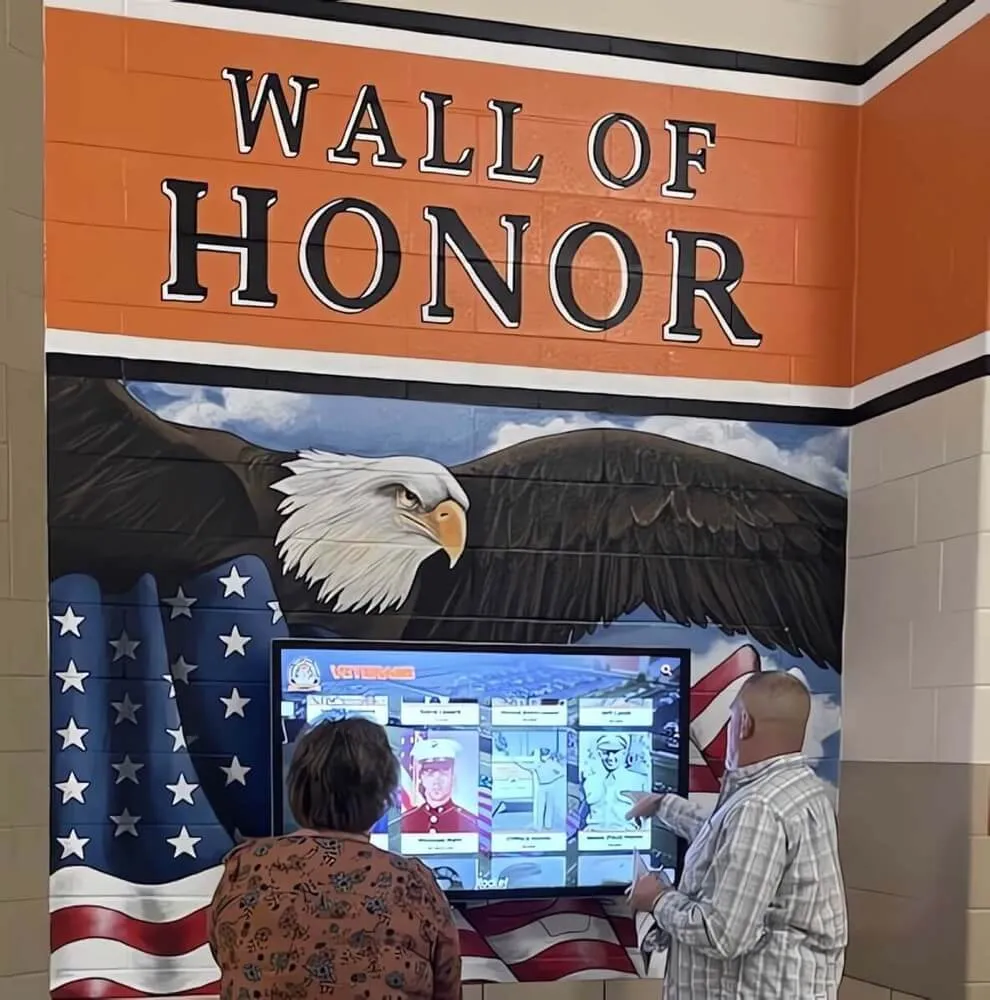
Touch-enabled recognition platforms enable intuitive athlete profile access supporting detailed documentation of qualifying performances and championship results
Celebrating State Meet Qualifiers Through Visible Recognition
Achieving state meet qualification merits systematic celebration acknowledging exceptional achievement:
Traditional Qualifier Recognition Approaches
Schools employ various methods honoring state meet qualifiers:
Bulletin Boards and Physical Displays
Conventional recognition includes hallway bulletin boards posting qualifier names, photos, and events, gymnasium banners documenting qualifiers annually creating visible historical records, trophy case dedications where qualifier plaques or certificates receive prominent display alongside championship trophies, and team recognition walls featuring qualifiers within broader athletic honor displays.
Physical recognition provides tangible institutional acknowledgment athletes and families deeply value while creating visible motivation for younger team members aspiring to similar achievement. However, space limitations eventually constrain capacity as qualifier lists accumulate across multiple seasons and expanding athletic programs.
Ceremony and Public Acknowledgment
Beyond physical displays, public recognition events honor qualifiers including pre-state meet sendoff assemblies where schools celebrate qualifiers before championship competition, season-end banquets where qualifier achievement receives formal recognition alongside conference and state champions, social media announcements sharing qualifier lists and athlete profiles with broader school communities, and local media features in newspapers or broadcasts highlighting qualifier achievement.
Public celebration communicates institutional pride in qualifier achievement while inspiring community support and engagement with athletic programs demonstrating competitive excellence reaching state championship levels.
Modern Digital Recognition Solutions
Contemporary technology enables enhanced qualifier celebration addressing traditional limitation:
Interactive Touchscreen Recognition Displays
Purpose-built digital platforms transform state meet qualifier recognition through unlimited capacity documenting all qualifiers across multiple years without physical space constraints, rich multimedia profiles featuring photos, race videos, qualifying performances, and biographical narratives, instant updates adding current season qualifiers immediately following verification without engraving or installation delays, searchable databases enabling visitors to quickly find specific athletes, events, or years, and web accessibility extending recognition beyond physical facilities to alumni and families accessing remotely.
Digital recognition displays specifically designed for athletic achievement celebration provide sophisticated recognition capabilities far exceeding traditional bulletin boards or static displays—creating engaging interactive experiences honoring qualifier accomplishment through comprehensive multimedia documentation.
Event-Specific Recognition Categories
Digital systems enable organized qualifier recognition through event-specific galleries separating sprinters, distance runners, hurdlers, and field event athletes, year-by-year archives maintaining historical qualifier documentation across multiple seasons, classification distinction where applicable showing how standards vary across school sizes, and personal record tracking documenting athlete progression from initial qualification through career-best performances.
Systematic organization helps visitors explore relevant content efficiently while maintaining comprehensive historical documentation preventing qualifier achievement from disappearing after seasons conclude or as newer qualifiers emerge.
Integrated Athletic Recognition Ecosystems
Sophisticated schools develop comprehensive recognition systems celebrating diverse achievement levels through state champion recognition at top tier honoring athletes earning medals or titles, state qualifier celebration acknowledging all athletes reaching championship meets, conference recognition documenting league achievement, and school record holders maintaining facility and program performance standards.
This tiered approach ensures appropriate recognition across multiple achievement levels—state qualification receives significant honor without diminishing state championship recognition, while conference success gains acknowledgment even when state standards remain out of reach.
Examples from digital record board implementations demonstrate how schools systematically document qualifier achievement alongside record-setting performances and championship results.

Web-based recognition platforms extend state meet qualifier celebration beyond physical facilities enabling remote access for alumni and families
Building Qualifier Pipeline Through Recognition and Motivation
State meet qualifier recognition serves important motivational functions beyond simply acknowledging achievement:
Inspiring Younger Athletes Through Visible Success
Prominent qualifier recognition creates aspirational goals throughout programs:
Establishing Competitive Benchmarks
Visible qualifier documentation helps younger athletes understand program expectations and achievement levels through seeing which upperclassmen earned qualification demonstrating achievable standards, reviewing qualifying performances understanding specific times, heights, or distances required, tracking historical qualifier trends showing whether standards become more or less accessible over time, and connecting with qualifier mentors who share training approaches and competition experiences.
Recognition without context provides limited motivational value—comprehensive systems documenting qualifying performances alongside athlete profiles create actionable information helping aspiring qualifiers understand achievement pathways rather than viewing state meet participation as mysterious accomplishment lacking clear access routes.
Creating Training Group Culture
Effective programs leverage qualifier recognition building positive competitive culture through practice environment where qualifying standards become regular training goals and pace benchmarks, peer accountability where teammates support each other’s qualification pursuits, tradition and legacy where programs develop reputation for consistent qualifier development, and celebration rituals where current team members honor new qualifiers maintaining cultural emphasis on championship-level achievement.
Programs consistently producing multiple qualifiers create self-reinforcing competitive cultures where state meet participation becomes expected achievement rather than exceptional outlier—peer influence and visible recognition combine creating powerful motivational environments elevating collective performance.
Alumni Engagement Through Historical Qualifier Recognition
Former athletes appreciate seeing their qualifying achievements preserved and celebrated:
Digital Archives Preserving Athletic Legacy
Modern recognition systems enable comprehensive historical documentation including scanning historical records identifying qualifiers from previous decades before systematic documentation existed, interviewing alumni gathering first-person accounts and memories from early program eras, compiling meet results from newspaper archives and old programs preserving performance documentation, and creating multimedia exhibits combining historical photos, newspaper clippings, and contemporary narrative contextualizing qualifier achievement within program evolution.
Historical recognition demonstrates institutional commitment to honoring achievement across all eras—not just celebrating recent qualifiers while forgetting athletes who competed when programs were developing or before modern documentation systems existed.
Reunion and Engagement Opportunities
Qualifier recognition creates natural alumni connection points through inviting former qualifiers to attend current state meets supporting contemporary team members, hosting reunion events where qualifier cohorts from specific eras reconnect and share memories, featuring qualifier spotlights in alumni communications highlighting past achievement and current life updates, and soliciting historical content where alumni contribute photos, memorabilia, and stories enriching recognition archives.
Alumni who feel their athletic contributions receive ongoing recognition demonstrate stronger institutional connections generating sustained program support through volunteer coaching assistance, financial contributions supporting team needs, mentorship relationships with current athletes, and advocacy promoting program interests within broader communities.
Insights on athletic achievement recognition programs demonstrate comprehensive approaches celebrating diverse accomplishment including state meet qualification alongside academic and leadership recognition.

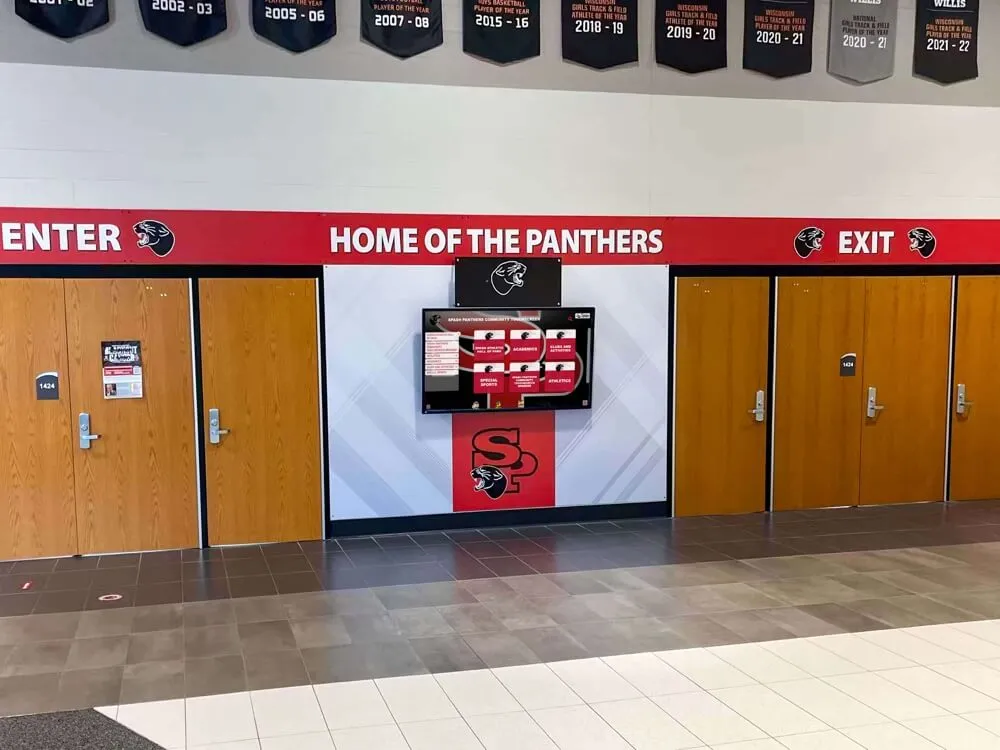
Strategic hallway placement ensures qualifier recognition reaches broad audiences including students, staff, visitors, and prospective athletes during facility tours
Addressing Common State Meet Qualification Challenges
Athletes and coaches frequently encounter specific obstacles during qualification pursuit:
Managing Injury and Health Issues During Qualification Windows
Athletic injuries create particularly challenging timing when occurring during critical qualifying periods:
Late-Season Injury Management
Athletes experiencing injuries approaching qualification deadlines face difficult decisions through medical evaluation determining whether competition risks long-term health consequences, alternative event consideration when injuries prevent primary event qualification but other events remain accessible, strategic rest decisions weighing early season qualification attempts against championship meet readiness, and communication with coaches and medical professionals ensuring informed decisions balancing competitive goals with athlete welfare.
Qualification represents important achievement, but permanent injury risking future athletic participation or quality of life never justifies competing through serious health concerns—maintaining appropriate perspective helps athletes and coaches make sound decisions when injuries complicate qualification pursuits.
Illness and Performance Impact
Minor illnesses dramatically affect performance capability particularly in aerobic events requiring maximum cardiovascular capacity through recognizing when illness compromises qualification probability making competition counterproductive, understanding recovery timelines determining when return to competition becomes realistic, utilizing backup qualifying opportunities when illness affects primary target meets, and accepting situations where qualification becomes unachievable due to circumstances beyond athlete control.
Athletes missing qualification due to untimely illness experience understandable disappointment, but comprehensive programs recognize these athletes’ seasonal achievement and dedication even without official state meet participation credentials.
Weather and Environmental Conditions Affecting Qualification
External factors beyond athlete control significantly impact performance:
Wind Considerations for Sprints and Jumps
Excessive wind creates frustrating situations through legal performances under slight headwinds requiring faster absolute times to achieve qualifying standards, wind-aided performances exceeding standards but not counting toward qualification due to excessive tailwind assistance, and variable conditions where athletes compete in different heats experiencing dramatically different wind assistance affecting qualification fairness.
Multiple qualifying opportunities across different meets and dates reduce weather-related impact providing athletes chances to compete under varied conditions increasing probability of encountering favorable or at least legal wind circumstances.
Temperature and Heat Impact
Distance events particularly suffer from excessive heat affecting performance through increased physiological strain reducing sustainable pace relative to cooler conditions, hydration challenges affecting performance quality, safety concerns where extreme temperatures create health risks potentially outweighing competitive goals, and altered race tactics where heat requires conservative early pace preventing over-exertion.
Athletes training in moderate climates who encounter unexpected heat during critical qualifying meets face disadvantages compared to warm-weather trained competitors—making early season qualification attempts in cooler conditions strategically valuable for distance specialists.
Facility and Track Surface Variations
Performance quality depends significantly on competitive facilities through track surface speed where newer synthetic tracks enable faster times compared to older surfaces, runway quality affecting approach consistency in horizontal jumps, landing pit conditions influencing high jump and pole vault attempts, and throwing circle surfaces and adjacent areas affecting release mechanics and balance.
Whenever possible, athletes benefit from competing at multiple facilities during seasons gaining experience with varied conditions while identifying venues offering optimal surfaces for qualification attempts.
Resources addressing state wrestling tournament preparation provide parallel guidance for individual sport championship qualification and competition relevant across multiple athletic disciplines.
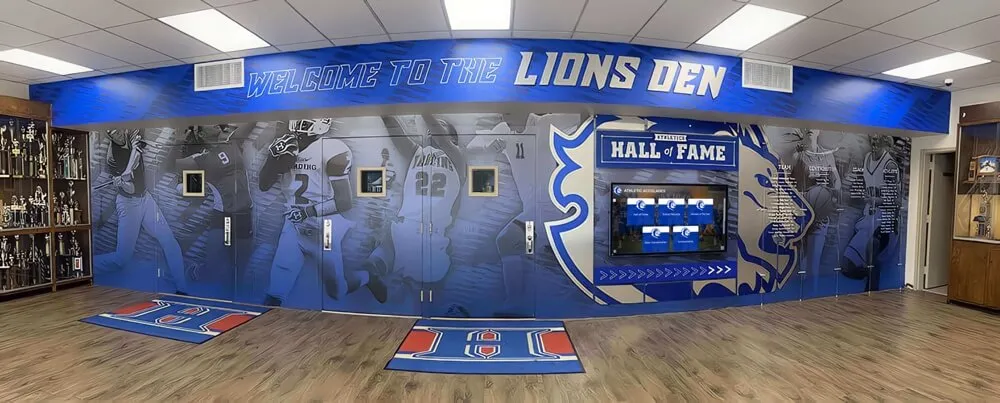
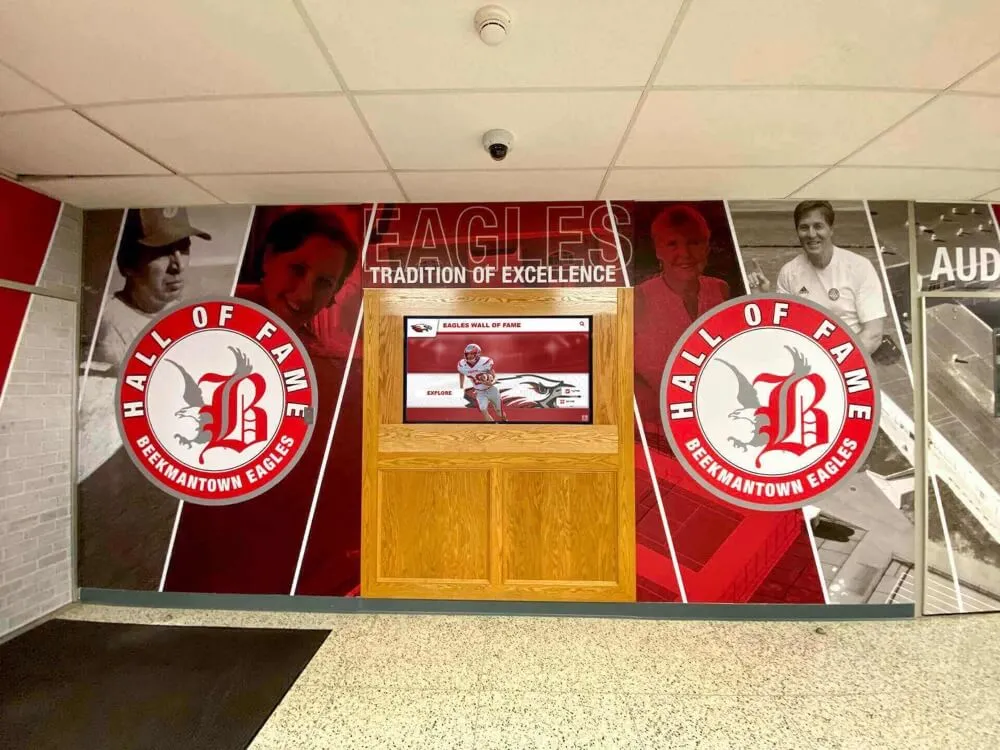
Branded athletic recognition environments integrate state meet qualifier celebration within comprehensive achievement displays honoring program tradition
State Meet Qualification in Recruiting and College Athletics
For athletes pursuing collegiate competition, state meet qualification carries recruiting significance:
College Coach Perspectives on State Meet Participation
Collegiate programs evaluate prospects through multiple lenses including state meet qualification:
Qualification as Competitive Benchmark
College coaches recognize state meet participation indicating athletes competed at championship level within their states through demonstrating performance capability reaching top 16-24 athletes in competitive pools, showing competitive maturity handling pressure situations and championship environments, revealing psychological readiness competing effectively when stakes increase, and establishing baseline performance standards coaches can project for collegiate development.
State meet qualification doesn’t guarantee college recruitment interest, but absence of qualification makes recruitment unlikely except for athletes demonstrating exceptional recent improvement suggesting significant untapped potential.
Performance Context Matters
Sophisticated college recruiters understand qualification within context through recognizing difficulty variations across different state competitive landscapes where qualifying in highly competitive states indicates higher absolute performance level than qualification in weaker competitive environments, accounting for athlete circumstances including injuries, development trajectory, and specific event depth, evaluating improvement trends where athletes approaching but not yet achieving standards demonstrate trajectory suggesting future qualification, and considering multi-sport athletes whose overall athletic profile compensates for specific track performance limitations.
Simple qualification doesn’t automatically create recruitment opportunity—college coaches evaluate complete athlete profiles including academic performance, coachability, injury history, and development potential beyond just state meet credentials.
Communicating Achievement to College Coaches
Athletes should strategically share qualifying performances through highlight videos documenting state meet competition experiences, athletic profiles on recruiting platforms listing state meet participation and performances, direct communication with college programs identifying schools matching athlete aspirations and abilities, and social media updates showcasing state meet preparation and competition provided content maintains appropriate professional standards.
State meet qualification represents significant recruiting asset worth systematic documentation and strategic communication to college programs evaluating prospective athletes—but qualification alone won’t generate recruitment without proactive athlete outreach and profile development.
Frameworks for athletic recognition programs demonstrate systematic approaches documenting athlete achievement supporting both institutional recognition and individual college recruitment efforts.
Conclusion: Making State Meet Qualification Meaningful Achievement
State track meet qualifying standards establish clear performance benchmarks distinguishing championship-level athletes from regional competitors—creating tangible goals motivating training commitment while providing measurable achievement validation. Understanding how standards work, strategically targeting qualification through focused preparation, properly documenting qualifying performances, and appropriately celebrating qualifiers through systematic recognition programs ensures this prestigious accomplishment receives proper emphasis while inspiring future athletes to pursue similar excellence.
Celebrate State Meet Qualifiers With Interactive Recognition
Discover how purpose-built digital recognition platforms enable comprehensive state meet qualifier celebration with unlimited capacity, engaging multimedia athlete profiles, and instant updates honoring championship-level achievement. Rocket Alumni Solutions specializes in athletic recognition technology designed specifically for track and field programs across all competitive levels.
Explore Recognition SolutionsFor athletes who achieve state meet qualification, recognition extends beyond brief ceremony announcements—thoughtful programs implement permanent visibility ensuring qualifier achievement receives lasting celebration inspiring current and future team members. Whether through traditional bulletin boards documenting qualifier lists or sophisticated interactive recognition displays providing comprehensive multimedia profiles, visible acknowledgment communicates institutional values celebrating excellence while building competitive culture encouraging championship-level pursuit across entire programs.
Coaches developing athletes toward state meet qualification should maintain long-term perspective recognizing that systematic training, strategic event selection, and mental preparation prove more reliable than hoping for unexpected breakthrough performances during brief qualifying windows. Athletes who fall short of qualification after dedicated pursuit still demonstrate commendable commitment deserving recognition even without official state meet credentials—comprehensive programs celebrate diverse achievement levels acknowledging that valuable growth occurs throughout qualification pursuit regardless of ultimate outcomes.
Ready to enhance track and field recognition at your school? Explore senior night celebration ideas honoring graduating qualifiers, discover MVP award recognition approaches celebrating exceptional athletic excellence, learn about wall wrap installations creating immersive athletic recognition environments, and understand digital display solutions ensuring state meet qualifiers receive lasting celebration worthy of their championship-level achievement.