



Swim team plaque display digital solutions represent the evolution from traditional painted record boards and engraved plaques to modern interactive systems that celebrate aquatic achievement through engaging touchscreen technology. As swim programs accumulate decades of records across expanding event categories and competition levels, traditional recognition methods face fundamental limitations: limited wall space in natatoriums forcing difficult choices about which records receive visibility, costly and time-consuming updates requiring professional repainting or new engraving, and static displays that document times without telling the compelling stories behind breakthrough performances.
Swimming programs nationwide grapple with recognition challenges unique to aquatic sports. Pool record boards must accommodate multiple pool configurations (25-yard short course, 25-meter short course, and 50-meter long course), gender-specific events, age group divisions, relay teams, and individual performances—creating recognition complexity far exceeding most other athletic programs. Traditional painted boards fill available natatorium wall space within years as successful programs continue setting records. Update cycles measured in weeks or months mean recent achievements remain unrecognized while athletes train daily beside outdated information. And swimmers breaking records receive minimal context about whose times they surpassed or how their performances rank historically within program traditions.
This comprehensive guide explores how digital plaque display technology addresses these aquatic-specific recognition challenges while transforming how swim teams celebrate achievement, preserve heritage, and inspire current athletes through modern interactive systems designed specifically for the unique demands of competitive swimming recognition.
Swimming programs implementing digital record displays report dramatic improvements in athlete engagement, with swimmers spending significantly more time exploring program history, researching records in their events, and developing deeper connections with team traditions compared to passive viewing of traditional painted boards. This enhanced engagement translates to stronger team culture, improved athlete motivation, and more effective recognition that honors both current achievers and historical excellence spanning decades of program development.

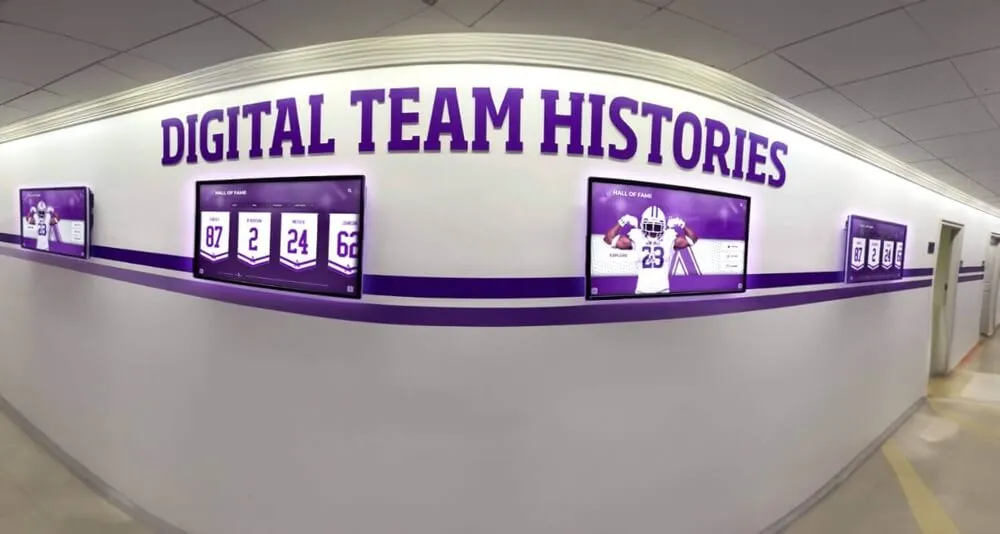
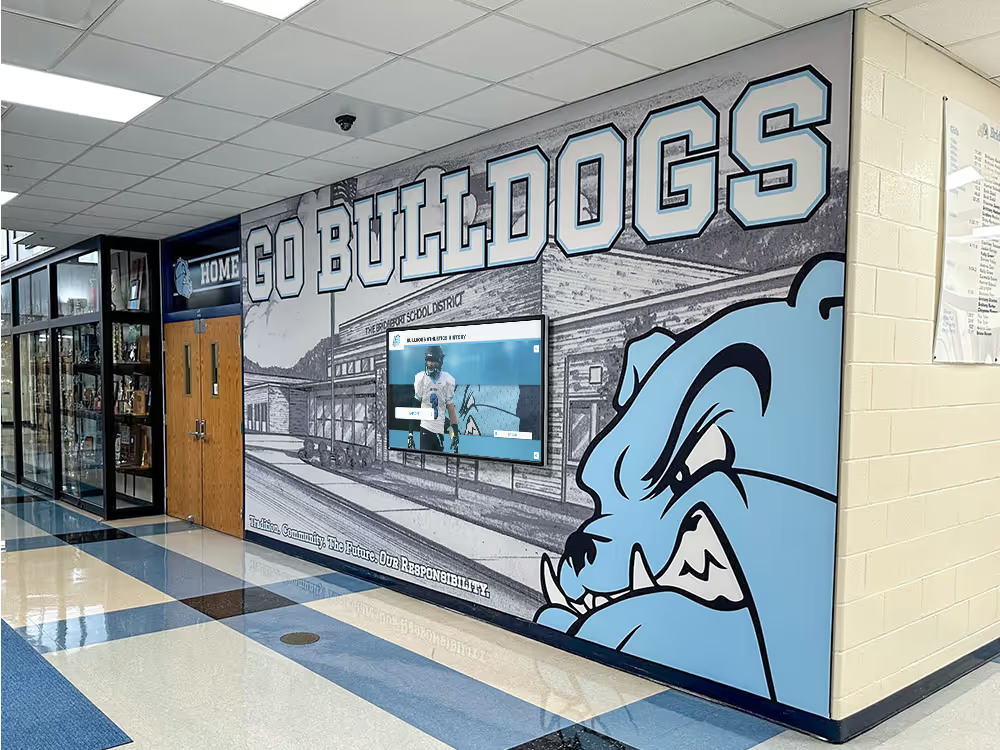
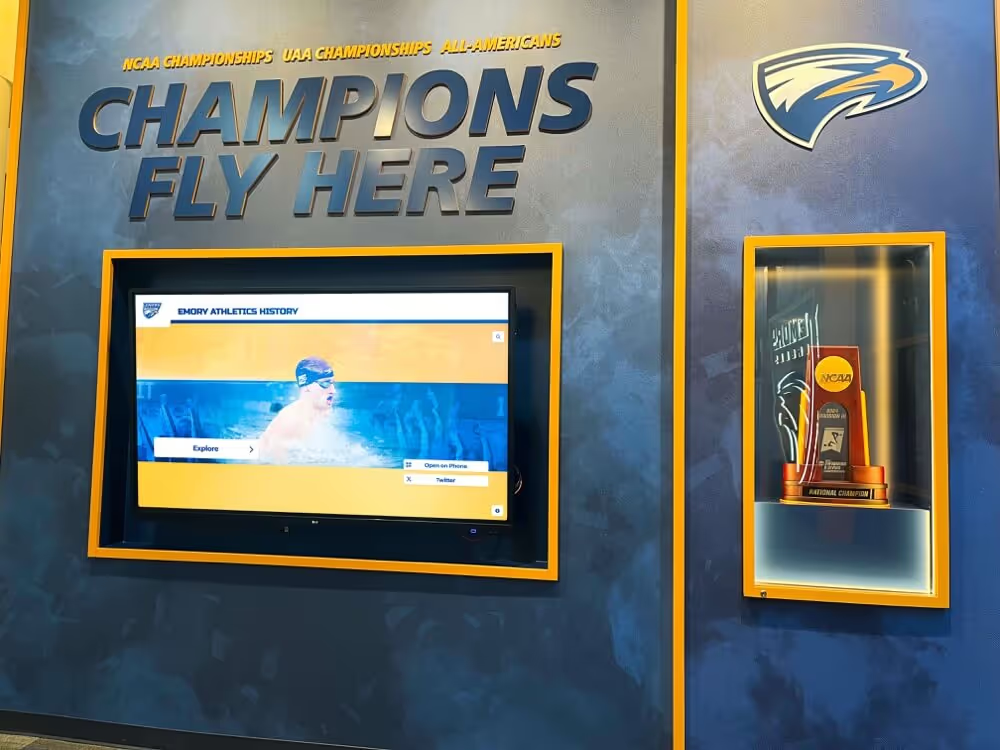
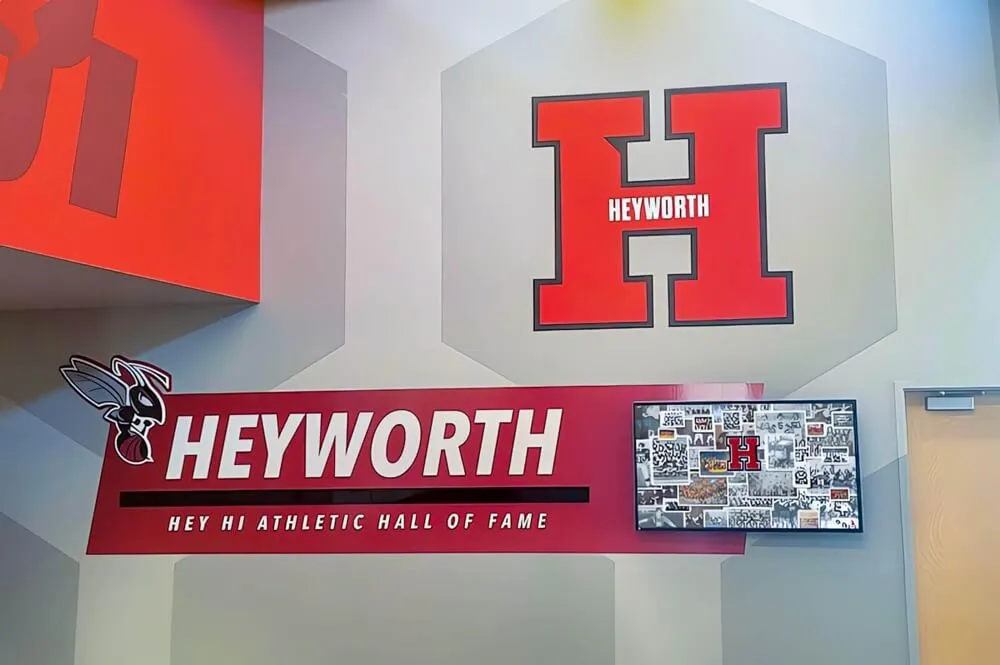
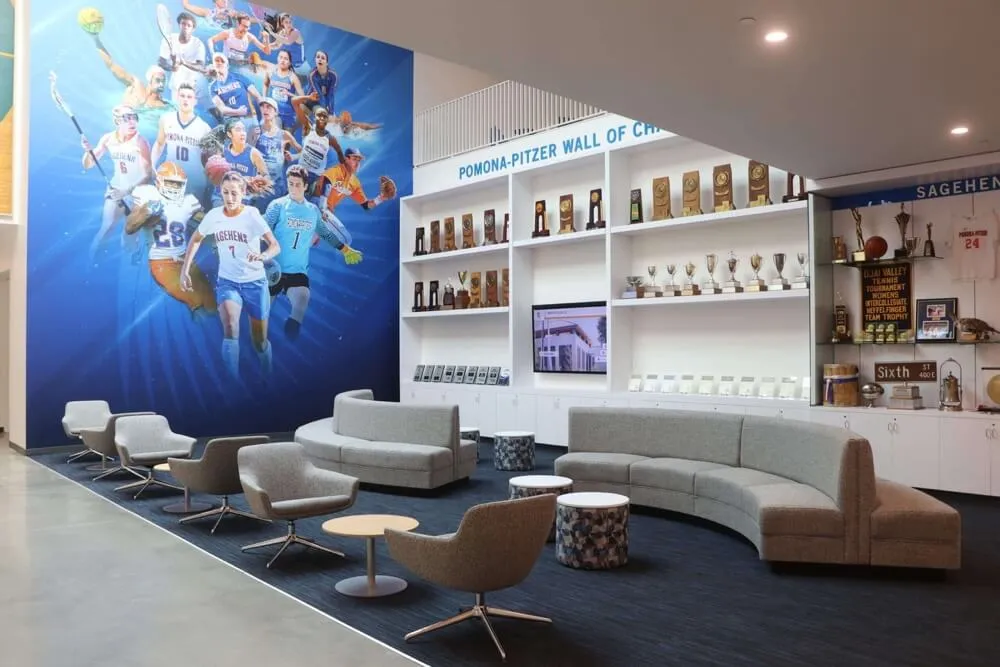
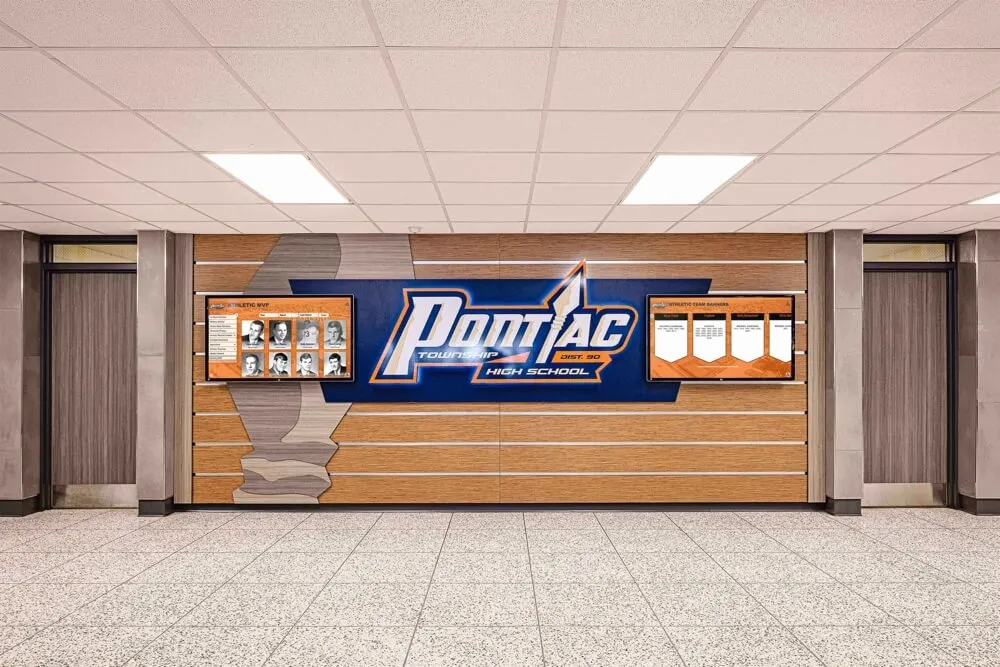
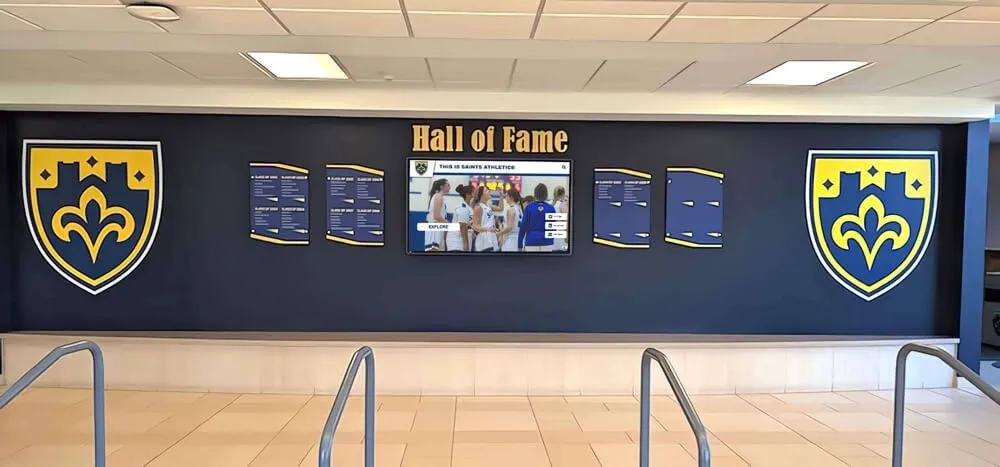
Modern aquatic facilities integrate traditional trophy displays with digital recognition systems creating comprehensive celebration of swimming excellence
Understanding the Swim Team Recognition Challenge
Before exploring digital solutions, understanding why traditional swim team plaque displays increasingly fail to meet modern program needs helps athletic directors appreciate the transformative value interactive technology delivers across multiple dimensions.
The Complexity of Swimming Record Categories
Swimming programs face recognition complexity unmatched by most other sports due to multiple interrelated variables that create dozens of distinct record categories within single programs.
Multiple Pool Configurations
Competitive swimming occurs in three distinct pool configurations, each producing separate records:
- 25-yard short course: Standard for American high school and club swimming during winter season
- 25-meter short course: International standard used by some programs and summer leagues
- 50-meter long course: Olympic-distance pools used for summer championships and elite competition
Times achieved in different pool configurations cannot be directly compared—50-meter times are slower than 25-yard times due to fewer turns—requiring programs to maintain separate record sets for each configuration. A single event like the 100 freestyle actually represents three distinct records depending on pool length.
Gender and Age Group Divisions
Unlike team sports where championships stand as singular achievements, swimming maintains separate recognition for:
- Boys/men’s records across all events and configurations
- Girls/women’s records as parallel recognition system
- Age group divisions (13-14, 15-16, 17-18) when programs include youth development
- Masters divisions for alumni and adult programs
- Para-swimming categories for adaptive athletes
This multiplication of categories means comprehensive swimming recognition requires documenting hundreds of individual records even before considering relay teams and special achievements.
Event Variety and Relay Combinations
Complete swimming programs recognize records across:
- Four competitive strokes (freestyle, backstroke, breaststroke, butterfly)
- Multiple distances per stroke (50, 100, 200, 500/400, 1000/800, 1650/1500)
- Individual medley events (200 IM, 400 IM)
- Relay combinations (200 medley relay, 200 free relay, 400 medley relay, 400 free relay, 800 free relay)
- Diving events when programs include diving teams
Traditional painted record boards attempting to display all these categories create visual clutter that overwhelms viewers while requiring extensive natatorium wall space that many facilities lack.
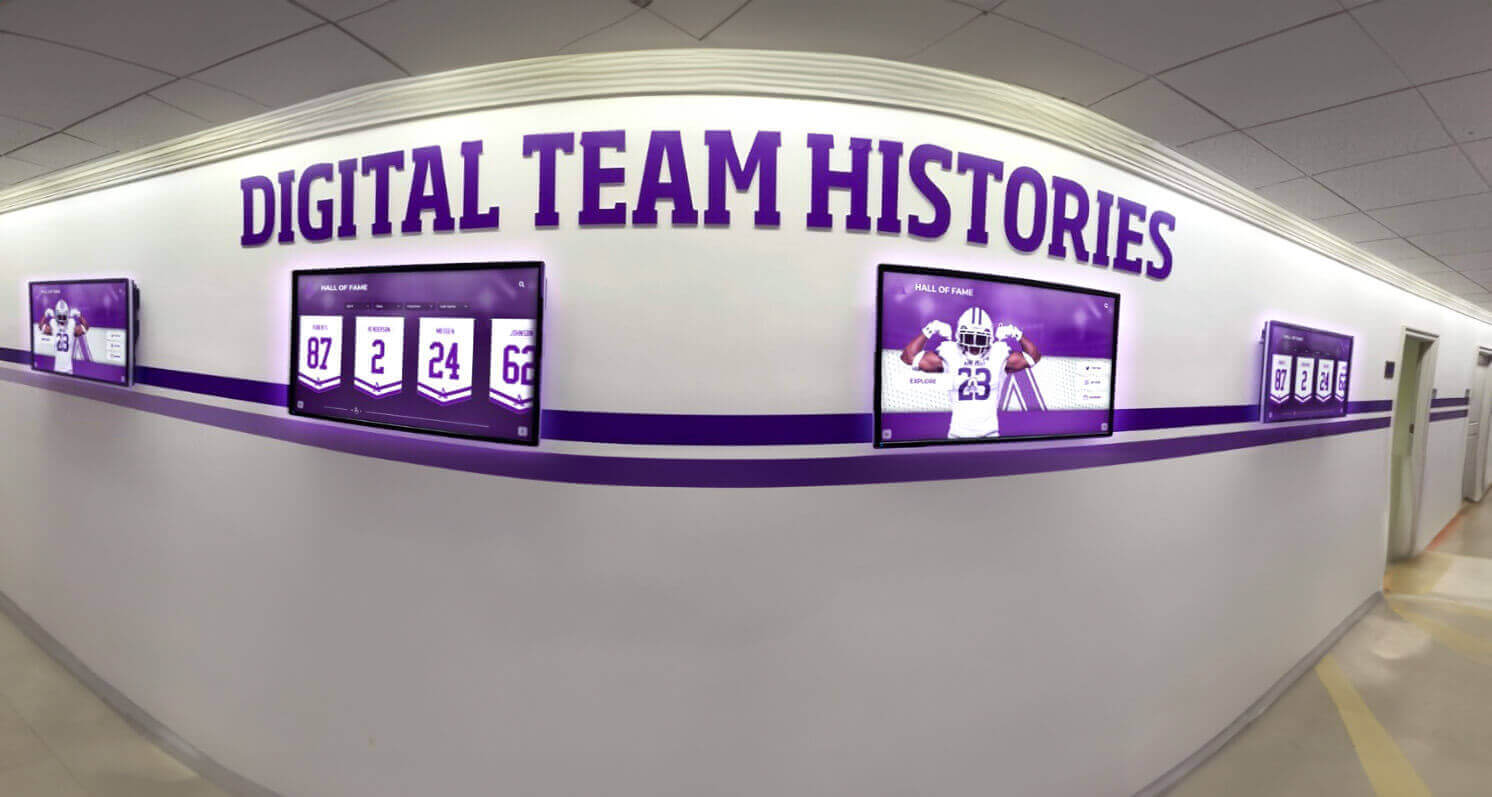
Digital systems can organize complex athletic information across multiple screens or through searchable databases eliminating visual clutter while maintaining comprehensive recognition
Physical Space Limitations in Aquatic Facilities
Natatoriums present unique space constraints that compound swimming recognition challenges beyond those faced by land-based sports programs.
Limited Wall Space in Pool Environments
Unlike gymnasiums with extensive wall space available for recognition displays, natatoriums feature:
- Windows along one or both long walls providing natural light
- Spectator seating consuming wall space on remaining sides
- Diving boards, starting blocks, and equipment limiting placement options
- High humidity environments that damage traditional display materials
- Acoustic requirements that influence wall treatment choices
These constraints mean available space for recognition displays remains severely limited even in large, well-designed aquatic facilities. Programs attempting to display comprehensive records across all categories quickly exhaust available wall space.
The Mathematics of Swimming Record Accumulation
Consider a typical competitive high school swimming program operating for 30 years:
- 26 individual events per gender across three pool configurations = 156 event records
- 5 relay events per gender across three configurations = 30 relay records
- If displayed with 6-inch high text visible from deck level = 93 linear feet of vertical display space
- Add headers, spacing, and organization = 120+ linear feet of continuous wall space required
Few natatoriums can dedicate this much wall space to record displays, forcing programs to choose between incomplete recognition or visual clutter that diminishes professional appearance while overwhelming viewers with information density.
Environmental Challenges for Traditional Displays
The high-humidity, chemically-treated air in natatoriums accelerates deterioration of traditional recognition materials:
- Painted record boards fade, peel, and require repainting every 3-5 years
- Vinyl graphics lose adhesion in humid environments
- Wooden plaques warp and crack from moisture exposure
- Metal engraving tarnishes and corrodes faster than in standard environments
- Paper-based displays become damaged within months
This environmental hostility means traditional swim team recognition requires constant maintenance and periodic complete replacement—adding recurring costs to already-expensive aquatic programs while creating periods where displays remain outdated or damaged.
Update Complexity and Timing Challenges
Swimming programs face particularly demanding update requirements that make traditional recognition approaches increasingly impractical as programs mature and records fall with greater frequency.
Frequent Record Changes
Successful swimming programs experience record changes far more frequently than many other sports:
- Individual records can fall multiple times per season across different configurations
- Different athletes may hold records in short course versus long course versions of same event
- Age group records change as each new generation of swimmers matures
- Relay records involve multiple combinations of team members across different events
Programs experiencing 10-15 record changes annually find traditional update methods impossibly burdensome—each change requiring professional painting, vinyl application, or new engraving that costs $50-200 per update and takes weeks to complete.
Timing Pressure During Championship Season
Swimming championship meets present unique timing pressure:
- Athletes may break multiple records during single championship meet
- Records broken in preliminary heats need updating before finals competition same day
- Championship atmosphere makes immediate recognition psychologically important
- Delays in recognition diminish motivational impact and celebration momentum
Traditional methods cannot accommodate this timeline—painted boards and engraved plaques require days or weeks to update, meaning record-breaking performances remain unrecognized during the very championships where celebration matters most for athlete motivation and team culture development.
Learn more about modern approaches through digital record boards for high schools that address these timing and update challenges effectively.
How Digital Plaque Displays Transform Swim Team Recognition
Digital touchscreen technology specifically designed for swimming recognition addresses traditional limitations while introducing capabilities impossible through painted boards or physical plaques.
Unlimited Recognition Capacity and Comprehensive Coverage
Digital platforms eliminate space constraints that force difficult choices about which swimming achievements receive visibility and documentation.
Accommodating All Pool Configurations Simultaneously
Digital swim record systems organize content through intuitive navigation enabling users to select pool configuration before viewing records:
- Main menu presents choices: 25-yard, 25-meter, or 50-meter records
- Each configuration displays complete event listings for that pool length
- Users explore multiple configurations without visual clutter
- Single touchscreen accommodates all configuration records that would require three separate traditional boards
This organization makes comprehensive recognition practical—programs can document all records across all configurations without consuming excessive wall space or creating overwhelming visual displays that confuse rather than inform viewers.
Complete Historical Record Preservation
Unlike traditional boards limited to current record holders, digital systems maintain complete historical progressions showing how records evolved:
- Previous record holders with names, times, and dates they held records
- Record progression graphs visualizing time improvements over decades
- Multi-generation comparisons showing how current records compare to historical performances
- Recognition for swimmers who held records even if subsequently broken
This historical depth honors all contributors to program excellence rather than limiting recognition to only current record holders—creating more inclusive celebration that validates achievement even when records eventually fall to faster performances.
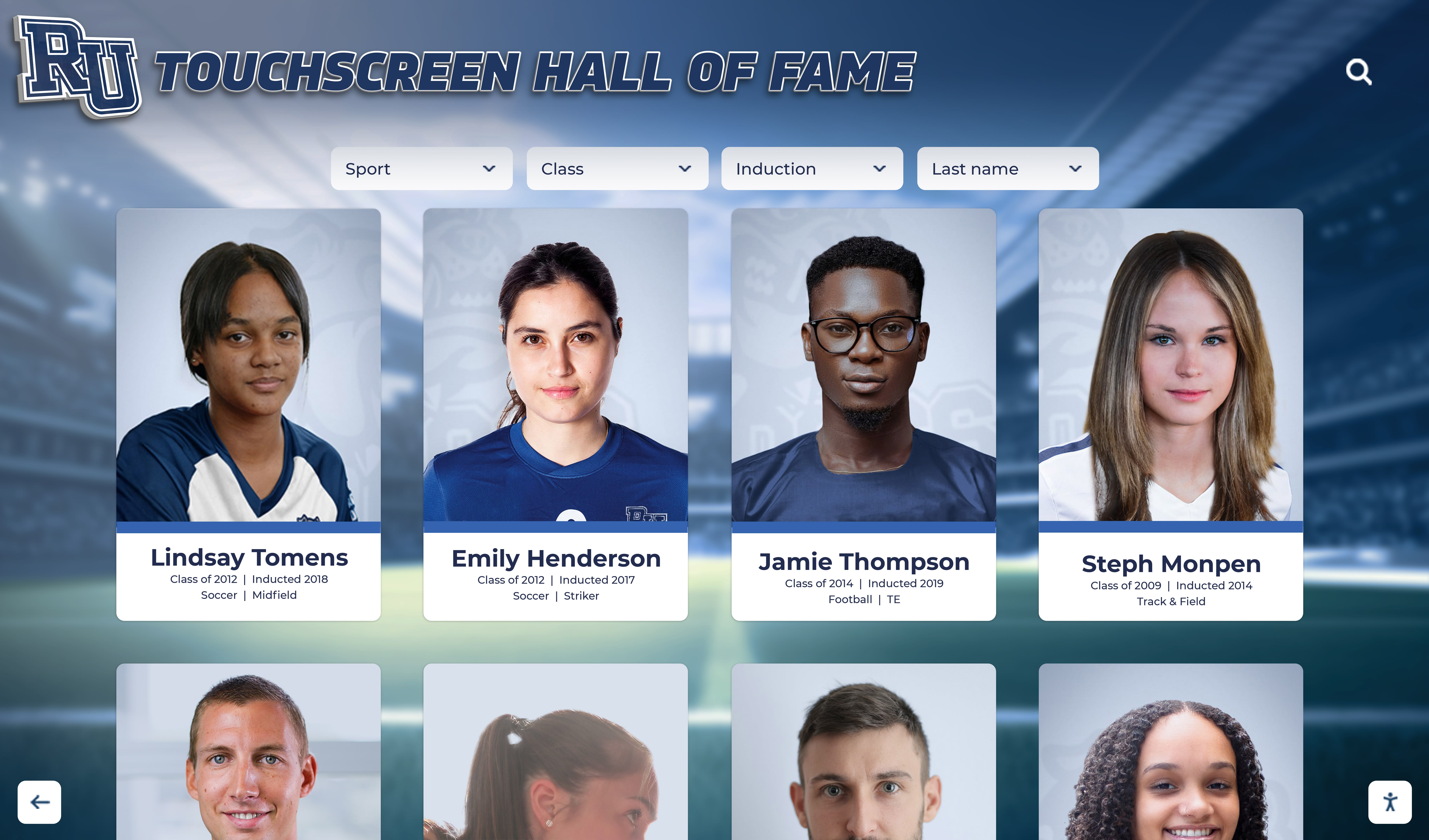
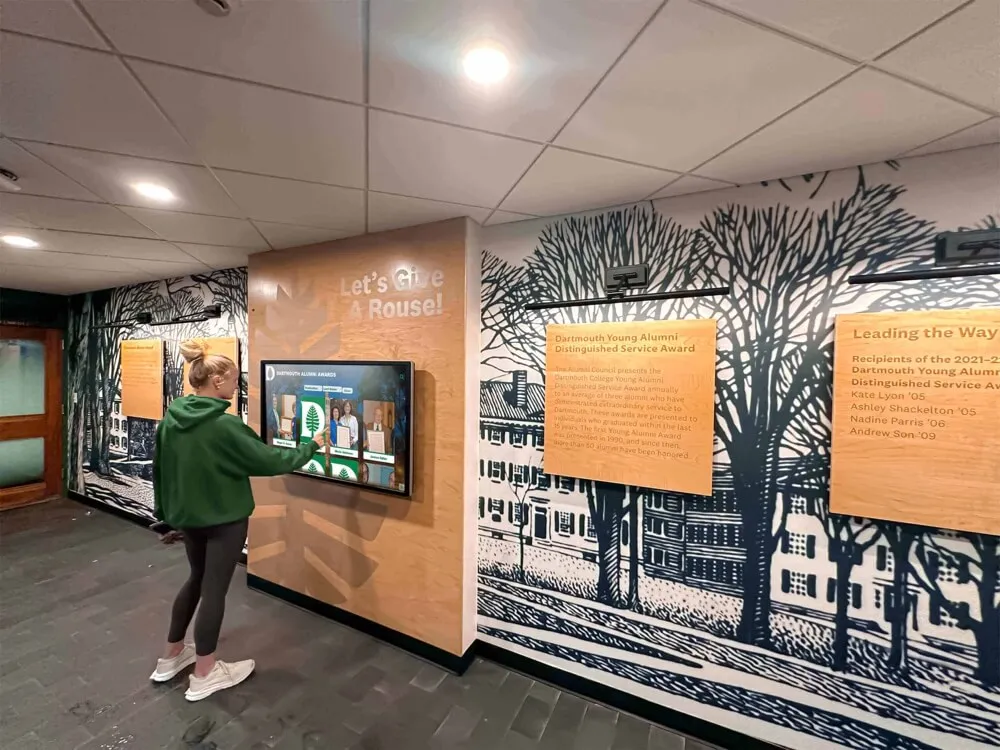
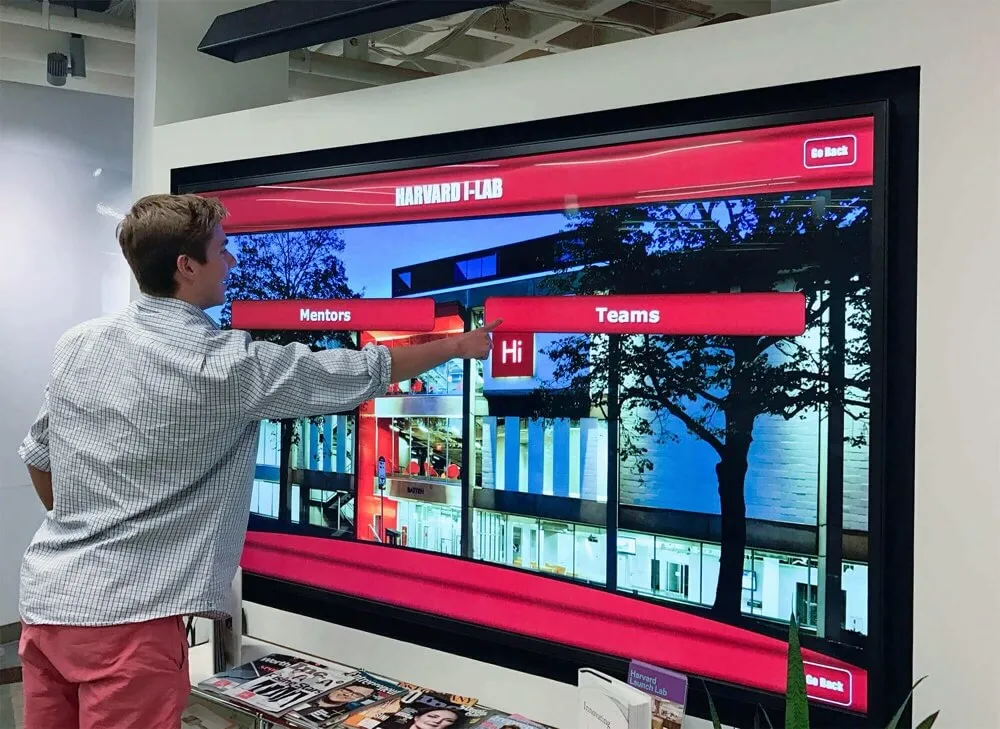
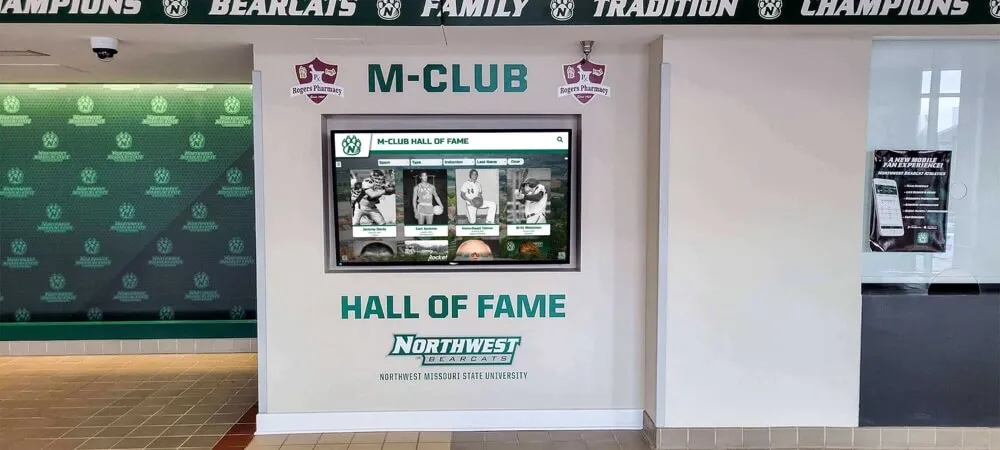
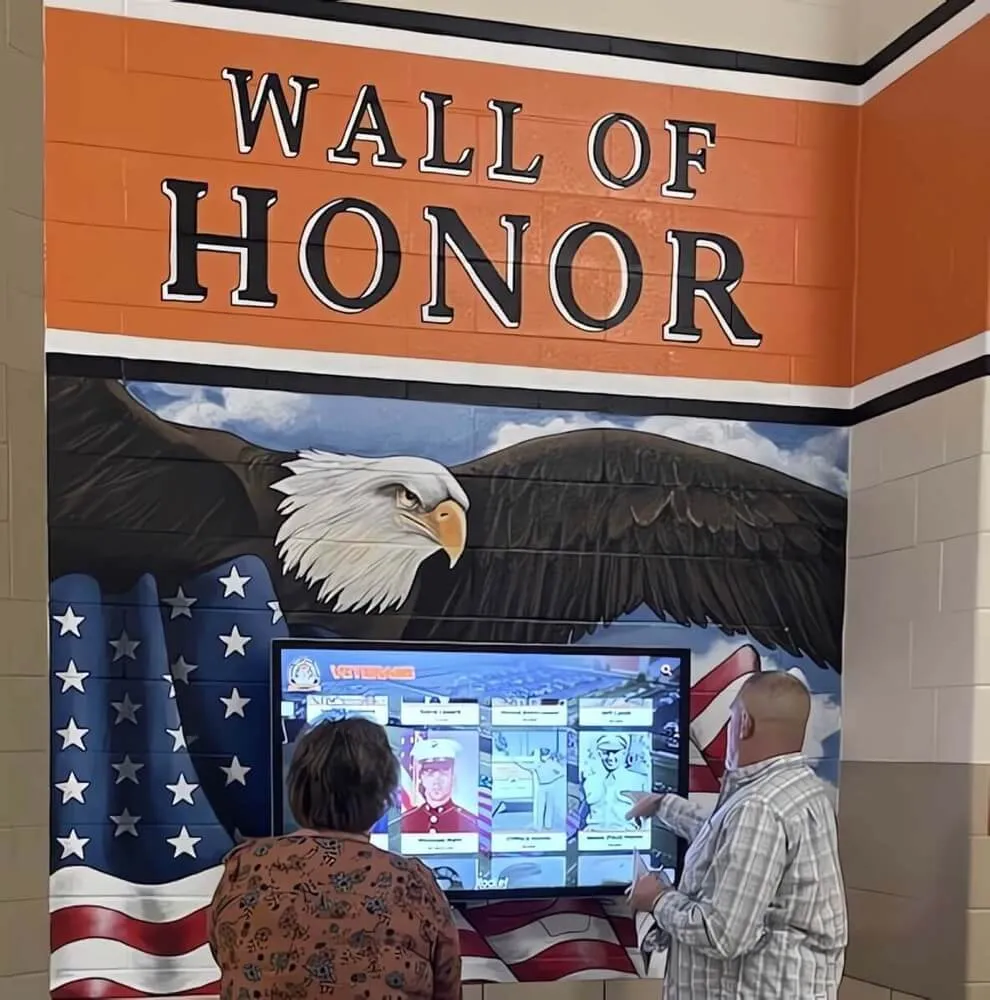
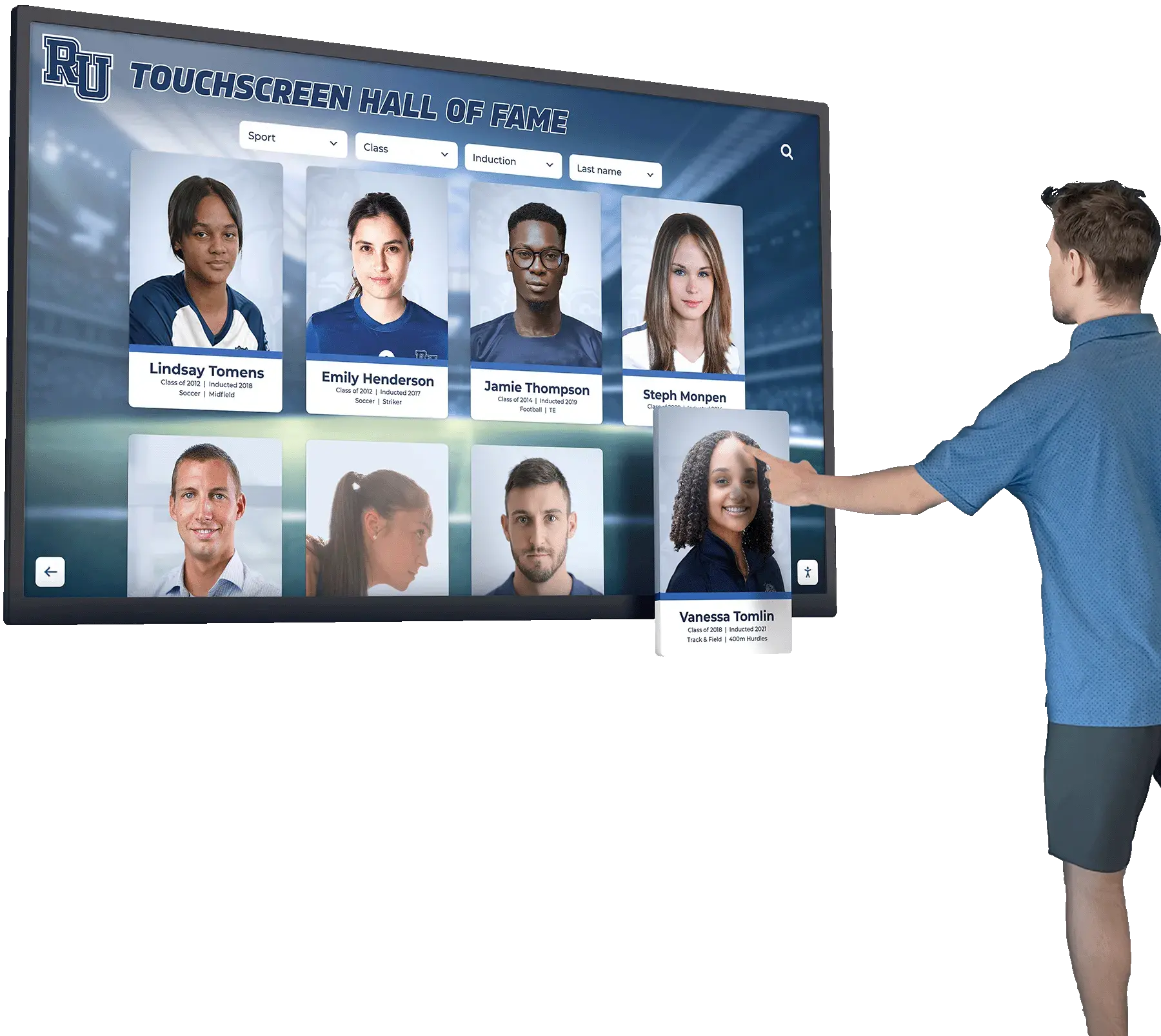
Touchscreen interfaces enable exploration of comprehensive athlete databases impossible to display on limited physical wall space
Relay Team Recognition with Complete Rosters
Digital platforms provide space for complete relay team recognition including:
- All four swimmers on each relay team with individual photos
- Each swimmer’s split times contributing to overall relay record
- Season context about when and where relay records occurred
- Links to individual swimmer profiles for deeper exploration
Traditional boards typically list only relay times and perhaps team names, offering no recognition for individual relay participants or context about record achievements—reducing meaningful four-person accomplishments to impersonal numbers alone.
Instant Updates Maintaining Current Information
Cloud-based content management enables immediate recognition updates without professional services, production delays, or facility scheduling coordination.
Same-Day Record Recognition
When swimmers break records during practice or competition, coaches or athletic staff can update digital displays within minutes:
- Log into cloud-based management system from any internet-connected device
- Enter new record information including swimmer name, time, date, and meet
- Upload photos from the performance when available
- Publish update appearing immediately on touchscreen display
This immediacy maximizes motivational impact—record-breaking swimmers see their achievements recognized while excitement remains high and team members celebrate accomplishments. No waiting weeks for professional painting or engraving services to complete updates during which recognition momentum dissipates.
Championship Meet Real-Time Updates
Digital systems enable real-time updates during championship meets when multiple records may fall across single competition days:
- Update preliminary heat records immediately before finals competition
- Recognize finals records within minutes of swims completing
- Maintain current information throughout multi-day championship meets
- Create excitement as displays update with fresh records while meet progresses
This real-time capability transforms championship meets into dynamic recognition events where digital displays serve as living celebration of excellence as it unfolds rather than static documentation requiring post-meet updates weeks later.
Eliminating Update Backlogs
Traditional recognition creates backlogs when multiple records fall before previous changes complete production cycles. Digital systems eliminate these backlogs through instant publishing—every record receives immediate recognition regardless of how many changes occur simultaneously or how frequently records fall during successful seasons.
Rich Multimedia Storytelling and Context
Digital platforms enable comprehensive performance documentation through photos, videos, and detailed information impossible with traditional painted boards or plaques.
Swimmer Profile Integration
Individual record displays can link to complete swimmer profiles including:
- High-resolution photos showing swimmers in competition
- Biographical information about swimming background and development
- Complete competitive history across all events and seasons
- Post-high school swimming accomplishments at collegiate or elite levels
- Personal reflections about training, competition, and record-breaking performances
This profile integration transforms record boards from impersonal time listings into compelling athlete stories that current swimmers explore for inspiration while developing personal connections to program heritage and excellence traditions.
Race Video and Photo Galleries
When available, digital systems incorporate multimedia documentation:
- Race videos showing record-breaking swims from multiple camera angles
- Photo galleries capturing key race moments and celebration afterwards
- Comparison videos showing current records alongside historical performances
- Technique analysis highlighting what made performances exceptional
Video content generates significantly higher engagement than text and static images alone—swimmers spend extended time watching race footage while coaches reference videos during technique instruction and motivation discussions.
Explore comprehensive approaches through digital trophy touch wall systems that bring athletic achievements to life through multimedia storytelling.
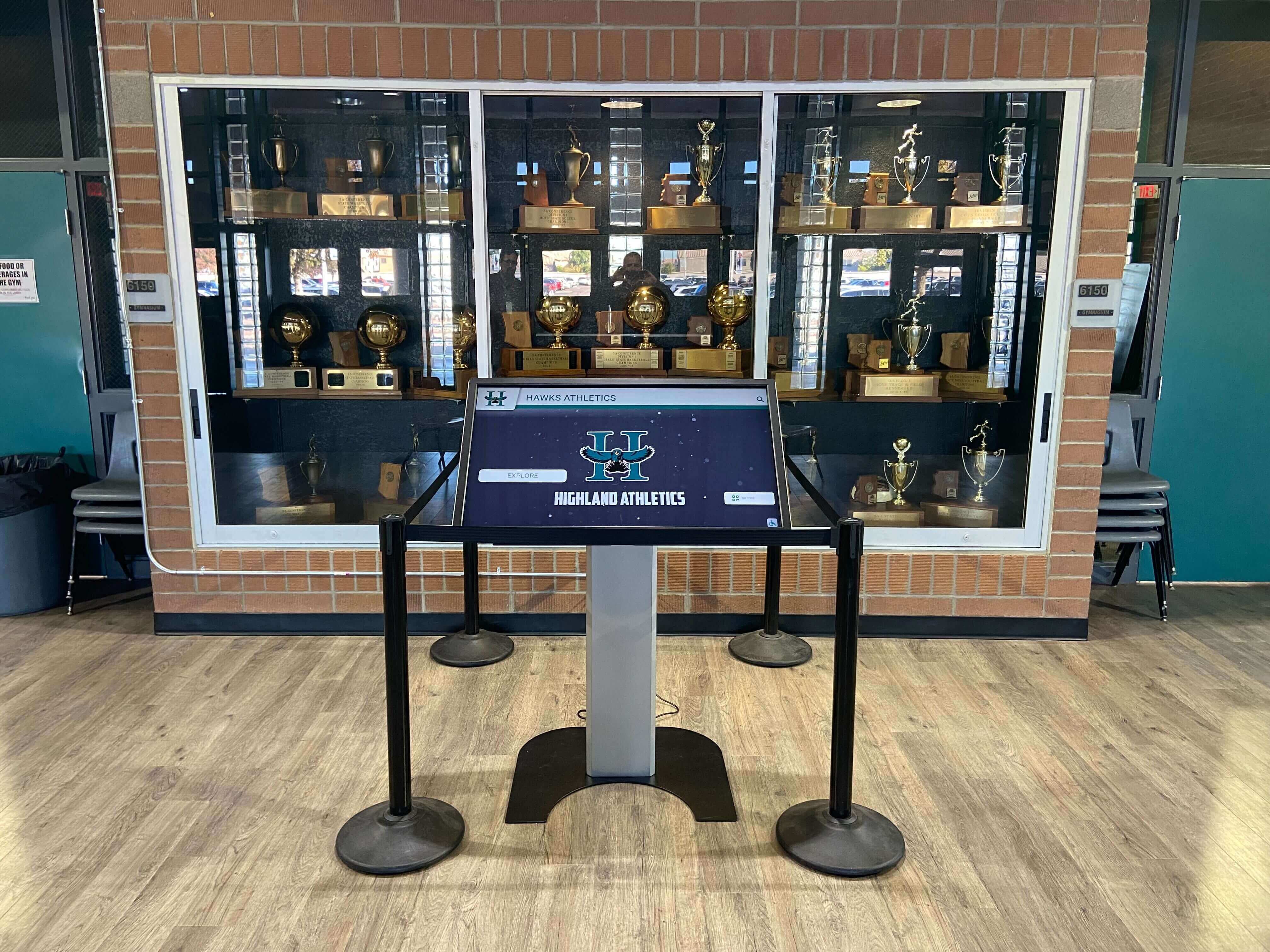
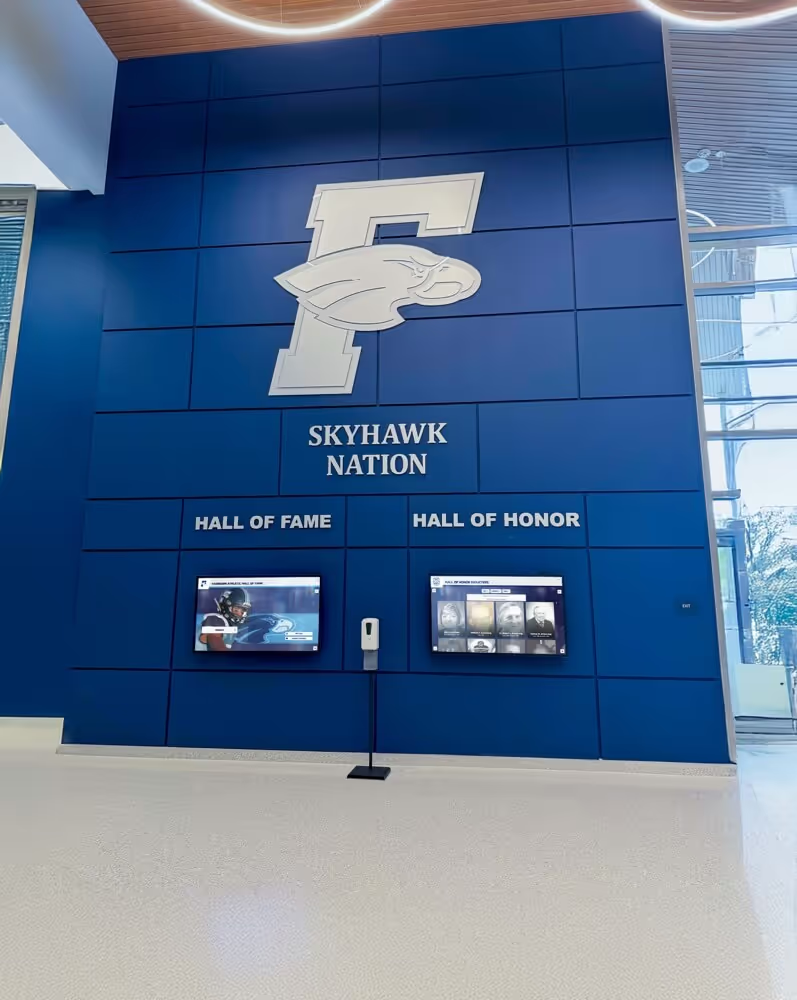
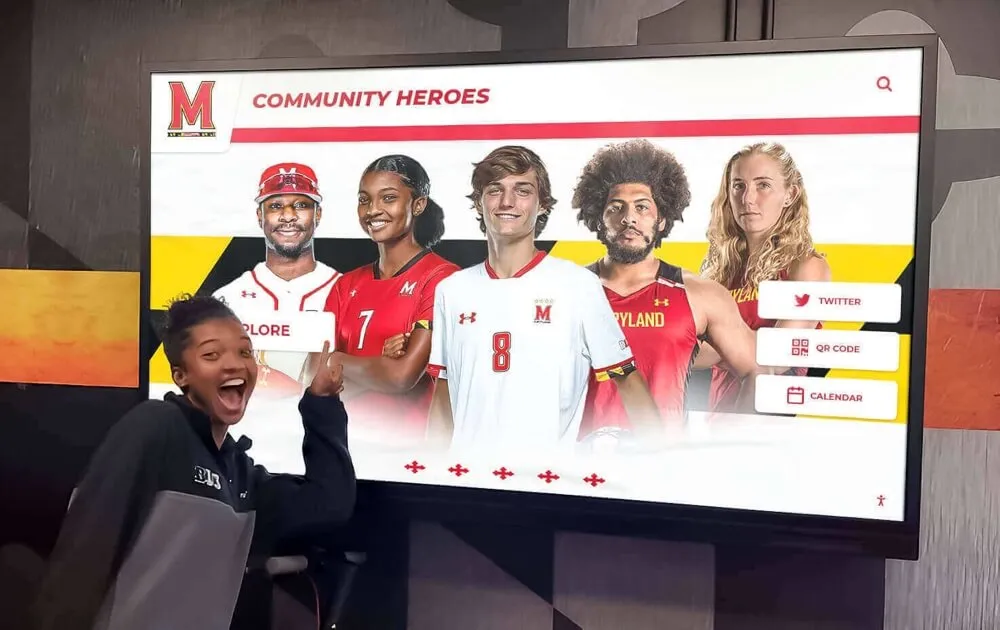
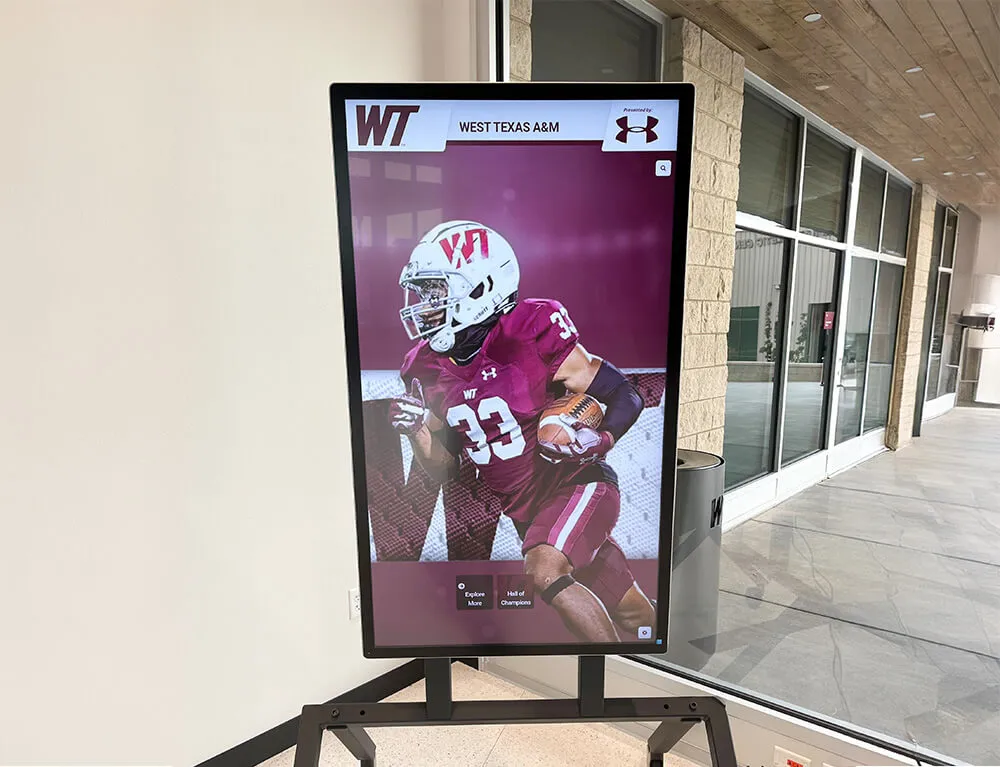
Freestanding kiosks can be positioned strategically in high-traffic areas where swimmers naturally gather before and after training
Performance Context and Statistical Analysis
Digital displays provide performance context impossible on traditional boards:
- National age group qualifying time standards showing how records compare
- State championship qualifying cuts demonstrating competitive significance
- Time trends showing how program records improved across decades
- Split time analysis for distance events showing lap-by-lap breakdowns
- Stroke rate and underwater kick data when available from timing systems
This statistical depth helps coaches and swimmers understand performance benchmarks while setting realistic yet ambitious training goals based on historical program achievement patterns.
Interactive Exploration and Engagement
Touchscreen technology creates active exploration that passive traditional displays cannot match, dramatically increasing swimmer engagement with program heritage and recognition.
Intuitive Search and Filtering
Digital swim record systems enable efficient content discovery through:
- Event filtering: Select specific events to view only relevant records
- Configuration selection: Choose 25-yard, 25-meter, or 50-meter records
- Gender filtering: View boys or girls records separately or combined
- Name search: Find specific swimmers instantly to see their records
- Date range selection: Explore records from specific eras or seasons
This search functionality makes comprehensive databases feel manageable—swimmers quickly find information most relevant to their interests without scrolling through hundreds of records attempting to locate specific events or individuals.
Natural Athlete Engagement Patterns
Swimming programs with prominent digital record displays report swimmers naturally engaging with recognition during:
- Pre-practice arrival checking records in their primary events
- Post-practice cool-down exploring historical performances and record progressions
- Championship meet preparation researching target times and current record standards
- Social interaction competing with teammates to find obscure historical records
- Recruiting visits showing prospective swimmers program tradition and excellence standards
This organic engagement builds program pride and cultural connection. Swimmers develop stronger identification with teams when they regularly interact with achievement heritage and see themselves potentially contributing to distinguished record traditions.
Social Media Integration and Sharing
Modern digital platforms enable recognition amplification through:
- QR codes linking to specific record pages swimmers can share via Instagram and TikTok
- Social media buttons enabling direct sharing of record-breaking performances
- Embedded displays on team websites making records accessible beyond facility boundaries
- Mobile-responsive interfaces ensuring excellent experiences on smartphones and tablets
This social integration extends recognition reach far beyond those physically present at natatoriums, creating broader community awareness of swimming excellence while celebrating achievements across expanded networks.
Implementation Strategies for Digital Swim Record Displays
Successful digital recognition requires thoughtful planning across technology selection, content development, physical installation, and organizational adoption specific to aquatic facility requirements.
Technology Selection and Platform Evaluation
Not all digital display systems serve swimming recognition needs equally—purpose-built platforms designed specifically for athletic achievement deliver fundamentally different capabilities than generic digital signage.
Purpose-Built Swimming Recognition vs. Generic Signage
Critical distinctions separate specialized platforms from basic displays:
Swimming-Specific Recognition Platforms:
- Database architecture storing unlimited records across multiple configurations and categories
- Advanced filtering by pool configuration, gender, event, and time period
- Split time tracking for distance events showing lap-by-lap performance breakdown
- Relay team recognition with individual swimmer identification and split times
- Historical record progression showing previous holders and time improvements
- Automated ranking and record identification when integrated with timing systems
Generic Digital Signage Systems:
- Slideshow-based displays rotating predetermined content
- Limited capacity requiring selective record display rather than comprehensive databases
- Manual creation of individual slides for each record
- No interactive filtering or search capabilities
- Basic content management requiring technical expertise for routine updates
Swimming programs sometimes attempt repurposing basic digital signage for record displays—discovering these systems fundamentally cannot deliver true database exploration experiences or accommodate the complex categorical organization swimming recognition requires.
Essential Evaluation Criteria
When evaluating digital swim record platforms, prioritize:
- Multi-configuration support: Does the system intelligently organize records by pool length?
- Relay team handling: Can the platform properly recognize all four relay participants?
- Split time management: Does it display and track lap times for distance events?
- Historical tracking: Can it maintain previous record holders and progression data?
- Content management usability: Can coaches update records without IT assistance?
- Timing system integration: Does it connect with existing meet management software?
- Web portal extension: Are records accessible online for remote viewing?
Solutions like Rocket Alumni Solutions provide purpose-built platforms specifically designed for athletic recognition including comprehensive swimming-specific features addressing aquatic program requirements.
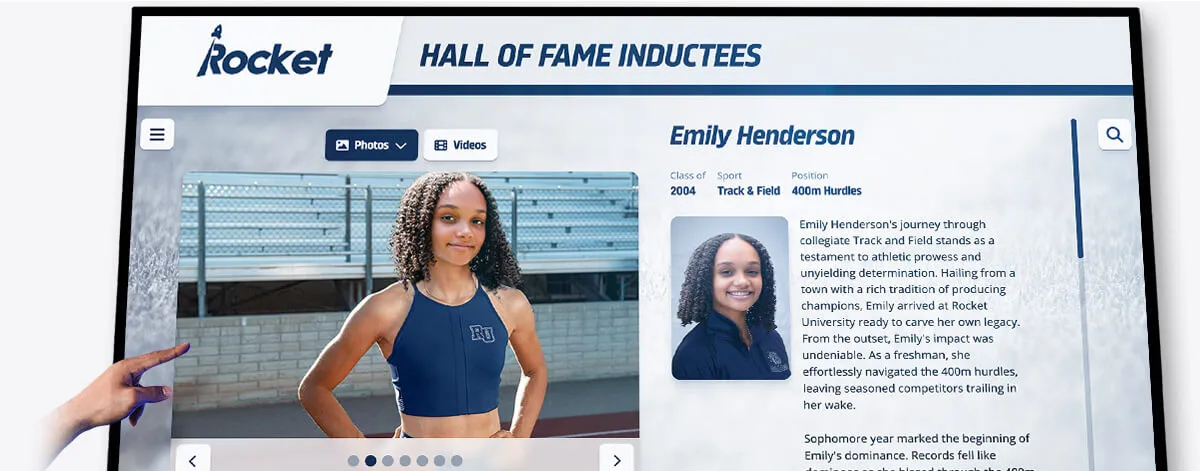
Individual athlete profiles can document complete competitive careers including statistics, achievements, and personal narratives
Hardware Considerations for Aquatic Environments
Digital displays installed in natatoriums require specialized hardware rated for high-humidity environments with specific installation approaches addressing aquatic facility constraints.
Commercial-Grade Touchscreen Specifications
Natatorium installations demand robust hardware:
- Humidity-resistant construction: Commercial displays with sealed components preventing moisture infiltration
- Brightness levels: 450-700 nits supporting visibility in naturally-lit pool environments with extensive windows
- Anti-glare coatings: Screen treatments reducing reflection from water and glass surfaces
- Vandal-resistant glass: Tempered touchscreen surfaces withstanding public facility use
- Operating temperature range: Equipment rated for high-temperature, high-humidity environments
- Corrosion-resistant mounting: Stainless steel or powder-coated hardware preventing deterioration
Consumer-grade displays designed for climate-controlled home environments fail rapidly in natatoriums—humidity infiltrates electronics, screens fog, and mounting hardware corrodes within months when equipment lacks proper environmental rating.
Installation Location Strategy
Optimal natatorium placements balance visibility, accessibility, and environmental protection:
High-Impact Installation Locations:
- Lobby entrance areas: Welcome swimmers and families entering facility while protecting displays from pool deck humidity
- Upper spectator areas: Excellent visibility from seating while elevated positioning reduces humidity exposure
- Locker room entrances: High daily traffic as swimmers arrive and depart from training
- Coach’s office areas: Convenient for staff updates while providing recruit viewing location
- Dry-side viewing windows: Protected from pool deck conditions while maintaining visual connection
Avoid installations directly on humid pool decks unless displays feature specialized environmental protection significantly increasing equipment costs. When possible, position displays in adjacent dry spaces maintaining visual sight lines to pool areas.
Professional Installation Requirements
Aquatic facility installations require specialized expertise:
- Structural assessment ensuring walls support display weight in high-humidity environments
- Electrical installation providing protected circuits with GFCI protection required near water
- Network infrastructure ensuring reliable wireless or wired connectivity in steel-reinforced concrete structures
- Mounting hardware using corrosion-resistant materials specified for aquatic environments
- Proper display orientation preventing direct water spray while maintaining optimal viewing angles
Professional installers experienced with aquatic facilities understand these specialized requirements—improper installation voids warranties while creating safety hazards in demanding natatorium environments.
Content Development and Database Organization
Comprehensive swimming recognition depends on systematic content structure organizing complex categorical information intuitively for varied user needs.
Establishing Record Categories and Standards
Before importing content, define recognition categories:
- Which pool configurations will the program track? (25-yard, 25-meter, 50-meter)
- What gender divisions require separate recognition?
- Will age group records be maintained alongside senior records?
- How will relay teams be credited and individual relay participants recognized?
- What constitutes an official record? (sanctioned meet requirements, timing system standards)
- How will records in discontinued events be preserved historically?
Clear category definitions prevent confusion while ensuring consistent content structure across all record types and time periods.
Historical Content Migration
Digitizing existing record boards creates comprehensive databases:
- Document current records: Photograph existing boards ensuring complete data capture
- Research historical records: Consult meet results archives identifying previous record holders
- Verify accuracy: Cross-reference multiple sources confirming swimmer names, times, and dates
- Gather photos: Collect swimmer photos from yearbooks, team photos, and personal collections
- Conduct interviews: Capture personal reflections from record holders when available
- Organize chronologically: Structure content showing record progression over time
Historical content development represents significant initial effort but creates invaluable program archives preserving decades of achievement while honoring all contributors to team excellence regardless of whether records still stand.
Systematic approaches to athletic record preservation demonstrate effective content development strategies honoring complete program histories.
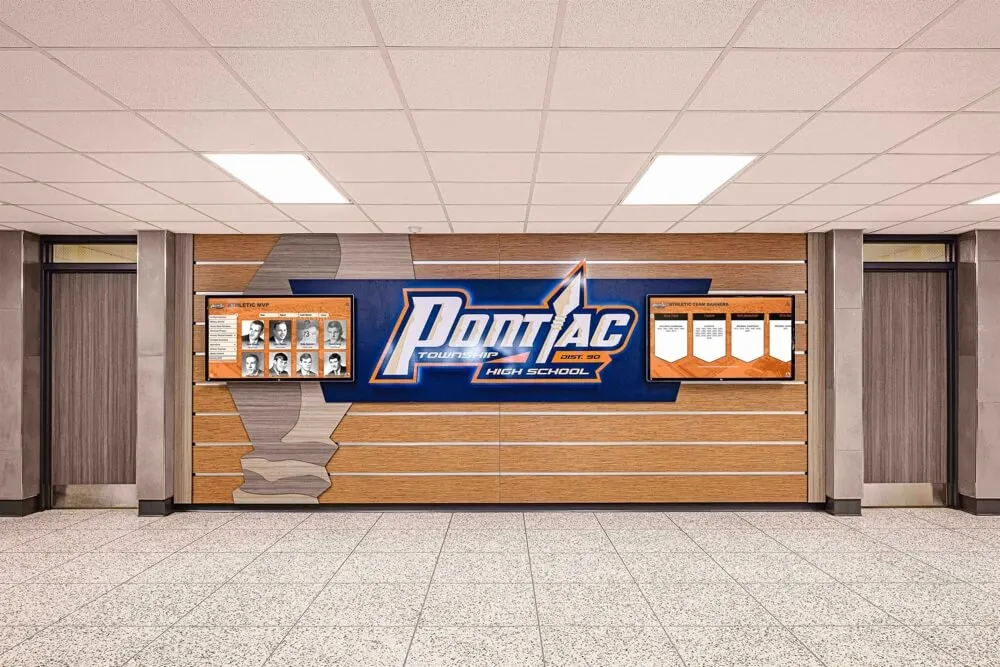
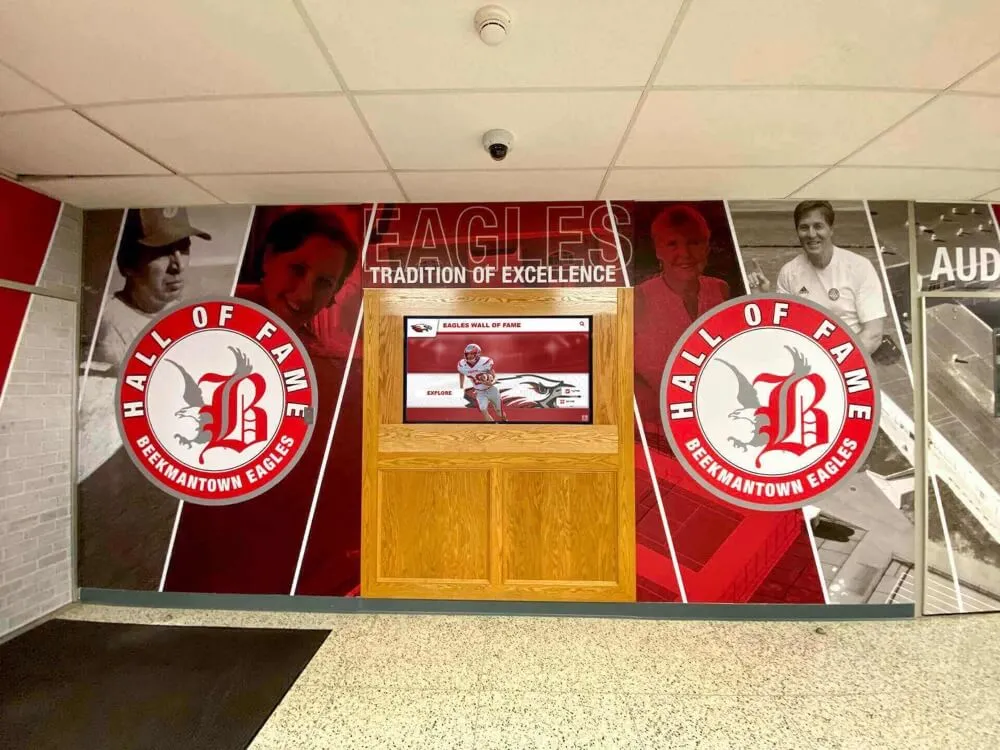
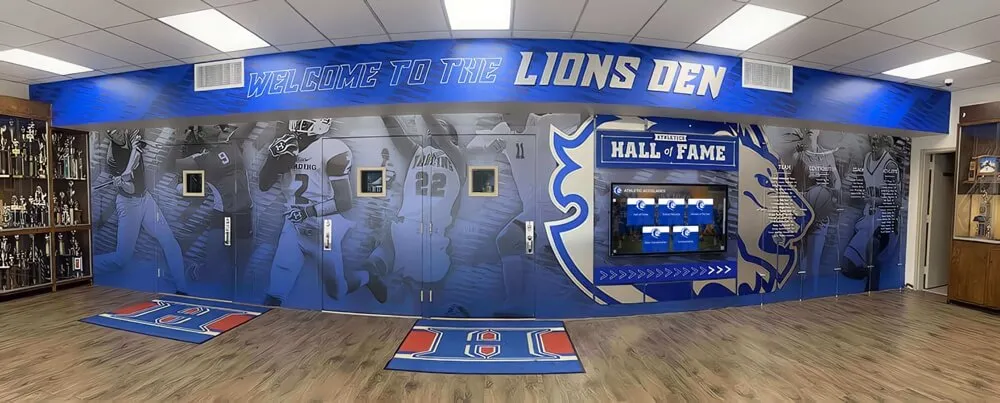
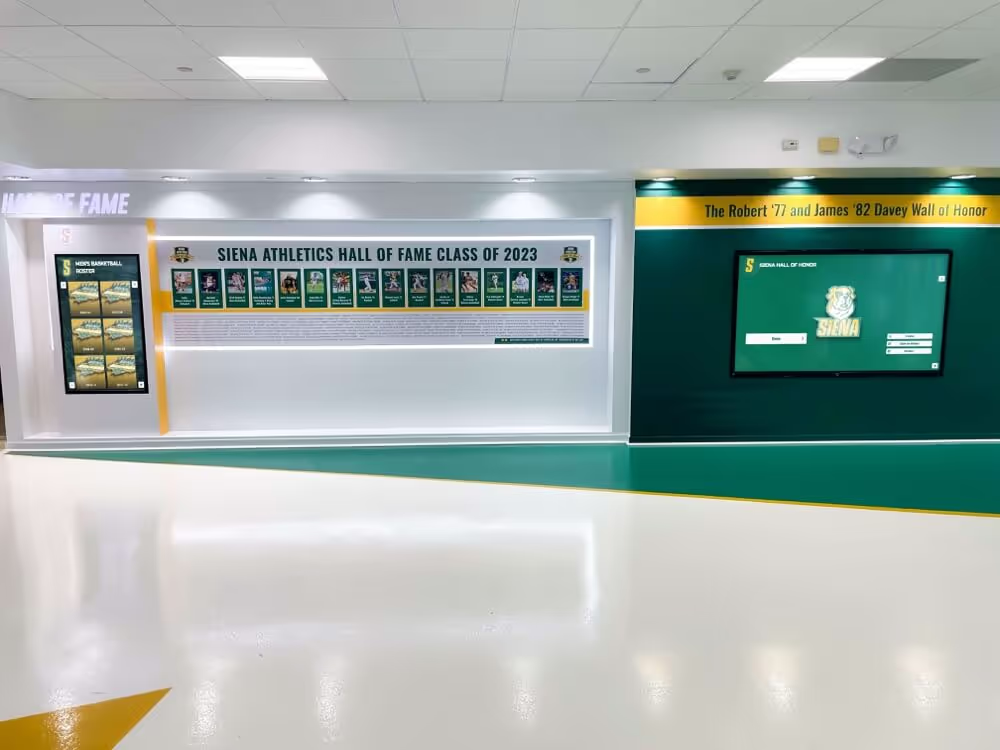
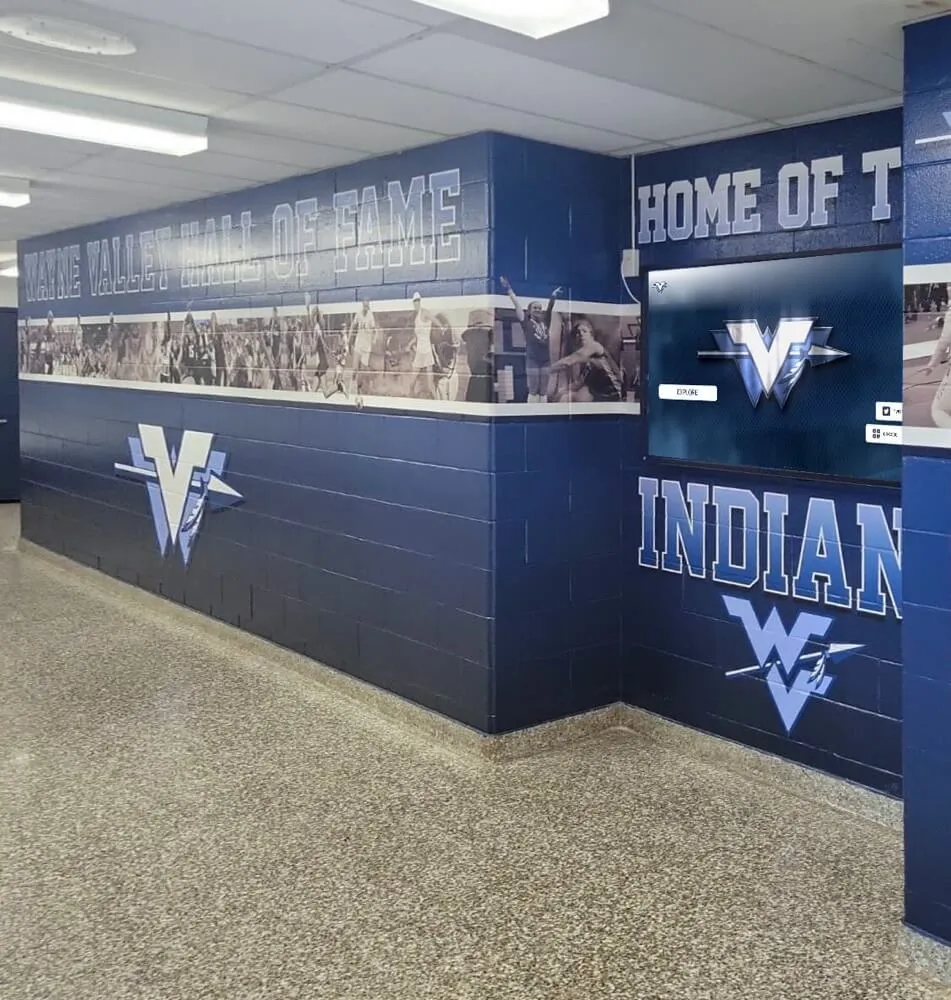
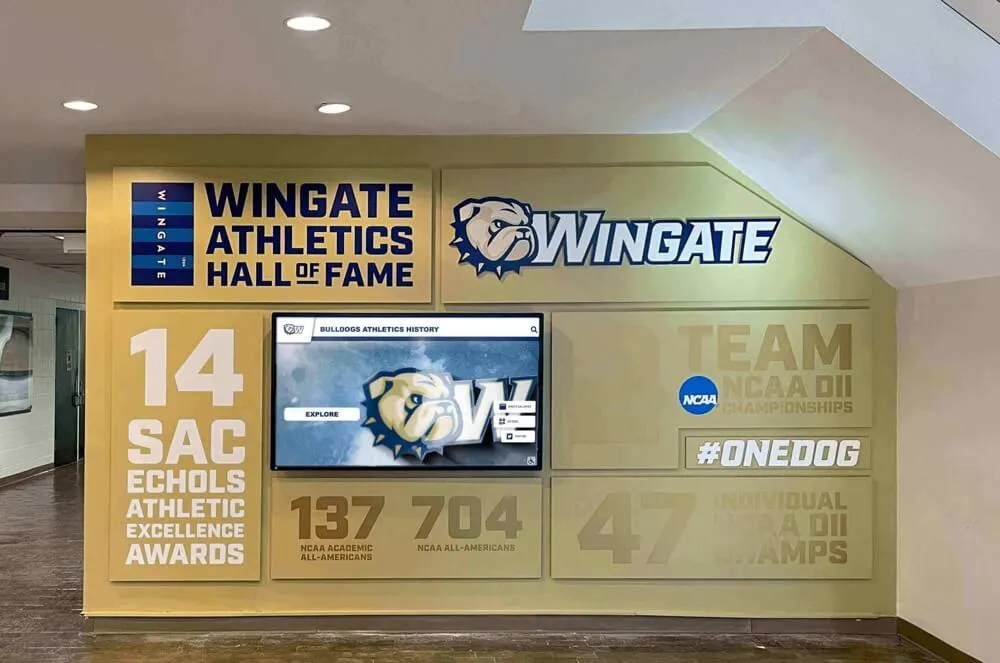
Comprehensive recognition environments combine multiple display types creating immersive celebration of athletic achievement
Ongoing Content Management Workflows
Establish sustainable processes for maintaining current information:
- Designated content managers: Specific coaches or staff responsible for record updates
- Update protocols: Clear procedures for verifying and publishing new records
- Photo collection systems: Methods for capturing performance photos during competitions
- Regular audits: Periodic reviews ensuring all records remain accurate and current
- Backup procedures: Database backups protecting against data loss
Well-designed content management systems enable non-technical staff to maintain records independently within 5-10 minutes per update—making ongoing management sustainable rather than burdensome for already-busy coaching staffs.
Enhancing Swimmer Motivation and Team Culture
Beyond practical recognition improvements, digital plaque displays strengthen swimming programs through enhanced athlete motivation and deeper cultural connections with team excellence traditions.
Making Records Feel Achievable Through Context
Digital displays help swimmers understand what record performances require while visualizing realistic achievement pathways.
Progression Visualization
Historical record progressions demonstrate that records fall through incremental improvement:
- Show how 50 free record dropped from 23.5 to 21.8 across 15 years through multiple record holders
- Display time gaps between current records and next-fastest performances
- Illustrate seasonal improvement patterns for athletes who eventually set records
- Demonstrate that records fall to dedicated athletes from all backgrounds—not just natural talents
This context makes record pursuit feel achievable rather than impossibly distant—swimmers see that records fall through consistent training and incremental improvement rather than requiring once-in-a-generation talent alone.
Personal Goal Setting and Tracking
Digital systems enable individualized athlete engagement:
- Swimmers identify personal target events and times
- Compare current performances against record standards understanding time gaps
- Track seasonal improvement visualizing progress toward eventual record pursuit
- Celebrate milestone achievements even when falling short of records
This personalized interaction helps coaches convert general record awareness into specific individual training motivation—swimmers pursue their own record attempts rather than passively observing distant achievements they perceive as unattainable.
Creating Record-Pursuit Culture
Programs with prominent digital record displays report cultural shifts:
- Records become frequent discussion topics during practice and competitions
- Swimmers spontaneously research records in their events
- Team members encourage peers approaching records
- Record attempts create excitement during practice time trials and dual meets
- Breaking records becomes team celebration rather than just individual achievement
This culture transformation strengthens team cohesion while elevating performance expectations—records shift from distant history to active team pursuit that motivates daily training commitment.
Understanding ways to recognize athletic excellence provides frameworks that apply across diverse achievement types including swimming records.
Multi-Generational Connection and Alumni Engagement
Digital recognition creates bridges connecting current swimmers with program alumni and heritage spanning decades of team development.
Alumni Record Holder Recognition
Digital platforms enable comprehensive alumni recognition:
- Profiles for all record holders including those from decades past
- Current contact information when alumni maintain program connections
- Post-competitive swimming achievements including college swimming or coaching
- Personal reflections about program influence on development and life direction
- Photos spanning competitive years through current adult lives
This recognition demonstrates that program commitment to celebrating excellence extends beyond current team rosters—all contributors to program heritage receive permanent acknowledgment regardless of how long ago they competed.
Alumni Reunion and Homecoming Integration
Digital displays serve as focal points during alumni events:
- Alumni explore their own records and reminisce about competitive experiences
- Comparisons between historical records and current performances generate friendly inter-generational competition
- Alumni share stories about record swims with current team members
- Coaches reference program history during alumni gatherings
- Photo galleries capturing decades of team history facilitate recognition and reunion
Swimming programs report increased alumni engagement following digital recognition implementation—graduates feel more connected to programs when their achievements remain accessible and celebrated rather than painted over or removed when records eventually fall.
Recruit Engagement and Program Tradition Communication
During recruiting visits, digital displays effectively communicate program excellence:
- Prospective swimmers explore records in their primary events understanding competition standards
- Program depth becomes evident through comprehensive record databases spanning events and eras
- Historical progression demonstrates sustained excellence rather than isolated successful seasons
- Multimedia content showcases competitive environments and team culture
- Alumni success stories demonstrate program’s role in athlete development
Coaches report that digital record displays generate significant positive impression during recruitment—comprehensive recognition demonstrates program commitment to honoring all athletes while showcasing excellence standards that attract competitive recruits seeking challenging team environments.
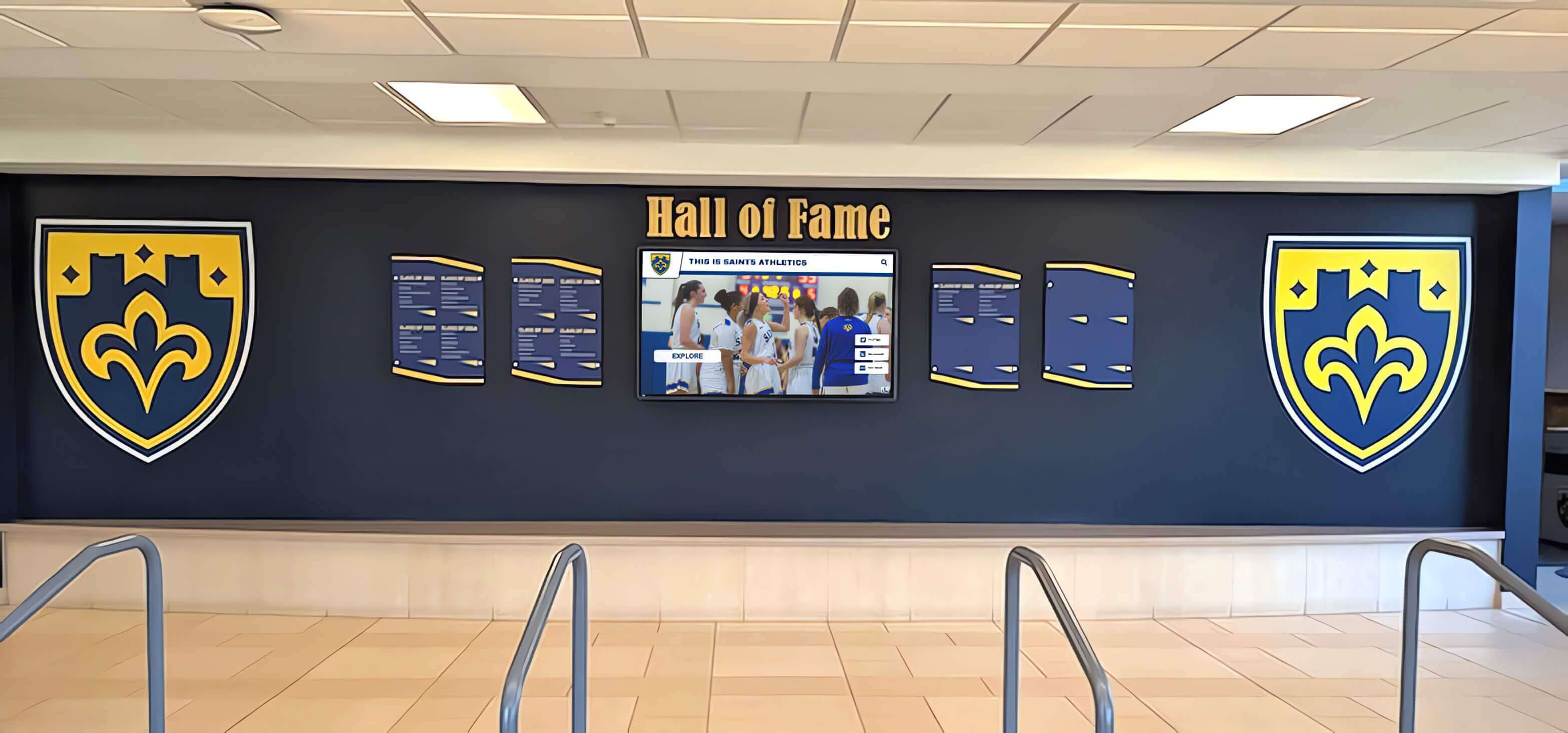
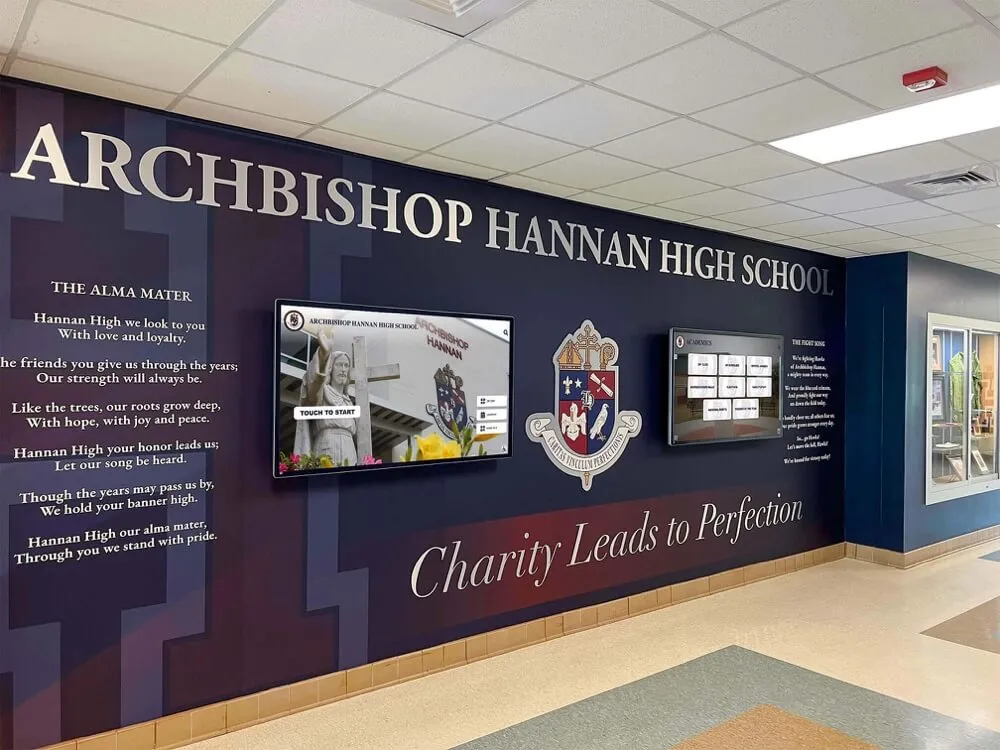
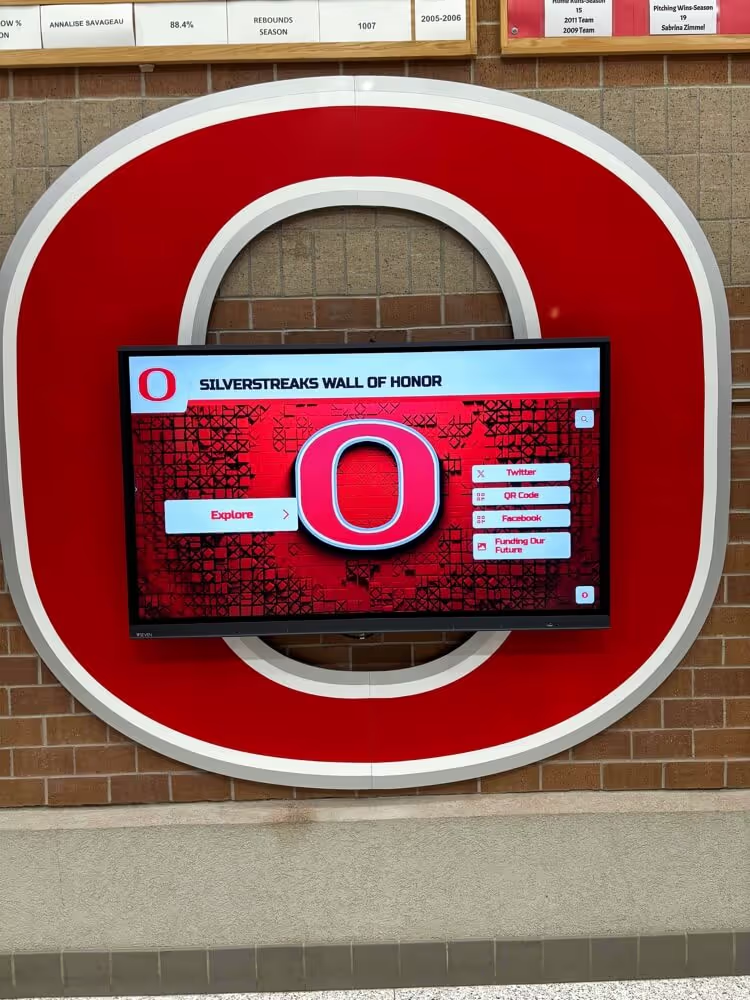
Coordinated recognition environments integrate school branding with modern recognition technology creating professional athletic facility presentations
Beyond Records: Comprehensive Team Recognition
While record displays serve as primary swimming recognition, digital platforms enable comprehensive team celebration extending beyond individual record performances.
Championship Team Recognition
Digital systems can document complete championship seasons:
- Team championships with full rosters and season records
- Dual meet results and win-loss records for championship seasons
- Conference and league championship documentation
- State championship progression and tournament brackets
- Photo galleries from championship meets and celebrations
- Coach reflections on championship teams and special qualities
This championship documentation preserves complete team success stories rather than reducing seasons to final results alone—honoring all contributors to championship achievements including swimmers who didn’t set individual records but contributed essential depth and points.
Individual Award Recognition
Swimming programs present numerous awards beyond records deserving digital recognition:
- Most Valuable Swimmer awards across genders and levels
- Most Improved Swimmer recognition
- Team captain and leadership awards
- Sportsmanship and team spirit honors
- Academic All-Conference recognition
- All-State and All-American honors
- Coaches’ awards for dedication and commitment
Digital platforms accommodate all these recognition categories without space limitations—ensuring comprehensive celebration of diverse excellence rather than limiting recognition to only fastest times.
Personal Best and Achievement Recognition
Beyond elite record-setting performances, digital systems can celebrate:
- Seasonal best time improvements for all team members
- Personal record achievements tracked across careers
- Goal achievement recognition when swimmers meet training targets
- Participation milestones for newer swimmers building confidence
- Team contribution acknowledgment beyond competition results
This inclusive recognition strengthens entire team rosters—not just elite performers—validating that improvement and commitment matter regardless of whether performances reach record standards.
Comprehensive approaches to athletic recognition programs demonstrate systematic frameworks celebrating diverse achievements across team rosters.
Cost Analysis and Return on Investment
Swimming programs evaluating digital plaque displays often question costs compared to traditional approaches and what return on investment justifies technology implementation in budget-constrained aquatic environments.
Total Cost of Ownership Comparison
Digital Recognition System Costs
Comprehensive natatorium implementation typically requires:
Initial Investment ($8,000-$18,000):
- Commercial-grade 43-55" touchscreen display with humidity resistance: $3,000-$6,000
- Media player computer and specialized mounting hardware: $1,200-$2,500
- Professional installation with aquatic facility expertise: $2,000-$4,500
- Recognition platform software setup and configuration: $800-$2,000
- Initial content development and historical data migration: $1,000-$3,000
Annual Ongoing Costs ($1,200-$2,400):
- Software licensing and cloud hosting: $800-$1,600
- Technical support and system maintenance: $200-$500
- Content management (staff time 10-15 hours annually): $200-$300
10-Year Total: $20,000-$42,000 for comprehensive digital recognition serving unlimited swimmers across all record categories.
Traditional Painted Board Costs
Physical painted record boards generate different cost structures:
Initial Investment ($3,000-$8,000):
- Professional design and layout for record board: $800-$1,500
- Surface preparation and painting with specialized natatorium paint: $2,000-$4,500
- Vinyl lettering for current records: $200-$2,000
Annual Ongoing Costs ($500-$2,000):
- Record updates requiring professional painting or vinyl replacement: $300-$1,500
- Periodic complete repainting every 3-5 years: $2,000-$4,500 amortized annually
- Surface maintenance and cleaning: $200-$500
10-Year Total: $8,000-$28,000 for traditional recognition with significant capacity limitations and deterioration requiring complete replacement.
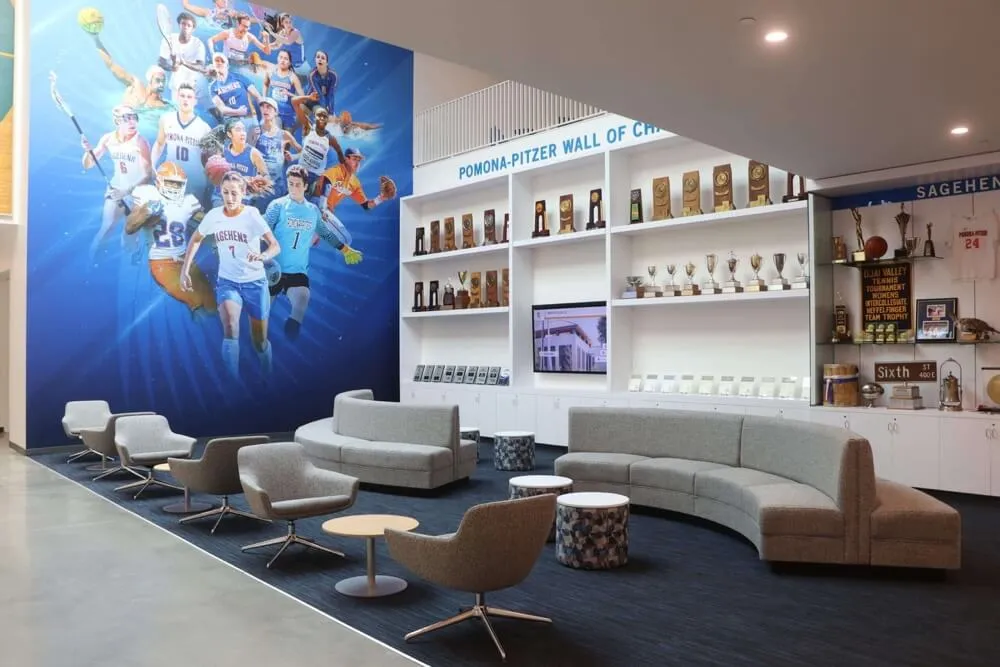
Professional athletic facility design integrates recognition displays with overall facility aesthetics and branding
Long-Term Value Comparison
While digital systems involve higher initial investment, they deliver superior value through:
- Unlimited capacity versus space-constrained physical boards
- Instant updates versus weeks-long professional service cycles
- Complete historical preservation versus current-record-only display
- Rich multimedia profiles versus time-and-name-only documentation
- Interactive exploration versus passive viewing
- Web accessibility versus facility-only visibility
- Comprehensive analytics versus no engagement measurement
- Environmental durability versus humidity-accelerated deterioration
Digital recognition provides substantially better value over 10-20 year program timelines despite similar or modestly higher total costs.
Quantifying Intangible Benefits
Athlete Motivation Impact
If digital recognition helps motivate even 10% of swimmers to pursue personal bests more aggressively:
- Team with 60 swimmers: 6 additional swimmers achieving personal goals
- Improved competitive results at conference and state championships
- Enhanced recruitment success attracting committed athletes
- Stronger team culture and competitive environment
These benefits prove difficult to quantify precisely yet represent genuine value substantially exceeding technology implementation costs while strengthening program competitiveness and sustainability.
Administrative Efficiency
Digital platforms dramatically reduce administrative burden:
- Traditional board updates: 2-4 hours per record change coordinating with contractors
- Digital updates: 5-10 minutes per record through intuitive web interface
- Annual time savings: 15-25 hours valued at $30-50/hour = $450-$1,250
Time savings enable coaches to focus on athlete development rather than recognition administration—improving program quality while reducing administrative frustration.
Alumni and Community Engagement
Extended recognition access creates measurable engagement:
- Increased alumni participation in reunions and team events
- Enhanced community awareness of program excellence through social media sharing
- Improved fundraising success as alumni feel more connected to programs
- Stronger community support during budget discussions and facility improvements
These engagement benefits translate to tangible program sustainability advantages supporting broader institutional goals beyond immediate recognition functions alone.
Avoiding Common Implementation Challenges
Swimming programs sometimes encounter obstacles during digital recognition implementation—understanding common pitfalls helps athletic directors avoid costly mistakes while ensuring successful deployment.
Mistake #1: Underestimating Content Migration Complexity
The single most common implementation challenge involves underestimating effort required to digitize decades of historical swimming records accurately.
The Historical Content Challenge
Comprehensive swimming record databases require:
- Verifying swimmer names and times from incomplete historical sources
- Resolving conflicts when different sources report different information
- Identifying which pool configurations historical times used
- Collecting photos for record holders from eras predating digital photography
- Determining dates when records were set when meet records lack specific information
This historical research requires 40-80 hours of focused effort for programs with 30+ year histories spanning multiple pool configurations and expanding event categories.
Successful Migration Strategies
Programs successfully managing content migration:
- Start with current records and recent 5-10 years before expanding historically
- Engage alumni volunteers passionate about preserving program heritage
- Accept that some historical information may remain incomplete or uncertain
- Document information sources and confidence levels for historical data
- Phase content development across 6-12 months rather than delaying launch until completion
The key involves launching with achievable content scope demonstrating immediate value while systematically expanding historical coverage as capacity and resources permit.
Mistake #2: Poor Display Placement Limiting Visibility
Even exceptional recognition content fails when displays install in locations where swimmers rarely encounter them during normal facility use.
Visibility Determines Impact
Displays hidden in coach’s offices, restricted-access areas, or low-traffic locations generate minimal engagement regardless of content quality:
- Swimmers don’t naturally encounter recognition during training
- Families visiting for meets don’t discover displays
- Recognition fails to shape team culture when visibility remains limited
- Motivational potential goes unrealized as records lack prominence
Strategic Placement Priorities
Maximize recognition impact through:
- Lobby entrance areas guaranteeing visibility for all entering facility
- Locker room entrance hallways with heavy daily traffic
- Spectator areas where families naturally gather during competitions
- Dry-side viewing locations maintaining visual connection to pool deck
- Multiple installations in larger facilities creating comprehensive presence
Professional assessment helps identify optimal locations balancing visibility, environmental protection, technical requirements, and installation feasibility specific to individual natatorium layouts.
Practical guidance on implementing digital recognition displays provides frameworks preventing common placement mistakes.
Mistake #3: Neglecting Ongoing Content Management
Swimming programs sometimes implement impressive digital systems without establishing sustainable content management workflows—leading to displays showing increasingly outdated information as updating becomes neglected amid busy season schedules.
The Maintenance Challenge
Digital displays require regular content updates:
- Adding new records as they fall throughout seasons
- Updating swimmer photos ensuring current appearance
- Correcting errors discovered after initial publication
- Adding new achievement categories as programs expand
- Refreshing featured content keeping displays engaging
Without genuinely intuitive content management platforms and clearly assigned staff responsibilities, these routine tasks become major projects falling victim to competing priorities.
Sustainable Management Solutions
Successful programs establish:
- Designated content managers: Specific coaches with allocated time and clear responsibilities
- Update protocols: Standard procedures for record verification and publication
- Scheduled maintenance: Regular content reviews ensuring accuracy and currency
- Staff training: Comprehensive instruction enabling independent management
- Vendor support: Responsive assistance when challenges arise
Platforms designed for non-technical staff management prove essential—systems requiring IT department involvement for routine updates quickly become orphaned technology as updating competes with other priorities receiving higher institutional attention.
Future Trends in Swimming Recognition Technology
Digital swim team recognition continues evolving with emerging capabilities that will further enhance how programs celebrate achievement and engage athletes with aquatic heritage.
Integration with Timing Systems and Meet Management
Future digital recognition platforms will increasingly integrate with existing timing and meet management systems creating automated content flows.
Automated Record Identification
Next-generation systems will:
- Connect directly with timing systems like Colorado, Daktronics, and Omega
- Automatically identify when swimmers achieve times faster than current records
- Generate draft record updates requiring only coach approval before publication
- Eliminate manual data entry reducing errors and administrative burden
This automation will make record keeping virtually effortless—times flow automatically from timing systems to recognition displays without manual intervention.
Real-Time Championship Display
Advanced integrations will enable:
- Live leaderboards showing top performances during championship meets
- Automatic record notifications when records fall during competition
- Heat and final time comparisons showing improvement throughout meets
- Social media auto-publishing celebrating records as they occur
These real-time capabilities will transform championship meets into dynamic recognition events where digital displays actively celebrate excellence as performances unfold.
Artificial Intelligence and Personalized Athlete Experiences
AI capabilities will enable sophisticated personalization helping individual swimmers engage with content most relevant to their development:
- Personalized goal recommendations based on current performance and historical record progressions
- Automated training video analysis comparing technique to record-holding performances
- Predictive analytics identifying swimmers likely to challenge records based on improvement trajectories
- Natural language search enabling conversational record discovery
These AI enhancements will make recognition displays valuable training tools beyond their primary celebration functions—helping athletes understand performance standards while identifying realistic improvement targets.
Augmented Reality Extensions
Mobile apps will extend digital recognition through augmented reality:
- Point smartphones at physical pools to see record holder overlays
- View historical record progression graphs overlaid on facility walls
- Watch record-setting race replays projected over current pool configurations
- Access complete swimmer profiles through AR markers throughout facilities
AR will create immersive recognition experiences connecting physical aquatic environments with comprehensive digital content in ways that blend celebration with technical education.
Emerging capabilities in interactive recognition technology demonstrate ongoing innovation expanding recognition possibilities.

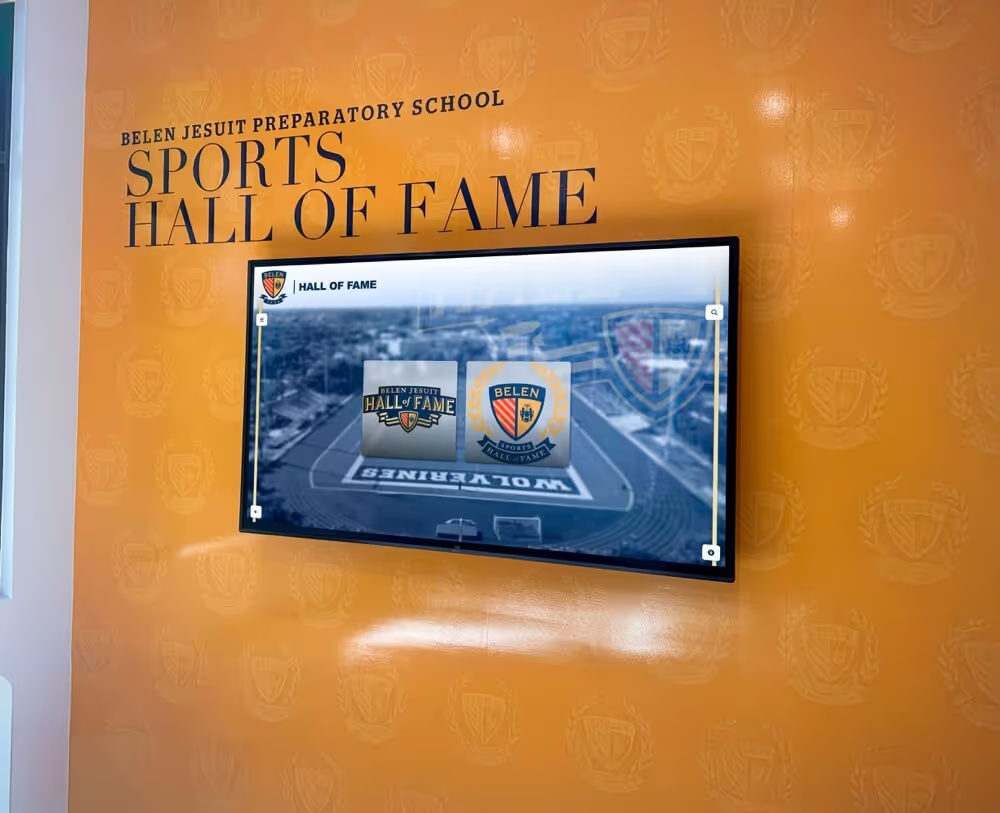
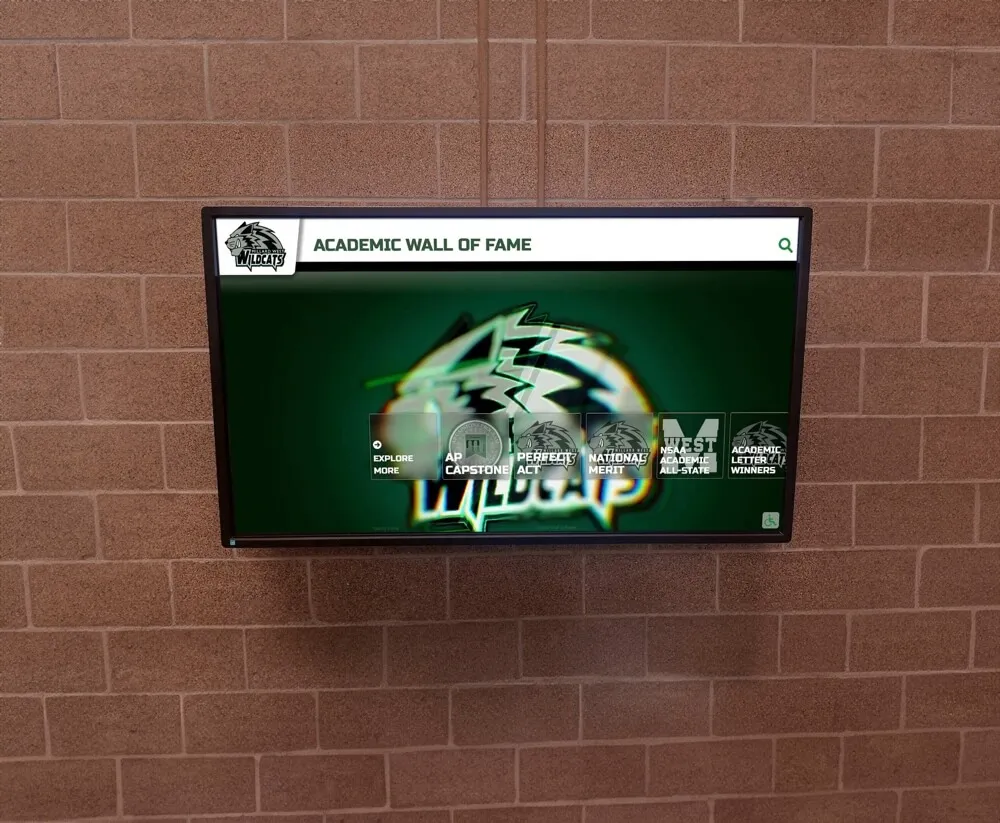
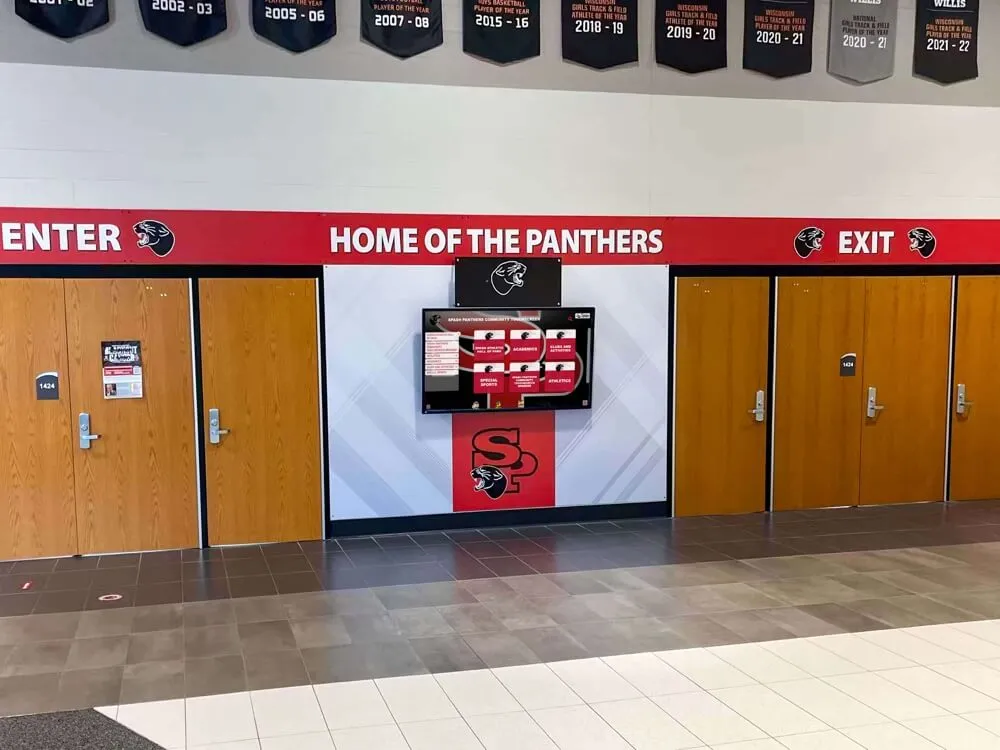
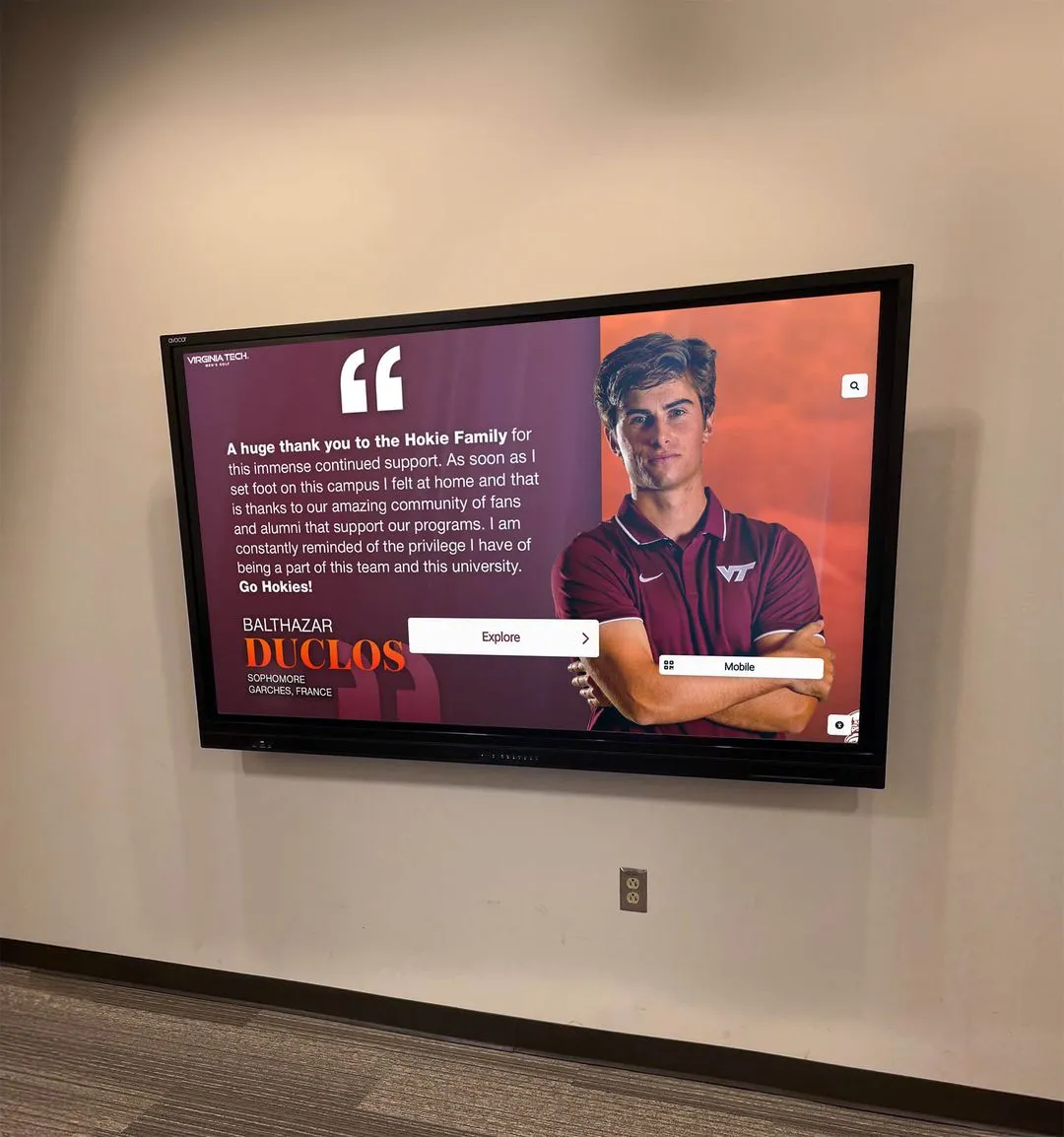
Clean wall mounting creates professional installations that enhance rather than clutter facility aesthetics
Conclusion: Diving Into Digital Swimming Recognition
Swim team plaque display digital technology represents fundamental advancement in how aquatic programs celebrate achievement, preserve competitive heritage, and build team pride. Traditional painted record boards and engraved plaques served swimming programs adequately for decades yet increasingly fall short in modern environments where multiple pool configurations multiply record categories, frequent record changes overwhelm update capacity, humid natatorium conditions accelerate display deterioration, and limited wall space forces incomplete recognition excluding worthy achievements from documentation and celebration.
Digital plaque display technology fundamentally transforms what swimming recognition can achieve—addressing traditional limitation while introducing capabilities impossible through physical boards. Unlimited capacity enables programs to honor all records across all configurations and categories without space constraints forcing selective recognition. Instant updates maintain current information while records remain fresh and relevant for athlete motivation. Rich multimedia profiles tell complete achievement stories rather than reducing performances to times alone. Interactive exploration engages swimmers actively rather than passively, dramatically increasing recognition impact. And web accessibility extends celebration beyond facility boundaries reaching families and alumni worldwide.
Transform Your Swimming Program Recognition
Discover how purpose-built digital recognition platforms deliver superior swimming-specific solutions celebrating aquatic excellence while engaging athletes with team heritage. Rocket Alumni Solutions offers comprehensive systems designed specifically for swimming program requirements.
Explore Swimming Recognition SolutionsSuccessful implementation requires thoughtful planning addressing platform selection, hardware installation appropriate for aquatic environments, comprehensive content development honoring program history, strategic placement maximizing visibility, and sustainable administrative workflows enabling ongoing maintenance. Programs should evaluate purpose-built swimming recognition platforms versus generic digital signage, understanding fundamental architectural differences determining whether displays deliver database exploration or merely slideshow viewing. Professional installation ensures reliable operation through appropriate humidity-resistant hardware, code-compliant electrical work in aquatic environments, secure mounting, and optimal positioning maximizing visibility while protecting equipment.
Whether implementing comprehensive record displays documenting all achievements across multiple pool configurations, creating multimedia championship team recognition preserving complete season stories, or building inclusive systems celebrating diverse achievements beyond elite records alone, digital plaque display technology provides proven solutions strengthening swimming program culture while giving every deserving swimmer the permanent recognition their accomplishments merit.
Swimming programs investing in digital recognition demonstrate commitment to honoring all athletes and achievements rather than limiting celebration to only those whose records fit within arbitrary physical space constraints. This comprehensive approach communicates program values while building cultures where aquatic excellence receives systematic celebration creating motivation, pride, and lasting connection between current swimmers and the championship traditions that define program excellence across generations of competitive development.
Ready to explore digital swimming recognition options for your program? Learn more about swimming record board solutions, discover comprehensive athletic record display strategies, and explore complete digital trophy case systems that preserve achievement heritage while celebrating current excellence through modern interactive technology built specifically for swimming programs and aquatic facilities.