



Planning a teacher of the year ceremony represents one of the most meaningful responsibilities school administrators undertake, creating a moment that honors not just individual excellence but the entire profession’s vital role in shaping young lives. An effective Teacher of the Year ceremony extends far beyond simply announcing a name and presenting a plaque—it creates an emotional experience that validates years of dedication, inspires colleagues throughout the building, demonstrates to students what excellence looks like, and communicates to the broader community that educational achievement matters deeply.
Yet many school leaders struggle with essential ceremony questions: How do you design selection criteria that feel fair and comprehensive rather than arbitrary or political? What presentation format creates genuine emotional impact versus perfunctory acknowledgment? How do you balance honoring the individual recipient with recognizing the collaborative nature of teaching excellence? What elements transform a routine assembly into a memorable celebration that resonates long after the applause fades?
This comprehensive guide provides practical frameworks for planning impactful Teacher of the Year ceremonies spanning nomination processes, selection criteria development, event logistics, presentation strategies, and lasting recognition approaches. Whether you’re an administrator planning your first formal teacher recognition program or refining an established tradition, you’ll discover strategies that transform obligatory awards into genuinely meaningful celebrations of educational excellence.
The most successful teacher recognition ceremonies balance individual celebration with collective inspiration, formal recognition with personal warmth, and momentary acknowledgment with lasting tribute—creating experiences where honorees feel truly seen, colleagues feel inspired, and students witness authentic appreciation for the educators who shape their futures.

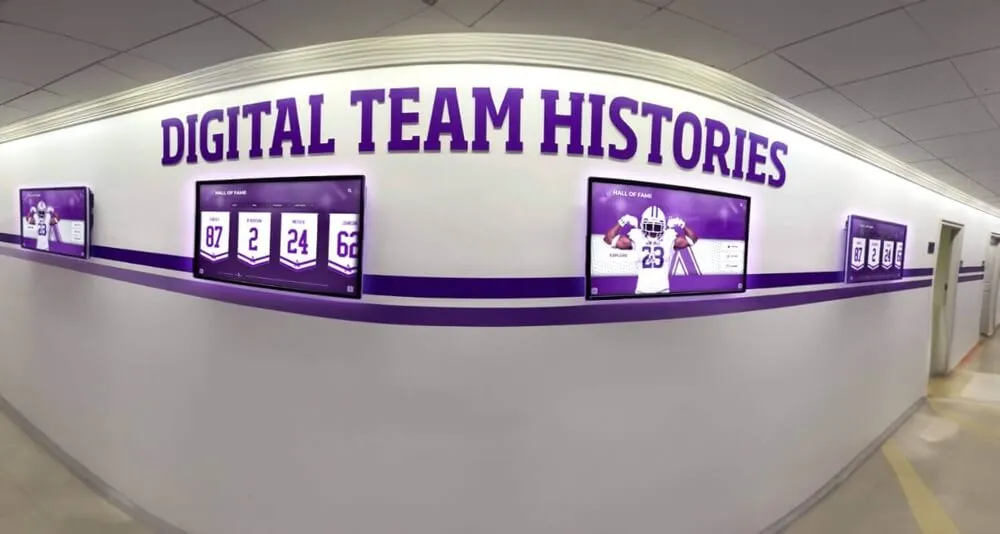
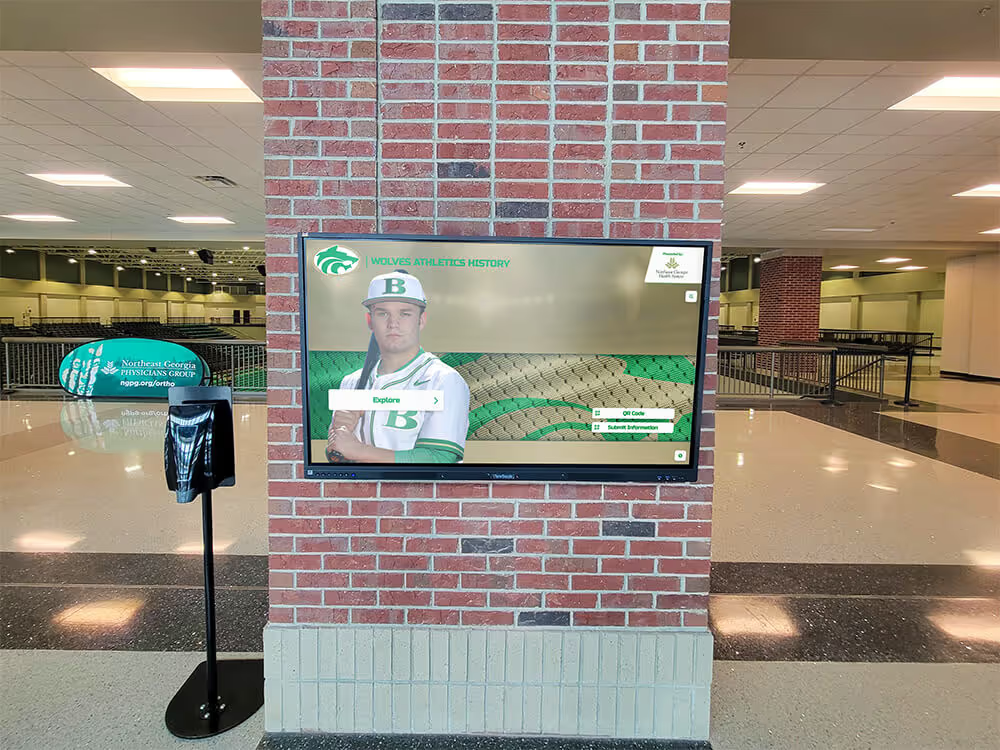
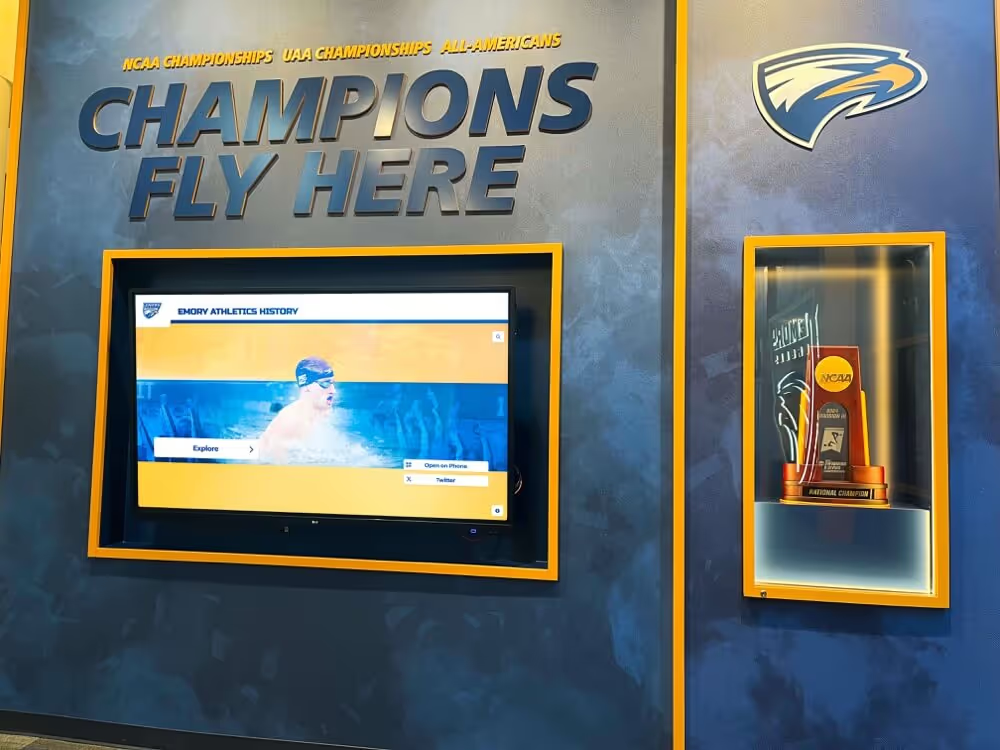
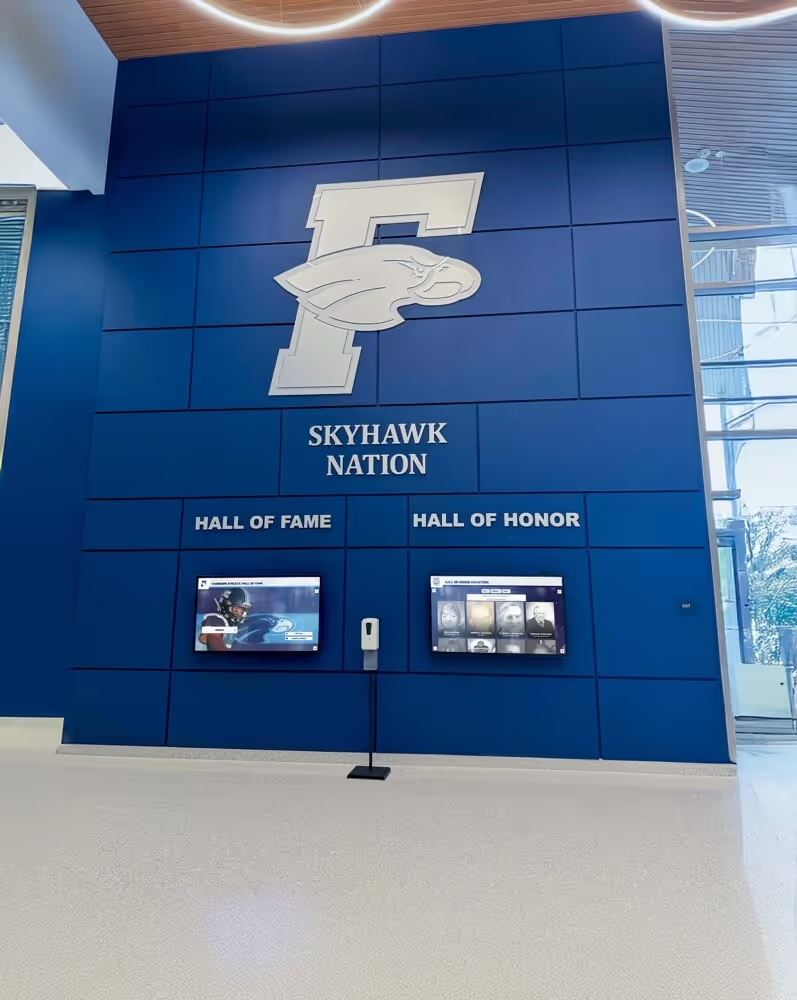
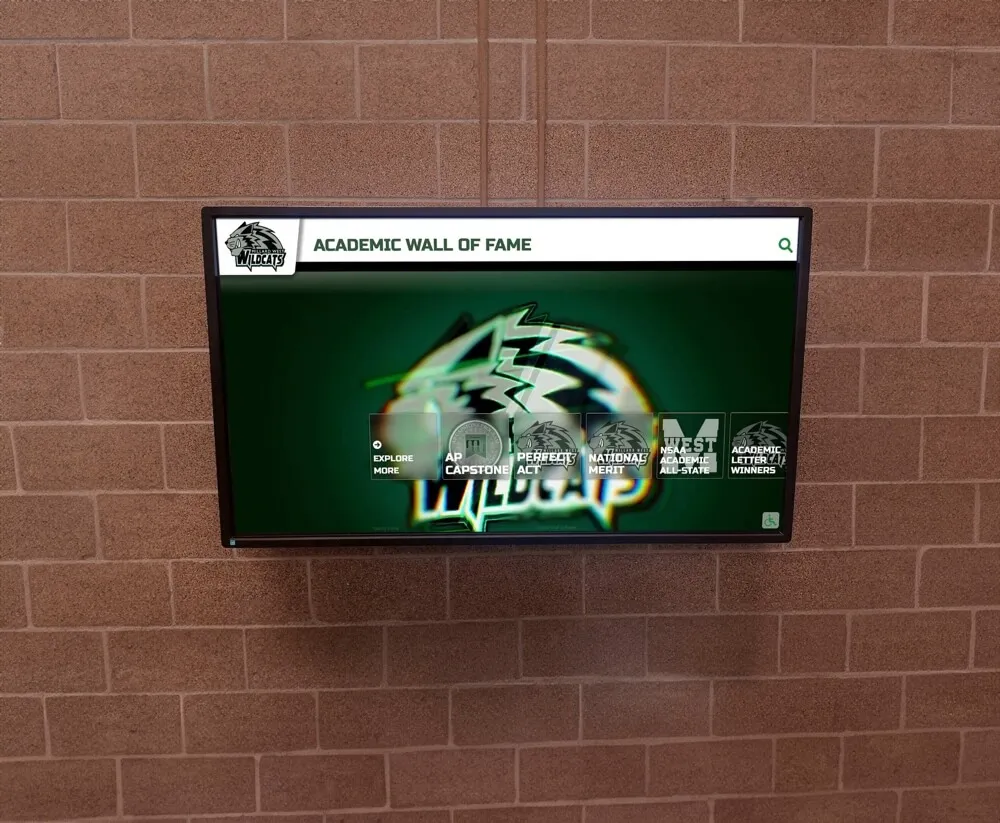
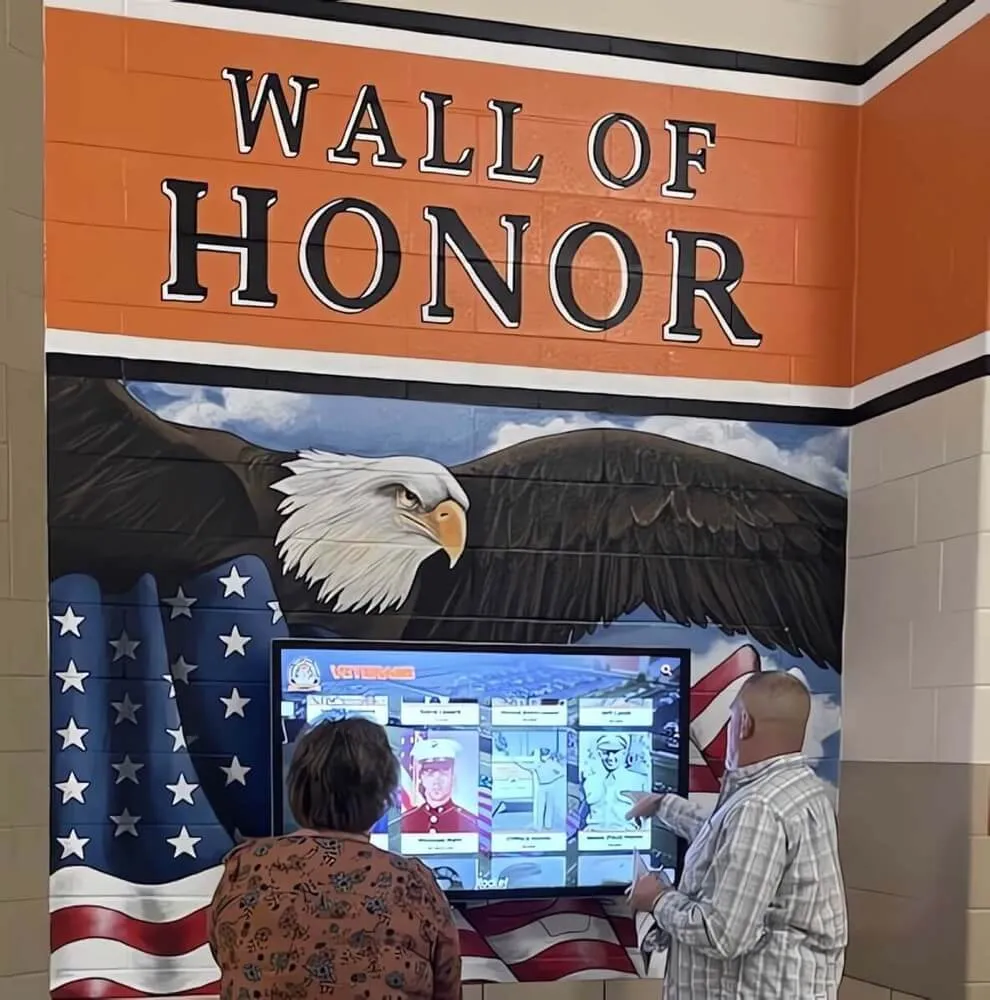
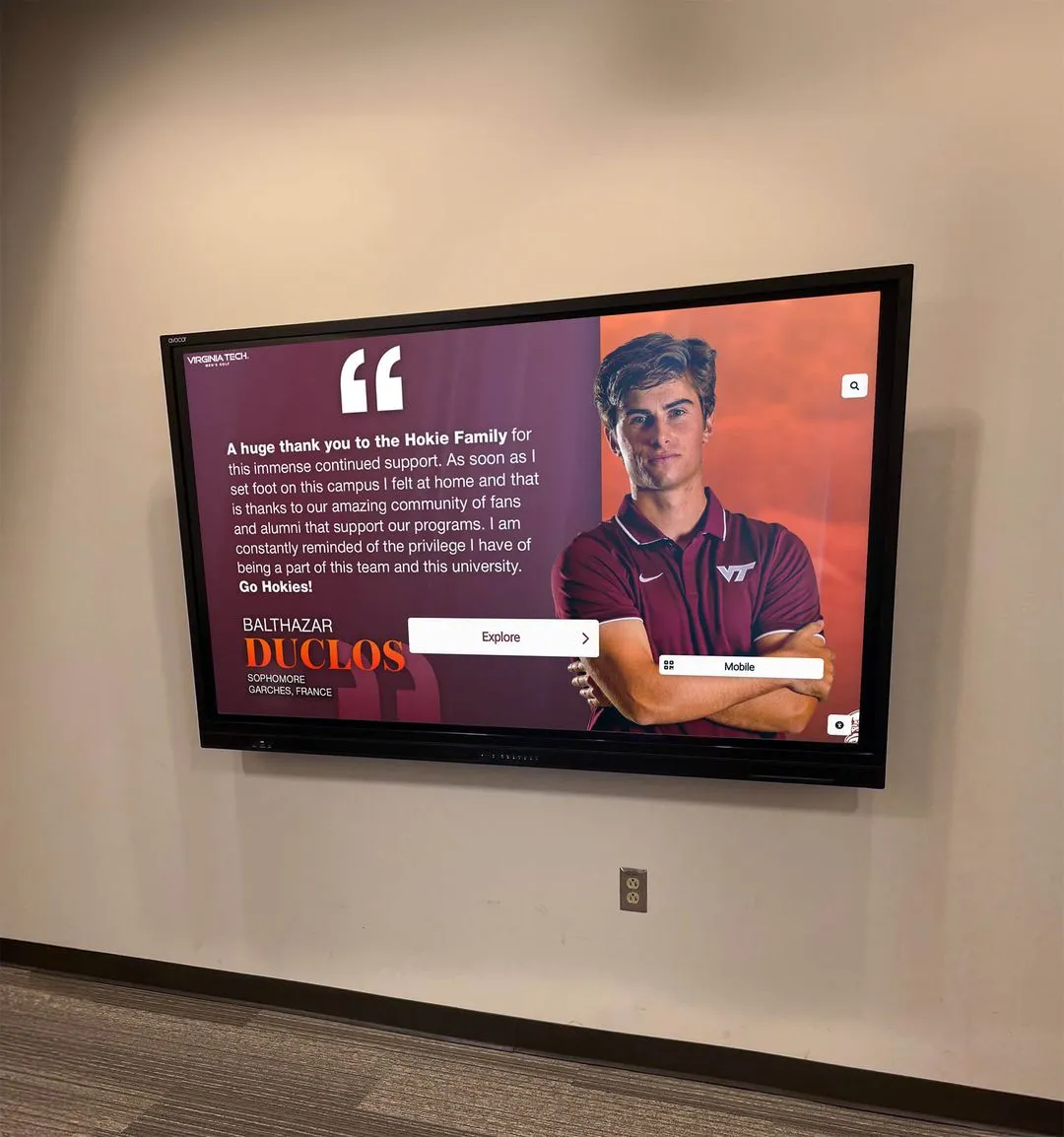
Permanent recognition displays in school common areas extend ceremony impact beyond single events, creating year-round reminders of teaching excellence
Establishing Fair and Comprehensive Selection Criteria
The foundation of any respected Teacher of the Year program begins with transparent, multidimensional selection criteria that recognize diverse forms of teaching excellence rather than narrow definitions favoring specific teaching styles or subject areas.
Defining Core Evaluation Dimensions
Effective selection frameworks evaluate candidates across multiple dimensions rather than relying on single metrics like test scores or popularity.
Instructional Excellence and Student Growth
The primary evaluation dimension examines teaching effectiveness through multiple lenses. Consider documented student learning growth beyond standardized test scores, including portfolio demonstrations, project outcomes, and skills development across diverse learners. Review innovative instructional approaches that engage reluctant learners, differentiate effectively for varied abilities, and create inclusive classroom environments where all students access rigorous content.
Examine lesson planning sophistication including alignment to standards, assessment-driven instructional adjustments, and intentional skill progression across units. Evaluate classroom management creating productive learning environments characterized by respectful relationships, clear expectations, and maximized instructional time rather than constant behavioral disruptions.
Seek evidence of pedagogical reflection—teachers who actively analyze lesson effectiveness, seek feedback from colleagues, implement improvements based on student performance data, and demonstrate continuous growth rather than static repetition of familiar approaches year after year.
Professional Leadership and Collaboration
Outstanding teachers extend impact beyond their individual classrooms through contributions to collective school improvement. Recognize teachers who mentor new colleagues, provide instructional coaching, lead professional learning communities, or develop curriculum resources benefiting entire departments or grade levels.
Value participation in school improvement initiatives including committee leadership, pilot program development, or action research addressing schoolwide challenges. Consider contributions to school culture through coaching extracurricular activities, organizing community events, or fostering positive relationships across the school community.
Evaluate collaborative mindset evidenced by willingness to share effective practices, openness to feedback, active contribution to team planning, and support for colleagues navigating challenges. The best teachers recognize education as collective work rather than isolated individual practice.
Innovation and Adaptability
Exceptional educators demonstrate intellectual curiosity and professional growth rather than comfortable reliance on long-established routines. Recognize teachers who implement research-based instructional innovations, integrate emerging technologies enhancing learning, or design creative approaches making content accessible to diverse learners.
Value adaptability demonstrated through effective navigation of curriculum changes, responsive adjustment to unexpected challenges, differentiation meeting emerging student needs, and growth mindset toward professional development. Schools implementing comprehensive academic recognition programs understand that recognizing innovation encourages continued professional risk-taking that benefits entire learning communities.
Student Relationships and Advocacy
The teaching profession’s heart lies in genuine care for young people extending beyond content delivery to holistic student development. Recognize educators who build trusting relationships enabling academic risk-taking, provide emotional support during personal challenges, advocate for student needs with other adults, and create classroom environments where students feel known and valued as individuals.
Consider evidence from student testimonials, parent feedback, and colleague observations describing teachers who remember details about students’ lives, celebrate individual growth, maintain high expectations paired with steadfast support, and create lasting positive impact on students’ educational trajectories and life choices.
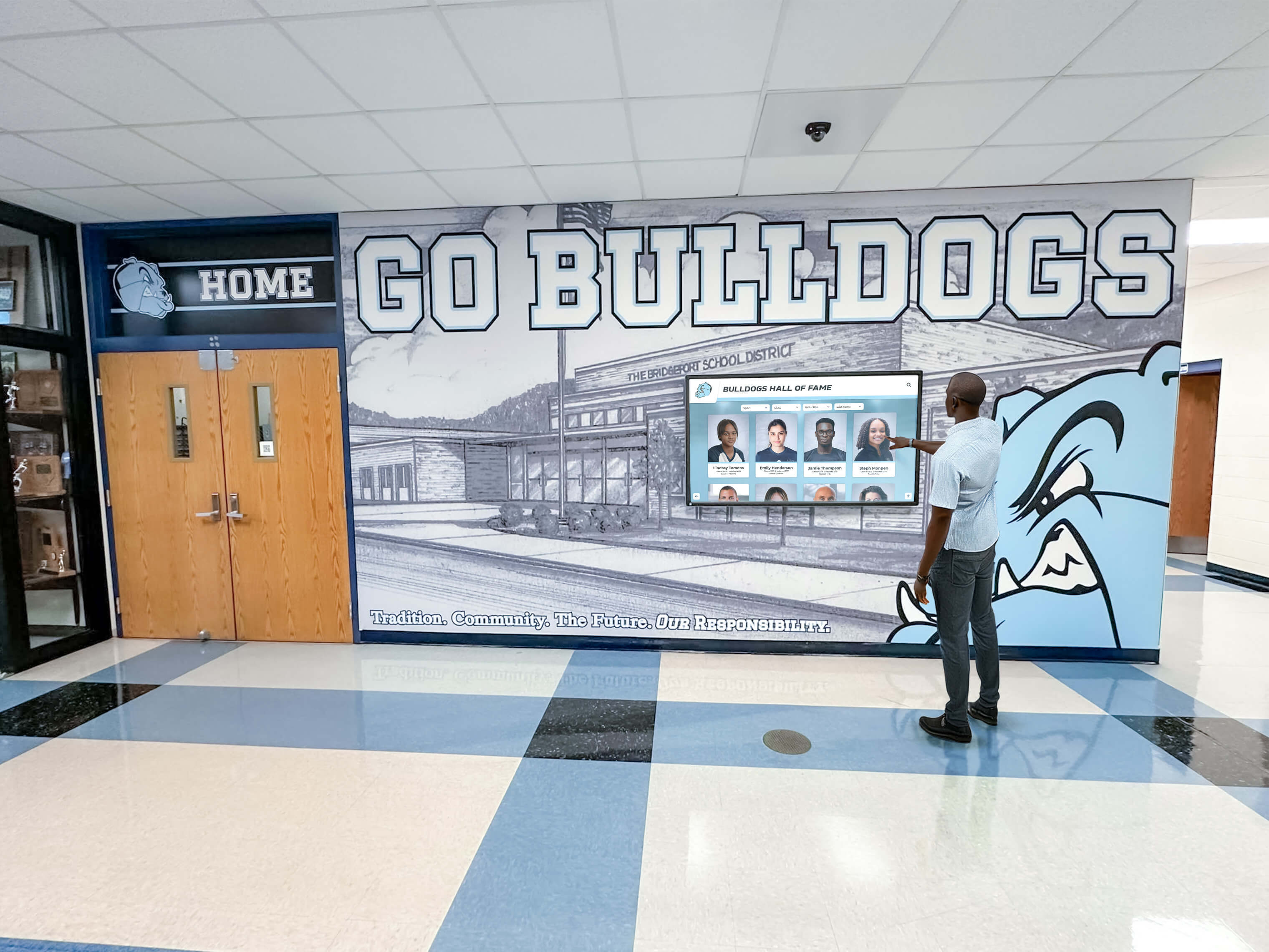
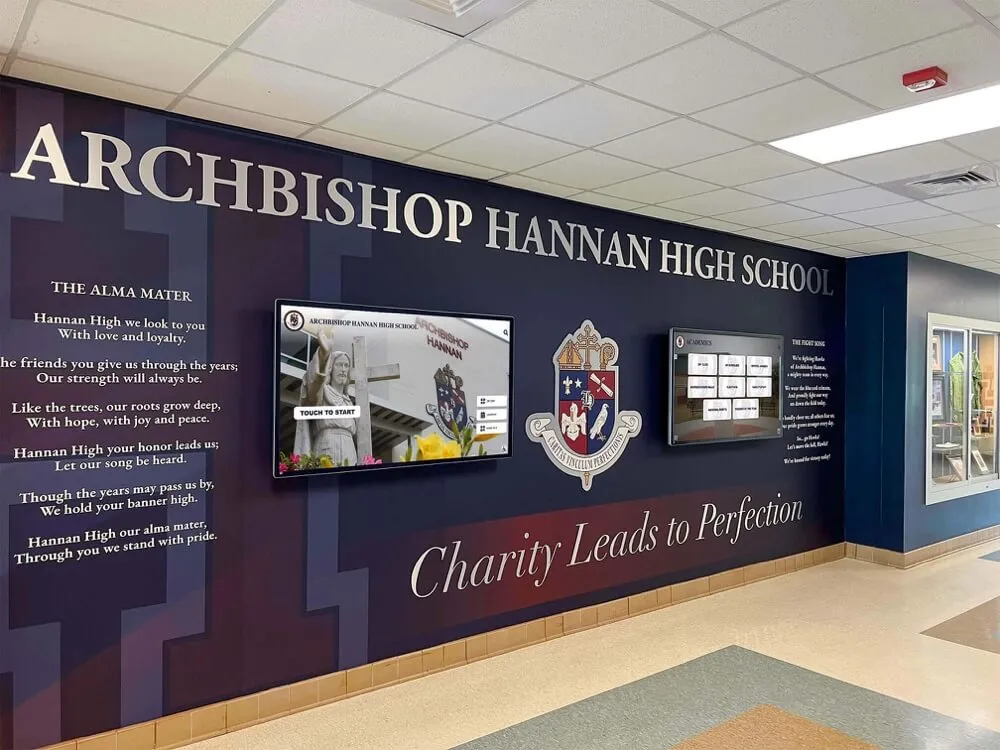
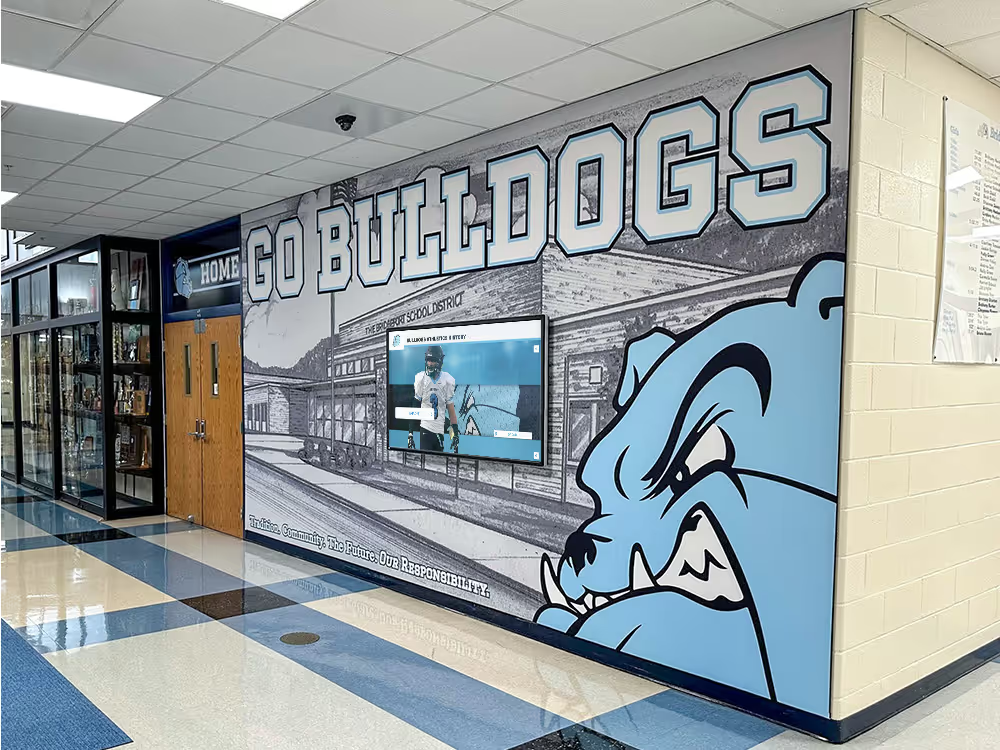
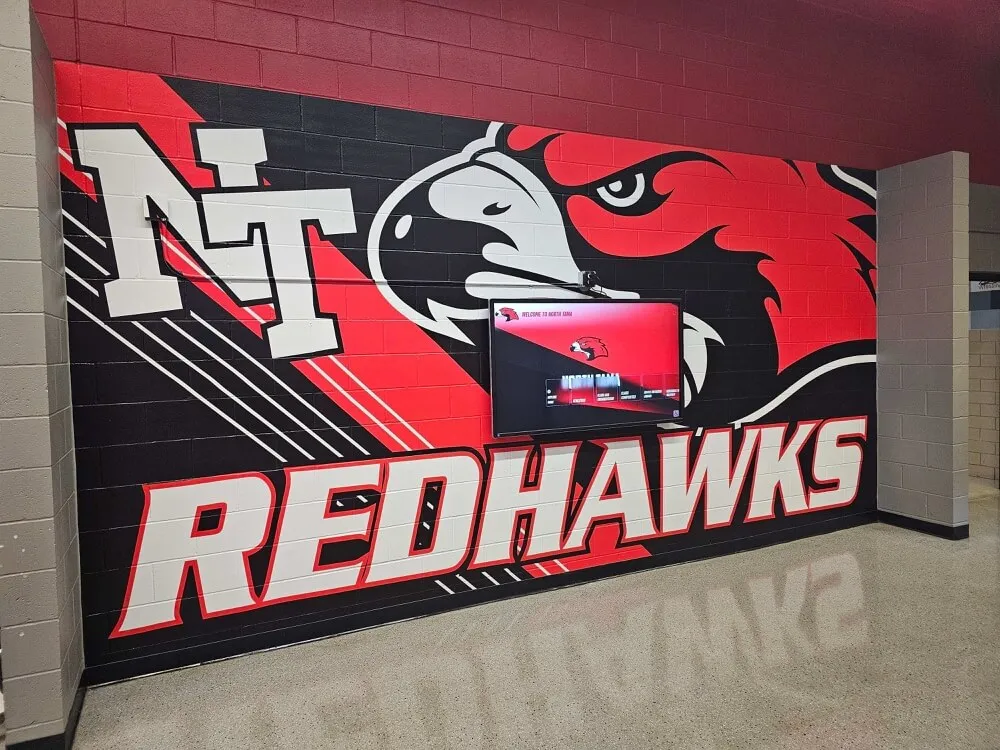
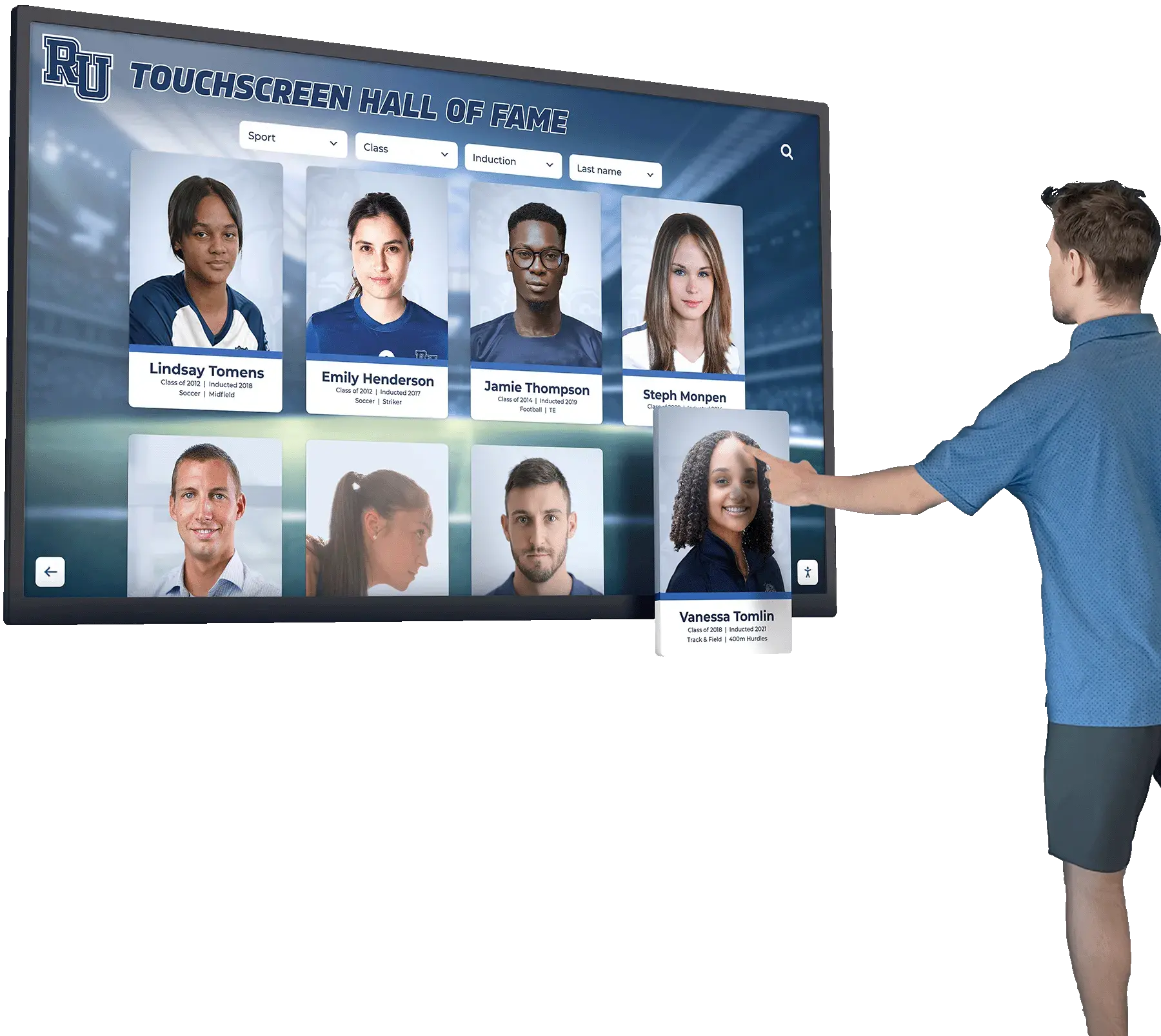
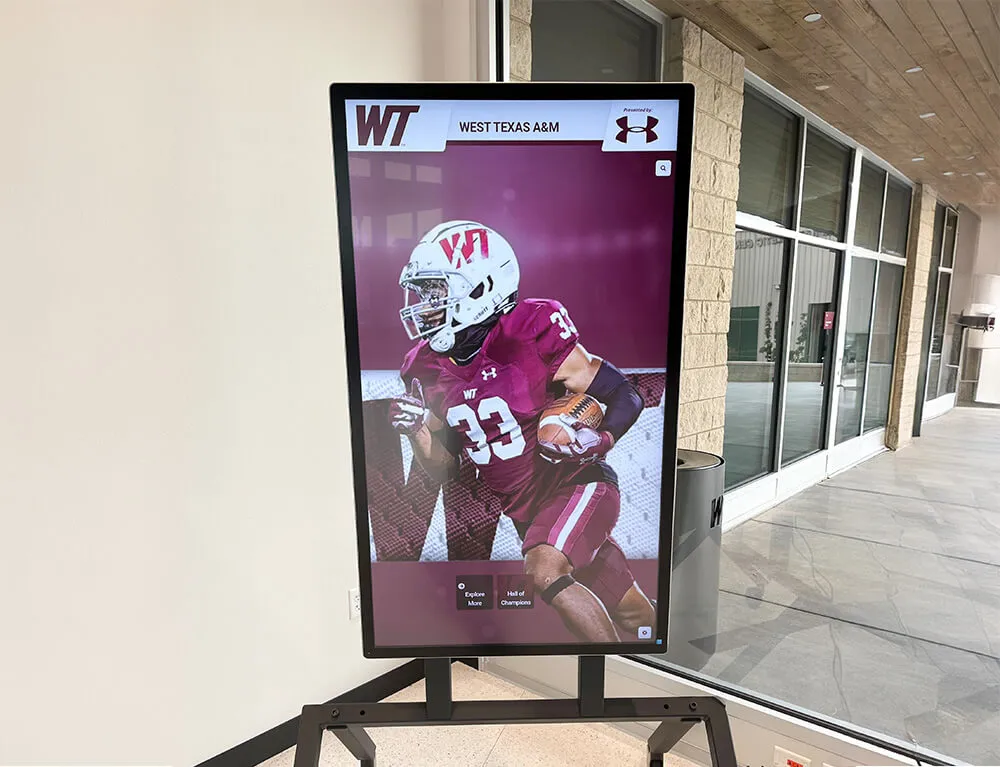
Interactive recognition displays allow students and visitors to explore teacher accomplishments and school history through engaging digital experiences
Creating Transparent Nomination and Selection Processes
Selection process transparency builds trust in program integrity while reducing perceptions of favoritism or politics undermining recognition value.
Inclusive Nomination Pathways
Design nomination systems allowing multiple perspectives rather than administrator-only selection vulnerable to blind spots or limited visibility into classroom practice. Consider nomination pathways including self-nomination with required portfolio submission, peer nomination by teaching colleagues, student nomination with structured feedback forms, parent nomination based on classroom communication and student impact, and administrator nomination based on formal observations and professional contributions.
Require all nominations include specific evidence supporting candidacy—concrete examples, documented outcomes, and detailed descriptions rather than vague praise or popularity-based endorsements. Structured nomination forms ensuring comprehensive information collection create more equitable evaluation than informal recommendations varying dramatically in depth and specificity.
Establish clear nomination timelines with adequate preparation periods, transparent deadlines, and communication ensuring all potential nominators understand the process and criteria. Hidden or rushed nomination windows advantage insiders while disadvantaging equally deserving candidates lacking advocates aware of the process.
Balanced Selection Committee Composition
Selection committees should represent diverse perspectives rather than homogeneous groups vulnerable to narrow judgment or unconscious bias. Include representation from multiple constituencies including administrators with instructional leadership responsibilities, teacher representatives from different grade levels or departments, support staff observing teachers’ daily interactions and professionalism, and potentially student or parent representatives providing learner/family perspectives.
Establish clear committee protocols including criteria-based evaluation rubrics, evidence review procedures, blind initial screening when possible to reduce name recognition bias, and structured discussion ensuring all committee members contribute rather than dominant personalities controlling decisions.
Consider rotation policies preventing permanent committee membership that might establish implicit hierarchies or favor particular teaching philosophies over time. Fresh perspectives and changing committee composition improve fairness perceptions while reducing concerns about predetermined outcomes or insider advantages.
Finalist Recognition Approaches
Selection processes yielding multiple finalists create opportunities for broader recognition while managing the inevitable disappointment of strong candidates not receiving top honors. Consider approaches including public recognition of all finalists during ceremonies with individual spotlight moments, written commendations acknowledging specific excellence demonstrated by each finalist, small stipends or professional development opportunities for finalists beyond the primary award, and creative recognition categories allowing multiple winners in different dimensions (innovation, mentorship, student relationships, content expertise).
Multiple award categories reduce zero-sum competition while allowing recognition of varied excellence types, though excessive category proliferation can dilute prestige. Balance breadth of recognition with maintaining meaningful distinction for highest honors.

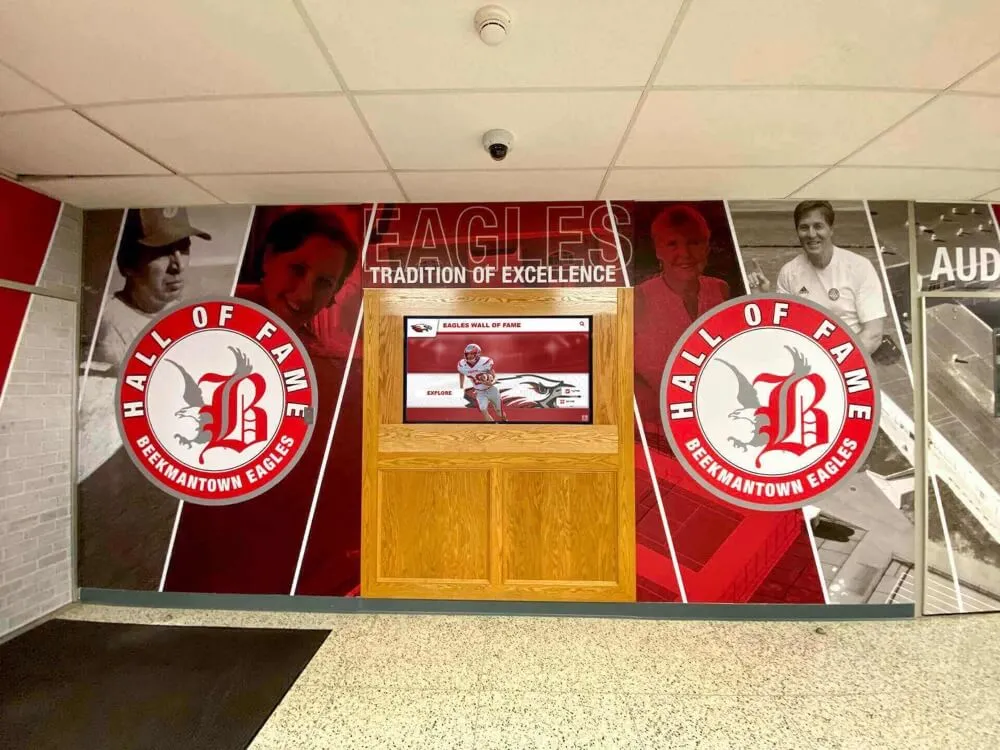
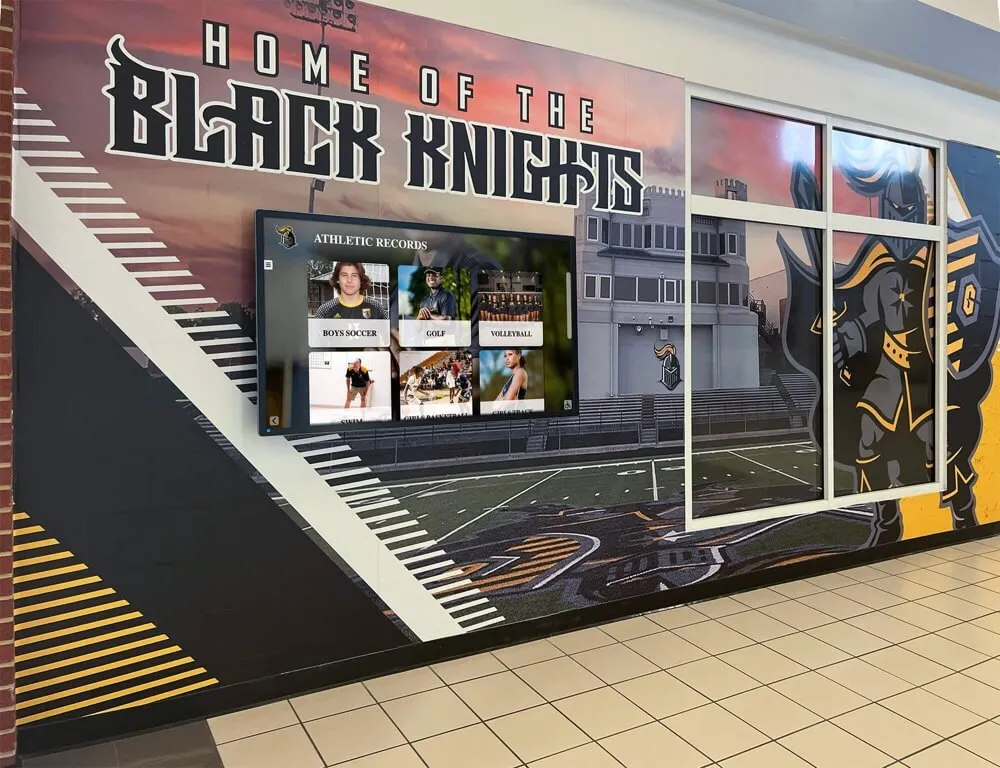
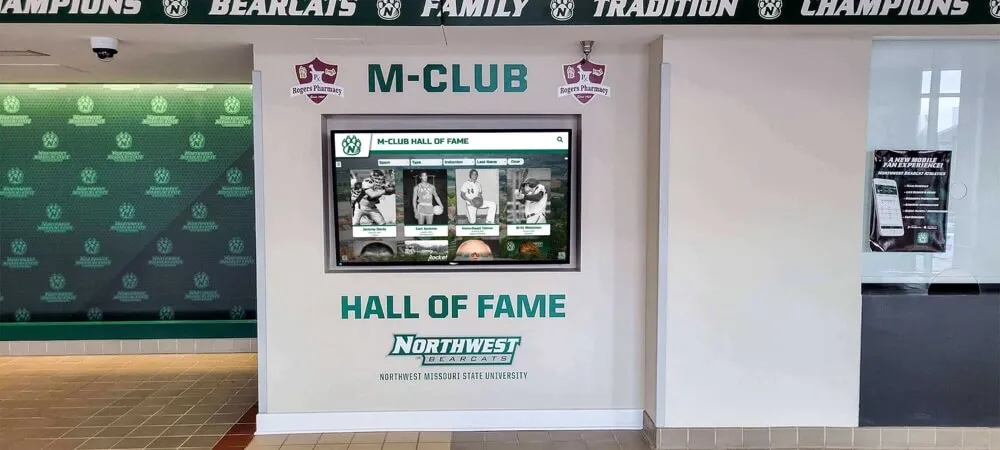
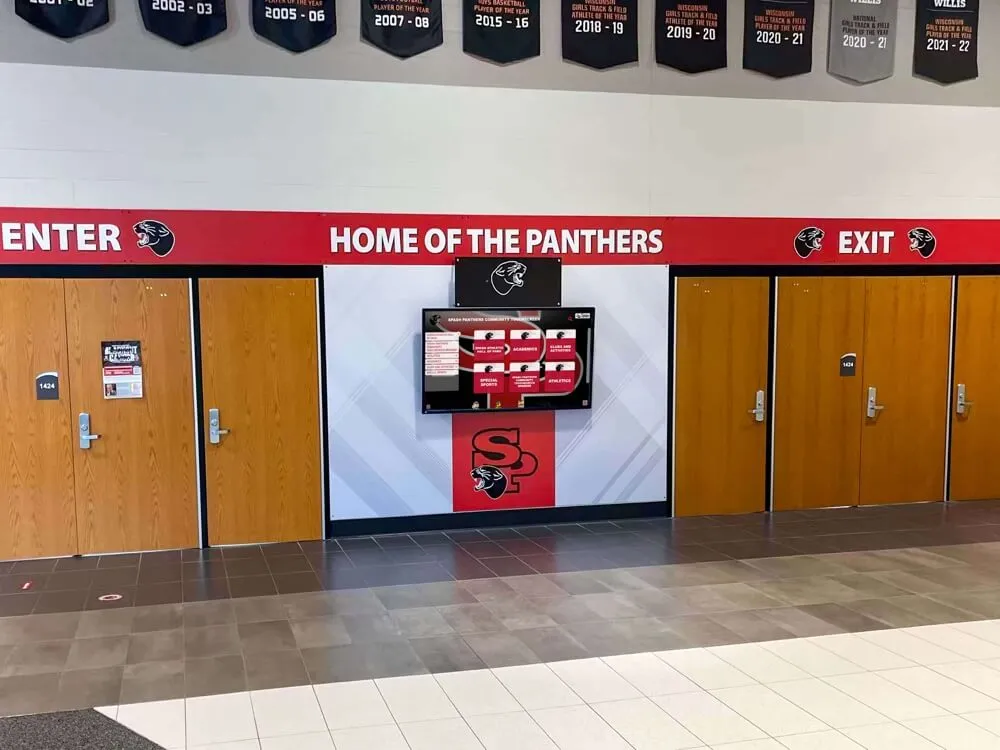
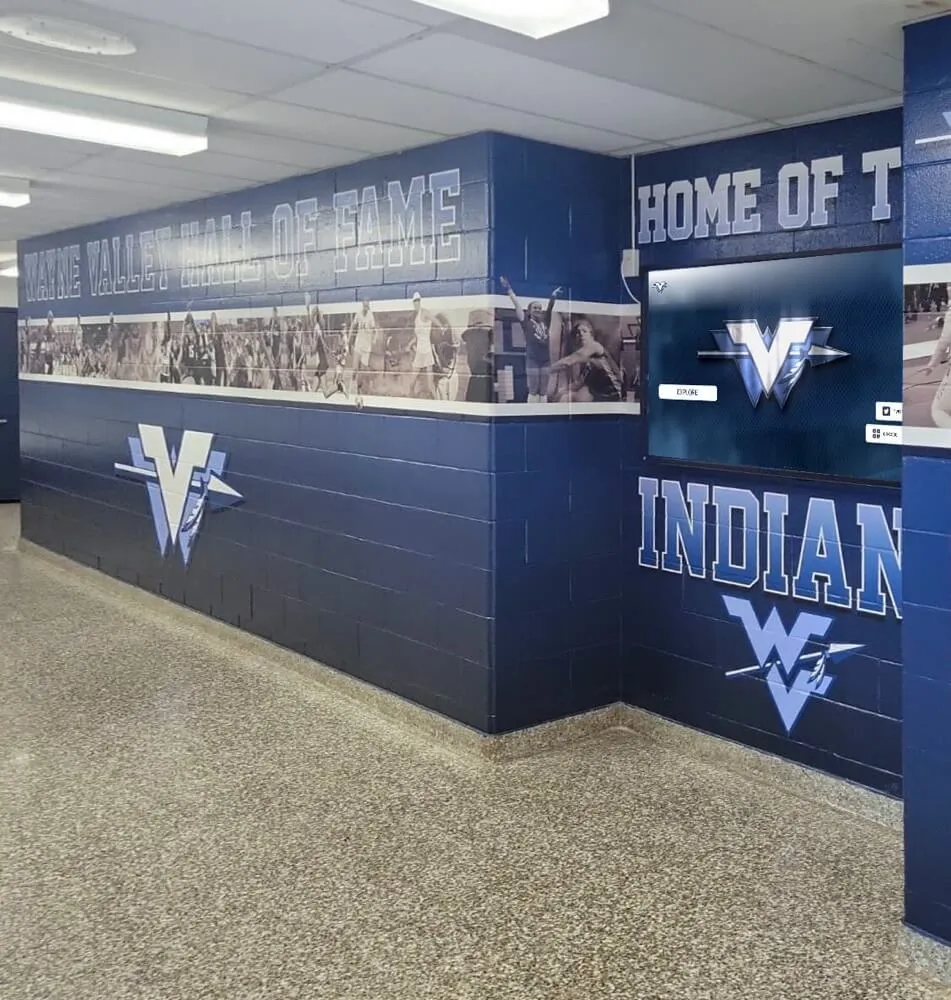
Permanent recognition installations in high-traffic areas ensure ongoing visibility for teaching excellence beyond annual ceremonies
Planning Meaningful Ceremony Experiences
Once selection concludes, thoughtful event planning transforms recognition from procedural announcement into meaningful celebration creating lasting emotional impact for honorees, inspiration for colleagues, and demonstration for students that teaching excellence matters.
Choosing Appropriate Settings and Timing
Event logistics significantly impact ceremony significance and emotional resonance.
Setting Selection Considerations
Ceremony location communicates recognition importance while affecting participation accessibility. Options include all-school assemblies during regular school days maximizing student attendance and peer recognition visibility, evening ceremonies in school auditoriums allowing family attendance and community participation without disrupting instructional time, formal venues like community performing arts centers or banquet facilities elevating event significance through special settings, or intimate staff meetings emphasizing professional community recognition in collegial rather than public contexts.
Large assembly settings create community-wide celebration and student inspiration opportunities but risk performative elements overwhelming personal connection. Intimate settings enable deeper personal tribute and emotional expression but limit audience reach and ceremonial grandeur. Consider honoree personality and preferences—some teachers relish public celebration while others find large audiences uncomfortable rather than honoring.
Hybrid approaches might include primary recognition during staff professional development sessions emphasizing peer appreciation, with additional student assembly allowing young people to celebrate teachers who shaped their education. Multiple recognition moments in varied contexts can maximize different ceremonial values rather than forcing single events to accomplish competing goals.
Strategic Timing Decisions
Ceremony timing affects symbolism, attendance, and integration with school calendar rhythms. Consider end-of-year ceremonies coinciding with closing celebrations, creating capstone recognition as community reflects on the year’s accomplishments. Spring timing allows recognition informing district or state Teacher of the Year nominations requiring early-year submission.
Mid-year ceremonies during winter months provide morale boost during challenging seasonal periods when days shorten and exhaustion accumulates. Early-year ceremonies leverage fresh energy and optimism though limited observation period for newer staff.
Coordinate with principal responsibilities including calendar management to ensure ceremonies avoid conflicts with major testing periods, athletics events, or existing school commitments dividing community attention. Strategic timing demonstrates respect for the award’s significance rather than wedging recognition into convenient scheduling gaps.
Designing Impactful Presentation Elements
Ceremony structure and presentation approach determine whether recognition feels perfunctory or genuinely meaningful.
Personal Narrative and Tribute Preparation
The ceremony’s emotional heart involves personal stories illustrating the honoree’s impact beyond generic praise. Develop comprehensive tribute incorporating specific classroom moments, student transformation stories, colleague appreciation testimonials, and career highlights demonstrating sustained excellence rather than single exceptional moments.
Gather tribute content through confidential interviews with current and former students sharing specific memories and growth moments, colleague submissions describing professional impact and personal qualities, administrator observations highlighting instructional excellence and school contributions, and family members providing personal context about dedication and sacrifice behind professional achievements.
Video tributes can powerfully compile diverse voices into cohesive narratives, though poorly executed videos with technical problems or excessive length diminish rather than enhance recognition. Live testimonials from students, parents, and colleagues can create spontaneous emotional authenticity video compilations sometimes lack, though require confident speakers and careful time management preventing speeches overwhelming entire ceremonies.
Balance celebrating individual excellence with acknowledging collaborative context—recognize supportive colleagues, understanding families, and inspiring mentors contributing to the honoree’s development. Teaching excellence rarely emerges in isolation but develops through professional communities and personal support systems deserving acknowledgment.
Meaningful Award Elements
Physical recognition items should reflect honor significance rather than generic plaques indistinguishable from routine service awards. Consider substantive awards including engraved crystal or artistic sculptures conveying prestige, personalized items incorporating the honoree’s specific interests or teaching focus, commissioned artwork or custom pieces creating unique rather than catalog-ordered recognition, professional development stipends or conference attendance funding supporting continued growth, and permanent recognition through named scholarships, dedicated spaces, or lasting tributes extending beyond the ceremony itself.
Involve students in recognition creation through handwritten letters compiled in bound collections, video messages preserved digitally, or artwork reflecting the teacher’s impact. Student-created elements often carry greater emotional weight than purchased items because they represent authentic relationship and personal connection rather than institutional obligation.
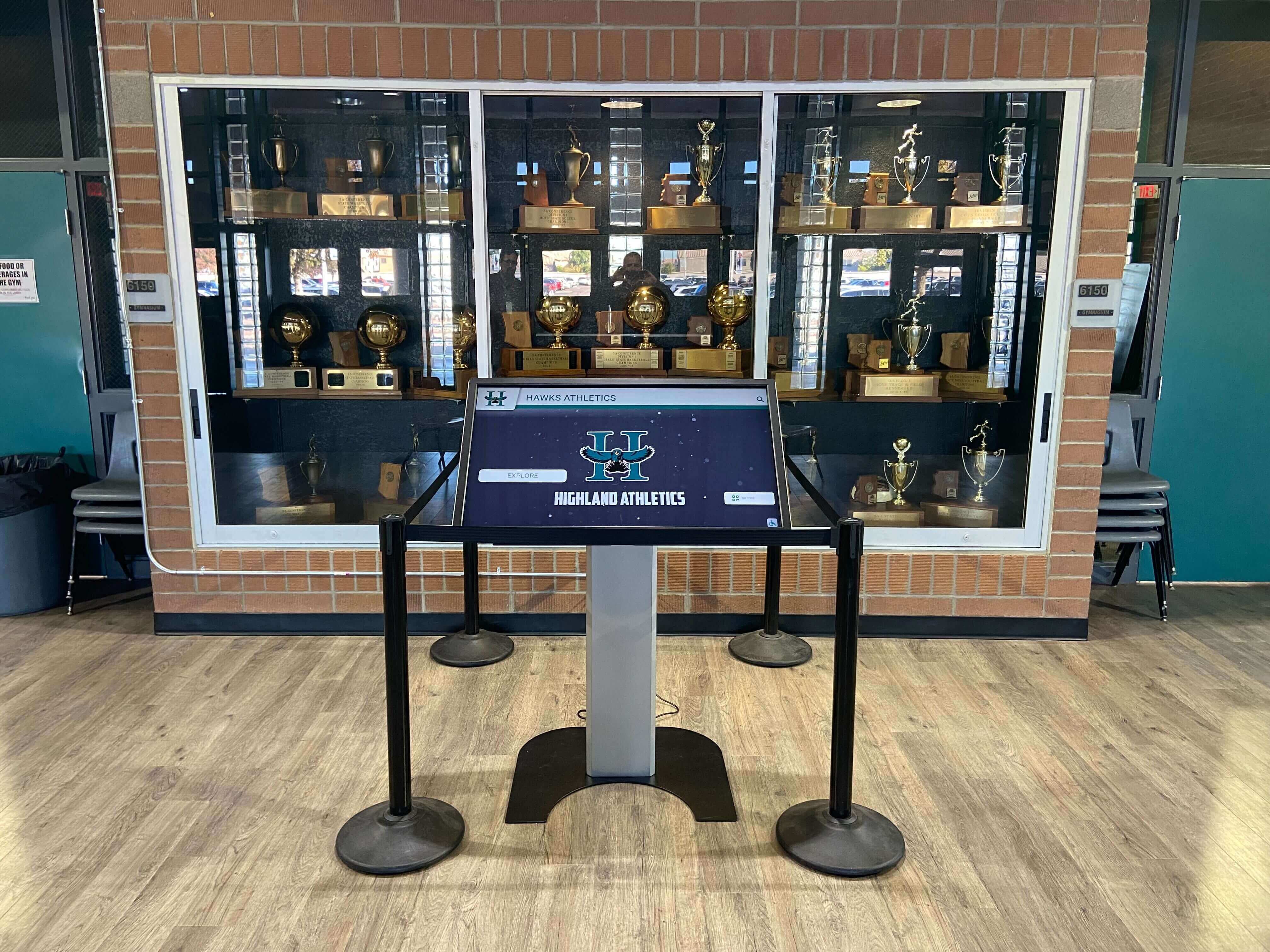
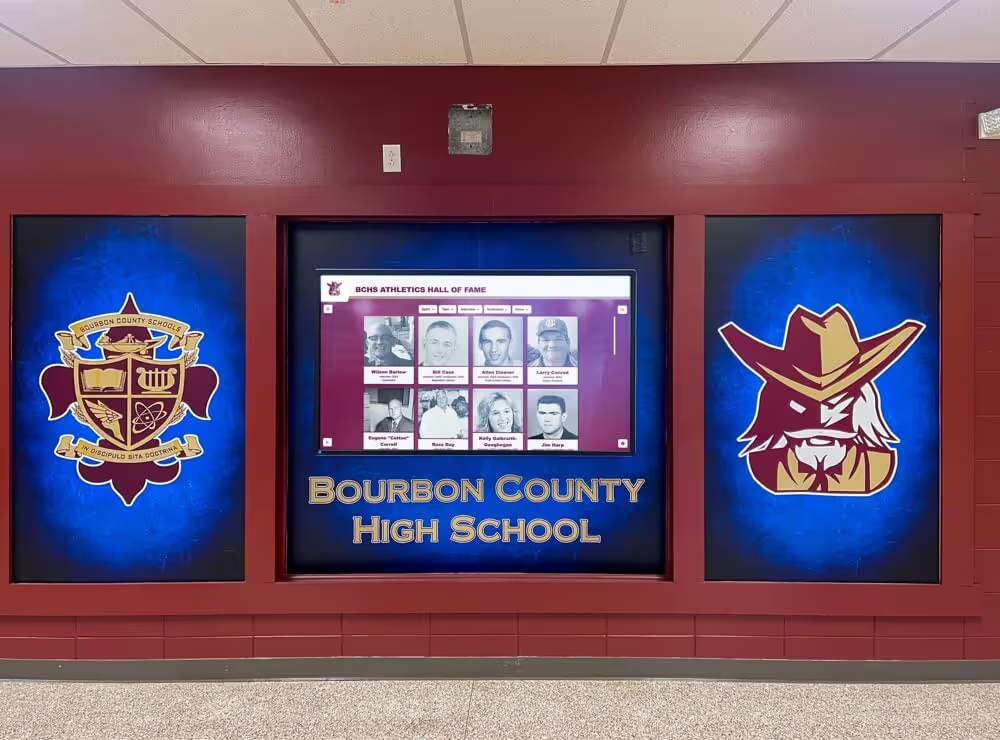
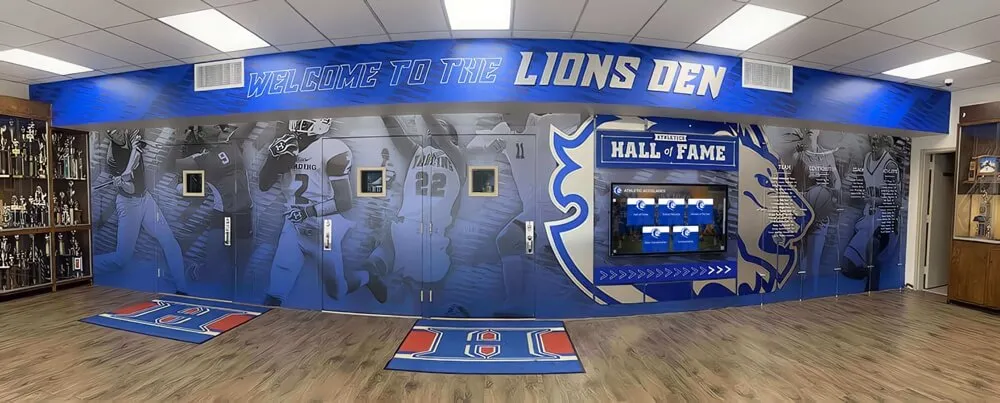
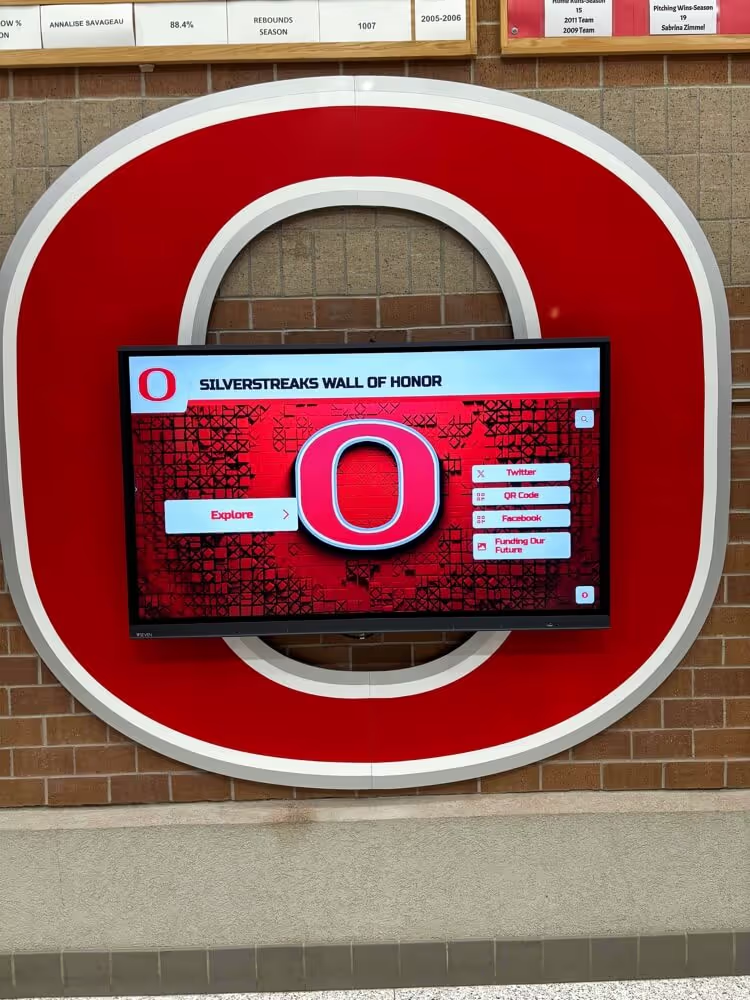
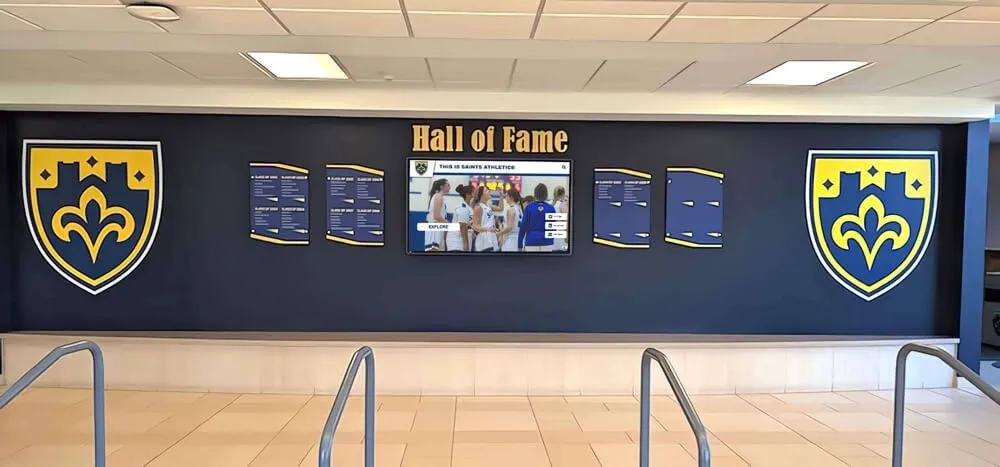
Integrating digital recognition displays with traditional trophy cases creates dynamic presentations updating automatically with new achievements
Balancing Formality with Authenticity
Effective ceremonies navigate the tension between appropriate gravitas and genuine emotional connection.
Ceremonial Structure and Flow
Structured programs provide framework preventing chaotic or awkwardly improvised events while allowing spontaneity and authentic emotion. Consider opening remarks contextualizing recognition within school mission and values, selection process overview emphasizing comprehensive evaluation and competitive candidate pool, finalist recognition acknowledging all candidates’ excellence, primary award presentation including detailed tribute and honoree response, celebratory reception allowing personal congratulations and informal appreciation, and closing remarks connecting individual recognition to collective commitment to educational excellence.
Involve diverse community members in presentation roles including student speakers describing classroom impact, colleague presentations highlighting professional contributions, administrator remarks connecting recognition to instructional priorities, board member or superintendent participation demonstrating district-level appreciation, and family presence acknowledging personal sacrifice supporting professional dedication.
Maintain reasonable time limits respecting attendees’ schedules while providing adequate space for meaningful recognition. Rushed ceremonies communicating time pressure undermine significance, while excessive length causes attention drift and diminishes emotional impact through exhaustion.
Creating Opportunities for Authentic Emotion
The ceremony’s most powerful moments often emerge from unscripted authenticity rather than formal presentations. Design programs allowing space for genuine emotional expression including adequate time for honoree response without rushed transitions, colleague and student spontaneous testimonials beyond prepared speeches, photo opportunities and informal interactions during receptions, and comfort with tears, laughter, and human connection rather than rigid formality suppressing emotional authenticity.
Balance appropriate dignity with warmth—ceremonies need not choose between formal respect and genuine human connection. The most memorable recognitions honor both teaching profession’s seriousness and the deeply personal relationships making education transformative work.

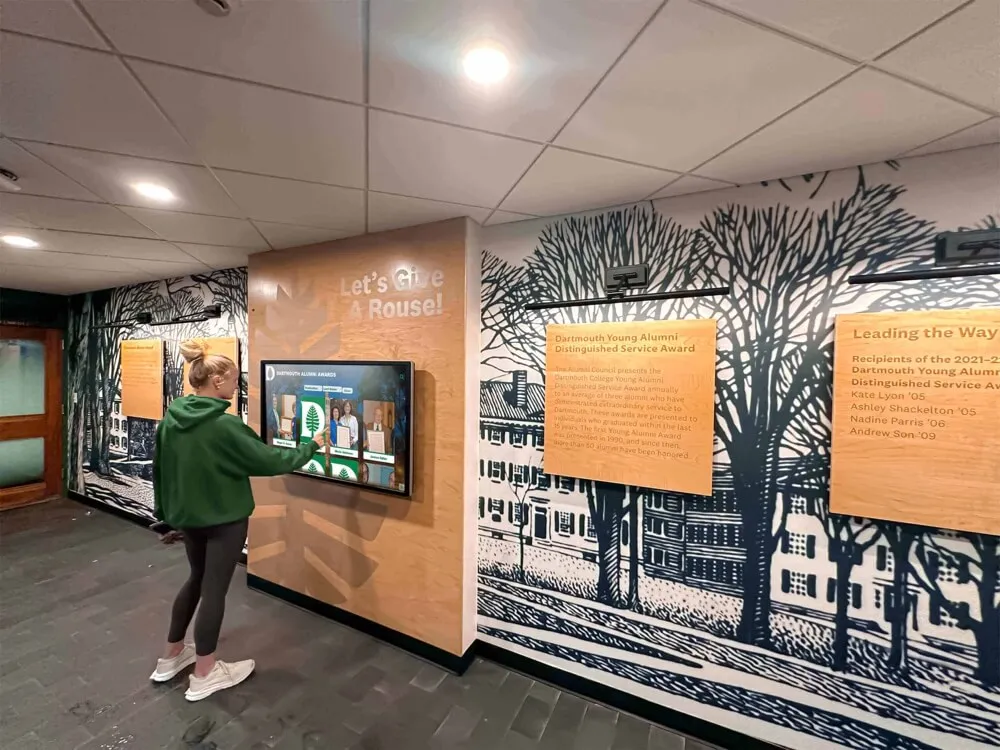
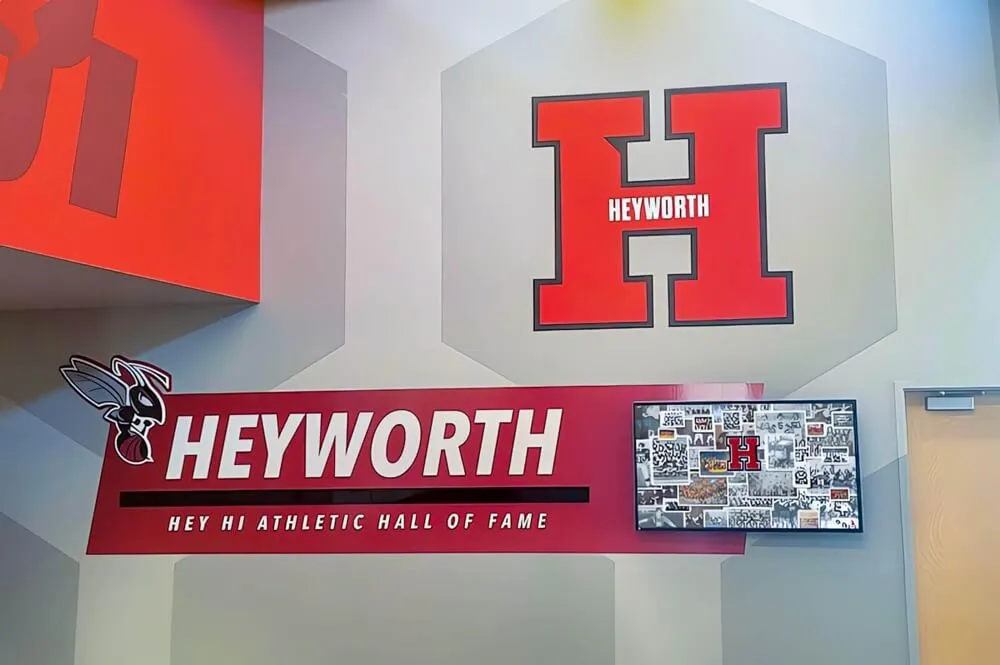
Blending school tradition with modern display technology creates recognition systems honoring history while embracing contemporary presentation capabilities
Creating Lasting Recognition Beyond Single Events
While ceremonies provide important public acknowledgment, truly meaningful recognition extends beyond single events through lasting tributes maintaining visibility and continuing to inspire long after applause fades.
Establishing Permanent Recognition Systems
Physical recognition installations create ongoing reminders of teaching excellence while documenting institutional history and values.
Traditional Recognition Displays
Conventional approaches include dedicated wall displays in prominent locations listing Teacher of the Year recipients across years, individual plaques featuring recipient photos, names, and years of recognition, trophy cases or designated display areas housing awards and memorabilia, printed programs or publications documenting ceremonies and honoree accomplishments, and annual additions to established recognition systems creating cumulative historical records.
Permanent displays in high-traffic areas like main entrances, faculty lounges, or central hallways ensure ongoing visibility rather than relegated recognition in administrative offices rarely accessed by students and families. Strategic placement communicates that teaching excellence represents core institutional values worthy of prominent celebration.
Consider maintenance and updating procedures ensuring recognition systems remain current rather than becoming dated displays suggesting the program lacked sustained commitment. Neglected recognition walls with faded photos or incomplete records undermine rather than support excellence culture.
Modern Digital Recognition Solutions
Contemporary recognition approaches leverage technology creating dynamic, engaging presentations updating automatically and providing richer content than static plaques allow. Digital display services enable schools to create interactive recognition experiences including searchable databases allowing students to explore past recipients and their accomplishments, rotating displays showcasing teacher features with photos, biographies, and classroom highlights, video integration sharing ceremony footage and student testimonials, and automatic updates ensuring current information without manual plaque ordering and installation.
Digital systems provide flexibility accommodating evolving recognition needs including multiple award categories, varied content formats, and enhanced storytelling impossible through traditional engraved plaques. Interactive displays invite engagement rather than passive viewing, allowing visitors to explore content based on personal interest rather than consuming predetermined fixed presentations.
Technology integration particularly resonates with current students accustomed to digital interaction, making recognition feel contemporary and relevant rather than institutional and outdated. Modern displays demonstrate that schools value innovation in recognition just as they celebrate innovation in instruction.
Extending Recognition Throughout School Culture
Sustainable excellence culture requires recognition extending beyond annual ceremonies into ongoing institutional practices and communications.
Ongoing Visibility and Communication
Maintain recognition visibility through regular channels including featured profiles in school newsletters and websites, social media celebration sharing honoree stories with broader communities, classroom visits from administrators publicly acknowledging excellence, display rotation in common areas keeping recognition fresh and visible, and references during professional development connecting celebrated excellence to instructional priorities.
Systematic communication ensures the broader community—including prospective families, community partners, and potential educators considering employment—understands the institution’s commitment to recognizing teaching excellence. External visibility elevates both individual honorees and institutional reputation for valuing educator contributions.
Leveraging Recognition for Recruitment and Retention
Teaching recognition programs serve strategic functions beyond individual appreciation, supporting talent management goals including recruitment messaging demonstrating culture valuing educator contributions, retention by creating professional prestige and appreciation reducing turnover, professional development by setting excellence expectations and providing concrete models, and community relations showcasing institutional quality through educator accomplishments.
Share recognition stories during candidate interviews, reference honorees in recruitment materials, and leverage awards in communications with families demonstrating instructional quality. Recognition programs benefit institutions broadly when leveraged strategically rather than treated as isolated ceremonial obligations.
Comprehensive recognition systems spanning annual ceremonies, permanent installations, and ongoing communications create cultures where excellence becomes expected rather than exceptional—where quality teaching receives consistent appreciation rather than occasional acknowledgment, and where educators feel genuinely valued for transformative work shaping young lives and building stronger communities.
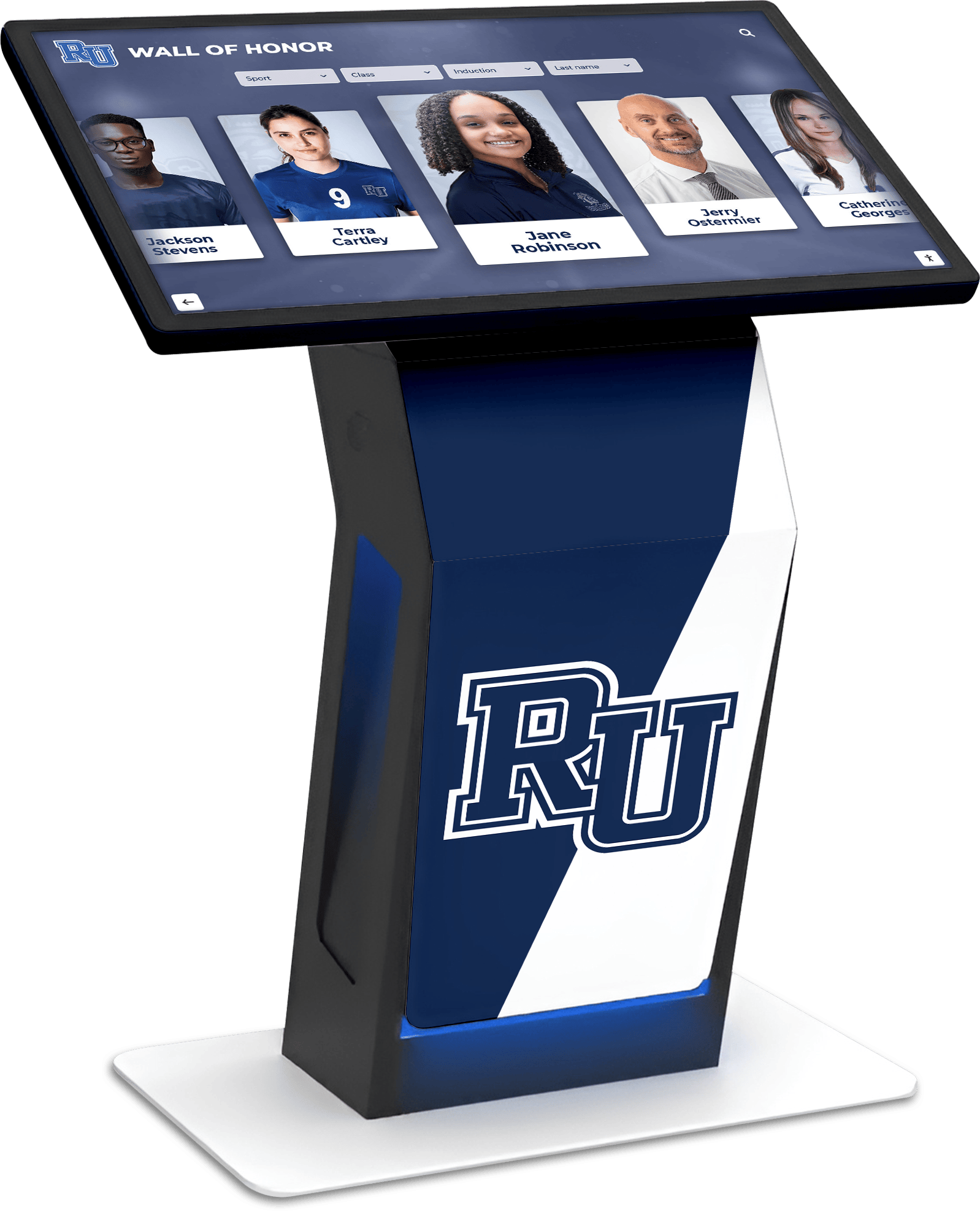
Custom interactive recognition systems provide engaging, updatable platforms celebrating teacher excellence through multimedia presentations beyond traditional plaques
Practical Implementation: From Planning to Execution
Translating recognition philosophy into effective practice requires attention to logistical details, stakeholder engagement, and systematic implementation ensuring programs deliver intended impact rather than falling short through inadequate execution.
Timeline Development and Task Management
Successful ceremonies require systematic planning beginning well before event dates.
Recommended Planning Timeline
Effective ceremony planning typically follows this sequence:
6-8 Months Before Ceremony: Establish or review selection criteria and nomination process. Form selection committee and provide training on evaluation rubrics. Communicate nomination timeline and criteria to school community through multiple channels. Develop or update nomination forms and supporting materials. Reserve ceremony venue and establish preliminary date.
4-5 Months Before Ceremony: Open nomination period with clear deadlines and submission requirements. Send nomination reminders through varied channels ensuring broad awareness. Collect and organize nomination materials for committee review. Begin preliminary budget development and vendor identification for awards and event needs.
2-3 Months Before Ceremony: Conduct committee evaluation meetings with structured deliberation process. Select recipient and finalists through consensus or voting procedures. Begin confidential tribute development including interview coordination. Confirm ceremony details including venue, date, time, and program structure. Order awards and recognition items requiring production lead time. Begin communication draft development for announcement and invitations.
4-6 Weeks Before Ceremony: Confidentially inform recipient and manage emotional responses. Develop detailed ceremony program including speakers, presentation order, and technical requirements. Create and distribute invitations to school community and special guests. Finalize tribute content including videos, testimonials, and presentation materials. Coordinate logistics including catering, audio-visual needs, decoration, and photography. Prepare public communications for post-ceremony distribution.
1-2 Weeks Before Ceremony: Conduct program rehearsal if involving multiple speakers or complex elements. Confirm attendee counts and finalize catering orders. Prepare printed programs and ceremony materials. Test audio-visual equipment and presentation technology. Brief speakers on timing and expectations. Prepare contingency plans for potential complications.
Event Day: Arrive early for setup and technical checks. Conduct brief coordination meeting with key participants. Welcome attendees and manage pre-ceremony reception if included. Execute ceremony program with flexibility for authentic moments. Facilitate post-ceremony celebration and personal congratulations. Document event through photos and video for future reference and communication.
Post-Ceremony Follow-Up: Distribute thank-you communications to committee members, speakers, and support staff. Share ceremony coverage through school communications channels. Update permanent recognition displays with new honoree. Archive ceremony materials for institutional records. Conduct informal evaluation gathering feedback for future improvement. Begin early planning for subsequent year’s recognition cycle.
Budget Development and Resource Allocation
Recognition quality need not require excessive expenditure, but adequate resources ensure appropriate dignity and lasting impact.
Typical Budget Categories
Consider expenses including physical awards (plaques, sculptures, or custom recognition items ranging from modest to substantial based on institutional norms), ceremony venue costs if utilizing external facilities requiring rental fees, catering for receptions including refreshments, meals, or formal dinners depending on event scale, printing expenses for programs, invitations, and promotional materials, audio-visual needs including equipment rental, technical support, or video production, decorations creating appropriate ceremonial atmosphere, photography or videography documenting the event, and recognition display updates including plaque additions or digital system content development.
Substantial recognition need not require excessive spending—thoughtful planning and creative approaches often create more meaningful impact than expensive but impersonal catalog awards. Student-created elements, colleague testimonials, and authentic emotion cost little but carry enormous value.
Seek community partners potentially supporting recognition through sponsorships, donated services, or in-kind contributions. Local businesses, education foundations, or alumni associations may welcome opportunities supporting teacher recognition aligned with their community investment priorities. Schools implementing comprehensive donor recognition strategies understand that partnership approaches extend resources while building community connections.
Stakeholder Engagement and Communication
Recognition program success depends on systematic communication ensuring awareness, participation, and shared ownership.
Internal Communication Strategies
Engage faculty and staff through multiple touchpoints including staff meeting announcements explaining nomination process and criteria, written communications detailing timeline and submission procedures, informal encouragement of nominations during supervisory conversations, transparent selection process descriptions building trust in evaluation fairness, and celebration of all nominees and finalists, not just final recipients.
Address skepticism or cynicism sometimes surrounding recognition programs through transparent criteria, diverse committee representation, evidence-based evaluation, and consistent process application across years. When teachers trust selection integrity, recognition carries greater meaning and motivational impact.
External Communication Approaches
Share recognition with broader communities through press releases distributed to local media outlets, social media campaigns celebrating honoree accomplishments, school website features and dedicated recognition sections, board meeting presentations acknowledging excellence at governance level, and community event integration sharing recognition during public celebrations.
External visibility demonstrates institutional pride in educator quality while building community confidence in school excellence. Recognition becomes recruitment asset when prospective families observe systematic celebration of teaching quality rather than isolated acknowledgment of minimum competence.
Coordinate communications emphasizing not just individual honoree but institutional commitment to excellence culture. Recognition programs succeed when they inspire broader professional community rather than merely acknowledging isolated exceptional individuals whose achievements seem unreachable to typical practitioners.
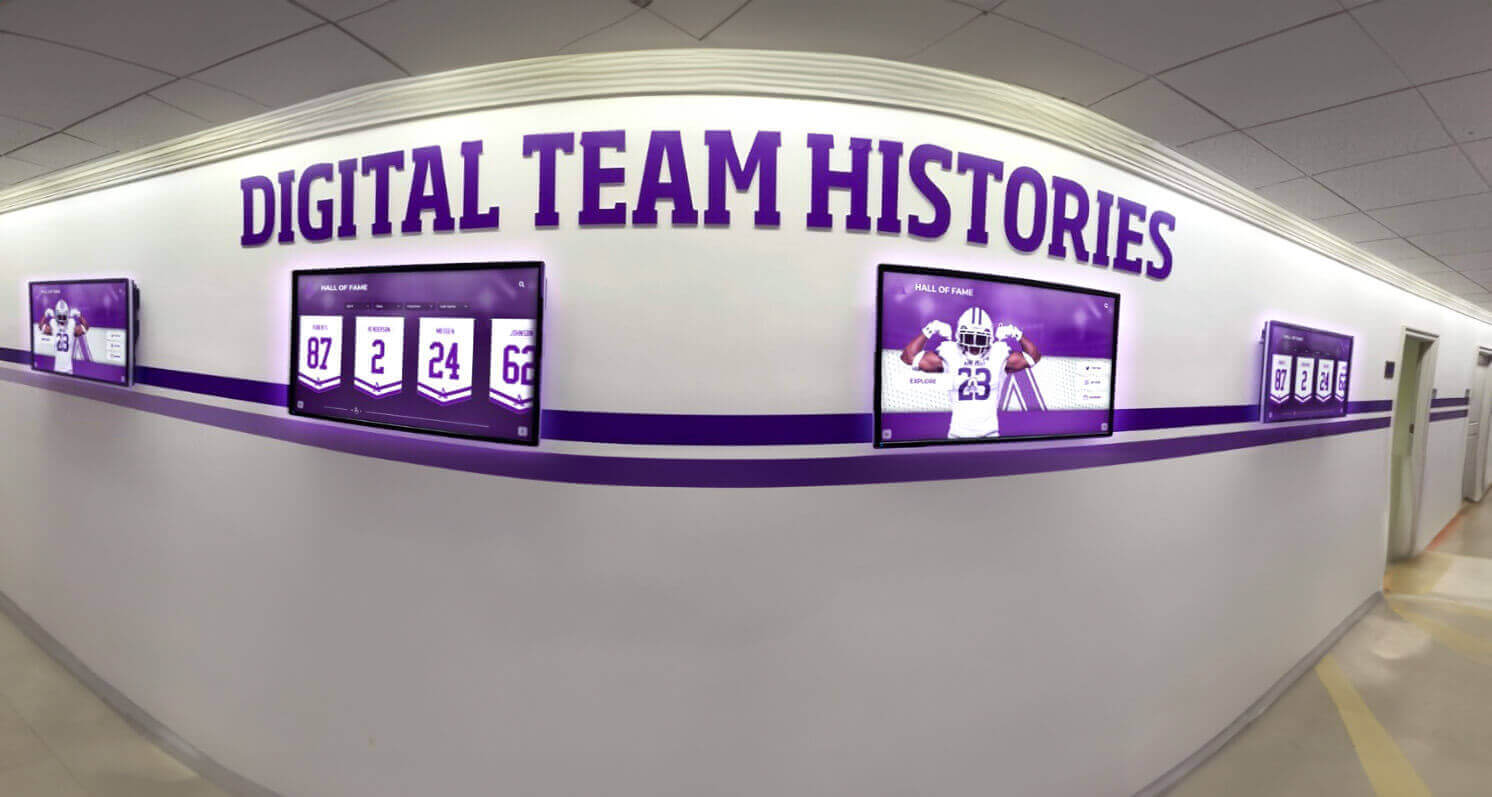
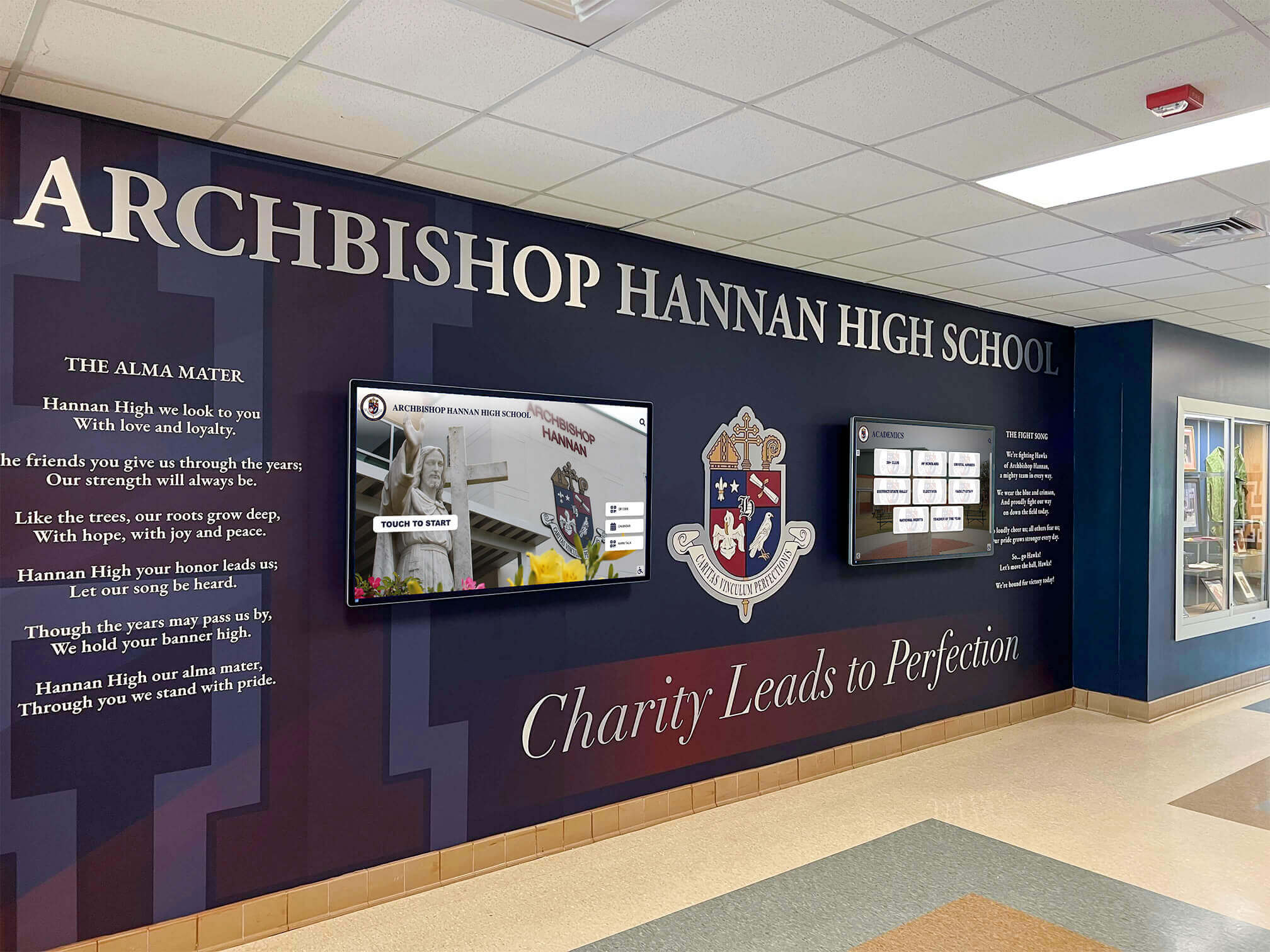
Multiple digital displays throughout school facilities create distributed recognition systems ensuring visibility across diverse spaces and audiences
Common Challenges and Practical Solutions
Even well-planned recognition programs encounter predictable challenges requiring thoughtful navigation and adaptive problem-solving.
Managing Political Dynamics and Perceived Favoritism
Teacher recognition exists within complex social and political environments where perceptions matter as much as reality.
Building Process Credibility
Address favoritism concerns through documented transparent criteria publicly shared before nominations begin, diverse selection committee preventing single-person control, structured evaluation rubrics reducing subjective judgment, blind initial screening when feasible removing name recognition influence, and clear documentation of selection rationale available if questioned.
When concerns arise, respond with process transparency rather than defensiveness. Explain evaluation dimensions, describe committee deliberation procedures, and acknowledge the difficulty of choosing among multiple deserving candidates. Transparency builds trust even when individuals disagree with specific outcomes.
Handling Disappointed Candidates and Supporters
Recognize that selection processes inevitably create disappointment requiring sensitive management. Consider strategies including private finalist notification before public announcement allowing emotional processing, individual meetings with non-selected finalists acknowledging specific excellence, written commendations providing tangible recognition beyond verbal acknowledgment, and multiple recognition pathways allowing varied excellence forms receiving formal celebration.
Avoid defensive responses or dismissive reactions to disappointed candidates or their supporters. Acknowledge feelings, validate contributions, and maintain relationships rather than allowing single recognition decisions to create lasting professional rifts or cultural divisions.
Balancing Consistency with Innovation
Established recognition traditions provide meaningful continuity but can become stale without periodic renewal and innovation.
Maintaining Core Values While Evolving Practices
Honor tradition while embracing improvement through consistent core criteria even as evaluation processes evolve, enduring ceremony elements providing continuity across years, archival connections showing current recognition within historical context, but adaptive formats preventing repetitive staleness, contemporary presentation approaches resonating with current audiences, and expanded recognition dimensions reflecting evolving understanding of teaching excellence.
Solicit feedback from participants, attendees, and honorees themselves identifying aspects feeling meaningful versus perfunctory. Continuous improvement demonstrates that recognition programs themselves model the reflective practice and growth mindset celebrated in honored teachers.
Ensuring Meaningful Recognition for Career-Long Excellence
Teacher of the Year programs often inadvertently favor mid-career educators in visible roles over early-career teachers still developing and veteran educators in less prominent positions.
Creating Equitable Visibility
Address potential blind spots through intentional nomination encouragement across experience levels and role types, evaluation criteria valuing varied contribution forms beyond high-profile leadership, committee representation ensuring awareness of excellence in diverse contexts, and supplementary recognition categories honoring career-long contributions distinct from single-year awards.
Excellence manifests differently across career stages—emerging innovation among new teachers, sustained quality among veterans, specialized expertise in particular domains. Comprehensive recognition systems acknowledge varied excellence forms rather than narrow definitions favoring specific profiles.
Recognition programs ultimately succeed when they elevate entire professional cultures rather than merely celebrating isolated exceptional individuals. The highest measure of program effectiveness lies not in ceremony attendance or award prestige but in the degree to which systematic recognition of teaching excellence inspires continued professional growth, strengthens collective commitment to quality instruction, and ensures every educator feels valued for the difficult, essential work of shaping young minds and building stronger communities through education.
Creating Recognition That Inspires Lasting Excellence
Teacher of the Year ceremonies represent far more than obligatory appreciation rituals or routine recognition events. When planned thoughtfully with attention to fair selection, meaningful presentation, lasting tribute, and cultural integration, these celebrations become powerful tools shaping institutional values, inspiring professional excellence, and demonstrating authentic commitment to the educators whose daily work transforms individual lives and strengthens entire communities.
The most effective recognition programs balance competing priorities: individual celebration with collective inspiration, formal dignity with authentic emotion, momentary acknowledgment with lasting tribute, prestigious selection with inclusive appreciation, and tradition with innovation. Schools that navigate these tensions successfully create recognition cultures where teaching excellence receives consistent, meaningful appreciation rather than perfunctory institutional obligation.
As you develop or refine your Teacher of the Year ceremony, focus on creating experiences that honor the profession’s complexity and significance. Move beyond generic praise to specific stories demonstrating real impact. Design selection processes that feel fair and comprehensive rather than arbitrary or political. Create ceremonies balancing appropriate formality with genuine human connection. Establish lasting recognition extending beyond single events into ongoing institutional culture.
Most importantly, ensure that recognition serves its ultimate purpose: not merely making individual recipients feel appreciated for past excellence, but inspiring entire professional communities toward continued growth, sustained commitment, and ever-improving practice that serves students, families, and society’s future.
Ready to create lasting recognition honoring teaching excellence throughout your school community? Discover how modern recognition solutions including interactive digital displays, dynamic content management, and engaging touchscreen experiences can transform how your institution celebrates educator accomplishments—creating permanent tributes that inspire excellence for years to come while connecting recognition to broader community engagement and institutional pride.