



Intent: Demonstrate how to design, structure, and deploy touchscreen digital hall of fame walls and interactive award displays that celebrate achievement through engaging visual storytelling and intuitive user experiences.
A touchscreen digital hall of fame wall represents the evolution of traditional recognition from static plaques to dynamic, interactive displays where visitors actively explore award histories, honoree profiles, and achievement timelines through intuitive touch navigation. Unlike conventional trophy cases limited by physical constraints and minimal storytelling capacity, digital recognition platforms provide unlimited honoree capacity, rich multimedia experiences, and accessible interfaces that engage modern audiences through familiar smartphone-like interaction patterns.
The core challenge facing organizations with growing award traditions involves managing expanding honoree collections while maintaining fresh, engaging displays that inspire visitors rather than overwhelming them with information density. Traditional halls of fame built on mounted plaques exhaust wall space within years, create update cycles measured in months, and reduce meaningful achievements to engraved names—failing to preserve the complete stories, context, and emotional resonance that make recognition truly impactful.
This comprehensive guide explores touchscreen digital hall of fame wall design, interactive award display strategies, content architecture, UX optimization, and implementation frameworks for creating recognition experiences that honor excellence while engaging visitors through purposeful interactive design and compelling visual storytelling.
Organizations implementing thoughtfully designed touchscreen digital hall of fame walls report visitor engagement increases of 300-500 percent compared to traditional static displays, with session durations averaging 4-7 minutes versus 30-60 seconds for passive plaque viewing. This extended engagement translates to stronger emotional connections, enhanced community pride, and recognition experiences that truly celebrate excellence rather than simply documenting it.

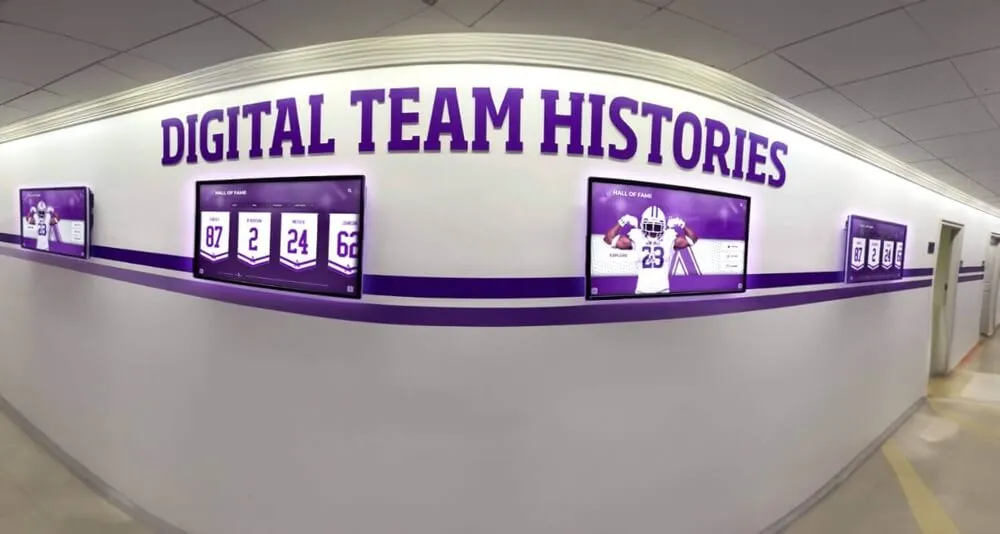
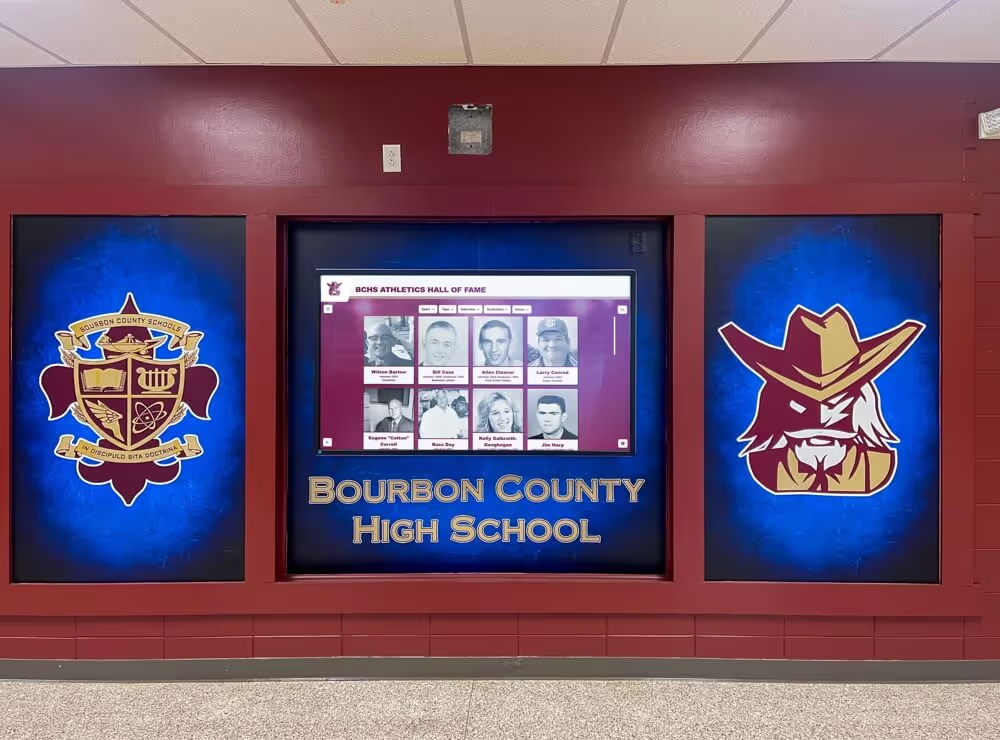
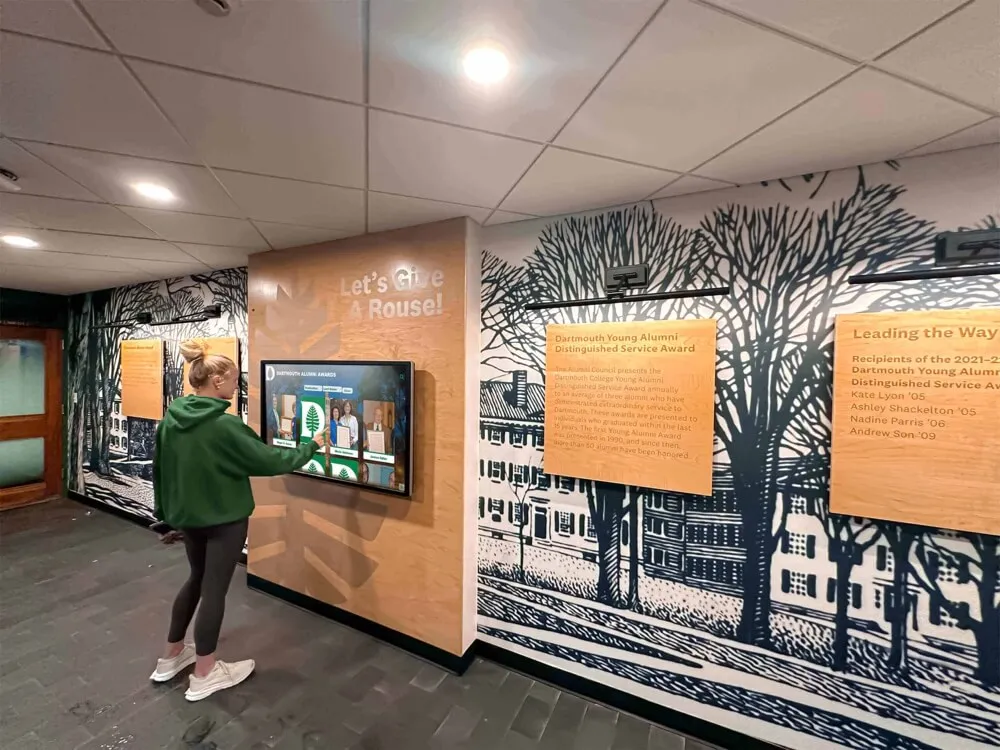
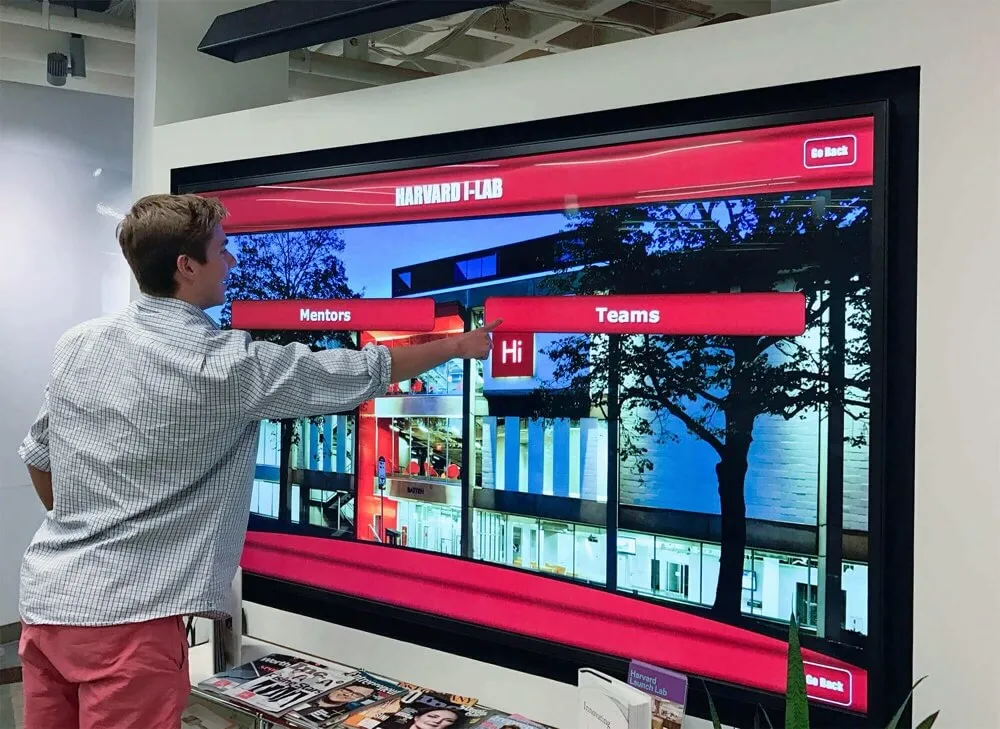
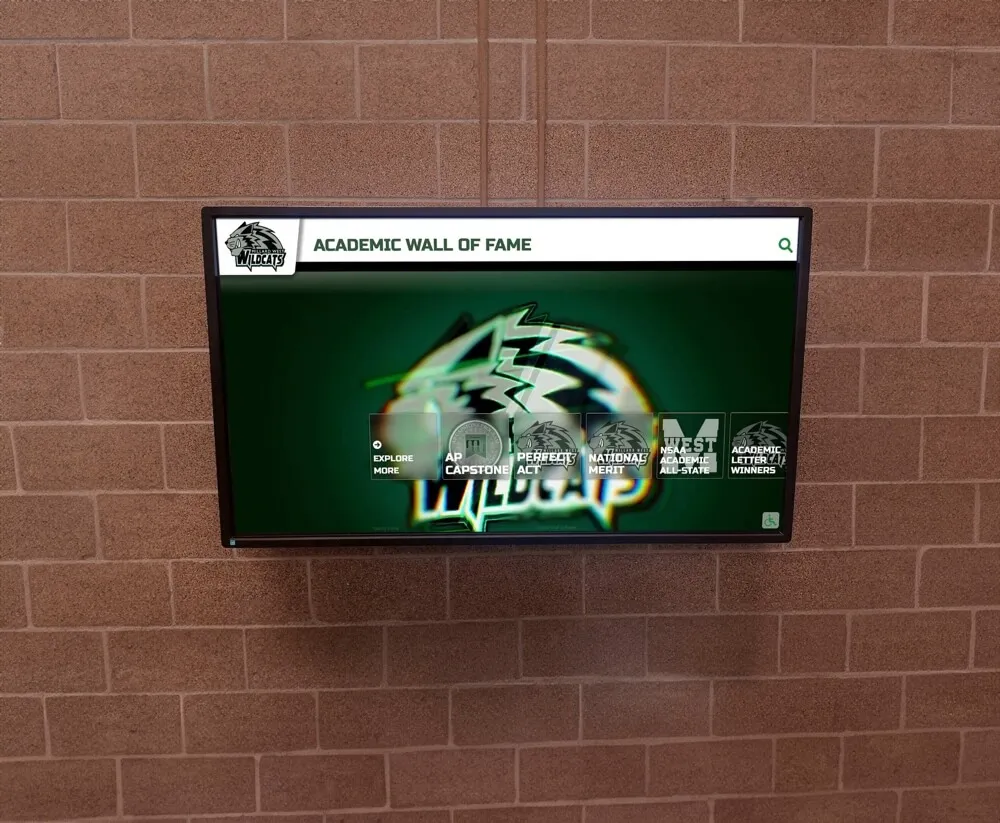
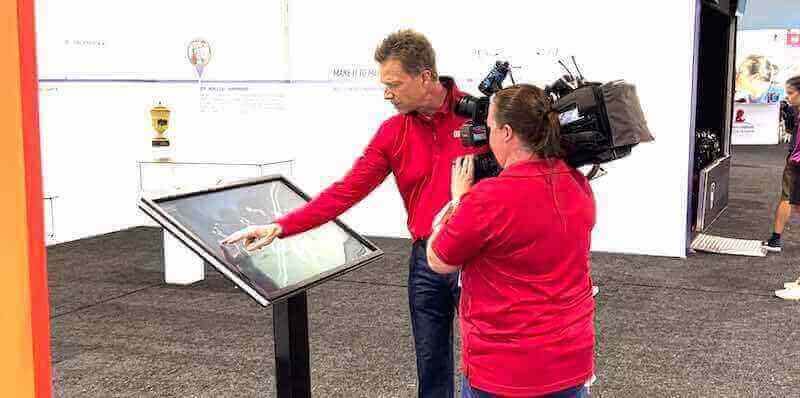
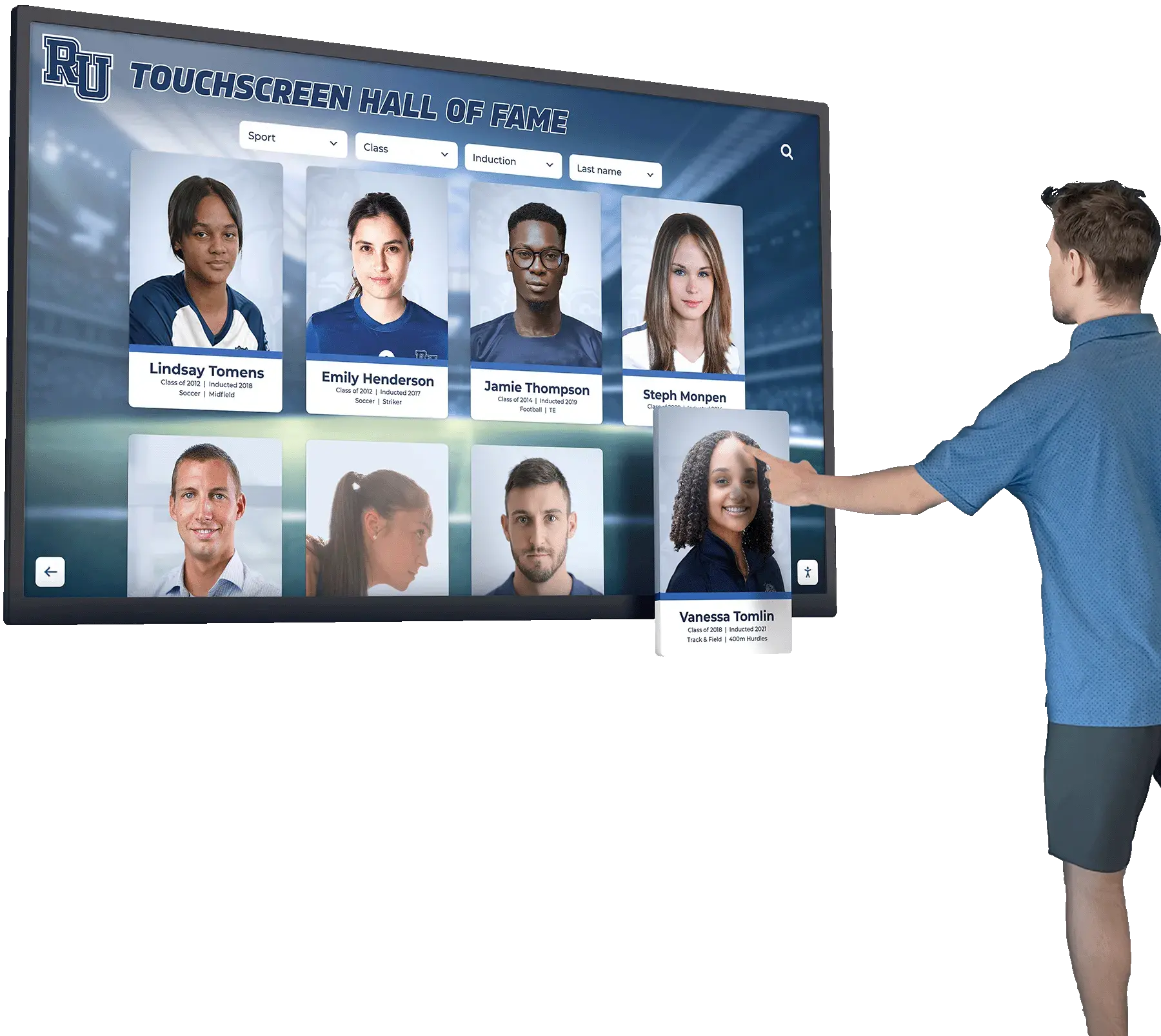
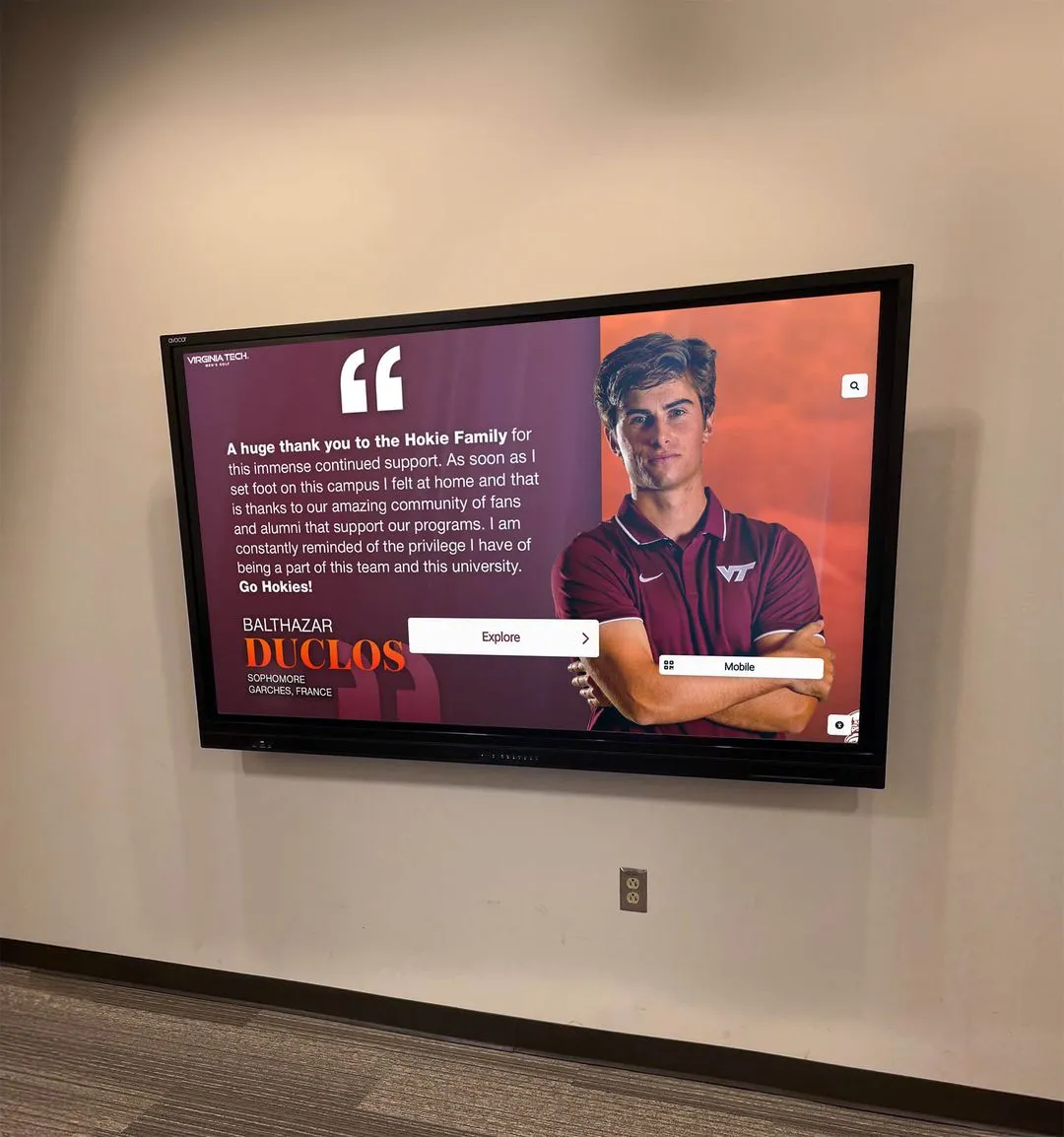
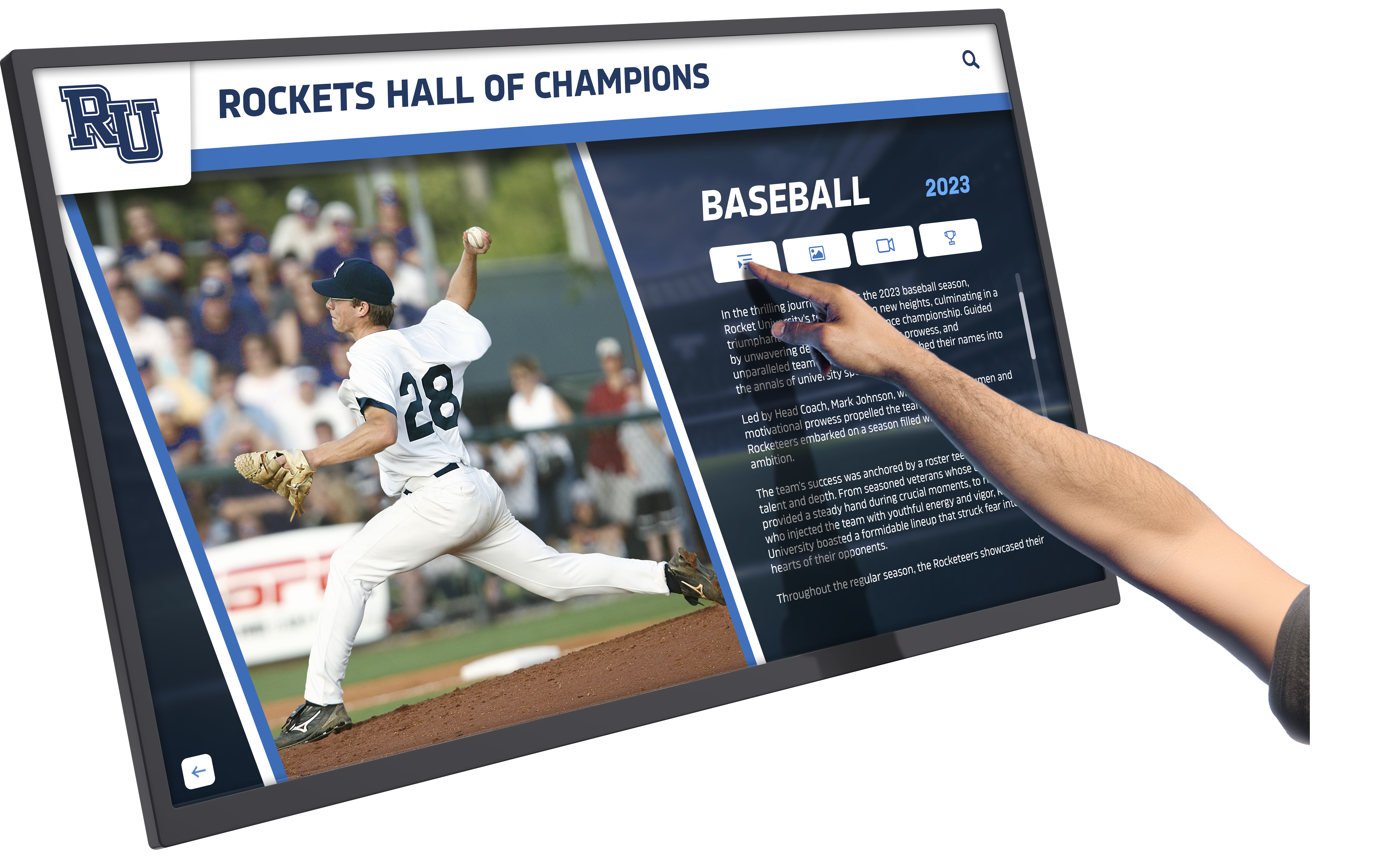
Intuitive card-based interfaces enable natural exploration with clear visual hierarchy and immediate touch feedback
Understanding Touchscreen Digital Hall of Fame Walls
Before designing specific experiences, understanding what differentiates digital hall of fame walls from traditional recognition and generic digital signage provides essential context for creating effective award displays.
What Defines a Digital Hall of Fame Wall vs. Traditional Recognition
A touchscreen digital hall of fame wall consists of large-format interactive displays—typically 43 to 75 inches—running specialized recognition software that enables visitor-controlled exploration rather than passive viewing. The fundamental difference lies in interactivity: visitors choose what content they explore, control navigation pace, search for specific individuals, and engage deeply with multimedia stories rather than simply reading engraved text while passing displays.
This interactivity transforms recognition from documentation to experience. Traditional plaques provide names, dates, and brief achievements. Digital hall of fame walls deliver photo galleries capturing honorees throughout their involvement, video interviews preserving personal reflections and memories, comprehensive biographical narratives explaining achievement significance, statistical records with full competitive context, and social sharing capabilities extending recognition beyond physical locations.
Core Components Working Together
Effective digital hall of fame walls integrate hardware, software, content, and design elements creating cohesive experiences:
- Commercial touchscreen displays rated for continuous public operation provide durable interfaces supporting thousands of daily interactions
- Cloud-based content management enables authorized administrators to update recognition instantly from any internet-connected device
- Purpose-built recognition software organizes content around individual profiles with search, filtering, and navigation designed specifically for celebrating people
- Responsive design frameworks ensure interfaces work seamlessly across screen sizes and orientations
- Web accessibility portals extend recognition beyond physical displays to worldwide audiences
Solutions like Rocket Alumni Solutions provide platforms understanding unique recognition requirements including privacy controls, giving level differentiation for donor applications, and workflows that generic digital signage systems cannot accommodate effectively.
Key Advantages Over Static Award Displays
Digital hall of fame walls solve persistent challenges that traditional approaches cannot address:
Unlimited Recognition Capacity
Physical walls inevitably fill. A traditional hallway accommodating 50-75 plaques reaches capacity within years for successful programs. Digital displays showcase unlimited honorees—hundreds or thousands—without ever exhausting space, eliminating painful decisions about whose achievements receive visibility.
Instant Updates and Corrections
Adding traditional plaques requires manufacturing (4-8 weeks), shipping, installation scheduling, and often complete display reorganization—processes taking months. Digital systems update within minutes through content management interfaces. When new award recipients join halls of fame, their recognition appears immediately rather than waiting for next plaque installation cycle.
Rich Multimedia Storytelling
Engraved text accommodates perhaps 100-150 words. Digital profiles incorporate unlimited text, high-resolution photo galleries, video highlights, audio recordings, and scanned historical documents creating emotional engagement impossible with minimal engraved information.
Search and Discovery Features
Visitors to traditional displays must read every plaque searching for specific individuals. Digital interfaces provide instant search by name, filtering by year or category, alphabetical directories, and featured collections—enabling efficient discovery regardless of collection size.
Analytics and Engagement Tracking
Traditional recognition provides no usage data. Digital platforms track interaction sessions, content popularity, search patterns, and engagement duration—demonstrating program value while informing continuous optimization based on actual visitor behavior.

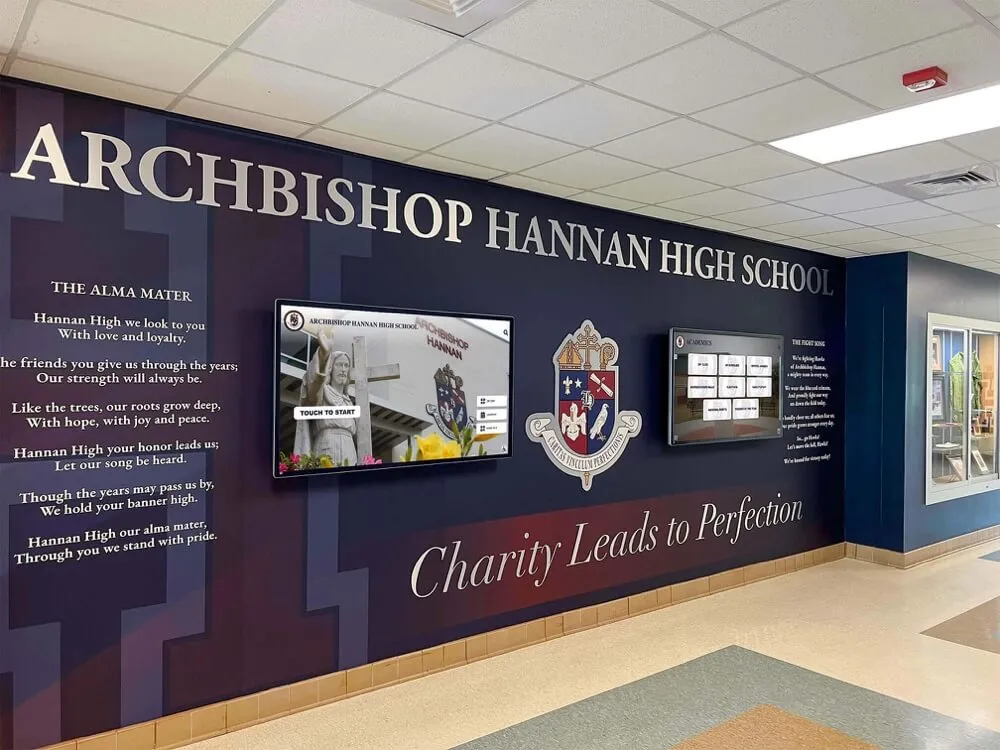
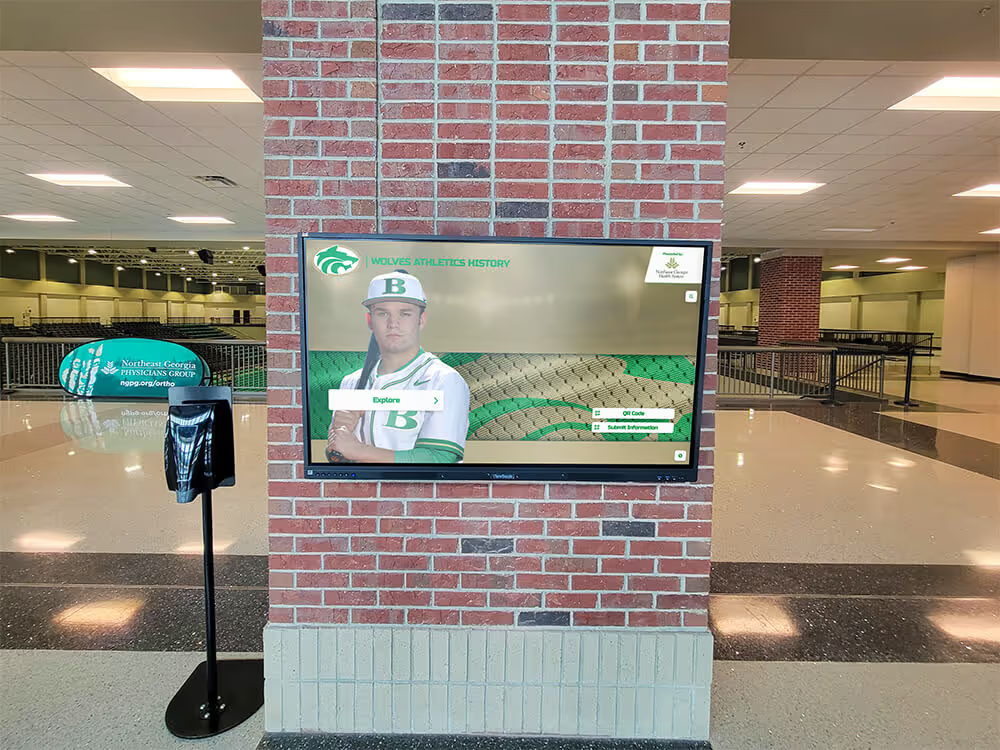
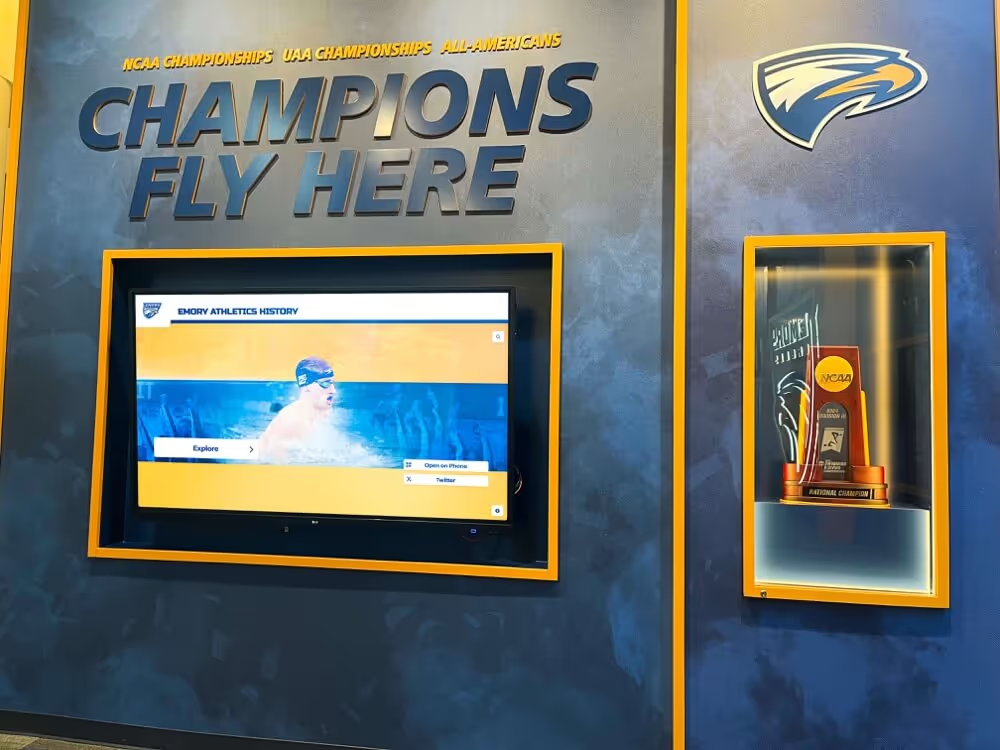
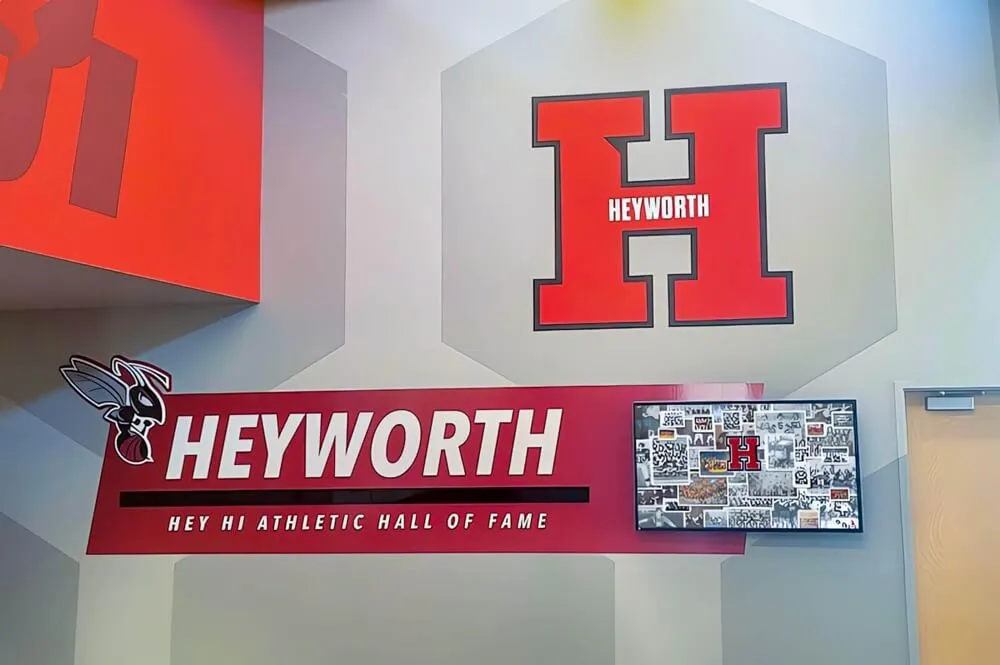
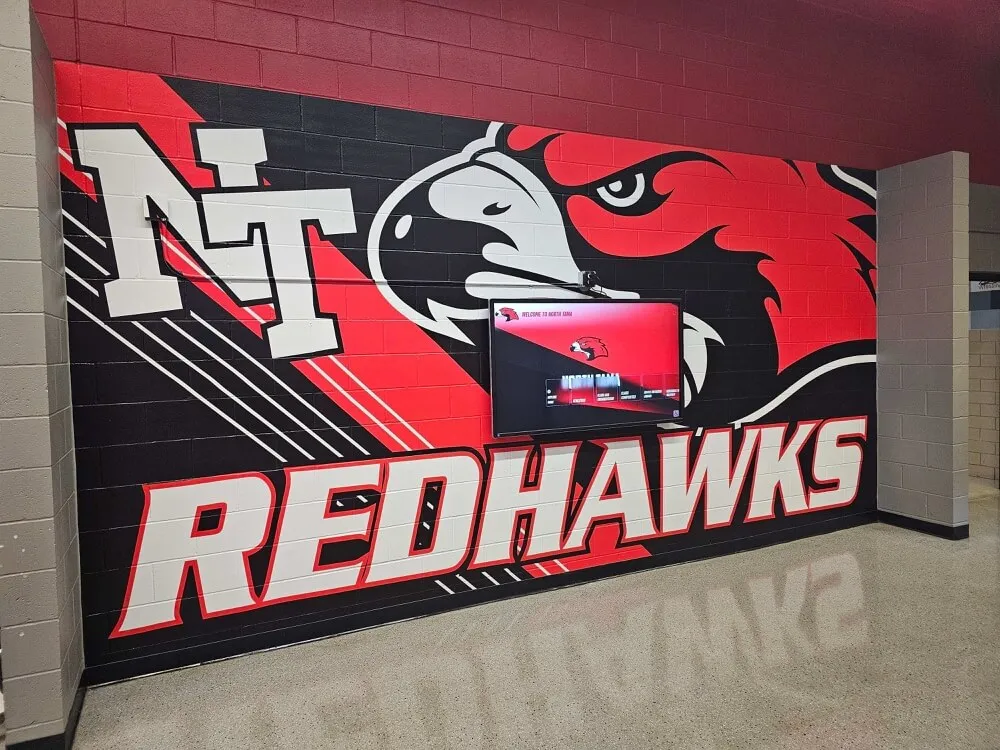
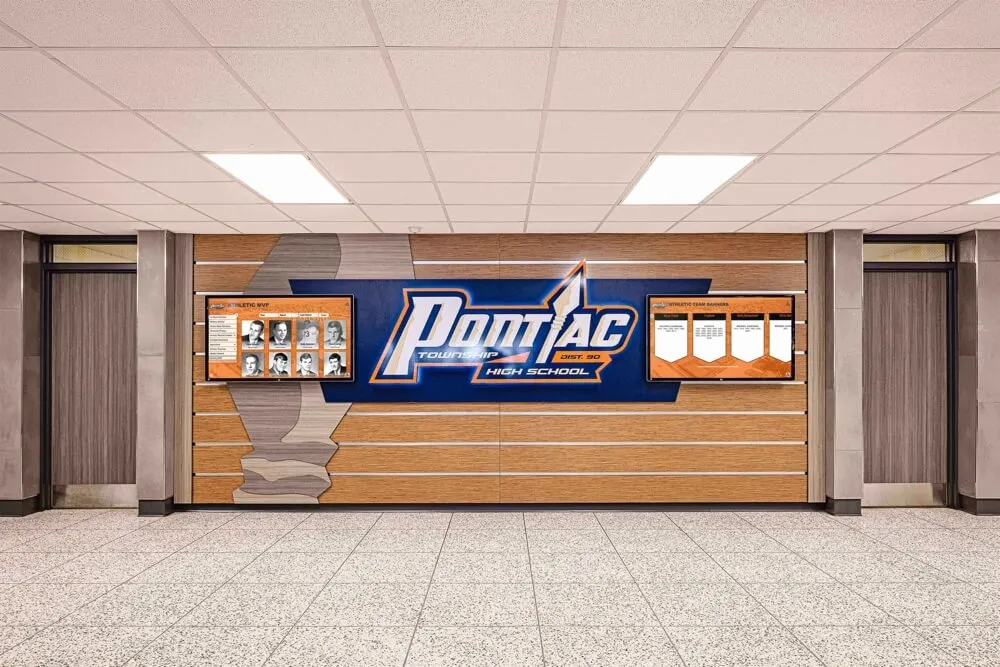
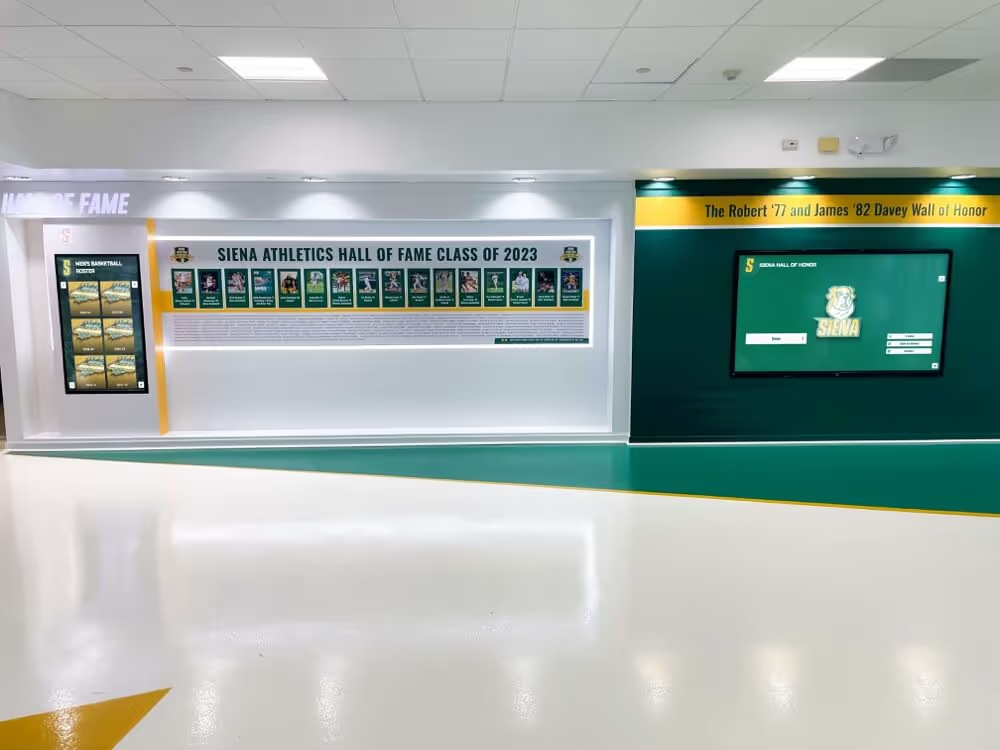
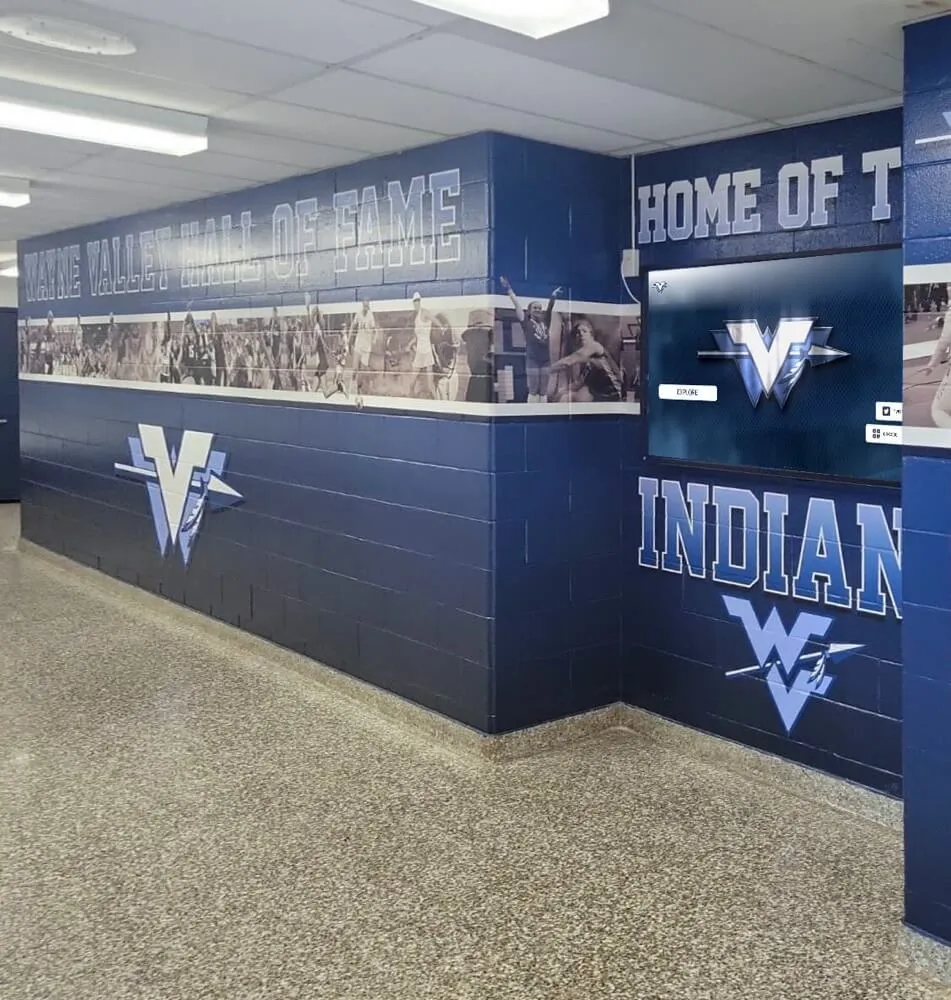
Architectural integration positions displays as permanent features complementing facility design rather than afterthought installations
Experience Layout: Designing Intuitive Interactive Award Interfaces
Effective touchscreen digital hall of fame walls require systematic design approaches balancing aesthetic appeal, functional usability, and accessible navigation across diverse user groups including current members, alumni, families, and prospective visitors.
Zone Architecture and Screen Real Estate Strategy
Well-designed recognition experiences organize display space into functional zones serving specific purposes within overall navigation hierarchy:
Zone 1: Hero Masthead (Top 15-20%)
The hero zone establishes context and institutional identity immediately upon approach:
- Institutional branding with logos, colors, and visual identity elements
- Clear experience title identifying display purpose (“Athletics Hall of Fame,” “Distinguished Alumni,” “Award Recipients”)
- Optional rotating featured honorees highlighting compelling recent inductees
- Current date/time providing temporal orientation
- Attraction loop content drawing attention when displays sit idle
This zone should balance brand presence with content visibility, ensuring institutional identity remains clear without overwhelming primary recognition content.
Zone 2: Primary Navigation Bar (10-15%)
Navigation enables content discovery through clear, touch-friendly controls:
- Category browsing by sport, achievement type, or recognition tier
- Chronological browsing by induction year or decade
- Alphabetical directories enabling name-based discovery
- Search functionality with on-screen keyboard
- Featured collections highlighting thematic groupings
Navigation buttons require minimum 44x44 pixel touch targets with adequate spacing preventing accidental activation. Clear iconography combined with descriptive labels accommodates diverse literacy levels and ages.
Zone 3: Content Display Area (50-60%)
The main content zone presents honoree profiles, award histories, and recognition listings:
- Grid-based card layouts showing multiple honorees simultaneously with photos and key information
- List views providing scrollable directories with sorting and filtering options
- Detail views displaying comprehensive individual profiles with full multimedia content
- Gallery views emphasizing visual storytelling through images and videos
- Comparison views enabling side-by-side achievement analysis when appropriate
Content density should balance comprehensive information with visual breathing room, preventing overwhelming layouts that confuse rather than engage visitors.
Zone 4: Footer Action Area (10-15%)
Footer zones provide secondary functions and supplementary information:
- Social sharing prompts with QR codes linking to mobile experiences
- Home/back navigation buttons enabling easy return to starting points
- Sponsor acknowledgment when funding partnerships warrant recognition
- Navigation breadcrumbs showing current location within content hierarchy
- Help prompts explaining touch interaction for first-time users
Zone 5: Contextual Side Panels (Optional 15-20%)
Some layouts incorporate persistent side panels for:
- Filtering controls refining content display by multiple criteria
- Featured content callouts highlighting priority recognition
- Achievement statistics and record summaries
- Sponsor content separate from primary honoree recognition
This zone architecture creates predictable layouts where visitors quickly understand navigation patterns, reducing cognitive load and enabling efficient exploration.
Content Blocks and Motion Design Principles
Beyond static layout, animation and transition design enhance usability while communicating system responsiveness:
Attraction Loop Strategy
When not actively used, displays should run compelling attraction content drawing attention and demonstrating interactivity:
- Highlight reels showing dynamic honoree photos and achievement imagery
- Featured inductee spotlights rotating through recent additions with key accomplishments
- Achievement statistics demonstrating program excellence and competitive success
- Clear “Touch to Explore” prompts inviting interaction through simple visual cues
- Smooth transitions between attraction states maintaining visual interest
Attraction loops should cycle content every 15-30 seconds, providing enough time for approaching visitors to absorb information while maintaining dynamic movement catching peripheral attention.
Transition Animation Guidelines
Smooth transitions between screens guide user attention and enhance perceived quality:
- Fade transitions for content swaps within the same layout context
- Slide animations indicating directional navigation (left/right for peer categories, up/down for chronological movement)
- Zoom effects when moving between overview lists and detailed individual profiles
- Consistent animation duration (200-400ms) creating predictable system behavior
- Subtle easing functions (ease-in-out) rather than linear transitions for natural motion
Interactive Feedback Design
Visual feedback confirms touch interactions reducing user uncertainty:
- Button press states showing clear visual response (color change, scale adjustment, shadow modification)
- Loading indicators appearing immediately when content fetches from network
- Success confirmations acknowledging completed actions like social shares
- Error states explaining when requested actions cannot complete
- Haptic feedback when hardware supports tactile response
Progressive Disclosure Patterns
Information density management prevents overwhelming visitors:
- Summary cards displaying essential information at a glance (name, photo, key achievement, induction year)
- Expansion revealing additional detail on touch without leaving current context
- Full profile views displaying comprehensive content in dedicated screens
- “Learn More” prompts inviting deeper exploration when visitors show interest
- Back navigation always visible enabling retreat when information exceeds interest level
These motion design principles create interfaces feeling responsive, predictable, and professionally polished—encouraging continued exploration rather than frustrated abandonment.
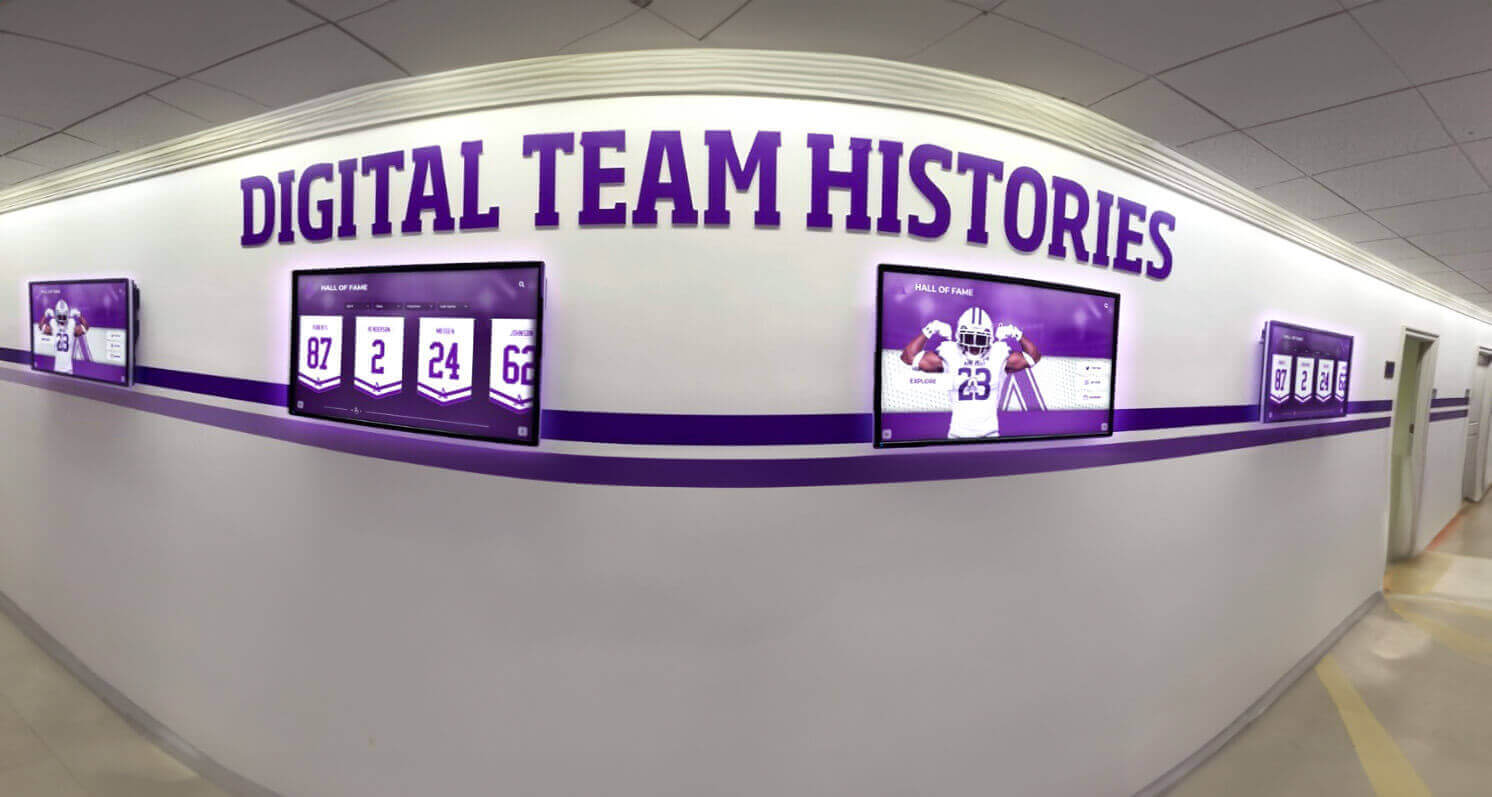
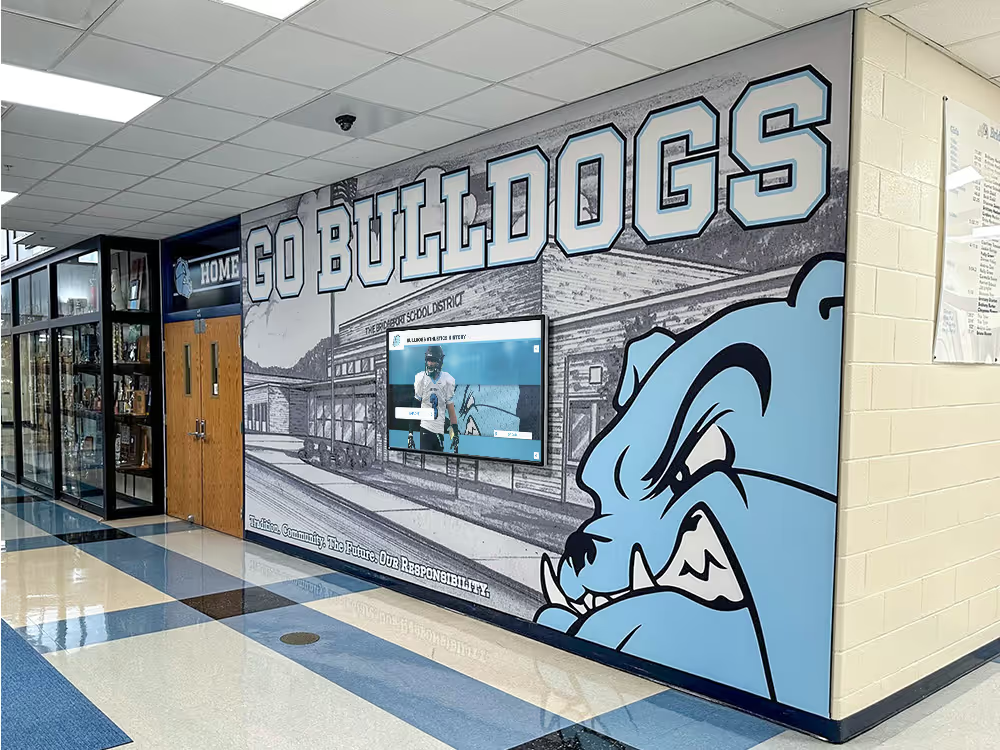
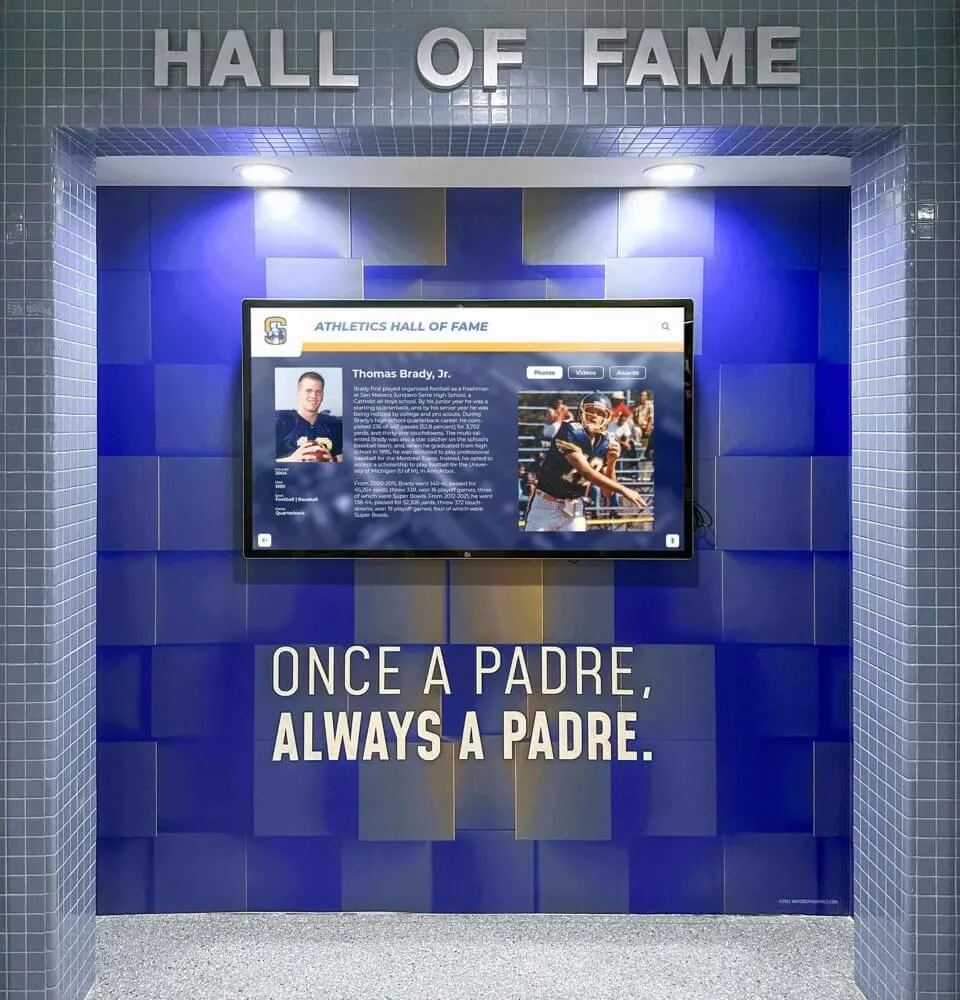
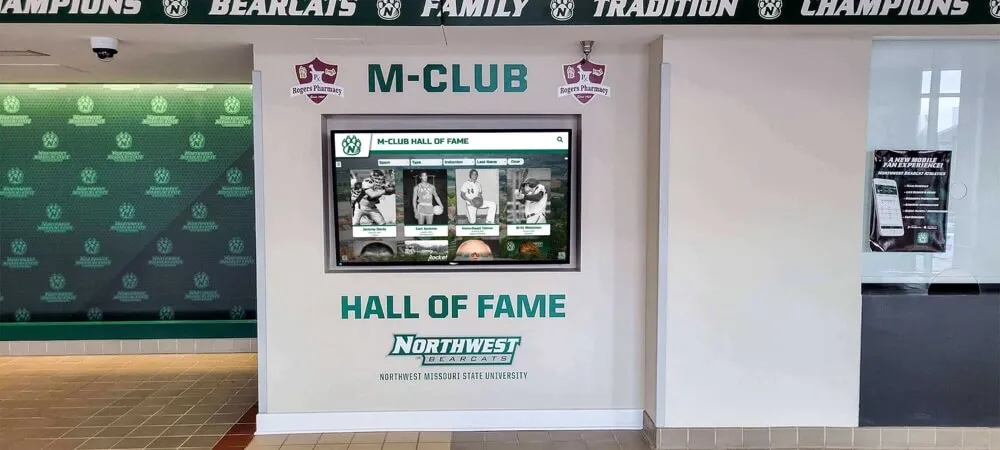
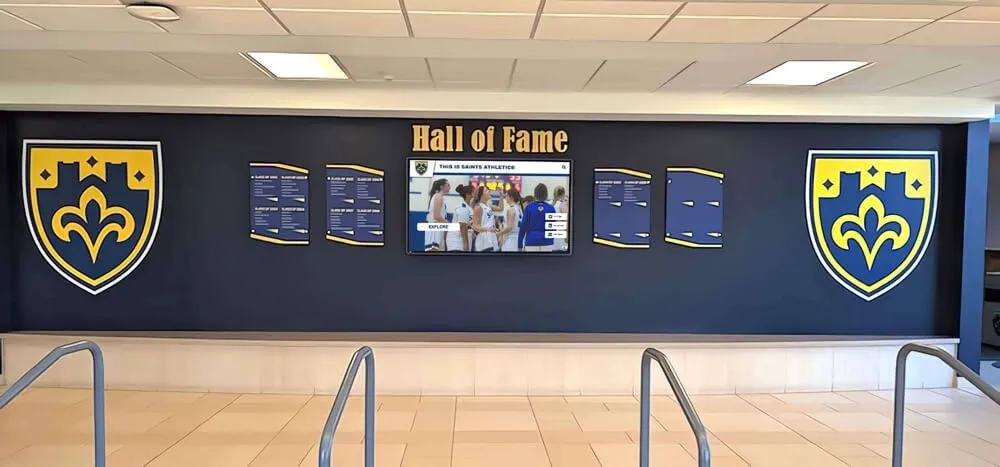
Multiple coordinated displays create comprehensive recognition networks serving different categories while maintaining visual consistency
Accessibility and UX Checklist for Award Recognition Displays
Creating inclusive recognition experiences requires deliberate accessibility consideration ensuring all visitors can explore content regardless of physical, visual, or cognitive abilities.
ADA WCAG 2.1 AA Compliance Standards
Organizations implementing public recognition displays should meet Web Content Accessibility Guidelines ensuring legal compliance while serving diverse audiences:
Visual Accessibility Requirements
- Text contrast ratios meeting minimum 4.5:1 for normal text, 3:1 for large text (18pt+ or 14pt+ bold)
- Color never used as sole information conveyor (supplemented with icons, text labels, or pattern differences)
- Text scaling supporting enlargement up to 200 percent without horizontal scrolling
- Minimum font sizes of 16-18pt for body text, 24-28pt for headings ensuring readability at viewing distances
- High-contrast mode options for visitors with visual impairments
Physical Accessibility Considerations
- Mounting height placing primary controls 15-48 inches above floor accommodating wheelchair users
- Forward reach depth not exceeding 25 inches when side reach unavailable
- Kiosk designs providing minimum 30x48 inch clear floor space for wheelchair approach
- Volume controls for audio content respecting quiet environments
- Adjustable screen tilt when hardware permits accommodating varied viewing angles
Cognitive Accessibility Guidelines
- Clear, simple language avoiding unnecessary jargon or complex sentence structures
- Consistent navigation patterns throughout experience preventing relearning
- Minimal required steps accomplishing common tasks (finding specific person, browsing category, viewing profile)
- Obvious home/back options enabling recovery from navigation errors
- Timeout warnings before resetting to attraction loop allowing extra time for slower readers
Touch Target Sizing Standards
- Minimum 44x44 pixel touch targets meeting industry accessibility standards
- Adequate spacing between adjacent targets (minimum 8 pixels) preventing accidental activation
- Larger targets for primary actions (search, home, category browsing) emphasizing common paths
- Touch target size increasing with navigation hierarchy depth (larger home buttons, smaller tertiary actions)
Organizations should verify accessibility through diverse user testing including wheelchair users, older adults, people with visual impairments, and visitors unfamiliar with touchscreen technology before finalizing designs. Resources on interactive display UX design provide detailed accessibility implementation guidance.
Navigation Patterns and Information Architecture
Effective information architecture enables efficient content discovery regardless of collection size or visitor familiarity:
Multiple Discovery Pathways
Different visitors approach recognition with varied goals requiring flexible navigation:
- Direct search for visitors seeking specific individuals by name
- Category browsing for exploring particular sports, achievement types, or giving levels
- Chronological exploration for discovering honorees by induction year or era
- Alphabetical directories for systematic browsing when names are unknown
- Featured collections for discovering curated groupings around themes, milestones, or anniversaries
Providing multiple pathways ensures all visitors can accomplish goals efficiently rather than forcing single navigation approach serving some users well while frustrating others.
Breadcrumb Navigation and Orientation
Visitors should always understand current location within information hierarchy:
- Persistent breadcrumb trails showing navigation path from home to current screen
- Section headers clearly identifying current category, year, or collection
- Visual distinction between overview screens and detailed individual profiles
- Home button always visible in consistent location enabling instant return
- Back button behavior matching user expectations (returning to previous screen, not home)
Search Functionality Design
Search represents critical discovery tool for large recognition collections:
- Predictive search showing results as visitors type without requiring enter key
- Fuzzy matching accommodating spelling variations and partial names
- Search filtering by category when appropriate (e.g., “Show only athletes” or “Distinguished alumni”)
- Clear “no results” messaging with suggested alternatives when searches fail
- Recent searches or popular searches helping visitors discover related content
Well-implemented search reduces frustration while enabling instant access to specific individuals even within collections containing thousands of honorees.
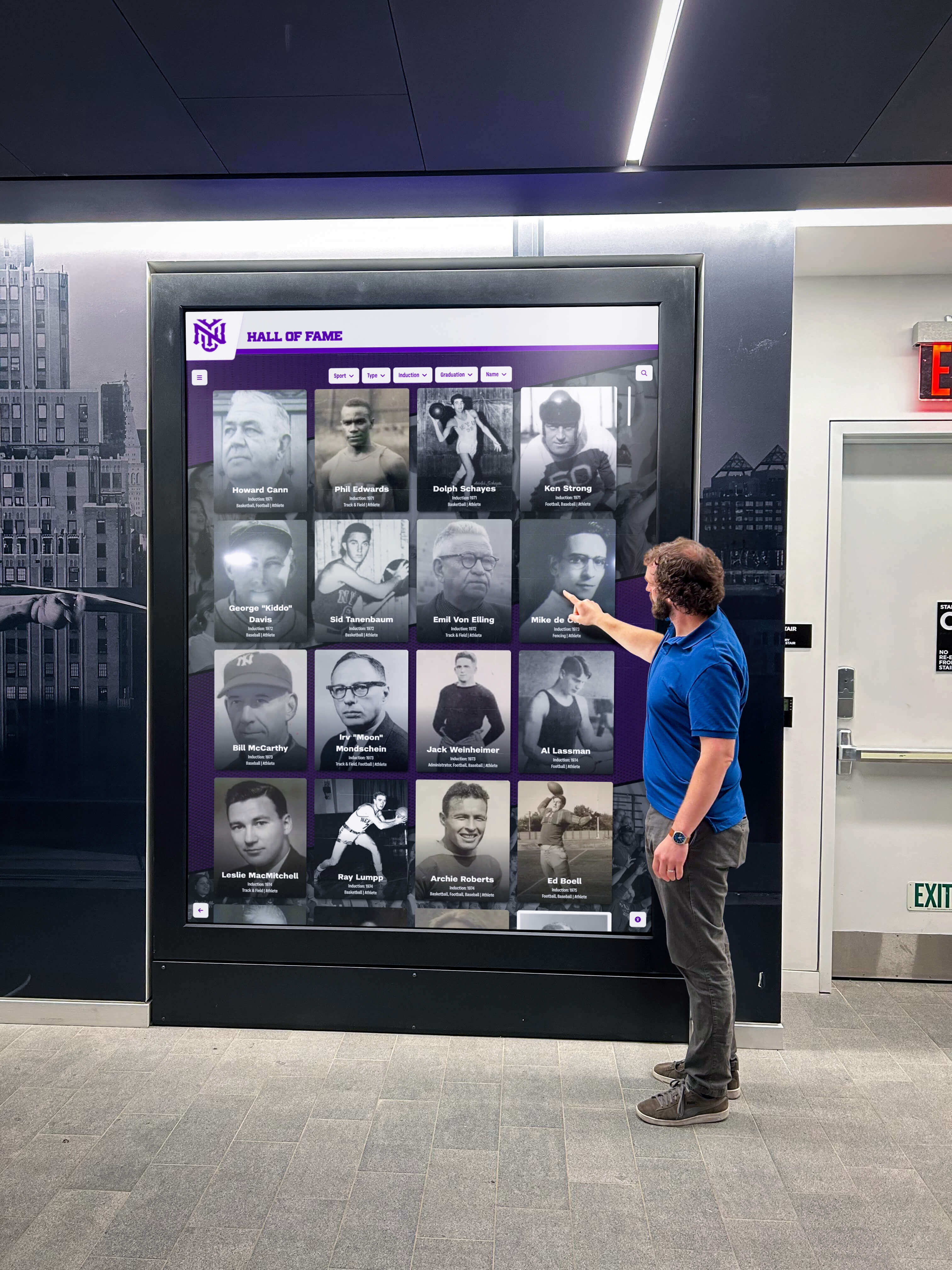
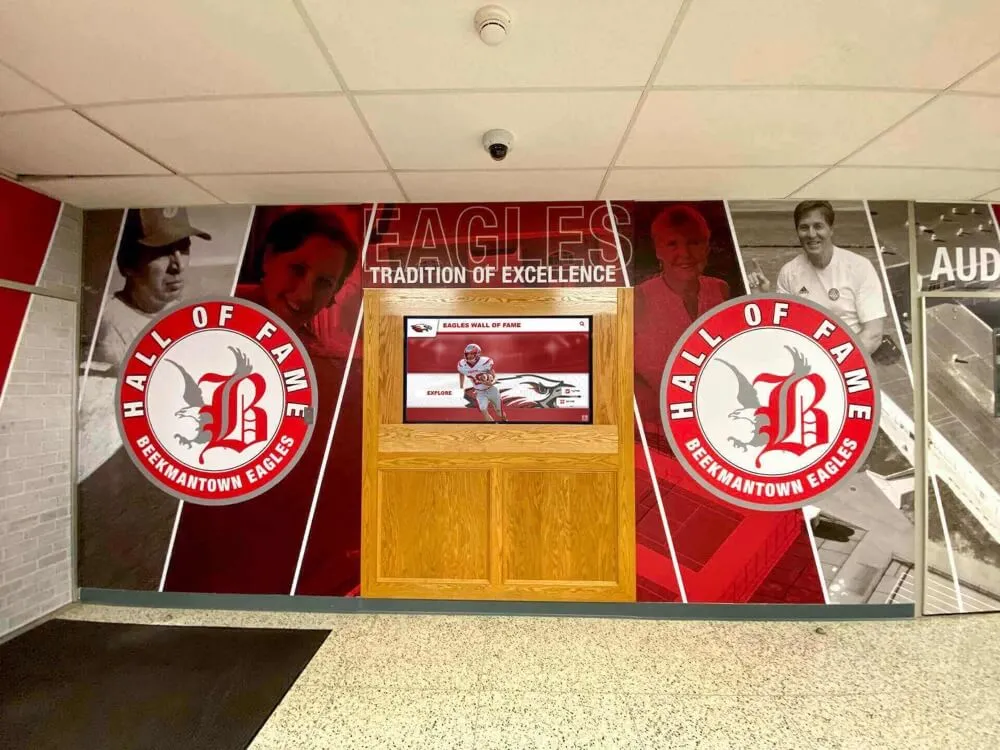
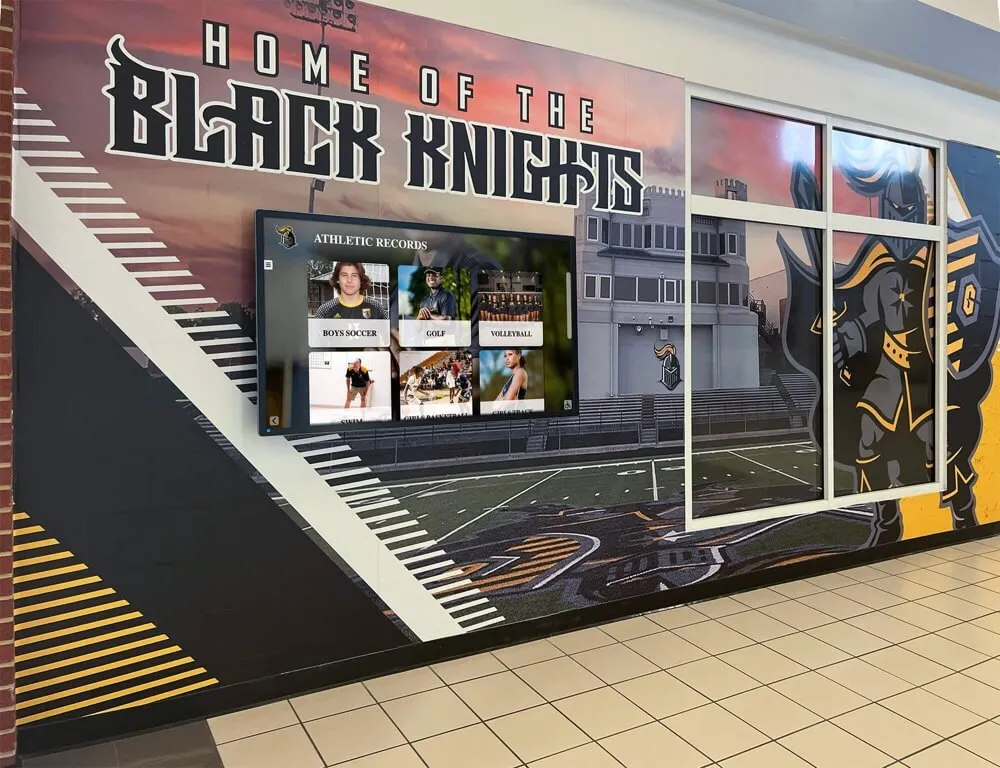
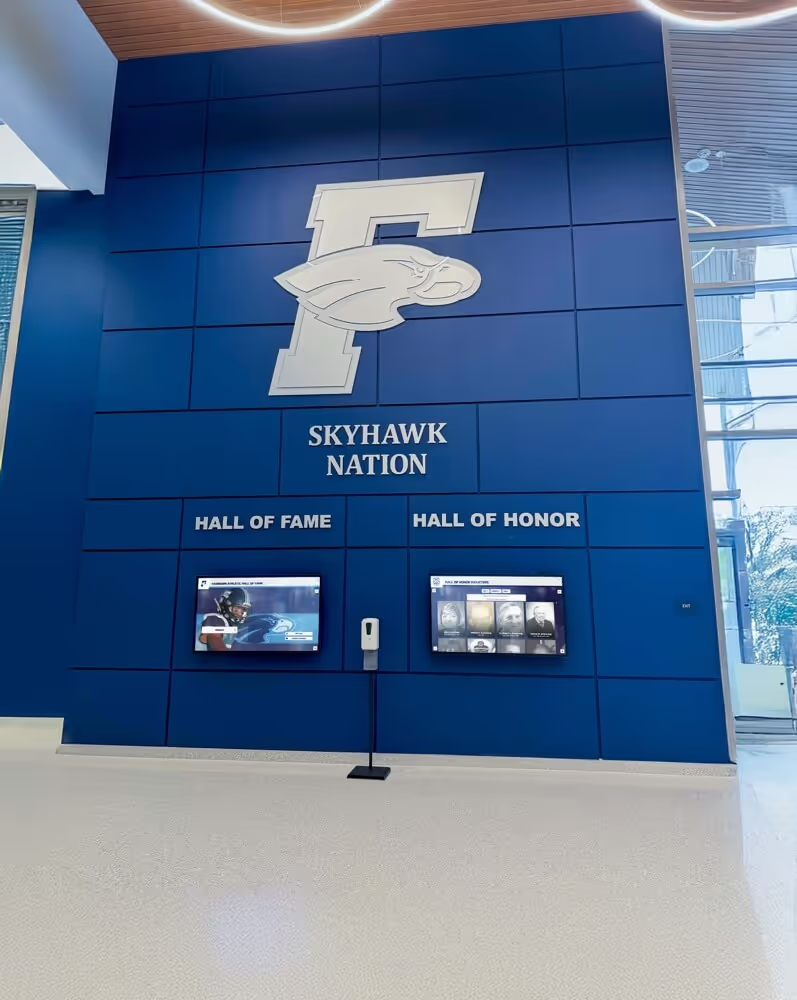
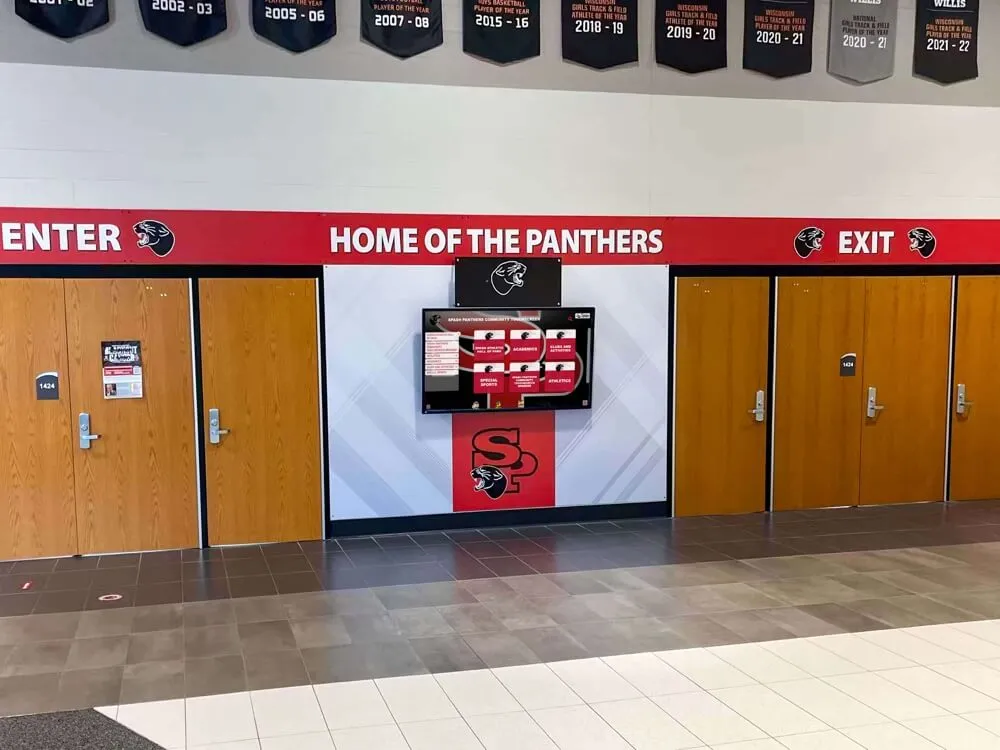
Strategic placement in high-traffic lobbies ensures recognition reaches broad audiences during daily facility use and special events
Brand Integration and Visual Design Strategy
Touchscreen digital hall of fame walls should reflect institutional identity while providing professional, engaging experiences aligned with organizational brand standards and facility aesthetics.
Visual Identity Implementation Framework
Institutional Color Systems
Apply brand colors systematically throughout experiences creating cohesive visual identity:
- Primary brand colors for hero areas, navigation elements, and key UI components establishing immediate institutional recognition
- Secondary colors for backgrounds, dividers, and supporting elements providing visual interest without overwhelming
- Accent colors for interactive elements, highlights, and calls-to-action guiding user attention
- Neutral colors for text and content areas ensuring readability across all lighting conditions
Color application should follow 60-30-10 rule: 60% dominant color (often neutral backgrounds), 30% secondary brand color, 10% accent color for emphasis—creating balanced compositions preventing visual chaos.
Typography and Readability
Establish clear type systems supporting both brand personality and functional readability:
- Display fonts reflecting institutional character for titles and featured text (commonly institutional serif or bold sans-serif matching print materials)
- Body fonts optimizing legibility for biographical content and descriptions (typically clean sans-serif fonts like Open Sans, Roboto, or Lato)
- Size scales creating clear information hierarchy from headlines through captions (typically 12-18pt body, 20-28pt subheads, 32-48pt headlines)
- Weight variations emphasizing key information without excessive styling (regular for body, semibold for emphasis, bold for headlines)
- Line height (1.4-1.6) and character spacing optimized for screen reading at typical viewing distances (2-4 feet)
Typography should remain consistent with existing institutional materials while optimizing for screen display and varied viewing distances unique to public touchscreen installations.
Logo and Institutional Marks
Integrate institutional marks appropriately throughout experiences:
- Primary logos in hero areas maintaining required clear space per brand guidelines
- Secondary marks as watermarks or footer elements providing subtle brand presence
- Mascot integration when appropriate for athletic recognition adding personality
- Sponsor logos when funding partnerships justify inclusion (maximum 10-15% of screen space)
- Badge or seal treatments for achievement categories (hall of fame induction, championship team, record holder)
Logo application should balance institutional presence with content primacy—ensuring brand identity remains clear without competing with honoree recognition for visual attention.
Custom Backgrounds and Environmental Imagery
Location-Specific Photography
Incorporate facility and campus imagery creating connection to place:
- Exterior facility or campus photography establishing institutional context
- Interior architectural details (gyms, auditoriums, hallways) providing visual familiarity
- Landscape or cityscape imagery connecting to geography and community
- Historical photos blending heritage with modern presentation
- Seasonal variations updating backgrounds throughout academic or calendar year
Background imagery should remain subtle enough to support rather than compete with foreground content, typically using reduced opacity (20-40%), blur effects, or monochromatic treatments preventing distraction.
Pattern and Texture Libraries
Subtle background treatments add visual interest without overwhelming:
- Geometric patterns derived from architectural elements, logos, or institutional symbolism
- Texture overlays suggesting physical materials (brick, wood, metal) connecting to facility environments
- Gradient treatments creating depth and dimensionality in otherwise flat layouts
- Motion graphics providing subtle movement in attraction loops without distraction
Video Background Considerations
Looping video backgrounds create dynamic experiences when implemented thoughtfully:
- Campus life footage showing students, activities, and community engagement
- Athletic action highlights showcasing competitive excellence
- Time-lapse sequences demonstrating facility or campus evolution
- Abstract motion graphics supporting brand without specific representational content
Video backgrounds require careful implementation ensuring sufficient contrast between motion content and foreground text, appropriate loop points preventing jarring transitions, and file optimization maintaining smooth playback without performance degradation.
Considerations for implementing interactive awards in digital storytelling provide frameworks for effective multimedia integration balancing engagement with usability.
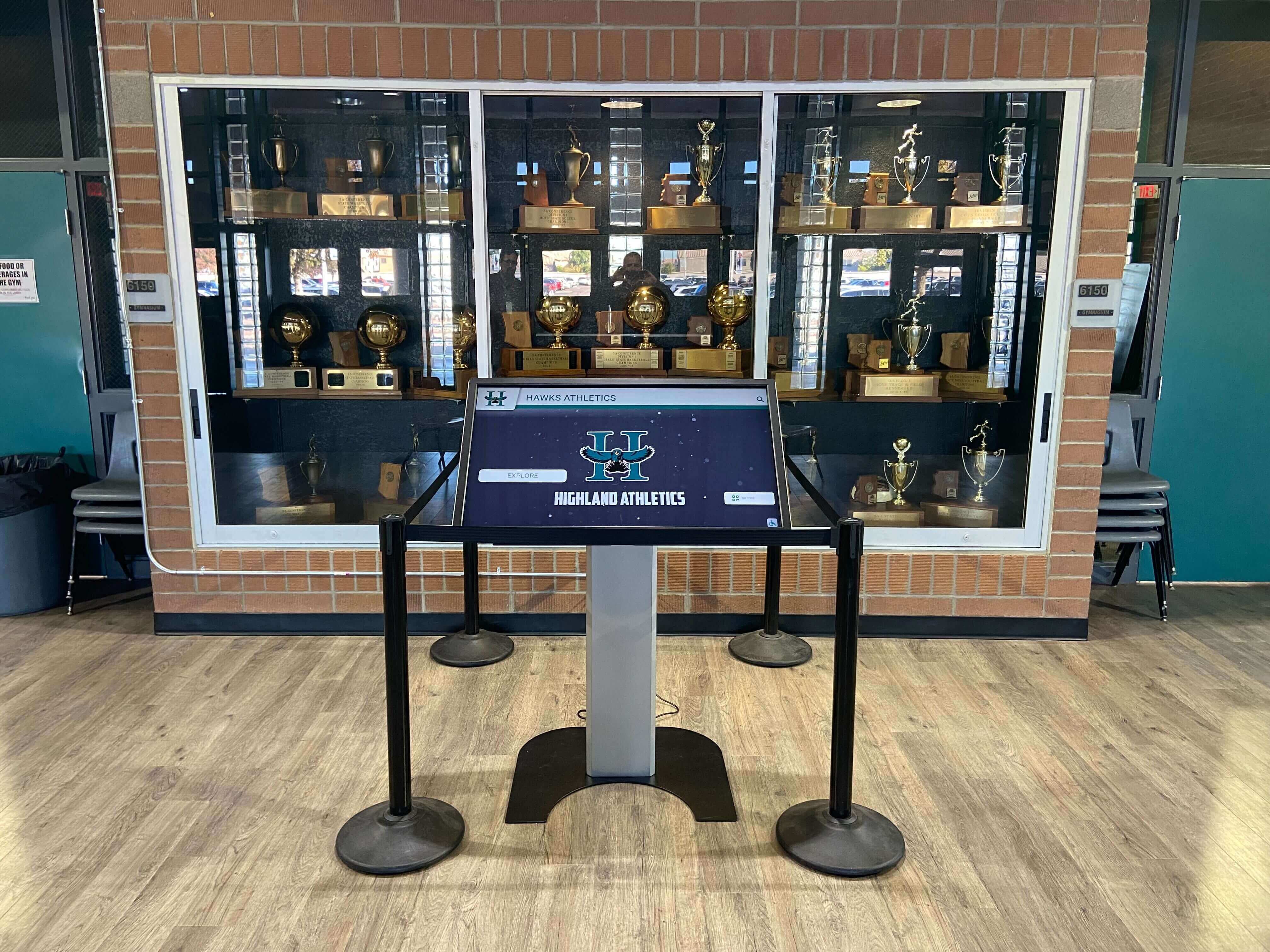
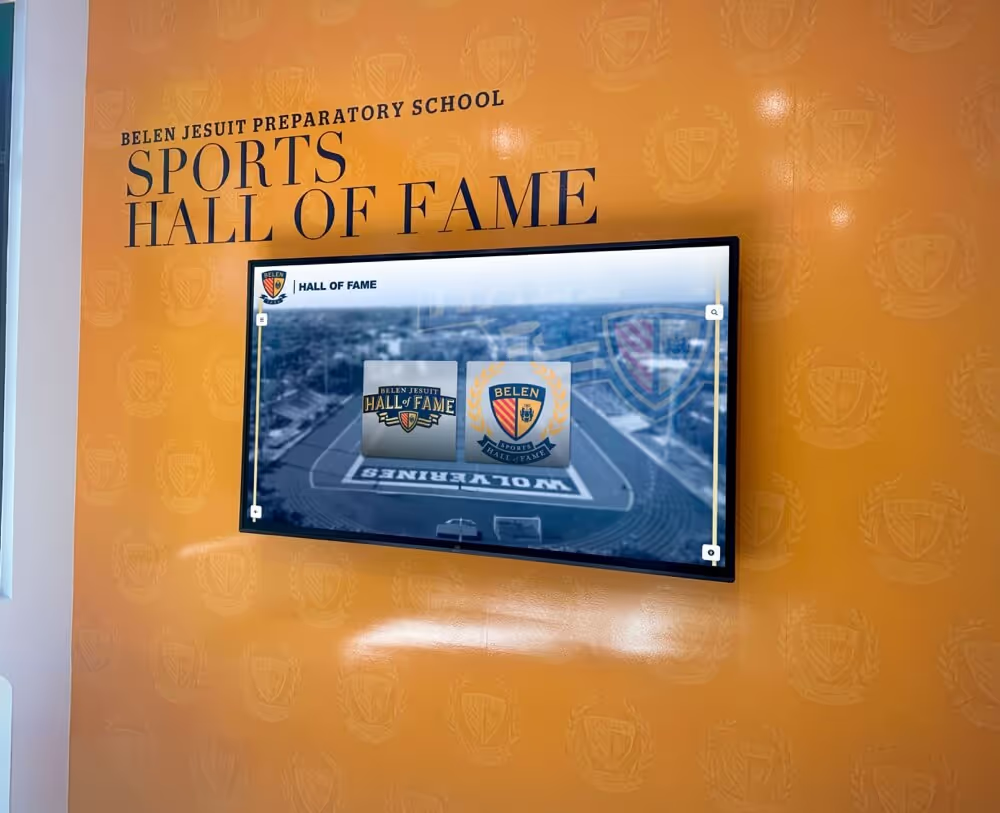
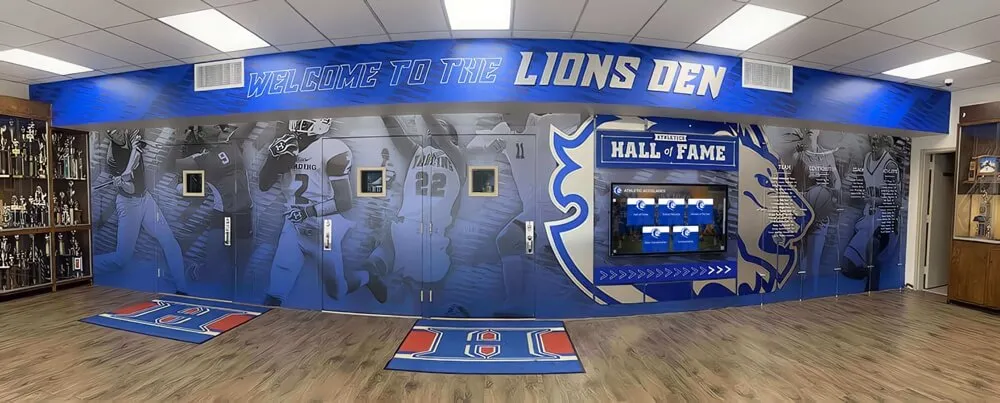
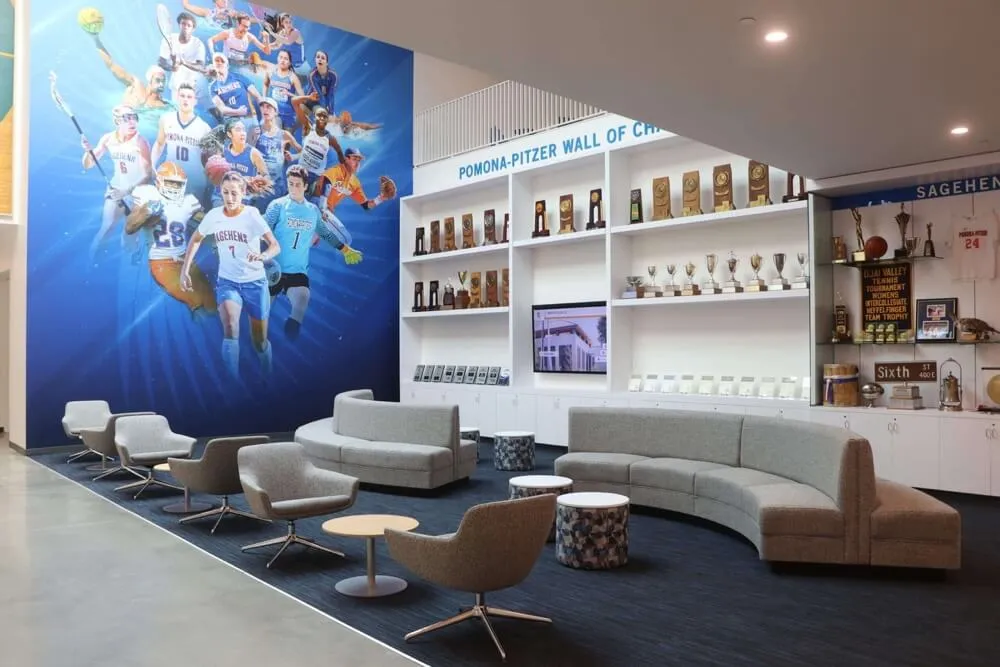
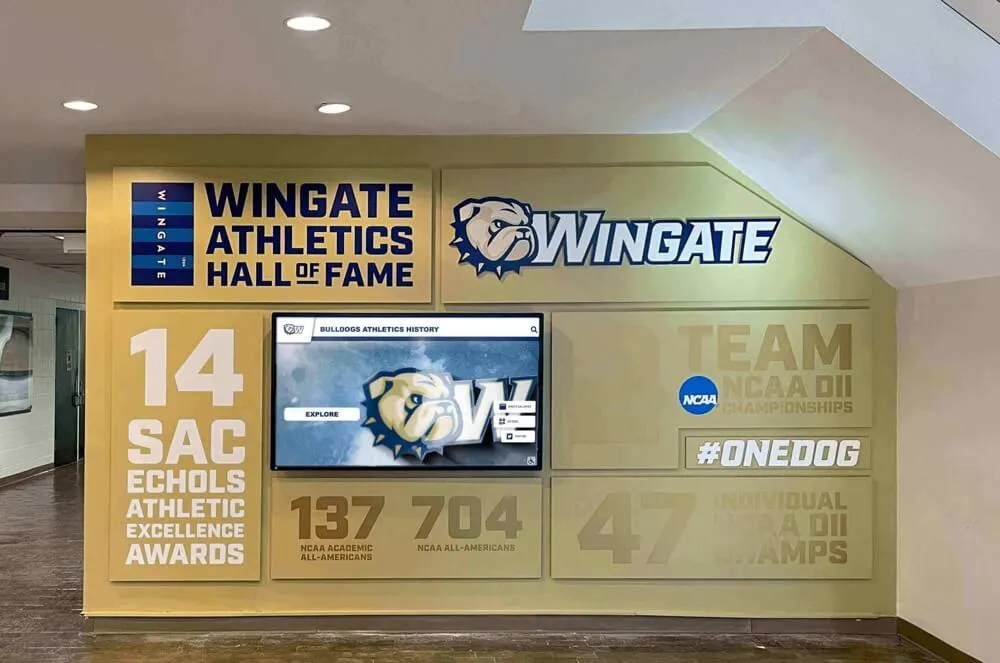
Hybrid approaches blend traditional trophy cases with interactive digital exploration, honoring heritage while embracing modern capabilities
Content Strategy and Recognition Profile Development
Digital hall of fame value depends entirely on quality content celebrating achievements comprehensively through compelling narratives, rich media, and thoughtful organization.
Gathering and Organizing Award Recognition Content
Systematic content collection ensures comprehensive, accurate recognition:
Source Identification and Collection
Compile content from diverse institutional sources:
- Athletic record books and archives documenting achievement statistics, team rosters, and championship histories
- Yearbooks providing photos and historical context across decades of institutional history
- School newspapers, programs, and media coverage capturing contemporaneous achievement accounts
- Personal collections from families, alumni, and honorees themselves often containing unique photos and memorabilia
- Digital archives and databases when previous digitization projects exist
- Oral history interviews gathering first-person perspectives and memories
Information Architecture Frameworks
Structure content systematically supporting multiple display contexts:
- Individual honoree profiles as atomic content units containing all personal information
- Team and group recognition linking related individuals and providing collective achievement context
- Championship and achievement records establishing competitive context and significance
- Timeline and historical content organizing recognition chronologically across institutional history
- Category taxonomies enabling filtering by sport, achievement type, recognition tier, or era
Content Standards and Quality Guidelines
Establish consistency standards ensuring professional presentation:
- Photo resolution minimums (1920x1080 or higher for primary images, 1200x1200 minimum for portraits)
- Biographical length guidelines (200-400 words for standard profiles, 400-800 for featured individuals)
- Citation requirements for statistics and achievement claims ensuring accuracy
- Approval workflows preventing publication before verification
- Privacy guidelines respecting sensitive information and personal preferences
Organizations should document content standards in style guides ensuring consistency across multiple content contributors and extended timeframes.
Writing Compelling Recognition Narratives
Effective profiles transform facts into engaging stories celebrating achievements meaningfully:
Biographical Narrative Framework
Structure recognition narratives following engaging patterns:
- Opening hook capturing defining achievement, memorable moment, or unique distinction
- Background context establishing honoree’s journey to excellence and formative experiences
- Achievement highlights detailing specific accomplishments with statistics, records, or competitive results
- Impact and legacy explaining significance beyond raw statistics and lasting influence on programs or communities
- Post-recognition career providing honoree updates when available and appropriate
- Personal reflections incorporating quotes or testimonials adding authentic voice
Storytelling Techniques for Engagement
Transform documentary information into compelling narratives:
- Specific details and anecdotes rather than generic descriptions creating memorable moments
- Action verbs and dynamic language rather than passive voice maintaining energy
- Contextual comparisons helping audiences understand achievement significance within program history
- Emotional resonance connecting achievements to broader meaning and community impact
- Accessible language avoiding unnecessary jargon while maintaining appropriate sophistication
Rather than stating “Hall of Fame Inductee 2020, Career Statistics: 1,247 points,” comprehensive recognition reads: “Led team to three consecutive conference championships through four-year career marked by clutch performances in defining moments. Career 1,247 points ranked third all-time when inducted, but leadership impact extended beyond individual statistics—mentoring younger players who credit her influence on their development and continued program success.”
This narrative approach creates engagement transforming recognition from directories into compelling archives preserving institutional memory. Guidelines for academic recognition content development provide detailed frameworks for profile creation across achievement categories.
Multimedia Content Production Standards
Rich media transforms recognition from documentation to immersive storytelling:
Photo Curation and Optimization
- Select images showing honorees in action rather than static portraits exclusively
- Create photo galleries showcasing individuals throughout involvement journey
- Digitize and restore historical photos maintaining quality while preserving authenticity
- Crop and optimize images for display dimensions and file sizes preventing loading delays
- Apply consistent color correction ensuring visual cohesion across photos from different eras and sources
Video Content Development Guidelines
- Produce interview videos capturing honorees’ personal reflections and memories (2-4 minute durations)
- Compile highlight reels from competition footage and event recordings showcasing athletic or performance excellence
- Create narrative video profiles combining photos, clips, and voiceover narration
- Edit content respecting attention spans while telling complete stories
- Caption all video content supporting accessibility and sound-off viewing in public spaces
Document and Artifact Digitization
- Scan historical documents, newspaper articles, and programs providing primary source context
- Digitize awards certificates and achievement documentation
- Photograph physical artifacts, trophies, and memorabilia when three-dimensional objects cannot display directly
- Create high-resolution scans (300 DPI minimum) ensuring text readability when zoomed
Comprehensive multimedia libraries transform basic recognition into engaging experiences where visitors spend extended time exploring rich content celebrating achievements thoroughly.
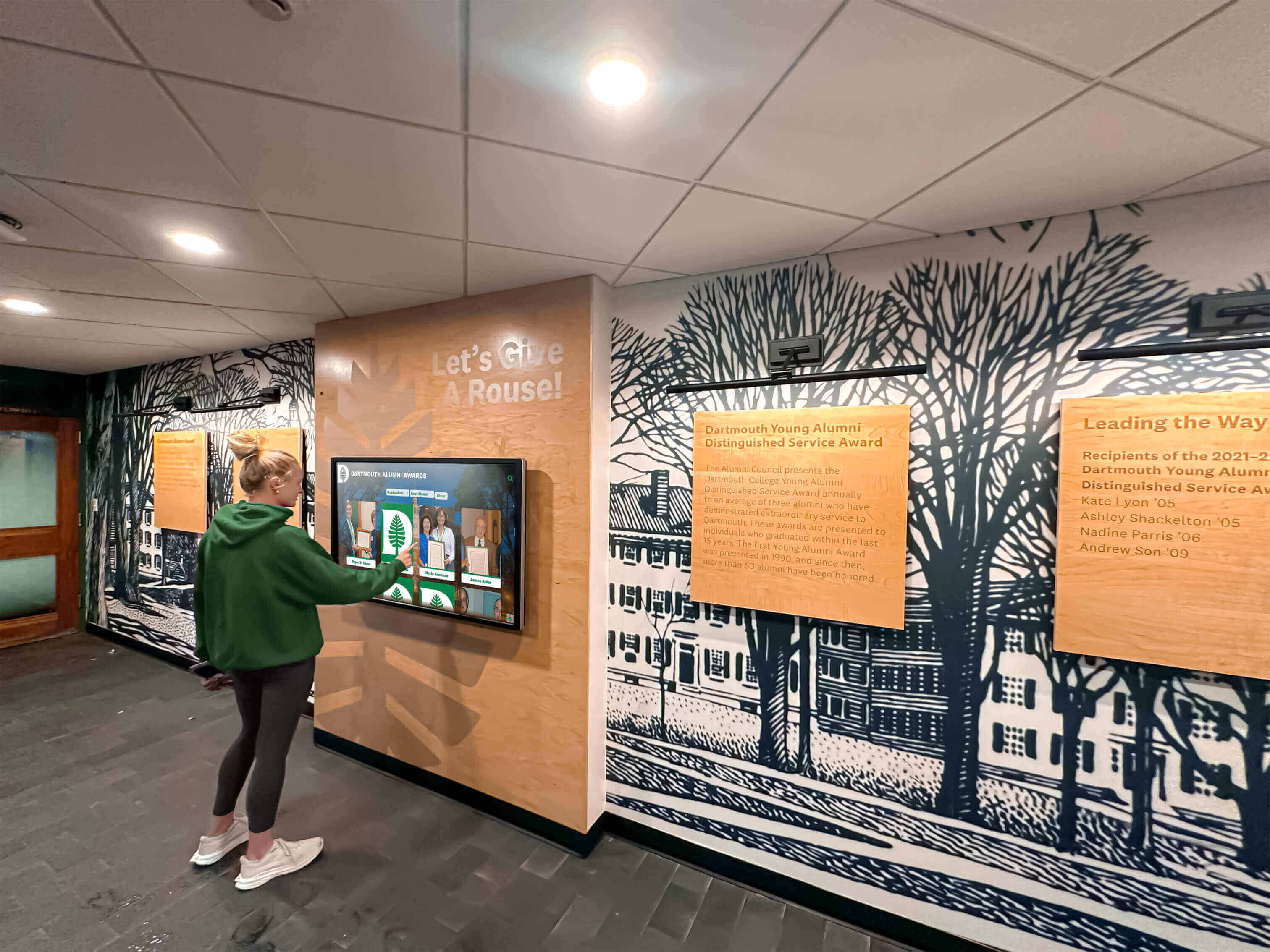
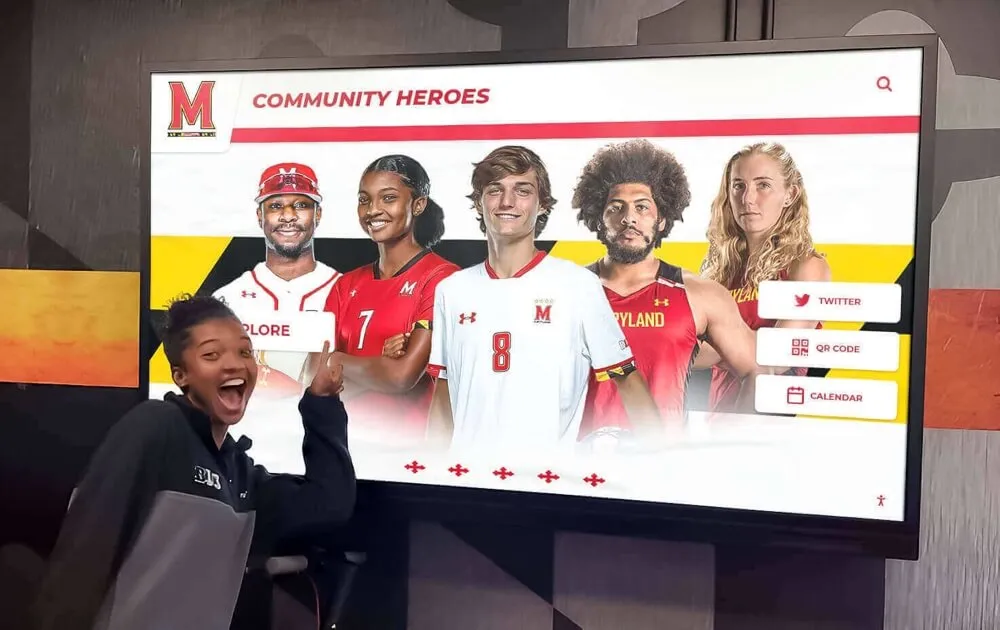
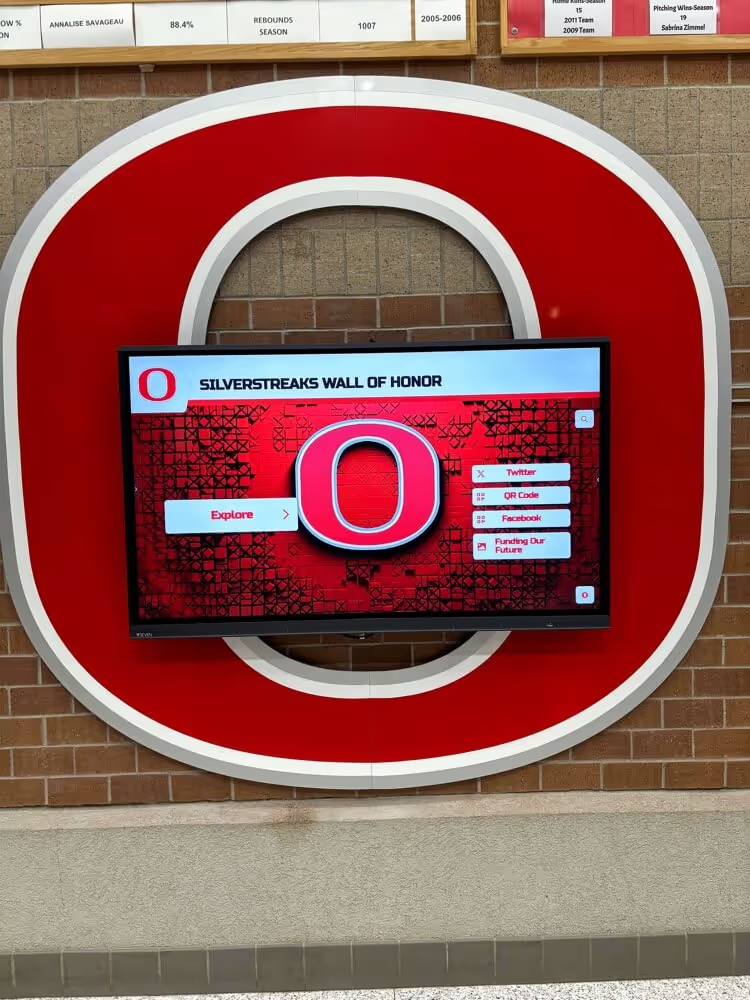
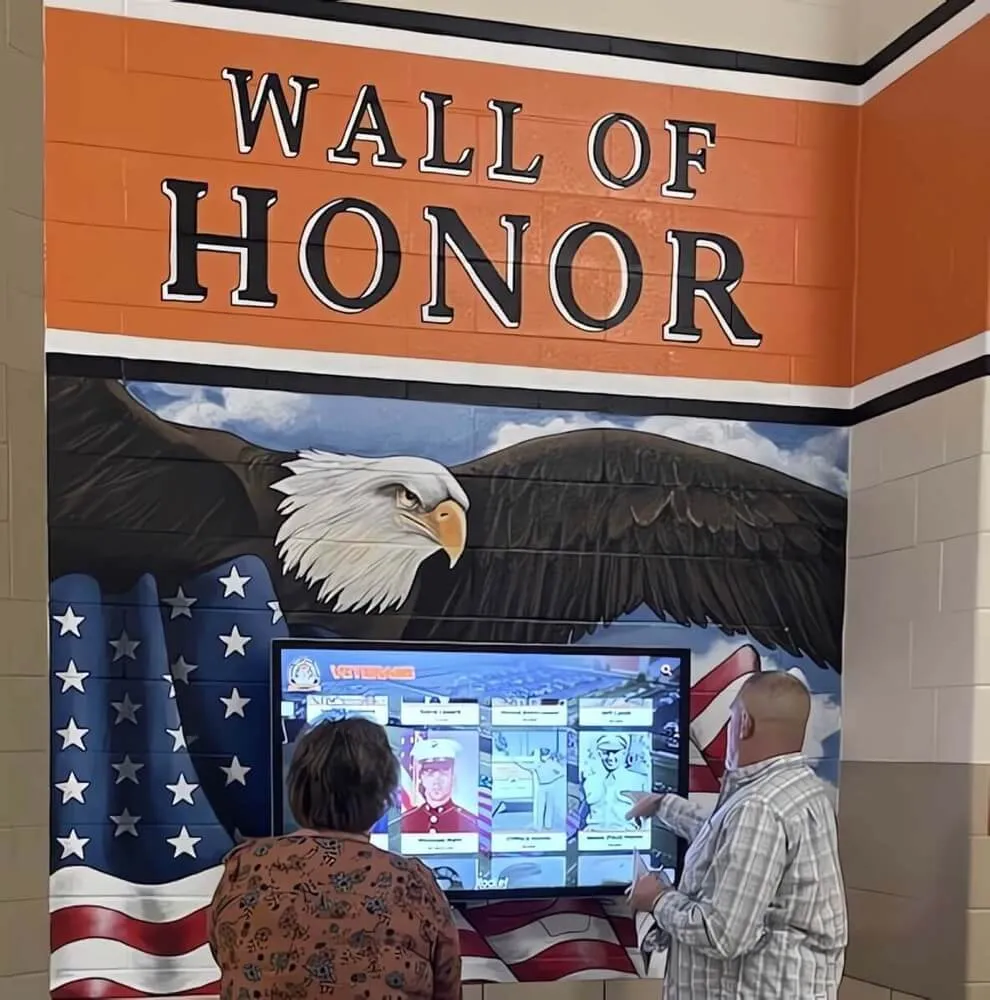
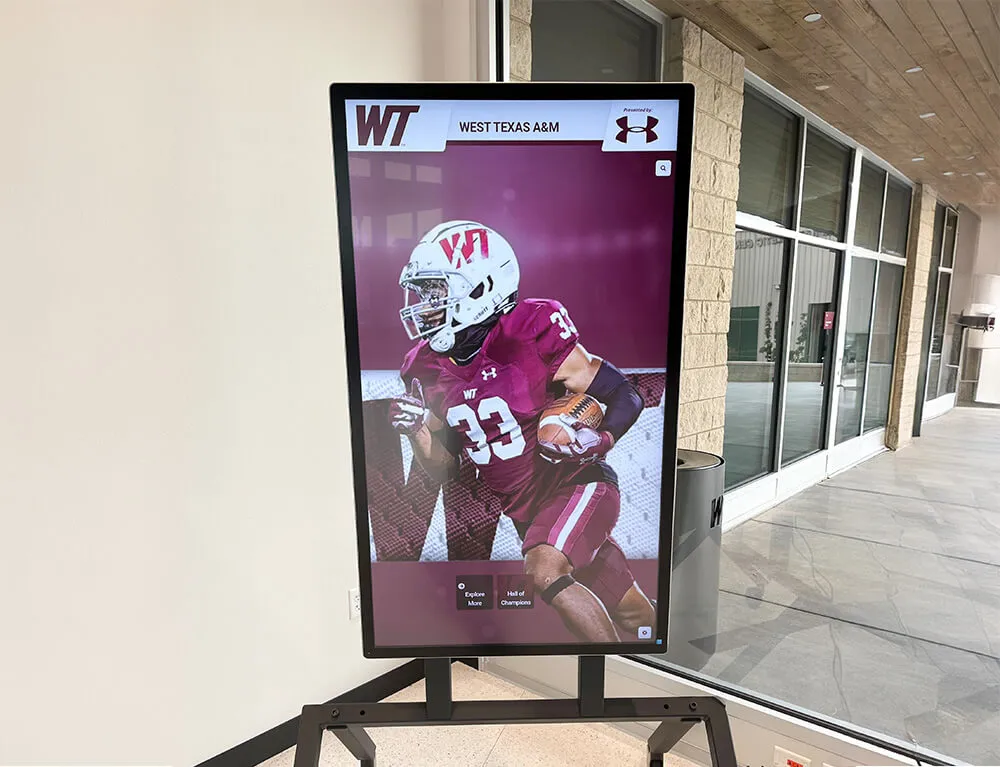
Intuitive interfaces enable all age groups to explore recognition content independently without instructions or assistance
Implementation Strategy and Technical Considerations
Successful touchscreen digital hall of fame wall launch requires strategic planning across technology selection, content development, physical installation, and organizational adoption.
Hardware Selection and Display Technology
Choose hardware aligned with institutional needs, budget, and technical capabilities:
Screen Size and Viewing Distance
- 43-55 inch displays for close viewing applications (3-5 feet) in alcoves or near seating areas
- 55-65 inch displays for moderate viewing distances (5-8 feet) in hallways or common areas
- 65-75 inch displays for distance viewing (8-12 feet) in large lobbies or gymnasiums
- Portrait vs. landscape orientation matching content types (portrait common for individual profiles, landscape for team photos and timelines)
Viewing distance approximately equals 1.5-2 times screen diagonal for comfortable engagement—a 55-inch display works well for 7-10 foot viewing distances.
Commercial vs. Consumer Display Technology
- Commercial displays rated for 16-24 hours daily operation last 50,000+ hours
- Consumer TVs rated for residential use (4-8 hours daily) fail within 1-2 years in continuous public applications
- Commercial displays include expanded temperature operating ranges important for unconditioned spaces
- Commercial warranties cover public usage while consumer warranties often exclude commercial applications
- Total cost of ownership favors commercial displays despite higher initial investment
Touch Technology Options
- Capacitive touch provides consumer-device-like responsiveness supporting multi-touch gestures but costs more and limits maximum practical size to approximately 65 inches
- Infrared touch works at larger sizes (up to 98 inches) with lower cost but offers only single-touch capability without gesture support
- Optical touch provides alternatives at mid-range pricing with good durability and multi-touch support
Selection depends on budget, desired interactivity sophistication, and maximum screen size requirements.
Network Connectivity and Performance
- Hardwired Ethernet connections preferred for reliability, security, and consistent performance
- WiFi acceptable when hardwired impractical but introduces potential connectivity issues
- Minimum 10 Mbps bandwidth supporting smooth video playback and content updates
- Content delivery networks (CDN) improving loading performance for media-rich profiles
- Local content caching reducing network dependency for frequently accessed information
Software Platform Evaluation Criteria
Purpose-built recognition software delivers superior results compared to generic digital signage platforms adapted for hall of fame applications:
Recognition-Specific Features
- Unlimited honoree capacity without arbitrary content limits
- Individual profile templates optimized for biographical recognition content
- Intuitive search and filtering designed specifically for finding people and achievements
- Web portal integration extending recognition beyond physical displays
- Privacy controls respecting anonymous giving preferences or personal visibility choices
- Analytics tracking engagement patterns demonstrating program value
Content Management Requirements
- Cloud-based administration enabling updates from any internet-connected device
- Multi-user permissions supporting distributed content management across departments
- Approval workflows ensuring accuracy before publication
- Bulk import capabilities for large historical collections
- Media library management organizing photos and videos efficiently
- Version history enabling rollback when corrections needed
Technical Support and Training
- Demonstrated experience with educational and institutional recognition applications
- Quality reference installations and client feedback
- Comprehensive training resources and onboarding assistance
- Technical support availability and response commitments (24/7 support for mission-critical installations)
- Software update cadence maintaining security and functionality
- Total cost of ownership including hardware, software subscriptions, and support
Organizations should request live demonstrations with actual recognition content, speak with reference clients about implementation experiences, and verify accessibility compliance before platform commitments. Comprehensive digital recognition system selection guides provide detailed vendor evaluation frameworks.
Strategic Placement and Installation Best Practices
Display effectiveness depends significantly on strategic location selection and professional installation:
Optimal Installation Locations
- Main entrance lobbies welcoming all visitors immediately upon arrival
- Athletic facilities surrounding current athletes with program tradition and achievement standards
- Common areas where community members gather during events or daily activities
- Hallways connecting high-traffic areas capturing natural movement throughout facilities
- Administrative offices visited during tours, recruitment, and enrollment processes
Installation Specifications
- Professional mounting ensuring weight support safety and code compliance
- Appropriate viewing height (display center at 48-60 inches for standing adults, 36-42 inches when seating adjacent)
- Adequate ambient lighting avoiding direct sunlight causing screen glare and washout
- Power and network access with concealed cable management maintaining professional appearance
- Physical security measures preventing theft or vandalism (security enclosures, mounting hardware concealment)
- Protective surrounds when installation occurs in high-traffic or impact-risk areas
Phased Deployment Approaches
Many institutions implement recognition in phases spreading investment while demonstrating value:
- Phase 1: Flagship installation in highest-visibility, highest-traffic location establishing proof of concept
- Phase 2: Category-specific displays in relevant areas (athletic recognition in gyms, academic recognition in libraries, donor recognition in development offices)
- Phase 3: Comprehensive network covering all major spaces and audiences
Phased approaches enable budget spreading, organizational learning, and value demonstration justifying expansion investment.
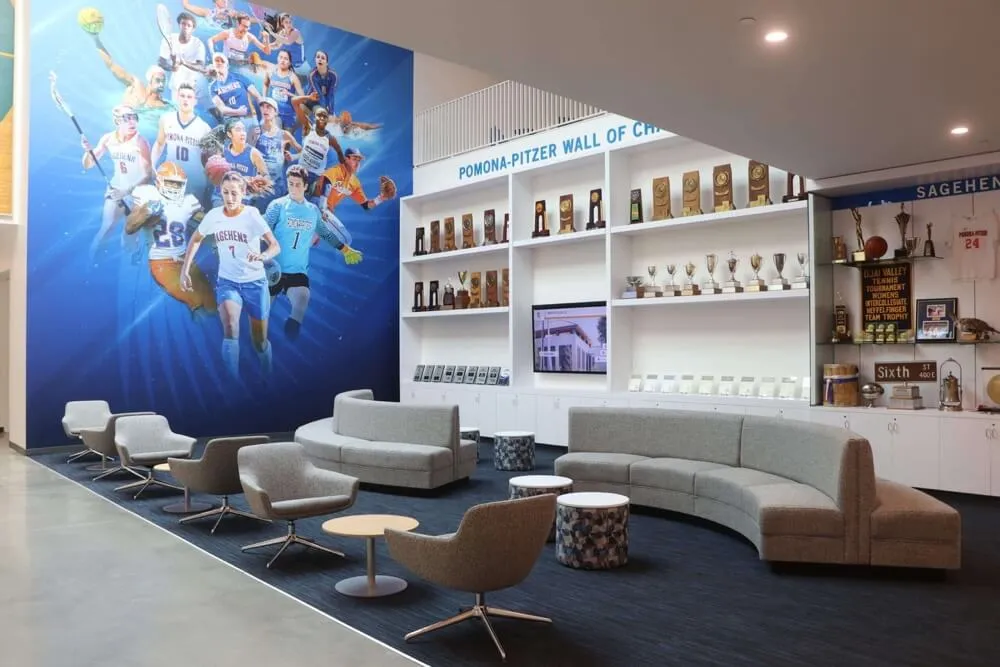
Creating comfortable viewing environments with seating encourages extended engagement and group exploration of recognition content
Measuring Success and Optimizing Award Display Performance
Data-driven evaluation ensures recognition investments deliver value while identifying continuous improvement opportunities.
Analytics and Engagement Metrics
Quality digital hall of fame platforms provide comprehensive usage tracking:
Quantitative Engagement Metrics
- Total interaction sessions showing usage frequency across daily, weekly, and monthly timeframes
- Average session duration indicating depth of content engagement
- Most-viewed profiles revealing popular content and community interests
- Search terms demonstrating what visitors seek and whether content meets needs
- Peak usage times informing content launch timing and attraction loop optimization
- Category popularity guiding content development priorities and expansion
Behavioral Analysis Patterns
Analytics reveal usage patterns informing optimization:
- Navigation paths showing how visitors explore content and common discovery workflows
- Drop-off points identifying confusing interfaces or problematic user experiences
- Search failures highlighting missing content or hard-to-find information
- Time-on-profile metrics indicating which honorees generate sustained interest
- Return visitor rates showing sustained community engagement when technically trackable
Comparative Performance Benchmarking
- Engagement rates comparing interaction sessions to facility traffic counts
- Growth trends showing increasing or declining usage requiring investigation
- Category comparisons identifying stronger and weaker content areas
- Pre/post implementation surveys measuring awareness, satisfaction, and community pride improvements
- Peer institution benchmarking when industry data available
Organizations should establish baseline metrics during initial months, set realistic improvement targets, and review analytics quarterly identifying trends and optimization opportunities.
Qualitative Assessment and Community Feedback
Beyond quantitative analytics, gather qualitative insights revealing impact metrics cannot capture:
Direct Feedback Collection Methods
- Surveys assessing recognition program awareness, satisfaction, and suggestions
- Comment cards or digital feedback forms positioned near displays
- Staff observations documenting visitor engagement patterns and common questions
- Focus groups with stakeholders exploring detailed perspectives and experiences
- Social media monitoring capturing organic comments, shares, and discussions
Observational Research Approaches
Watch visitors interact with displays noting:
- Which navigation approaches prove intuitive versus confusing requiring assistance
- Where visitors hesitate, abandon exploration, or require help
- What content prompts groups to gather, point, and discuss
- How different age groups approach and use interfaces
- What generates visible excitement, emotion, or extended engagement
Stakeholder Input and Satisfaction
Regularly gather feedback from key constituencies:
- Honorees’ reactions when discovering their own recognition
- Alumni engagement levels and emotional responses during visits
- Current students’ awareness of program tradition and inspirational impact
- Administrative assessment of program value for recruitment and development
- Donor perspectives when recognition involves fundraising acknowledgment
This qualitative feedback often reveals impact that metrics miss—emotional connections, inspirational influence, and community pride building that justify recognition investments beyond purely financial returns.
Continuous Improvement and Content Optimization
Use insights to refine recognition experiences over time:
Content Enhancement Strategies
- Add missing profiles or categories revealed through search failures
- Enrich existing profiles responding to high visitor interest with expanded multimedia
- Create featured collections highlighting compelling themes, anniversaries, or milestones
- Update navigation based on observed usage patterns and drop-off analysis
- Expand multimedia content in high-engagement profiles maximizing popular content
Design and Interface Refinement
- Simplify confusing navigation based on usability observations and user feedback
- Adjust color contrast responding to visibility issues in varying lighting conditions
- Resize touch targets if interaction difficulties observed or reported
- Refine information density balancing comprehensiveness with visual clarity
- Update attraction loops maintaining freshness and preventing stale repetitive content
Technical Performance Optimization
- Improve loading speed through image optimization and content delivery network implementation
- Fix bugs or errors discovered through usage analytics or user reports
- Enhance search algorithms based on query patterns and failure analysis
- Optimize content delivery reducing bandwidth requirements in constrained networks
- Update software maintaining security, accessibility, and modern browser compatibility
Organizations treating digital hall of fame walls as living systems requiring ongoing attention achieve dramatically better long-term results than those implementing displays then neglecting maintenance and optimization. Resources on maintaining digital recognition systems provide operational frameworks ensuring sustained program effectiveness.
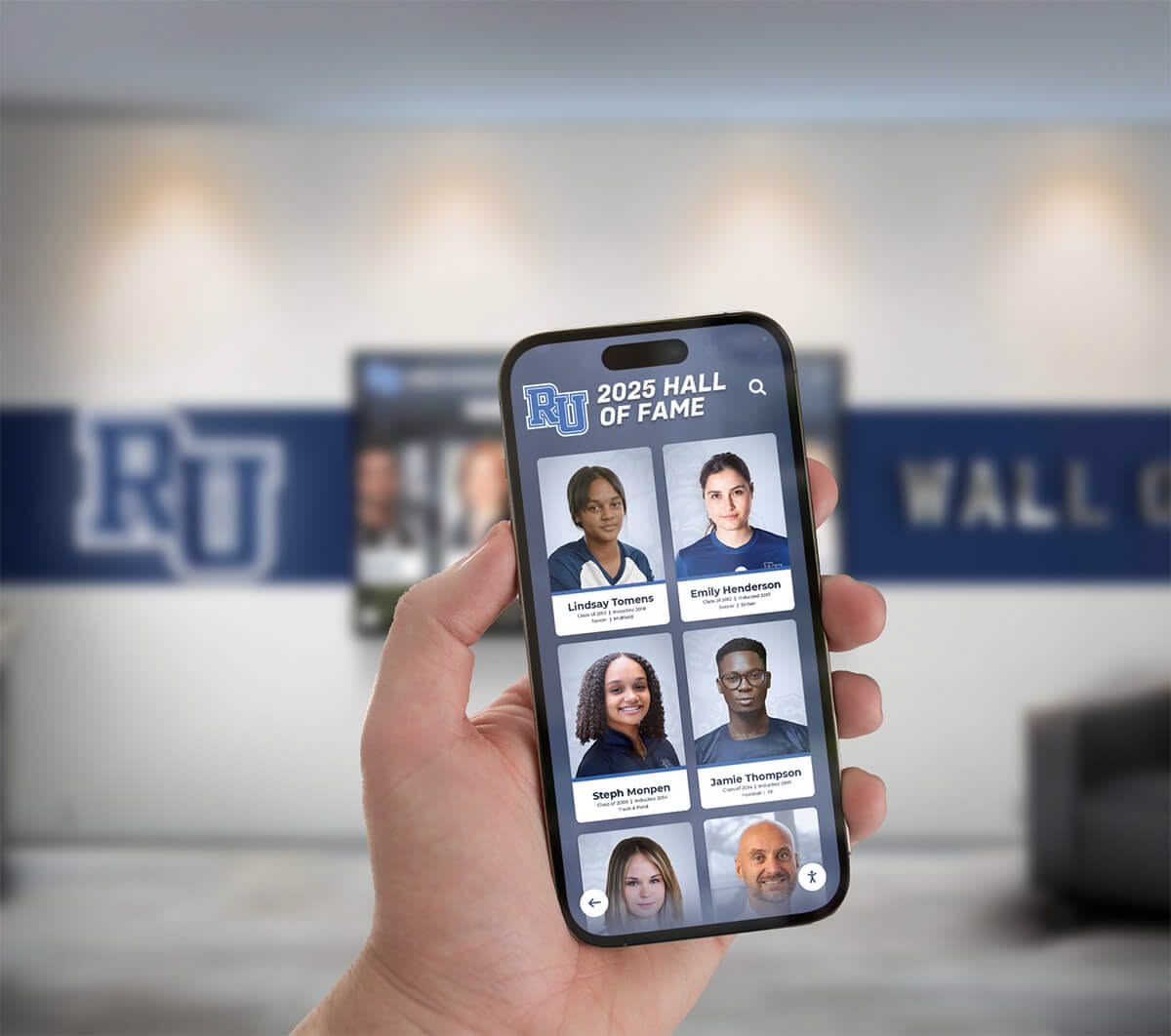
Mobile and web extensions enable visitors to continue exploration beyond physical displays, sharing recognition through social networks
Special Applications: Awards, Athletics, Academics, and Donor Recognition
While general principles apply broadly, specific recognition contexts benefit from tailored approaches optimizing for unique requirements and audience expectations.
Athletic Hall of Fame and Sports Achievement Recognition
Athletic recognition represents the most common touchscreen digital hall of fame application where technology delivers exceptional value:
Comprehensive Sports Recognition Framework
Digital platforms enable systematic celebration across all athletic programs:
- Hall of fame inductees from all sports and eras receiving equal visibility
- Championship teams with complete rosters, season statistics, and tournament documentation
- Individual athletes achieving conference, state, regional, or national honors
- School or organizational records with current holders and historical progression
- Coaching excellence spanning program development across decades
This comprehensive approach ensures athletes from all sports receive appropriate recognition rather than limiting celebration to high-profile programs—strengthening culture across entire athletic departments.
Interactive Record Boards and Leaderboards
Record displays serve dual purposes of recognition and motivation:
- School records by sport with athlete names, dates, and competitive context
- Season progression showing record evolution demonstrating program growth
- Comparison filters enabling year-by-year or athlete-by-athlete analysis
- Video highlights preserving record-setting performances when footage available
- Current season leaderboards motivating ongoing achievement pursuit
Detailed approaches to athletic touchscreen recognition demonstrate sport-specific implementation strategies maximizing engagement within athletic communities.
Academic Achievement and Scholar Recognition Displays
Academic excellence deserves visibility equal to athletic success through digital recognition:
Comprehensive Academic Recognition Categories
- Valedictorians and salutatorians across graduating classes
- National Merit Scholars and academic competition winners
- Perfect or near-perfect standardized test score achievers
- Academic honor society members and leadership
- Prestigious scholarship recipients and award winners
- Subject-specific excellence in STEM, humanities, arts, and interdisciplinary achievement
Academic recognition through interactive displays communicates that intellectual achievement receives institutional priority equal to athletic success—strengthening academic culture while motivating students toward challenging coursework and competitive academic opportunities.
Organizations implementing comprehensive academic recognition programs report increased enrollment in advanced courses, higher academic competition participation, and improved peer perception of academic achievement as celebrated and valued.
Donor Recognition and Philanthropic Appreciation
Digital recognition transforms donor acknowledgment beyond traditional walls facing capacity constraints:
Donor Recognition Tier Frameworks
- Major gift profiles with photos, biographical content, impact stories, and multimedia elements
- Leadership circle members with enhanced recognition and prominent placement
- Cumulative giving societies organized by lifetime contribution levels
- Campaign-specific recognition celebrating particular initiatives or facility projects
- Memorial giving honoring individuals through named gifts and legacy tributes
Digital platforms accommodate unlimited donors across all giving levels while providing differentiated recognition appropriate to contribution significance. Organizations should integrate touchscreen displays with broader donor recognition strategies ensuring philanthropic appreciation receives appropriate visibility and sophistication.
Alumni Achievement and Distinguished Graduate Recognition
Alumni recognition connects current members with institutional legacy demonstrating long-term impact:
Distinguished Alumni Recognition Categories
- Professional achievement and career success across industries and disciplines
- Community service and philanthropic leadership benefiting broader society
- Creative accomplishment in arts, entertainment, media, and cultural fields
- Academic achievement including advanced degrees, research contributions, and scholarly recognition
- Entrepreneurial success and business leadership creating economic opportunity
- Athletic achievement beyond school competition at collegiate, professional, or Olympic levels
Comprehensive alumni recognition validates that diverse paths lead to distinguished status—success takes many forms rather than following narrow templates. Current members see predecessors excelling in fields matching their own interests and aspirations, making excellence feel achievable through varied routes.
Frameworks for alumni gathering area design demonstrate how digital recognition integrates with comprehensive alumni engagement strategies strengthening community connections.
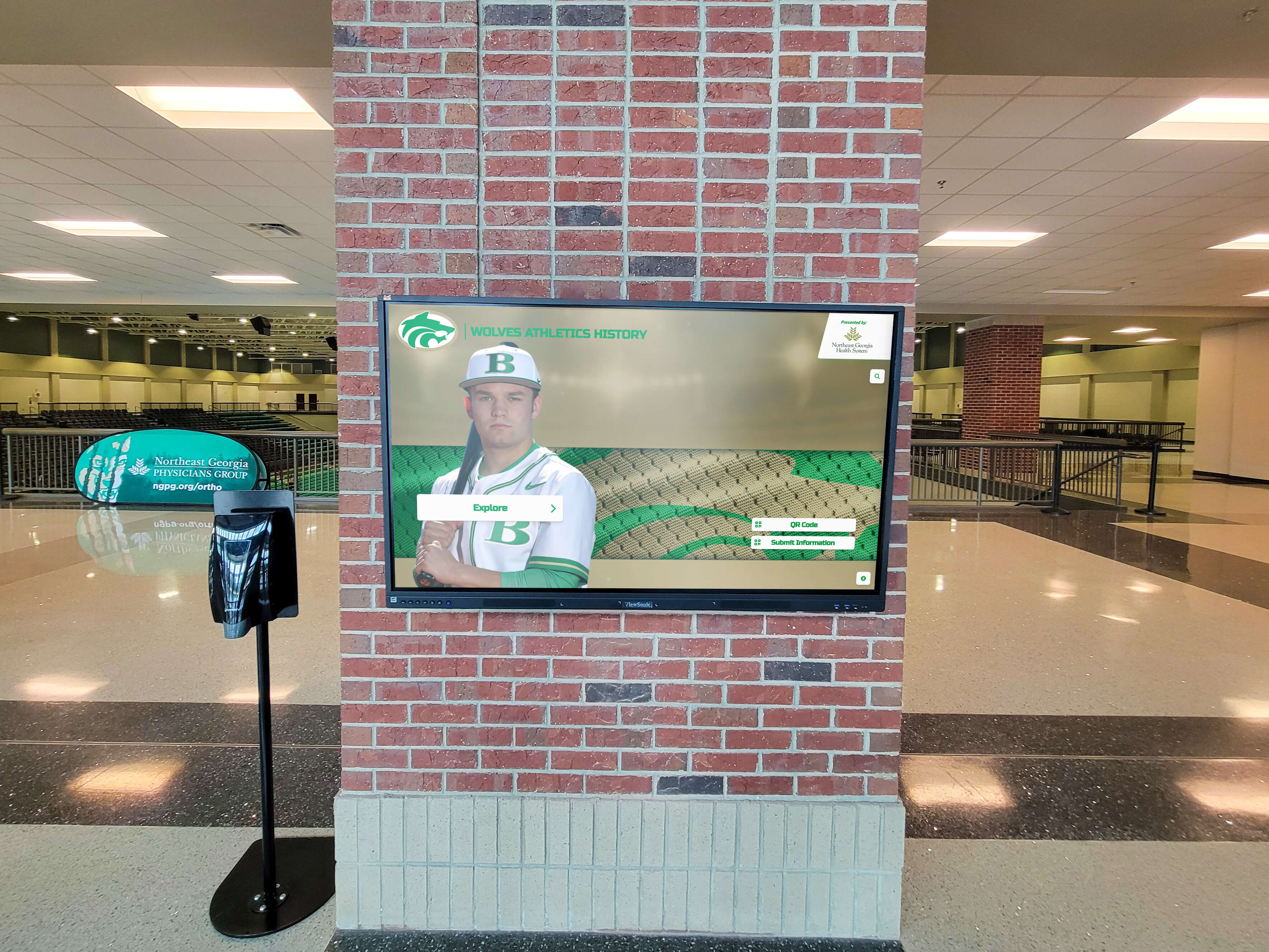
Large-format displays in high-ceiling spaces require appropriate sizing ensuring content remains visible and engaging at extended viewing distances
Common Implementation Challenges and Practical Solutions
Understanding typical obstacles helps organizations proactively address challenges that could derail projects or limit effectiveness.
Budget Constraints and Funding Strategies
Digital hall of fame investment typically ranges $10,000-$20,000 per display including hardware, software, installation, and initial content development—significant expenditure for many organizations:
Alternative Funding Approaches
- Capital campaigns incorporating recognition technology as specific, tangible funding objectives
- Memorial giving programs where supporters fund displays honoring deceased community members
- Corporate sponsorship particularly for athletic recognition where business supporters naturally align
- Booster club or parent organization support from engaged community groups
- Grant opportunities through educational technology foundations or community development programs
- Phased implementation starting with single display demonstrating value before requesting expansion funding
Some institutions incorporate digital hall of fame displays into facility renovation projects, treating recognition infrastructure as permanent capital investment deserving project inclusion rather than competing with operating budget priorities.
Content Development Capacity and Historical Research
Comprehensive digital hall of fame content requires significant initial development effort gathering information, photos, and creating hundreds or thousands of profiles:
Resource Management Strategies
- Start focused on recent 5-10 years before expanding historical coverage
- Engage volunteers, particularly alumni passionate about heritage preservation and institutional history
- Solicit community assistance gathering information and photos from different eras through social media campaigns
- Contract professional digitization services for large-scale historical archive projects
- Establish student internship programs supporting content development as academic experiences
- Create sustainable workflows distributing effort over extended timeframes rather than requiring immediate completeness
Launch with achievable content scope demonstrating value, then systematically expand coverage as capacity and resources allow—perfect becoming enemy of good enough to launch.
Technical Support and Long-Term Maintenance Concerns
Organizations without significant technical expertise sometimes worry about supporting digital technology long-term:
Support Infrastructure Solutions
- Select platforms with comprehensive vendor support including phone, email, and remote assistance
- Prioritize cloud-based systems requiring minimal local IT infrastructure or specialized expertise
- Choose commercial-grade hardware with extended warranties covering public usage
- Establish clear vendor relationships with documented response time guarantees for service issues
- Train multiple staff members on basic operation preventing single-person dependencies
- Document procedures supporting continuity during staff transitions and organizational changes
Quality vendors understand that educational institutions, nonprofits, and community organizations need reliable, low-maintenance solutions rather than complex systems requiring constant technical intervention—prioritize vendors demonstrating this understanding through simplified administration interfaces and responsive support cultures.
Conclusion: Creating Recognition Experiences That Honor Excellence
Touchscreen digital hall of fame walls and interactive award displays represent fundamental advancement in celebrating achievement, preserving institutional heritage, and building community pride through engaging visual storytelling and intuitive interactive experiences. By eliminating space constraints limiting traditional recognition, enabling immediate updates maintaining current and relevant content, creating compelling interactive experiences connecting audiences with institutional tradition through purposeful design, incorporating rich multimedia storytelling impossible with static plaques, and extending accessibility beyond physical locations to worldwide audiences, touchscreen technology delivers comprehensive solutions addressing recognition challenges that traditional approaches cannot solve effectively.
Transform Your Recognition Program with Custom Interactive Displays
Discover how purpose-built touchscreen digital hall of fame walls deliver engaging recognition experiences that honor achievement while inspiring communities through thoughtful design and compelling storytelling. Rocket Alumni Solutions creates interactive displays tailored to your institutional identity and recognition goals.
Book a DemoThe most successful touchscreen digital hall of fame implementations start with clear recognition goals understanding what achievements deserve celebration and what stories matter most to communities. They select purpose-built platforms designed specifically for recognition rather than generic digital signage inadequately repurposed. They develop thoughtful content strategies honoring individuals through comprehensive profiles rather than minimal documentation. They position displays strategically in locations where target audiences naturally encounter recognition throughout daily activities and special events. And they treat recognition as living systems requiring ongoing attention, optimization, and enhancement based on analytics and community feedback.
Whether implementing athletic recognition inspiring current competitors with program heritage and achievement standards, academic displays celebrating intellectual excellence across all performance dimensions, alumni halls of fame demonstrating institutional impact through graduate success, donor recognition acknowledging philanthropic support enabling mission advancement, or comprehensive award systems honoring achievement across all organizational dimensions, touchscreen digital technology provides proven solutions strengthening community culture while giving every deserving individual the permanent recognition their accomplishments merit.
Organizations investing in well-designed touchscreen digital hall of fame walls demonstrate commitment to celebrating all deserving individuals comprehensively rather than limiting acknowledgment to those fitting within arbitrary physical space constraints. This comprehensive approach communicates institutional values while building cultures where achievement across all dimensions receives systematic celebration—creating motivation, pride, and lasting connections between individuals and the organizations that shaped their development, recognized their excellence, and preserved their legacies for future generations to discover, admire, and emulate through their own pursuit of achievement.
Ready to explore touchscreen digital hall of fame options for your institution or organization? Learn more about award display design strategies, discover interactive timeline implementation approaches, and explore comprehensive recognition display systems that extend celebration beyond single displays to integrated recognition networks serving entire communities through modern interactive technology purpose-built for honoring achievement and preserving institutional heritage.