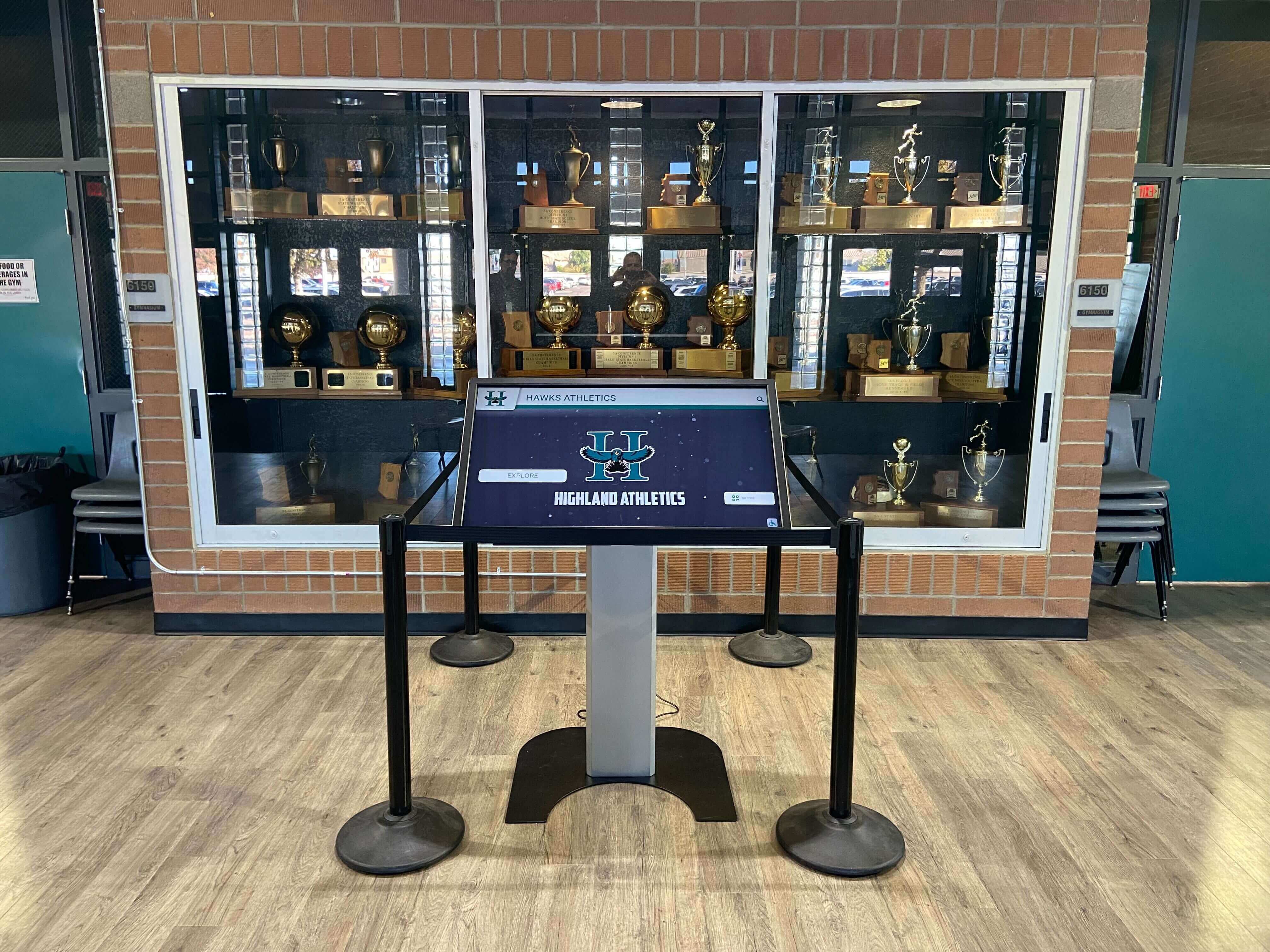




High school gym lobbies face a recognition dilemma that every athletic director understands: decades of championship trophies, tournament victories, and individual honors accumulating faster than traditional trophy cases can accommodate. Physical display space fills within years, forcing impossible decisions about which achievements deserve visibility and which must be relegated to storage where they’re forgotten rather than celebrated.
A touchscreen display for your high school gym lobby solves this capacity crisis while transforming how your athletic program recognizes excellence. Single interactive displays accommodate unlimited trophies spanning your entire program history—from founding championships through last weekend’s victories. Cloud-based content management enables instant updates without engraving delays or installation coordination. Rich multimedia profiles tell complete achievement stories through photos, videos, statistics, and narratives that traditional plaques cannot match. And web-based access extends recognition beyond your facility walls, enabling alumni worldwide to explore their championships while prospective athletes research your program tradition.
This comprehensive guide explores how to design, implement, and maximize touchscreen displays specifically for high school gym lobby trophy recognition. From understanding display technology and content strategy through installation planning and measuring engagement impact, you’ll discover proven frameworks for creating recognition experiences that honor every achievement appropriately while building program culture and inspiring continued athletic excellence.
Gym lobby touchscreen displays represent strategic recognition investments rather than technology novelties. Schools report 60-80% cost reduction maintaining digital trophy recognition compared to traditional physical case expansion over 10-year periods, while engagement analytics show visitors spend 5-8 minutes actively exploring digital content versus 30-60 seconds glancing at static trophy cases—representing 10x improvement through interactive experiences that connect current athletes with institutional heritage.

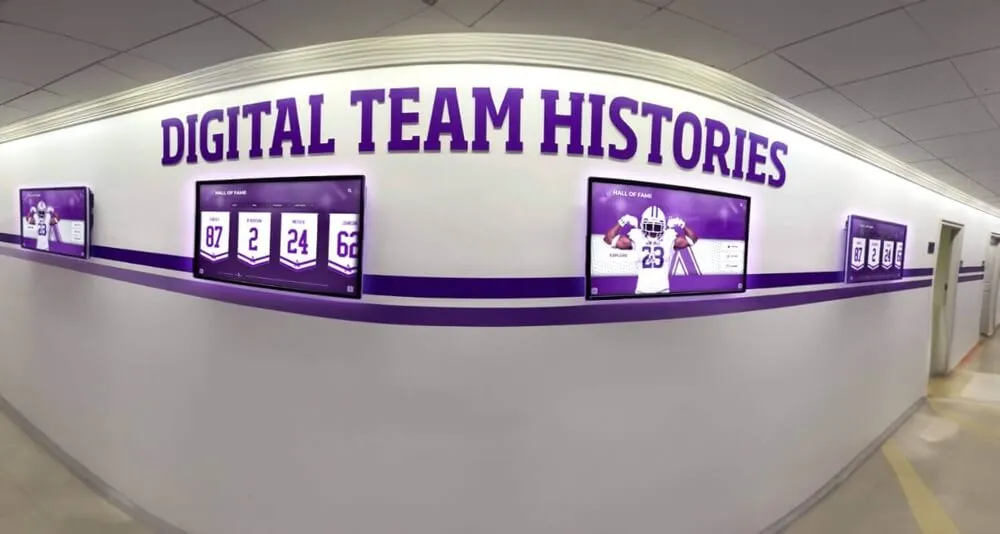
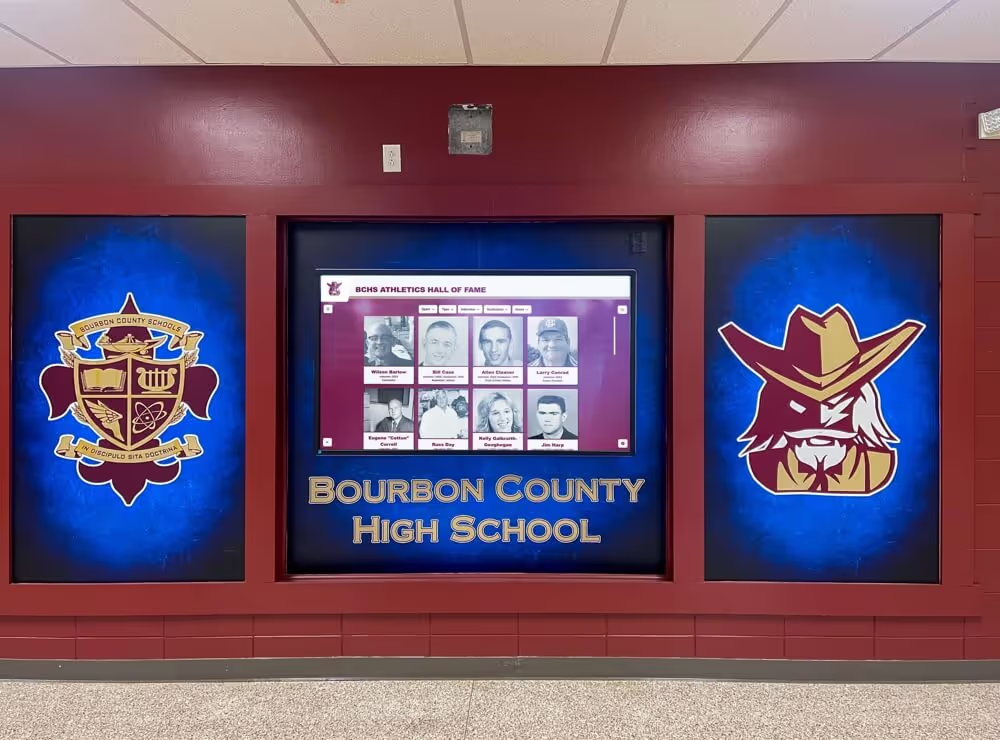
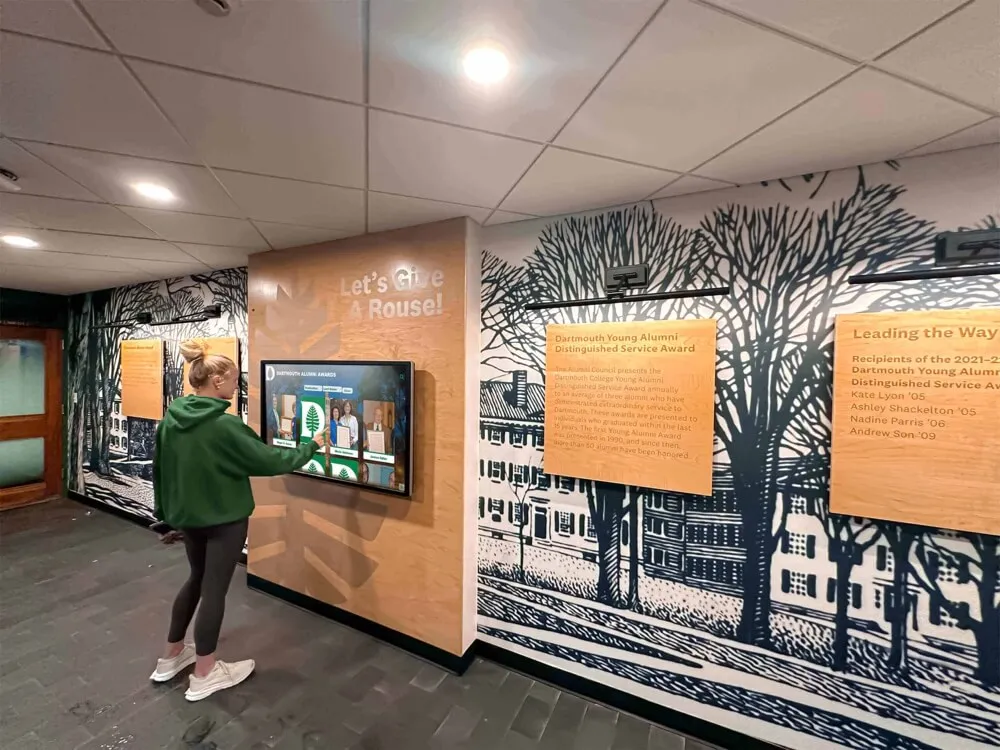
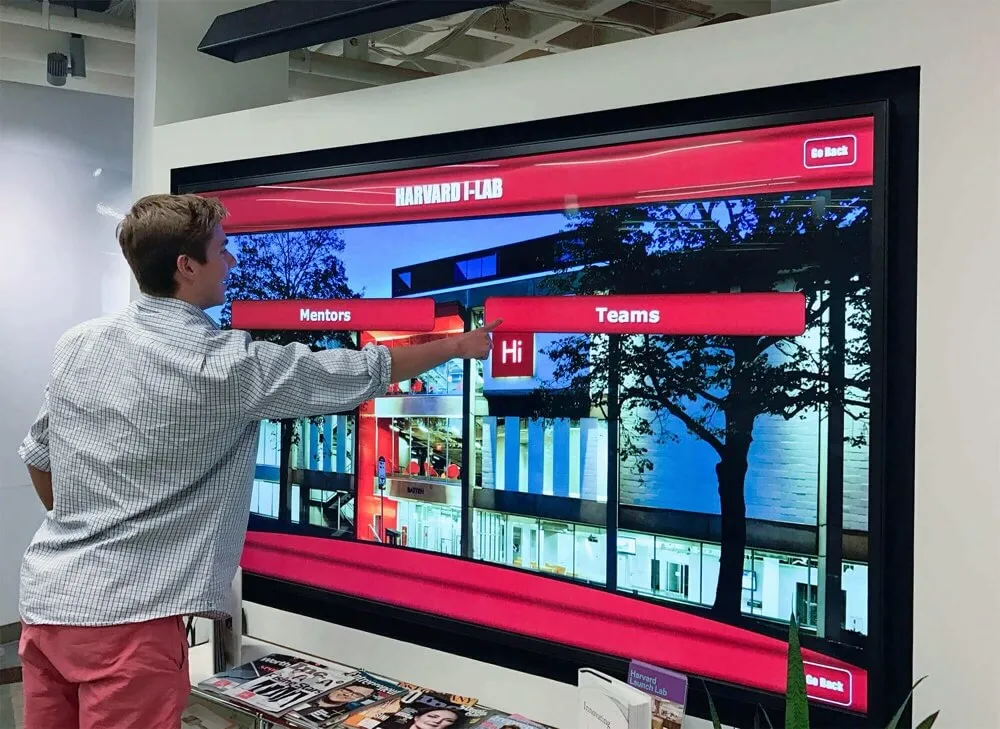
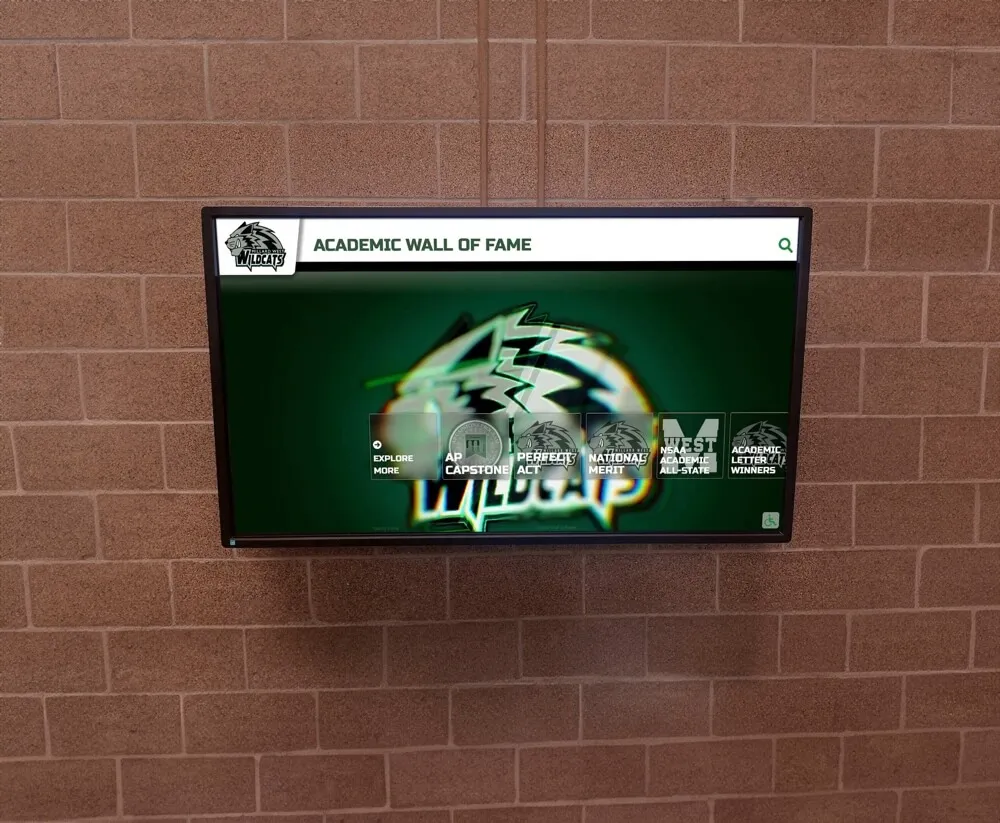
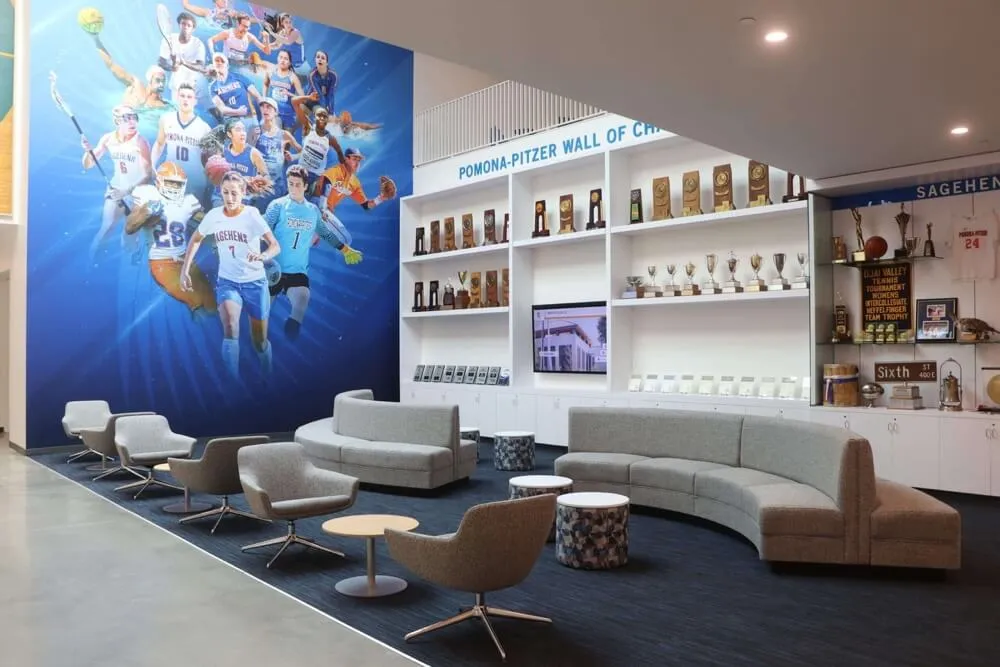
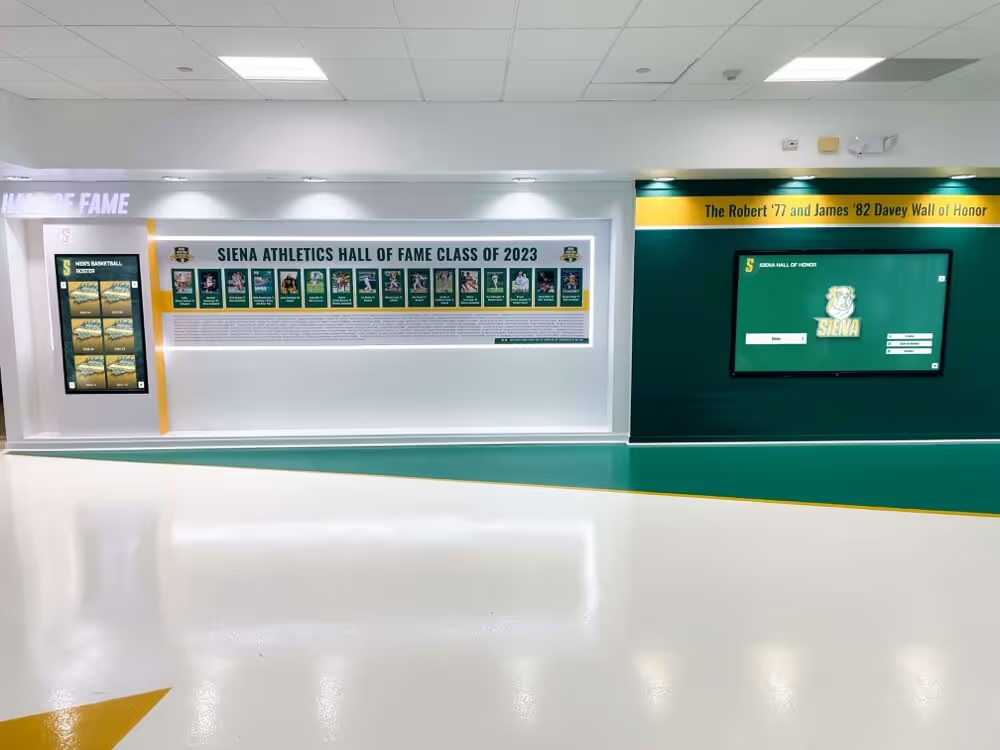
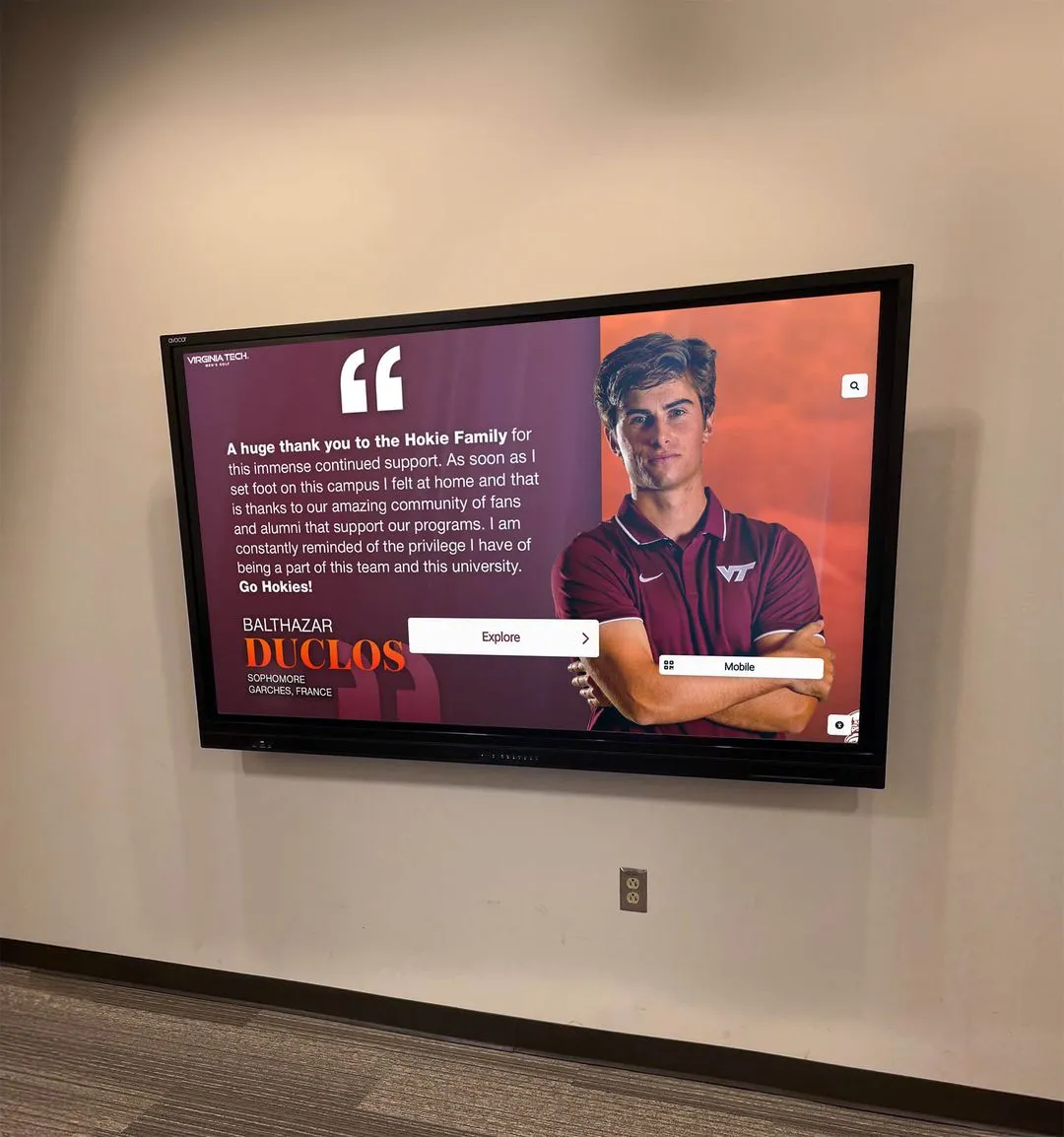
Touchscreen displays integrate seamlessly with traditional gym lobby design while providing unlimited recognition capacity addressing space limitations
Why Gym Lobbies Demand Digital Trophy Recognition Solutions
Athletic facility entrance spaces serve multiple constituencies requiring thoughtful recognition infrastructure addressing diverse stakeholder needs.
The Gym Lobby as Recognition Centerpiece
Your gym lobby represents prime recognition real estate within athletic facilities:
Natural Traffic Concentration
Every student-athlete, coach, family member, visitor, and community supporter passes through gym lobby entrances multiple times weekly during practices, games, and events. This consistent traffic creates natural recognition visibility impossible in isolated hallway locations receiving limited exposure beyond scheduled class transitions.
Athletic directors can count on gym lobby displays reaching entire athletic populations systematically rather than relying on occasional voluntary engagement with recognition positioned in peripheral facility locations.
First Impression Impact on Visitors
Prospective student-athletes and their families form critical program impressions during recruiting visits and campus tours. Gym lobby environments establish immediate competitive culture perceptions—demonstrating whether programs systematically celebrate achievement or treat recognition as administrative afterthought receiving minimal institutional investment.
Touchscreen displays positioned prominently in gym lobby spaces signal that athletic achievement matters to your school community. This visible commitment to honoring excellence differentiates programs from competitors lacking similar recognition infrastructure while demonstrating sustained competitive tradition across generations rather than recent isolated success.
Community Connection and School Pride
Local community members attending games and events naturally gather in gym lobbies before competitions, during halftimes, and after final buzzer celebrations. These moments create optimal recognition engagement opportunities when energy runs high and athletic achievement feels personally relevant to assembled crowds celebrating shared institutional pride.
Digital displays enable community exploration of program tradition connecting current competitions with historical context that builds appreciation for sustained excellence spanning decades of competitive tradition. When visitors discover championship teams featuring their relatives, former coaches, or community legends, recognition creates emotional connections strengthening ongoing program support across generations.
Traditional Trophy Case Limitations in High-Traffic Lobbies
Physical trophy cases in gym lobby locations present operational challenges beyond simple space constraints:
Visibility and Accessibility Issues
Traditional trophy cases require close proximity for reading engraved plaques detailing championship information. During crowded game-day environments with hundreds of attendees congregating in gym lobbies simultaneously, physical access to trophy cases becomes practically impossible—creating bottlenecks where interested viewers block others attempting to pass through entrance corridors.
Touchscreen displays accommodate multiple viewers simultaneously through generous screen sizes visible from distance while supporting detailed exploration for individuals choosing close examination. This dual-mode visibility serves both passing traffic and engaged community members without creating physical access conflicts during high-traffic periods.
Maintenance and Update Complexity
Every new trophy added to traditional cases requires coordination with engraving vendors (3-6 week turnaround), professional installation labor, physical rearrangement of existing displays, and sometimes structural modification when cases reach capacity limits. This update friction means championship recognition often lags months behind actual victories—undermining recognition impact when acknowledgment arrives long after season excitement has dissipated.
Digital displays eliminate these bottlenecks through immediate cloud-based content updates. Athletic directors can publish new championship recognition within minutes of final buzzer victories—ensuring your community sees achievement acknowledged while excitement remains high rather than waiting months for traditional physical recognition processes to complete.
Limited Storytelling Capacity
Trophy case plaques accommodate approximately 50-100 words describing championships—barely enough space for basic facts about dates, opponents, and final scores. This brevity prevents meaningful storytelling about championship journeys, memorable moments defining seasons, or individual athletes whose exceptional performances created victories now documented only through minimal engraved text.
Interactive touchscreen platforms support comprehensive achievement narratives including high-resolution trophy photographs, complete team rosters linking to individual athlete profiles, video highlight compilations preserving signature performances, statistical leaders and performance data demonstrating excellence, coach reflections sharing season memories, and historical context explaining championships’ significance within program tradition. This multimedia depth creates emotional engagement that engraved plaques cannot match regardless of physical trophy collection size or quality.

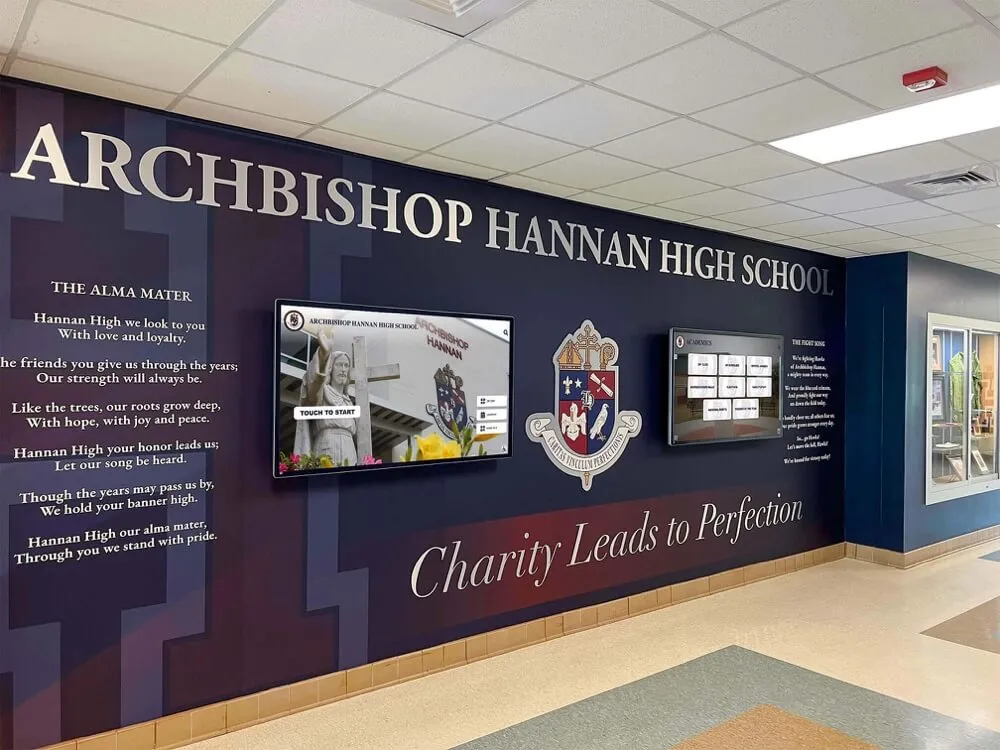
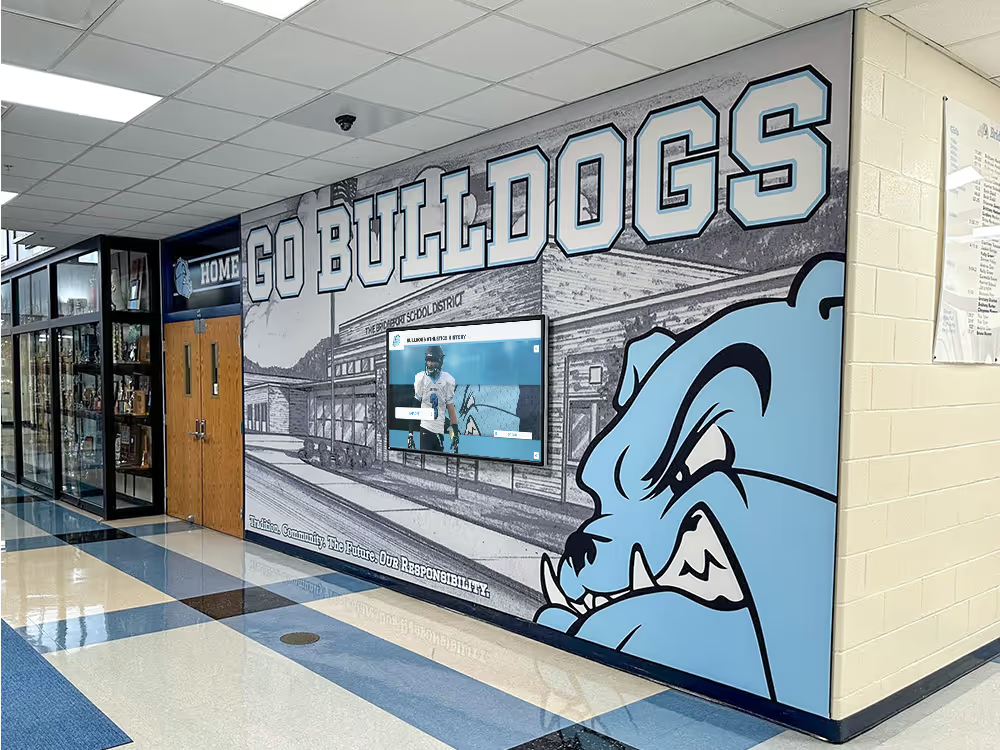
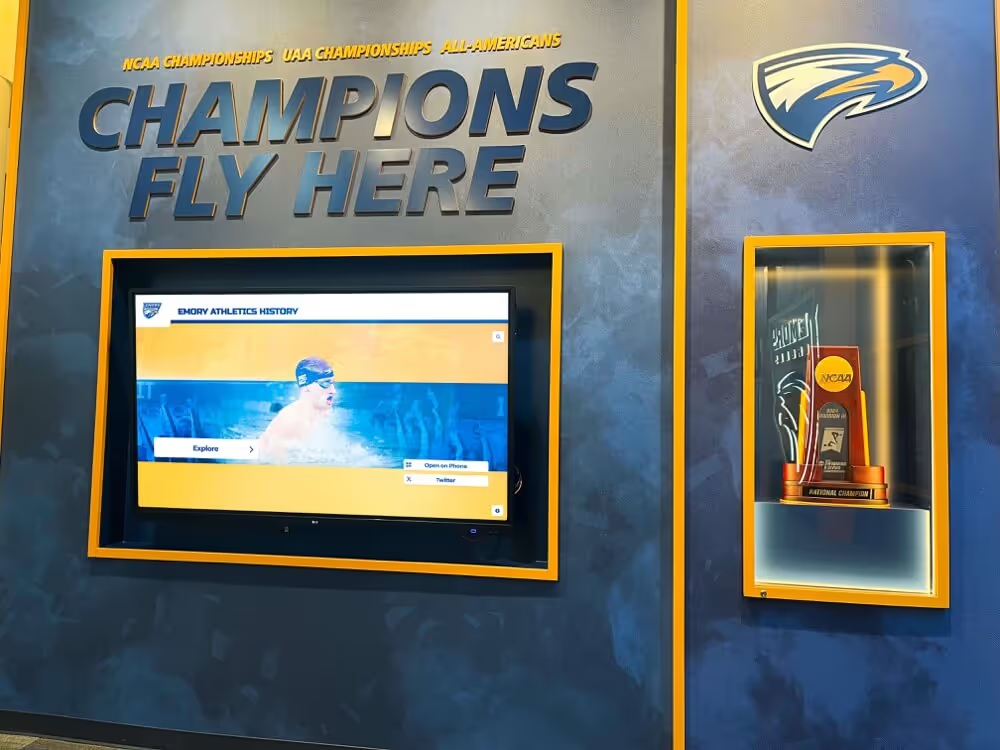
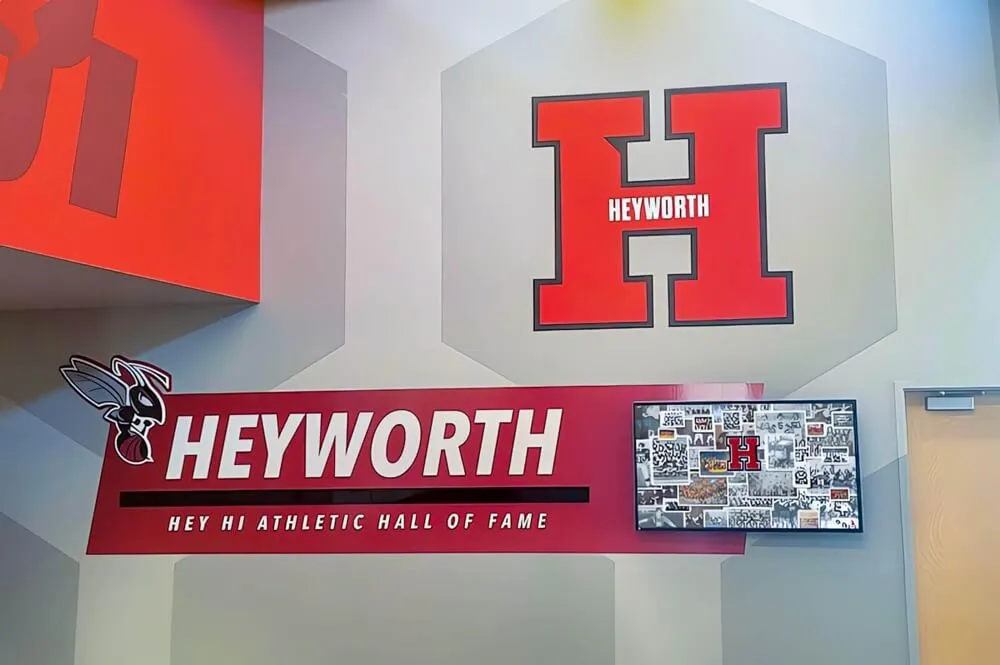
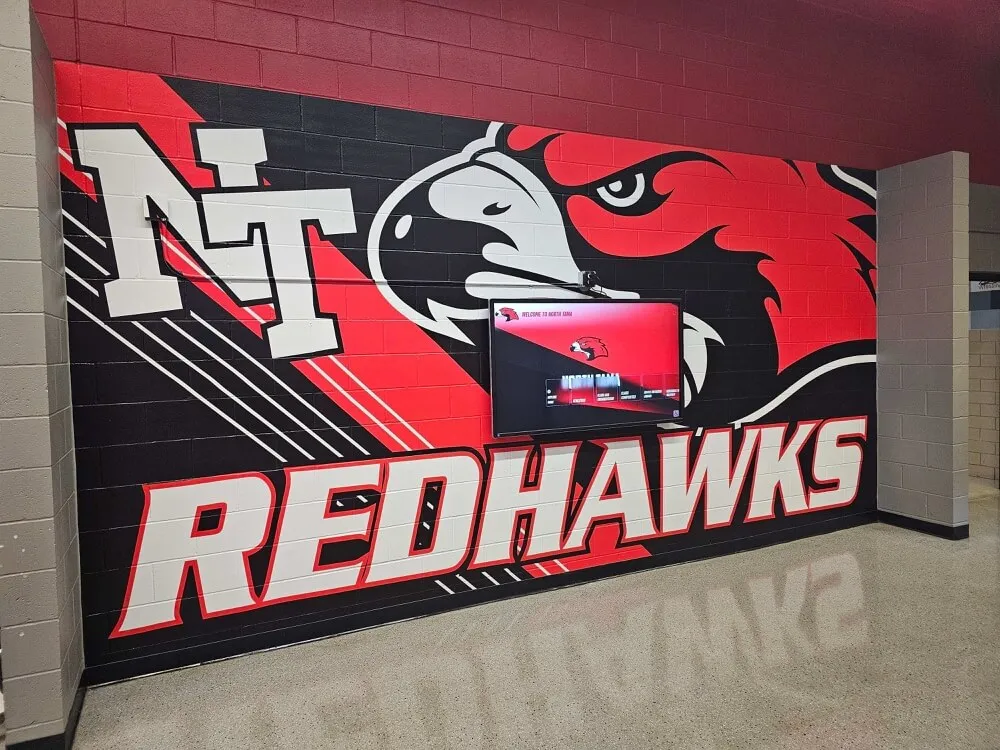
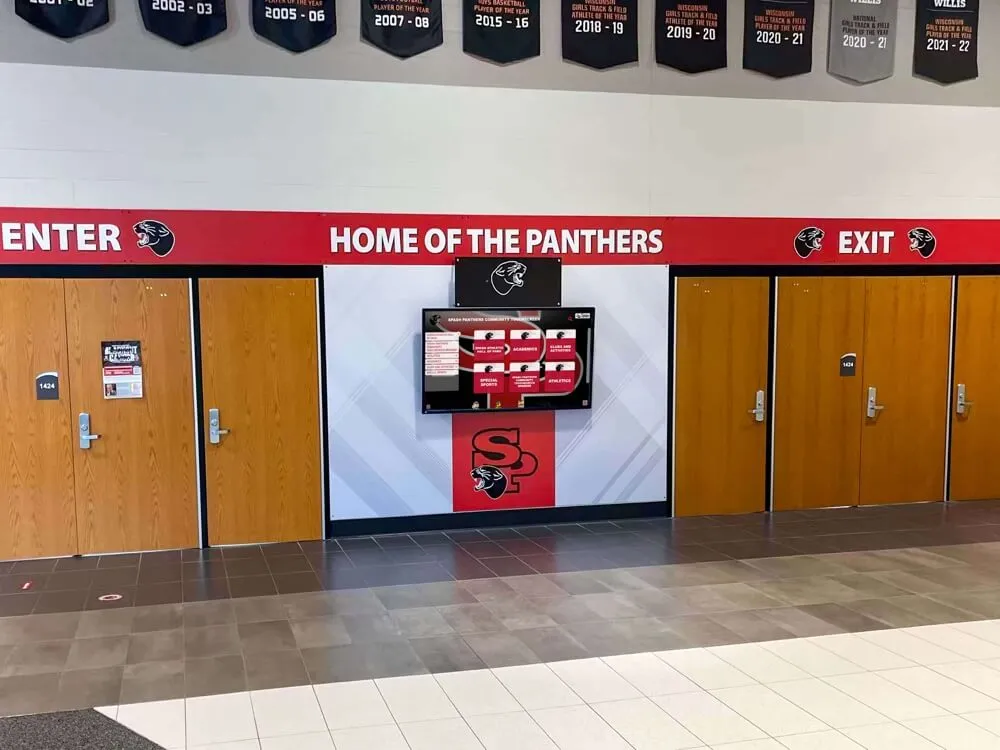
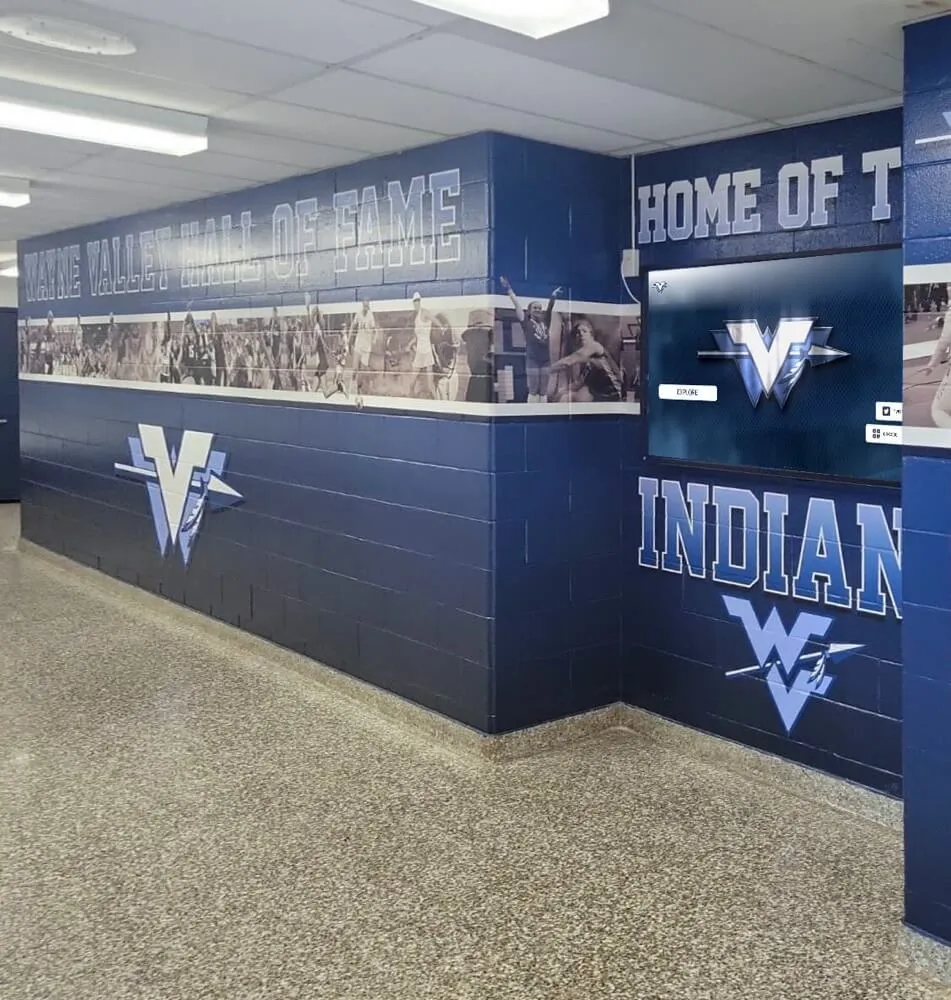
Strategic lobby installations integrate digital recognition with existing school design elements and traditional program branding
Display Technology Specifications for Gym Lobby Environments
Understanding technical requirements ensures successful implementations withstanding demanding high-school athletic facility conditions.
Commercial-Grade Hardware Requirements
Gym lobby installations demand appropriate equipment specifications:
Screen Size and Viewing Distance Considerations
Display sizing must accommodate typical gym lobby viewing patterns. For close-quarters lobbies where viewers stand 3-6 feet from displays, 43-55 inch screens provide sufficient content density enabling comfortable reading and exploration. For larger lobby spaces with 8-15 foot viewing distances, 65-75 inch displays ensure visibility from distance while maintaining detailed content legibility during close examination.
Undersized displays frustrate viewers unable to read content comfortably, while oversized screens in compact lobbies feel overwhelming and create awkward viewing angles preventing comfortable engagement. Proper sizing balances immediate visibility with detailed content presentation matching your specific facility layout and traffic patterns.
Touch Technology Options and Durability
Capacitive touchscreens provide smartphone-like responsiveness familiar to students accustomed to mobile device interaction patterns. These screens support multi-touch gestures enabling intuitive navigation through pinch-to-zoom, swipe scrolling, and tap selections matching patterns your community uses daily. Capacitive technology works best for displays under 65 inches where manufacturing costs remain reasonable.
Infrared touch technology serves larger displays (65-86 inches) where capacitive manufacturing becomes prohibitively expensive. While slightly less responsive than capacitive alternatives, infrared screens provide adequate performance for recognition applications while supporting larger format installations necessary for spacious gym lobby environments with extended viewing distances.
Both technologies withstand high-traffic gym lobby conditions when protected by tempered glass overlays preventing screen damage from impacts or excessive pressure during enthusiastic game-day celebrations.
Brightness and Anti-Glare Protection
Gym lobbies typically feature large windows and overhead lighting creating challenging display visibility conditions. Screens must provide minimum 350-450 nit brightness maintaining content visibility in bright ambient lighting common in athletic facility entrance spaces designed for welcoming daylight exposure.
Anti-glare coatings reduce reflection interference from windows and overhead lighting that would otherwise make content difficult to read during sunny conditions or under bright artificial lighting. Without proper glare protection, displays become unusable during certain times of day when lighting conditions wash out screen content—severely limiting recognition value during peak traffic periods when visibility matters most.
Commercial vs. Consumer Display Durability
Consumer televisions adapted for recognition applications fail quickly under continuous operation demands. Commercial-grade displays include industrial components rated for 16-24 hour daily operation, robust power supplies designed for institutional environments, ventilation systems preventing overheating during extended use, and durable construction withstanding facility environmental conditions including temperature fluctuations and humidity variations common in athletic facilities.
While commercial displays cost 40-60% more than consumer equivalents initially, they deliver 3-5x longer operational lifespans—providing superior total cost of ownership across typical 7-10 year recognition system lifecycles.
Installation Mounting and Placement Strategies
Physical positioning significantly impacts engagement and operational success:
Wall-Mounted vs. Free-Standing Kiosk Options
Wall mounting creates clean installations in lobbies with appropriate wall structures supporting 75-150 pound display assemblies. Wall mounting advantages include space efficiency leaving floor areas clear for traffic flow, elevation preventing damage from equipment carts or facility maintenance operations, and architectural integration creating polished finished appearances matching facility design aesthetics.
Free-standing kiosks offer installation flexibility including no structural wall requirements eliminating concerns about load-bearing capacity, adjustable positioning enabling placement optimization based on traffic patterns, integrated component enclosures housing computers and electronics professionally, and optional school branding through custom colors, logos, and design elements reinforcing institutional identity.
Kiosk costs range from $1,500-5,000 depending on size, materials, and customization levels, while wall mounting typically runs $500-1,500 including professional installation and electrical work.
Height and Accessibility Standards
ADA compliance requires mounting heights placing primary controls 15-48 inches above floor enabling wheelchair accessibility. For wall-mounted displays, position screen centers 48-60 inches from floor balancing accessibility requirements with comfortable standing adult viewing ergonomics. Free-standing kiosks should provide adequate knee and toe clearance (minimum 27 inches high, 30 inches wide, 19 inches deep) for wheelchair approach to touch controls.
Touch target sizing must meet minimum 44x44 pixel dimensions with adequate spacing between interactive elements preventing accidental mis-selections. Text contrast ratios require 4.5:1 minimum for body text and 3:1 for large headings ensuring readability for vision-impaired community members. These accessibility standards ensure recognition systems genuinely serve all constituencies equitably rather than creating barriers excluding community members with physical limitations.
Environmental Protection and Security
Gym lobby installations must address facility-specific challenges including physical impact protection through tempered glass overlays or security enclosures preventing screen damage from errant basketballs or equipment collisions, cable management maintaining clean aesthetics without exposed wiring creating trip hazards or vandalism temptations, and theft deterrence through secure mounting systems preventing display removal by unauthorized individuals.
Climate control considerations include adequate ventilation preventing screen overheating, temperature regulation protecting electronic components from extreme conditions, and humidity management preventing moisture damage in facilities with pool adjacency or high humidity from showering athletes and damp gymnasium conditions.
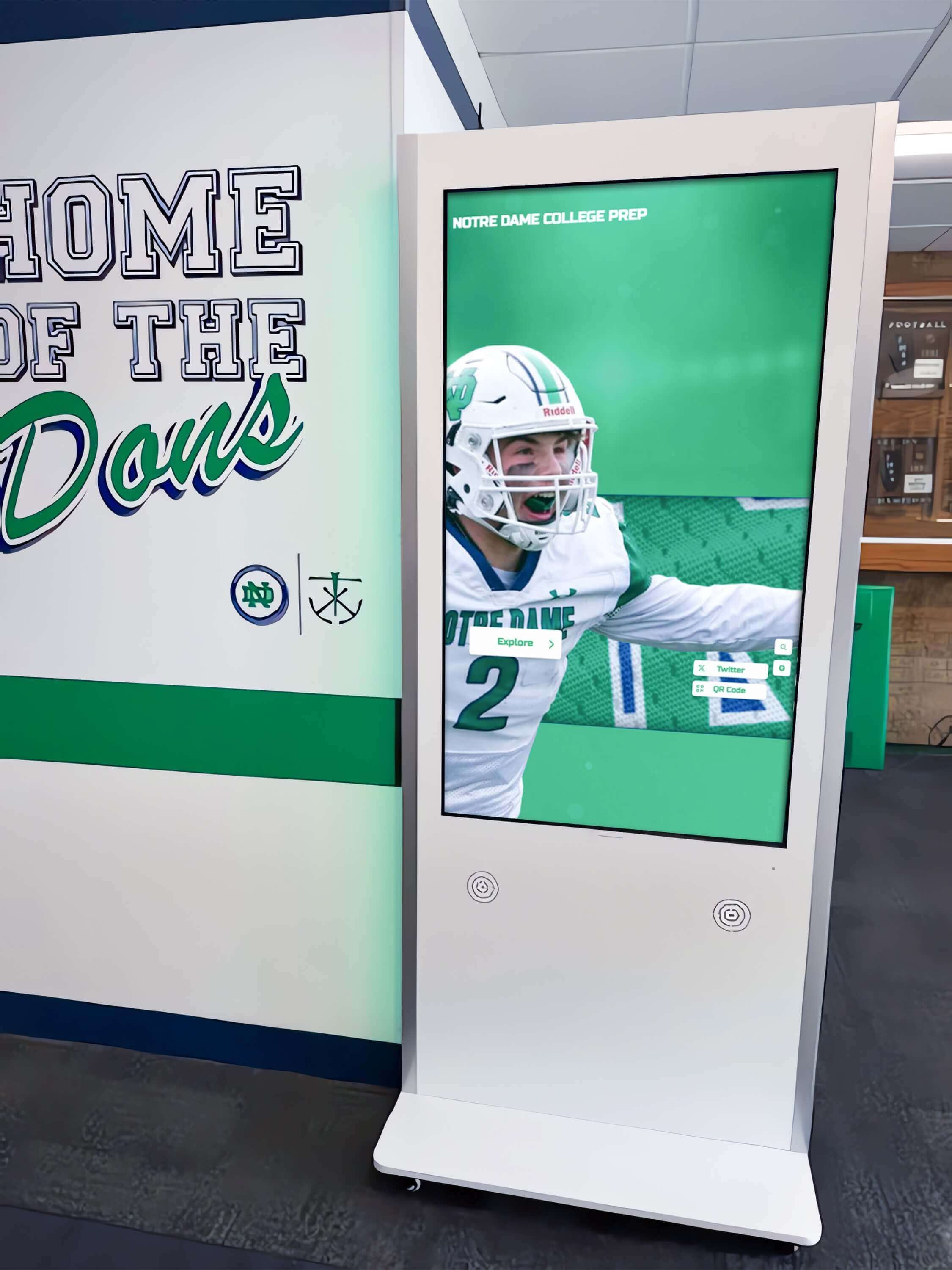
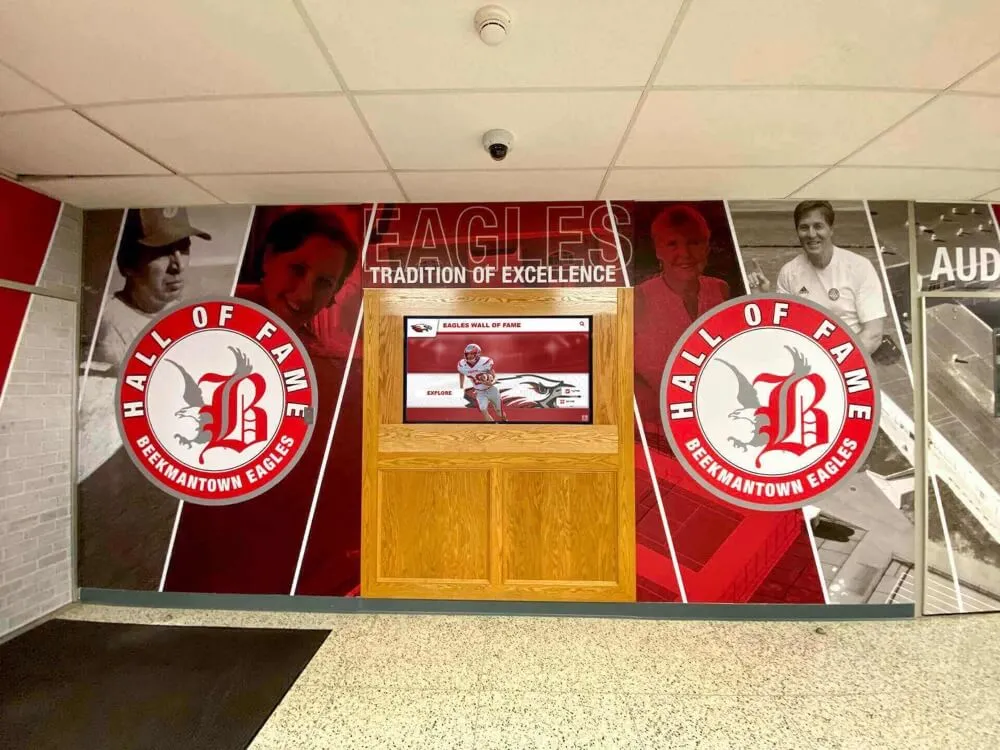
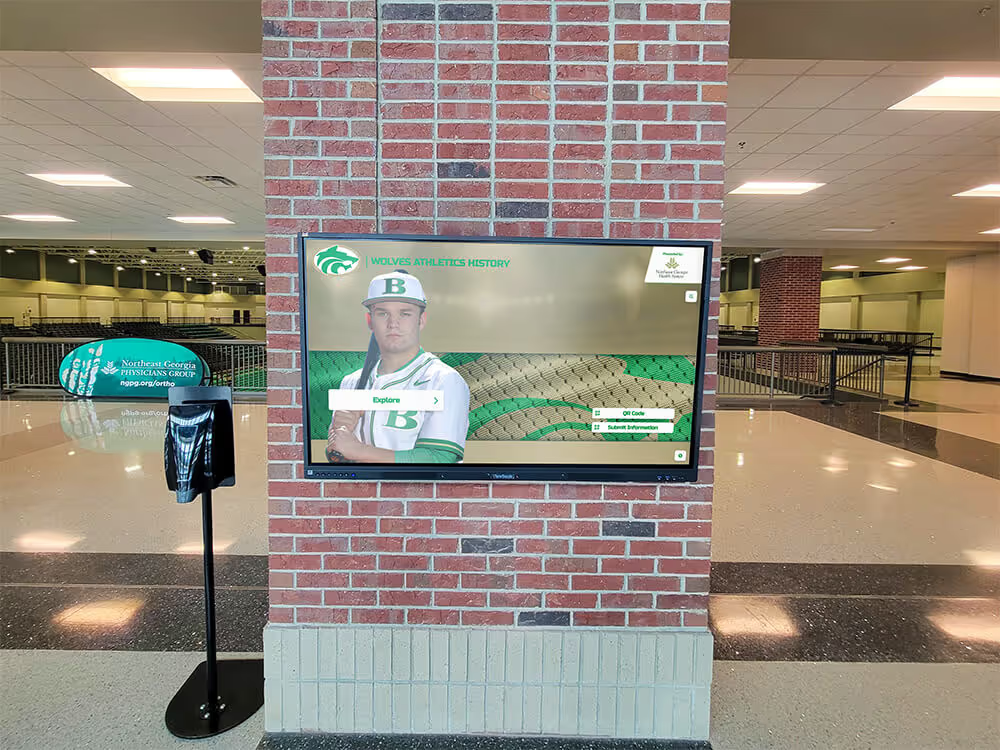
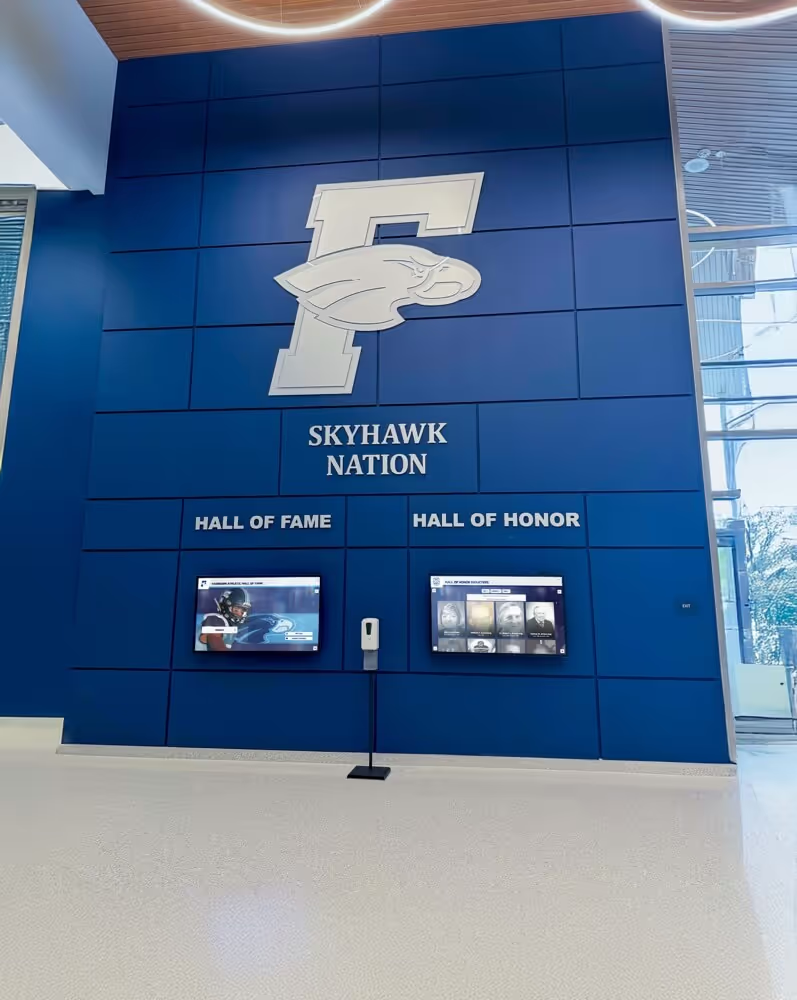
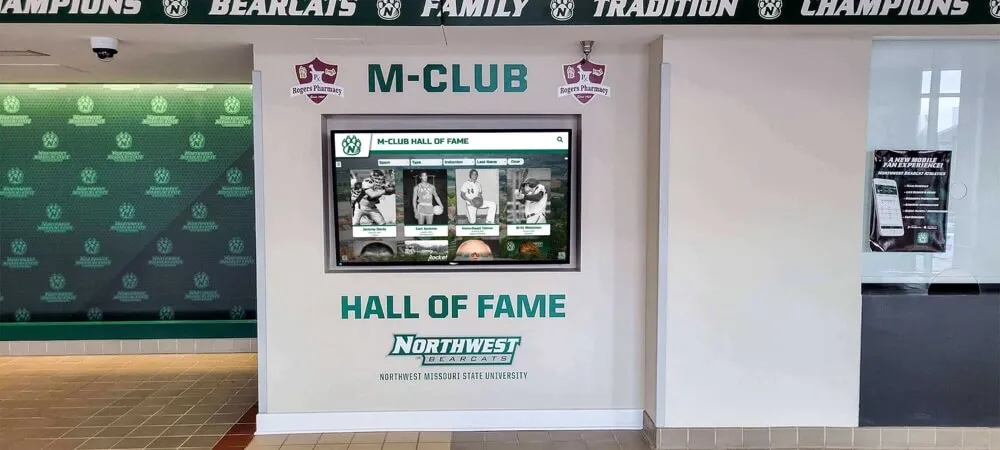
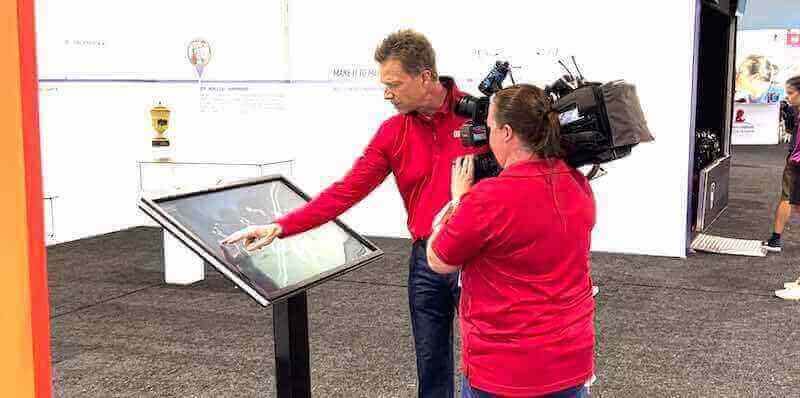
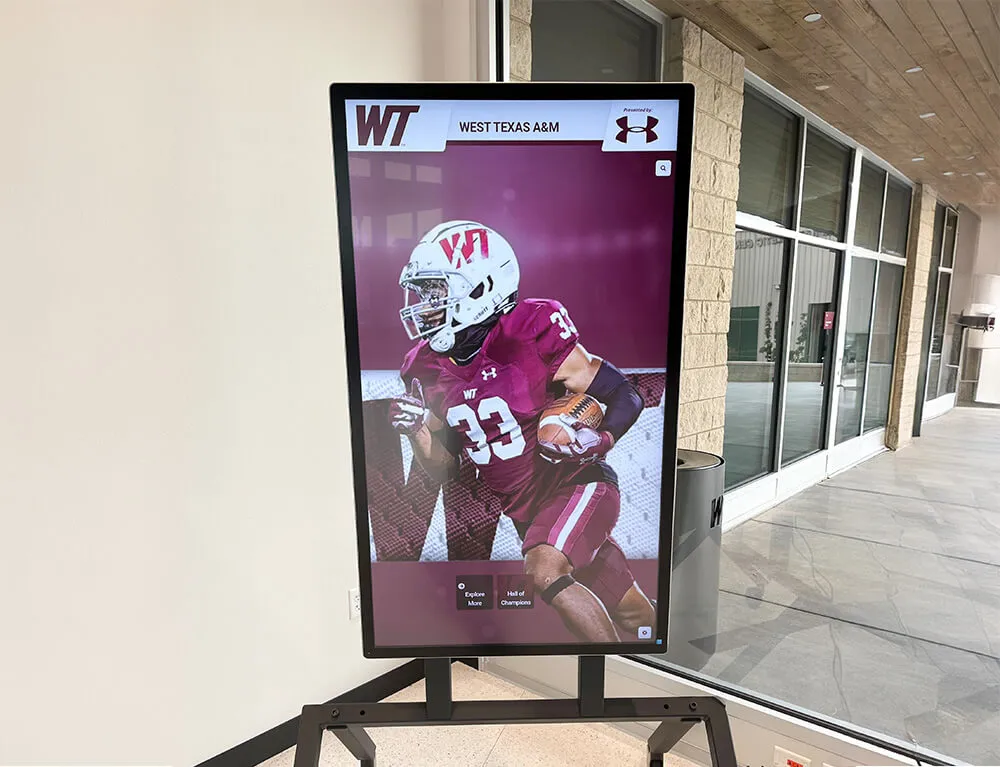
Free-standing kiosks provide flexible gym lobby placement without wall mounting structural requirements
Experience Layout Blueprint for Trophy Recognition Displays
Effective gym lobby touchscreen interfaces require systematic design creating intuitive navigation and engaging visual experiences worthy of championship celebration.
Hero Zone and Institutional Brand Presence
The top 15-20% of screen real estate establishes context and immediate recognition:
Essential Header Elements
Display titles should clearly identify recognition purpose—“Athletic Hall of Fame,” “Championship Trophy Collection,” or “Wall of Champions.” School logos and colors must appear prominently creating instant institutional connection and brand reinforcement that visitors associate immediately with your athletic program identity.
Optional rotating hero content can spotlight recent championships or historic achievements drawing attention to compelling stories while demonstrating system currency through visible regular updates. Clean, uncluttered design communicates professionalism and institutional pride matching championship achievement significance rather than appearing as hasty afterthought receiving minimal design consideration.
Background Imagery and Visual Identity
Custom backgrounds incorporating facility photography showing your gym, fields, and athletic venues reinforce environmental connection while demonstrating institutional pride. Team action imagery celebrating athletic excellence and competitive intensity adds energy and engagement. Abstract motion graphics using school colors create visual interest without distracting from primary recognition content visitors seek.
Historical photography blends heritage with modern presentation—showing vintage team photos alongside contemporary championship imagery that demonstrates program evolution across generations of competitive tradition. Background imagery should enhance rather than distract from trophy recognition content—providing aesthetic context without competing for attention with achievement information visitors specifically approach displays to explore.
Primary Navigation Architecture
Navigation zones occupying 10-15% of screen height enable content discovery:
Sport-Based Organization
Browse-by-sport navigation organizes trophies according to athletic program structure—football championships separate from basketball, soccer, volleyball, and other sport recognition. This logical organization matches how community members naturally think about athletic achievement while enabling quick navigation to specific program histories visitors want to explore.
Sport categories should display team logo icons or mascot imagery alongside text labels creating immediate visual recognition preventing visitors from needing to read every option before identifying desired content categories.
Chronological Timeline Access
Browse-by-year enables chronological exploration helping alumni find specific eras they participated in or trace program evolution over decades of competitive development. Timeline interfaces can display decades on initial screens (1970s, 1980s, 1990s, etc.) with year-by-year drilling enabling efficient navigation to specific championship seasons visitors remember personally or want to research.
Championship Level Filtering
Separate state championships from conference titles, tournament recognition, and individual athlete awards through filtering options organizing achievements by competitive significance. This filtering respects that different achievement levels carry different meanings—enabling visitors seeking program pinnacle accomplishments to focus on state titles while community members interested in comprehensive program tradition can explore all recognition categories across achievement spectrum.
Powerful Search Functionality
Direct search enables name-based discovery when visitors seek specific teams, coaches, or athletes they remember personally or want to learn about through family connections. Search should support partial name matching, phonetic variations, and common nickname patterns preventing unsuccessful searches when visitors remember names imperfectly or use informal variations rather than formal roster documentation.
Touch targets must use large sizing (minimum 44x44 pixels) with adequate spacing preventing accidental selections during enthusiastic game-day interactions when multiple viewers explore content simultaneously in crowded lobby environments.
Content Display Zones and Information Architecture
The central 50-60% of screen space presents trophy profiles and galleries:
Grid-Based Card Layouts for Overview Browsing
Card interfaces display multiple trophies simultaneously showing trophy photographs with championship year, brief achievement descriptions, sport and level identifiers, and visual indicators like championship badges or status icons. Grid layouts enable efficient scanning while maintaining visual appeal and clear information hierarchy that prevents overwhelming cognitive density.
Cards should incorporate consistent design patterns—same size, shape, and information arrangement—preventing visual chaos while enabling instant recognition of content type and organization that helps visitors predict what they’ll discover when selecting specific cards for detailed exploration.
Detailed Trophy Profile Views
When visitors select specific trophies, full-screen profiles should showcase large trophy photographs from multiple angles showing detail and craftsmanship, complete achievement information including championship details and competitive significance, team rosters with links to individual athlete profiles enabling connected exploration, embedded video highlights when available preserving memorable performances, statistical context and performance data, and related trophy suggestions connecting championships across years or within programs showing achievement progression.
Profile pages balance comprehensive information with accessible presentation—providing depth for interested visitors while maintaining visual clarity preventing overwhelming density that would discourage exploration through excessive information crowding limited screen space.
Multimedia Integration and Visual Storytelling
Video highlight reels show championship game footage preserving signature moments that written descriptions cannot convey adequately. Photo galleries display team celebrations, trophy presentations, and season progression imagery telling complete championship stories beyond isolated final score documentation. Coach interviews share reflections about seasons and teams providing authentic personal perspectives that create emotional engagement with achievement narratives.
This multimedia depth transforms trophy recognition from simple documentation into compelling storytelling that creates meaningful connections between current students and institutional heritage—building genuine pride in tradition and achievement culture that inspires continued excellence rather than treating history as distant irrelevant past disconnected from contemporary competitive experiences.
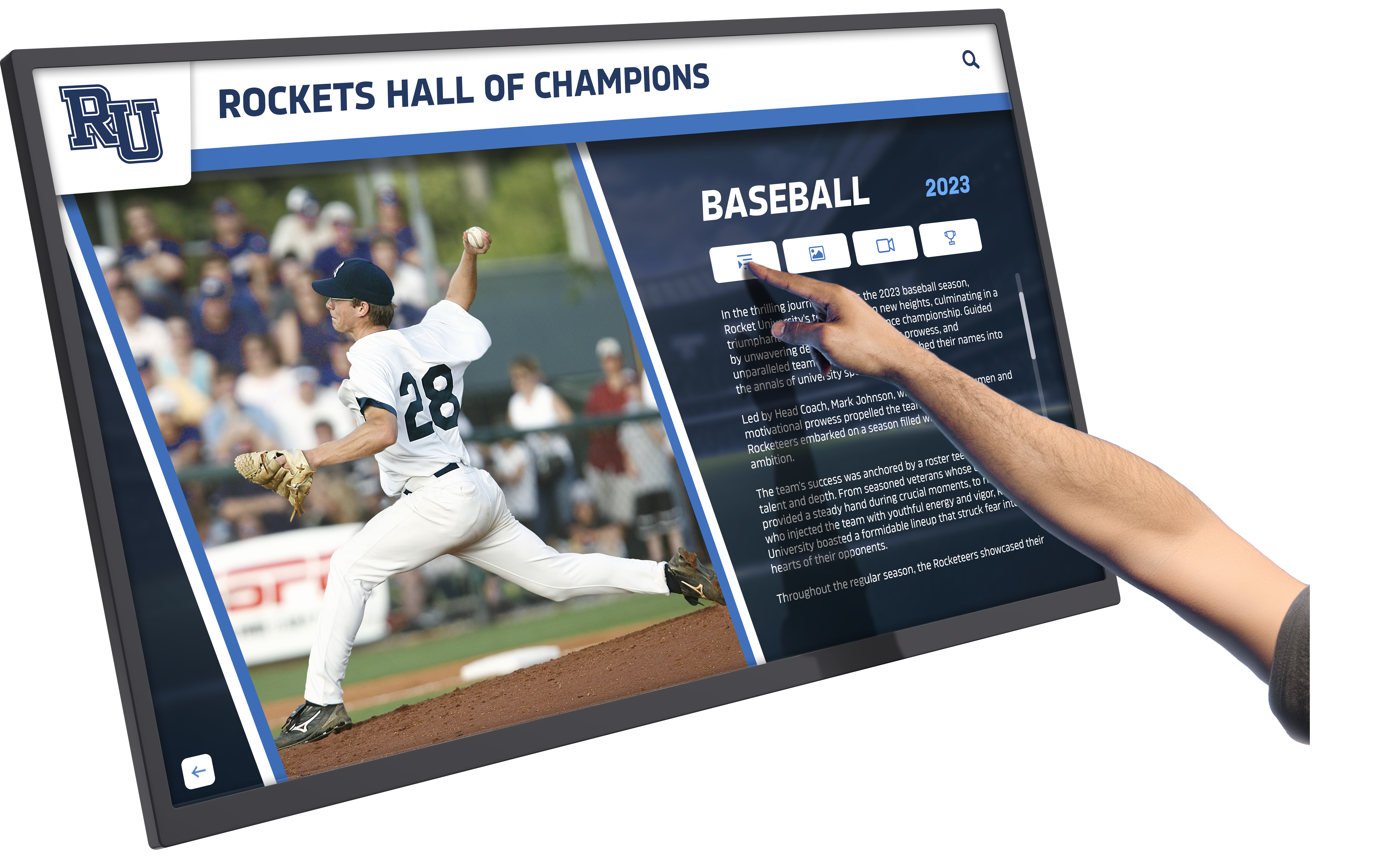
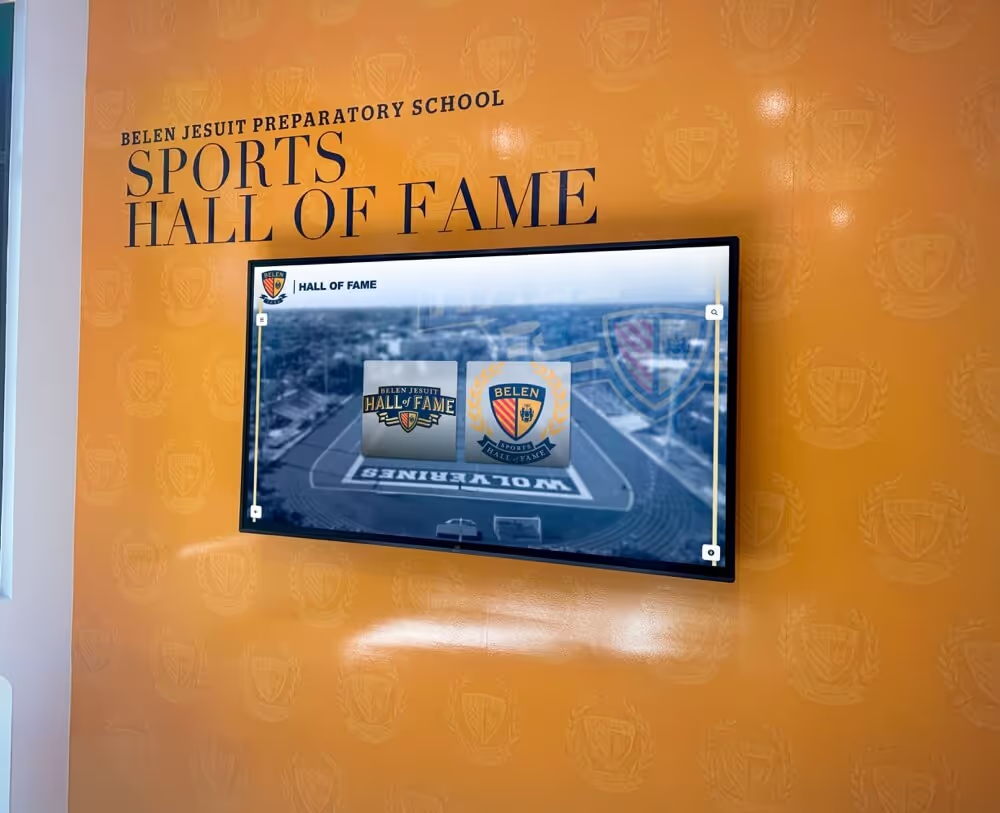
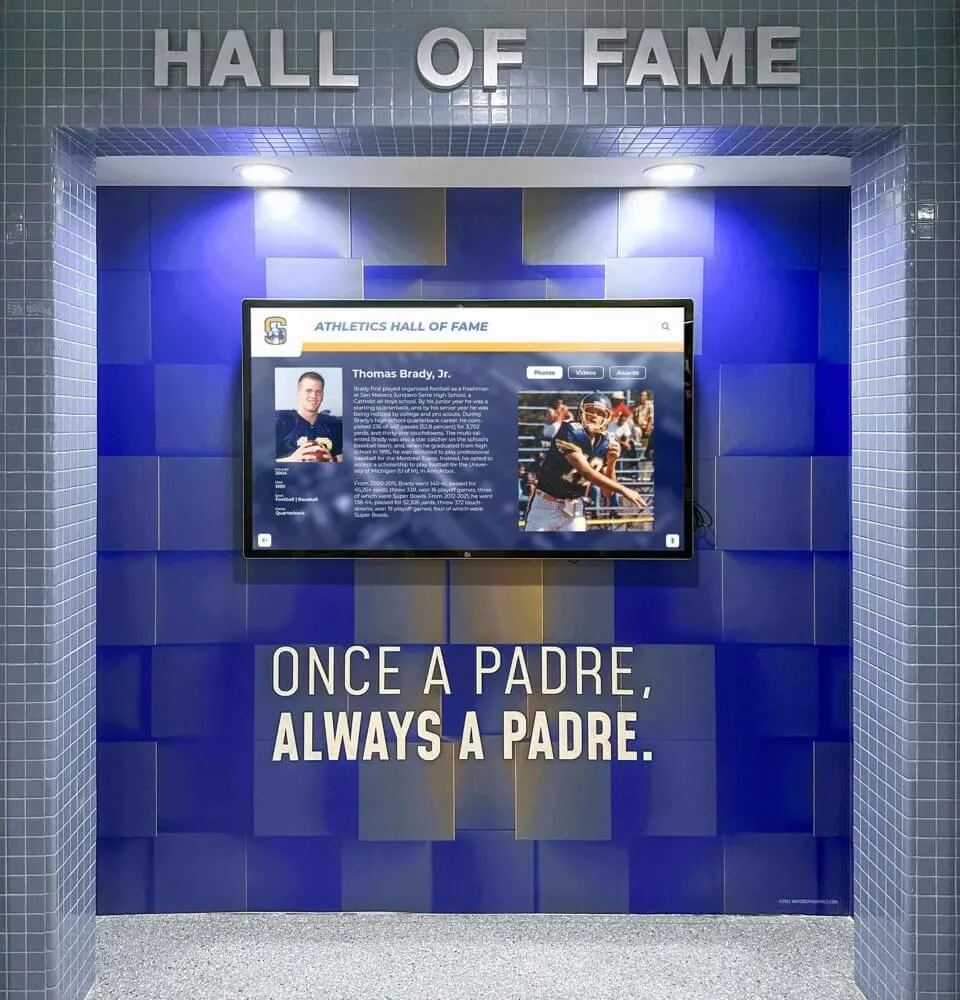
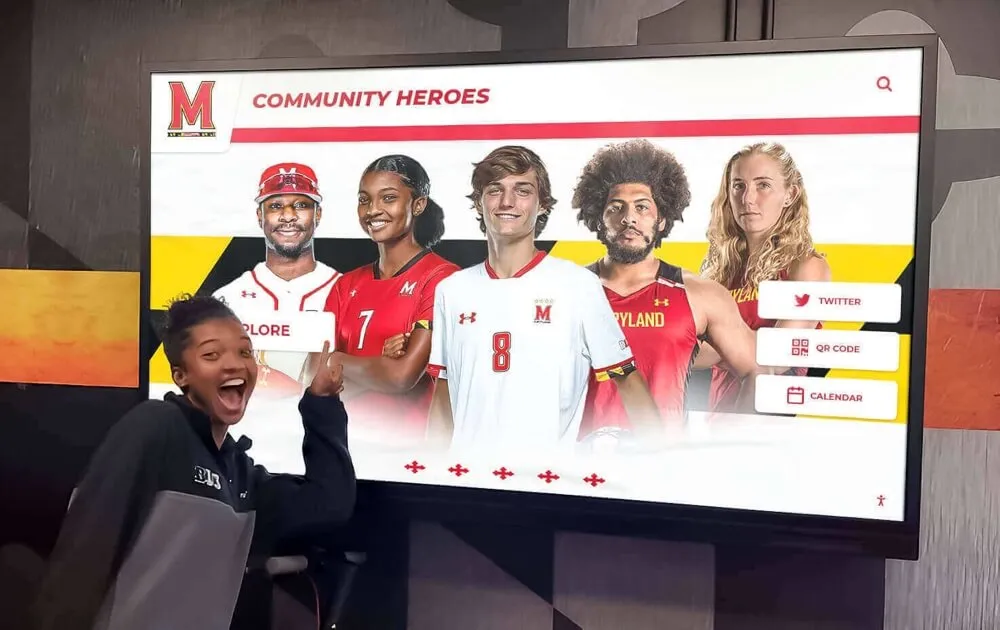
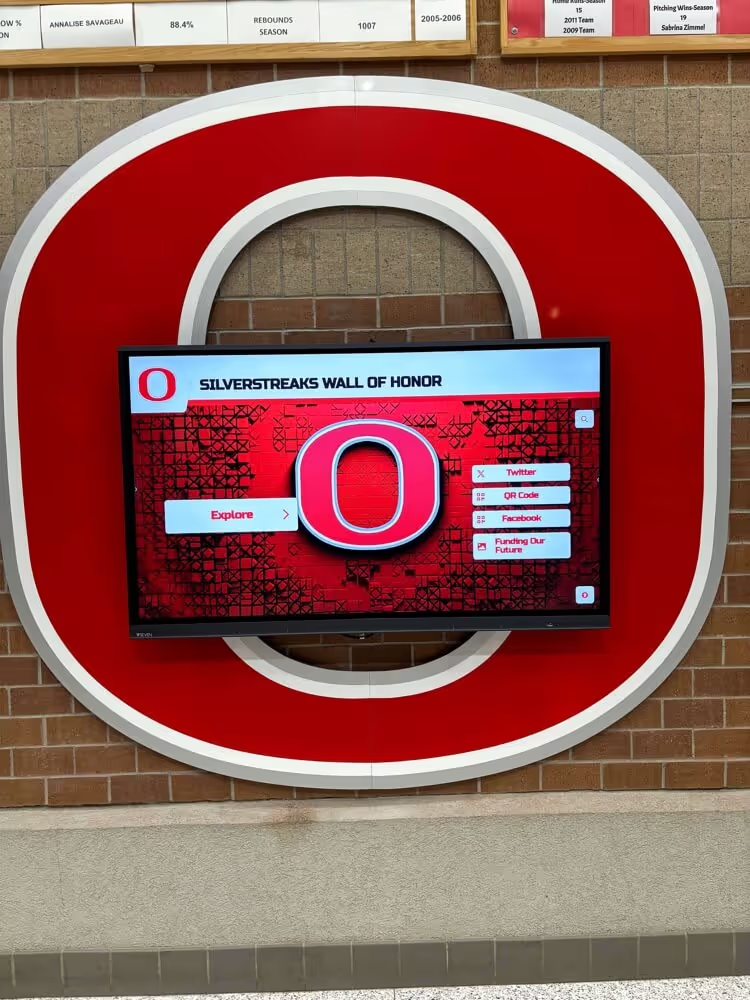
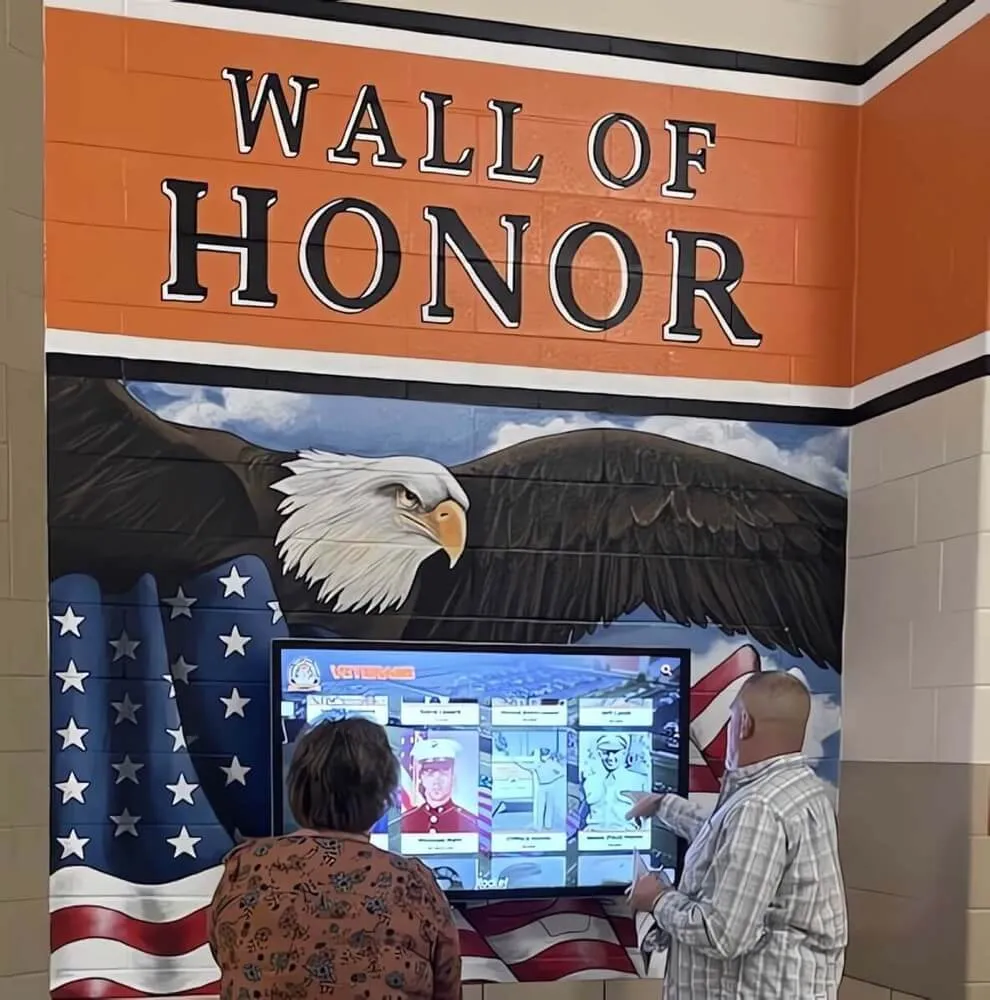
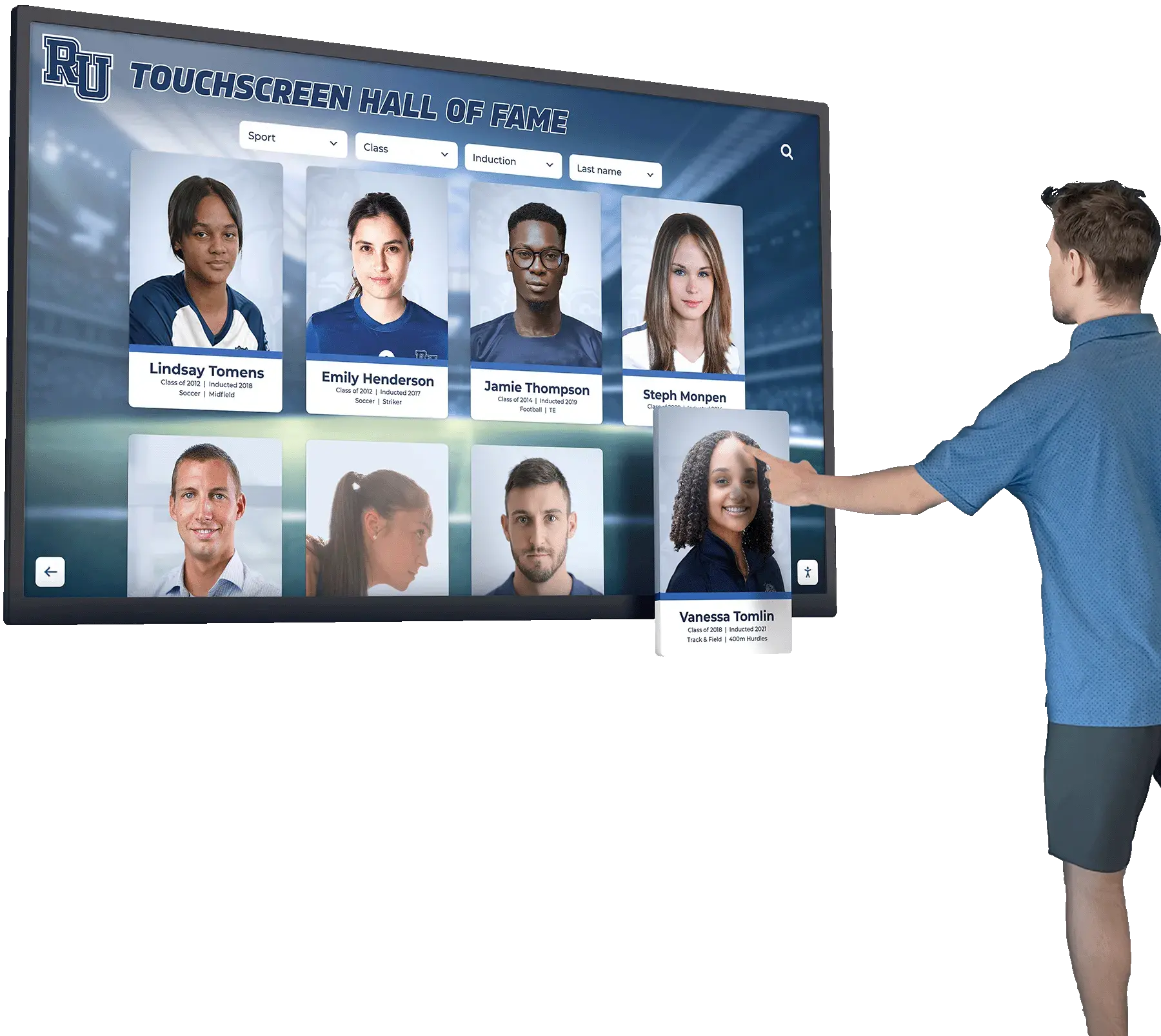
Intuitive touch interfaces enable natural exploration with instant access to detailed achievement profiles and multimedia content
Content Development Strategy for Comprehensive Trophy Recognition
Display technology provides unlimited capacity, but effective recognition requires systematic content development honoring achievements comprehensively through quality multimedia documentation.
Starting with Current Season Recognition
Rather than attempting complete historical documentation immediately, successful implementations launch with recent content then expand systematically:
Current Year Trophy Documentation
Begin with current academic year championships, tournament victories, and major awards providing immediate relevance to your community. Document fall, winter, and spring sport achievements as seasons conclude—ensuring your touchscreen display launches with contemporary content demonstrating system utility and recognition timeliness.
Current season focus enables athletic directors to establish content development workflows, identify information sources, and refine documentation standards while working with fresh achievements where information remains readily accessible through coaching staff memories, athletic department records, and recent media coverage.
3-5 Year Recent History Coverage
Expand backward documenting the past three to five years of trophy history building comprehensive recent coverage spanning current student enrollment periods. This timeframe ensures every current athlete can discover their achievements recognized digitally while recent graduates visiting campus find their championships documented appropriately.
Recent history documentation typically proves straightforward—coaching staff remember seasons clearly, digital photographs exist in athletic department files or social media archives, and statistical records remain accessible through recent media guides and athletic information systems.
Featured Historic Championships Highlighting Tradition
Supplement recent comprehensive coverage with featured historic achievements from any era highlighting program tradition and competitive heritage. Document state championships, undefeated seasons, and milestone victories that community members remember fondly or that established program competitive reputation and identity.
These featured historic pieces demonstrate program depth and tradition while acknowledging that complete chronological documentation requires longer development timelines than initial launch schedules can accommodate. As resources allow, systematic historical expansion adds decade-by-decade content filling gaps between featured highlights and recent comprehensive coverage.
Trophy Photography and Visual Documentation Standards
Quality visual documentation brings recognition to life:
Professional Trophy Photography Approach
Photograph trophies against neutral backgrounds eliminating distracting elements competing with recognition subjects. Use proper lighting showing trophy detail while avoiding glare on reflective metal surfaces that washes out engraved plaque text. Capture multiple angles showing trophy dimensions, design elements, and craftsmanship detail that single front-facing photographs cannot adequately convey.
Include close-up shots of engraved plaques and award details ensuring text remains legible even when viewing full trophy images at reduced sizes. Maintain consistent trophy sizing across collections creating visual cohesion that prevents some championships appearing more significant through photographic presentation choices rather than actual achievement levels.
Maintain high resolution photography—minimum 1920x1080 pixels—ensuring quality display on large touchscreens without pixelation or blurriness undermining professional presentation. Low-resolution photography appears unprofessional regardless of other content quality elements.
Supplementary Multimedia Content Gathering
Beyond trophy photographs, collect team photos showing championship squads and individual athletes creating personal connections, video highlights from championship games and memorable moments when available through local broadcast coverage or family recordings, newspaper clippings and media coverage from achievement eras providing contemporary documentation, statistical records and season documentation offering context about regular season performance leading to championship opportunities, and coach and athlete reflections captured through brief interviews or written statements sharing personal perspectives.
This supplementary content transforms basic trophy documentation into compelling storytelling creating emotional engagement with achievements that creates genuine pride and institutional connection rather than perfunctory acknowledgment through isolated trophy images lacking context or narrative depth.
Writing Achievement Narratives and Historical Context
Text content provides storytelling depth that images alone cannot convey:
Essential Information Elements
Complete trophy profiles should include achievement specifics—championship level, year, sport, and competitive division. Team or individual athlete identification with complete rosters where applicable. Scores and opponents for championship games and tournaments showing competitive context. Season records and statistical highlights demonstrating excellence across entire seasons rather than isolated championship game performances. Coaching staff recognition acknowledging leadership enabling achievement. And historical context explaining significance within program tradition and broader competitive landscape.
Storytelling Beyond Basic Facts
Compelling trophy recognition tells stories about championship journeys showing path from preseason through final victories, adversity overcome including injuries, losing streaks, or external challenges teams faced during seasons, key moments and turning points that defined championship seasons, lasting impact on program culture and competitive tradition, and connections to other achievements showing championship progression and program evolution over time.
This narrative depth helps current students connect emotionally with historical achievements while building appreciation for institutional heritage that dry facts alone cannot create. When visitors understand complete stories behind trophies—not just that teams won championships but how victories happened and what they meant to participants and communities—recognition becomes meaningful rather than perfunctory documentation requiring minimal engagement beyond brief acknowledgment.
Engaging Alumni for Historical Content Development
Community members provide unique information unavailable through institutional channels:
Alumni Outreach Campaigns
Alumni association newsletters and social media campaigns can solicit biographical information, personal photographs, and memory contributions from graduates who participated in championship seasons decades ago. Reunion event coordination provides natural gathering opportunities for collecting information when alumni return to campus for organized celebrations.
Direct contact with identified inductees and their families requests personal materials including photos, memorabilia, and written reflections sharing experiences and perspectives unavailable through official institutional documentation alone. Volunteer recruitment identifies alumni passionate about heritage preservation willing to contribute research time conducting interviews, scanning photographs, and documenting oral histories before institutional memory disappears with passing generations.
Social Media and Community Engagement
Facebook groups dedicated to specific graduation decade cohorts create community spaces for soliciting championship memories, photos, and information from dispersed alumni networks. Instagram and Twitter campaigns with school hashtags can surface user-generated content showing trophies, team celebrations, and game footage from family archives and personal collections.
Local newspaper digital archives often contain game coverage, championship articles, and team photographs unavailable through school records—providing rich documentation about competitive contexts, community reactions, and achievement significance within broader institutional and local history beyond athletic department perspective alone.
This community engagement approach dramatically accelerates historical content development while creating stakeholder investment in recognition program success through direct participation rather than viewing digital trophy cases as purely administrative projects disconnected from graduate experiences and memories.
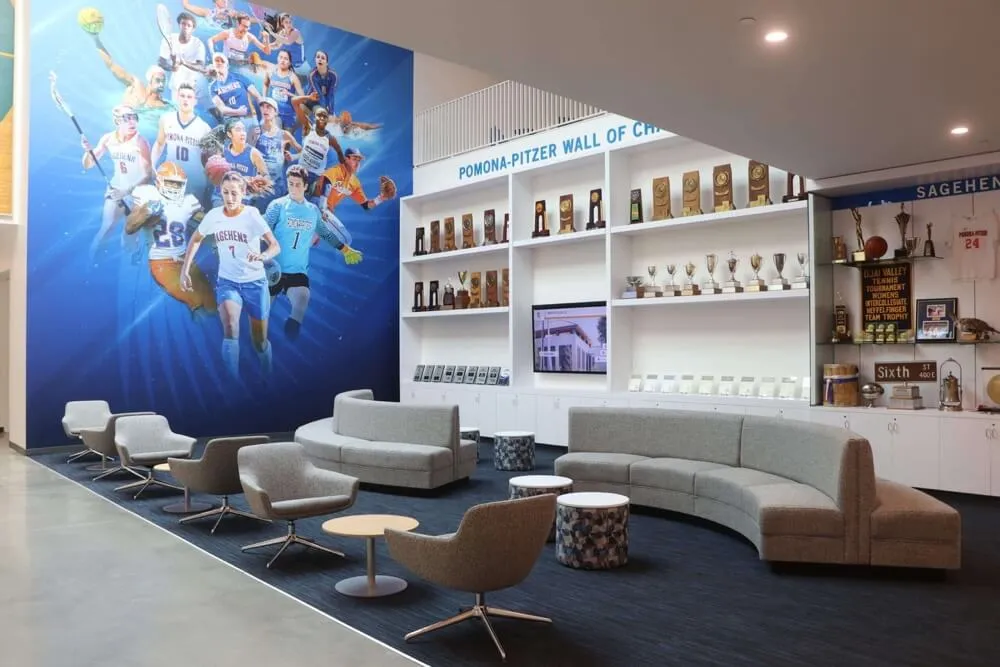
Many schools implement hybrid approaches maintaining selective physical trophy displays supplemented by comprehensive digital recognition systems
Platform Selection and Vendor Evaluation for Gym Lobby Displays
Digital trophy recognition success depends critically on selecting appropriate technology platforms and vendor partners committed to long-term educational excellence.
Purpose-Built Recognition Software vs. Generic Digital Signage
Not all touchscreen software delivers equal results for trophy recognition applications:
Specialized Recognition Platform Advantages
Purpose-built athletic recognition software provides intuitive interfaces requiring no instructions for visitor interaction matching familiar mobile device patterns community members use daily. Content management systems enable non-technical athletic administrators to maintain displays confidently without IT department dependency for routine updates.
Unlimited recognition capacity accommodates comprehensive achievement documentation spanning centuries of program history without artificial storage limits or performance degradation as content libraries grow. Powerful search and filtering helps visitors find specific content instantly rather than requiring tedious manual browsing through alphabetical lists or chronological sequences.
Responsive web extensions make recognition accessible beyond physical displays—enabling alumni worldwide to explore trophy collections while prospective athletes research program tradition during recruiting evaluation periods. And analytics track engagement demonstrating program value and informing continuous improvement based on actual visitor behavior rather than assumptions about community preferences.
Solutions like Rocket Alumni Solutions offer comprehensive platforms designed specifically for institutional trophy and achievement recognition, providing superior functionality compared to generic digital signage systems originally designed for advertising, announcements, and commercial messaging applications adapted for recognition purposes through custom development requiring ongoing technical support.
Generic Digital Signage Platform Limitations
Standard digital signage software designed for rotating announcements fundamentally differs from recognition systems requiring sophisticated content organization and user-directed exploration. Generic platforms typically lack individual profile architecture organizing content around teams, athletes, and achievements, sophisticated search functionality enabling quick content discovery, recognition-specific workflows matching athletic department processes and terminology, web-based extensions providing universal access beyond physical displays, and specialized support understanding institutional recognition needs and best practices accumulated through educational sector focus.
Schools attempting to adapt commercial signage software for trophy recognition often encounter disappointing results—systems that look impressive during vendor demonstrations but prove frustrating in daily operation and maintenance creating ongoing administrative burden rather than recognition asset generating community pride and engagement value justifying investment.
Essential Vendor Qualification Questions
Thorough vendor evaluation requires asking specific, probing questions revealing true capabilities:
About Trophy Recognition Experience
How many schools have you implemented digital trophy case systems for specifically? Can you provide references from athletic directors at schools similar to ours in size, sport offerings, and facility characteristics? What trophy-specific features distinguish your platform from generic digital signage adapted for recognition applications? Do you offer pre-built templates specifically for athletic championship recognition? And how do you help schools with trophy photography and historical content development during implementation?
Vendors lacking specific trophy case experience often underestimate implementation complexity, leading to delays, unexpected requirements, and disappointing results failing to meet recognition needs effectively because generic systems require extensive customization creating ongoing technical debt and support dependency.
About Platform Evolution and Longevity
How frequently do you release platform updates adding features and addressing user feedback? What new capabilities have you added in the past year demonstrating active development? How do you gather and incorporate customer feedback into product development roadmaps? What features are planned for upcoming releases? And will updates be automatically available to all customers or require additional purchases creating future cost uncertainty?
Platforms that haven’t evolved in 2-3 years likely represent technology purchases rather than ongoing service commitments—concerning for relationships spanning decades as digital trophy cases become permanent institutional infrastructure requiring sustained vendor support and platform development matching evolving technology standards and community expectations.
About Implementation Support and Ongoing Service
What is your typical implementation timeline from purchase decision to system launch with initial content? What training do our athletic administration staff receive on content management and system operation? What’s included in standard support contracts versus available as paid add-ons? What are your guaranteed response times for technical issues disrupting recognition visibility? And do you offer direct phone support or only email/ticket-based assistance requiring administrative patience during critical recognition failures?
Support quality matters tremendously. If you can’t count on help when problems arise, even excellent technology becomes administrative burden rather than recognition asset—creating situations where technical issues prevent championship recognition updates or leave displays non-functional during critical game-day visibility periods when community engagement potential runs highest.
About Total Cost Structure and Long-Term Investment
What is the total first-year cost including hardware, software licensing, installation, content development assistance, training, and any other required fees? What are the ongoing annual costs for software subscriptions, hosting, support contracts, and any other recurring expenses? Are there additional costs for content storage capacity, user accounts, or feature access beyond base subscriptions? What would expanding to additional displays throughout our facility cost in future years? And what costs might we encounter that aren’t included in standard pricing proposals?
Vendors should provide clear, detailed cost breakdowns showing all expense categories. Vague pricing often indicates hidden fees or unclear offerings that surprise schools after commitment making budget planning difficult and potentially requiring unexpected funding requests when true total costs emerge during implementation or operational phases.
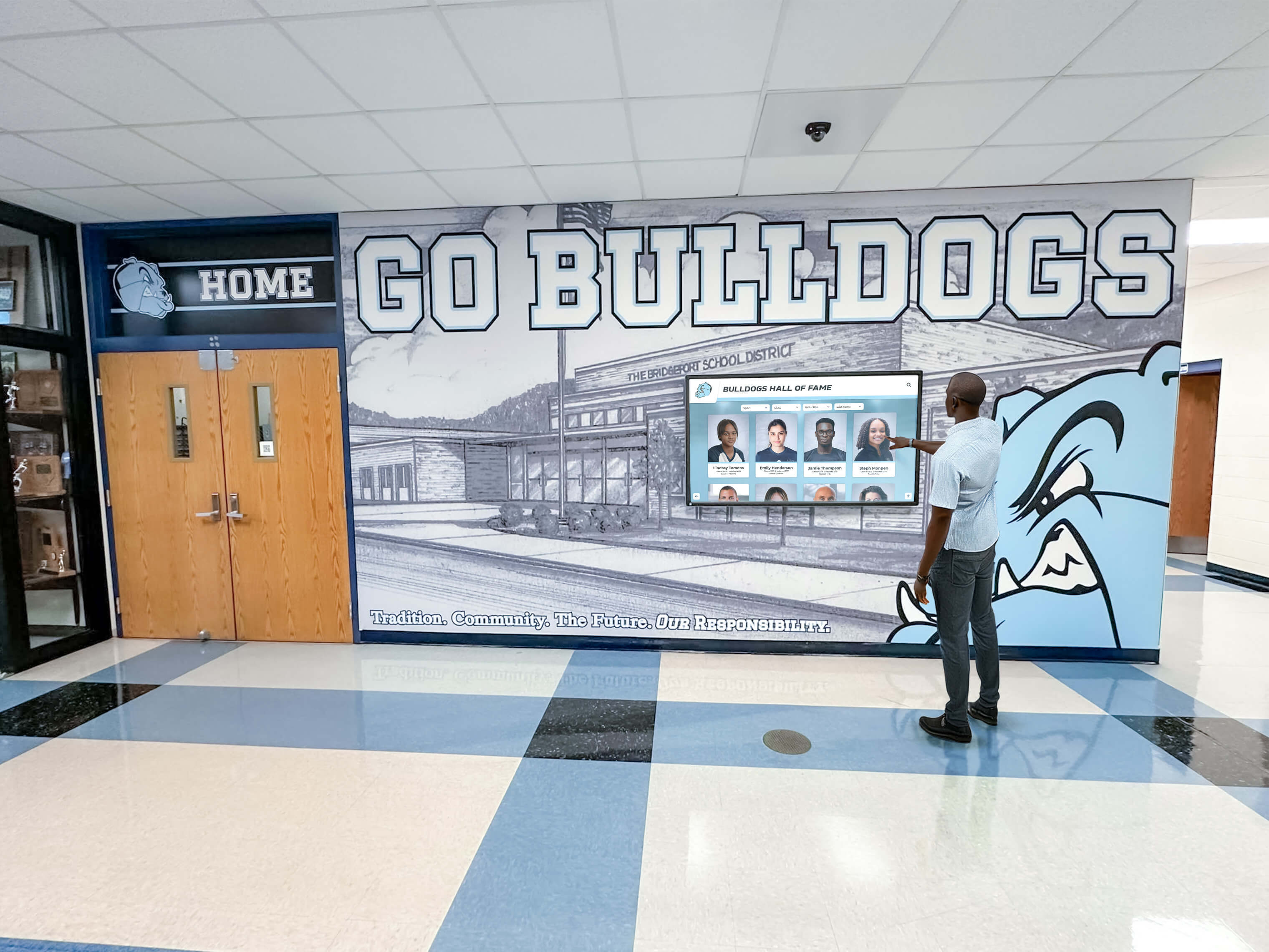
Natural engagement with recognition content demonstrates successful implementation creating genuine visitor interest rather than passive viewing
Installation Project Management and Facility Integration
Successful gym lobby display deployment requires systematic planning across physical installation, network infrastructure, and environmental considerations.
Pre-Installation Facility Assessment
Site evaluation prevents costly surprises during implementation:
Electrical Infrastructure Verification
Verify adequate electrical capacity at planned installation locations including dedicated 15-20 amp circuits with surge protection preventing damage from power fluctuations common in athletic facilities. Confirm circuit locations minimize visible conduit runs or enable concealed wiring through wall cavities maintaining clean aesthetic appearances matching gym lobby design standards.
GFCI outlet requirements may apply in humid gym environments or locations near water fountains and restroom adjacencies—consult electrical codes ensuring compliant installations avoiding future remediation requirements during facility inspections.
Network Connectivity Assessment
Digital trophy displays require internet connectivity for cloud-based content management and remote updates. Verify network availability at intended installation locations including hardwired Ethernet access points preferred over WiFi for reliability and security. Confirm minimum 10 Mbps download speeds accommodate typical content and video streaming requirements without buffering or loading delays frustrating visitor engagement.
IT department involvement early in planning processes ensures network access, security protocols, firewall configurations, and acceptable use policies support recognition platform connectivity requirements without requiring extensive networking infrastructure additions or policy exceptions creating project delays or ongoing security concerns.
Structural Mounting Capability
For wall-mounted installations, verify wall construction supports 75-150 pound display assemblies safely through appropriate anchoring into studs, concrete, or structural elements rather than relying on drywall alone. Confirm mounting heights accommodate accessibility requirements (15-48 inches to controls from floor) while providing comfortable viewing ergonomics for standing adults.
When wall mounting proves impractical due to glass curtain walls, insufficient structural support, or aesthetic integration challenges, free-standing kiosk alternatives provide flexible solutions avoiding structural modification requirements while delivering professional finished appearances through purpose-built enclosure designs incorporating school branding and color schemes.
Professional Installation Best Practices
Quality implementation ensures reliable operation and professional appearance:
Coordinating Installation Timing
Schedule installations during low-activity periods avoiding game days, tournaments, and peak facility usage when gym lobby access becomes restricted. Summer break installations provide optimal timing when facilities experience minimal use enabling contractors to work efficiently without navigating crowded lobby spaces or coordinating around athletic schedules.
Coordinate with athletic directors, facility managers, custodial supervisors, and IT administrators ensuring all stakeholders understand installation timelines, facility access requirements, and temporary service disruptions during implementation. Clear communication prevents scheduling conflicts and ensures support personnel availability when contractors require facility access, power shutdowns, or network configuration assistance.
Professional Cable Management
Exposed wiring undermines professional appearance and creates trip hazards in high-traffic gym lobby environments. Professional installations utilize in-wall conduit routing concealing power and network cables behind finished surfaces, surface-mounted cable channels matching wall colors maintaining clean appearances when in-wall routing proves impractical, and floor-level wire protection using protective channels preventing damage from equipment carts and facility operations.
For free-standing kiosk installations, integrated cable management within enclosure bases conceals connections professionally without exposed wiring detracting from finished presentation quality.
System Testing and Staff Training
Comprehensive testing before launch verifies all hardware functions correctly including touch responsiveness across entire screen surface, network connectivity enables content updates and web access, audio systems work appropriately when included, and content displays properly across all interface screens and navigation paths.
Staff training sessions ensure athletic administrators understand content management systems including adding new trophy entries, uploading photographs and videos, editing existing profiles correcting errors or adding new information, publishing content updates making changes visible immediately, and accessing analytics dashboards tracking engagement and system usage demonstrating recognition value.
Training should include multiple staff members preventing single-person dependency where only one administrator possesses system knowledge creating operational vulnerability when that individual becomes unavailable during critical update windows or technical support situations.
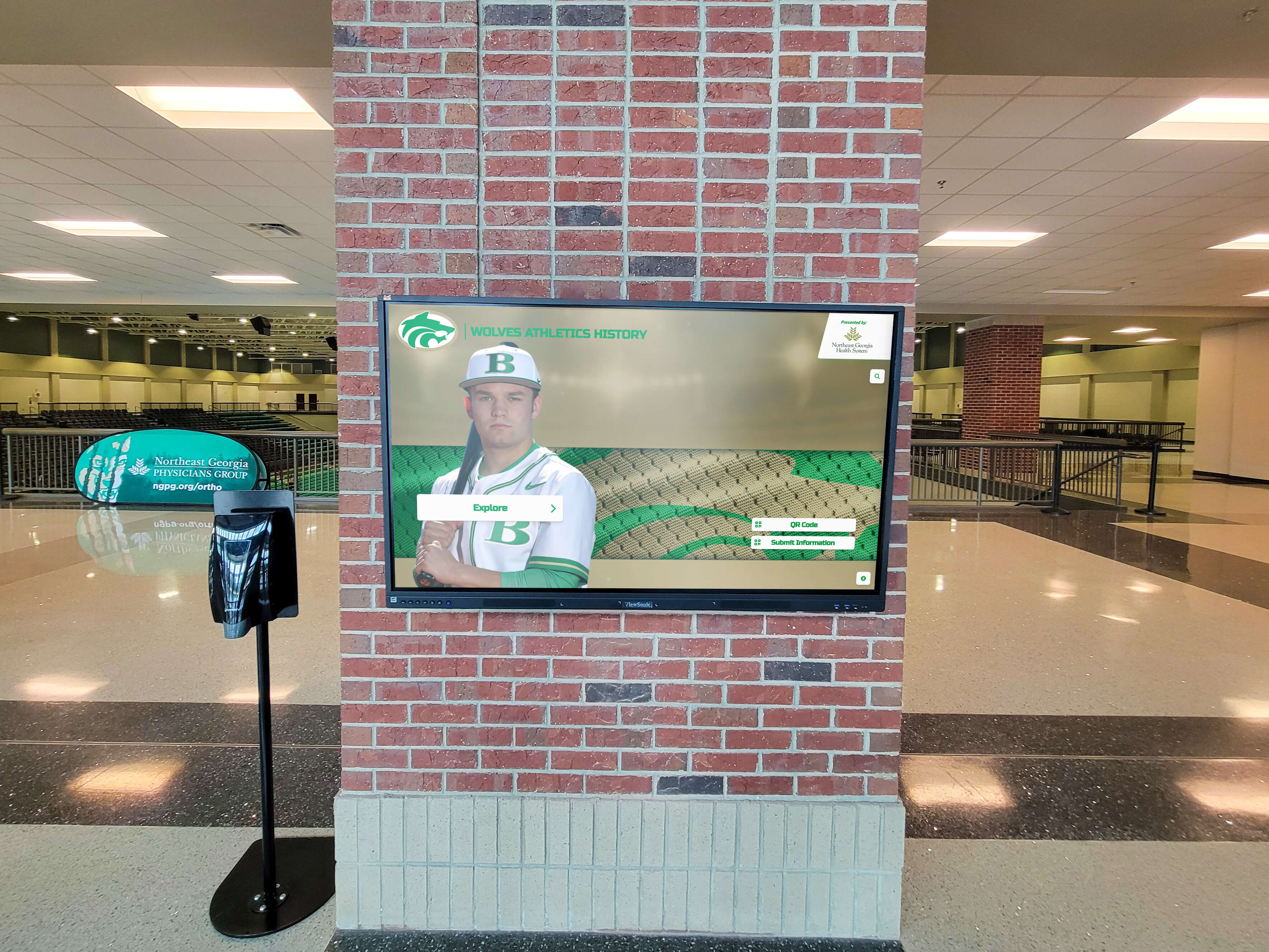
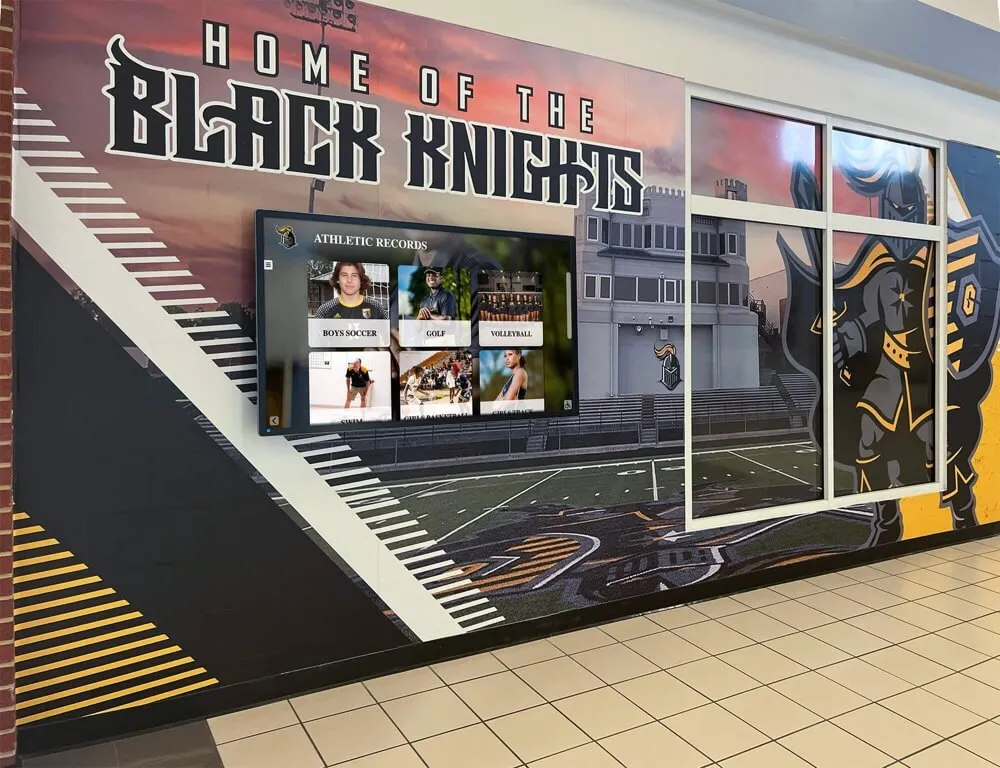
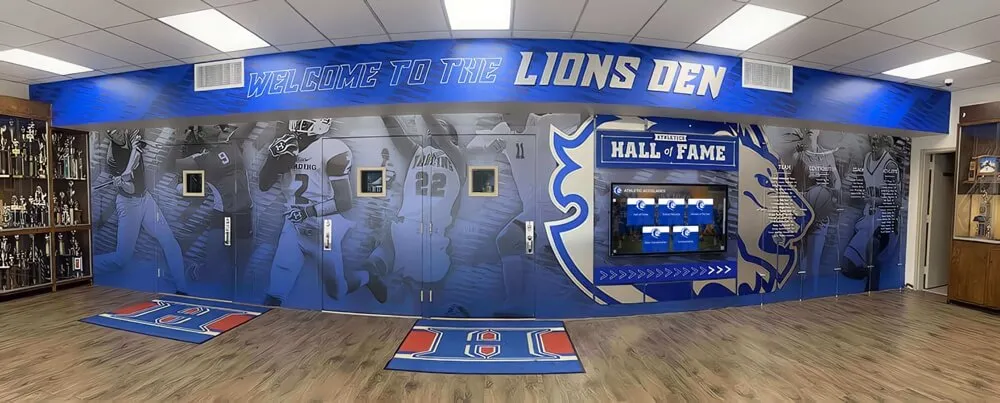
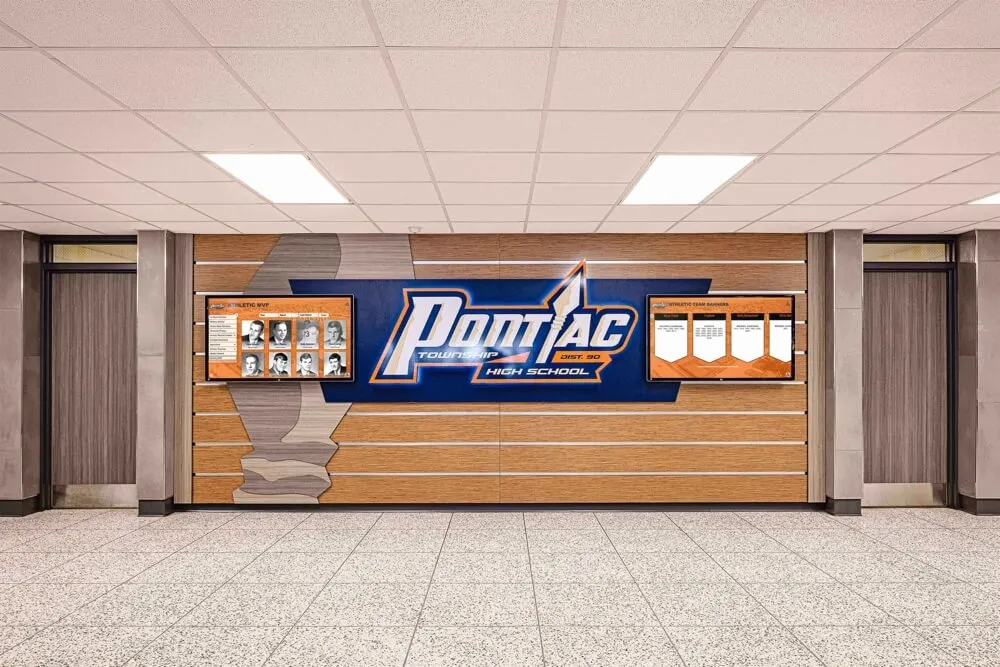
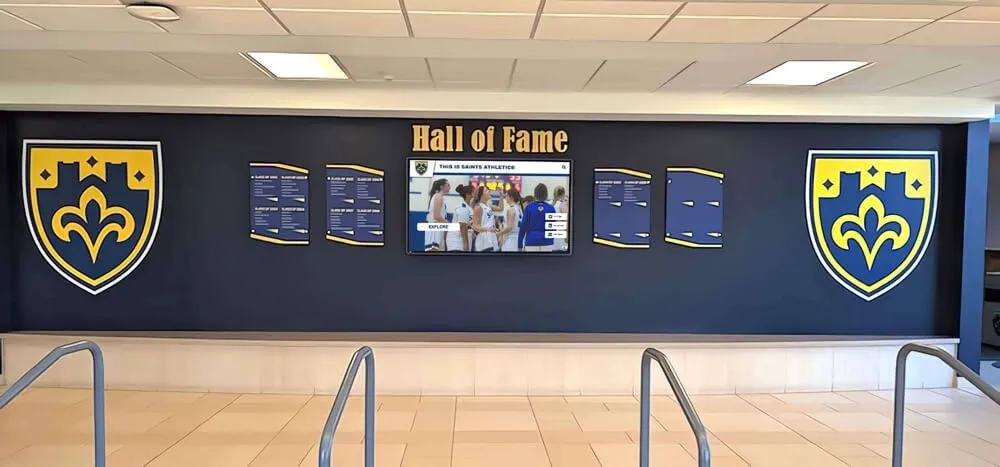
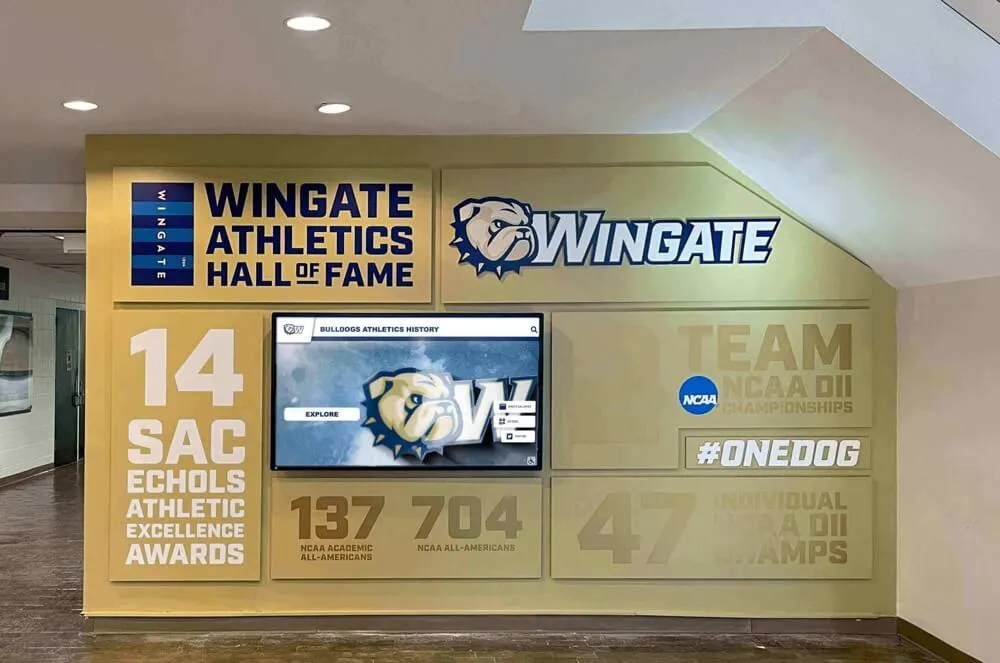
Professional installations integrate digital trophy recognition with facility architecture creating impressive focal points in athletic venues
Measuring Gym Lobby Display Impact and Optimizing Engagement
Understanding how community members interact with digital trophy displays helps athletic directors demonstrate value and continuously improve recognition programs.
Engagement Analytics and Usage Metrics
Quality digital platforms provide comprehensive analytics revealing usage patterns:
Key Performance Indicators to Monitor
Track total interaction sessions showing how frequently visitors use displays—targeting consistent daily engagement rather than occasional sporadic use suggesting poor visibility or awareness. Monitor average session duration indicating content interest depth—aiming for 5-8 minutes showing visitors actively explore multiple trophies rather than brief glances suggesting content fails to capture attention.
Identify most-viewed profiles revealing popular content and community interests guiding future content enhancement priorities. Analyze search terms demonstrating what visitors seek helping identify content gaps where community wants information not currently available. Document peak usage times informing content update strategies and special promotion opportunities during high-traffic periods when visibility potential runs highest.
And measure return visitor rates showing sustained interest rather than one-time curiosity indicating recognition programs create ongoing engagement value beyond initial novelty period immediately following installation.
Using Analytics to Drive Content Strategy
Usage data reveals which trophy categories and sports generate most engagement helping prioritize content enhancement resources toward high-interest areas delivering greatest community value. Search pattern analysis shows what additional content visitors seek through unsuccessful searches highlighting documentation gaps requiring attention.
Peak traffic period identification enables strategic timing for featured content updates, new championship announcements, and special recognition promotions maximizing visibility when gym lobby activity levels run highest during game days, tournaments, and special events creating natural recognition engagement opportunities.
Low engagement periods suggest visibility problems, interface usability issues, or content staleness requiring attention through improved placement, navigation redesign, or regular content refreshment maintaining contemporary relevance preventing displays from appearing dated or abandoned despite ongoing technical operation.
Qualitative Feedback and Community Response
Beyond quantitative metrics, gather stakeholder feedback revealing impact:
Stakeholder Feedback Collection Methods
Conduct surveys about recognition program awareness and impact among athletes, families, alumni, coaching staff, and school administrators. Observe visitor comments during campus tours, recruiting visits, and athletic events noting spontaneous reactions and engagement patterns. Collect staff observations about community engagement with displays during daily facility activities.
Document alumni reactions when returning for reunions, homecoming gatherings, and athletic hall of fame induction ceremonies. And solicit athlete feedback about seeing their achievements recognized digitally alongside program heritage and competitive tradition creating connection between current competitors and institutional history.
This qualitative feedback often reveals meaningful impact that quantitative metrics cannot capture—students expressing pride when discovering themselves recognized digitally, alumni showing families their historic championship trophies from anywhere via web access, prospective students impressed by comprehensive achievement celebration during recruiting visits, families appreciating that all achievements receive recognition rather than only highest accomplishments fitting limited physical case capacity, and current athletes motivated by visible championship standards and program expectations making aspirational goals tangible and achievable.
Cultural Impact Assessment
The most significant display benefits often emerge over time as recognition becomes embedded in school culture including increased student identification with institutional community and competitive tradition, enhanced alumni engagement and connection with alma maters through ongoing recognition access, improved recruitment effectiveness with prospective student-athletes and families researching program tradition, stronger achievement culture across athletic and academic programs inspired by visible excellence standards, and modernized institutional image demonstrating innovation and community-centered priorities.
When trophy recognition becomes systematic and comprehensive rather than limited and inconsistent due to space constraints, schools communicate clear values about what matters and who deserves celebration—building cultures where achievement across all dimensions receives acknowledgment inspiring continued excellence and institutional pride.
Continuous Improvement Based on Data and Feedback
Insights inform ongoing optimization:
Content Enhancement Priorities
Identify popular trophy profiles deserving enriched multimedia content through additional photos, video highlights, or expanded narratives. Add requested content filling gaps revealed through search patterns and stakeholder feedback. Update historical profiles with newly discovered information from alumni contributions and community research.
And refresh featured content regularly preventing displays from appearing static or neglected—rotating highlighted championships, updating athlete profiles with post-playing career developments, and adding contemporary design elements maintaining visual currency matching evolving aesthetic standards.
Interface Refinement
Address navigation confusion revealed through observation and feedback—simplifying complex workflows, improving search functionality, clarifying category labels, and enhancing visual hierarchy making primary pathways more obvious to casual visitors unfamiliar with system organization.
Test interface changes with representative community members before deployment ensuring improvements actually enhance rather than inadvertently complicate user experience through well-intentioned modifications that prove confusing in practice despite seeming logical during design planning.
Visibility and Awareness Campaigns
Low engagement metrics sometimes indicate awareness problems rather than content or interface issues. Promote recognition displays through announcements at athletic events, social media campaigns highlighting specific trophy profiles or championship anniversaries, inclusion in campus tour routes ensuring prospective families see displays during recruiting visits, and athletic team meetings encouraging current athletes to explore program history.
Sometimes exceptional recognition systems fail to deliver expected community value simply because constituencies don’t know displays exist or understand they can actively explore content rather than passively viewing rotating slideshow presentations typical of traditional digital signage systems.
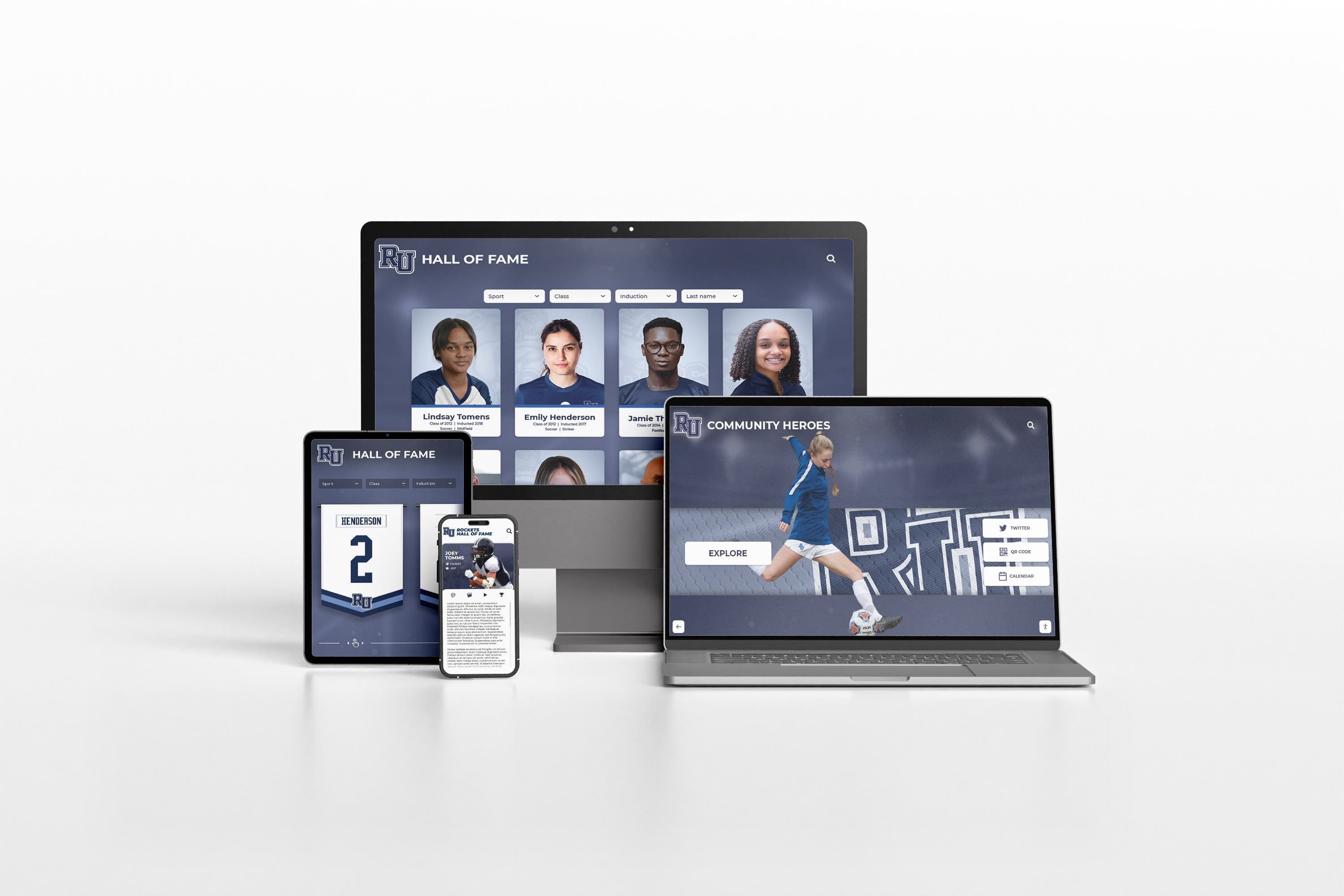
Web-based access extends trophy recognition beyond gym lobby locations enabling alumni, families, and recruits to explore achievements anywhere
Budget Planning and Funding Strategies for Gym Lobby Displays
Understanding investment requirements and identifying funding sources enables successful recognition program launches.
Total Cost of Ownership Analysis
Comprehensive budget planning addresses all expense categories:
Initial Investment Components
Commercial touchscreen display hardware costs $3,000-8,000 depending on screen size (43-75 inches), touch technology (capacitive vs. infrared), and commercial durability ratings. Wall mounting or free-standing kiosk enclosures add $500-5,000 depending on installation approach and customization level. Professional installation including electrical work, mounting, and cable management typically runs $1,000-3,000 based on site-specific requirements.
Recognition platform software licensing varies by vendor and pricing model ranging from $1,500-5,000 annually for cloud-based subscriptions including hosting, support, and ongoing feature updates. Initial content development assistance when vendors provide photography, historical research support, and profile creation ranges from $2,000-8,000 depending on depth and historical coverage scope.
Total first-year investments typically range from $8,000-20,000 per gym lobby display depending on hardware specifications, installation complexity, software platform selection, and content development scope—representing significant but manageable capital commitments relative to traditional trophy case expansion costs over equivalent timeframes.
Ongoing Operational Costs
Annual software subscriptions for cloud-based platforms range from $1,500-5,000 covering hosting infrastructure, technical support, platform updates, and web access extensions. Minimal content maintenance labor when athletic administrators manage updates internally using intuitive content management systems requiring 2-4 hours monthly for routine updates and championship additions.
Periodic hardware replacement planning across typical 7-10 year display lifecycles requires reserve funding for eventual screen upgrades or component replacements when technology reaches end-of-life thresholds—though commercial-grade equipment reliability typically delivers extended operation minimizing unexpected failure costs.
Over 10-year recognition program lifecycles, schools can expect total investments of $25,000-40,000 per display covering hardware, software, support, and eventual component replacement—comparing favorably to traditional trophy case expansion approaches requiring similar investments through repeated case purchases, engraving, installation, and ongoing physical maintenance across equivalent timeframes.
Alternative Funding Sources Beyond General Budgets
Recognition programs can tap multiple funding streams:
Athletic Booster Club Campaigns
Booster organizations frequently fund recognition programs as natural extensions of their athletic support missions. Trophy display fundraising appeals demonstrate tangible community-visible projects delivering immediate impact rather than abstract budget support requests lacking clear deliverable outcomes.
Memorial gift opportunities enable families to fund recognition programs honoring deceased coaches, athletes, or longtime supporters—creating meaningful memorial investments celebrating individuals’ program contributions while providing practical infrastructure benefiting entire athletic departments rather than isolated plaques or scholarship funds benefiting limited individuals.
Alumni Association Appeals
Alumni campaigns targeting graduated athletes generate strong response when recognition programs celebrate alumni achievements directly. Appeals emphasizing that contributions enable permanent celebration of alumni championship seasons create personal investment incentives beyond general institutional support requests.
Reunion class gifts provide natural fundraising opportunities when milestone anniversary cohorts seek tangible legacy projects commemorating their graduation years. Recognition displays funded by specific class years create lasting connections between those cohorts and recognition infrastructure preserving their competitive eras permanently.
Corporate Sponsorship and Naming Rights
Local businesses supporting athletic programs can receive recognition through display sponsorship including branded screen elements acknowledging support, naming rights creating “Trophy Wall presented by [Business Name]” designations, or rotating sponsor acknowledgments within recognition interface designs.
Sponsorship approaches enable businesses to support community athletic programs through visible investments creating brand association with positive achievement celebration while providing schools with recognition funding not competing with general operating budget priorities or requiring capital campaign allocations.
Conclusion: Transforming Gym Lobby Trophy Recognition for Modern Athletic Programs
Touchscreen displays represent fundamental advancement in how high schools celebrate athletic achievement, preserve competitive heritage, and build program culture inspiring continued excellence. By eliminating space constraints that limit traditional trophy cases to selective rather than comprehensive recognition, enabling immediate updates maintaining current and relevant celebration without engraving delays, creating engaging interactive experiences connecting current athletes with institutional tradition, and extending recognition accessibility beyond gym lobby walls to worldwide alumni and supporter communities, digital trophy display technology delivers comprehensive solutions addressing recognition challenges that physical glass cabinets simply cannot solve effectively.
Transform Your Gym Lobby Trophy Recognition
Discover how custom-designed touchscreen displays can revolutionize athletic recognition for your high school. Rocket Alumni Solutions creates interactive experiences purpose-built for gym lobby environments, combining professional design with intuitive administration that makes celebrating achievement effortless while honoring every trophy appropriately.
Book a DemoThe most successful gym lobby touchscreen implementations share common characteristics: they start with clear recognition goals understanding what achievement celebration should accomplish and which stakeholder needs matter most, select purpose-built platforms designed specifically for trophy recognition rather than generic signage repurposed from commercial messaging applications, develop thoughtful content strategies honoring achievements comprehensively across all sports and eras rather than limiting recognition to highest accomplishments alone, and position displays strategically in high-traffic lobby locations where communities naturally encounter recognition throughout daily athletic facility activities.
Whether implementing athletic trophy recognition that preserves championship heritage while inspiring current teams toward excellence, creating comprehensive systems documenting complete institutional athletic histories spanning decades of competitive tradition, or developing hybrid approaches combining selective physical trophy displays with unlimited digital documentation capacity, modern touchscreen display technology provides proven solutions strengthening school culture while giving every achievement the permanent recognition it deserves regardless of physical space limitations or traditional display constraints.
Schools investing in gym lobby touchscreen recognition demonstrate commitment to celebrating all achievements rather than limiting acknowledgment to highest accomplishments or most visible programs that physical trophy case space can accommodate. This comprehensive approach communicates institutional values while building cultures where achievement across all dimensions—major and minor, historical and contemporary, high-profile and emerging programs—receives systematic celebration creating motivation, pride, and lasting connection between community members and their schools across generations of athletic tradition and competitive excellence.
Ready to explore touchscreen display options for your gym lobby? Learn more about digital trophy case implementation, discover athletic hall of fame design strategies, explore school lobby design approaches creating welcoming recognition environments, understand digital recognition display buyer considerations, and review best ways to showcase athletic achievements through modern recognition technology purpose-built for celebrating athletic excellence while preserving institutional memory and inspiring future champions through comprehensive digital trophy recognition systems designed specifically for high school gym lobby environments.