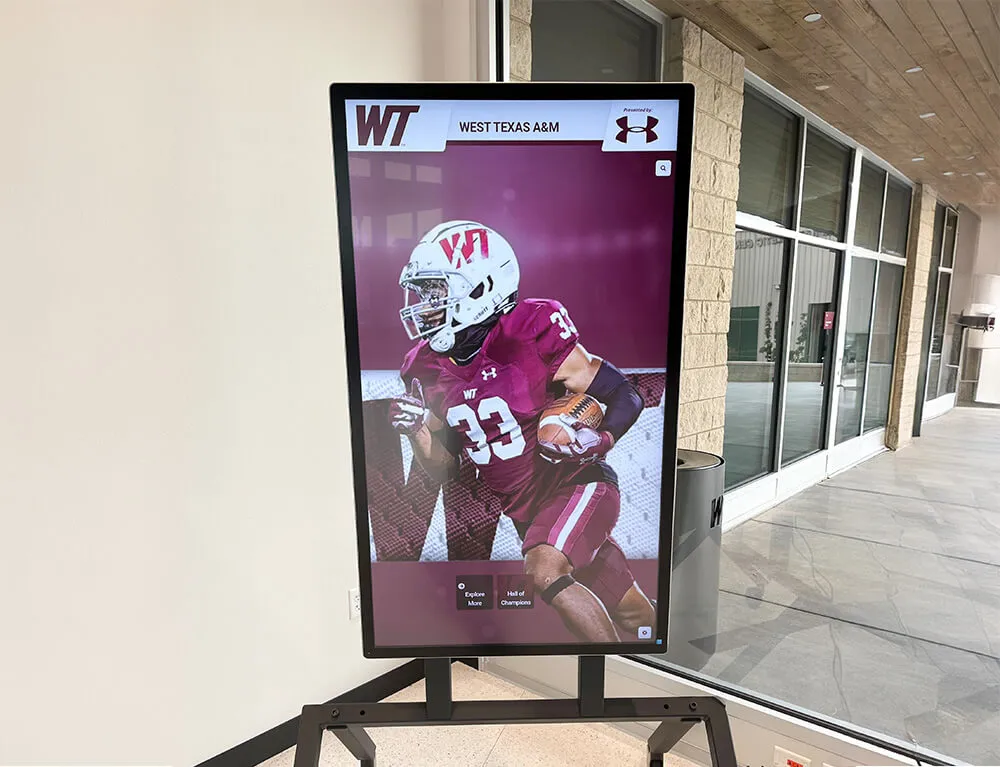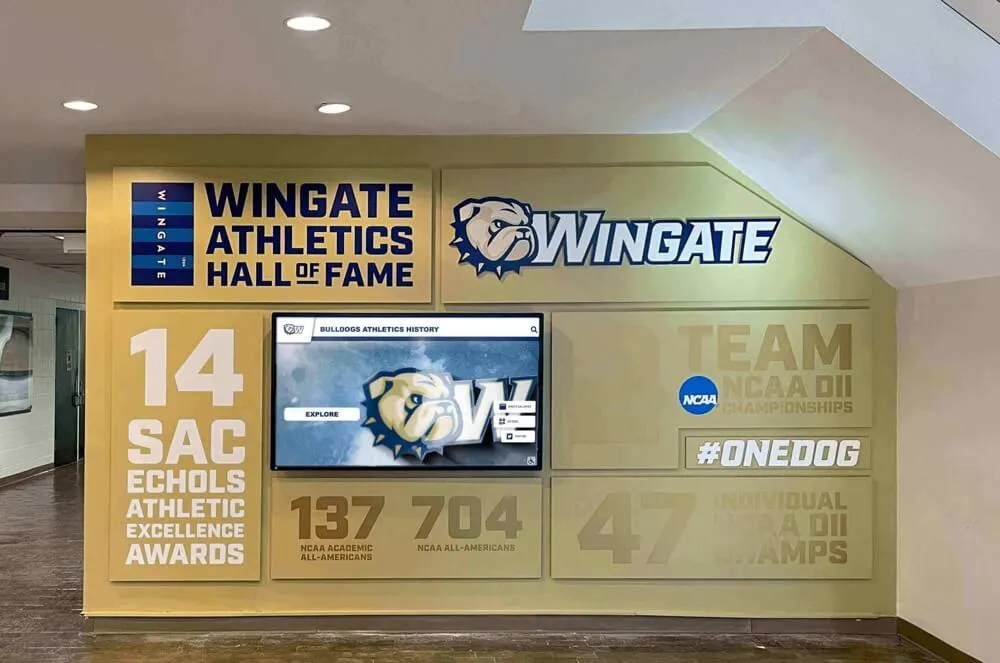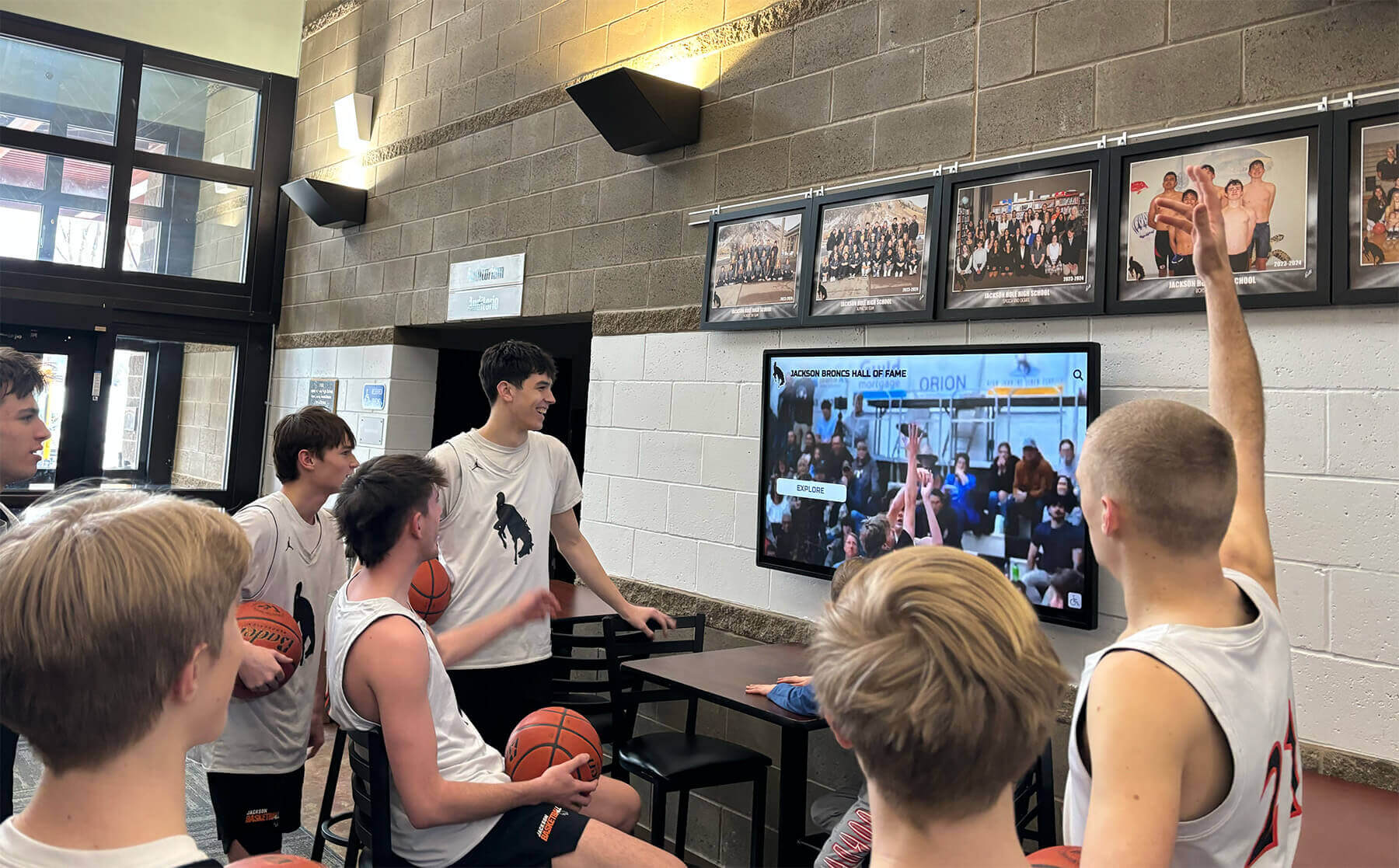




Touchscreen TV displays for athletic information represent the modern evolution of how high schools communicate sports schedules, celebrate team achievements, share game results, and engage student-athletes through interactive technology. As athletic programs struggle with outdated bulletin boards cluttered with faded printouts, paper schedules requiring constant replacement, and static trophy cases that fail to capture the dynamic energy of competitive sports, interactive touchscreen displays provide comprehensive solutions that centralize athletic communications while creating engaging experiences impossible with traditional approaches.
Traditional methods of sharing athletic information—paper posters taped to gymnasium walls, printed schedule cards distributed at season starts, vinyl record boards with limited capacity, and morning announcements competing for student attention—served schools adequately for decades. However, these static approaches increasingly fall short in meeting the communication needs and engagement expectations of contemporary athletic programs. Paper schedules become outdated when games reschedule. Bulletin boards display information passively without capturing student attention in high-traffic hallways. Trophy cases celebrate past achievements without connecting current teams to program traditions. And communication silos prevent athletic departments from efficiently reaching athletes, families, and communities with timely updates.
This comprehensive guide explores how touchscreen TV displays revolutionize athletic information management in high school facilities. You’ll discover the technology behind modern interactive sports displays, understand content strategies that maximize athlete and community engagement, learn about implementation approaches and cost considerations, and gain practical frameworks for transforming athletic communications from scattered paper systems to centralized digital platforms that serve every stakeholder in your athletic community.
The shift from paper-based athletic communications to interactive touchscreen displays represents more than technological modernization—it fundamentally transforms how athletic programs engage athletes, communicate with families, celebrate achievements, and build community connections around high school sports.

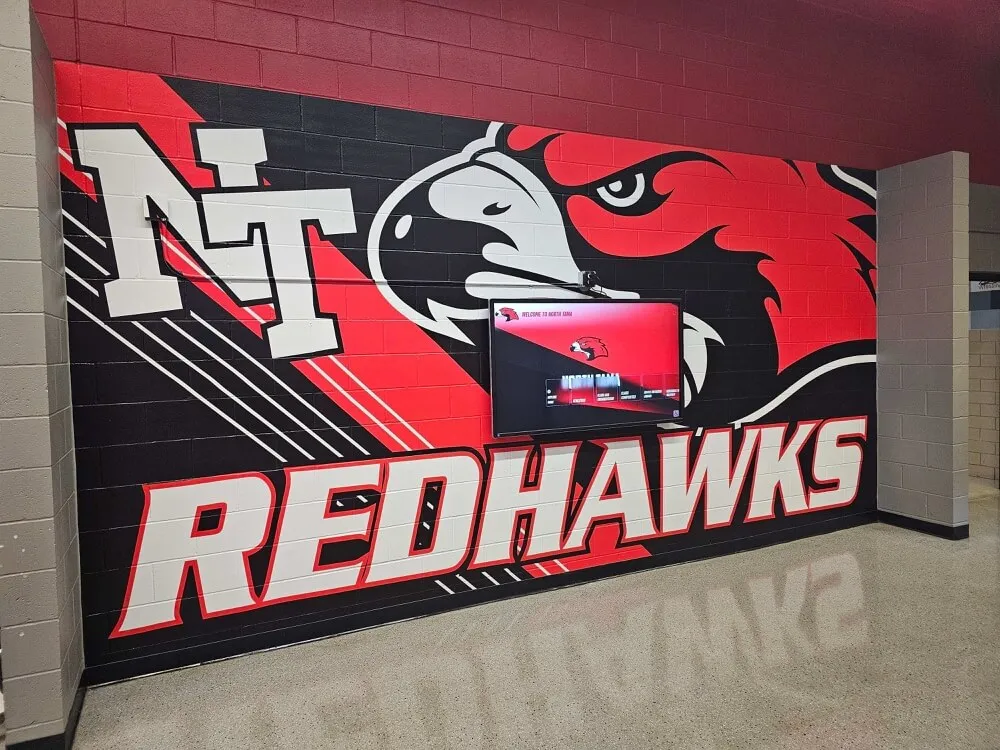
Interactive displays capture athlete attention through dynamic content and multimedia experiences
Understanding Touchscreen TV Displays for Athletic Information
Before exploring specific benefits and implementation strategies, understanding what touchscreen TV systems are and how they function helps athletic programs make informed decisions about modernizing communications.
What Is a Touchscreen TV Athletic Information Display?
A touchscreen TV athletic information display consists of large-format interactive screens—typically 43 to 75 inches diagonal—running specialized sports communication software designed specifically for athletic departments rather than generic digital signage focused solely on announcements or advertising. These interactive displays install in high-traffic athletic facility locations like gymnasium lobbies, locker room hallways, main school entrances, cafeterias, and athletic director offices where students, families, and visitors naturally encounter athletic information throughout their daily routines.
Students, athletes, coaches, parents, and visitors interact with touchscreen displays by tapping screens to explore upcoming game schedules, view recent competition results and scores, browse team rosters and athlete profiles, watch highlight videos from recent games, discover athletic records and historical achievements, and access detailed information about specific sports programs and seasons.
Core Components of Touchscreen Athletic Systems
Modern installations integrate several interconnected elements creating comprehensive athletic communication solutions. Commercial-grade touchscreen displays rated for continuous operation provide hardware foundations designed to withstand constant public use in high-traffic environments. Cloud-based content management systems enable athletic directors and coaches to update information remotely from any internet-connected device without requiring technical expertise or IT department assistance. Purpose-built athletic communication software organizes schedules, scores, rosters, and achievements around intuitive navigation rather than simple slideshow presentations. And web-based extensions make athletic information accessible beyond physical displays to anyone with internet access—enabling remote viewing by family members, college recruiters, and community supporters.
This integrated approach ensures touchscreens serve as comprehensive athletic information hubs rather than isolated display screens with limited functionality and narrow purpose.
How Touchscreen Displays Differ from Traditional Athletic Communications
Physical bulletin boards, paper schedules, and static posters have communicated athletic information for generations, but interactive touchscreens address fundamental limitations that increasingly undermine traditional approaches:
Traditional Paper-Based Athletic Communications
Traditional approaches display athletic information using paper printouts posted on bulletin boards, printed schedule cards distributed to athletes, and announcements read during morning school communications. These methods require minimal technology investment and function without electricity or network connectivity.
However, severe limitations constrain their effectiveness. Paper schedules become outdated immediately when games reschedule due to weather or facility conflicts. Bulletin board information reaches only people physically walking past specific hallway locations during school hours. Printed materials generate ongoing expense as seasons change and schedules update. Static displays provide minimal engagement—students glance briefly without meaningful interaction or deeper exploration. And information remains siloed across multiple locations rather than centralized in accessible formats.
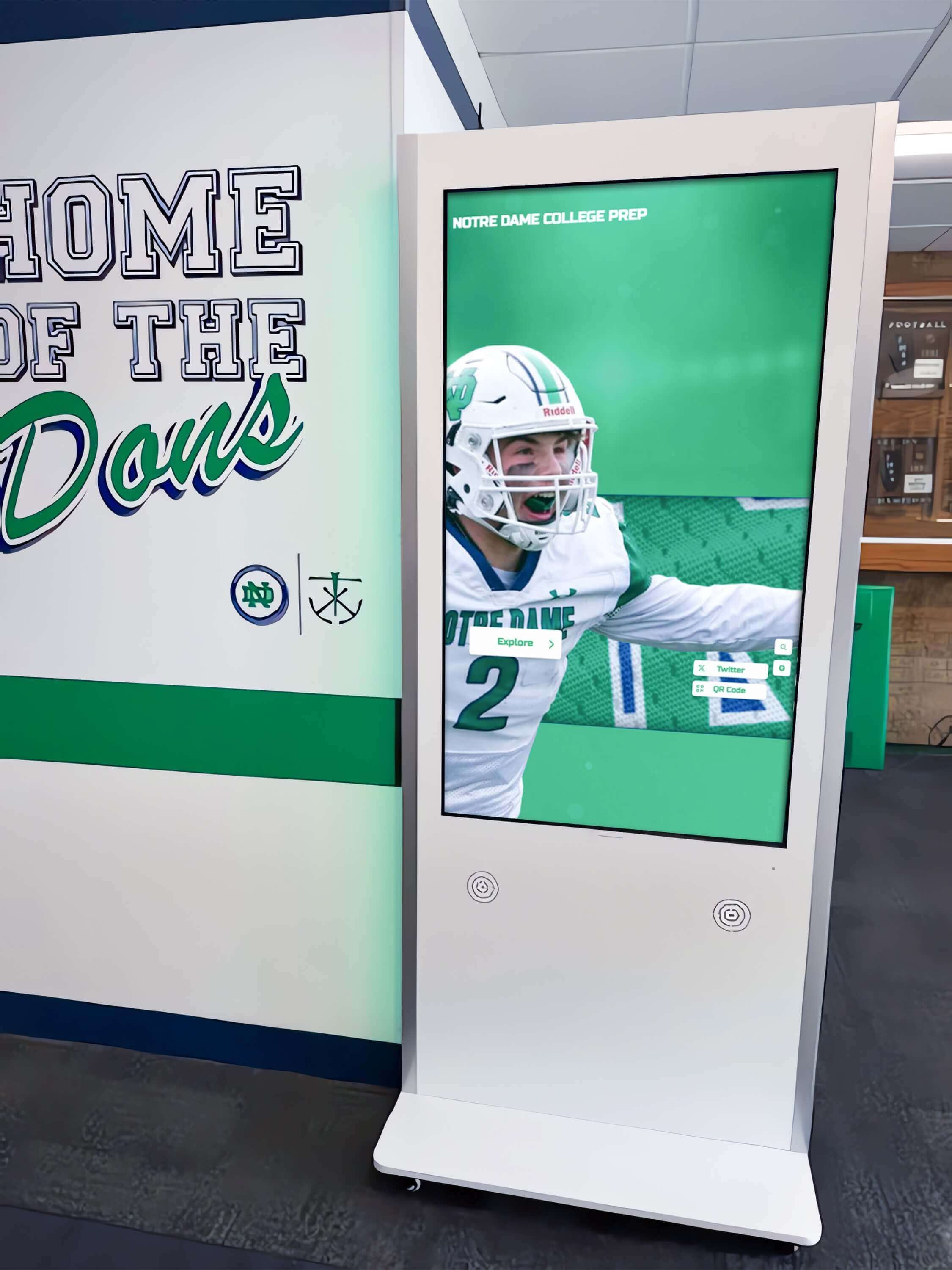
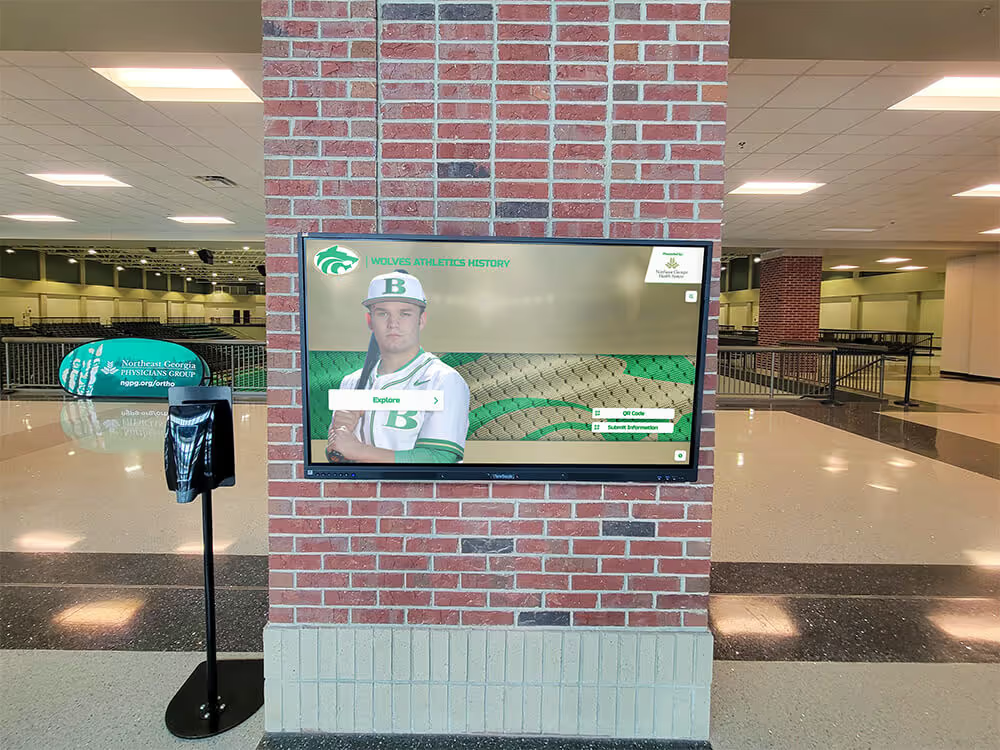
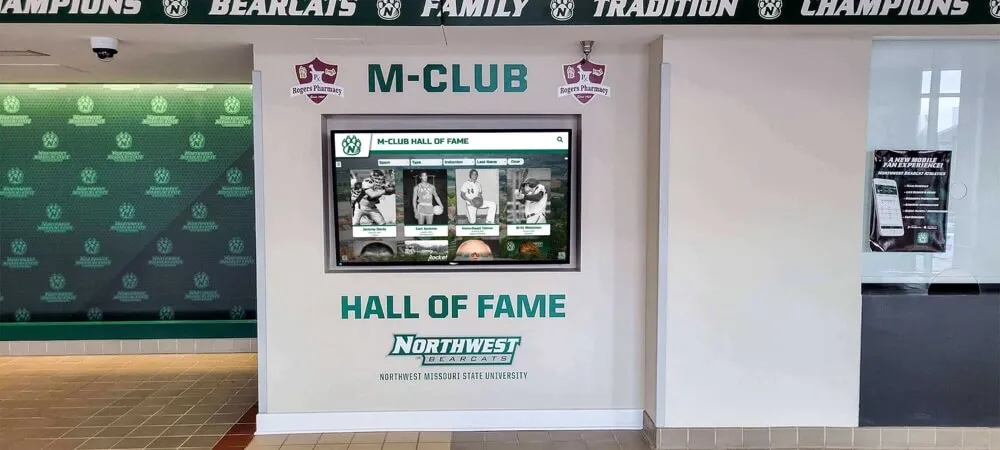
Digital touchscreens centralize athletic information in prominent locations where students naturally encounter sports content
Interactive Touchscreen Display Systems
Digital platforms centralize all athletic information through cloud-based systems accessible anywhere, anytime through physical displays and web portals. Athletic directors update schedules instantly when changes occur—modifications appearing immediately across all displays and web access points without printing delays or physical distribution requirements. Content management systems enable comprehensive athletic communication including detailed schedules with locations and competition times, real-time score updates from ongoing competitions, team rosters with athlete photos and biographical information, season statistics and performance tracking, championship celebrations and award recognition, and multimedia highlight videos showcasing memorable performances.
Most importantly, interactive touchscreens engage students through dynamic content and exploration rather than passive information consumption. When athletic displays feature compelling multimedia content regularly updated with current information, students naturally gravitate toward screens to discover game schedules, check recent scores, explore team achievements, and stay connected with athletic programs throughout seasons. Research on digital communication in educational environments consistently demonstrates that interactive displays generate 300-500 percent higher engagement compared to static paper postings in identical locations.
The Athletic Information Challenge in Modern High Schools
Understanding why traditional communication methods increasingly fail to meet contemporary expectations helps athletic programs appreciate the value interactive touchscreen displays deliver across multiple dimensions.
Information Overload and Communication Fragmentation
Modern athletic programs manage complex communication challenges that paper-based systems cannot effectively address. Multi-sport programs with 15-25 different teams across fall, winter, and spring seasons generate overwhelming information volumes. Each team requires schedule communication, roster publication, game result documentation, championship celebration, and ongoing athlete recognition. When multiplied across dozens of teams, athletic departments face constant communication demands that fragment attention and exhaust limited staff capacity.
Paper-based approaches scatter information across multiple locations—schedules posted on gymnasium bulletin boards, rosters distributed as photocopies, results announced during morning communications, and achievements celebrated through disconnected recognition programs. This fragmentation prevents comprehensive athletic communication and forces students, families, and community members to piece together information from multiple sources rather than accessing centralized athletic information hubs.
Interactive touchscreen displays consolidate all athletic information through single platforms organized around intuitive navigation. Students exploring football schedules can simultaneously discover recent game results, browse team rosters, watch highlight videos, and learn about program records—accessing comprehensive football information through unified interfaces rather than hunting across multiple locations for fragmented details.

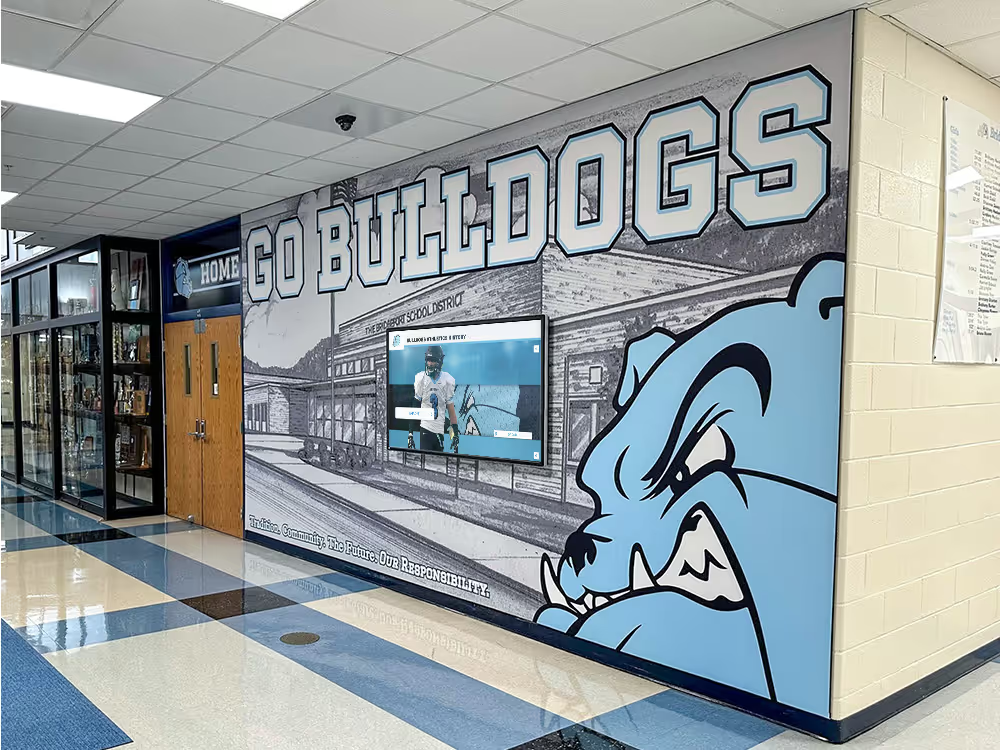
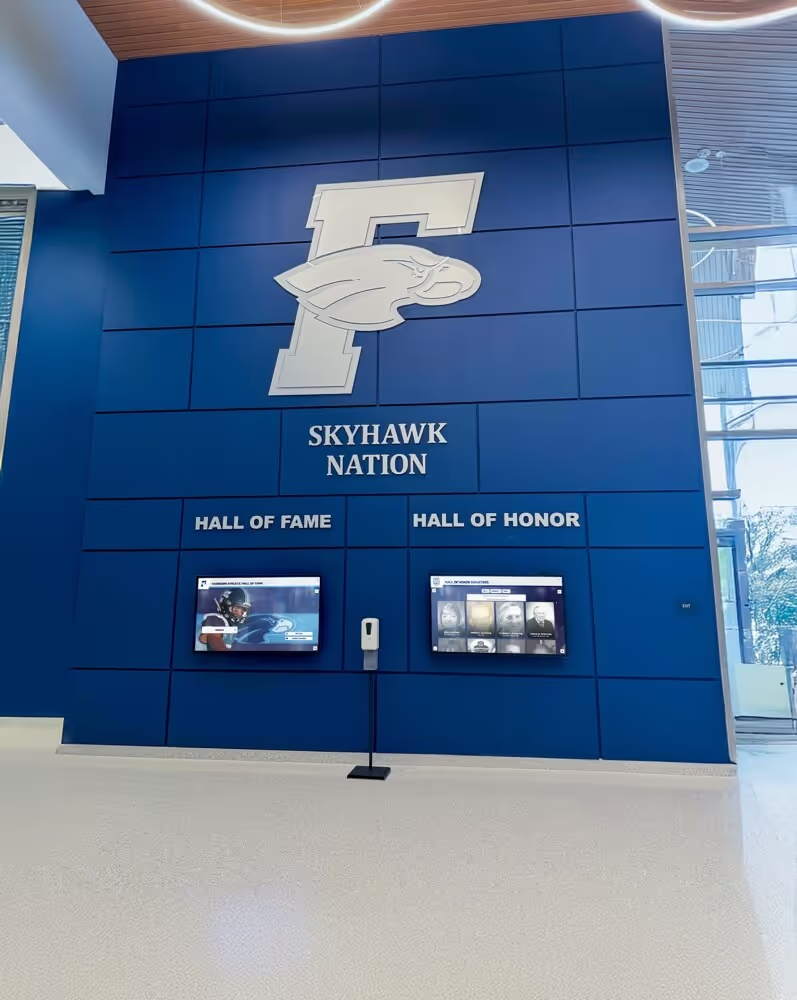
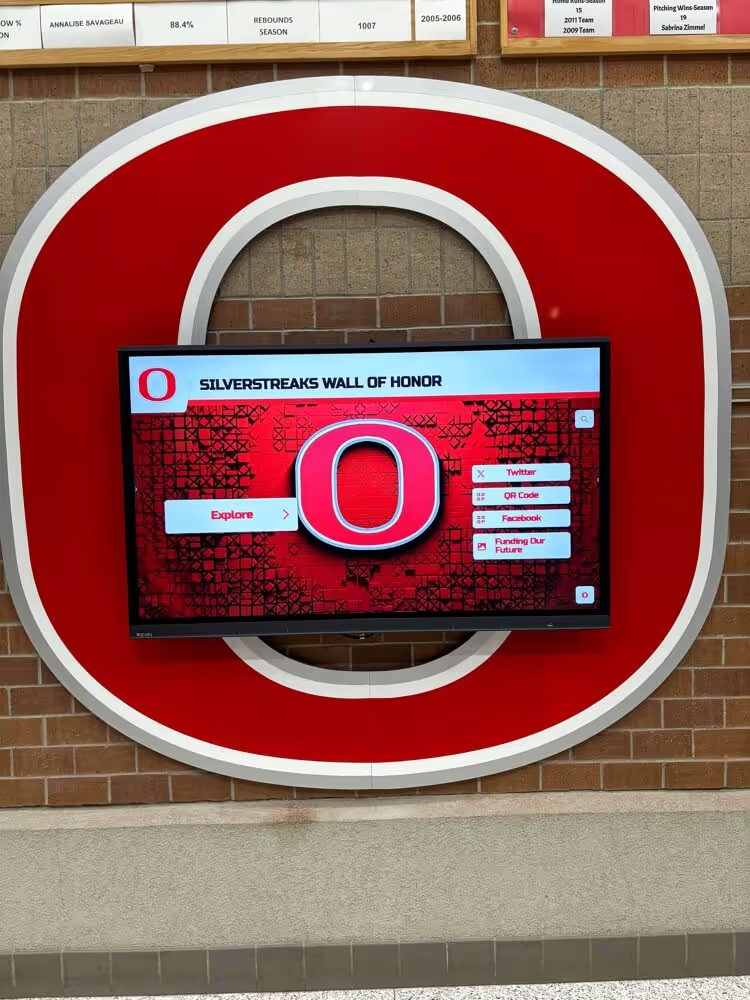
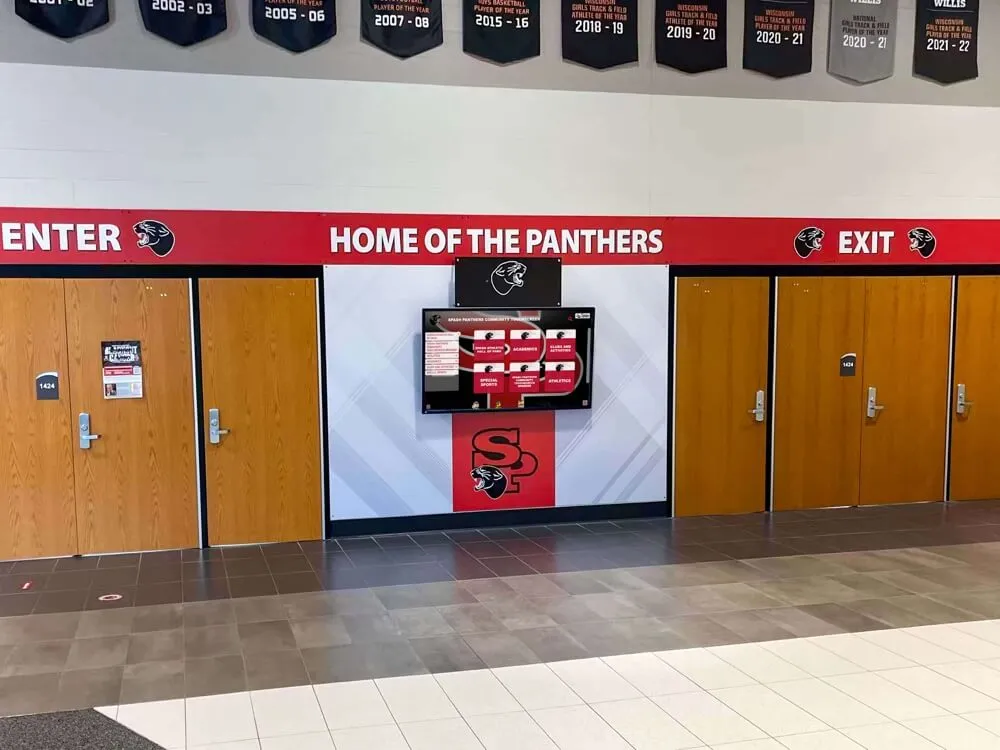
Prominent installations in main hallways ensure maximum visibility for athletic information and engagement
Schedule Changes and Real-Time Updates
Athletic schedules change constantly throughout seasons due to weather postponements, facility conflicts, transportation challenges, and opponent scheduling adjustments. According to data from high school athletic associations, the average multi-sport program experiences 15-25 schedule modifications per academic year across all teams and competitions.
Traditional paper schedules become instantly outdated when games reschedule. Athletic departments scrambling to communicate changes resort to email announcements that some families miss, social media posts reaching limited audiences, automated phone systems that feel impersonal, and revised printouts distributed days after changes occur. Meanwhile, athletes arrive at facilities for games that were cancelled, families drive to wrong locations following outdated directions, and confusion undermines athletic department credibility.
Digital touchscreen systems solve real-time update challenges through centralized schedule management. When athletic directors modify game times or locations in content management systems, changes propagate instantly across all displays and web portals without additional steps or communication delays. Students checking touchscreens before leaving school see current schedules reflecting latest modifications. Families accessing athletic information through web portals receive accurate details for planning transportation and attendance. And automated notifications can alert specifically affected teams when their schedules change—ensuring targeted communication reaches stakeholders who need information most urgently.
Understanding interactive announcements feed systems provides comprehensive frameworks for real-time athletic communication.
Limited Achievement Celebration and Recognition
Traditional trophy cases and record boards celebrate athletic achievements through physical displays with inherent limitations. Trophy cases fill completely as programs accumulate championships and awards across multiple sports and decades of competition. Record boards document only highest-level achievements—typically 20-40 entries depending on physical space—forcing impossible decisions about which accomplishments deserve permanent recognition as athletes continue achieving excellence. And static displays provide minimal context beyond basic information—trophy nameplates with championship years but no photos, videos, or stories that bring achievements to life emotionally.
These limitations mean many achievements receive minimal recognition or temporary celebration before being removed to accommodate space constraints. Athletes who set records in less prominent sports may never see permanent documentation. Championship teams from earlier decades become forgotten as trophy cases fill with recent hardware. And the rich stories behind athletic success—dedication required, challenges overcome, memorable moments celebrated—remain untold through static physical displays alone.
Interactive touchscreen displays eliminate celebration capacity constraints through unlimited digital recognition. Programs can comprehensively document every team championship across all sports and competition levels, every athletic record in every event or competition category, every award winner and honor roll athlete throughout program history, every milestone achievement like 1,000-point scorers or all-state selections, and detailed season summaries with photos, statistics, and memorable moments for every team spanning decades of tradition.
This comprehensive recognition communicates that every achievement matters regardless of sport prominence or when success occurred. Understanding digital touchscreen athletic building team records demonstrates systematic approaches to comprehensive celebration.
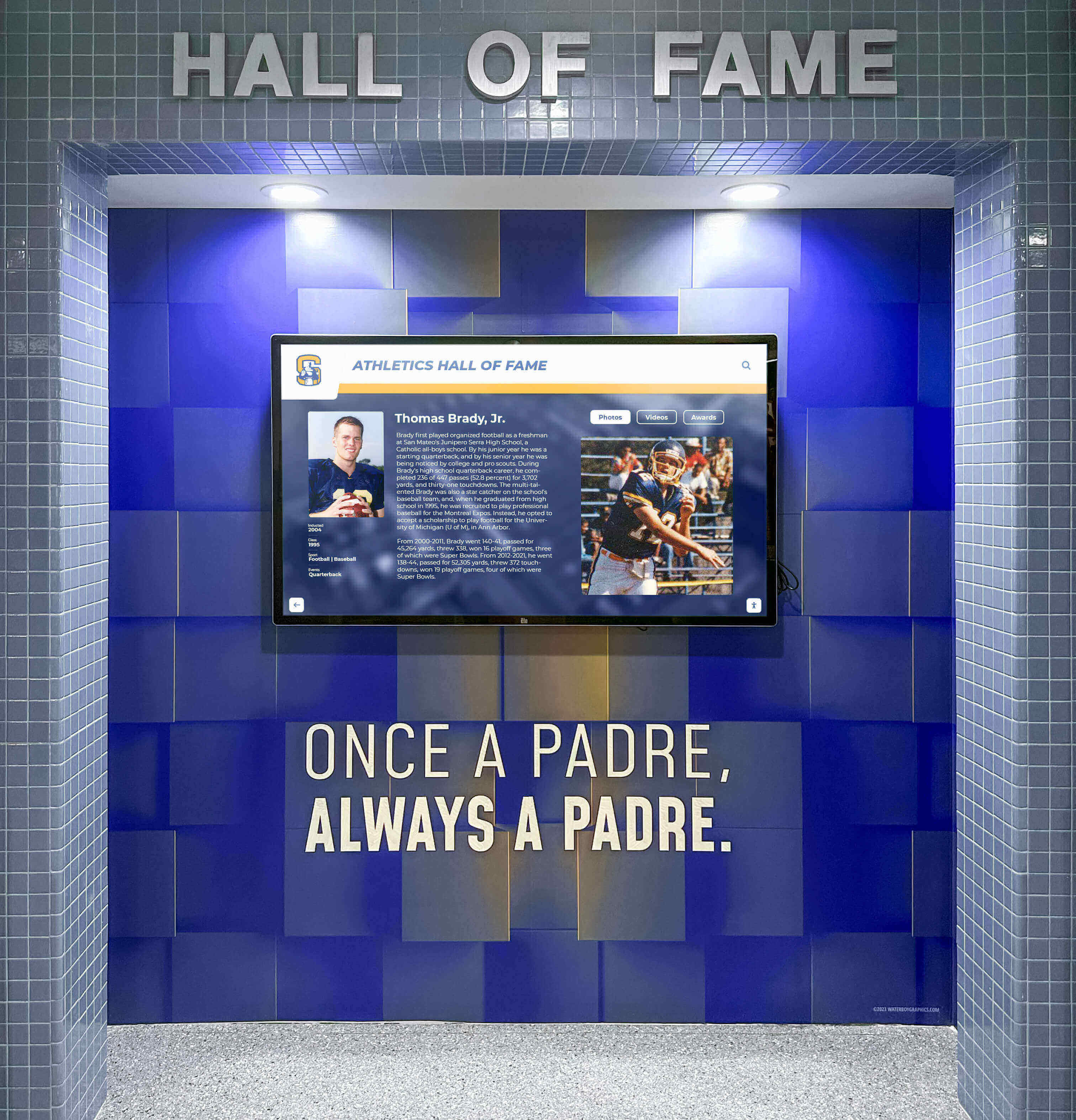
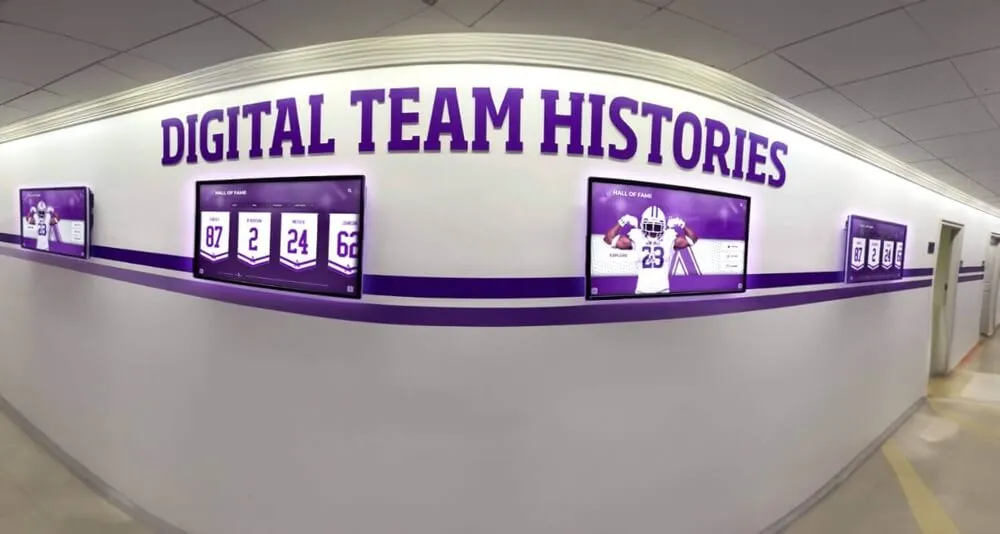
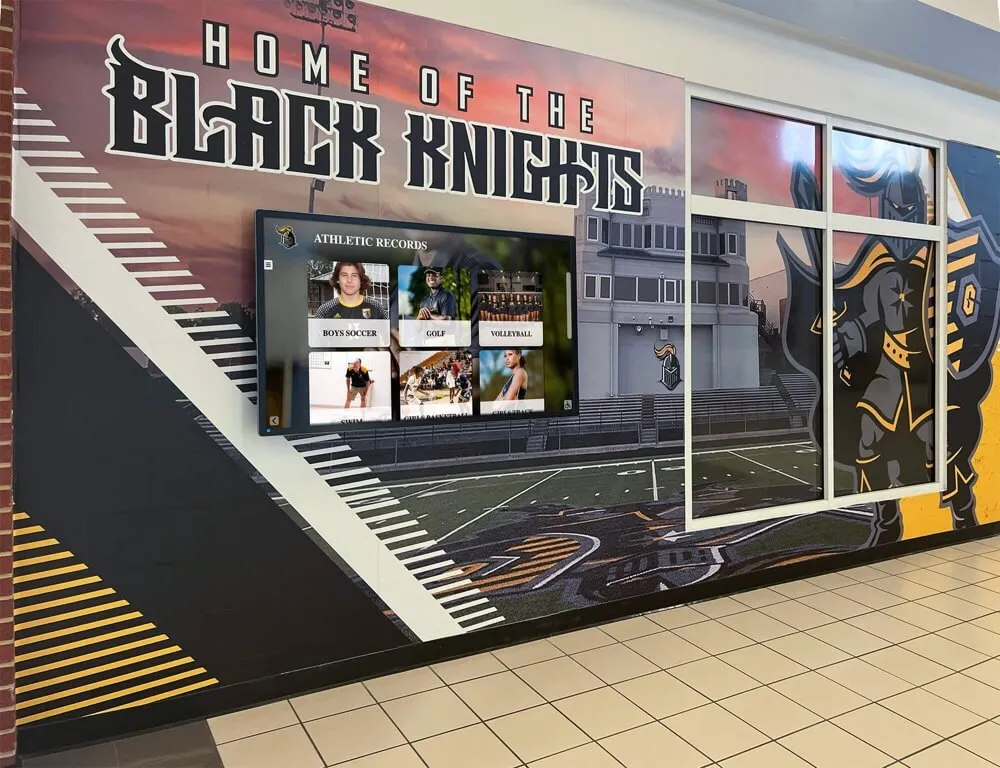
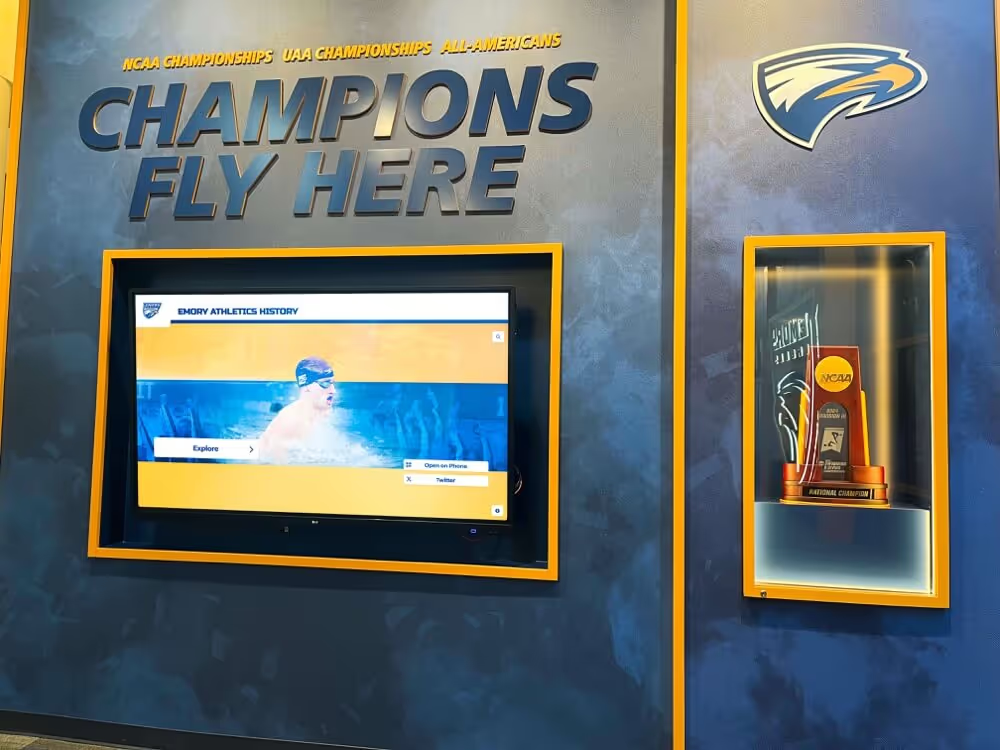
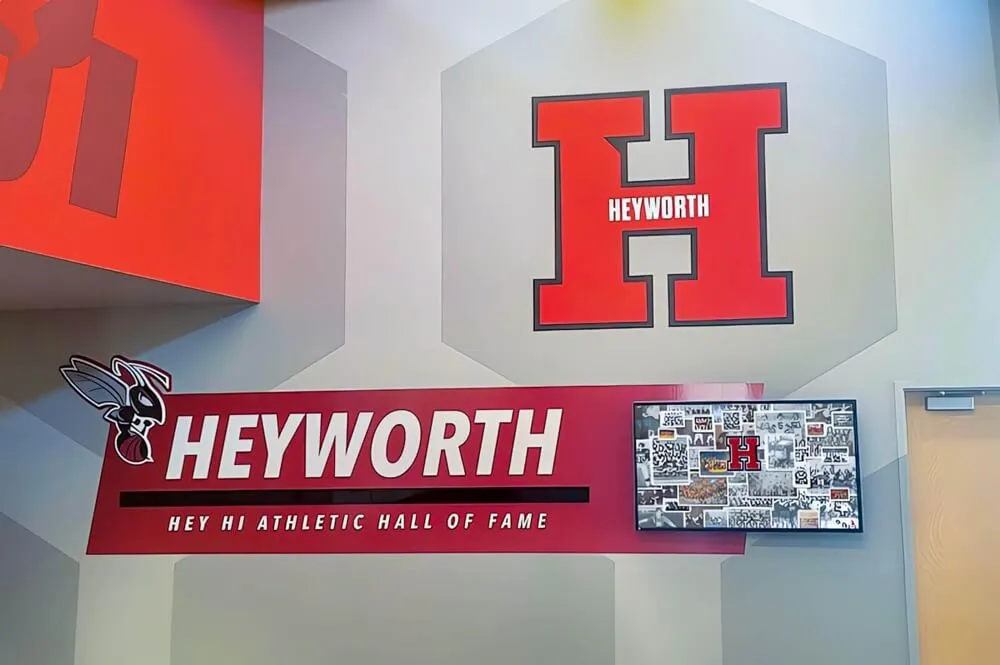
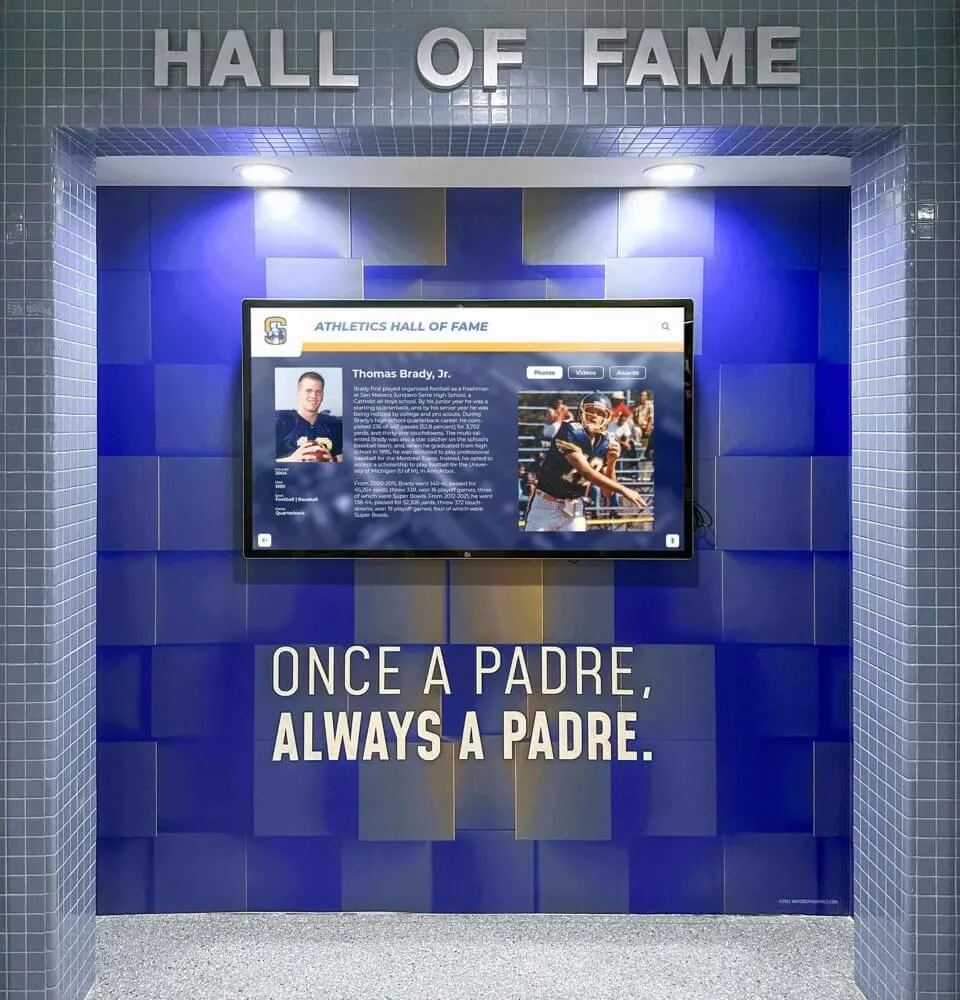
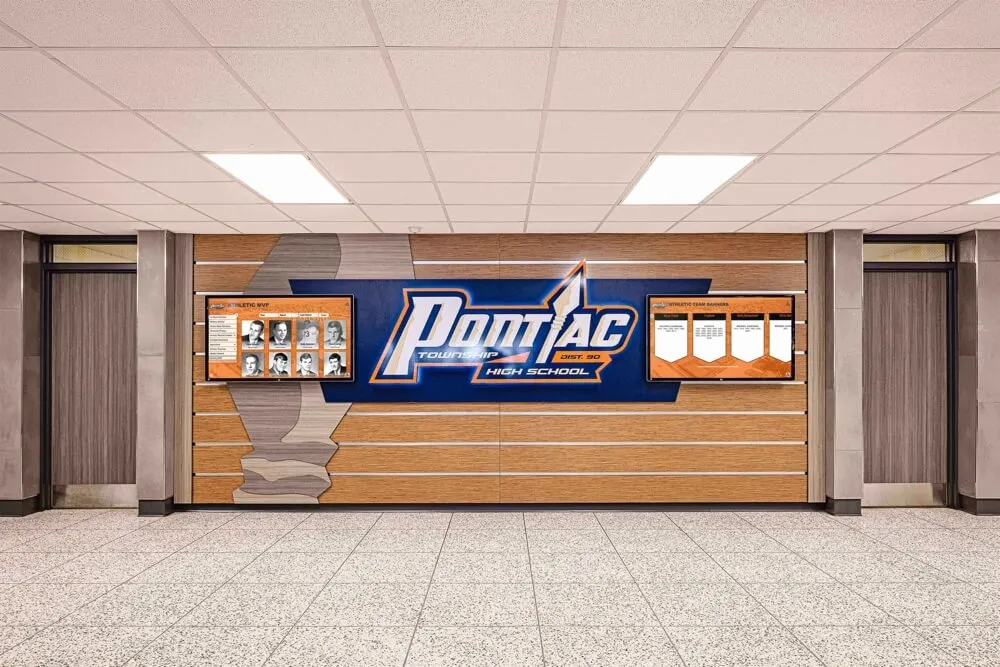
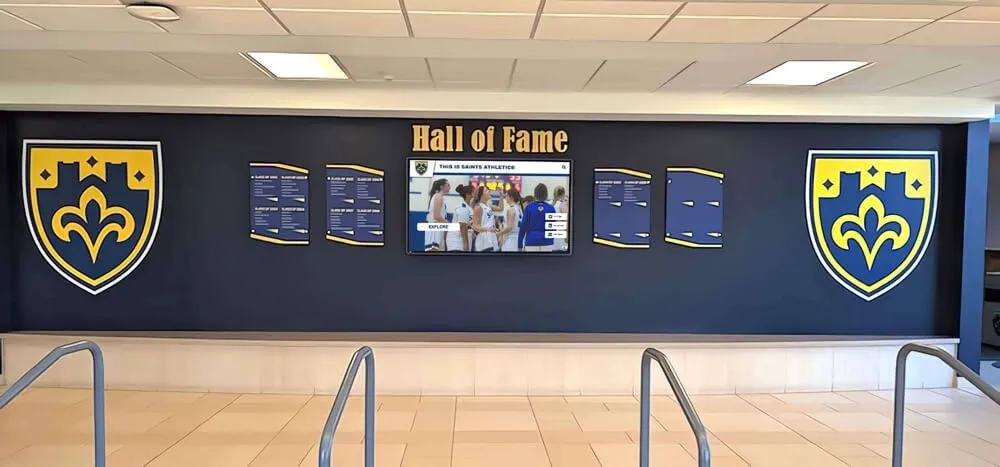
Wall-mounted displays provide permanent recognition infrastructure with unlimited capacity for celebrating achievements
Core Benefits of Touchscreen TV Displays for Athletic Information
Interactive touchscreen technology delivers multiple interconnected benefits that strengthen athletic programs across communication, engagement, recognition, and operational dimensions.
Centralized Athletic Communication Hub
The most immediate benefit touchscreen displays provide involves consolidating fragmented athletic communications into centralized information hubs accessible through prominent physical displays and complementary web portals.
Comprehensive Schedule Access
Athletic information systems can present complete seasonal schedules for all sports organized around intuitive navigation. Students searching for basketball games access complete season schedules including home and away competitions, tournament brackets and playoff information, practice schedules and facility assignments, team travel details and departure times, and real-time updates reflecting latest modifications without requiring manual refresh or reload actions.
This centralized access eliminates confusion and ensures athletes, families, and supporters always find current information through reliable sources rather than searching scattered locations or relying on outdated printouts distributed weeks earlier.
Multi-Sport Organization
Effective touchscreen platforms organize information around sport-specific sections enabling targeted discovery. Navigation structures typically include sport selection menus categorizing teams by season—fall, winter, and spring sports, level filtering showing varsity, junior varsity, and freshman information separately, gender-specific organization for sports fielding both boys and girls teams, and historical archives preserving past season information for research and nostalgia.
This organization helps stakeholders efficiently find relevant information without wading through irrelevant content about sports or levels not matching their interests or involvement.
Real-Time Game Results and Score Updates
Beyond static schedule communication, interactive displays enable real-time score sharing and game result documentation.
Immediate Score Posting
Coaches and athletic staff can update game scores immediately following competitions through simple mobile interfaces or web-based dashboards. Score updates populate across all displays and web portals within minutes of submission—enabling students remaining at school during evening games to discover results before heading home, allowing family members who couldn’t attend competitions to check outcomes remotely, providing community supporters quick access to current results without waiting for newspaper coverage or social media posts, and building excitement around successful performances through timely celebration.
Programs implementing college commitment day digital boards understand the engagement value of real-time recognition and celebration.
Season Statistics and Standings
Beyond individual game results, comprehensive athletic information systems track cumulative season statistics including current conference standings and playoff positioning, team performance statistics and trends, individual athlete statistical leaders across relevant categories, winning streaks and notable performance runs, and head-to-head results against traditional rivals.
This statistical context helps athletes and supporters understand season progressions and team performance within broader competitive landscapes rather than viewing games as isolated events without connection to overall season narratives.
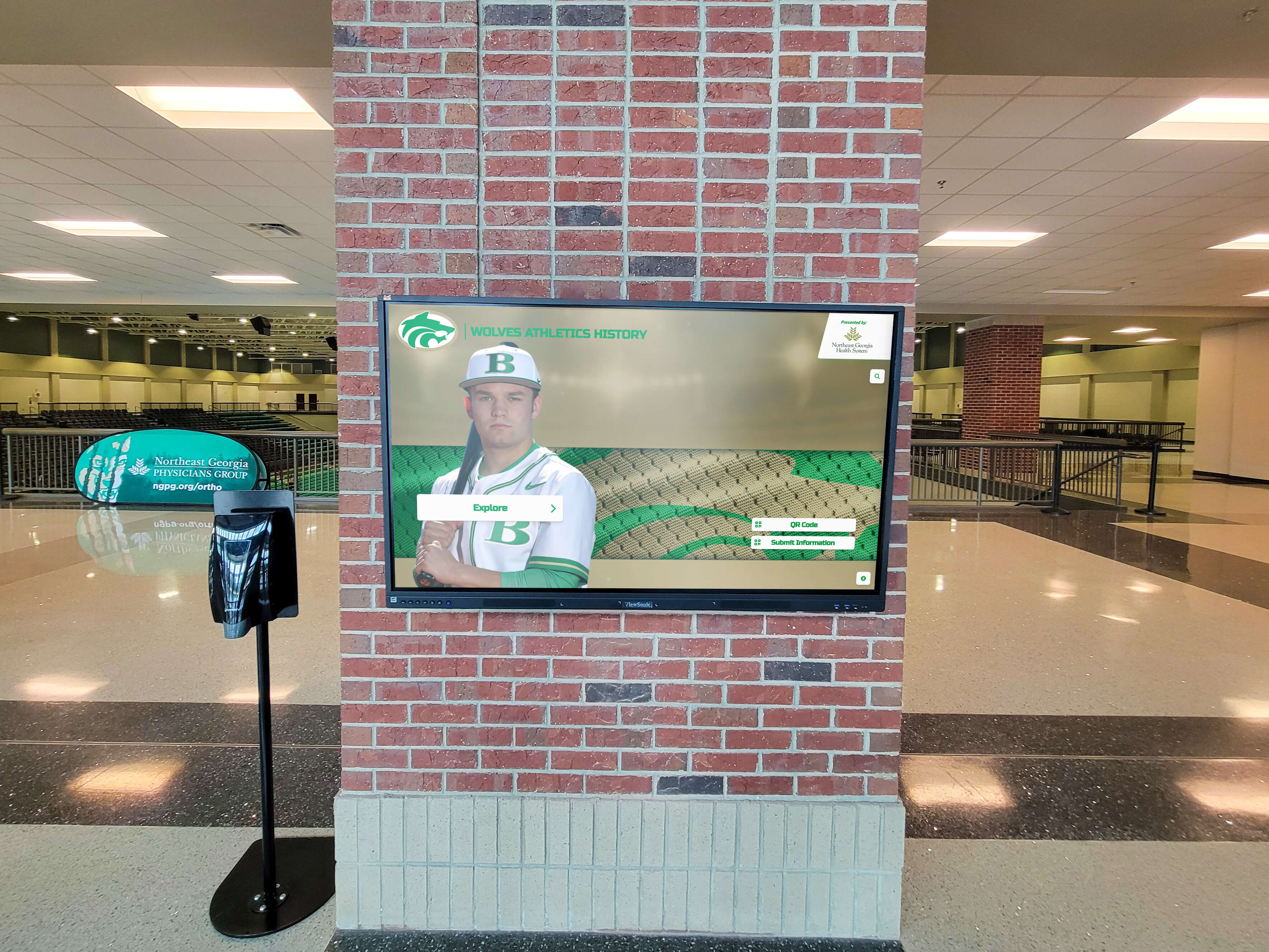
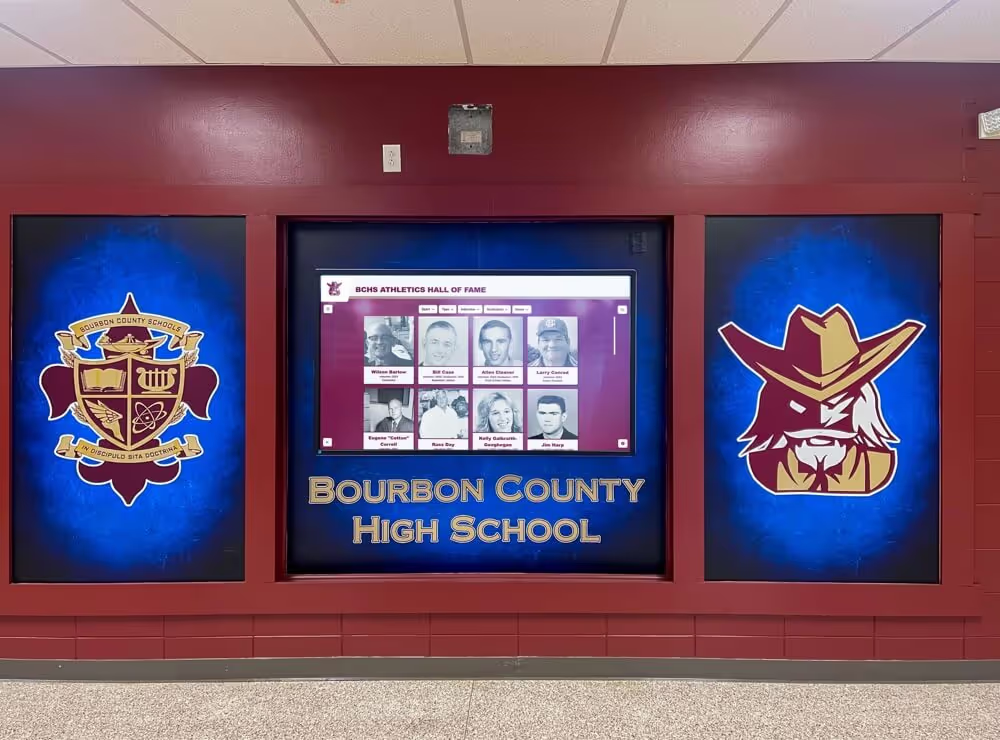
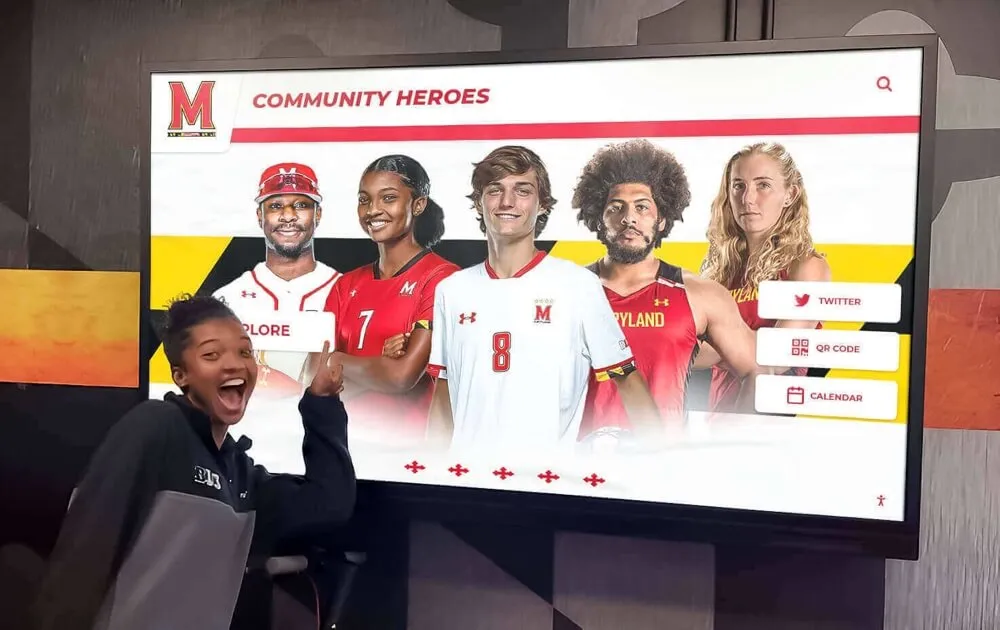
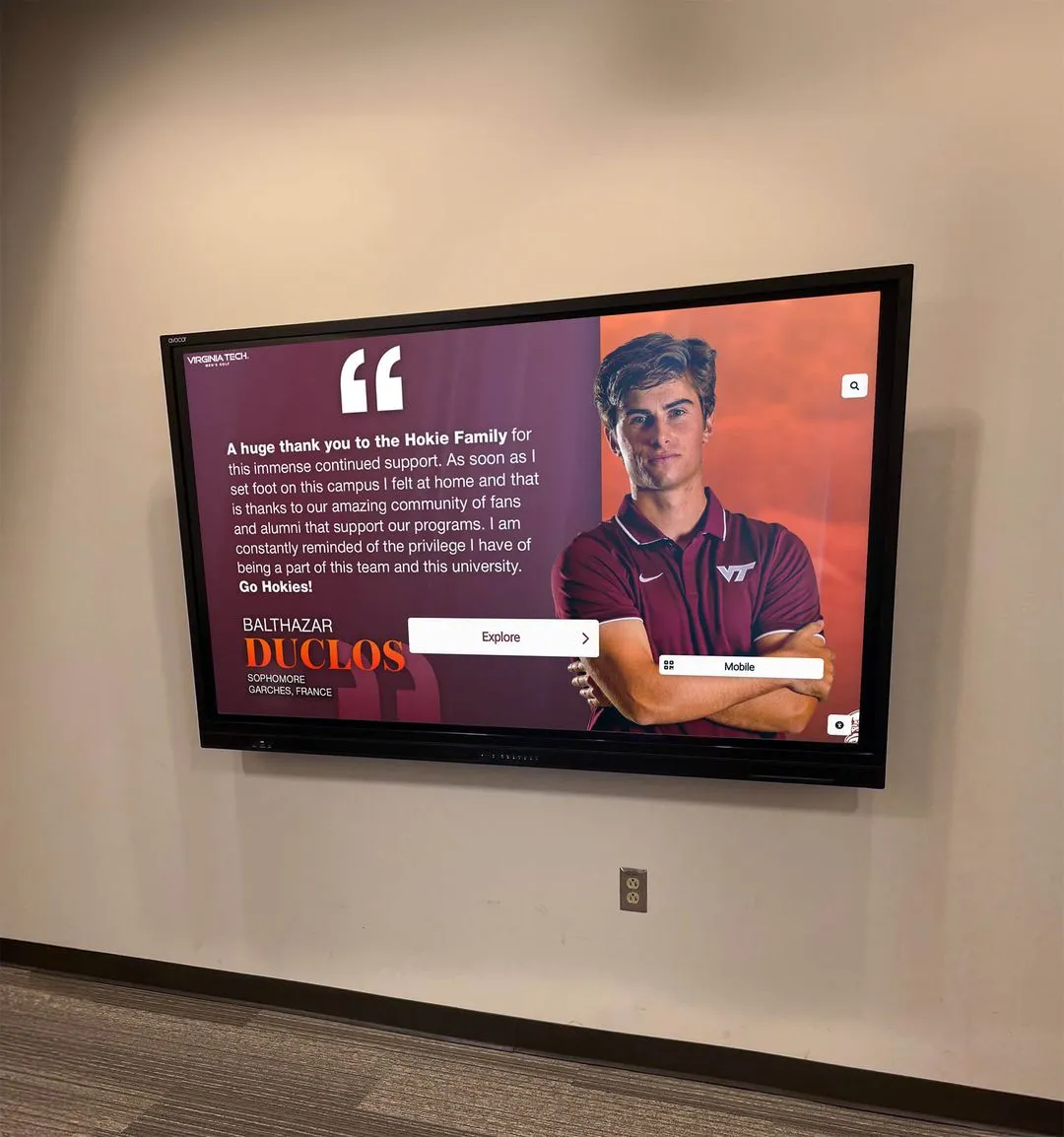
Prominent displays celebrate individual athletes while providing access to comprehensive team information
Enhanced Athlete and Community Engagement
Interactive touchscreen displays create engaging experiences that passive paper communications cannot match.
Multimedia Storytelling
Digital platforms enable rich athletic storytelling through multiple media formats. Athletic information commonly includes high-resolution team and individual athlete photos, highlight video clips from recent competitions and memorable performances, coach interviews and athlete testimonials, photo galleries documenting seasons and special events, championship celebration videos and recognition ceremonies, and historical footage connecting current teams with program traditions.
These multimedia elements transform athletic information consumption from passive reading to engaging exploration that builds emotional connections with programs, teams, and individual athletes. Research consistently demonstrates that content incorporating video generates 300-500 percent higher engagement than text-only presentations.
Interactive Exploration Features
Touchscreen functionality enables visitor-directed discovery rather than predetermined slideshow sequences. Common interactive features include search capabilities enabling name-based athlete or team discovery, filtering options narrowing information by sport, season, or team level, detailed profile pages providing comprehensive athlete biographies and statistics, photo galleries users can browse at preferred paces, video playlists allowing selective viewing of preferred content, and comparison features showing how current statistics compare to historical records.
This interactive control increases engagement time and depth. While students might glance at paper bulletin boards for 15-30 seconds, touchscreen displays with compelling content typically generate 3-7 minute interaction sessions as visitors explore multiple information categories and discover content beyond their initial search objectives.
Athletic Recruitment and Program Promotion
Modern athletic recruitment involves prospective athletes and families thoroughly researching programs during decision processes. Touchscreen displays provide powerful recruitment tools that paper communications cannot match.
On-Campus Recruitment Impact
When prospective athletes and families visit facilities during recruitment, prominent interactive displays communicate program commitment to excellence while enabling prospects to explore athletic traditions relevant to their sports. Athletic directors report that prospects naturally gravitate toward touchscreens during facility tours, spending significant time investigating recent team performance and championship success in their specific sports, discovering athletes from their geographic regions who succeeded in programs, reviewing facility quality and athletic resource commitment, and discussing program traditions with coaches during recruitment conversations.
This self-directed exploration creates stronger impressions than coach-narrated presentations because prospects control what they explore and how deeply they engage—making program discovery feel more authentic and personally relevant rather than scripted sales presentations.
Understanding high school basketball scoring records demonstrates comprehensive approaches to athletic documentation that supports recruitment.
Community Pride and Support Building
Beyond recruiting athletes, touchscreen displays strengthen community connections with athletic programs. Families attending games encounter comprehensive information about teams and athletes competing. Alumni visiting schools discover how programs evolved since their graduation. Community supporters staying informed about team performance develop stronger connections with student-athletes and programs. And media representatives covering high school sports access comprehensive information for accurate, detailed reporting.
This broader community engagement strengthens athletic program support across multiple stakeholder groups who contribute to program success through attendance, volunteerism, financial support, and advocacy.

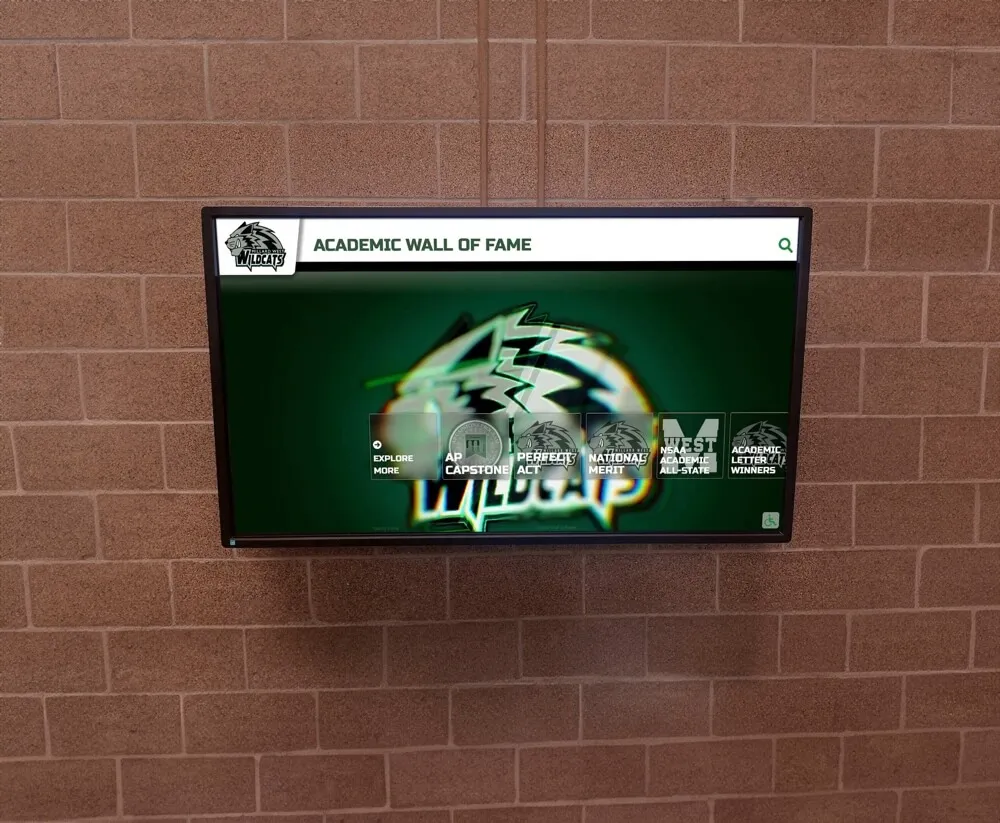
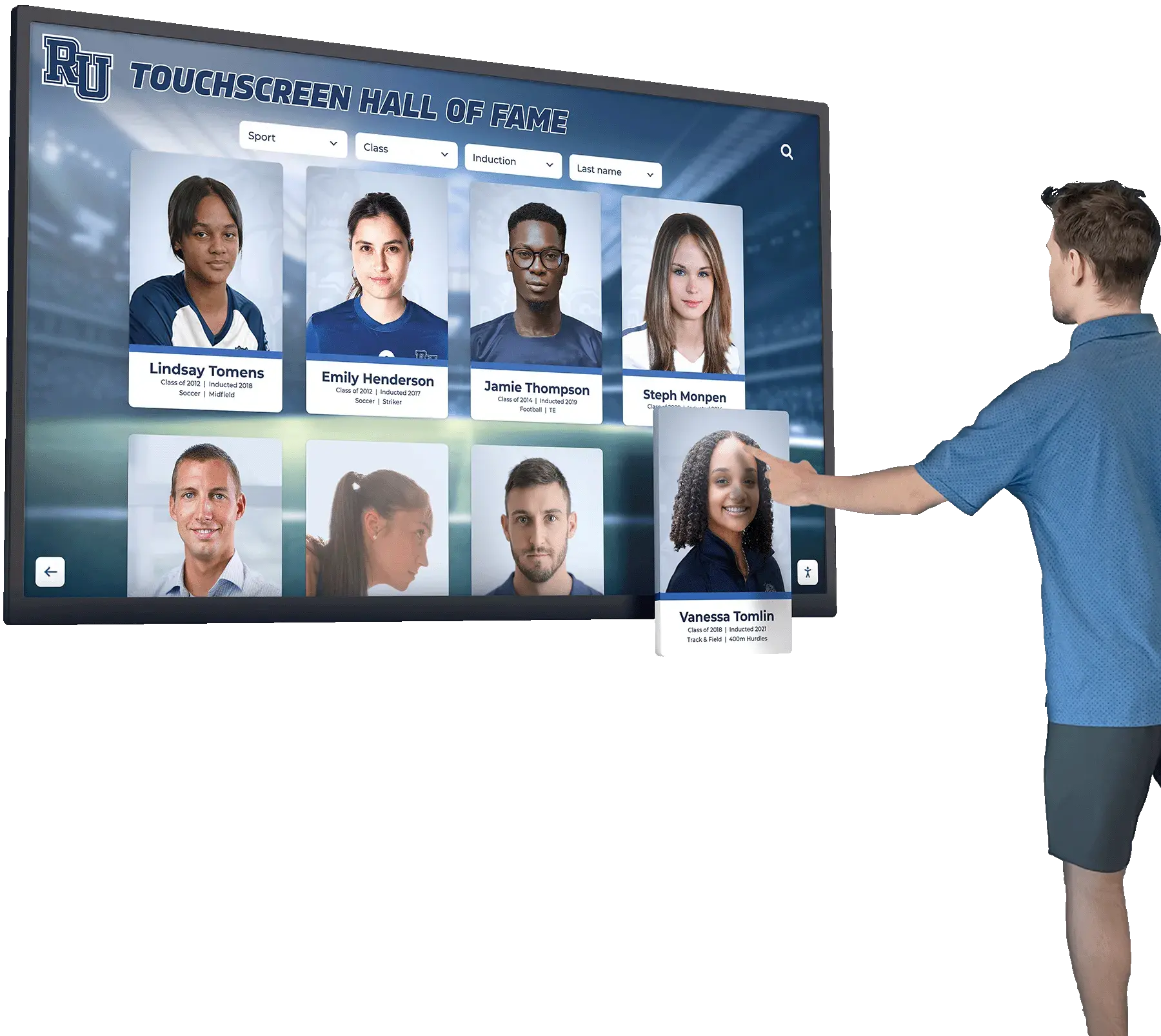
Card-based interfaces enable intuitive exploration of athletes, teams, and season information
Operational Efficiency and Cost-Effectiveness
While interactive touchscreen displays require initial technology investment, they deliver significant administrative efficiency and long-term cost advantages compared to paper-based communication approaches requiring ongoing expenditure and staff time.
Administrative Time Savings
Cloud-based content management systems enable coaches and athletic directors to update information within minutes after events occur or schedule changes emerge. Staff members enter game results through simple web forms, upload photos or videos through intuitive interfaces, modify schedules when games reschedule, and publish updates immediately—completing processes in 5-10 minutes without requiring IT department assistance, physical access to displays, or coordination with print shops for revised materials.
Programs report 75-90 percent reduction in administrative time spent managing athletic communications compared to paper-based approaches requiring document creation, printing coordination, physical posting across multiple locations, and periodic removal of outdated information.
Long-Term Financial Advantages
Digital touchscreen systems involve higher initial investment—typically $8,000-18,000 per display including hardware, software, and installation—but eliminate recurring costs that make paper communications expensive over time. Consider cumulative costs of paper, printing, and laminating for seasonal schedules distributed to hundreds of athletes across multiple sports, poster creation and replacement for bulletin board displays changed weekly throughout school years, schedule reprint expenses when games reschedule requiring revised materials, bulletin board maintenance including backing paper and mounting supplies, and staff time for content creation, printing coordination, and physical posting.
Over 5-10 year timeframes, programs spend $12,000-30,000 on paper-based athletic communications while digital systems incur only annual software licensing fees of $1,500-3,500 after initial investment. The financial advantage becomes more pronounced for larger athletic programs with extensive multi-sport schedules requiring frequent communication updates throughout academic years.
Implementing Touchscreen TV Systems in Athletic Facilities
Successful touchscreen deployment requires thoughtful planning across technology selection, content development, physical installation, and organizational adoption.
Planning and Needs Assessment
Before purchasing touchscreen technology, athletic programs should carefully assess communication needs and stakeholder expectations. Key planning considerations include what information categories require regular communication—schedules, scores, rosters, records, news updates—and what current communication challenges exist that digital systems should address.
Programs should identify primary users and stakeholders including student-athletes across all sports and competition levels, coaching and athletic department staff, parents and family members, prospective recruits and their families, alumni and community supporters, and school administrators and staff. Budget assessment should consider available funding for initial investment and ongoing operational costs. And existing infrastructure evaluation should examine network connectivity, electrical access, and optimal physical installation locations throughout athletic facilities and broader school campuses.
Involving stakeholders early builds organizational support and ensures solutions meet actual needs rather than imposing technology without clear purpose. Planning committees should include athletic directors responsible for program communications, head coaches representing different sports and seasons, technology staff who will support technical implementation, facilities managers understanding building infrastructure and limitations, and school administrators who must approve technology investments.
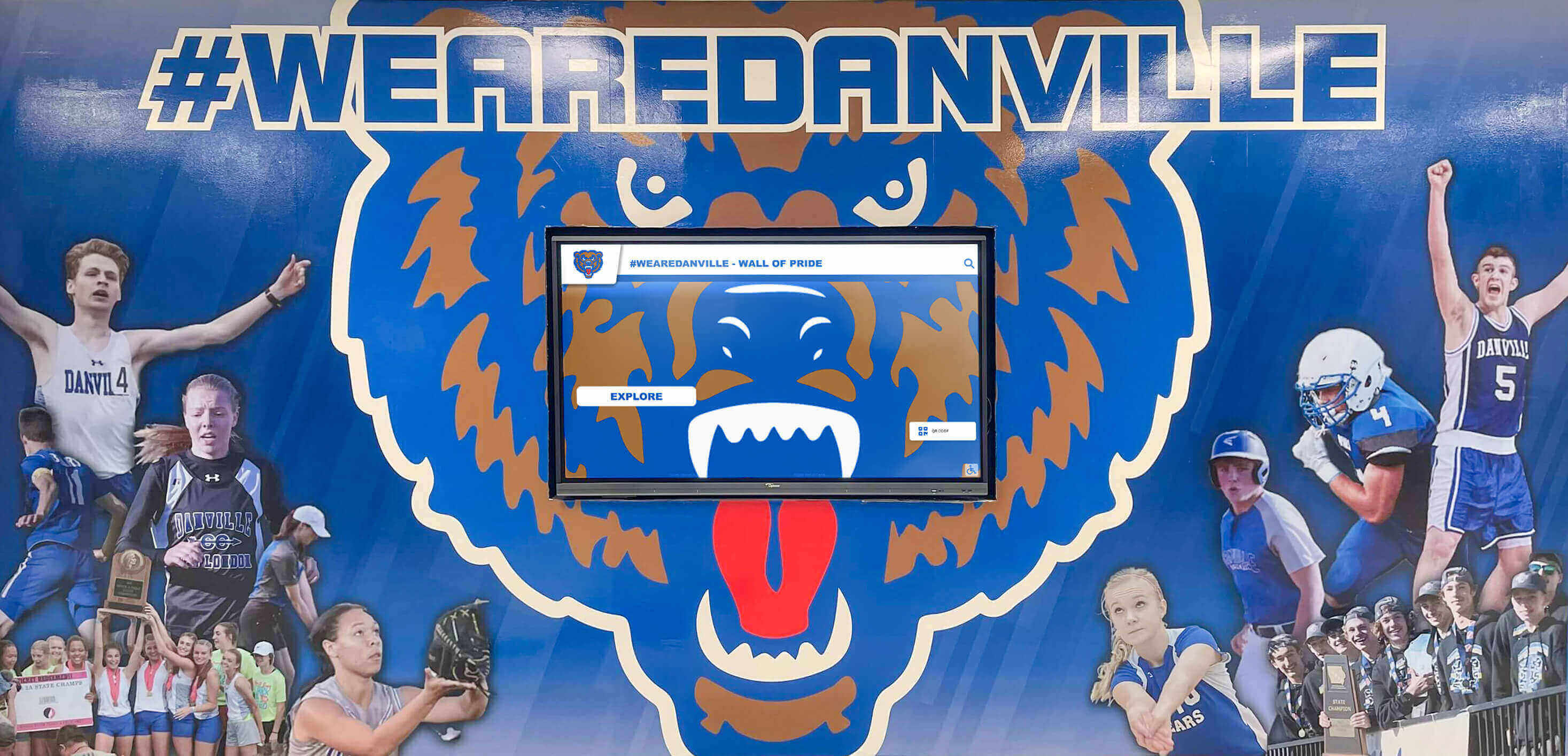
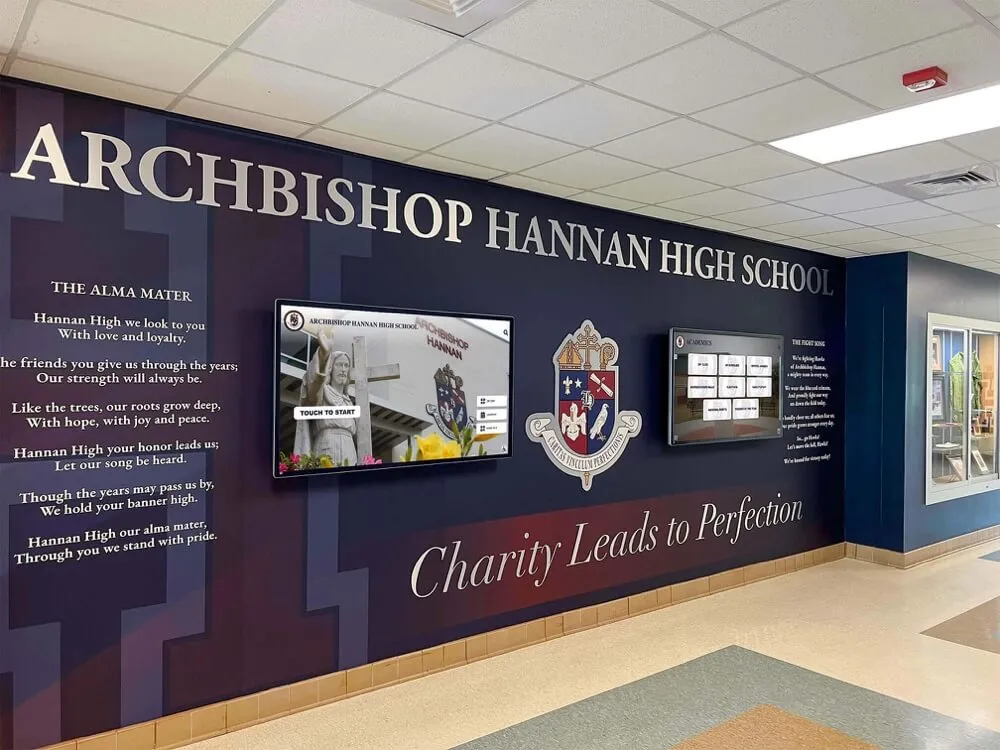
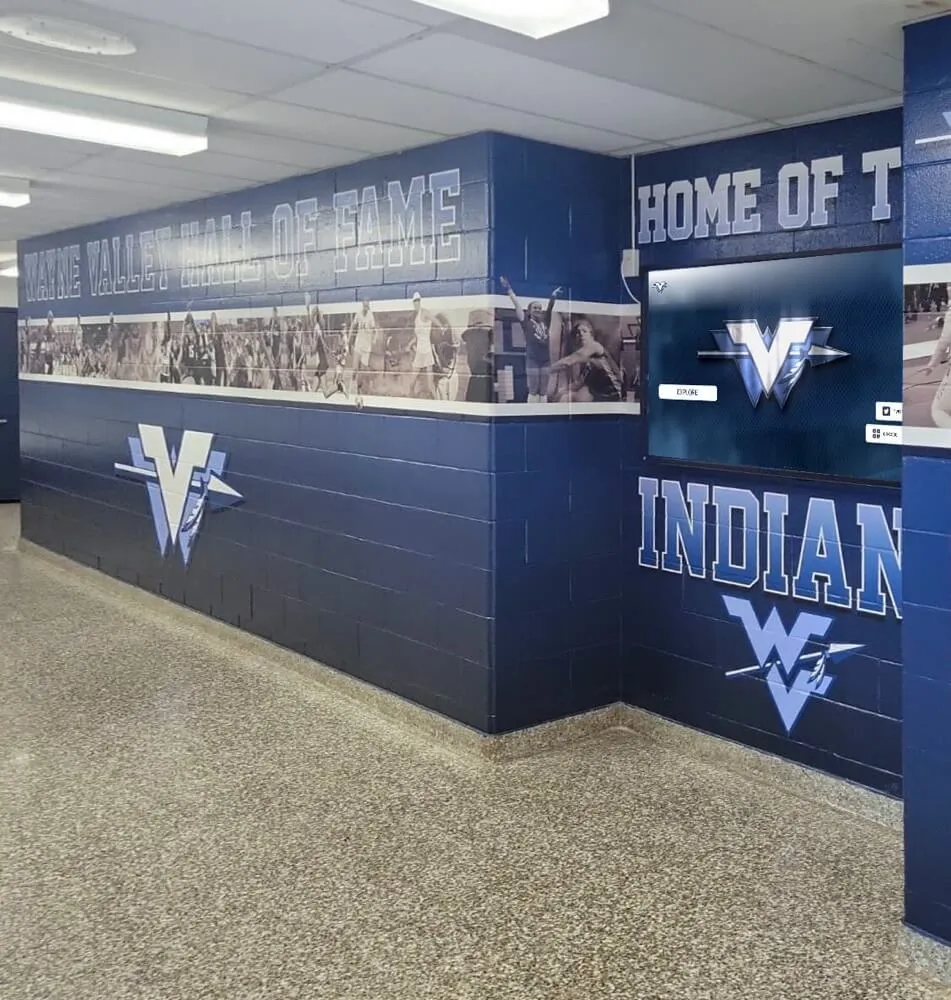
Coordinated designs integrate digital displays with existing athletic facility aesthetics and branding
Content Strategy Development
Touchscreen value depends on comprehensive content that serves stakeholder needs systematically. Programs should develop athletic information strategies balancing thoroughness with realistic implementation timelines and available resources.
Core Content Categories
Successful athletic information systems typically include comprehensive seasonal schedules with dates, times, locations, and opponent information, game results and scores updated immediately following competitions, team rosters with athlete photos and biographical details, season statistics and performance tracking, championship celebrations and award recognition, athletic records and historical achievements, facility information and directions, and program news and announcements.
Content Creation and Management Workflows
Effective implementation requires clear processes including assigned responsibility for schedule updates and score posting across all sports, regular timelines for content submission before publishing deadlines, verification processes ensuring accuracy before information goes live, consistent formatting standards across all sports and content types, and multimedia asset collection including photos, videos, and graphics enhancing engagement.
Programs implementing systematic workflows report 60-80 percent reduction in content gaps and outdated information compared to ad hoc approaches without clear responsibilities or processes.
Understanding athletic recognition programs demonstrates comprehensive content approaches applicable across athletic communications.
Technology Selection and Platform Evaluation
Not all touchscreen solutions deliver equal results for athletic communication applications. Programs should evaluate purpose-built athletic platforms designed specifically for sports information versus generic digital signage repurposed for athletic use.
Critical Evaluation Criteria
Athletic-specific platforms should provide intuitive content management enabling coaches and athletic staff to maintain displays without technical expertise, comprehensive scheduling features with calendar integration and automated updates, multimedia support including photos, videos, and graphics, athletic-specific organization features including sport filtering, level sorting, and season archives, mobile-responsive interfaces enabling smartphone and tablet content management, and web-based access extending information beyond physical display locations.
Programs should request demonstrations using actual athletic content rather than generic examples, speak with reference schools about implementation experiences and long-term satisfaction, verify total cost of ownership including initial investment and recurring annual fees, and confirm administrative interface usability for non-technical staff who will maintain content throughout seasons.
Implementation Partners
Solutions like Rocket Alumni Solutions provide purpose-built platforms specifically designed for athletic communication with proven track records across hundreds of schools nationwide. Purpose-built systems deliver superior results compared to generic digital signage platforms that lack athletic-specific features and workflows optimized for sports communication needs.
Physical Installation and Location Selection
Touchscreen effectiveness depends significantly on strategic placement in high-traffic locations where students, athletes, families, and visitors naturally encounter displays throughout daily routines.
Optimal Installation Locations
Athletic facility installations commonly succeed in main gymnasium entrances welcoming visitors immediately upon facility arrival, athletic corridor hallways where athletes pass daily traveling between locker rooms and competition venues, school main entrances reaching all students and visitors during arrival and departure, cafeteria or commons areas where students gather during lunch periods and free time, athletic director office areas where families and recruits meet during recruitment conversations, and locker room areas where teams gather before practices and competitions.
Professional installation ensures proper mounting supporting display weight safely for commercial-grade touchscreens weighing 60-120 pounds, adequate electrical power and network connectivity for reliable continuous operation, appropriate height positioning for accessibility and comfortable viewing by diverse users, and clean cable management maintaining professional appearance suitable for prominent public locations.
Installation costs typically range from $800-2,500 depending on mounting complexity, electrical work requirements, and network infrastructure needs.
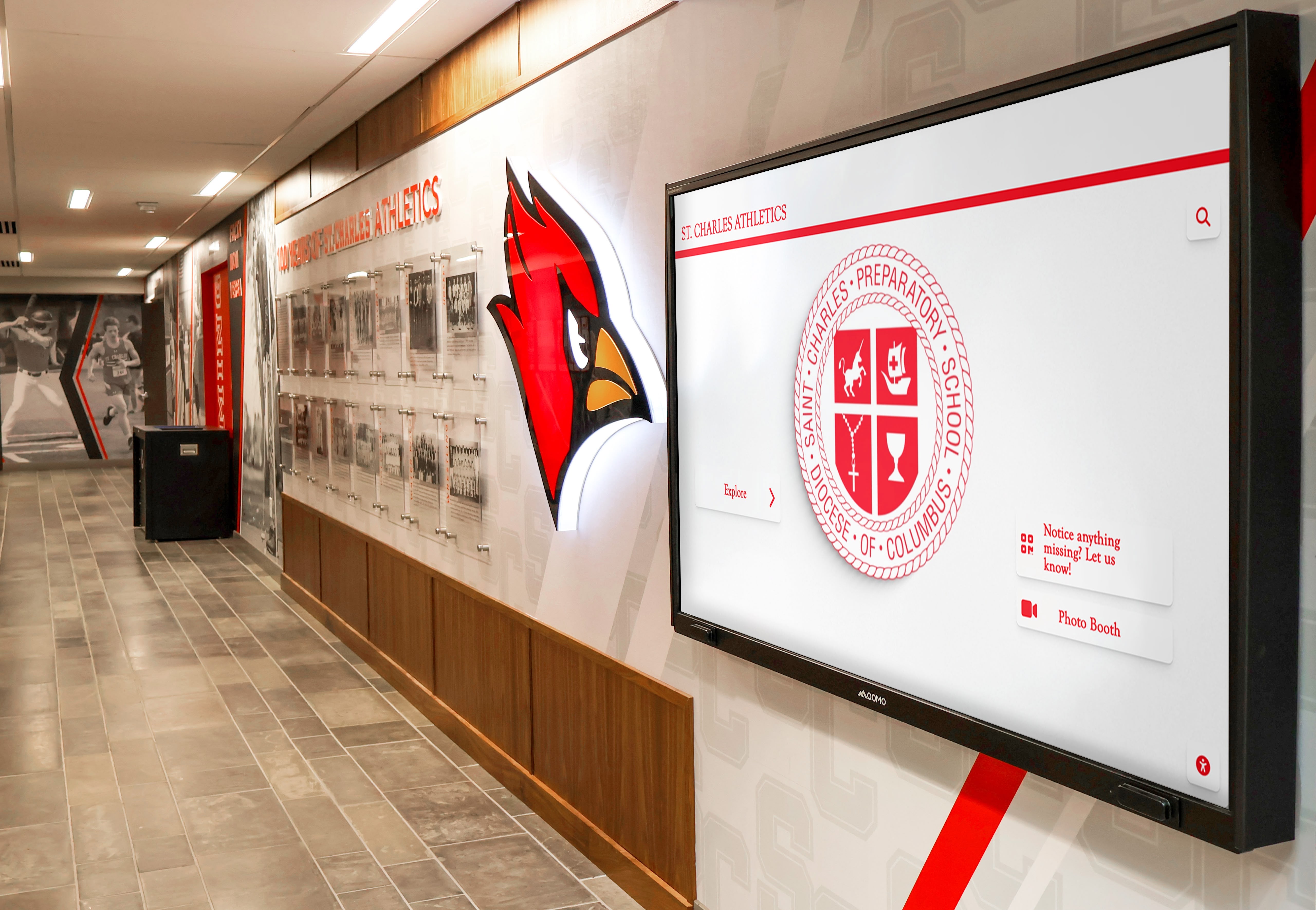
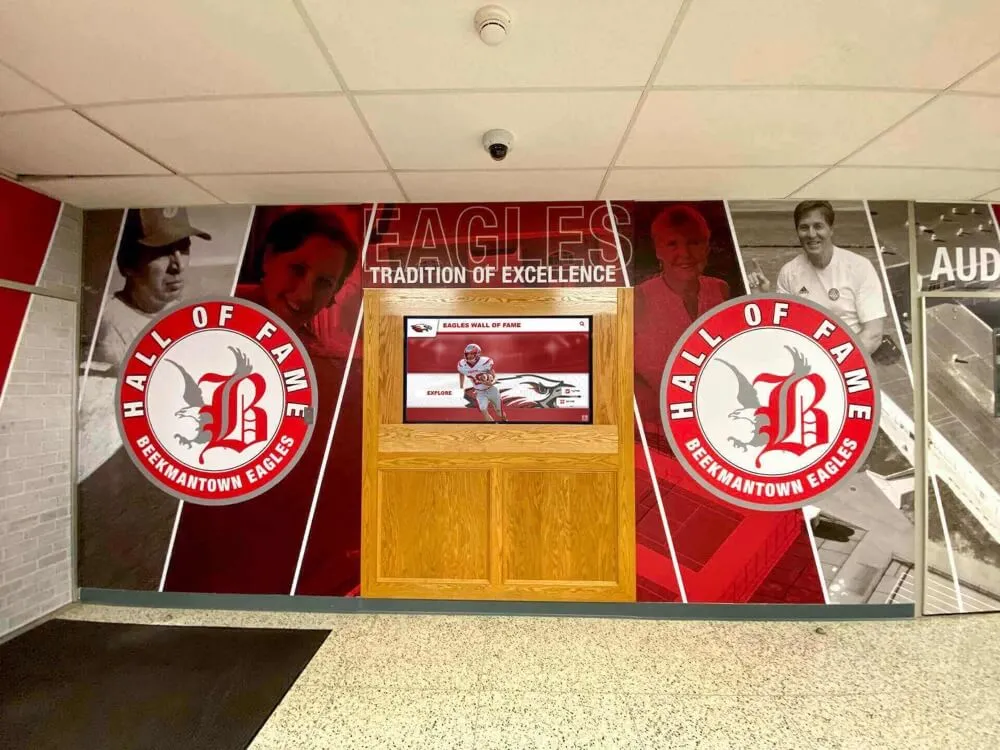
Professional installations create impressive focal points in athletic facilities and main school corridors
Content Best Practices for Athletic Information Displays
Effective content maximizes engagement while serving diverse stakeholder information needs.
Schedule Communication Excellence
Athletic schedules represent the most frequently accessed content category requiring special attention to detail and usability.
Comprehensive Schedule Details
Beyond basic game dates and times, effective schedule displays should include complete opponent information with school names and mascots, detailed location addresses with mapping links for away competitions, competition start times with separate listings for different level games, transportation departure information for away games requiring team travel, ticket pricing and purchase information for home competitions, and livestream or broadcast details when games are covered through media platforms.
This comprehensive information answers common questions proactively rather than requiring separate communications for details athletes and families need for planning attendance and participation.
Visual Schedule Design
Schedule presentations should prioritize scanability and quick information comprehension through clear date and time hierarchy emphasizing when games occur, visual distinction between home and away competitions, color coding or icons identifying different sports or competition levels, prominent display of current week or upcoming games, and countdown timers showing time remaining until next competitions.
Research on information design consistently demonstrates that visual hierarchy and formatting significantly impact comprehension speed and accuracy—well-designed schedules enable 40-60 percent faster information discovery compared to dense text lists without visual organization.
Game Result and Score Presentation
Timely score communication celebrates success while keeping communities informed about team performance throughout seasons.
Immediate Result Updates
Effective programs update displays within 2-4 hours of competition completion—early enough that information feels current rather than stale but allowing sufficient time for score verification and basic stat compilation. Result presentations should include final scores with team names clearly indicated, competition location and level, standout performer highlights noting exceptional individual contributions, next game information maintaining forward focus, and photo or video content when available from competitions.
This timely communication demonstrates athletic department responsiveness while building excitement around team success and individual achievement.
Understanding high school graduate displays provides frameworks for celebration content that translates effectively to athletic recognition.
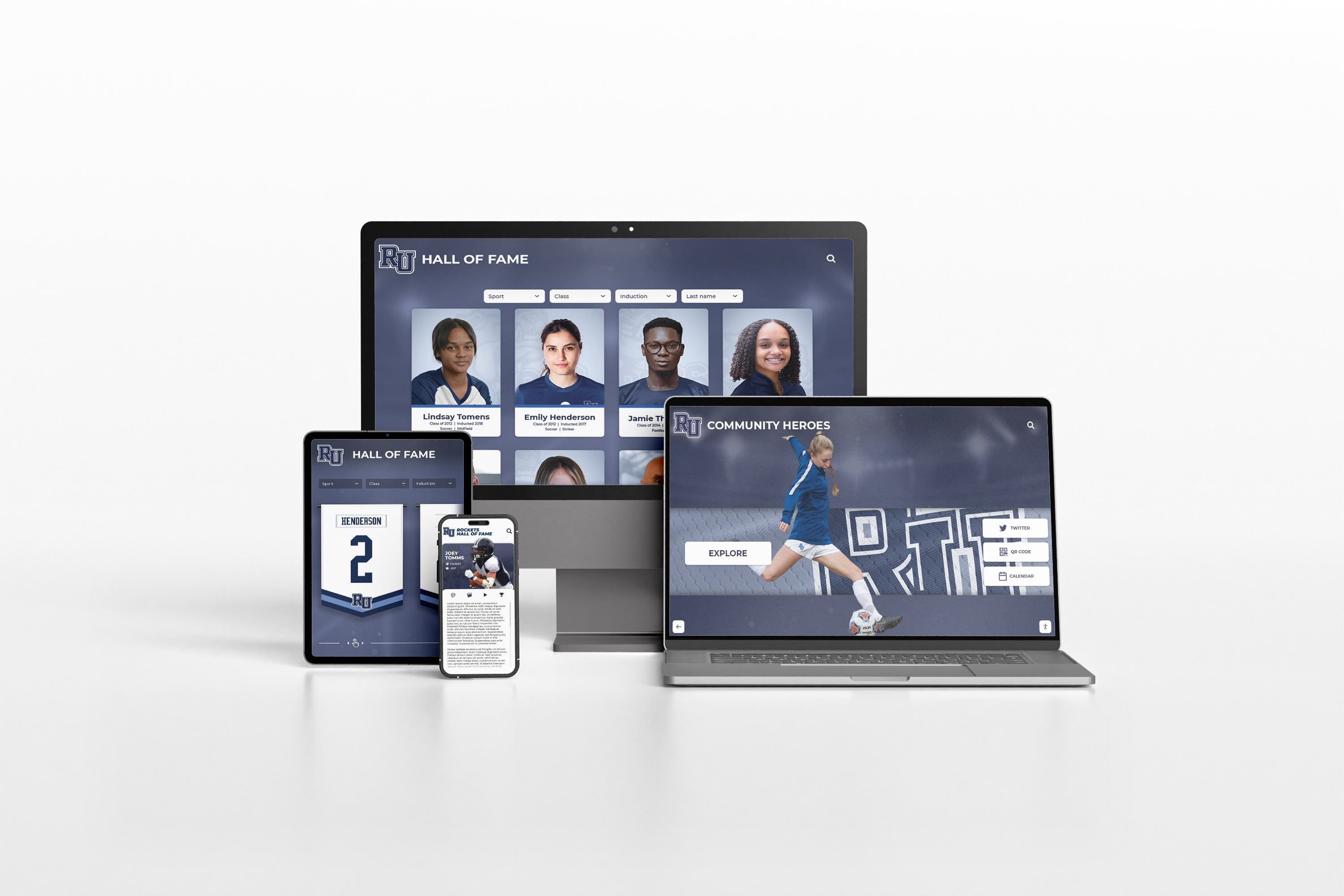
Web-based access extends athletic information beyond physical displays to any device anywhere
Athlete and Team Profile Content
Biographical content humanizes athletes while building community connections with student-athletes representing schools in competitions.
Individual Athlete Profiles
Comprehensive athlete profiles typically include high-quality photos in uniform or action shots from competitions, basic biographical information including grade level and hometown, athletic statistics and performance highlights, coach quotes about athlete contributions and character, academic honors and achievements, college commitment information for seniors, and post-graduation updates for alumni maintaining connections.
These profiles transform athletes from names in box scores to individuals with stories, backgrounds, and accomplishments that community members can appreciate and support throughout seasons and careers.
Team Season Summaries
Beyond individual profiles, team content should document complete seasons including roster photos with all athletes and coaches, season statistics and performance summaries, championship achievements and tournament results, memorable game highlights and defining moments, senior recognition celebrating graduating athletes, and historical context comparing seasons to program traditions.
This comprehensive documentation preserves season memories while building program heritage that future teams and athletes can reference and build upon through their own achievements.
Athletic Record and Achievement Recognition
Historical achievement content connects current teams with program traditions while inspiring future excellence through documented proof of what’s possible in programs.
Record Documentation
Athletic record displays should include all-time records across relevant categories for each sport, season records showing single-season excellence, career records documenting sustained achievement across multiple years, team records celebrating collective success, and facility records specific to home venues when applicable.
Each record should document the athlete or team achievement, performance details and statistics, competition context showing when and where records occurred, previous record information showing progression, and multimedia content including photos or videos when available.
Understanding McDonald’s All-American digital recognition demonstrates elite achievement celebration applicable across recognition contexts.
Championship Celebration
Team championship recognition should comprehensively document conference championships and tournament titles, state championship appearances and victories, undefeated seasons and win streak achievements, national ranking recognition when applicable, and team photos and roster documentation preserving championship team memories.
This celebration communicates program success patterns while inspiring current teams to add their own chapters to championship traditions through competitive excellence and team success.

Prominent digital displays create focal points celebrating comprehensive athletic excellence across all programs
Measuring Touchscreen Impact in Athletic Programs
Understanding how stakeholders interact with touchscreen displays helps programs demonstrate value, justify investment, and continuously improve athletic communications.
Engagement Analytics and Usage Tracking
Quality touchscreen platforms provide comprehensive analytics tracking usage patterns and engagement levels. Valuable metrics include total interaction sessions showing how frequently visitors use displays, average session duration indicating depth of engagement with content, most-viewed content categories revealing stakeholder priorities and interests, search terms demonstrating what information visitors seek most frequently, and peak usage times informing optimal periods for featuring priority content.
Programs can use insights to identify which information categories generate most engagement, determine what additional content stakeholders seek, understand traffic patterns informing content update strategies, demonstrate touchscreen value to administrators supporting ongoing investment, and optimize content based on actual usage rather than assumptions about stakeholder interests.
Analytics commonly reveal surprising patterns—historical achievement content viewed repeatedly by current athletes seeking motivation, schedule information accessed most heavily on Fridays before weekend competitions, and specific sports or teams generating unexpectedly strong community interest suggesting opportunities for expanded coverage.
Stakeholder Feedback Collection
Beyond quantitative analytics, programs should gather qualitative feedback through athlete surveys about information accessibility and satisfaction, parent feedback during season-end evaluations, coach observations about communication effectiveness, prospective recruit reactions during campus visits, community supporter comments at competitions and events, and administrator assessment of program communication quality.
This qualitative feedback often reveals impact that metrics cannot fully capture—athletes expressing appreciation for comprehensive schedule access enabling better planning, parents noting reduced confusion about game locations and times, coaches observing improved attendance at competitions through better communication, recruits mentioning information accessibility as factors in program interest, and community supporters feeling more connected to programs through comprehensive athletic information access.
Regular feedback collection enables continuous improvement addressing content gaps, navigation challenges, and opportunities to enhance athletic communications serving stakeholder needs more effectively.
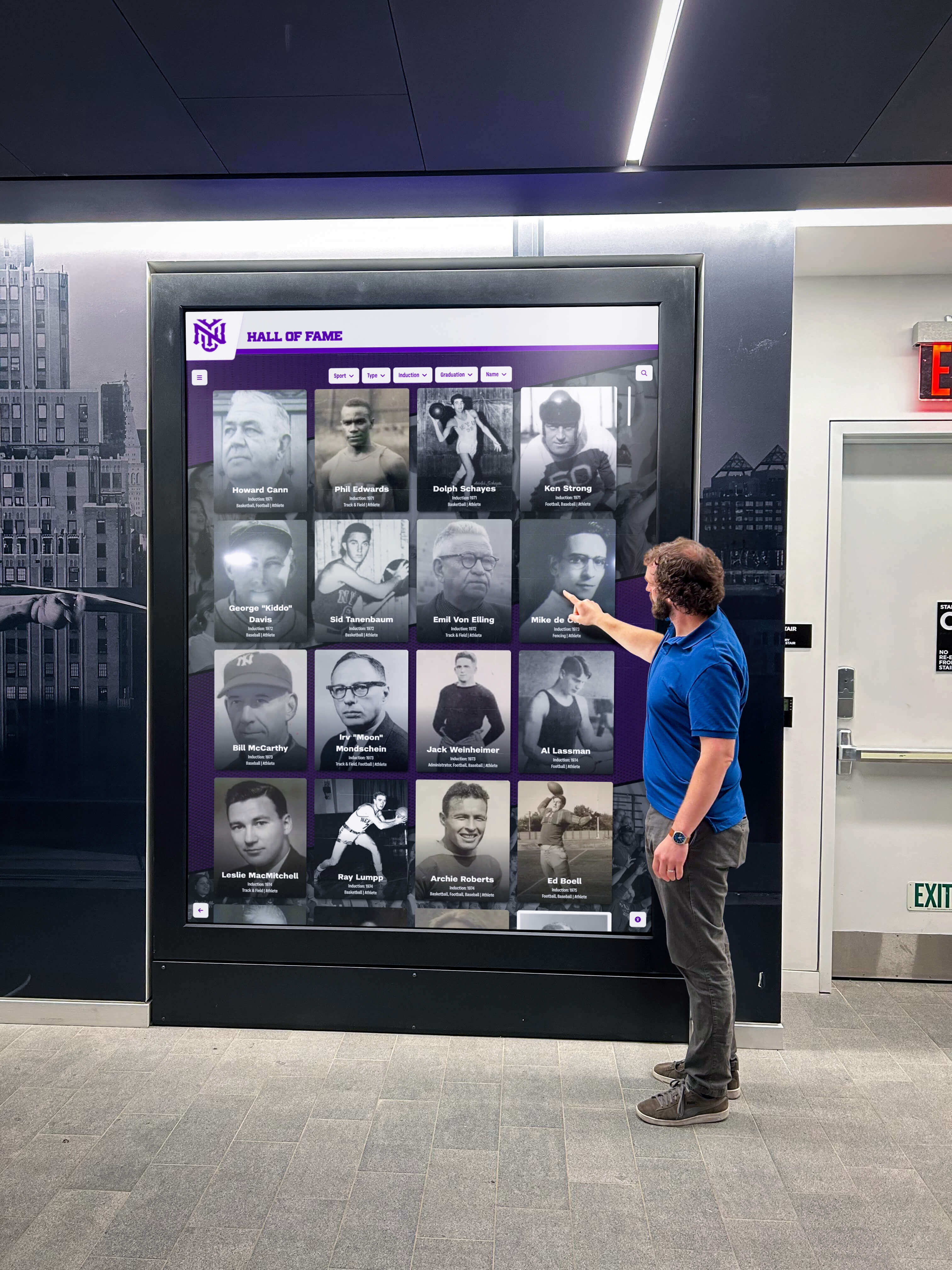
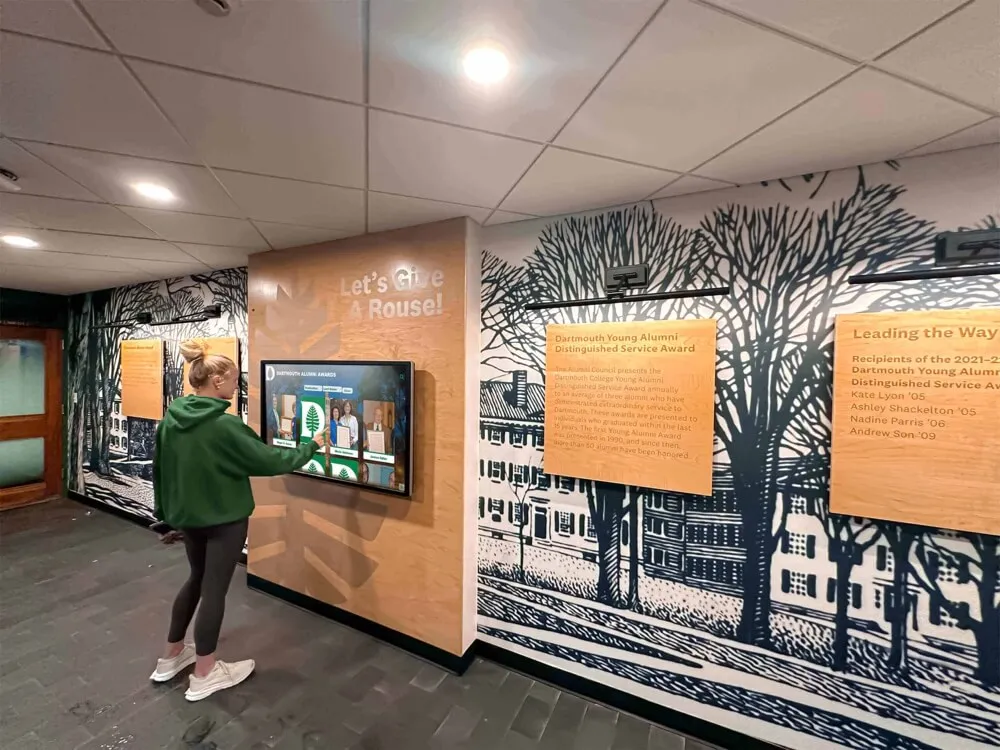
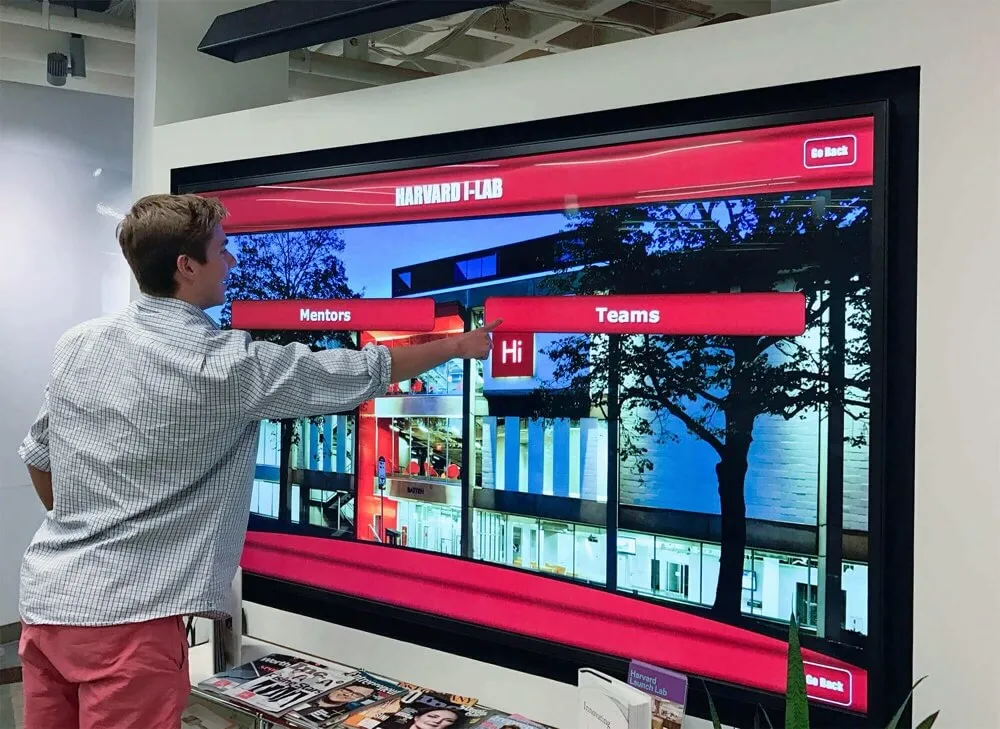
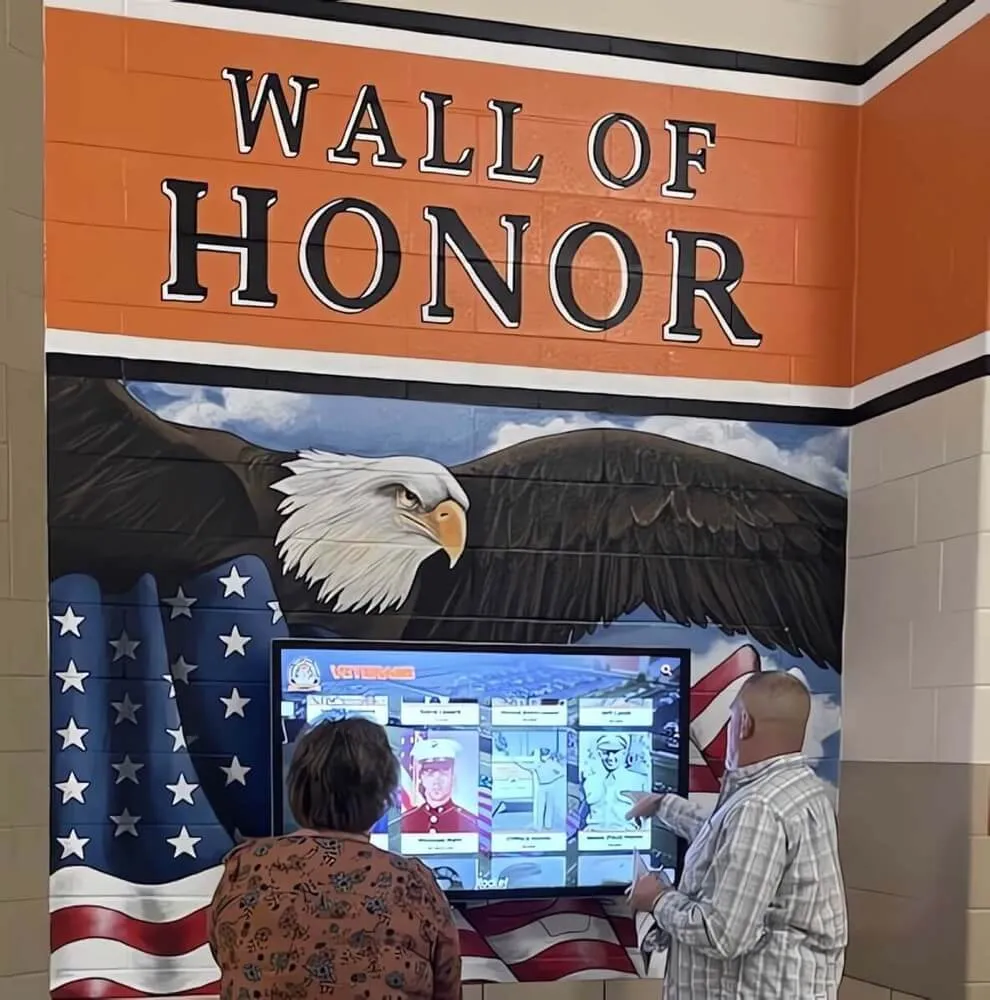
Interactive platforms engage visitors of all ages through intuitive navigation and compelling content
Long-Term Cultural Impact
The most significant touchscreen benefits often emerge over time as comprehensive athletic communication becomes embedded in school culture. Programs implementing systematic digital athletic information typically report increased athlete awareness of schedules and program expectations, enhanced family satisfaction with athletic department communication quality, improved community engagement and attendance at competitions, stronger program pride and identity through systematic achievement celebration, reduced confusion and communication issues requiring staff intervention, and modernized program image demonstrating innovation and student-centered priorities.
These cultural shifts justify touchscreen investment beyond immediate communication value—strengthening programs across multiple dimensions including participation, attendance, community support, and overall athletic excellence as systematic communication creates cohesive athletic communities united around shared information and collective celebration.
Common Implementation Challenges and Solutions
While touchscreen technology delivers significant benefits, programs should anticipate and proactively address common implementation challenges.
Budget Constraints and Funding Strategies
Touchscreen investment requires initial capital typically ranging from $8,000-18,000 per display depending on screen size, installation complexity, and software platform selection. Programs facing budget constraints can pursue several funding strategies including phased implementation starting with single displays in highest-impact locations, booster club funding through designated campaigns for athletic communication technology, alumni donations from graduates passionate about supporting program modernization, corporate sponsorships from local businesses receiving recognition for contributions, and grant applications to foundations supporting educational technology initiatives.
Some programs incorporate touchscreen technology into facility renovation projects or capital campaigns, treating comprehensive athletic communication infrastructure as permanent investments deserving capital funding rather than limiting consideration to annual operating budgets.
Understanding digital donor walls provides fundraising frameworks applicable to athletic technology initiatives.
Content Development Capacity
Comprehensive athletic information requires ongoing content creation including schedule updates, score posting, athlete profiles, photo collection, video editing, and record documentation spanning multiple sports and seasons throughout academic years.
Programs with limited staff capacity can address content challenges by distributing responsibilities across coaching staff with each coach managing their sport content, engaging student volunteers particularly from journalism or media production programs interested in sports coverage, utilizing parent volunteers who photograph competitions and compile season documentation, simplifying profile templates reducing time requirements per athlete, and focusing initially on core content categories like schedules and scores before expanding to comprehensive profiles and historical achievements.
The key involves starting with achievable content scope demonstrating immediate value while expanding documentation systematically as capacity and workflows develop through experience.
Technical Support and System Maintenance
Programs without significant in-house technical expertise sometimes worry about supporting touchscreen technology long-term. These concerns can be addressed by selecting platforms with comprehensive vendor support including technical assistance guarantees, prioritizing cloud-based systems requiring minimal local IT infrastructure, choosing commercial-grade hardware with extended warranties and support contracts, establishing clear vendor relationships with response time commitments for technical issues, and training multiple staff members on operation and content management preventing single-person dependencies.
Quality touchscreen platform vendors understand schools need reliable, low-maintenance solutions rather than complex systems requiring constant technical intervention. Proper vendor selection ensures touchscreens enhance athletic communications without creating ongoing technical burdens for already-stretched athletic department staff.
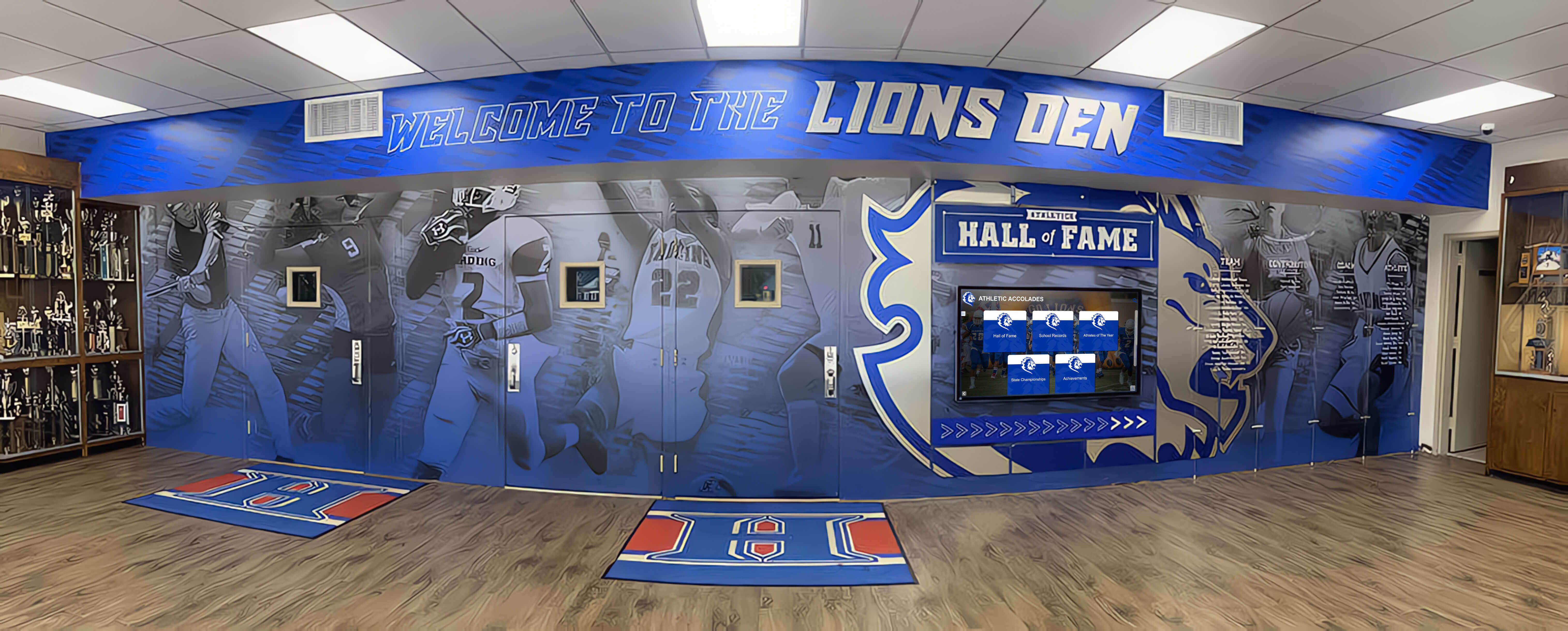
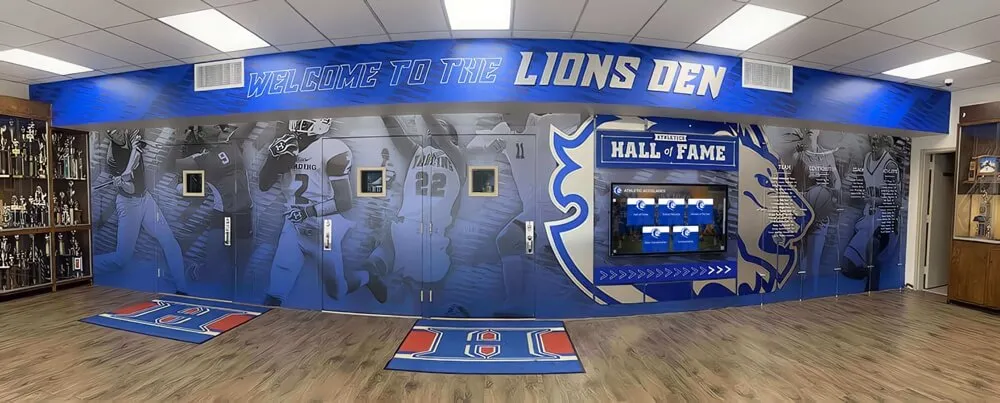
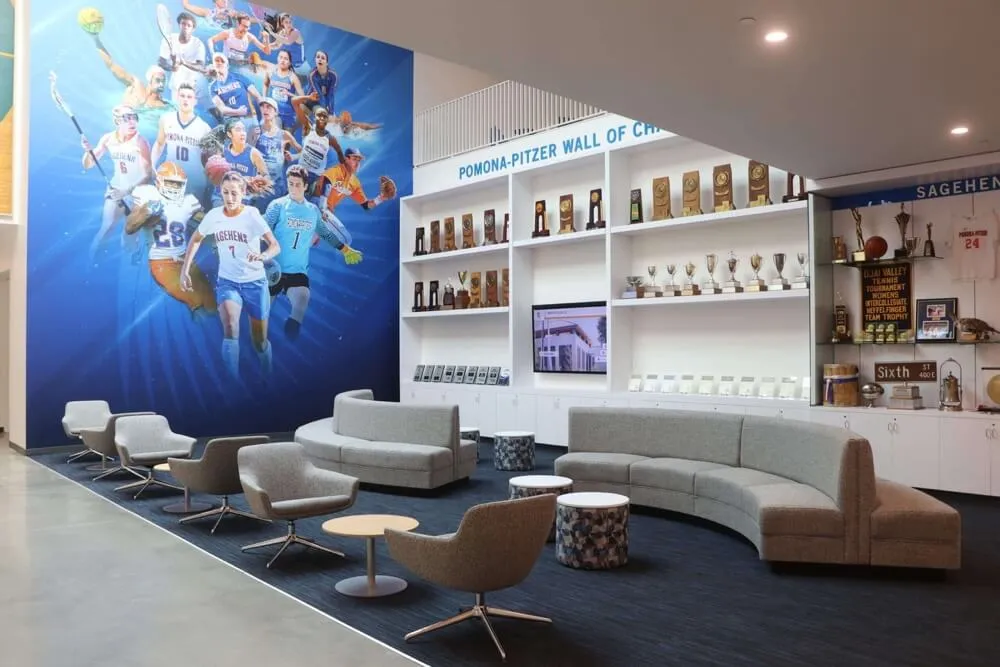
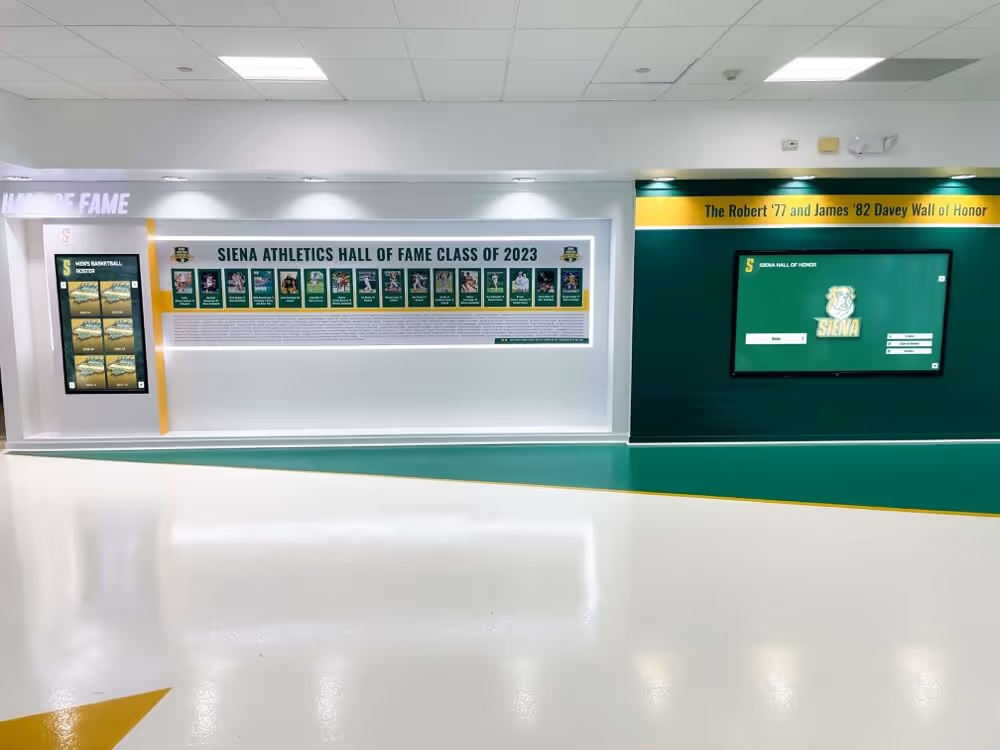
Integrated recognition spaces combine digital displays with traditional elements creating impressive athletic environments
Future Directions for Athletic Information Displays
Touchscreen technology continues evolving with emerging capabilities that will further enhance athletic communication and engagement.
Artificial Intelligence and Automated Content
Future touchscreen systems will leverage artificial intelligence for automated schedule importing from athletic management platforms eliminating manual data entry, intelligent content recommendations suggesting featured content based on viewer patterns and interests, natural language search enabling conversational information discovery, automated highlight video creation from competition footage reducing manual editing requirements, and predictive analytics identifying optimal content update timing based on historical engagement patterns.
These AI capabilities will make touchscreen systems even more powerful communication tools while reducing administrative burden through automation of routine tasks currently requiring manual effort.
Enhanced Video Integration and Live Streaming
Video content increasingly defines how students consume information and engage with media. Future touchscreen platforms will emphasize livestream integration showing current competitions directly on displays for students unable to attend games, enhanced highlight video capabilities with automatic athlete tagging and performance compilation, instant replay access allowing visitors to watch key moments from recent competitions, athlete video profiles with interviews and personal stories, and championship documentation preserving complete game coverage beyond score summaries.
These video enhancements will create increasingly engaging athletic information experiences resonating with students who expect dynamic, video-rich content rather than static text and photos alone.
Understanding digital storytelling for athletic programs provides frameworks for multimedia content strategies.
Social Integration and Mobile Connectivity
Future touchscreen systems will integrate more deeply with social media and mobile platforms students actively use, enabling direct content sharing to Instagram, TikTok, and platforms where students naturally celebrate achievements, personalized notifications alerting athletes and families about their specific team schedules and results, mobile app integration allowing smartphone content management and remote information access, collaborative content where athletes and families contribute photos and stories enriching official documentation, and community voting features enabling fan participation in awards and recognition programs.
These social features will extend athletic information reach while strengthening program community through platforms stakeholders already engage with daily, making athletic communications feel more personal and interactive rather than purely institutional broadcasting.
Conclusion: Modernizing Athletic Communications Through Interactive Technology
Touchscreen TV displays for athletic information represent fundamental advancement in how high school programs communicate with athletes, engage families, celebrate achievements, and build community connections around competitive sports. By centralizing fragmented communications through intuitive digital platforms, enabling real-time updates ensuring information accuracy and timeliness, creating engaging interactive experiences connecting stakeholders with athletic programs, and extending information access beyond physical locations to worldwide audiences, touchscreen displays deliver comprehensive solutions addressing communication challenges that traditional paper-based approaches cannot solve effectively.
Transform Your Athletic Communications
Discover how purpose-built touchscreen platforms deliver superior results for athletic information management and community engagement. Rocket Alumni Solutions offers comprehensive systems designed specifically for high school athletic applications.
Explore Athletic Display SolutionsThe most successful touchscreen implementations start with clear communication goals understanding what information stakeholders need and how they prefer accessing athletic content, select purpose-built platforms designed specifically for athletic communications rather than generic digital signage, develop thoughtful content strategies documenting achievements and communicating information systematically across all sports and seasons, and position displays strategically in high-traffic locations where students and visitors naturally encounter athletic information throughout daily routines.
Whether implementing comprehensive communication overhauls that centralize all athletic information through digital platforms, creating engaging achievement celebrations that honor every team and athlete, or building community connections through accessible information that brings supporters closer to athletic programs, touchscreen technology provides proven solutions that strengthen program culture while serving every stakeholder in athletic communities effectively.
Athletic programs investing in touchscreen TV displays for their facilities demonstrate commitment to excellence in communications while honoring the athletes, coaches, and supporters who make high school sports meaningful experiences for entire communities. This modern approach builds program pride, strengthens community connections, and creates athletic cultures where every achievement receives systematic celebration while information access empowers stakeholders to engage fully with programs they support.
Ready to explore touchscreen options for your athletic facility? Learn more about state championship trophy case displays, discover high school basketball alumni displays, explore comprehensive approaches to athletic hall of fame recognition, understand digital wall of honor plaques that celebrate athletic excellence, learn about building directory interactive systems applicable to athletic facilities, discover musical wall of honor recognition demonstrating cross-program recognition approaches, and explore esports hall of fame recognition systems showing modern athletic celebration formats.