



Walk through any successful school’s main entrance, and you’ll likely encounter a carefully designed trophy case that immediately communicates the institution’s values and achievements. These displays serve far more than decorative purposes—they create visual narratives about excellence, inspire current students toward achievement, and strengthen community pride in institutional tradition.
Yet many schools struggle with trophy case design. Limited space becomes cluttered with decades of accumulated awards. Important achievements disappear behind less significant items. Outdated displays fail to capture attention in an increasingly visual world. And maintenance challenges leave cases looking neglected rather than celebratory.
This comprehensive guide explores trophy case ideas that transform recognition displays from cluttered collections into impressive, purposeful showcases. Whether planning a new display, refreshing an existing case, or reimagining how your school celebrates achievement, you’ll discover design principles, organizational strategies, and creative solutions that maximize impact while remaining practical for real-world school environments.
Schools with thoughtfully designed trophy cases report measurable benefits: increased student awareness of achievement standards, stronger alumni engagement during campus visits, enhanced recruiting appeal for competitive programs, and improved community perception of institutional excellence.

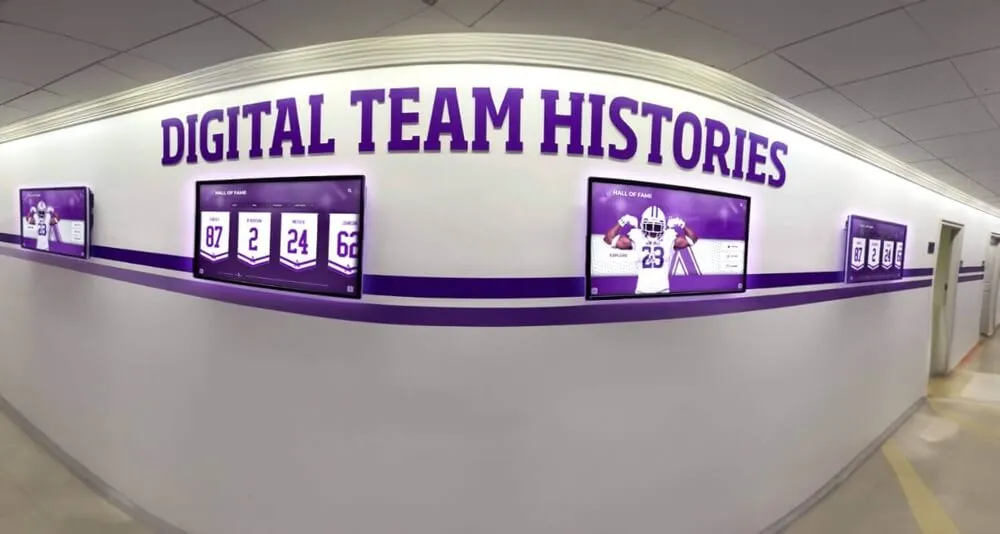
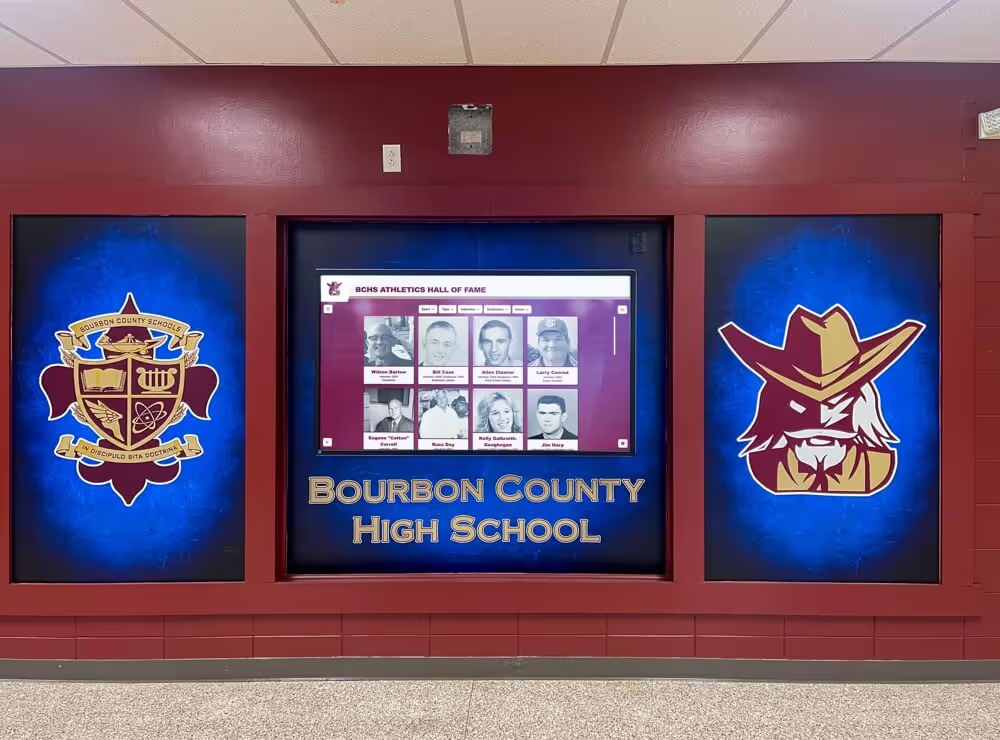
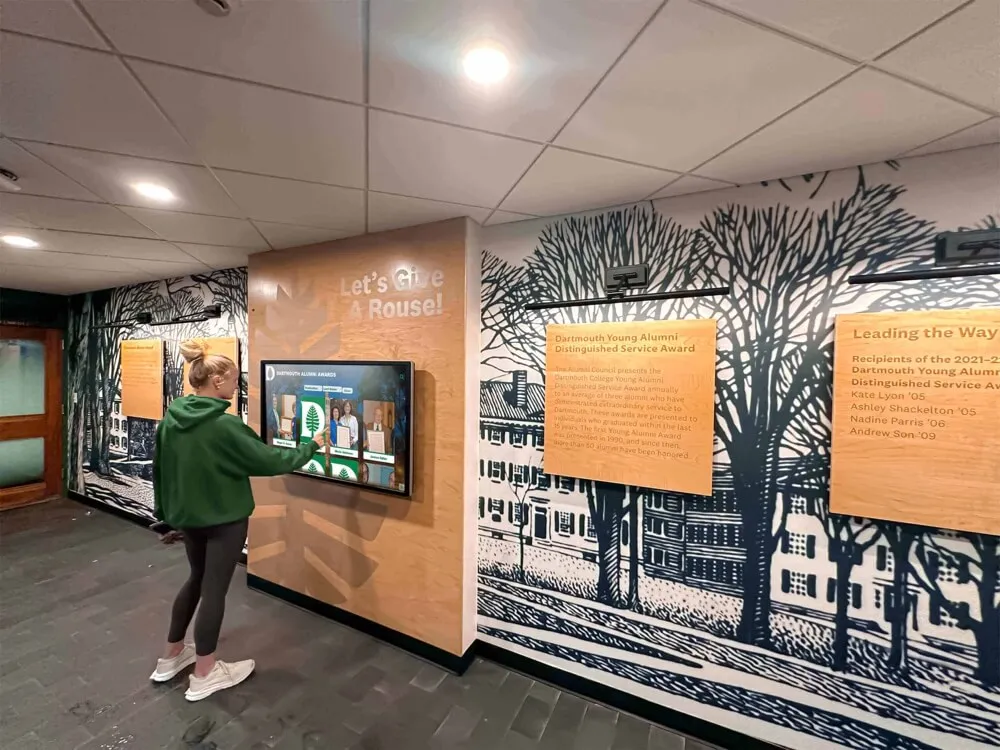
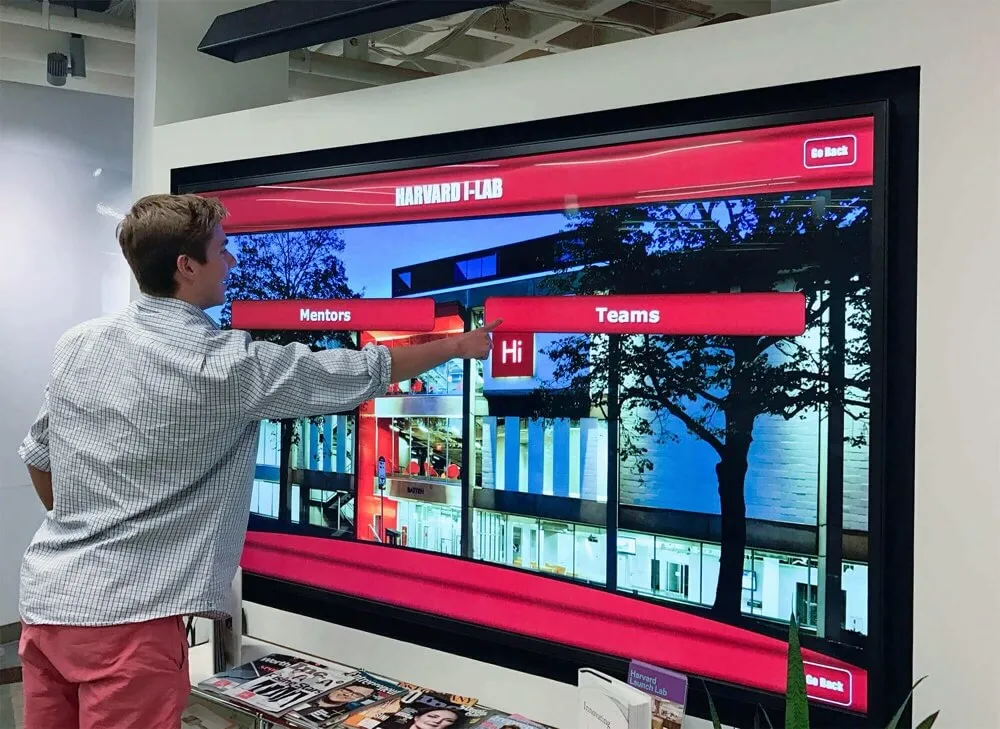
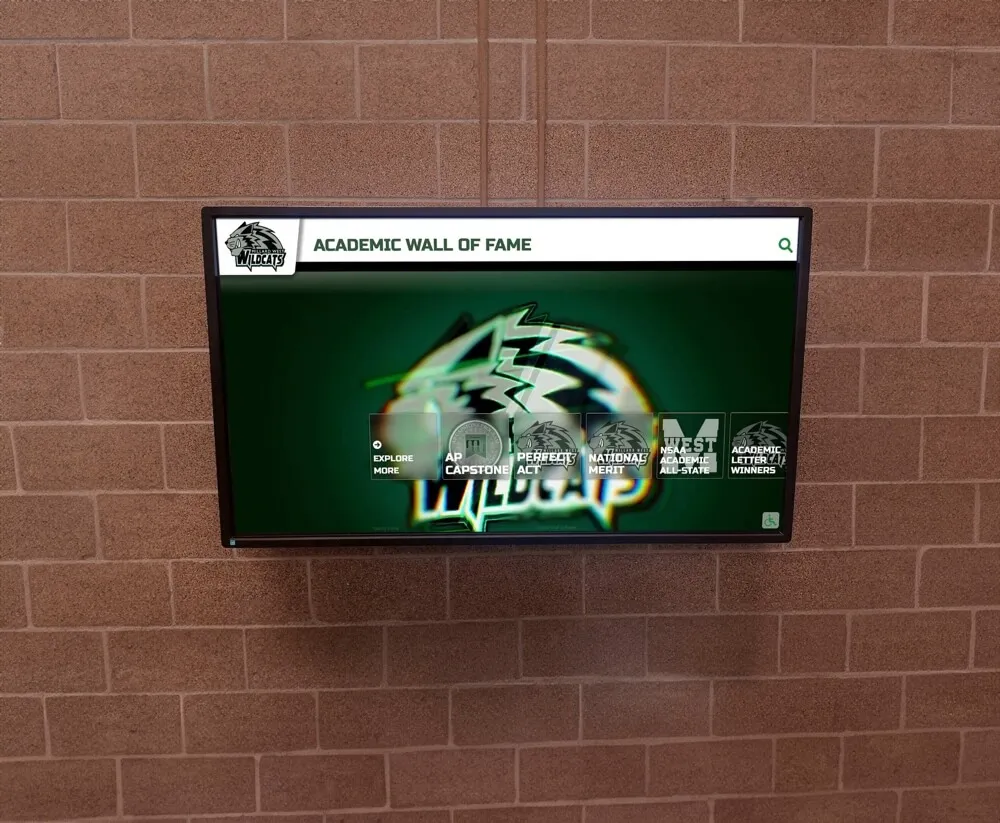
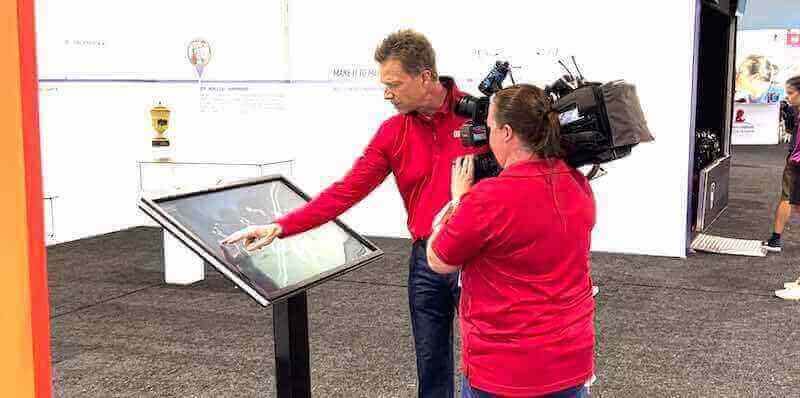
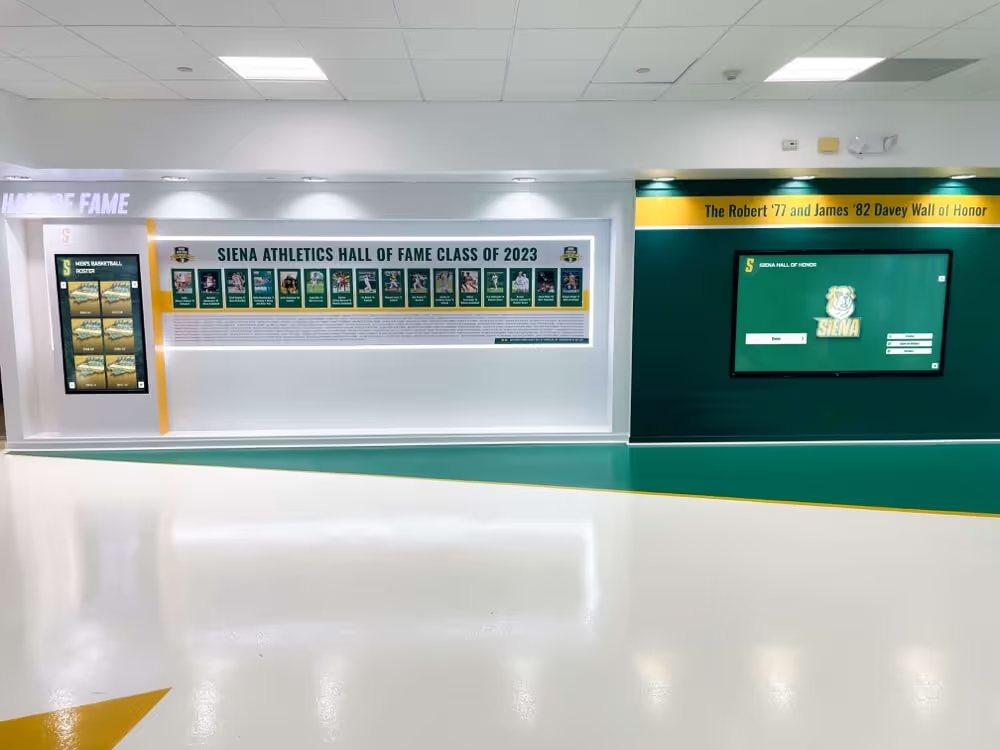
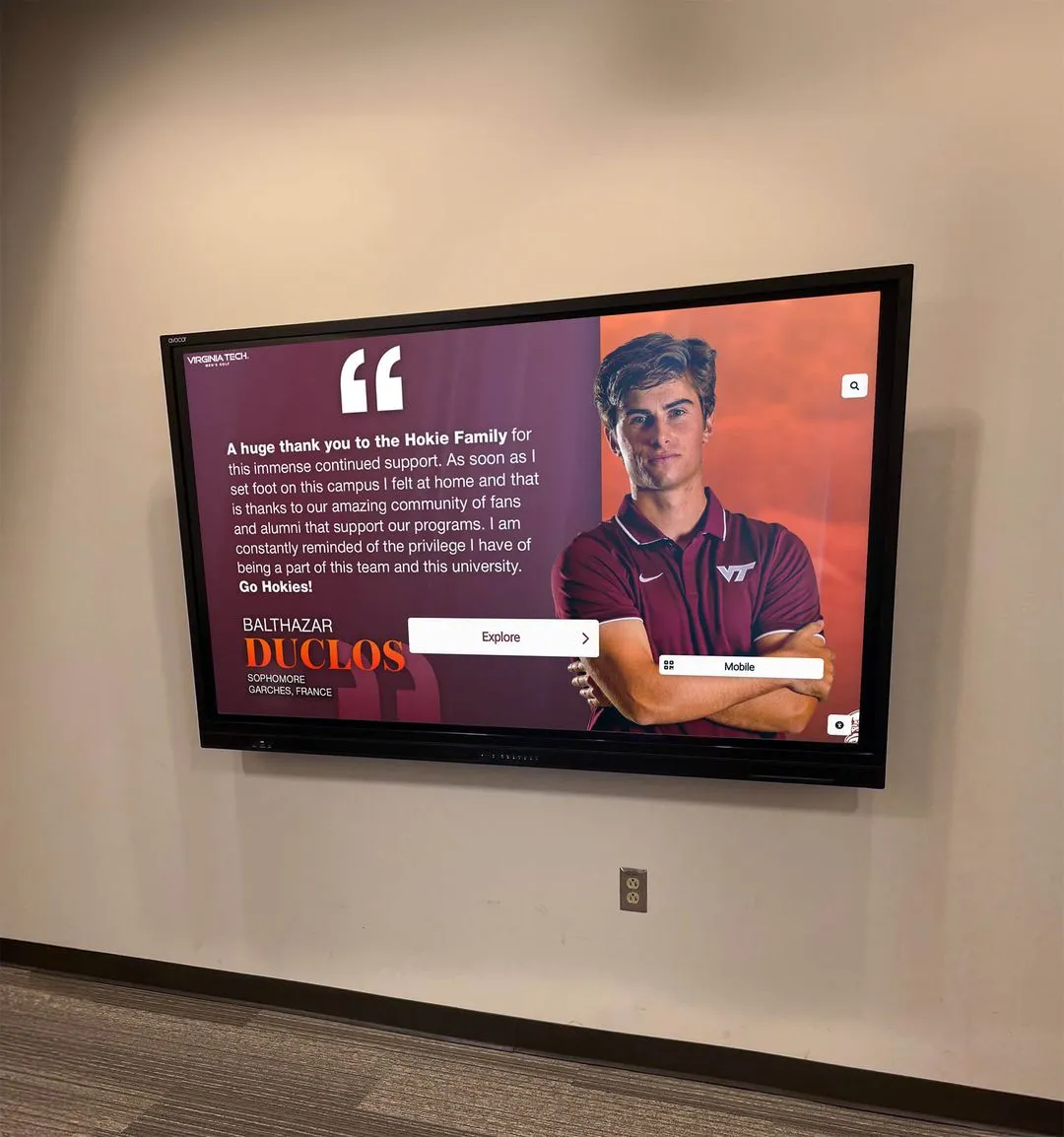
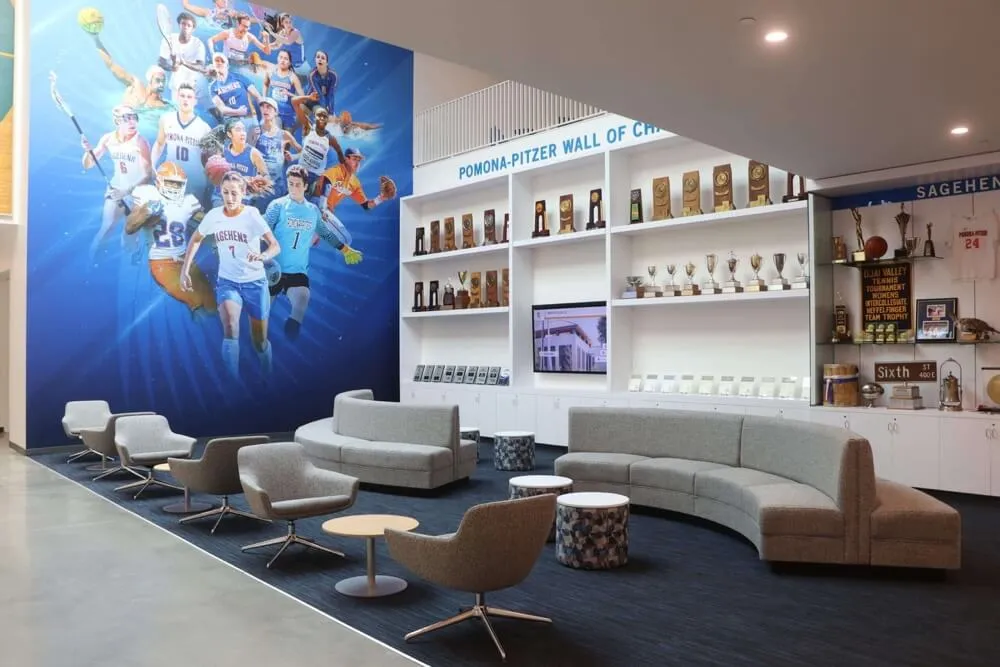
Effective trophy displays integrate with broader facility design, creating cohesive recognition environments that celebrate achievement
Understanding Trophy Case Purpose and Goals
Before selecting specific design elements, clarify what your trophy case should accomplish for your school community.
Defining Primary Display Objectives
Trophy cases typically serve multiple purposes simultaneously:
Celebrating Achievement and Excellence
The fundamental purpose remains honoring students, teams, and programs that demonstrate exceptional performance. Recognition validates effort, acknowledges success, and creates tangible evidence that achievement receives institutional appreciation. This celebration motivates current students while honoring those who came before.
Consider which achievements deserve prominent display: championship victories that represent peak program performance, individual awards recognizing exceptional talent or character, academic distinctions demonstrating intellectual excellence, community service recognition highlighting citizenship values, and milestone accomplishments marking historic program moments.
Inspiring Current Students
Trophy cases function as silent but powerful motivators. When students pass displays daily, they internalize achievement standards and recognize that excellence receives lasting recognition. This visibility creates aspirational goals that drive performance across academic, athletic, and extracurricular domains.
Research on student recognition programs demonstrates that visible achievement acknowledgment significantly influences student motivation and goal-setting behavior.
Building Institutional Identity
Trophy displays communicate institutional values and priorities to all who enter your building. A case showcasing diverse achievements across academics, arts, athletics, and service signals comprehensive excellence. Displays emphasizing specific program areas reflect institutional identity and competitive focus.
For visitors unfamiliar with your school—prospective families, community members, visiting teams—trophy cases provide immediate insight into what your institution values and has accomplished.
Strengthening Alumni Connections
Alumni returning to campus instinctively gravitate toward displays featuring their era. Trophy cases that include alumni from multiple generations create bridges between past and present, reinforcing lifelong connections to institutional community.
Schools with effective alumni recognition strategies report stronger engagement when campus displays celebrate achievements alumni remember from their own school years.
Assessing Space and Location Constraints
Physical realities significantly influence design possibilities:
Available Display Space
Measure precisely what space exists for trophy cases. Consider wall-mounted cases that preserve floor space versus freestanding units that enable larger displays but require floor area. Account for viewing distances—cases in wide hallways support larger displays, while narrow corridors require more compact designs.
Evaluate whether your space can accommodate single unified displays or requires multiple smaller cases distributed throughout facilities. Both approaches work effectively when designed intentionally rather than evolving haphazardly over time.
Traffic Patterns and Visibility
Optimal trophy case locations include main entrance lobbies where all visitors pass, gymnasium entrances capturing athletic program audiences, hallway intersections with natural pause points, cafeteria areas with extended dwell times, and administrative corridors frequented by families and visitors.
Avoid locations where displays compete with operational needs or create circulation obstacles. Trophy cases should enhance spaces, not compromise functionality.
Lighting Conditions
Natural and artificial lighting dramatically affect display visibility. Areas with excessive natural light create glare making displays difficult to view. Insufficient lighting renders cases invisible despite premium contents.
Assess existing lighting and plan supplementary illumination within or adjacent to trophy cases. LED accent lighting mounted inside cases dramatically enhances visibility while consuming minimal energy.
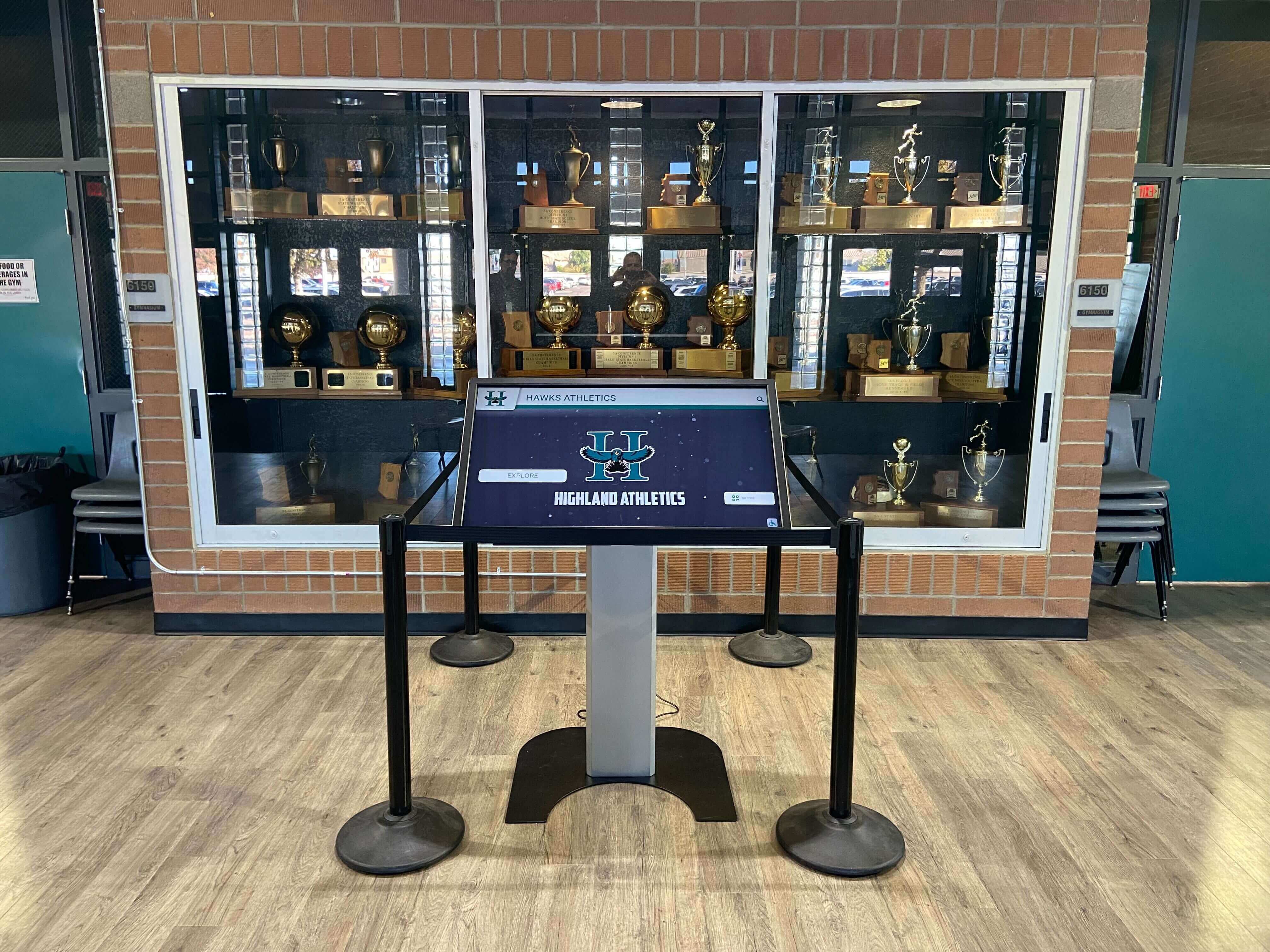
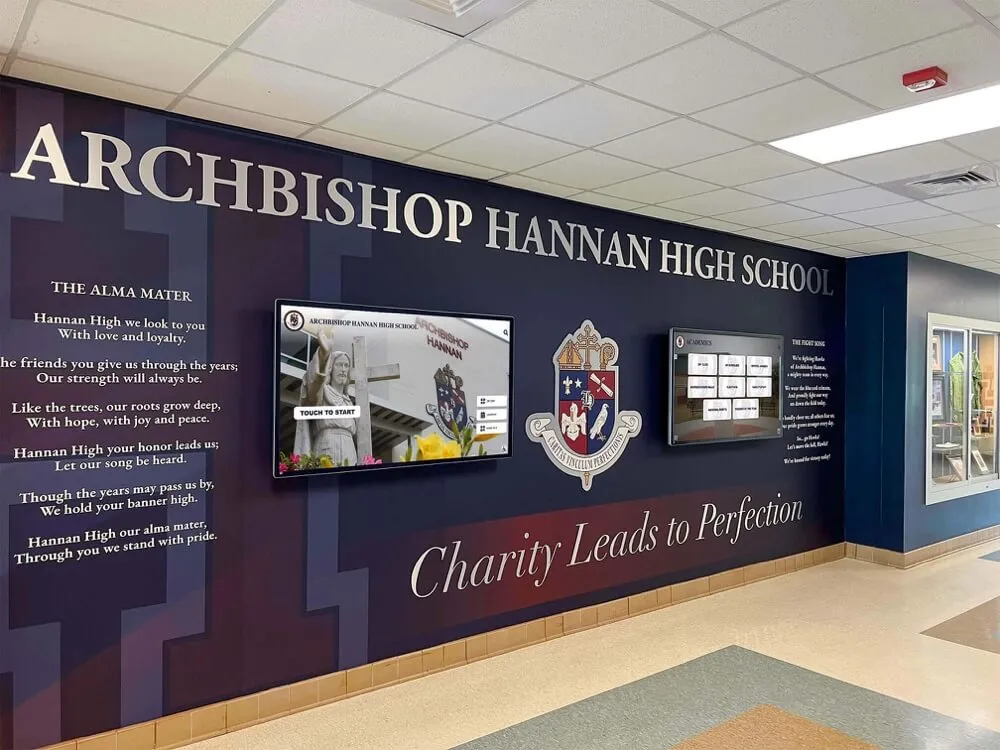
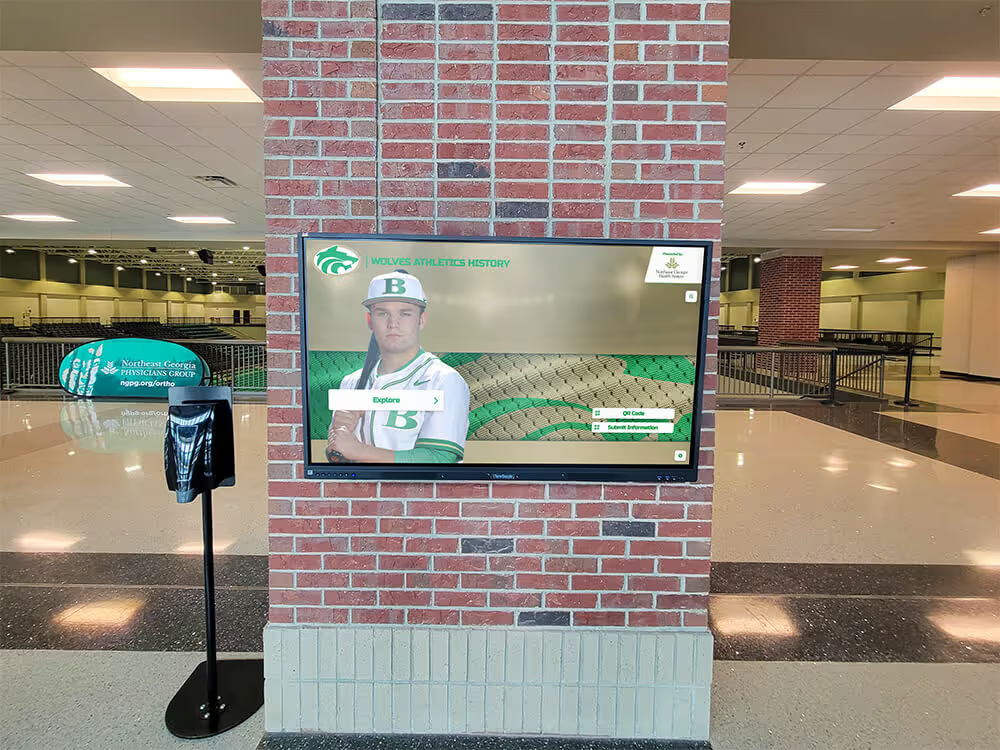
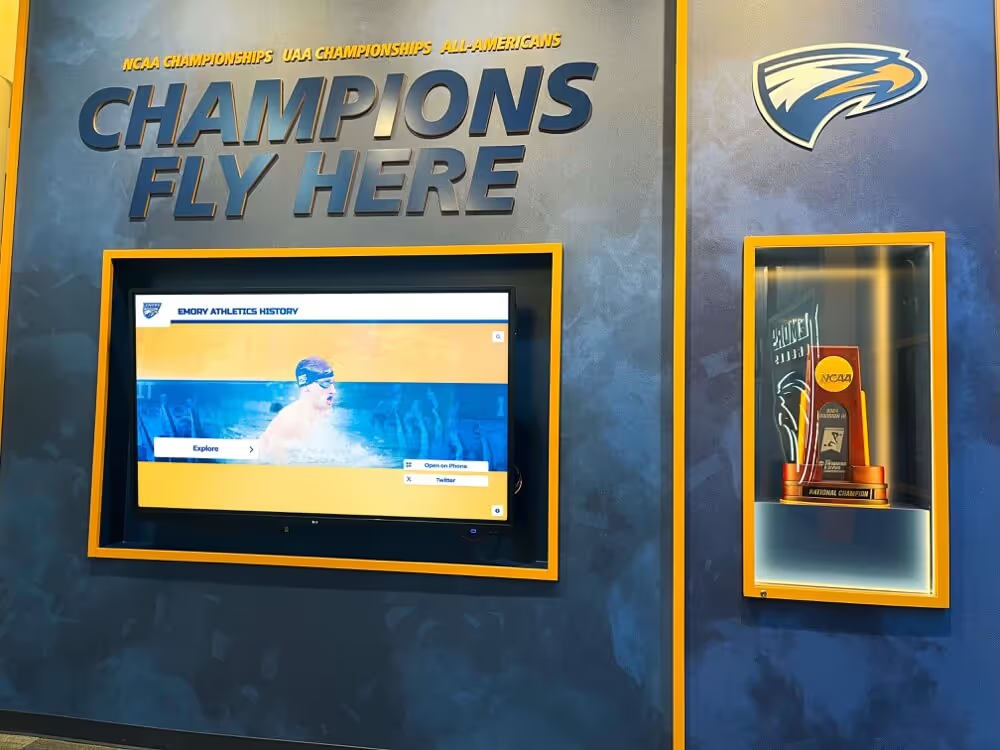
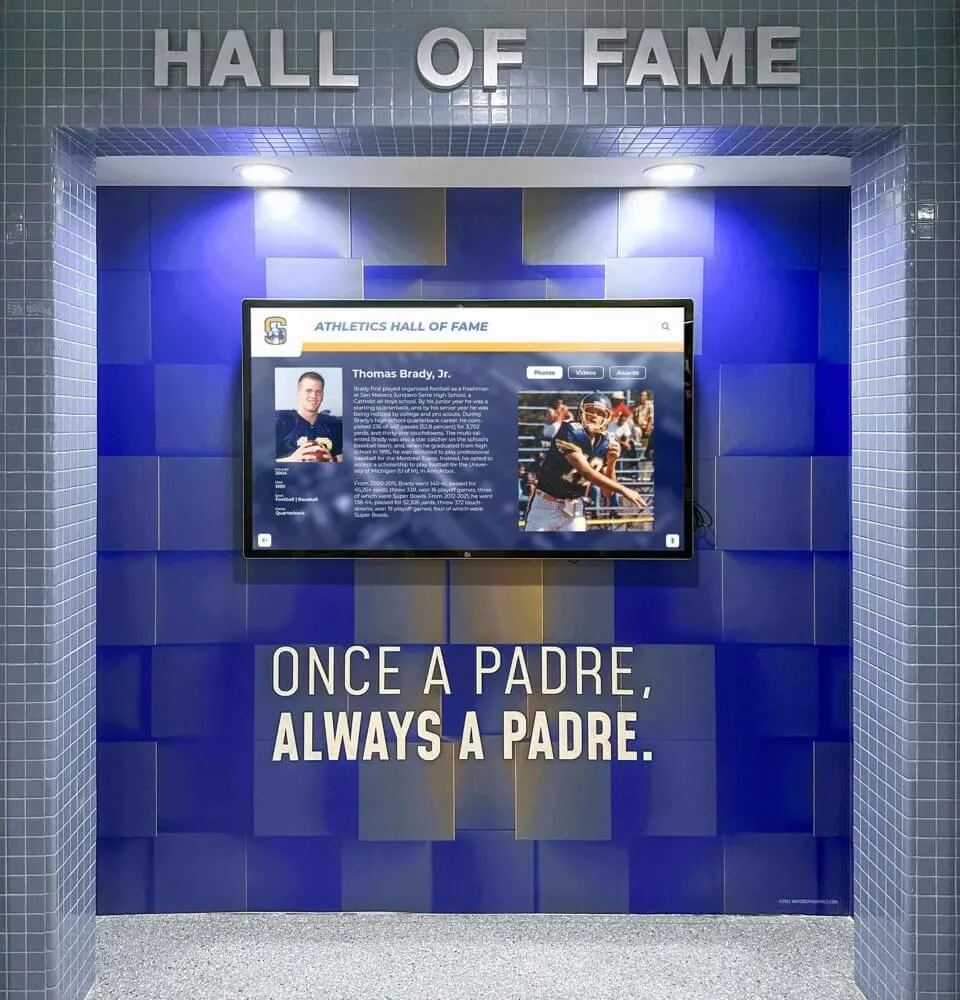
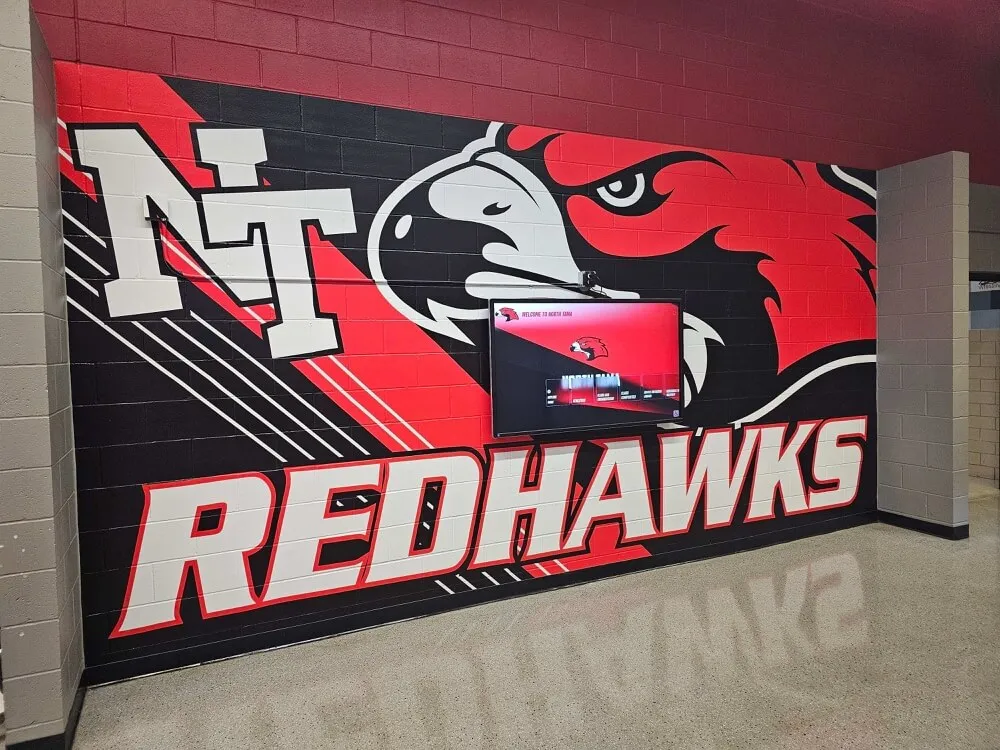
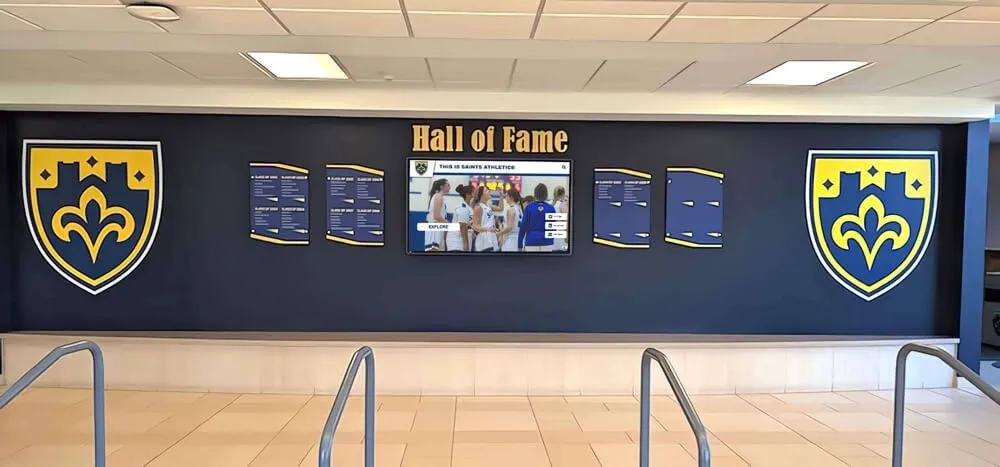
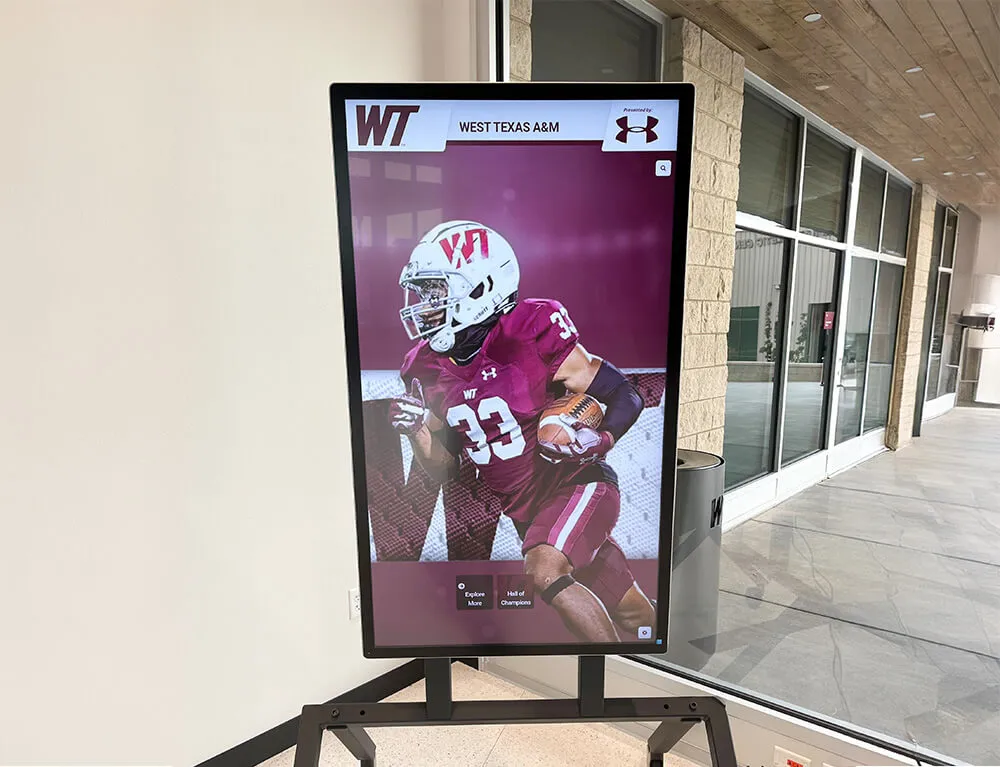
Modern trophy displays often integrate traditional physical trophies with digital recognition technology for comprehensive storytelling
Essential Design Principles for Effective Trophy Cases
Regardless of specific style choices, successful trophy displays adhere to fundamental design principles that maximize impact.
Creating Visual Hierarchy and Organization
Random collections lack impact. Intentional organization creates meaning and enhances appreciation:
Grouping by Achievement Type
Organize trophies into logical categories enabling visitors to understand displays at a glance. Common grouping approaches include sport-specific sections showing progression within programs, year-based organization illustrating achievement timelines, achievement-level tiers emphasizing championship versus participation recognition, and theme-based arrangements connecting related accomplishments.
Clear organization transforms overwhelming collections into comprehensible narratives visitors can follow and understand.
Establishing Focal Points
Every trophy case needs visual anchors that draw attention and create viewing hierarchy. Largest or most significant trophies naturally serve as focal points when positioned centrally or at eye level. Championship banners or significant awards deserve premium placement while smaller items support rather than compete.
Consider the viewer’s perspective when arranging items—what should command attention first, and what serves as supporting context?
Balancing Density and Breathing Room
Overcrowded cases appear cluttered regardless of trophy quality. Generous spacing enables individual items to shine while creating sophisticated presentations. Leave adequate negative space around featured items. Use varying heights and depths to create visual interest without crowding.
Remember that less-is-more often creates greater impact than attempting to display everything simultaneously.
Implementing Effective Lighting Design
Proper illumination transforms trophy displays from adequate to exceptional:
Interior Case Lighting
LED strip lighting mounted at case tops or integrated into shelving illuminates trophies from above, minimizing shadows while creating professional presentations. Adjustable LED spotlights enable highlighting specific featured items while providing general illumination.
Choose neutral or warm white LED temperatures (3000K-4000K) that enhance metallic finishes without creating harsh or clinical appearances.
Ambient Lighting Considerations
Work with existing room lighting rather than fighting against it. Cases in brightly lit corridors may require minimal additional illumination, while displays in lower-light areas benefit from substantial internal lighting.
Anti-glare glass or acrylic significantly improves visibility in locations with problematic reflections or glare from windows or overhead lights.
Accent and Spotlighting
Beyond general illumination, strategic accent lighting draws attention to premier items. Small LED puck lights or track lighting can spotlight championship trophies, record-breaking achievements, or rotating featured items while supporting displays provide context.
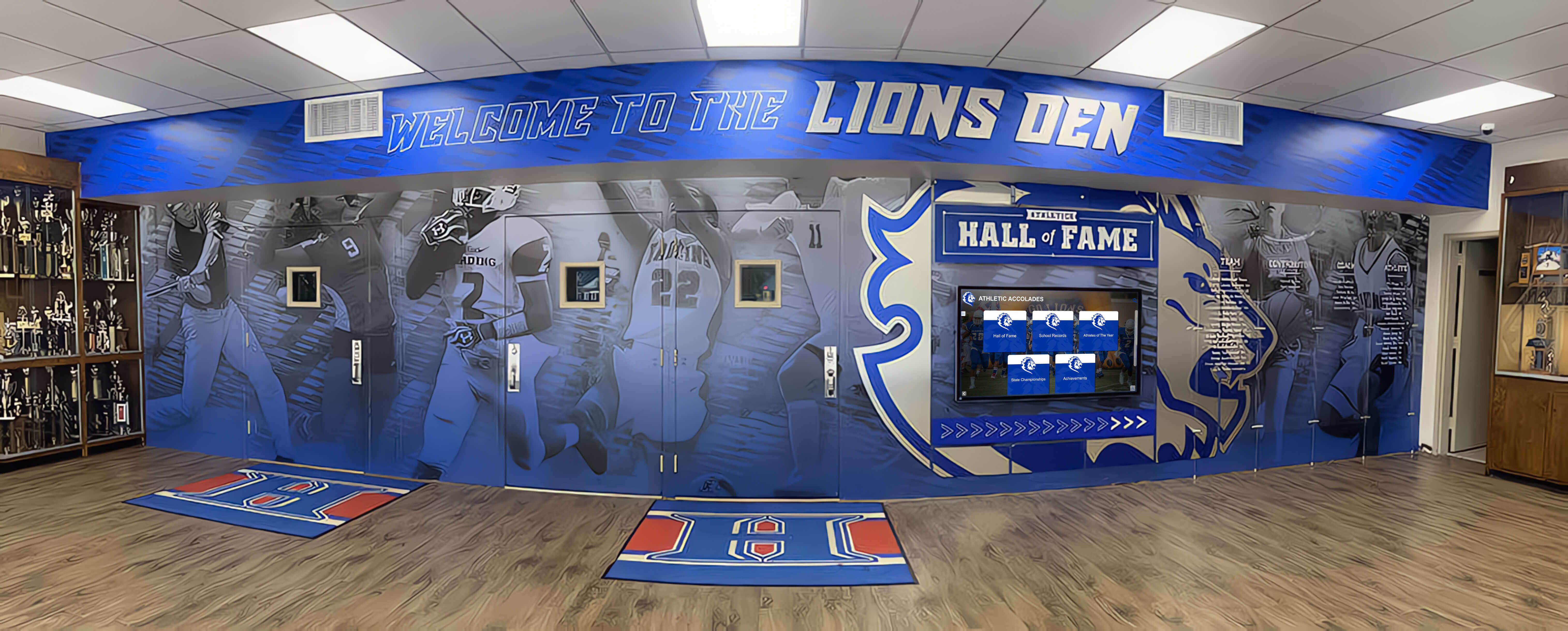
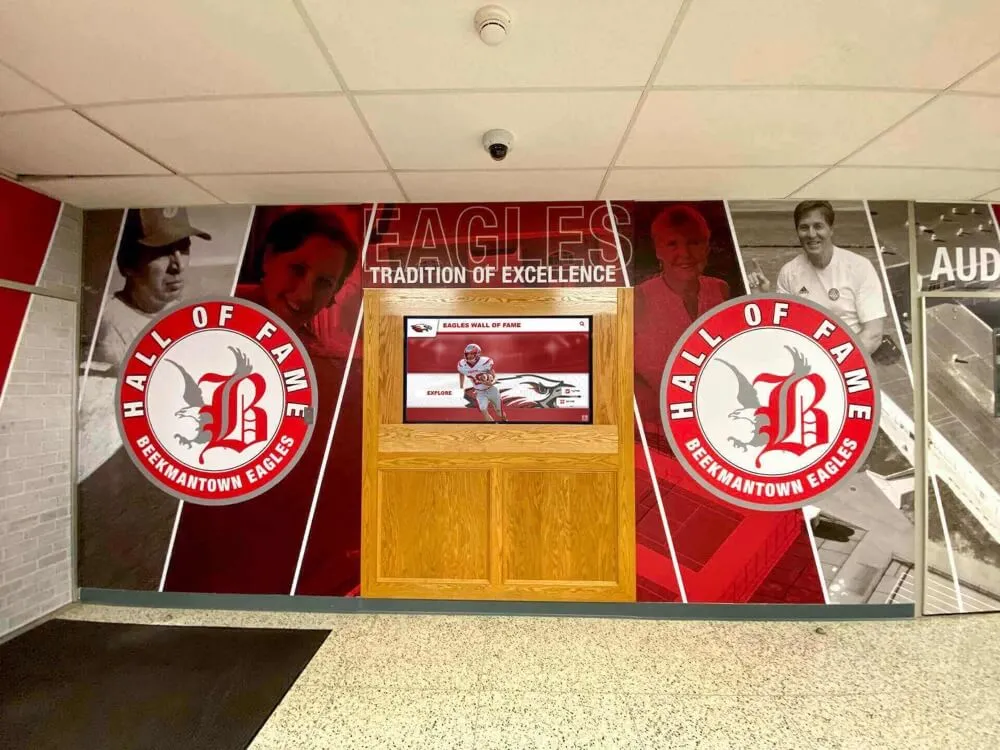
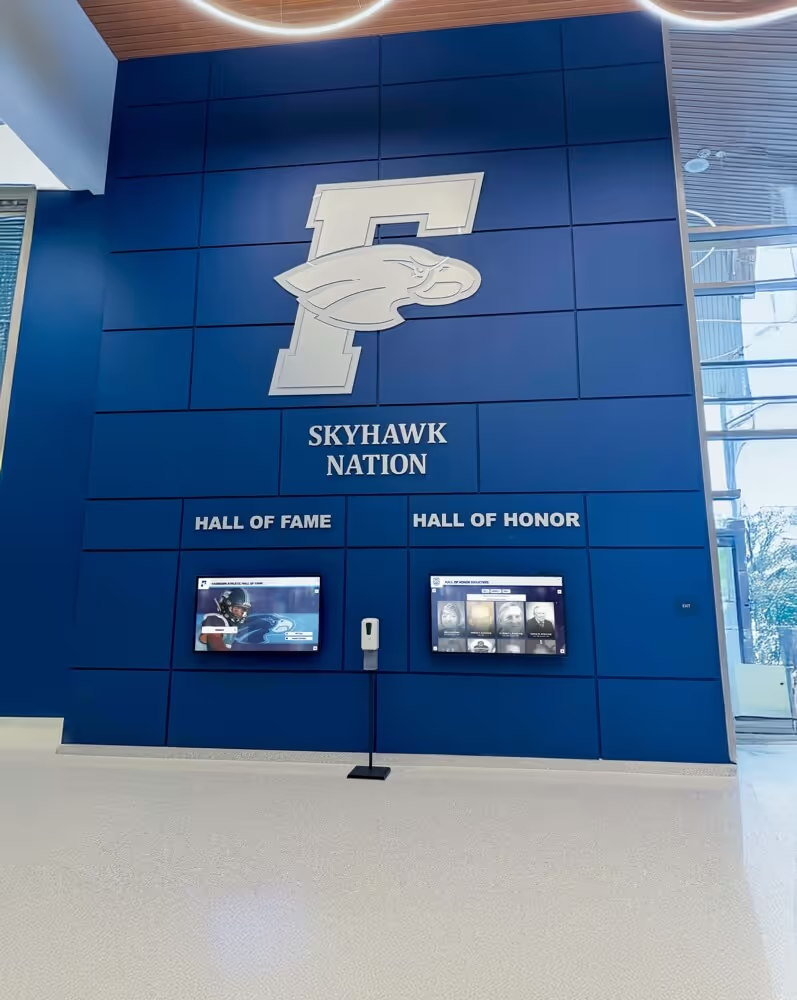
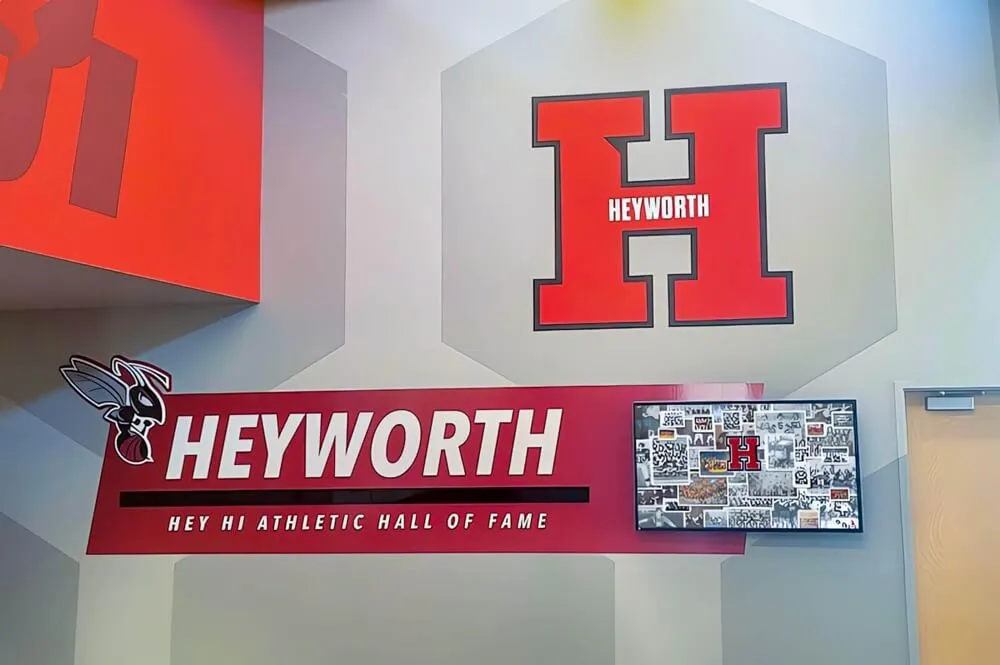
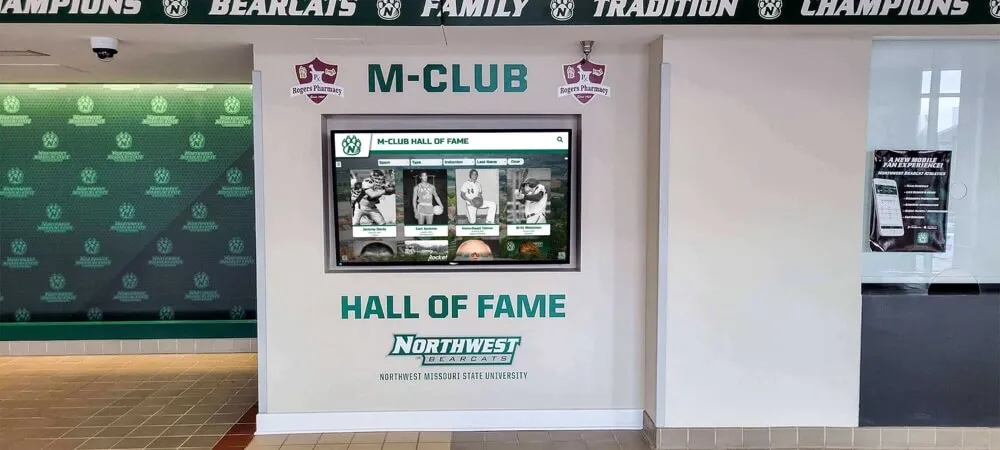
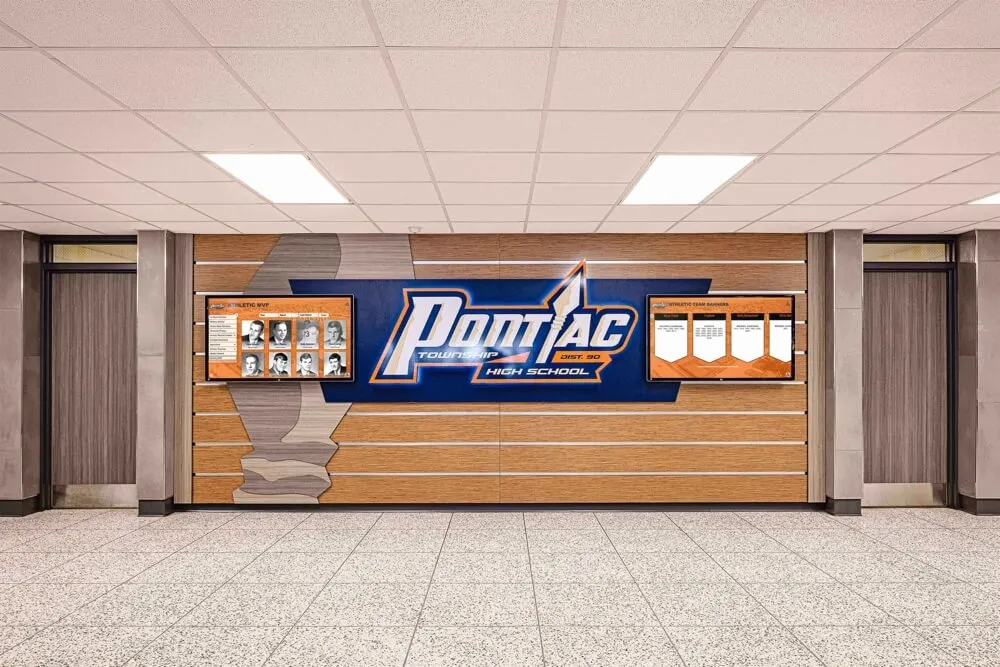
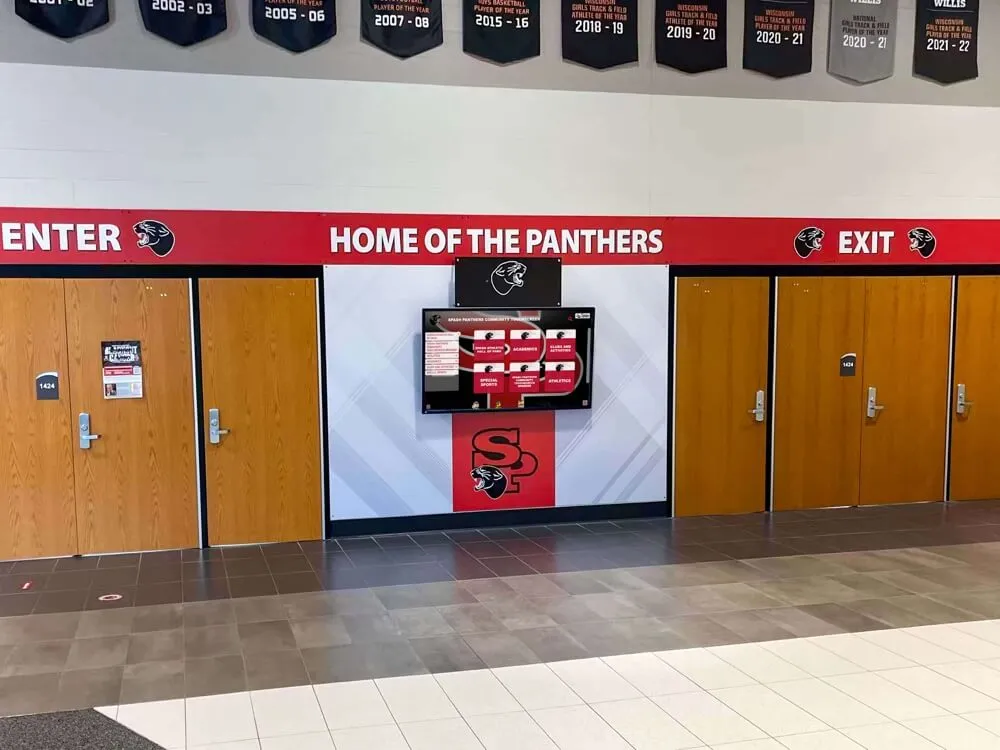
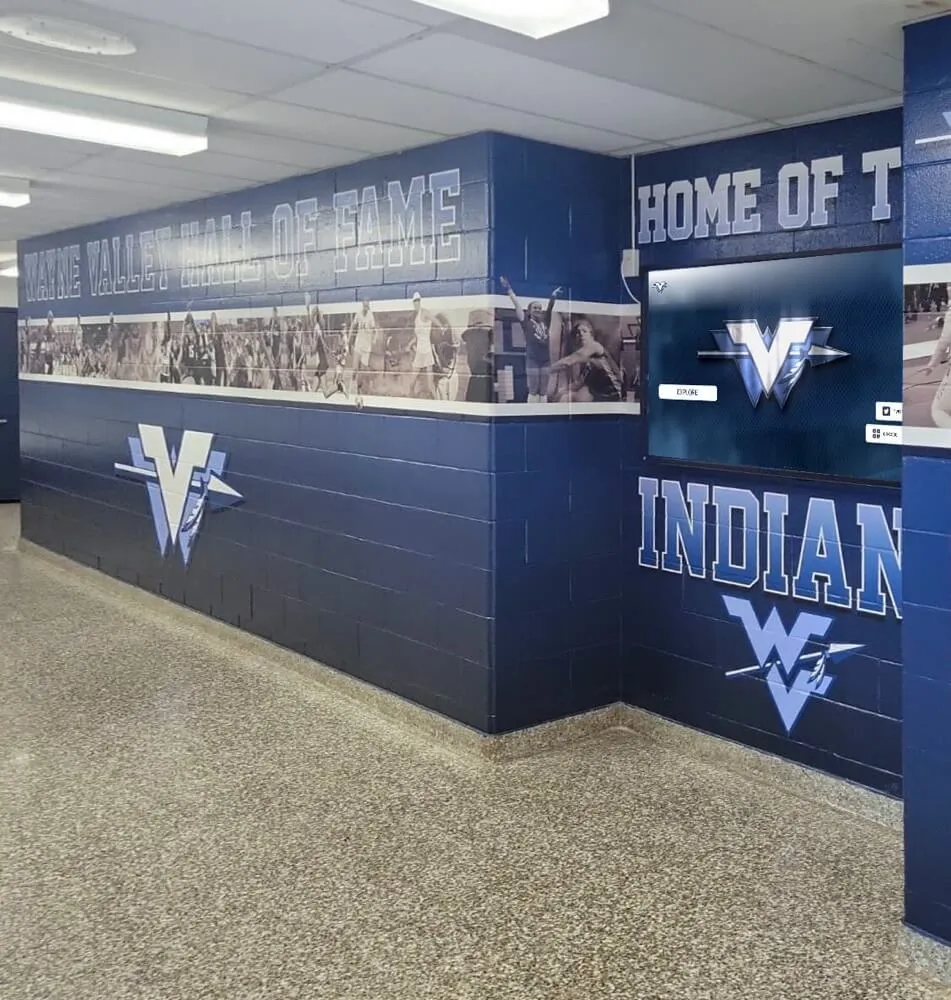
Branded environments that integrate trophy cases with institutional identity create powerful recognition experiences
Creative Trophy Case Layout Ideas
Transform standard displays into engaging recognition experiences through thoughtful layout strategies.
Sport-by-Sport Dedicated Sections
Rather than mixing all athletic trophies together, create dedicated sections for each program:
Individual Sport Showcases
Assign specific case areas or shelves to individual sports, enabling programs to tell complete stories. Include championship trophies alongside individual awards, team photos, and program milestones. This organization allows visitors to understand program development over time while celebrating comprehensive achievement.
Sport-specific sections work particularly well in schools with strong athletic traditions across multiple programs. Each sport receives appropriate recognition without competition for limited display space.
Seasonal Organization
Alternative approaches group sports by season—fall sports together, winter sports in another section, spring sports in a third area. This organization naturally reflects how students and families experience athletic programs throughout the year.
Seasonal grouping enables rotating featured displays that coincide with current competition seasons, keeping trophy cases relevant to ongoing athletic activities.
Championship and Record-Breaking Sections
Premier achievements deserve premium placement:
Championship Spotlight Areas
Reserve prominent, eye-level space for championship trophies representing peak program achievement. State championships, conference titles, tournament victories, and similar accomplishments warrant featured placement where all visitors immediately notice them.
Supporting these focal trophies with championship banners, team photos, and program statistics creates comprehensive championship narratives rather than simple trophy display.
Record-Breaking Achievement Displays
Individual and team records deserve dedicated recognition. Create sections specifically honoring school record holders with trophies, plaques, or certificates alongside statistical documentation and context explaining record significance.
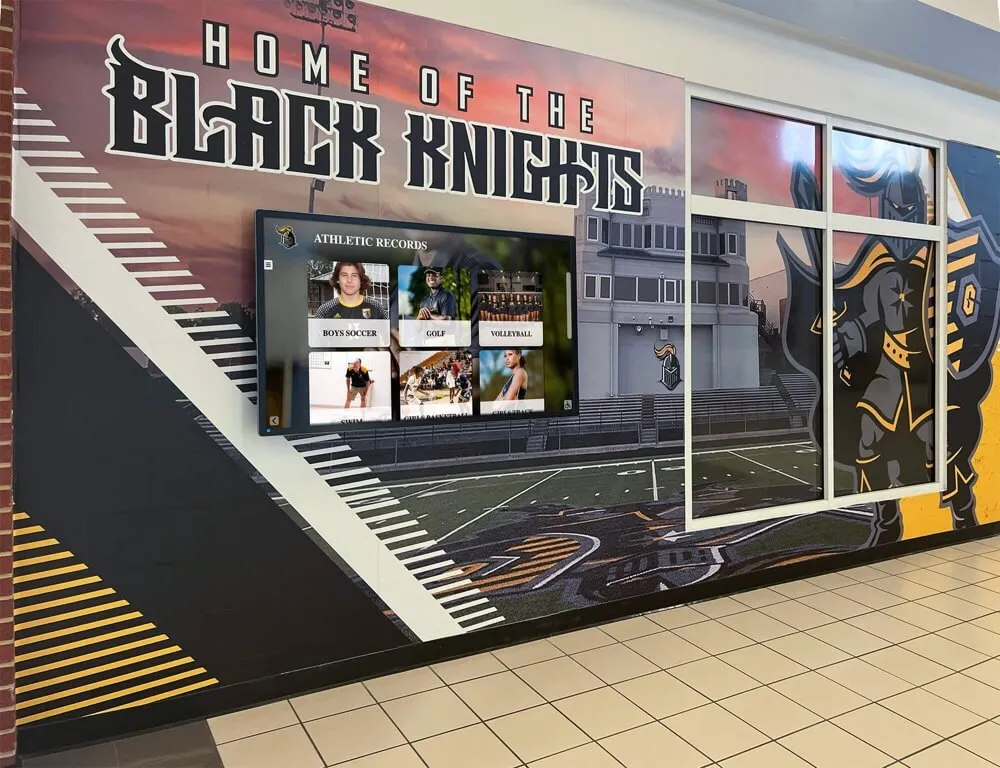
Digital displays increasingly complement physical trophy cases by providing detailed record progression, historical context, and comprehensive statistics impossible to convey through static plaques alone.
Timeline and Historical Progression Layouts
Help visitors understand achievement development over time:
Chronological Arrangements
Organize displays showing program evolution from founding through present. Timeline layouts enable visitors to trace institutional development, recognize different eras of excellence, and appreciate how current achievements build on historical foundations.
Include contextual information about coaches, pivotal moments, and program-defining achievements that shaped institutional tradition. This storytelling approach transforms trophy cases from award collections into institutional narratives.
Decade-by-Decade Sections
Particularly effective for schools with extensive histories, decade-based organization creates natural divisions enabling focused recognition while maintaining comprehensive coverage. Each decade receives dedicated space showcasing the era’s defining achievements.
This approach proves especially valuable for alumni engagement, as returning graduates easily locate their own era and reconnect with memories from their school years.
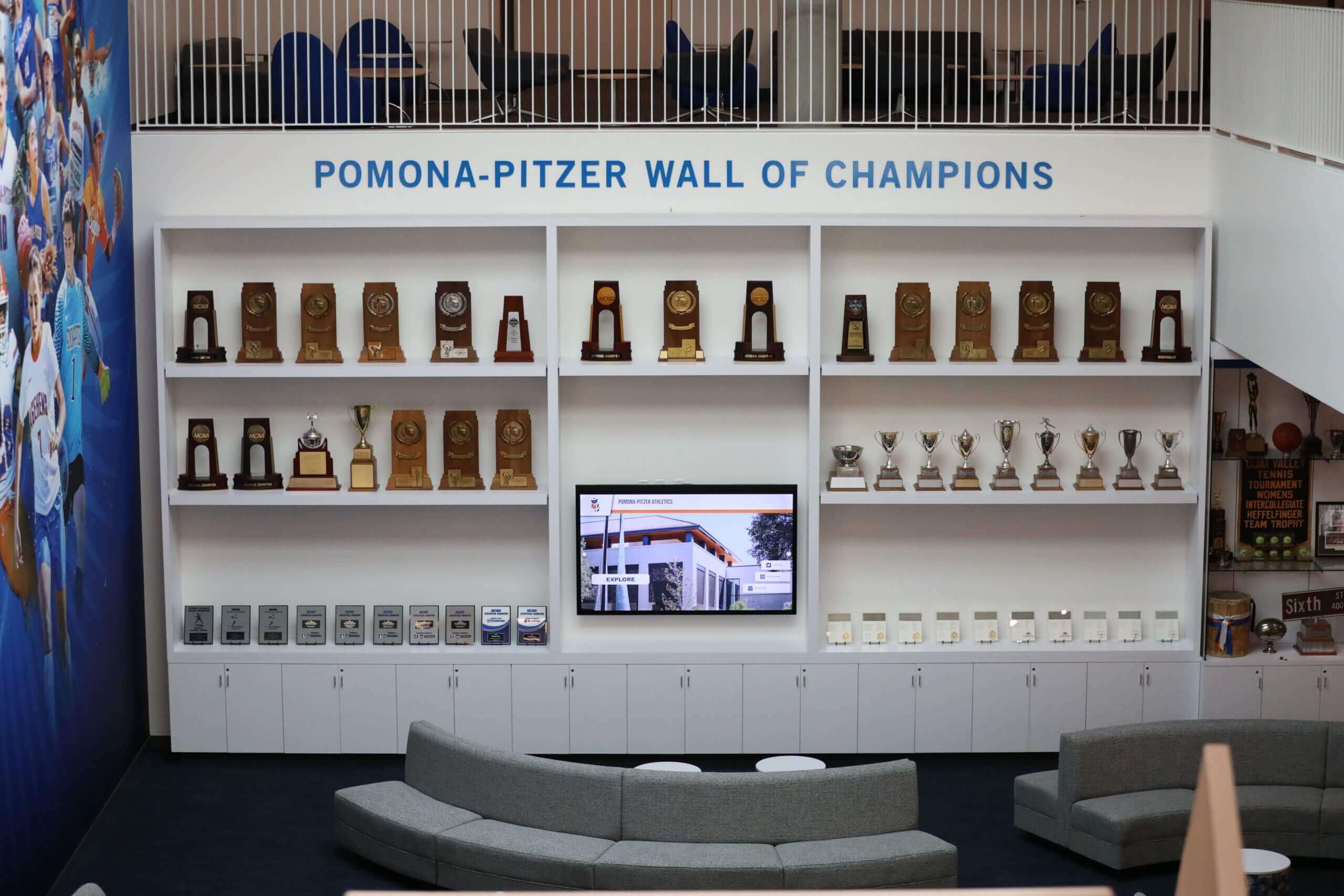
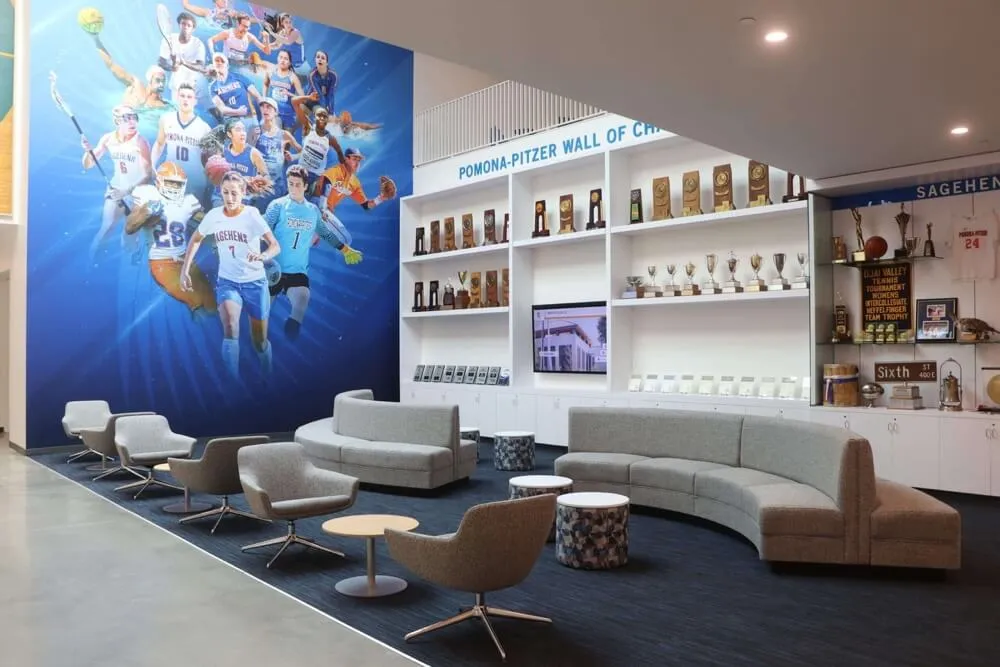
Creating dedicated recognition spaces with comfortable seating encourages extended engagement with achievement displays
Maximizing Limited Trophy Case Space
Schools frequently struggle with inadequate space for growing achievement collections. Strategic approaches maximize available display capacity.
Rotation and Feature Display Strategies
Not everything requires permanent display:
Seasonal Trophy Rotation
Implement systematic rotation featuring current-season achievements prominently while archiving off-season items. During fall, showcase fall sports championships and achievements. Rotate to winter sports during that season, and spring sports when appropriate.
Rotation keeps displays fresh and relevant while honoring all programs appropriately without requiring permanent space for everything simultaneously.
Anniversary and Milestone Features
Dedicate trophy case sections to rotating features celebrating significant anniversaries. Twenty-year championship anniversaries, fifty-year program milestones, or centennial celebrations provide compelling focal points while enabling historical achievement recognition without permanent space consumption.
Student and Staff Curation
Engage students or staff in quarterly curation decisions about featured displays. This involvement creates ownership while systematically refreshing what visitors see. Student curators might research and feature specific achievements, creating educational opportunities alongside recognition purposes.
Vertical Space Utilization
Look beyond eye-level shelving to maximize capacity:
Floor-to-Ceiling Displays
Modern trophy cases can extend from floor to high ceilings, dramatically increasing display capacity. While items at extreme heights become less visible for detailed viewing, they contribute to impressive overall presentations and prevent wasting vertical space.
Reserve premium eye-level space (4.5-6 feet from floor) for featured items while using upper and lower sections for supporting awards and historical achievements.
Suspended and Hanging Displays
Some items suspend effectively rather than requiring shelf space. Championship banners, pennants, and certain trophy types hang from case tops, creating visual interest while preserving shelf space for items requiring horizontal display.
Compact Display Techniques
Thoughtful arrangement multiplies effective capacity:
Tiered and Stepped Shelving
Rather than flat shelves where back items disappear behind front displays, implement tiered arrangements where each row sits slightly higher than the one in front. This stadium-seating approach ensures visibility for all items while maximizing spatial efficiency.
Acrylic or glass risers create clean, professional tiered displays without requiring custom case modifications.
Integrated Display Platforms
Custom shelving incorporating varying depths and heights enables creative arrangements that showcase more items than standard flat shelving. Cutout sections at different levels create visual interest while accommodating different trophy sizes and shapes.
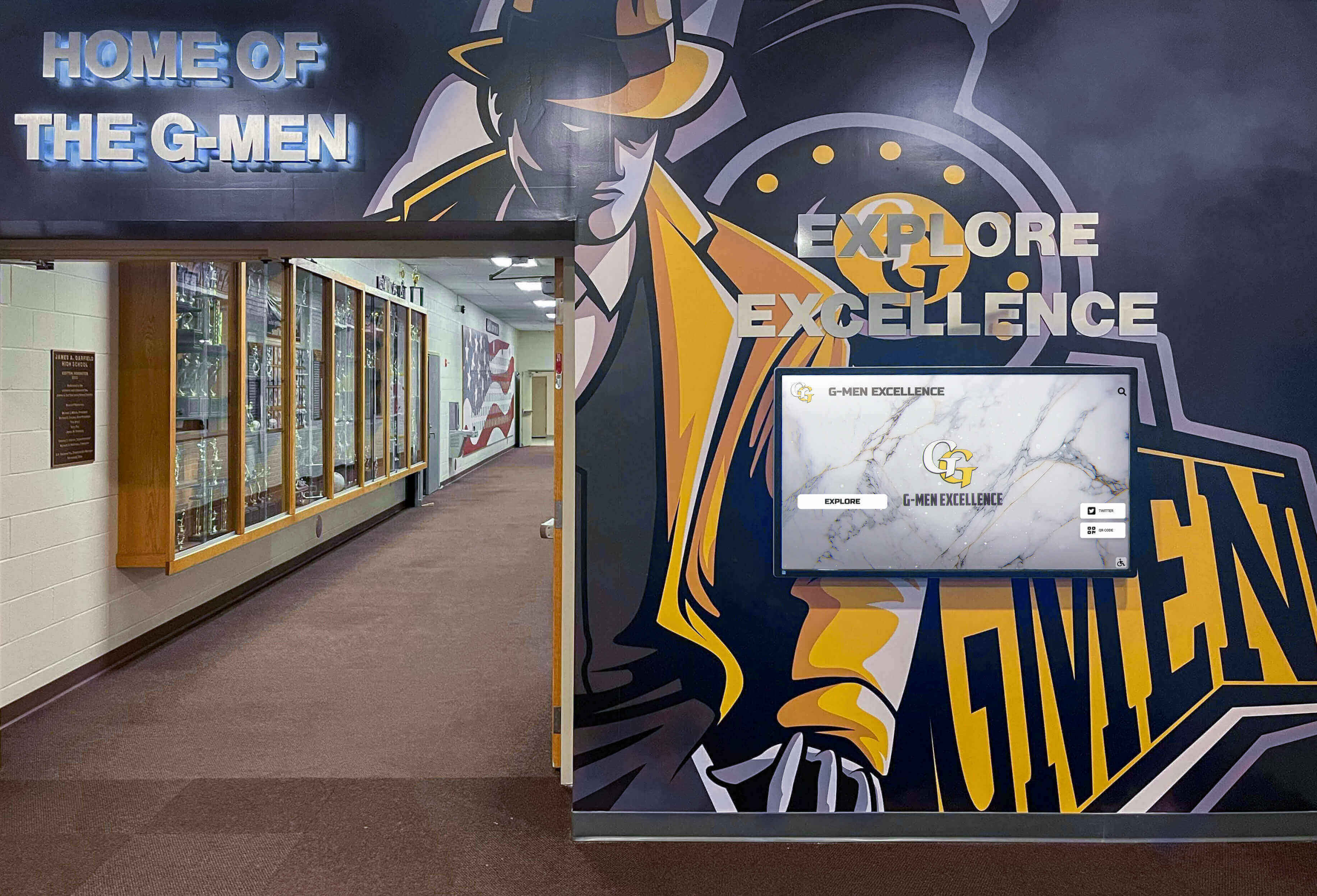
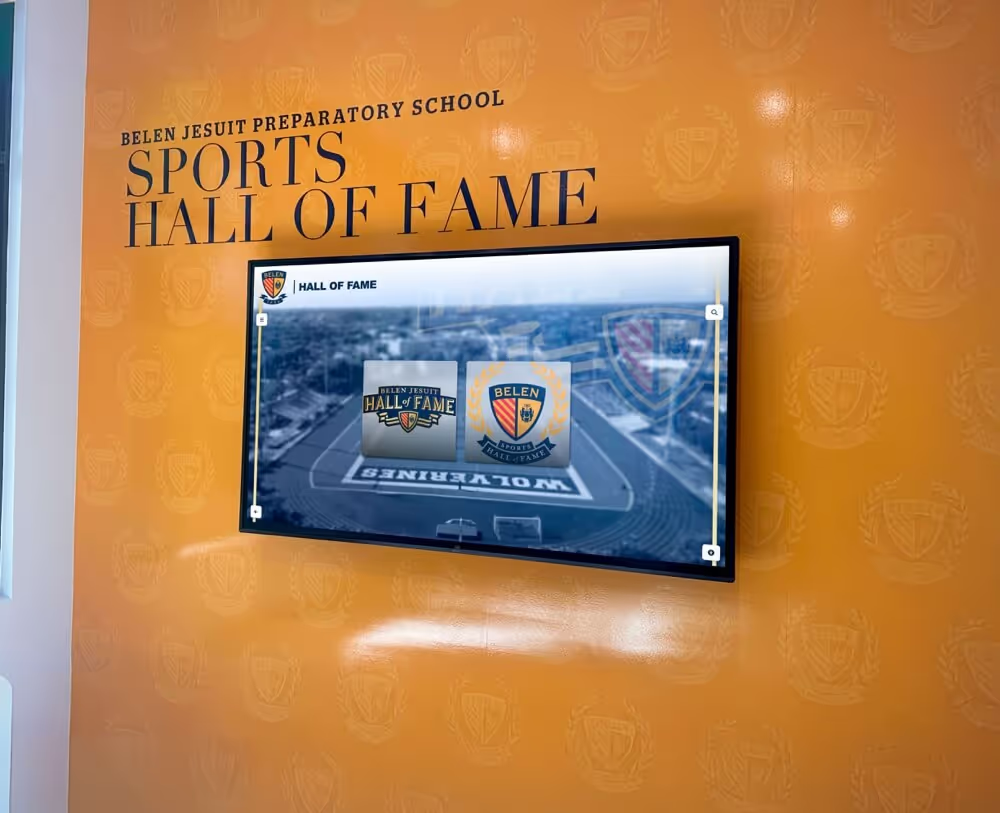
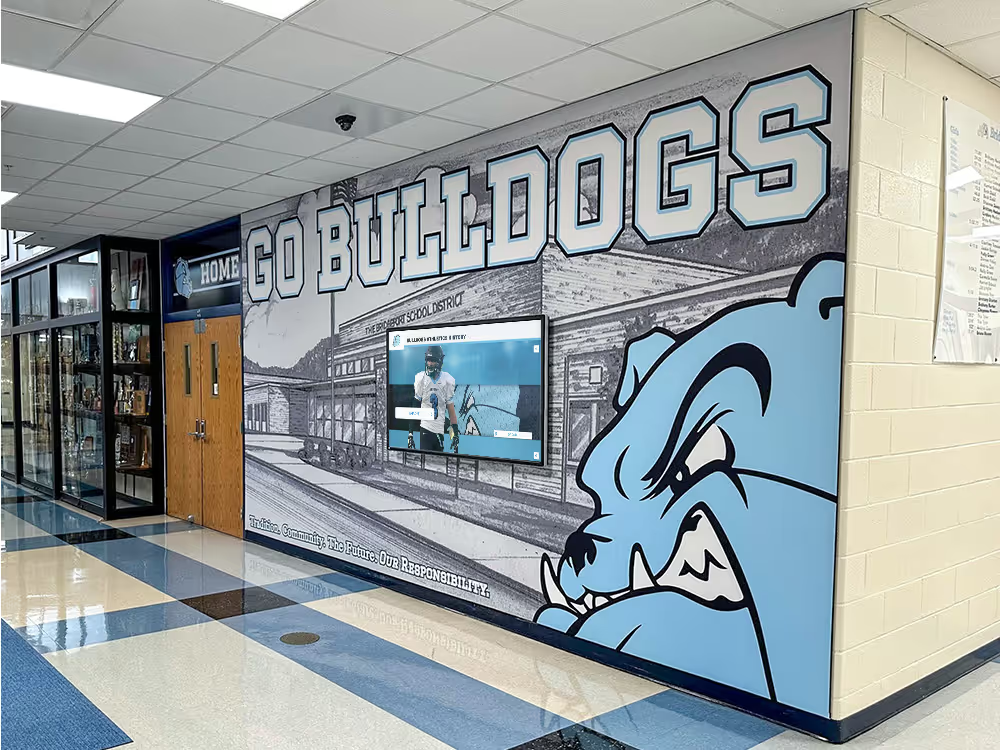
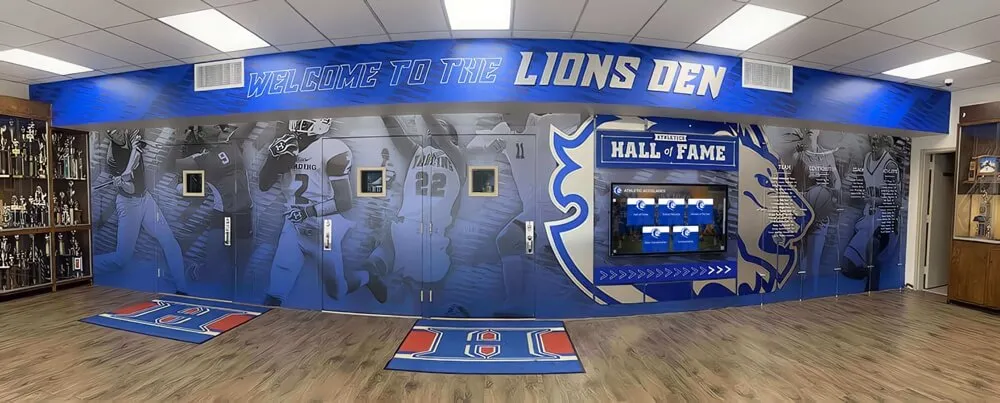
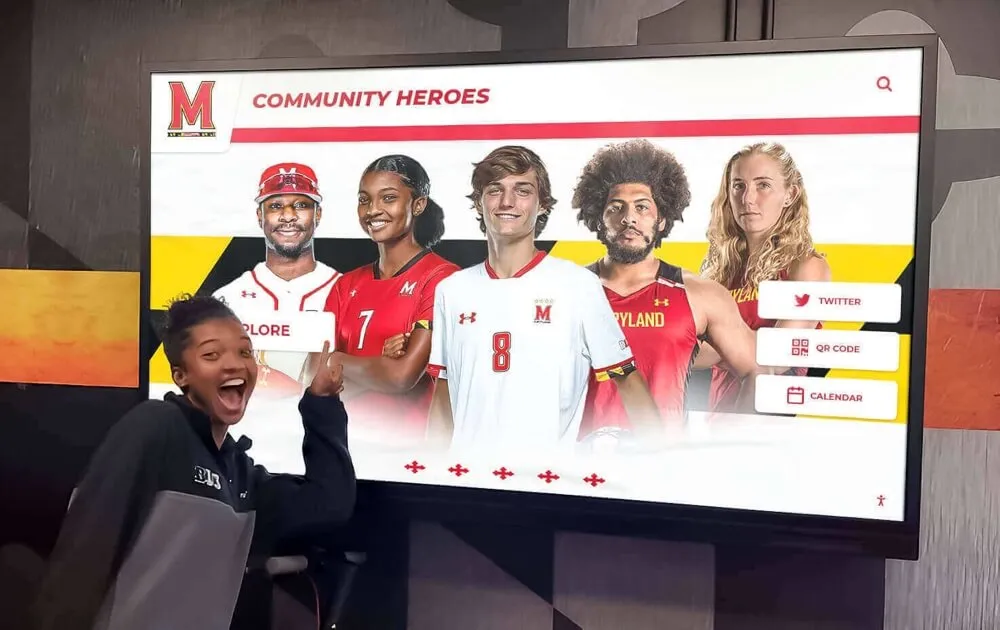
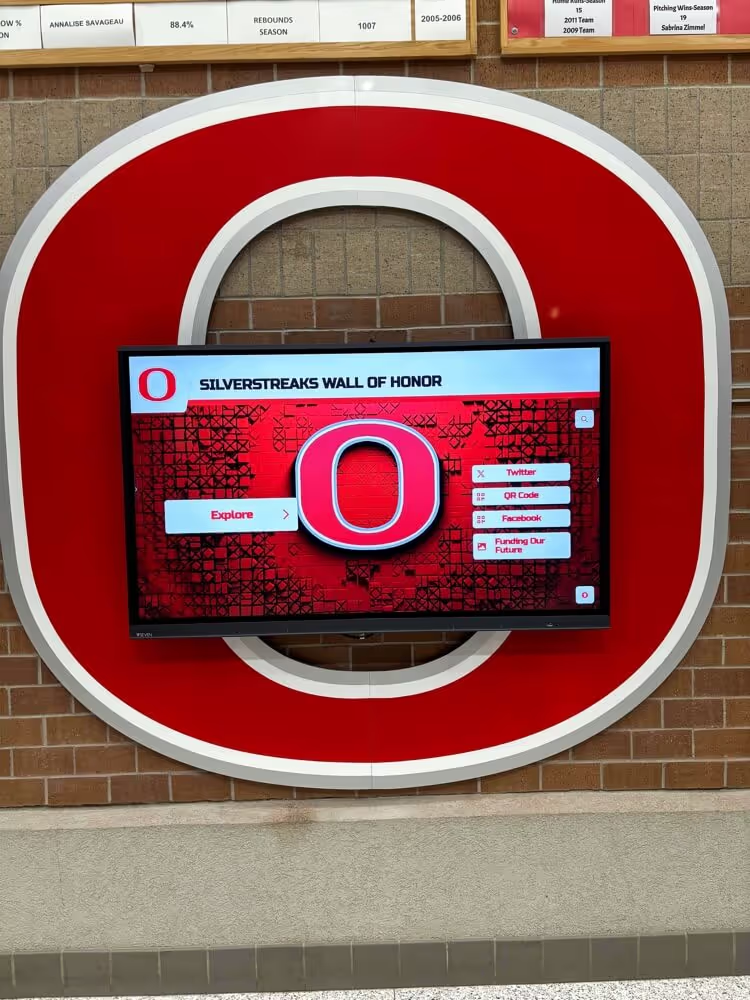
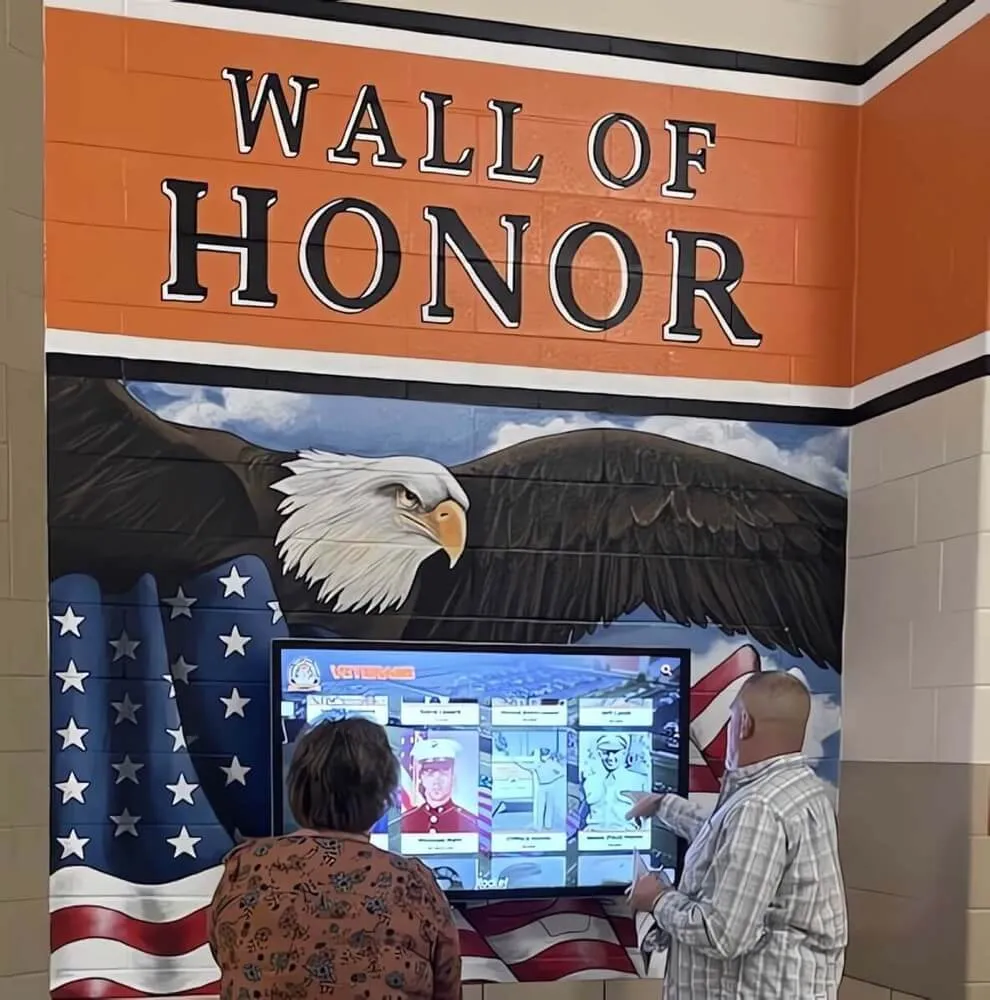
Coordinating trophy displays with branded environmental graphics creates immersive recognition experiences throughout facilities
Enhancing Trophy Cases with Supporting Elements
Physical trophies tell partial stories. Supporting elements provide context and deeper meaning.
Informational Plaques and Labels
Context transforms trophies from objects into meaningful narratives:
Achievement Descriptions
Every displayed trophy deserves clear identification explaining what it represents. Include sport or program, year achieved, specific accomplishment (championship, tournament victory, etc.), and relevant context (opponents, scores, records).
Standardized label formats create professional consistency while ensuring visitors understand what they’re viewing without requiring institutional knowledge.
Individual and Team Recognition
Beyond trophy identification, include information about who earned recognition. Team rosters, coaching staff, individual award recipients, and key contributors ensure people receive appropriate acknowledgment alongside physical awards.
This personal connection creates deeper engagement, particularly for alumni revisiting campus and discovering their own names in displays.
Historical Context and Significance
Help viewers understand achievement significance. Was this the program’s first championship? A streak of consecutive titles? Breaking a decades-long drought? Context elevates understanding and appreciation beyond simple trophy viewing.
Photographic and Visual Elements
Images create emotional connections text alone cannot match:
Team and Individual Photos
Accompany trophies with photos showing the teams or individuals who earned them. Action shots capture competitive moments, while formal team photos document roster compositions and create visual interest.
High-quality photo reproduction matters—faded, damaged, or poorly displayed images undermine rather than enhance trophy presentations.
Game and Event Documentation
Newspaper clippings, event programs, championship brackets, and similar memorabilia add rich context. When space allows, this documentation transforms trophy cases into mini-museums preserving institutional memory.
Consider protective measures like UV-resistant glass and archival mounting to prevent deterioration of paper items displayed long-term.
Timeline Graphics and Infographics
Visual representations of achievement progression, program development, and historical context create engaging displays that communicate information quickly and memorably. Timeline graphics showing championship years, record progression charts, or program milestone maps complement physical trophies with compelling visual storytelling.
Incorporating School Branding and Identity
Trophy cases should reflect institutional identity:
School Colors and Design Elements
Use school colors in case backgrounds, shelf materials, or accent elements. Branded backgrounds ensure displays feel cohesively integrated with overall facility design rather than appearing as afterthoughts.
Custom backdrops featuring school logos, mascots, or mottos transform standard trophy cases into branded recognition environments.
Mission and Values Integration
Include text or graphics communicating how displayed achievements align with institutional values. If your school emphasizes character alongside competition, highlight sportsmanship awards and citizenship recognition. If academic excellence matters equally to athletic achievement, ensure trophy cases reflect that balance.
This intentional connection between displays and values ensures trophy cases advance broader institutional messaging rather than existing in isolation.
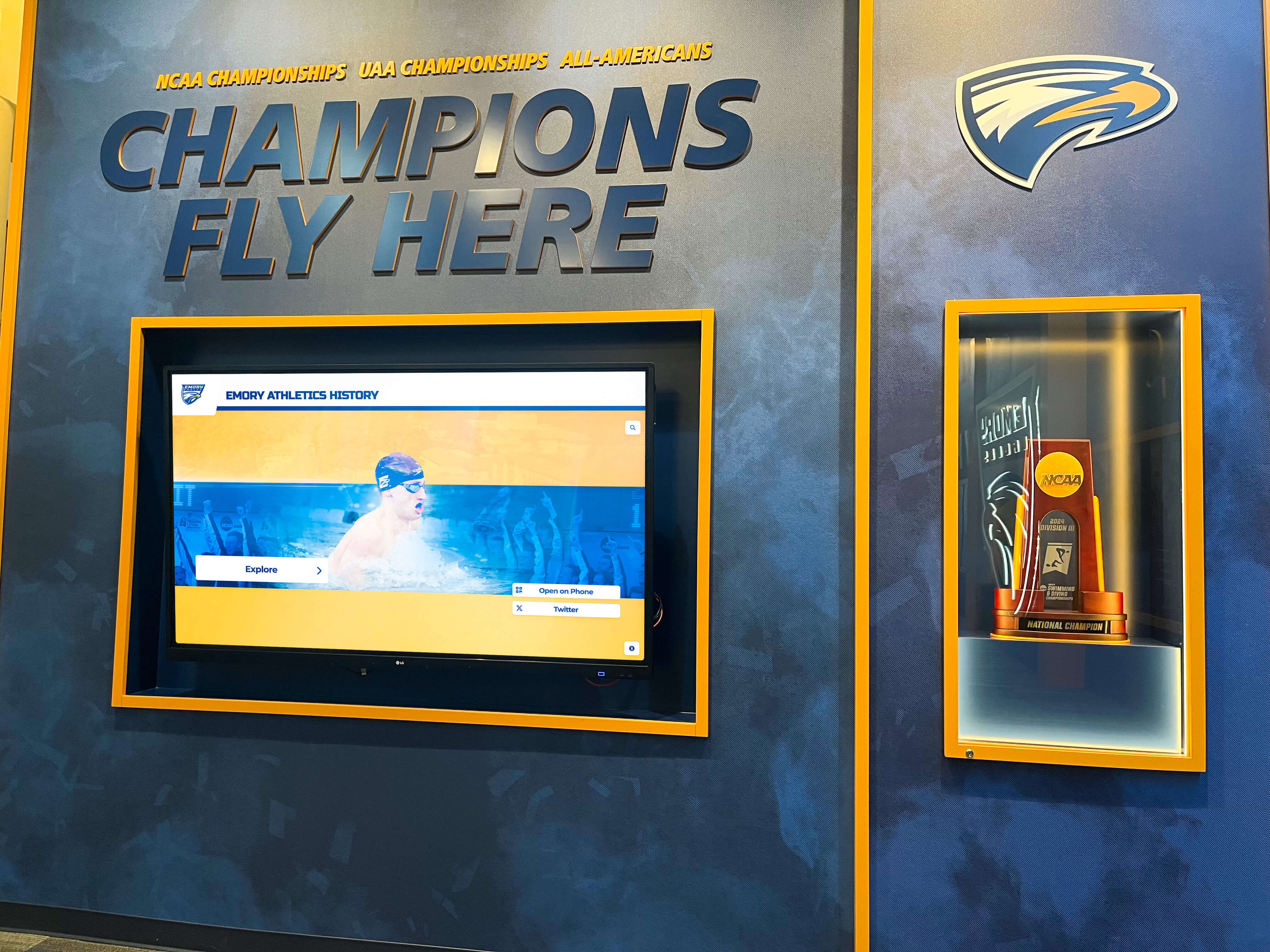
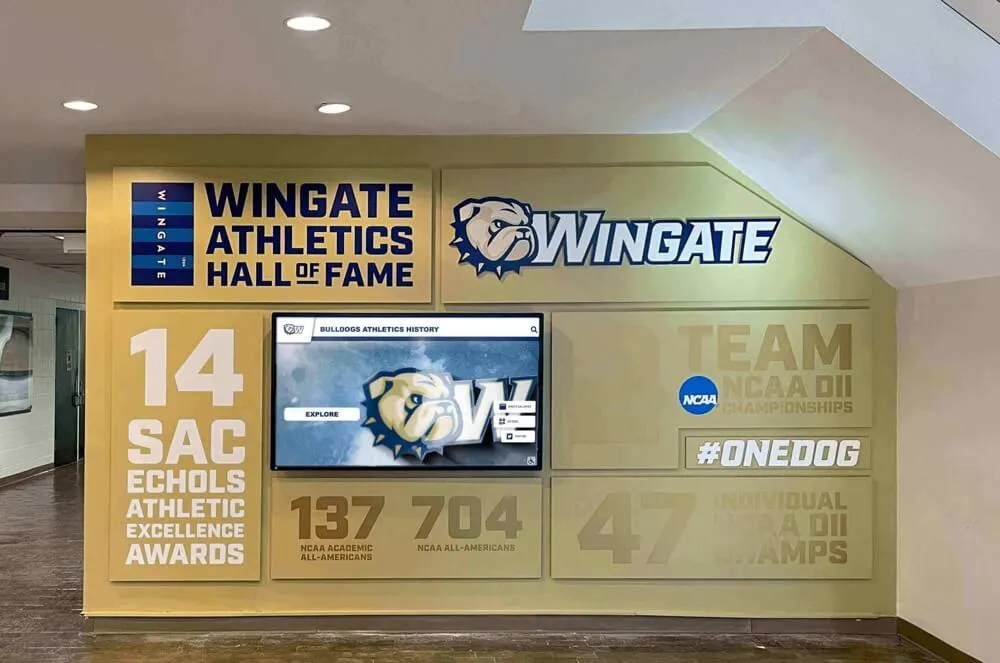
Championship walls combine physical trophies with environmental design creating permanent celebration of peak achievements
Modern Trophy Case Materials and Construction
Material selections significantly impact aesthetics, durability, maintenance, and cost.
Display Case Material Options
Different materials offer distinct advantages:
Glass Display Cases
Traditional glass cases provide excellent visibility and timeless aesthetics. Tempered safety glass prevents injury from breakage while maintaining crystal-clear viewing. Glass cases convey quality and permanence, making them preferred choices for prominent locations.
However, glass requires regular cleaning to maintain appearance, shows fingerprints easily, and typically costs more than alternative materials.
Acrylic Display Cases
Acrylic offers lightweight, shatter-resistant alternatives to glass. Modern acrylics provide excellent clarity approaching glass quality while weighing significantly less and resisting breakage. This makes acrylic particularly suitable for large displays where glass weight creates installation challenges.
Quality acrylic resists yellowing and scratching better than earlier formulations, though it still won’t match glass’s scratch resistance over decades of use.
Wood Frame Construction
Wood frames create warm, traditional aesthetics particularly appropriate for schools emphasizing classic design sensibilities. Quality hardwoods like oak, maple, or cherry provide durability and refinement while accommodating glass or acrylic panels for visibility.
Wood enables easier customization and modification compared to metal or glass alternatives, making it practical for schools expecting display needs to evolve over time.
Metal Frame Systems
Aluminum or steel frames provide modern, sleek aesthetics with exceptional durability. Powder-coated finishes resist damage while enabling color coordination with school branding. Metal frames support large glass panels and heavy trophy loads without sagging or deterioration.
Industrial or contemporary school designs often favor metal frame systems that complement modern architectural styles.
Security and Protection Considerations
Trophy cases require protection from theft, vandalism, and unauthorized access:
Locking Mechanisms
Quality locks prevent unauthorized case access while enabling legitimate staff access for updates. Keyed cylinder locks provide security appropriate for most school environments. High-value displays may justify electronic locks providing access logging and multi-user management.
Maintain spare keys in secure locations and document who has access to prevent lockouts when cases require updates.
Tempered and Laminated Glass
Beyond visibility, glass selection impacts security. Tempered glass resists breaking far better than standard glazing. Laminated glass—two glass layers bonded with plastic interlayer—prevents complete shattering even when damaged, deterring smash-and-grab theft attempts.
Weigh security requirements against budget realities—not all cases require maximum security glazing, but high-value items justify protective measures.
Anchoring and Mounting
Freestanding cases require secure anchoring preventing tipping hazards. Wall-mounted cases need installation into structural members supporting substantial weight loads. Professional installation ensures both security and safety code compliance.
Integrating Digital Recognition with Physical Trophy Cases
Modern schools increasingly complement traditional trophy displays with digital recognition technology, creating hybrid solutions that address space limitations while enabling comprehensive achievement celebration.
Advantages of Digital-Physical Combinations
Combining traditional and digital recognition offers compelling benefits:
Unlimited Recognition Capacity
Physical trophy cases inevitably fill, forcing difficult decisions about what deserves continued display. Digital recognition displays adjacent to physical cases provide unlimited capacity, enabling schools to honor all achievements without space constraints.
Feature premier championships and awards physically while digitally showcasing comprehensive achievement histories, individual records, complete team rosters, and detailed statistics.
Rich Multimedia Storytelling
Physical trophies alone convey limited information. Digital displays add photos, videos, detailed statistics, biographical information, and historical context impossible in traditional cases. Visitors can explore detailed achievement stories, watch game highlights, and understand achievement significance through comprehensive digital content.
This multimedia depth creates engagement traditional displays cannot match, particularly for younger audiences accustomed to digital information consumption.
Easy Updates and Maintenance
Adding trophies to physical cases requires space availability, potentially expensive fabrication of new plaques, and physical installation. Digital recognition updates through simple cloud-based content management, enabling schools to acknowledge new achievements within hours of occurrence.
This immediacy ensures recognition remains current while eliminating ongoing costs associated with physical plaque production and installation.
Implementation Approaches
Schools successfully integrate digital and physical recognition through several models:
Adjacent Touchscreen Kiosks
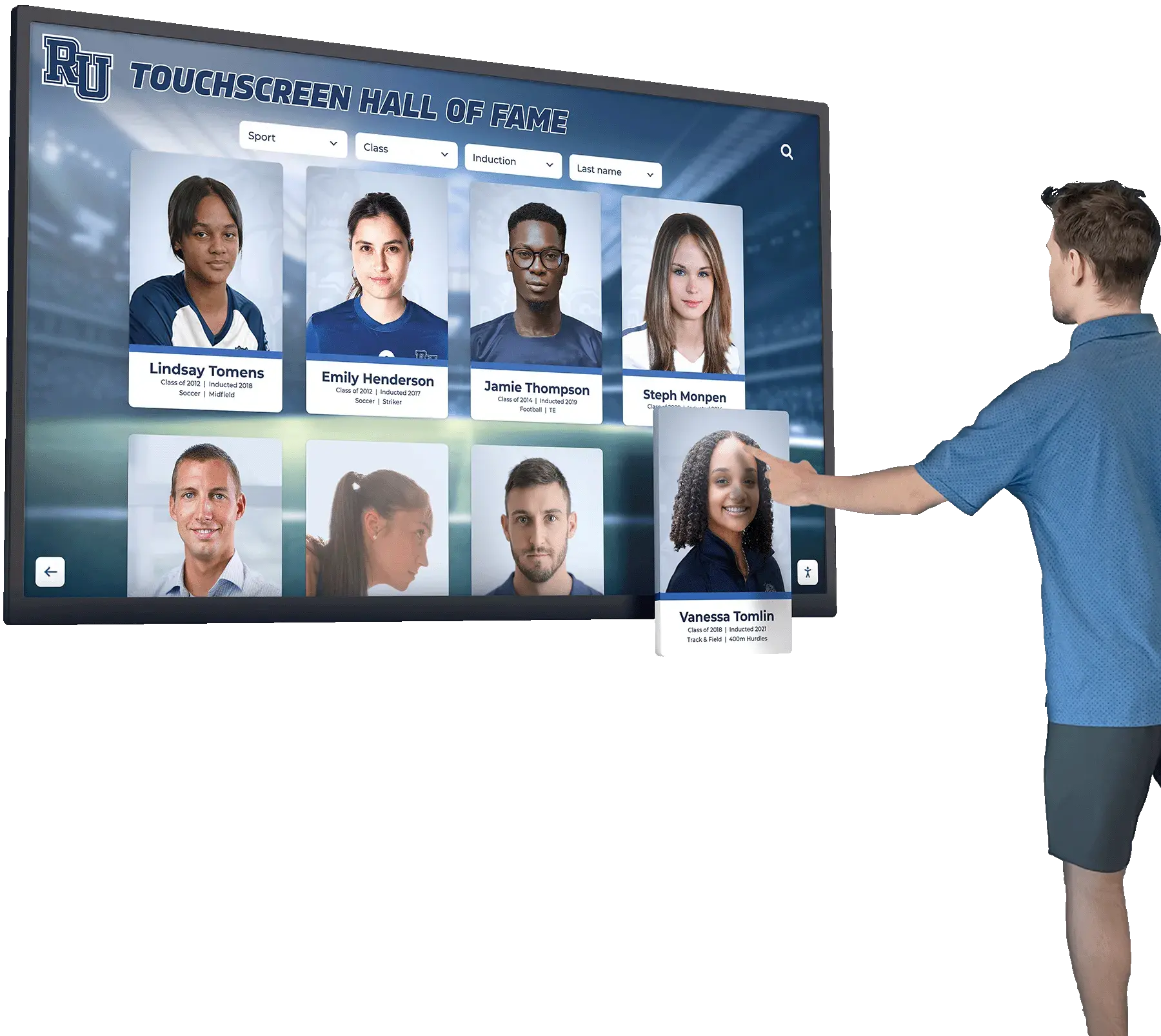
Position interactive touchscreen displays immediately adjacent to physical trophy cases. Physical cases feature championships and premier awards while touchscreens provide deeper exploration of achievement histories, individual records, team rosters, and comprehensive statistics.
This placement creates natural visitor flow—physical displays attract attention, then touchscreens enable deeper engagement for interested viewers. Solutions like Rocket Alumni Solutions provide purpose-built systems specifically designed for school recognition applications.
Digital Screens Within Display Environments
Integrate flat-panel displays directly into trophy case environments, creating unified physical-digital presentations. Screens can show rotating achievement highlights, championship video footage, record progressions, or featured athlete profiles complementing surrounding physical displays.
This integration creates cohesive presentations where digital and physical elements work together rather than existing as separate, disconnected systems.
QR Code Connections
For schools with budget constraints preventing digital display installations, QR codes placed throughout trophy cases enable smartphone-based access to digital content. Visitors scan codes to access detailed information, photos, videos, and statistics on their personal devices.
While less immersive than dedicated touchscreens, QR codes provide cost-effective bridges between physical displays and digital content enhancement.
Trophy Case Maintenance and Long-Term Management
Impressive displays require ongoing maintenance and systematic management to remain effective over time.
Cleaning and Upkeep Protocols
Regular maintenance preserves appearance and functionality:
Routine Cleaning Schedules
Glass or acrylic requires frequent cleaning to maintain clarity and professional appearance. Establish weekly or bi-weekly cleaning schedules using appropriate glass cleaners and microfiber cloths. Avoid abrasive materials that scratch acrylic or damage finishes.
Interior dusting should occur monthly or quarterly depending on environmental conditions. Trophy surfaces tarnish without regular care—particularly important for older items that may deteriorate with neglect.
Trophy Preservation
Metal trophies require occasional polishing to maintain appearance. Use appropriate metal cleaners matched to trophy composition—brass, silver, and other metals require specific care products. Avoid harsh chemicals that might damage finishes or engraving.
For historically significant older trophies, consider professional conservation ensuring preservation without inadvertent damage from well-intentioned but inappropriate cleaning methods.
Environmental Control
Excessive humidity promotes tarnishing and deterioration. Adequate climate control protects displays, particularly in gymnasiums or other areas without consistent environmental management. Consider dehumidifiers or climate-controlled case designs for challenging environments.
UV protection—through specialized glazing or window treatments—prevents photograph fading and material degradation from prolonged sun exposure.
Systematic Update Procedures
Trophy case content requires regular attention maintaining relevance:
Seasonal Rotation Workflows
If implementing rotation strategies, establish clear procedures: who decides what features when, how items move into and out of storage, documentation tracking what displays where and when, and communication ensuring stakeholders understand rotation purposes.
Calendar reminders prevent rotations from being forgotten amid other school priorities.
New Achievement Integration
Develop standardized processes for adding new achievements. Who determines what deserves display? How quickly should new items appear? What documentation accompanies new additions? Clear procedures prevent inconsistent treatment and ensure timely recognition.
Storage and Archiving
Items removed from active display require appropriate storage. Catalog archived trophies, maintain accessible storage enabling future rotation, protect items from environmental damage during storage, and document archived item locations enabling efficient retrieval when needed.
Budget-Friendly Trophy Case Solutions
Not all schools have unlimited resources for trophy case design. Creative approaches maximize impact within realistic budgets.
Cost-Effective Display Strategies
Thoughtful planning stretches limited budgets:
Phased Implementation
Rather than attempting comprehensive trophy case renovations at once, implement improvements in phases. Start with highest-visibility locations, then expand to additional areas as budgets allow. Staged approaches distribute costs while delivering immediate improvements in priority areas.
DIY and In-House Capabilities
Many improvements require more creativity than capital. Staff or parent volunteers with carpentry, design, or construction skills can implement sophisticated improvements at material costs only. Student art programs might create custom backdrops or graphics as real-world design projects.
Standard Case Modification
Rather than fully custom solutions, purchase quality standard trophy cases and customize through painted backgrounds, branded elements, custom lighting, or creative arrangement. This approach provides professional results at moderate costs.
Surplus and Secondary Markets
School districts often have surplus display cases during renovations. Commercial retailers regularly sell high-quality display cases at steep discounts when updating stores. These secondary markets provide quality cases at fractions of new retail costs.
Funding and Resource Development
Creative financing supports trophy case projects:
Booster Club Fundraising
Athletic booster clubs often willingly fund projects that celebrate their programs. Trophy case improvements directly benefit programs while creating visible donor recognition opportunities. Class-specific clubs might sponsor displays featuring their graduating years.
Alumni Campaign Appeals
Alumni frequently respond to appeals supporting tangible campus improvements. Trophy case renovation campaigns can attract donations from multiple smaller donors rather than requiring major gifts. Allow naming opportunities for case sections or featured displays acknowledging donor support.
Corporate and Community Sponsorships
Local businesses may sponsor trophy cases in exchange for recognition through small plaques acknowledging their support. While avoiding commercial advertising, appropriate acknowledgment of community partners supporting school improvements proves acceptable in most contexts.
Memorial and Tribute Opportunities
Trophy cases provide appropriate memorial opportunities honoring deceased community members, former coaches, or school legends. These tribute opportunities often attract donations from families and friends seeking meaningful ways to honor loved ones while supporting school communities.
Conclusion: Creating Trophy Cases That Inspire Excellence
Well-designed trophy cases transcend simple award storage—they tell institutional stories, inspire student achievement, strengthen community pride, and create tangible recognition that validates the hard work behind every accomplishment displayed. The ideas and strategies explored throughout this guide provide frameworks for schools creating or improving trophy displays that serve institutional missions effectively while remaining practical within real-world constraints.
Whether implementing comprehensive renovations or making incremental improvements to existing displays, the principles remain consistent: establish clear purposes aligning with institutional values, organize intentionally creating meaningful rather than cluttered presentations, maximize available space through creative layouts and potential rotation strategies, enhance understanding through supporting information and visual elements, select appropriate materials balancing aesthetics with durability and budget realities, and maintain displays systematically preserving their impact over time.
Transform Your Trophy Case with Modern Recognition Technology
Discover how digital recognition displays complement traditional trophy cases, providing unlimited recognition capacity and engaging multimedia storytelling that inspires students while celebrating achievement.
Explore Recognition SolutionsModern recognition increasingly combines traditional physical displays with digital technology that addresses space limitations while enabling comprehensive celebration of achievements impossible in physical-only cases. Schools implementing digital trophy displays report enhanced student engagement, simplified maintenance compared to traditional plaques, and recognition capacity that grows alongside achievement rather than creating space constraints.
Your school’s trophies represent countless hours of practice, teamwork, dedication, and achievement. They deserve presentations that honor those efforts appropriately while inspiring current students toward their own excellence. With thoughtful planning, creative design, and systematic maintenance, your trophy cases become powerful institutional assets that strengthen school culture, celebrate achievement appropriately, and create lasting pride in the shared tradition of excellence defining your school community.
Whether you choose traditional trophy cases, modern digital recognition, or innovative combinations leveraging both approaches, the goal remains consistent: creating displays that genuinely celebrate achievement, inspire continued excellence, and strengthen the community connections that make schools special places where young people discover their potential and achieve remarkable things worthy of lasting recognition.