



Walk into any successful athletic program, and you’ll notice something immediately: their achievements don’t hide in dusty storage rooms. Instead, trophy display cases with lights transform championships, individual honors, and team milestones into powerful visual statements that inspire current athletes, impress visitors, and preserve institutional memory. Whether you’re outfitting a high school gymnasium, organizing a college athletic department, or showcasing personal memorabilia at home, the right lighting transforms simple recognition into compelling storytelling.
Yet selecting the appropriate display case with lighting involves more considerations than many administrators initially anticipate. LED strip placement affects trophy visibility dramatically. Case dimensions must accommodate growth as programs accumulate achievements. Mounting locations influence who sees your recognition daily versus occasionally. Budget constraints require balancing immediate needs against long-term expansion capacity. And modern alternatives—particularly interactive digital displays—now offer capabilities traditional cases simply cannot match.
This complete guide examines trophy display cases with lights across multiple dimensions: lighting technology options from basic fluorescent to advanced LED systems, case materials and construction quality affecting longevity, placement strategies maximizing visibility, maintenance requirements ensuring continued operation, and modern digital alternatives expanding what’s possible in athletic recognition beyond physical space limitations.
Recognition displays serve audiences beyond the honorees themselves. Schools report that visible achievement celebration improves current athlete motivation by 40-55%, enhances recruiting appeal through demonstrated program tradition, and strengthens alumni engagement by acknowledging contributions that built competitive excellence across generations.

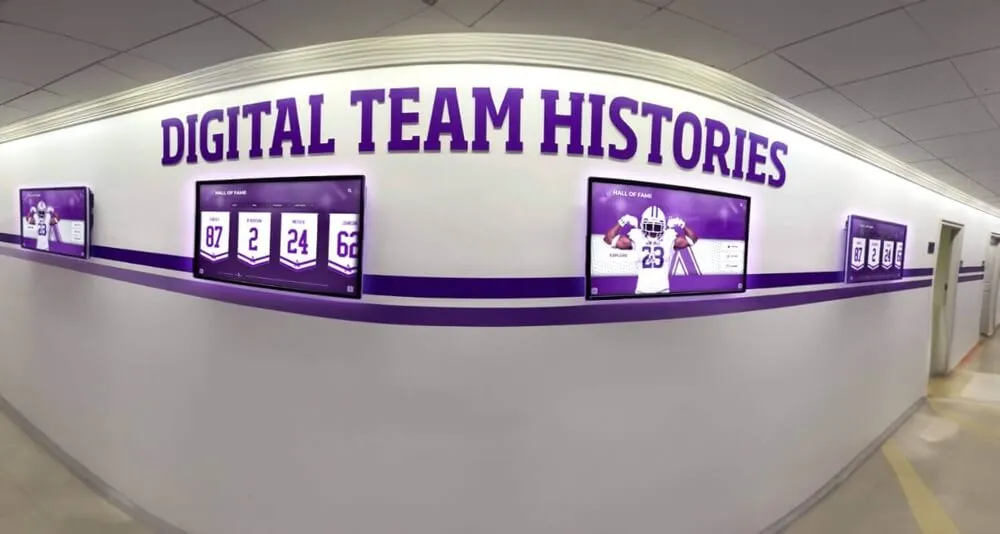
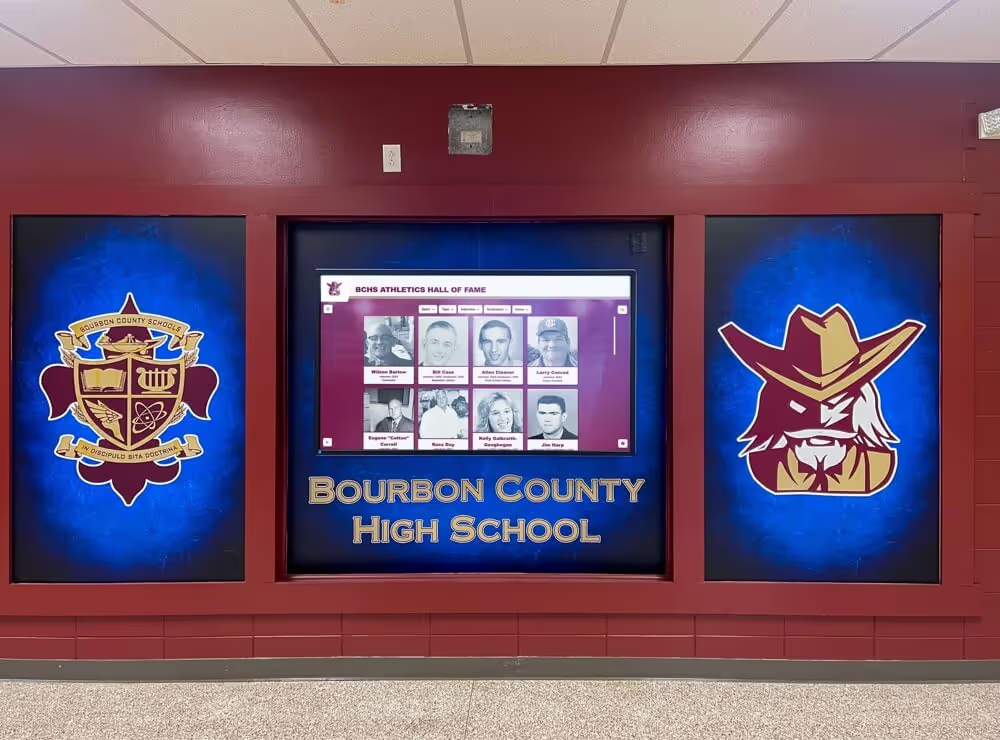
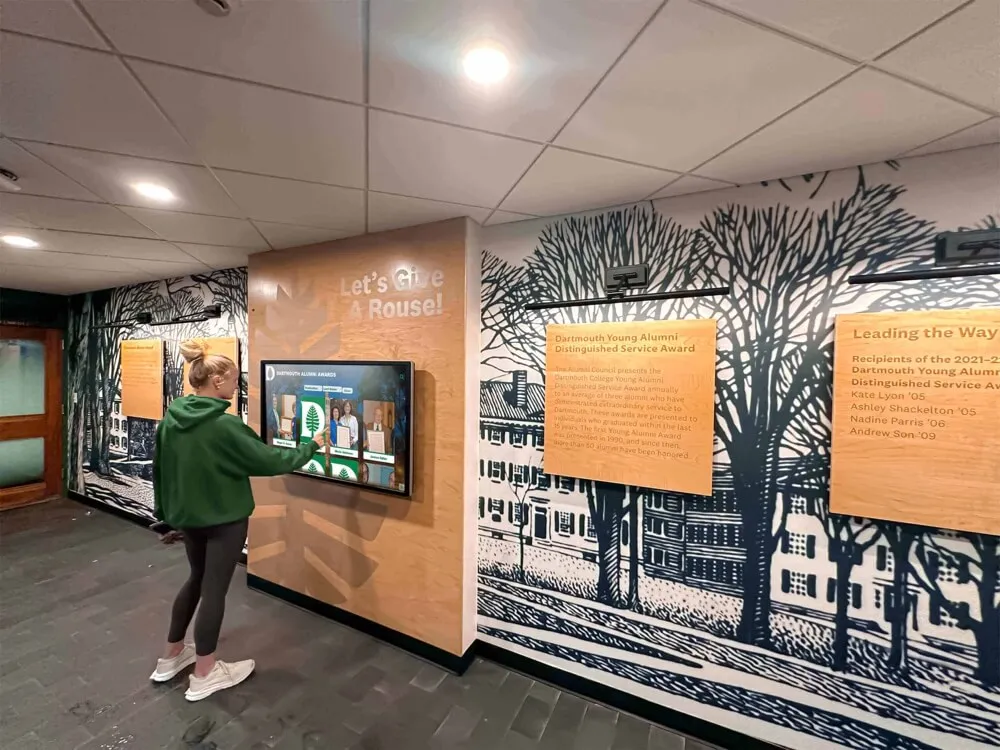
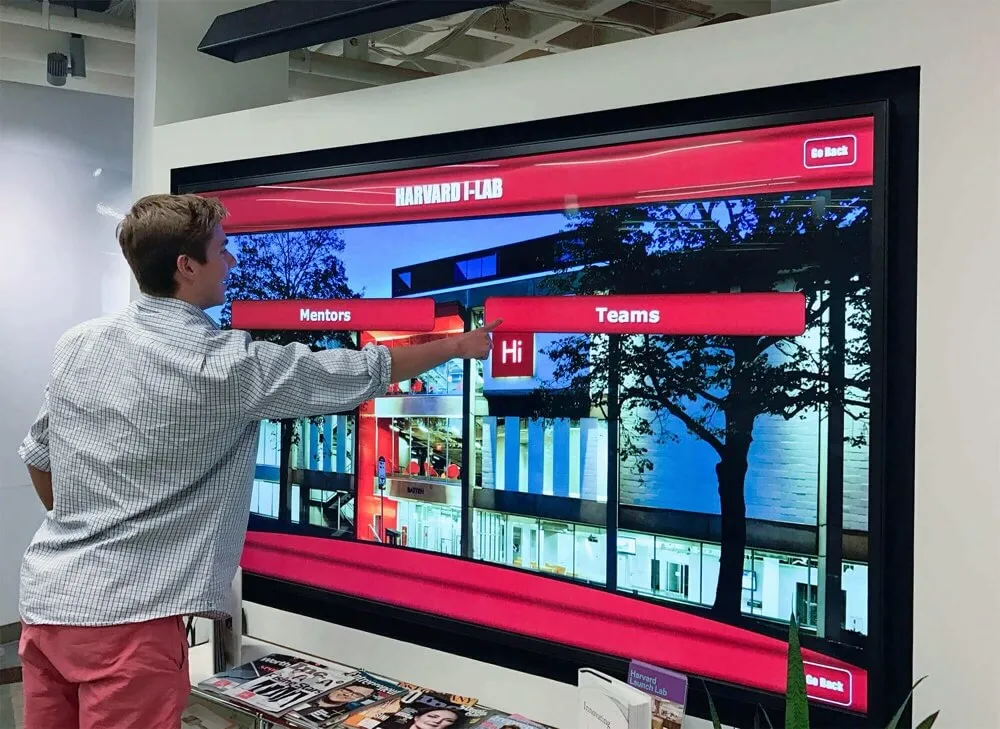
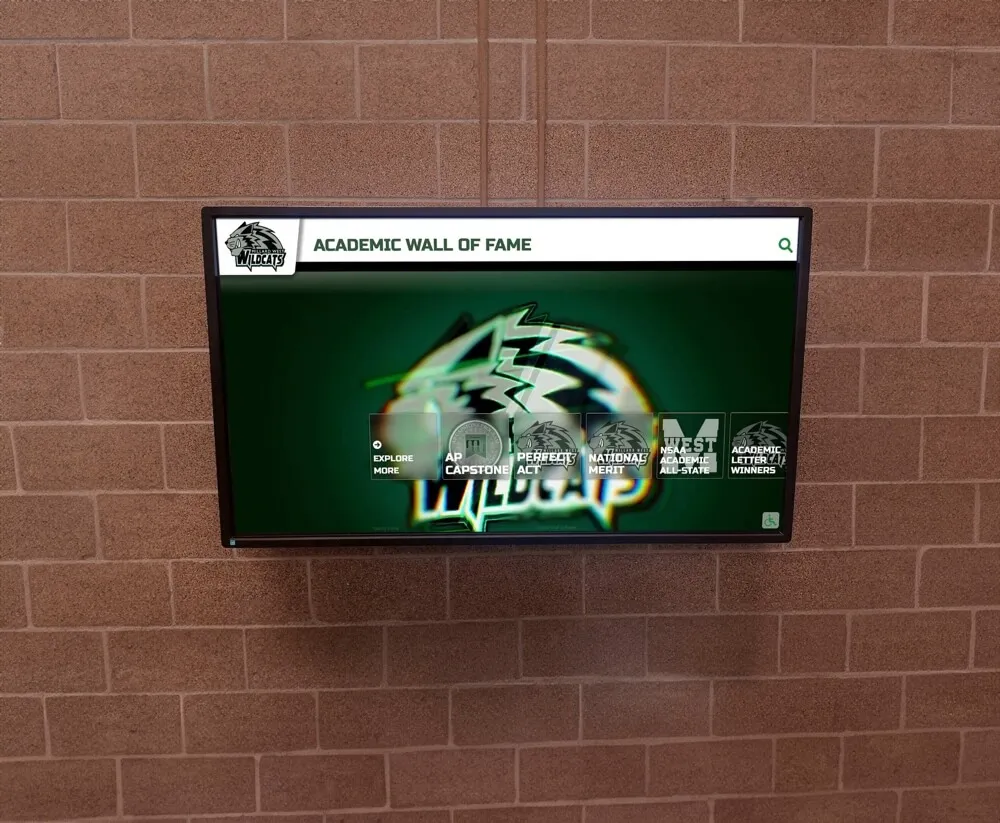
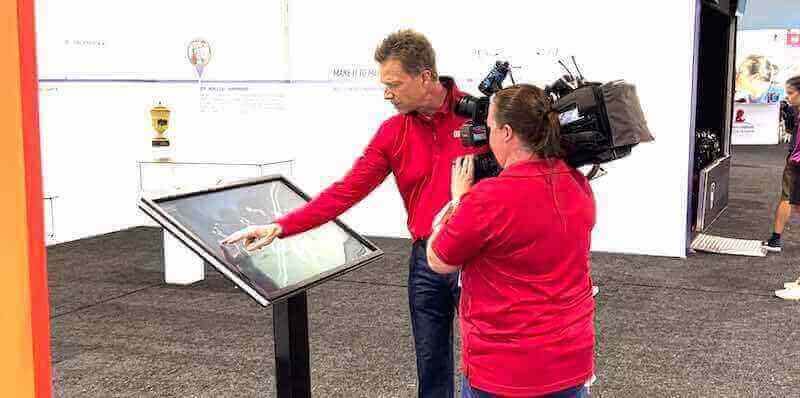
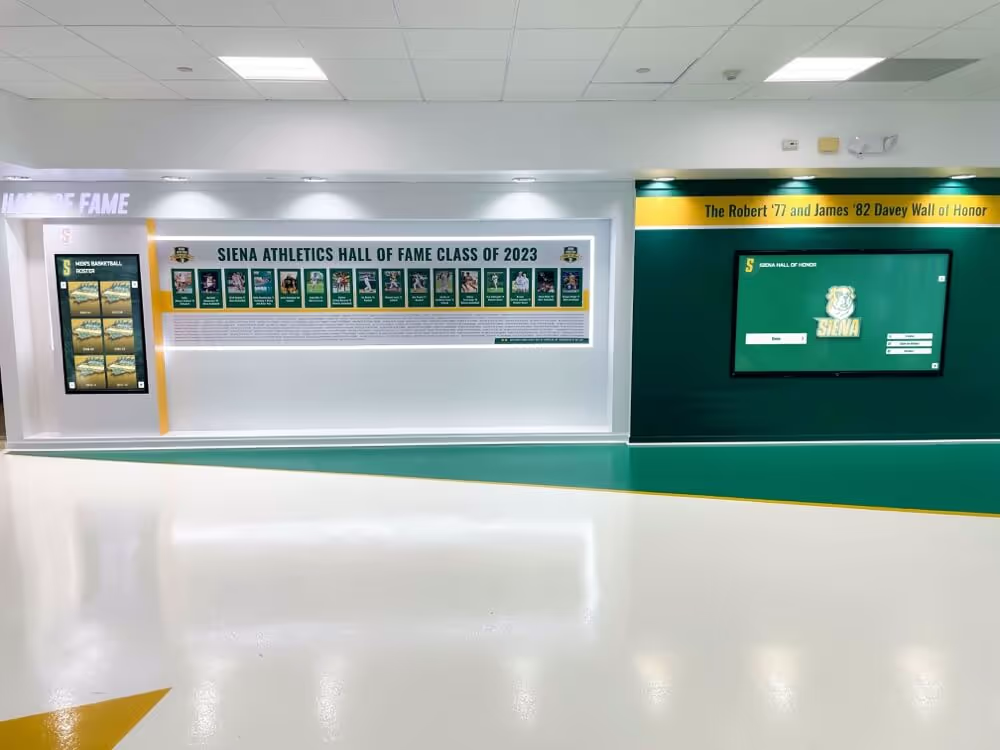
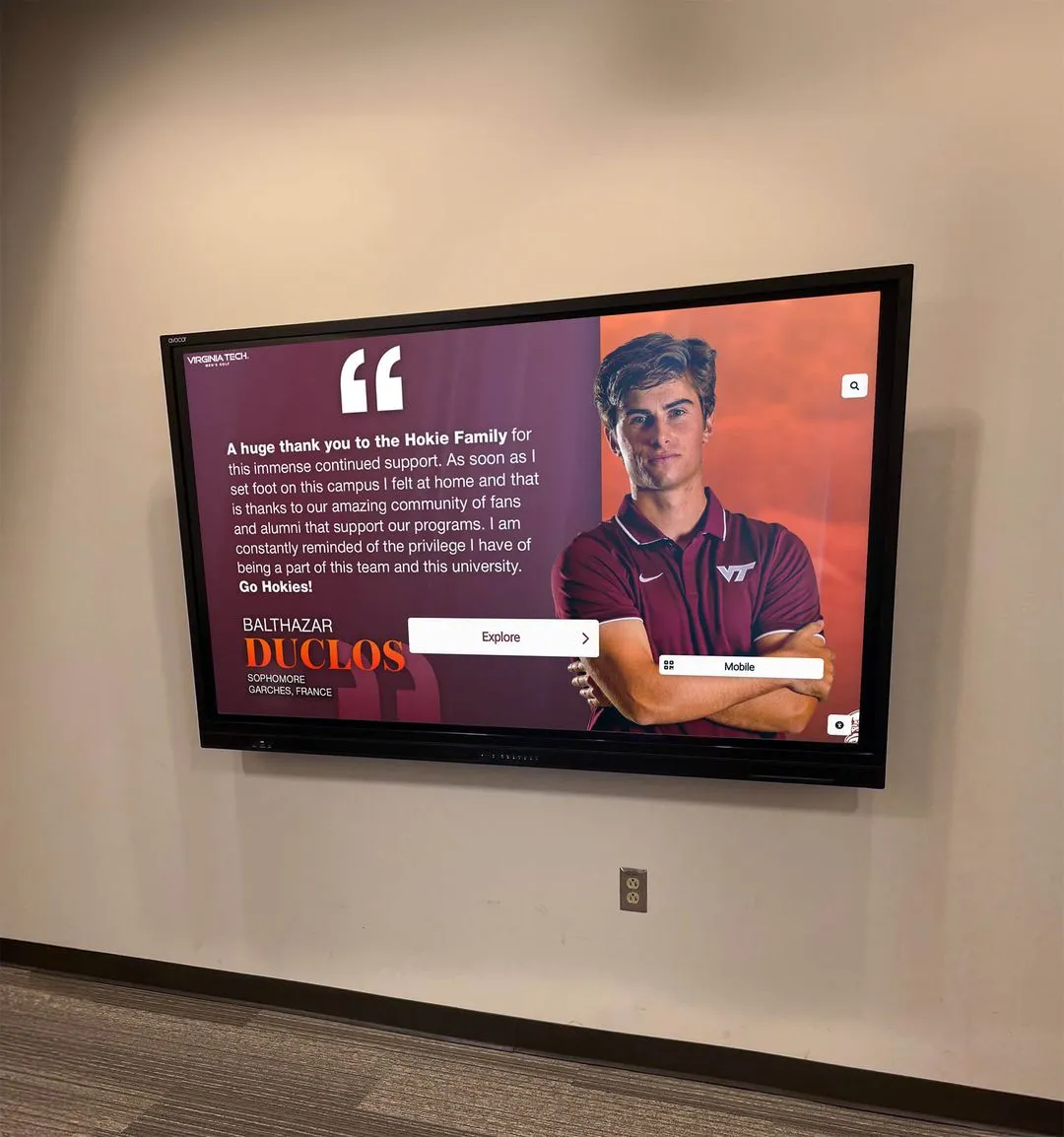
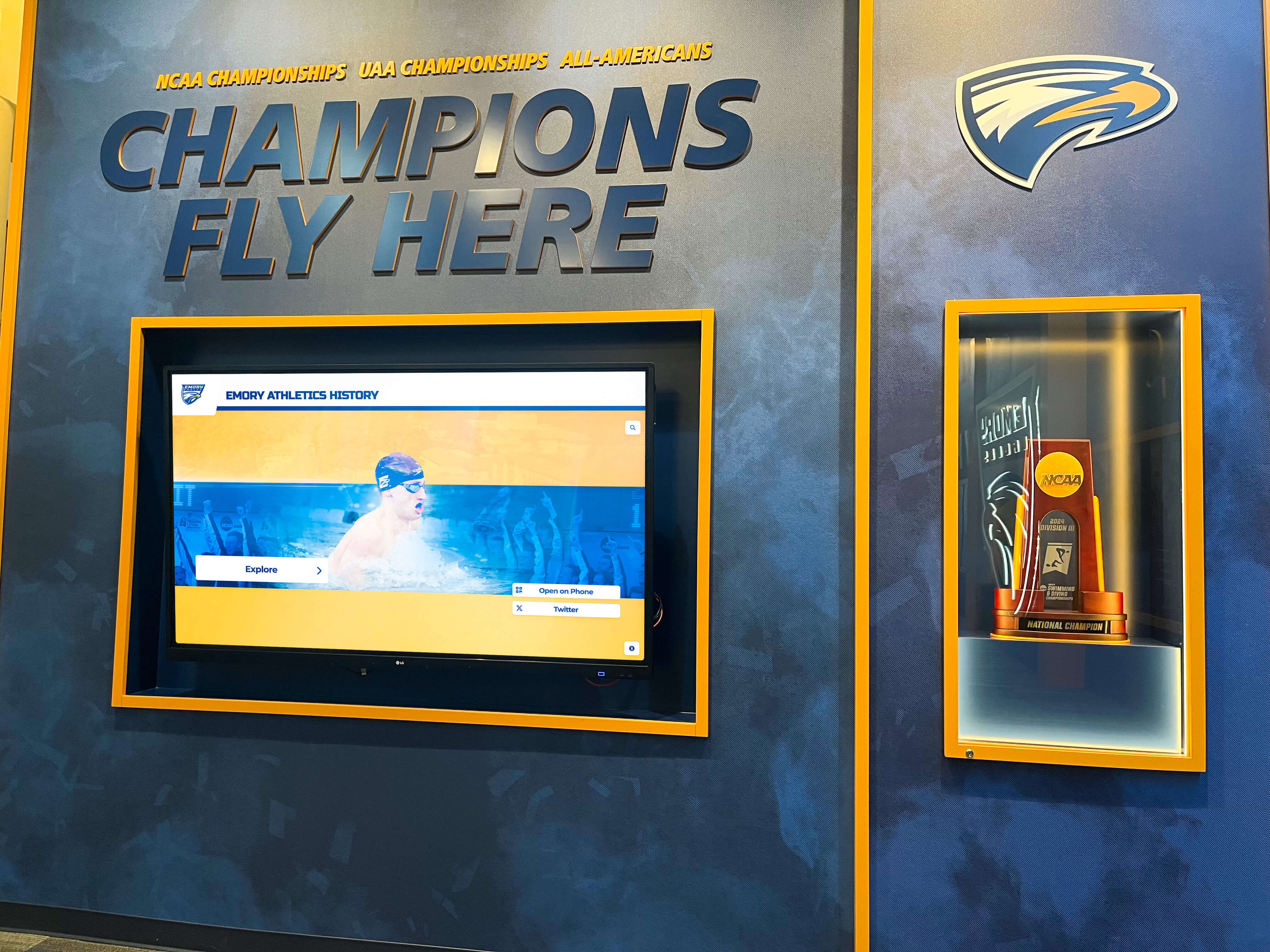
Prominent trophy displays in high-traffic areas create daily inspiration for current athletes while celebrating program history
Understanding LED Lighting Technology for Trophy Cases
Modern LED systems have revolutionized trophy illumination, offering advantages over traditional lighting that make them the standard choice for new installations.
LED Strip Lighting Fundamentals
LED strips provide flexible, energy-efficient illumination ideal for trophy cases:
Brightness and Color Temperature
LED brightness measured in lumens directly affects trophy visibility. Most trophy case applications require 300-500 lumens per foot of display space to adequately illuminate trophies without creating harsh glare or shadows. Color temperature—measured in Kelvin—affects the display atmosphere significantly. Warm white LEDs (2700-3000K) create traditional, inviting ambiance suitable for wood cases and vintage trophies. Cool white LEDs (4000-5000K) provide bright, contemporary lighting that makes modern acrylic awards and metallic trophies shine brilliantly. Daylight LEDs (5500-6500K) offer the closest approximation to natural light, revealing true trophy colors without warmth or coolness bias.
Most athletic programs select cool white LEDs for their clean, modern appearance that complements contemporary facility design while maximizing trophy visibility across various materials and finishes.
Energy Efficiency and Operating Costs
LED lighting consumes dramatically less electricity than older fluorescent or incandescent systems. A typical 6-foot trophy case lit with LED strips draws 15-25 watts compared to 60-100 watts for equivalent fluorescent tubes. Over continuous operation, this difference generates substantial savings: LED cases cost approximately $15-25 annually in electricity versus $60-100 for fluorescent systems.
Beyond direct energy costs, LED systems reduce cooling loads in climate-controlled facilities—eliminating heat generated by traditional lighting that forces HVAC systems to work harder maintaining comfortable temperatures in gymnasiums and hallways where trophy cases typically reside.
Lifespan and Maintenance
Quality LED strips rated for 50,000+ hours operate for 5-7 years under continuous illumination before requiring replacement. This longevity eliminates the frequent bulb changes traditional systems demand—reducing ongoing maintenance labor while ensuring consistent display lighting without the gradual dimming that occurs as fluorescent tubes age.
When LED strips eventually require replacement, the process typically involves simple plug-and-play connections rather than professional electrical work, keeping maintenance costs minimal throughout display lifecycle.
LED Placement Strategies
Strategic light positioning transforms trophy visibility:
Top-Down Illumination
Most trophy cases feature LED strips mounted along the top interior, angled downward to illuminate contents evenly. This overhead approach prevents shadows created by trophy profiles while avoiding direct viewer glare. Multiple strips positioned front and rear within top channels ensure comprehensive coverage preventing dark zones where taller trophies cast shadows on items behind them.
Professional installations include diffusers—translucent covers over LED strips—that spread light evenly rather than creating distinct bright points visible through glass, maintaining focus on trophies rather than light sources themselves.
Shelf Lighting for Depth
Deep cases benefit from LED strips mounted to shelf undersides, creating layered illumination that highlights trophies at multiple depths rather than lighting only front-facing items. This shelf-edge lighting proves particularly effective for cases with 18+ inch depth where single overhead strips cannot adequately reach rear items.
Schools with extensive trophy collections often combine overhead and shelf lighting for maximum visibility across all display positions, though this approach doubles installation costs and complexity compared to basic overhead-only configurations.
Accent and Spotlighting
Some facilities use focused LED spotlights rather than strip lighting for dramatic emphasis on individual championship trophies or particularly significant awards. These directed beams create museum-quality presentation but require more sophisticated electrical installation and careful positioning preventing harsh shadows or glare reflecting off glass surfaces directly into viewer eyes.
Resources on digital recognition displays demonstrate modern alternatives using self-illuminated screens that eliminate external lighting requirements entirely while expanding recognition capacity beyond physical trophy limitations.
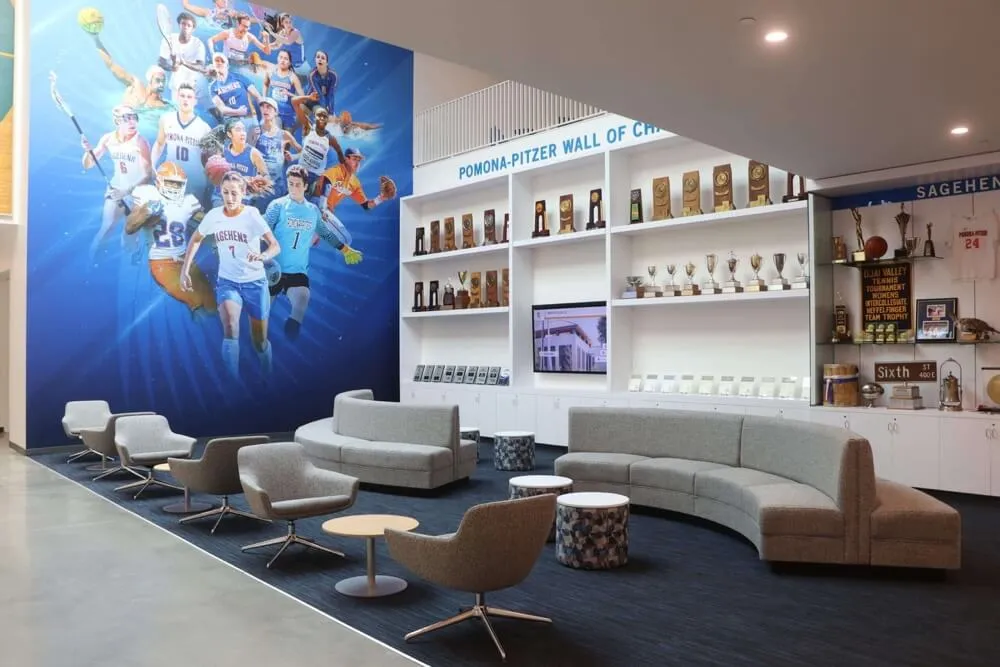
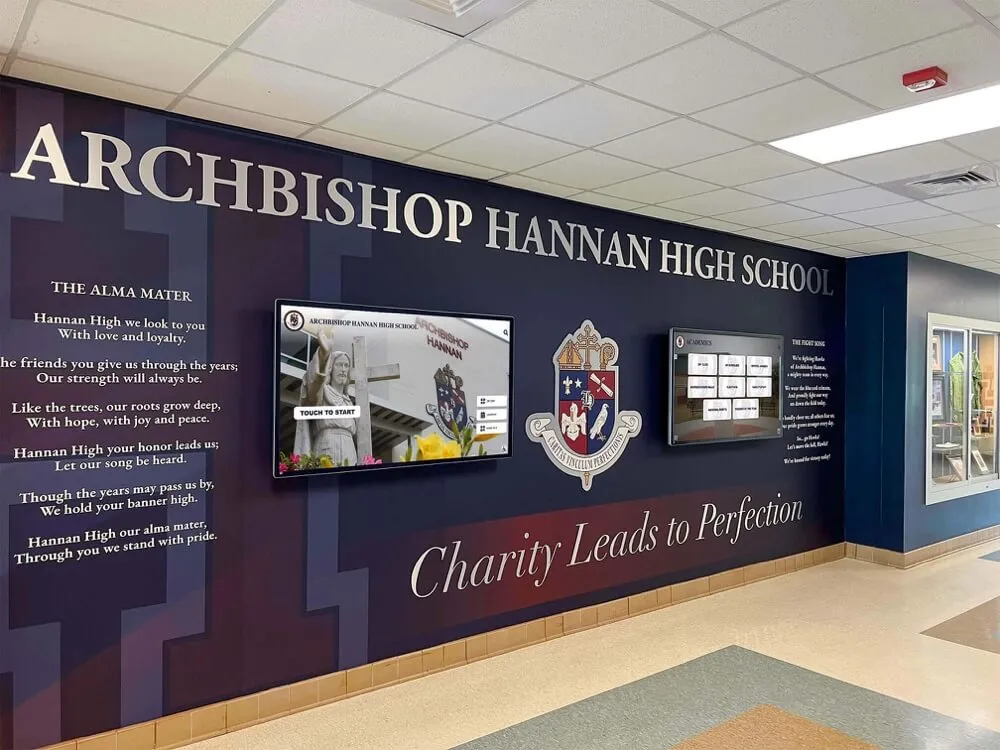
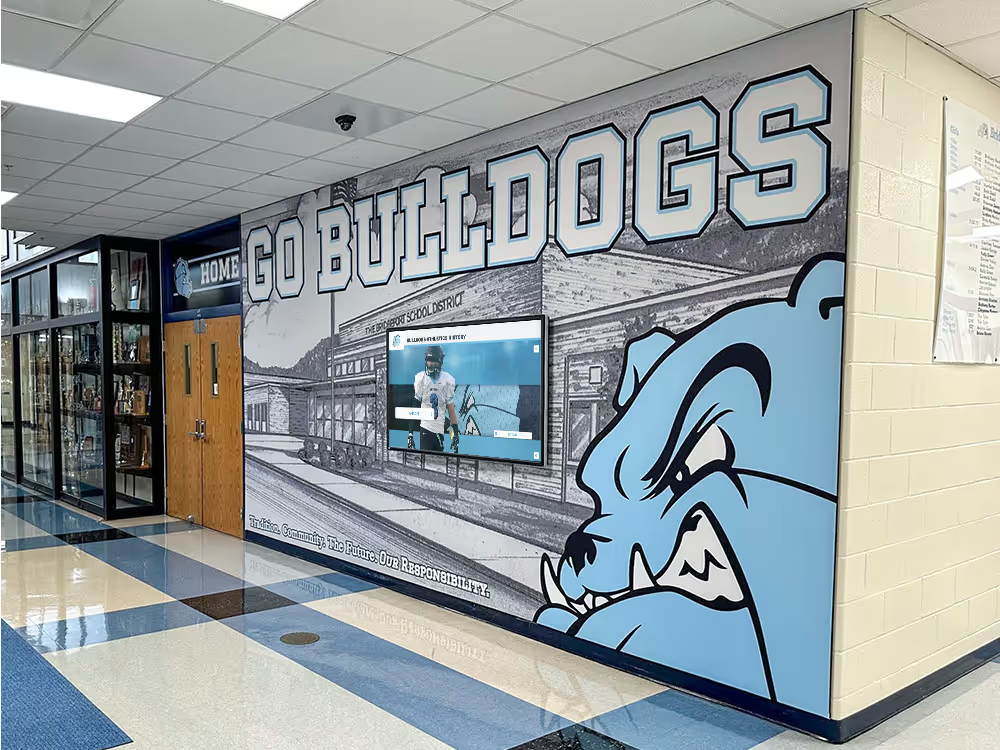
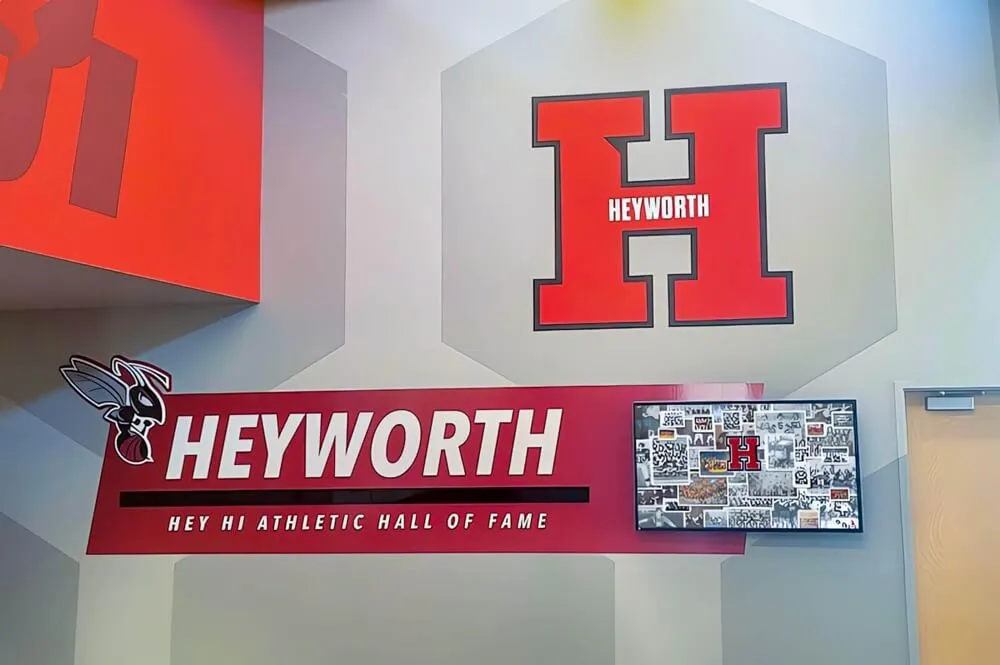
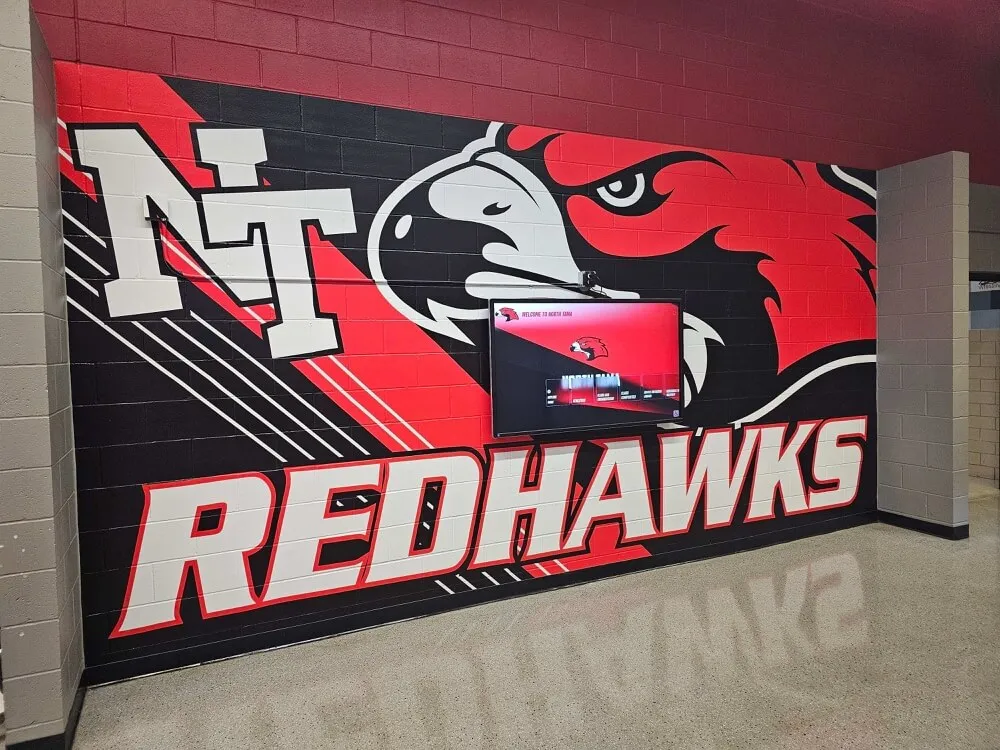
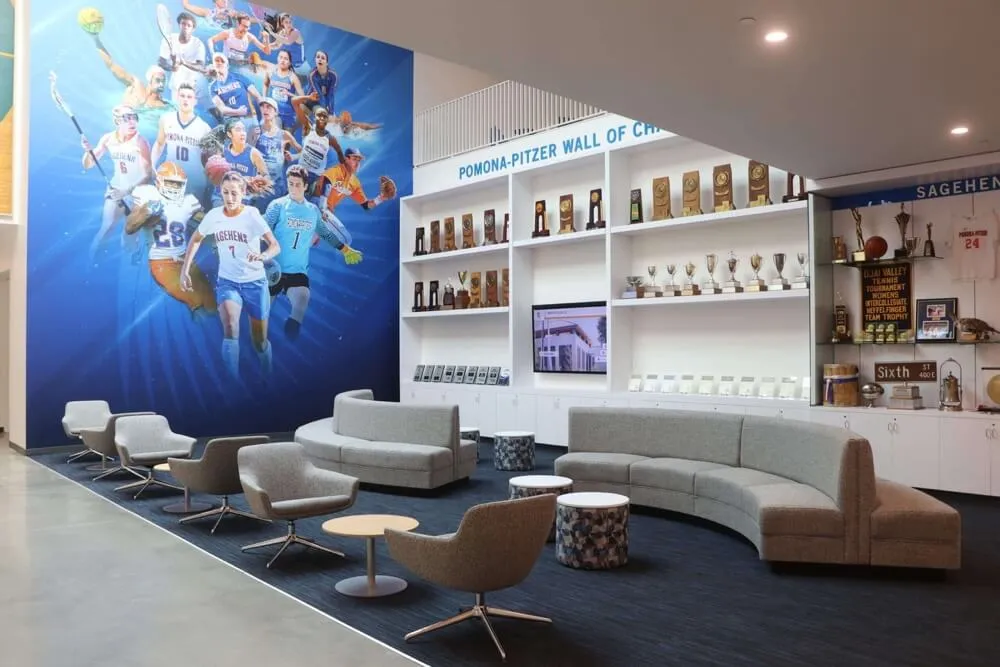
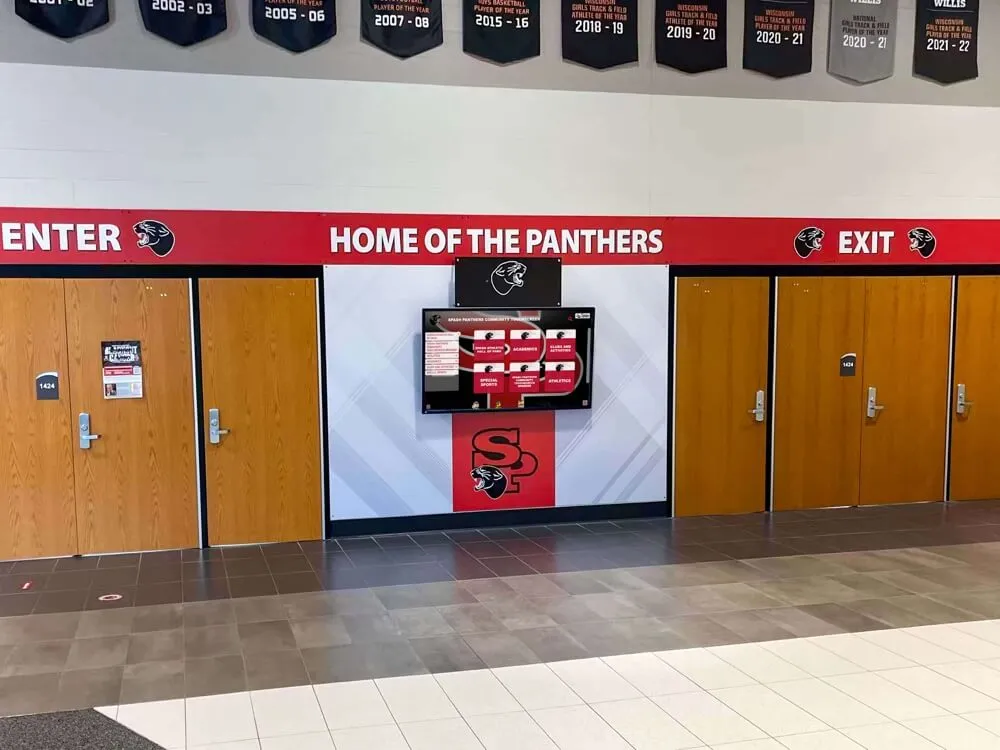
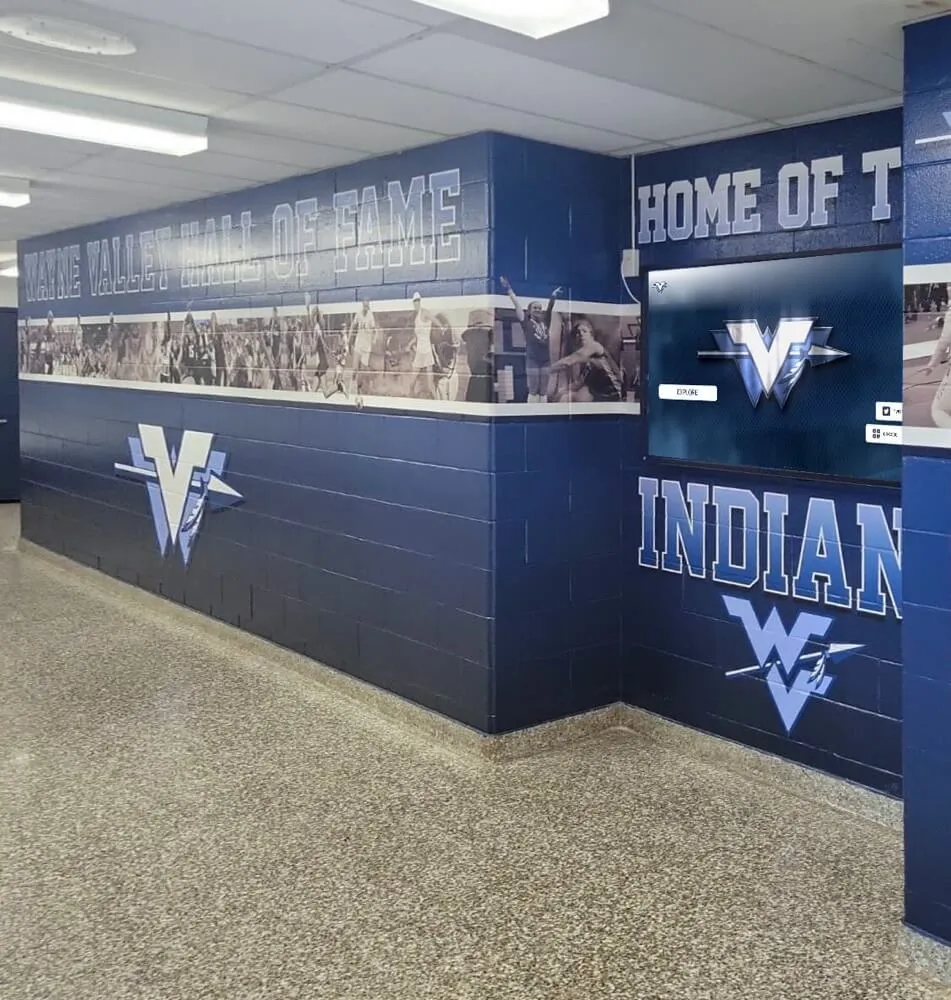
Comprehensive recognition environments combine trophy displays with murals and additional elements creating immersive athletic program showcases
Trophy Display Case Construction and Materials
Case quality determines longevity, security, and maintenance requirements over decades of institutional use.
Frame Materials and Durability
Trophy case frames endure demanding facility environments:
Aluminum Frames
Extruded aluminum provides lightweight, corrosion-resistant construction ideal for humid gymnasiums where steel frames rust and wood warps. Anodized finishes in black, bronze, or silver integrate with varied facility aesthetics while resisting scratches from cleaning equipment or moving adjacent furniture. Aluminum cases typically weigh 30-40% less than equivalent steel construction, simplifying wall mounting while reducing structural load on aging building walls.
However, aluminum’s softness makes it vulnerable to denting from impacts—a consideration for high-traffic hallway locations where students and maintenance equipment regularly pass within inches of display cases.
Steel Construction
Welded steel frames offer maximum security for valuable trophy collections. Heavier construction resists forced entry attempts while supporting thick glass panels without deflection over time. Powder-coated finishes provide durable color that withstands cleaning chemicals better than painted aluminum or wood finishes.
The primary drawback: weight. Large steel cases exceed 200+ pounds empty, requiring professional installation with heavy-duty wall anchors and often supplemental structural support beyond standard drywall mounting capabilities. Many older buildings cannot support wall-mounted steel cases without reinforcement adding significant installation costs.
Wood Frame Options
Traditional wood cases create warm, classic aesthetics particularly appropriate for established programs valuing heritage over contemporary design. Oak, cherry, and walnut finishes complement historic fieldhouses and traditional architecture where aluminum appears incongruous. Quality hardwood construction with mortise-and-tenon joinery can last generations with proper care.
Yet wood requires more maintenance than metal alternatives—periodic refinishing addresses scratches and fading while humidity control prevents warping in gymnasiums lacking climate stability. Most schools now specify metal construction for longevity and minimal upkeep despite wood’s superior traditional appearance.
Glass Types and Security Considerations
Glass selection balances visibility, safety, and security:
Standard Float Glass
Basic clear glass provides excellent trophy visibility at lowest cost. However, standard glass shatters into dangerous shards when broken—creating safety hazards in school environments where accidental impacts occur regularly. Most building codes now prohibit standard glass in trophy cases located in public corridors or areas accessible to unsupervised students.
Tempered Safety Glass
Heat-strengthened tempered glass offers 4-5 times the impact resistance of standard glass while crumbling into small granular pieces when broken rather than dangerous shards. This safety feature makes tempered glass the minimum standard for institutional trophy cases, satisfying building codes while providing clear trophy visibility and reasonable security against casual theft or vandalism.
Tempered glass costs approximately 30-50% more than standard float glass but provides essential safety protection justifying the premium for school applications where student safety remains paramount.
Laminated Security Glass
High-security installations use laminated glass featuring vinyl interlayers bonding multiple glass sheets. When impacted, laminated glass cracks but remains intact rather than shattering—preventing entry even after glass breakage. This construction proves essential for trophy cases containing particularly valuable items like championship rings, signed memorabilia, or historic artifacts worth thousands of dollars individually.
The cost premium approaches 100-150% over basic tempered glass, limiting laminated security glass primarily to cases housing truly irreplaceable or high-value items where replacement costs exceed the substantial glass investment.
Acrylic Alternatives
Some budget-conscious facilities use clear acrylic (plexiglass) rather than glass. Acrylic weighs significantly less than glass, resists shattering, and costs less per square foot. However, acrylic scratches easily from routine cleaning, yellows under UV exposure over years, and appears optically inferior to quality glass—developing visible distortion in thick panels. Most schools view acrylic as temporary or budget solution rather than long-term quality installation appropriate for permanent athletic recognition.
Comprehensive comparisons of championship recognition display options examine both traditional trophy cases and modern digital alternatives that eliminate glass-related security and maintenance concerns entirely.
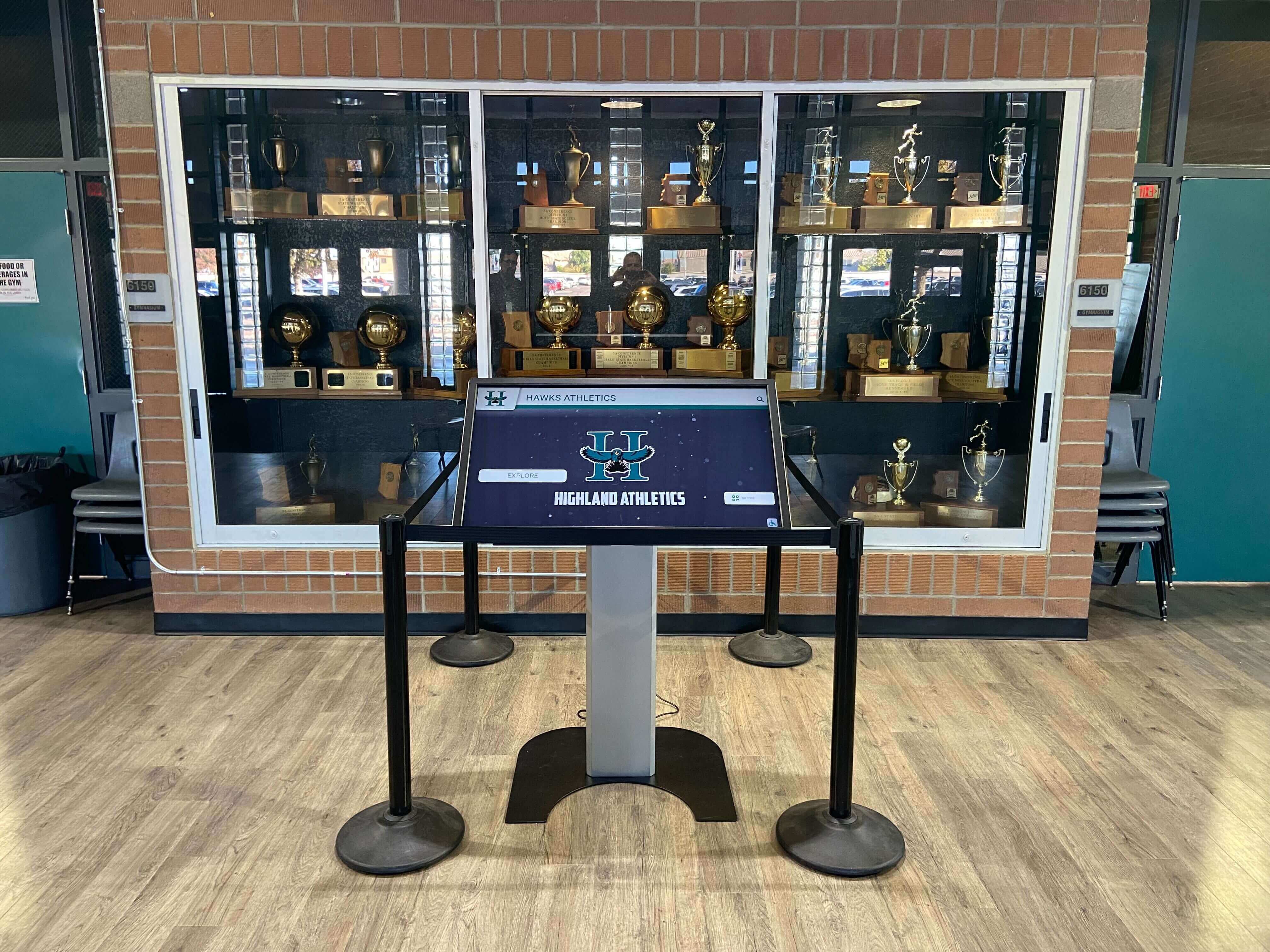
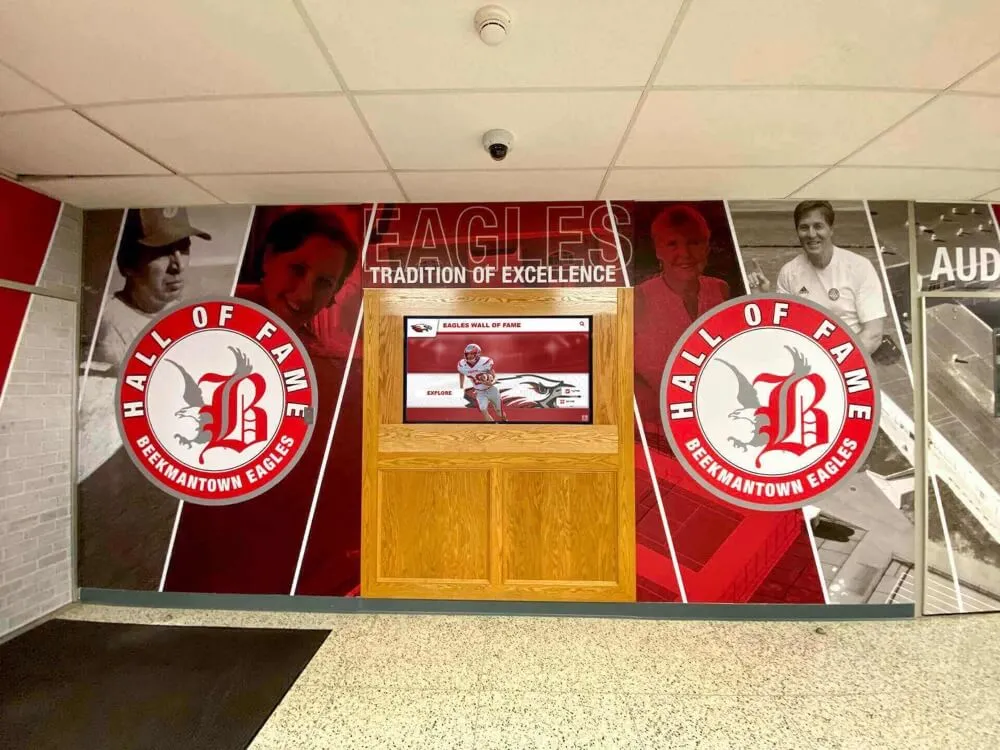
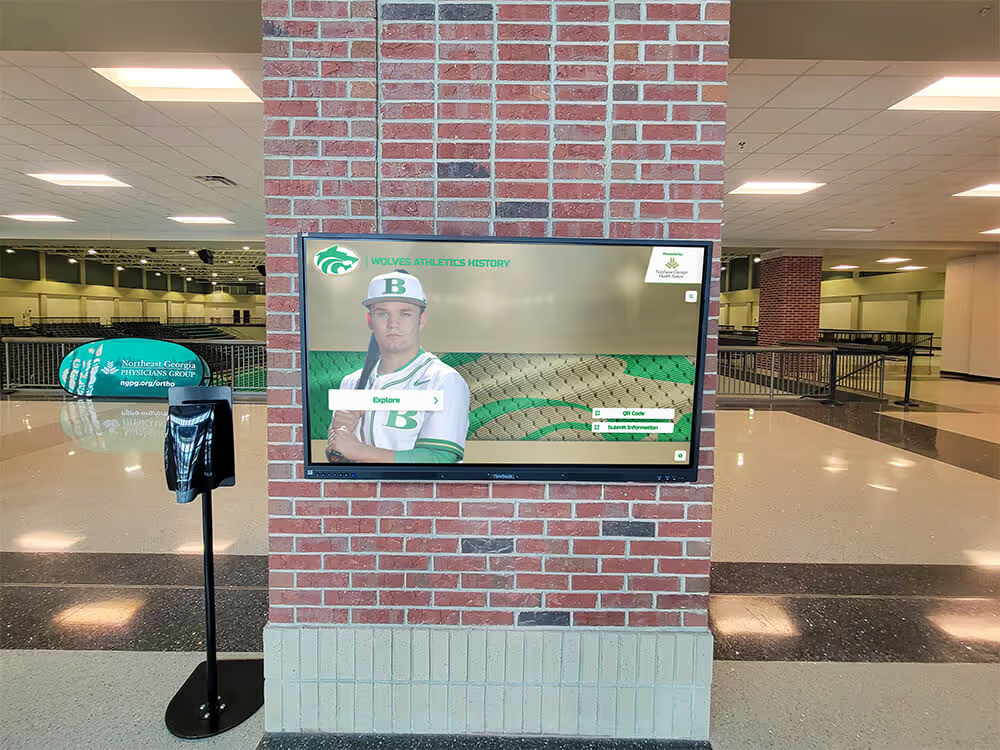
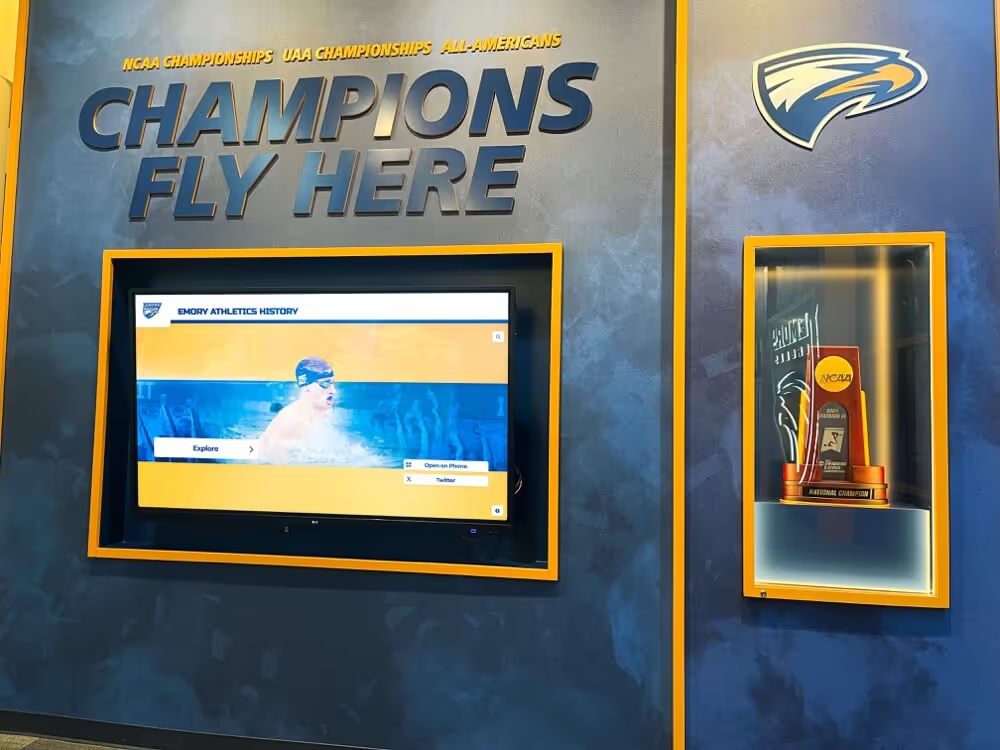
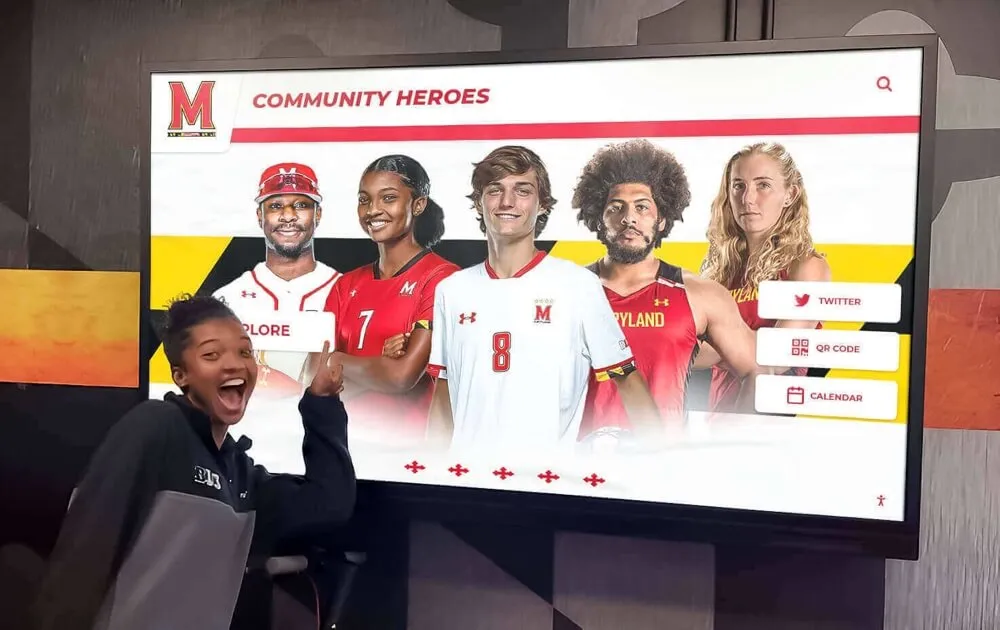
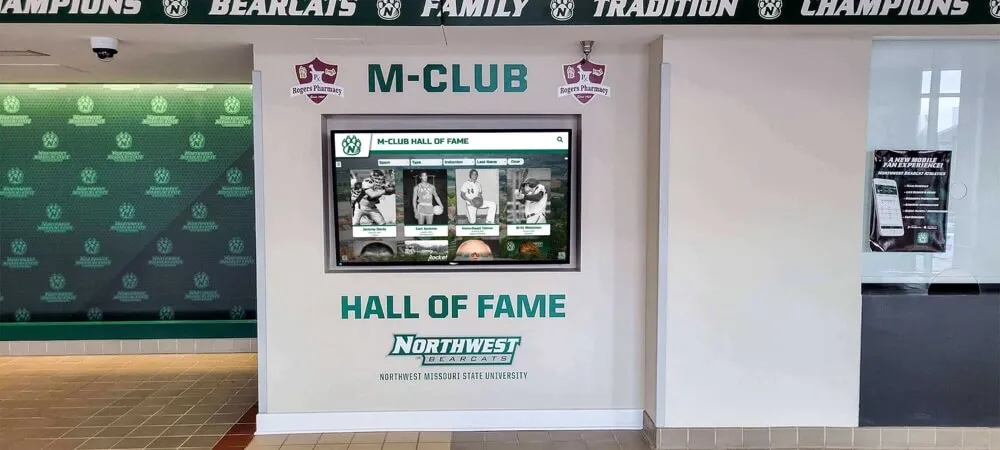
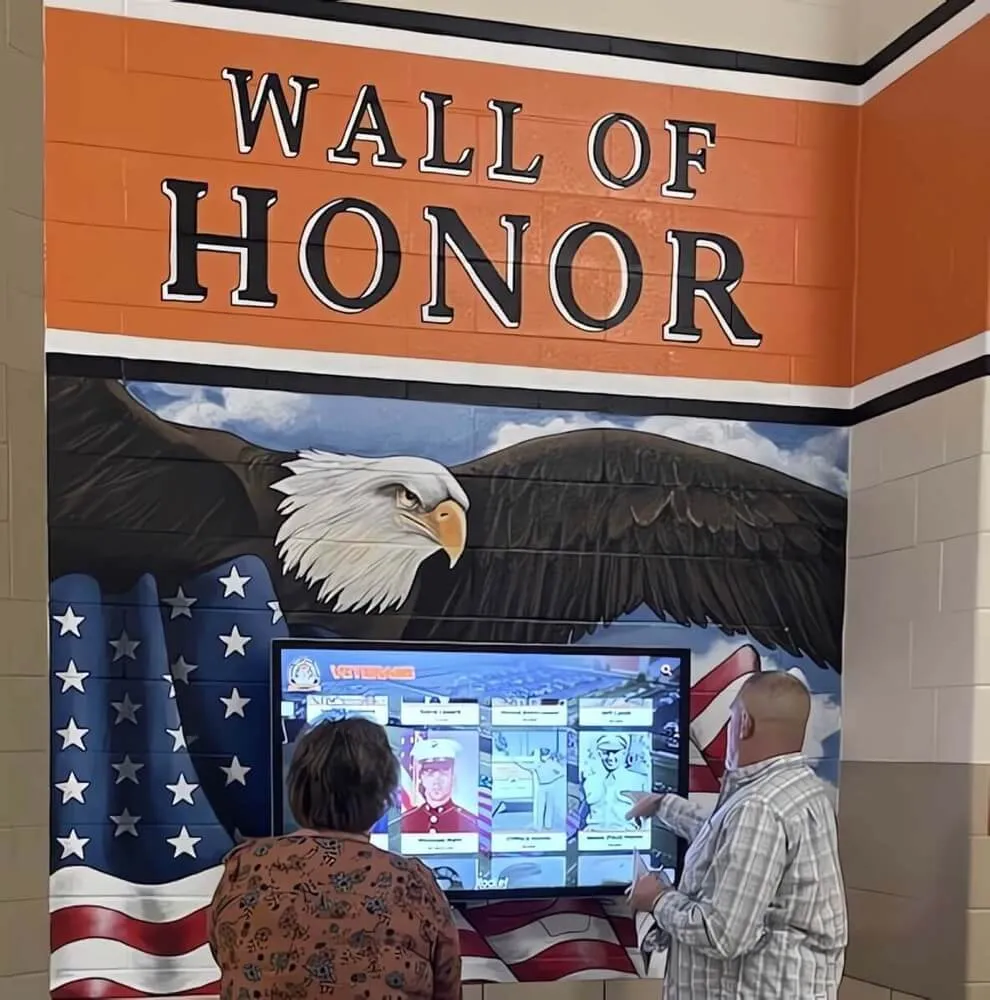
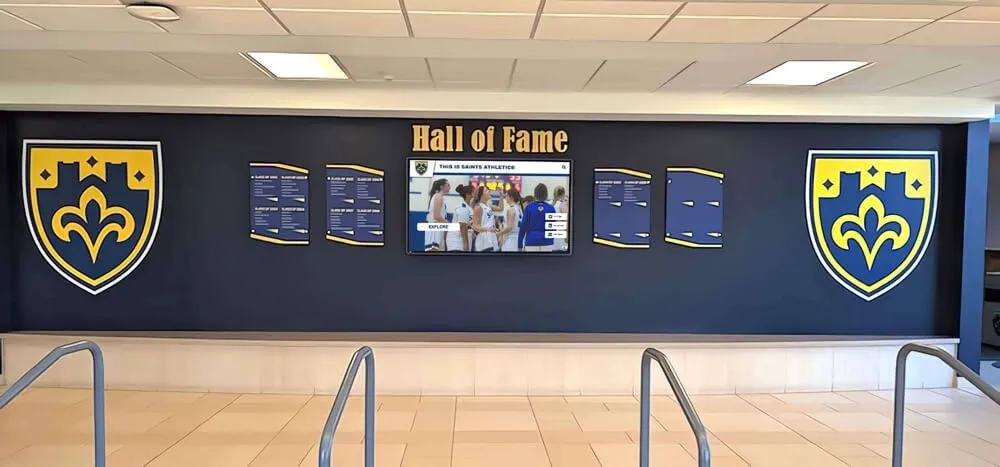
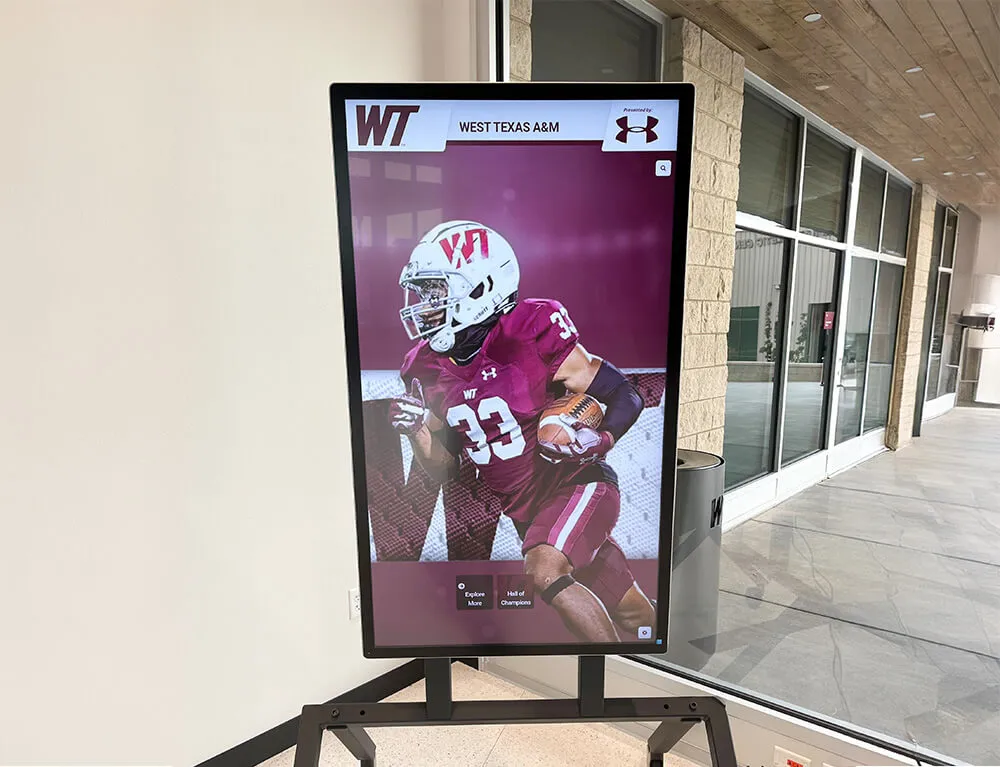
Progressive athletic programs combine traditional trophy cases with digital displays offering unlimited expansion capacity and interactive features
Trophy Display Case Sizes and Configurations
Proper sizing accommodates current collections while anticipating future growth.
Standard Case Dimensions
Trophy cases come in established sizes matching institutional needs:
Wall-Mounted Cases
Common wall-mounted dimensions include 4-foot cases (48" wide × 48" tall × 12" deep) for small collections, 6-foot cases (72" wide × 48" tall × 16" deep) as standard gym corridor installations, and 8-foot cases (96" wide × 48" tall × 18" deep) for comprehensive championship collections. Depth determines what trophies fit—shallow 12-inch cases suit plaques and small trophies but cannot accommodate large championship trophies standing 18-24 inches tall.
Wall-mounted installations save floor space while positioning trophies at ideal viewing heights (center of case 5-6 feet above floor) for standing adults. However, mounting limitations in older buildings with limited wall structure sometimes necessitate floor-standing alternatives.
Floor-Standing Display Cases
Free-standing cases provide greater flexibility: tower cases (24-36" wide × 72-84" tall × 20-24" deep) accommodate large trophy collections in vertical orientations suitable for corner placements or room dividers, island cases (48-60" square × 42" tall) enable four-sided viewing for lobby centerpieces, and peninsula cases (72-96" long × 30" wide × 42" tall) create room divisions while displaying trophies visible from multiple sides.
Floor-standing cases offer easier installation without wall mounting requirements but consume valuable floor space in already-crowded gymnasiums and hallways where every square foot matters for traffic flow and equipment storage.
Custom Configurations
Many schools commission custom cases designed for specific architectural spaces or unique trophy collections. Built-in installations integrate trophy displays directly into wall cavities or architectural features, creating seamless appearances impossible with standard manufactured cases. Custom work accommodates unusual dimensions, specific aesthetic requirements, specialized lighting designs, and integration with adjacent murals or recognition elements.
Custom fabrication typically costs 2-3 times standard manufactured cases but delivers superior aesthetic integration in flagship facilities where trophy displays represent significant institutional investment in athletic recognition infrastructure.
Capacity Planning for Program Growth
Smart administrators anticipate future needs:
Calculating Trophy Volume
Programs accumulating 5-10 trophies annually require substantial display capacity. A typical 6-foot wall case holds approximately 40-50 small trophies (6-12 inches tall) or 20-25 large trophies (18-30 inches tall). At typical acquisition rates, standard cases reach capacity within 4-8 years—requiring expansion purchases or difficult decisions removing older trophies to accommodate new achievements.
Progressive planning includes expansion capacity through modular case designs enabling additional units matching original aesthetics, or phased installation purchasing every-other mounting position initially with space to add intermediate cases as collections grow.
Rotation Strategies
Some schools implement rotation systems displaying current achievements prominently while periodically moving older trophies to secondary locations—libraries, administrative offices, or storage—making room for recent accomplishments. This approach maintains fresh, relevant displays but disappoints alumni whose historic achievements disappear from prominent recognition positions.
Most athletic directors prefer permanent, expanding display systems honoring all achievements perpetually rather than rotation systems creating perceptions of diminished recognition value as trophies age.
Digital Expansion Solutions
Forward-thinking programs increasingly adopt hybrid approaches: traditional trophy cases display the most prestigious physical awards while interactive digital displays provide unlimited capacity for comprehensive achievement recognition including team photos, statistics, biographical profiles, and video highlights impossible to present through physical displays alone.
This hybrid model provides the tangible ceremonial significance physical trophies offer while overcoming space limitations through digital platforms accommodating hundreds or thousands of achievement records without consuming additional facility space as programs grow across decades.
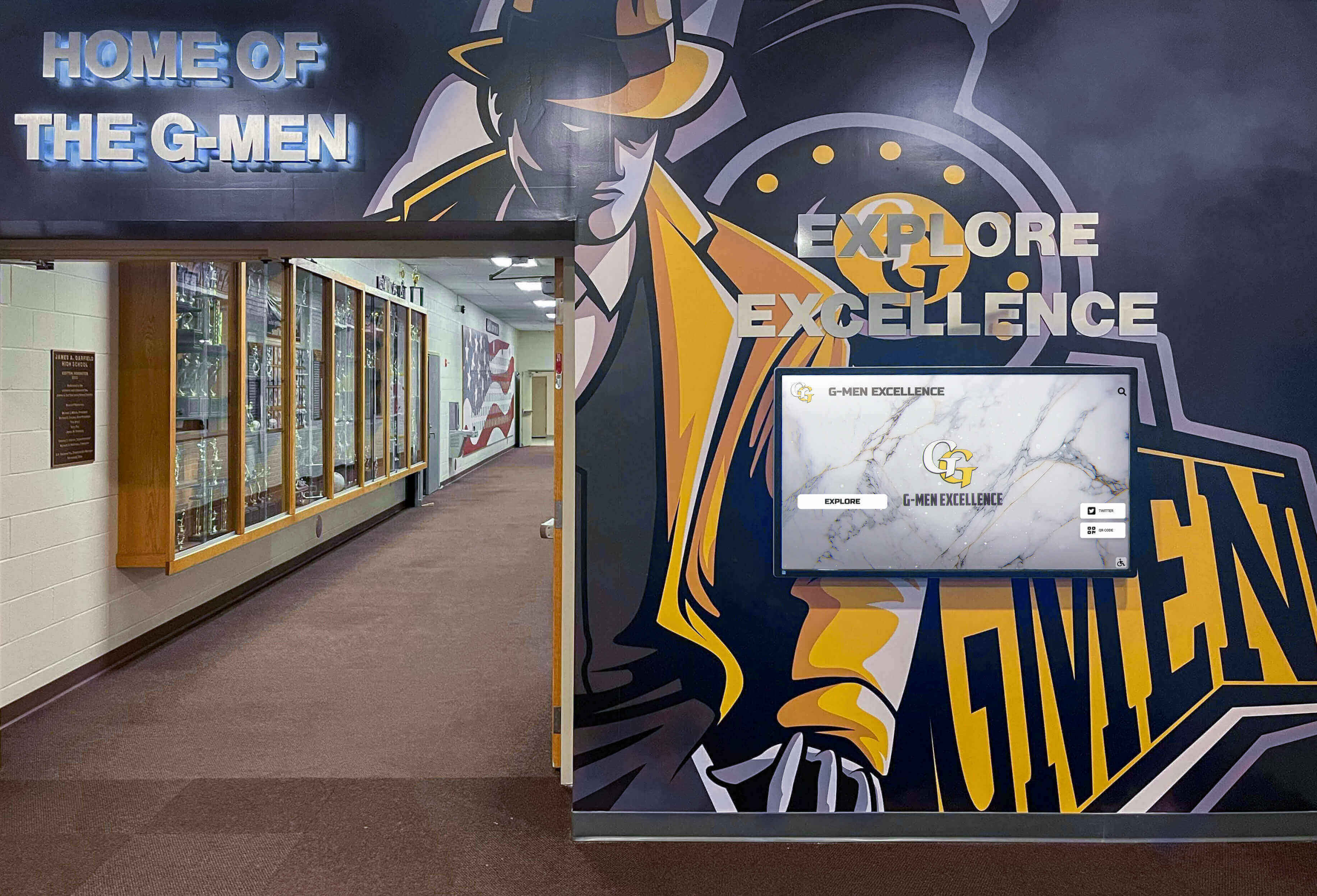
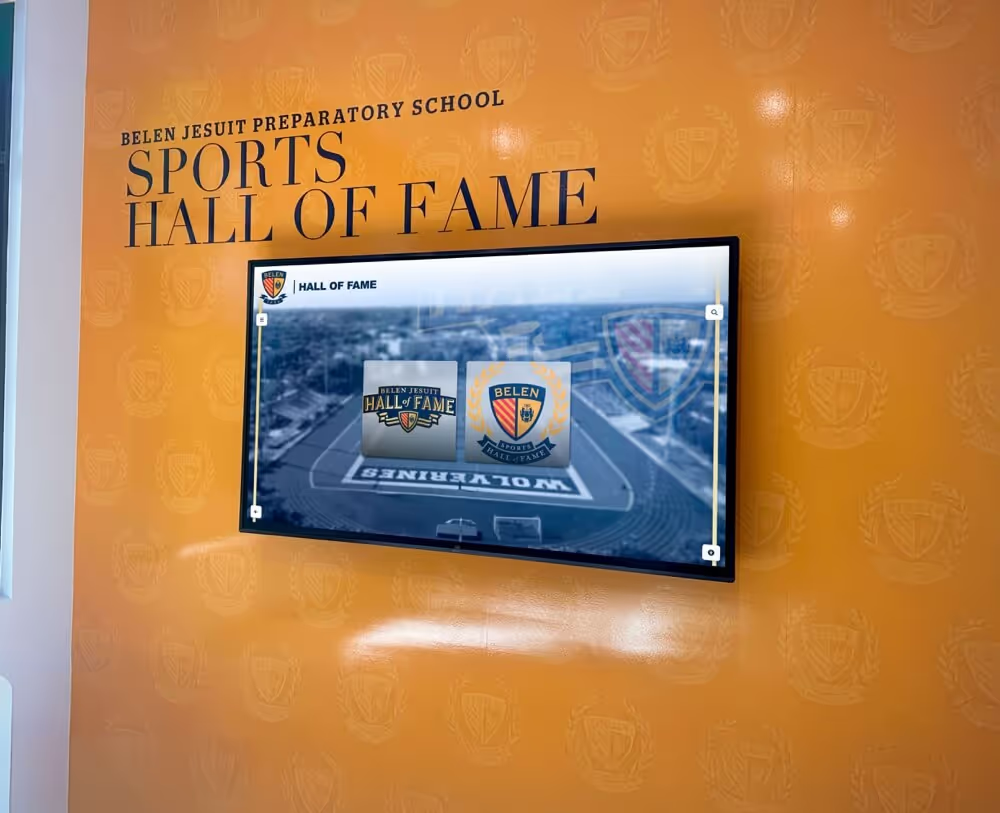
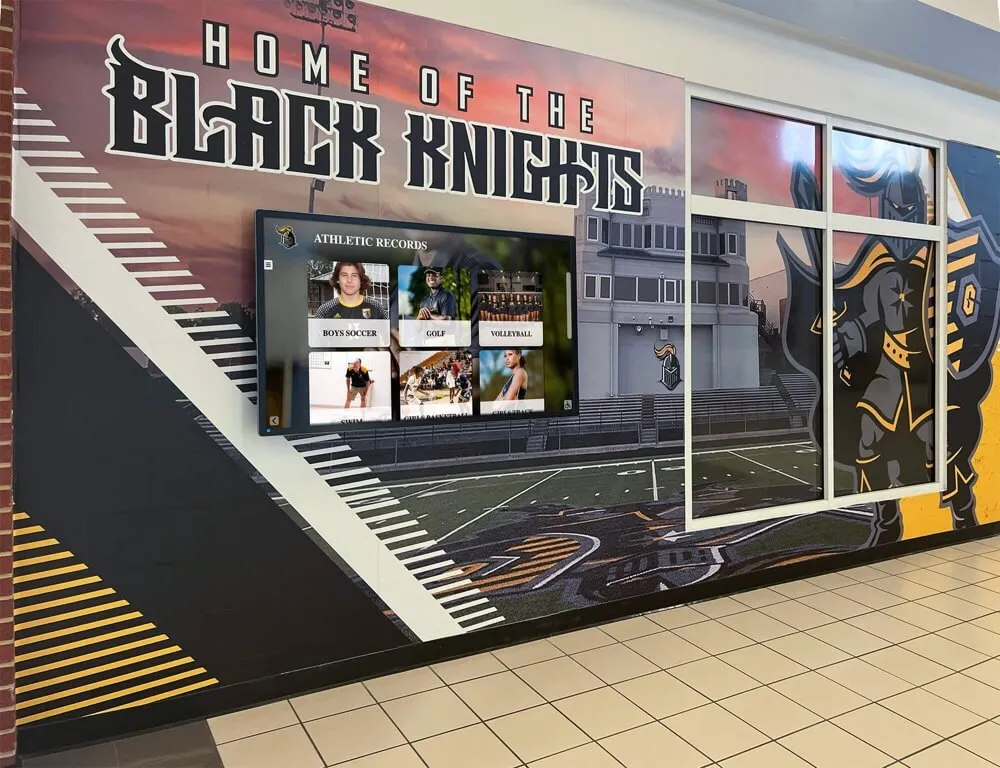
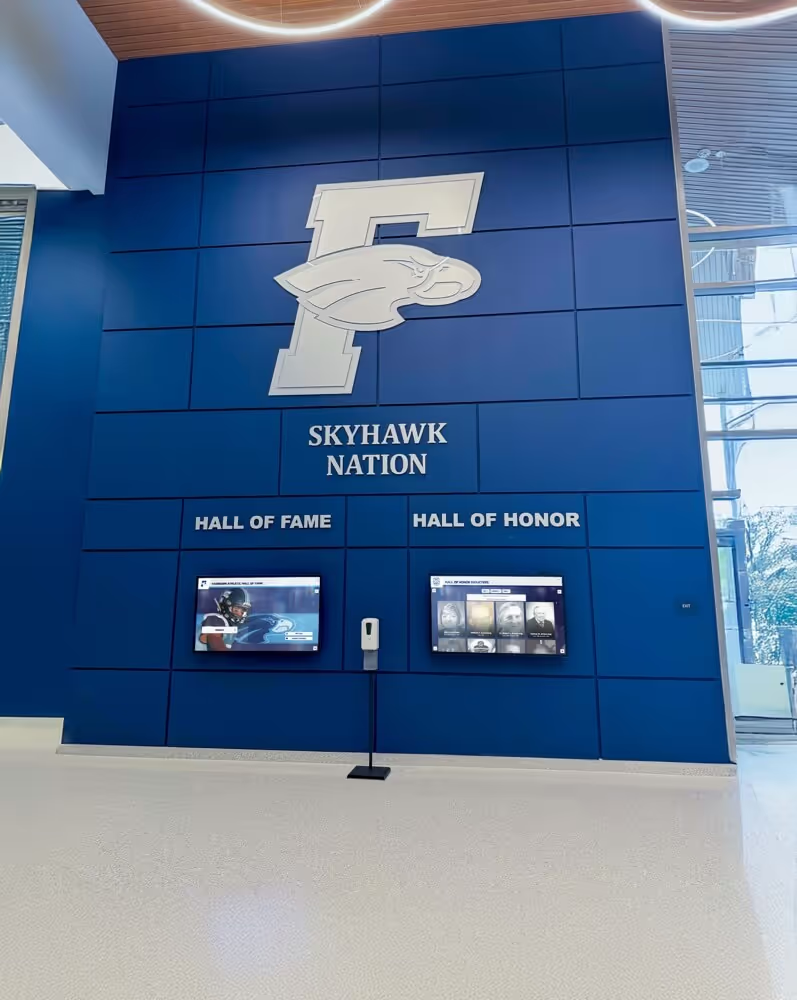
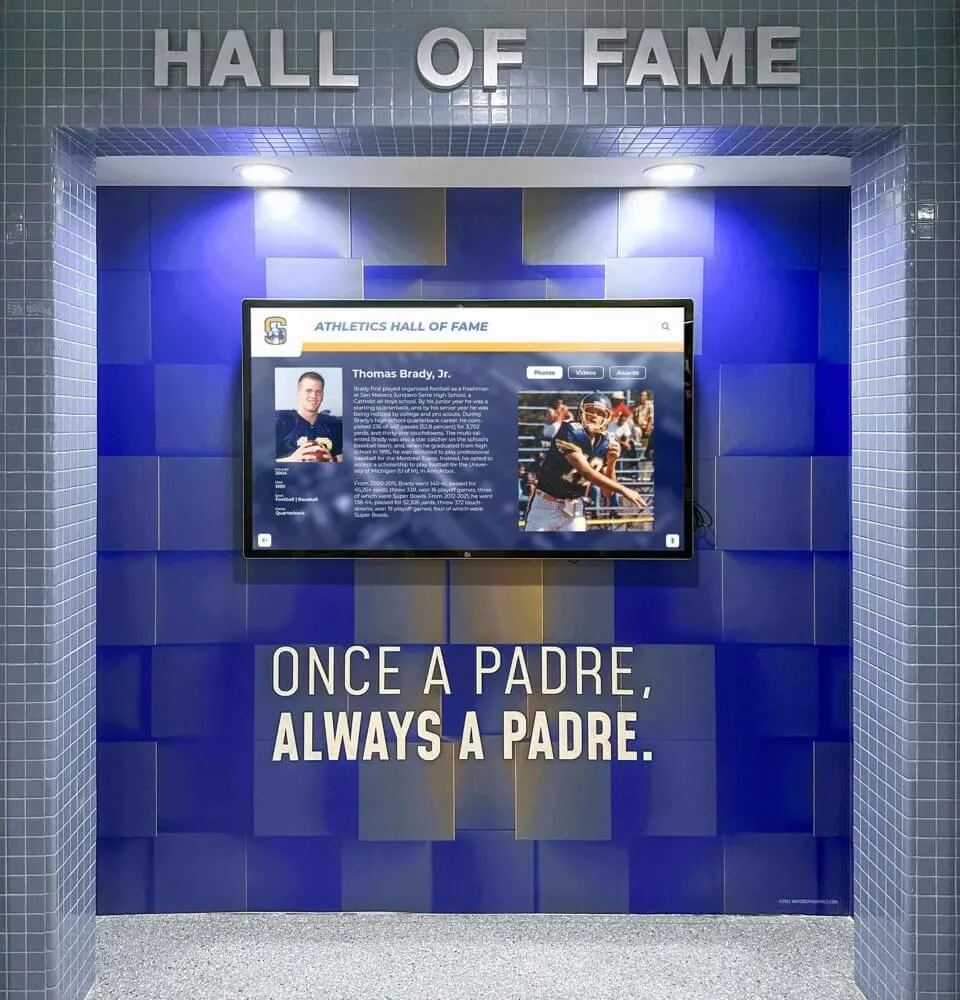
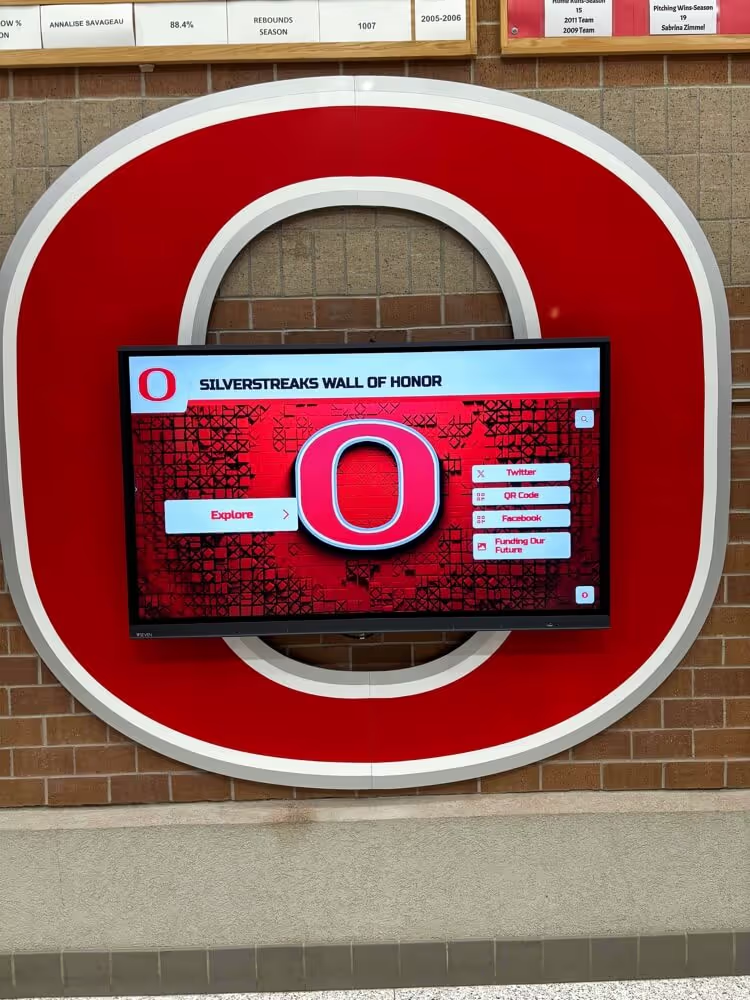
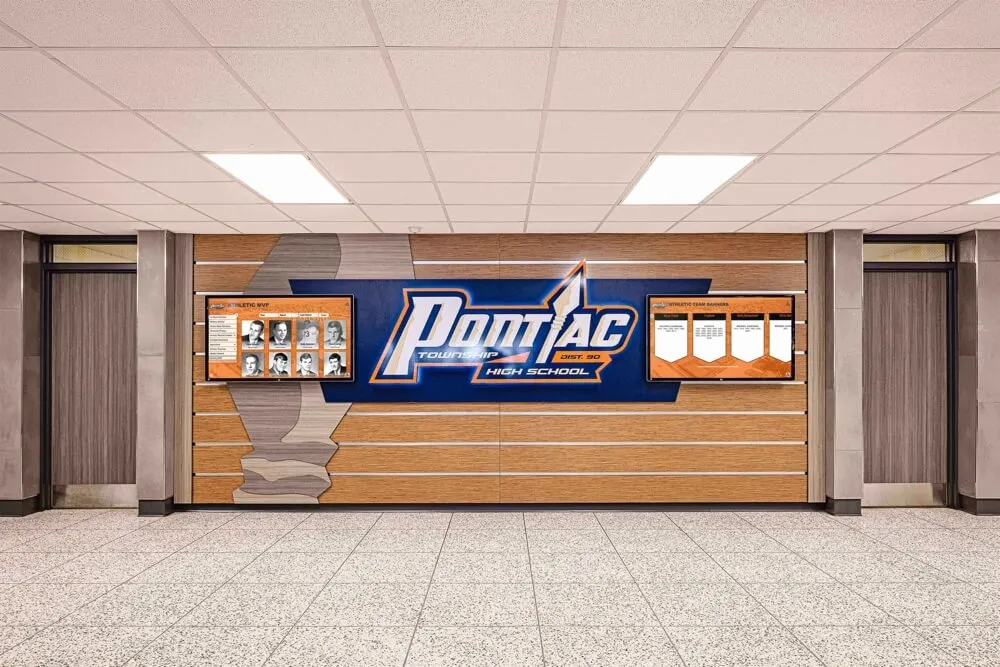
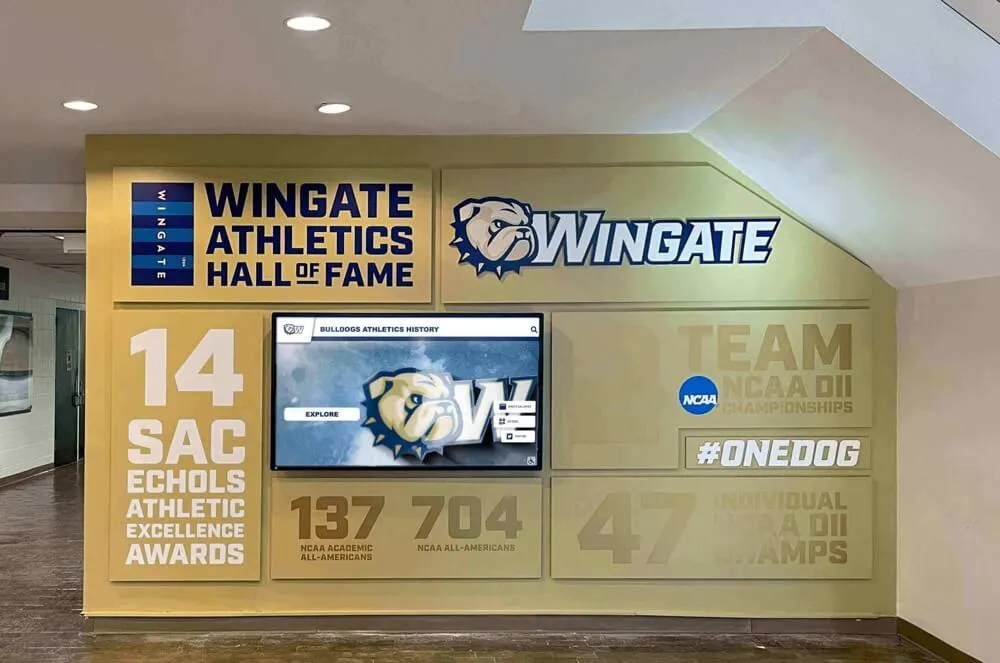
Modern recognition installations combine traditional trophy cases with digital screens creating comprehensive athletic achievement showcases
Installation and Placement Strategies
Strategic positioning maximizes recognition impact on target audiences.
High-Traffic Location Selection
Trophy placement determines visibility frequency:
Main Gymnasium Entrances
Primary gym entries see every athlete, coach, and visitor entering facilities daily for practices, games, and events. This location ensures maximum exposure to current athletes—the audience most likely to draw inspiration and motivation from visible achievement standards. Entrance lobbies also typically offer wall space without competing uses, making case installation feasible without displacing other functional elements.
However, gym entries may receive limited visibility from general student populations attending school for academic rather than athletic purposes, potentially limiting trophy displays to athletic community rather than broader institutional awareness.
Main School Hallways
Central corridor placement ensures entire student body, staff, and visiting families see athletic achievements regularly. This broader visibility builds school spirit beyond just athletes while demonstrating institutional commitment to athletic excellence for prospective families evaluating school quality during tours. Main hallway locations also receive better natural lighting than interior gymnasiums, potentially reducing LED lighting requirements.
The challenge: prime hallway space faces competing demands from administrative offices, lockers, and other institutional functions. Trophy cases compete for limited space administrators must allocate among numerous legitimate needs.
Athletic Department Areas
Coaches’ offices, training rooms, and locker room corridors specifically serve athletic populations who benefit most from achievement awareness. These dedicated athletic spaces enable larger, more comprehensive displays without competing with general institutional needs. Athletes spending hours daily in these environments experience repeated exposure creating stronger motivational impact than occasional glimpses passing trophy cases in general corridors.
Yet limiting trophy displays to athletic-only areas reduces community awareness and school spirit benefits that come from broader visibility across entire student populations and visiting families.
Common Areas and Cafeterias
Student lounges and cafeterias offer high traffic from diverse populations but present challenges: food service areas create cleaning complications with grease and humidity affecting display longevity, while social spaces often lack appropriate wall areas without obstructing traffic flow or competing with functional furniture arrangements.
Some schools successfully install floor-standing island cases in cafeteria centers, creating trophy displays visible from dining areas while protecting cases from direct food service exposure.
Accessibility and Viewing Considerations
Physical access determines engagement quality:
Mounting Height Standards
Wall-mounted cases should position their vertical centers 5-6 feet above finished floors—placing trophies at natural sight lines for standing adults without requiring viewers to crane necks upward or stoop downward. Cases mounted too high (above 7 feet center) make lower trophies invisible to shorter individuals and children, while excessively low mounting (below 4 feet center) creates awkward viewing angles for average-height adults.
Accessibility regulations require consideration of wheelchair users—ensuring at least some trophy content remains visible to seated viewers positioned 3.5-4.5 feet above floor level. Multi-shelf cases with vertically-distributed trophies typically accommodate varied viewer heights more successfully than single-shelf cases concentrating all trophies at one elevation.
Approach Space and Viewing Angles
Trophy cases need adequate clearance allowing viewers to stand 4-6 feet from glass for comfortable observation without obstructing corridor traffic flow. Installations in narrow 6-foot hallways create congestion as viewers blocking passage frustrate people attempting to navigate around them. Minimum 8-10 foot corridor width accommodates trophy viewing while maintaining clear passage for through traffic.
Glass reflection from windows or bright ceiling lights can render trophies invisible behind glare. Site lighting assessment during planning identifies problematic light sources requiring mitigation through case positioning, anti-reflective glass coatings, or strategic LED lighting angles that overcome ambient glare.
Approaches to state championship recognition displays examine both traditional trophy cases and modern alternatives addressing space constraints that limit physical display expansion as championship achievements accumulate over time.
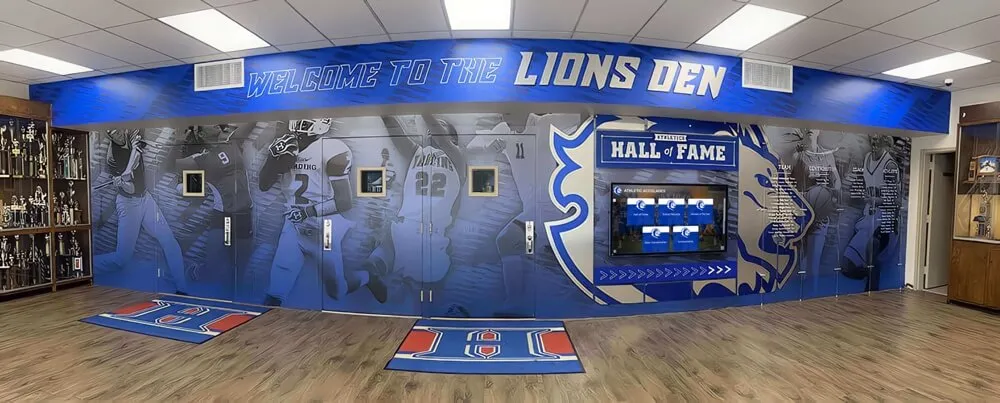
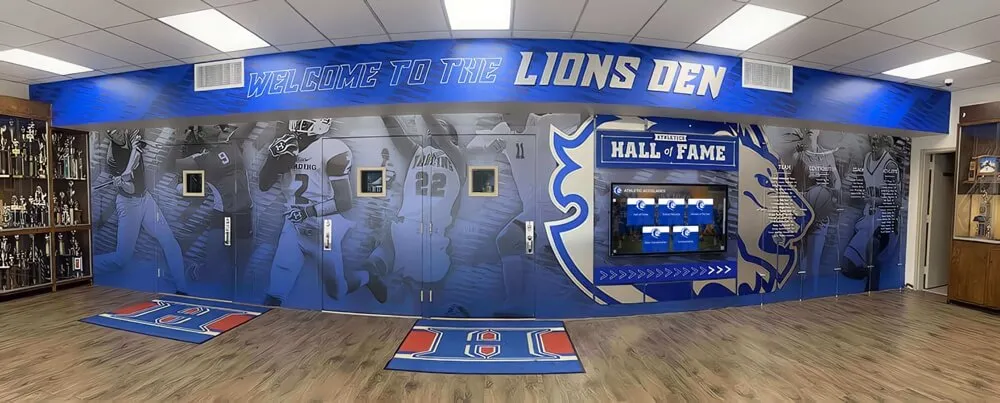
Branded athletic recognition zones integrate trophy cases within comprehensive environments celebrating program identity and tradition
Maintenance and Long-Term Care Requirements
Proper maintenance preserves display quality across years of continuous operation.
Cleaning and Appearance Standards
Regular maintenance prevents deterioration:
Glass Cleaning Procedures
Trophy case glass requires weekly cleaning removing fingerprints, dust, and smudges that accumulate from viewers touching displays. Standard glass cleaners work adequately for exterior surfaces, though ammonia-free formulas prevent damage to any plastic or acrylic case components. Interior cleaning requires case access—typically through locked rear panels or removable doors—enabling trophy arrangement adjustments while cleaning interior glass surfaces that collect dust despite sealed construction.
Microfiber cloths prevent scratching while providing streak-free results. Avoid paper towels that create lint and minor glass scratches over time, gradually clouding visibility through accumulated micro-abrasions.
Interior Dusting
Trophies themselves collect dust requiring periodic cleaning. Proper procedures vary by trophy construction: metal trophies tolerate damp cloth cleaning, while fabric or cardboard elements on some plaques require dry dusting only to prevent water damage. Schedule interior cleaning annually at minimum, quarterly for cases in high-dust environments like older gymnasiums lacking adequate HVAC filtration.
During interior access, verify trophy stability ensuring items remain securely positioned without risk of falling and sustaining damage. Check that labels and achievement descriptions remain legible—replacing faded or damaged identification as needed maintaining clear recognition of what each trophy represents.
LED System Checks
LED strips gradually dim over thousands of operating hours. Conduct annual brightness assessments comparing illumination to installation baselines, replacing LED strips when light output falls below 70% of original intensity—the threshold where dimming becomes visibly apparent to regular viewers. Most quality LED systems operate 5-7 years before requiring replacement.
Verify that LED power supplies and connections remain secure. Loose wiring connections create flickering or intermittent lighting disrupting display quality. Check that no trophies have shifted blocking LED light paths and creating shadow zones reducing adjacent trophy visibility.
Security and Vandalism Prevention
Protect valuable collections from theft and damage:
Locking Mechanisms
Commercial-grade case locks provide security beyond consumer-grade cabinet hardware. Cam locks with restricted keyways prevent unauthorized access through standard key blanks available at hardware stores. For high-security applications, consider electronic locks recording access attempts and enabling access code changes without rekeying physical cylinders.
Maintain strict key control limiting access to athletic directors and designated staff members. Document key distribution preventing situations where numerous copies circulate among current and former staff creating security vulnerabilities as personnel change over years.
Alarm Integration
Facilities with existing security systems can integrate trophy cases through contact sensors detecting door openings or glass breakage sensors triggering alarms if cases suffer vandalism attempts. Integration adds $300-600 per case but provides valuable protection for irreplaceable championship trophies and historic artifacts where replacement remains impossible regardless of financial resources available.
Schools without comprehensive security systems may install standalone case alarms—self-contained units providing local audible alerts when unauthorized access occurs. These basic systems lack central monitoring but provide immediate deterrent effects making cases unattractive targets for opportunistic theft.
Insurance Documentation
Photograph all trophies and maintain detailed inventory records documenting individual item descriptions, acquisition dates, estimated replacement values, and any unique historical significance. This documentation proves essential for insurance claims if theft or damage occurs, while providing institutional memory if questions arise regarding trophy origins or honorees as years pass and original staff retire.
Many schools assign nominal dollar values to trophies for insurance purposes despite recognition that true value—institutional heritage and honoree significance—exceeds any monetary replacement figure. Proper documentation ensures appropriate coverage while preserving information about collection composition and historical importance.
Resources on athletic hall of fame displays examine comprehensive recognition approaches including both physical trophy displays and digital platforms providing enhanced security through elimination of physical artifacts vulnerable to theft while expanding recognition capacity through unlimited digital profiles.
Comparing Trophy Cases vs Digital Recognition Displays
Modern alternatives expand what’s possible in athletic achievement celebration.
Traditional Trophy Case Advantages
Physical displays offer distinct benefits:
Tangible Recognition Value
Physical trophies provide ceremonial significance that digital representations cannot fully replicate. Athletes and families value holding actual awards during ceremonies, touching physical symbols of achievement, and seeing three-dimensional trophies occupying real space within institutional facilities. This tangible quality creates emotional connections and ceremonial traditions deeply valued by athletic communities.
Trophy presentations during banquets and recognition ceremonies provide memorable moments—emotional peaks athletes remember for lifetimes. While digital platforms offer advantages in other dimensions, they lack the physical presence that makes trophy presentations meaningful across athletic tradition.
No Technical Dependencies
Trophy cases require no network connectivity, software updates, or technical troubleshooting. Once installed, they function reliably for decades requiring only basic cleaning and bulb replacement. This simplicity appeals to administrators seeking recognition solutions without ongoing technical support obligations or digital platform learning curves.
Schools without reliable network infrastructure or technology support staff find traditional cases more manageable than interactive displays requiring connectivity and periodic software maintenance ensuring continued operation.
Established Traditions
Athletic communities understand and expect trophy displays—they represent familiar recognition formats with century-long histories in American education. This familiarity creates immediate credibility and community acceptance without requiring explanation or adoption of unfamiliar recognition approaches.
Conservative communities sometimes resist digital alternatives as inappropriate substitutes for traditional trophy recognition they personally experienced during their own athletic participation. Physical cases align with established expectations while modern alternatives may face initial skepticism requiring education about enhanced capabilities justifying departure from familiar formats.
Digital Display Competitive Advantages
Interactive platforms address traditional limitations:
Unlimited Expansion Capacity
The most significant trophy case limitation: physical space constraints eventually force impossible choices between displaying new achievements and preserving historic recognition. Digital platforms eliminate capacity constraints entirely—accommodating unlimited achievement records without consuming additional facility space as programs grow across decades.
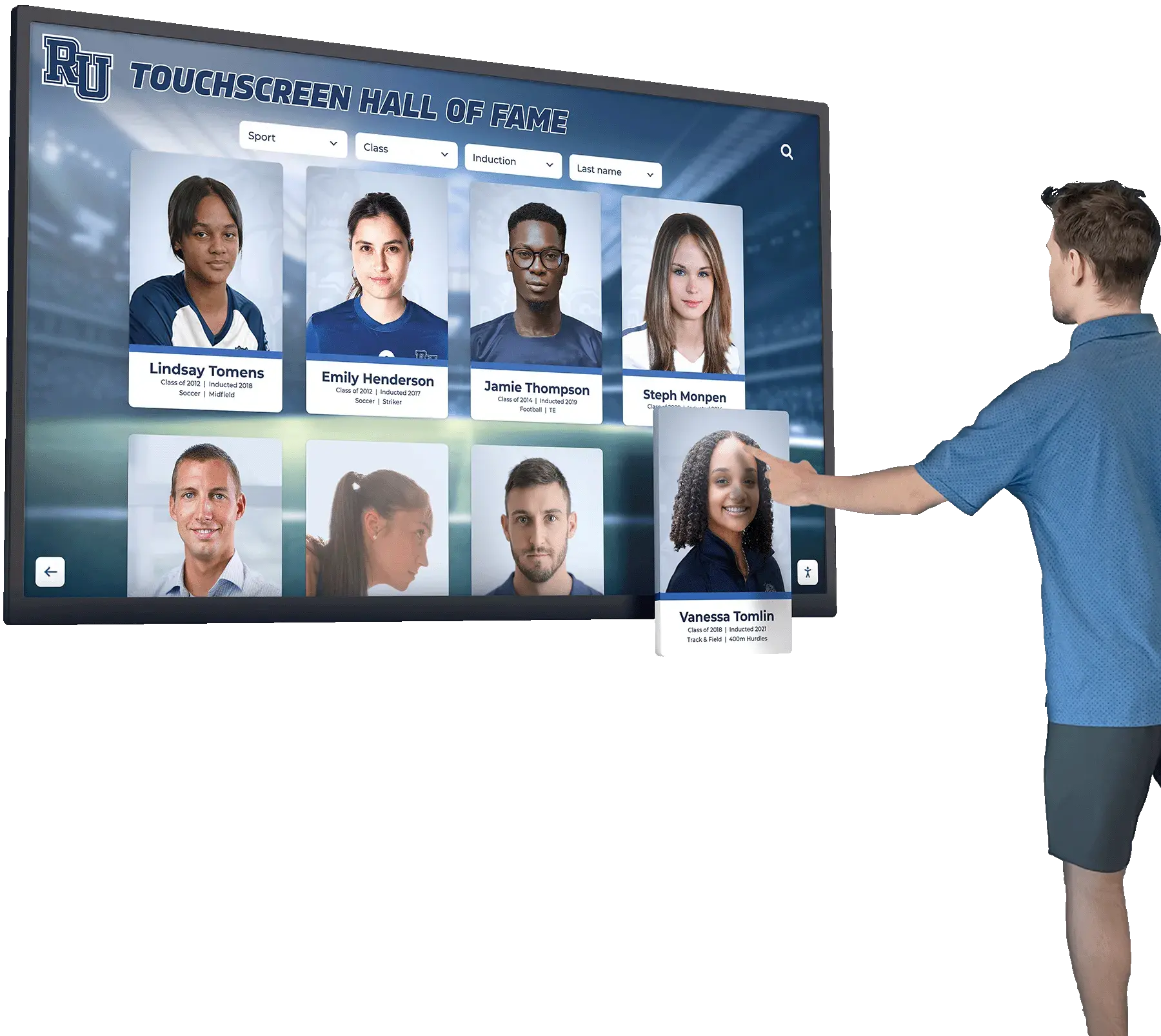
Single touchscreen displays provide comprehensive recognition for hundreds or thousands of individuals, teams, and accomplishments through searchable databases instantly accessible via intuitive interfaces. Schools never face removal decisions or expansion construction projects when recognition needs exceed available wall space.
Rich Multimedia Content
Interactive displays enable recognition depth impossible through physical cases: high-resolution photos documenting careers across multiple years, complete statistical profiles with historical context and comparisons, video highlight compilations preserving signature performances, biographical narratives explaining achievement significance, post-playing career updates documenting continued success, and personal reflections through recorded interviews sharing athlete perspectives.
This multimedia storytelling transforms simple achievement acknowledgment into compelling narratives creating emotional connections and genuine appreciation for honoree contributions across multiple dimensions impossible with trophy labels providing only names, dates, and brief achievement descriptions.
Immediate Content Updates
Cloud-based content management enables instant recognition updates without construction delays. When teams win championships or athletes earn honors, administrators update digital displays within minutes through remote access—changes appearing immediately rather than requiring trophy ordering, engraving delays, and case modification scheduling spanning weeks or months.
Real-time capability ensures recognition remains perpetually current while eliminating ongoing costs associated with trophy purchases, engraving services, and case expansion projects. Schools report 60-75% cost reduction managing digital recognition compared to traditional physical systems over 10-year program timelines.
Web and Mobile Access Extensions
Modern platforms provide responsive web portals accessible worldwide. Alumni living far from campus explore recognition content remotely, families share achievement profiles through social media, prospective athletes research program tradition during recruitment, and media access historical information for coverage—all extending recognition impact beyond facility visitors to global audiences engaging remotely through internet connectivity.
Solutions like interactive touchscreen displays provide purpose-built platforms specifically designed for athletic achievement celebration, combining commercial-grade hardware with intuitive content management and engaging features administrators can maintain without specialized technical expertise.
Hybrid Implementation Strategies
Progressive athletic programs increasingly adopt combined approaches: retaining traditional trophy cases for championship hardware and most prestigious awards providing tangible ceremonial significance, while implementing digital hall of fame systems providing unlimited capacity for comprehensive athlete profiles, team histories, statistical records, photo galleries, and video content impossible to present through physical displays alone.
This hybrid model honors tradition while embracing expanded capability—satisfying constituencies valuing physical trophy displays while overcoming space limitations through digital platforms that ensure every achievement receives appropriate recognition regardless of facility space constraints.

Effective trophy displays create engaging environments where visitors naturally gather to explore achievements and discuss program tradition
Budget Considerations and Cost Analysis
Financial planning ensures recognition investments align with institutional resources.
Traditional Trophy Case Costs
Physical displays require multiple cost components:
Initial Purchase and Installation
Standard wall-mounted trophy cases range from $2,000-$5,000 for 6-foot units with basic LED lighting, $4,000-$8,000 for 8-foot cases with enhanced security features and professional lighting, and $8,000-$15,000+ for custom built-in installations with specialized designs and architectural integration. These figures include case fabrication but often exclude professional installation adding $500-$2,000 depending on mounting complexity and electrical requirements.
Floor-standing cases cost similarly though installation expenses decrease since wall mounting and structural assessment become unnecessary—offsetting higher case prices through reduced labor requirements.
Ongoing Trophy Acquisition
Beyond cases themselves, trophies represent continuous expenses. Standard participation trophies cost $15-$40 each while championship trophies range from $100-$500 depending on size and customization. Programs recognizing 20-30 achievements annually face ongoing trophy expenses of $1,000-$3,000 per year—costs that compound across decades never appearing in initial budget projections focusing exclusively on case purchases.
Engraving services for perpetual plaques and nameplate updates add $50-$200 annually depending on recognition volume and local service pricing.
Expansion and Capacity Limits
As collections outgrow initial cases, schools face expensive expansion requiring additional case purchases plus potential facility modifications accommodating new installations. Programs underestimating future growth often invest $5,000 in initial cases only to discover they need equivalent amounts every 5-7 years maintaining adequate display capacity as trophy collections expand.
Over typical 30-year program lifecycles, total trophy case investments including expansions frequently exceed $25,000-$40,000 for moderately successful programs—substantially more than administrators initially budget during initial installation planning.
Digital Platform Investment Analysis
Interactive displays present different financial models:
Hardware and Software Costs
Commercial-grade touchscreen displays with professional installation range from $8,000-$15,000 for basic 43-55 inch systems to $15,000-$25,000 for large-format 65-75 inch installations with premium features and comprehensive content development services. Most platforms operate via subscription software services ranging from $1,000-$3,000 annually including cloud hosting, content management tools, technical support, and ongoing platform improvements.
This pricing structure delivers immediate comprehensive recognition capacity rather than the incremental expansion traditional cases require—potentially justifying higher initial investment through elimination of ongoing expansion projects and trophy purchases.
Long-Term Operating Expenses
Digital platforms cost approximately $2,000-$4,000 annually including software subscriptions, electricity, network connectivity, and periodic content updates. Hardware replacement occurs every 7-10 years at costs similar to initial installation but reflecting technology improvements providing enhanced capabilities at comparable pricing.
Over 10-year comparison periods, total digital platform investment including hardware, software, and operating costs typically ranges from $25,000-$45,000—similar to traditional trophy case systems when properly accounting for cases, trophies, expansion projects, and ongoing maintenance across equivalent timeframes.
Cost Per Recognition Capacity
The critical financial difference: digital platforms provide unlimited recognition capacity while traditional cases accommodate 40-60 trophies per unit. On a per-honoree basis, digital recognition costs $50-$150 for lifetime comprehensive profiles while traditional trophy recognition costs $200-$400 per achievement including trophy purchase, engraving, and proportional case expenses.
For programs recognizing hundreds of achievements across decades, digital platforms deliver substantially superior financial value through elimination of capacity constraints requiring continuous case expansion investment simply maintaining adequate display space.
Comprehensive donor recognition display guides examine financial planning across recognition approaches including both traditional physical systems and modern digital alternatives, helping administrators make informed decisions balancing immediate budgets with long-term total ownership costs.
Special Applications: Home Collections and Personal Displays
Recognition extends beyond institutional athletics to personal memorabilia.
Home Trophy Display Options
Personal collections require scaled solutions:
Wall-Mounted Home Cases
Residential trophy displays typically range from 24-48 inches wide—smaller than institutional cases but adequate for personal achievement collections from individual athletic careers. Home cases cost $300-$1,500 depending on size, materials, and lighting features. Basic models offer simple construction without advanced LED systems while premium options provide museum-quality lighting and furniture-grade finishes appropriate for formal home offices or dedicated trophy rooms.
Many families display children’s athletic achievements creating motivation and pride while preserving memories of competitive experiences. Well-designed home cases protect trophies from dust and accidental damage while creating attractive displays integrating with home décor rather than appearing as cluttered shelf collections.
Tabletop Display Cases
Smaller collections suit glass-topped display tables or countertop cases measuring 12-24 inches square. These compact solutions work well in bedrooms, family rooms, or personal offices where wall space limitations prevent larger installations. Tabletop cases range from $100-$500 offering basic protection and organization without the permanent installation commitment wall-mounted cases require.
Custom Built-In Displays
Dedicated trophy rooms or home offices sometimes include custom built-in displays integrated with architectural millwork and cabinetry. These high-end installations create impressive presentations appropriate for extensive career achievement collections deserving museum-quality display environments. Custom residential work costs $2,000-$10,000+ depending on scope and design complexity but delivers superior aesthetic integration impossible with standard manufactured cases.
Lighting Considerations for Home ApplicationsResidential Electrical Access
Home installations typically use plug-in LED systems rather than hardwired electrical connections requiring licensed electricians. Battery-operated LED strips provide the simplest installation—adhering directly to case interiors without any wiring—though batteries require periodic replacement as power depletes. Rechargeable battery systems reduce ongoing operating costs while maintaining wire-free installation simplicity.
Low-voltage LED strips with plug-in transformers offer compromise: modest installation complexity with permanent power avoiding battery replacement while remaining DIY-friendly without professional electrical work.
Smart Lighting Integration
Tech-savvy collectors integrate trophy lighting with home automation systems enabling scheduled operation, voice control, and smartphone app management. Smart plugs provide basic automation for traditional LED systems while advanced installations use WiFi-enabled LED controllers offering color-changing capability, dimming adjustments, and integration with broader smart home platforms.
These enhancements add $50-$300 to basic lighting costs but create impressive presentation flexibility adapting displays to various home viewing scenarios and personal preferences changing over time.
Resources on creating recognition displays provide frameworks applicable to both institutional athletic programs and personal home collections requiring appropriate achievement preservation and presentation.
Modern Alternatives: Digital Recognition Solutions
Technology expands beyond traditional display limitations.
Interactive Touchscreen Platforms
Digital systems transform athletic recognition:
Comprehensive Achievement Databases
Modern platforms accommodate unlimited profiles including individual athlete biographies with photos, statistics, and career highlights, team championship histories with rosters and season narratives, coaching records documenting program builders, and statistical leaderboards preserving competitive excellence across generations. This comprehensive approach ensures every achievement receives appropriate recognition regardless of trophy case capacity constraints.
Content searchability enables instant access—visitors can locate specific athletes, browse by sport or year, explore championship teams, and discover statistical leaders through intuitive interfaces requiring no prior system knowledge or facility familiarity.
Multimedia Storytelling Capabilities
Interactive displays present achievement through multiple formats: photo galleries documenting careers across multiple seasons, video highlight compilations preserving signature performances, statistical dashboards providing performance context and comparisons, biographical narratives explaining achievement significance, audio recordings featuring athlete reflections and memories, and social media integration connecting historical recognition to contemporary communication platforms.
This rich content creates emotional connections and genuine appreciation impossible through trophy name labels providing only minimal identification without comprehensive context enabling full achievement understanding.
Cloud-Based Management
Web-based content management enables staff updates from any internet-connected device without facility visits or specialized software. Administrators add new content, correct information, enhance profiles, and implement design changes through browser interfaces requiring minimal technical expertise—dramatically reducing ongoing management complexity compared to traditional displays requiring physical access and construction modifications for updates.
Cloud architecture eliminates local server maintenance while providing automatic backups, instant updates across multiple displays, and responsive web access extending recognition beyond physical installations to worldwide audiences exploring content remotely.
Implementation ConsiderationsFacility Infrastructure Requirements
Digital displays require network connectivity (hardwired Ethernet preferred over WiFi for reliability), dedicated electrical circuits with surge protection, professional mounting at appropriate viewing heights, and occasional technical support addressing software questions or rare hardware issues.
Most schools possess necessary infrastructure supporting digital implementation without extensive facility modifications beyond those required for traditional trophy cases needing electrical service for LED lighting systems.
Staff Training and Support
Content management platforms prioritize administrator-friendly operation through intuitive interfaces, template-based workflows, comprehensive help documentation, video tutorials, and responsive technical support via email, phone, and screen-sharing sessions. Most schools report staff comfort managing content after 1-2 hours initial training—modest learning curves enabling self-sufficient operation without ongoing IT dependency.
Community Acceptance and Adoption
Digital recognition occasionally faces initial skepticism from traditional stakeholders questioning whether interactive displays provide “real” recognition compared to physical trophies they personally received. Successful implementations emphasize hybrid approaches: retaining physical trophies for most prestigious awards while adding digital platforms expanding recognition capacity and storytelling depth rather than replacing traditional formats.
When communities experience interactive displays firsthand—exploring comprehensive athlete profiles, watching highlight videos, and discovering forgotten achievements preserved digitally but never displayed physically due to space constraints—initial concerns typically dissolve as stakeholders recognize superior capability compared to space-limited traditional alternatives.
Platforms like Rocket Alumni Solutions specialize in athletic recognition displays combining commercial-grade touchscreen hardware with purpose-built software specifically designed for achievement celebration, providing turnkey solutions administrators can successfully implement and maintain without specialized technical backgrounds.
Conclusion: Selecting the Right Recognition Approach
Trophy display cases with lights have served athletic programs effectively for generations, providing tangible achievement recognition that honors competitive excellence while inspiring current athletes toward similar accomplishment. Quality LED-lit cases remain excellent solutions for schools prioritizing physical trophy display traditions, particularly when space constraints don’t severely limit collections or when budgets focus on initial low-cost implementations despite higher long-term ownership expenses.
Yet modern alternatives now offer capabilities traditional cases simply cannot match. Interactive digital platforms eliminate capacity constraints that plague physical displays, provide rich multimedia content impossible through static cases, enable immediate content updates without construction delays, extend recognition worldwide through web access, and deliver superior long-term value through elimination of ongoing trophy and expansion costs.
Transform Athletic Recognition in Your Facility
Discover how modern interactive displays combine the recognition impact you want with the unlimited capacity and rich multimedia storytelling traditional trophy cases cannot provide—without ongoing expansion costs or space limitations.
Explore Digital Recognition SolutionsThe most forward-thinking athletic programs increasingly adopt hybrid strategies: retaining traditional trophy cases displaying championship hardware and most prestigious awards maintaining physical recognition traditions communities expect, while implementing digital platforms providing unlimited capacity for comprehensive athlete profiles, team histories, statistical records, and multimedia content that physical displays cannot accommodate regardless of facility space available.
Whether you ultimately select traditional LED-lit trophy cases, modern interactive digital displays, or strategic combinations of both approaches, the recognition infrastructure you build today will serve athletes, alumni, and communities for decades. Choose solutions aligning with your program’s specific needs—current collection size and growth trajectory, facility space availability and expansion options, budget constraints and total ownership cost considerations, technical support capacity and staff capabilities, and community preferences regarding recognition traditions.
Your athletes’ achievements deserve recognition matching their significance. The comprehensive frameworks explored throughout this guide provide roadmaps making informed decisions creating recognition systems that truly honor excellence, inspire continued achievement, preserve institutional memory, and strengthen connections between past tradition and future aspiration across generations of athletic competition.
Ready to explore recognition solutions for your program? Learn about digital athletics displays for schools implementing modern technology. Discover volleyball awards and recognition approaches applicable across sports programs. Explore senior night celebration ideas incorporating recognition displays. And understand who installs digital hall of fame displays helping schools implement modern recognition infrastructure celebrating athletic achievement through technology purpose-built for honoring excellence.