




Intent: Demonstrate how universities design compelling recognition experiences that celebrate notable alumni while strengthening institutional pride, inspiring current students, and supporting advancement goals through strategic interactive displays.
Every university graduates individuals who go on to achieve remarkable success—from pioneering researchers and influential business leaders to celebrated artists and community changemakers. These university notable alumni represent the institution’s living legacy, demonstrating educational impact that extends far beyond campus boundaries. Yet many universities struggle to celebrate these distinguished graduates comprehensively, often limiting recognition to static plaques that quickly exhaust available wall space or become outdated as alumni careers progress and new achievements emerge.
Traditional recognition approaches face inherent constraints: physical space limits how many alumni receive visibility, static displays provide minimal storytelling capacity beyond names and graduation years, update processes require expensive manufacturing and installation cycles, and recognition remains confined to those who physically visit campus rather than reaching global alumni communities. These limitations prevent universities from celebrating the full breadth of alumni excellence while missing opportunities to leverage notable graduate success for student inspiration, recruitment enhancement, and fundraising cultivation.
This comprehensive guide explores how universities design effective notable alumni recognition experiences through interactive touchscreen displays, strategic content architecture, compelling visual storytelling, and accessibility-focused implementation that honors distinguished graduates while serving multiple institutional priorities.
Universities implementing well-designed alumni recognition programs report transformative outcomes including dramatically increased alumni engagement, enhanced fundraising cultivation opportunities, strengthened recruitment conversations, and measurable improvements in current student aspirations. When alumni see their achievements celebrated comprehensively—not just acknowledged perfunctorily—they feel genuinely valued, creating emotional connections that sustain philanthropic support and active participation for decades following graduation.

Modern recognition displays enable comprehensive celebration of notable alumni through rich multimedia profiles combining photography, career narratives, and institutional impact stories
Understanding the Strategic Value of Notable Alumni Recognition
Before designing specific recognition experiences, universities benefit from understanding how celebrating notable alumni serves multiple institutional objectives beyond simple acknowledgment.
Building Lifelong Alumni Relationships and Engagement
Alumni engagement begins with making graduates feel genuinely valued long after commencement. Research consistently demonstrates that alumni maintaining strong emotional connections to their alma maters provide dramatically higher levels of support across volunteering, advocacy, recruitment assistance, and philanthropic giving compared to disengaged graduates treating institutions transactionally.
According to higher education advancement research, emotionally connected alumni give 5-10 times more over their lifetimes compared to disengaged graduates. They participate in campus events at 3-4 times higher rates, refer prospective students more frequently, volunteer time mentoring current students, and serve on advisory boards and institutional committees. Visible recognition celebrating notable alumni achievements creates these emotional bonds by demonstrating that universities remember and value graduates regardless of how many years have passed since graduation.
Recognition as Relationship Building
Effective alumni recognition strengthens relationships through immediate acknowledgment making distinguished graduates feel valued, shared identity connecting individual success to institutional excellence, continuing narrative positioning personal achievements within ongoing university history, and pride reinforcement celebrating accomplishments that reflect well on all who share institutional affiliation.
When alumni visit campus—whether for reunions, athletic events, or professional meetings—and immediately encounter prominent displays celebrating distinguished graduates from their own era alongside notable alumni from other decades, they experience tangible evidence that their institutional connection matters. This concrete recognition reinforces emotional bonds in ways that occasional email newsletters or fundraising solicitations simply cannot match.
Learn comprehensive strategies for designing alumni gathering areas that integrate notable alumni recognition with broader engagement environments creating welcoming spaces for returning graduates.
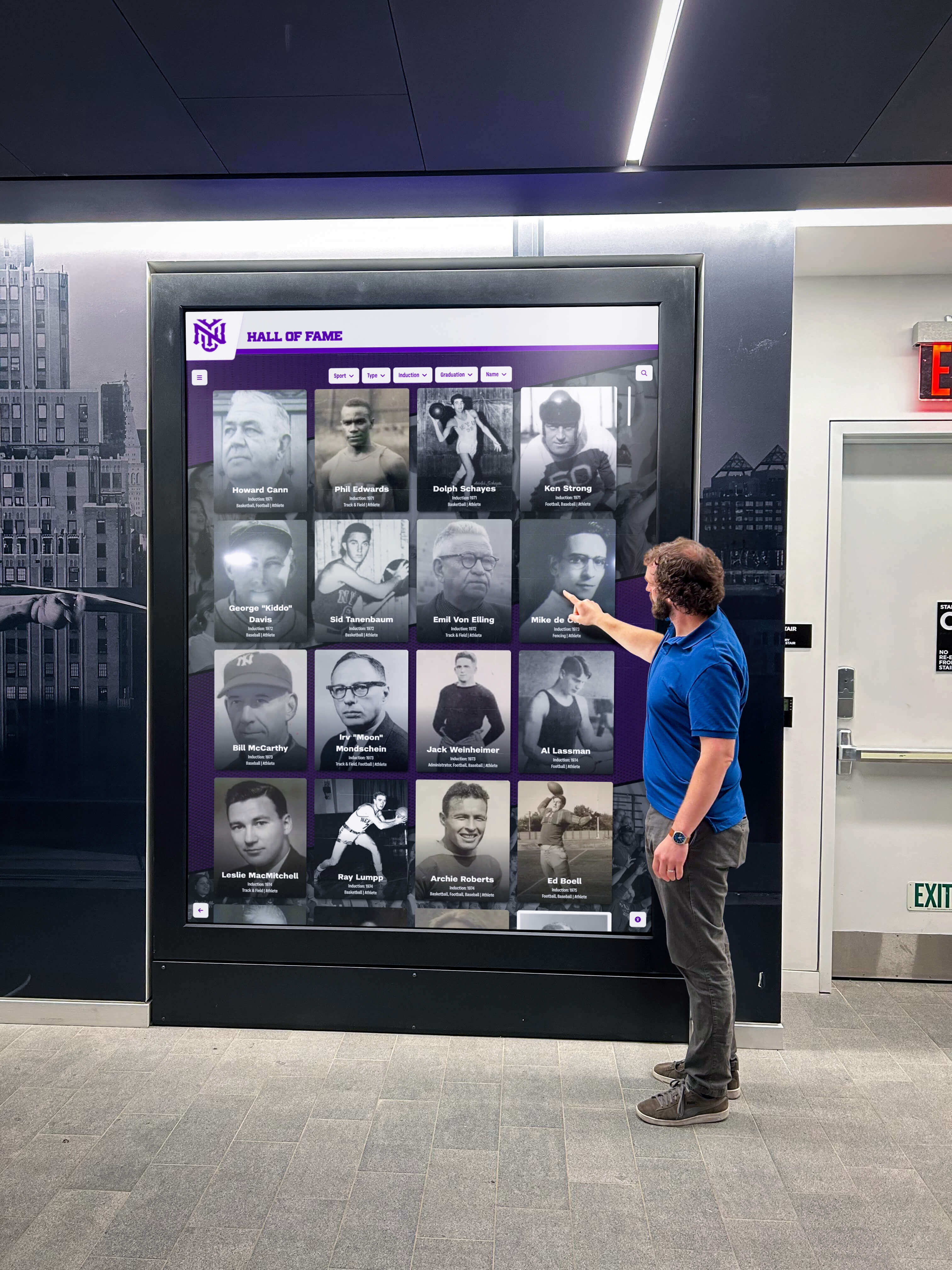
Interactive displays transform passive viewing into active exploration, enabling visitors to discover notable alumni stories through intuitive touchscreen navigation
Supporting Development and Advancement Goals
Development professionals recognize that comprehensive donor recognition extends far beyond courtesy acknowledgment—it represents strategic investment in relationships driving long-term philanthropic sustainability. Notable alumni recognition serves advancement objectives through multiple interconnected mechanisms.
Cultivation Through Visible Acknowledgment
Featuring distinguished alumni in prominent campus locations creates powerful social proof encouraging philanthropic participation. When major gift prospects tour campus with development officers, they inevitably notice comprehensive recognition displays celebrating peer achievements. These encounters create natural opportunities for conversations about philanthropic partnership without forced solicitation, demonstrating how institutions honor contributors and maintain lasting relationships with their communities.
Research consistently shows that comprehensive recognition programs significantly improve donor retention—the single most important fundraising metric for long-term sustainability. Universities with prominent, well-maintained recognition displays report retention rates 15-25 percentage points higher than those with minimal or outdated acknowledgment systems. Since acquiring new donors costs 5-10 times more than retaining existing supporters, this retention improvement delivers substantial financial value far exceeding initial recognition investment.
Strategic Stewardship and Relationship Management
Beyond direct fundraising impact, notable alumni recognition serves stewardship by providing comfortable settings for cultivation conversations, demonstrating professional management of institutional resources, creating positive experiences predisposing alumni toward future support, and building communities of engaged graduates who support each other’s institutional connections.
Many development officers report that alumni featured in recognition programs demonstrate measurably increased giving likelihood in subsequent years, with thoughtful recognition serving as meaningful touchpoint within comprehensive relationship development strategies.
Explore how digital recognition displays inspire alumni giving through systematic celebration and visible appreciation that strengthens philanthropic cultures.
Inspiring Current Students Through Alumni Success
Notable alumni recognition profoundly influences current students by demonstrating concrete examples of what institutional education enables across diverse career paths and achievement types. When students regularly encounter displays showcasing alumni excellence in medicine, business, education, arts, public service, research, and entrepreneurship, they internalize unlimited potential regardless of background or starting circumstances.
Role Models and Aspiration Development
This aspirational function proves particularly valuable for first-generation college students or those from underrepresented backgrounds who may lack immediate professional role models in their personal networks. Seeing alumni who share their backgrounds achieving remarkable success communicates that they too can accomplish extraordinary things, potentially influencing academic persistence, ambition levels, and career exploration throughout their educational journeys.
Recognition displays highlighting diverse alumni accomplishments also communicate institutional values around success definition. When universities celebrate not just wealth accumulation or career prominence but also community service, scientific discovery, creative expression, teaching excellence, and humanitarian contributions, they signal valuing multiple pathways to meaningful lives—influencing how students conceptualize their own success metrics and contribution opportunities.
Career Exploration and Professional Development
Students exploring majors and career options gain invaluable insights from notable alumni profiles about careers they may not have considered, required educational preparation and skill development, professional trajectory evolution over decades, industry challenges and opportunities, and work-life balance realities across different professions.
Many career services professionals report that alumni profiles significantly influence student decision-making about majors, internships, and post-graduation plans by providing concrete examples of career possibilities rather than abstract descriptions found in occupational handbooks.
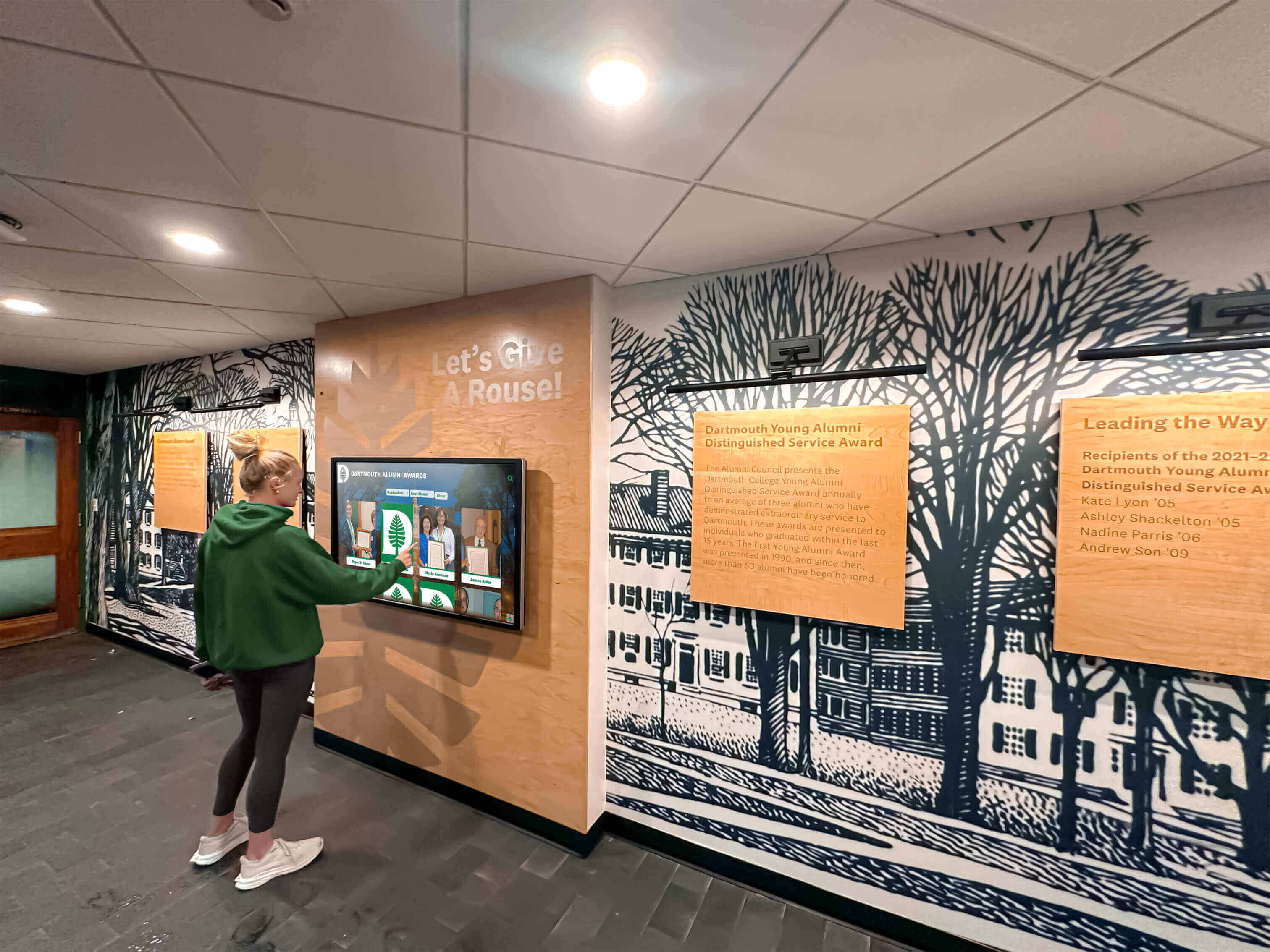
Strategic placement ensures current students regularly encounter alumni success stories during daily campus activities, inspiring career exploration and educational engagement
Enhancing Recruitment and Institutional Reputation
Prospective students and families evaluating universities consistently rank graduate outcomes among their most important decision factors, making notable alumni success compelling evidence of institutional quality. Alumni recognition contributes to recruitment effectiveness through multiple channels demonstrating lasting educational value.
Concrete Success Evidence
Campus tours and recruitment events gain powerful storytelling material when admissions officers can point to interactive displays showcasing diverse graduate achievement. Rather than citing abstract placement statistics, recruiters demonstrate real people who received the same education prospective students would experience—and whose careers illustrate concrete returns on educational investment beyond test scores and ranking numbers that dominate much admissions marketing.
According to enrollment research, prospective students and families consistently identify “sense of community” among their top decision factors when choosing between otherwise comparable institutions. Visible evidence of robust alumni engagement—through prominent recognition displays, clear communication that graduation marks beginning rather than end of institutional relationships—provides tangible proof of community vitality that generic promotional claims cannot match.
Marketing and Communication Content
Notable alumni recognition generates continuous content for admissions newsletters and communications, prospective student social media campaigns, campus tour talking points and examples, alumni success website sections, and recruitment event presentations. This organic content proves far more persuasive than paid advertising because it demonstrates authentic institutional impact through real graduate success rather than marketing hyperbole.
Many admissions professionals report that prospective families specifically mention alumni success stories when explaining what attracted them to institutions, indicating recognition programs’ significant recruitment influence that justifies initial investment through enrollment outcomes.
Experience Layout: Designing Intuitive Alumni Recognition Interfaces
Effective university alumni recognition requires systematic design approaches balancing aesthetic appeal with functional usability across diverse user groups including prospective students, current students, returning alumni, campus visitors, and development prospects.
Layout Blueprint and Content Zone Architecture
Well-designed recognition experiences organize screen real estate into functional zones serving specific purposes while maintaining visual hierarchy and intuitive navigation patterns:
Zone 1: Hero/Masthead Area (Top 15-20%)
The hero zone establishes immediate context and institutional identity. Essential elements include university branding with logos and colors creating instant recognition, experience title clearly identifying “Distinguished Alumni” or “Notable Graduate Recognition,” optional featured alumni or rotating highlights drawing attention to compelling recent inductees, and current context information like academic year or special collections.
This prominent branding zone ensures visitors immediately understand they’re exploring institutional recognition rather than generic content, while reinforcing university visual identity throughout the experience.
Zone 2: Primary Navigation (Below Hero, 10-15%)
Navigation enables intuitive content discovery through multiple pathways accommodating different visitor goals. Effective navigation structures include browse by graduation decade organizing alumni chronologically, browse by achievement category (business, medicine, arts, public service, research), browse by school or college for large universities, search by name enabling direct individual discovery, and featured collections highlighting themes like “Women Pioneers” or “Community Leaders.”
Navigation should use large, touch-friendly buttons with clear labels, intuitive iconography, and visual feedback confirming selections. Consider multiple navigation entry points accommodating visitors who think differently about discovery—some want chronological browsing while others prefer categorical exploration.
Zone 3: Content Display Area (Center, 50-60%)
The main content zone presents alumni profiles, directories, or galleries. Effective layouts include grid-based card views showing multiple alumni simultaneously with photos and essential information, list views providing scrollable directories with sorting options and quick filtering, detail views displaying complete individual profiles with full multimedia content and achievement narratives, and gallery views showcasing compelling imagery with minimal text overlay for visual storytelling.
Content density should balance comprehensiveness with clarity—too sparse feels incomplete while excessive information overwhelms viewers. Progressive disclosure techniques work effectively: show summary cards initially, then reveal additional detail when visitors express interest through touch interaction.
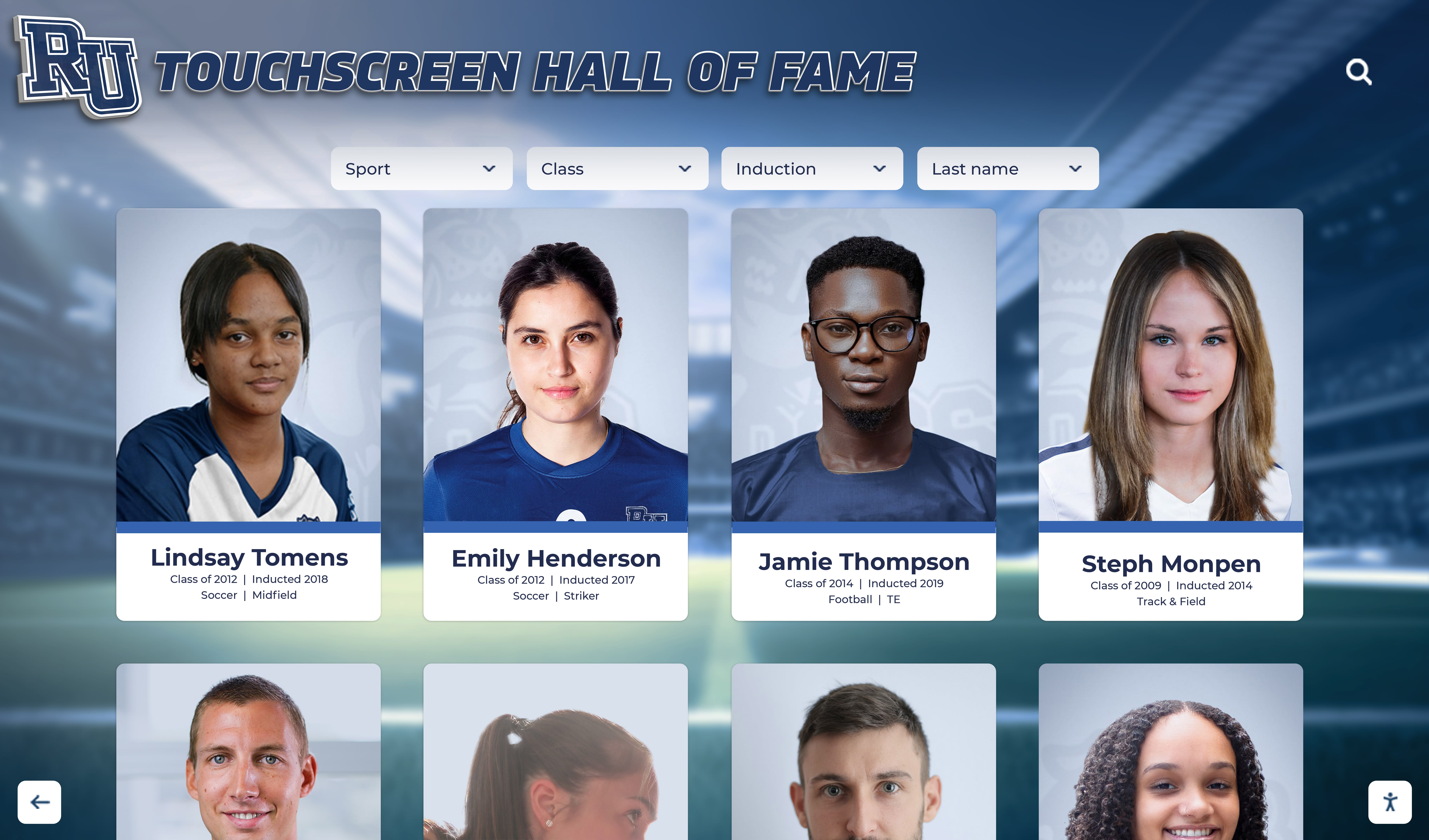
Grid-based card interfaces enable efficient browsing while maintaining visual appeal through consistent photography and organized layout architecture
Zone 4: Footer/Action Area (Bottom 10-15%)
Footer zones provide secondary actions and supporting information including social media sharing enabling profile distribution, QR codes linking mobile access for continued exploration beyond physical displays, sponsor acknowledgment when corporate partnerships fund recognition, navigation breadcrumbs showing current location within content hierarchy, and home/back buttons enabling easy navigation recovery.
Zone 5: Side Panels (Optional, 15-20% vertical space)
Some layouts incorporate persistent side panels for advanced filtering controls, featured content callouts highlighting recent additions, statistics or achievements creating context, or sponsor content separate from primary display areas.
Understanding digital hall of fame design principles provides comprehensive frameworks for creating engaging recognition experiences that balance multiple user needs and institutional objectives.
Content Blocks and Motion Design
Beyond static layout, animation and motion enhance usability while creating engaging experiences that capture attention and guide interaction:
Attraction Loop (Idle State)
When displays sit idle without active users, attraction loops draw attention and demonstrate interactivity. Effective attraction content includes highlight reels showing compelling alumni photos and achievement snippets, featured alumni spotlights rotating through recent notable inductees, achievement statistics demonstrating program excellence (“Over 500 CEOs,” “12 Nobel Laureates,” “Alumni in 85 Countries”), and clear touch prompts with animated elements inviting interaction.
Attraction loops should change content every 15-30 seconds maintaining visual interest while ensuring sufficient display time for reading. Subtle motion—gentle pans across photos, smooth transitions, floating elements—creates dynamic presence without appearing chaotic or distracting passersby.
Transition Animations
Smooth transitions between screens enhance perceived quality while guiding user attention. Use fade transitions for content swaps within consistent layouts, slide animations indicating directional navigation (left/right for categories, up/down for chronology), zoom effects when moving between list and detail views creating spatial relationships, and loading indicators appearing when content loads ensuring users understand the system is responding.
Interactive Feedback
Visual feedback confirms touch interactions reducing uncertainty and improving confidence: button press states show clear visual response through color changes or scaling, active selections remain highlighted throughout browsing sessions, success confirmations acknowledge actions like social shares or QR code generation, and error messages appear with clear recovery instructions when issues occur.
Progressive Disclosure Patterns
Information density management prevents overwhelming viewers while enabling deep exploration for interested visitors. Summary cards show essential information at glance including name, photo, graduation year, and primary achievement. Touch interaction reveals additional detail through smooth expansion or transition to dedicated views. Full profiles display comprehensive content in scrollable detail views with multimedia elements, biographical narratives, achievement documentation, and related connections.
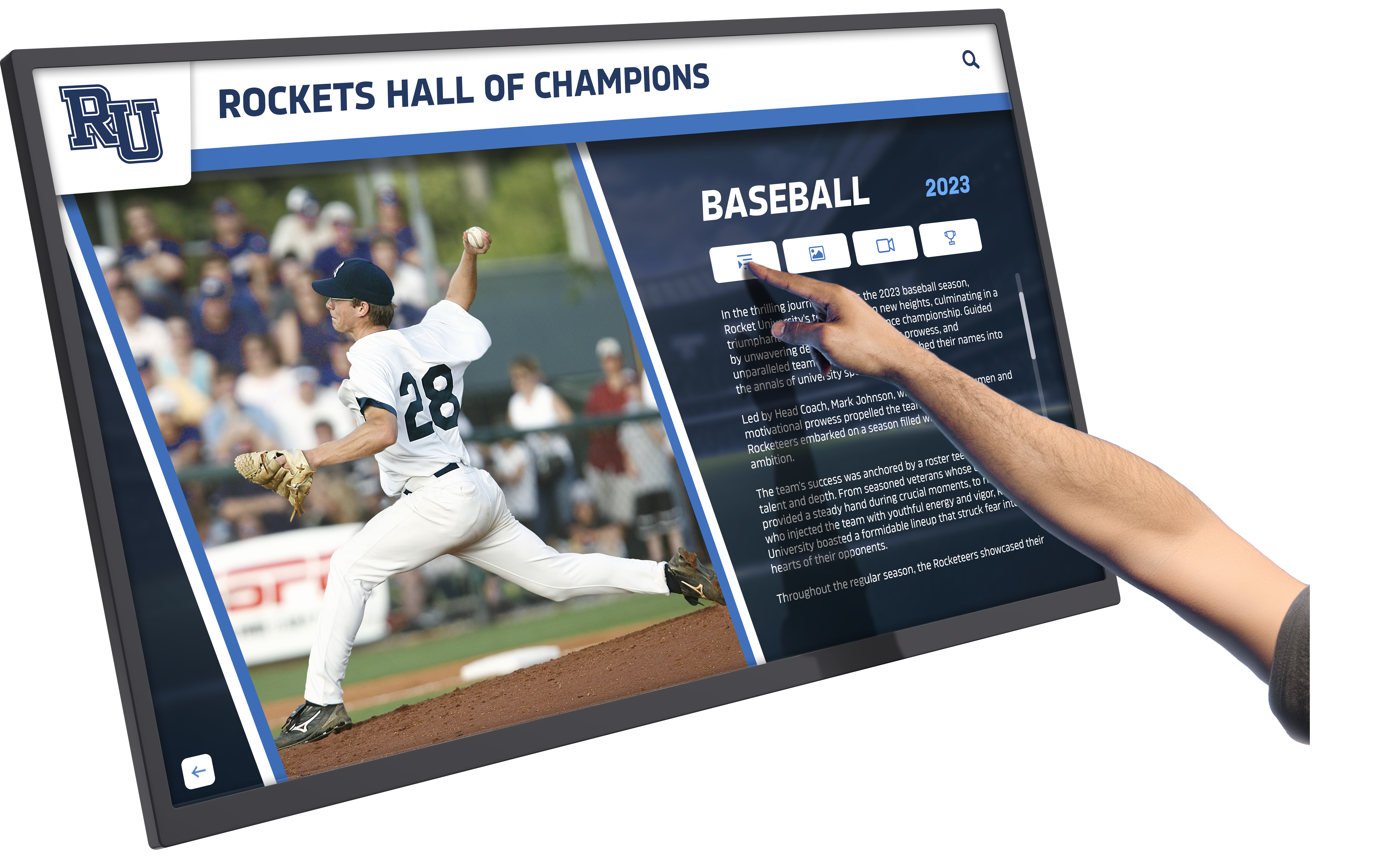
Intuitive card-based interfaces enable natural exploration with clear touch targets and immediate visual feedback creating consumer-grade experiences
Accessibility and Universal Design Checklist
Creating inclusive recognition experiences requires deliberate accessibility consideration ensuring all visitors can fully experience notable alumni celebration regardless of physical abilities or sensory capabilities:
ADA WCAG 2.1 AA Compliance Standards
- Text contrast ratios minimum 4.5:1 for normal text, 3:1 for large text and graphical elements
- Touch targets minimum 44x44 pixels with adequate spacing preventing accidental activation
- Text scaling supporting enlargement to 200% without horizontal scrolling or content loss
- Alternative text for images supporting screen readers when accessibility modes activate
- Captions for all video content enabling deaf and hard-of-hearing access
- Audio descriptions for visual-only content when feasible
Physical Accessibility Requirements
- Mounting height placing primary controls 15-48 inches above floor accommodating wheelchair users
- Forward reach depth not exceeding 25 inches for reach range compliance
- Kiosk approaches providing minimum 30x48 inch clear floor space with appropriate knee and toe clearance
- Volume controls for audio content respecting quiet environments while enabling audibility
- Adjustable viewing angles reducing glare and accommodating varying heights
Cognitive Accessibility Principles
- Clear, simple language avoiding academic jargon and complex sentence structures
- Consistent navigation patterns throughout experience reducing learning curve
- Minimal required steps to accomplish common tasks like searching for specific alumni
- Obvious home/back options enabling recovery from navigation errors without assistance
- Optional high-contrast modes improving visibility for visual impairment
- Predictable behaviors matching familiar interaction patterns from smartphones and tablets
Universities should verify accessibility through diverse user testing including wheelchair users, older adults, people with visual or hearing impairments, and individuals with cognitive differences before finalizing designs. Resources on interactive kiosk accessibility provide detailed implementation guidance ensuring compliance.
Brand Integration and Visual Identity Implementation
Digital alumni recognition should reflect institutional identity while providing professional, engaging experiences that reinforce university brand values and visual consistency.
Color Systems and Typography Hierarchy
Institutional Color Application
Apply university colors systematically throughout recognition experiences creating immediate institutional identification. Use primary brand colors for hero areas, major navigation elements, and featured content highlighting. Secondary institutional colors work effectively for backgrounds, dividers, and supporting elements. Accent colors from extended palettes emphasize interactive elements, highlights, and calls-to-action. Neutral colors provide readable backgrounds for biographical text and detailed content.
Color application should follow institutional brand guidelines while adapting for digital display optimization. What works in print doesn’t always translate effectively to backlit screens, requiring adjustment for optimal visibility and contrast ratios meeting accessibility standards.
Typography Establishing Information Hierarchy
Establish clear type systems supporting both brand personality and functional readability. Headline fonts reflecting institutional character create distinctive recognition while maintaining legibility at display viewing distances. Body fonts optimize readability for biographical content, achievement descriptions, and detailed narratives. Size scales create clear information hierarchy from major headings through supporting captions. Weight variations emphasize key information without excessive styling that clutters interfaces.
Many universities use official institutional typefaces maintaining brand consistency while supplementing with highly legible system fonts for extended biographical content where reading comfort outweighs pure brand expression.
Custom Backgrounds and Environmental Imagery
Campus Photography Integration
Incorporate location-specific imagery creating immediate connection to place and institutional identity. Campus or facility exteriors establish physical context, interior architectural details (libraries, hallways, signature spaces) provide familiarity for alumni, landscape or geographic imagery connects to regional identity, and historical photography blends heritage with modern presentation creating temporal continuity.
Background imagery should enhance rather than compete with primary content. Subtle treatments—reduced opacity overlays, selective focus, or artistic filters—ensure backgrounds support foreground content rather than creating visual competition.
Pattern and Texture Libraries
Subtle background treatments add visual interest without overwhelming content. Geometric patterns derived from architectural elements or logo shapes create sophisticated depth, texture overlays suggesting materials (brick, limestone, wood) connect digital displays to physical campus environments, gradient treatments create dimensionality and visual polish, and subtle motion graphics provide gentle movement in attraction loops without distraction.
Explore approaches for design consistency with creative freedom that maintain brand integrity while enabling creative expression across recognition content.
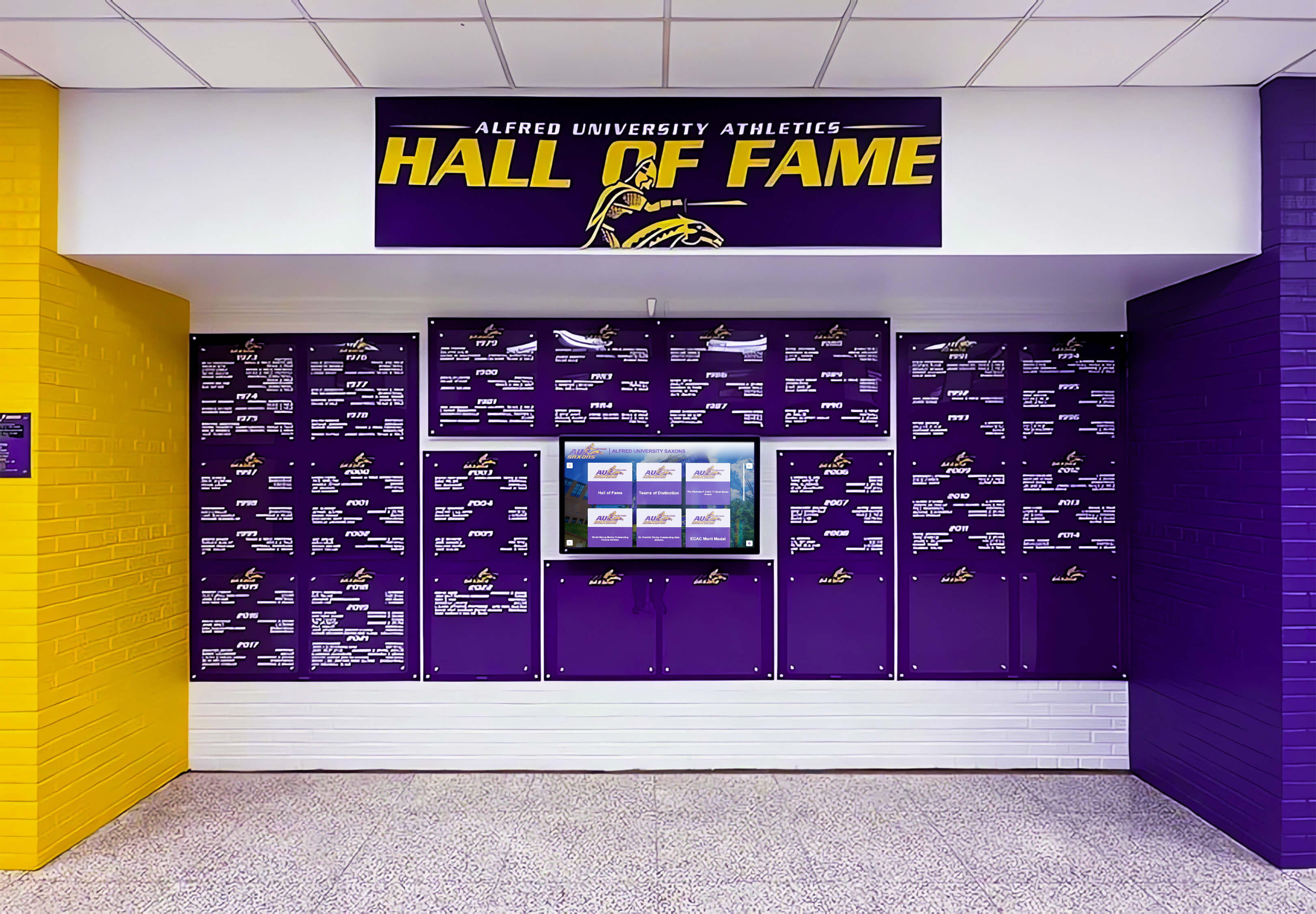
Brand-integrated displays incorporate institutional colors, logos, and design elements creating cohesive recognition experiences that reinforce university identity
Sponsorship Integration and Donor Acknowledgment
Many universities fund notable alumni recognition through corporate sponsorships or major donor support requiring tasteful integration that acknowledges support without compromising experience quality:
Sponsor Placement Strategies
Dedicated sponsor logos in footer areas with rotation for multiple supporters, splash screens acknowledging major funders before main experience begins, named displays crediting donors funding specific installations (“The Smith Family Alumni Recognition Display”), and discrete sponsor mentions in featured content when contextually appropriate.
Balancing Recognition and User Experience
Avoid excessive commercialization degrading visitor experience by limiting sponsor content to maximum 10-15% of screen real estate, maintaining clear visual separation between sponsor and alumni content, ensuring sponsor materials match overall design quality standards, updating sponsor content regularly maintaining current relationships and accurate acknowledgment.
Sponsorship integration should feel like appropriate acknowledgment rather than intrusive advertising. Well-designed sponsor recognition enhances rather than detracts from overall experience quality.
Content Development: Crafting Compelling Alumni Narratives
Recognition effectiveness depends entirely on content quality—well-researched, thoughtfully written profiles inspire and engage while minimal listings provide limited value beyond basic documentation.
Gathering Comprehensive Alumni Information
Systematic content collection ensures accurate, comprehensive recognition that truly honors distinguished graduates:
Information Source Identification
Compile content from diverse institutional and external sources including alumni affairs databases providing graduation years, degree information, and contact data, institutional archives documenting historical achievements and campus involvement, professional profiles on LinkedIn and university directories revealing career progression, media coverage and press features about professional accomplishments, published research, books, patents, or creative works demonstrating intellectual contribution, industry databases and award registries documenting professional recognition, and direct alumni outreach through interviews, questionnaires, and information requests.
Interview and First-Person Engagement
The richest content comes from well-conducted alumni conversations exploring educational experiences and formative campus moments, career trajectory and pivotal decision points, specific achievements and professional milestones with contextual details, challenges overcome and lessons learned throughout careers, institutional influences on success including specific professors or programs, current activities and ongoing impact in their fields, advice for current students and recent graduates, and meaningful memories and lasting connections to university.
Open-ended questions generate better stories than yes/no queries. Rather than asking “Did your education help your career?” ask “Tell me about a professor or experience that influenced your career path.” Specific prompts yield compelling content that generic questions cannot elicit.
Understand comprehensive approaches to alumni recognition program development that support systematic content collection across growing recognition initiatives.
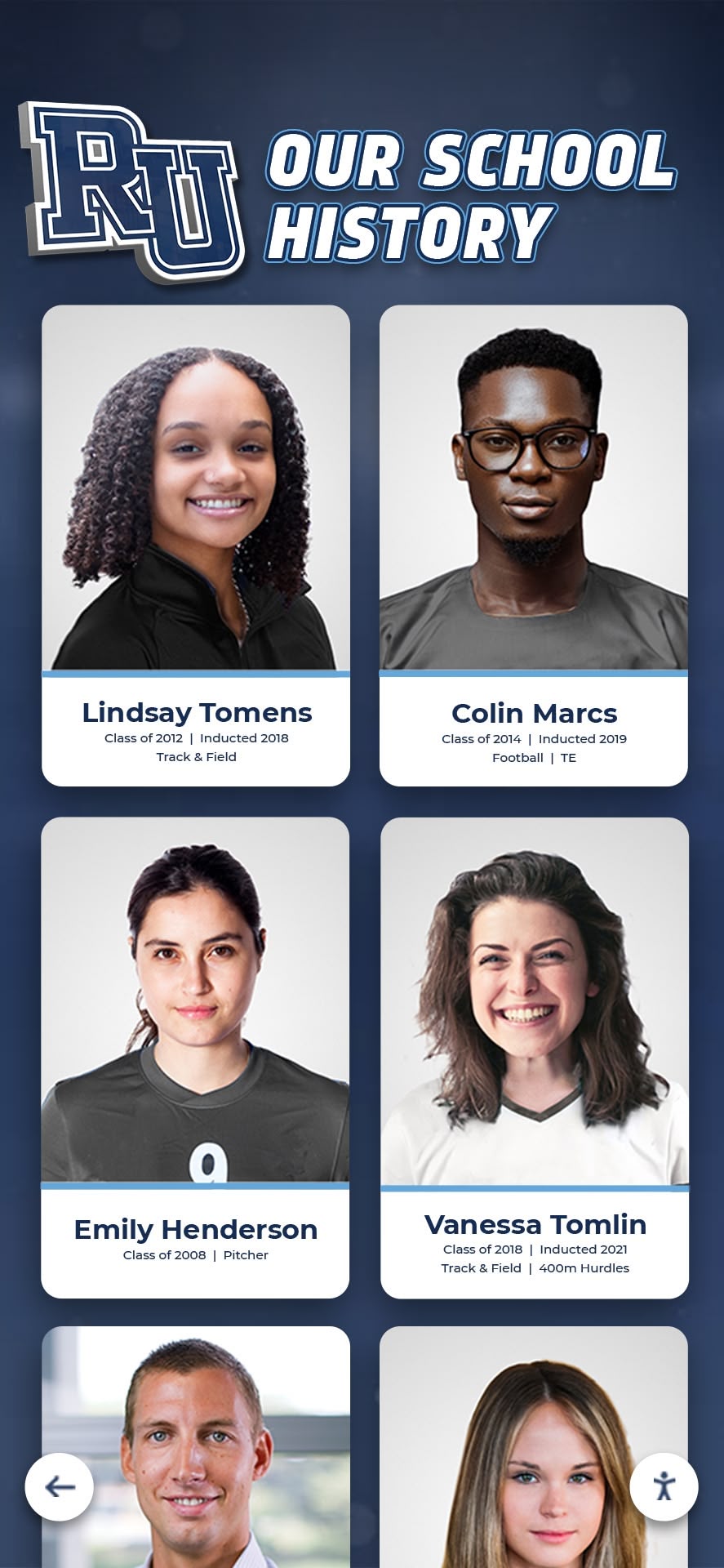
Organized profile collections enable showcasing numerous distinguished alumni while maintaining individual recognition depth and visual accessibility
Writing Engaging Recognition Narratives
Transform factual information into compelling stories that create emotional connections and demonstrate authentic institutional impact:
Biographical Framework Structure
Organize narratives following engaging patterns that maintain reader interest: opening hooks capturing defining achievements or memorable moments immediately establish significance, background context establishes alumni’s journey to excellence providing relatable foundation, achievement highlights detail specific accomplishments with statistics and contextual significance, impact and legacy sections explain broader meaning beyond raw achievements, current status provides updates connecting past to present, and personal quotes add authentic voice creating direct connection.
Storytelling Techniques That Engage
Transform facts into compelling narratives through specific details and anecdotes rather than generic descriptions, action verbs and dynamic language rather than passive voice constructions, contextual comparisons helping audiences understand significance (“first woman to…”, “youngest ever…”), emotional resonance connecting achievements to larger meaning and human impact, accessible language avoiding excessive academic or industry jargon.
Rather than stating “Dr. Smith graduated in 1995 and became a physician,” write “After completing her degree in biology, Dr. Smith became the first graduate to join Doctors Without Borders, spending a decade providing emergency medical care in conflict zones across three continents—a journey she credits to a transformative study abroad experience that opened her eyes to global health disparities.”
This narrative approach creates engagement and understanding, transforming recognition from directories into compelling archives preserving institutional memory and demonstrating educational impact.
Multimedia Content Production Standards
Rich media transforms recognition from documentation into immersive storytelling creating emotional resonance impossible with text alone:
Photography Curation and Standards
- Select images showing alumni in professional contexts and action rather than static portraits exclusively
- Create photo galleries showcasing individuals throughout their career progression when possible
- Digitize and restore historical photos from yearbooks and archives maintaining quality standards
- Crop and optimize images for display dimensions ensuring clarity at viewing distances
- Apply consistent color correction and toning ensuring visual cohesion across diverse source materials
- Maintain minimum resolution standards (1920x1080 or higher for primary images)
Video Content Development
- Produce interview videos capturing alumni personal reflections and institutional connections
- Compile achievement highlight reels from archival footage and contemporary recordings
- Create narrative video profiles combining photos, interview clips, and narration
- Edit content to 2-4 minute durations respecting attention spans while enabling substantial storytelling
- Caption all video content supporting accessibility and sound-off viewing in public environments
- Optimize file formats and compression for smooth playback on display hardware
Audio and Document Archives
- Record audio interviews preserving oral histories with distinguished alumni
- Scan historical documents, newspaper articles, and programs providing primary source material
- Digitize awards certificates and achievement documentation adding credibility
- Create audio descriptions for visual-only content supporting visually impaired visitors
Explore comprehensive digital storytelling approaches applicable to alumni recognition that leverage multimedia effectively while maintaining content quality and accessibility.
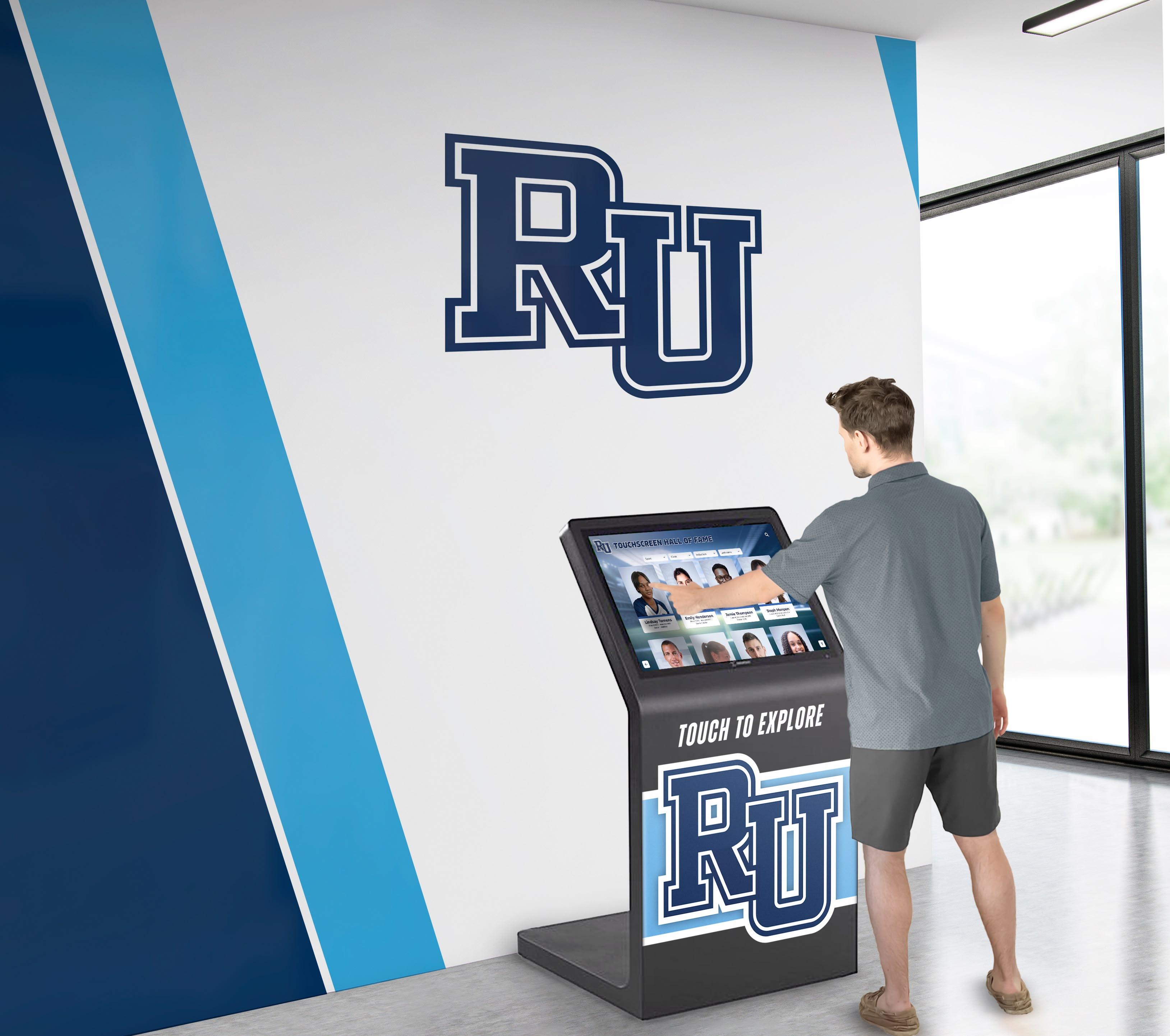
Freestanding kiosks in high-traffic campus locations ensure maximum visibility while providing comfortable interaction environments for extended exploration
Implementation Planning and Technology Selection
Successful notable alumni recognition requires strategic planning across technology, content, placement, and ongoing maintenance ensuring sustainable long-term programs.
Platform and Hardware Selection Criteria
Choose recognition solutions aligned with institutional needs, technical capacity, and long-term sustainability requirements:
Hardware Considerations
Screen size based on viewing distances and content density (43-55" for close viewing environments, 65-75" for viewing from distance in large lobbies), commercial versus consumer displays (commercial-grade required for continuous operation and extended warranties), touch technology options (capacitive for responsive consumer-like experience, infrared for larger sizes and demanding environments), mounting requirements accommodating physical space constraints and architectural considerations, and network connectivity options (hardwired Ethernet strongly preferred over WiFi for reliability and security).
Software Platform Requirements
Purpose-built recognition software versus generic digital signage platforms (specialized solutions understand unique recognition workflows and privacy requirements), cloud-based management enabling updates from any location without campus presence, multi-user permissions supporting distributed content management across advancement, alumni affairs, and communications teams, web portal integration extending recognition accessibility beyond physical displays to global audiences, and comprehensive analytics demonstrating engagement and justifying continued investment through objective metrics.
Vendor Evaluation Framework
Demonstrated experience with higher education recognition installations, quality of reference clients and testimonials from comparable institutions, technical support availability and guaranteed response commitments, training resources and onboarding assistance ensuring staff can manage systems independently, total cost of ownership including hardware, software subscriptions, and ongoing support services.
Request live demonstrations using actual alumni recognition content, speak with reference clients about implementation experiences and ongoing vendor relationships, verify accessibility compliance through documentation and third-party evaluation, and assess vendor stability and longevity ensuring support throughout extended equipment lifecycles.
Solutions like Rocket Alumni Solutions provide purpose-built platforms specifically designed for educational recognition, combining intuitive management, professional display quality, flexible recognition structures, and analytics revealing engagement patterns informing continuous improvement.
Strategic Placement and Installation Best Practices
Display effectiveness depends significantly on strategic location selection maximizing visibility while accommodating comfortable interaction:
Optimal Installation Locations
Main entrance lobbies welcoming all campus visitors immediately upon arrival, student unions and campus centers where current students naturally congregate, administrative buildings housing admissions and advancement offices visited during tours, athletic facilities celebrating accomplished scholar-athletes alongside current teams, alumni centers serving returning graduates and reunion groups, and academic buildings connecting current students with departmental alumni success.
Installation Technical Considerations
Professional mounting ensuring weight support, security, and aesthetic integration with architecture, appropriate viewing height (screen center at 48-60" for standing adults, adjustable when serving wheelchair users), adequate lighting avoiding glare and washout while maintaining visibility, power and network access with concealed cable management maintaining professional appearance, physical security measures preventing theft or vandalism in open campus environments, and protective surrounds when installations face high-traffic or potential impact risks.
Phased Deployment Strategies
Many universities implement recognition progressively: Phase 1 establishes flagship installation in highest-visibility, highest-traffic location demonstrating value and building momentum, Phase 2 expands to college or school-specific displays in relevant areas creating tailored recognition for distinct communities, Phase 3 builds comprehensive networks covering all major campus spaces and audiences creating ubiquitous presence.
Phased approaches enable budget spreading across multiple fiscal years while demonstrating value that justifies expansion investment through engagement metrics, stakeholder feedback, and observed impact on advancement and recruitment objectives.
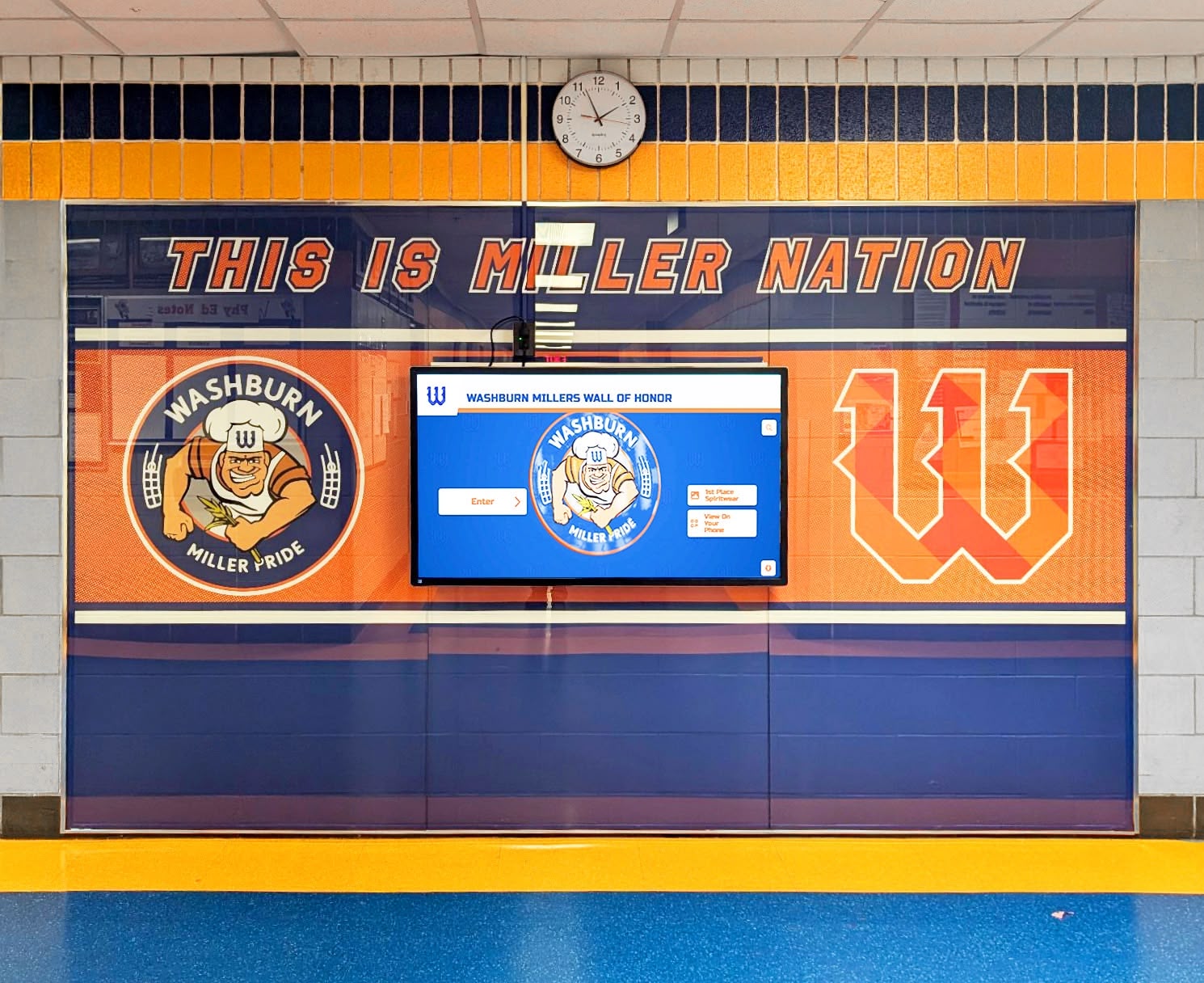
Hallway installations maximize daily visibility by integrating recognition into primary campus circulation routes ensuring regular student and visitor exposure
Content Maintenance and Update Workflows
Establish sustainable operational processes maintaining current, engaging content that evolves as alumni careers progress and new distinguished graduates emerge:
Content Update Schedule
Induction ceremonies: Add new distinguished alumni within 24 hours of formal recognition events maintaining immediate relevance, quarterly content reviews verify information accuracy and update evolving achievements, annual archives systematically expand historical coverage adding earlier graduating classes, special occasion features create timely collections for reunions, homecoming, and institutional anniversaries.
Content Governance and Approval
Assign clear organizational responsibility preventing gaps where nobody manages updates, implement approval processes ensuring accuracy and appropriateness before publication, document content standards and style guidelines maintaining consistency across multiple contributors, train multiple staff members preventing single-person dependencies that create vulnerability during transitions, and archive source materials supporting future updates, corrections, and expansions.
Technical Maintenance Requirements
Monitor display operation through remote management tools identifying issues before visitors encounter problems, schedule regular software updates maintaining security patches and feature enhancements, clean screens and hardware quarterly protecting appearance and touch functionality, verify network connectivity and content synchronization ensuring displays show current information, and document hardware warranties and vendor support contacts enabling rapid response to technical issues.
Resources on digital recognition platform selection provide detailed evaluation frameworks ensuring technology choices support long-term operational sustainability.
Measuring Success and Demonstrating Program Value
Data-driven evaluation ensures recognition investments deliver intended value while identifying improvement opportunities that enhance effectiveness over time.
Engagement Metrics and Analytics
Quality recognition platforms provide comprehensive usage tracking revealing how visitors interact with content:
Quantitative Engagement Indicators
Total interaction sessions showing display usage frequency, average session duration indicating depth of content engagement (target: 5-8 minutes demonstrates meaningful exploration), most-viewed alumni profiles revealing community interests and compelling content, search query analysis demonstrating what visitors seek, peak usage times informing content launch strategies and staffing decisions, return visitor rates showing sustained interest beyond initial curiosity, and social share counts demonstrating content reaching beyond physical displays into social networks.
Behavioral Pattern Analysis
Analytics reveal navigation patterns showing how visitors explore content and which pathways prove intuitive, drop-off points identifying confusing interfaces or problematic user experiences requiring design refinement, search failures highlighting missing content or hard-to-find individuals needing improved discoverability, category popularity guiding content development priorities and resource allocation, and time-of-day patterns enabling attraction loop optimization matching audience composition.
Comparative Performance Assessment
Benchmark against established goals and similar institutional installations through engagement rates comparing sessions to overall facility traffic, growth trends showing increasing or declining usage over time, category comparisons identifying stronger and weaker content areas requiring attention, and pre/post implementation surveys measuring impact on alumni awareness, institutional pride, and student aspirations.
Qualitative Feedback and Community Response
Beyond quantitative analytics, gather qualitative insights revealing authentic reactions and perceived value:
Direct Feedback Collection Methods
Alumni surveys assessing recognition program awareness and satisfaction levels, comment cards or digital feedback forms positioned near displays inviting visitor input, staff observations documenting engagement patterns and visitor conversations, focus groups with key stakeholders exploring detailed perspectives on recognition effectiveness, and social media monitoring capturing organic mentions, shares, and sentiment analysis.
Stakeholder Input Channels
Regularly gather feedback from diverse constituencies including featured alumni reactions to their own recognition and overall program quality, current student awareness of notable alumni and inspiration derived from displays, prospective student and family impressions during campus visits, development officer assessment of cultivation usefulness and donor reactions, and alumni affairs professional observations about engagement impact and relationship building.
This qualitative feedback often reveals impact that metrics cannot capture—understanding what truly resonates emotionally, which stories inspire action, and what improvements would enhance program effectiveness from user perspectives rather than administrative assumptions.
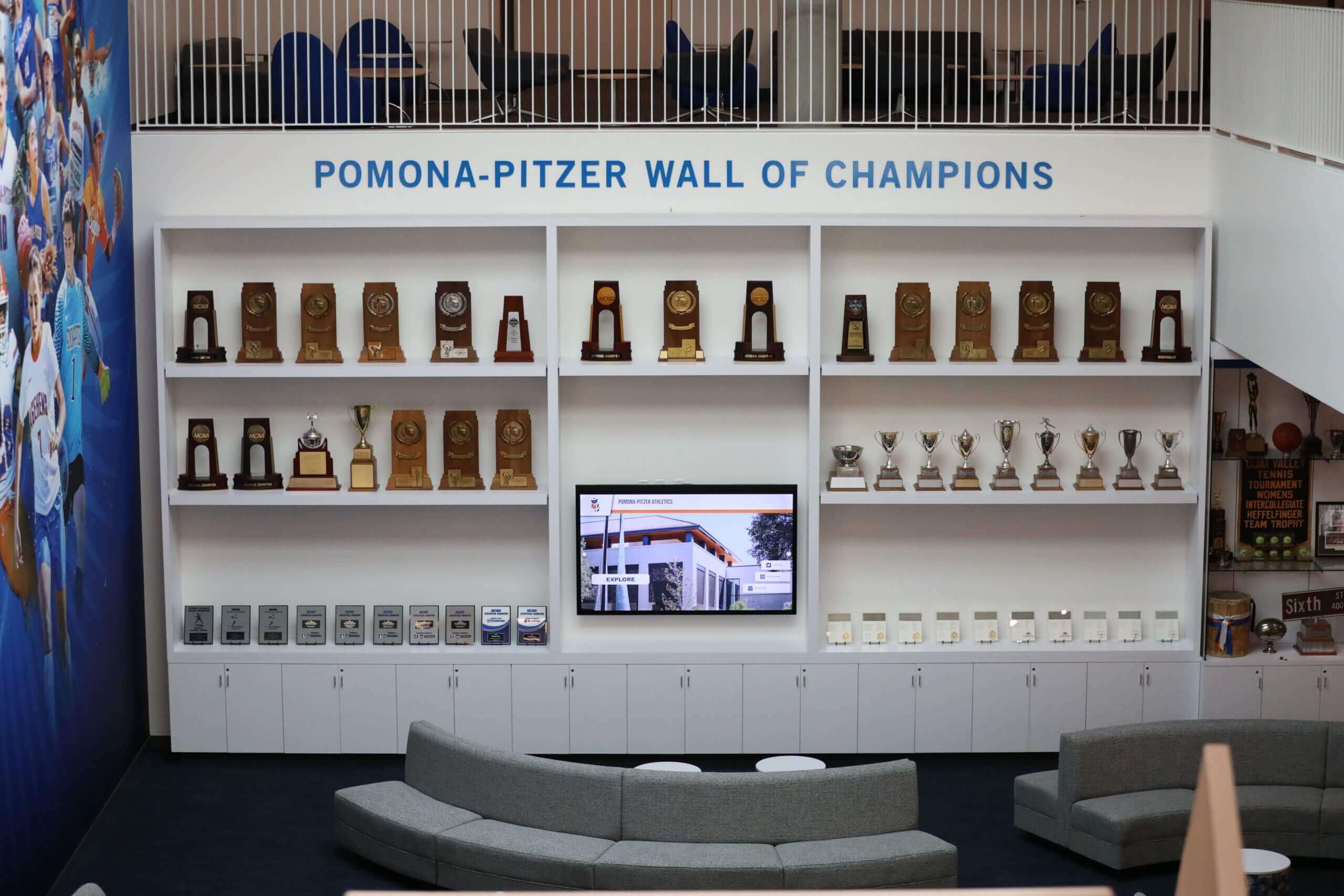
Creating comfortable viewing environments with lounge seating encourages extended engagement and group exploration enabling deeper alumni discovery
Continuous Improvement and Program Evolution
Use insights to refine recognition experiences ensuring programs remain effective, current, and aligned with evolving institutional priorities:
Content Enhancement Strategies
Add missing profiles or underrepresented categories revealed through search failures and stakeholder feedback, enrich existing profiles responding to high visitor interest with expanded multimedia content, create featured collections highlighting compelling themes connecting to current events or institutional initiatives, update navigation based on observed usage patterns improving discoverability, and expand multimedia content in highly engaged profiles maximizing storytelling impact.
Design and Interface Refinement
Simplify confusing navigation based on usability observations and drop-off analysis, adjust color contrast responding to visibility issues identified through accessibility reviews, resize touch targets if interaction difficulties observed during user testing, refine information density balancing comprehensiveness with clarity and reading comfort, and update attraction loops maintaining freshness preventing display blindness from excessive familiarity.
Technical and Feature Optimization
Improve loading speed for smoother experiences reducing visitor frustration, fix bugs or errors discovered through usage monitoring and feedback, enhance search algorithms based on query patterns and failure analysis, optimize content delivery reducing bandwidth requirements and enabling smoother performance, and implement requested features from user feedback showing high demand and clear value.
Special Recognition Applications and Notable Alumni Categories
While comprehensive recognition celebrates all distinguished graduates, specialized approaches serve specific alumni populations and institutional priorities effectively.
Distinguished Academic and Research Achievement
Celebrate alumni contributing to knowledge advancement and intellectual leadership through professorial appointments at prestigious institutions, groundbreaking research and scholarly publications, patents and intellectual property development with commercial or social impact, academic leadership as department chairs, deans, or university presidents, prestigious academic honors like Fulbright Scholarships or Guggenheim Fellowships, and influential books reshaping fields or reaching broad audiences.
Academic achievement recognition inspires current students pursuing graduate education and research careers while demonstrating intellectual tradition and institutional academic values beyond professional and commercial success.
Business Leadership and Entrepreneurial Success
Highlight alumni achieving remarkable business accomplishments including Fortune 500 executive leadership and C-suite positions, successful entrepreneurship founding or leading significant companies, industry innovation disrupting markets or creating new categories, philanthropic leadership channeling business success toward social good, professional association leadership and industry recognition, and economic development creating jobs and opportunity in communities.
Business success stories resonate particularly with families evaluating return on educational investment and students exploring career options in commerce and entrepreneurship.
Learn about college advancement strategies that integrate alumni recognition with development objectives maximizing fundraising and engagement outcomes.
Creative Accomplishment and Artistic Excellence
Recognize alumni achieving distinction in creative fields often underrepresented in traditional recognition including acclaimed authors, playwrights, and poets with published works, performing artists in music, theater, dance achieving professional success, visual artists with gallery exhibitions and critical recognition, filmmakers, directors, and cinematographers creating influential works, designers across graphic, industrial, fashion, and architectural disciplines, and media professionals in journalism, broadcasting, and digital content creation.
Creative recognition demonstrates valuing diverse paths to meaningful careers beyond business and professional tracks, potentially influencing artistically inclined students to pursue passions rather than defaulting to more conventional career trajectories.
Public Service and Civic Leadership
Celebrate alumni dedicating careers to community service and civic engagement through elected officials serving at local, state, or national levels, nonprofit leadership advancing social missions and community development, military service and veterans making significant sacrifices, educators improving schools and expanding educational opportunity, healthcare professionals serving underserved populations, and social entrepreneurs creating innovative solutions to pressing social problems.
Public service recognition communicates institutional values around citizenship and social responsibility, potentially inspiring students toward careers prioritizing social impact alongside or instead of purely financial success.
Athletic Achievement Beyond College Competition
While university athletic programs celebrate student-athlete excellence, many alumni achieve remarkable athletic success post-graduation including professional sports careers in major leagues, Olympic and international competition representing nations, coaching excellence developing next generations of athletes, sports medicine and athletic training advancing field, sports media and broadcasting bringing athletics to audiences, and athletics administration leading programs and organizations.
Post-collegiate athletic achievement recognition acknowledges that education enables diverse pathways within sports beyond just competing, demonstrating career possibilities for current student-athletes exploring post-playing career options.
Resources on Division II athletics recognition demonstrate approaches applicable across athletic recognition programs celebrating comprehensive achievement.

Dedicated recognition spaces create environments encouraging extended visits and group exploration, deepening community engagement with alumni excellence
Common Implementation Challenges and Practical Solutions
Understanding typical obstacles helps universities proactively address challenges ensuring successful recognition program implementation and sustainability.
Budget Constraints and Alternative Funding
Digital recognition requires initial investment typically $10,000-15,000 per display installation. Universities facing budget limitations can explore creative funding including capital campaign integration treating recognition as major campaign component with naming opportunities, alumni association support leveraging association resources for projects directly serving member engagement, corporate sponsorship particularly for programs recognizing business alumni where sponsor visibility provides mutual benefit, reunion giving initiatives aligning milestone reunion classes with recognition funding as legacy gifts, and phased implementation starting with pilot installations demonstrating value before requesting larger investments.
Some institutions incorporate recognition into facility renovation projects, treating displays as permanent infrastructure deserving capital funding rather than competing for scarce operating budgets.
Content Development Resource Limitations
Comprehensive recognition requires substantial content development that smaller advancement or alumni affairs teams struggle to sustain alongside existing responsibilities. Resource strategies include starting focused on recent decades before systematically expanding historical coverage, engaging volunteer alumni passionate about institutional heritage preservation, soliciting community assistance gathering information and photos through crowdsourcing campaigns, contracting professional digitization services for large-scale archival projects requiring specialized expertise, establishing student internship programs supporting content development as experiential learning, and creating sustainable workflows distributing effort over extended timeframes.
Launch with achievable content scope demonstrating value, then systematically expand coverage as capacity grows and initial returns justify additional investment.
Technical Support and IT Capacity Concerns
Universities without extensive technical expertise worry about long-term support requirements for sophisticated digital systems. Support strategies include selecting platforms with comprehensive vendor support including guaranteed response times, prioritizing cloud-based systems requiring minimal local IT intervention, choosing commercial-grade hardware with extended warranties and depot replacement, establishing clear vendor relationships with documented service level agreements, training multiple staff members preventing single-person dependencies, and thoroughly documenting procedures supporting continuity during staff transitions.
Quality vendors understand educational institutions need reliable, low-maintenance solutions rather than complex systems requiring constant technical intervention or extensive in-house expertise.
Organizational Change Management and Stakeholder Buy-In
Introducing new recognition approaches sometimes faces resistance from stakeholders preferring traditional methods or skeptical of technology appropriateness. Change management approaches include demonstrating how digital enhances rather than replaces valued traditions, involving stakeholders in planning ensuring their priorities shape implementation, providing comprehensive training building staff confidence managing new systems, celebrating early wins highlighting positive impacts generating momentum, maintaining traditional elements alongside digital during transition periods, and consistently communicating benefits through multiple channels building understanding and support.
Successful universities treat digital recognition as cultural initiative requiring communication and engagement rather than purely technical deployment imposed without constituency input.
Understanding digital alumni hall of fame experiences provides frameworks for managing comprehensive implementation across planning, execution, and ongoing operation phases.
Best Practices for Sustained Recognition Excellence
Learn from universities achieving outstanding recognition program outcomes through strategic planning and operational excellence:
Start With Clear Strategy and Measurable Goals
Successful recognition begins with fundamental strategic questions: What achievement categories require celebration? Who are primary audiences and what do they value? What institutional outcomes should recognition support? How will we measure success beyond anecdotal feedback? What resources can we sustainably commit over extended periods? This strategic foundation prevents tactical implementations lacking coherence or failing to serve institutional priorities effectively.
Prioritize Quality Over Quantity
Better to recognize 100 alumni comprehensively with rich profiles, professional photography, and compelling narratives than 500 individuals with minimal name-date listings providing limited value. Establish quality standards and build content systematically rather than pursuing immediate comprehensive coverage at expense of storytelling depth that creates genuine engagement and emotional connection.
Design for Multiple Audiences and Use Cases
Effective recognition serves diverse constituencies including current students and faculty exploring role models and institutional history, prospective students and families evaluating graduate outcomes and community strength, alumni reconnecting with their own recognition and discovering classmates, family members celebrating relatives’ achievements and institutional connections, campus visitors learning about organizational excellence and values, and donors understanding philanthropic impact and institutional stewardship.
Design navigation, content depth, and accessibility features supporting all these usage patterns rather than optimizing exclusively for single primary audience at expense of others.
Plan for Sustainability and Evolution
Recognition programs require sustained commitment beyond initial launch including budgeting ongoing software licenses and support contracts, assigning permanent staff responsibility with documented backup coverage, establishing content development workflows integrated with recognition ceremonies and institutional calendars, scheduling regular reviews maintaining accuracy and relevance, planning technology refresh cycles anticipating 5-7 year hardware lifecycles, and thoroughly documenting procedures supporting continuity during inevitable staff transitions.
Programs treated as finite projects rather than permanent initiatives often deteriorate within 2-3 years as initial enthusiasm fades and champions move to other roles without knowledge transfer.
Integrate Recognition With Broader Institutional Programs
Notable alumni recognition works most effectively when integrated with comprehensive advancement strategies including connecting displays with ceremony and event programming creating physical touchpoints, linking recognition content to recruitment marketing and communications materials, integrating with fundraising cultivation providing natural conversation starters, coordinating updates with institutional calendars and news cycles maintaining relevance, and leveraging recognition for social media content generating ongoing digital engagement.
This integration maximizes value while distributing effort across teams rather than burdening single individuals or small departments with unsustainable workload.

Multiple coordinated displays create comprehensive recognition networks serving different content categories while maintaining visual and navigational consistency
Conclusion: Celebrating Notable Alumni Through Purposeful Design
University notable alumni recognition represents strategic investment in community building, institutional pride, and relationship development when designed thoughtfully and implemented sustainably. Distinguished graduates deserve celebration honoring their accomplishments comprehensively while demonstrating how education enabled success across remarkably diverse career paths and achievement types.
Get Your Touchscreen Mock-Up
Discover how custom-designed notable alumni recognition displays can strengthen your university's engagement, advancement, and recruitment objectives through compelling interactive experiences. Rocket Alumni Solutions creates purposeful recognition platforms celebrating distinguished graduates while serving multiple institutional priorities.
Schedule Your Design ConsultationThe approaches explored throughout this guide provide comprehensive frameworks for creating notable alumni recognition that celebrates individual excellence while strengthening institutional community, inspiring current students, supporting advancement objectives, and enhancing recruitment effectiveness. From fair selection processes ensuring diverse representation to compelling content development creating emotional connections to strategic placement maximizing visibility to rigorous assessment demonstrating value, these strategies transform alumni celebration from administrative obligation into powerful community-building asset.
Whether implementing first-time recognition systems, enhancing existing programs with modern technology, or comprehensively redesigning outdated approaches, the key lies in viewing notable alumni recognition as strategic priority deserving thoughtful planning, adequate resourcing, and sustained operational commitment. Universities investing in well-designed recognition demonstrate institutional values around community, achievement, and lifelong relationships that sustain organizations across generations.
Your distinguished alumni represent living proof of educational quality, institutional impact, and community strength. They deserve recognition celebrating their achievements comprehensively, telling complete stories that inspire others, and communicating that universities genuinely value graduates regardless of how many years have passed since commencement. Modern interactive recognition technology makes this comprehensive celebration achievable—honoring alumni from every era, field, and background while creating engaging experiences that benefit entire university communities.
Ready to explore notable alumni recognition for your institution? Discover digital recognition display design principles, learn about building sustained alumni engagement ecosystems, explore virtual hall of fame platforms extending recognition beyond campus, and understand comprehensive alumni welcome strategies that integrate recognition with broader engagement environments creating lasting institutional connections.
Notable alumni recognition programs celebrating genuine excellence, telling compelling stories, operating sustainably, and aligning strategically transform graduate acknowledgment from occasional gestures into systematic culture of appreciation and community building that strengthens universities while honoring remarkable individuals representing educational impact across generations.































