



Intent: Inspire and demonstrate creative wall of fame concepts that transform achievement recognition from static plaques into engaging experiences celebrating excellence across schools, universities, athletic programs, and organizations.
A wall of fame serves as a permanent tribute to individuals and teams whose achievements represent institutional excellence. Yet many organizations struggle with traditional wall of fame limitations—finite space that fills quickly, static displays that fail to engage modern audiences, minimal storytelling capacity beyond names and dates, and accessibility restricted to those physically present at specific locations.
This comprehensive guide explores innovative wall of fame ideas spanning traditional approaches, modern digital solutions, and hybrid implementations that combine the best of both worlds. Whether you’re creating your first wall of fame or reimagining an existing recognition program, you’ll discover actionable frameworks for designing displays that inspire visitors, honor achievers appropriately, and strengthen institutional culture through systematic celebration of excellence.
Organizations implementing thoughtful wall of fame designs report stronger community engagement, enhanced recruitment effectiveness, improved fundraising outcomes, and measurable increases in institutional pride—demonstrating that recognition investments deliver returns far exceeding initial costs when executed strategically.

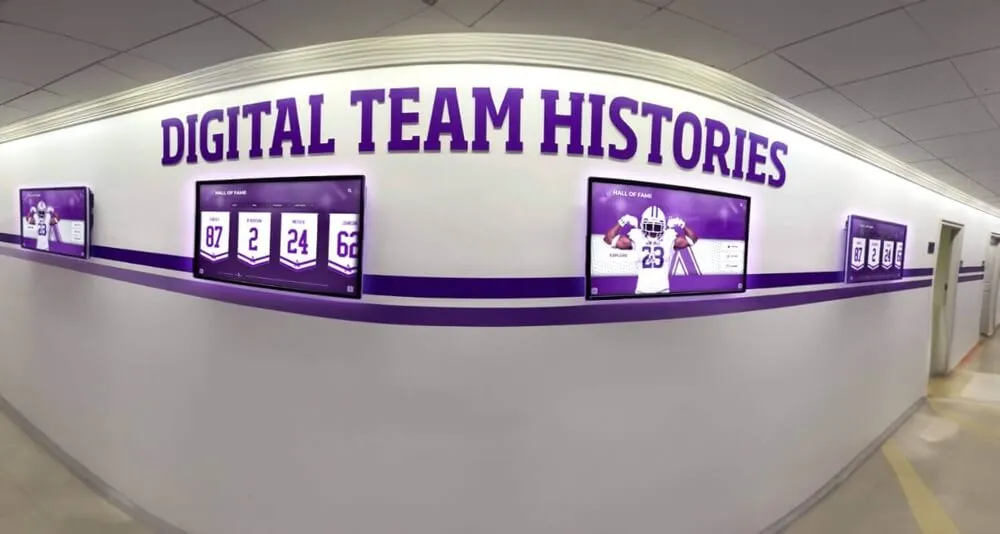
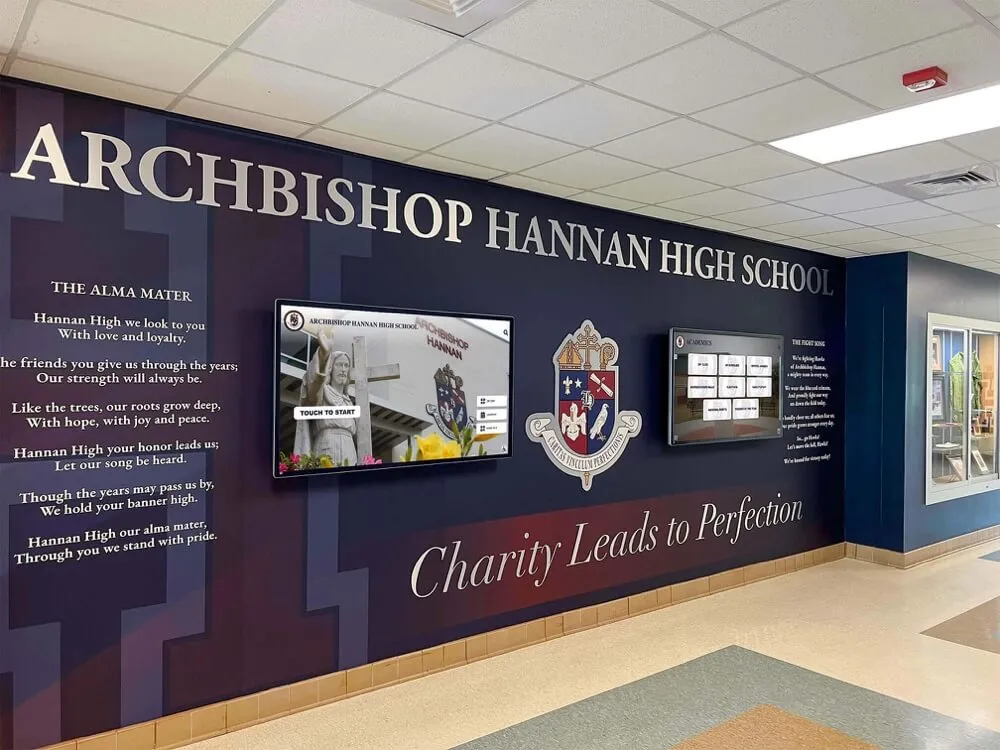
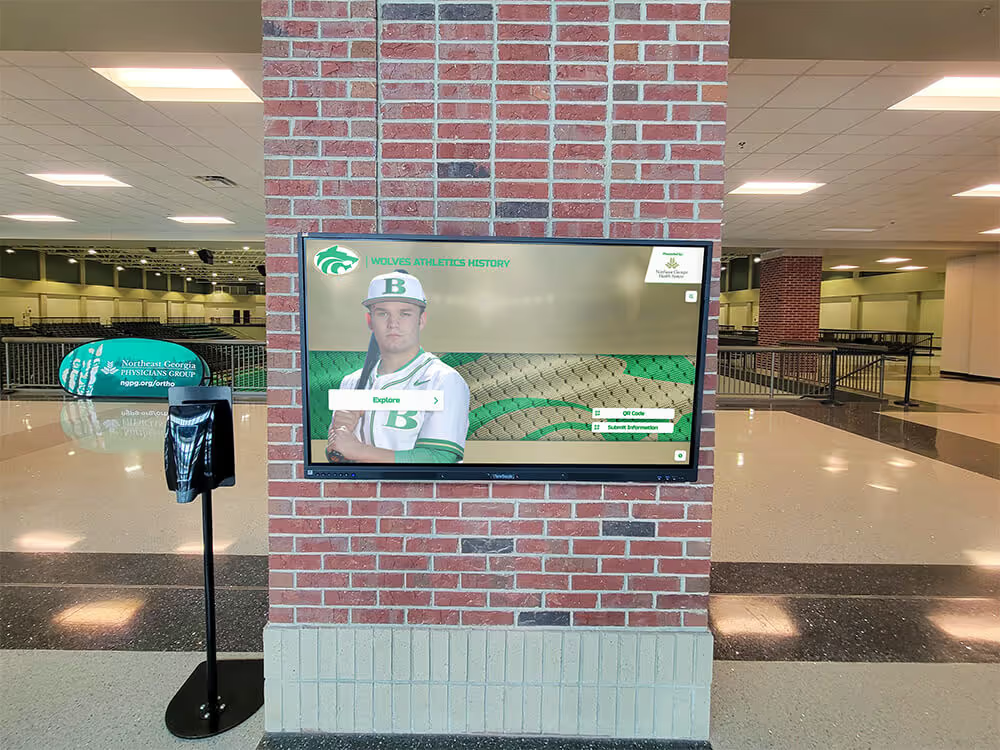
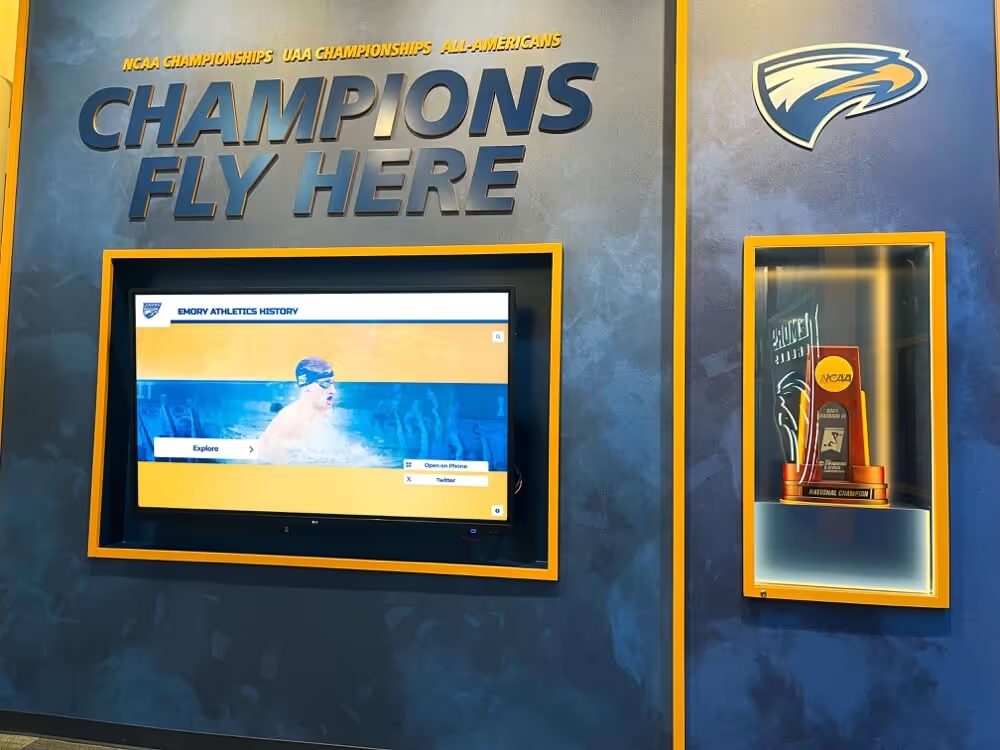
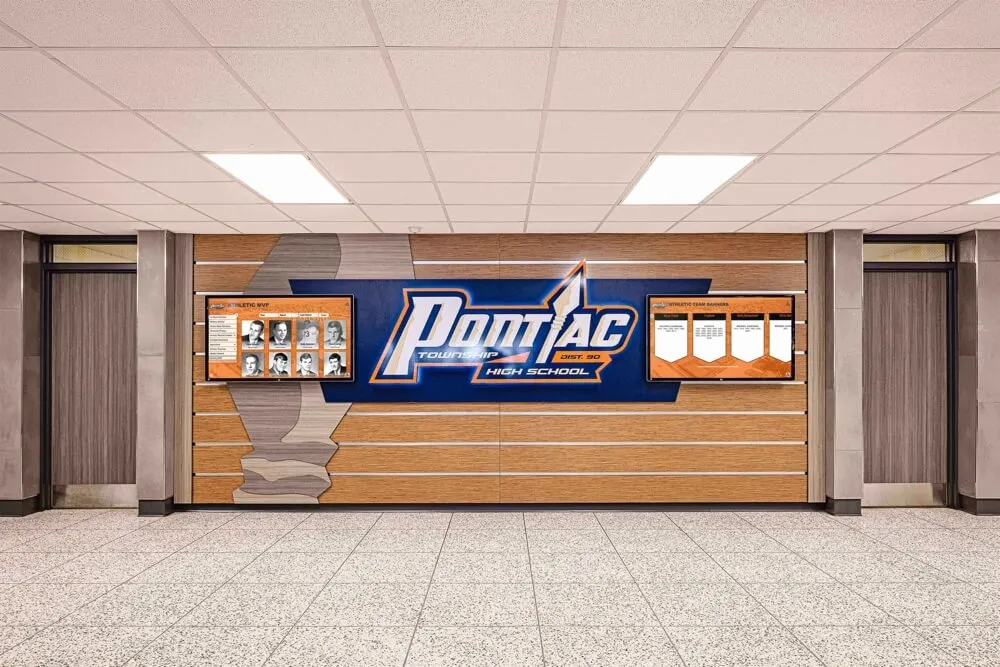
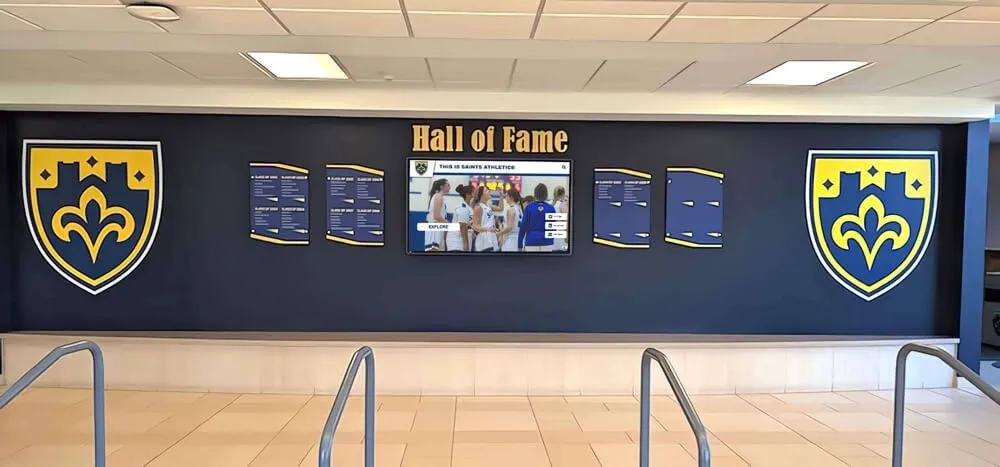
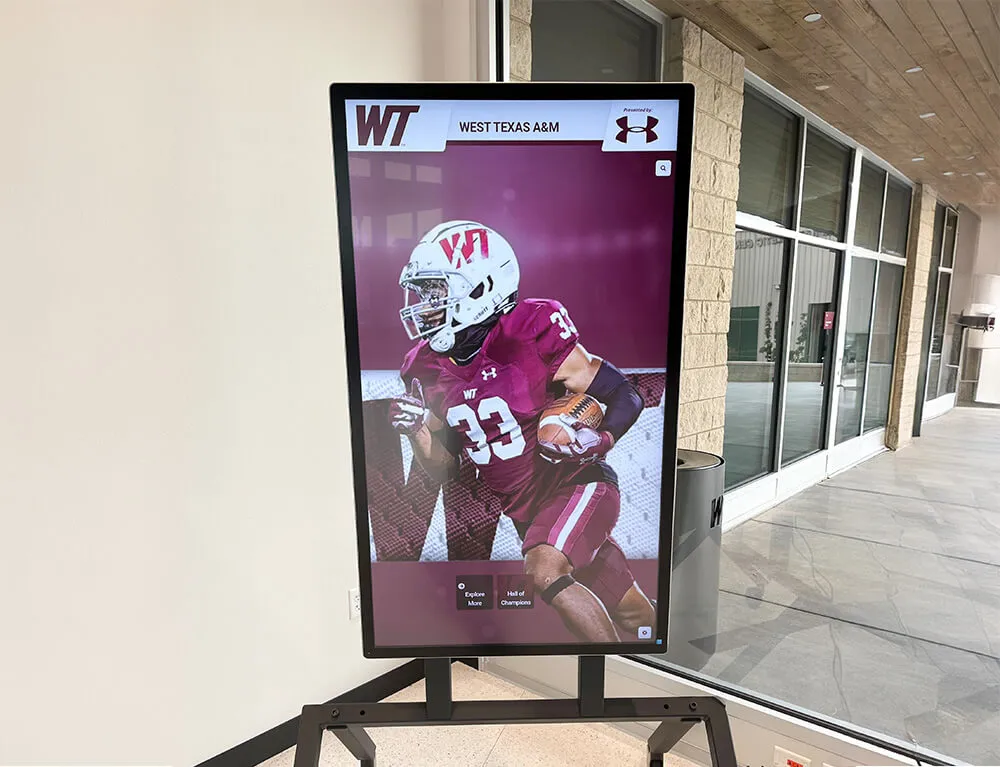
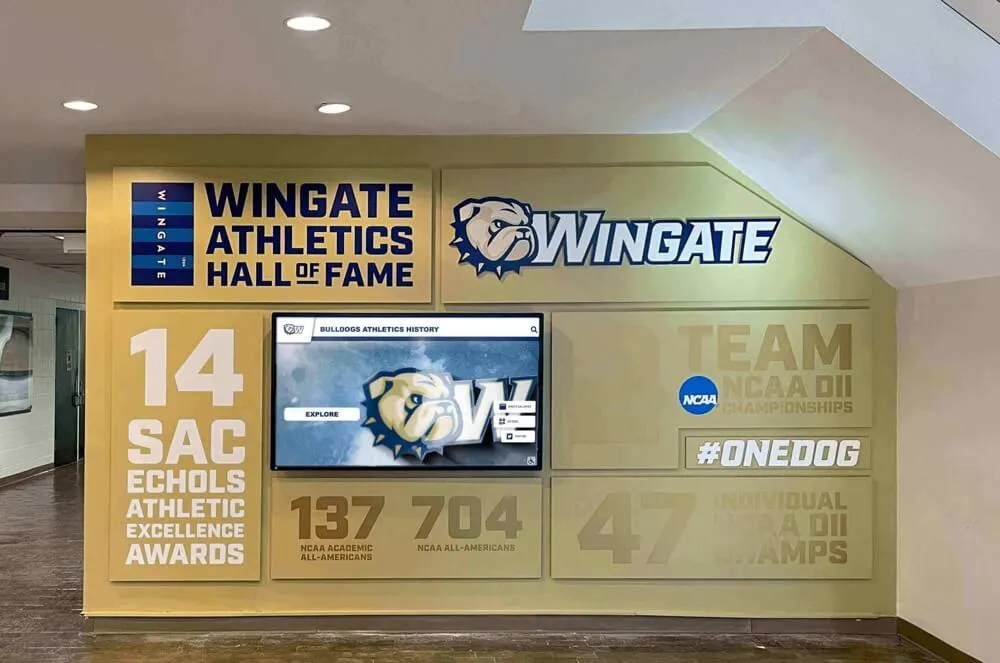
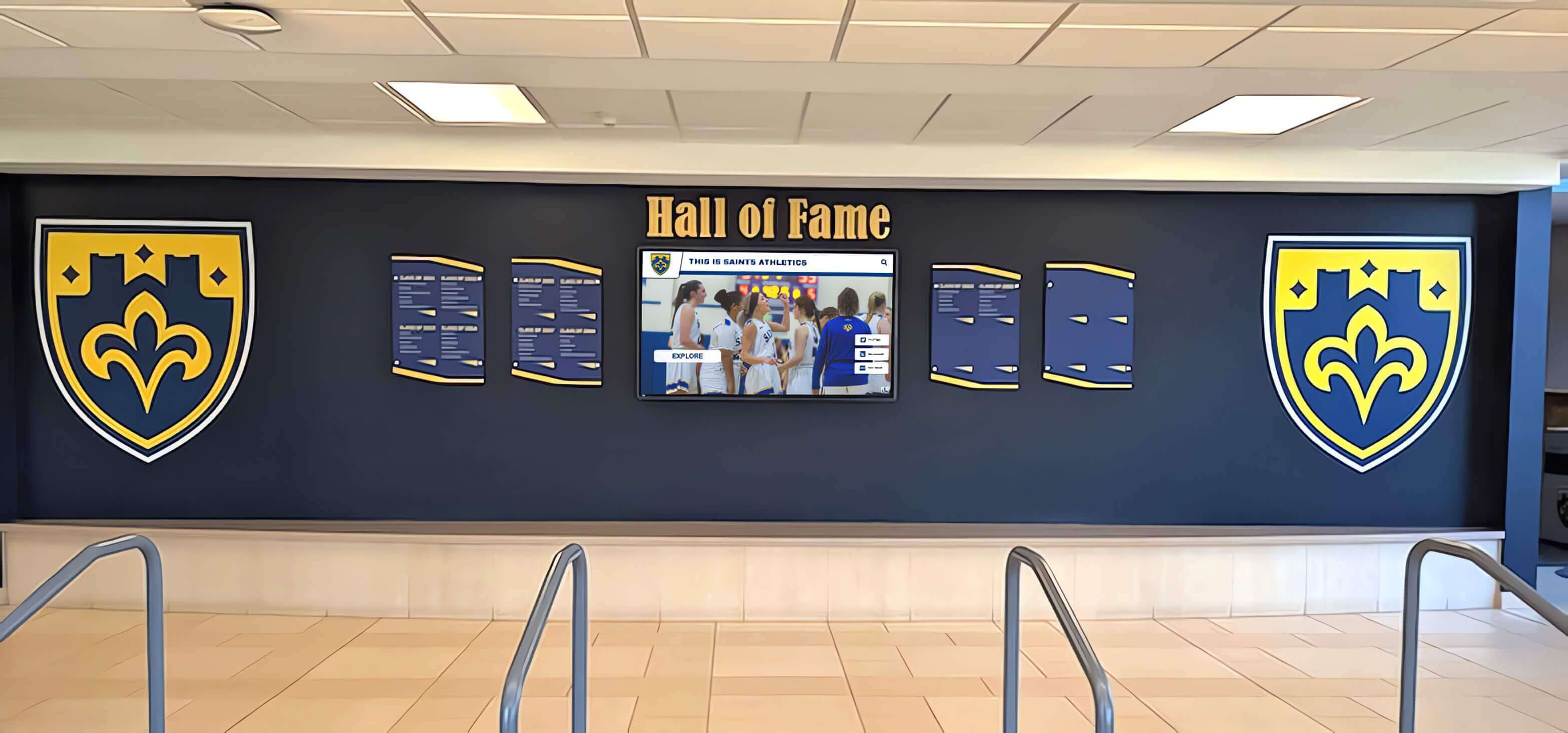
Effective wall of fame designs blend institutional tradition with modern recognition technology, creating spaces that honor history while engaging contemporary audiences
Understanding Wall of Fame Purpose and Impact
Before exploring specific design concepts, understanding why walls of fame matter helps institutions create recognition programs serving genuine community needs rather than simply filling wall space with decoration.
The Strategic Value of Recognition Displays
Walls of fame function as strategic assets advancing multiple institutional priorities simultaneously. They strengthen community identity by creating shared narrative connecting current members to those who preceded them. They inspire excellence by showcasing achievement benchmarks and demonstrating what institutional education or membership enables. They build lasting engagement by honoring individuals in ways that reinforce lifelong connections. And they communicate institutional values through deliberate choices about which achievements receive celebration.
Research on organizational psychology consistently demonstrates that recognition significantly impacts motivation, retention, and performance. Individuals whose contributions receive genuine acknowledgment develop stronger organizational commitment compared to those whose efforts go unrecognized. Walls of fame provide permanent, public recognition that validates achievement while inspiring others toward similar excellence.
Key Functions Effective Walls of Fame Serve
Recognition displays should accomplish multiple objectives including celebrating individual and team achievement comprehensively, preserving institutional history and heritage for future generations, inspiring current members through exposure to role models and success stories, engaging alumni and former members by maintaining their connection to community, and differentiating institutions by showcasing tradition and excellence during recruitment.
Understanding these layered purposes ensures wall of fame designs serve genuine strategic goals rather than functioning as purely decorative elements with minimal community impact.
Common Wall of Fame Challenges
Traditional wall of fame implementations face predictable obstacles that undermine long-term effectiveness. Space limitations exhaust available wall area within years as achievement accumulates. Update complexity makes adding new honorees time-consuming and expensive, often creating 3-6 month delays between achievement and recognition. Limited storytelling capacity restricts recognition to basic information—names, years, minimal accomplishments—without room for compelling narratives. And physical accessibility constraints mean recognition only reaches people physically present at specific locations during building hours.
These challenges explain why many institutions discover that initial wall of fame excitement fades as physical displays fill, updates slow, and recognition becomes outdated. Understanding these common pitfalls helps organizations design recognition systems that remain vibrant and effective long-term rather than deteriorating within 3-5 years.
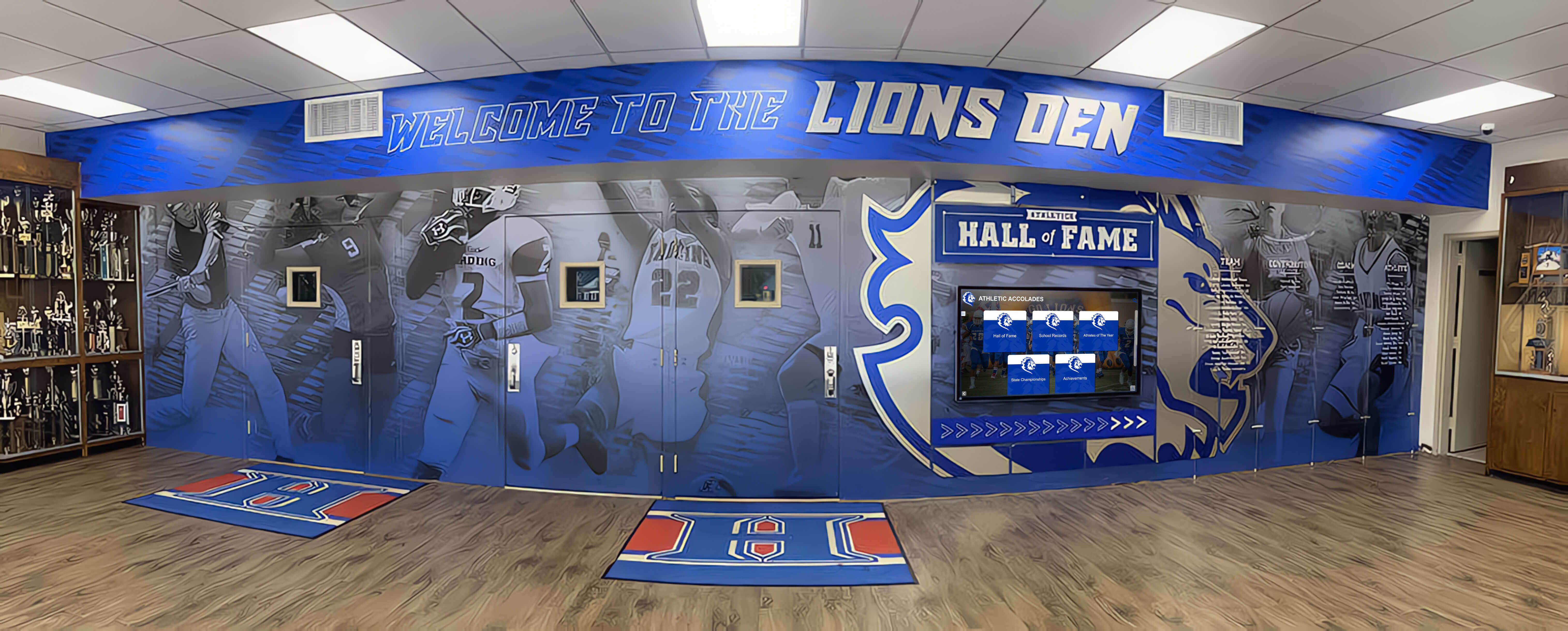
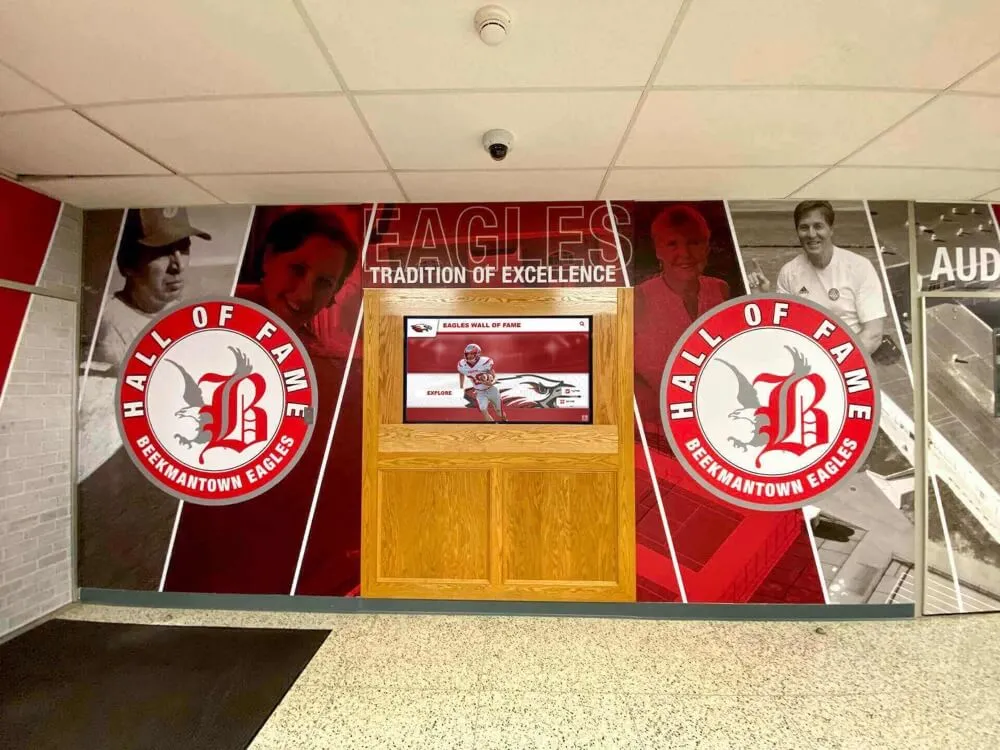
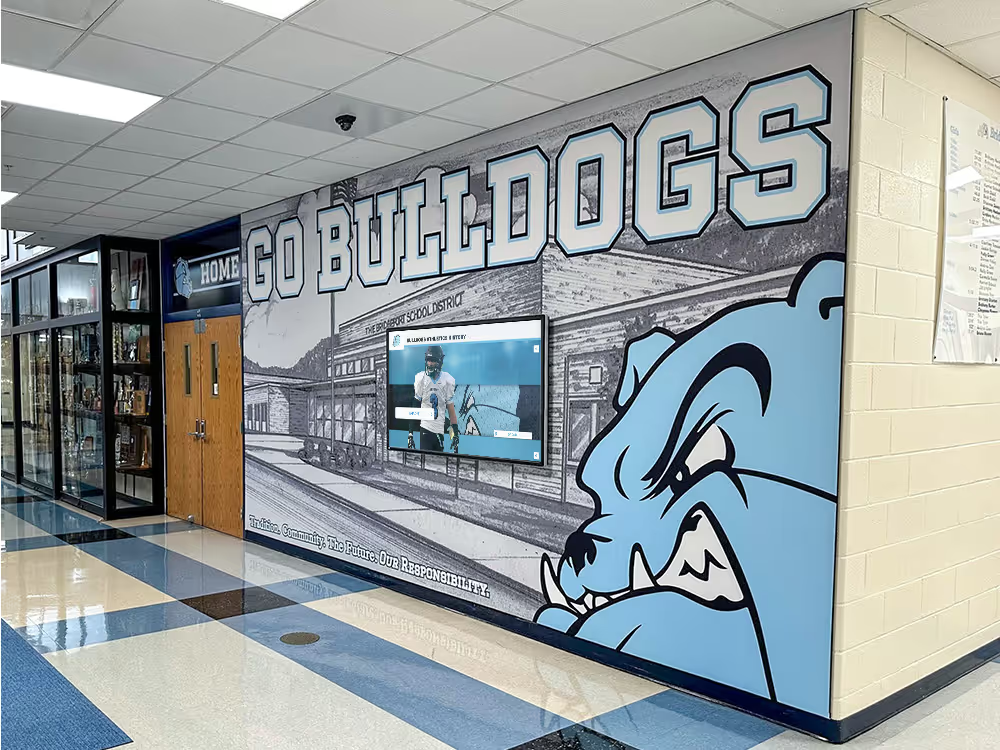
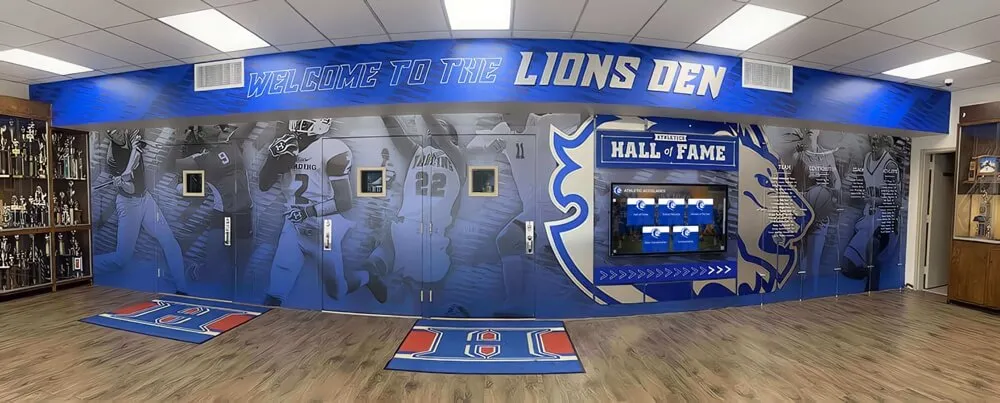
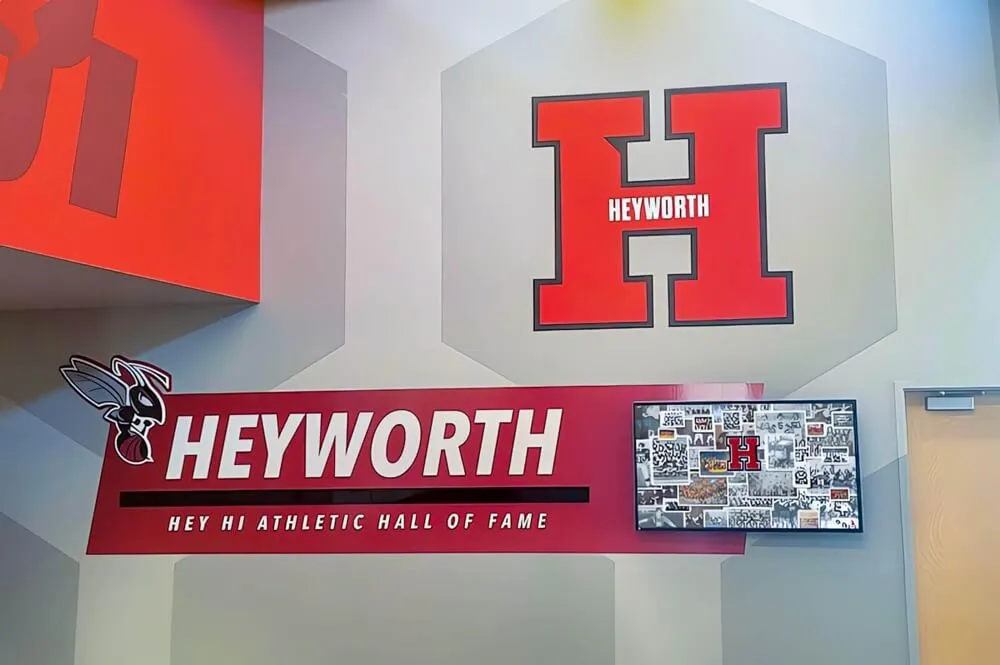
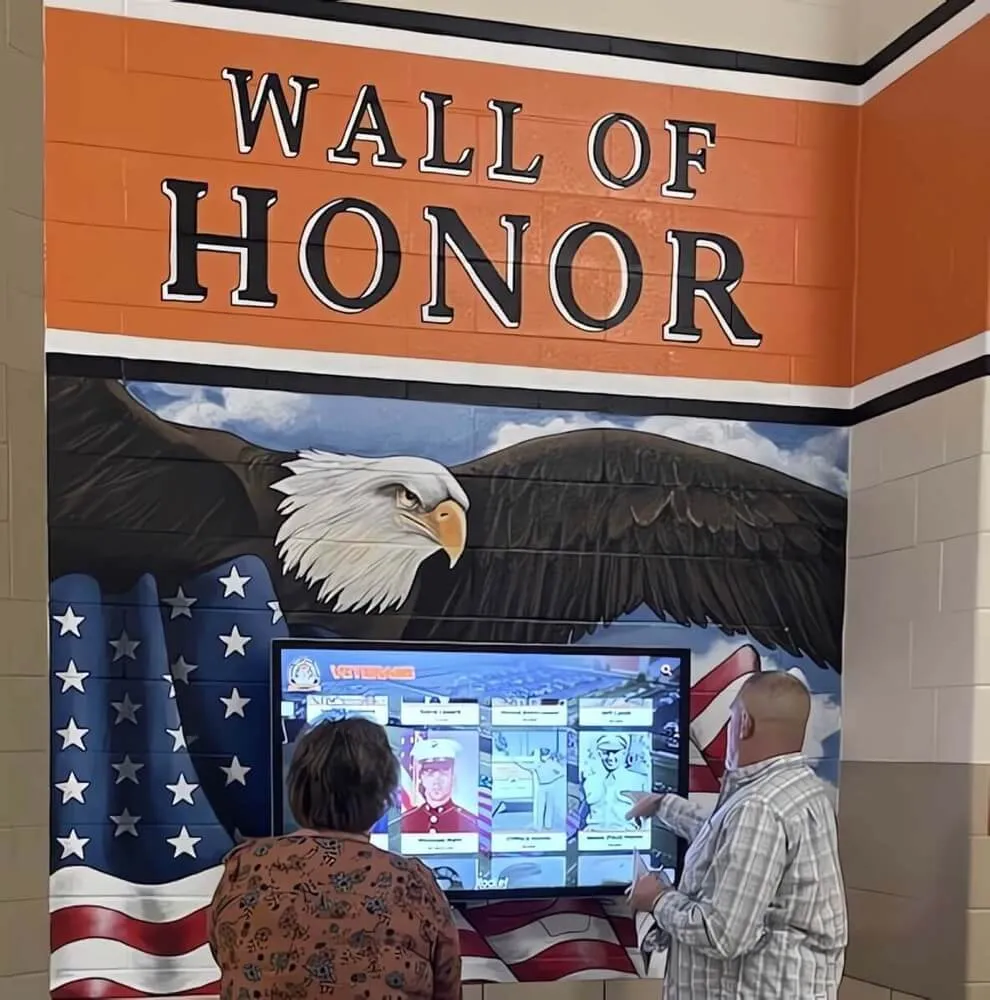
Athletic walls of fame combine traditional trophy displays with painted murals and digital systems, creating comprehensive recognition environments
Traditional Wall of Fame Design Approaches
While modern technology offers compelling capabilities, traditional wall of fame elements remain valuable for many institutions, particularly when thoughtfully designed and strategically implemented.
Classic Plaque Walls and Honor Boards
The most established wall of fame approach features engraved plaques mounted on dedicated walls in high-traffic locations like main entrance lobbies, athletic facility hallways, administrative building corridors, or dedicated alumni centers.
Design Considerations for Plaque-Based Systems
Successful plaque wall implementations require careful planning around organization schemes that facilitate quick discovery—arranging inductees chronologically by year, alphabetically by last name, or categorically by achievement type. Visual consistency matters significantly, with uniform plaque sizes, fonts, and mounting creating professional appearance rather than haphazard assemblages. Strategic spacing allows for expansion, leaving gaps for future plaques rather than immediately filling entire walls. And quality materials including brass, bronze, or high-grade metals ensure longevity and communicate the permanence of recognition.
Traditional plaques excel at providing formal, prestigious recognition that many stakeholders—particularly older alumni, major donors, and community leaders—specifically value. The tangible permanence of metal plaques mounted permanently on institutional walls communicates achievement significance in ways that digital representations may not fully replicate.
Limitations to Plan For
Organizations choosing traditional plaque approaches must address inherent constraints including finite capacity that exhausts available space within 10-20 years, making long-term planning essential. Update costs accumulate at $50-200 per plaque including design, manufacturing, shipping, and installation—expenses that compound over decades. Information density remains minimal with small engravings accommodating only basic facts without storytelling depth. And correction impossibility means errors require expensive plaque replacement rather than simple digital edits.
For comprehensive guidance on high school wall of fame planning, traditional approaches work best when institutions accept space limitations and commit to ongoing expansion budgets.
Trophy Cases and Award Displays
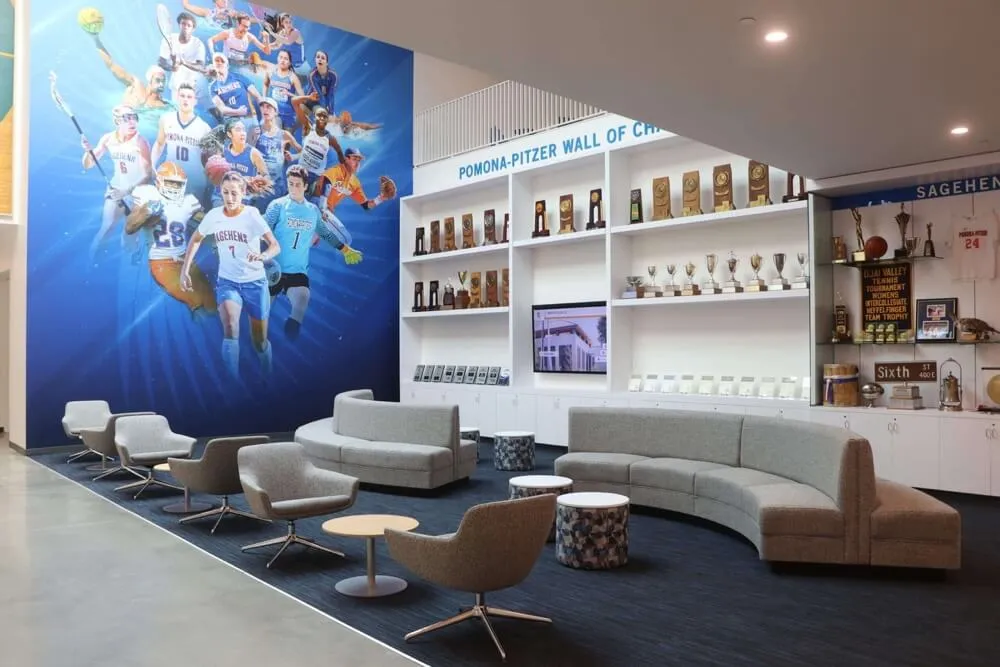
Physical trophy cases displaying actual championship hardware, awards, and three-dimensional recognition items represent another traditional wall of fame approach particularly common in athletic programs.
Effective Trophy Case Design
Quality trophy case installations feature climate-controlled environments protecting artifacts from temperature, humidity, and UV damage. Proper lighting showcases trophies effectively through LED systems that don’t generate heat damaging awards. Secure locking mechanisms prevent theft while allowing authorized access for updates. And organized arrangements group related achievements together—championships by sport, awards by type, or chronologically by year.
Trophy cases deliver unique benefits including showcasing actual three-dimensional objects that photographs cannot fully capture, creating impressive visual impact through concentrated achievement display, and maintaining ceremonial significance valued by championship teams and award recipients.
However, trophy cases face the same capacity limitations as plaque walls, eventually filling and requiring difficult decisions about which achievements deserve continued display versus storage. Trophy case capacity planning strategies help organizations manage accumulating collections systematically.
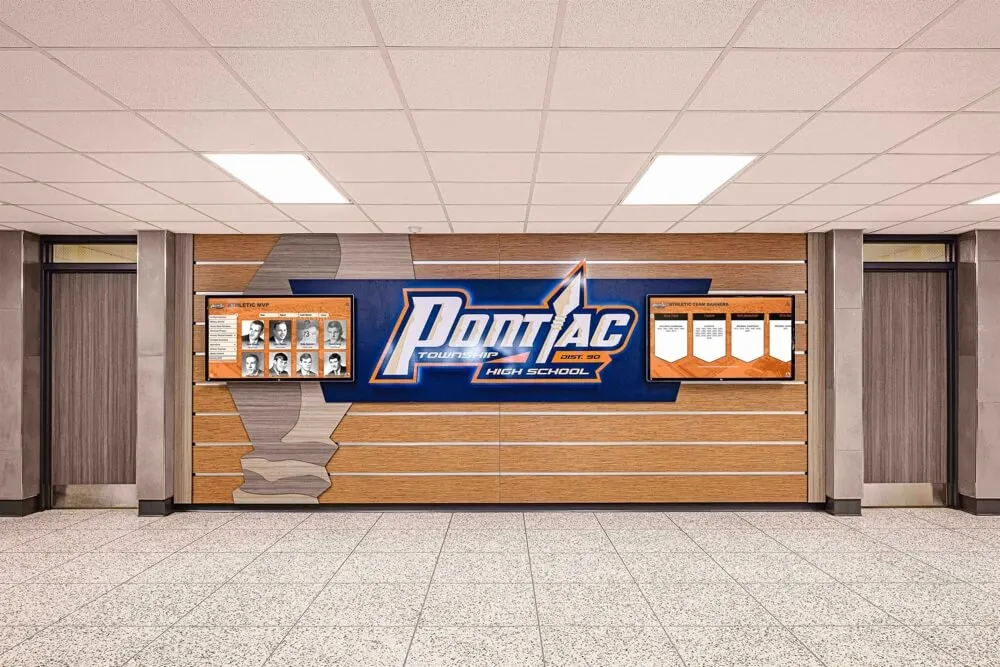
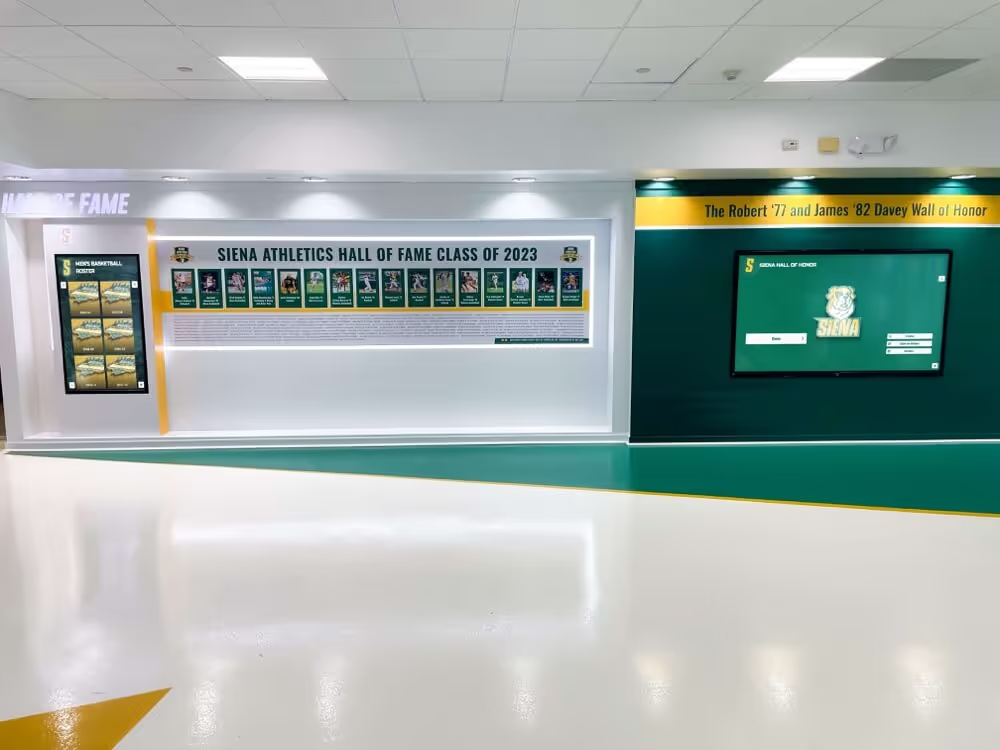
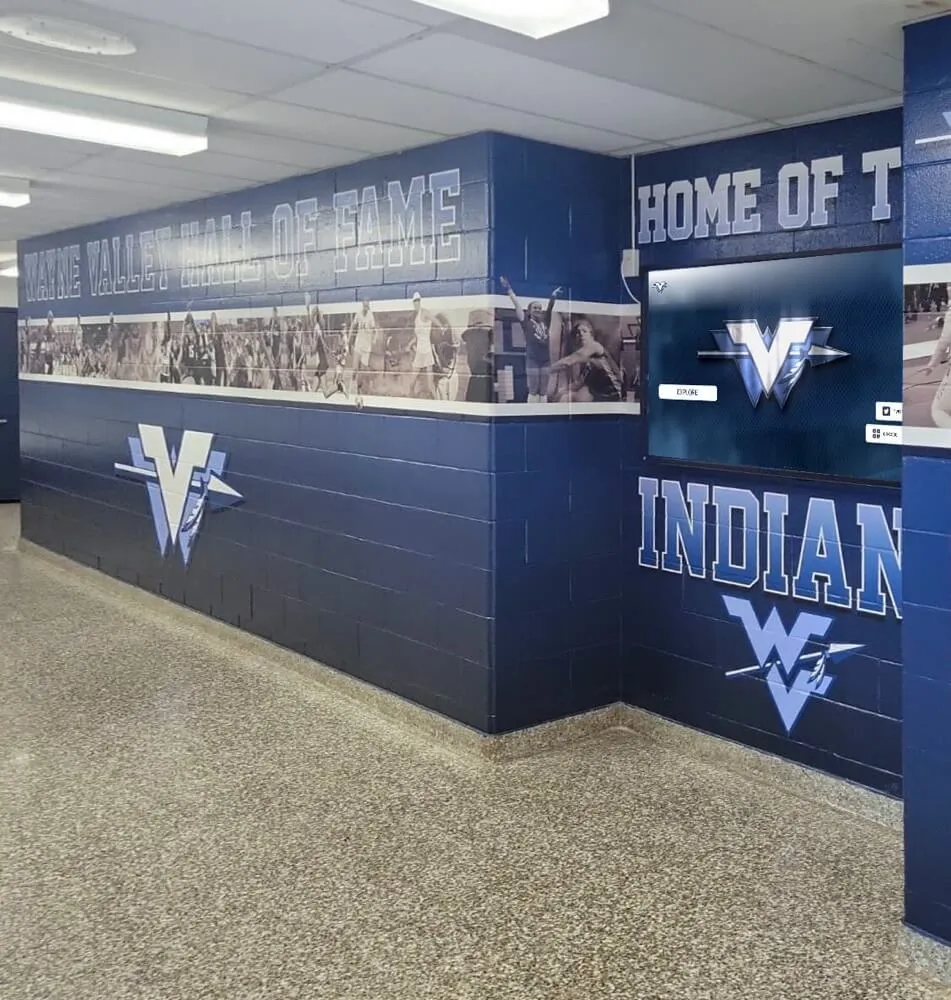
Hallway recognition installations maximize visibility by integrating walls of fame into daily circulation patterns where students and visitors naturally pass
Painted Murals and Artistic Installations
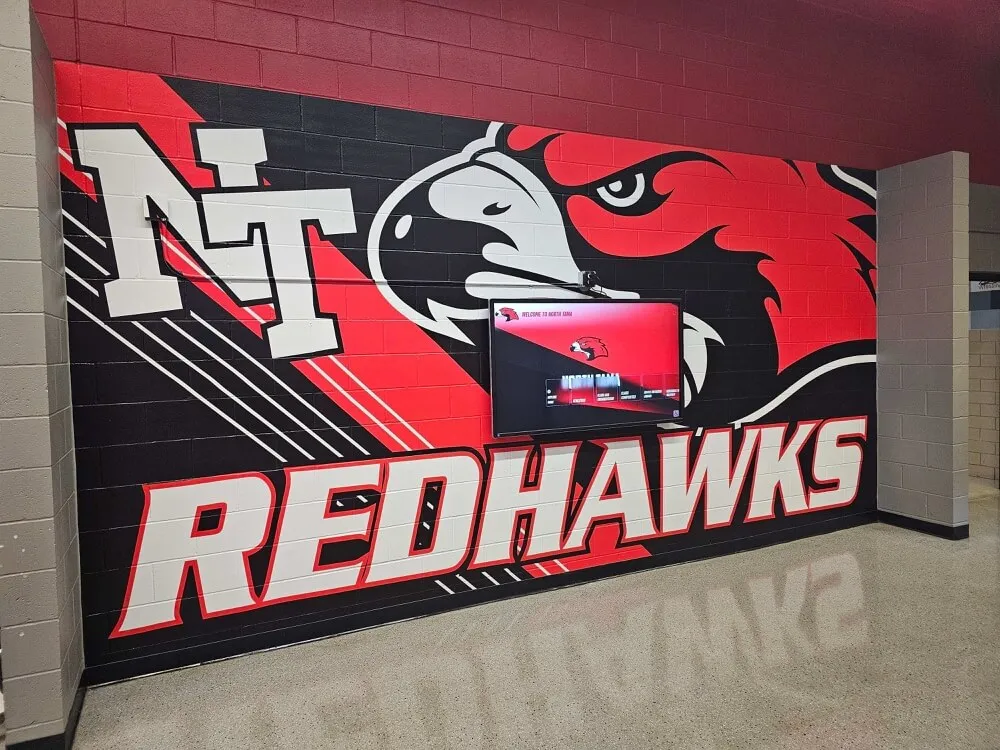
Custom painted murals combining institutional branding, mascot imagery, and recogniti on elements create visually striking walls of fame that serve as architectural landmarks within facilities.
Mural Design Elements
Effective recognition murals feature dominant institutional branding including school colors, mascot imagery, and logo integration. Incorporated recognition zones provide dedicated areas where plaques, digital displays, or other recognition elements mount against artistic backgrounds. Architectural integration ensures murals complement rather than clash with existing building design. And professional execution through experienced mural artists ensures quality befitting permanent institutional investment.
Murals excel at creating destination recognition spaces that build institutional pride while providing beautiful backdrops for ceremonies, photos, and community gatherings. The artistic elements communicate that achievement celebration deserves significant institutional investment rather than minimal effort.
Budget considerations for professional murals typically range from $3,000-15,000 depending on size, complexity, and artist reputation. While substantial initial investment, murals provide decades of value without ongoing costs beyond occasional touch-ups maintaining appearance.
Modern Digital Wall of Fame Solutions
Digital technology fundamentally transforms wall of fame possibilities, addressing traditional limitations while creating engaging interactive experiences impossible with static displays alone.
Interactive Touchscreen Recognition Displays
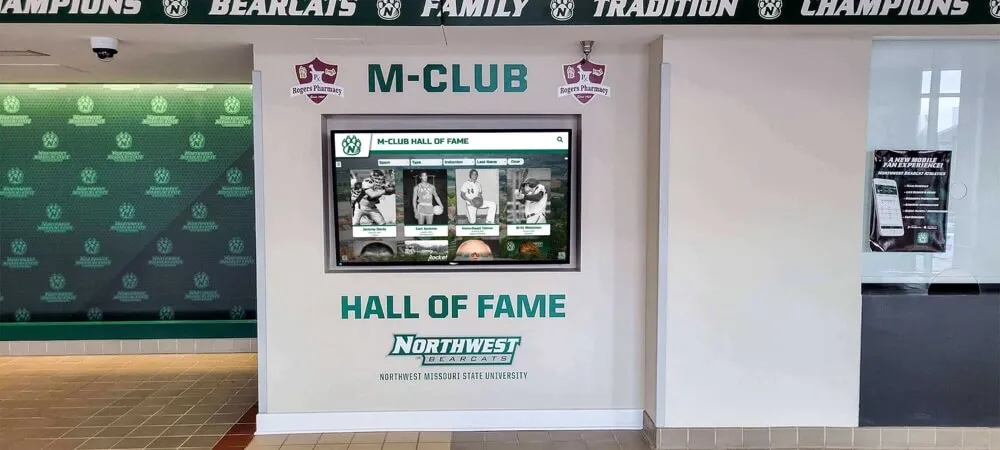
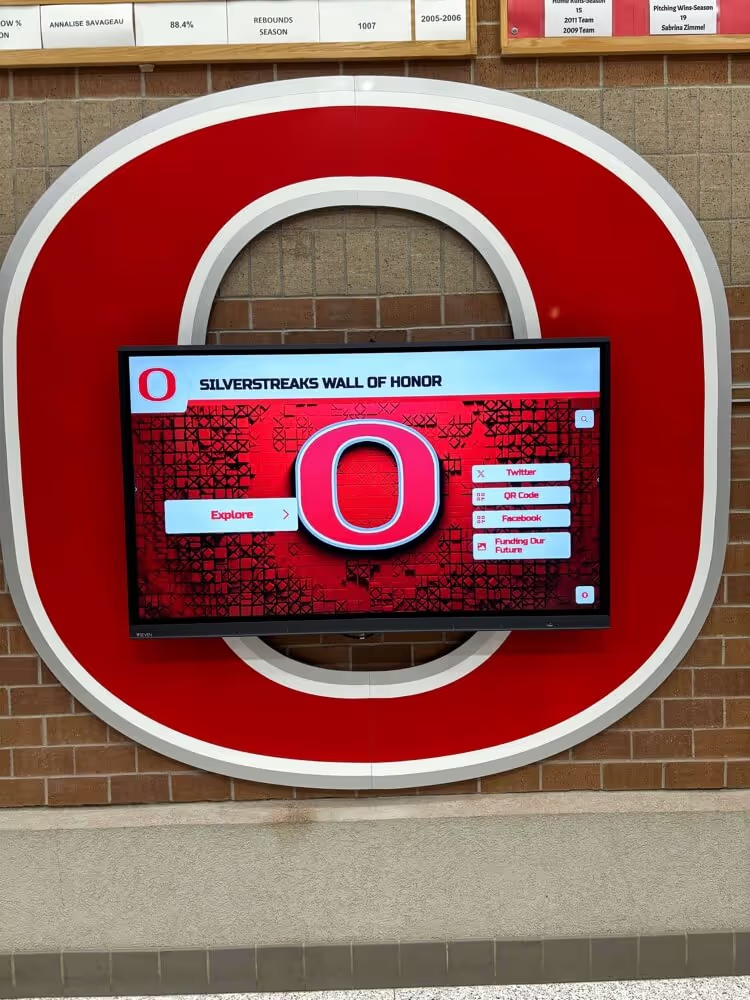
Large-format interactive touchscreens—typically 43 to 75 inches—running specialized recognition software represent the most sophisticated modern wall of fame approach, delivering capabilities that traditional displays simply cannot match.
Core Interactive Display Capabilities
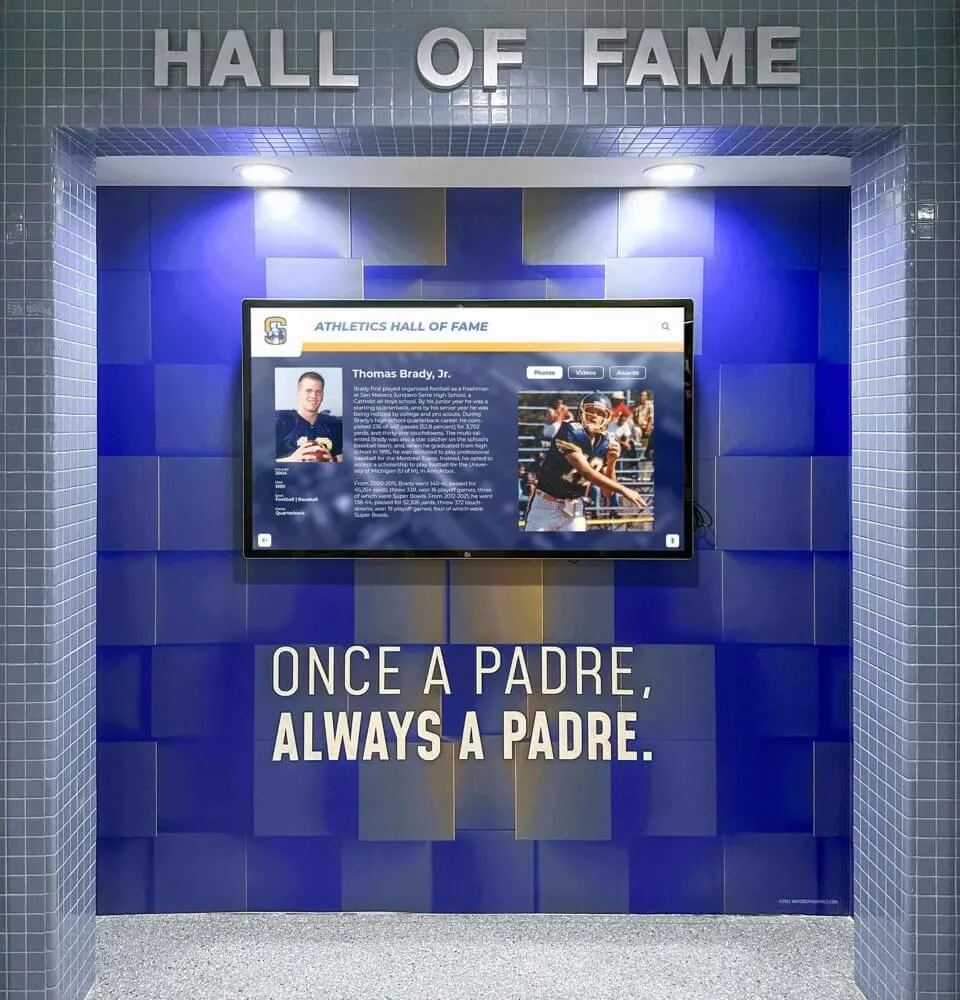
Purpose-built recognition touchscreens provide unlimited capacity accommodating comprehensive achievement documentation without space constraints. Intuitive search and filtering enable visitors to quickly locate specific individuals, years, or achievement categories. Rich multimedia profiles include high-resolution photographs, biographical narratives, video content, and detailed accomplishment documentation. Instant updates through cloud-based content management allow non-technical staff to add new honorees within minutes. And analytics tracking reveals engagement patterns demonstrating recognition program value.
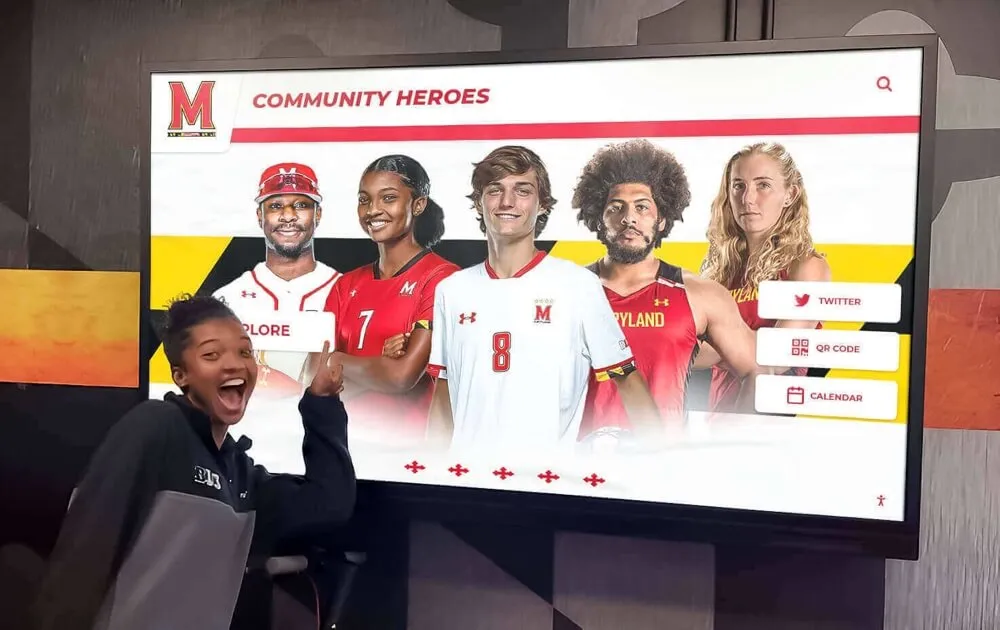
The interactive nature creates fundamentally different experiences compared to passive viewing of traditional displays. Visitors actively explore content through touch navigation mirroring familiar smartphone interactions, spending 4-7 minutes engaging with digital walls of fame versus 30-60 seconds glancing at static plaques—representing 10x engagement improvement.
Solutions like Rocket Alumni Solutions provide purpose-built platforms specifically designed for institutional recognition, delivering superior functionality compared to generic digital signage systems repurposed for wall of fame applications.
Implementation Considerations
Digital wall of fame deployments require careful attention to display placement in high-traffic, high-visibility locations where maximum audiences encounter recognition. Commercial-grade hardware rated for continuous operation ensures reliability in demanding public environments. Network connectivity through hardwired Ethernet connections provides stable content delivery. And professional mounting at appropriate heights ensures both standing and seated visitors can comfortably interact with displays.
Initial investment for quality interactive wall of fame systems typically ranges from $8,000-15,000 per display including hardware, software, installation, and initial content development. While higher than traditional plaque costs, digital systems eliminate ongoing per-honoree expenses while providing unlimited capacity and capabilities traditional approaches cannot deliver.
For schools exploring digital storytelling through athletic recognition, interactive touchscreens enable rich multimedia narratives that create emotional connections with achievement heritage.
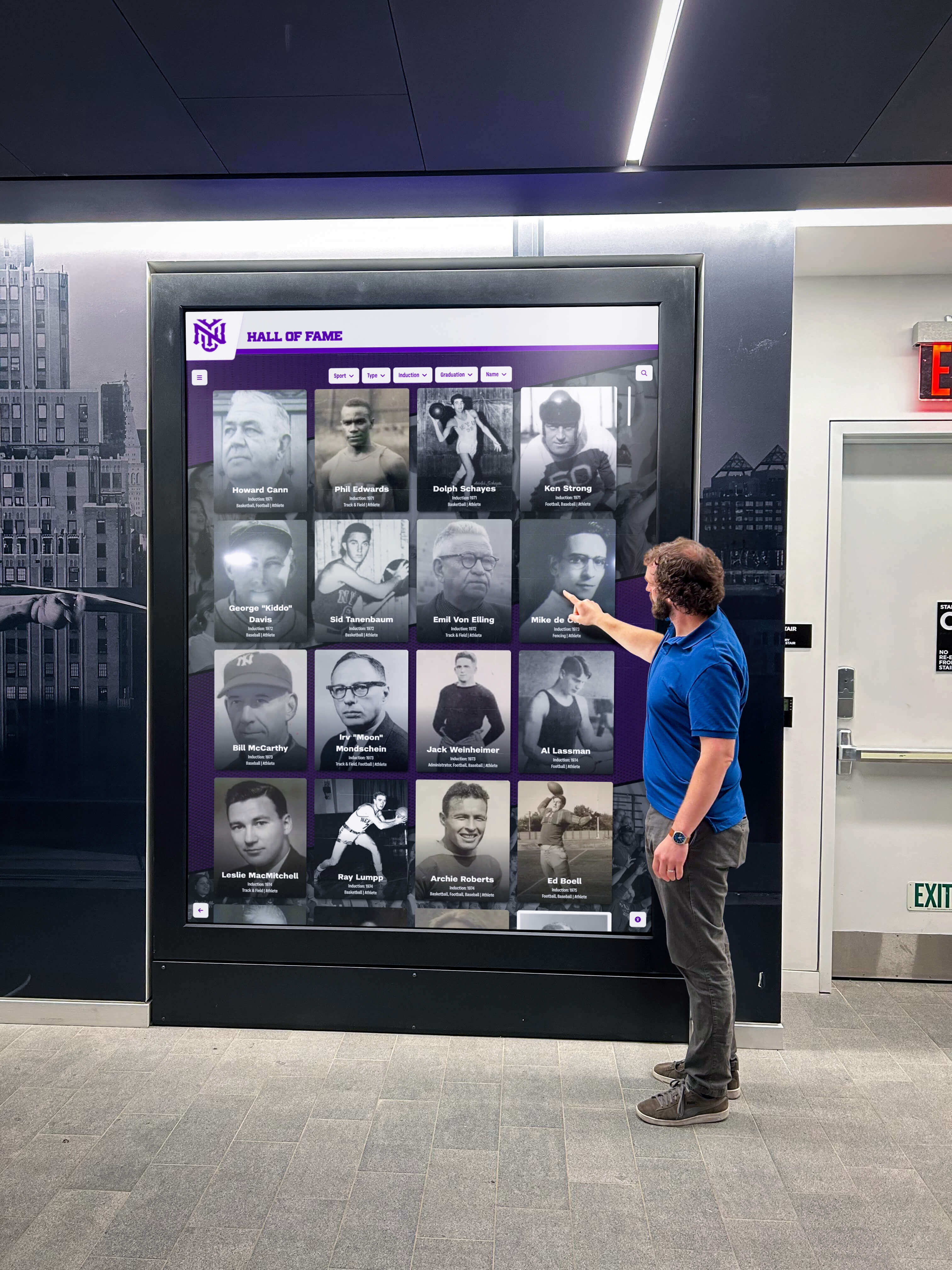
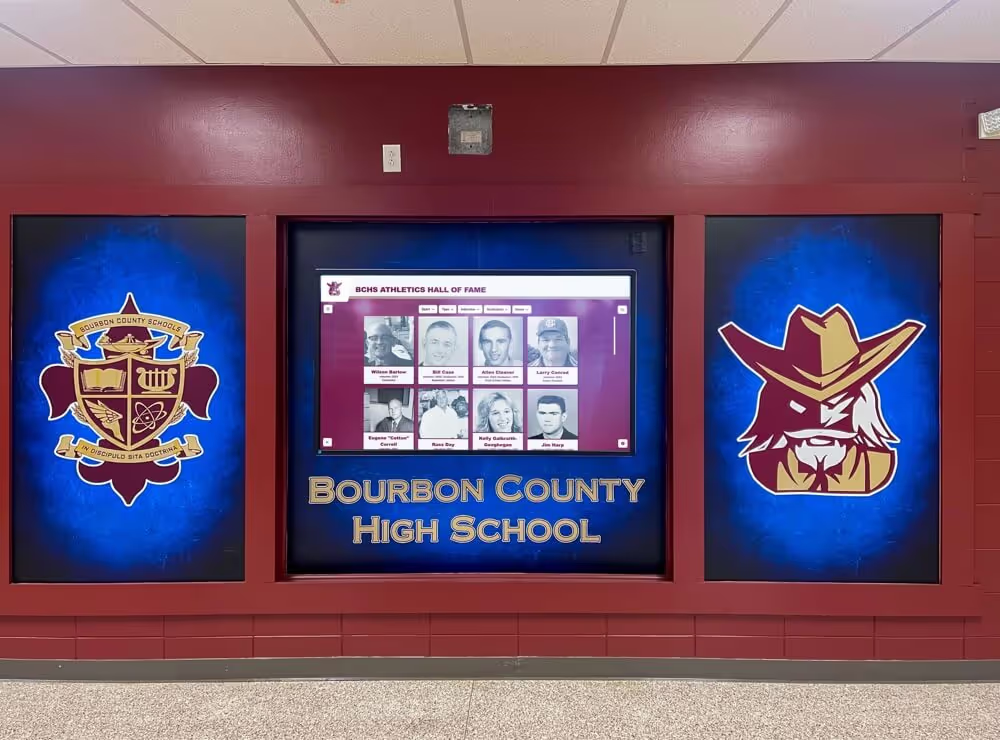
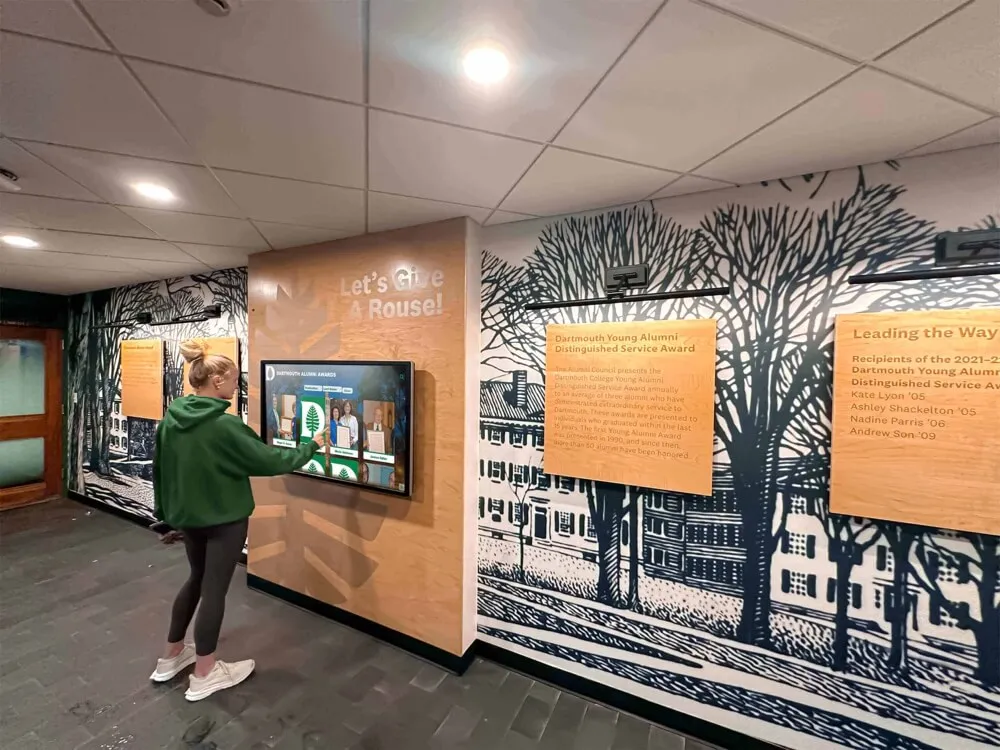
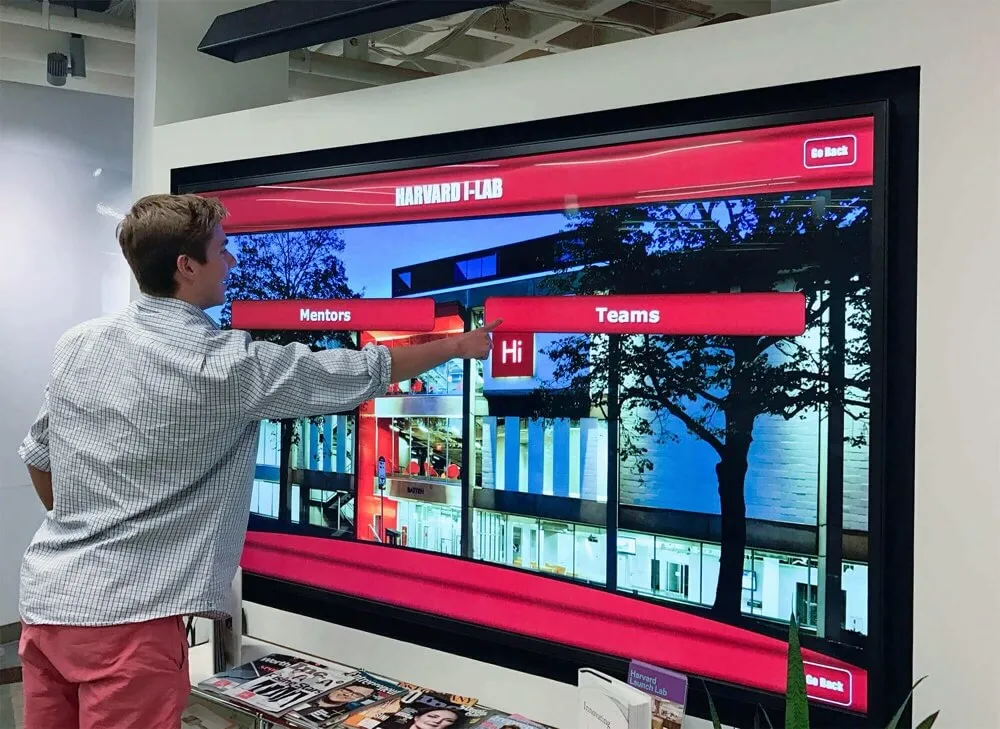
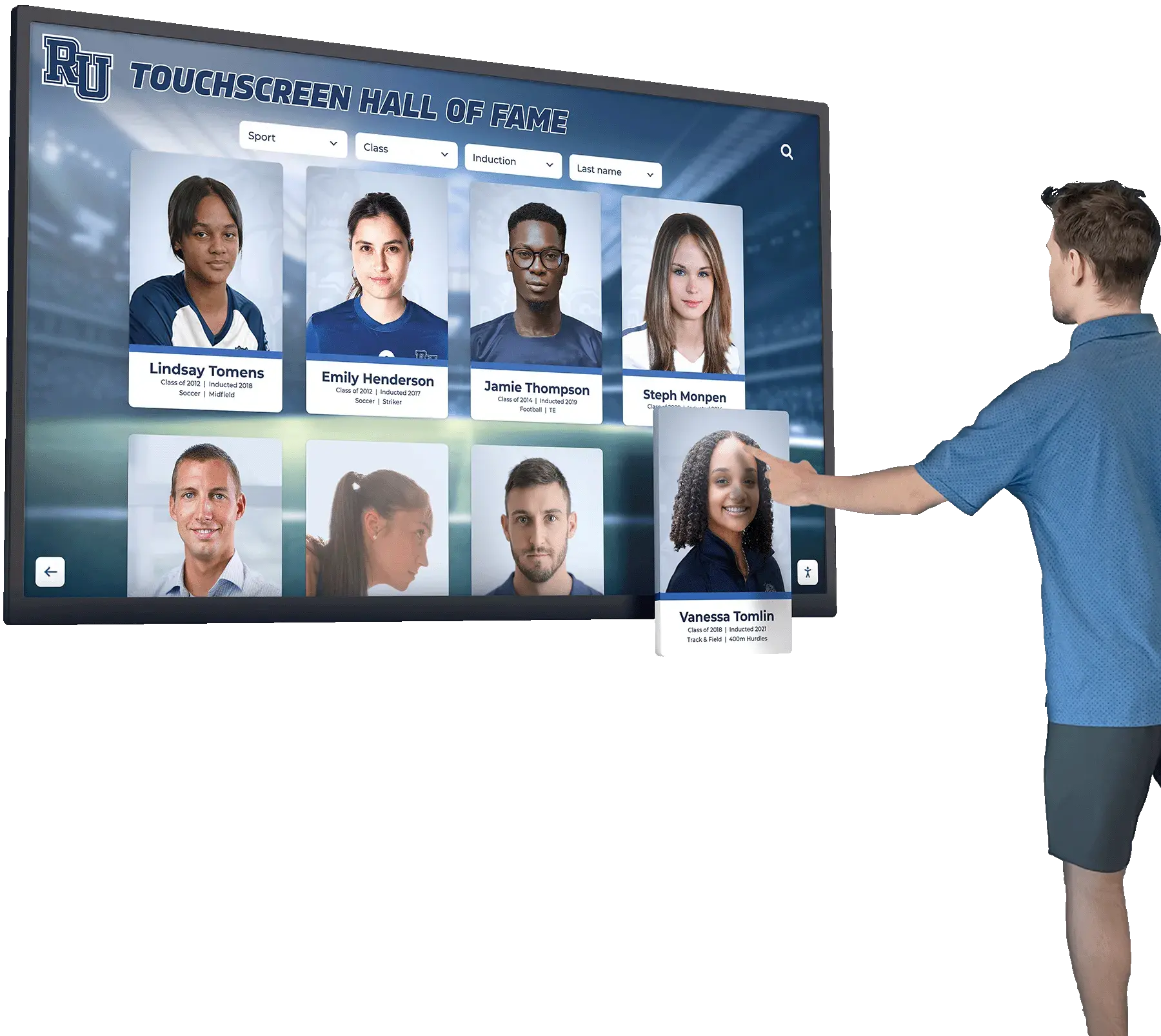
Interactive recognition displays engage visitors through intuitive exploration while providing unlimited capacity for comprehensive achievement celebration
Digital Signage and Rotating Recognition
For organizations seeking digital capabilities at lower initial investment, standard digital signage displays running slideshow content represent an accessible entry point to modern wall of fame technology.
Digital Signage Approaches
Basic digital wall of fame implementations use large televisions or commercial displays showing rotating slideshows featuring honoree profiles with photos and accomplishments, achievement compilations by category or year, video highlights and memorable moments, and inspiring quotes or testimonials from inductees.
This approach delivers several advantages over static displays including easier updates through simple slide additions, multimedia capability incorporating video and animation, lower initial cost compared to interactive touchscreens, and familiar technology requiring minimal technical expertise.
However, digital signage lacks the interactivity and personalization that creates truly engaging experiences. Visitors cannot search for specific individuals, explore content at their own pace, or access detailed information beyond what appears in brief slideshow sequences. The passive viewing experience resembles traditional static displays more than interactive exploration.
Hybrid Approaches
Some institutions implement combined systems using interactive touchscreens for comprehensive searchable databases while supplementing with digital signage displays showing featured content, recent inductees, or rotating highlights. This combination provides both deep exploration capabilities and ambient recognition that catches attention without requiring interaction.
Web-Based Virtual Walls of Fame
Comprehensive recognition platforms extend beyond physical displays through web-based portals making walls of fame accessible to worldwide audiences rather than limiting visibility to campus visitors.
Online Recognition Platform Features
Quality virtual walls of fame provide searchable databases enabling anyone to explore complete honoree collections, individual profile pages featuring detailed biographies, photos, videos, and achievement documentation, social sharing functionality allowing visitors to distribute recognition through email and social media, mobile-responsive design ensuring accessibility across smartphones, tablets, and computers, and integration with physical displays creating cohesive recognition ecosystems.
Web-based extensions dramatically expand wall of fame reach and impact. Alumni living across the country can revisit their recognition anytime. Families can easily share achievement profiles with distant relatives. Prospective students researching institutions can thoroughly explore tradition and excellence. And current community members can access recognition 24/7 rather than only during building hours.
For institutions implementing comprehensive digital recognition systems, web platforms provide essential accessibility extending recognition impact far beyond physical display locations.
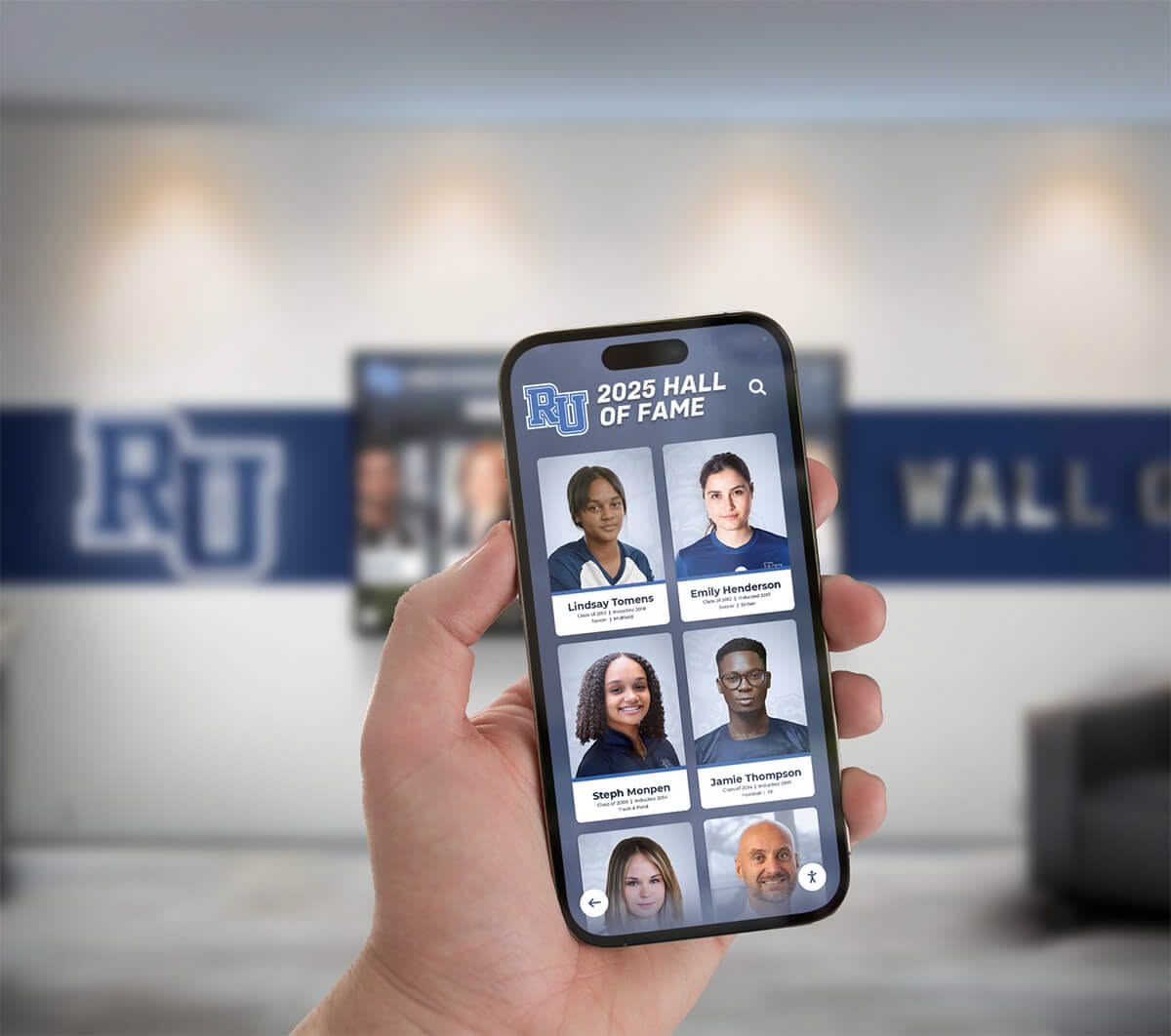
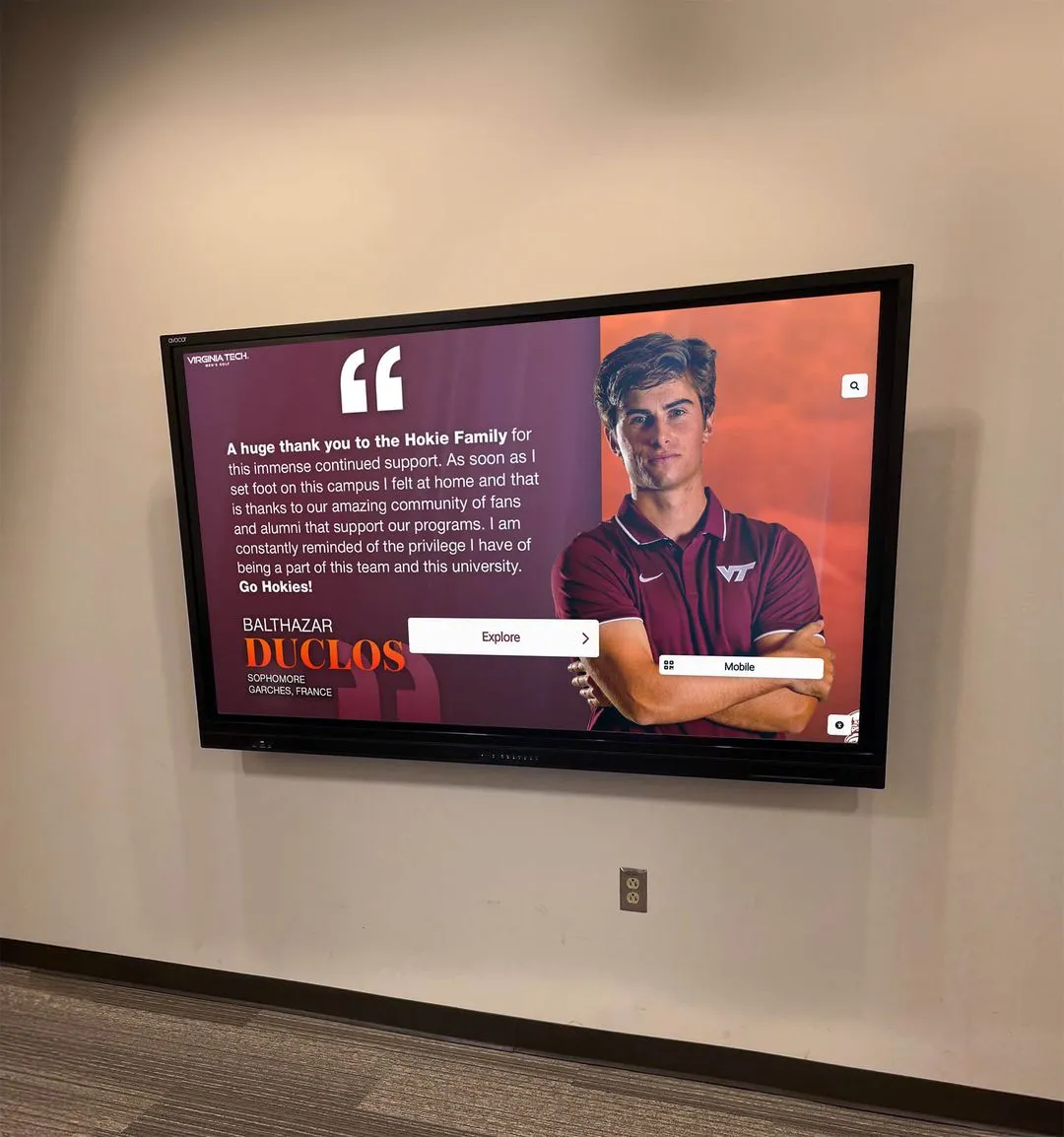
Mobile and web access extends wall of fame recognition beyond physical displays to worldwide audiences accessing content anytime from anywhere
Creative Wall of Fame Concepts by Category
Different types of achievements and organizational contexts call for tailored wall of fame approaches that appropriately honor specific forms of excellence.
Athletic Halls of Fame and Championship Recognition
Athletic programs generate abundant recognition opportunities spanning individual athletes, championship teams, coaching excellence, and program milestones.
Comprehensive Athletic Recognition Ideas
Athletic walls of fame should celebrate sport-specific halls of fame highlighting exceptional athletes across all sports equitably. Championship team recognition documents complete rosters, season highlights, and tournament paths to titles. Individual record boards showcase statistical excellence through searchable databases organized by sport and category. Coaching milestone recognition honors years of service, career victories, and championship accomplishments. And all-conference and all-state awards acknowledge competitive recognition beyond school level.
Schools implementing digital athletic recognition programs report stronger athlete engagement, enhanced recruitment effectiveness, and improved program culture through systematic excellence celebration across all sports rather than limiting recognition to highest-profile programs.
Design Considerations for Athletic Spaces
Position athletic walls of fame in high-traffic locations including main gym entrances where all athletes and spectators naturally pass, locker room hallways creating daily inspiration for current teams, weight room areas motivating training effort, and athletic facility lobbies welcoming visitors to programs.
Incorporate team colors, mascot imagery, and program branding creating cohesive visual identity. Use durable materials withstanding heavy traffic and potential impact. And ensure adequate space for continuous growth as programs accumulate achievements annually.
Academic Achievement and Scholar Recognition
Academic excellence deserves visibility equal to athletic success, yet many institutions struggle to create engaging academic walls of fame beyond basic honor roll listings.
Academic Wall of Fame Concepts
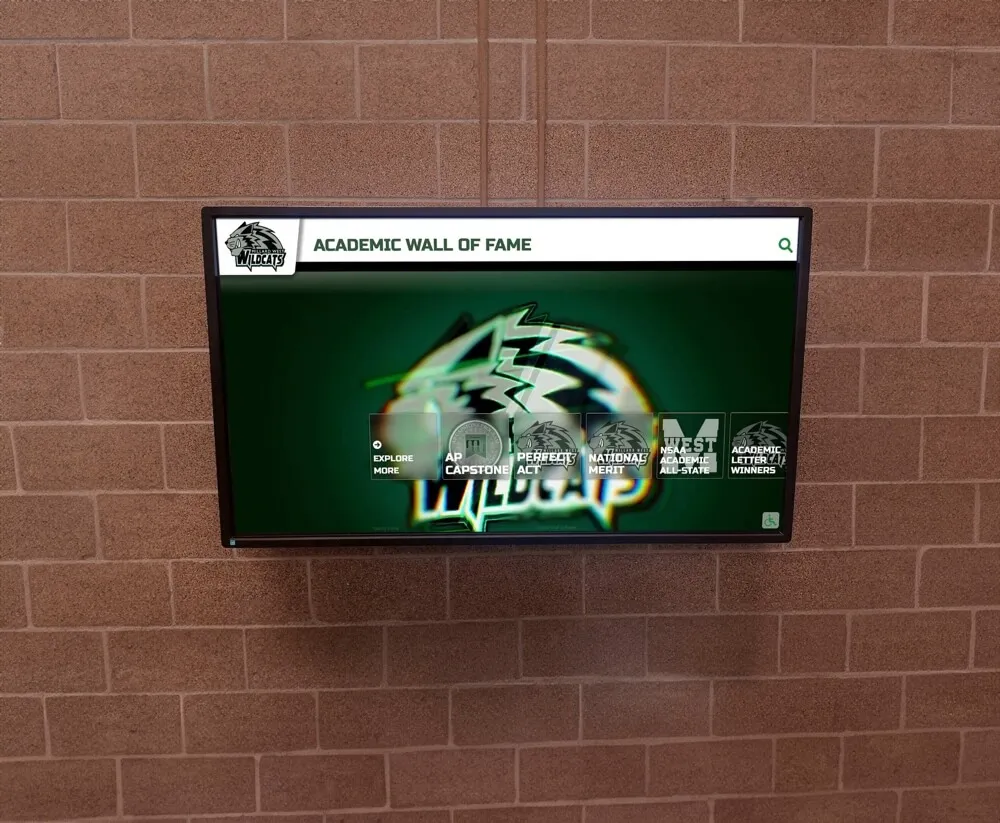
Comprehensive academic recognition should celebrate valedictorians and salutatorians across graduating classes, National Merit Scholars and prestigious academic competition winners, perfect or near-perfect standardized test achievers, academic honor society members and leadership, scholarship recipients including dollar amounts demonstrating value, and subject-specific excellence in STEM fields, humanities, arts, and other disciplines.
For schools implementing academic honor roll displays, digital systems enable semester-by-semester recognition updates that keep content current while acknowledging consistent high achievement.
Presenting Academic Achievement Compellingly
Academic recognition faces a perception challenge—preventing walls of fame from feeling like boring lists of names and GPAs. Address this through contextual storytelling explaining what academic achievements enabled, profile depth showcasing individuals’ interests, aspirations, and post-graduation success, visual appeal using quality photography rather than yearbook snapshots, and achievement diversity celebrating varied forms of intellectual excellence beyond standardized test scores alone.
When academic walls of fame tell compelling stories about how education shaped successful lives, they inspire intellectual ambition rather than simply documenting past performance.
Distinguished Alumni and Career Success
Alumni achievement recognition connects current students and members with institutional legacy while demonstrating long-term value of education or organizational membership.
Alumni Wall of Fame Categories
Distinguished alumni recognition should span professional achievement and career success across diverse fields, community service and philanthropic leadership demonstrating values commitment, creative accomplishment in arts, entertainment, and cultural fields, academic achievement through research contributions and scholarly recognition, entrepreneurial success and business leadership, and athletic achievement beyond school competition including professional, Olympic, or international levels.
Institutions implementing alumni recognition programs report stronger alumni engagement, improved fundraising outcomes, and enhanced recruitment effectiveness as prospective students discover concrete evidence of educational value through graduate success.
Selection Criteria and Nomination Processes
Establish clear, transparent criteria for distinguished alumni recognition including achievement significance, institutional connection strength, positive representation of values, willingness to engage with current community, and nomination support from multiple community members.
Consider nomination processes enabling alumni, faculty, staff, and community members to recommend distinguished graduates. Review committees should meet annually evaluating nominations against established criteria. And induction ceremonies should celebrate new honorees while strengthening alumni community bonds.
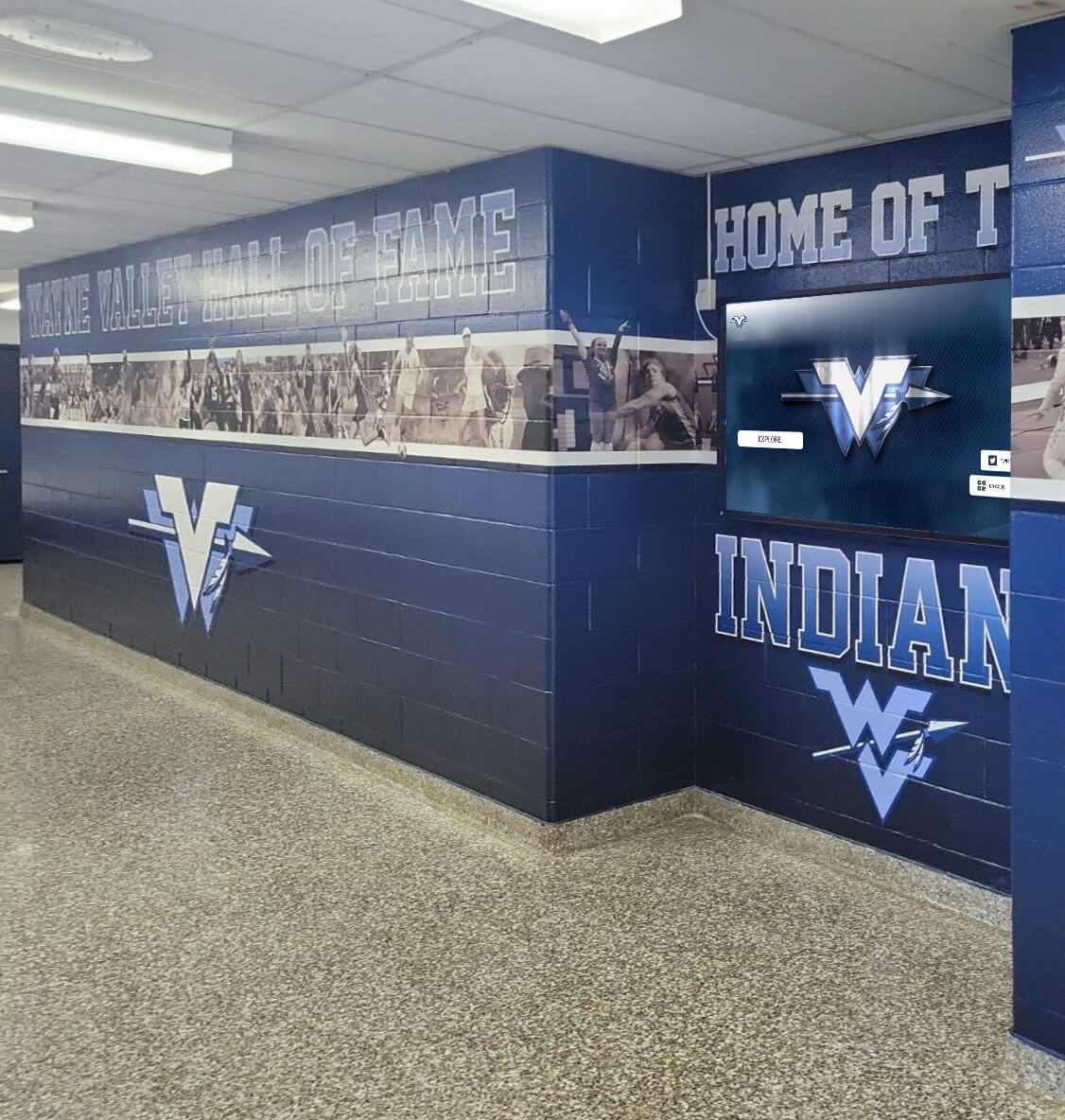
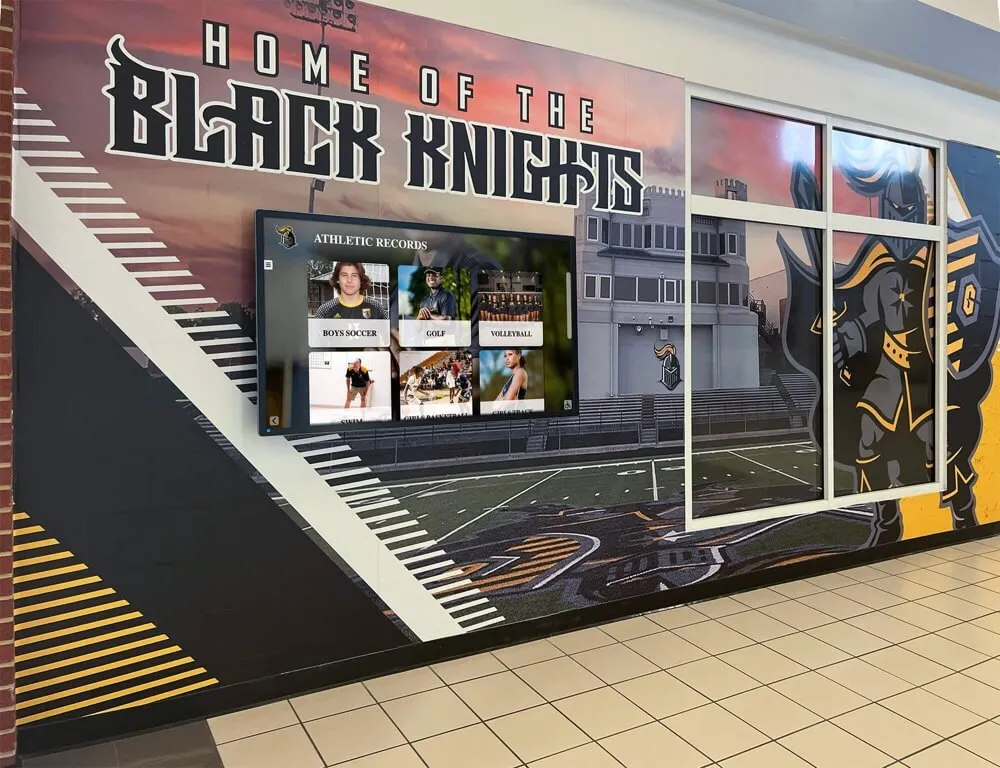
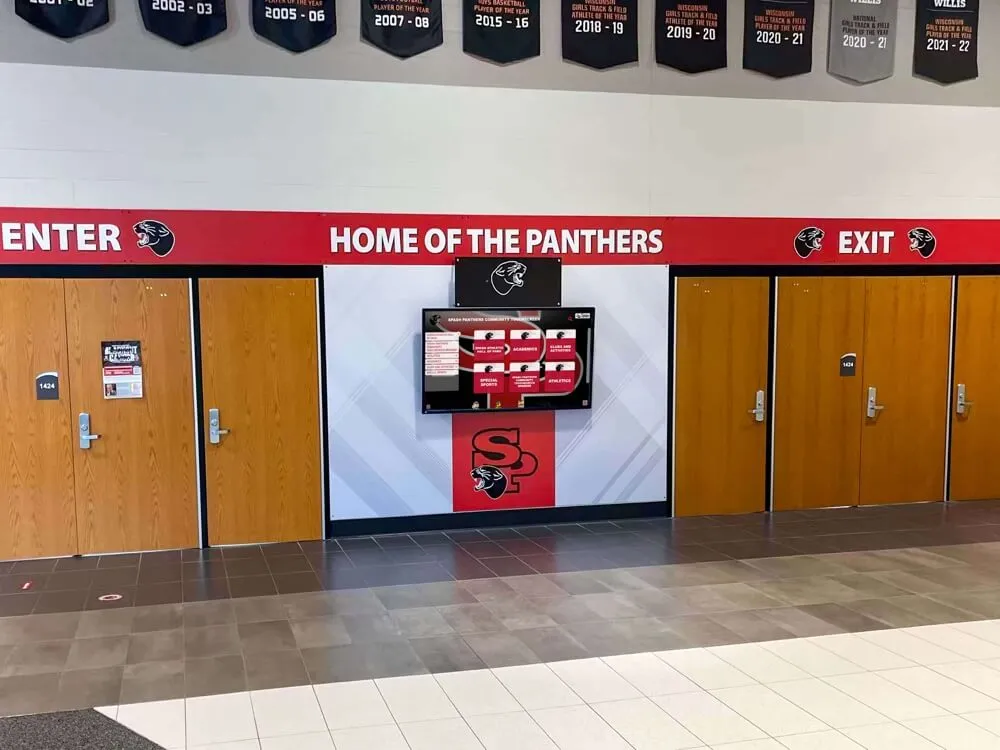
Integrated hallway installations combine artistic murals with recognition elements, creating destination spaces that celebrate achievement within daily school environment
Donor Recognition and Philanthropic Appreciation
Fundraising success depends significantly on comprehensive donor recognition demonstrating appreciation while encouraging continued support.
Donor Wall of Fame Approaches
Philanthropic recognition should honor major gifts through detailed profiles explaining donation purpose and impact, leadership circles organized by cumulative giving levels, campaign-specific recognition celebrating particular initiative support, memorial giving honoring individuals through named donations, and planned giving acknowledgment recognizing estate commitments and legacy gifts.
Organizations implementing digital donor recognition displays report 15-25 percentage point improvements in donor retention compared to those with minimal or outdated acknowledgment systems—demonstrating that recognition investments deliver measurable fundraising returns.
Balancing Privacy and Recognition
Some donors prefer anonymous giving, yet research consistently shows that visible recognition encourages philanthropic participation through social proof and peer influence. Balance these considerations by offering recognition opt-out options, providing giving level bands rather than specific amounts, and featuring impact stories alongside donor names explaining how contributions make differences.
Service and Volunteer Recognition
Community organizations, nonprofits, and civic groups should systematically honor volunteer contributions and service excellence driving mission accomplishment.
Service-Based Wall of Fame Ideas
Volunteer recognition walls should celebrate years of service milestones acknowledging sustained commitment, leadership positions and board service documenting governance contributions, program-specific recognition highlighting particular initiative volunteers, special project acknowledgment for time-limited but significant efforts, and impact quantification showing volunteer hour totals and community outcomes achieved.
Service walls of fame communicate that volunteer contributions receive genuine appreciation while inspiring continued engagement and recruiting new participants who see that efforts will be meaningfully acknowledged.
Layout Design and User Experience Principles
Regardless of specific approach chosen, effective wall of fame designs incorporate proven layout principles and user experience considerations that maximize engagement and accessibility.
Strategic Placement and Traffic Flow
Wall of fame effectiveness depends fundamentally on strategic location selection ensuring maximum visibility and accessibility.
Optimal Wall of Fame Locations
Position recognition displays in main building entrances where all visitors naturally arrive and depart, administrative lobbies housing admissions, advancement, and leadership offices, athletic facility entrances capturing game day traffic and daily athlete exposure, cafeterias and commons areas where students gather throughout days, and hallway intersections serving as circulation crossroads connecting multiple spaces.
Consider both traffic volume and audience composition. Locations with moderate visitors but high concentrations of target audiences—prospective students, alumni, donors—often outperform higher-traffic areas where most passersby are current students rushing between commitments without engagement time.
Information Architecture and Navigation
Organize wall of fame content using intuitive structures that facilitate quick discovery and exploration.
Effective Organization Schemes
Common organizational approaches include chronological arrangements by induction year or achievement date, alphabetical directories enabling name-based discovery, categorical classification by achievement type, sport, or program area, and featured collections highlighting themes, milestones, or special recognitions.
Many comprehensive walls of fame provide multiple navigation pathways—search by name, browse by year, filter by category—enabling different discovery approaches matching varied visitor intentions and preferences.
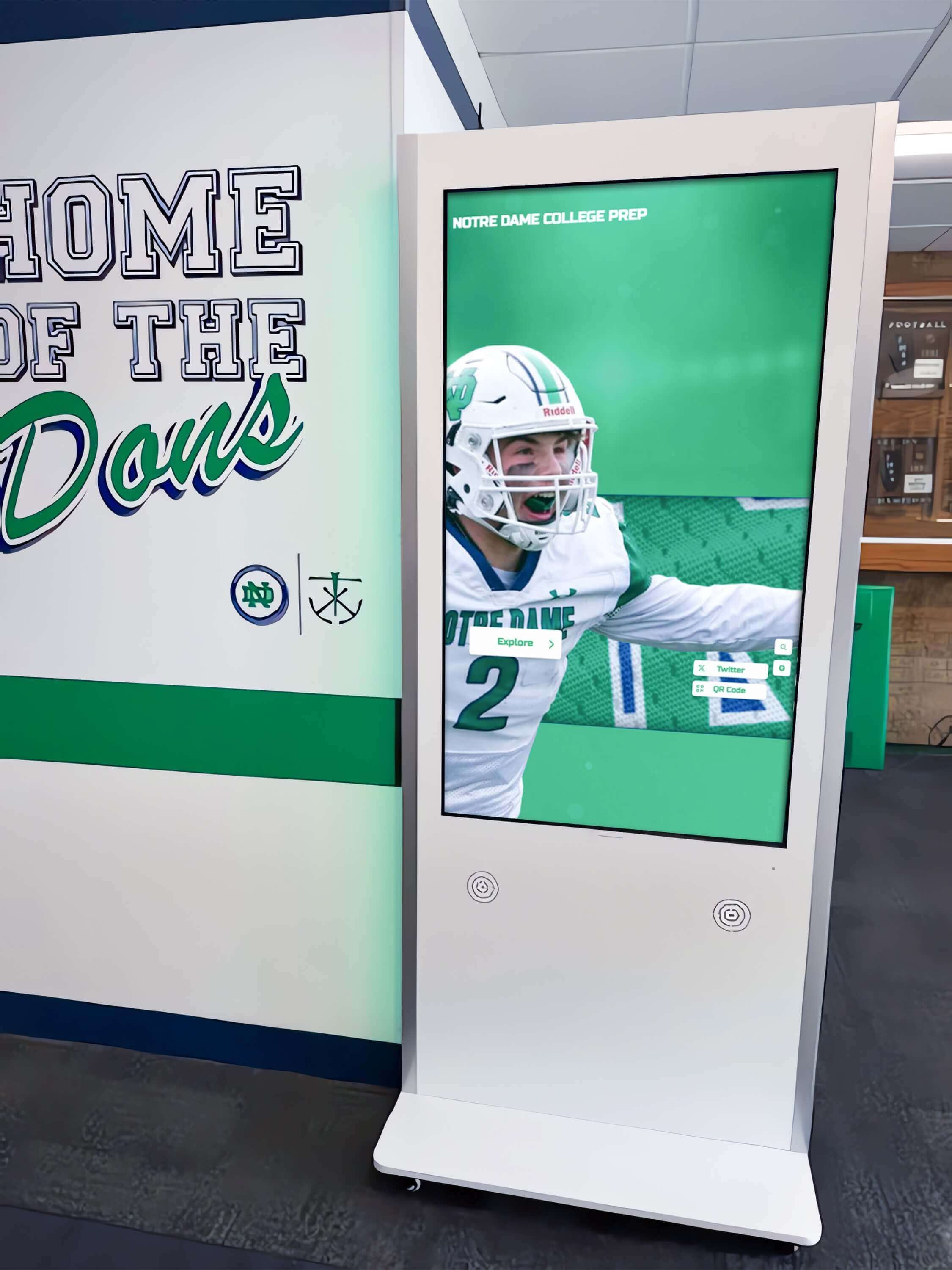
Strategic hallway placement ensures interactive displays reach high daily traffic while providing sufficient space for comfortable engagement
Accessibility and Inclusive Design
Walls of fame must accommodate all visitors regardless of physical ability or sensory capability.
Universal Design Requirements
Ensure displays comply with ADA WCAG 2.1 AA standards including text contrast ratios minimum 4.5:1 for normal text, touch targets minimum 44x44 pixels with adequate spacing, text scaling supporting enlargement without horizontal scrolling, and mounting heights placing primary interactive elements 15-48 inches above floor for wheelchair accessibility.
Provide alternative content access for visitors who cannot physically interact with displays through web-based portals, mobile applications, or printed materials. And use clear, simple language avoiding unnecessary jargon that may confuse or exclude community members with varying educational backgrounds.
Visual Design and Brand Integration
Effective walls of fame reflect institutional identity through deliberate visual design choices.
Brand Integration Elements
Incorporate institutional colors as dominant palette establishing clear identity, consistent logo and mascot usage reinforcing brand recognition, coordinated materials and finishes creating cohesive aesthetics, and professional typography supporting both brand personality and readability.
Many institutions work with designers ensuring walls of fame feel intentionally created rather than haphazardly assembled—investing in quality reflecting pride in institutional identity and respect for those being honored.
Content Development and Storytelling Strategies
Wall of fame value depends entirely on quality content celebrating achievements comprehensively through compelling narratives that create emotional connections.
Gathering Recognition Content Systematically
Comprehensive wall of fame content requires systematic collection from diverse sources.
Source Identification
Compile information from institutional archives including athletic record books, academic transcripts and honor rolls, yearbooks and historical photographs, newspaper articles and media coverage, school publications and newsletters, meeting minutes and organizational records, and personal collections from honorees, families, and alumni.
Engage community assistance through nomination forms, alumni surveys, social media campaigns, and volunteer research committees. Many institutions discover that passionate community members eagerly contribute information and materials when given clear opportunities to participate in recognition program development.
Writing Compelling Recognition Narratives
Transform facts into engaging stories that honor individuals while inspiring audiences.
Biographical Framework
Structure honoree profiles using proven narrative patterns including opening hooks capturing defining achievements or memorable moments, background context establishing journeys to excellence, achievement highlights detailing specific accomplishments with supporting details, impact and legacy explaining significance beyond raw statistics, and current status providing updates demonstrating ongoing connection.
Storytelling Techniques
Rather than stating “Led team to state championship,” write “Delivered game-winning performance remembered as defining moment in program history, capping undefeated season and earning unanimous all-state recognition.” This approach creates engagement and understanding, transforming recognition from directories into compelling archives preserving institutional memory.
For organizations implementing comprehensive recognition content strategies, quality storytelling differentiates memorable recognition from basic documentation.
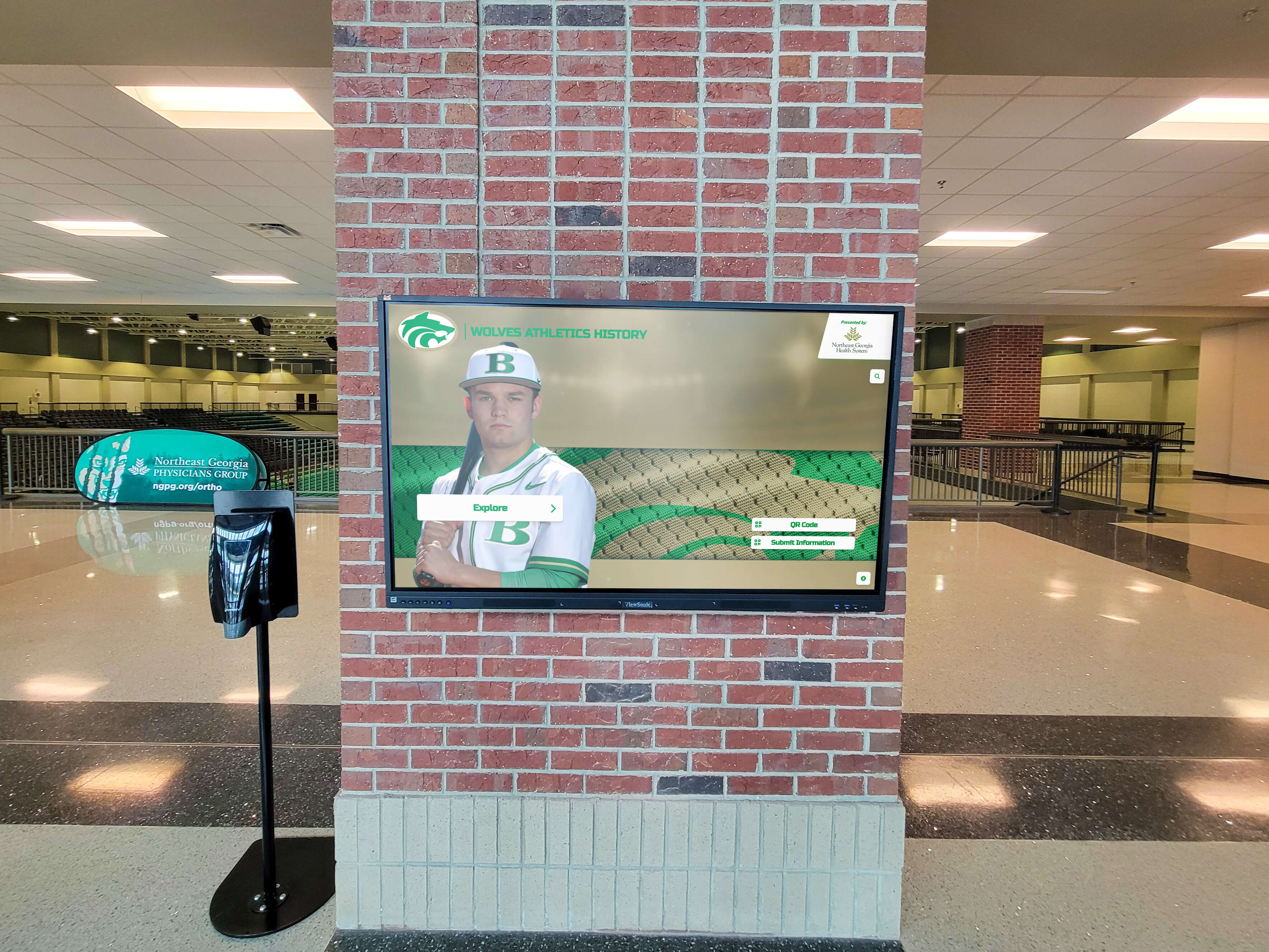
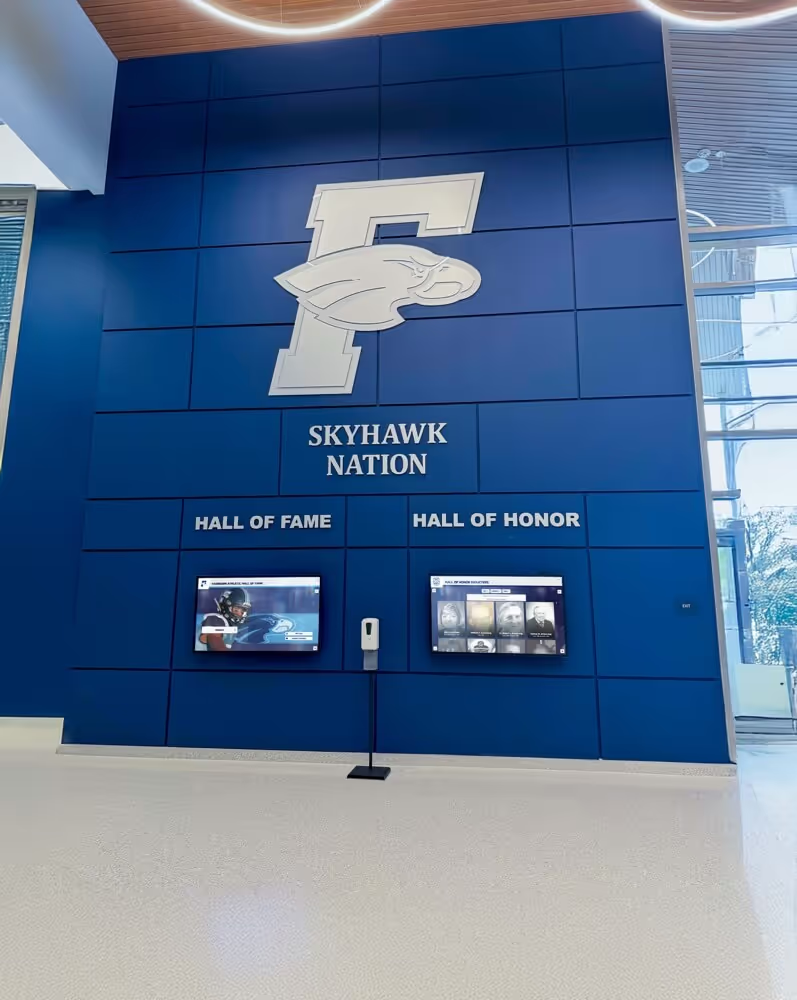
Architectural integration positions displays as permanent features complementing rather than competing with facility design
Multimedia Content Production
Rich media transforms recognition from documentation to immersive storytelling.
Photo Curation Best Practices
Select images showing honorees in action rather than static portraits only. Capture individuals in environments relevant to their achievements—athletes competing, scholars studying, artists creating, professionals working. Maintain consistent image quality, dimensions, and styling across collections. And digitize historical photographs at high resolution preserving detail for large-format display.
Video Content Development
Produce interview videos capturing honorees’ personal reflections and stories. Compile highlight reels from competition footage, performances, and event recordings. Create narrative profiles combining photos, video clips, and professional narration. And ensure all video content includes captions supporting accessibility and sound-off viewing.
Implementation Planning and Budget Considerations
Successful wall of fame creation requires strategic planning addressing design, technology, content, and funding comprehensively.
Phased Implementation Strategies
Rather than attempting complete historical documentation immediately, smart institutions implement recognition programs in strategic phases.
Phase 1: Foundation and Recent Recognition
Launch with current and recent achievement recognition including the past 3-5 years, major historical milestones and championships from any era, and featured content highlighting institutional heritage. This achievable scope demonstrates value quickly while comprehensive historical documentation continues in parallel.
Phase 2: Historical Expansion
After launching initial recognition, expand coverage systematically by decade—adding 2010s content first, then 2000s, 1990s, and earlier as resources allow. Prioritize championship achievements and major accomplishments over routine awards. And engage alumni assistance gathering information and materials from their eras.
Phase 3: Continuous Enhancement
Establish sustainable processes for ongoing recognition including induction ceremony coordination, annual honoree additions, quarterly content updates, and recognition program promotion through institutional communications.
Phased approaches maintain momentum while building comprehensive recognition over time rather than delaying launch until complete historical documentation finishes—timelines often stretching years and causing projects to stall.
Budget Planning and Funding Sources
Wall of fame investments range from $5,000 for basic plaque installations to $50,000+ for comprehensive interactive systems depending on scope, technology, and content development.
Budget Components
Plan for initial costs including design and planning services, physical infrastructure preparation, recognition displays and technology, initial content development, installation and mounting, and grand opening events. Include ongoing expenses like annual software licenses, content management time, maintenance and cleaning, periodic refreshes, and hardware replacement on 7-10 year cycles.
Alternative Funding Approaches
Many institutions fund walls of fame through capital campaigns incorporating recognition infrastructure, memorial giving programs funding displays honoring deceased community members, alumni donations from graduates passionate about heritage preservation, booster club support particularly for athletic recognition, corporate sponsorships from local businesses, and grant opportunities through educational foundations.
Some organizations discover that wall of fame projects themselves generate philanthropic support—particularly when framed as investments in institutional culture and presented during major fundraising campaigns.
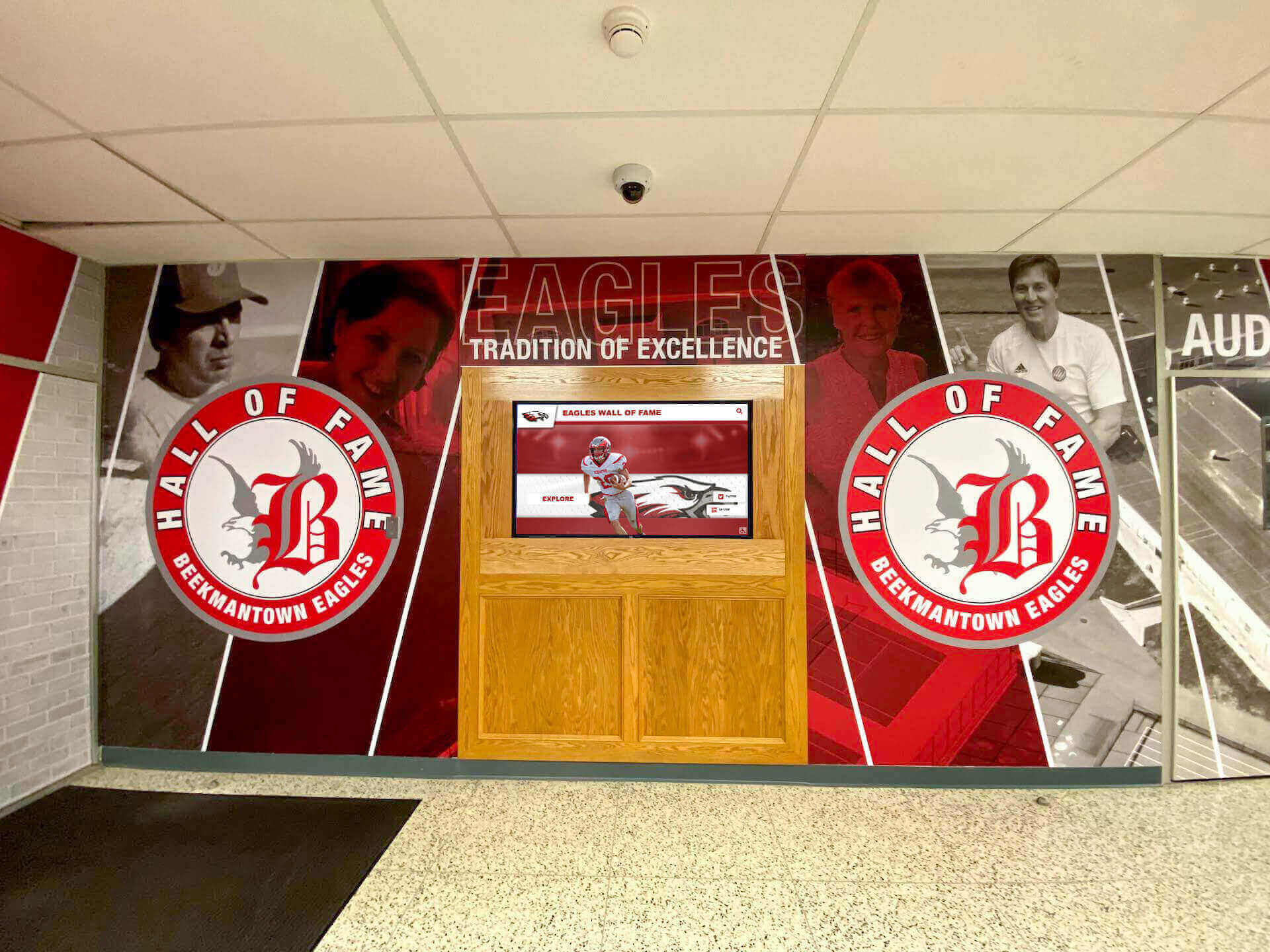
Comprehensive installations integrate murals, trophy cases, and digital displays creating multidimensional recognition environments
Measuring Wall of Fame Success and Impact
Data-driven evaluation ensures recognition investments deliver value while identifying improvement opportunities.
Engagement Metrics and Analytics
For digital walls of fame, comprehensive platforms provide usage tracking revealing total interaction sessions, average engagement duration, most-viewed profiles, search terms and patterns, peak usage times, and return visitor rates.
Schools and organizations use these insights to identify popular content, understand visitor interests, demonstrate program value to stakeholders, and optimize content strategies based on actual usage patterns.
Qualitative Feedback Collection
Beyond quantitative analytics, gather qualitative feedback through stakeholder surveys, visitor comments, staff observations, honoree reactions, and community testimonials. This feedback often reveals impact that metrics cannot capture—students expressing pride when finding themselves recognized, alumni showing families their profiles, prospective students impressed by tradition, and families appreciating comprehensive rather than selective recognition.
Cultural Impact Assessment
The most significant wall of fame benefits emerge over time as recognition becomes embedded in institutional culture. Observable changes include increased community identification with tradition, enhanced alumni engagement, improved recruitment effectiveness, and strengthened achievement culture.
When walls of fame transition from projects to permanent programs receiving ongoing attention and investment, they deliver lasting cultural benefits justifying initial costs many times over.
Best Practices for Long-Term Wall of Fame Success
Organizations achieving sustained recognition program success follow proven approaches ensuring walls of fame remain vibrant and effective long-term.
Start with Clear Strategy and Goals
Define what you want to accomplish through recognition—inspiring current members, engaging alumni, supporting fundraising, enhancing recruitment, preserving heritage. These goals guide decision-making throughout implementation while providing benchmarks for success measurement.
Prioritize Content Quality Over Quantity
Better to recognize 50 individuals comprehensively with rich profiles, photos, and narratives than 500 minimally with basic name listings. Quality storytelling creates engagement while basic directories provide limited value beyond documentation.
Establish Sustainable Maintenance Processes
Assign clear responsibility for wall of fame management. Train multiple staff members preventing single-person dependencies. Budget adequate resources for ongoing content development, technology maintenance, and periodic updates. And integrate recognition into institutional calendars coordinating with ceremonies, events, and communications.
Integrate Recognition with Broader Programs
Walls of fame work most effectively when integrated with comprehensive strategies including ceremony and event programming, recruitment and marketing communications, fundraising and development operations, and social media engagement. This integration maximizes value while distributing effort across teams rather than burdening individuals.
Conclusion: Creating Walls of Fame That Inspire Excellence
Walls of fame represent more than decorative elements or perfunctory acknowledgment—they function as strategic assets that honor achievement, preserve heritage, inspire excellence, and strengthen community bonds. The most effective implementations thoughtfully blend traditional elements honoring institutional history with modern technology creating engaging experiences that static displays cannot match.
Design Your Custom Wall of Fame Experience
Discover how purpose-built interactive displays transform achievement recognition while eliminating space constraints and update limitations. Rocket Alumni Solutions specializes in creating engaging recognition experiences that celebrate every achievement comprehensively.
Explore Recognition SolutionsWhether implementing athletic recognition inspiring current teams through championship heritage, academic displays celebrating intellectual excellence, distinguished alumni walls demonstrating educational value, or comprehensive systems honoring achievement across all programs, the ideas explored throughout this guide provide frameworks for creating recognition that strengthens institutional culture while giving every deserving individual the acknowledgment their accomplishments merit.
The key lies in viewing walls of fame not as one-time projects but as permanent programs deserving sustained attention and investment. Begin with clear objectives aligned with institutional mission. Engage stakeholders ensuring recognition serves community needs. Select approaches balancing tradition with innovation. Invest in quality content development that tells compelling stories. And commit to ongoing maintenance keeping recognition current, accurate, and engaging.
Organizations implementing walls of fame thoughtfully discover that recognition investments deliver remarkable returns through improved engagement, enhanced recruitment, increased giving, and strengthened pride that far exceed initial financial costs. Your community’s achievements deserve celebration that honors excellence while inspiring continued success for generations to come.
Ready to explore wall of fame possibilities for your institution? Discover interactive digital recognition systems transforming how schools celebrate achievement. Learn about athletic program recognition strategies honoring champions systematically. Explore academic achievement display approaches celebrating intellectual excellence. And understand comprehensive recognition platform capabilities enabling unlimited achievement celebration that builds lasting institutional pride and community connection.