Walk into most schools and you’ll encounter standard institutional walls painted in neutral tones, punctuated by the occasional bulletin board or generic poster. These bland environments fail to inspire students, communicate school identity, or create memorable spaces that celebrate what makes each institution unique. Wall wraps for schools represent a powerful transformation opportunity—converting forgettable corridors into branded experiences that strengthen culture, honor achievement, and turn every hallway into an extension of your institution’s story.
School wall wraps encompass large-format printed vinyl graphics, custom murals, and branded environmental designs that transform blank walls into purposeful communication tools. Far beyond simple decoration, strategic wall wrap installations serve multiple functions simultaneously: reinforcing school branding and identity, celebrating student and athletic achievement, providing wayfinding assistance in complex buildings, creating motivational environments that encourage excellence, and recognizing donors and community supporters who make programs possible.
This comprehensive guide explores everything school administrators, athletic directors, and facility managers need to understand about implementing effective wall wrap programs. You’ll discover design strategies that maximize impact, practical installation considerations, budget planning frameworks, maintenance requirements, and how to integrate physical graphics with digital recognition displays creating cohesive branded environments that serve your school community effectively.
The most successful school wall wrap projects don’t simply add visual interest—they strategically communicate institutional values while creating functional spaces that students, staff, and visitors navigate daily. When thoughtfully designed and professionally executed, wall wraps transform standard educational facilities into powerful environments that celebrate everything your school stands for.

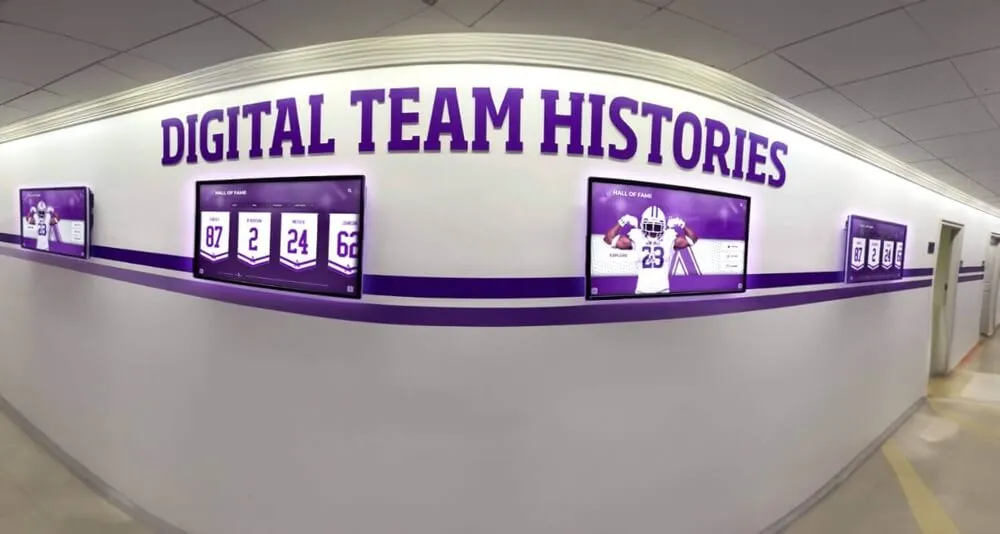
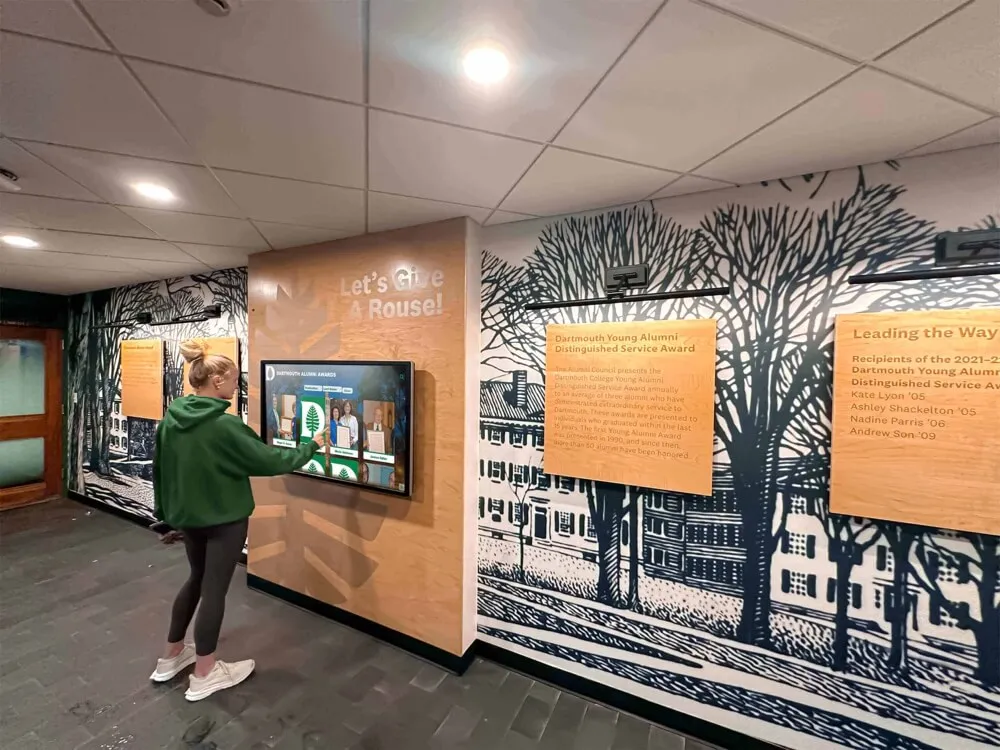
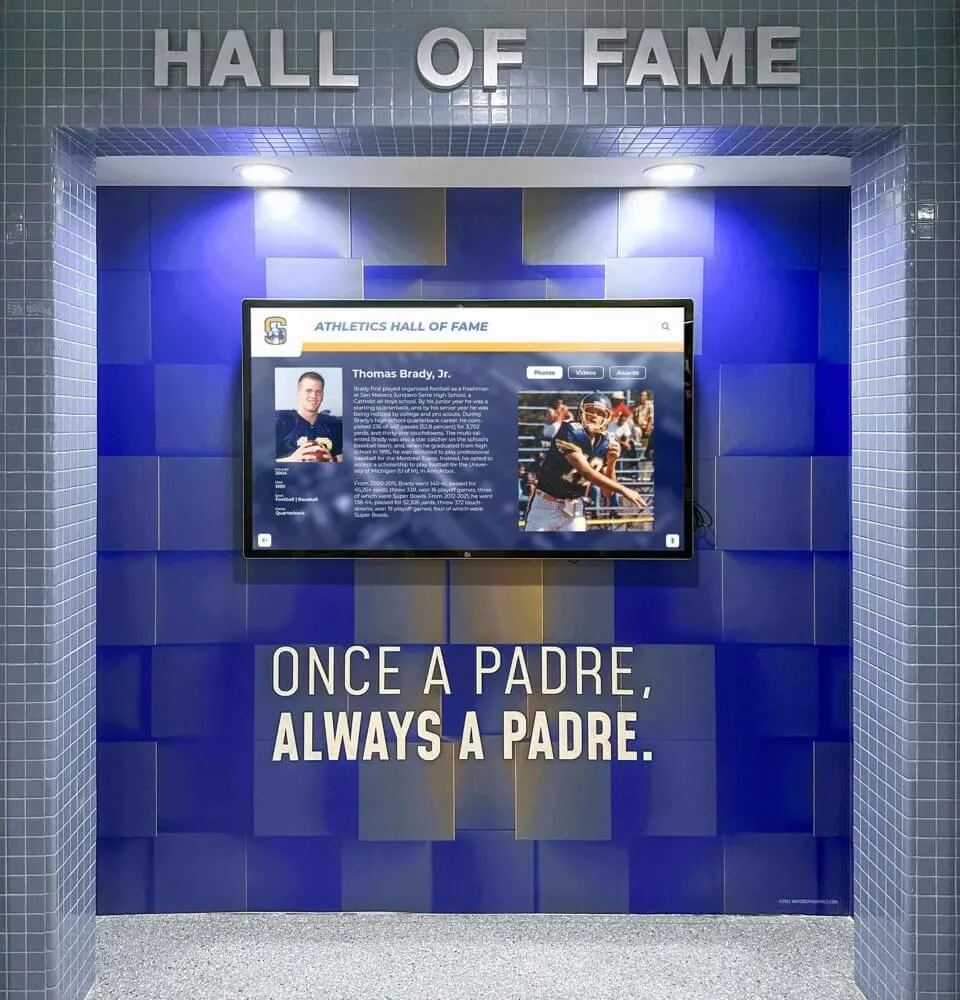
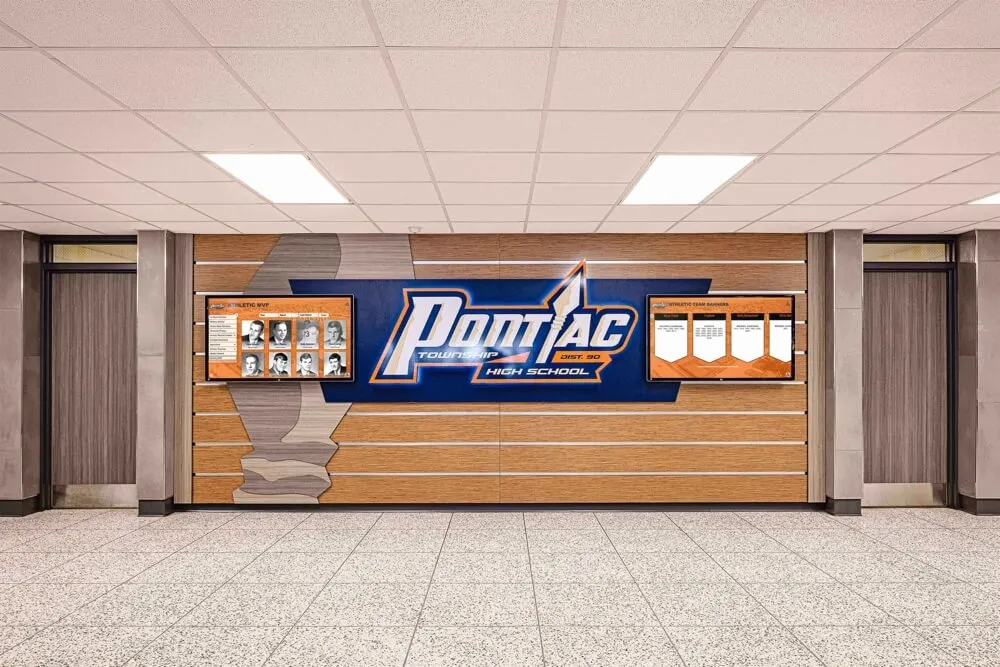
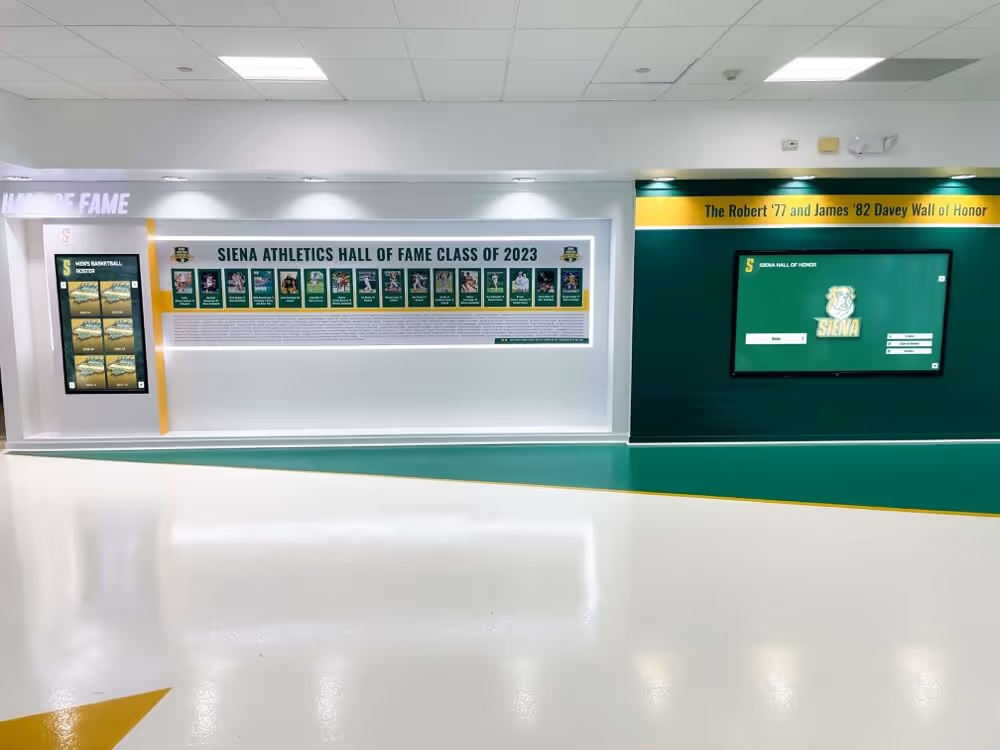
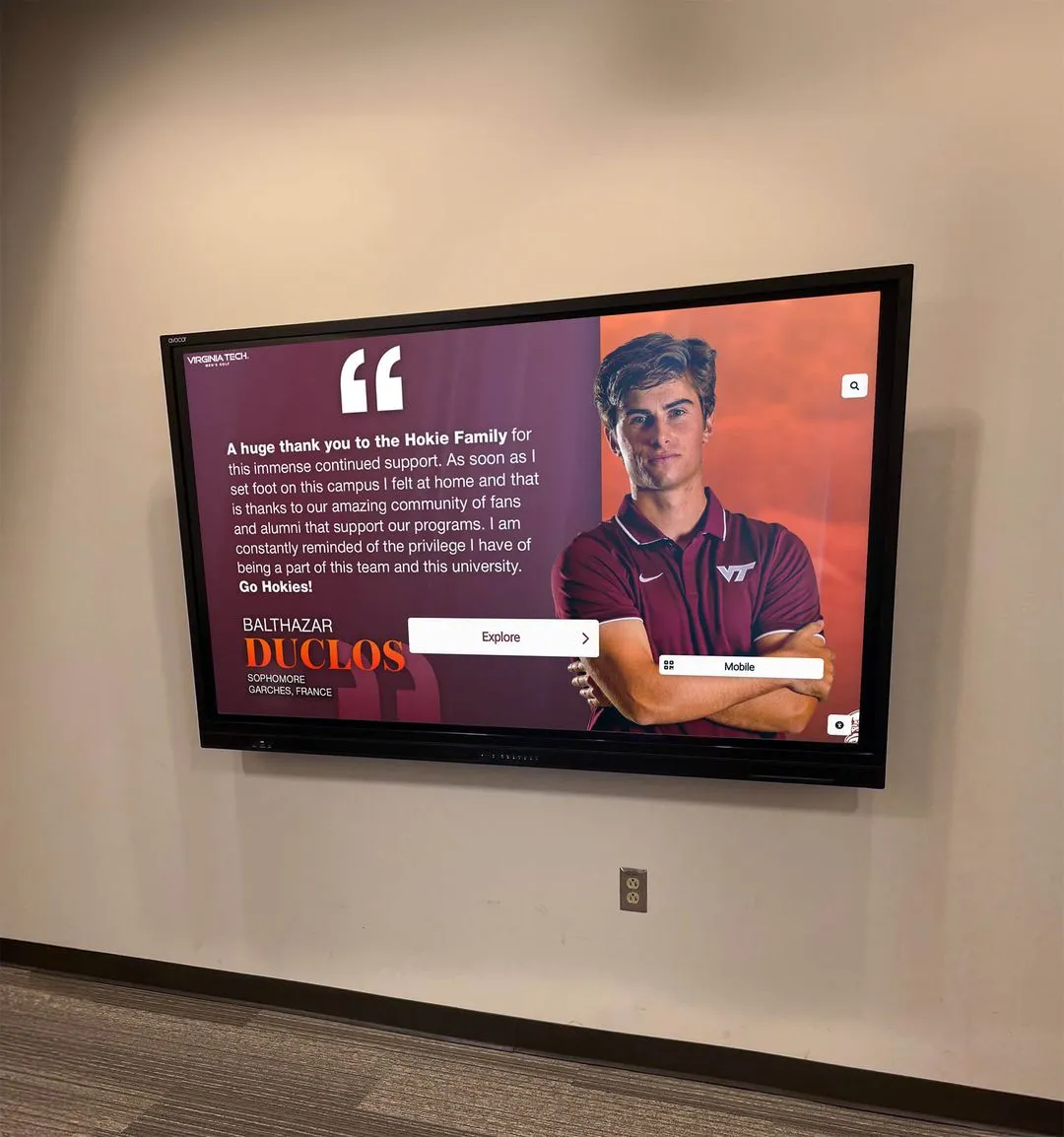
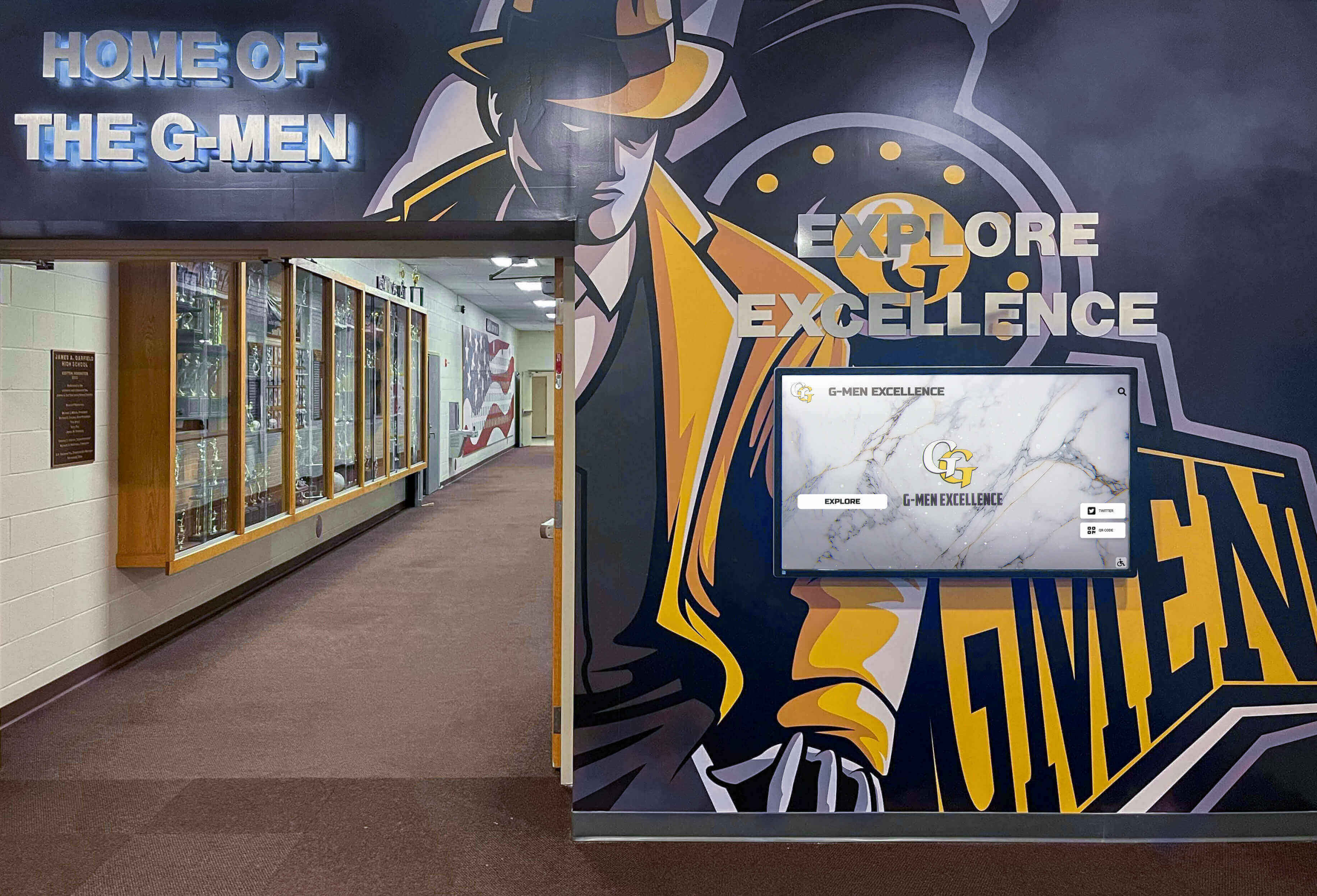
Modern school branding integrates traditional wall graphics with digital displays creating cohesive recognition environments throughout facilities
Understanding Wall Wraps: Materials, Applications, and Educational Benefits
Before diving into specific design strategies, understanding what wall wraps are and how they function in educational environments provides essential foundation for making informed decisions.
What Are School Wall Wraps?
Wall wraps represent large-format graphics applied directly to wall surfaces, transforming appearance while serving functional communication purposes.
Core Material Types and Characteristics
School wall wraps typically utilize several material categories, each offering distinct characteristics:
Adhesive Vinyl Graphics: The most common wall wrap material, printed vinyl features pressure-sensitive adhesive backing enabling direct application to prepared wall surfaces. Professional-grade calendered or cast vinyl provides durability suitable for institutional environments, resists fading from fluorescent lighting exposure, removes cleanly when replacement becomes necessary, and accepts high-resolution printing for detailed graphics including photographs, text, and complex designs.
Fabric Wall Coverings: Textile-based materials create softer, more upscale appearances appropriate for administrative areas, donor recognition spaces, or premium locations where elevated aesthetics matter. Fabric graphics typically attach via frame systems or adhesive application, provide excellent print quality with minimal glare, offer some acoustic dampening benefits, and create distinctive textured appearance differentiating them from standard vinyl.
Mesh and Perforated Materials: Specialized applications like window graphics or areas requiring air circulation utilize perforated materials featuring tiny holes enabling visibility and ventilation while maintaining graphic appearance. These materials work well for large window coverage, temporary installations requiring removal, and areas where material breathability matters for building systems.
Laminated Protective Layers: High-traffic installations benefit from protective laminate overcoats extending lifespan significantly. Matte or gloss laminate finishes provide scratch resistance, simplify cleaning and maintenance, protect printed graphics from UV exposure, and enable graphics to withstand contact from students, carts, and equipment common in school environments.
Primary Applications in Educational Settings
Schools implement wall wraps across diverse facility areas, each serving specific functional purposes beyond pure aesthetics.
Hallway and Corridor Transformations
School hallways represent prime wall wrap opportunities, converting utilitarian circulation spaces into branded experiences students encounter multiple times daily. Common hallway applications include school branding displaying mascots, colors, and identity consistently throughout facilities, achievement recognition celebrating academic honors and athletic success, wayfinding systems helping students and visitors navigate complex buildings, and motivational messaging reinforcing school values and motivating excellence.
These high-traffic corridors ensure maximum visibility for graphics reaching entire school populations repeatedly throughout each day and academic year.
Athletic Facility Branding
Gymnasiums, locker rooms, training facilities, and athletic wings benefit tremendously from wall wrap installations creating immersive team environments. Athletic graphics typically feature team logos and mascots at impactful scale, championship recognition celebrating conference titles and state championships, school records and hall of fame displays documenting athletic heritage, motivational quotes motivating athletes during practice and competition, and recruiting impact imagery displaying facilities to prospective student-athletes and families.
Solutions like Rocket Alumni Solutions combine traditional athletic wall graphics with interactive digital displays creating comprehensive recognition environments documenting complete athletic program history while enabling instant updates as new achievements occur.
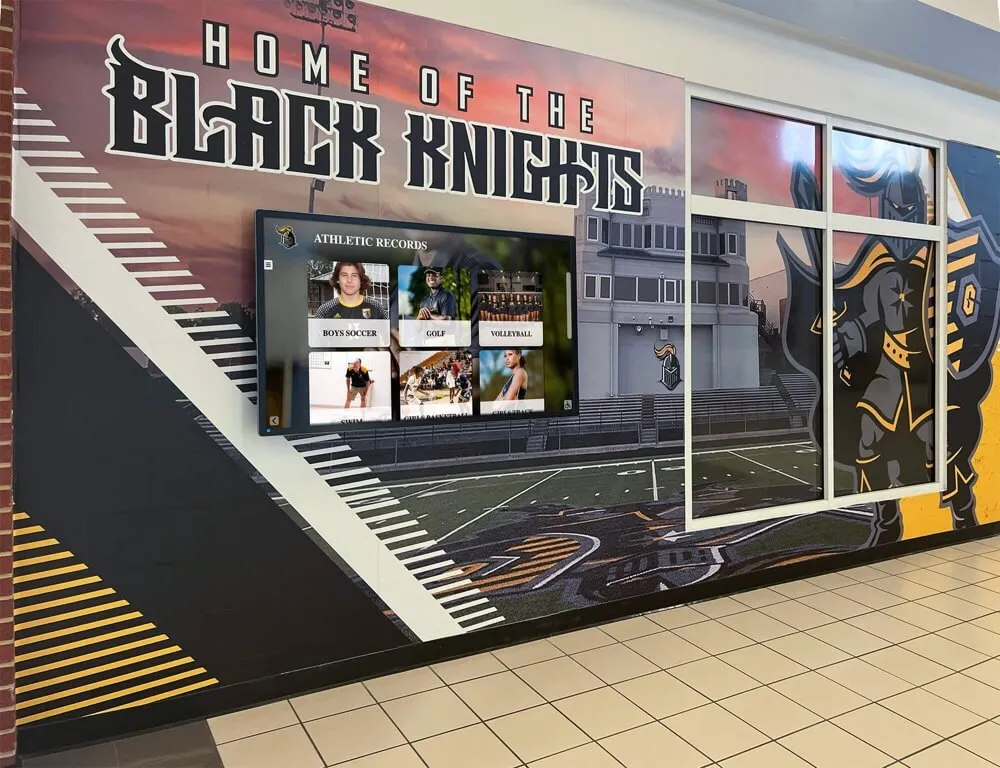
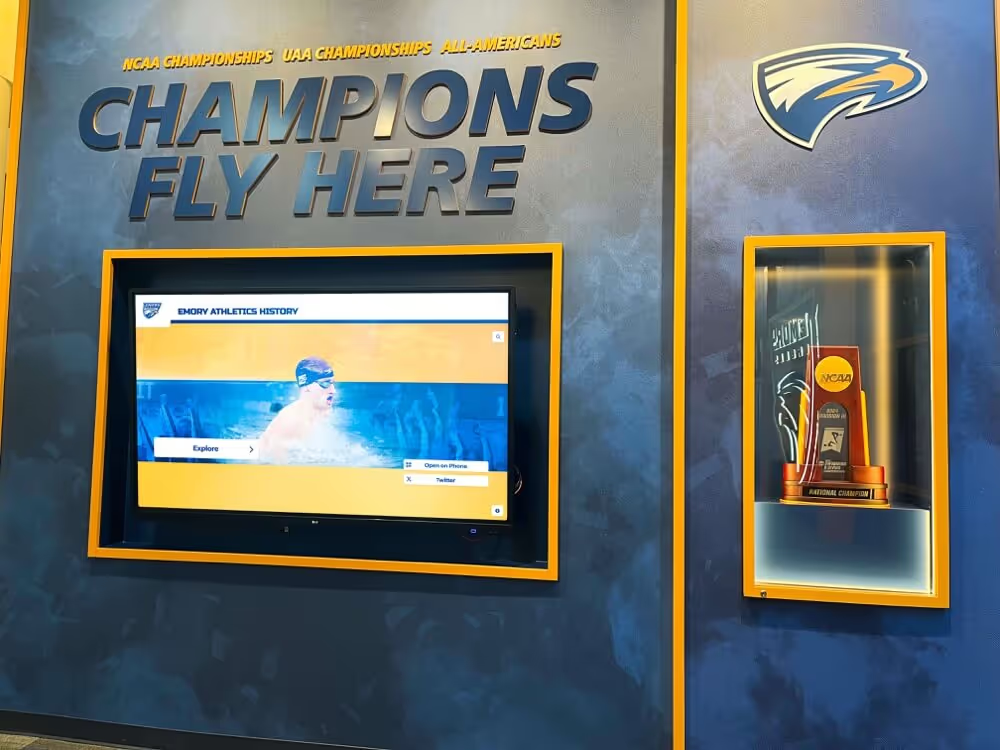
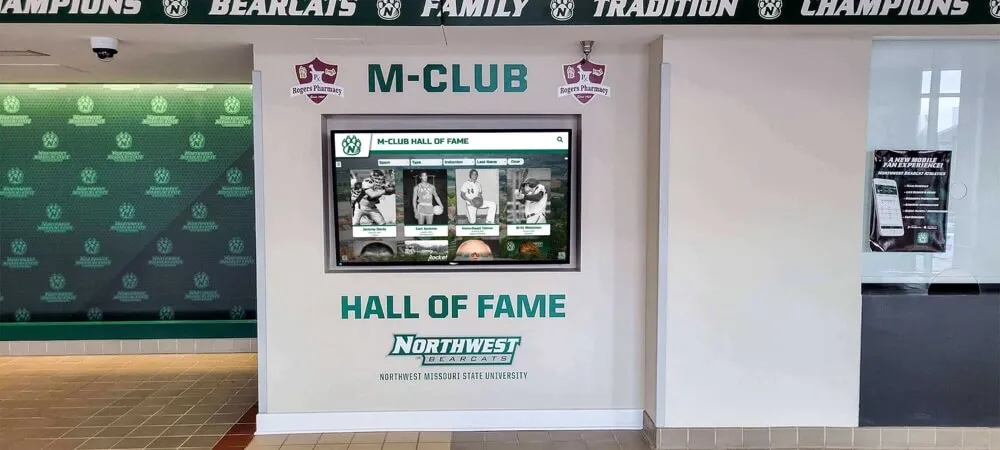
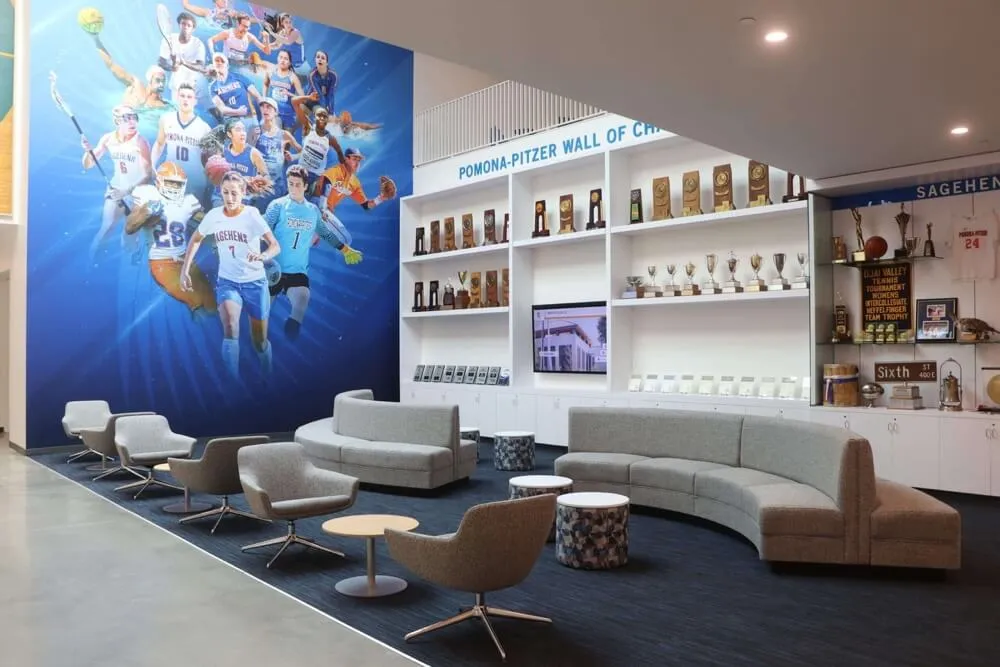
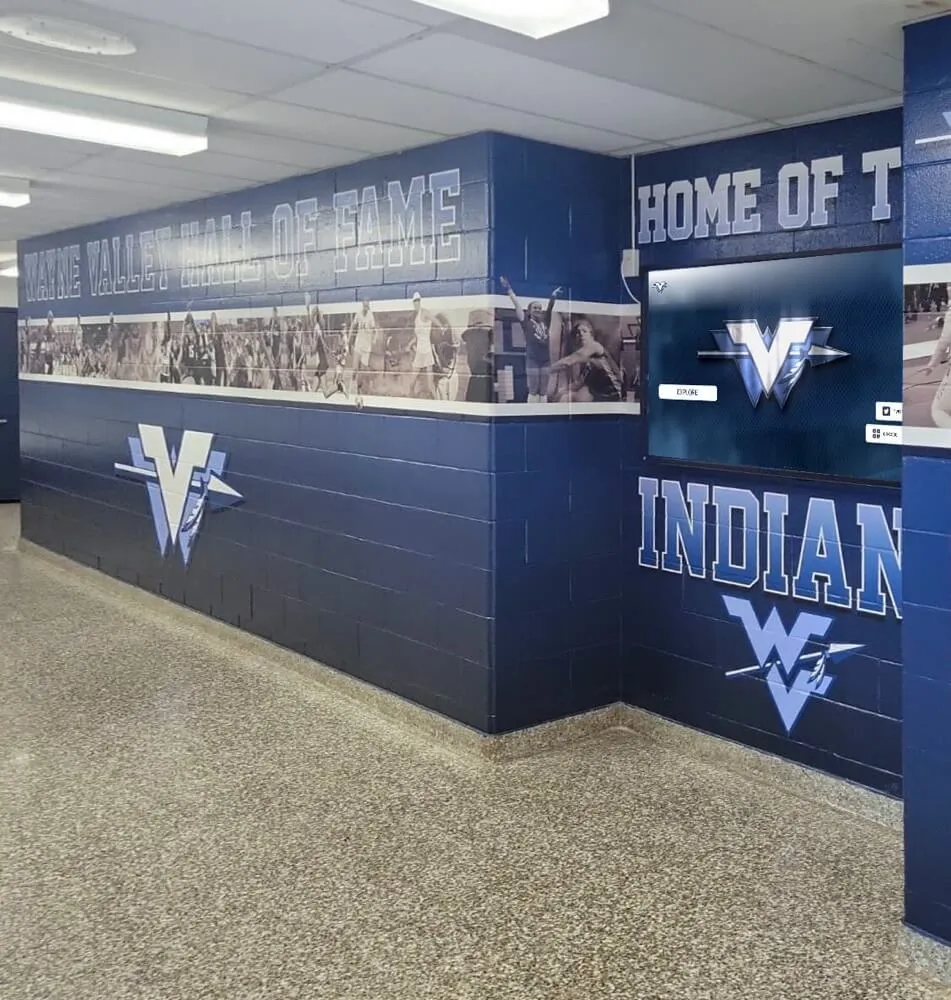
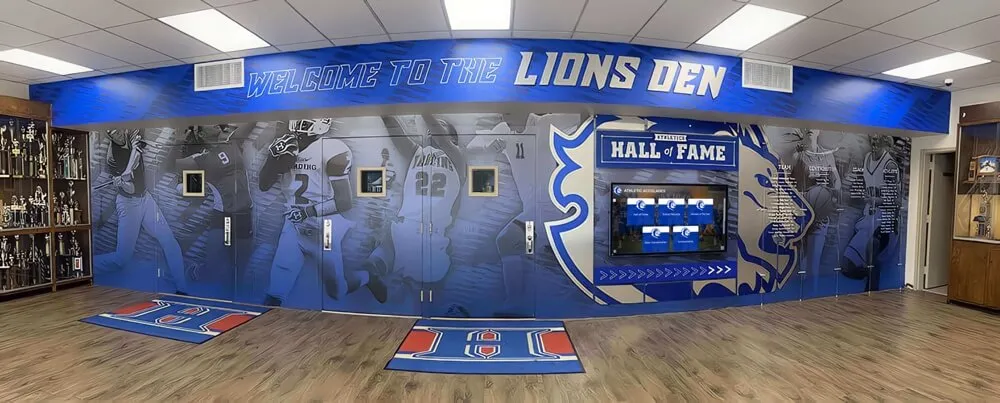
Comprehensive athletic branding coordinates wall graphics with digital recognition displays and traditional trophy cases creating cohesive celebration environments
Main Entrance and Lobby Installations
School entrances create critical first impressions for visitors, prospective families, and community members attending events. Strategic entrance graphics include welcome messaging establishing tone and communicating institutional values, mission and vision statements reinforcing what schools stand for, donor recognition acknowledging community supporters, school history timelines documenting institutional heritage, and directional wayfinding orienting visitors to building layout.
These prominent locations justify premium design investment given visibility to external audiences forming opinions about school quality and culture based partly on facility appearance and professionalism.
Cafeteria and Commons Areas
Student gathering spaces benefit from graphics creating positive, engaging environments where students spend significant informal time. Cafeteria installations often feature school spirit messaging strengthening community identity, nutritional education promoting healthy choices, student artwork displays celebrating creative achievement, event promotion for upcoming activities, and branded designs differentiating institutional dining from generic cafeteria aesthetics.
Classroom and Academic Spaces
While less common than common area graphics, classroom wall wraps serve specialized educational purposes including subject-specific content supporting curriculum, reference materials students consult regularly, inspirational learning quotes encouraging academic effort, visual organization systems supporting classroom management, and thematic designs creating engaging learning environments particularly for younger students.
Educational Benefits Beyond Aesthetics
Strategic wall wrap installations deliver measurable benefits justifying investment beyond simple appearance improvements.
Strengthening School Identity and Culture
Consistent visual branding throughout facilities reinforces what makes schools unique. When students encounter school colors, mascots, values, and achievements throughout daily experiences, these repeated exposures strengthen identification with institutional community. This cultural reinforcement proves especially valuable for large schools where students might otherwise feel anonymous, for new schools establishing identity, and for institutions strengthening school spirit following periods of low morale or achievement.
Creating Recognition and Motivation
Visible celebration of achievement motivates students toward excellence by demonstrating that accomplishment receives lasting acknowledgment. Athletic recognition inspires current teams to match predecessors’ success, academic displays encourage intellectual achievement deserving equal celebration, and comprehensive recognition communicating that schools value diverse excellence across all program areas.
Research on building school pride through recognition demonstrates that visible achievement celebration correlates with increased student engagement, improved school culture, and enhanced community pride.
Functional Wayfinding and Communication
Large facilities challenge navigation for students, staff, and visitors. Wall graphics incorporating color-coded zones, directional arrows, building maps, and room identification reduce confusion while creating more accessible environments. This wayfinding function proves especially important for elementary schools with young students still learning building layouts, secondary schools with complex wing systems and multiple buildings, and any schools hosting frequent visitors for athletic events, performances, or community programs.
Donor Recognition and Development Support
Schools implementing capital campaigns or seeking ongoing community support benefit from professional donor recognition graphics acknowledging contributions. Well-designed donor wall wraps communicate stewardship and transparency, inspire additional giving by demonstrating recognition value, create cultivation opportunities when prospects see impressive donor displays, and strengthen community relationships by celebrating partnership between schools and supporters.
Comprehensive donor recognition strategies often integrate physical wall graphics with digital donor displays providing unlimited recognition capacity while maintaining traditional acknowledgment for major supporters.
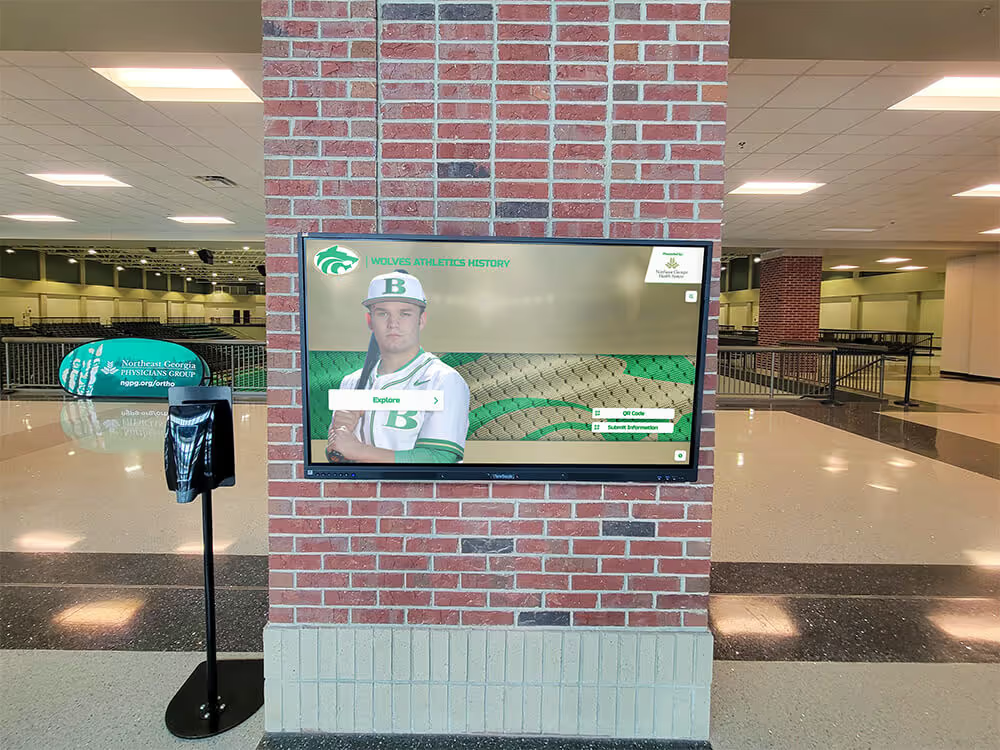
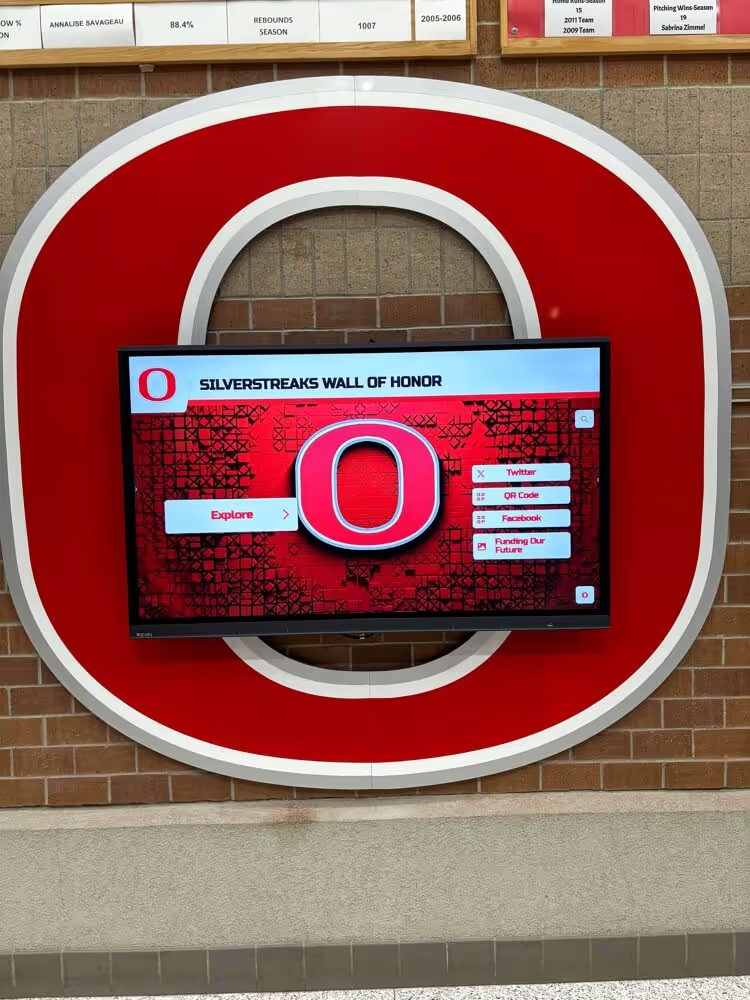
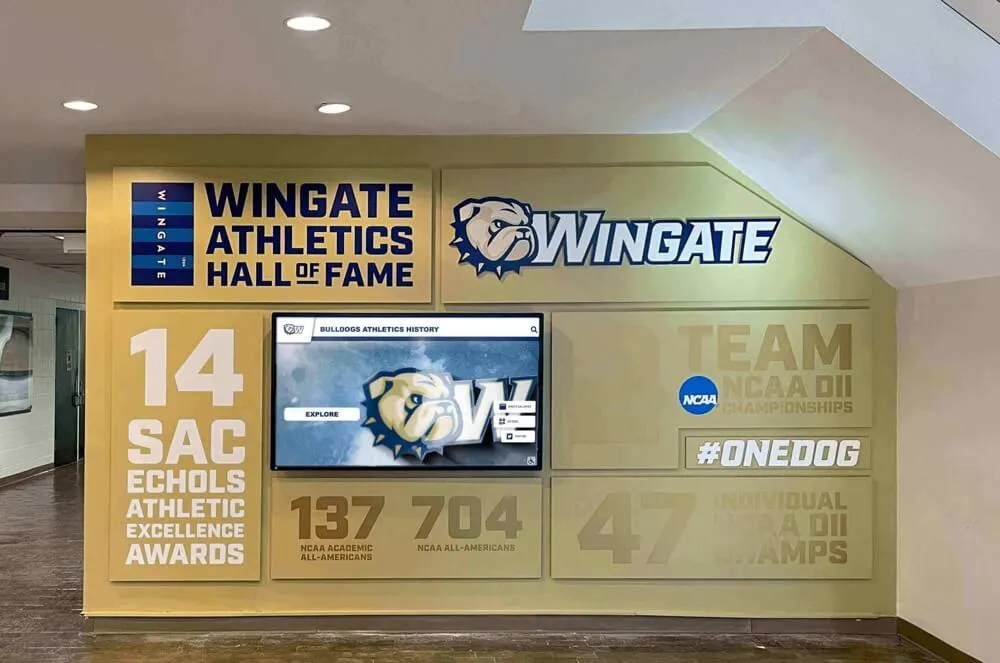
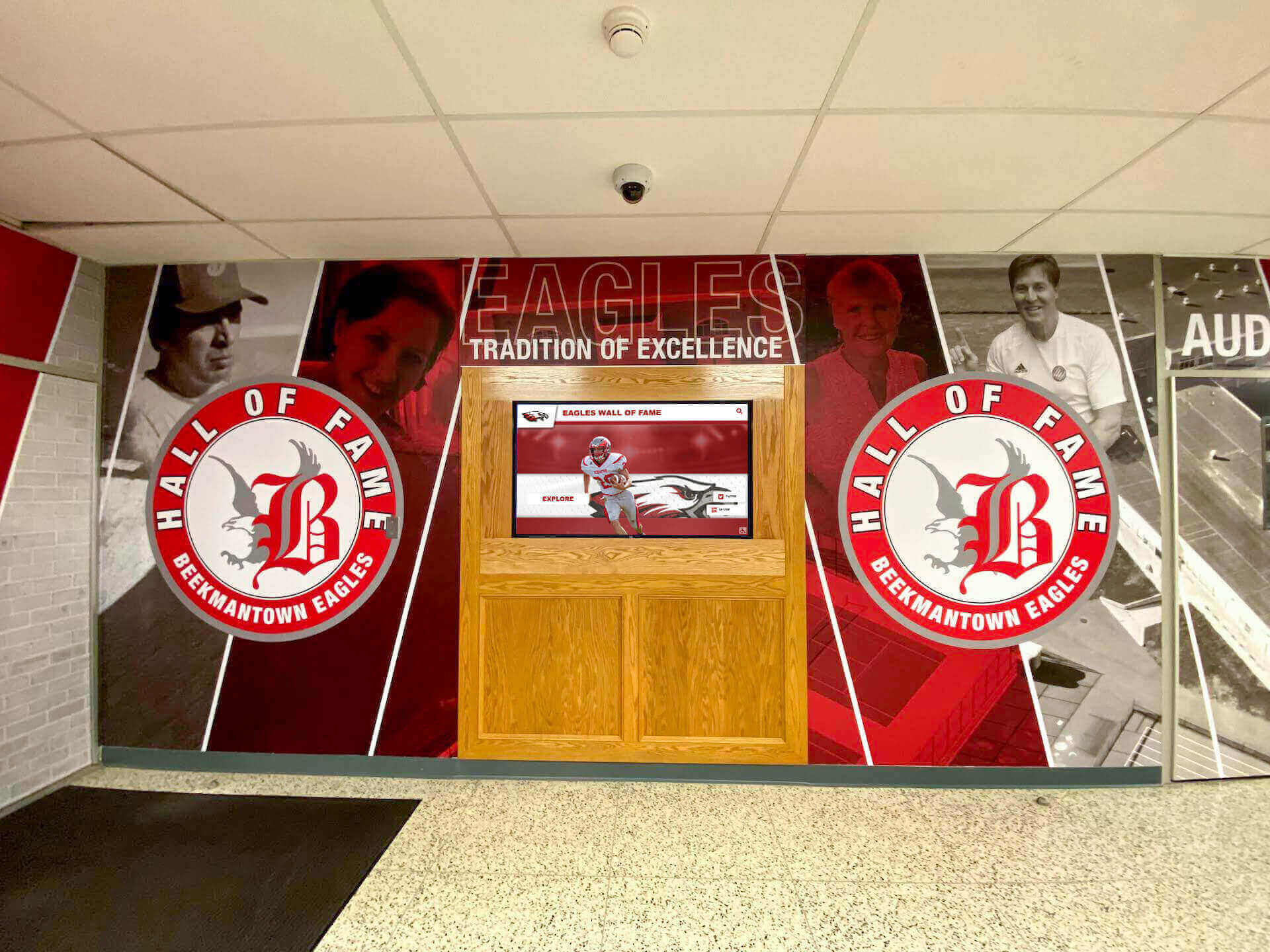
Comprehensive branded environments coordinate wall graphics with physical displays creating immersive school spirit spaces celebrating institutional heritage
Strategic Design Approaches for School Wall Wrap Projects
Effective wall wrap design requires systematic planning balancing visual impact, functional communication, budget realities, and long-term maintenance considerations.
Establishing Design Goals and Priorities
Before creating specific graphics, clarifying primary objectives ensures design decisions support actual institutional needs rather than pursuing aesthetics alone.
Identifying Primary Purposes
Different wall wrap applications serve distinct primary purposes requiring different design approaches:
Projects emphasizing branding prioritize consistent school colors, prominent mascot usage, and visual identity reinforcing institutional recognition. Recognition-focused installations highlight achievement content including names, photos, statistics, and accomplishments with design supporting rather than overwhelming information. Wayfinding applications emphasize clarity and legibility with large typography, intuitive iconography, and logical information hierarchy. Motivational installations feature motivating imagery and messaging creating emotional impact through compelling visuals and carefully selected words.
Most successful projects serve multiple purposes simultaneously—an athletic hallway provides branding through school colors and mascot while recognizing championship teams and displaying motivational quotes. However, identifying primary purpose ensures design emphasizes most important functions.
Defining Target Audiences
Consider who encounters graphics most frequently and design accordingly:
Graphics primarily for students can embrace bold contemporary aesthetics, incorporate relevant cultural references, use language and imagery resonating with current student demographics, and change more frequently reflecting evolving student interests. Installations targeting families and visitors require timeless design avoiding dated trends, professional execution reflecting positively on institution, clear communication avoiding internal jargon, and content accessible to audiences unfamiliar with school culture.
Athletic facilities often target both current student-athletes and alumni, requiring balance between contemporary appeal and heritage celebration honoring tradition.
Space Analysis and Environmental Factors
Physical space characteristics significantly influence design effectiveness:
Viewing distance determines appropriate text sizing, image detail level, and overall graphic scale—hallway graphics viewed from 10-15 feet away require different treatment than lobby installations viewed from 30+ feet. Lighting conditions affect color selection and contrast requirements, with fluorescent-lit corridors demanding higher contrast than naturally-lit spaces. Wall surface quality influences material selection and installation approach, as damaged or textured walls may require special preparation or material choices. Traffic patterns determine durability requirements, with high-contact areas needing more robust materials and protective finishes.
Content Development and Visual Storytelling
Compelling wall wrap content balances informational communication with visual impact creating engaging experiences rather than purely functional signage.
Text Content Strategy
Effective text in wall graphics follows principles quite different from print or digital content:
Brevity proves essential—graphics compete with busy school environments requiring messages communicating core ideas at glance rather than requiring careful reading. Hierarchy through size and weight differences guides viewers naturally through information from most to least important. Active voice and strong verbs create energy and engagement. Positive framing emphasizes aspiration and achievement rather than restrictions and rules. Age-appropriate language matches student developmental levels without condescension.
For athletic recognition, consider text formats like “2023 State Champions,” “23-1 Season Record,” and “Third State Title in Five Years” providing quick context communicating achievement clearly.
Imagery Selection and Quality Standards
Visual elements typically create stronger impact than text in wall graphics, requiring careful selection and technical quality:
Resolution requirements for large-format printing demand high-quality source images—minimum 150-200 DPI at final printed size ensures sharp professional results. Action photography creates dynamic energy appropriate for athletic graphics. Portrait photography works well for hall of fame and recognition applications requiring clear individual identification. School-specific imagery resonates more strongly than generic stock photography, though carefully selected stock images supplement when school photos lack needed variety or quality.
Original photography sessions specifically for wall wrap projects often justify investment through superior results perfectly matching institutional needs and aesthetics.
Color Psychology and Brand Consistency
Strategic color usage strengthens messaging while maintaining brand integrity:
School colors should dominate installations reinforcing visual identity and ensuring immediate recognition. Contrast ensures readability—light text on dark backgrounds or dark text on light backgrounds, avoiding low-contrast combinations reducing legibility. Accent colors draw attention to priority elements like featured achievements or important wayfinding information. Color coding supports organization in complex installations, with different colors representing grade levels, sports, academic departments, or building zones.
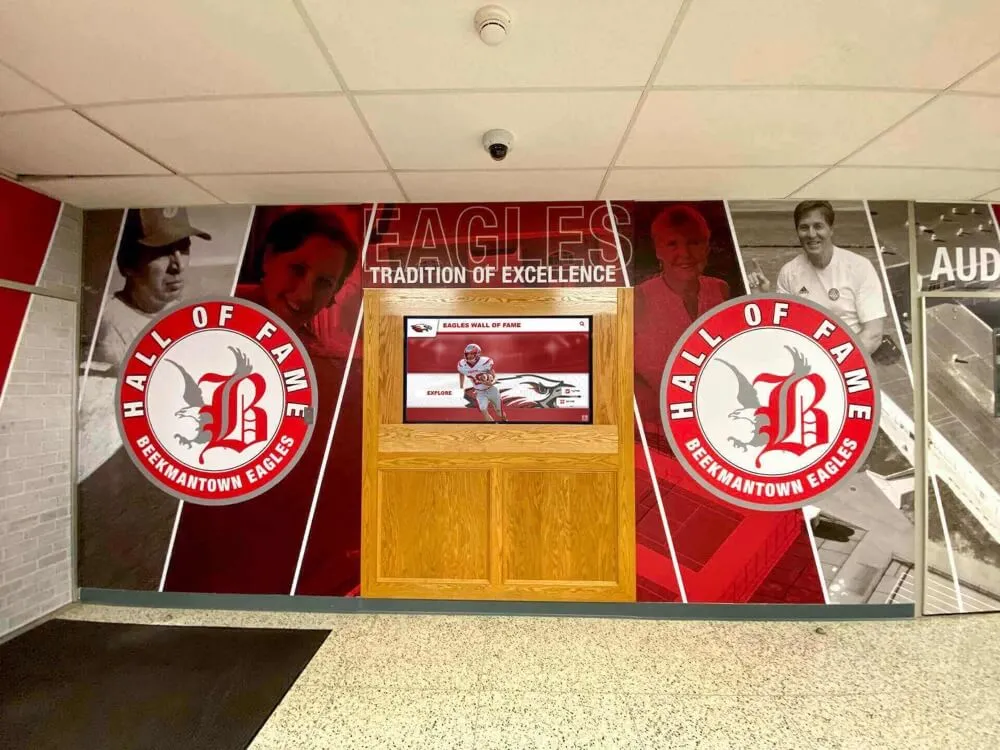
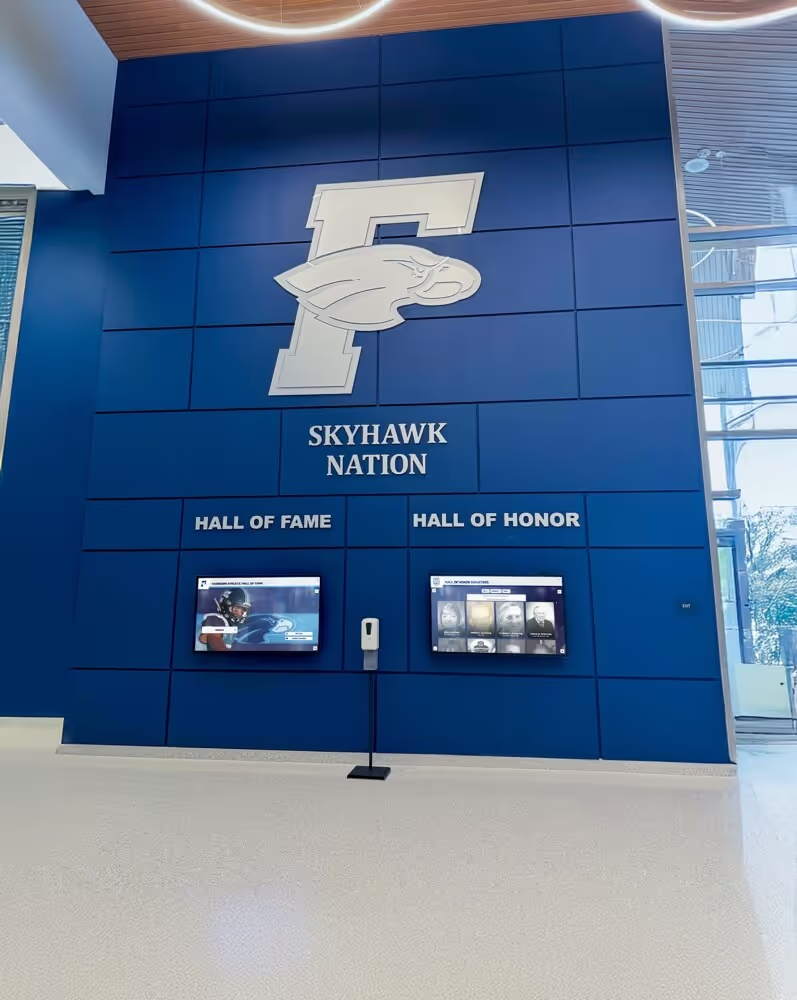
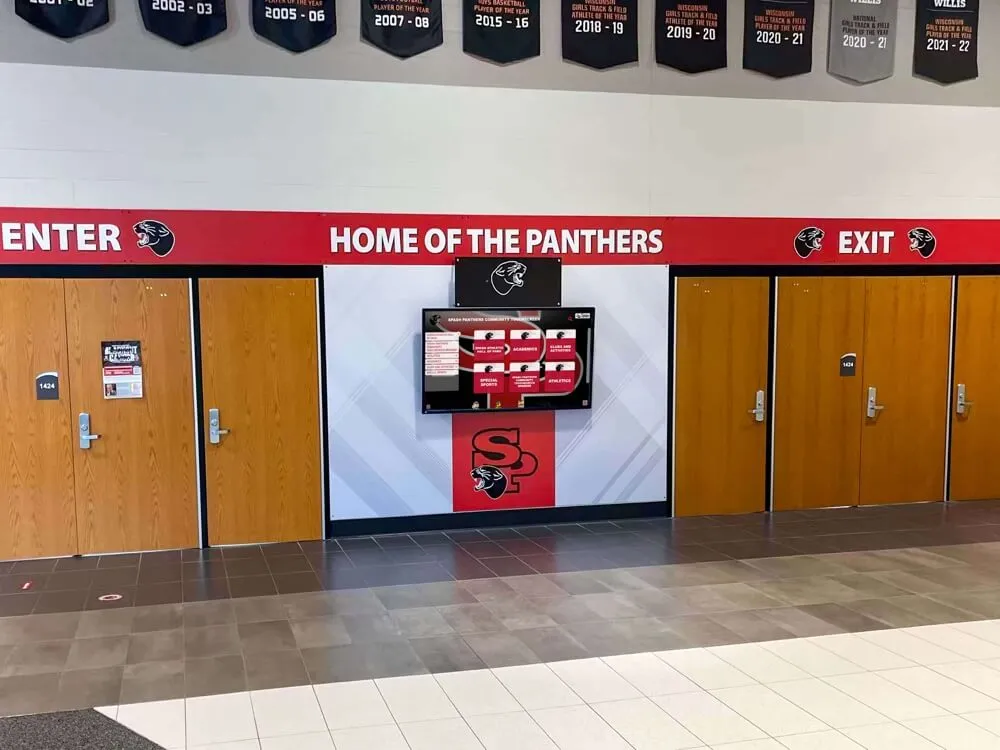
Entrance installations create immediate institutional identity through bold mascot graphics combined with achievement recognition establishing school culture from first impression
Layout Structures and Visual Hierarchy
Professional graphic design principles ensure wall wraps communicate effectively rather than creating visual confusion.
Establishing Clear Focal Points
Every wall wrap design should feature obvious visual entry points guiding viewer attention:
Primary focal points typically feature largest elements—oversized mascot graphics, featured student-athletes, or dominant typographic statements. These primary elements immediately capture attention from distance, establishing theme before viewers approach closely enough to read supporting details.
Secondary elements support primary focus without competing—smaller text explaining context, supplementary imagery providing depth, and organizational elements like lines, borders, or background patterns creating structure.
Grid Systems and Organized Layouts
Professional installations utilize underlying structure preventing haphazard appearance:
Grid-based layouts divide wall space into logical zones enabling consistent placement and alignment across multiple panels or wall sections. Modular approaches facilitate future updates by defining consistent spaces for changeable content like current season rosters or recent championship recognition. Asymmetric balance creates visual interest while maintaining organization—not everything needs centered alignment, but thoughtful placement prevents chaotic appearance.
Integrating Multiple Content Types
Many school wall wraps combine different content requiring unified presentation:
Athletic installations might integrate team logos, championship banners, record statistics, hall of fame profiles, and motivational quotes. Successful designs establish clear relationships between these elements through consistent styling, logical grouping of related content, visual hierarchy distinguishing primary and supporting information, and cohesive color and typography unifying diverse content types.
Integrating Digital Displays with Physical Graphics
Modern school recognition increasingly combines traditional wall wraps with interactive digital screens creating hybrid environments offering advantages of both approaches.
Coordinated Visual Design Language
When incorporating digital displays within wall graphic environments, design coordination ensures cohesive presentation:
Color palettes should match between physical graphics and digital display content maintaining consistent branded appearance. Typography systems carry through both physical and digital elements. Background treatments complement each other—physical wall backgrounds shouldn’t compete visually with digital display content. Overall aesthetic unity ensures displays feel intentionally integrated rather than coincidentally positioned near each other.
Resources on interactive display technology for schools explore how institutions effectively combine physical and digital recognition.
Content Strategy Across Media
Strategic content division leverages each medium’s strengths:
Physical wall graphics excel at permanent content unlikely to change frequently—school branding, historical championships, retired numbers, established records. Digital displays handle dynamic content requiring regular updates—current season information, recent achievements, rotating athlete or student spotlights, upcoming events. This division creates efficient maintenance where most content requires no ongoing work while digital platform enables timely updates maintaining freshness and relevance.
Spatial Integration and Traffic Flow
Physical placement determines whether installations feel unified or disconnected:
Centered positioning places digital displays as focal points within surrounding graphic environments. Adjacent positioning creates natural content relationships with physical graphics providing context for digital content. Sequential positioning along corridors enables progressive storytelling where wall graphics introduce themes that digital displays explore in depth through interactive content.
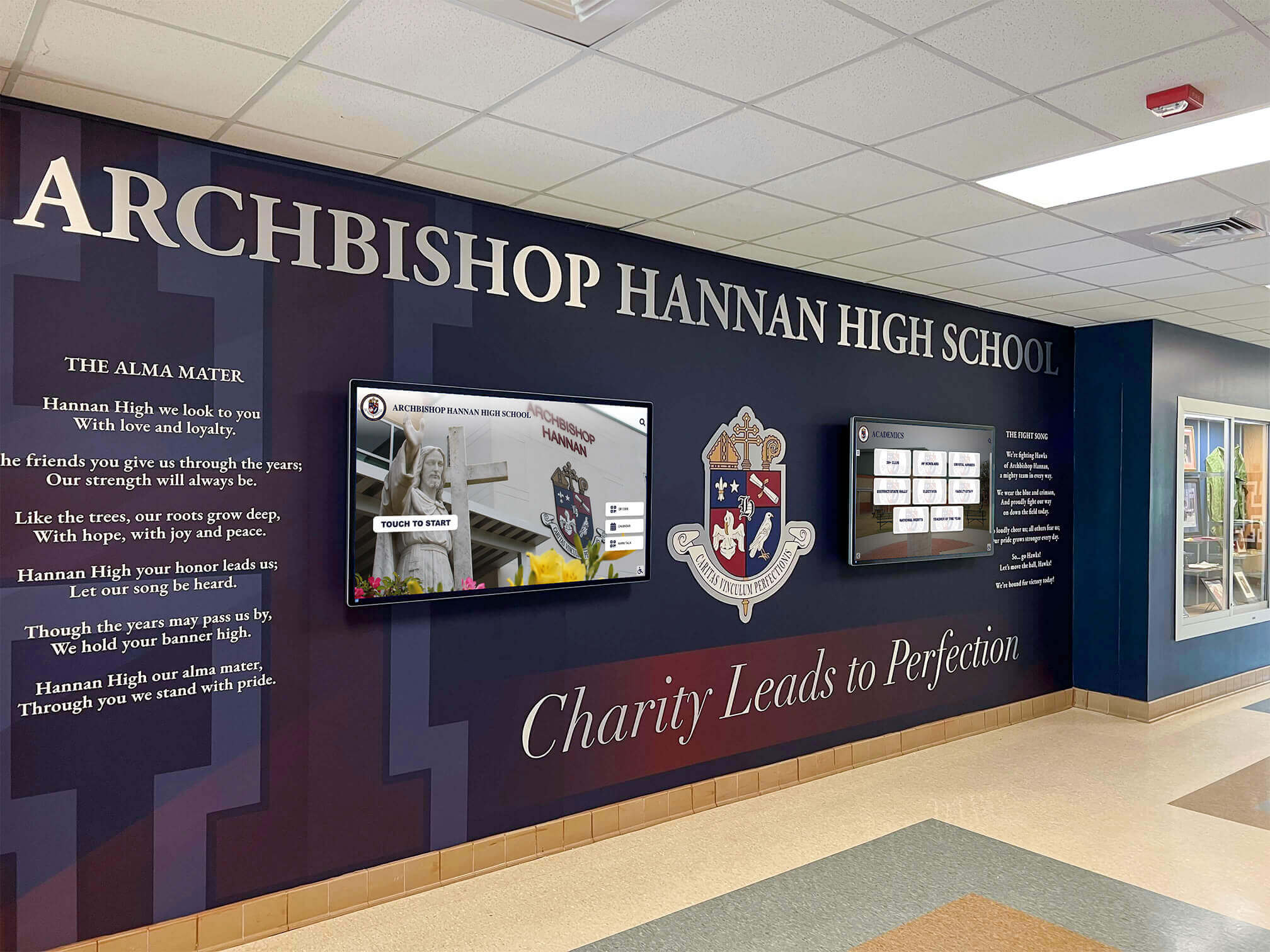
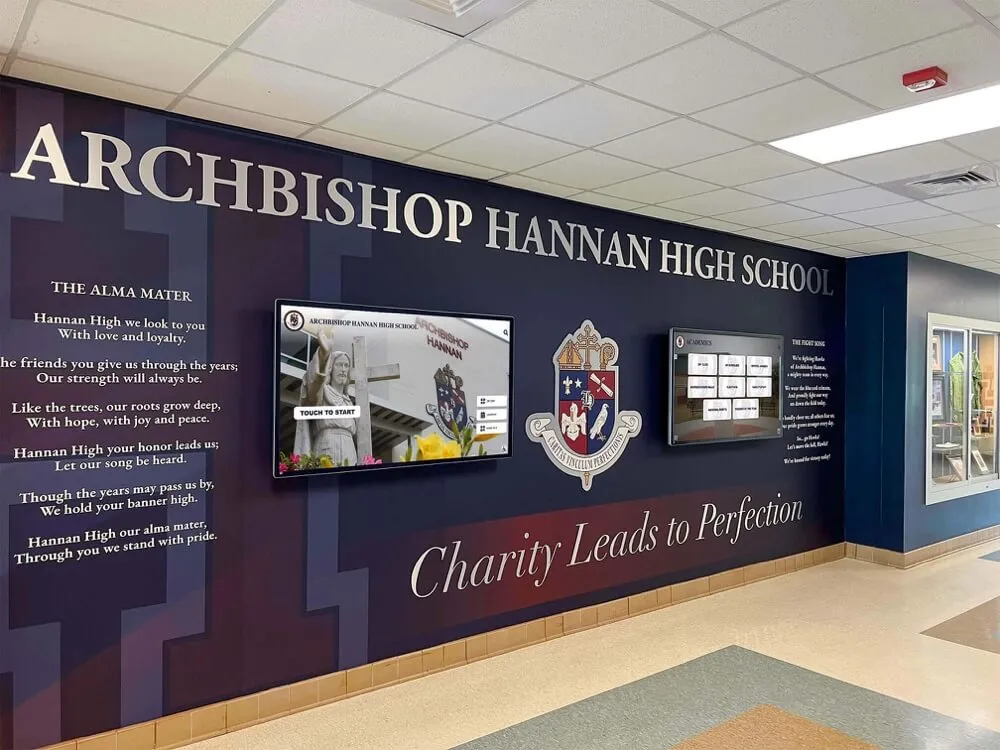
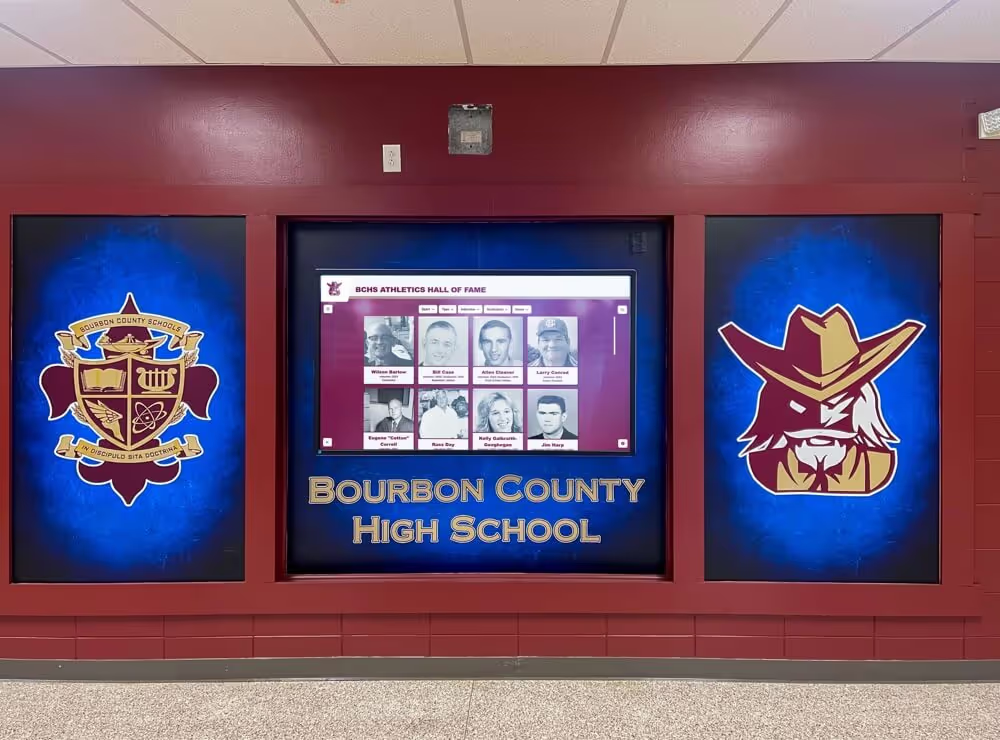
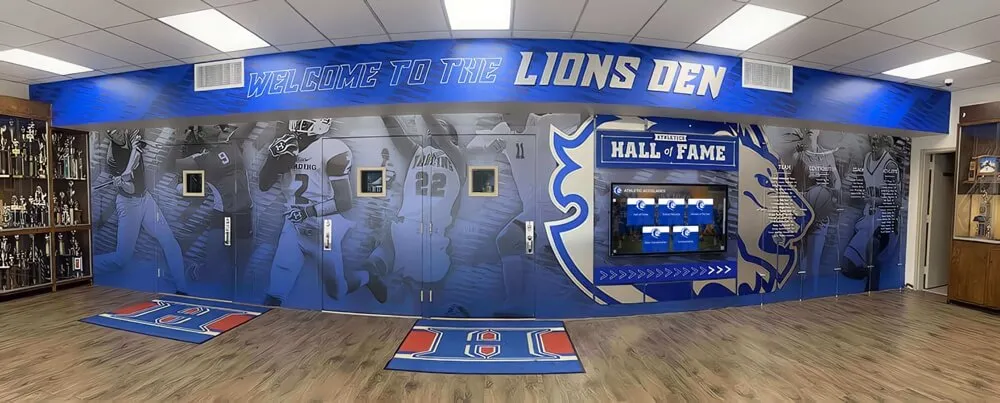
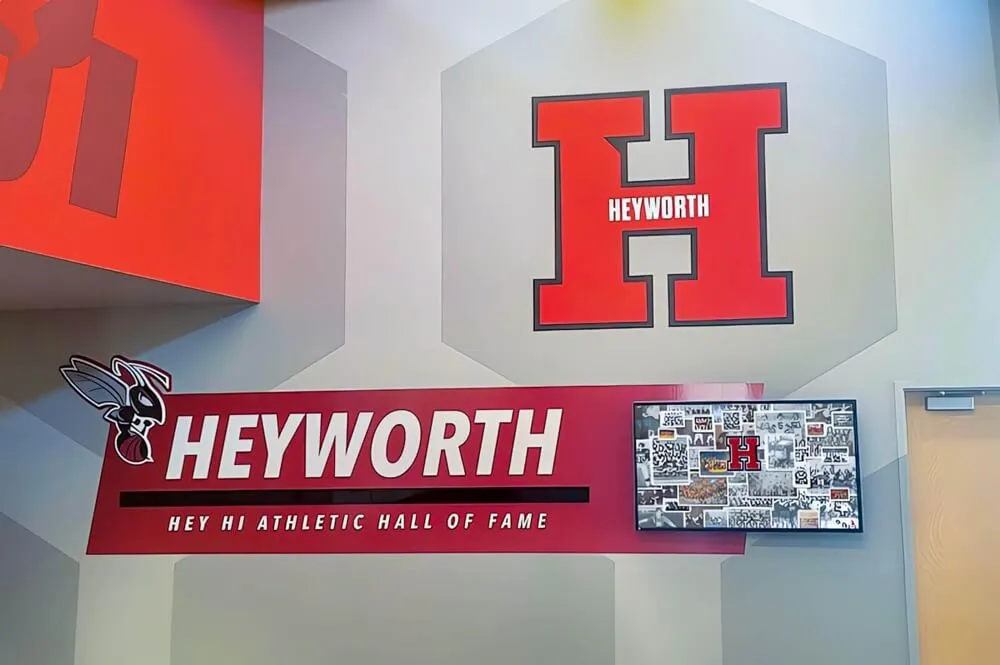
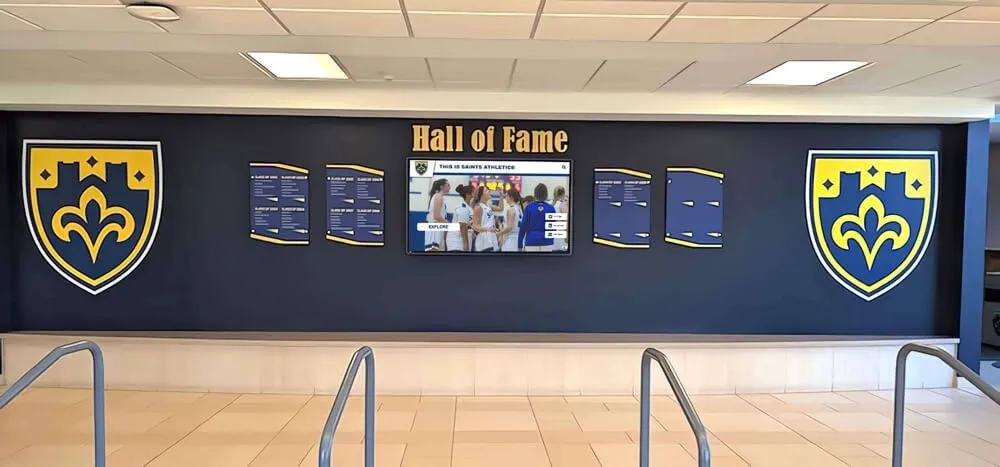
Successful integration honors institutional tradition through classic heraldic design while embracing contemporary digital capability documenting comprehensive achievement
Practical Implementation: Installation, Budget, and Maintenance Considerations
Translating design concepts into successful installations requires understanding practical factors influencing long-term satisfaction and value.
Professional Installation vs. DIY Approaches
Wall wrap installation quality dramatically affects appearance, longevity, and overall satisfaction requiring careful evaluation of capability requirements.
When Professional Installation Proves Essential
Large-scale projects, premium locations, and technically complex installations justify professional installation investment:
Major installations covering extensive wall areas benefit from professional efficiency completing projects in days rather than weeks. Complex designs requiring precise alignment across multiple panels demand professional technique preventing visible seams or misalignment. High-visibility locations where imperfect installation would reflect poorly on institution require professional quality standards. Specialized materials like fabric systems or architectural integration need professional expertise ensuring proper application.
Professional installation typically includes surface preparation, material application with proper technique avoiding bubbles or wrinkles, trimming and finishing creating clean edges, and post-installation cleanup leaving spaces ready for immediate use.
DIY Considerations and Limitations
Small projects, temporary installations, or budget-constrained schools may consider internal installation:
Simple single-panel graphics without complex alignment requirements may suit capable maintenance staff. Temporary installations expected to last single seasons or academic years reduce quality requirement stakes. Small accent graphics supplementing professionally installed primary installations enable incremental expansion within tight budgets. Staff with relevant experience—sign installation, wallpaper application, or construction backgrounds—may possess transferable skills supporting successful DIY installation.
However, even capable staff should recognize that large-format graphics require specialized techniques, proper tools including large squeegees and precision cutting equipment, sufficient time for proper installation without rushing, and understanding that mistakes often require complete material replacement rather than simple correction.
Budget Planning and Cost Factors
Wall wrap project costs vary dramatically based on size, complexity, materials, and installation requirements necessitating comprehensive budget development.
Material and Production Costs
Primary budget components include design services creating print-ready artwork, large-format printing producing physical graphics, materials including vinyl, laminate, and application tape, and shipping for large installations requiring freight delivery.
Budget estimates typically range widely: simple hallway installations covering 100-200 square feet might require $2,000-$5,000 total investment including design, materials, and installation. Comprehensive athletic facility transformations covering 500-1,000 square feet with complex graphics often range $10,000-$25,000. Premium lobby installations with architectural integration, specialty materials, and coordinated digital displays can exceed $50,000 for complete environments.
Installation and Labor Considerations
Professional installation pricing varies by project complexity, accessibility challenges, surface preparation requirements, and regional labor rates. Some vendors include installation in turnkey pricing while others separate installation as distinct line items enabling schools to evaluate DIY alternatives.
Expect professional installation costs representing 30-50% of total material costs for straightforward projects, potentially more for installations requiring extensive prep work, difficult access requiring scaffolding or lifts, or custom fabrication beyond standard vinyl application.
Long-Term Value and Depreciation
While initial costs seem significant, effective wall wraps deliver extended value:
Quality installations typically last 5-10 years depending on materials, location, and maintenance, creating cost per year significantly lower than annual expense of temporary decorations or frequent painting. Permanent visibility ensures consistent exposure impossible with temporary displays removed between seasons. Reduced maintenance compared to paint eliminates periodic repainting while graphics maintain appearance. Flexibility for strategic updates enables refreshing specific elements without complete replacement.
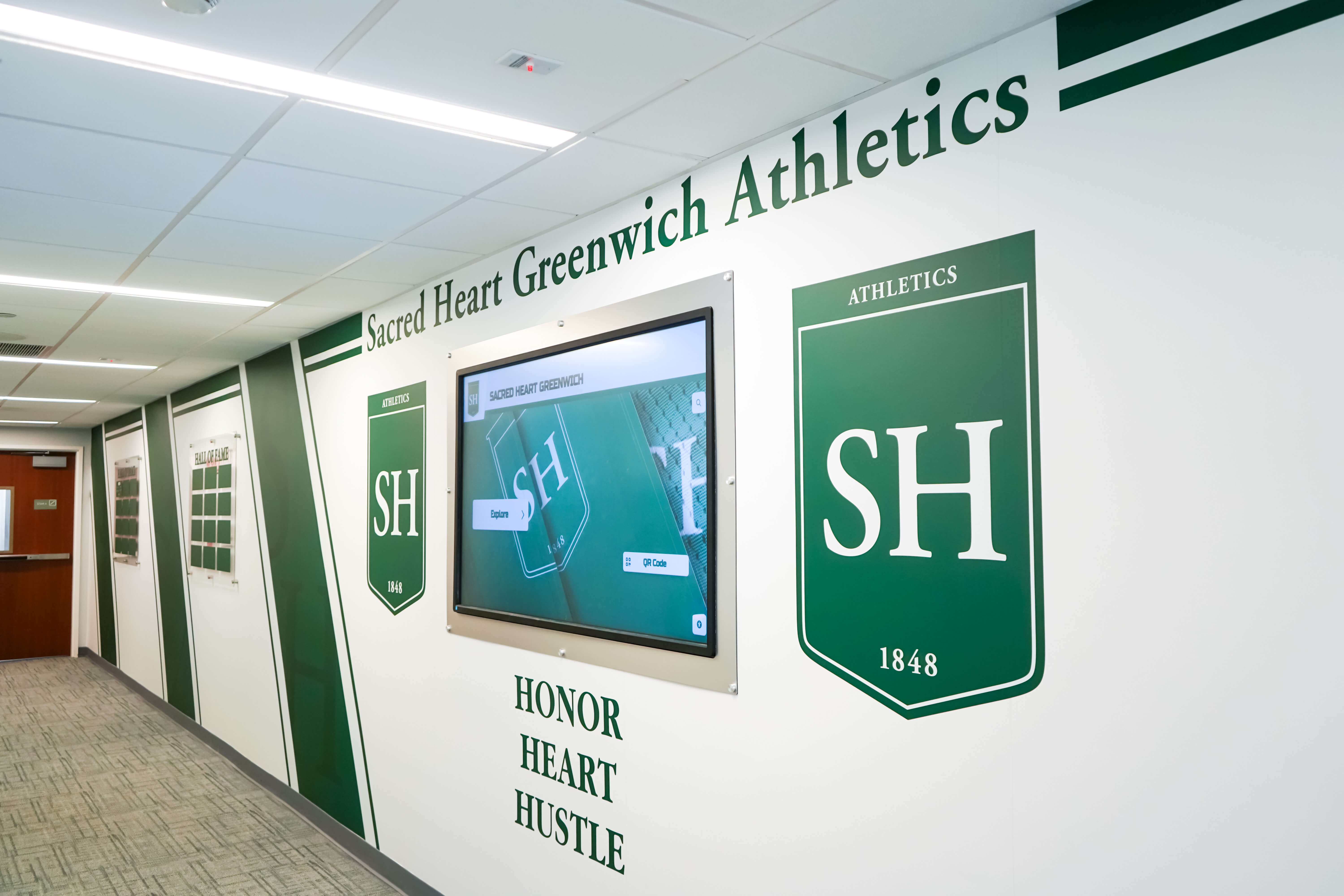
Traditional shield-based designs create prestigious recognition aesthetic appropriate for established institutions emphasizing heritage and tradition
Surface Preparation and Installation Best Practices
Proper preparation and technique determine whether installations exceed or disappoint expectations.
Wall Surface Assessment and Preparation
Installation success begins with proper surface evaluation and preparation:
Surface condition directly affects adhesion and appearance. Painted walls should feature intact paint without peeling or flaking. Heavily textured surfaces may require special materials or primer coatings creating smoother application surfaces. Damaged walls benefit from repair and painting before graphic application ensuring professional results. New construction should allow adequate curing time for fresh paint or drywall compound before graphic application.
Surface cleaning removes dirt, oils, and contaminants preventing proper adhesion. Professional installers typically clean surfaces with appropriate solutions ensuring complete adhesion rather than creating installations prone to peeling or failure.
Environmental Conditions During Installation
Temperature and humidity significantly affect vinyl adhesive performance:
Installation should occur within manufacturer-specified temperature ranges, typically 50-90°F for most vinyl products. Extreme cold prevents proper adhesion while excessive heat causes materials to stretch during application creating future problems. Humidity within normal ranges prevents moisture interfering with adhesive bonding. Climate-controlled interior spaces usually provide suitable conditions, though installations in non-climate-controlled gyms or poorly heated areas may require scheduling during appropriate seasons.
Application Techniques and Quality Standards
Professional installation technique prevents common problems undermining appearance:
Proper alignment ensures multi-panel installations match precisely without visible gaps or overlaps. Bubble elimination through systematic squeegee technique creates smooth professional appearance. Edge sealing prevents corners or seams from lifting over time. Final trimming creates clean edges at baseboards, doors, corners, and ceiling lines completing professional appearance.
Quality installations appear seamless as though graphics were painted directly on walls rather than applied vinyl—achieving this invisibility requires professional technique developed through experience and training.
Maintenance Requirements and Longevity
Proper care extends lifespan while maintaining professional appearance throughout installation life.
Ongoing Cleaning and Care
Regular maintenance prevents buildup and deterioration:
Routine dusting with soft dry cloths removes normal accumulated dust. Occasional damp cleaning using mild soap solution addresses fingerprints, scuffs, or marks without damaging graphics. Harsh chemical cleaners or abrasive materials should be avoided as these can damage printed surfaces or remove protective laminates. Pressure washing proves too aggressive for most wall graphics despite working well for floor or exterior applications.
High-traffic areas benefit from more frequent cleaning maintaining professional appearance despite constant student contact and environmental exposure.
Damage Prevention and Repair
Protecting installations prevents premature deterioration:
Edge protection through strategic placement above typical contact zones prevents peeling from carts, equipment, or normal facility usage. Laminate coatings provide scratch resistance extending graphic life in high-contact areas. Prompt repair of any lifting or damage prevents problems spreading to larger areas. Documentation of installation details including materials, vendors, and print specifications enables matching replacements if partial repairs become necessary.
Planning for Updates and Replacement
Even quality installations eventually require updating:
Anticipated lifespan should guide design decisions—permanent content like school branding justifies investment in premium materials and installation, while content expected to change within 3-5 years might utilize more economical approaches. Modular designs facilitate partial updates where specific sections change while surrounding graphics remain. Documentation and archived design files enable consistent aesthetic when adding new elements or replacing damaged sections. Planned obsolescence for certain content enables deliberate replacement rather than emergency response to deteriorated graphics.
Detailed strategies for school athletic recognition including wall graphics explore long-term planning ensuring sustained quality and relevance.
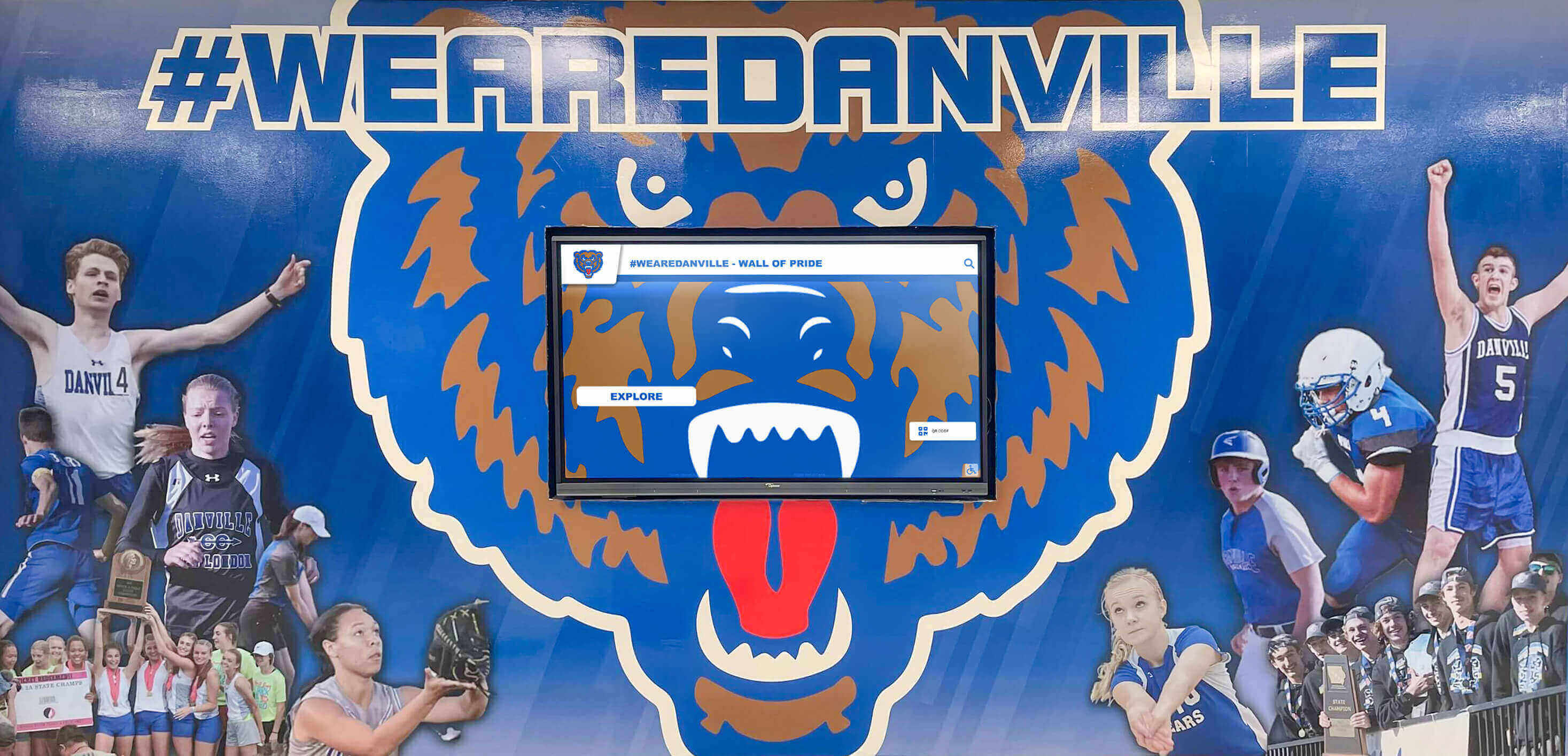
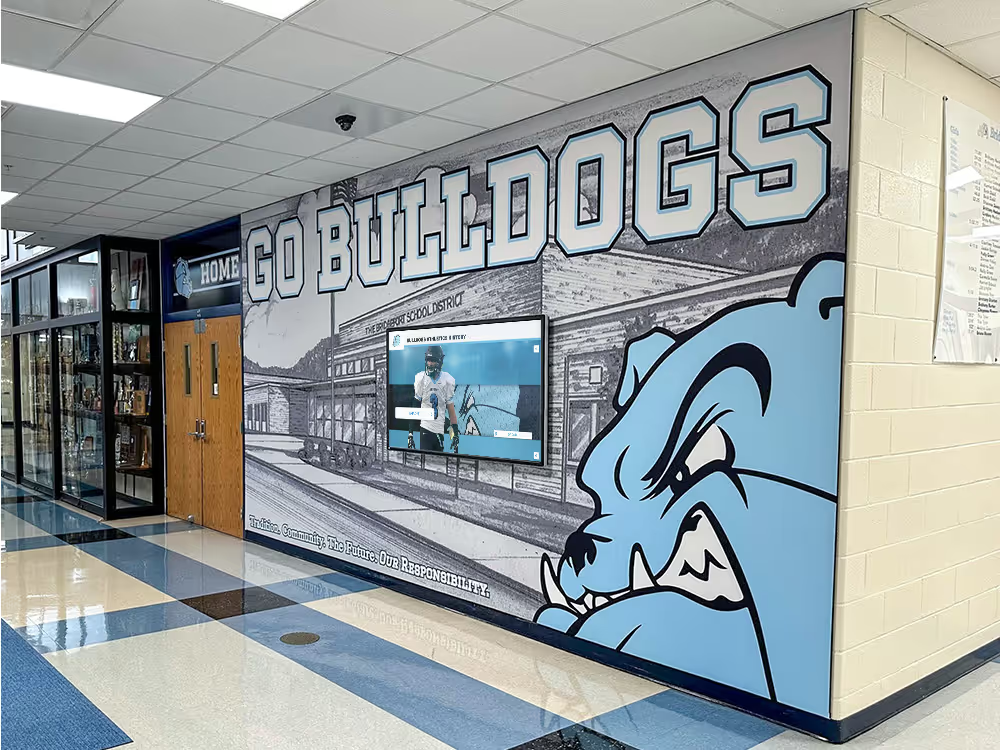
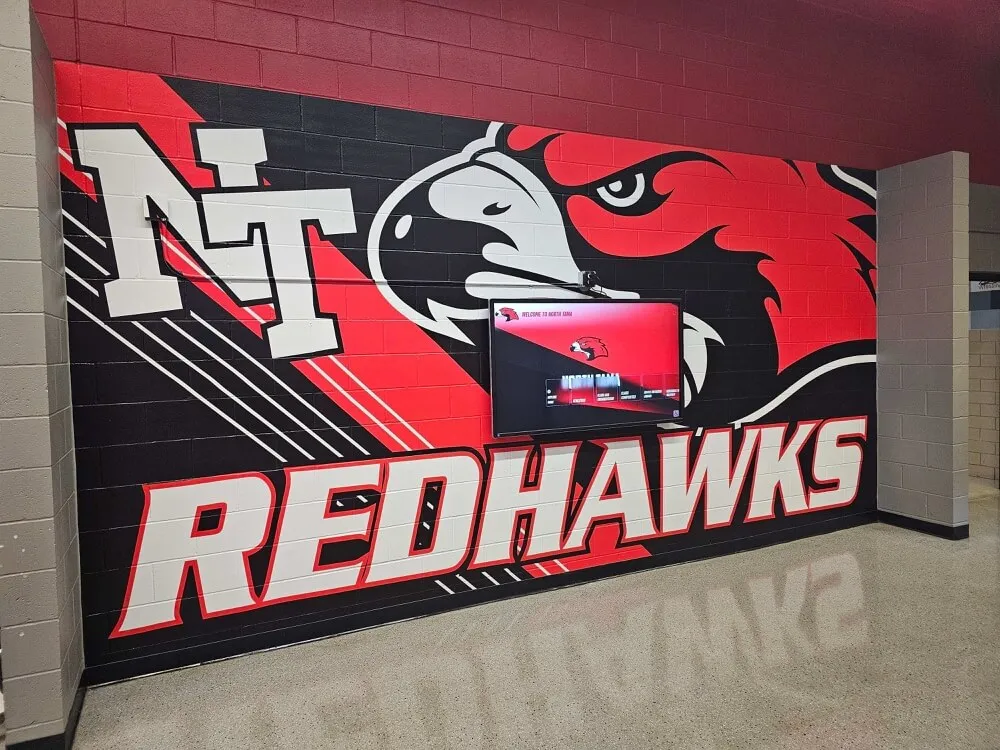
Bold mascot-centered designs create immediate visual impact while coordinated digital screens enable comprehensive achievement recognition beyond static graphics alone
Content Ideas for Different School Wall Wrap Applications
Strategic content selection ensures wall wraps serve intended purposes effectively while maximizing impact and engagement.
Athletic and Sports Recognition Graphics
Sports-focused installations create immersive environments celebrating competitive excellence and team culture.
Championship and Achievement Displays
Athletic wall wraps frequently document competitive success:
Conference championship recognition listing years and sports creates comprehensive record of sustained success. State championship celebration prominently features title years with sport identification and potential score lines or key statistics. Individual honors including all-state selections, all-conference teams, and individual state champions provide athlete-specific recognition. Record documentation highlighting school records in various sports preserves achievement heritage creating targets for current athletes to pursue.
These achievement displays work especially well in gymnasium lobbies, athletic hallways, and locker room facilities where athletes encounter them daily during practice and competition seasons.
Team Identity and Spirit Graphics
Beyond specific achievement recognition, athletic graphics strengthen team culture:
Oversized mascot graphics create visual focal points reinforcing school identity and competitive spirit. Team mottos or rallying cries expressed in bold typography remind athletes of shared values and goals. Motivational quotes from famous coaches, athletes, or leadership figures inspire excellence and perseverance. School colors dominating athletic spaces create immersive brand environments distinguishing institutional facilities from generic gyms.
Historical Timeline Presentations
Programs with rich traditions benefit from historical documentation:
Decade-by-decade timelines document program evolution from founding through present. Coach recognition highlighting long-tenured leaders who built program traditions. Milestone documentation including facility construction, major victories, or program achievements creating comprehensive narrative. Retired number recognition honoring legendary athletes receiving program’s highest tribute.
Resources about track and field recognition including wall graphics provide sport-specific examples applicable across diverse athletic programs.
Academic Excellence and Scholar Recognition
Academic wall wraps deserve equal prominence to athletic graphics, celebrating intellectual achievement and encouraging scholarship.
Honor Roll and Academic Achievement Displays
Systematic recognition of academic excellence:
Annual honor roll recognition listing highest-achieving students by grade level or graduating class. National Merit Scholar acknowledgment celebrating exceptional standardized test performance. Valedictorian and salutatorian documentation preserving record of each class’s academic leaders. Academic competition success highlighting debate, math team, science olympiad, or other intellectual competitions. Perfect attendance recognition celebrating student consistency and commitment.
College and Career Success Documentation
Connecting school experience to post-graduation outcomes:
College acceptance displays showing breadth of institutions admitting graduates. Scholarship recognition celebrating students receiving significant academic merit aid. Alumni achievement profiles highlighting graduates succeeding in various career fields. College signing day graphics documenting student-athletes committing to collegiate programs. Graduate school acknowledgment recognizing students pursuing advanced degrees.
Comprehensive approaches to academic recognition programs ensure intellectual achievement receives visibility equal to athletic success.
Subject-Specific Educational Content
Classroom and academic wing graphics supporting learning:
Mathematics reference materials including formulas, constants, or historical mathematician profiles. Science content featuring periodic tables, biological classifications, or famous scientists and discoveries. Language arts graphics highlighting literary quotes, grammar rules, or author profiles. History timelines documenting significant events, periods, or influential historical figures. Geographic materials including world maps, regional details, or cultural information.
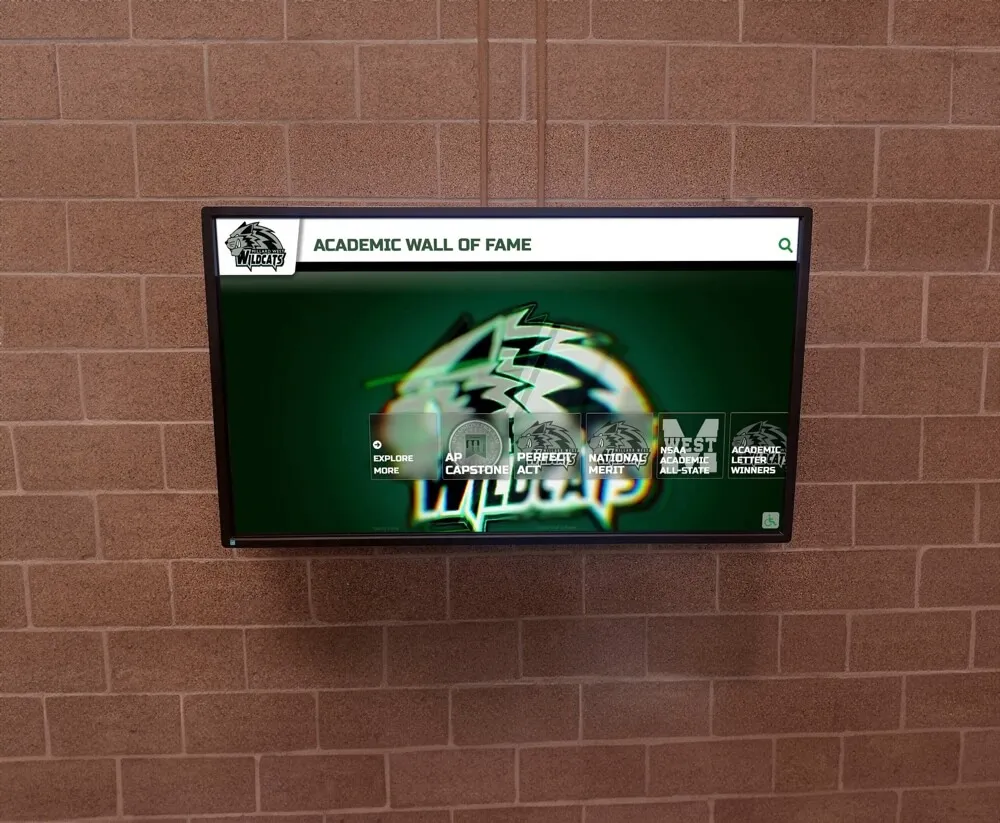
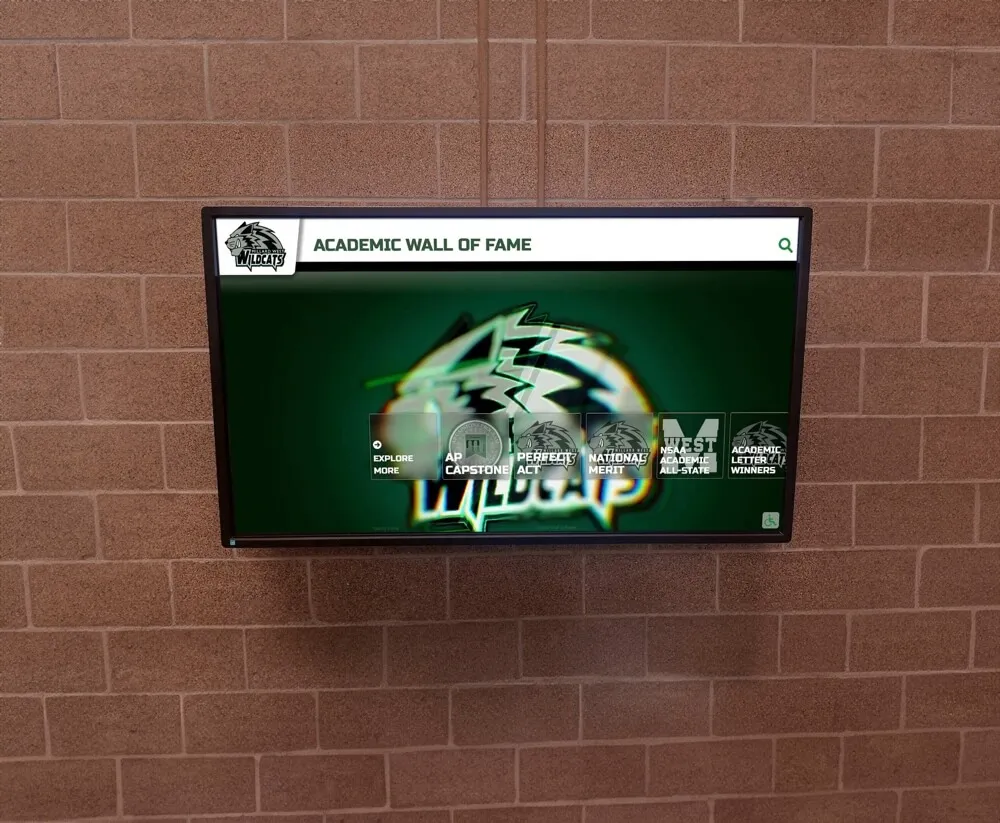
Academic recognition deserves prominence equal to athletic celebration, honoring intellectual achievement through dedicated wall graphics and digital displays
School Spirit and Culture Installations
Graphics strengthening community identity and institutional pride:
Mission, Vision, and Values Displays
Institutional statements deserving prominent visibility:
Mission statement graphics communicate institutional purpose to students, staff, and visitors. Vision declarations articulate aspirational goals guiding strategic direction. Core values listings identify specific principles shaping school culture and decision-making. Motto or tagline graphics featuring school’s defining phrase reinforcing identity. Inclusive messaging celebrating diversity and community belonging.
Student Voice and Artistic Expression
Graphics featuring student contributions strengthen ownership:
Student artwork displays celebrating creative achievement while beautifying spaces. Student photography displaying talented student perspectives. Motivational quotes from students in their own words about school experience. Class legacy graphics where graduating classes contribute designs or messages. Student testimonials about programs, teachers, or experiences creating authentic voice.
Event and Tradition Celebration
Graphics documenting institutional culture and annual traditions:
Homecoming recognition celebrating annual tradition through historical photos or achievement documentation. Prom and formal dance graphics creating excitement and anticipation. School musical and theatrical production commemoration. Academic competition documentation. Service project recognition highlighting community engagement and contribution.
Donor Recognition and Development Support
Professional acknowledgment graphics supporting fundraising and stewardship:
Campaign and Project Recognition
Capital campaign graphics celebrating community support for facility improvements, endowments, or program enhancements. Naming opportunity recognition where significant donors receive permanent acknowledgment through designated spaces. Project-specific support highlighting donors funding particular improvements like theater renovations, athletic facility upgrades, or technology implementations.
Donor Level Differentiation
Structured recognition reflecting contribution tiers:
Leadership circle recognition for most significant contributors. Major donor acknowledgment for substantial gifts. Annual fund supporter recognition celebrating ongoing operational support. Legacy society acknowledgment honoring planned giving donors. Memorial gift recognition honoring individuals through contributed support.
Sophisticated donor wall design strategies integrate wall graphics with digital recognition systems providing unlimited capacity while maintaining prestigious physical acknowledgment for major supporters.
Wayfinding and Directional Graphics
Functional graphics improving building navigation:
Building maps oriented logically with “you are here” indicators and clear destination labeling. Directional arrows and room number identification. Department or office identification helping visitors locate specific destinations. Color-coded zone systems where different colors represent grade levels, academic departments, or building sections. Emergency route identification ensuring clear egress signage complementing required safety signage.

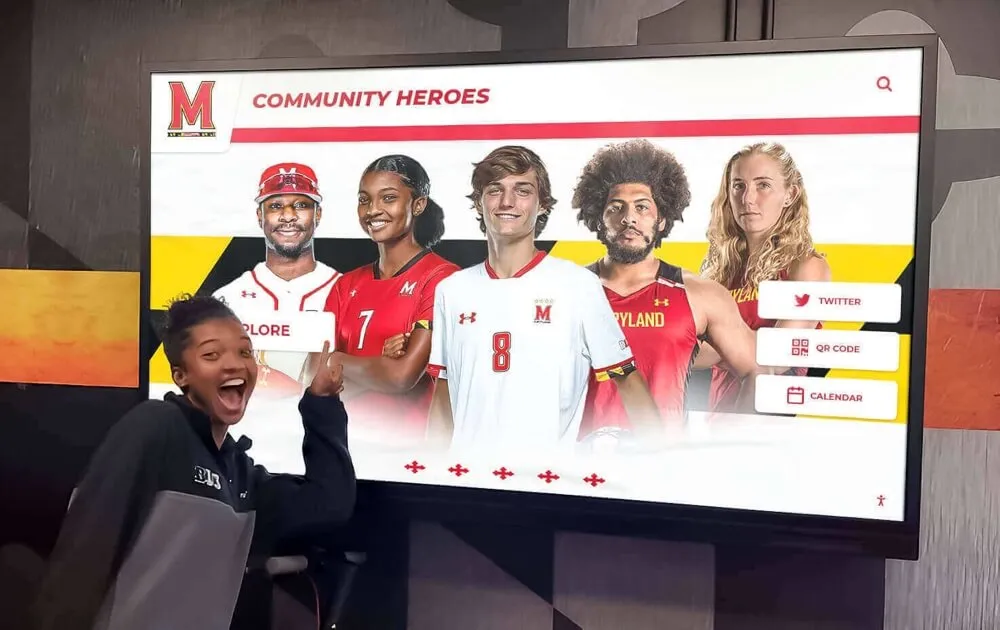
Comprehensive recognition installations utilize multiple coordinated displays creating extensive documentation capacity while maintaining unified branded presentation
Advanced Considerations: Accessibility, Compliance, and Future-Proofing
Professional installations address requirements beyond immediate aesthetics ensuring legal compliance, universal access, and sustained relevance.
ADA Compliance and Accessibility Requirements
School wall wraps must accommodate diverse users including those with visual or mobility impairments:
Tactile elements for wayfinding graphics assist visitors with visual impairments, particularly important for room identification and directional signage. Contrast ratios meeting WCAG 2.1 AA standards ensure text remains readable for users with visual impairments—minimum 4.5:1 contrast for normal text, 3:1 for large text. Height considerations ensure critical information falls within appropriate ranges for seated wheelchair users and standing individuals. Alternative format availability through QR codes linking to digital content enables screen reader access to information presented graphically.
Fire Safety and Building Code Considerations
Material selection affects fire safety compliance:
Class A fire rating for materials in circulation paths and egress routes meets most building code requirements. Low-flame-spread certifications ensure materials meet institutional safety standards. Non-toxic materials and inks particularly important in elementary schools where young children spend significant time. Emergency signage preservation ensuring graphics don’t obscure required exit signs, evacuation routes, or safety information.
Content Longevity and Update Planning
Strategic planning addresses inevitable content evolution:
Permanent content including school branding, mascots, historical achievements, and enduring traditions justifies premium investment in materials and installation. Semi-permanent content like current decade achievements, recent program highlights, or 5-10 year recognition windows suits moderate investment with expected replacement cycle. Temporary content including current season information, upcoming events, or short-term campaigns benefits from lower-cost approaches or digital alternatives enabling frequent updates without reinstallation.
Modular design approaches enable selective replacement where specific graphic sections update while surrounding installation remains unchanged. Digital displays paired with permanent wall graphics provide flexibility addressing update challenges while maintaining cohesive branded environments.
Technology Integration and Smart Design
Forward-thinking installations incorporate emerging capabilities:
QR code integration enables physical graphics linking to comprehensive digital content, video highlights, or interactive experiences accessed via smartphone. NFC tags embedded in installations trigger content delivery to compatible devices providing enhanced information access. Augmented reality markers enable future AR experiences layering digital content over physical graphics through mobile apps. Coordination with building-wide digital signage systems ensures consistent messaging across physical and digital channels.
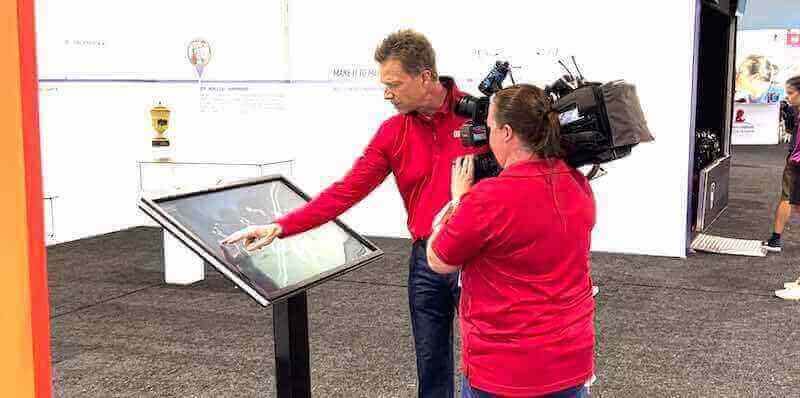
The most successful school environments integrate interactive kiosk solutions with traditional wall graphics creating comprehensive recognition platforms combining each medium’s strengths.
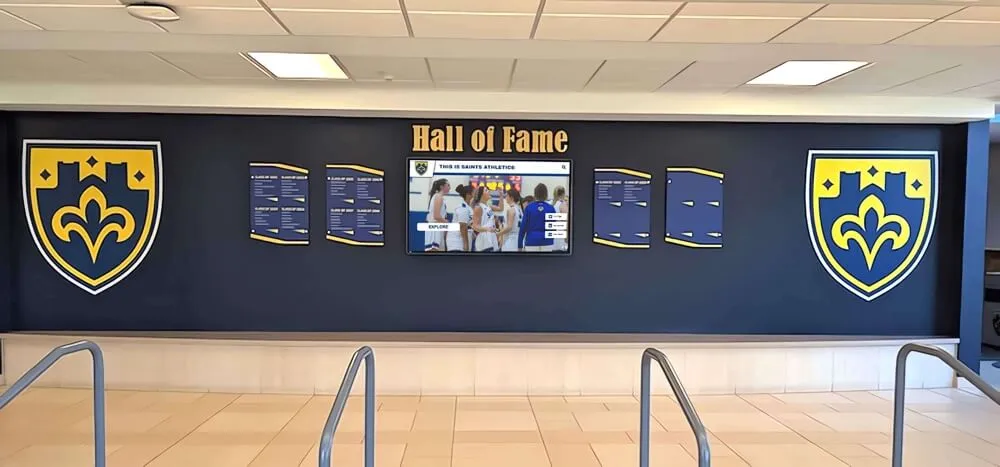
Timeless design approaches utilizing traditional shield formats and classic color palettes create prestigious recognition aesthetics appropriate for formal institutional environments
Procurement Process: Vendor Selection and Project Management
Successful wall wrap projects require systematic vendor evaluation and project coordination ensuring quality results delivered on schedule and within budget.
Evaluating Wall Wrap Vendors and Designers
Vendor capabilities vary dramatically requiring careful evaluation:
Portfolio review reveals design aesthetic, project scale experience, and relevant educational sector work. Client references provide insight into communication quality, problem-solving approach, and satisfaction levels. Technical capabilities including large-format printing equipment, material options, and specialized techniques. Installation experience and geographic service area. Design services availability including concept development, revision process, and final production-ready artwork. Project timeline and production scheduling to ensure completion aligns with school calendar constraints.
Request detailed proposals from multiple vendors enabling comparison of approaches, pricing, timelines, and included services. Best-value selection balances cost against quality, capability, and service rather than selecting lowest bid regardless of capability differences.
Project Phases and Milestone Planning
Systematic project management ensures successful execution:
Discovery and Planning Phase
Initial project stages establish foundation through stakeholder consultation identifying priorities and gathering input from administration, athletic directors, development offices, and student representatives. Space assessment documenting dimensions, surface conditions, lighting, and traffic patterns. Content gathering including photos, achievements, text, and other materials incorporated into designs. Budget finalization establishing available investment and allocating resources across design, materials, installation, and contingency reserves.
Design Development and Approval
Creative phases translate requirements into specific graphics through concept development exploring different aesthetic directions and layout approaches. Revision cycles incorporating feedback and refining designs. Color proofing ensuring printed colors match expectations and school branding standards. Final approval with clear sign-off process preventing mid-production changes requiring expensive revisions.
Production and Installation
Implementation phases bring designs to reality including printing on selected materials, surface preparation at installation locations, professional installation by qualified installers, quality inspection ensuring work meets standards, and final cleanup leaving spaces ready for use.
Post-Installation Support
Project completion includes final walkthrough addressing any concerns, maintenance guidance providing care instructions, warranty documentation clarifying coverage and processes, and periodic check-ins ensuring satisfaction and identifying any developing issues requiring attention.
Managing Timelines and School Calendar Constraints
Educational environment creates unique scheduling challenges:
Summer installation proves ideal for major projects when buildings are relatively empty, enabling installers to work efficiently without disrupting classes, providing adequate time for complex installations, and ensuring completion before school year begins with fresh updated facilities.
Break period installation during winter, spring, or long weekends accommodates smaller projects within academic year constraints. After-hours installation enabling work during evenings or weekends may suit projects in specific locations without building-wide disruption. Multi-phase approaches spreading major installations across multiple break periods enables large projects proceeding incrementally within calendar constraints.
Planning well ahead—6-12 months for major installations—provides adequate time for design development, approvals, production, scheduling, and installation without rushed timelines compromising quality.
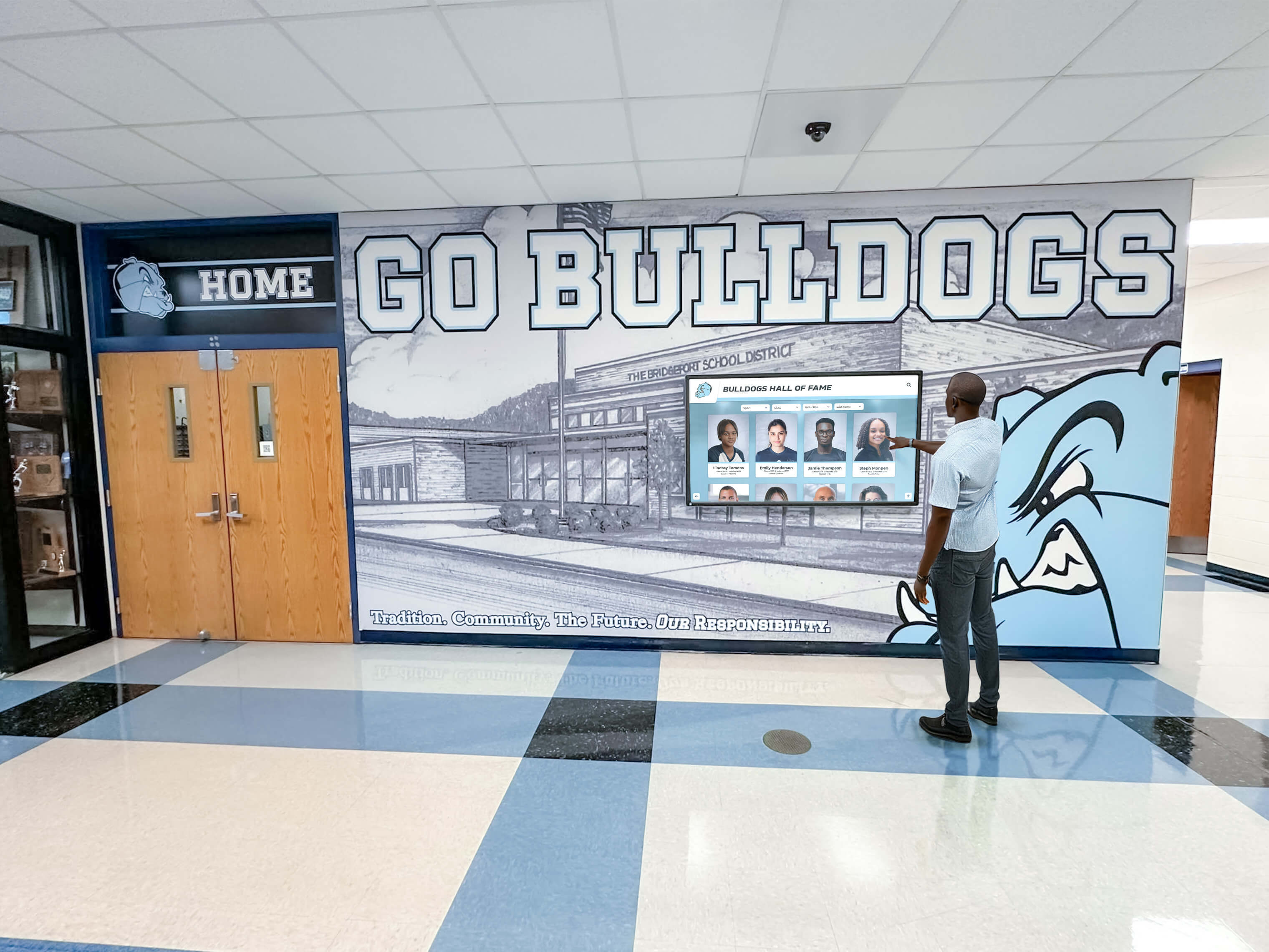
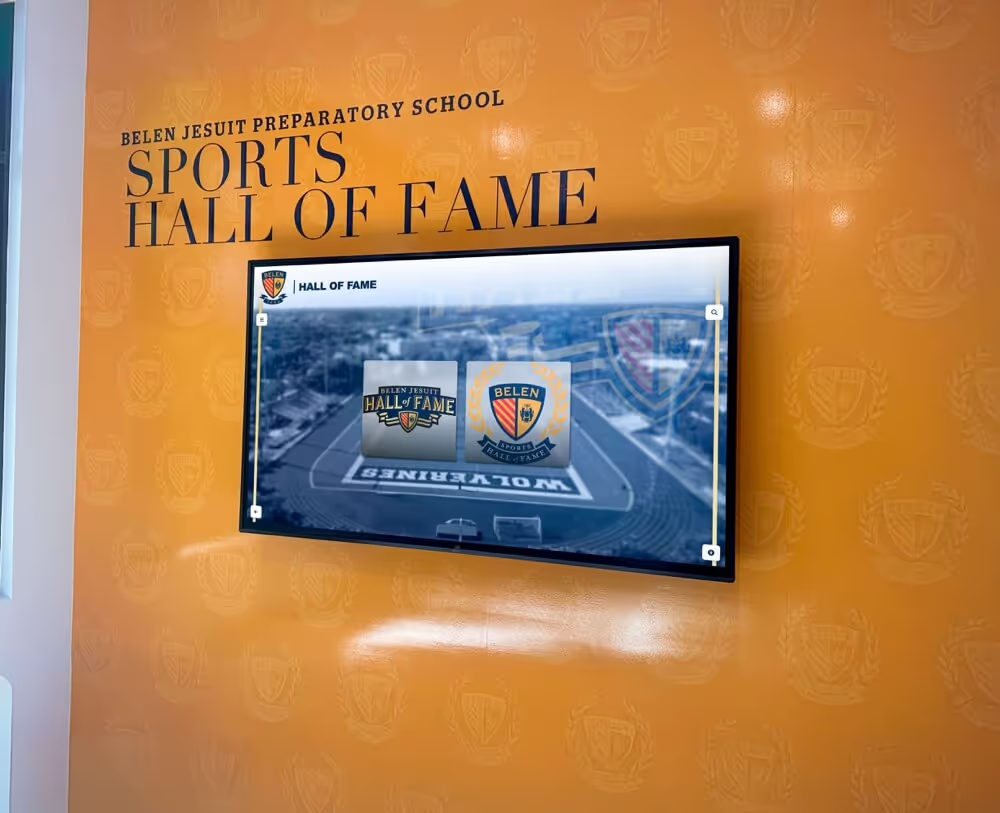
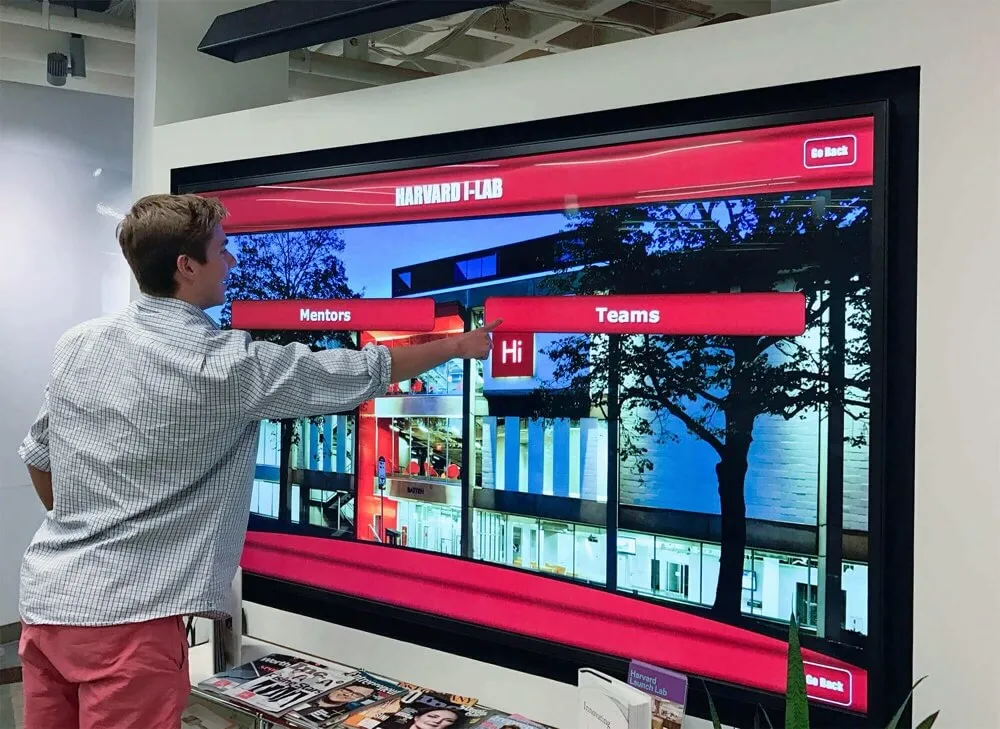
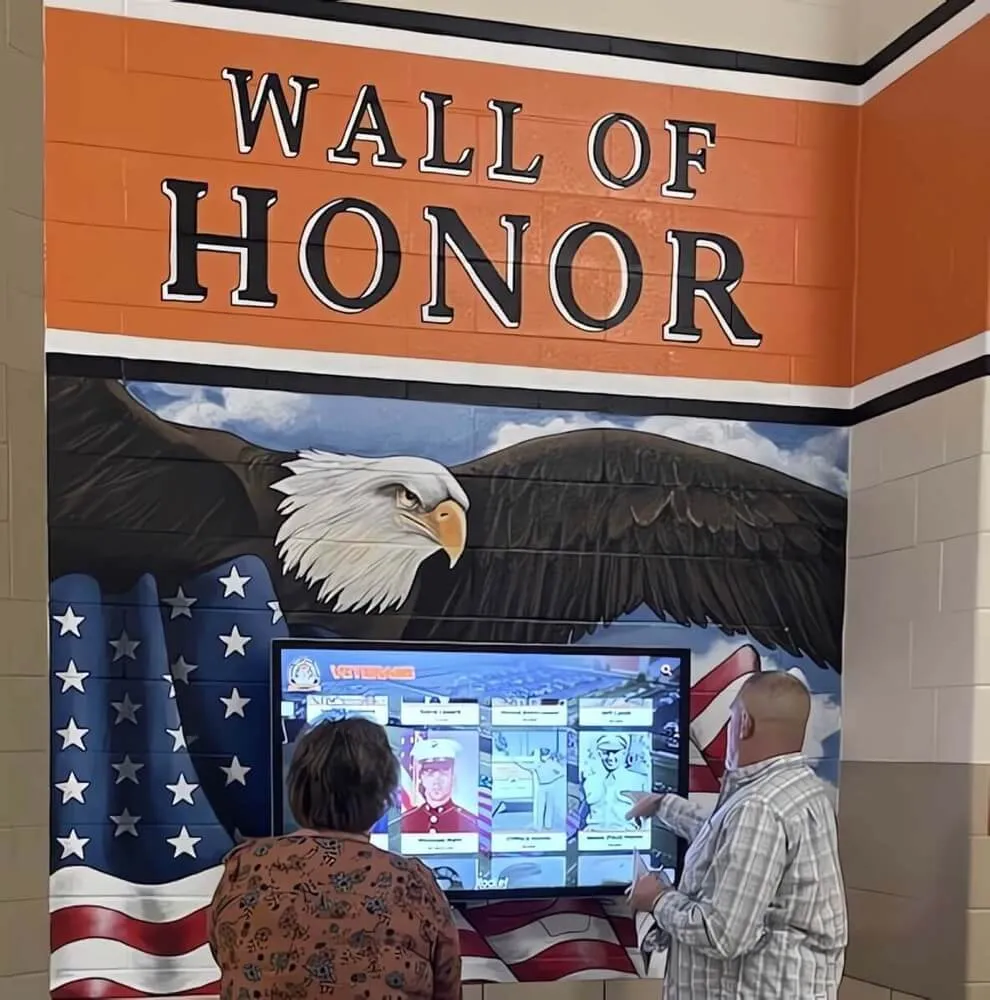
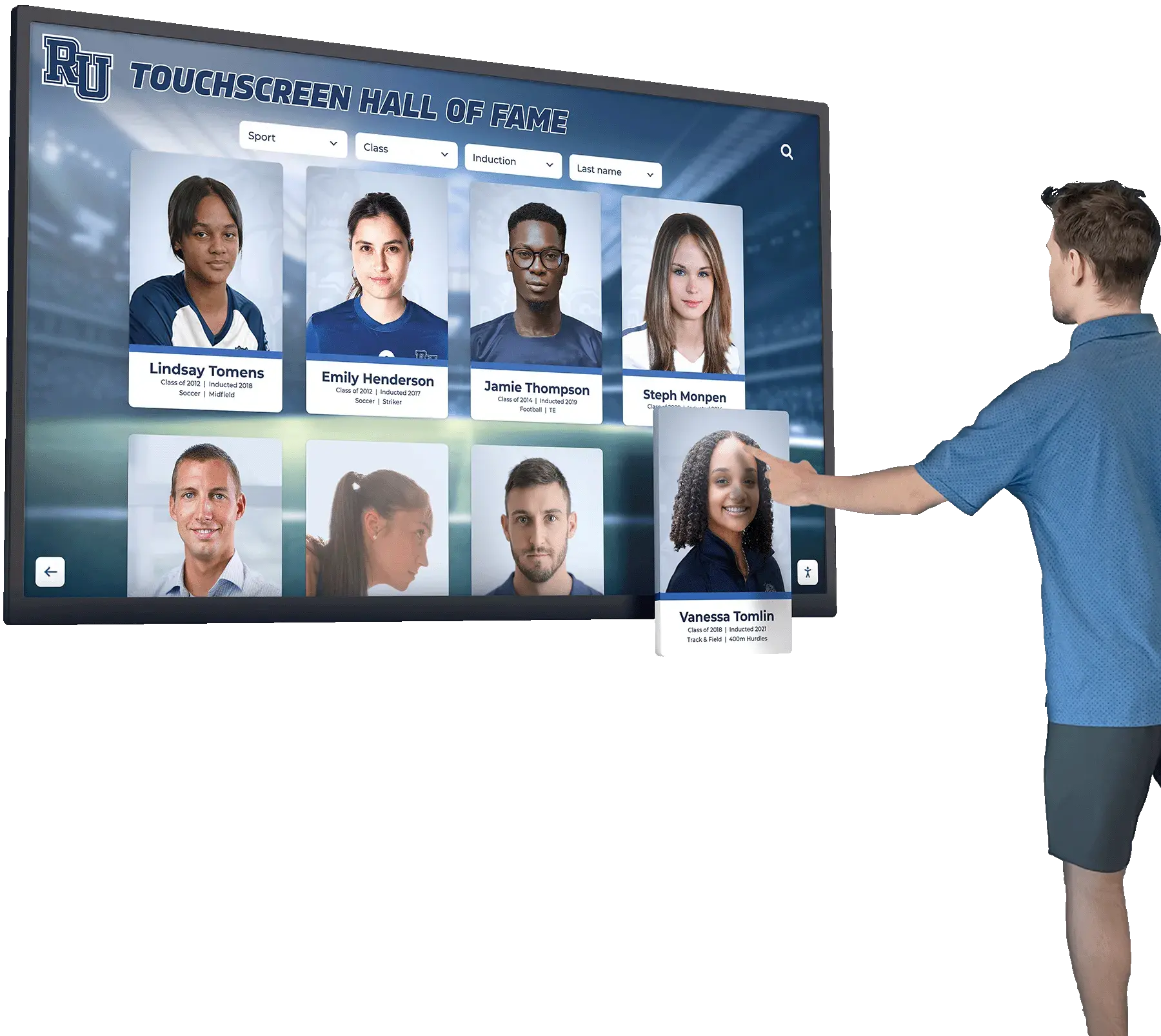
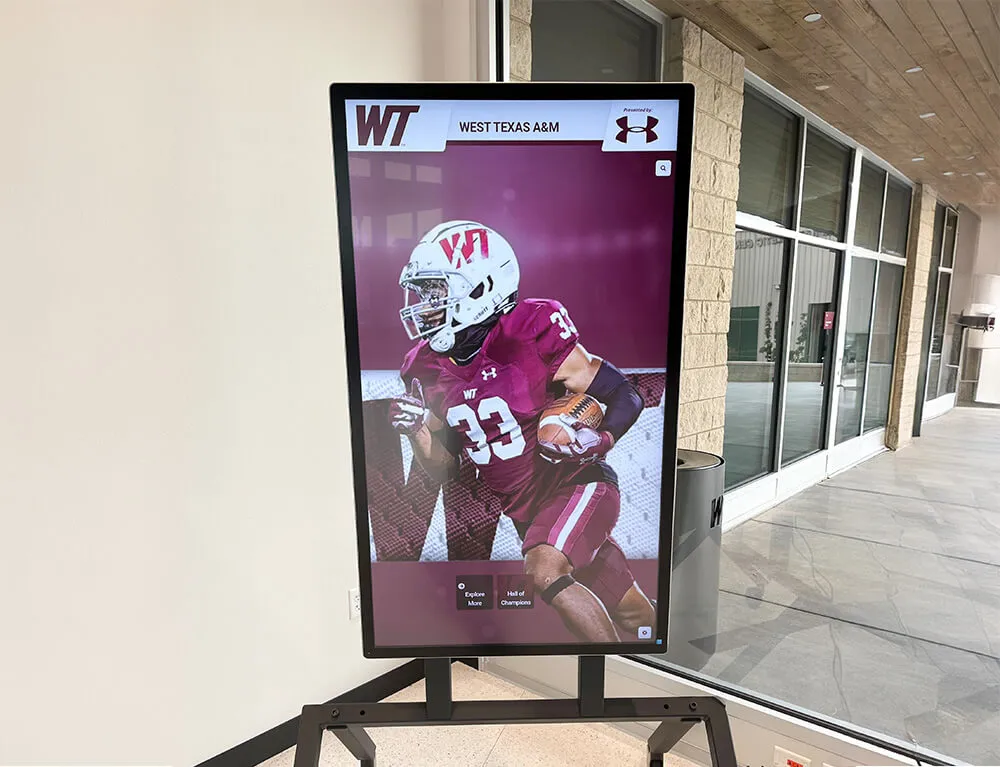
Interactive digital displays complement wall graphics enabling deep content exploration through intuitive touch interfaces while maintaining coordinated branded aesthetics
Conclusion: Transforming School Spaces Through Strategic Wall Wrap Design
School wall wraps represent far more than decorative improvements to institutional facilities—they create purposeful communication tools strengthening culture, celebrating achievement, supporting navigation, acknowledging community support, and transforming forgettable spaces into motivating environments that communicate what your school stands for every single day.
The difference between mediocre installations and truly transformative wall wrap projects lies in strategic planning addressing both functional requirements and emotional impact through careful content selection, professional design execution, quality materials and installation, proper maintenance and care, and thoughtful integration with existing facilities and complementary technologies like digital recognition displays.
Transform Your School Spaces with Custom Recognition Design
Discover how combining professional wall graphics with interactive digital displays creates comprehensive recognition environments that celebrate achievement while strengthening school identity. Rocket Alumni Solutions specializes in integrated solutions serving educational institutions across athletic recognition, academic celebration, donor acknowledgment, and school branding applications.
Explore Recognition SolutionsWhether implementing athletic facility branding motivating current competitors, academic recognition displays celebrating intellectual achievement, comprehensive school spirit installations strengthening community identity, donor acknowledgment graphics supporting development efforts, or functional wayfinding systems improving building navigation, strategic wall wrap investments deliver lasting value through sustained visibility, professional institutional presentation, and meaningful communication advancing school missions.
Organizations investing in well-designed wall wraps consistently report measurable benefits including enhanced school pride among students and staff, improved facility perception from visitors and prospective families, increased effectiveness of recognition programs motivating achievement, strengthened donor relationships through professional stewardship acknowledgment, and transformed institutional environments creating spaces people genuinely enjoy occupying rather than merely tolerating as utilitarian necessities.
Ready to explore wall wrap opportunities for your school? Discover comprehensive school hallway design strategies, learn about athletic program recognition approaches, and understand comprehensive school pride building frameworks that transform standard facilities into motivating environments celebrating everything your school community achieves together.