



When student athletes reach the absolute pinnacle of their sport, earning recognition among the nation’s elite performers, they achieve a distinction few ever attain: All-American status. This prestigious honor represents more than exceptional talent—it signifies sustained excellence, competitive dominance, and achievement validated by national selection committees who evaluate thousands of athletes competing across the country.
Yet despite the prestige surrounding All-American recognition, many students, parents, and even school communities don’t fully understand what this honor represents—the rigorous evaluation processes, the different selection organizations and criteria, how recognition varies across sports and competitive divisions, or why earning All-American status carries such significant weight during college recruitment, scholarship consideration, and lifelong athletic identity.
This comprehensive guide explores everything about All-American athletes—from understanding what defines this elite recognition and how athletes earn this prestigious designation, to discovering why schools prominently display All-Americans on recognition walls and how modern digital displays permanently celebrate these exceptional achievers alongside other athletic honors.
All-American recognition represents the highest national honor student athletes can achieve during their competitive careers, validating excellence through rigorous selection processes administered by respected national organizations. Understanding this achievement helps schools celebrate it appropriately while inspiring current athletes to pursue similar excellence through dedicated training and competitive performance.

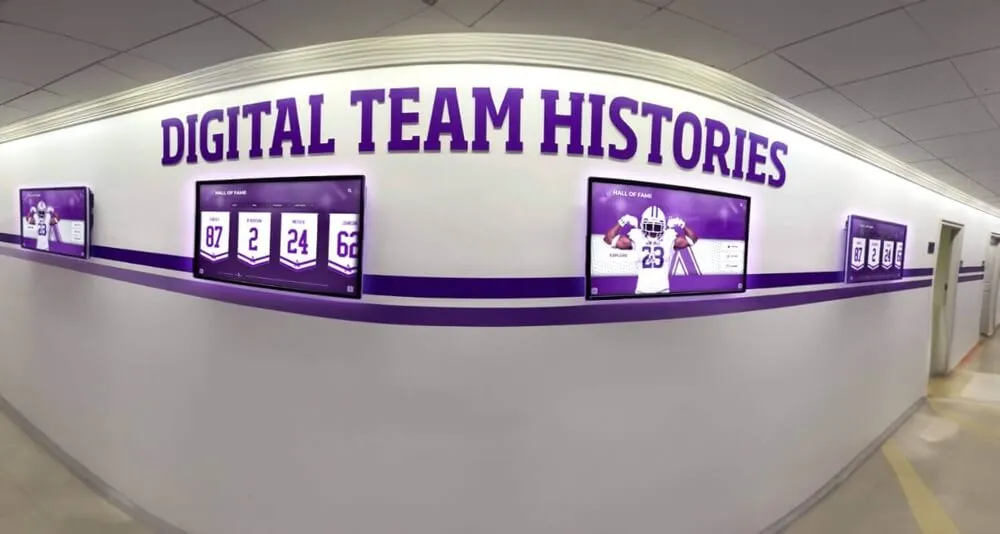
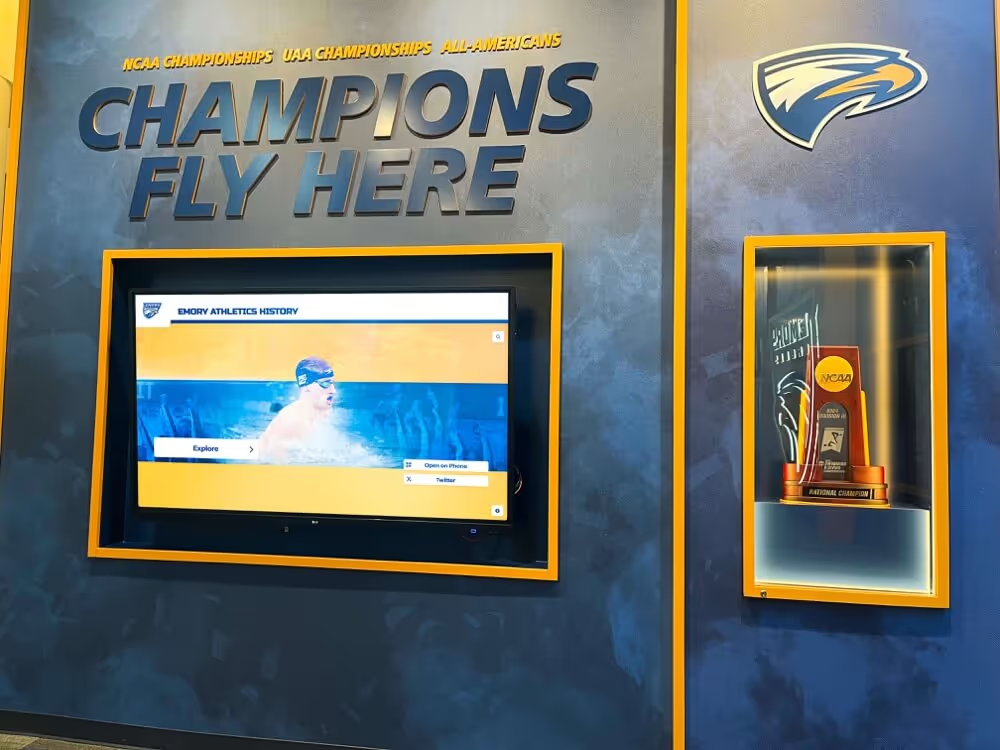
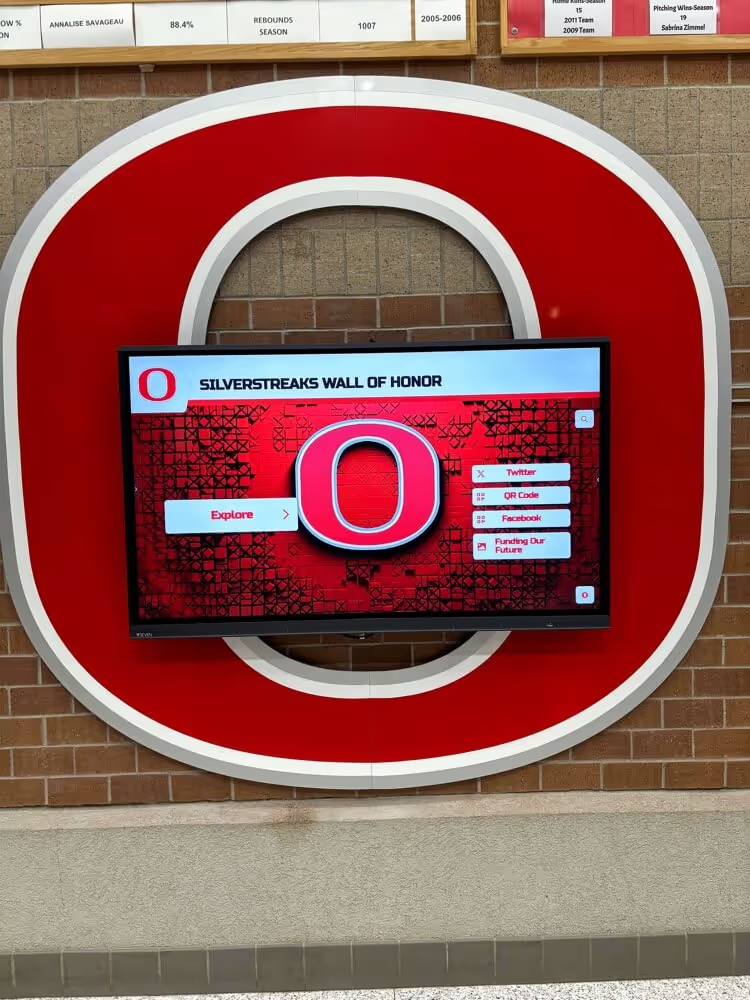
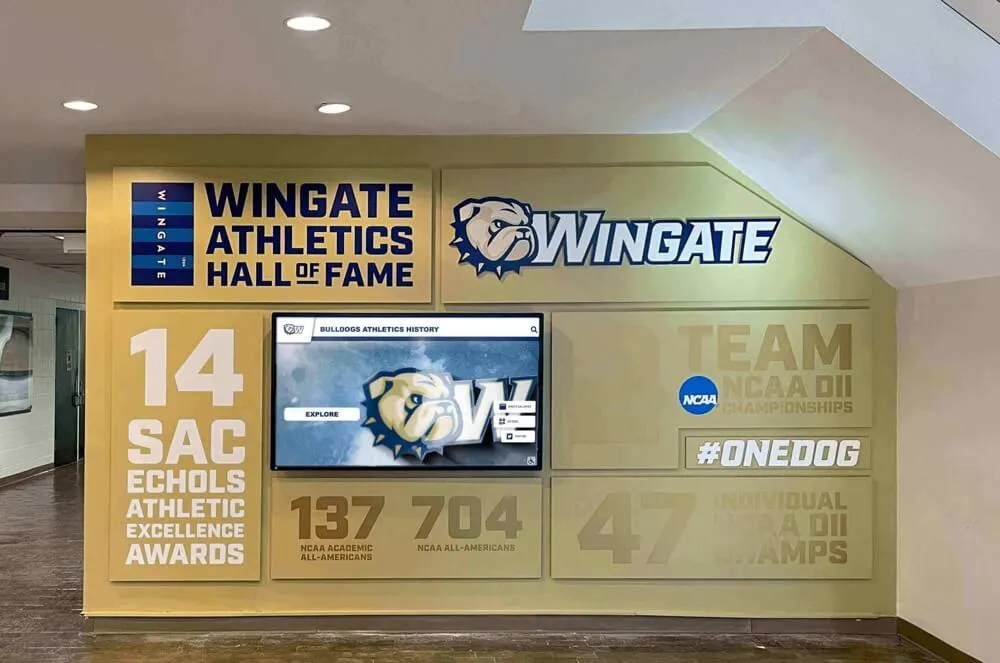
Elite athletic recognition spaces celebrate the highest honors including All-American selections through dedicated display areas showcasing championship achievements
Understanding What All-American Status Means
Before implementing recognition strategies, understanding precisely what All-American designation represents provides essential foundation for appropriate celebration.
The Definition and Significance of All-American Recognition
All-American honors designate athletes who performed at elite national levels within their respective sports during specific competitive seasons. Unlike conference or regional recognition limited to geographic areas, All-American status acknowledges athletes among the absolute best across the entire country—regardless of location, conference affiliation, or school size classification.
National Scope and Competitive Context
The defining characteristic separating All-American recognition from other athletic honors involves national competitive scope. While all-conference selections compare athletes within specific leagues and all-state recognition evaluates performance statewide, All-American designation requires competing against every athlete nationwide participating in that sport at that competitive level.
This national comparison makes All-American achievement extraordinarily selective—selection committees evaluate thousands or tens of thousands of athletes annually, ultimately recognizing only a small percentage whose performance clearly distinguished them as national elite performers.
Historical Tradition and Prestige
All-American athletic recognition traces origins to the early 20th century when college football pioneered systematic national team selections. Walter Camp, often called the “Father of American Football,” began publishing annual All-America football teams in 1889, establishing traditions that expanded across virtually all competitive sports throughout the following century.
Today, All-American recognition carries profound prestige rooted in over a century of tradition, with selection representing career-defining achievement that athletes and schools celebrate throughout their lives. Former All-Americans frequently cite this recognition as their most meaningful athletic honor—validating years of dedication through national expert acknowledgment.
Validation Through Expert Evaluation
Unlike popularity-based recognition or participation awards, All-American selection requires evaluation by expert committees intimately familiar with national competitive landscapes within specific sports. Selection organizations employ coaches, scouts, statisticians, and sport administrators who systematically evaluate athlete performance throughout entire seasons, identifying those whose excellence clearly merits national elite designation.
This expert validation provides objective third-party assessment of excellence—recognition that athletes earned through documented performance rather than local reputation or limited geographic comparison.

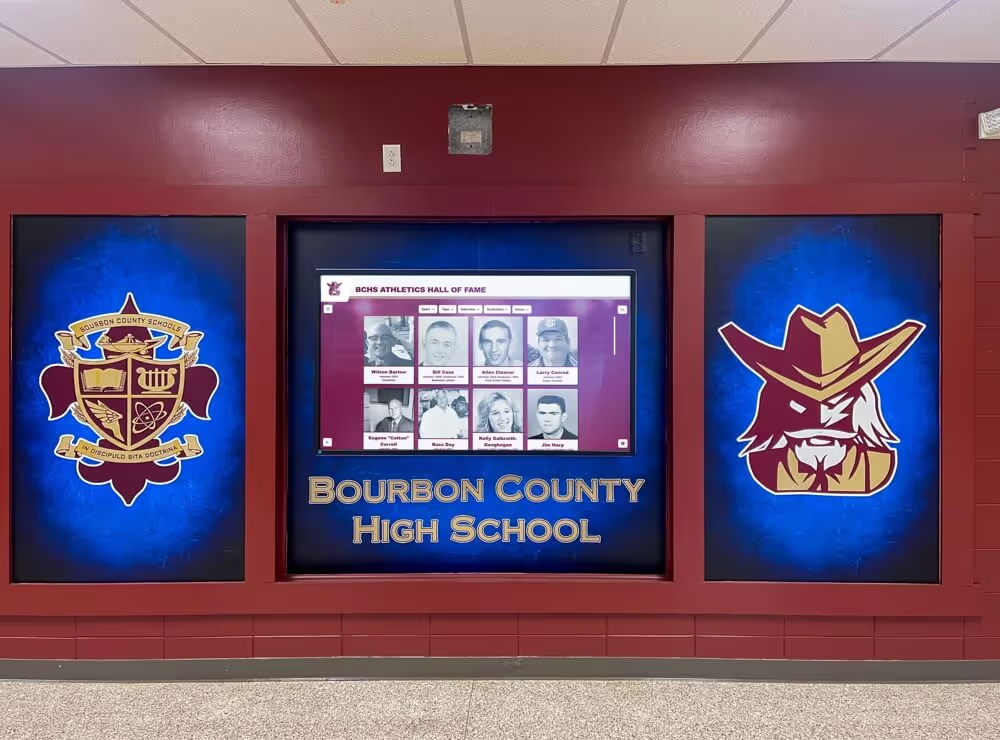
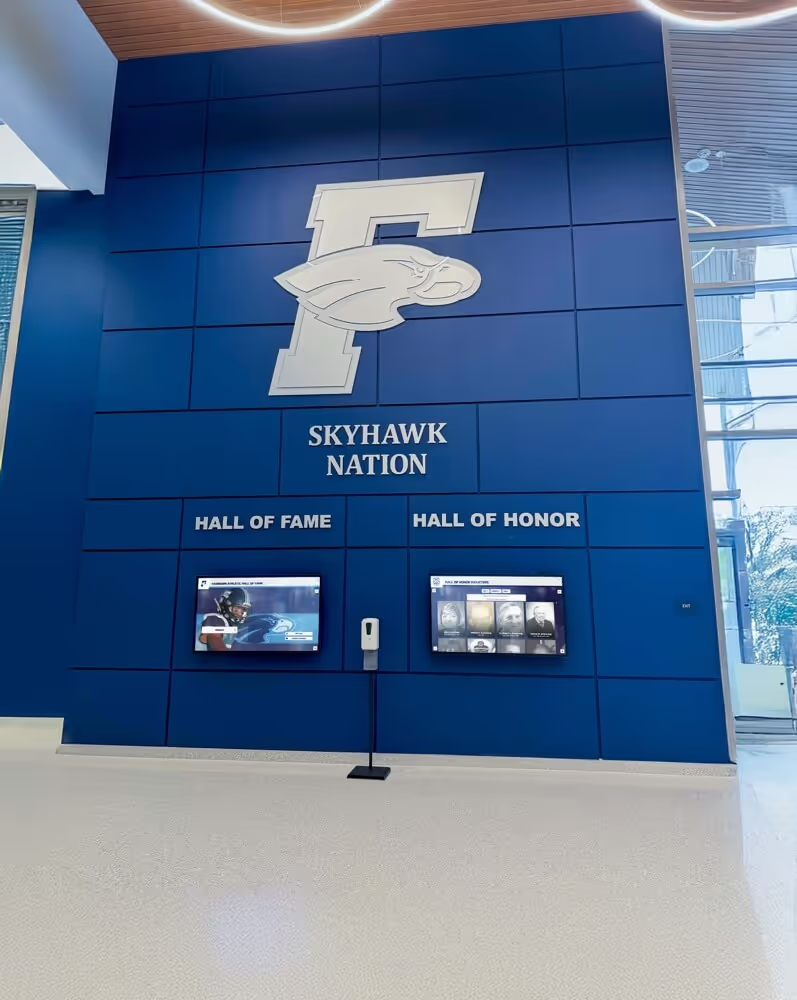
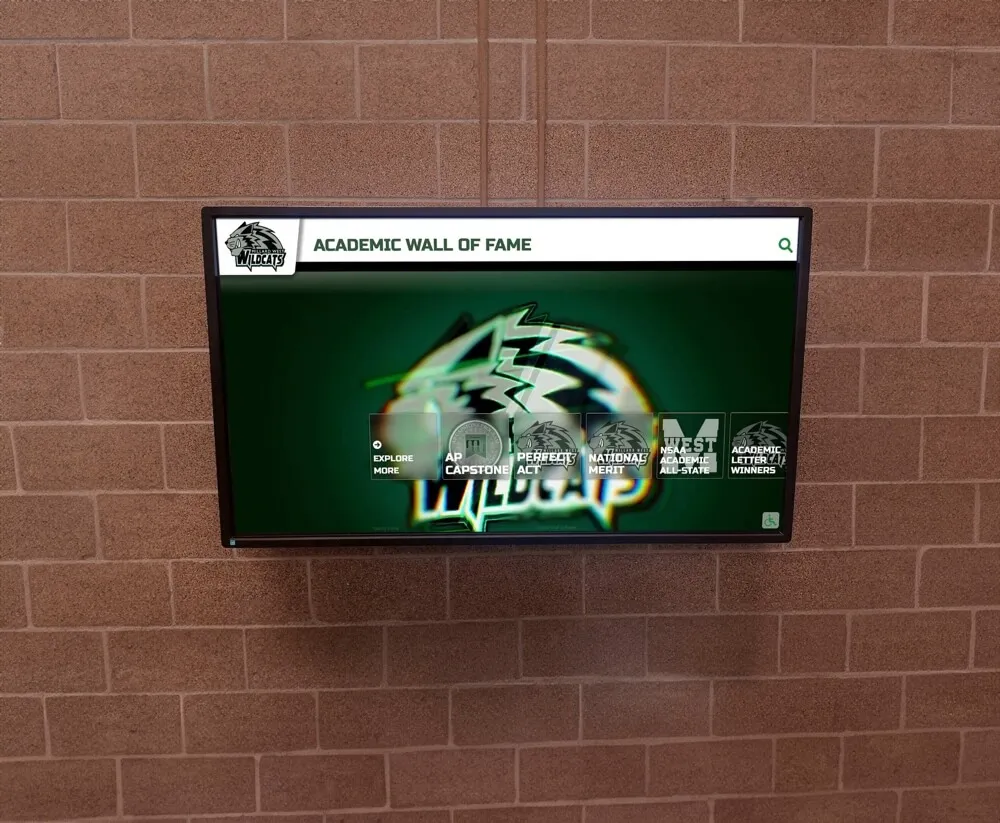
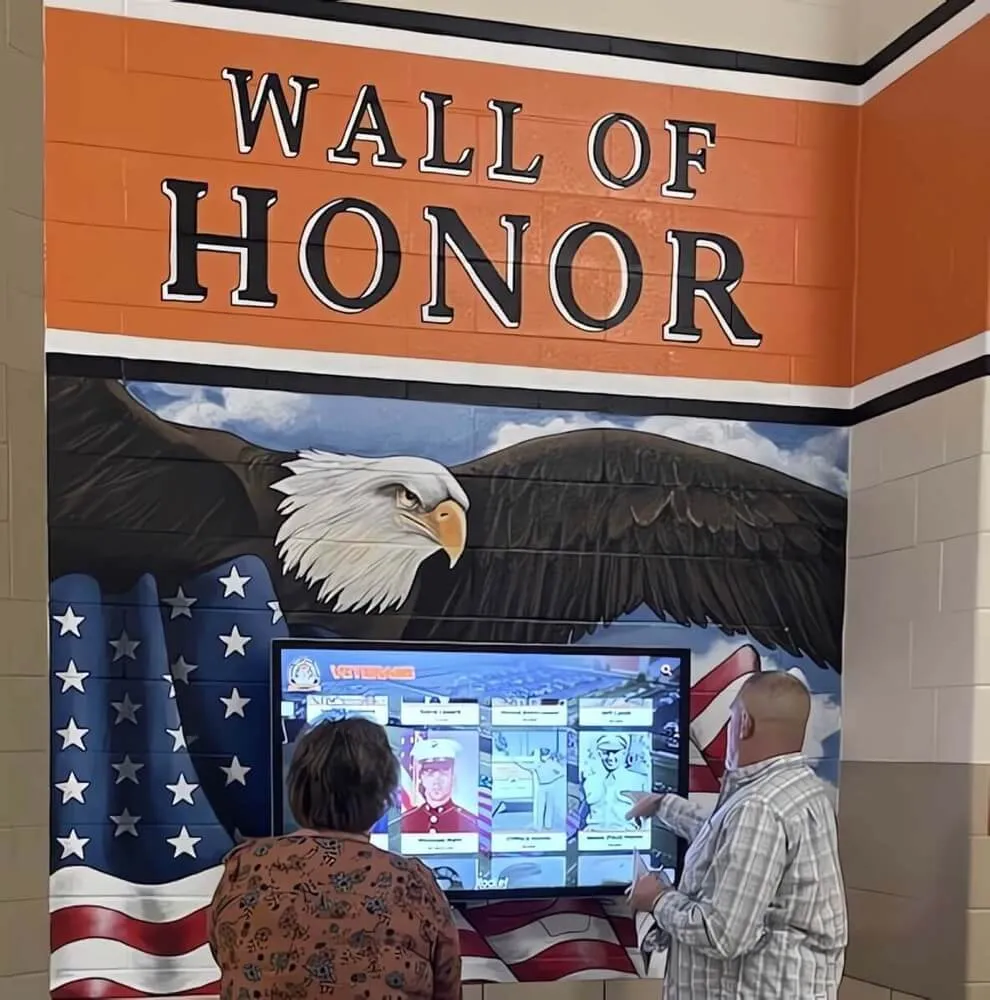
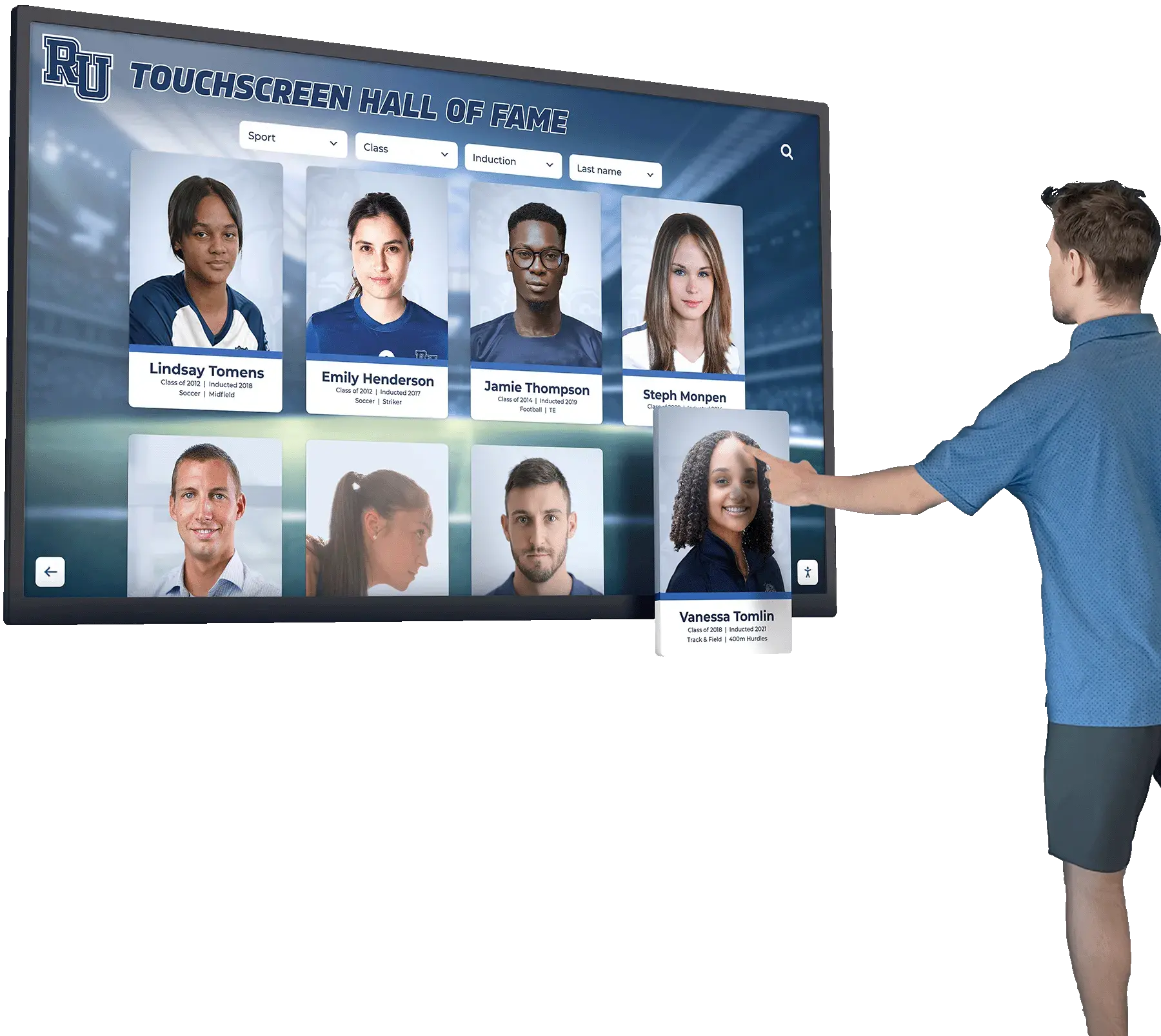
Modern recognition systems document All-American honors through rich athlete profiles combining achievement details, statistics, and biographical narratives
Major All-American Selection Organizations
Multiple respected organizations administer All-American selection programs across different sports and competitive levels, each with specific criteria and selection processes.
High School All-American Programs
At the secondary school level, several organizations provide All-American recognition:
- Under Armour All-America Game: Football showcase featuring elite high school seniors selected through rigorous evaluation of competitive performance, offering one of sport’s most prestigious high school honors
- McDonald’s All-American Game: Basketball’s premier high school recognition, selecting top 24 boys and 24 girls nationwide for annual showcase game
- Perfect Game All-American Classic: Baseball’s highest high school honor, recognizing elite prospects through national selection committee
- USA TODAY High School Sports Awards: Multi-sport national recognition program honoring outstanding high school athletes across various competitive sports
- MaxPreps All-American Teams: Sport-specific national recognition across football, basketball, volleyball, soccer, and other sports based on comprehensive season performance analysis
High school All-American designation provides immediate validation attracting college recruiter attention while offering athletes tangible evidence of elite national-level performance during critical recruitment periods.
Collegiate All-American Recognition
College athletics features extensive All-American programs administered by governing bodies and media organizations:
NCAA Division I, II, and III Programs: National Collegiate Athletic Association coordinates sport-specific All-American selection for championship sports, with criteria varying by division and sport. Selection committees typically combine coach voting with statistical performance thresholds determining annual honorees across three recognition tiers: First Team, Second Team, and Third Team All-Americans.
NAIA All-American Programs: National Association of Intercollegiate Athletics provides comparable recognition for member institutions, following similar tiered selection processes acknowledging excellence across competitive levels.
NJCAA All-American Recognition: National Junior College Athletic Association honors two-year college athletes through systematic selection across all championship sports, providing community college athletes equivalent national recognition opportunities.
Coaches’ Association All-American Teams: Sport-specific coaching associations like the American Football Coaches Association (AFCA), National Association of Basketball Coaches (NABC), and similar organizations publish annual All-American teams often considered most prestigious due to selection by active coaching professionals intimately familiar with competitive landscapes.
Resources about varsity sports participation provide context for understanding the competitive progression leading toward elite All-American recognition.
Sport-Specific Selection Criteria and Processes
All-American selection varies significantly across sports based on competitive structures and performance evaluation methods:
Team Sports with Position-Specific Selection
Sports like football, basketball, soccer, volleyball, and hockey typically recognize All-Americans by position, ensuring balanced representation across different roles. Football might select separate offensive, defensive, and special teams All-Americans with position-specific quotas ensuring proper distribution. Basketball recognizes guards, forwards, and centers separately accommodating different skill sets and competitive roles.
Position-based selection acknowledges that comparing athletes playing fundamentally different roles proves impossible—a quarterback and linebacker contribute differently, making position-specific evaluation essential for meaningful recognition.
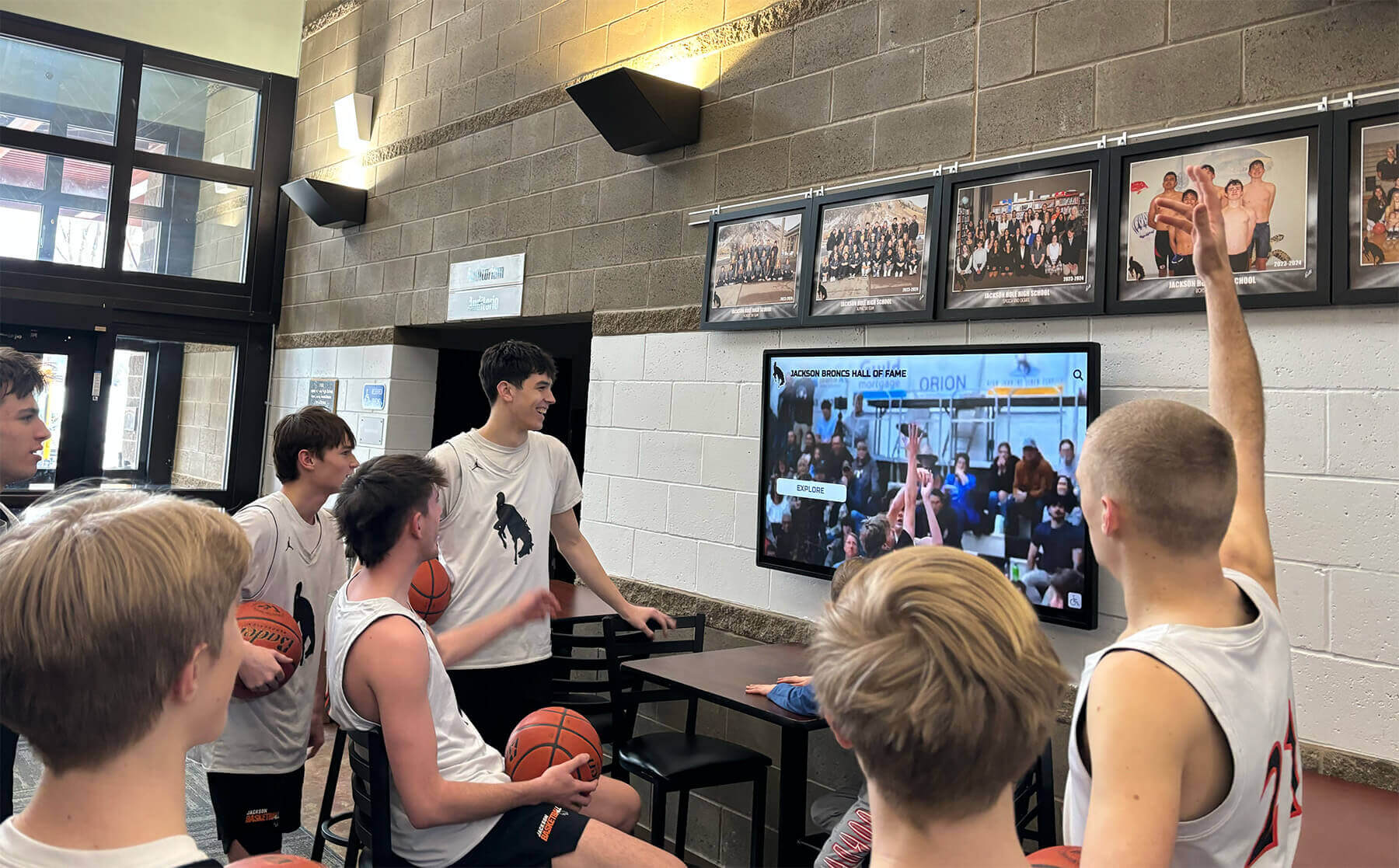
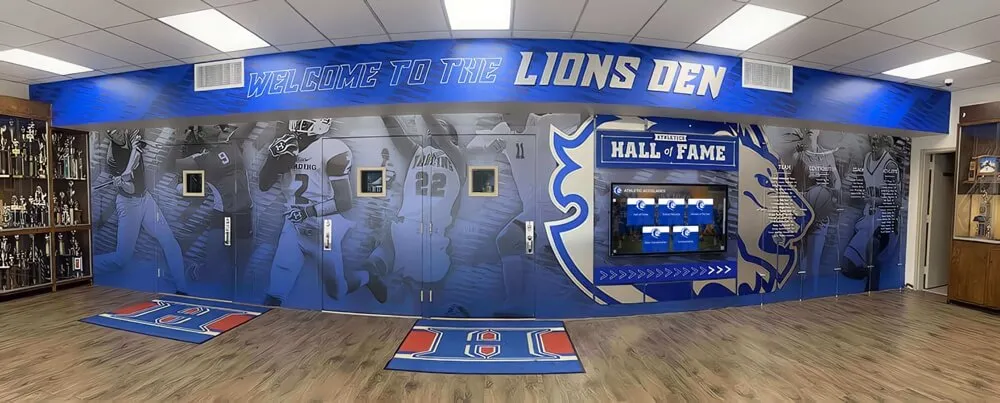
Recognition displays create natural gathering spaces where student athletes explore elite achievements and learn about paths toward All-American excellence
Individual Sports with Event-Based Recognition
Track and field, swimming, cross country, wrestling, and similar sports structure All-American recognition around specific events or weight classes. Track athletes might earn All-American status in particular events (100m dash, high jump, etc.) rather than general track designation. Wrestlers receive recognition within specific weight divisions acknowledging competitive context.
These sport structures recognize that athletes specialize in particular competitive contexts rather than competing universally across entire sports.
Performance-Based Statistical Thresholds
Many sports establish objective statistical criteria for All-American consideration. Cross country and track frequently designate All-Americans as athletes finishing among top positions at national championship meets—for example, top 40 finishers at NCAA Division I Cross Country Championships earn First Team All-American recognition automatically.
Swimming and diving designate All-Americans based on national championship meet performance, with specific finish positions determining recognition tier. This objective approach ensures clear, transparent standards athletes understand and pursue throughout seasons.
Understanding comprehensive athletic awards categories provides context for where All-American honors fit within broader recognition hierarchies.
How Athletes Earn All-American Recognition
Understanding the pathways toward All-American status helps athletes, coaches, and schools appreciate the extraordinary achievement this honor represents.
The Competitive Path to All-American Selection
Earning All-American recognition requires sustained excellence across multiple performance dimensions:
Exceptional Competitive Performance
All-Americans demonstrate consistent elite performance throughout entire competitive seasons, not just isolated outstanding moments. Selection committees evaluate complete body of work including regular season performance against quality competition, postseason and playoff excellence under high-pressure circumstances, performance consistency across diverse competitive environments, and statistical achievement placing athletes among national leaders in relevant categories.
One exceptional game or performance rarely suffices—All-American recognition demands season-long excellence distinguishing athletes from thousands of competitors nationwide.
National Championship Participation and Success
Particularly at collegiate levels, many All-American selections emphasize national championship performance. NCAA championships, NAIA national tournaments, and similar events provide direct head-to-head competition between nation’s elite athletes, offering selection committees clear comparative assessment opportunities.
Athletes performing exceptionally during national championship competitions significantly enhance All-American selection prospects—these high-stakes events against top competition provide unambiguous elite performance demonstration.
Statistical Leadership and Record-Breaking Achievement
Quantifiable performance metrics heavily influence All-American consideration across most sports. Leading nation in relevant statistical categories (scoring, assists, tackles, batting average, swimming times, etc.) provides objective evidence supporting selection.
Record-breaking performances—surpassing school, conference, or national records—further strengthen cases by demonstrating historical excellence transcending normal competitive achievement ranges.
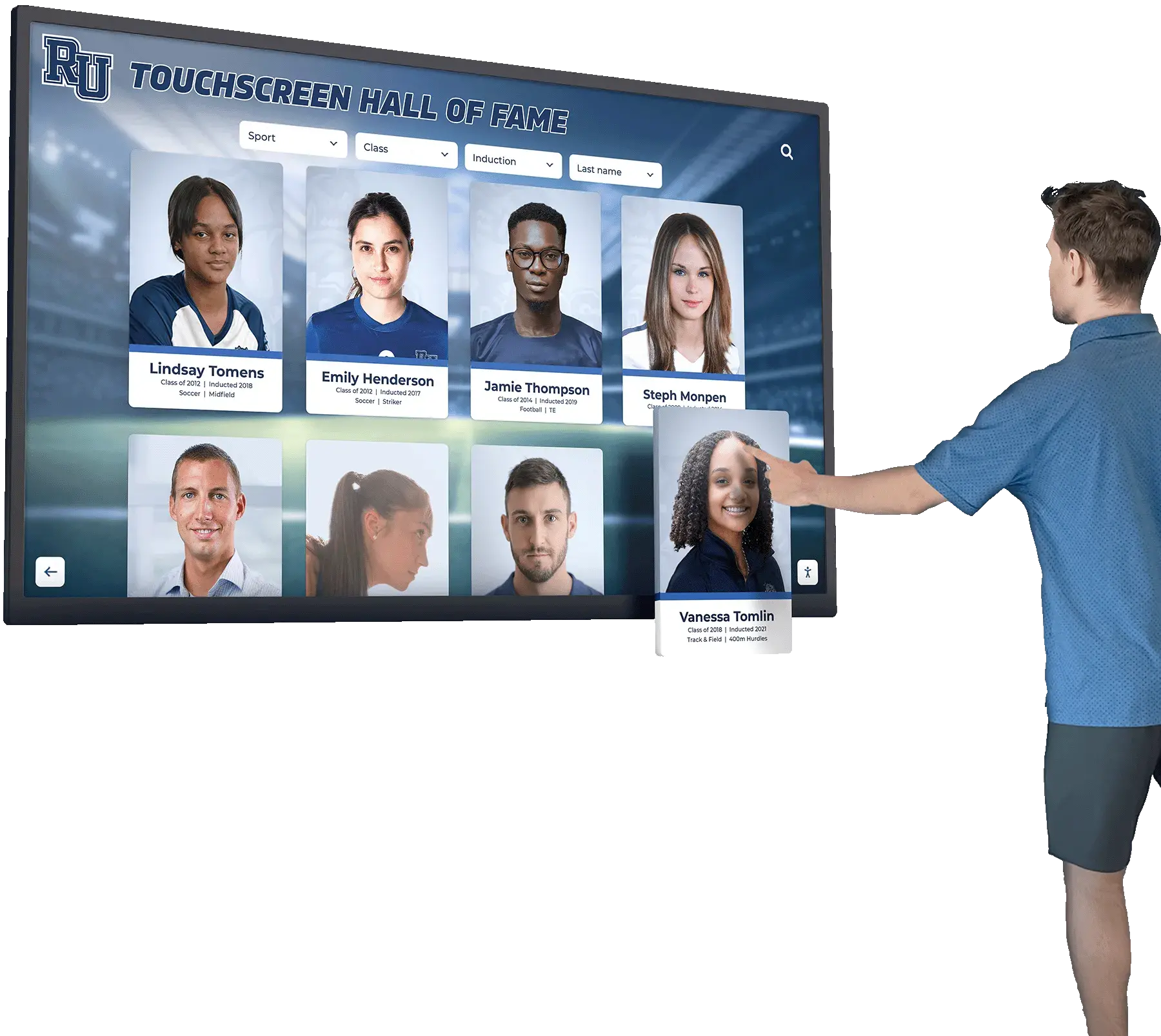
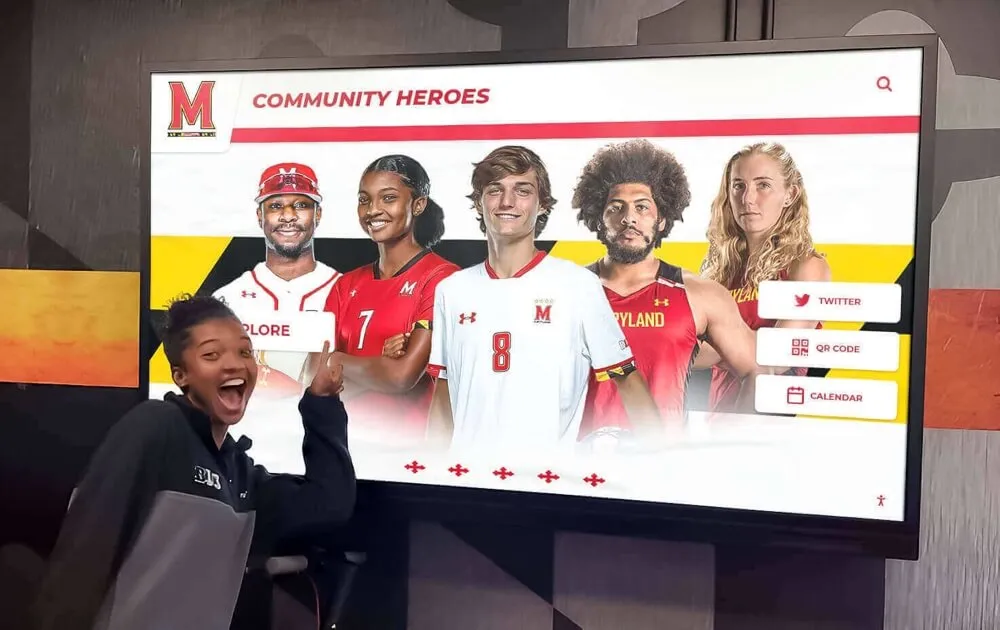
Interactive platforms enable exploration of All-American achievements through searchable databases documenting elite athlete accomplishments across school history
Academic All-American Recognition
Beyond purely athletic All-American honors, prestigious academic All-American programs recognize excellence across both competitive performance and rigorous academics:
CoSIDA Academic All-America® Standards
The College Sports Information Directors of America (CoSIDA) administers the nation’s premier Academic All-America program recognizing student athletes who excel simultaneously in athletics and academics. According to CoSIDA standards, Academic All-American candidates must maintain minimum 3.50 cumulative GPA while competing as varsity starters or key contributors on competitive teams.
Academic All-American designation carries particular prestige because it acknowledges dual excellence—athletes who refuse to compromise between rigorous academics and competitive athletics, instead pursuing both domains with exceptional dedication.
Selection Tiers and Competitive Categories
Academic All-America programs typically recognize athletes across three tiers (First Team, Second Team, Third Team) similar to purely athletic All-American structures, while organizing selections by sport and competitive division ensuring appropriate comparative assessment.
This tiered approach enables recognition of varying achievement levels while preserving distinction between supreme dual excellence (First Team) and outstanding but slightly lower achievement (Second and Third Teams).
Career Benefits and Recognition Value
Academic All-American status provides unique advantages during college recruitment, graduate school applications, and career development because it demonstrates exceptional time management, intellectual capability alongside physical excellence, and sustained commitment across multiple demanding domains simultaneously.
Many former Academic All-Americans cite this recognition as opening doors beyond pure athletic achievement—validating comprehensive excellence attractive to academic institutions, employers, and professional opportunities valuing both intellectual and competitive capabilities.
Comprehensive guides to Academic All-Americans recognition displays explore how schools celebrate these dual achievers through dedicated recognition systems.
The Significance of All-American Achievement
Understanding why All-American recognition matters helps schools implement appropriate celebration while inspiring current athletes toward similar excellence.
College Recruitment and Scholarship Impact
All-American designation dramatically influences college recruitment and athletic scholarship opportunities:
Enhanced Recruiting Visibility
College coaches recruiting nationally face overwhelming challenges evaluating thousands of prospective athletes competing across diverse geographic regions and competitive contexts. All-American recognition provides standardized achievement indicator immediately identifying athletes who performed at verified elite levels within their sports.
Recruiting coordinators frequently filter prospect databases by All-American status, using this designation as screening criterion identifying athletes warranting detailed evaluation. This filtering means All-American recognition often determines whether athletes receive serious recruiting consideration or get overlooked among enormous prospect populations.
Scholarship Negotiation Leverage
Athletic scholarship allocation involves quantifying athlete value and competitive potential. All-American achievement provides tangible evidence justifying scholarship investment—demonstrating athletes performed among nation’s elite in high school or previous competitive levels, suggesting high probability of college-level success.
Athletes with All-American credentials typically receive more favorable scholarship offers and stronger recruiting interest than similarly talented athletes lacking this validation, because schools feel greater confidence investing scholarship resources in athletes with documented national-level excellence.
Academic Institution Prestige
Beyond athletic departments, universities recruiting academically accomplished students value Academic All-American recognition because it identifies exceptional individuals who excel across multiple demanding domains. Admissions offices at competitive institutions appreciate Academic All-Americans because these students typically bring strong work ethic, time management skills, and achievement orientation benefiting campus communities beyond athletics.
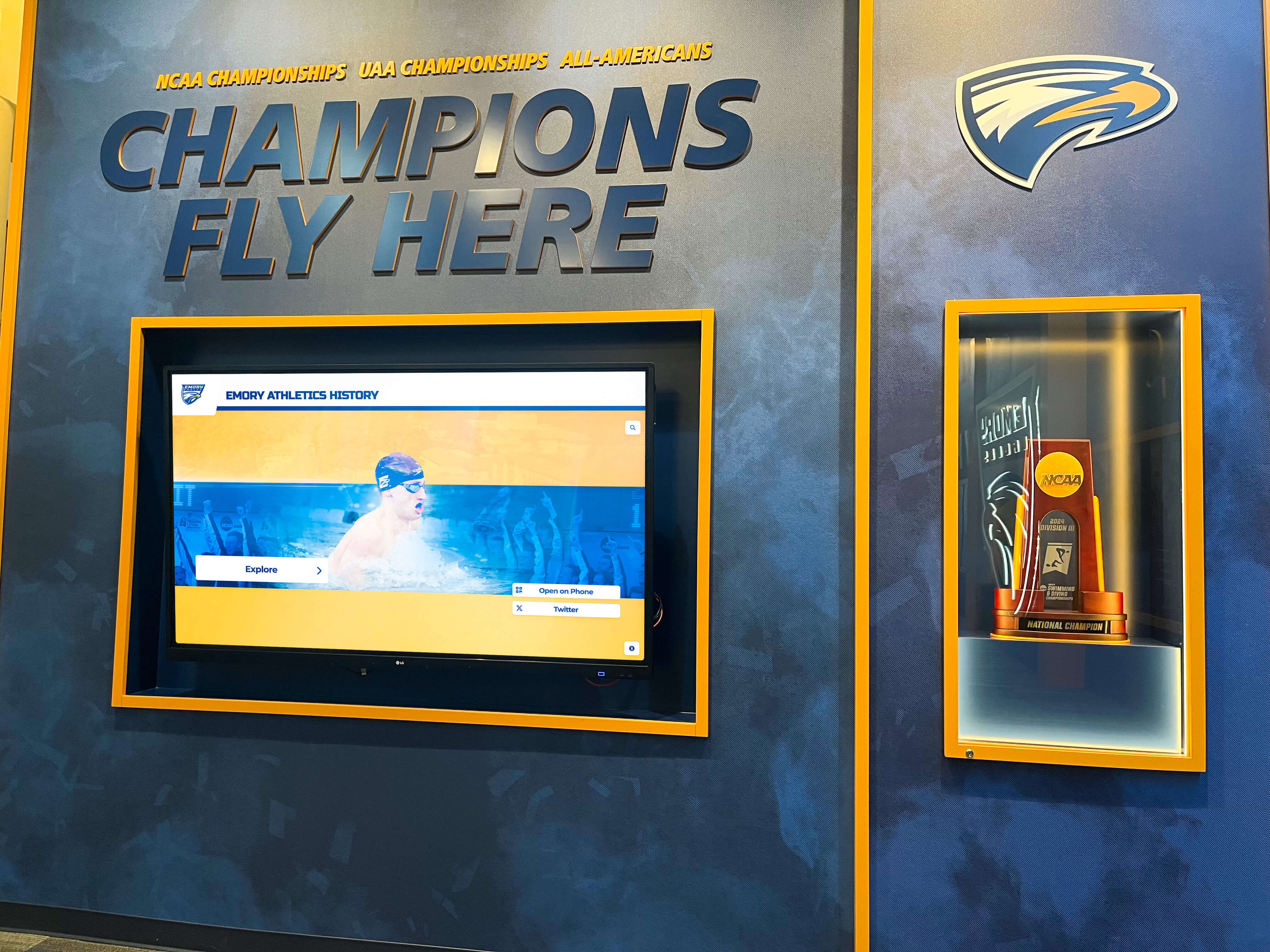
Championship recognition spaces prominently feature All-American honors alongside team achievements acknowledging both individual and collective excellence
Lifelong Achievement and Personal Pride
All-American status creates lasting identity and accomplishment that athletes carry throughout their lives:
Career-Defining Achievement Recognition
Most athletes who earn All-American recognition cite it as their most meaningful athletic honor, representing career pinnacle achievement validating years of dedication, sacrifice, and competitive excellence. Unlike fleeting single-game performances or team championships requiring collective success, All-American designation acknowledges individual athlete excellence through national expert validation.
This personal recognition provides lifelong pride and accomplishment separate from broader team contexts—honoring individual athlete dedication regardless of team competitive success or championship results.
Alumni Identity and Institutional Connection
Schools discover that former All-Americans maintain particularly strong institutional connections throughout their lives, frequently citing their recognition as pivotal experiences connecting them permanently to their schools. This lasting bond translates into active alumni engagement including event attendance, volunteer involvement, mentorship of current athletes, and financial support for athletic programs and institutional development.
Comprehensive All-American recognition programs strengthen these connections by demonstrating schools value and remember elite achievement—creating appreciation generating sustained graduate loyalty and institutional support.
Professional and Personal Development Benefits
All-American status provides advantages extending beyond athletics into professional careers and personal development. Many employers value All-American credentials because they signal exceptional dedication, competitive excellence under pressure, goal achievement capability, and sustained commitment to excellence—characteristics translating effectively into professional contexts.
Former All-Americans frequently leverage their athletic achievement in career advancement, networking opportunities, and personal branding—demonstrating how elite athletic recognition creates value lasting far beyond competitive careers.
Information about comprehensive college football awards contextualizes where All-American recognition fits within broader achievement hierarchies in major collegiate sports.
How Schools Celebrate and Display All-American Honors
Recognizing All-Americans appropriately requires visibility matching achievement significance while permanently documenting these elite accomplishments.
Traditional Physical Recognition Approaches
Conventional display methods provide tangible acknowledgment of All-American achievement:
Trophy Cases and Athletic Halls of Fame
Schools typically showcase All-American athletes through dedicated display infrastructure including trophy case sections featuring All-American certificates, plaques, or awards, gymnasium banner displays listing All-American honorees by year and sport, wall-mounted recognition plaques documenting individual All-American achievements, and athletic hall of fame installations celebrating program legends including All-American accomplishments.
Physical displays offer permanence and visibility that families deeply value—providing tangible institutional acknowledgment lasting beyond immediate recognition moments. However, space constraints eventually limit capacity, particularly for programs with rich All-American traditions spanning decades of achievement.
Senior Recognition and Ceremony Presentations
Schools often celebrate All-American achievements through formal recognition including athletic banquet presentations honoring recent All-American selections, senior night ceremonies recognizing graduating All-Americans before final home competitions, school assembly recognition sharing All-American achievements with entire student bodies, and awards presentations during athletic team gatherings ensuring coach and teammate acknowledgment.
Ceremonial recognition creates memorable celebration moments validating achievement through public acknowledgment while demonstrating institutional pride in elite accomplishment.
Letterman Jackets and Personal Commemoratives
Many programs provide All-Americans with tangible personal recognition including special letterman jacket patches or insignia designating All-American status, individual trophies or plaques athletes keep permanently, certificates documenting recognition suitable for college applications and resumes, and commemorative items like rings, medals, or custom gifts celebrating achievement.
Personal keepsakes enable family celebration and provide athletes with permanent reminders of their elite achievement separate from institutional display systems.
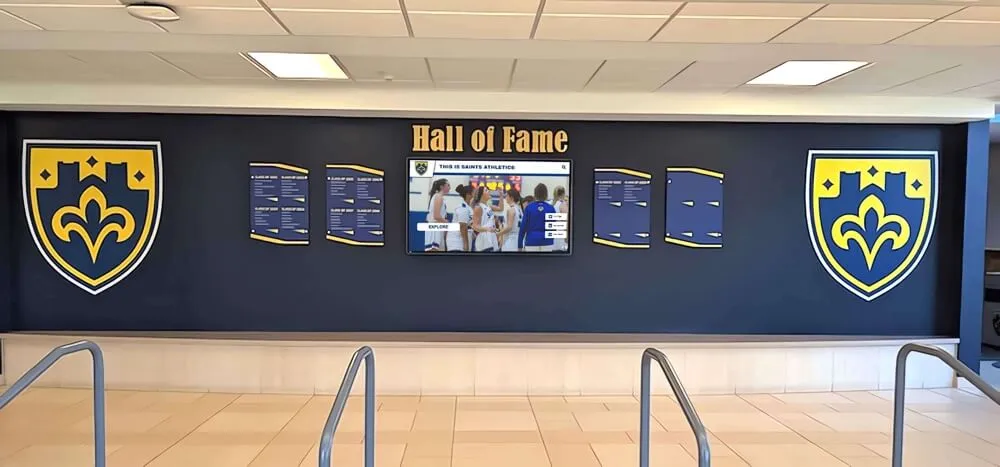
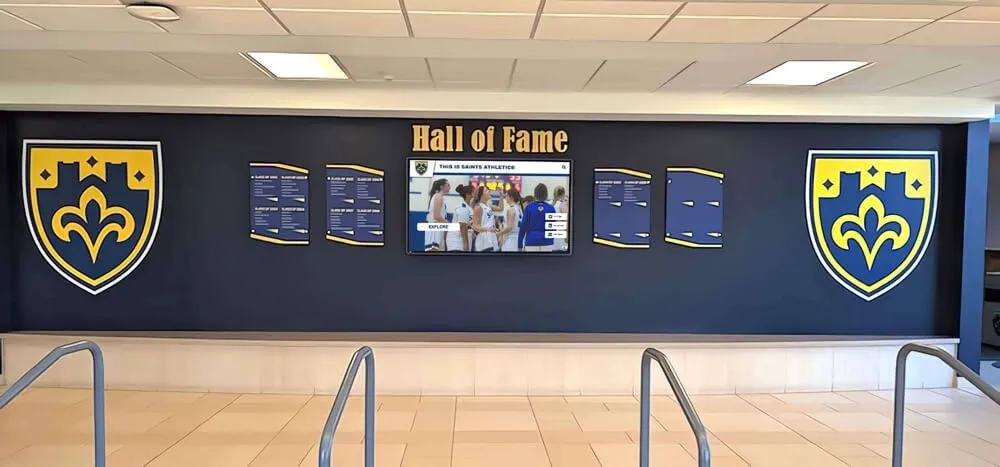
Comprehensive recognition installations combine traditional physical displays with digital platforms creating hybrid systems documenting extensive All-American achievements
Modern Digital Recognition Solutions for All-American Athletes
Technology-enabled platforms overcome traditional recognition limitations while creating engaging experiences celebrating All-American excellence:
Interactive Touchscreen Display Systems
Purpose-built digital recognition platforms transform All-American celebration through unlimited capacity accommodating comprehensive documentation without physical space constraints, rich multimedia profiles including photos, videos, complete statistics, and achievement narratives impossible with physical plaques, instant updates enabling immediate recognition of current All-American selections, searchable databases allowing visitors to find specific athletes, sports, or achievement years easily, and contextual information explaining selection criteria, competitive significance, and accomplishment details.
Solutions like Rocket Alumni Solutions provide comprehensive platforms specifically designed for athletic achievement celebration—combining commercial-grade touchscreen hardware with intuitive content management enabling athletic staff to maintain current recognition without requiring technical expertise.
Comprehensive Athlete Profile Content
Digital platforms enable rich All-American athlete profiles documenting achievement comprehensively:
- Complete biographical information including athlete background, athletic and academic accomplishments, and post-graduation achievements
- Detailed achievement context explaining All-American selection organization, competitive level, recognition tier, and national significance
- Statistical documentation providing complete performance metrics justifying elite recognition
- Photo galleries showing competitive action, award ceremonies, and team contexts
- Video content featuring highlights, interviews, and recognition ceremony footage
- Related achievements connecting All-American honors to conference championships, academic excellence, and other athletic accomplishments
This comprehensive content honors All-Americans appropriately while inspiring current athletes by demonstrating concrete achievement pathways and celebrating complete athlete stories beyond simple name listings.
Web Accessibility and Remote Engagement
Modern recognition extends beyond physical campus through responsive web platforms enabling alumni worldwide to explore All-American history regardless of geographic location, families to share athlete achievements through social media channels, prospective athletes to research program tradition during recruitment, and media to access information for coverage and historical context.
Web accessibility dramatically expands recognition reach compared to physical displays limited to campus visitors—enabling All-American celebration to inspire broader audiences and strengthen institutional reputation nationally.
Resources about high school walls of fame provide comprehensive guidance for implementing recognition systems documenting athletic excellence including All-American achievements.
Distinguishing All-American from Other Athletic Honors
Understanding how All-American recognition relates to other prestigious athletic honors helps contextualize achievement significance appropriately:
All-American vs. All-State and All-Conference Recognition
While all represent significant achievement, important distinctions separate these recognition tiers:
Geographic Scope Differences
All-conference selection recognizes elite performance within specific athletic leagues or conferences, typically involving 10-20 member schools competing regularly. All-state honors identify top performers across entire states, expanding competitive comparison significantly but remaining geographically bounded. All-American designation evaluates athletes nationally across all states, conferences, and regions—representing the broadest and most competitive selection pool.
This scope difference means All-American recognition requires distinguishing yourself not just among local or state competitors, but among every athlete nationwide competing in your sport at your competitive level—dramatically higher achievement threshold.
Selection Process and Validation
All-conference selections typically emerge from coach voting within conferences—expert evaluation but limited to relatively small competitive populations. All-state recognition often combines coach input with media voting and statistical analysis across state competitive populations.
All-American selection involves national committees evaluating thousands or tens of thousands of athletes through systematic processes combining statistical analysis, championship performance evaluation, and expert committee deliberation—more rigorous and comprehensive than localized recognition procedures.
Competitive Prestige and Recognition Value
All-conference and all-state honors represent meaningful achievement validating excellence within specific competitive contexts. However, All-American recognition carries distinctly higher prestige because national scope and rigorous selection create far more exclusive designation.
College recruiters distinguish clearly between these tiers—all-state recognition generates interest, but All-American status immediately elevates athletes into highest recruiting priority categories because it validates national-level excellence rather than regional or state-level performance.
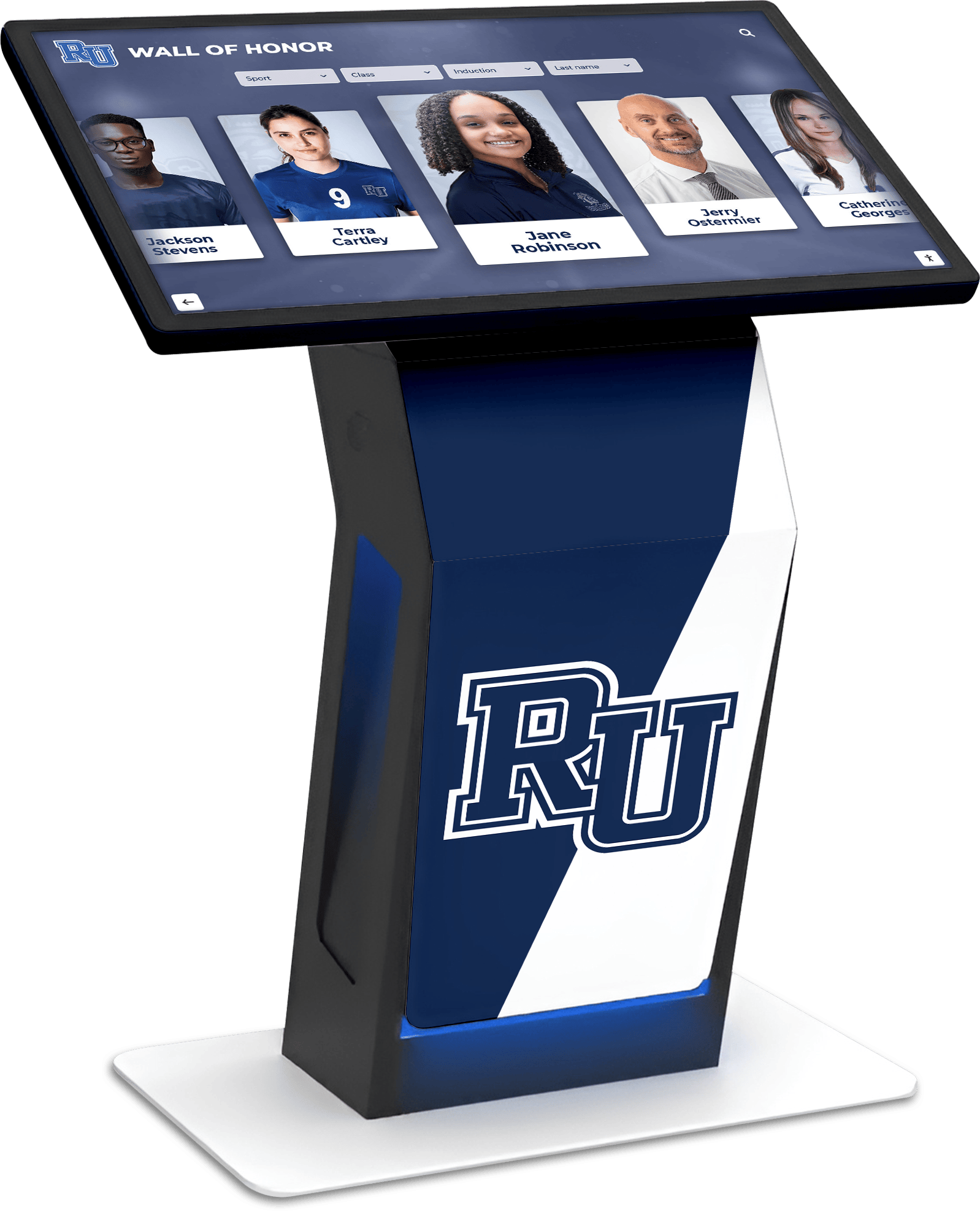
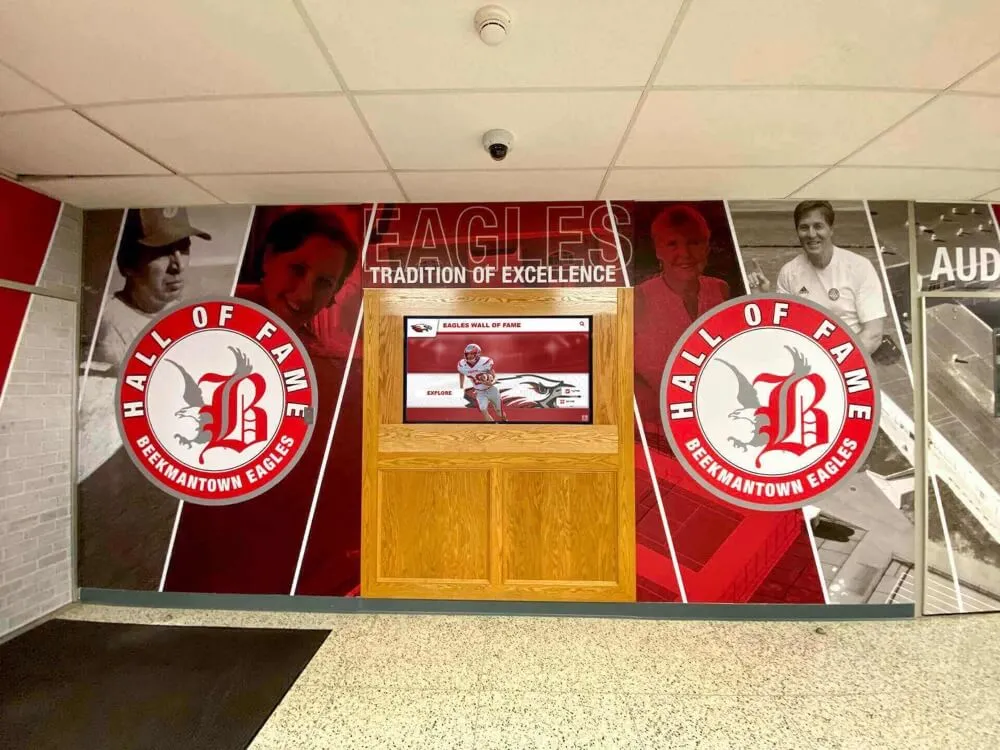
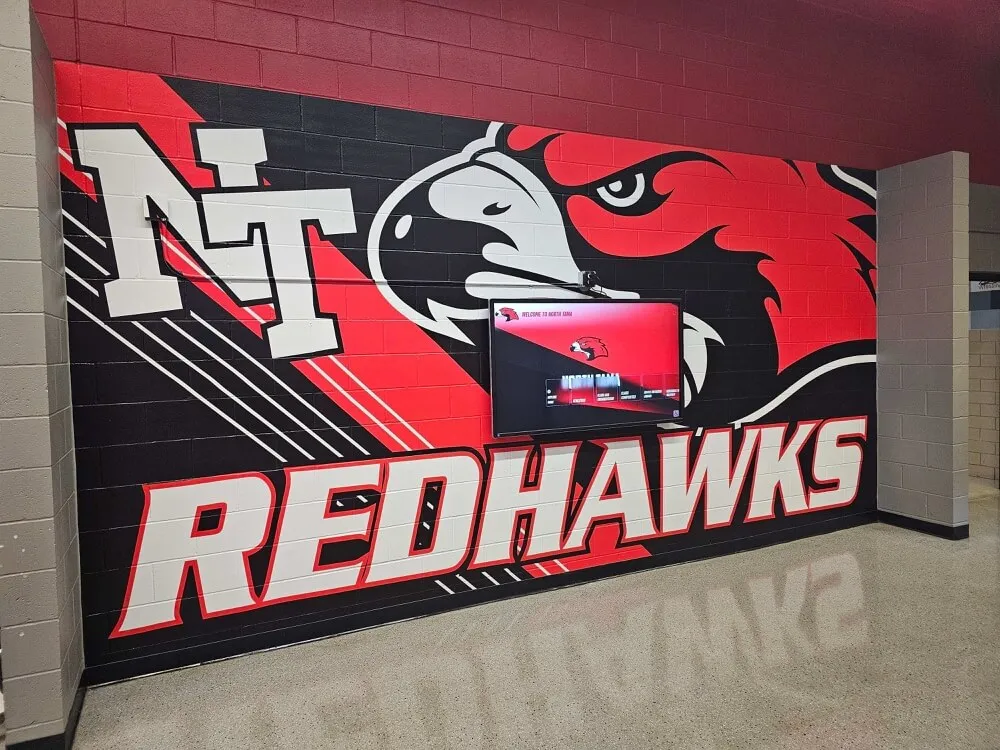
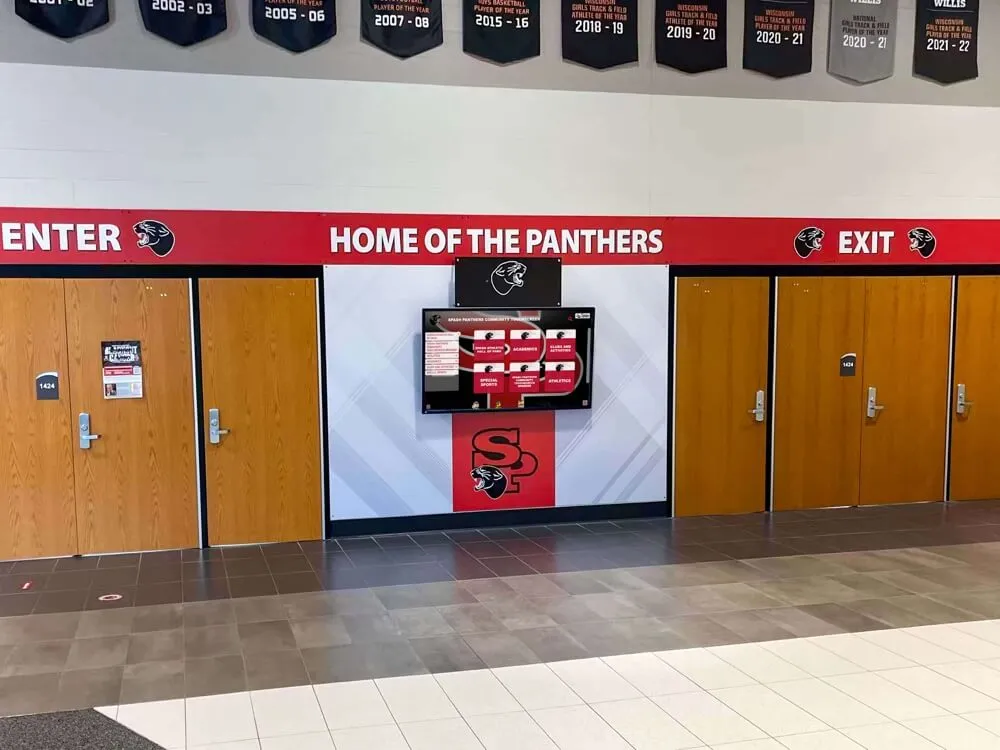
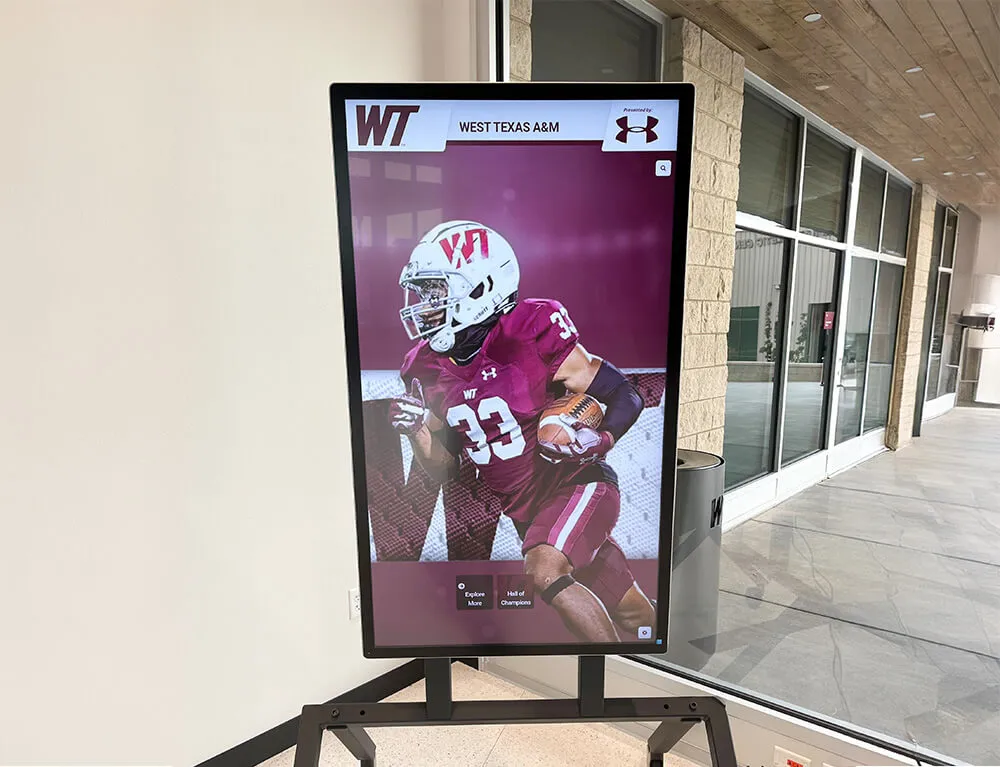
Dedicated recognition kiosks enable prominent All-American celebration in high-traffic athletic facility locations ensuring maximum visibility
All-American Tiers: First Team, Second Team, and Honorable Mention
All-American programs typically establish multiple recognition tiers acknowledging different excellence levels:
First Team All-American Recognition
The highest All-American honor, First Team designation recognizes absolute elite performers—typically the top 11-25 athletes nationally at each position or event depending on sport structure. First Team All-Americans represent the supreme national tier, identified as the very best performers across the entire country.
This designation carries extraordinary prestige and provides maximum recruiting and scholarship value because it signals indisputable national elite status validated through rigorous selection processes.
Second Team All-American Recognition
Second Team honors recognize outstanding athletes performing at near-elite national levels but falling slightly below First Team thresholds. These athletes demonstrated exceptional excellence worthy of national recognition while not quite achieving absolute highest tier.
Second Team designation still represents extraordinary achievement placing athletes among top national performers—typically within top 50-75 nationally at their positions or events. College recruiters highly value Second Team recognition as validation of genuine elite capability.
Third Team and Honorable Mention All-American Recognition
Some organizations establish Third Team or Honorable Mention tiers expanding recognition to broader populations while maintaining selectivity. These designations acknowledge strong national-level performance deserving recognition despite not reaching team designation thresholds.
While less prestigious than team designations, Honorable Mention All-American status still represents exceptional achievement reflecting national selection committee acknowledgment—validating performance significantly above average competitive levels.
Understanding how all-conference selection works provides context for appreciating the progression from conference to state to national All-American recognition.
Common Questions About All-American Athletes
Addressing frequent questions helps clarify All-American recognition for athletes, families, and school communities:
Can High School Athletes Be All-Americans?
Yes, numerous organizations provide All-American recognition for high school athletes across many sports. As discussed earlier, programs like Under Armour All-America (football), McDonald’s All-American (basketball), Perfect Game All-American (baseball), and sport-specific recognition from organizations like USA TODAY and MaxPreps identify elite high school performers nationally.
High school All-American recognition follows similar principles as college programs—rigorous selection identifying athletes performing at absolute elite national levels within their competitive divisions. While specific selection criteria vary across organizations and sports, the fundamental concept remains consistent: national expert committees identifying the best high school performers across the entire country.
High school All-American status provides immense value during college recruitment, frequently determining which athletes receive scholarship offers from top competitive programs seeking nationally validated elite talent.
How Many Athletes Receive All-American Recognition Annually?
The number of All-Americans varies significantly across sports and competitive levels based on recognition program structures:
Team Sports: Football typically names larger All-American teams due to position variety—perhaps 100-150 First Team All-Americans across different position groups in major college divisions. Basketball recognizes 10-15 First Team All-Americans reflecting smaller team rosters.
Individual Sports: Track and field and swimming designate hundreds of All-Americans annually because these sports involve numerous discrete events, with top finishers in each event earning recognition. Cross country might name 40-50 All-Americans per gender per division based on national championship finish positions.
Academic All-Americans: CoSIDA recognizes several thousand Academic All-Americans annually across all sports and divisions combined, reflecting the many athletes who achieve dual academic-athletic excellence across diverse competitive contexts.
While total numbers vary, All-American recognition remains highly selective relative to total athlete populations—typically representing less than 1% of athletes competing in most sports at most competitive levels.
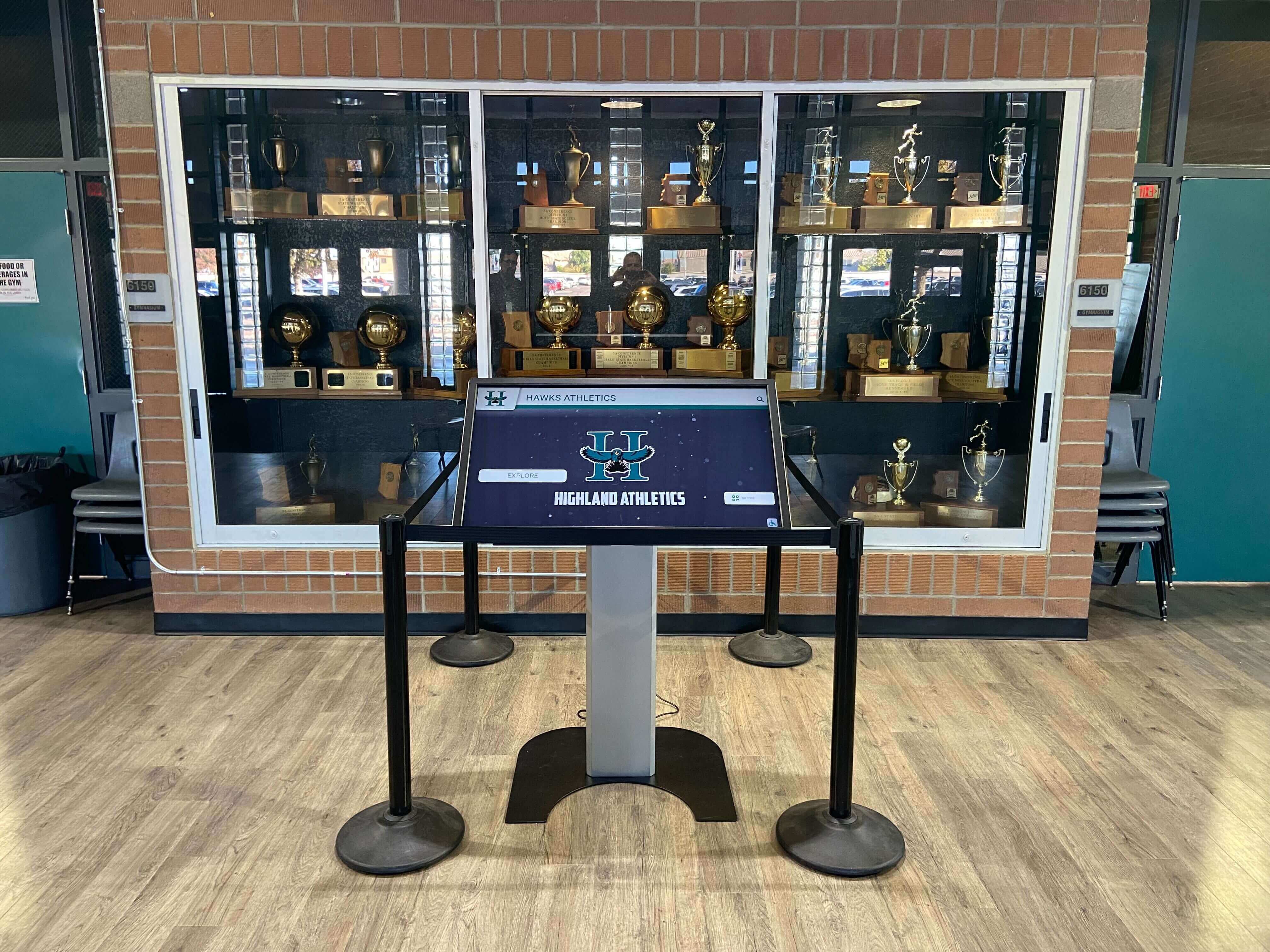
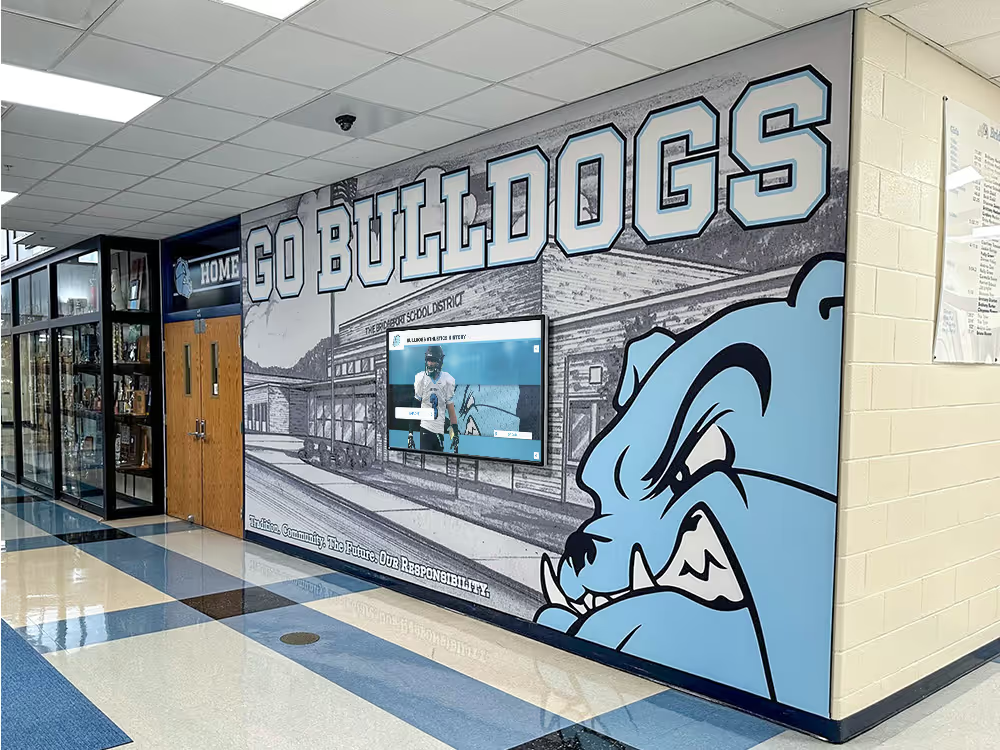
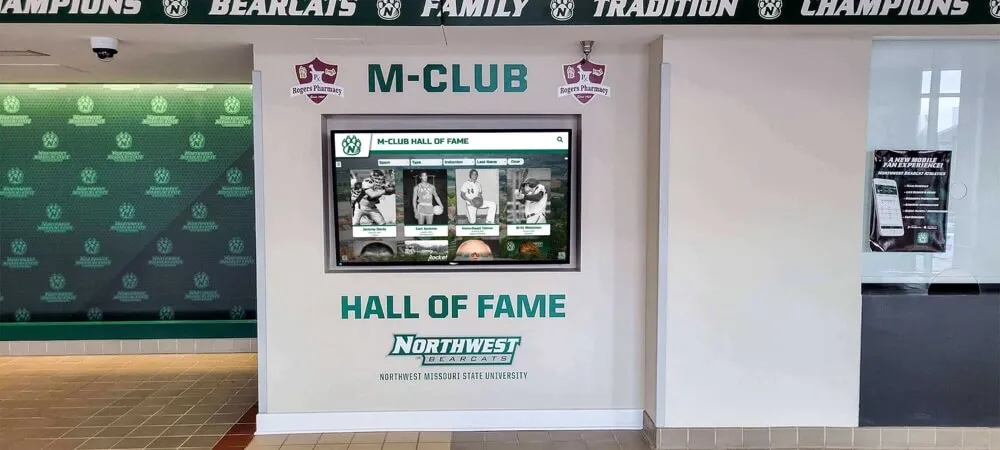
Strategic integration of digital touchscreens within existing trophy case environments enables comprehensive All-American documentation without requiring extensive facility modifications
Do All-Americans Automatically Get Scholarships?
All-American recognition doesn’t automatically guarantee athletic scholarships, but it dramatically enhances scholarship prospects. College coaches recruiting athletes evaluate All-American credentials extremely favorably because this recognition provides validated evidence of national-level excellence—significantly increasing likelihood that athletes will succeed at collegiate competitive levels.
Athletes with All-American credentials typically receive scholarship offers from multiple institutions and can often negotiate more favorable scholarship terms than similarly talented athletes lacking this validation. However, scholarship allocation involves many factors beyond athletic recognition including academic qualifications, position needs, roster composition, and available scholarship budget.
Academic All-Americans benefit particularly because dual excellence makes them attractive both to athletic departments seeking capable student athletes and to admissions offices recruiting accomplished students—sometimes enabling scholarship combinations drawing from both athletic and academic funding sources.
How Long Does All-American Recognition Last?
All-American designation represents permanent achievement—athletes who earn this recognition carry the title throughout their lives. Selection committees designate All-Americans for specific seasons or years, but the honor itself never expires or gets revoked barring extraordinary circumstances involving eligibility violations or similar issues discovered after selection.
Former All-Americans can legitimately identify themselves as such indefinitely—on resumes, in biographical materials, during introductions, and in any context where athletic achievement proves relevant. This permanent designation contributes significantly to All-American prestige because it represents lasting validation of elite excellence that athletes accomplished during their competitive careers.
Schools maintaining comprehensive All-American recognition ensure these achievements receive permanent documentation through physical displays, digital platforms, and historical archives—preserving achievement recognition across generations and institutional history.
Resources about Dean’s List recognition provide parallel examples of how elite academic achievement gets recognized and celebrated permanently within educational institutions.
Building Comprehensive All-American Recognition Programs
Schools with strong All-American traditions benefit from systematic recognition ensuring these elite achievements receive appropriate celebration:
Implementing Systematic Recognition Processes
Sustainable programs require structured approaches:
Tracking All-American Selections Systematically
Athletic departments should establish clear procedures for identifying and documenting All-American achievements including monitoring selection announcements from relevant organizations for each sport, requiring coaches to report All-American selections immediately upon announcement, maintaining comprehensive databases documenting all All-American honorees across school history, and preserving certificates, selection letters, and official documentation for historical archives.
Systematic tracking prevents All-American achievements from being overlooked or inadequately documented—ensuring comprehensive recognition across all sports and competitive levels.
Creating Immediate Recognition Protocols
When athletes earn All-American status, schools should implement standard recognition including school-wide announcements celebrating achievement and explaining significance, social media posts featuring athletes with achievement details and context, formal letters to athlete families acknowledging accomplishment, certificate presentations during team gatherings or school assemblies, and immediate display updates adding current All-Americans to recognition systems.
Prompt recognition demonstrates institutional pride while capitalizing on community excitement surrounding elite achievement—creating memorable celebration moments validating athlete excellence.
Developing Historical Documentation
Many schools discover significant All-American achievement throughout their histories that never received systematic documentation or recognition. Developing comprehensive historical records requires research identifying All-American athletes through archival materials, media coverage, and alumni outreach, documenting achievement details including selection organization, year, sport, and recognition tier, creating biographical content honoring historical All-Americans appropriately, and integrating historical recognition within contemporary display systems ensuring complete institutional documentation.
Historical documentation honors past All-Americans who may have received minimal recognition during their eras while establishing complete achievement records demonstrating institutional tradition and excellence over time.
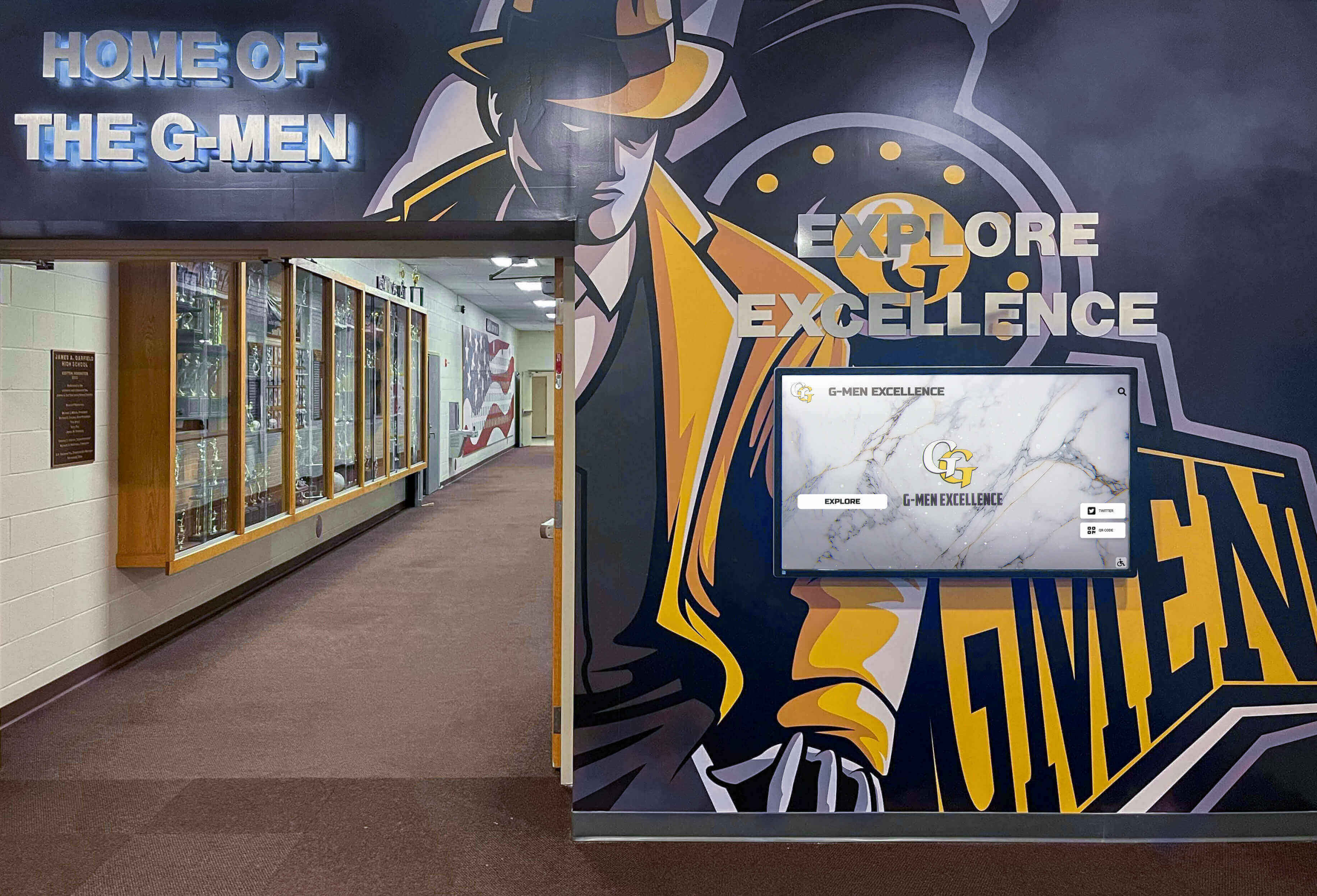
Comprehensive recognition environments combine traditional trophy cases with digital platforms creating immersive athletic celebration spaces throughout school facilities
Strategic Display Placement and Visibility
Physical location significantly impacts All-American recognition visibility and community awareness:
High-Traffic Athletic Facility Locations
Position All-American recognition displays where athletic communities encounter them regularly including gymnasium lobbies where competitions begin and conclude, athletic building entrances creating immediate impressions for visitors, locker room common areas where athletes spend time daily, training facilities and weight rooms inspiring current competitors, and athletic director offices where college recruiters meet staff.
Athletic facility placement creates continuous inspiration for current athletes while demonstrating program tradition to visiting competitors and college recruiters evaluating program quality.
Prominent School-Wide Visibility
Beyond athletic facilities, school-wide placement extends recognition including main building entrances greeting all visitors, administrative office lobbies where families conduct school business, cafeteria and common areas where students gather daily, and main corridor intersections with high traffic and natural gathering points.
School-wide visibility ensures All-American recognition reaches beyond athletic program participants to entire school communities—elevating awareness of athletic excellence while demonstrating institutional commitment to celebrating achievement across all domains.
Web and Mobile Access Extensions
Digital recognition platforms should extend beyond physical displays through school website integration providing dedicated All-American recognition pages, social media platforms sharing athlete achievements and profiles regularly, mobile-responsive designs ensuring smartphone and tablet functionality, and QR code links connecting physical displays to online content enabling deeper exploration.
Multi-platform accessibility dramatically expands recognition reach compared to physical displays alone—enabling achievement celebration to inspire and engage broader audiences including alumni, prospective families, and wider communities.
Comprehensive guidance about school achievement recognition systems provides frameworks for implementing systematic celebration across multiple achievement domains including athletic All-American honors.
Inspiring Future All-Americans Through Recognition
Effective All-American recognition programs serve dual purposes—honoring past achievement while inspiring current athletes toward similar excellence:
Creating Aspirational Pathways
Recognition systems should clearly communicate achievement pathways helping current athletes understand how to pursue All-American goals:
Documenting Achievement Progressions
Athlete profiles should detail competitive journeys leading to All-American recognition including development from youth athletics through high school competition, training commitments and preparation approaches enabling elite performance, key competitive milestones and breakthrough performances, and statistical achievement documenting excellence objectively.
This progression documentation demonstrates that All-American recognition results from sustained dedication and systematic development rather than mysterious talent—providing current athletes with concrete understanding of what achieving this elite status requires.
Connecting Current Athletes with All-American Alumni
Schools should facilitate mentorship relationships including inviting All-American alumni to speak with current teams about their experiences, arranging informal meetings between current athletes and former All-Americans in their sports, creating online communities connecting All-American alumni across generations, and featuring alumni testimonials in recognition displays discussing achievement significance and career impact.
Direct connection with former All-Americans inspires current athletes while providing practical guidance about competitive preparation, balancing athletics with academics, and leveraging elite achievement during recruitment.
Celebrating Complete Athletic Journey
Recognition should emphasize that All-American achievement emerges from comprehensive athletic commitment including consistent practice dedication and skill development over years, competitive excellence across complete seasons rather than isolated performances, academic achievement enabling student athlete eligibility and Academic All-American opportunities, and character development demonstrating sportsmanship and leadership alongside competitive excellence.
Holistic recognition communicates that schools value complete student athlete development—encouraging balanced pursuit of excellence across multiple dimensions rather than narrow performance-only focus.

Strategic hallway placements ensure recognition displays receive consistent daily visibility from students, athletes, and campus visitors throughout academic years
Establishing Excellence Culture Through Recognition
Systematic All-American celebration contributes to broader athletic program culture emphasizing excellence:
Setting Clear Performance Standards
All-American recognition establishes visible benchmarks inspiring competitive pursuit including documented achievement levels demonstrating what elite performance requires, statistical thresholds and competitive standards current athletes can pursue, and historical context showing achievement consistency or improvement over time.
Clear standards provide motivation and direction—helping serious athletes understand specific goals worth pursuing rather than vague aspirations toward undefined excellence.
Reinforcing Institutional Values
Recognition programs communicate what institutions value including competitive excellence validated through national expert selection, academic achievement through Academic All-American emphasis, character and sportsmanship alongside pure performance metrics, and sustained commitment across complete athletic careers rather than brief participation.
Value demonstration through recognition proves more powerful than stated policies—athletes observe what receives celebration and adjust behavior accordingly, making recognition systems powerful culture-shaping tools.
Building Program Pride and Tradition
Comprehensive All-American documentation establishes visible tradition including complete historical achievement records showing program development over decades, comparison with peer institutions and conference competitors, connections between current programs and distinguished alumni, and evidence of coaching excellence consistently developing national-level talent.
Visible tradition strengthens program reputation, attracts talented recruits seeking established excellent programs, and builds community pride generating sustained institutional support for athletic program development.
Information about National Honor Society recognition provides parallel examples of how elite academic achievement recognition inspires student excellence and builds institutional culture.
Conclusion: Celebrating Elite Athletic Achievement Through Meaningful All-American Recognition
All-American athletes represent the pinnacle of competitive achievement—student athletes who performed among the absolute best nationally in their sports, validated through rigorous selection by expert committees evaluating thousands of competitors. These exceptional individuals dedicated years to athletic development, demonstrated sustained excellence throughout complete competitive seasons, excelled under high-pressure circumstances against elite competition, and achieved recognition that fewer than 1% of athletes ever earn.
These extraordinary accomplishments deserve recognition matching their significance—lasting tributes that permanently honor individual athletes while inspiring current competitors to pursue similar excellence through dedicated training and competitive performance. Traditional recognition approaches limited by trophy case space constraints, static plaque limitations, and minimal context fail to provide celebration these elite achievements deserve.
Transform Your All-American Recognition Program
Discover how purpose-built digital recognition solutions enable comprehensive All-American celebration with unlimited capacity, engaging multimedia profiles showcasing complete athlete stories, and intuitive management systems enabling athletic staff to maintain current recognition effortlessly. Rocket Alumni Solutions specializes in athletic recognition technology serving schools across all competitive levels and program sizes.
Explore Recognition SolutionsModern digital recognition solutions overcome traditional limitations through unlimited capacity accommodating comprehensive All-American documentation across all sports without physical space constraints, rich multimedia athlete profiles including photos, videos, statistics, and achievement narratives impossible with physical plaques, instant updates enabling immediate recognition of current All-American selections, searchable databases allowing easy exploration of complete All-American history, and web accessibility extending recognition beyond physical campus to inspire broader audiences.
Whether implementing new All-American recognition programs, enhancing existing celebration systems, or exploring how modern technology addresses traditional display limitations, systematic approaches create recognition that genuinely honors elite achievement while inspiring future athlete excellence. Your All-American athletes invested extraordinary dedication pursuing national-level excellence—they deserve recognition matching that commitment through thoughtful systems, memorable acknowledgment, and lasting visibility celebrating their exceptional achievement.
Every All-American selection in your school’s history represents remarkable accomplishment worthy of permanent recognition that inspires for generations. Modern recognition technology makes comprehensive, engaging, meaningful All-American celebration not just possible but practical and sustainable for schools committed to honoring their elite athletes appropriately while building cultures where competitive excellence receives celebration matching its extraordinary nature and lasting significance.
Ready to enhance your athletic recognition? Explore comprehensive athletic awards strategies celebrating achievement across multiple dimensions, discover digital trophy wall solutions modernizing athletic display systems, learn about student athlete resume development leveraging All-American credentials effectively, and understand 1000-point scorer recognition celebrating other elite athletic milestones within comprehensive recognition systems.