



Intent: Demonstrate what digital halls of fame are, how they transform traditional recognition, and why organizations across education, athletics, and community sectors are adopting interactive touchscreen technology for celebrating achievement and preserving legacy.
A digital hall of fame is an interactive touchscreen display system that celebrates achievements, honors individuals, and preserves institutional heritage through multimedia profiles, searchable databases, and engaging content—replacing traditional static plaques with dynamic recognition experiences accessible both on-site and online.
The challenge facing organizations with growing recognition traditions involves managing expanding honoree collections within limited physical spaces while creating engaging displays that truly celebrate excellence rather than simply documenting names and dates. Traditional halls of fame built on wall-mounted plaques face space constraints, update delays measured in months, minimal storytelling capacity, and accessibility limited to physical location visitors—forcing difficult decisions about whose achievements receive visibility and how recognition programs sustain growth over decades.
This comprehensive guide explains digital hall of fame technology, its benefits over traditional recognition, practical implementation considerations, and best practices for creating interactive experiences that engage modern audiences while honoring the excellence these platforms celebrate.
Organizations implementing digital halls of fame report engagement improvements of 300-500% compared to traditional displays, with visitors spending 5-8 minutes actively exploring interactive content versus 30-60 seconds glancing at static plaques—creating meaningful connections that strengthen community pride and institutional identity.

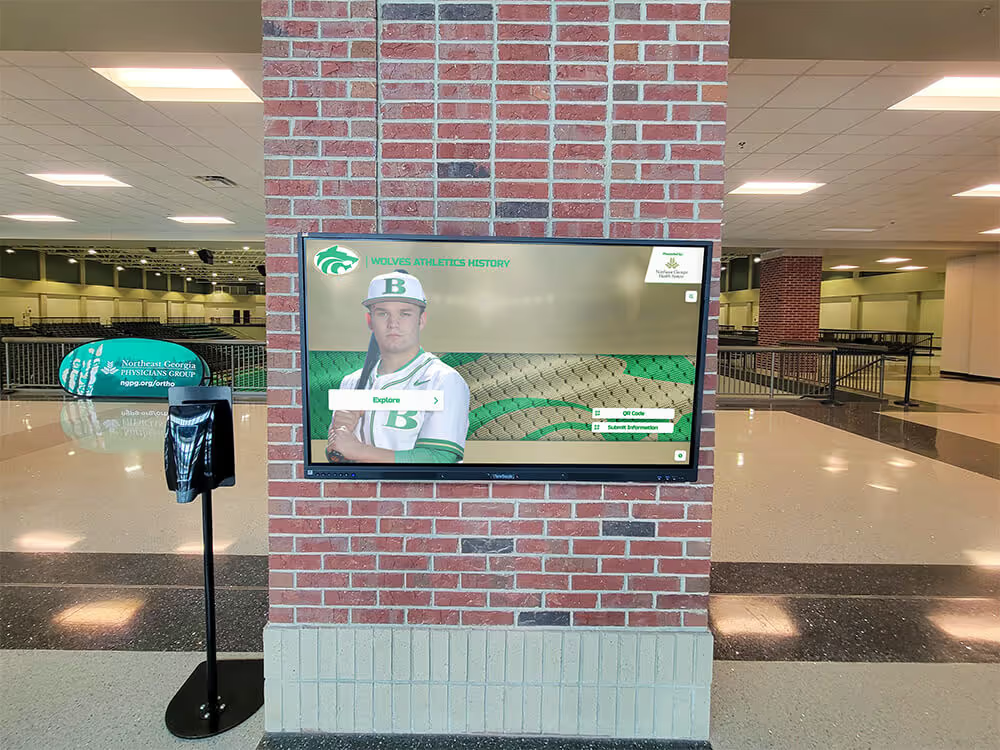
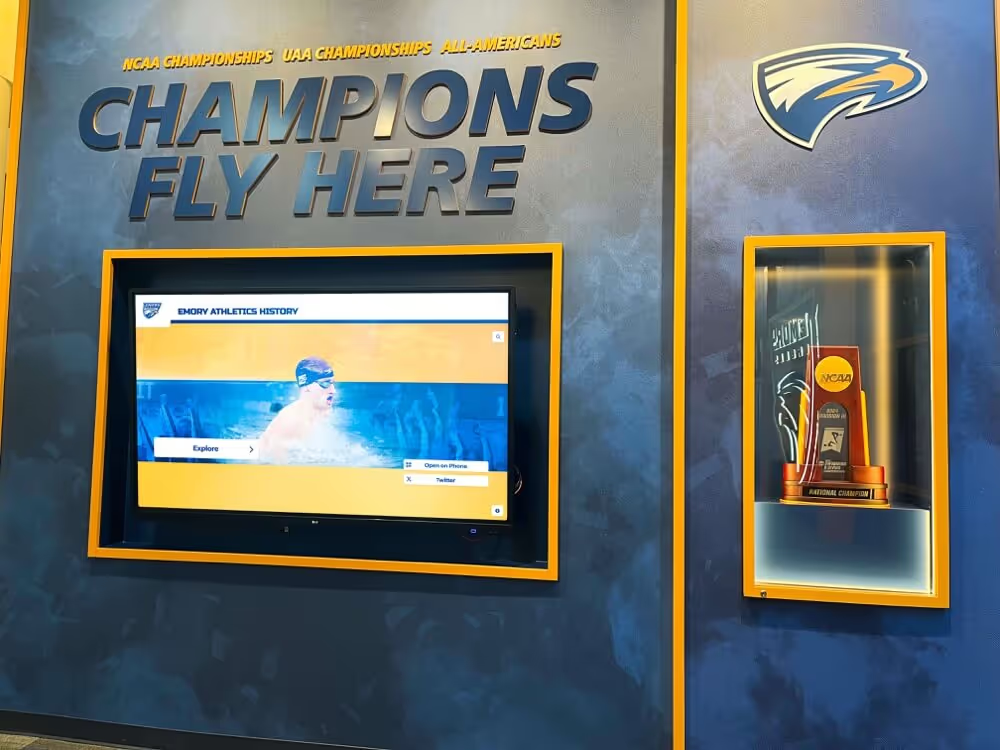
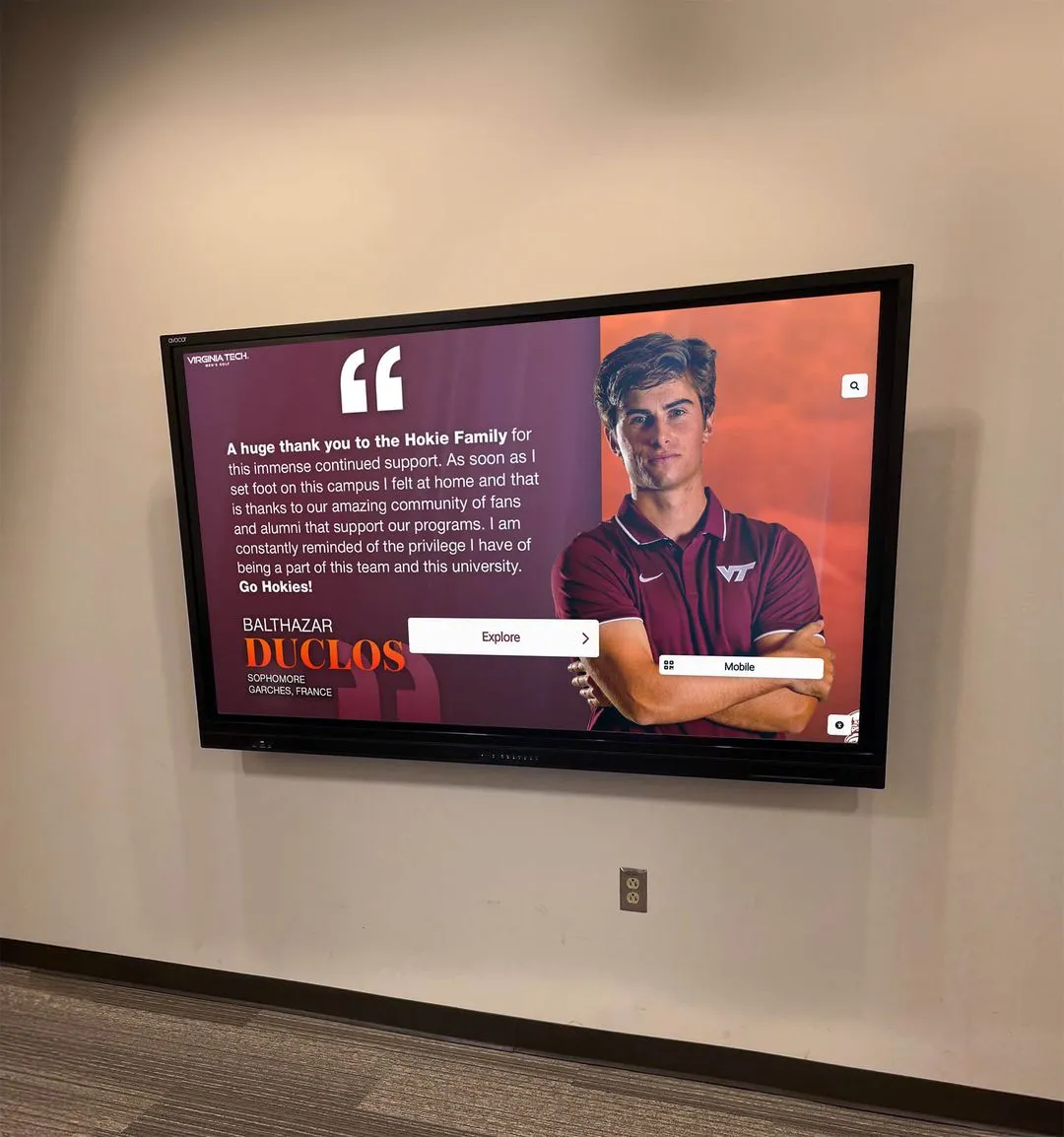
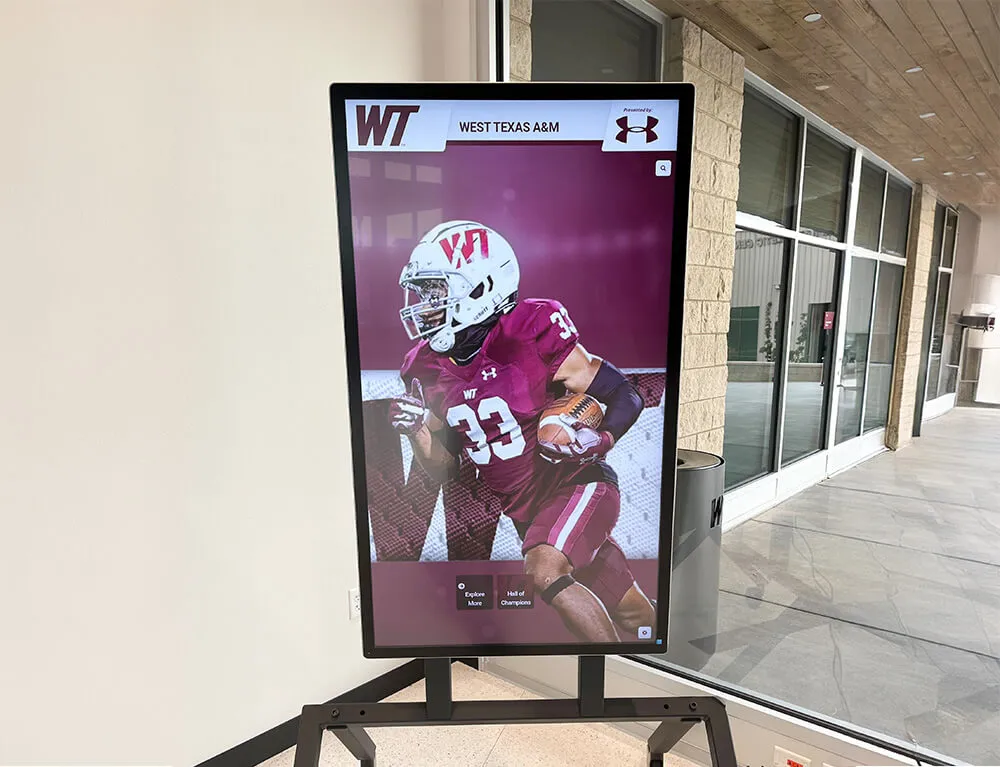
Digital hall of fame kiosks combine commercial-grade touchscreen hardware with specialized recognition software designed for celebrating achievements through interactive multimedia experiences
Defining Digital Hall of Fame Technology
Understanding what digital halls of fame are—and what distinguishes them from other digital displays—provides essential context for organizations considering interactive recognition.
What Exactly is a Digital Hall of Fame?
A digital hall of fame consists of large-format commercial touchscreen displays (typically 43-75 inches) running specialized recognition software that organizes content around individual honoree profiles, enabling visitors to search, browse, and explore achievements through intuitive touch interfaces familiar from smartphone and tablet experiences.
Unlike generic digital signage displaying rotating announcements or advertisements, digital halls of fame create interactive exploration environments where visitors control what content they view, how deeply they engage with individual profiles, and what pathways they follow through recognition collections—transforming passive viewing into active discovery.
Core Components Working Together
Modern digital hall of fame systems integrate multiple elements creating complete recognition solutions:
Touchscreen Display Hardware: Commercial-grade displays rated for continuous 16-24 hour daily operation in public environments, featuring optical bonding that enhances screen durability and visibility while protecting against damage from repeated touch interaction. Display sizes range from 43 inches for intimate viewing spaces to 75+ inches for lobby installations serving large gatherings.
Recognition Software Platform: Purpose-built applications designed specifically for celebrating people and achievements—not generic content management systems repurposed for recognition. Quality platforms provide search functionality enabling instant individual discovery, filtering options organizing content by year, category, or achievement type, unlimited capacity accommodating comprehensive collections, multimedia support for photos, videos, and documents, and web accessibility extending recognition beyond physical displays.
Cloud-Based Content Management: Web interfaces enabling authorized administrators to add new honorees, update existing profiles, upload photos and videos, organize content categories, and publish changes instantly—all from any internet-connected device without requiring technical expertise or IT department assistance.
Web Portal Integration: Online extensions making hall of fame content accessible worldwide through smartphones, tablets, and computers—enabling alumni living across the country, prospective members researching organizational heritage, and families unable to attend in-person events to explore recognition anytime from anywhere.
Analytics and Engagement Tracking: Usage data revealing recognition program effectiveness through metrics including daily interaction counts, average session duration, most-viewed profiles, search patterns, and peak usage times—demonstrating value to stakeholders while guiding content optimization.
Solutions like Rocket Alumni Solutions provide integrated systems understanding unique institutional recognition requirements including privacy controls, giving level differentiation for donor applications, and approval workflows that generic digital signage platforms cannot accommodate effectively.
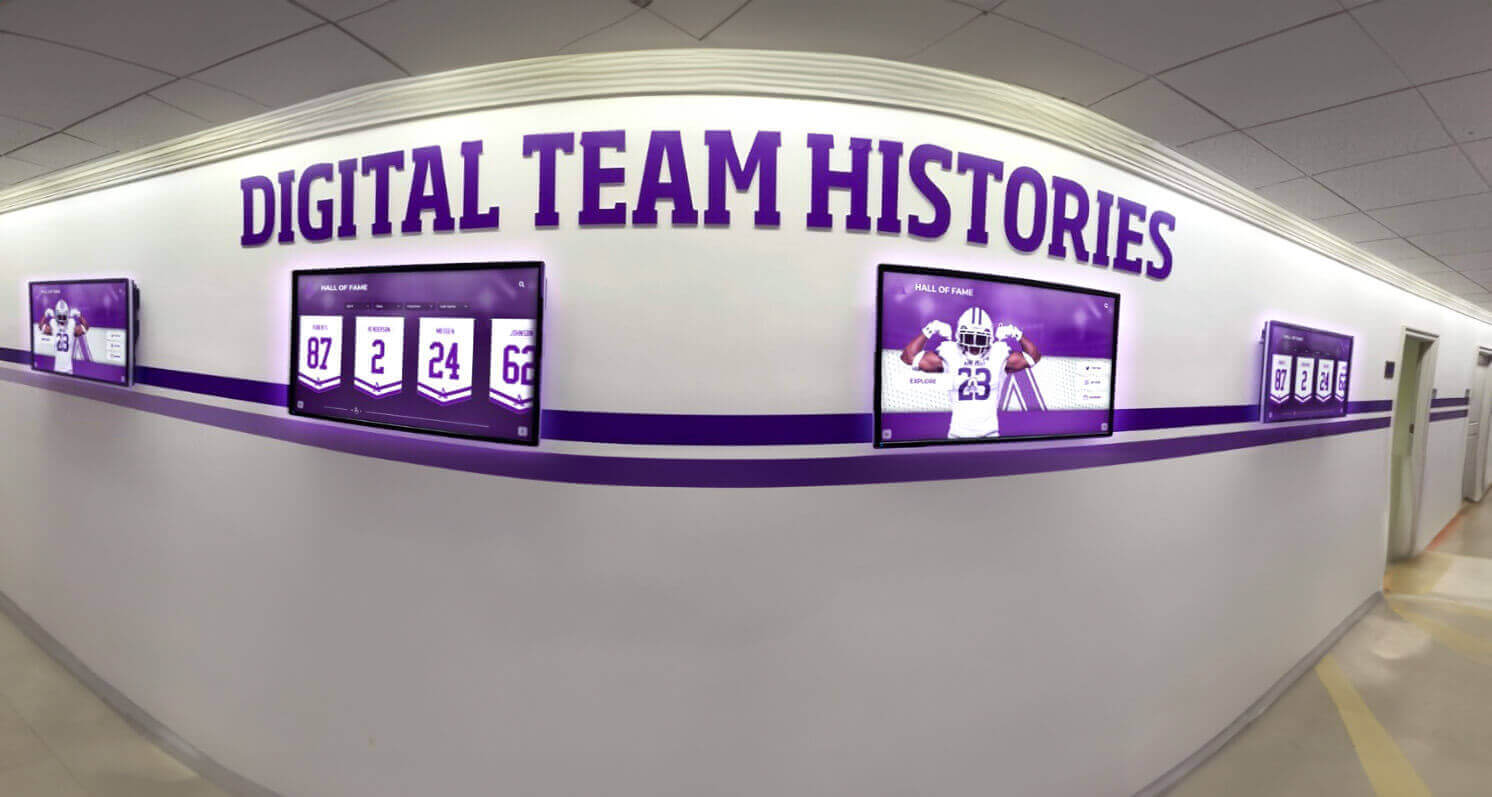
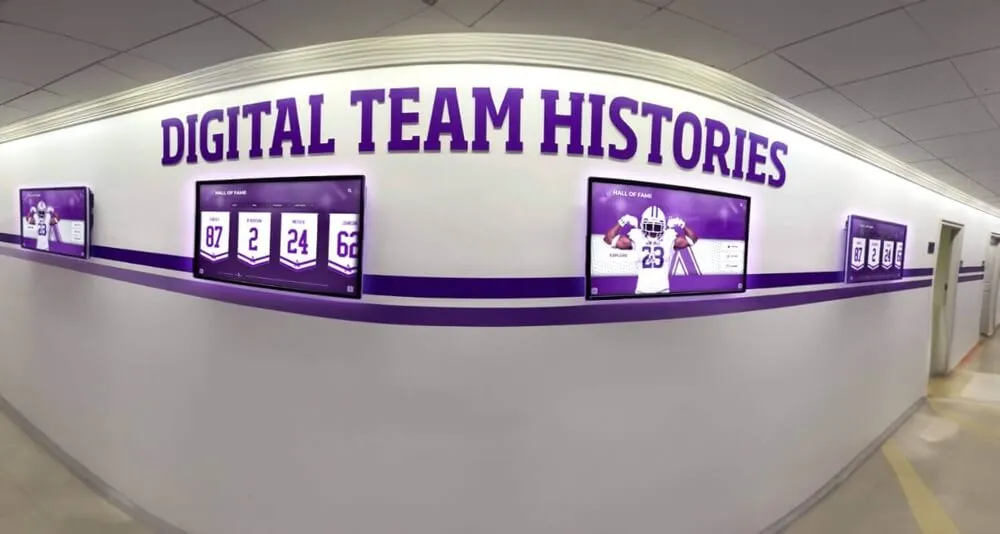
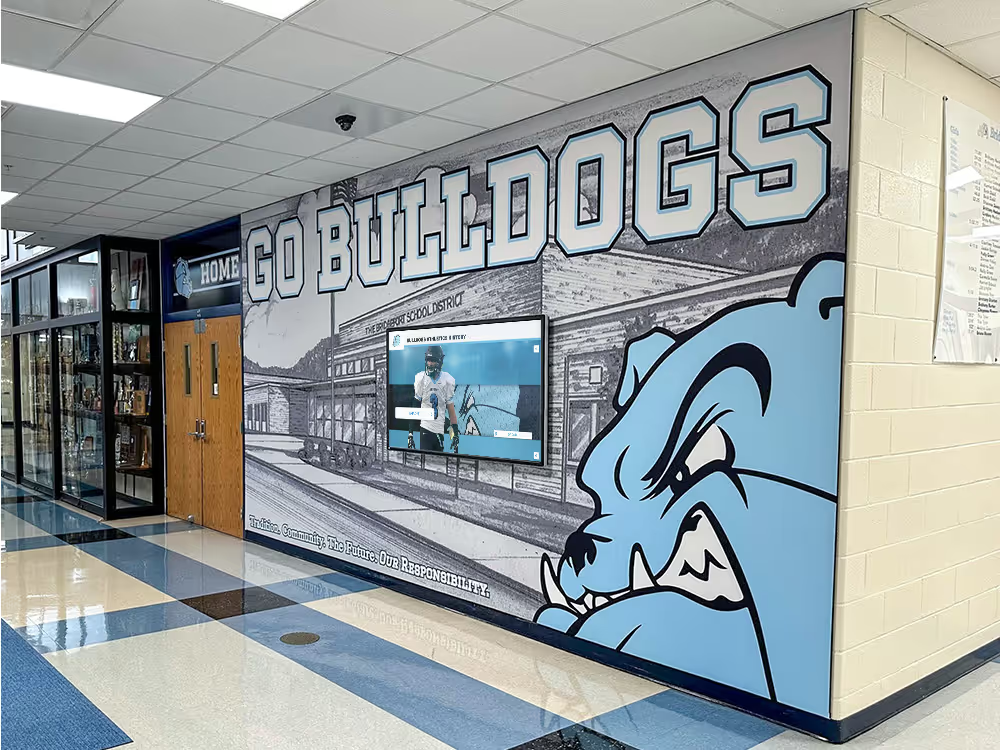
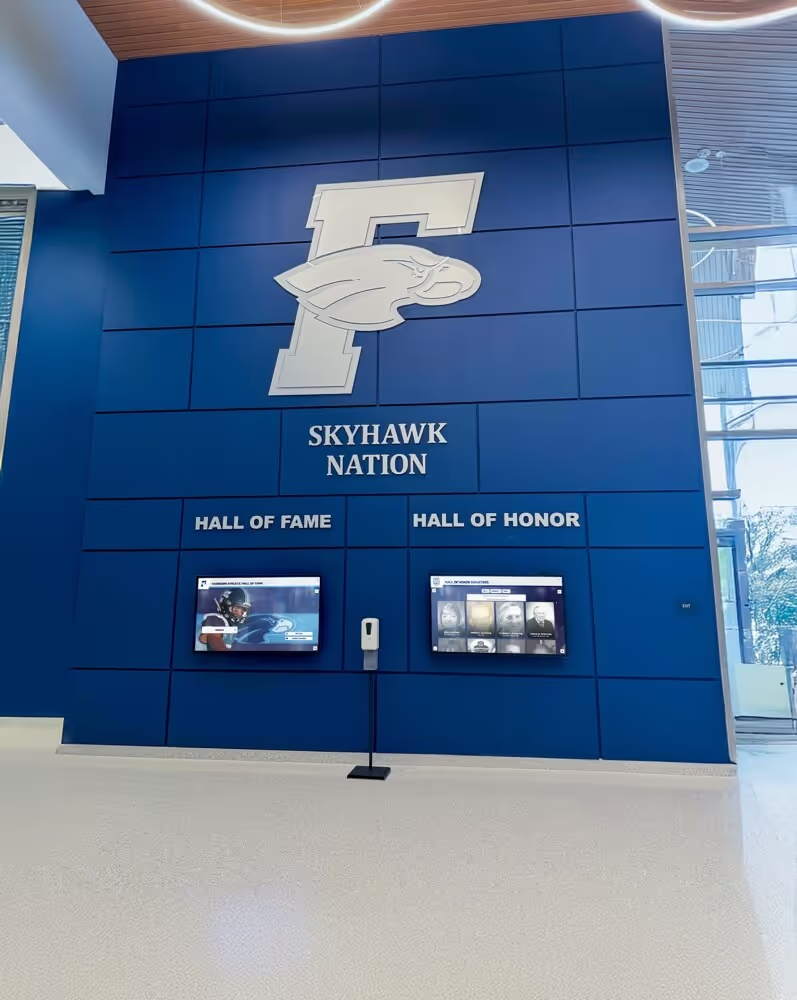
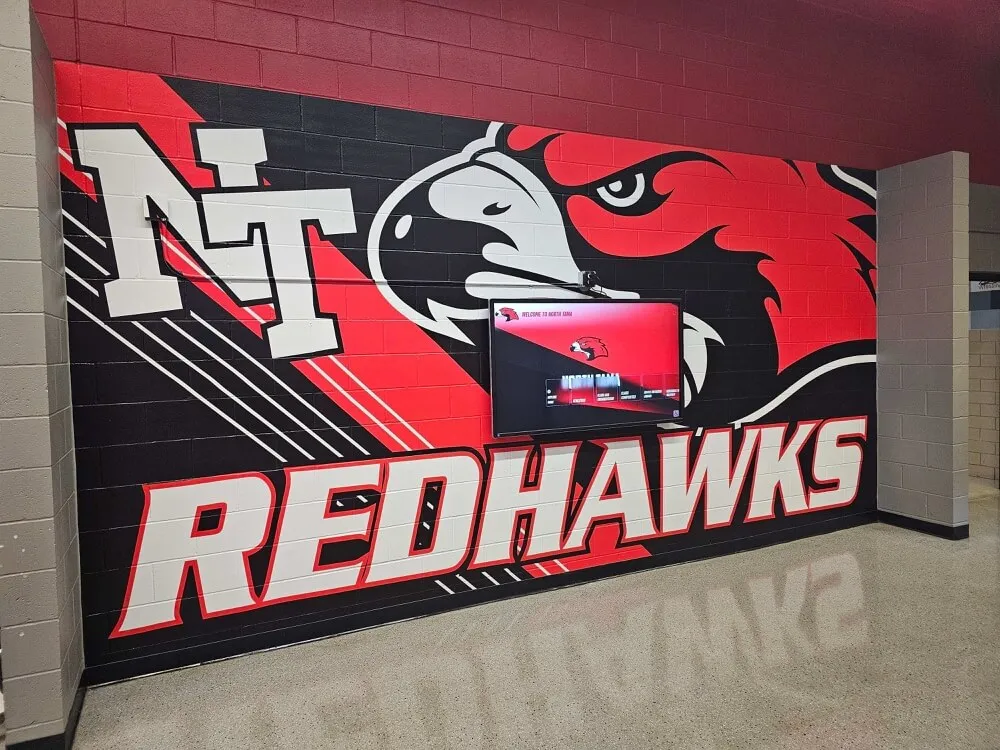
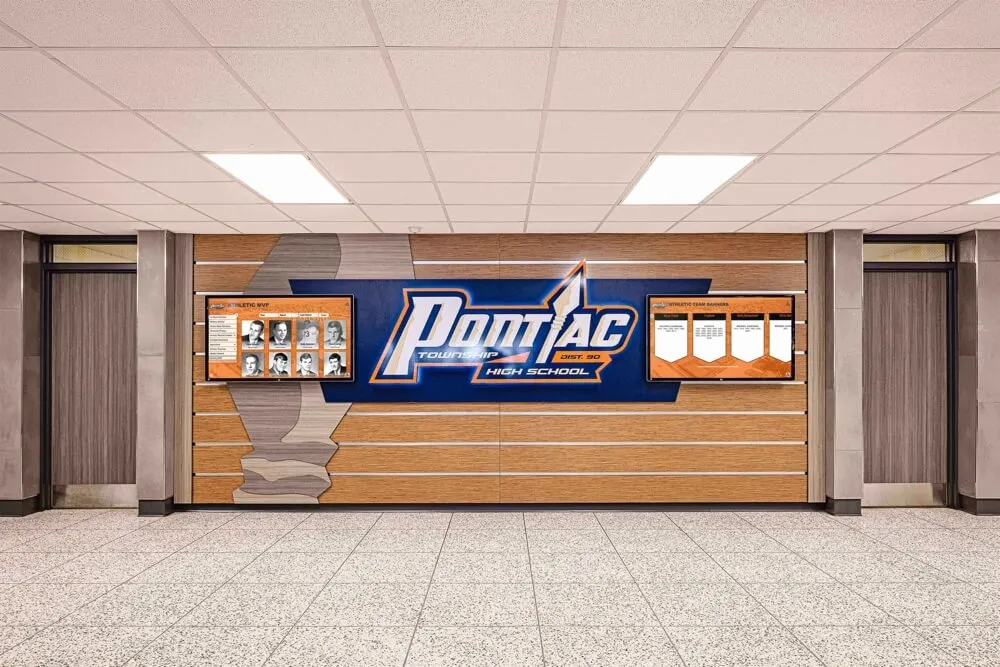
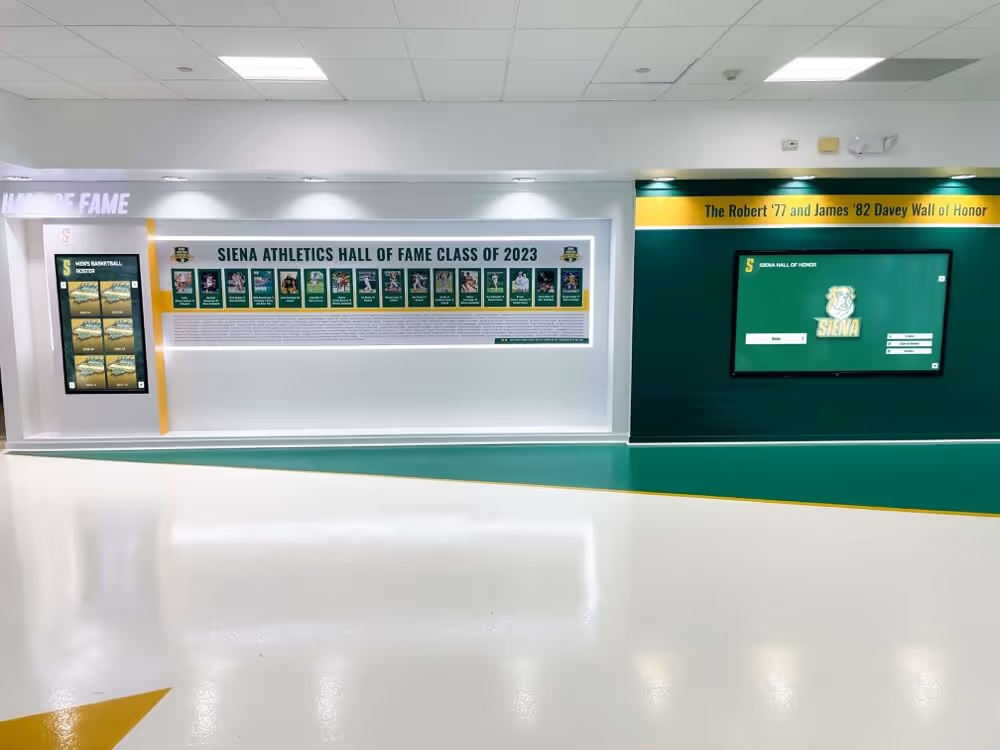
Coordinated multi-display networks enable comprehensive recognition systems serving different achievement categories while maintaining visual consistency across installations
How Digital Halls of Fame Differ From Traditional Recognition
Traditional halls of fame have served institutions for generations through wall-mounted plaques, engraved nameplates, and trophy cases. While these approaches maintain ceremonial significance, they face inherent limitations that digital technology directly addresses.
Traditional Recognition Constraints
Physical plaque systems accommodate perhaps 50-200 names before exhausting available wall space—forcing organizations to choose between expensive facility expansions, removing earlier honorees to make room for new inductees, or stopping recognition when space fills. Update processes require manufacturing plaques, coordinating installation, and often physically reorganizing entire displays—creating 3-6 month delays between earning recognition and seeing oneself honored. Information density remains minimal with small engravings providing only names, years, and basic achievement categories—preventing storytelling that creates emotional engagement or preserves complete narratives explaining why accomplishments mattered.
Accessibility limits recognition to those physically present at specific locations during facility hours. And maintenance requires ongoing coordination with vendors, installers, and designers for each recognition cycle, with correction costs for misspelled names or inaccurate information typically running $150-400 per replacement plaque.
Digital Recognition Advantages
Digital platforms eliminate space constraints, accommodating unlimited honorees without physical expansion or forced removal of earlier inductees. Updates happen instantly through content management systems accessible from anywhere—new inductees see themselves recognized within hours rather than waiting months for plaque manufacturing. Rich multimedia profiles include photo galleries, video interviews, comprehensive biographical narratives, achievement documentation, and contextual information creating emotional connections impossible with engraved text alone.
Powerful search and filtering enable visitors to instantly locate specific individuals or explore particular categories, achievement years, or recognition types. Analytics demonstrate engagement levels, content popularity, and usage patterns informing continuous improvement. And web accessibility extends recognition to worldwide audiences rather than limiting visibility to physical location visitors.
Organizations implementing digital hall of fame displays report that comprehensive recognition strengthens community culture while giving every deserving individual appropriate acknowledgment regardless of physical space limitations.
Types of Digital Hall of Fame Applications
Digital recognition technology serves diverse organizational needs across sectors—each with unique requirements and content approaches.
Athletic Halls of Fame and Sports Recognition
High school, college, and professional athletic programs represent primary digital hall of fame applications where technology delivers exceptional value:
Hall of Fame Inductees: Comprehensive athlete profiles including career statistics, championship achievements, records set, post-graduation accomplishments, biographical narratives explaining significance, and multimedia content preserving memories of excellence. Athletic recognition commonly spans decades of program history, honoring legends from all sports and eras with equal visibility impossible in space-constrained traditional trophy cases.
Championship Teams: Season-by-season documentation of championship achievements including complete rosters with individual athlete profiles, season statistics and tournament progression, coaching staff recognition, game highlights and memorable moments, and photo galleries capturing championship celebrations. This comprehensive documentation transforms basic “State Champions 1995” acknowledgments into compelling narratives current athletes explore and alumni cherish decades after competition.
Record Boards and Statistical Achievement: Interactive record displays serving dual purposes of recognition and motivation, showcasing school records by sport with athlete names and dates, season progression showing how records evolved, performance statistics with contextual comparisons, and video highlights preserving record-setting performances. Current athletes see standards to pursue while historical performers receive permanent acknowledgment of excellence.
Detailed frameworks for athletic hall of fame implementation demonstrate systematic approaches honoring diverse sports achievements comprehensively.
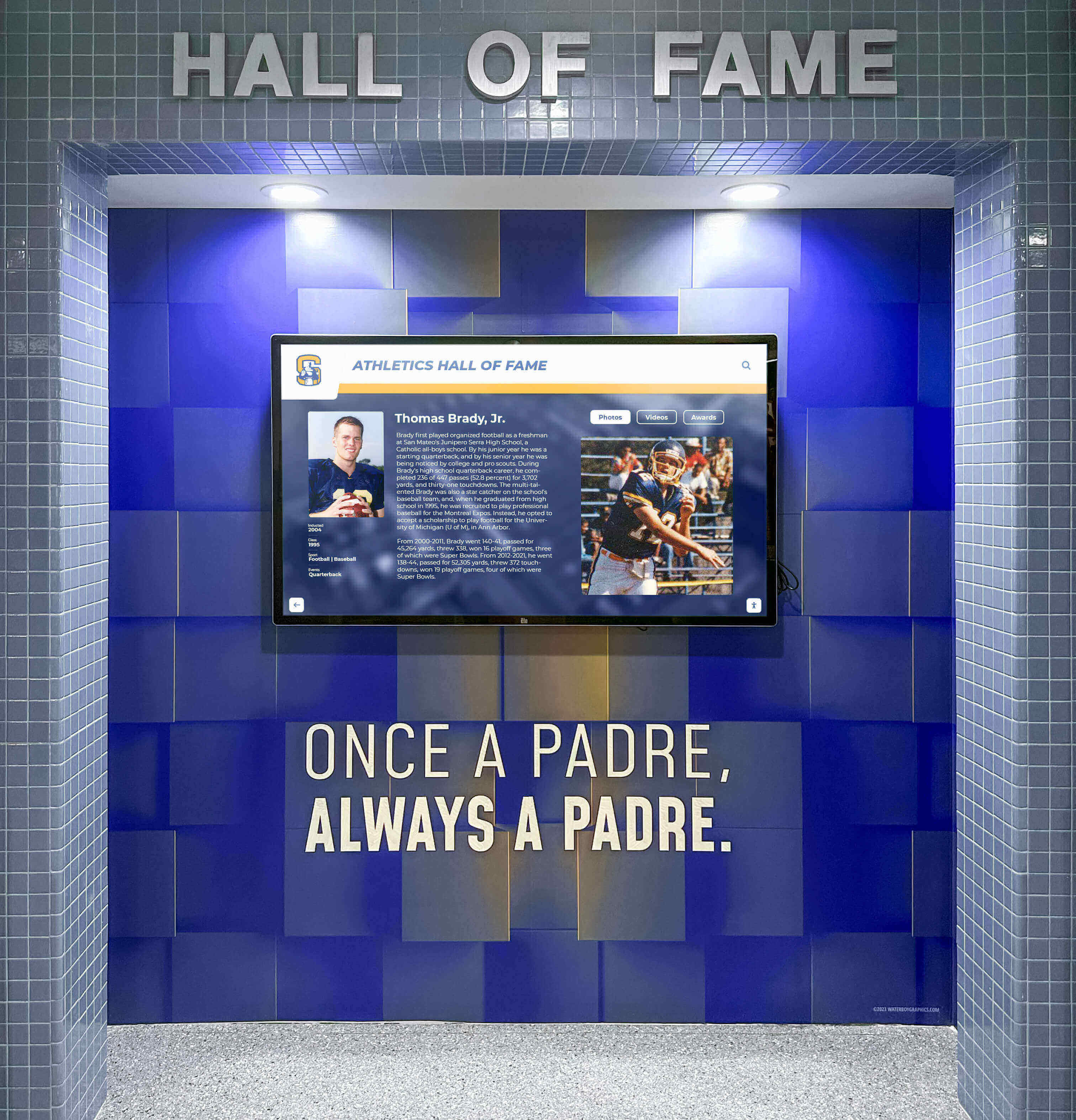
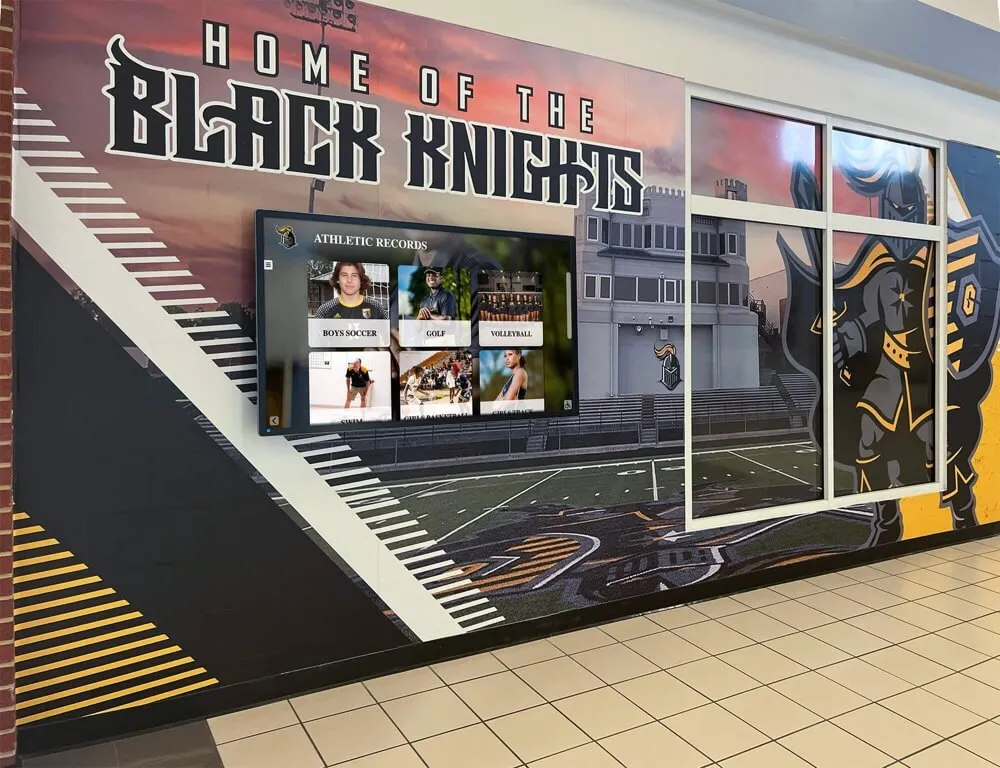
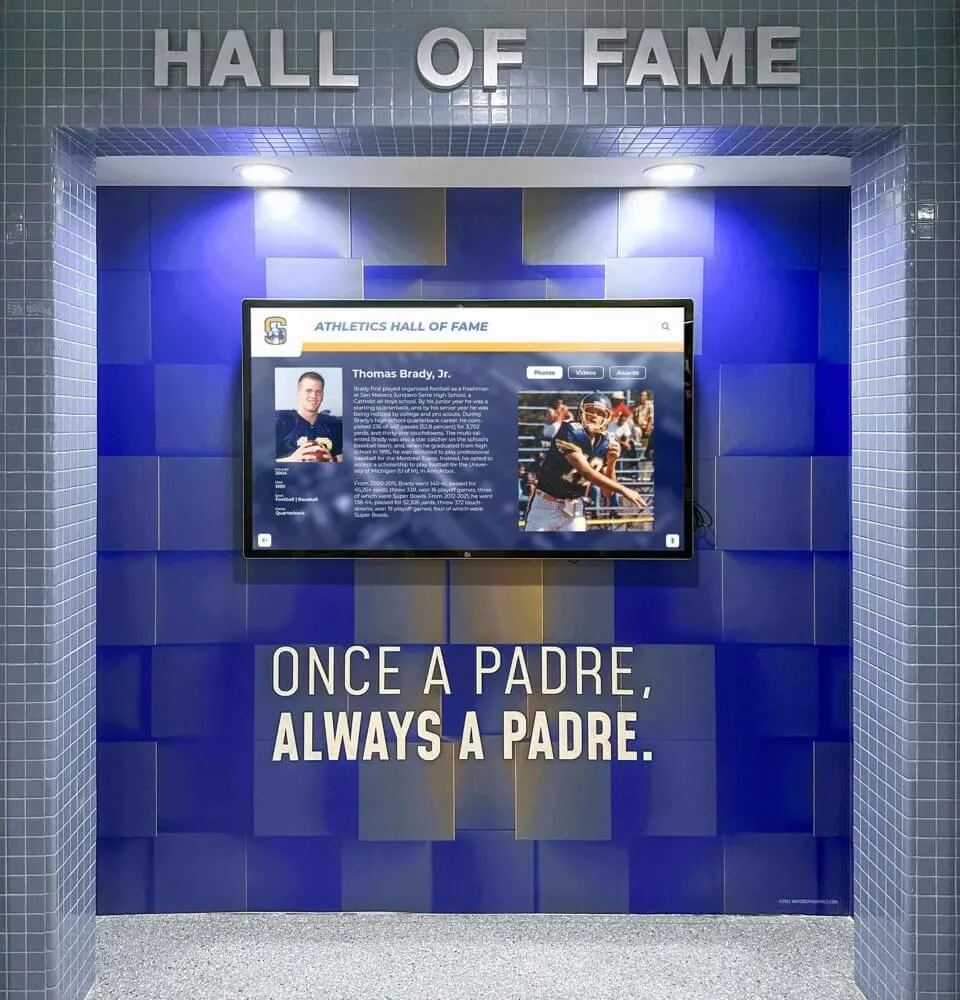
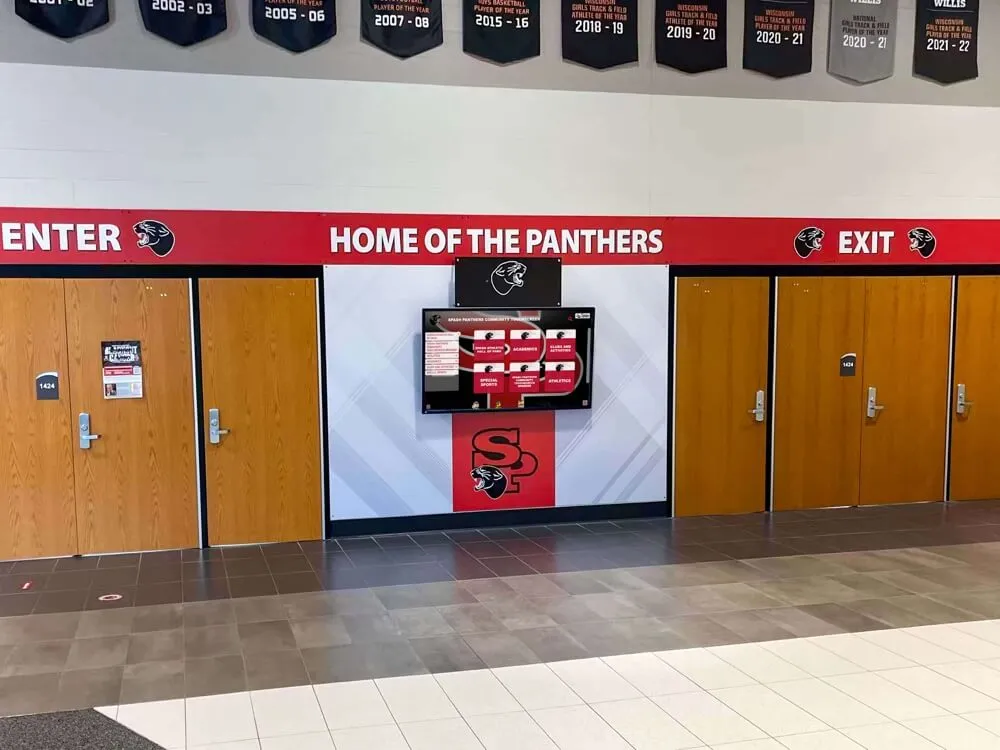
Athletic facility placements surround current competitors with program tradition during daily training and competition—creating motivation while preserving legacy
Academic Excellence and Scholar Recognition
Academic achievement deserves visibility equal to athletic success—digital platforms enable comprehensive intellectual recognition:
Academic Hall of Fame Members: Distinguished scholars achieving exceptional academic excellence including valedictorians and salutatorians across graduating classes, National Merit Scholars and academic competition winners, perfect or near-perfect standardized test achievers, prestigious scholarship recipients, and graduates achieving remarkable post-graduation academic or professional success. Profiles document not just what students achieved but how their intellectual pursuits shaped trajectories and contributed to broader communities.
Honor Society Members: Systematic recognition of students inducted into academic honor societies including National Honor Society members with leadership roles, subject-specific honor societies (science, mathematics, languages), grade-level academic honor rolls, and multi-year sustained excellence recognition. This comprehensive acknowledgment communicates that intellectual achievement receives institutional priority equal to athletic success.
Faculty and Teaching Excellence: Educators shaping institutional character deserve recognition alongside student achievers—celebrating teaching excellence award recipients, long-serving faculty reaching milestone anniversaries, department chairs and academic leaders, and beloved community members remembered across generations. Faculty recognition validates that education requires extraordinary professionals whose influence extends far beyond measurable outcomes.
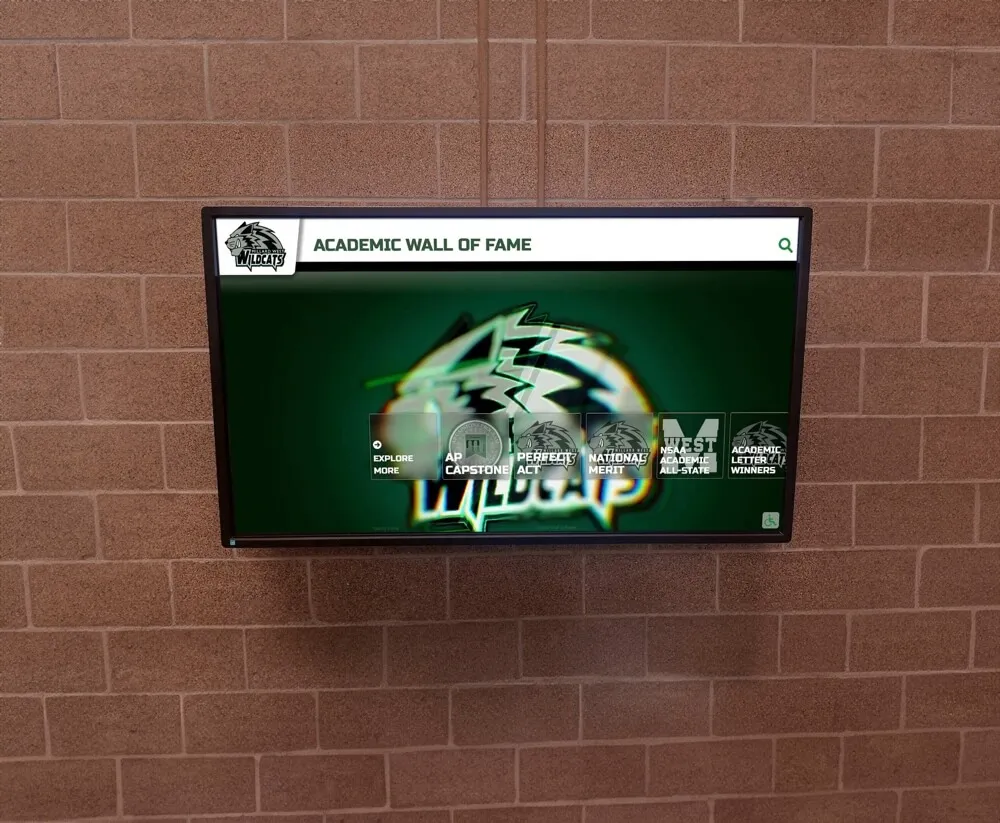
Resources on academic recognition programs provide detailed frameworks for honoring diverse intellectual excellence systematically.
Alumni Achievement and Distinguished Graduate Recognition
Alumni recognition connects current members with institutional legacy while celebrating graduate impact:
Professional Achievement Categories: Alumni excelling in diverse fields including business leadership and entrepreneurial success, medical and scientific research contributions, legal and public service accomplishment, creative achievement in arts and entertainment, academic scholarship and teaching excellence, and military service and leadership. This recognition validates that success takes many forms—demonstrating pathways current members can pursue through varied interests and strengths.
Community Service and Philanthropy: Graduates contributing through volunteer leadership, nonprofit organization founding and direction, philanthropic giving supporting institutions and causes, mentorship programs serving current members, and advocacy work advancing important issues. Service recognition demonstrates institutional values extending beyond individual professional success to community contribution and leadership.
Athletic Achievement Beyond School Competition: Former student-athletes achieving collegiate, professional, or Olympic-level success—connecting current participants with program legacy while celebrating continued athletic excellence. This recognition proves especially valuable for high school programs where professional athletic achievement by graduates validates competitive program quality.
Comprehensive alumni recognition strategies strengthen engagement while demonstrating institutional impact through graduate success.
Donor Recognition and Philanthropic Appreciation
Digital technology transforms donor acknowledgment beyond traditional static walls:
Major Gift Recognition: Comprehensive donor profiles celebrating transformational gifts including biographical content explaining giving motivations, impact stories documenting specific outcomes contributions enabled, photos of donors with beneficiaries or at funded facilities, giving society memberships acknowledging cumulative support, and testimonials from scholarship recipients or program beneficiaries. This recognition depth creates emotional connections transforming acknowledgment from courtesy into meaningful celebration of partnership.
Annual Fund and Leadership Giving: Tiered recognition structures acknowledging all supporters appropriately—from $25 contributions representing meaningful household sacrifices to $100,000+ transformational gifts requiring enhanced acknowledgment. Digital platforms enable proportional differentiation impossible with traditional plaques limited by physical space and uniform presentation formats.
Memorial and Tribute Giving: Sensitive acknowledgment of gifts honoring deceased loved ones or celebrating living honorees through permanently accessible profiles preserving memories and explaining significance. Memorial recognition provides lasting comfort to grieving families while connecting donors to institutional legacy through meaningful tributes.
Organizations implementing donor recognition displays report improved retention, enhanced cultivation, and stronger relationships compared to traditional acknowledgment approaches.
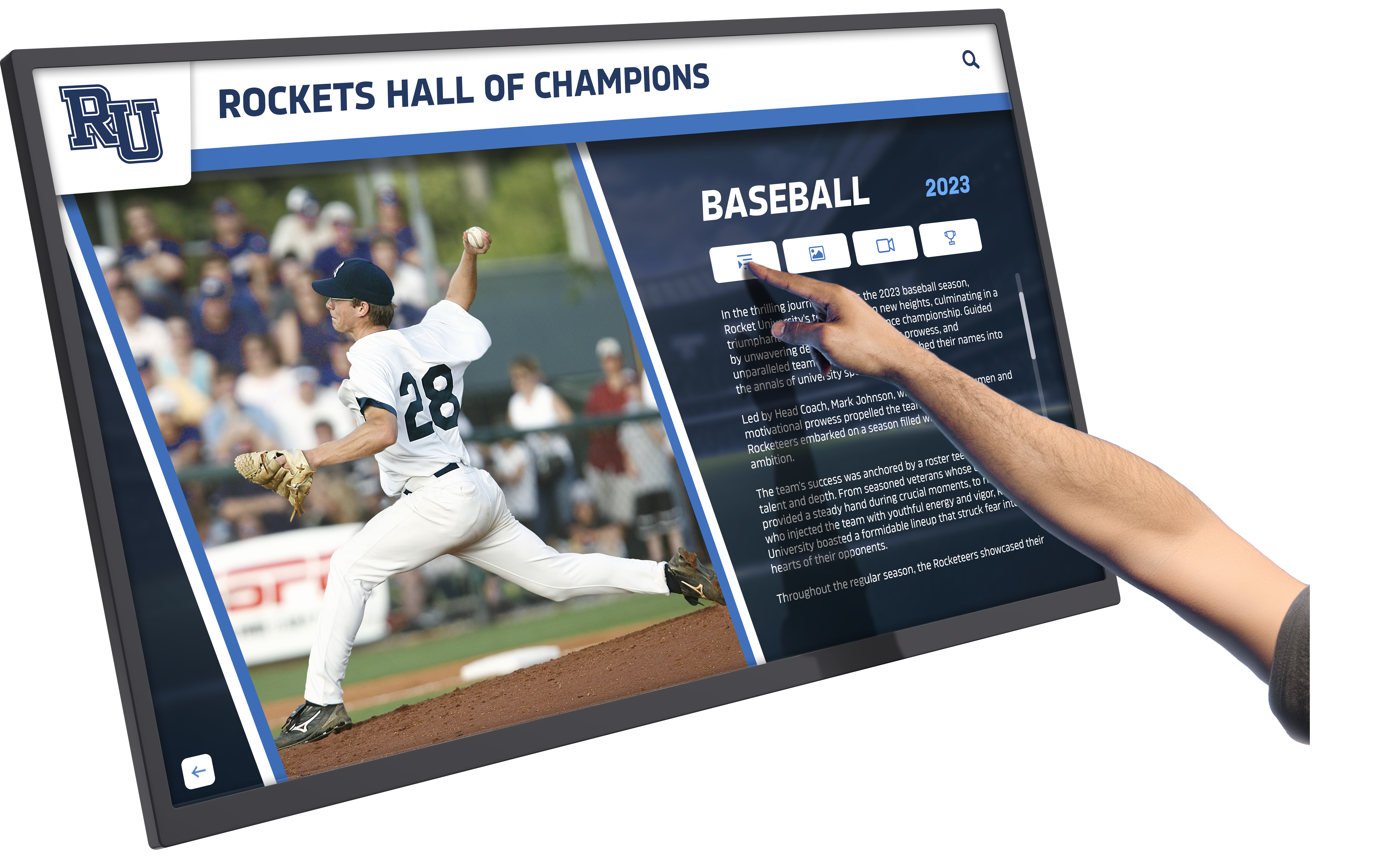
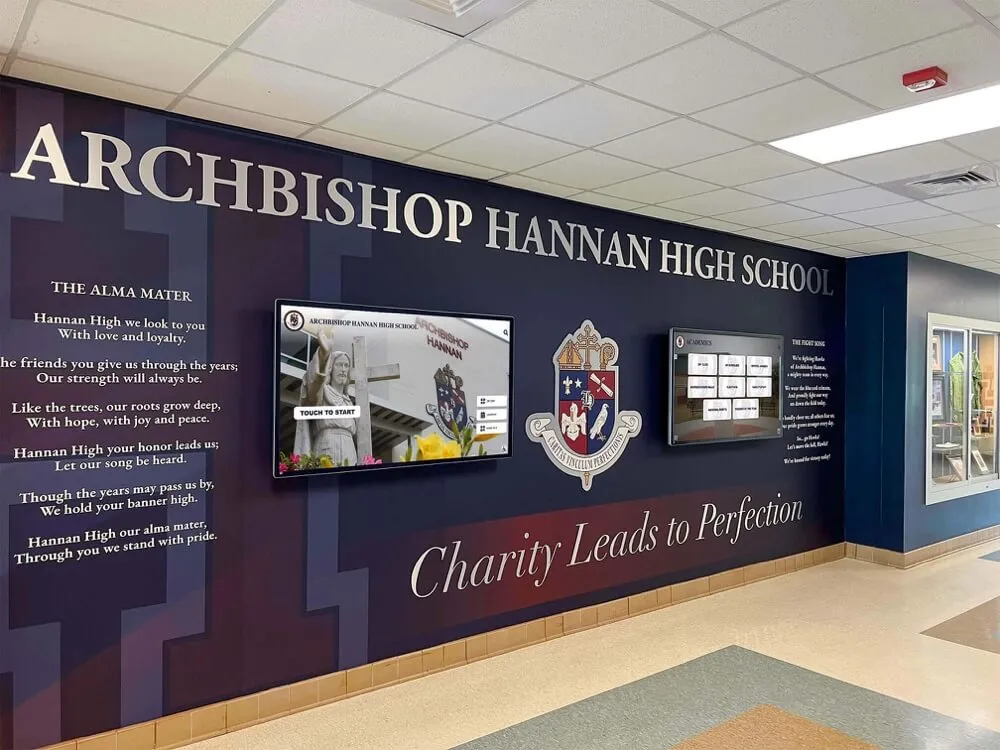
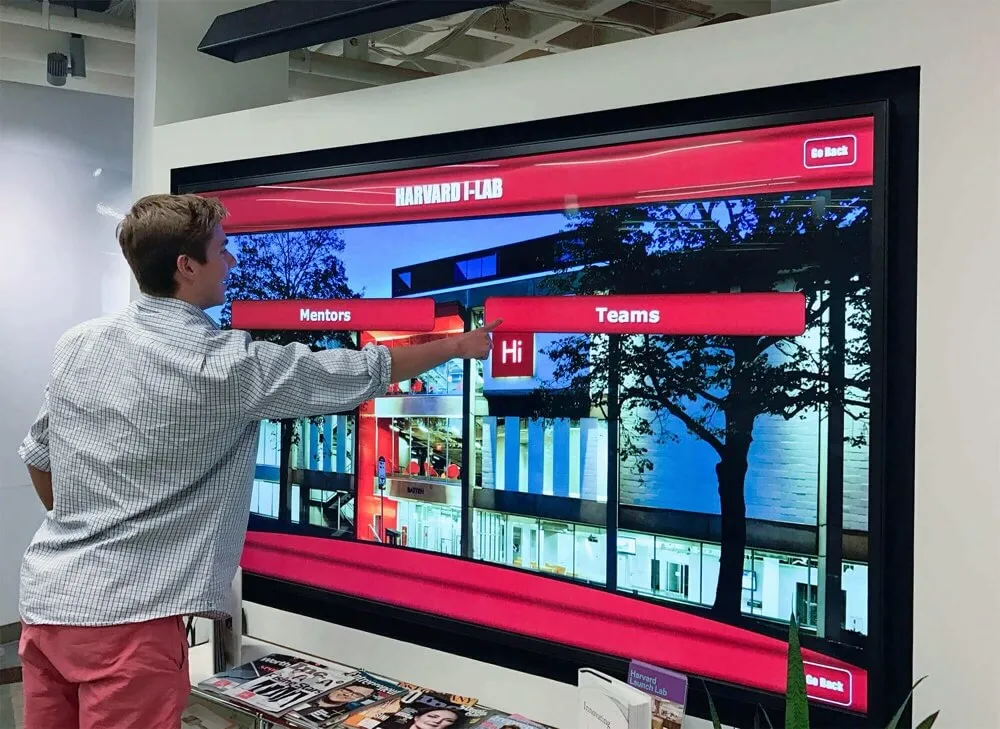
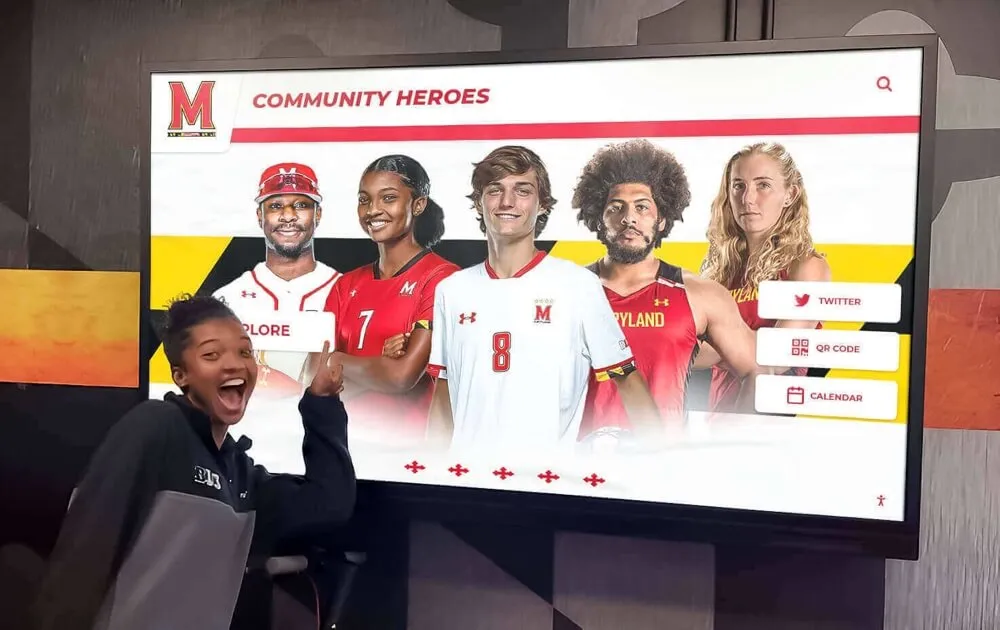
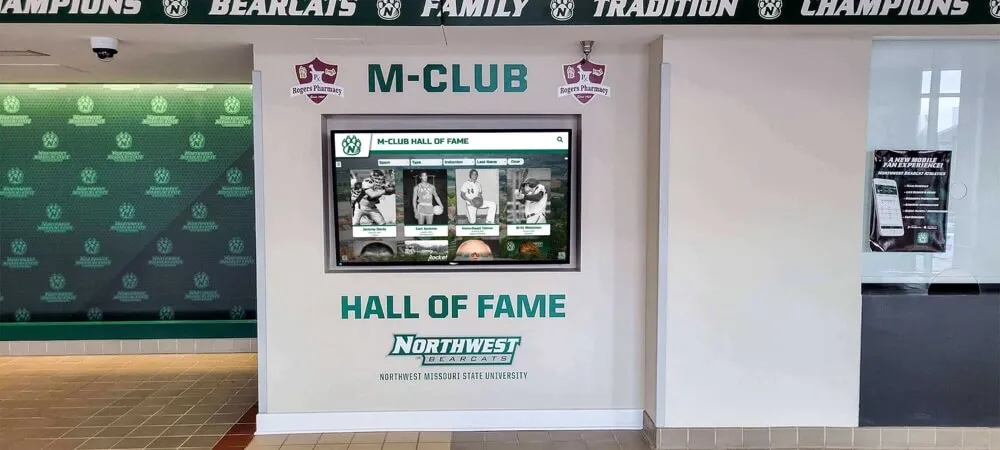
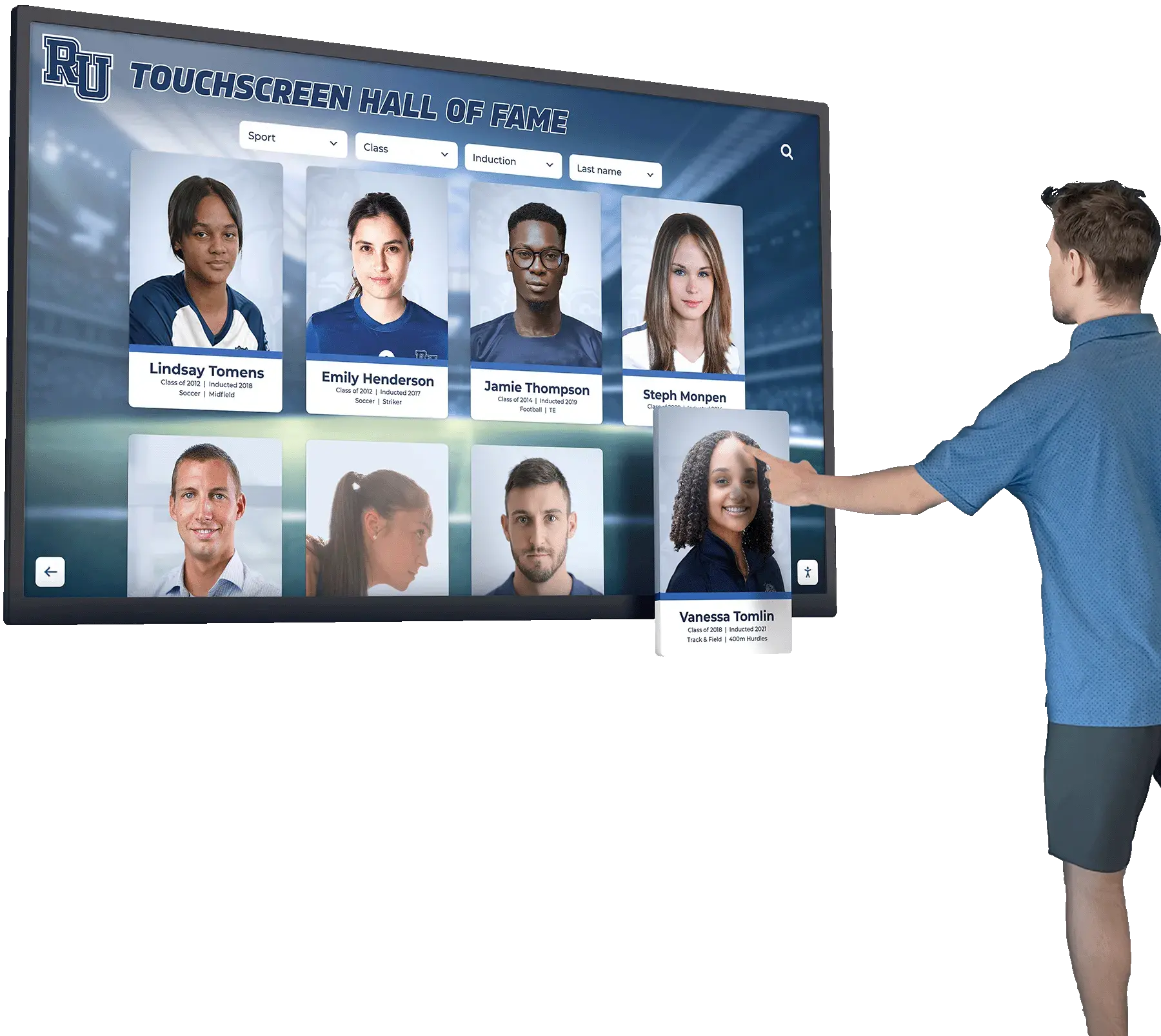
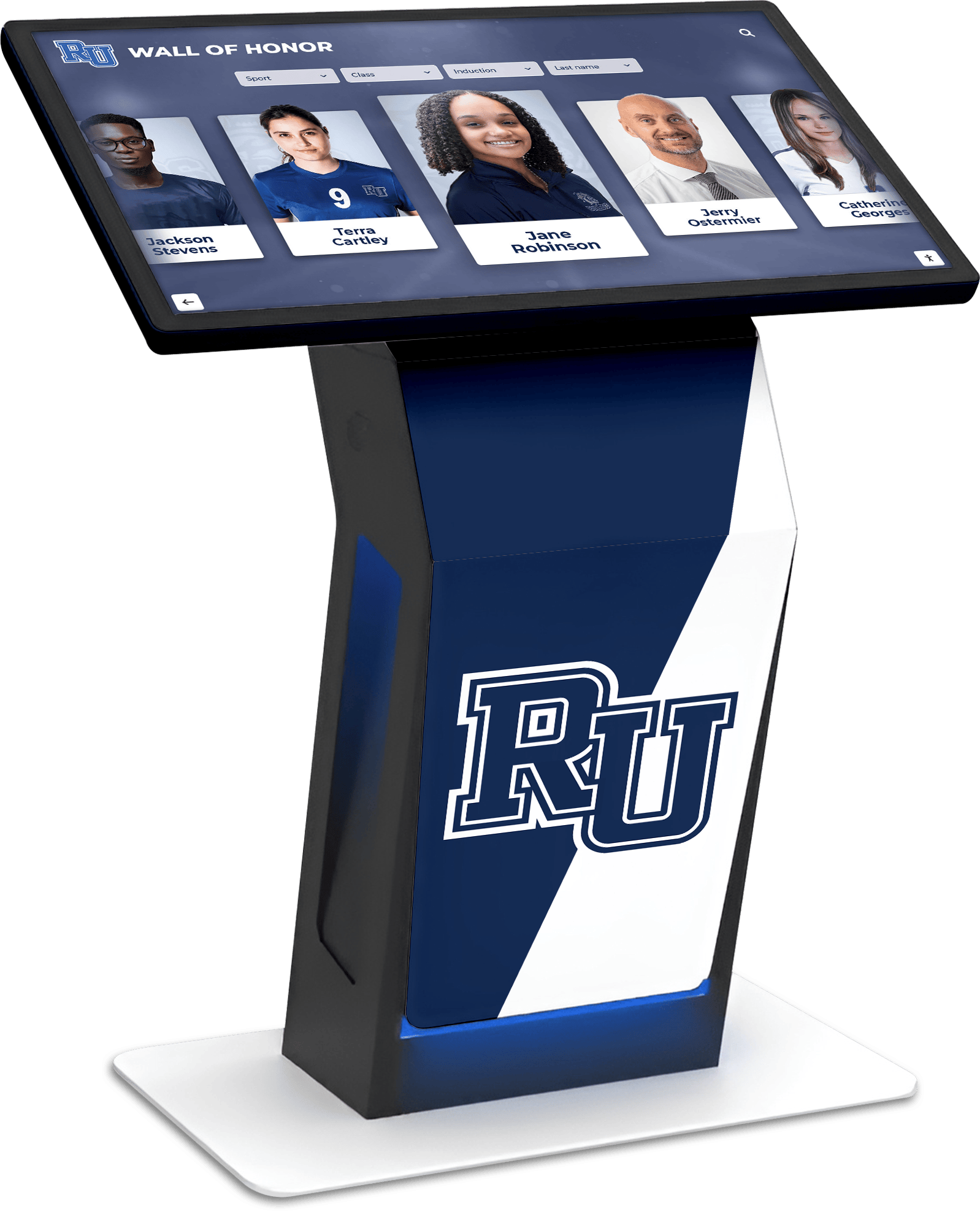
Intuitive card-based interfaces enable natural exploration with clear touch targets and immediate visual feedback—creating smartphone-like interactions familiar to modern users
Key Benefits of Digital Hall of Fame Systems
Digital recognition delivers interconnected advantages strengthening organizations across engagement, operational, and strategic dimensions.
Unlimited Recognition Capacity Eliminating Space Constraints
The most immediate benefit involves removing physical space limitations that force traditional programs to make difficult exclusion decisions or pursue expensive facility expansions.
Single 55-inch touchscreen displays can showcase hundreds or thousands of honoree profiles without ever running out of space—eliminating forced choices about whose achievements receive visibility or when earlier inductees must be removed to accommodate new recognition. This unlimited capacity enables truly comprehensive acknowledgment honoring every deserving individual regardless of physical space availability.
Organizations implementing digital halls of fame can systematically recognize all hall of fame inductees across decades of history, championship teams with complete rosters spanning generations, record holders and achievement leaders from all program areas, and award recipients regardless of giving levels or achievement categories—creating equitable recognition impossible within traditional space constraints.
Instant Updates Maintaining Current Recognition
Traditional recognition update cycles measured in months undermine stewardship effectiveness when honorees wait half a year to see themselves acknowledged. Digital systems enable immediate recognition that reinforces giving or achievement while enthusiasm remains strong.
Cloud-based management allows authorized administrators to add new inductees within minutes of ceremonies, correct errors instantly without manufacturing replacement plaques, update giving levels as donors upgrade contributions, refresh biographical information when honorees achieve new milestones, and publish content precisely timed to campaigns, seasons, or events.
This immediacy proves especially valuable for time-sensitive recognition including athletic season championships requiring prompt acknowledgment, annual fund campaigns where timely recognition encourages additional giving, graduation ceremonies honoring academic excellence while families celebrate, and memorial gifts acknowledging losses during community grief.
Rich Multimedia Storytelling Creating Emotional Engagement
Traditional plaques document recognition efficiently through names, years, and brief achievements—but rarely inspire deep emotional engagement or tell complete stories about honored individuals’ accomplishments and significance.
Digital platforms enable multimedia incorporation impossible with static displays:
Comprehensive Biographical Narratives: 300-500 word profiles explaining not just what honorees achieved but who they were, how their journeys unfolded, what obstacles they overcame, and why their accomplishments mattered to institutions and communities. These narratives transform recognition from directories into compelling archives preserving institutional memory.
Photo Galleries Showing Complete Stories: Multiple images capturing honorees throughout involvement rather than single static portraits—showing athletes competing, scholars studying, donors engaging with beneficiaries, and alumni progressing through life stages. Visual storytelling creates connections that text alone cannot match.
Video Content Preserving Voices and Memories: Interview footage capturing personal reflections, game highlights showing athletic performance, ceremony recordings documenting recognition moments, and testimonials from beneficiaries expressing gratitude. Video engagement significantly exceeds text and photo interaction—visitors spend 3-5 times longer exploring profiles including multimedia content.
Historical Documents and Artifacts: Scanned newspaper articles from achievement timeframes, original program materials, awards certificates, statistical records, and archival photos providing primary source context. This documentation connects recognition to broader historical narratives enriching understanding.
This storytelling depth creates emotional engagement transforming halls of fame from lists of names into living archives preserving institutional heritage while inspiring current community members through compelling stories of past excellence.

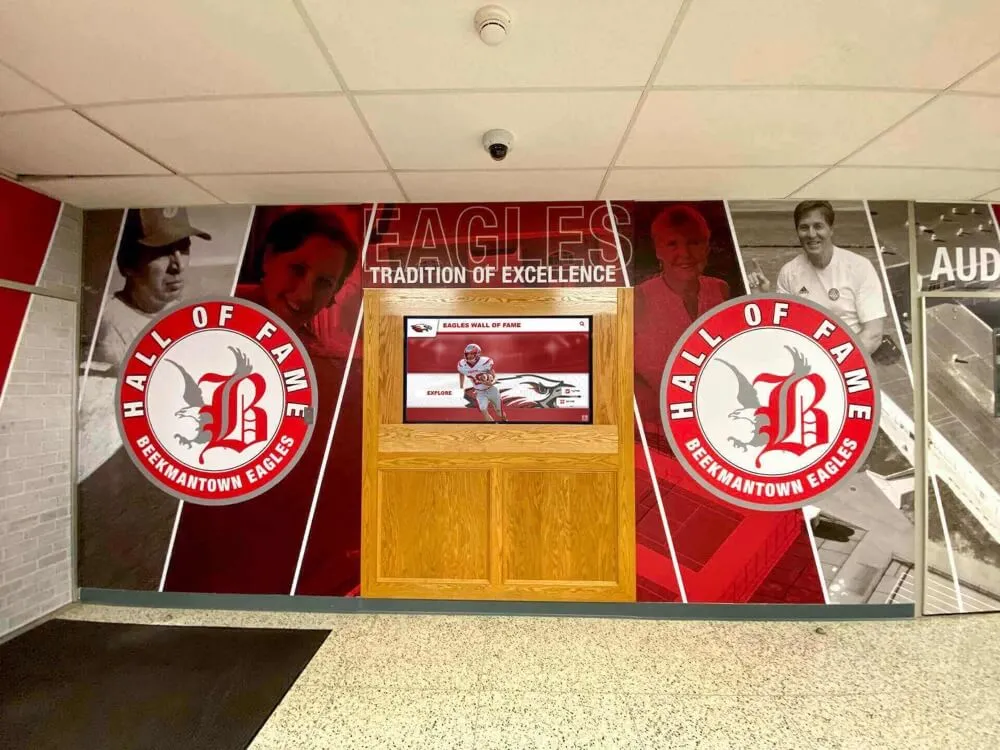
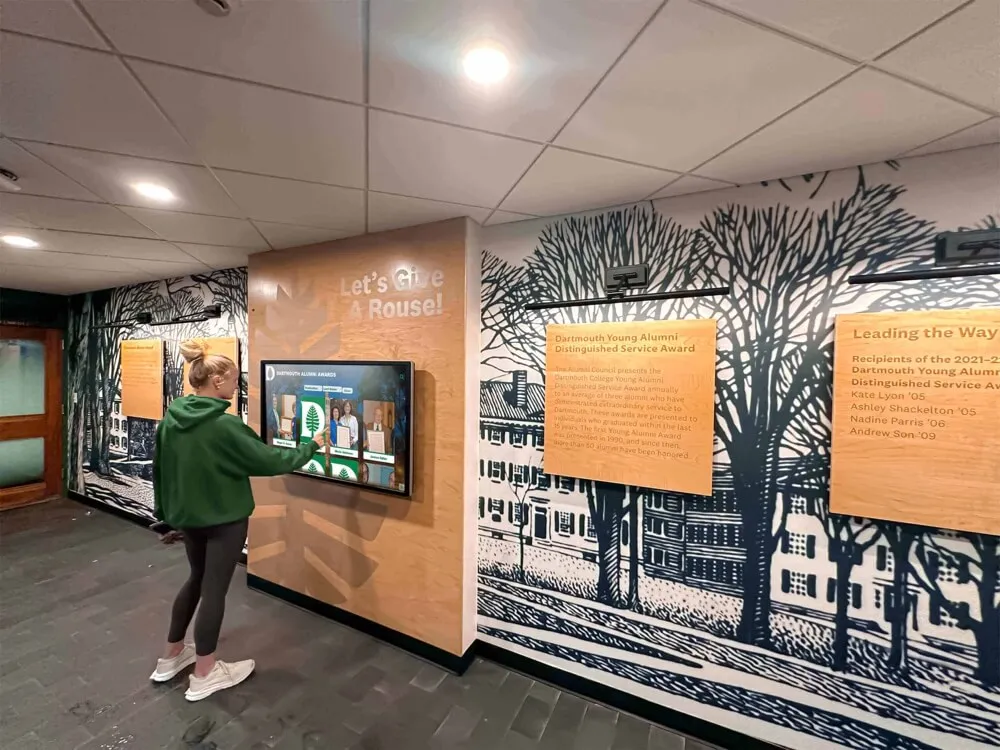
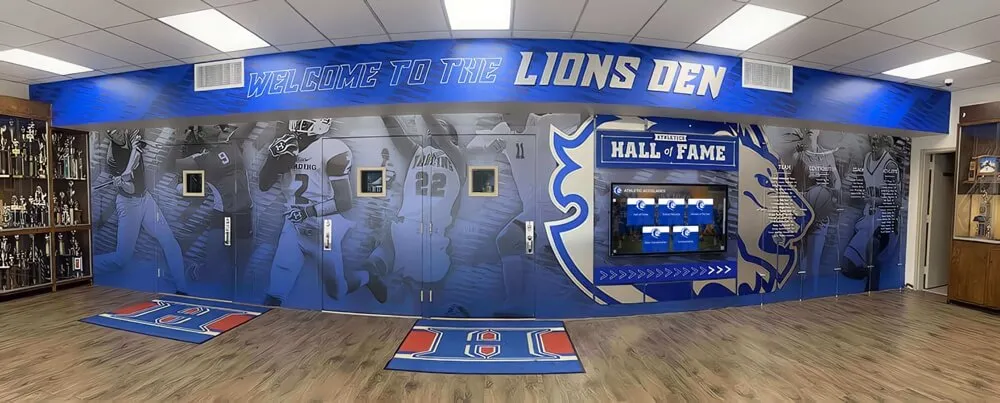
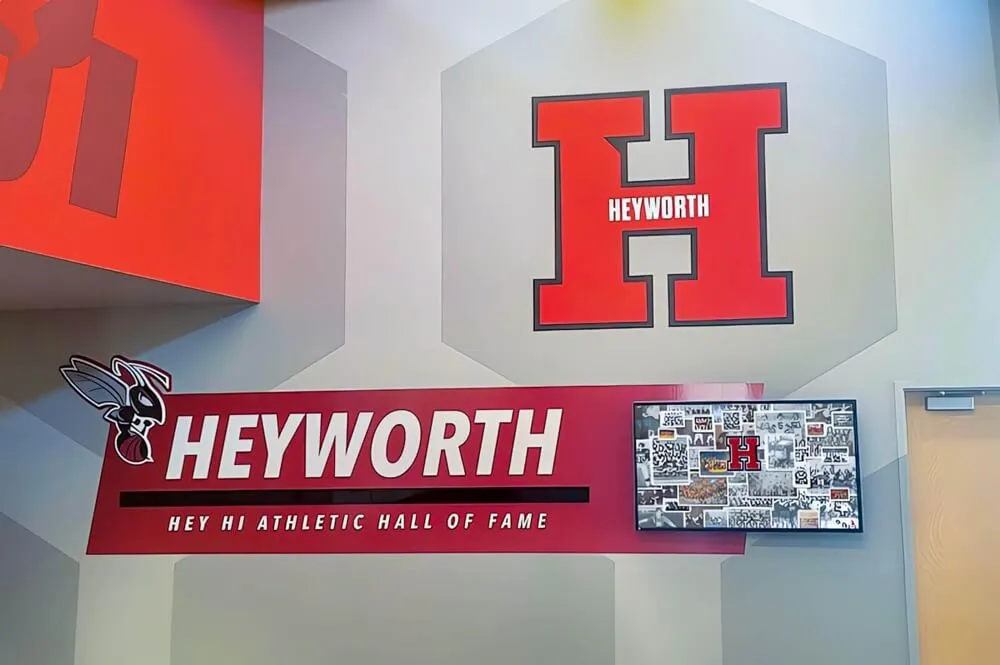
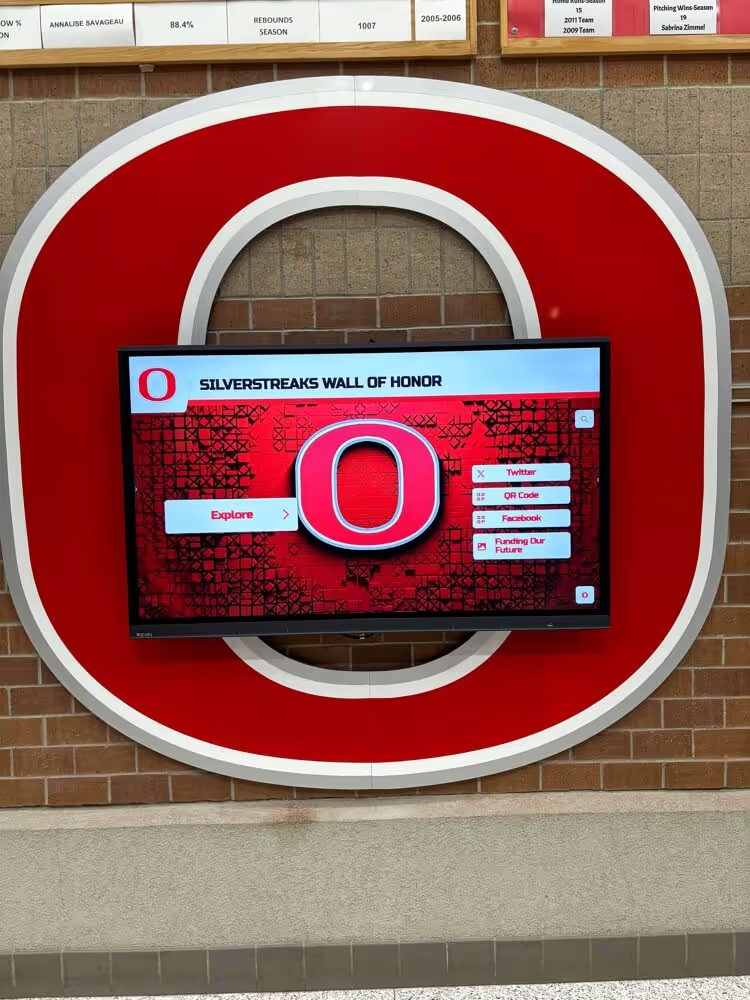
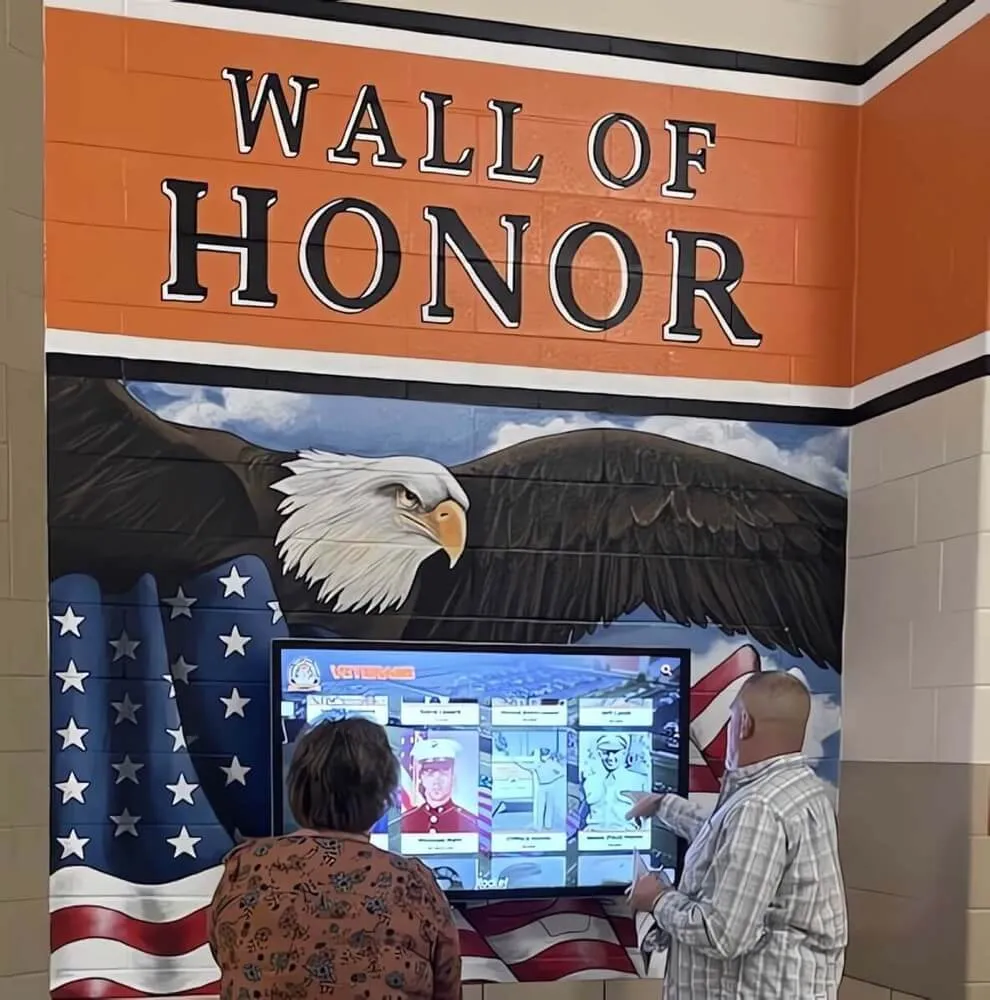
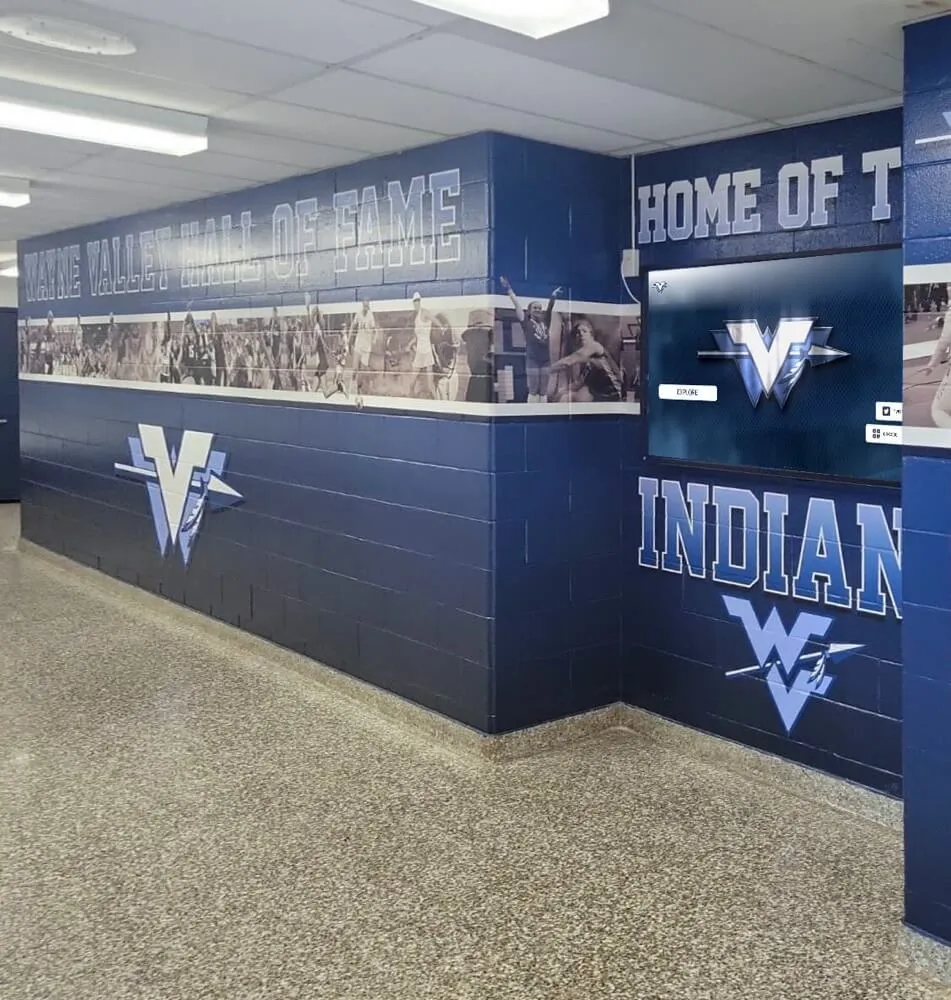
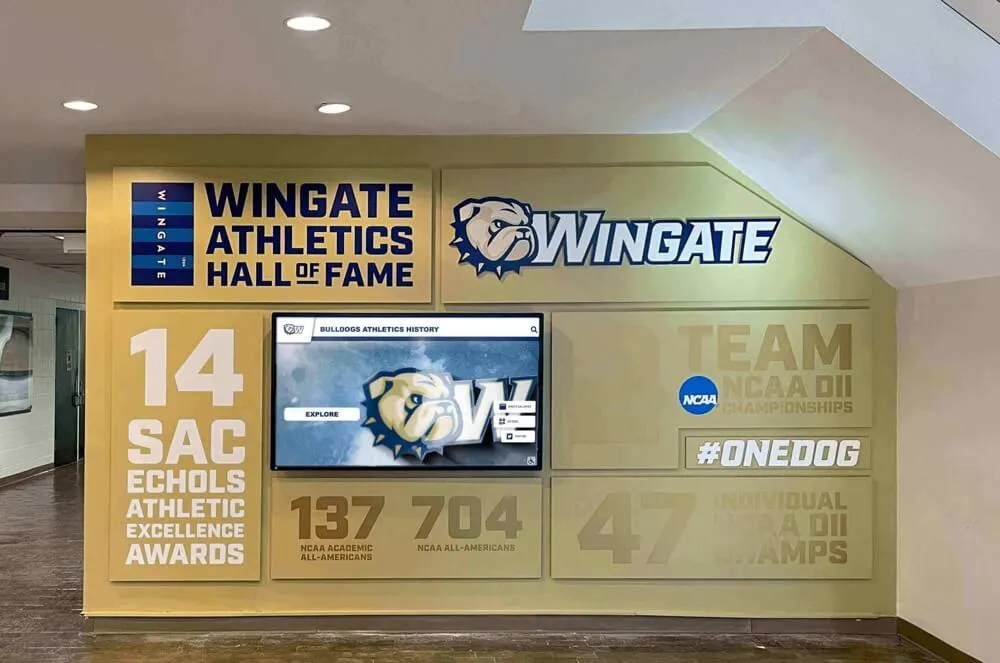
Integrated installations blend digital displays with traditional murals and branding—creating comprehensive recognition environments honoring heritage while embracing modern capabilities
Universal Accessibility Beyond Physical Locations
Traditional halls of fame serve only people physically present at specific locations during facility hours—limiting recognition reach to tiny fractions of communities.
Digital platforms address accessibility limitations through web-based extensions making recognition universally available:
24/7 Worldwide Access: Alumni living across countries can explore their recognition anytime, prospective members research organizational heritage during decision processes, families share honored relatives’ achievements with distant connections, and media or researchers gather information without scheduling facility visits. This universal accessibility dramatically expands recognition reach and impact.
Mobile-Responsive Design: Smartphone and tablet optimization ensures recognition accessibility on devices people naturally use—particularly valuable for game-day visitors exploring recognition before, during, or after attending athletic events or community gatherings.
Social Sharing Amplifying Recognition: Visitors can share specific profiles through social networks—creating authentic testimonials reaching friends, colleagues, and extended networks while amplifying organizational visibility. Viral sharing occasionally reaches thousands when particularly compelling stories resonate with audiences.
Search Engine Discoverability: Web-accessible recognition becomes searchable through Google and other engines—enabling people to discover organizational achievements through keyword searches, find specific individuals whose recognition they’re seeking, and encounter institutional content through organic discovery rather than requiring direct navigation.
Organizations report that web accessibility generates 60-80% of total recognition engagement—demonstrating that physical displays represent only portions of comprehensive recognition programs’ value when digital systems extend acknowledgment worldwide.
Administrative Efficiency and Long-Term Cost Effectiveness
While digital halls of fame require higher initial investment than first-generation traditional plaques, they deliver significant efficiency and long-term financial advantages.
Time Savings Through Simplified Management: Cloud-based systems enable non-technical staff to maintain recognition displays within minutes rather than hours or days required for traditional coordination with manufacturers, installers, and designers. Organizations report 80-90% reduction in administrative time spent maintaining recognition—freeing volunteers and staff for program development rather than logistical coordination.
Cumulative Cost Advantages: Digital systems involve higher upfront investment (typically $8,000-25,000 per display including hardware, software, and installation) but eliminate recurring costs that make traditional recognition expensive long-term. Over 10-20 year timeframes, successful programs spend $30,000-80,000 on traditional approaches (plaque manufacturing, installation, corrections, expansions) while digital systems incur only annual software licensing of $1,200-3,600 after initial investment.
Flexibility Supporting Evolution: Digital content adapts instantly to changing needs—reorganizing categories, adjusting recognition criteria, adding new achievement types, or refreshing design aesthetics without replacing physical infrastructure. This flexibility prevents recognition becoming permanently fixed in outdated formats requiring expensive replacement when needs evolve.
Understanding digital recognition implementation strategies helps organizations maximize return on technology investments while maintaining sustainable operations.
Implementation Considerations for Digital Halls of Fame
Successful digital recognition requires thoughtful planning across technology selection, content development, and organizational adoption.
Technology Selection and Hardware Choices
Not all digital display solutions deliver equal results for recognition applications—selecting appropriate systems matters significantly:
Display Size and Resolution: Screen dimensions affect viewing comfort and content capacity. Common configurations include 43-55 inch displays for intimate spaces with close viewing distances (5-8 feet), 65 inch displays for standard lobby installations serving medium-sized gatherings, and 75+ inch displays for large venues or viewing distances exceeding 12-15 feet. Resolution minimums should meet 1920x1080 (1080p Full HD) for 43-65 inch sizes, with 4K (3840x2160) preferred for 75+ inch installations ensuring text remains crisp and photos appear sharp.
Touch Technology Options: Capacitive touch provides smartphone-like responsiveness with multi-touch gesture support but typically limits sizes to 65 inches and costs more. Infrared touch supports larger displays (75+ inches), costs less, handles single-touch interaction effectively, but may feel less responsive than capacitive technology. For recognition applications where single-touch suffices, infrared proves cost-effective and reliable.
Commercial vs. Consumer Displays: Consumer TVs lack durability for continuous public operation—commercial displays rated for 16-24 hour daily use provide necessary reliability, typically include extended warranties (3-5 years vs. 1 year consumer), feature anti-glare coatings improving visibility in bright environments, and support remote management enabling troubleshooting without physical access.
Mounting and Installation Approaches: Wall-mounted displays provide clean integrated installations but require adequate structural support and concealed cable management. Freestanding kiosks offer placement flexibility and professional appearance while including security features protecting hardware. Built-in installations integrate displays within architectural millwork creating permanent recognition features.
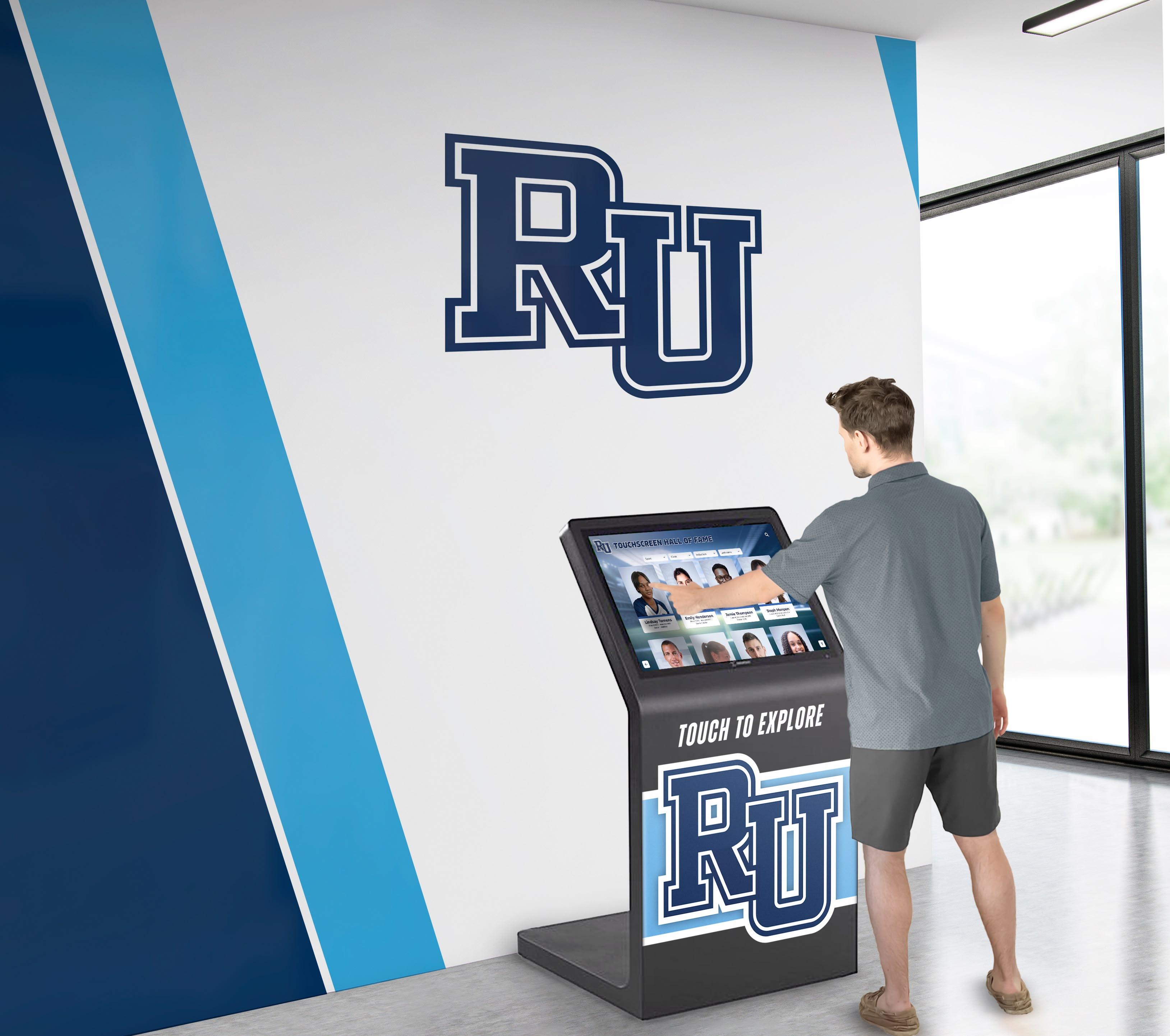
Freestanding kiosks provide secure professional installations with built-in computers, cable management, and anti-theft protection—ideal for public spaces requiring durability
Software Platform Requirements
Recognition software determines user experience quality and content management efficiency:
Purpose-Built Recognition vs. Generic Digital Signage: Generic signage platforms designed for advertisements and announcements poorly serve recognition needs. Purpose-built platforms understand that recognition organizes around individual profiles rather than slideshows, requires sophisticated search and filtering enabling discovery, must accommodate unlimited content without performance degradation, and needs approval workflows respecting institutional policies.
Content Management Accessibility: Volunteer organizations and schools require intuitive interfaces enabling non-technical staff to manage recognition without IT department dependency. Quality platforms provide drag-and-drop content uploading, template-based profile creation, visual content preview before publication, and helpful documentation reducing training requirements.
Multi-User Collaboration and Permissions: Multiple stakeholders managing different recognition areas requires role-based access control—allowing athletics staff to update athletic recognition, development offices to manage donor content, and academic administrators to maintain scholar profiles—all within unified systems without conflicts or unauthorized changes.
Web Portal Integration: Recognition extends beyond physical displays when platforms include web-accessible versions enabling worldwide exploration. Quality implementations provide identical content on physical displays and web portals, mobile-responsive design supporting smartphones and tablets, social sharing enabling visitors to distribute specific profiles, and SEO optimization making content discoverable through search engines.
Analytics and Reporting: Data-driven optimization requires comprehensive usage tracking including interaction counts and session duration, most-viewed content revealing compelling stories, search patterns showing what visitors seek, and engagement comparisons across categories or time periods. These insights inform content development priorities while demonstrating program value to stakeholders.
Organizations should request live demonstrations with actual recognition content, speak with reference institutions about implementation experiences, and verify total cost of ownership including initial investment and recurring fees before committing to platforms.
Content Development Strategy and Workflows
Digital hall of fame value depends entirely on quality content celebrating achievements comprehensively:
Starting Scope and Phased Expansion: Organizations with decades of recognition history shouldn’t attempt comprehensive historical coverage immediately. Practical approaches start with recent 3-5 years establishing contemporary foundation demonstrating immediate value, expand to past decade building substantial coverage, then gradually add historical content as resources allow. This phased strategy enables launches within achievable timeframes while preventing content development from delaying implementation indefinitely.
Information Gathering and Sources: Systematic content collection ensures comprehensive accurate recognition through multiple sources including yearbooks providing photos and historical context, program materials (rosters, statistics, achievements), institutional archives and records, newspaper coverage capturing contemporaneous accounts, personal collections from families and honorees, and oral history interviews gathering first-person perspectives.
Profile Content Standards: Establishing quality guidelines ensures consistency including photo resolution minimums (1920x1080 or higher for primary images), biographical length targets (150-300 words for standard profiles, 400-600 for enhanced recognition), citation requirements for statistics and claims, approval workflows ensuring accuracy before publication, and privacy guidelines respecting sensitive information.
Sustainable Update Workflows: Permanent programs require sustainable maintenance approaches including assigned responsibility for different recognition areas, deadlines for content submission before induction ceremonies, regular reviews verifying accuracy and completeness, and documentation supporting continuity during staff transitions. Organizations treating recognition as projects rather than permanent operations often experience deterioration within 2-3 years as initial champions move on.
Resources on digital archive development provide detailed frameworks for systematic content creation supporting recognition programs.
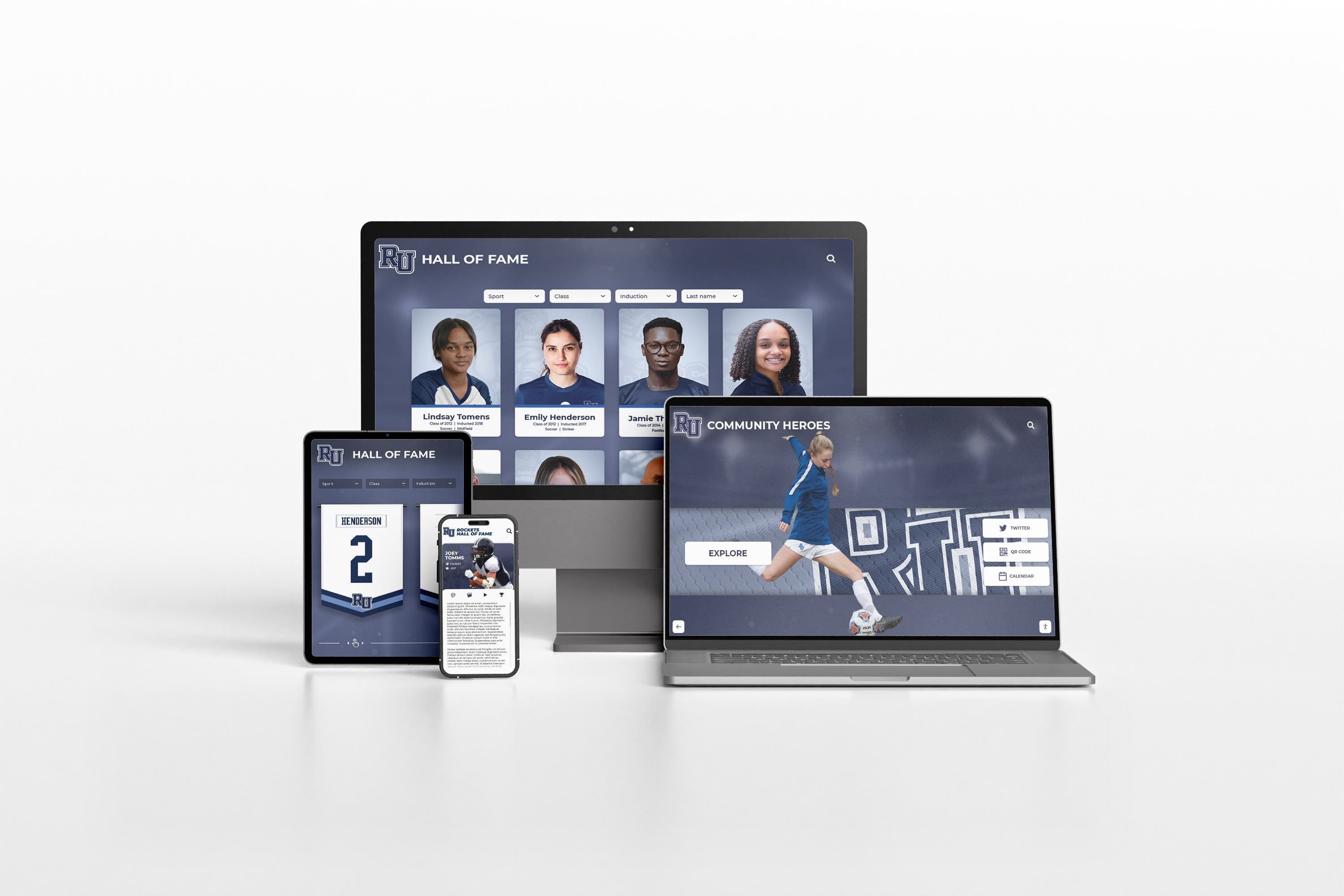
Responsive design ensures recognition accessibility across all devices—extending acknowledgment from physical displays to worldwide audiences exploring content on smartphones, tablets, and computers
Location Selection and Strategic Placement
Display effectiveness depends significantly on installation location—strategic placement maximizes visibility and engagement:
High-Traffic Institutional Locations: Optimal placements include main entrance lobbies welcoming all visitors immediately upon arrival, common areas where community members gather during events, hallways connecting high-traffic areas capturing movement throughout facilities, athletic buildings for sports recognition reaching current competitors, and administrative spaces where prospective members visit during recruitment.
Viewing Comfort and Accessibility: Installations should ensure ADA-compliant mounting heights enabling wheelchair-user interaction (center of interactive area 15-48 inches above floor), adequate lighting without screen glare ensuring readability, sufficient clearance allowing multiple simultaneous users, comfortable viewing environments with seating encouraging extended engagement, and clear sight lines from primary pathways making displays discoverable.
Infrastructure Requirements: Successful installations require electrical power (dedicated circuits with surge protection preferred), network connectivity (hardwired Ethernet strongly preferred over WiFi for reliability), climate control (displays operate optimally in temperature-controlled environments), and security considerations (cable management, anti-theft mounting, vandalism protection).
Institutional Policy Coordination: Work with facility managers and administrators ensuring installations comply with policies, obtaining necessary approvals before procurement, coordinating timing with academic or operational schedules, and establishing ongoing access arrangements for maintenance and updates.
Organizations should consider phased implementation starting with single displays in highest-impact locations, then expanding strategically as budgets allow and initial installations demonstrate value—spreading investment while building confidence and organizational support.
Best Practices for Digital Hall of Fame Success
Organizations achieving exceptional results follow proven approaches maximizing impact while respecting operational realities:
Start With Clear Recognition Goals and Strategy
Successful programs begin with fundamental questions: What achievement categories require recognition? Who are primary audiences and what do they value? What outcomes should recognition achieve? How will we measure success? And what resources can we sustainably commit?
This strategic foundation prevents tactical implementations lacking coherence or failing to serve institutional goals. Recognition should advance organizational priorities—whether strengthening alumni engagement, improving donor retention, inspiring current student achievement, or preserving institutional heritage for communities.
Prioritize Content Quality Over Quantity
Better to recognize 50 individuals comprehensively than 500 minimally. Rich profiles with photos, narratives, and context create engagement while basic name listings provide limited value beyond documentation.
Establish quality standards ensuring profiles honor achievements appropriately—then build content systematically rather than pursuing immediate comprehensive coverage at expense of storytelling quality. Organizations report that compelling deep content for smaller collections generates far greater engagement than superficial coverage of large volumes.
Design for Multiple Audiences and Use Cases
Effective recognition serves diverse constituencies including current members exploring role models and history, prospective members evaluating institutional traditions, alumni reconnecting with their own recognition, families celebrating relatives’ achievements, visitors learning about organizational excellence, and donors understanding philanthropic impact.
Navigation and content should support all these usage patterns rather than optimizing for single primary audience. Multiple discovery pathways (search, browse by category, browse by year, featured collections) enable different visitors to explore content matching their specific interests and search patterns.
Plan for Sustainability and Evolution
Recognition programs require sustained commitment beyond initial implementation enthusiasm. Budget ongoing software licenses and support contracts, assign permanent staff or volunteer responsibility with backup coverage, establish content development workflows integrated with ceremonies and operations, schedule regular reviews maintaining accuracy and currency, plan technology refresh cycles anticipating hardware lifecycle (5-7 years typical), and document procedures supporting continuity during leadership transitions.
Programs treated as projects rather than permanent initiatives often deteriorate within 2-3 years as initial enthusiasm fades and champions move on—wasting investments and undermining recognition program credibility.
Integrate Recognition With Broader Programming
Digital halls of fame work most effectively when integrated with comprehensive strategies. Connect recognition displays with ceremony and event programming, link digital content to recruitment and marketing communications, integrate recognition with fundraising and development operations, coordinate updates with communications calendars, and leverage recognition for social media content and engagement.
This integration maximizes recognition value while distributing effort across teams rather than burdening single individuals with comprehensive responsibility.
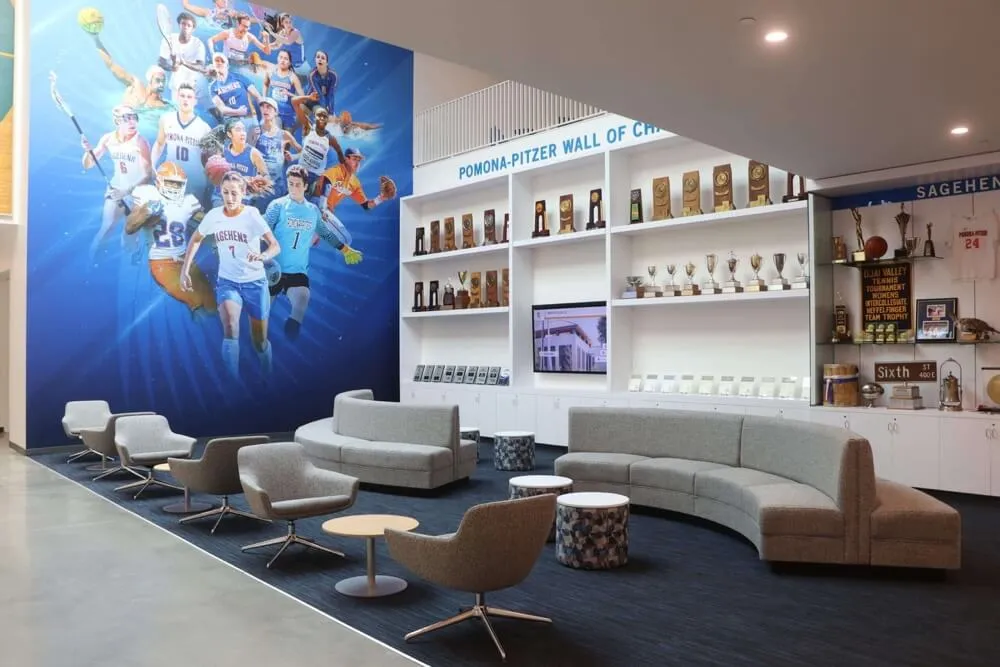
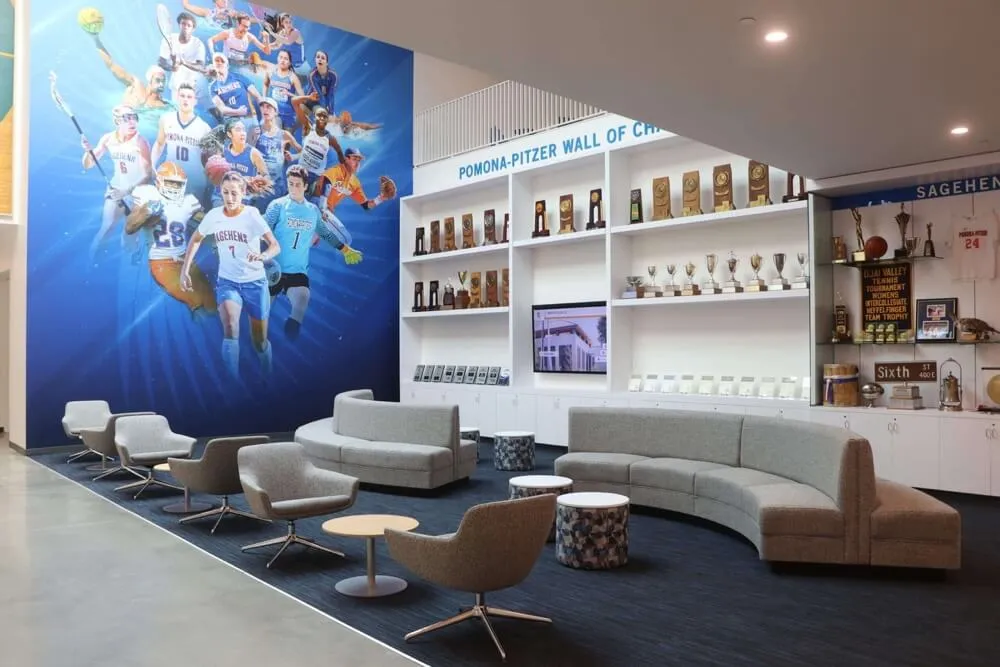
Creating comfortable recognition environments with seating encourages extended engagement—enabling visitors to thoroughly explore content rather than brief obligatory acknowledgment
Common Questions About Digital Halls of Fame
Organizations considering digital recognition frequently ask similar implementation and operational questions:
How much do digital hall of fame systems cost? Initial investments typically range $15,000-$35,000 per display including commercial-grade touchscreen hardware ($8,000-$15,000), purpose-built recognition software and implementation ($5,000-$12,000), professional installation and infrastructure ($2,000-$5,000), and initial content development ($2,000-$8,000 depending on honoree volume and multimedia depth). Annual ongoing costs include software licensing ($1,200-$3,600), content maintenance (3-5 volunteer hours monthly), and hardware service contracts ($800-$2,000).
What maintenance do digital displays require? Quality commercial systems prove remarkably reliable—weekly screen cleaning maintains appearance, monthly software updates install automatically, quarterly operational checks verify functionality, annual professional service inspects hardware components, and 5-7 year hardware replacement cycles address technology advancement and normal wear. Many organizations operate displays for years with only basic screen cleaning and occasional content updates required.
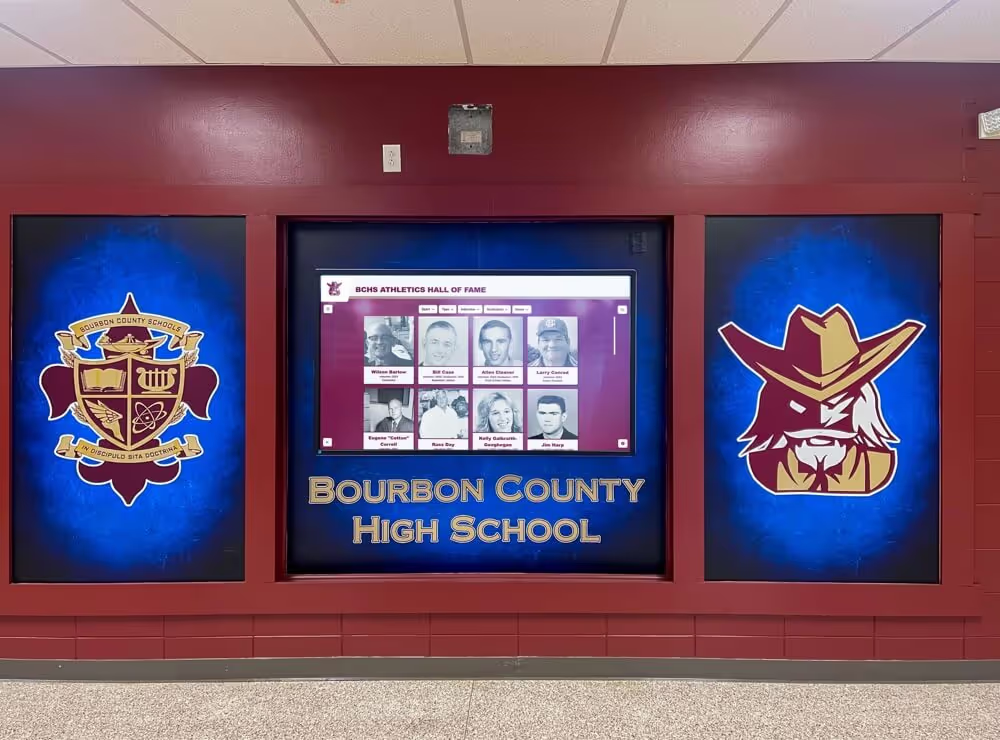
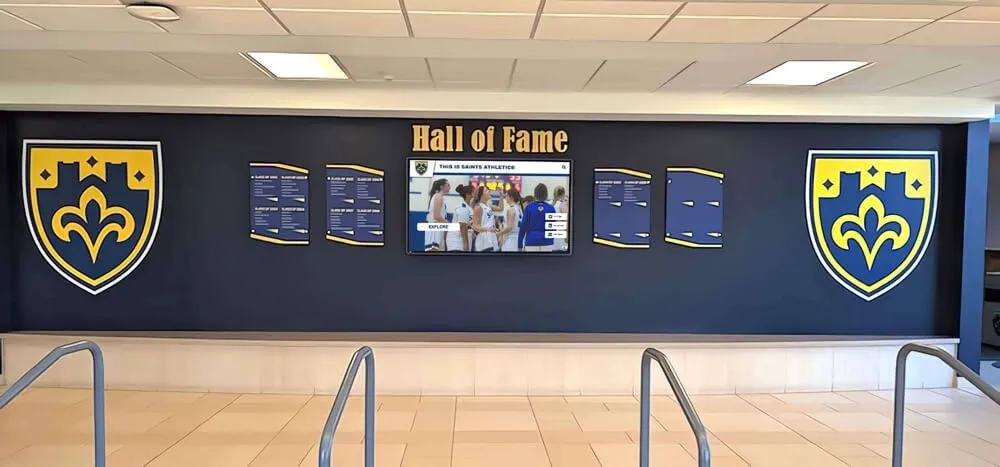
Can we integrate existing traditional recognition with digital displays? Absolutely—hybrid approaches combining valued traditional elements with digital capabilities prove especially effective. Common integrations include QR codes on traditional plaques linking to detailed digital profiles, traditional trophy cases with adjacent touchscreen displays providing searchable achievement databases, and physical hall of fame spaces featuring both permanent plaques and interactive digital exploration. This integration honors tradition while leveraging digital advantages for comprehensive capacity, easy updates, and rich multimedia.
How do we handle privacy concerns for honorees? Quality recognition platforms include robust privacy controls enabling organizations to limit what information displays publicly, require honoree consent before publication, restrict certain content to authenticated users only, provide opt-out options for individuals preferring minimal public visibility, and comply with student privacy regulations like FERPA when recognizing minors. Organizations should establish clear privacy policies balancing appropriate celebration with individual preferences.
What happens if internet connectivity fails? Well-designed systems cache content locally—displays continue operating normally even when internet connections temporarily fail. Content updates require connectivity, but visitor interactions with existing content proceed uninterrupted during network outages. This redundancy ensures recognition remains accessible during facility internet problems.
The Future of Digital Recognition Technology
Digital hall of fame technology continues advancing—understanding emerging capabilities helps organizations make forward-looking investments:
Artificial Intelligence Content Enhancement: AI tools increasingly assist content development through automated biographical research gathering publicly available information, photo enhancement improving historical image quality, video transcription and captioning supporting accessibility, content recommendations suggesting related profiles visitors might explore, and natural language search understanding conversational queries beyond exact keyword matching.
Augmented Reality Integration: Some organizations experiment with AR experiences where visitors use smartphones to view digital overlays on traditional plaques, explore 3D models of trophies and artifacts, or access video content triggered by physical displays—creating hybrid experiences bridging physical and digital recognition.
Personalization and Adaptive Content: Advanced systems begin offering personalized experiences showing content relevant to individual visitors based on their relationships to organizations, browsing behavior patterns, or explicitly stated interests—creating more relevant engaging exploration than generic one-size-fits-all presentations.
Voice Interaction and Accessibility: Voice-activated search and navigation support visitors with visual impairments or mobility limitations affecting touch interaction while enabling hands-free exploration appealing to all users for convenience.
Integration With Institutional Data Systems: Seamless connections between recognition platforms and student information systems, donor databases, or alumni directories enable automated content updates, synchronized records reducing manual data entry, and unified views of individuals across multiple institutional contexts.
Organizations selecting platforms with active development roadmaps and regular feature releases position themselves to benefit from advancing capabilities while protecting recognition investments through sustained vendor support and innovation.
Conclusion: Transforming Recognition Through Interactive Technology
Digital halls of fame represent fundamental advancement in celebrating achievement and preserving institutional heritage—eliminating space constraints limiting traditional recognition, enabling immediate updates maintaining current content, creating engaging interactive experiences connecting audiences with tradition, incorporating rich multimedia storytelling, and extending accessibility beyond physical locations to worldwide audiences.
Ready to Explore Digital Recognition for Your Organization?
Discover how custom digital hall of fame experiences can transform recognition for your school, university, athletic program, or organization. Rocket Alumni Solutions creates interactive displays that honor achievement while engaging modern audiences through purposeful design and compelling content.
Book a DemoOrganizations implementing digital halls of fame demonstrate commitment to celebrating all deserving individuals comprehensively rather than limiting acknowledgment to those fitting within arbitrary physical space constraints. This comprehensive approach communicates institutional values while building cultures where achievement across all dimensions receives systematic celebration—creating motivation, pride, and lasting connection.
Whether implementing athletic recognition inspiring current competitors with program heritage, academic displays celebrating intellectual achievement, alumni halls of fame demonstrating institutional impact through graduate success, donor recognition acknowledging philanthropic support, or comprehensive systems honoring achievement across all organizational dimensions—digital touchscreen technology provides proven solutions strengthening community culture while giving every deserving individual the permanent recognition their accomplishments merit.
The most successful digital hall of fame implementations start with clear recognition goals, select purpose-built platforms designed specifically for celebration, develop thoughtful content strategies honoring individuals comprehensively, and position displays strategically where audiences naturally encounter recognition. When organizations approach digital recognition systematically through strategic planning, appropriate technology selection, quality content development, and sustainable maintenance workflows, they create recognition experiences delivering lasting value across stakeholder groups while preserving institutional heritage for generations discovering traditions through interactive exploration.
Ready to learn more? Explore digital hall of fame design strategies, discover interactive touchscreen software options, understand school history preservation approaches, and learn about campus directory integration opportunities that combine recognition with wayfinding and institutional information—creating comprehensive digital experiences serving multiple purposes through unified technology investments.