



If you’re wondering where is the golf hall of fame, you’ll find the World Golf Hall of Fame at 1 World Golf Place in St. Augustine, Florida. This premier destination celebrates golf’s greatest legends through interactive exhibits, championship trophies, and comprehensive player profiles spanning the sport’s entire history.
But golf represents just one piece of America’s rich sports hall of fame landscape. From the hallowed halls of Cooperstown’s Baseball Hall of Fame to Canton’s professional football shrine, sports halls of fame across America preserve athletic heritage, inspire future generations, and create permanent connections between legendary achievements and contemporary competition. These institutions serve as pilgrimage destinations for fans while providing educational experiences that transcend simple trophy displays.
This comprehensive guide explores the World Golf Hall of Fame alongside America’s most significant sports recognition venues—revealing locations, exhibits, induction processes, and the evolving role of halls of fame in preserving athletic excellence for schools, clubs, universities, and professional organizations nationwide.
Sports halls of fame represent more than museums—they embody cultural commitment to honoring excellence, documenting heritage, and inspiring achievement across generations. Understanding these institutions helps athletic directors, school administrators, and sports organizations design effective recognition programs celebrating their own competitive traditions.

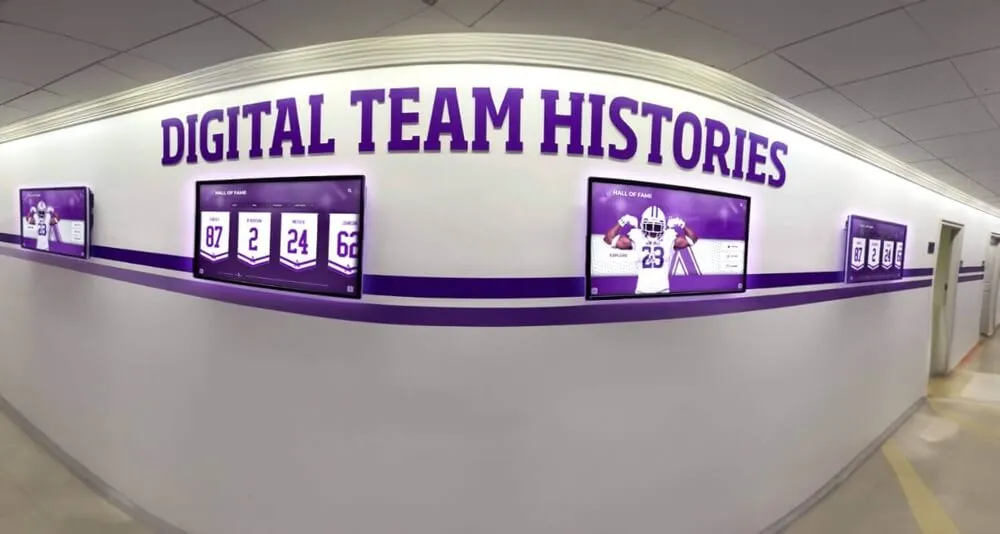
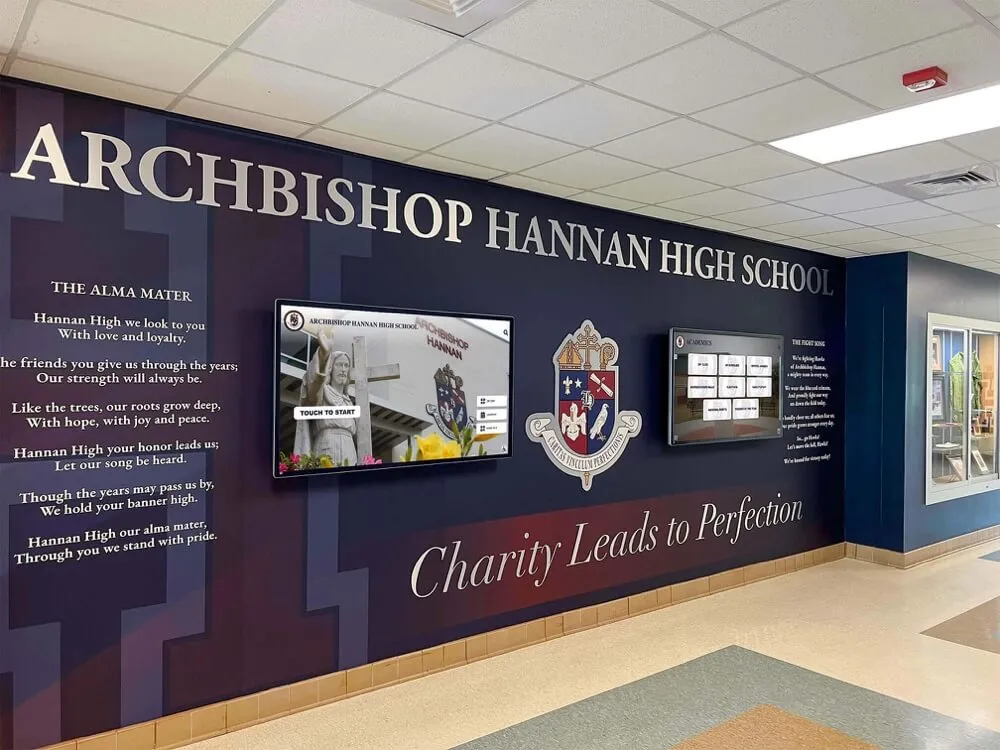
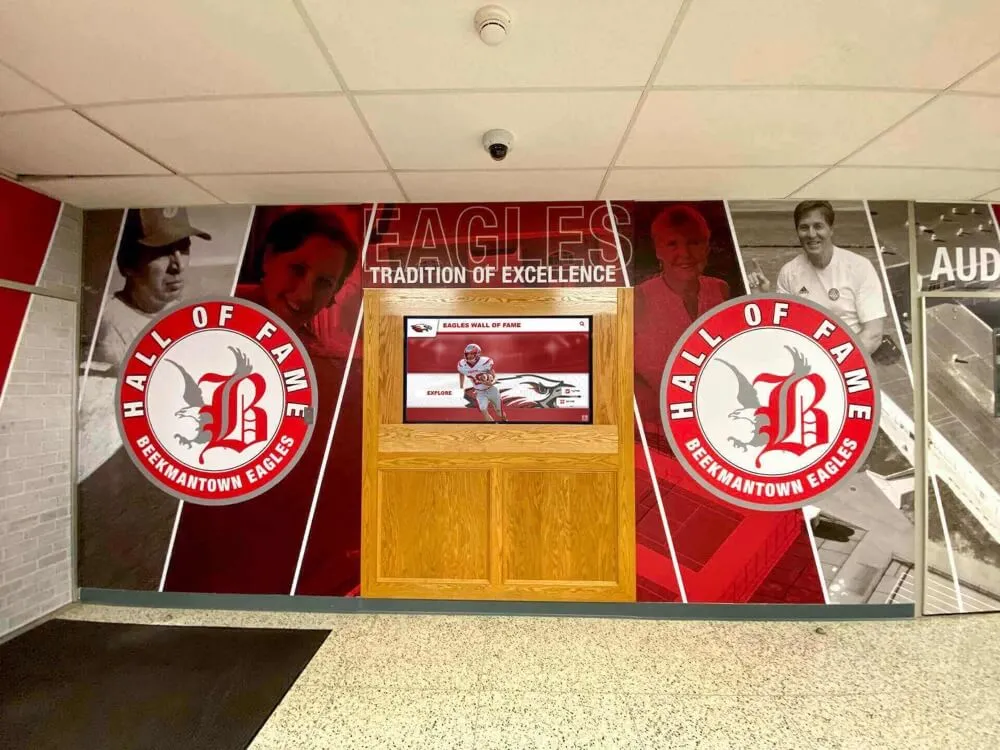
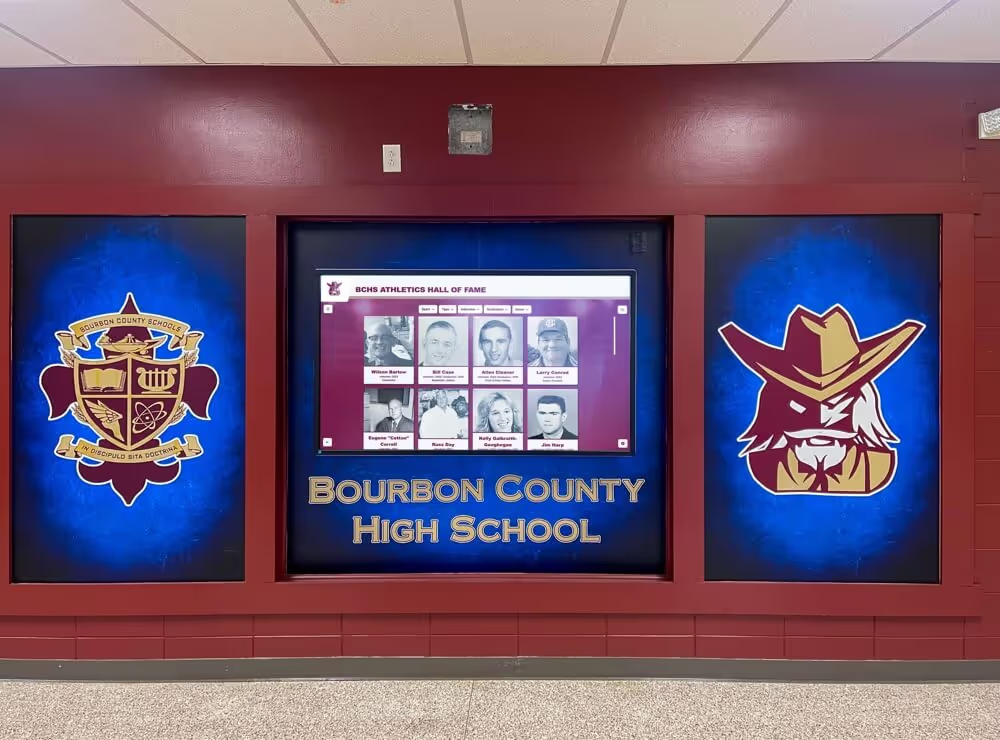
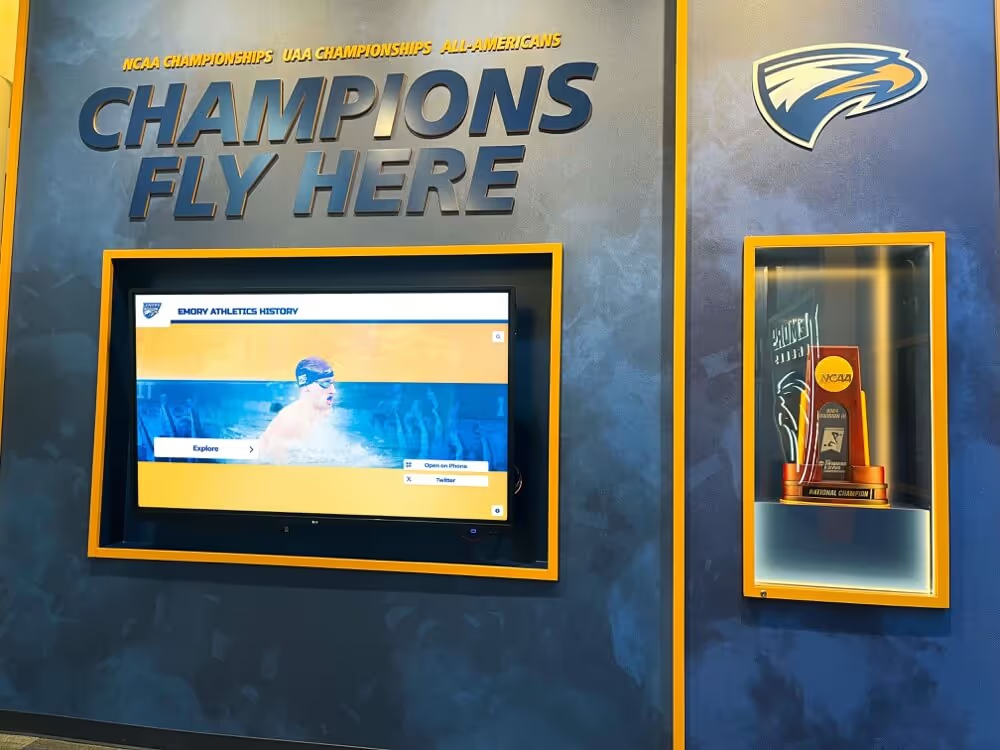
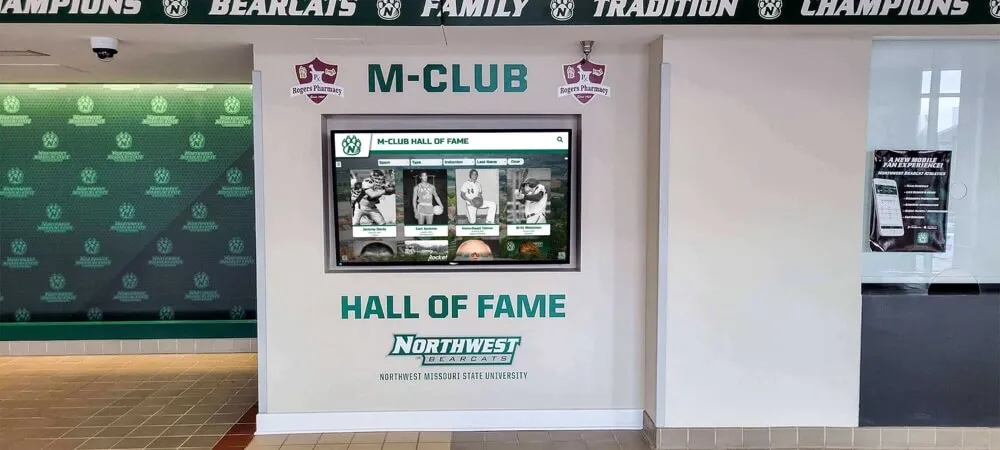
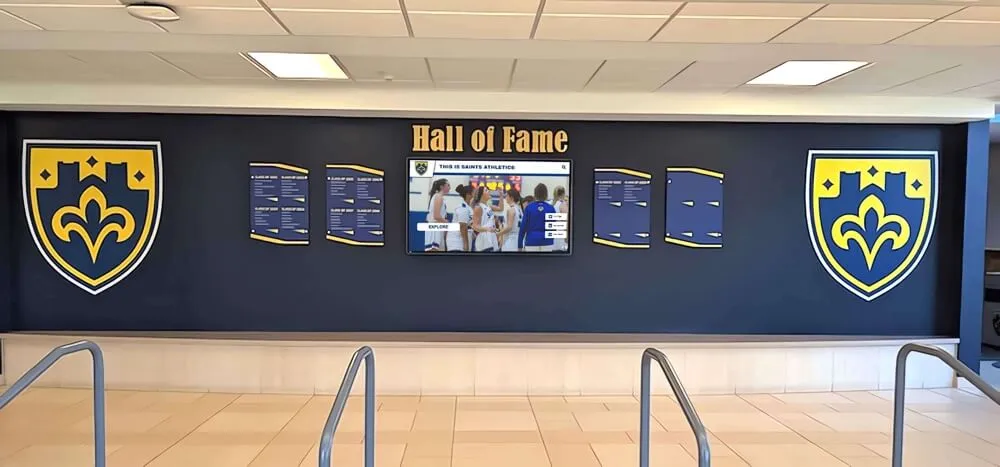
Modern halls of fame combine traditional design elements with interactive technology creating comprehensive recognition experiences
The World Golf Hall of Fame: Location and Experience
The World Golf Hall of Fame anchors the World Golf Village complex in St. Augustine, Florida, providing golf enthusiasts with comprehensive immersion in the sport’s history and legends.
Location and Visitor Information
Where to Find the Golf Hall of Fame
The World Golf Hall of Fame sits at 1 World Golf Place, St. Augustine, Florida 32092—approximately 20 miles south of Jacksonville and easily accessible via Interstate 95. The facility opened in 1998 after relocating from Pinehurst, North Carolina, consolidating previously separate men’s and women’s halls of fame into a unified institution celebrating golf excellence regardless of gender or era.
St. Augustine’s location provides strategic advantages: proximity to major population centers throughout Florida and the Southeast, moderate year-round climate enabling consistent visitation, integration within a golf-centric resort community featuring championship courses and accommodations, and connection to America’s oldest city offering broader tourism appeal beyond golf-specific interests.
Visitors typically spend 2-4 hours exploring exhibits, watching documentary films, and engaging with interactive displays documenting golf’s evolution from Scottish origins through contemporary championship competition worldwide.
Exhibits and Featured Inductees
Comprehensive Golf Heritage Documentation
The World Golf Hall of Fame showcases over 70 exhibits covering golf’s complete history. Featured galleries include championship trophy collections from major tournaments, personal artifacts from legendary players including clubs, apparel, and memorabilia, multimedia presentations featuring historic footage and player interviews, interactive skill challenges enabling visitors to test putting and driving abilities, and rotating special exhibitions highlighting specific eras, players, or tournament histories.
The Hall’s induction criteria consider professional tournament victories and major championship success, significant contributions to golf beyond competitive achievement, character and sportsmanship reflecting golf’s values, and sustained excellence across career duration rather than brief peaks. Current inductees span from Old Tom Morris and Bobby Jones through Jack Nicklaus, Tiger Woods, and contemporary legends still active in championship competition.
Understanding how premier sports institutions like the World Golf Hall of Fame preserve athletic heritage informs athletic hall of fame program development at schools, universities, and community organizations nationwide.
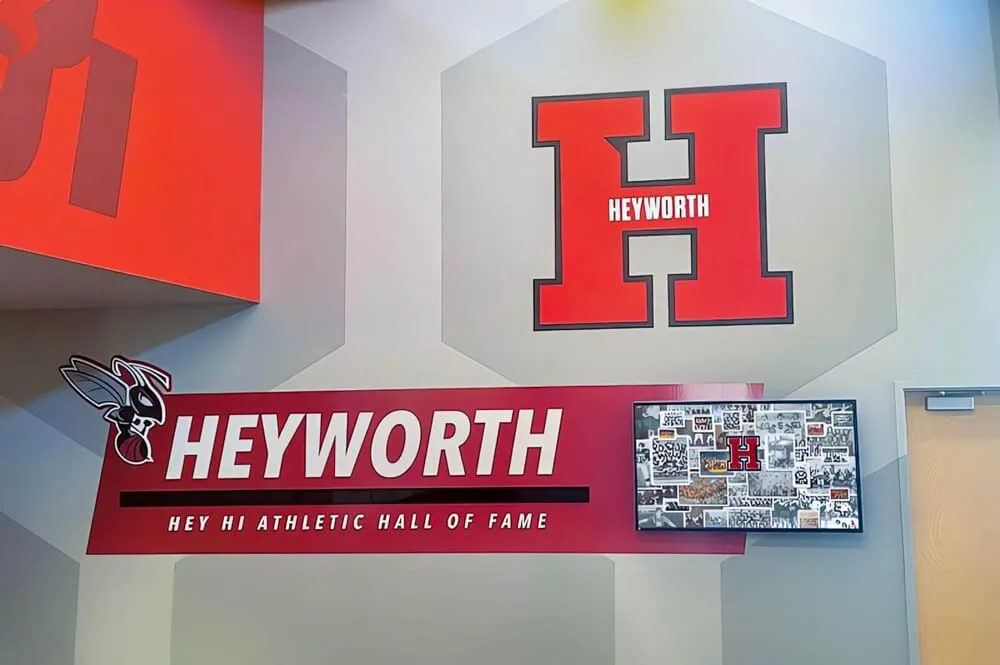
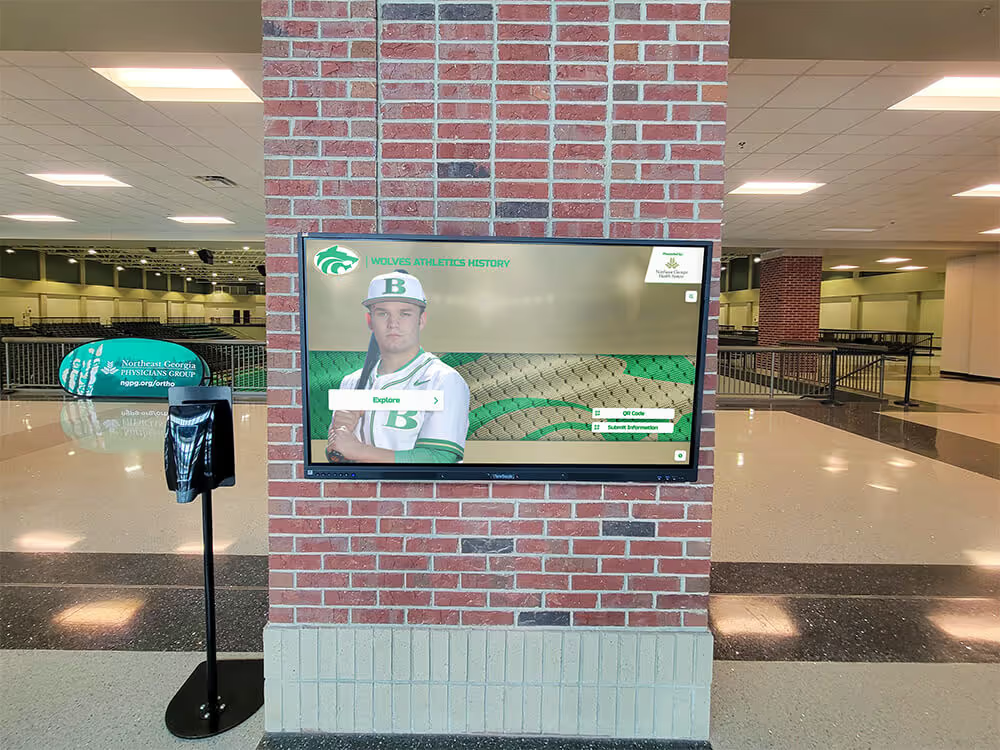
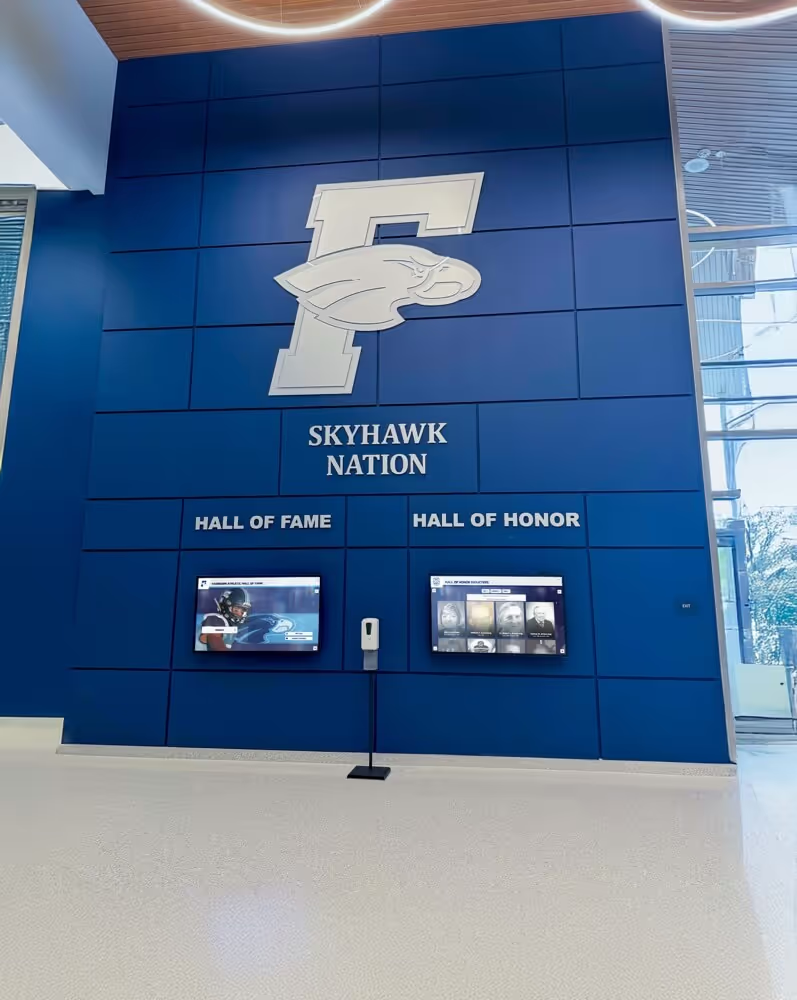
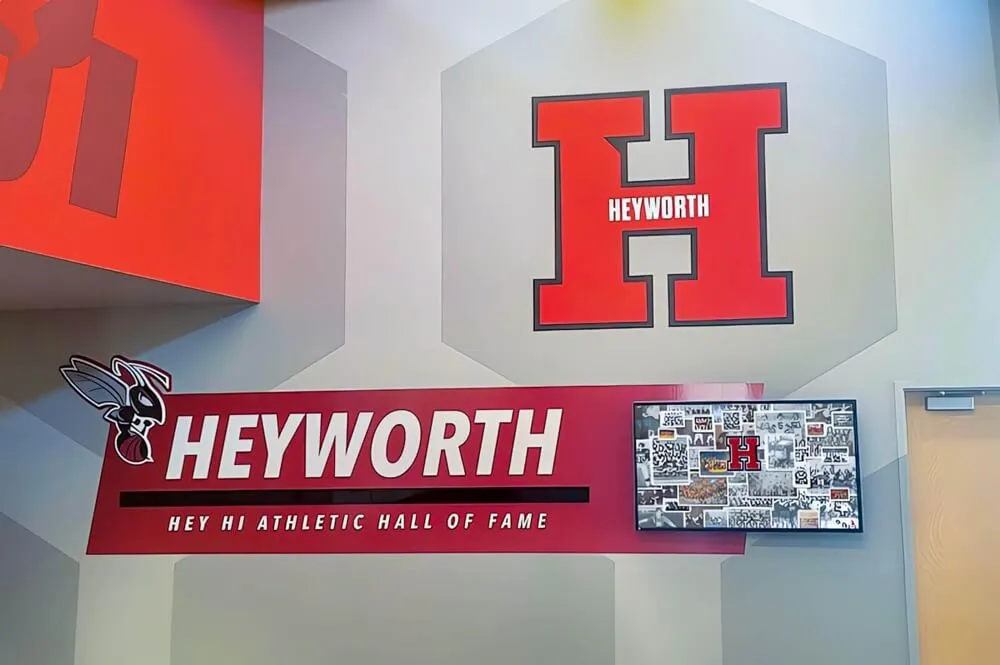
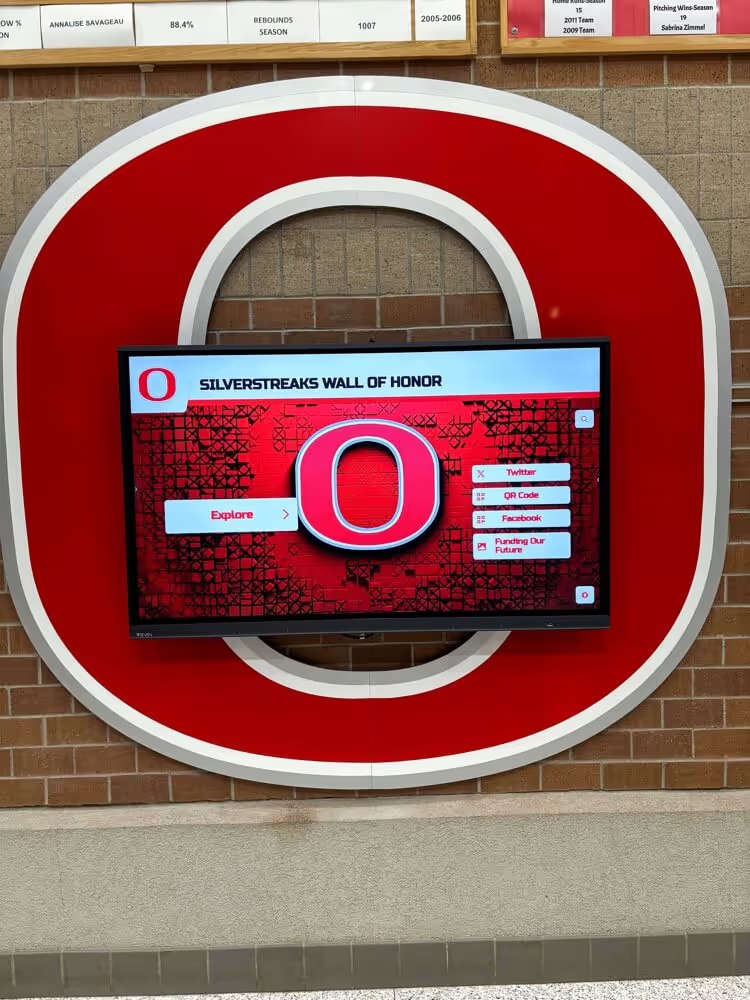
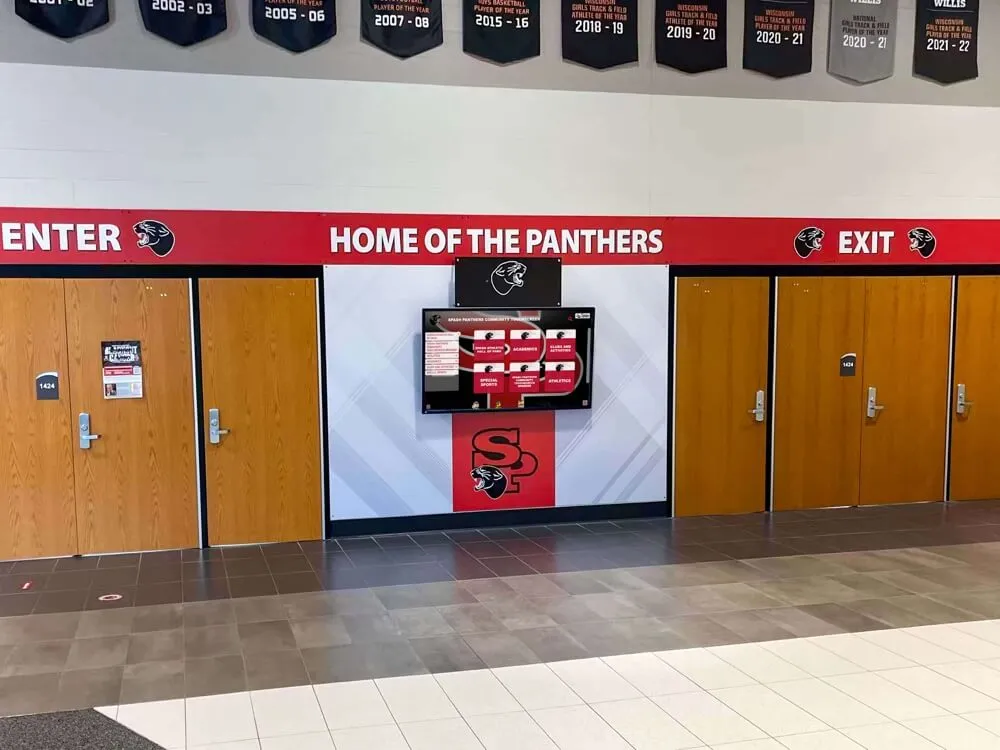
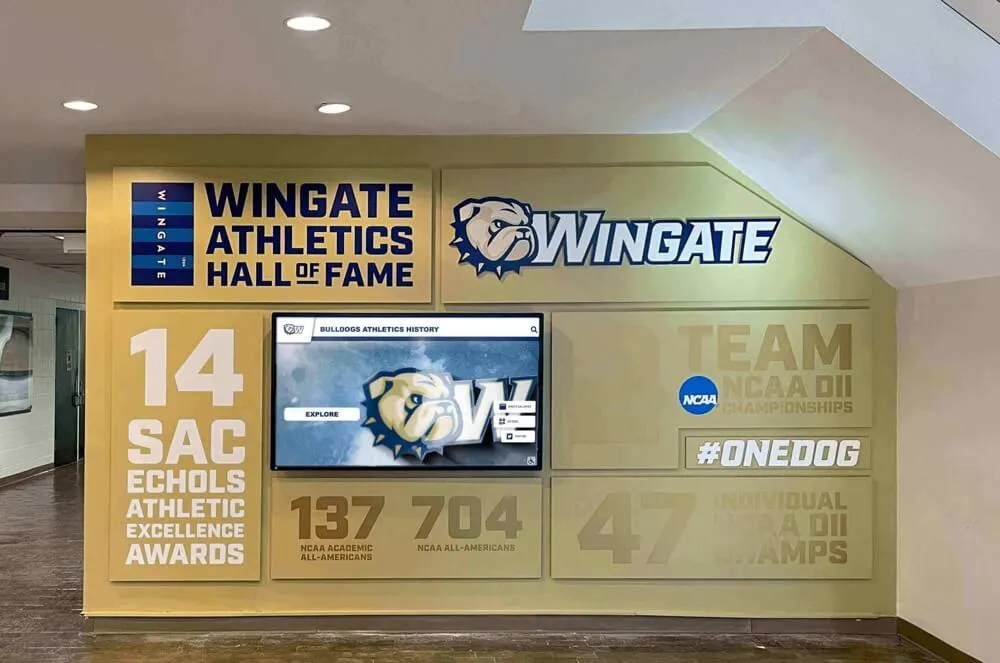
Clear signage and dedicated spaces create appropriate prominence for hall of fame recognition within athletic facilities
Other Prominent Golf Halls of Fame
While the World Golf Hall of Fame serves as golf’s premier recognition institution, several other venues celebrate the sport’s heritage through specialized or regional focus.
PGA of America Historical Center
Professional Golf Association Heritage
Located in Frisco, Texas, the PGA of America Historical Center documents the organization’s history and celebrates PGA professionals’ contributions to golf instruction, club management, and tournament administration. The facility opened in 2022 alongside PGA of America headquarters relocation from Florida, providing 500,000 square feet of golf-focused space including championship courses, practice facilities, and comprehensive historical exhibits.
Unlike the World Golf Hall of Fame’s focus on playing achievement, the PGA Historical Center emphasizes teaching professionals, club professionals, and industry leaders who built golf’s infrastructure enabling widespread participation beyond elite competitive levels.
USGA Museum
Golf’s Governing Body Archives
The United States Golf Association maintains extensive historical collections at its headquarters in Liberty Corner, New Jersey. The USGA Museum preserves artifacts documenting American golf history, championship trophies from U.S. Open and other USGA competitions, golf equipment evolution from feathery balls through modern technology, and comprehensive records of rules development and amateur golf championships.
The USGA Museum serves primarily research and educational functions rather than public tourism, though portions open for visitor exploration during facility tours and special events.
Regional and State Golf Halls of Fame
Localized Golf Heritage Celebration
Many states and regions maintain golf halls of fame celebrating local legends and contributions. The Carolinas Golf Hall of Fame in Pinehurst, North Carolina, honors players and contributors from both Carolinas. The Southern California Golf Association maintains recognition programs for regional excellence. The Michigan Golf Hall of Fame celebrates the state’s rich golf tradition including automotive industry executives who promoted the sport regionally.
These localized halls of fame demonstrate how recognition programs can celebrate heritage at appropriate geographic scales—a principle applicable to school history preservation and athletic recognition across educational institutions nationwide.
America’s Major Sports Halls of Fame
Beyond golf, America’s sports landscape features iconic halls of fame celebrating excellence across diverse athletic competitions.
National Baseball Hall of Fame and Museum
America’s First Major Sports Hall of Fame
Located in Cooperstown, New York, the National Baseball Hall of Fame opened in 1939 and remains America’s most iconic sports recognition institution. The museum attracts approximately 300,000 annual visitors exploring comprehensive baseball history through artifact collections, player plaques, and rotating exhibits celebrating the sport dubbed “America’s pastime.”
Baseball’s hall of fame established templates other sports adopted: player plaques featuring bronzed portraits and career summaries, annual induction ceremonies creating anticipated summer traditions, selection committees evaluating candidates through statistical achievement and character standards, and museum exhibits contextualizing individual excellence within broader sport evolution and cultural significance.
The Hall’s location in small-town Cooperstown created pilgrimage destination mystique rather than positioning recognition within major metropolitan areas where accessibility competes with countless alternative attractions.
Pro Football Hall of Fame
Celebrating Professional Football Excellence
Canton, Ohio, houses the Pro Football Hall of Fame honoring NFL legends since 1963. The facility underwent major renovation and expansion completing in 2018, adding 150,000 square feet of exhibit space featuring interactive experiences, championship memorabilia, and comprehensive player recognition.
Canton’s selection as permanent home reflected the city’s role in professional football’s founding through early NFL organization meetings in 1920. Like Cooperstown’s baseball significance, Canton leveraged historical connection into permanent institutional presence driving tourism and economic development through sports heritage celebration.
Annual enshrinement ceremonies coincide with NFL preseason games creating week-long celebrations attracting hundreds of thousands of football fans to northeastern Ohio each August.
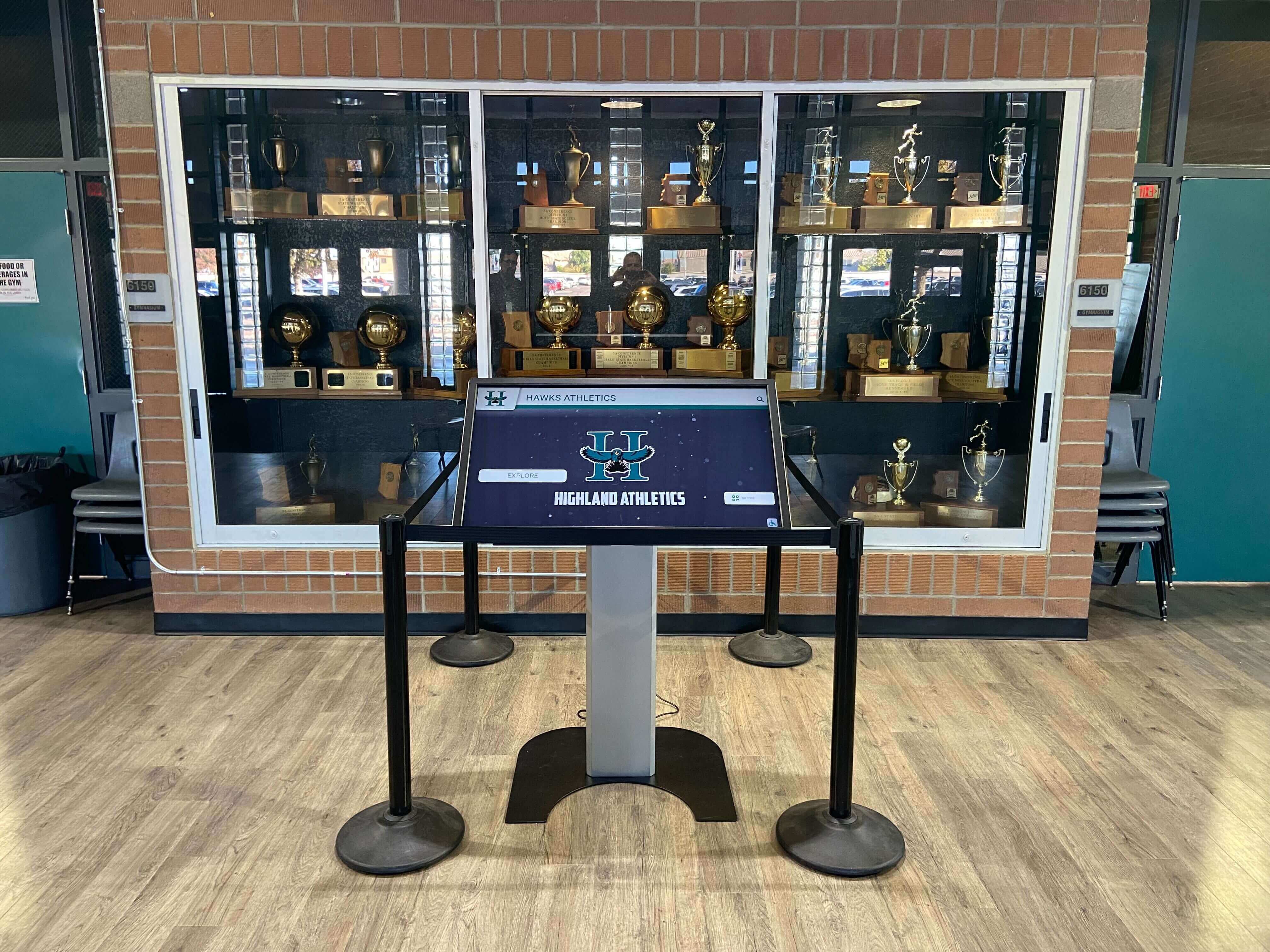
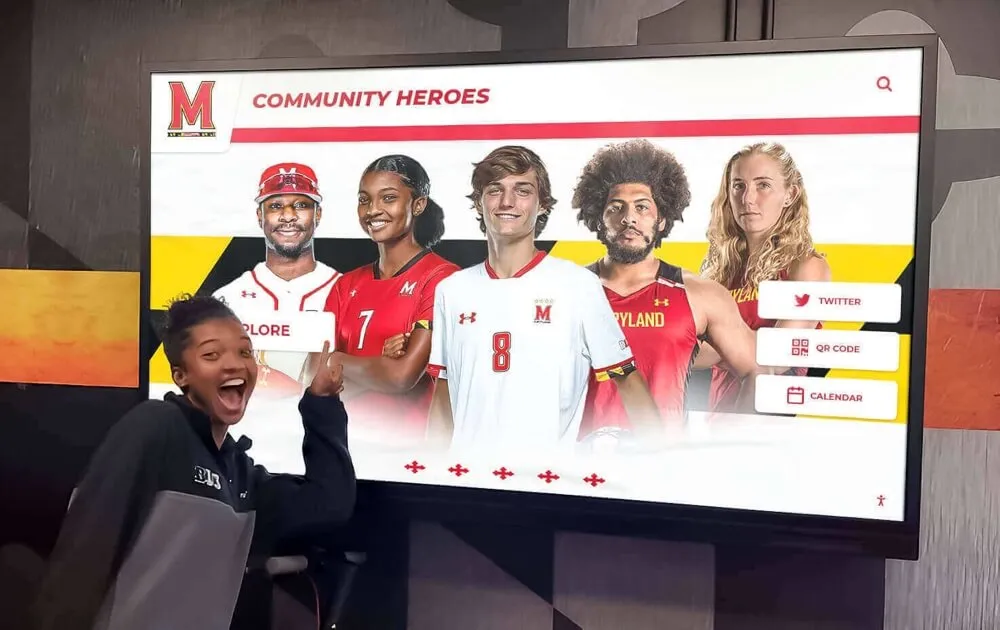
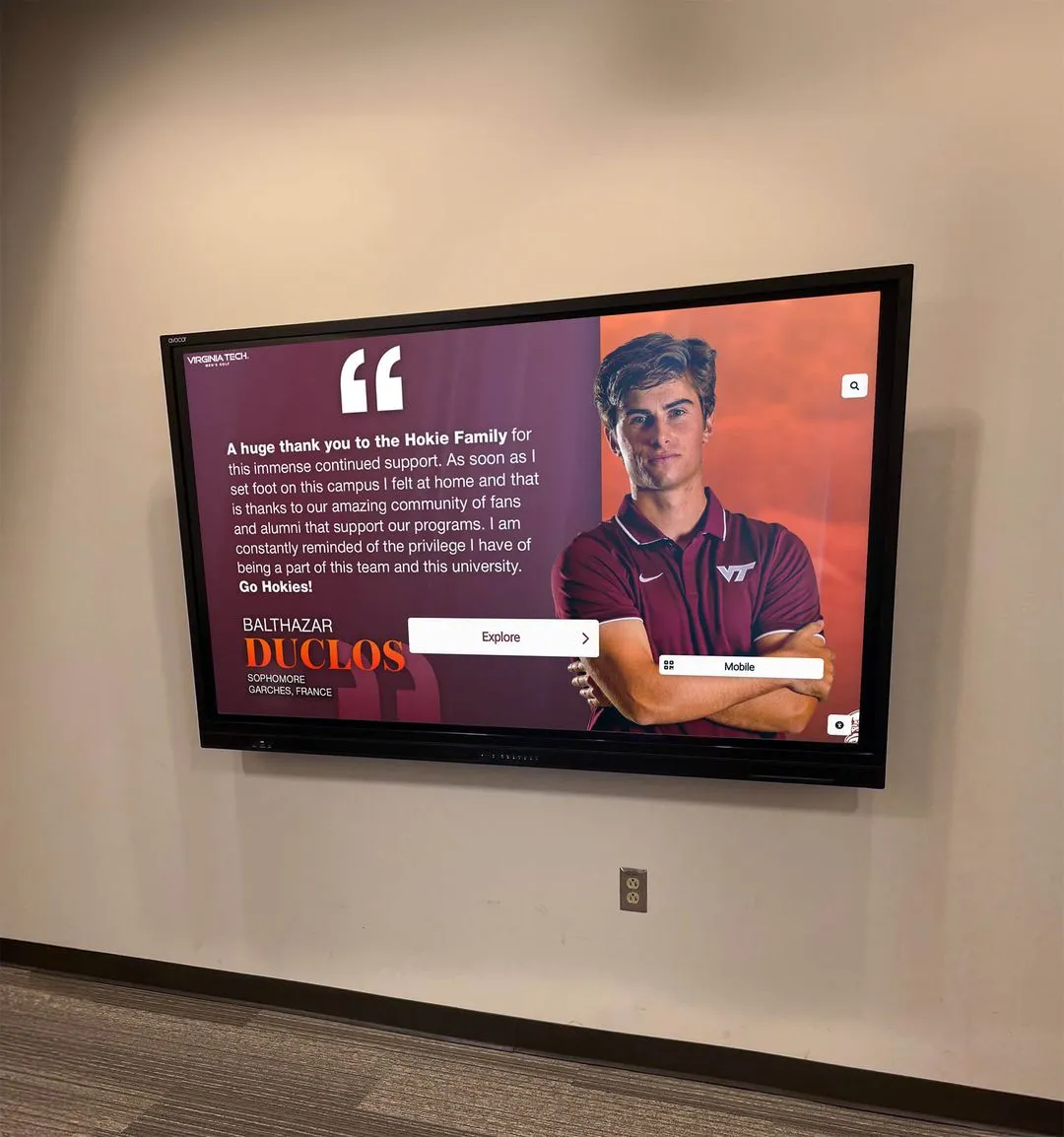
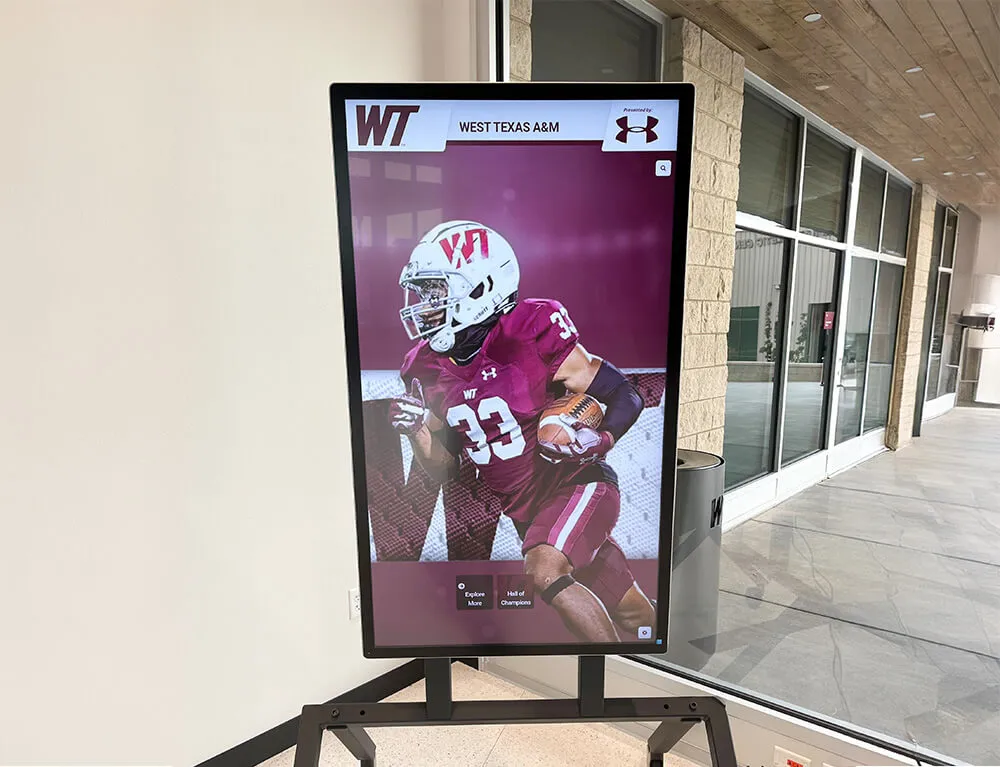
Integrating digital displays within existing trophy cases modernizes recognition without requiring facility renovation
Naismith Memorial Basketball Hall of Fame
Basketball’s Premier Recognition Venue
Springfield, Massachusetts, hosts the Naismith Memorial Basketball Hall of Fame celebrating the sport invented locally by James Naismith in 1891. The current facility opened in 2002 along the Connecticut River, featuring distinctive architecture including a basketball-shaped dome visible throughout downtown Springfield.
Unlike sport-specific professional halls, basketball’s hall of fame honors excellence across all competitive levels—NBA, WNBA, college, international, and even exceptional high school coaches whose careers demonstrated sustained excellence despite competing outside professional ranks. This inclusive approach recognizes basketball’s diverse competitive landscape beyond single league dominance.
Interactive exhibits enable visitors to test skills, watch championship highlights, and explore basketball’s global expansion from American origins to worldwide participation across six continents.
Schools developing basketball recognition programs can adapt professional models through digital hall of fame solutions enabling comprehensive player celebration without requiring dedicated museum facilities.
National Soccer Hall of Fame
America’s Growing Soccer Heritage
Located in Frisco, Texas, adjacent to FC Dallas’s home stadium, the National Soccer Hall of Fame celebrates American soccer achievement from the sport’s earliest domestic roots through contemporary MLS, NWSL, and international competition success. The facility relocated to Texas in 2018 after previous homes in Oneonta, New York, positioning recognition within the region experiencing America’s most significant soccer growth.
Soccer’s hall recognizes players, coaches, builders, and referees whose contributions elevated the sport despite competing for attention within America’s crowded professional sports landscape traditionally dominated by football, baseball, and basketball.
Sport-Specific Halls of Fame Coast to Coast
Specialized halls of fame celebrate excellence across diverse athletic competitions nationwide.
Hockey and Winter Sports Recognition
The Hockey Hall of Fame in Toronto, Canada, serves as ice hockey’s international shrine, though several American venues celebrate regional hockey heritage. The United States Hockey Hall of Fame in Eveleth, Minnesota, honors American players, coaches, and administrators. Lake Placid, New York, maintains exhibits celebrating the town’s Olympic hosting history and winter sports achievements.
Figure skating, skiing, and other winter sports maintain specialized halls of fame reflecting regional participation patterns—typically located in northern states or mountain regions where winter sports dominate athletic culture and competitive opportunity.
Track and Field and Olympic Recognition
The U.S. Olympic & Paralympic Museum opened in Colorado Springs, Colorado, in 2020, celebrating American Olympic and Paralympic achievement across all sports. The facility features immersive technology enabling visitors to experience athlete perspectives through virtual reality, championship moments through multimedia presentations, and comprehensive medal achievement documentation.
Track and field, as Olympic sport’s foundation, receives extensive recognition through Olympic museums alongside sport-specific halls of fame. Schools developing track recognition programs can explore track and field awards approaches celebrating achievement at all competitive levels.
Tennis and Individual Sport Halls
The International Tennis Hall of Fame in Newport, Rhode Island, celebrates tennis excellence within America’s oldest grass court tennis facility. The venue hosts annual ATP tour events alongside museum exhibits featuring championship trophies, player artifacts, and comprehensive tennis history documentation.
Individual sports like boxing, bowling, swimming, and wrestling each maintain specialized halls of fame celebrating sport-specific achievement. These venues typically attract smaller audiences than major team sport halls but serve passionate communities deeply invested in preserving sport-specific heritage and honoring legendary achievers.

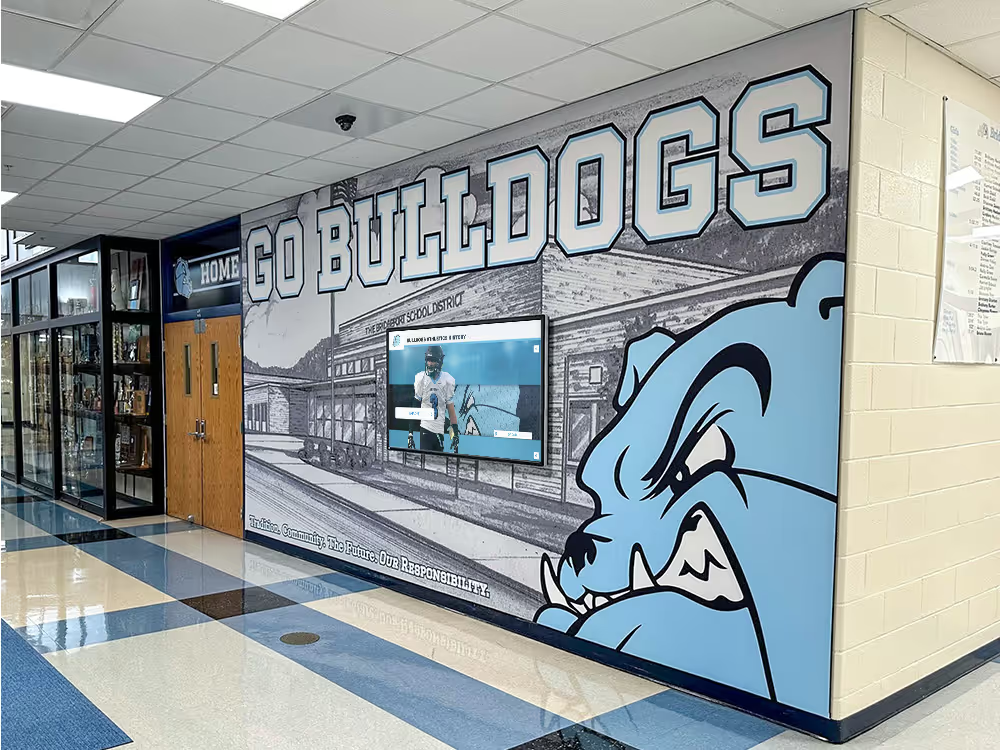
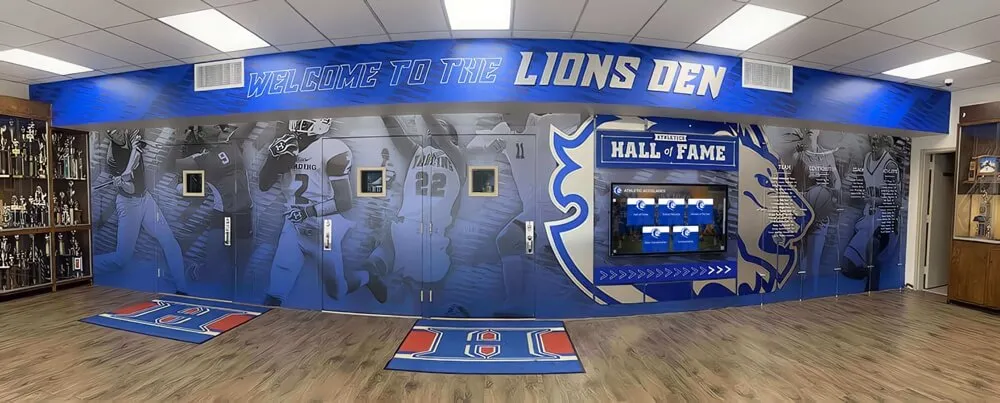
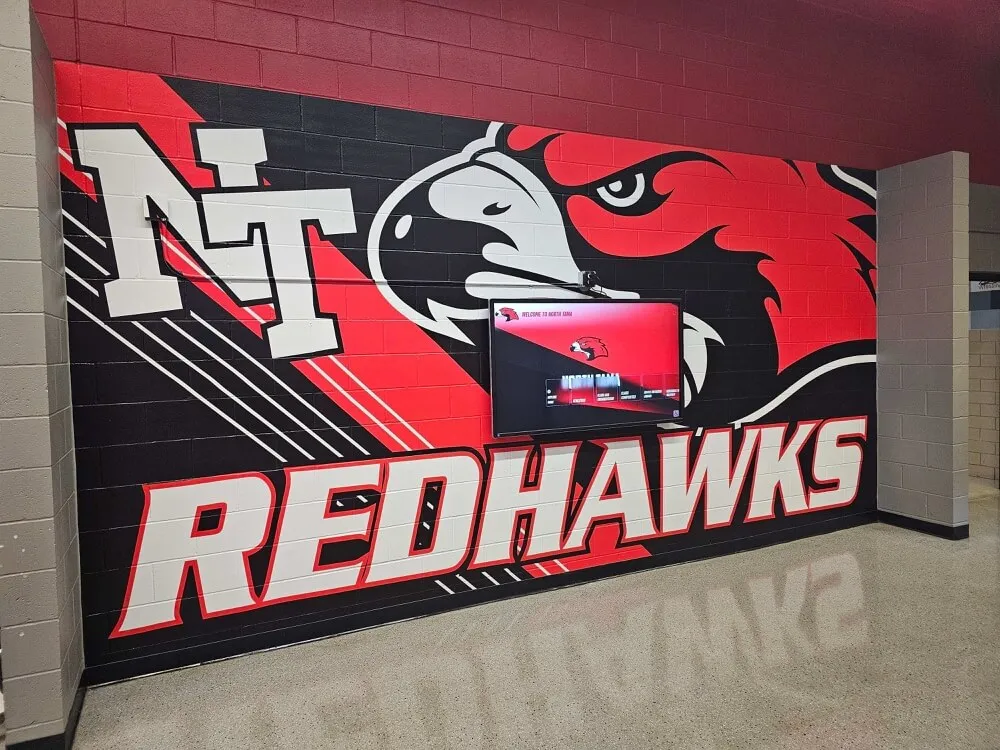
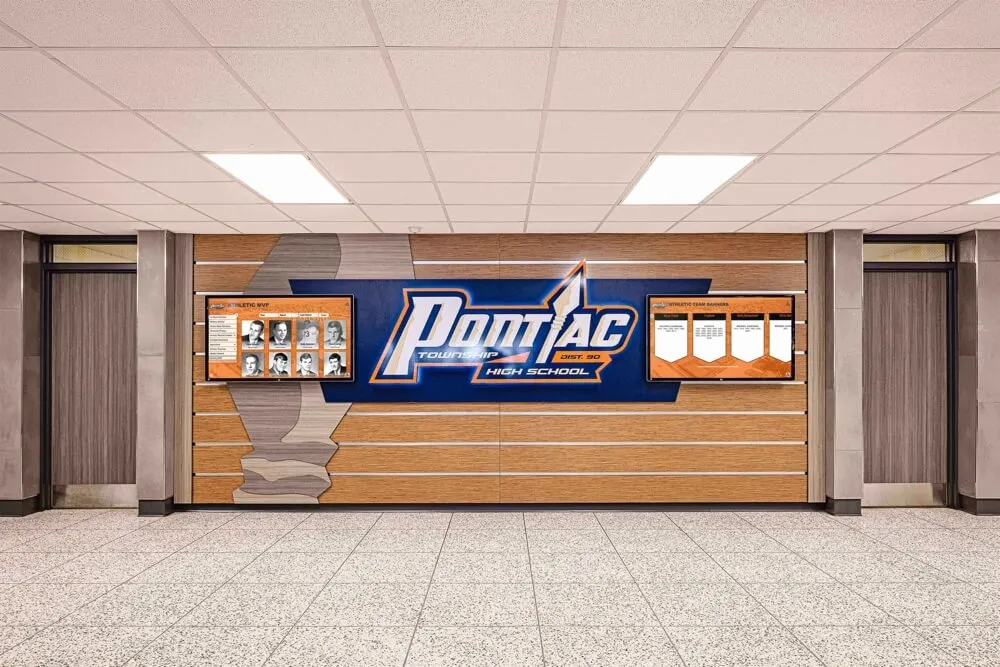
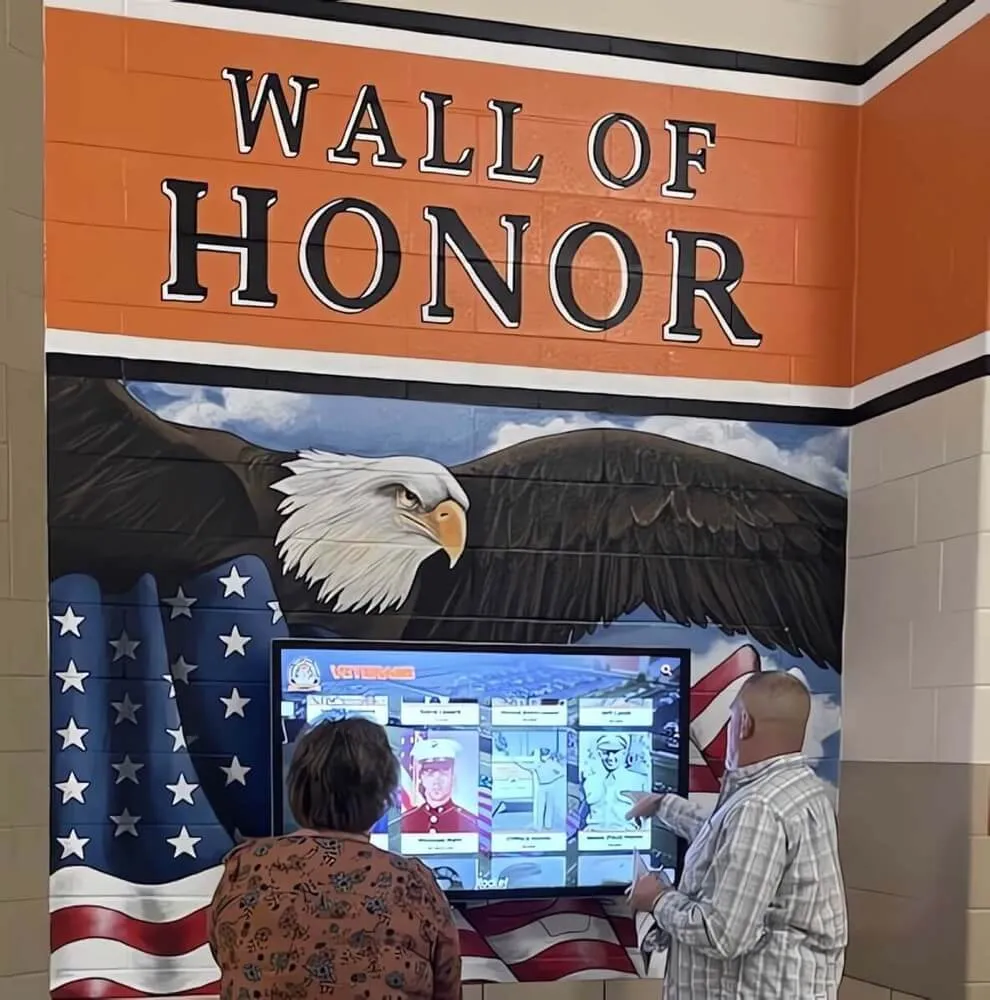
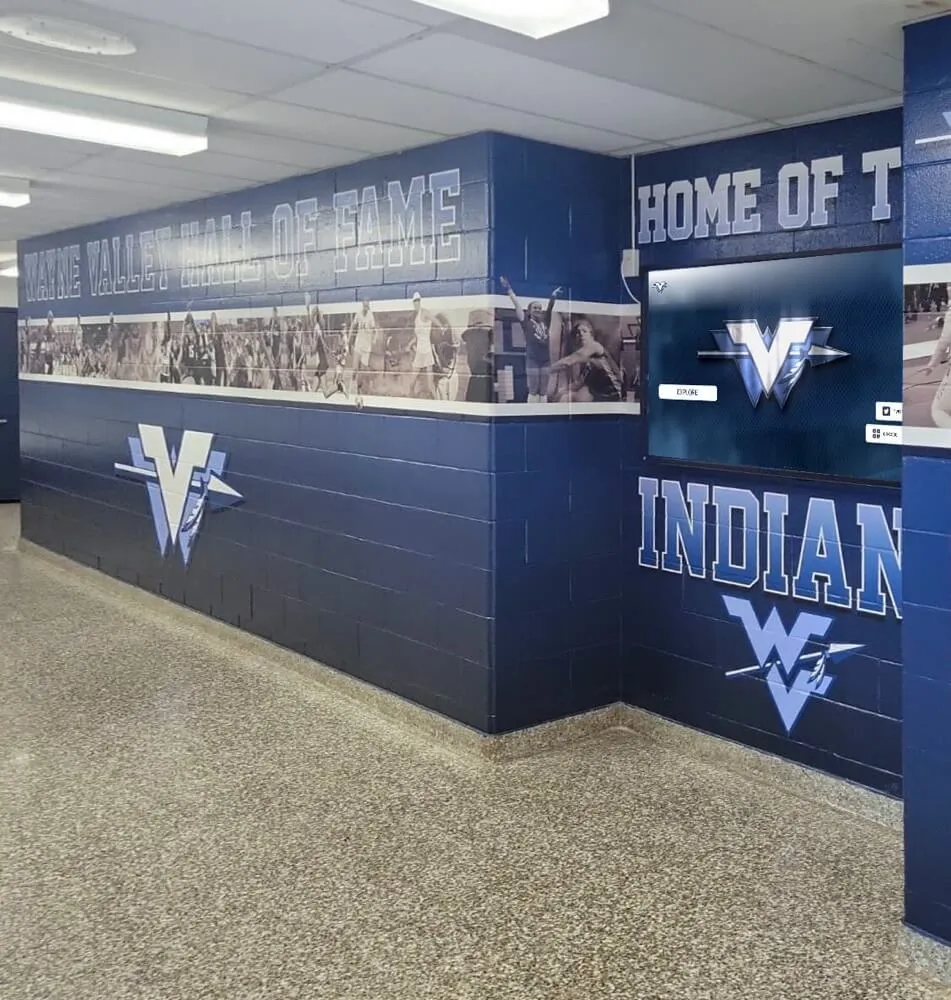
Brand-integrated installations combine architectural murals with interactive displays creating immersive recognition environments
Motorsports and Action Sports Recognition
The Indianapolis Motor Speedway Museum celebrates auto racing heritage at the world’s most famous track. NASCAR Hall of Fame in Charlotte, North Carolina, honors stock car racing legends. The Motorcycle Hall of Fame in Pickerington, Ohio, recognizes motorcycle racing and industry achievement.
Action sports including skateboarding, surfing, and BMX have developed halls of fame reflecting these sports’ cultural significance and competitive evolution from counter-culture origins to mainstream recognition and Olympic inclusion.
College and High School Sports Halls of Fame
Educational institutions across America maintain halls of fame celebrating athletic excellence within specific school contexts.
Major University Halls of Fame
Universities with prominent athletic traditions typically maintain comprehensive halls of fame honoring exceptional athletes, championship teams, and legendary coaches. These recognition programs serve multiple institutional purposes: preserving athletic heritage across decades or centuries of competitive history, inspiring current athletes toward achievement visible through permanent recognition, engaging alumni through celebration of shared competitive tradition, and demonstrating commitment to athletic excellence during recruiting processes.
Major programs like Alabama, Notre Dame, Ohio State, and Duke feature dedicated facilities or prominent athletic building spaces showcasing hall of fame recognition through traditional plaques, digital displays, or hybrid approaches combining both formats.
High School Athletic Recognition
High schools increasingly implement hall of fame programs honoring athletic legends, championship teams, and distinguished coaches. These programs face unique challenges: limited facility space compared to universities’ dedicated athletic complexes, constrained budgets preventing expensive physical installations, volunteer or part-time athletic administration managing programs alongside numerous other responsibilities, and need for multi-sport recognition rather than single-sport focus.
Digital recognition solutions address these challenges by providing unlimited capacity accommodating all deserving honorees, affordable implementation preventing ongoing plaque fabrication costs, intuitive management requiring minimal technical expertise, and comprehensive athletic recognition supporting all sports programs equitably.
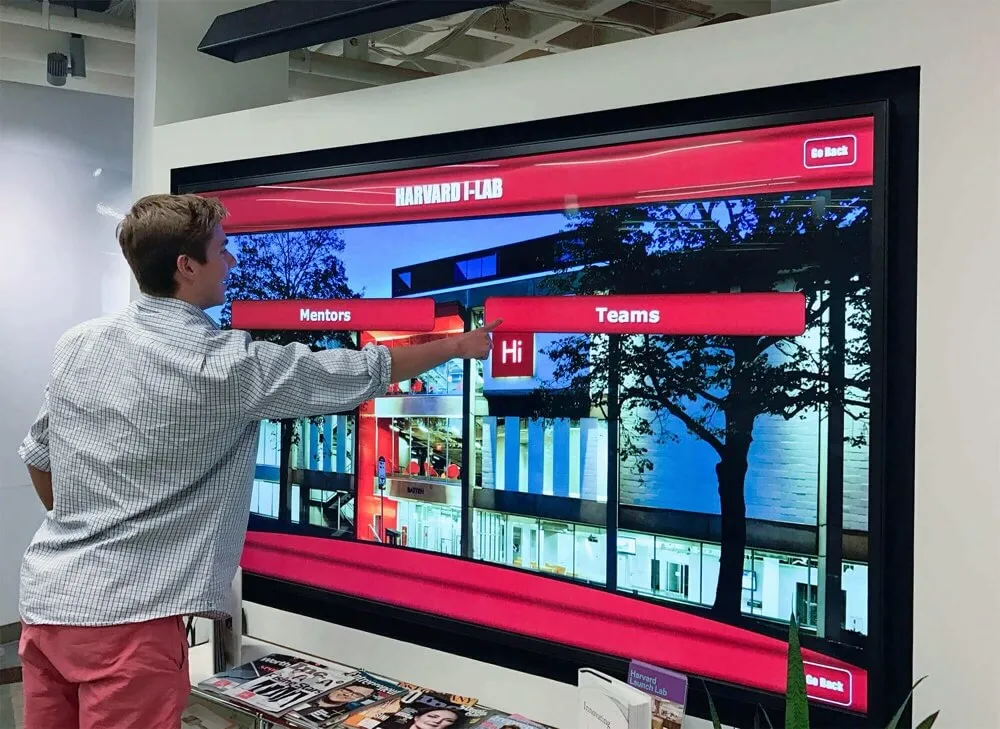
Recognition systems using interactive touchscreen displays enable schools to create professional-quality hall of fame programs matching larger institutions’ recognition despite resource disparities.

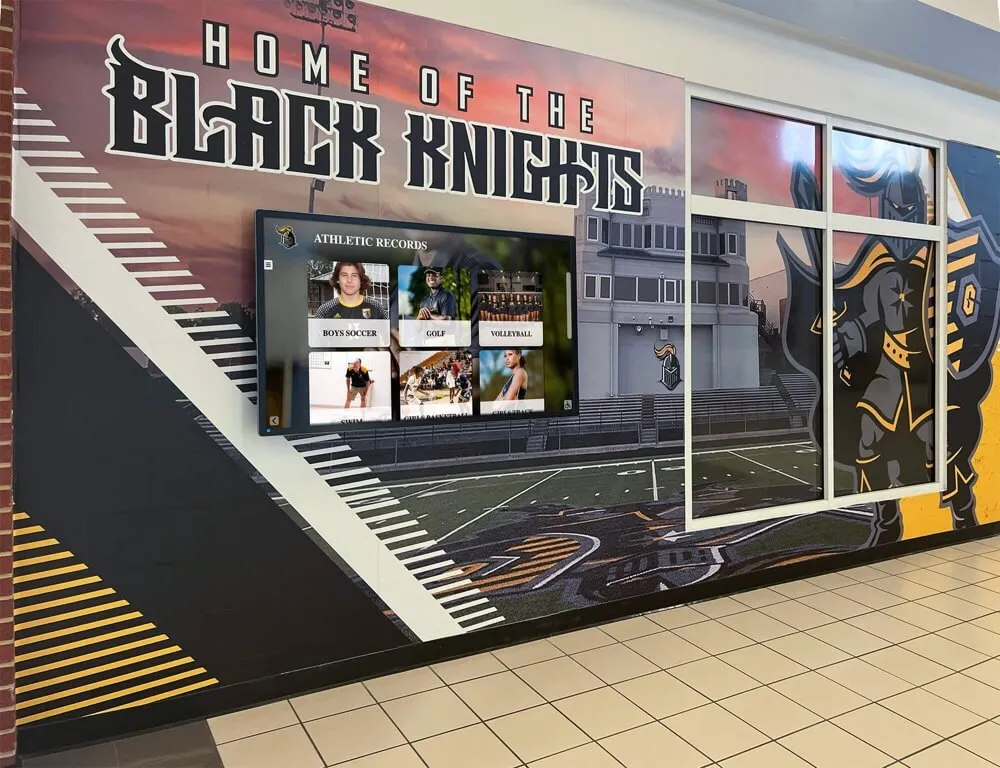
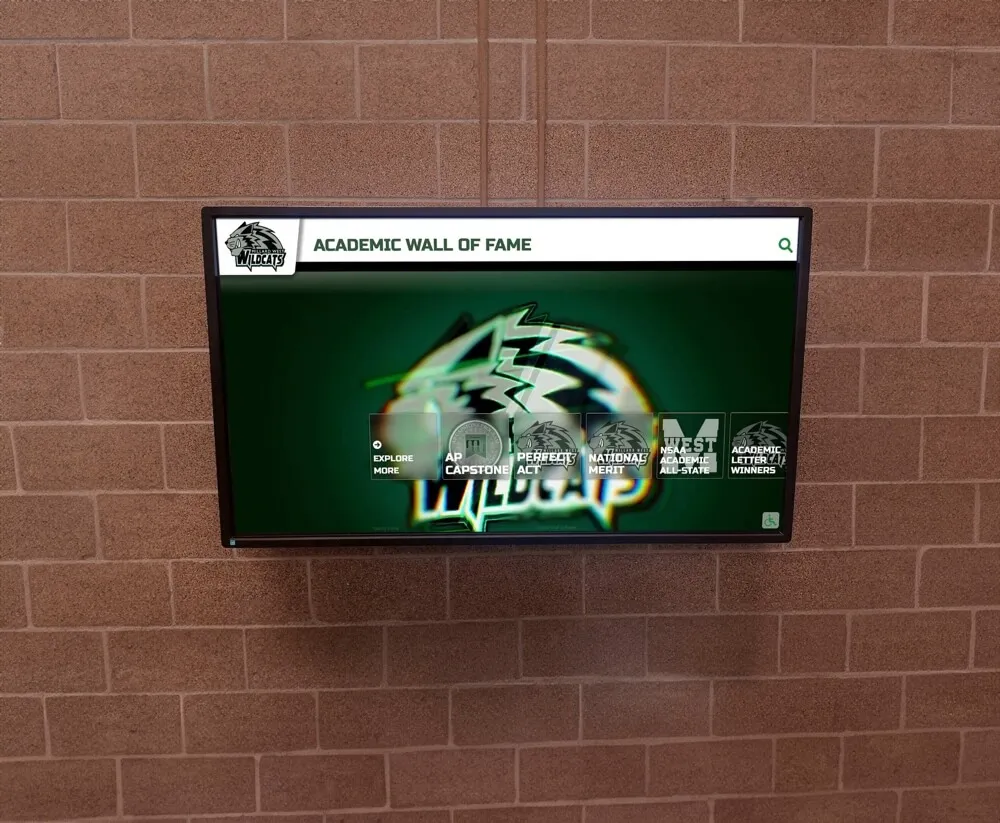
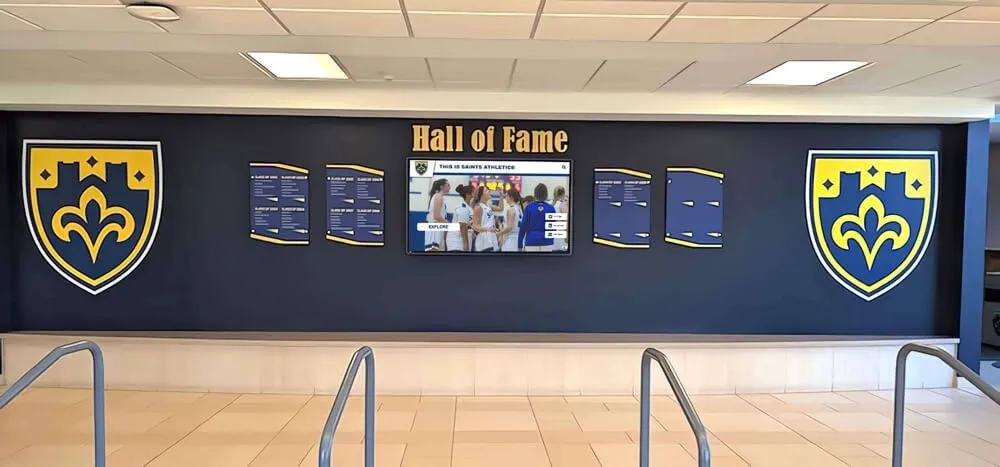
School-branded installations create distinctive identity while celebrating athletic tradition and competitive excellence
Why Sports Halls of Fame Matter
Recognition institutions serve critical functions preserving heritage and inspiring excellence across generations.
Preserving Athletic Heritage and Institutional Memory
Sports organizations naturally lose institutional knowledge as key figures retire, coaches transition, or decades pass without systematic heritage documentation. Halls of fame counteract this memory erosion by creating permanent records of achievement, leadership, and contribution remaining accessible regardless of personnel changes or generational transitions.
Without systematic documentation, early achievers and pioneering contributors risk fading from collective memory, diminishing tradition providing identity and continuity across eras. Hall of fame programs ensure founding legends and championship builders receive recognition matching their contributions’ significance to program development and competitive success.
Creating Aspirational Examples for Current Athletes
Visible hall of fame recognition establishes tangible excellence examples current athletes can study, emulate, and pursue. When developing players see specific achievements—championship success, statistical excellence, all-conference honors, character standards—recognized permanently through hall of fame induction, these accomplishments become concrete goals rather than abstract ideals.
Research indicates athletes exposed to comprehensive recognition programs demonstrate higher motivation toward exceptional achievement compared to those in programs with minimal or no formal recognition systems celebrating past excellence visibly.
Building Community Connection and Pride
Halls of fame create gathering points where alumni, families, and community members connect with institutional tradition. Recognition programs generate pride around local achievement and competitive excellence—demonstrating community commitment to honoring those who represented schools, clubs, or regions through athletic competition.
This community connection extends institutional impact beyond current participants to broader constituencies maintaining lifelong engagement through shared athletic heritage celebration. Many programs integrate hall of fame recognition with national heritage recognition initiatives celebrating diverse cultural contributions alongside athletic achievement.
Supporting Fundraising and Development
Athletic halls of fame provide natural fundraising opportunities connecting philanthropic support to permanent recognition. Naming opportunities for hall of fame spaces or displays, memorial giving programs honoring deceased legends, alumni campaigns targeting graduated athletes and families, and corporate sponsorships from businesses celebrating community athletic achievement all leverage recognition programs for development purposes.
Donors often respond positively to requests supporting heritage preservation and achievement celebration—viewing these investments as permanent institutional contributions outlasting current programs or personnel while honoring values transcending individual seasons or competitive cycles.

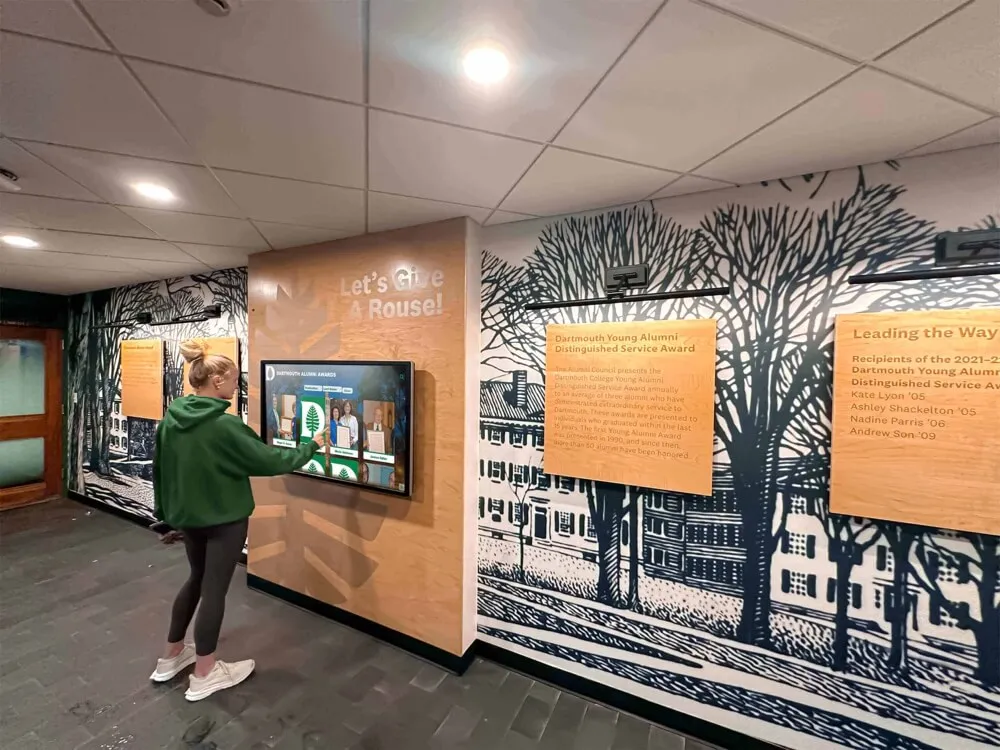
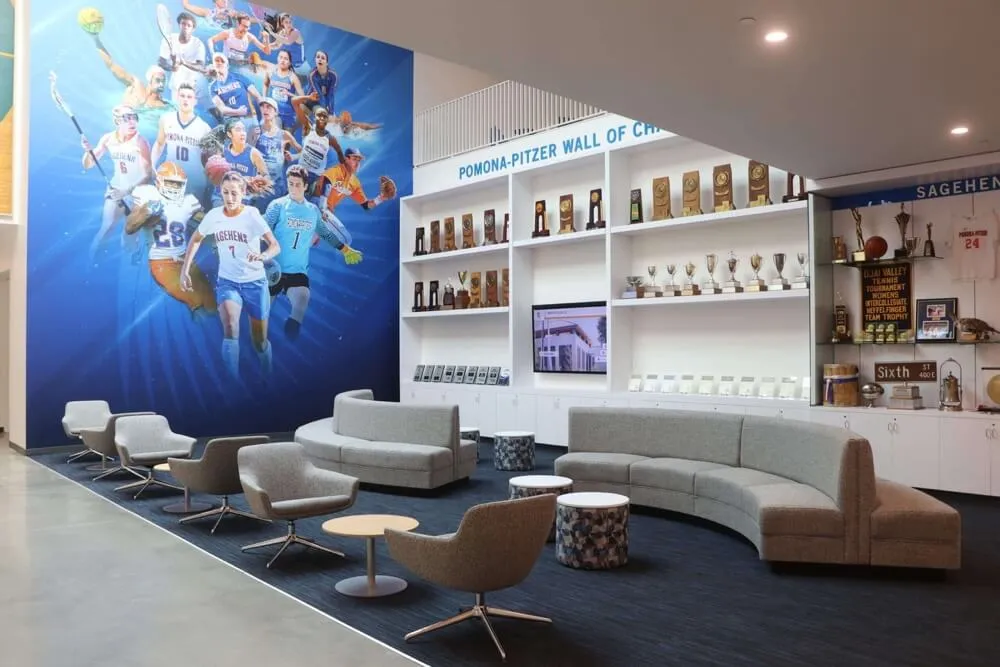
Experiential hall of fame spaces create immersive environments where visitors engage with athletic tradition surrounded by championship artifacts
Modern Technology Transforming Hall of Fame Recognition
Digital innovation enables comprehensive recognition addressing traditional format limitations.
The Limitations of Traditional Physical Displays
Physical recognition faces inherent constraints becoming problematic as programs mature. Every facility has finite wall space for plaque displays—as programs age and deserving candidates accumulate, organizations face difficult choices removing older inductees, expanding into less prominent locations, or restricting induction frequency.
Traditional plaques accommodate only brief text summaries—typically names, years active, and 2-3 sentence achievement descriptions. This minimal capacity cannot document complete careers, provide statistical context, explain historical significance, or capture multidimensional contributions distinguishing exceptional athletic achievement.
Physical plaque fabrication, installation, and modification require substantial time and expense—typically 3-6 months and $200-$500+ per plaque. These logistics prevent timely recognition while creating administrative burden managing ongoing additions as programs continue honoring excellence annually.
Interactive Digital Recognition Advantages
Digital platforms address traditional limitations while creating superior recognition experiences. Modern systems provide unlimited recognition capacity showcasing hundreds or thousands of detailed profiles without space constraints, rich multimedia content including photographs, videos, statistics, and biographical narratives, engaging interactive exploration through search, filtering, and detailed profile navigation, instant content updates maintaining perpetually current recognition, and web-based access extending recognition beyond physical facility locations.
Solutions from providers like Rocket Alumni Solutions enable schools, universities, and sports organizations to create comprehensive digital hall of fame programs combining commercial-grade touchscreen hardware with intuitive content management requiring minimal technical expertise.
Hybrid Recognition Approaches
Optimal programs often combine traditional and digital elements leveraging strengths of both formats. Physical plaques or displays provide ceremonial gravitas and traditional permanence many constituencies value, while comprehensive digital platforms document complete athletic heritage impossible to achieve through physical displays alone.
Integrated approaches might maintain traditional physical recognition for most prestigious honors—retired jerseys, inaugural hall of fame classes, or championship teams—while utilizing digital platforms for thorough documentation of all inductees, historical achievements, statistical records, and comprehensive multimedia storytelling.
Cross-referencing between formats through QR codes on physical plaques linking to detailed digital profiles creates seamless recognition ecosystems guiding visitors between complementary presentation modes. Resources on digital trophy case implementation demonstrate effective hybrid strategies.
Developing Hall of Fame Programs for Your Organization
Educational institutions and sports organizations can create effective recognition programs celebrating local athletic excellence.
Establishing Clear Program Mission and Scope
Successful halls of fame begin with articulated purpose statements guiding operational decisions. Organizations must determine recognition philosophy—individual excellence, team achievement, coaching contributions, or comprehensive approaches honoring diverse achievement forms. Institutional scope decisions address sport coverage (single-sport versus multi-sport), gender equity ensuring equal recognition opportunities, and timeline parameters determining whether recognition extends to program founding or establishes minimum historical thresholds.
Clear mission statements prevent scope creep and political controversies while ensuring recognition programs maintain focused purposes serving institutional needs effectively.
Creating Fair Selection Criteria and Processes
Written criteria establish objective standards minimizing controversy and subjectivity. Quantifiable thresholds provide statistical minimums for consideration, qualitative excellence factors acknowledge contributions defying quantification, waiting period requirements enable complete legacy evaluation, and character standards ensure inductees represent organizational values comprehensively.
Selection committee composition should represent diverse perspectives through athletic directors, coaches, alumni, and community representatives. Systematic nomination and evaluation procedures with documented voting processes ensure fair, defensible selection across all candidates regardless of personal relationships or political considerations.
Understanding all-state recognition standards informs how organizations calibrate achievement thresholds appropriately to competitive context and institutional history.
Selecting Appropriate Recognition Display Formats
Organizations must evaluate physical versus digital recognition approaches or hybrid combinations. Traditional plaques offer ceremonial significance but face space constraints and limited content capacity. Digital platforms provide unlimited capacity, rich multimedia content, and cost-effective management but may face stakeholder skepticism about technology appropriateness.
Budget considerations, facility constraints, content ambitions, and stakeholder preferences all influence format selection. Many organizations implement phased approaches starting with minimal viable recognition demonstrating value before requesting expansion funding.
Planning Sustainable Operations
Long-term program success requires sustainable operational structures. Annual induction cycles with standardized timelines, content development workflows ensuring profile completion, ceremony planning creating meaningful community celebration, and budget allocation supporting ongoing recognition all require systematic procedures preventing programs from languishing after initial launch enthusiasm fades.
Multi-year planning ensures recognition programs receive sustained institutional commitment matching their permanent significance to heritage preservation and community connection goals.
Create Your Own Sports Hall of Fame
Discover how modern digital recognition solutions enable comprehensive hall of fame programs celebrating your athletic legends with unlimited capacity, engaging multimedia content, and sustainable management fitting realistic administrative resources.
Explore Recognition SolutionsVisiting America’s Sports Halls of Fame
Planning pilgrimages to major sports recognition venues creates memorable experiences for fans and families.
Planning Your Hall of Fame Visits
Most major halls of fame welcome visitors year-round with seasonal hour variations. Summer months typically see peak attendance coinciding with family vacation schedules, while winter months offer quieter experiences with shorter wait times and more opportunities for extended exhibit exploration.
Admission prices range from $15-$30 for adults with discounts for seniors, students, and children. Many venues offer family packages or annual memberships providing multiple visits throughout the year. Audio guides, mobile apps, and guided tours enhance experiences through expert commentary and curated content pathways.
Major halls of fame are located in: St. Augustine, Florida (golf), Cooperstown, New York (baseball), Canton, Ohio (professional football), Springfield, Massachusetts (basketball), and Frisco, Texas (soccer). Regional planning can combine multiple venues—pairing Canton’s football shrine with nearby Cleveland attractions or connecting Cooperstown’s baseball museum with upstate New York tourism.
What to Expect During Your Visit
Comprehensive facilities typically require 2-4 hours exploring exhibits thoroughly. Interactive displays invite participation testing skills or experiencing athlete perspectives. Championship trophy collections and player artifacts provide tangible connections to legendary achievements. Multimedia presentations feature historic footage, documentary films, and player interviews.
Most venues include museum stores offering licensed merchandise, books, and memorabilia. Many feature theaters screening sport-specific films or induction ceremony footage. Some halls of fame integrate with active competition venues—like Newport’s tennis hall hosting professional tournaments or Springfield’s basketball hall adjacent to college competitions.
Combining Hall of Fame Visits with Local Attractions
Hall of fame locations often provide broader tourism appeal. St. Augustine combines golf heritage with America’s oldest city historical sites. Cooperstown offers baseball alongside scenic Otsego Lake recreation. Canton pairs football history with Pro Football Hall of Fame Village entertainment complex. Springfield connects basketball recognition with New England tourism corridors.
Planning trips combining sports heritage with family-friendly attractions, historical sites, or outdoor recreation creates comprehensive travel experiences appealing to diverse interests beyond sports-specific devotees.
The Future of Sports Recognition
Hall of fame programs continue evolving through technology adoption and changing cultural expectations.
Digital Innovation Expanding Access
Virtual reality experiences enable remote visitors to explore halls of fame without traveling to physical locations. Augmented reality applications overlay historical context onto current venues—showing championship moments where they occurred or comparing current athletes against historical legends. Streaming video provides global access to induction ceremonies and special events impossible when recognition occurred exclusively through in-person attendance.
These digital extensions democratize recognition access—enabling international fans, individuals with mobility limitations, and those unable to travel extensive distances to experience comprehensive sports heritage celebration previously requiring physical venue visits.
Inclusive Recognition Philosophies
Modern halls of fame increasingly recognize diverse contributions beyond traditional player-focused approaches. Coaches, administrators, media members, officials, and pioneering figures who broke participation barriers receive appropriate recognition alongside competitive achievers. Women’s sports receive equitable celebration as programs correct historical imbalances reflecting pre-Title IX eras when female athletic opportunities were limited.
This inclusive evolution ensures halls of fame genuinely celebrate everyone whose contributions shaped sports development rather than narrowly focusing on statistical achievement alone within traditional competitive structures.
Community Halls of Fame Growth
The hall of fame concept extends beyond professional sports to schools, universities, youth leagues, and community organizations nationwide. This democratization reflects recognition’s power inspiring excellence and preserving heritage at all competitive levels—not just elite professional achievement attracting national attention.
Digital technology enables small organizations to create professional-quality recognition matching major institutions’ programs despite resource disparities. Cloud-based platforms, affordable touchscreen hardware, and intuitive content management put comprehensive hall of fame programs within reach for organizations previously unable to afford traditional physical recognition requiring expensive ongoing plaque fabrication and installation.
Resources on team recognition award programs demonstrate how celebration culture extends beyond individual halls of fame to comprehensive athletic appreciation systems.
Conclusion: Celebrating Athletic Excellence Across America
If you’ve wondered where is the golf hall of fame, you now know the World Golf Hall of Fame calls St. Augustine, Florida, home—but more importantly, you understand how this venue fits within America’s comprehensive sports recognition landscape honoring excellence across diverse athletic competitions nationwide.
From Cooperstown’s baseball shrine through Canton’s football recognition, from Springfield’s basketball celebration to specialized halls honoring tennis, hockey, soccer, and countless other sports, halls of fame preserve heritage, inspire achievement, and create permanent connections between legendary excellence and contemporary competition. These institutions serve pilgrimage destinations for passionate fans while providing educational experiences celebrating sports’ cultural significance beyond simple entertainment.
For schools, universities, clubs, and athletic organizations developing their own recognition programs, professional halls of fame provide templates demonstrating effective celebration approaches: clear selection criteria ensuring fair, defensible induction decisions, comprehensive content documenting complete legacies beyond brief text summaries, engaging presentation formats creating memorable visitor experiences, and sustained operational commitment maintaining programs across leadership transitions and generational change.
Modern technology has fundamentally transformed what’s possible in athletic recognition. Organizations no longer face impossible choices between comprehensive recognition and limited physical space, expensive ongoing costs and sustainable budgets, or rich multimedia storytelling and minimal technical expertise. Digital platforms enable unlimited capacity, engaging interactive content, and cost-effective management—putting professional-quality hall of fame programs within reach for organizations at every competitive level and resource availability.
Whether planning visits to America’s great sports halls of fame, developing recognition programs for your own athletic organization, or simply appreciating how these institutions preserve heritage and inspire excellence, understanding the hall of fame landscape enriches your connection to sports tradition and competitive achievement celebrating the best of human athletic potential.
Your legends—athletes who achieved extraordinary excellence, coaches who built championship cultures, administrators who established competitive infrastructure, and pioneers who broke barriers enabling future participation—deserve recognition matching their contributions’ significance. Halls of fame ensure these achievements receive permanent celebration inspiring current athletes, connecting alumni, building community pride, and preserving heritage for generations who will continue adding their own achievements to traditions these halls of fame exist to honor and celebrate.
Ready to explore sports hall of fame solutions? Discover comprehensive approaches to digital hall of fame implementation for your organization. Learn about effective athletic recognition programs that celebrate excellence across all competitive levels. And explore how modern interactive displays transform athletic recognition from static plaques into engaging experiences honoring your athletic legends comprehensively.