



Women’s soccer all-star recognition represents a critical opportunity for schools, clubs, and organizations to celebrate athletic excellence while building program pride and inspiring the next generation of female athletes. From high school All-Conference selections to collegiate All-American honors and professional NWSL accolades, systematic recognition of women’s soccer achievement creates cultures where excellence receives the visibility and celebration it deserves.
Yet many programs struggle to create recognition systems that truly honor women’s soccer achievements appropriately. Recognition often feels like an afterthought compared to other sports, awards get announced but lack lasting visibility, outstanding performances fade from institutional memory within months, and female athletes receive less comprehensive recognition than their male counterparts despite equivalent dedication and achievement.
This comprehensive guide explores proven strategies for implementing women’s soccer all-star recognition programs that celebrate excellence across all levels—from youth club stars to professional standouts—while creating sustainable systems that honor achievements for years to come through modern digital recognition solutions.
Women’s soccer has experienced remarkable growth over the past decades, with increasing participation, rising competitive standards, and expanding opportunities for female athletes at every level. Effective recognition programs acknowledge this evolution while ensuring that outstanding individual and team achievements receive the visibility that motivates current players and inspires future generations to pursue soccer excellence.

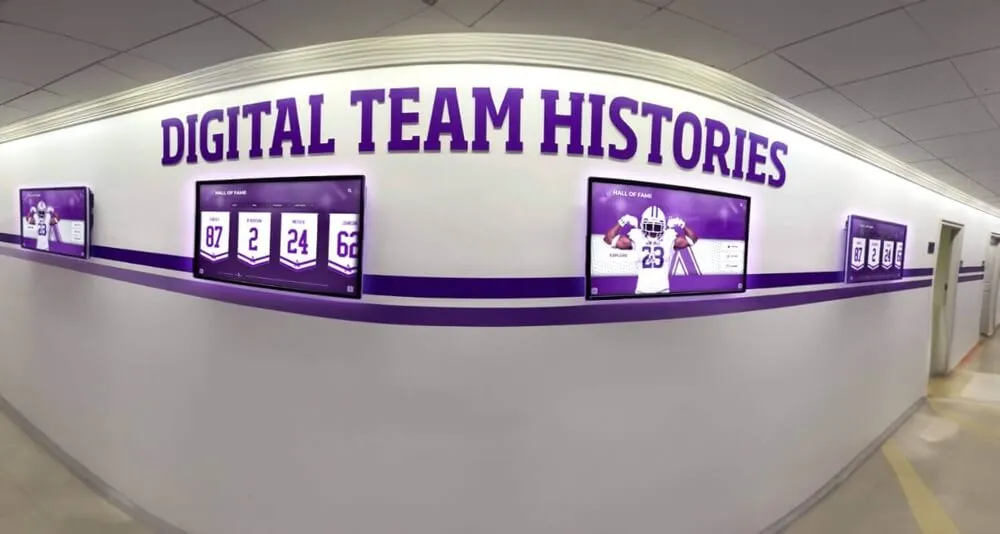
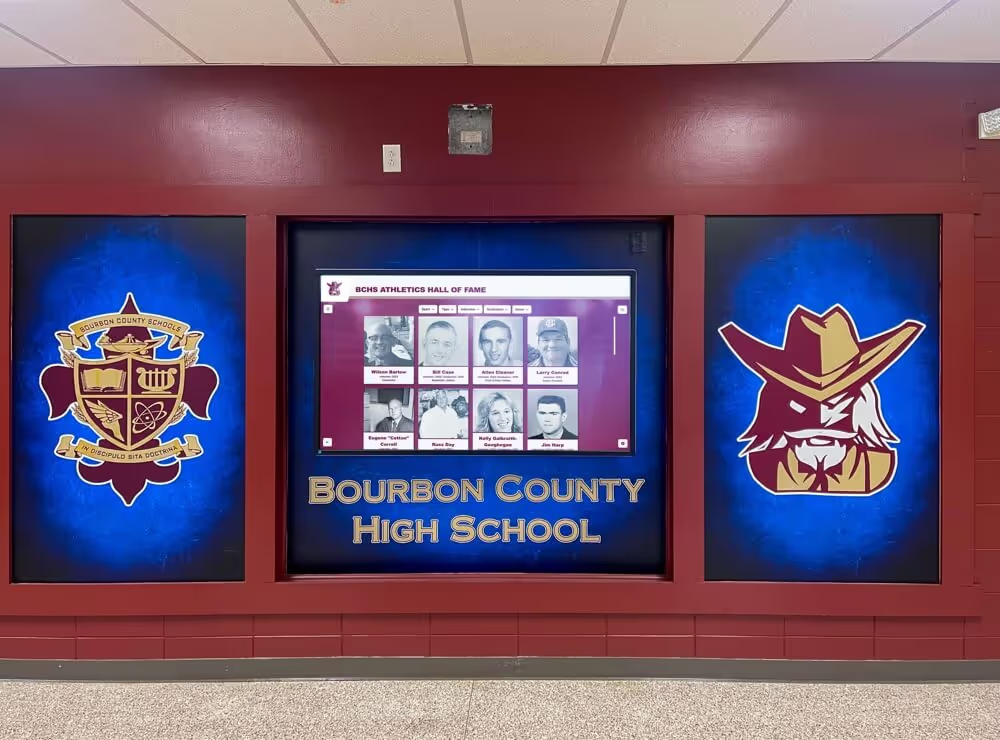
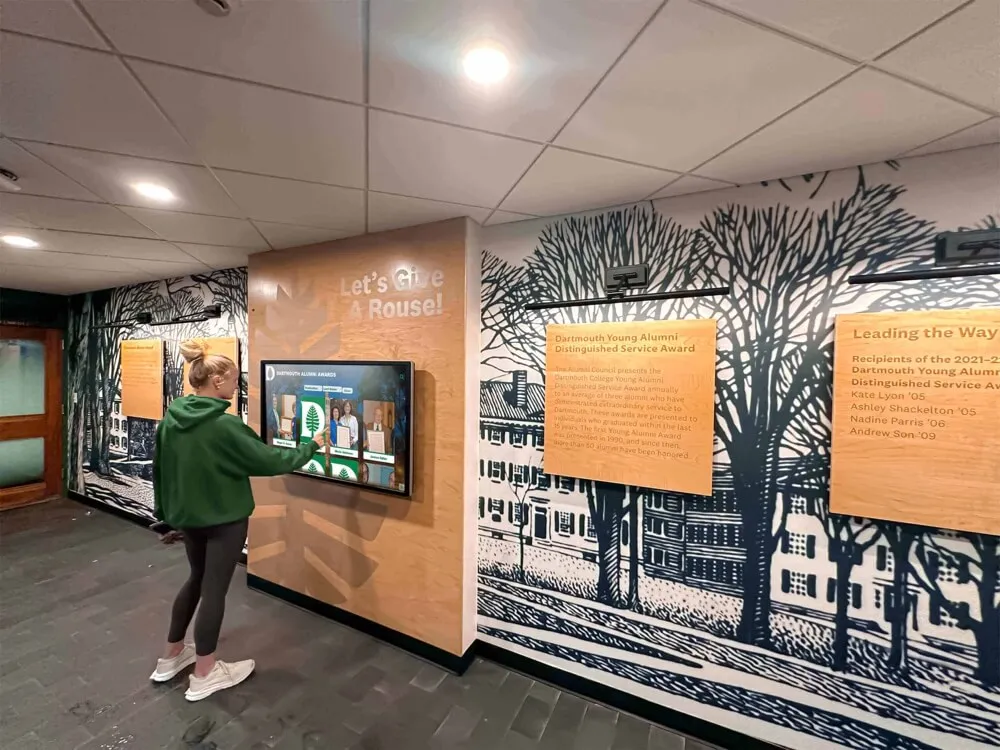
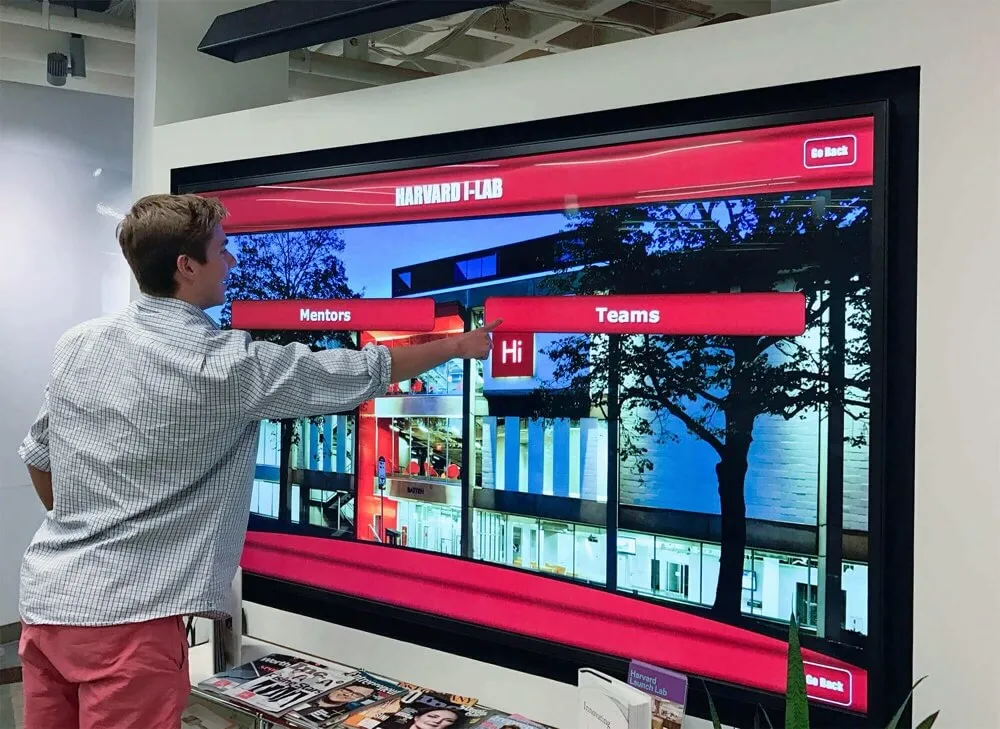
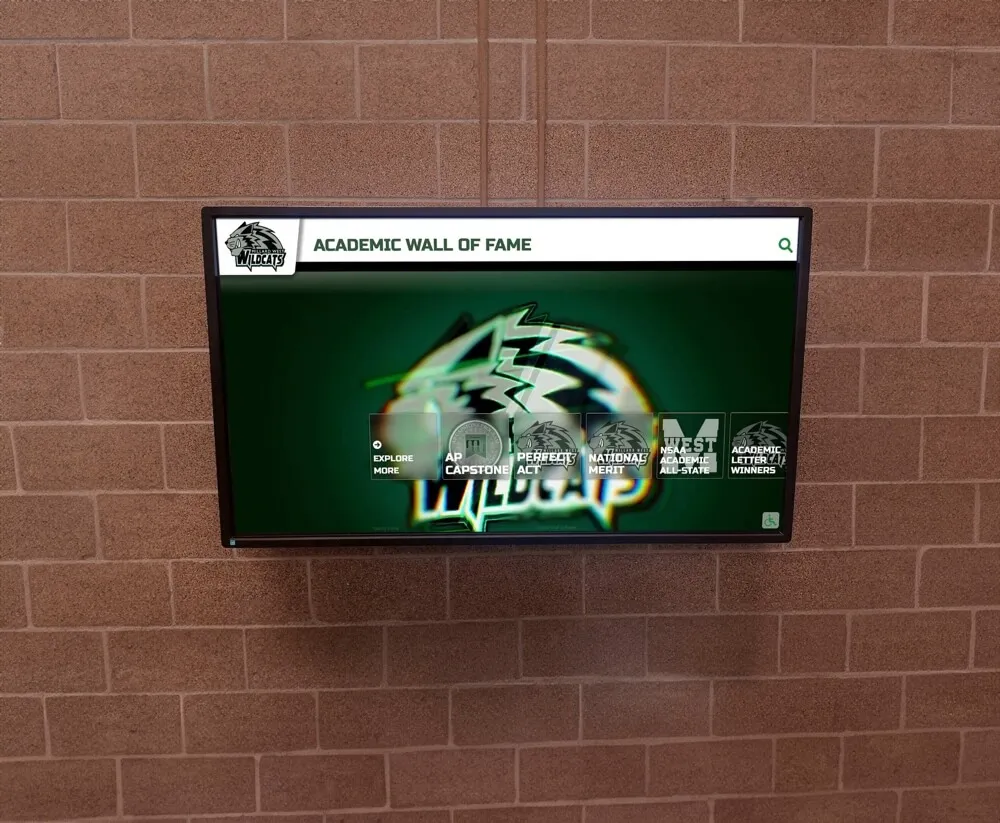
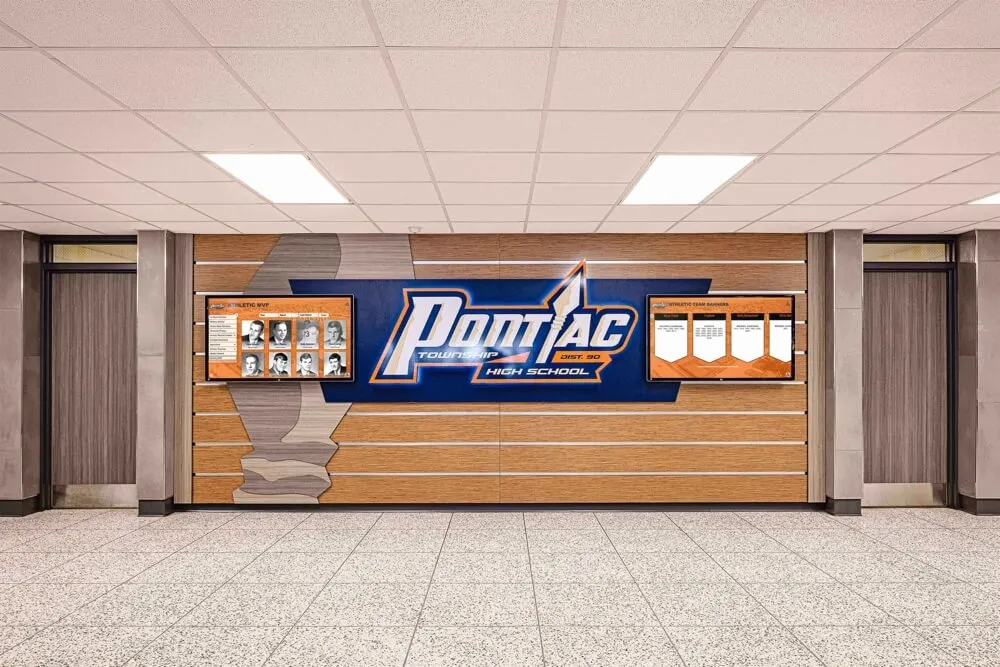
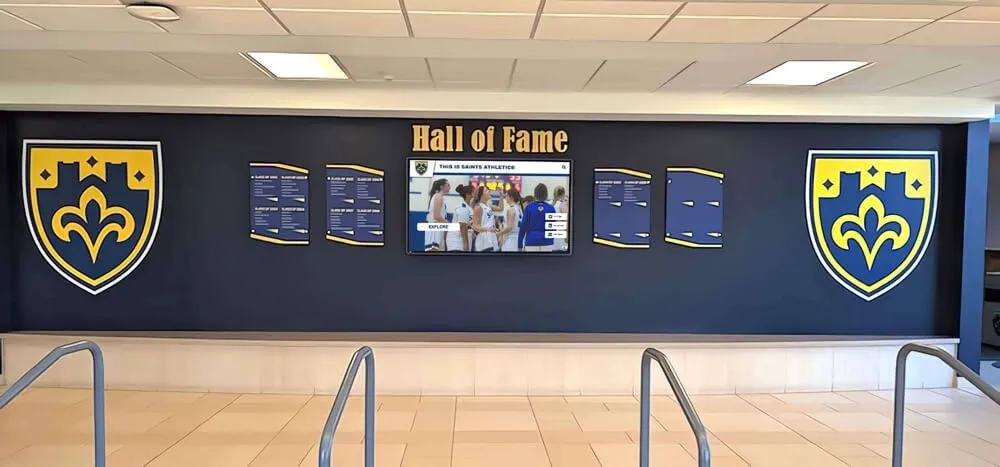
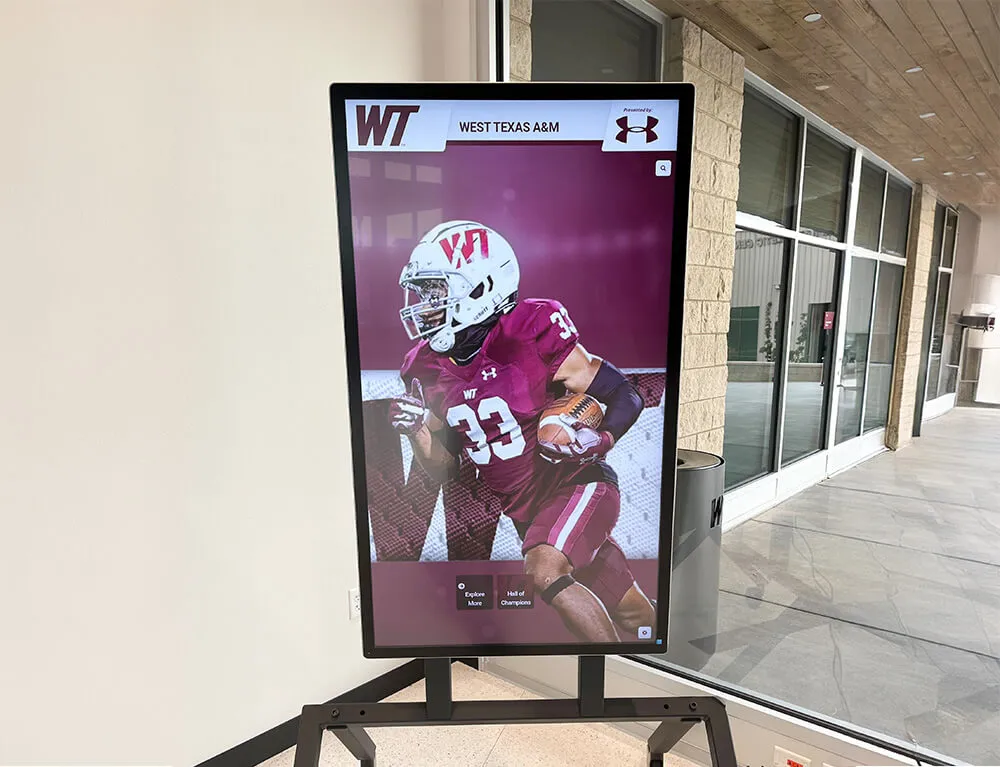
Modern recognition programs celebrate women's soccer achievements through digital displays and community-wide visibility
The Growing Importance of Women’s Soccer Recognition
Understanding why women’s soccer all-star recognition matters helps programs design celebration systems that serve athlete development, recruitment, and community engagement objectives effectively.
The Rise of Women’s Soccer Excellence
Women’s soccer has evolved dramatically across all competitive levels, creating expanding recognition opportunities and requirements.
Youth and High School Growth
According to the National Federation of State High School Associations, girls’ soccer ranks among the top five most popular high school sports nationwide, with hundreds of thousands of participants competing annually. This participation growth has elevated competitive standards while creating larger pools of talented athletes deserving systematic recognition for their achievements.
High school all-star programs now include multiple recognition tiers spanning All-Conference selections acknowledging excellence within local competitive regions, All-District or All-Region honors celebrating achievement across broader geographic areas, All-State recognition representing the highest high school honor in each state, regional and national showcase selections for elite prospects, and academic all-state programs honoring athlete-scholars excelling in classroom and competition.
Collegiate Competition Expansion
Women’s collegiate soccer continues expanding with NCAA Division I, II, and III programs alongside NAIA and junior college competitions providing opportunities at varied competitive levels. Academic recognition programs increasingly complement athletic honors, celebrating student-athletes who excel in both arenas.
All-American teams at each division level provide prestigious individual recognition, while conference all-star selections acknowledge excellence within competitive conferences, and statistical achievement awards honor leading scorers, assist leaders, and top goalkeepers across divisions.
Professional and International Recognition
The National Women’s Soccer League represents North America’s premier professional competition, with all-star recognition including NWSL Best XI selections, Golden Boot awards for leading scorers, Goalkeeper of the Year recognition, Rookie of the Year honors, and Most Valuable Player awards celebrating season-long excellence.
International competition adds additional recognition layers through national team selections, World Cup all-star teams, Olympic Games recognition, and continental championship honors celebrating excellence at soccer’s highest levels.

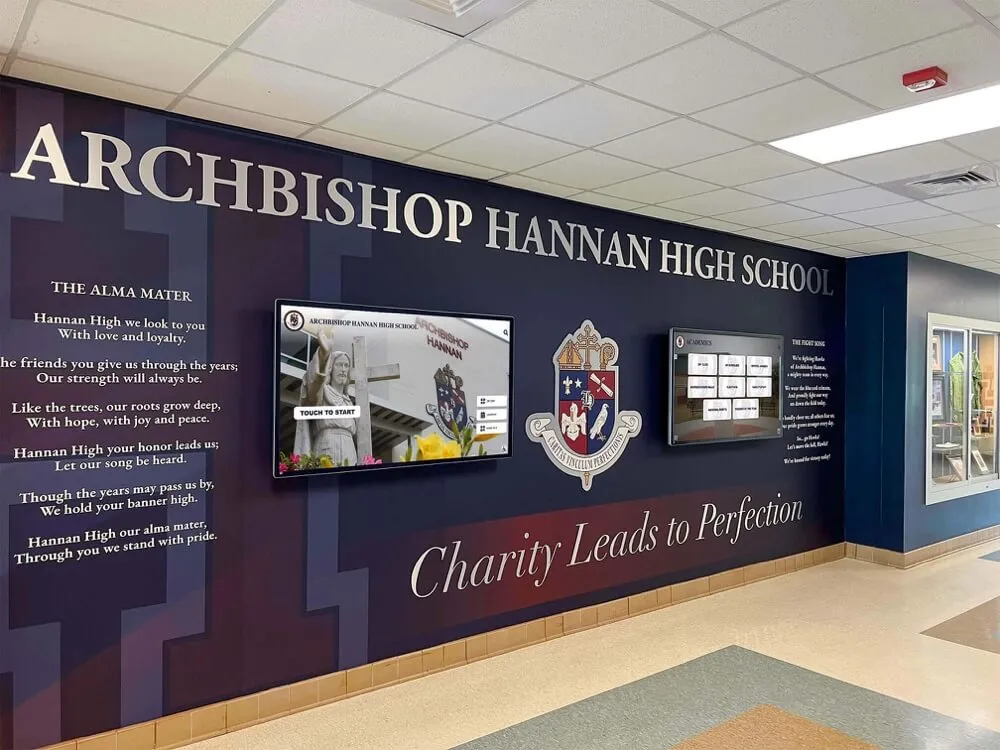
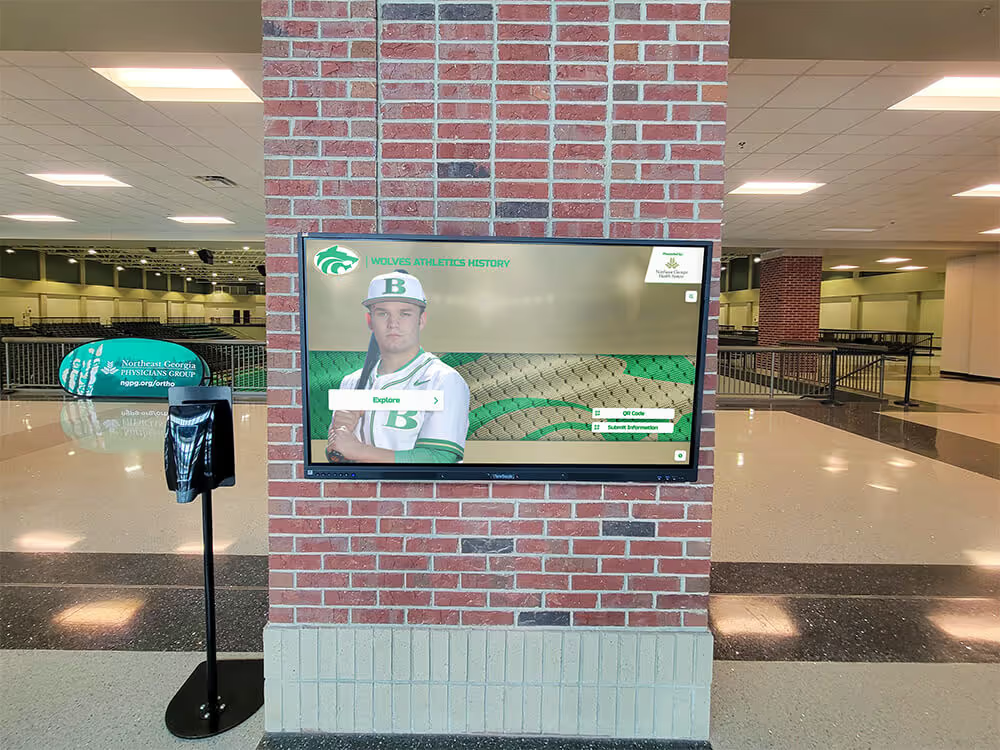
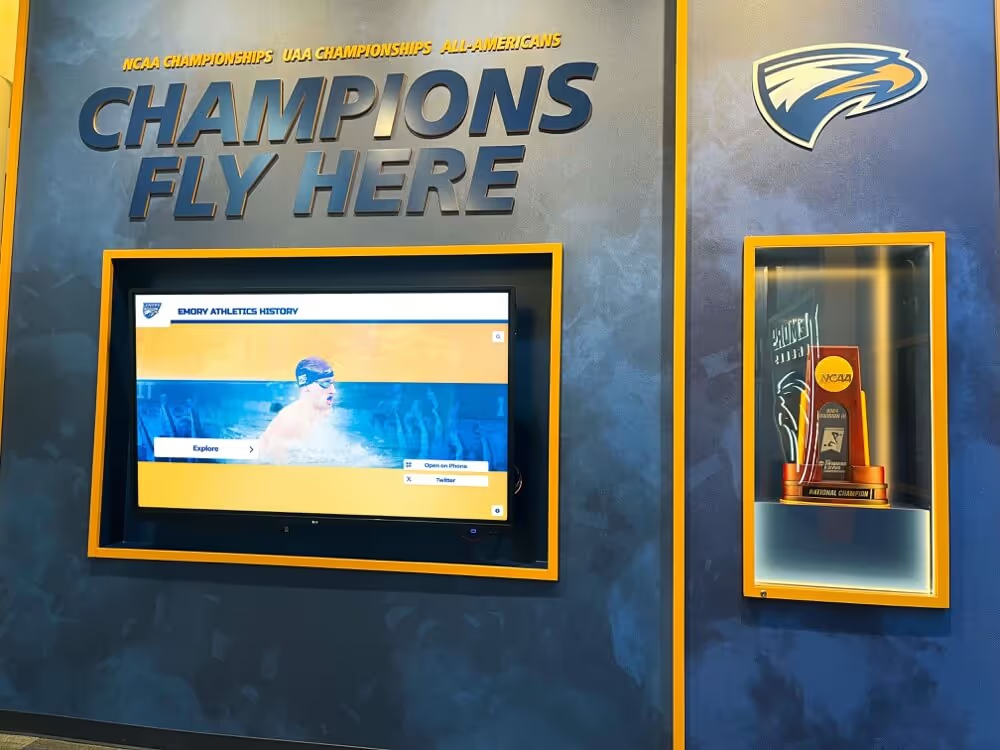
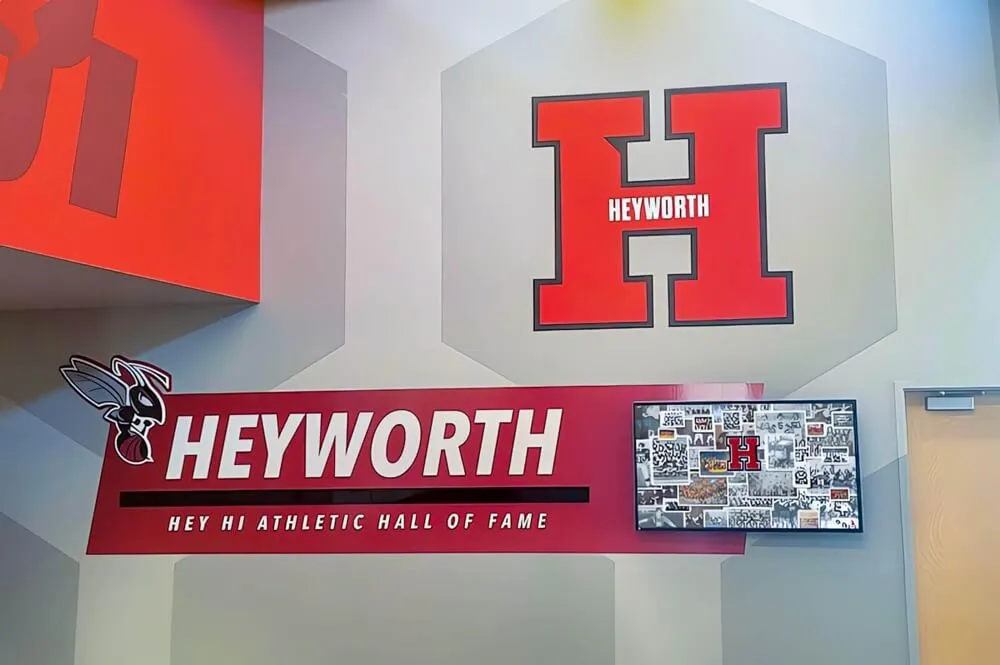
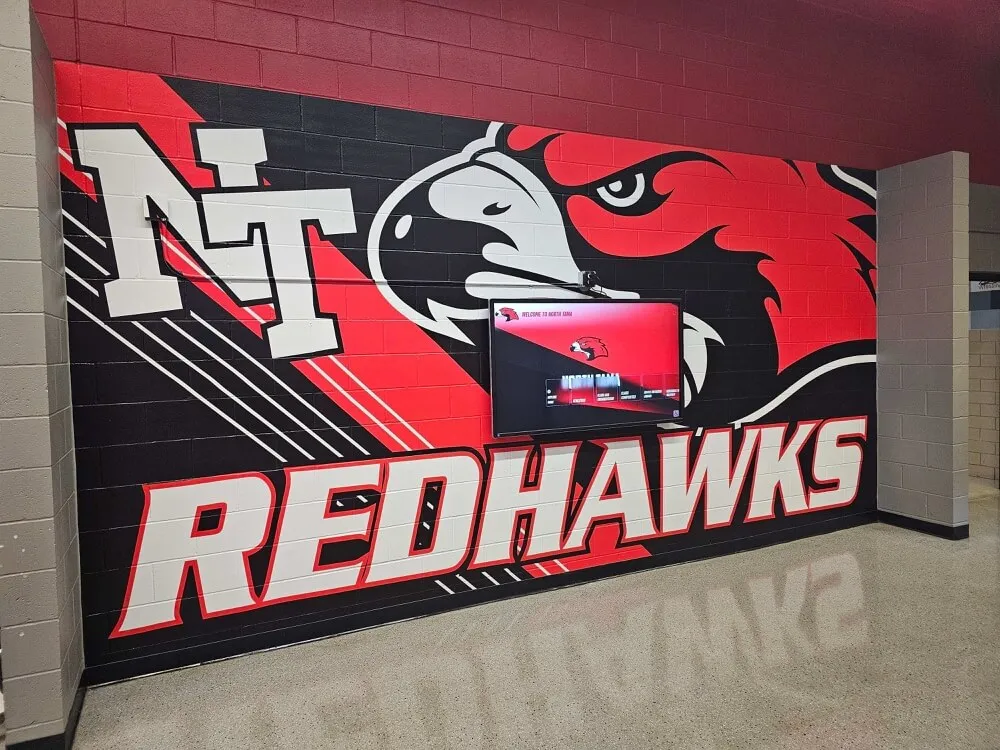
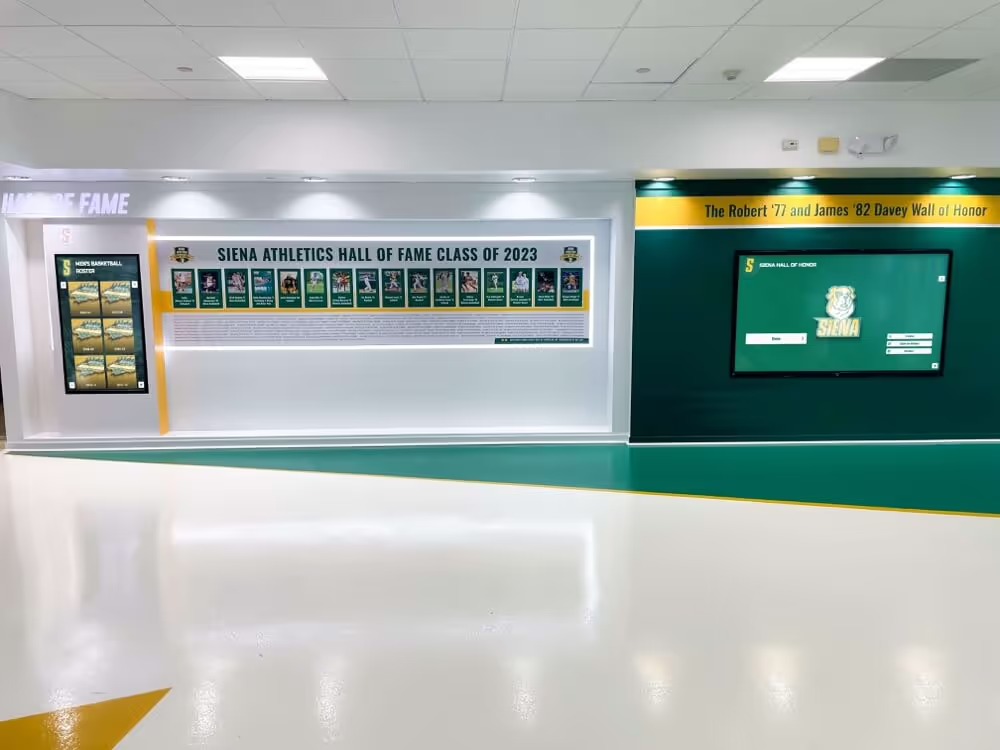
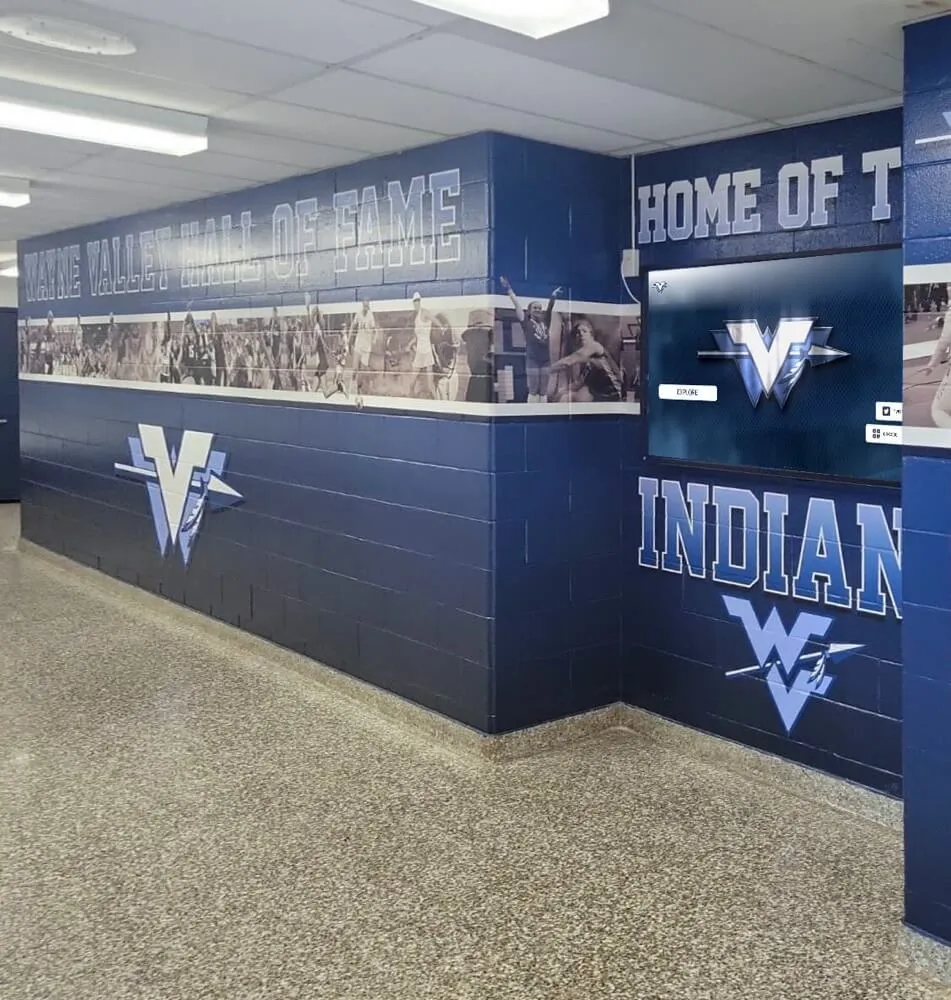
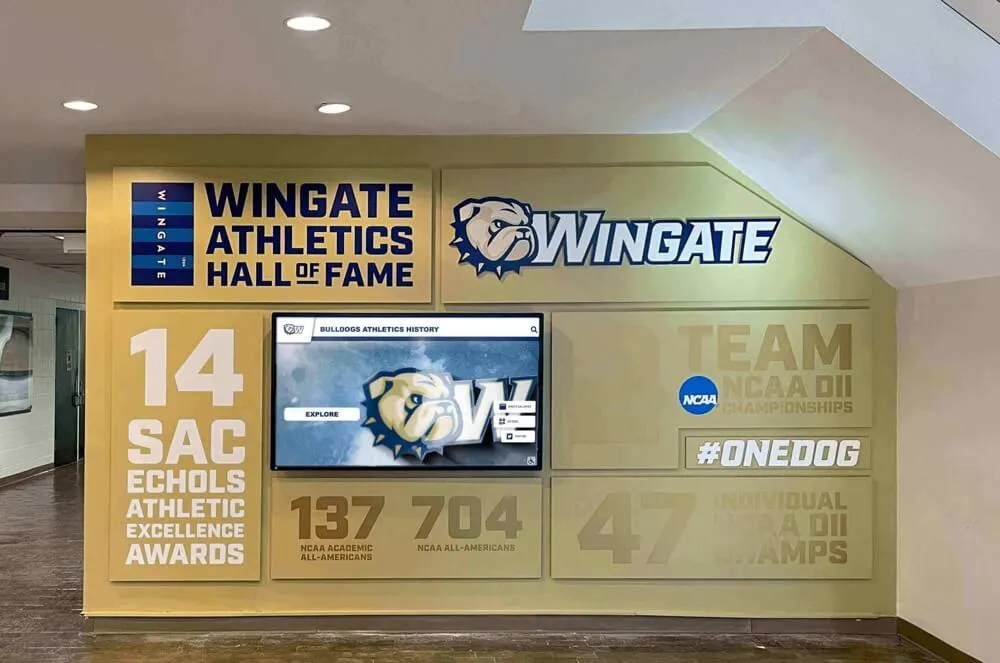
Comprehensive recognition systems integrate women's soccer achievements into broader athletic celebration programs
This expanding recognition landscape creates both opportunities and challenges for programs seeking to honor women’s soccer all-stars appropriately while managing sustainable systems across multiple achievement levels.
Building Program Culture Through Recognition
Systematic all-star recognition serves purposes extending far beyond acknowledging individual achievement—it shapes program culture and values in powerful ways.
Motivating Current Athletes
When current players see comprehensive recognition of previous all-star selections, they understand that excellence leads to lasting acknowledgment. This visible motivation proves particularly powerful for female athletes who may face social pressures discouraging intensive athletic commitment or questioning whether soccer achievement matters as much as other pursuits.
Weekly top performers recognition throughout seasons builds momentum toward end-of-season all-star selections, creating regular celebration rhythms that maintain focus and motivation across competitive campaigns.
Recruiting and Program Reputation
Prospective athletes and families evaluate programs partly through visible evidence of how achievements get celebrated and remembered. Comprehensive women’s soccer all-star recognition demonstrates that programs value female athletes appropriately, invest in recognition infrastructure, maintain traditions honoring achievement, and create cultures where excellence receives lasting visibility.
Sophisticated digital recognition systems signal program quality and organizational commitment that influences competitive recruiting situations where multiple programs compete for talented players.
Establishing All-Star Recognition Criteria and Selection
Credible recognition programs require clear, transparent criteria ensuring that all-star selections reflect genuine excellence while maintaining fairness across different competitive contexts.
High School All-Star Selection Frameworks
High school programs face particular challenges balancing achievement recognition with limited historical documentation and varying competitive levels.
Conference and District Recognition
Local all-star teams typically rely on coach nominations and selections, with head coaches submitting nominations for deserving athletes from their teams, selection committees reviewing nominations across conference or district, position-specific considerations ensuring balanced team representation, statistical performance documentation supporting nomination cases, and consideration of leadership, sportsmanship, and team contribution alongside pure statistics.
Most conference all-star programs recognize first team and second team selections, with honorable mention acknowledgments for additional deserving athletes. This tiered approach allows broader recognition while maintaining distinction for top performers.
State-Level All-Star Programs
State soccer associations or coaching organizations typically coordinate all-state recognition, with selection processes varying by state but generally including regional or district nominations forwarding top candidates, state-level selection committees making final decisions, classification-based recognition (if states divide competition by school size), and sometimes separate offensive, defensive, and goalkeeper recognition.
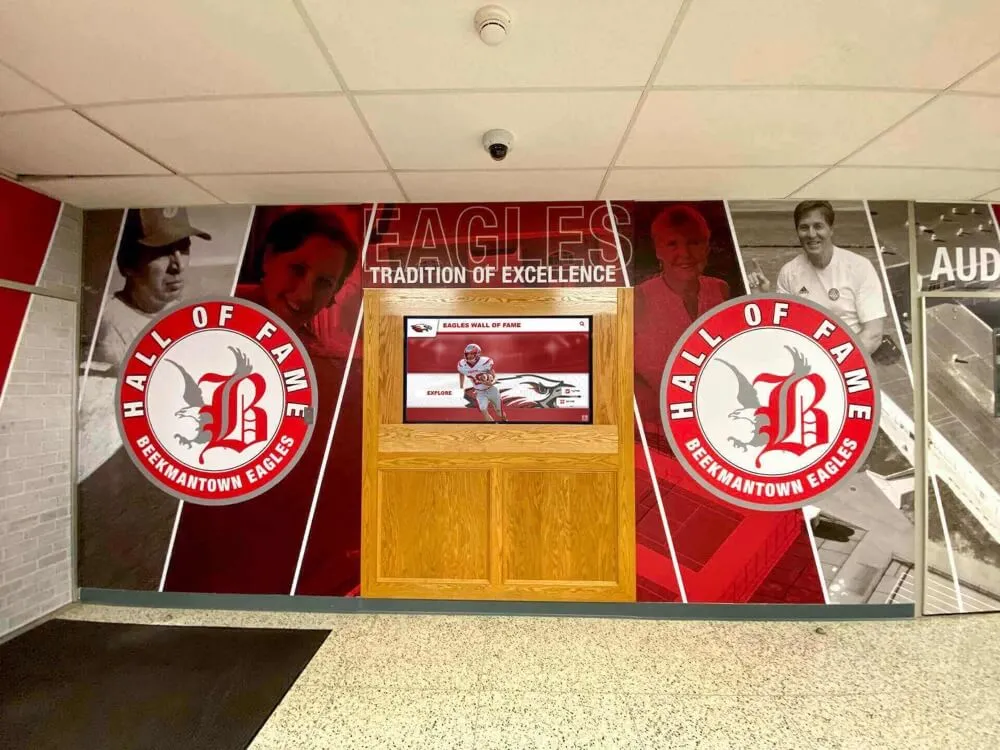
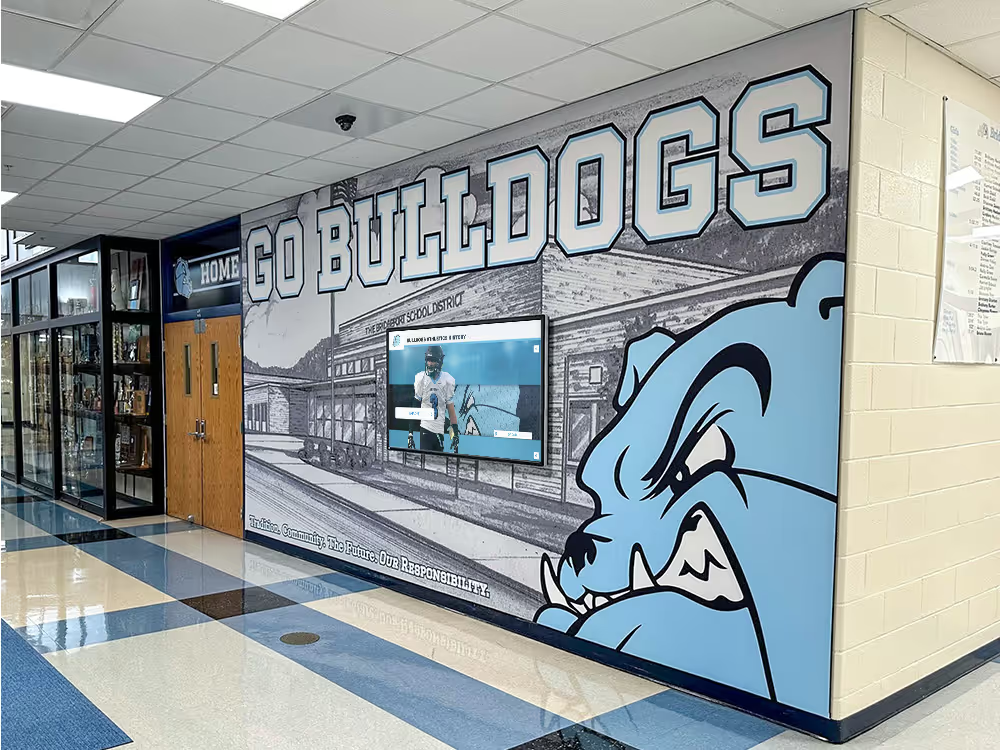
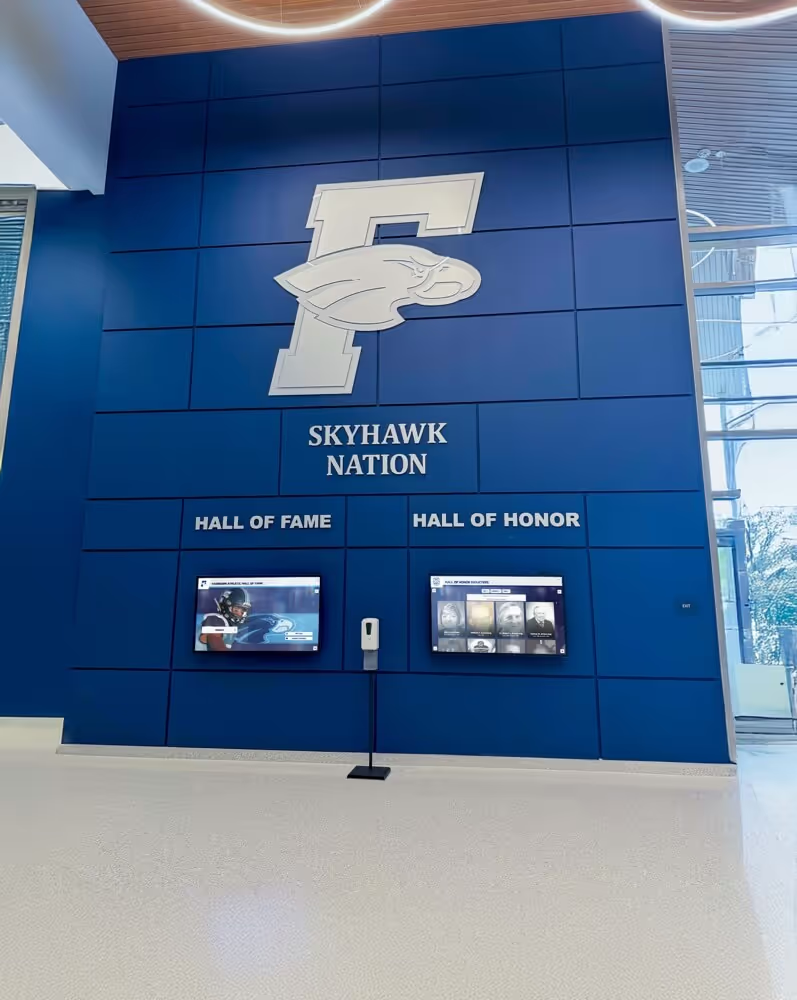
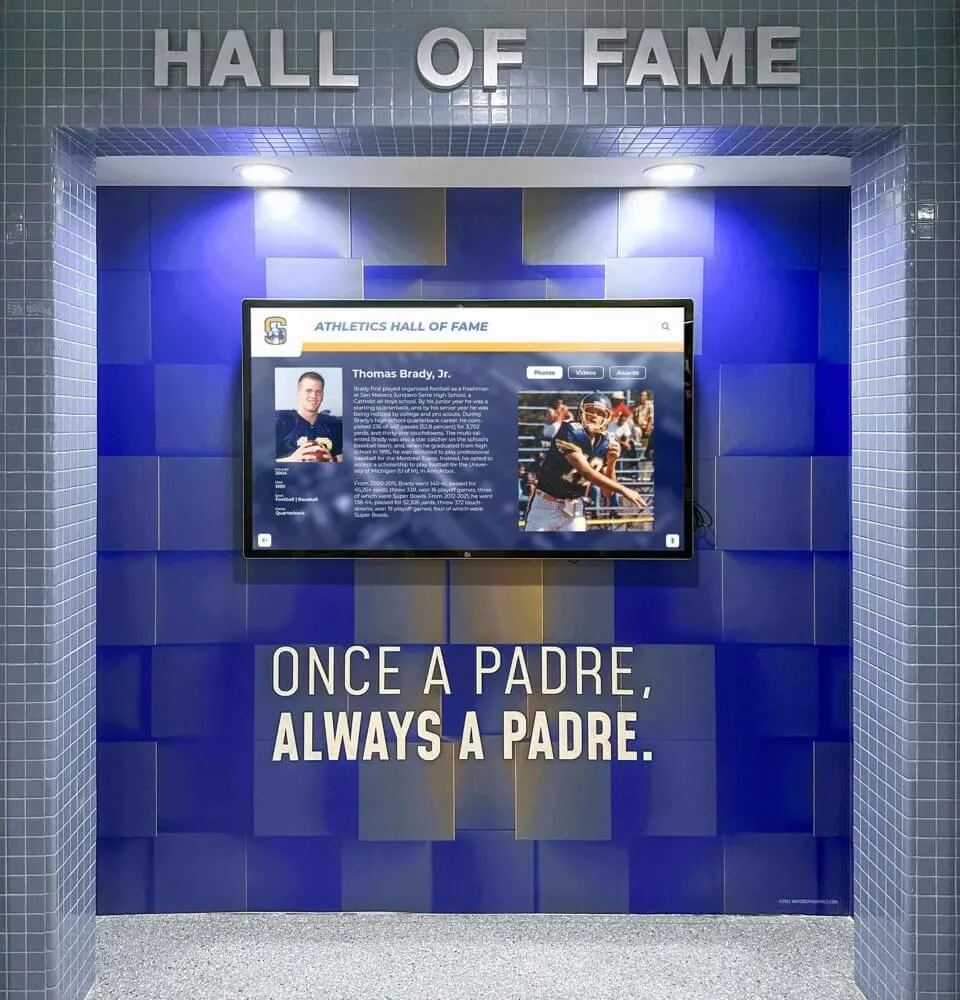
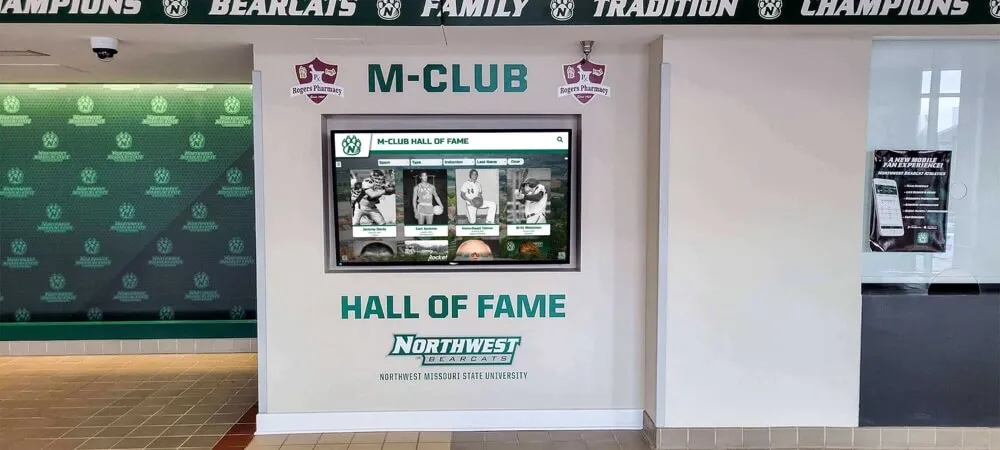
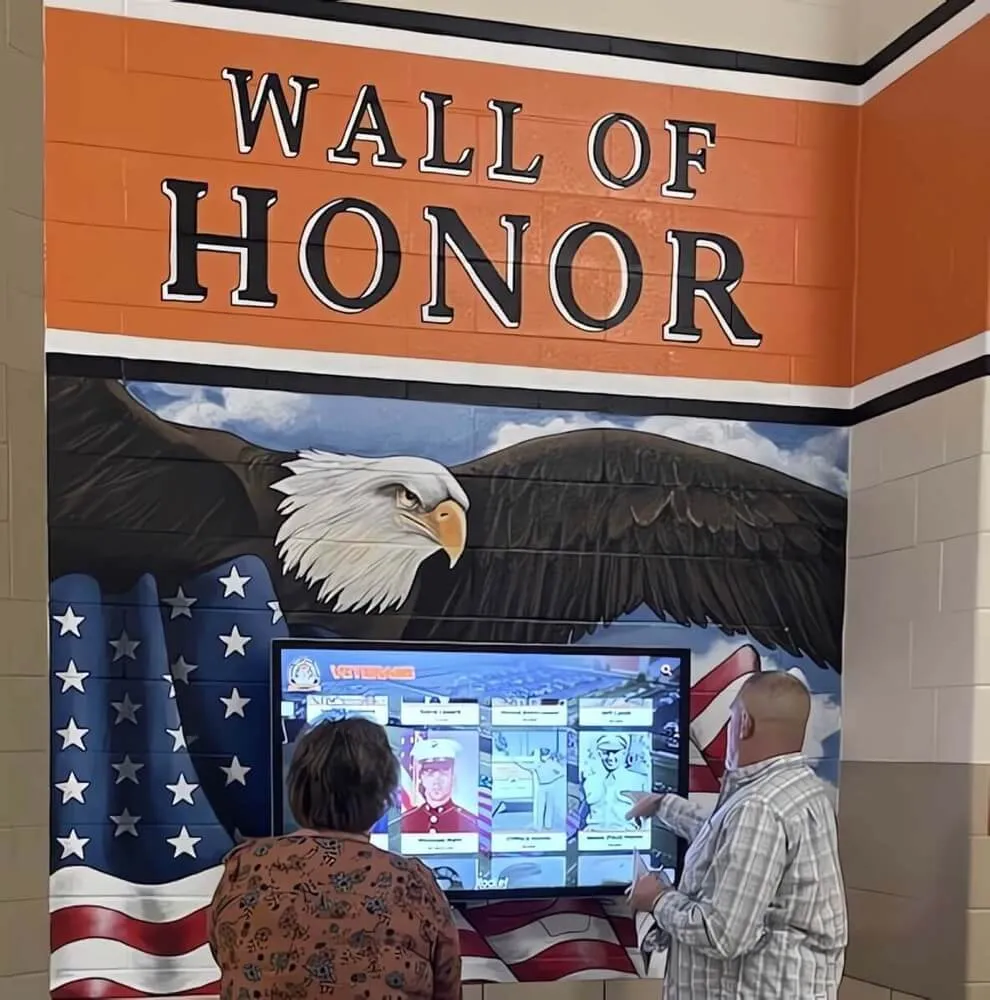
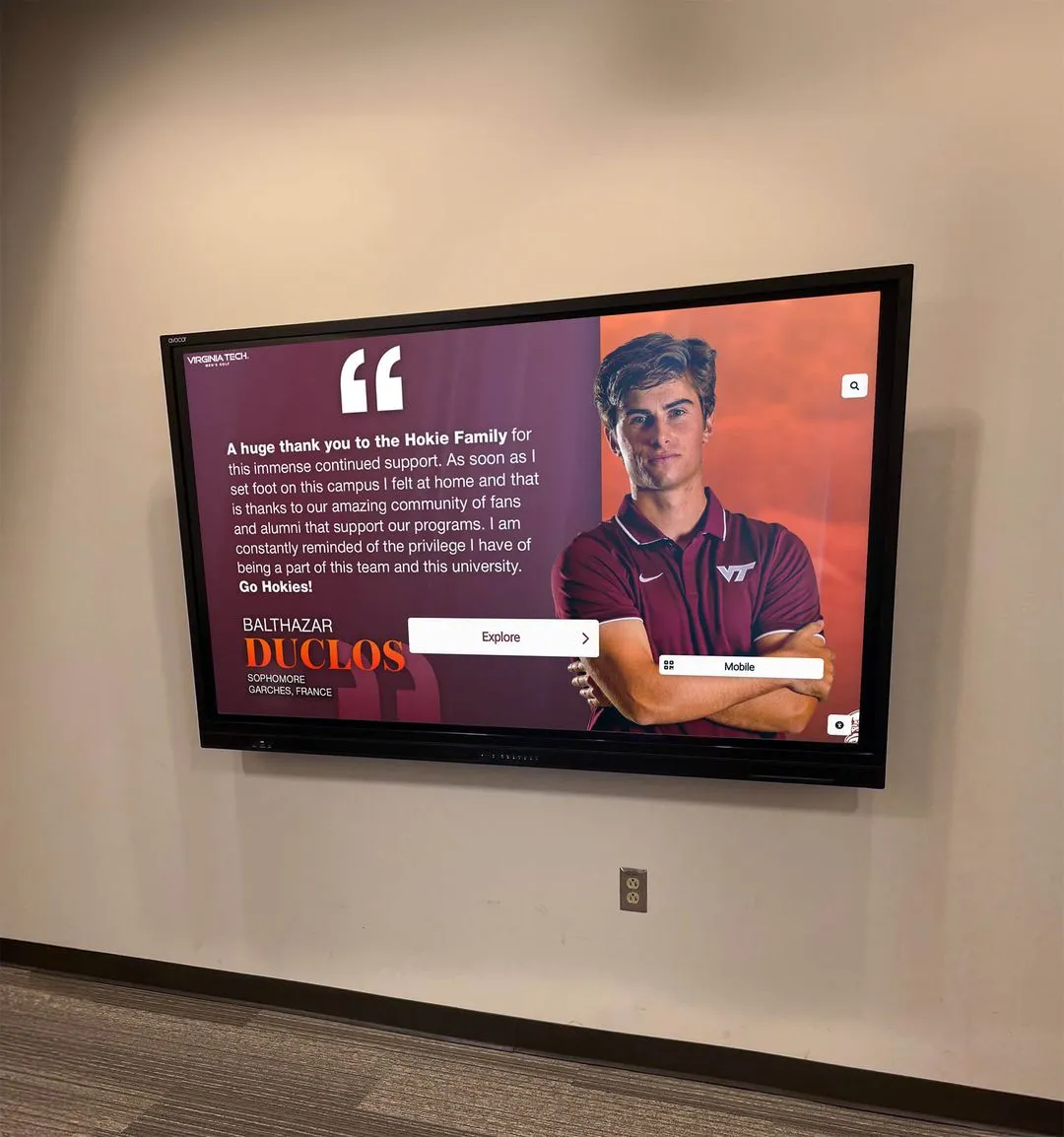
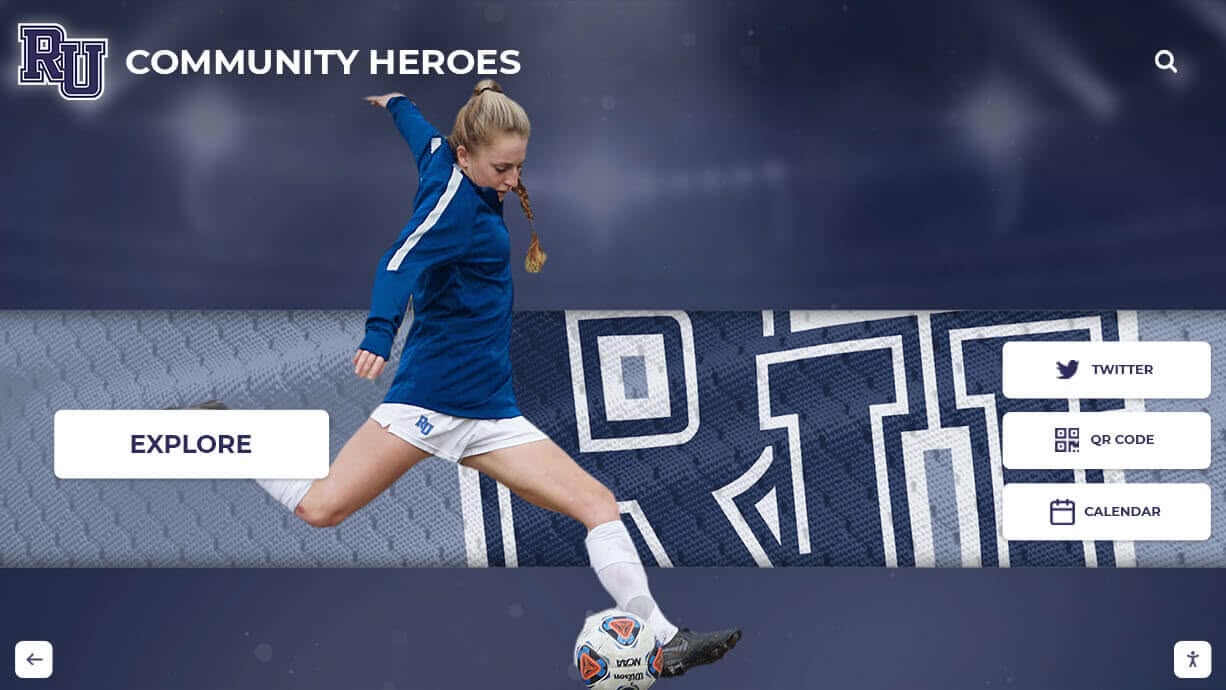
Interactive displays provide engaging platforms for showcasing women's soccer all-star achievements year-round
Academic All-State Programs
Many state associations maintain academic all-state programs celebrating athlete-scholars who achieve both competitive and classroom excellence. These programs typically require minimum GPA thresholds (commonly 3.5 or higher), varsity letter or significant playing time requirements, coach nomination and recommendation, and character standards ensuring honorees represent programs positively.
Academic recognition complements athletic all-star selections, sending important messages that programs value complete athlete development rather than exclusive focus on competitive achievement.
Collegiate All-American Selection
Collegiate all-American recognition follows more standardized national processes administered by coaching associations and media organizations.
NCAA Division All-American Teams
The United Soccer Coaches organization coordinates NCAA women’s soccer All-American teams across all divisions, with selections based on:
- Statistical performance and achievement throughout seasons
- Team success and individual contributions to program excellence
- Regional advisory committee input from coaches nationwide
- Final national committee selections determining All-American honors
- First Team, Second Team, and Third Team recognition levels
Different NCAA divisions maintain separate All-American teams, acknowledging that competitive contexts vary significantly across Division I, II, and III levels where program resources, athletic scholarship rules, and competitive intensities differ substantially.
Conference All-Star Recognition
Most conferences maintain comprehensive all-star programs honoring excellence within their competitive membership, with selections following season-ending conference tournaments and regular season completion. Conference recognition often serves as preliminary step toward All-American consideration, with conference standouts forming candidate pools for national honors.
Creating Comprehensive Recognition Displays
Once all-star selections occur, effective display systems ensure that achievements receive appropriate visibility while remaining accessible and engaging for diverse audiences.
Traditional Physical Recognition Approaches
Physical displays maintain appeal for their tangible permanence and traditional aesthetics that resonate particularly with older generations.
Wall-Mounted Plaque Systems
Many programs implement wall-mounted plaques acknowledging all-star selections, with each honoree receiving individual recognition documenting athlete name and graduation year, specific all-star honor achieved, season or year of recognition, sport and position played, and possibly career statistics or additional achievements.
Quality plaque installations communicate program commitment through consistent formatting maintaining professional appearance, prominent placement in high-visibility athletic facility locations, regular maintenance ensuring displays remain clean and well-presented, and systematic updates adding new recognitions promptly.
However, physical plaques face inherent limitations including finite wall space eventually requiring difficult decisions about expansion or discontinuation, recurring fabrication and installation costs for each new honoree, limited information capacity restricting storytelling to basic facts, and update delays creating gaps between achievement and physical recognition.
Modern Digital Recognition Solutions
Digital platforms address traditional limitations while adding powerful engagement capabilities that transform how programs celebrate women’s soccer all-stars.
Unlimited Recognition Capacity
Digital recognition displays eliminate space constraints that plague physical systems. Every all-star throughout program history receives comprehensive recognition regardless of when they competed—no forced choices about whose achievements get displayed based on limited wall space.
This unlimited capacity proves particularly valuable for programs with extensive histories where decades of all-stars deserve recognition, or programs experiencing growth where increasing participation generates expanding all-star populations deserving acknowledgment.
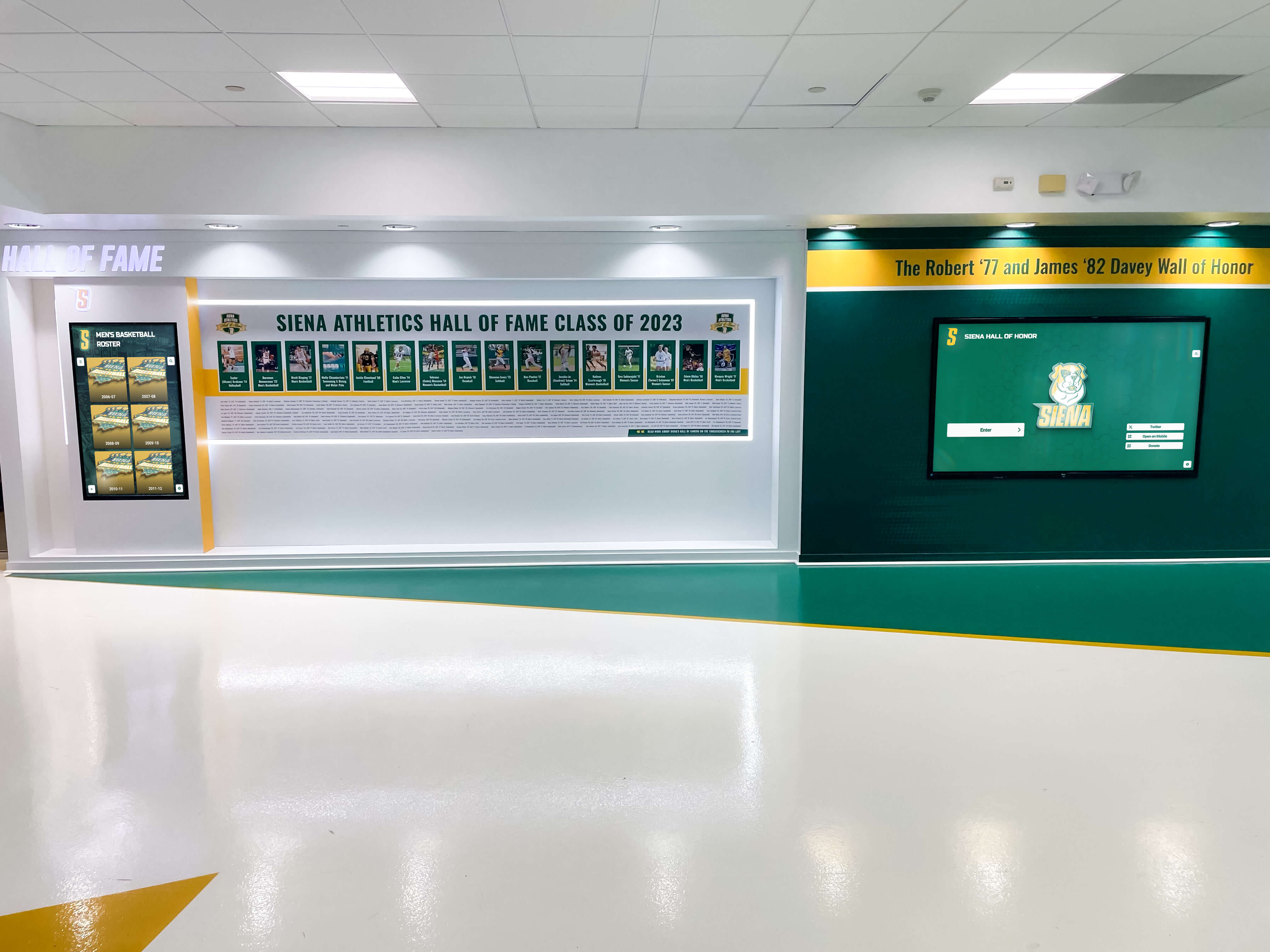
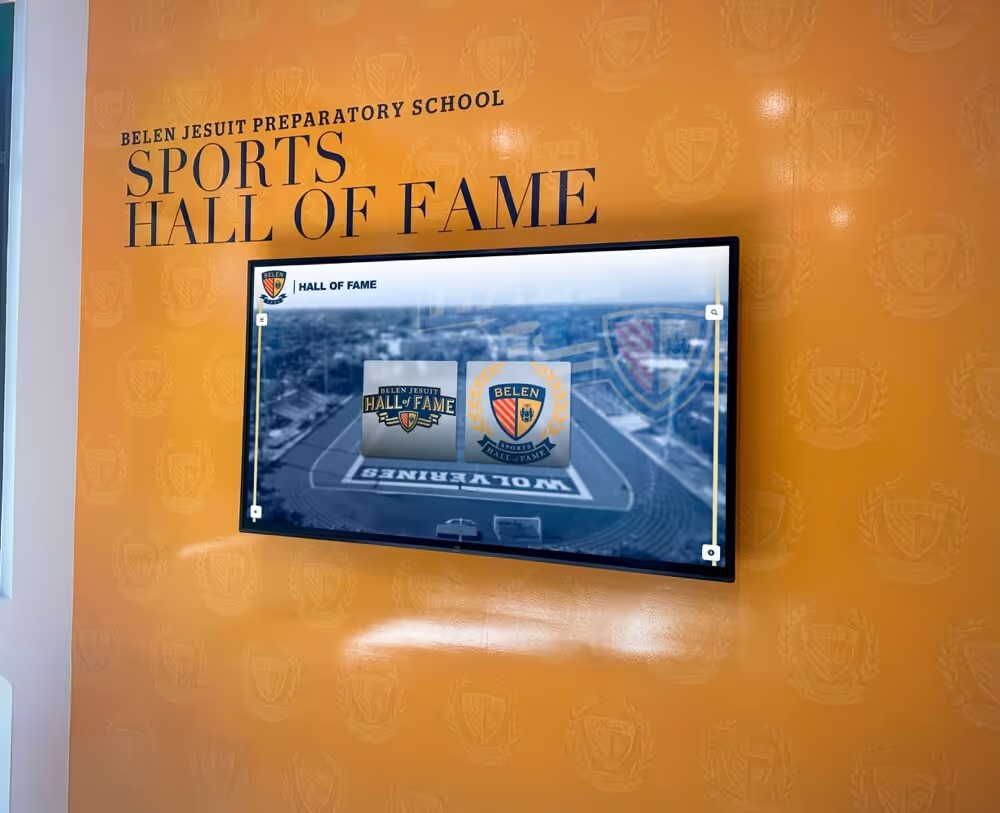
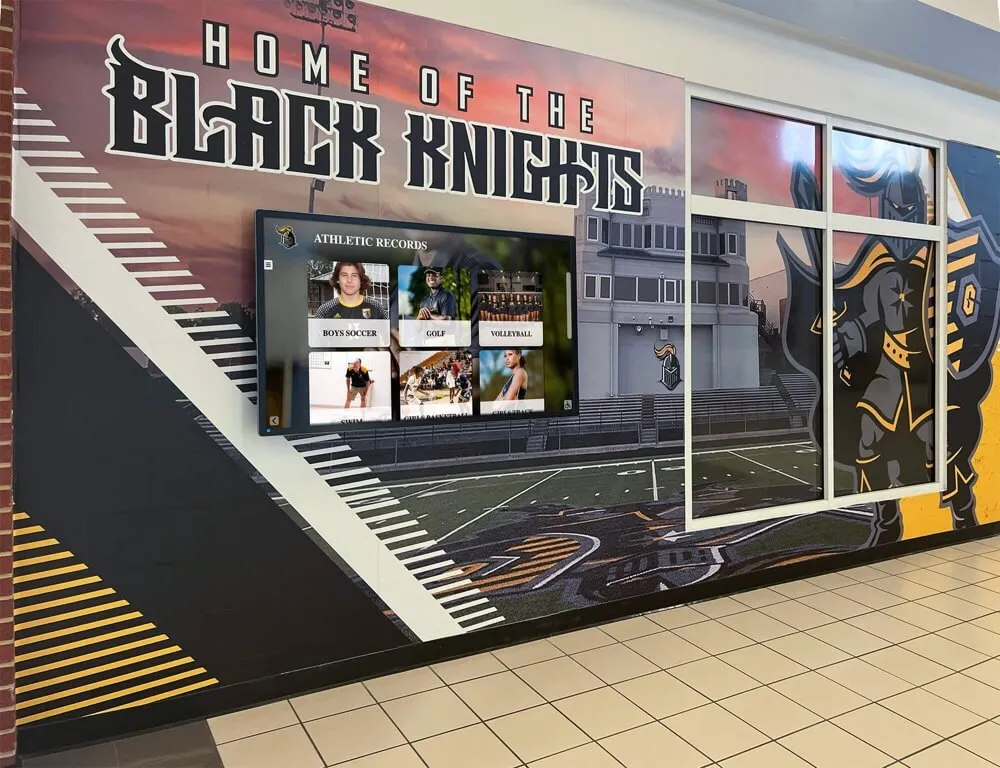
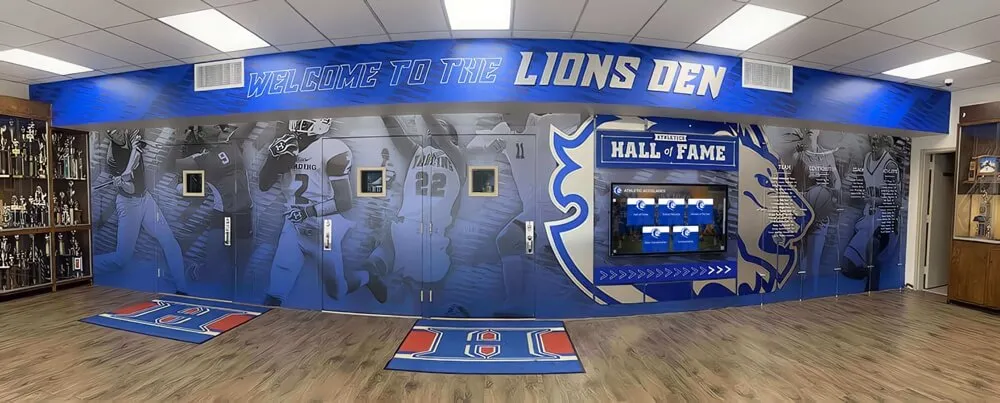
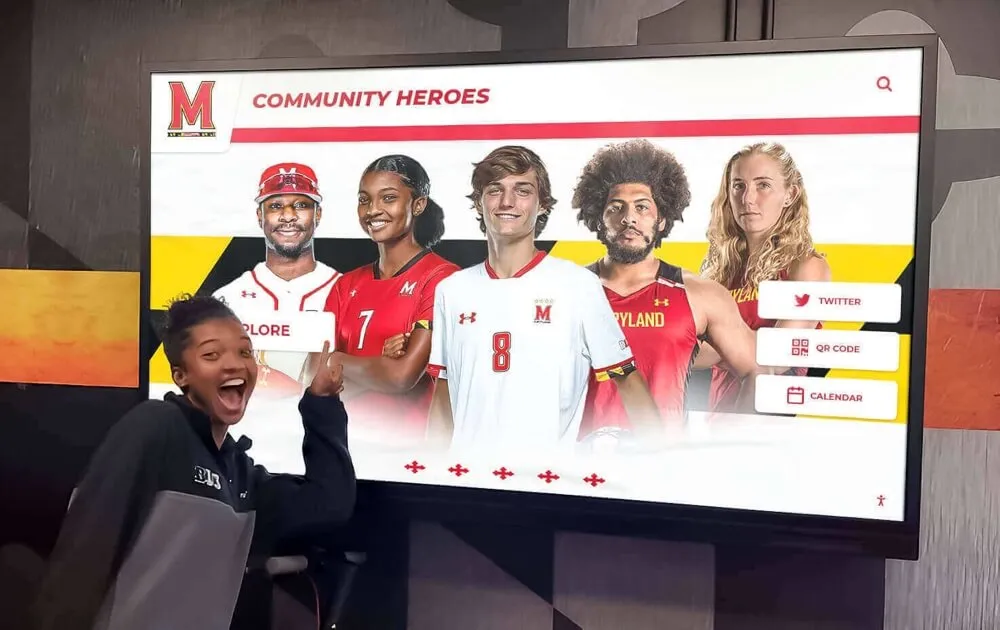
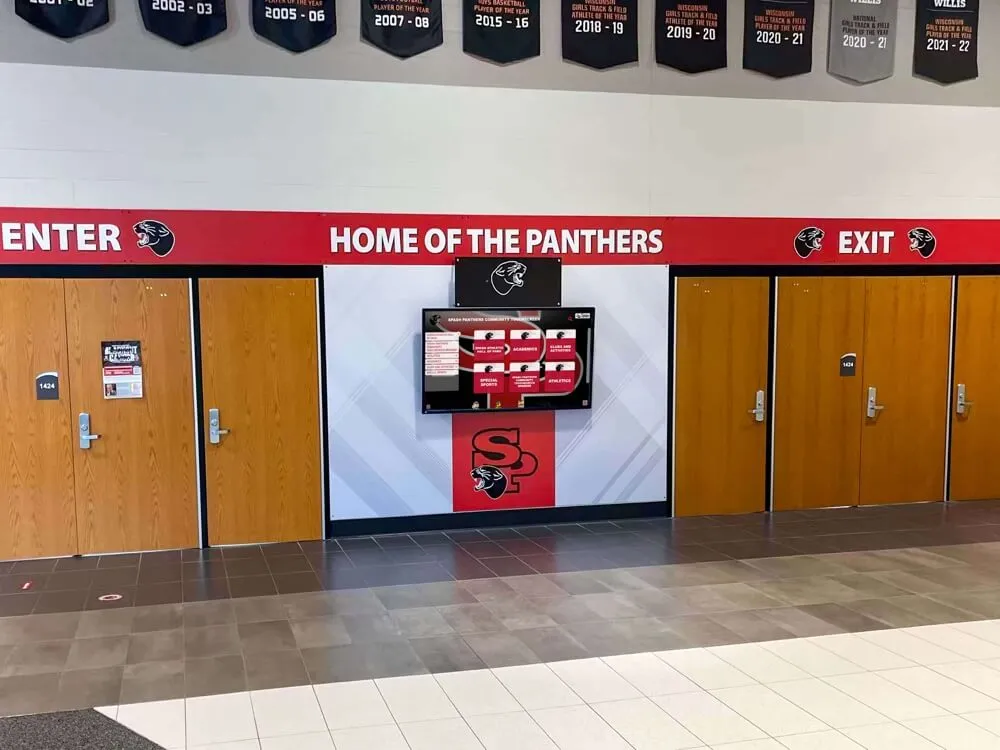
Modern recognition displays integrate women's soccer achievements alongside comprehensive multi-sport celebration
Rich Multimedia Storytelling
Digital systems support content impossible for traditional displays:
- Photo Galleries: Multiple action shots documenting playing careers, award ceremony images capturing recognition moments, team photographs showing championship squads, and candid images reflecting athlete personalities and program culture
- Video Highlights: Game footage showing signature plays and memorable goals, championship match highlights preserving historic achievements, skills demonstrations showcasing technical excellence, and player interviews providing personal perspectives
- Comprehensive Statistics: Career statistics documenting complete playing records, single-season bests highlighting peak performances, school records held showing lasting excellence, and comparative statistics providing historical context
- Detailed Narratives: Biographical information about athletes’ backgrounds and development, descriptions of what made players special beyond statistics, coach testimonials explaining unique contributions, and post-graduation updates showing continued success
Solutions like Rocket Alumni Solutions provide purpose-built platforms specifically designed for athletic recognition, with sport-specific templates optimizing women’s soccer content presentation, proven reliability across educational athletic installations, and comprehensive content management tools enabling non-technical staff to maintain recognition easily.
Interactive Exploration Features
Touchscreen interfaces transform passive viewing into active exploration where visitors control their experience:
- Search by athlete name enabling quick location of specific individuals
- Filter by graduation year to explore particular eras or classes
- Position-specific browsing for forwards, midfielders, defenders, or goalkeepers
- Achievement type filtering showing all-conference, all-state, or All-American selections
- Team championship connections linking individual all-stars to team success
This interactivity proves particularly engaging for recruiting visits when prospective athletes and families explore program history, reunion events where alumni locate themselves and teammates, and daily facility usage when current athletes research program traditions and competitive standards.
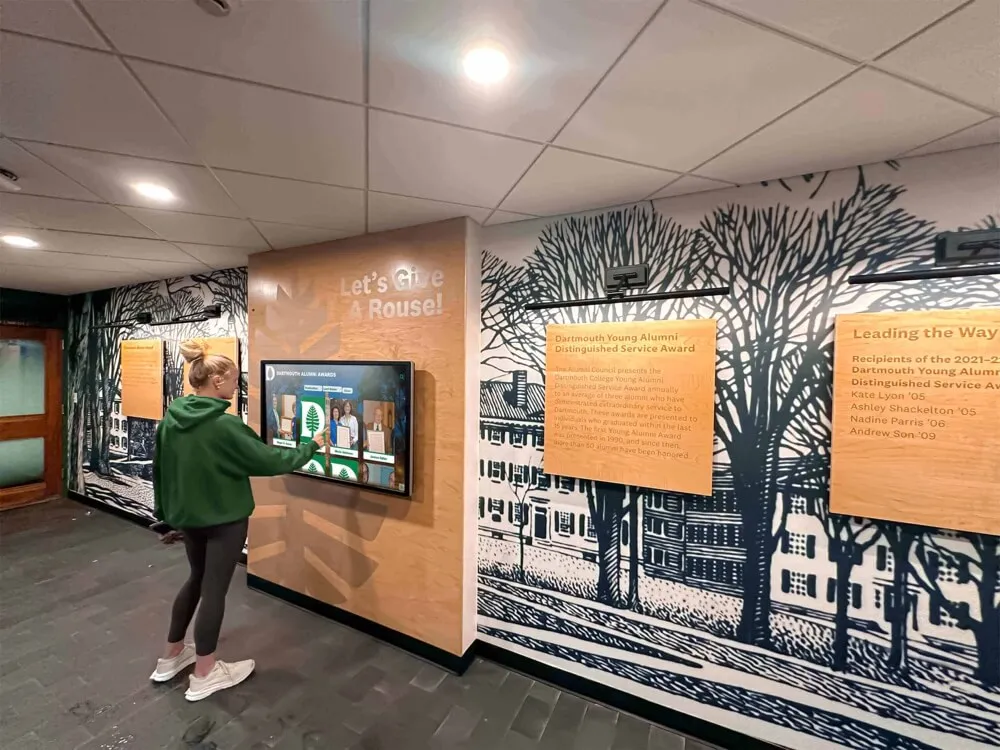
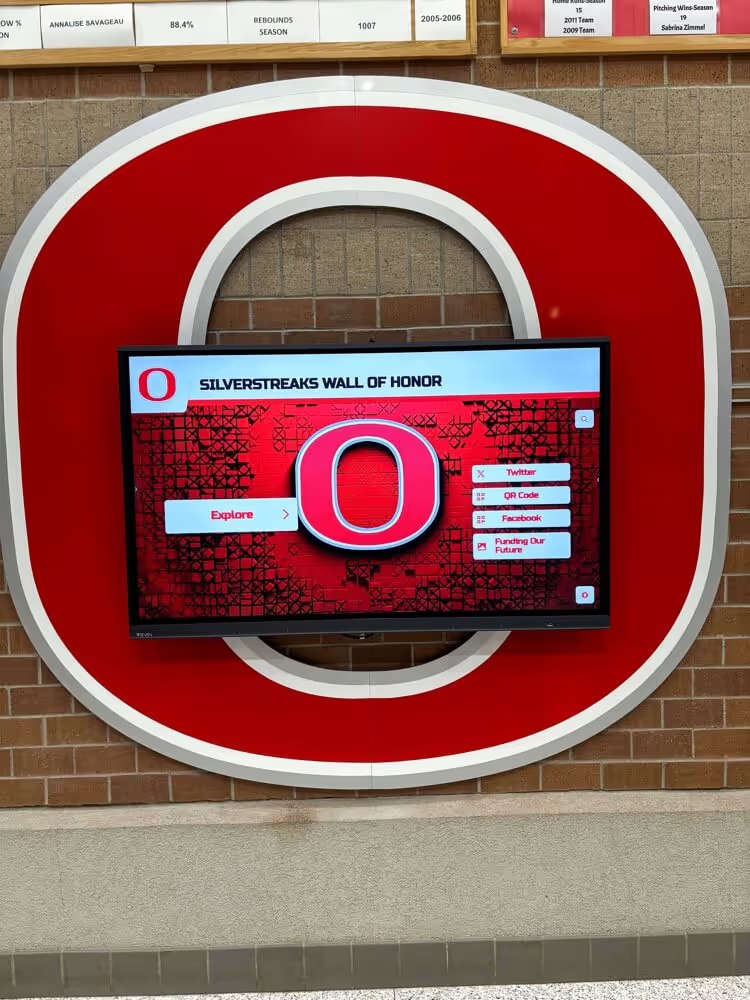
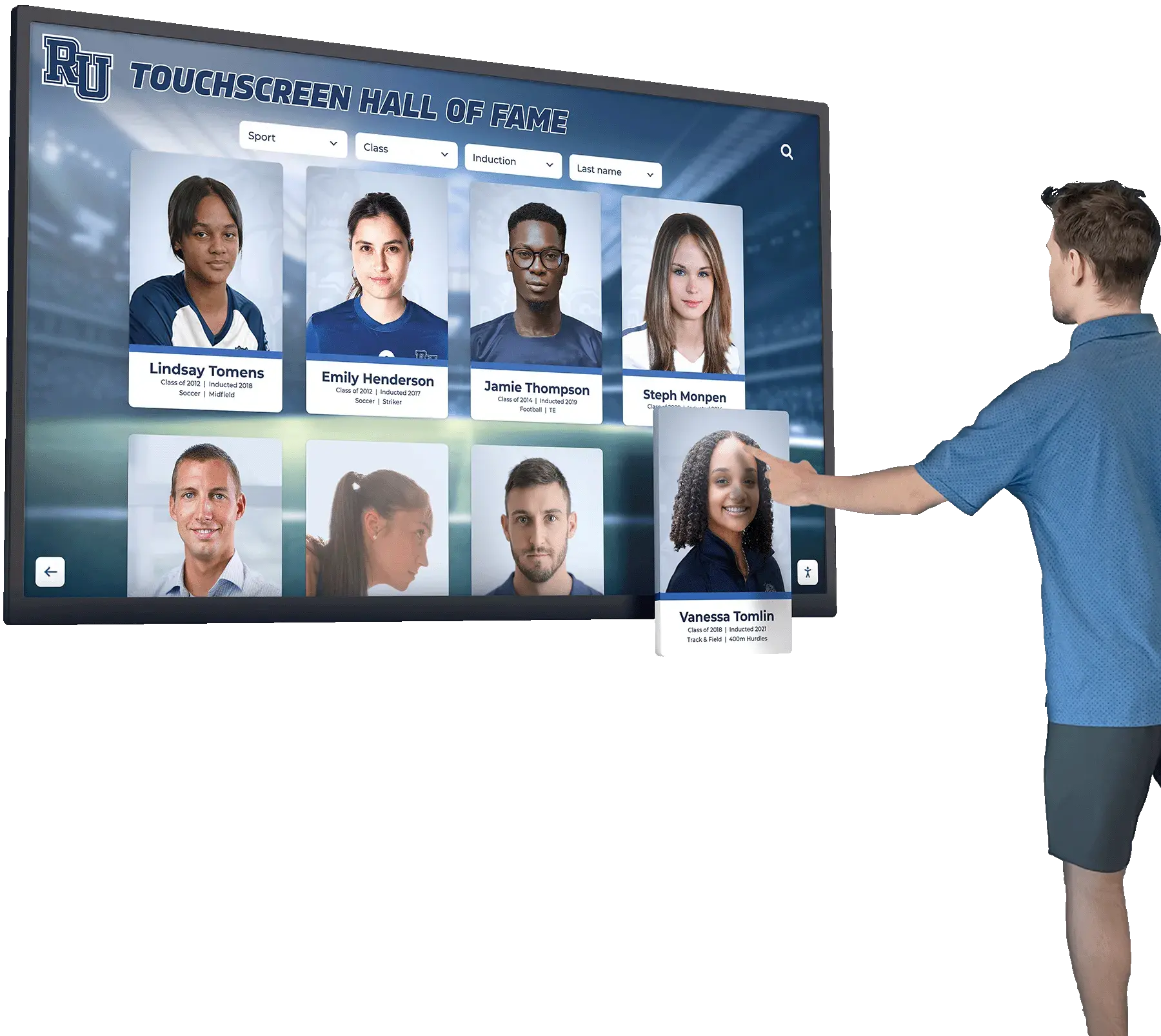
Interactive touchscreens enable engaging exploration of women's soccer all-star achievements across program history
Hybrid Recognition Strategies
Many programs discover that combining traditional and digital elements creates the most effective recognition serving diverse preferences:
- Feature displays highlighting recent all-stars through traditional plaques
- Comprehensive digital systems providing complete historical documentation
- QR codes on physical plaques linking to expanded digital profiles
- Seasonal rotations emphasizing current year achievements while maintaining historical access
- Sport-specific physical displays supplemented by facility-wide digital comprehensive recognition
This balanced approach honors traditionalist preferences for tangible recognition while solving capacity and updating limitations through digital supplementation providing depth that physical displays alone cannot achieve.
Content Development for All-Star Profiles
Display quality depends fundamentally on content quality—comprehensive profiles that appropriately honor athletes while engaging audiences effectively.
Essential Profile Components
Complete all-star profiles should include multiple information categories documenting achievement comprehensively.
Athletic Achievement Documentation
- All-Star Honors: Specific recognition received (All-Conference, All-State, All-American), year(s) honored, position played, and selection committee or organization
- Career Statistics: Goals scored across high school or collegiate career, assists provided creating scoring opportunities, games started or played showing consistent contribution, and goalkeeper statistics if applicable (saves, shutouts, goals against average)
- Team Success Connections: Championship teams participated in, tournament achievements and advancement, conference championships won, and program records or milestones achieved
- Special Recognition: Team captain or leadership roles, Sportsmanship awards or character recognition, tournament MVP or all-tournament selections, and statistical achievement awards (leading scorer, etc.)
Biographical Context
Effective profiles include personal elements that make recognition meaningful:
- Hometown and high school or club team background
- Academic honors and classroom achievement
- Multi-sport participation if applicable
- Position progression showing development across career
- Playing style descriptions or coach testimonials
- Memorable moments or signature achievements
- Post-graduation plans or continued athletic participation
This comprehensive documentation creates engaging profiles that honor complete athletic identities rather than reducing careers to statistics alone.
Historical Research and Documentation
Programs implementing comprehensive all-star recognition often discover that historical records lack completeness or accessibility, complicating efforts to honor athletes from earlier eras appropriately.
Systematic Information Gathering
Historical research requires accessing multiple information sources:
- Institutional Records: Athletic department files and historical documentation, yearbooks documenting teams and individual recognition, program records maintained by long-time coaches or administrators, and newspaper archives covering games and postseason honors
- State Association Records: All-state team rosters if maintained historically, championship tournament documentation, and statistical leaders if tracked
- Alumni Outreach: Direct contact with former players requesting information and photographs, social media groups for graduating classes or specific eras, reunion events creating opportunities for historical gathering, and family contacts for athletes who are deceased
This distributed research proves time-intensive but essential for recognition systems honoring program history comprehensively rather than privileging recent decades where information exists readily in digital formats.
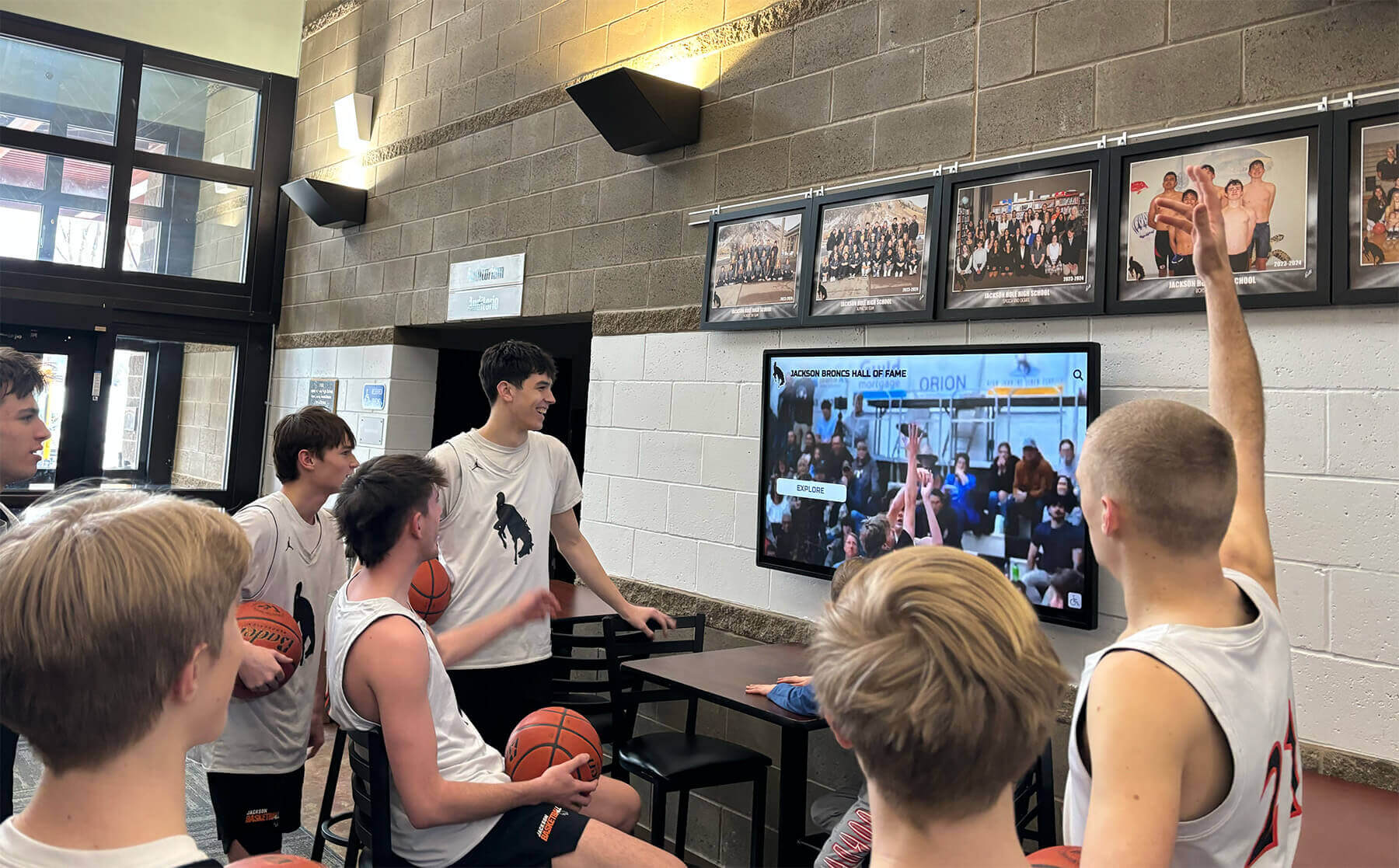
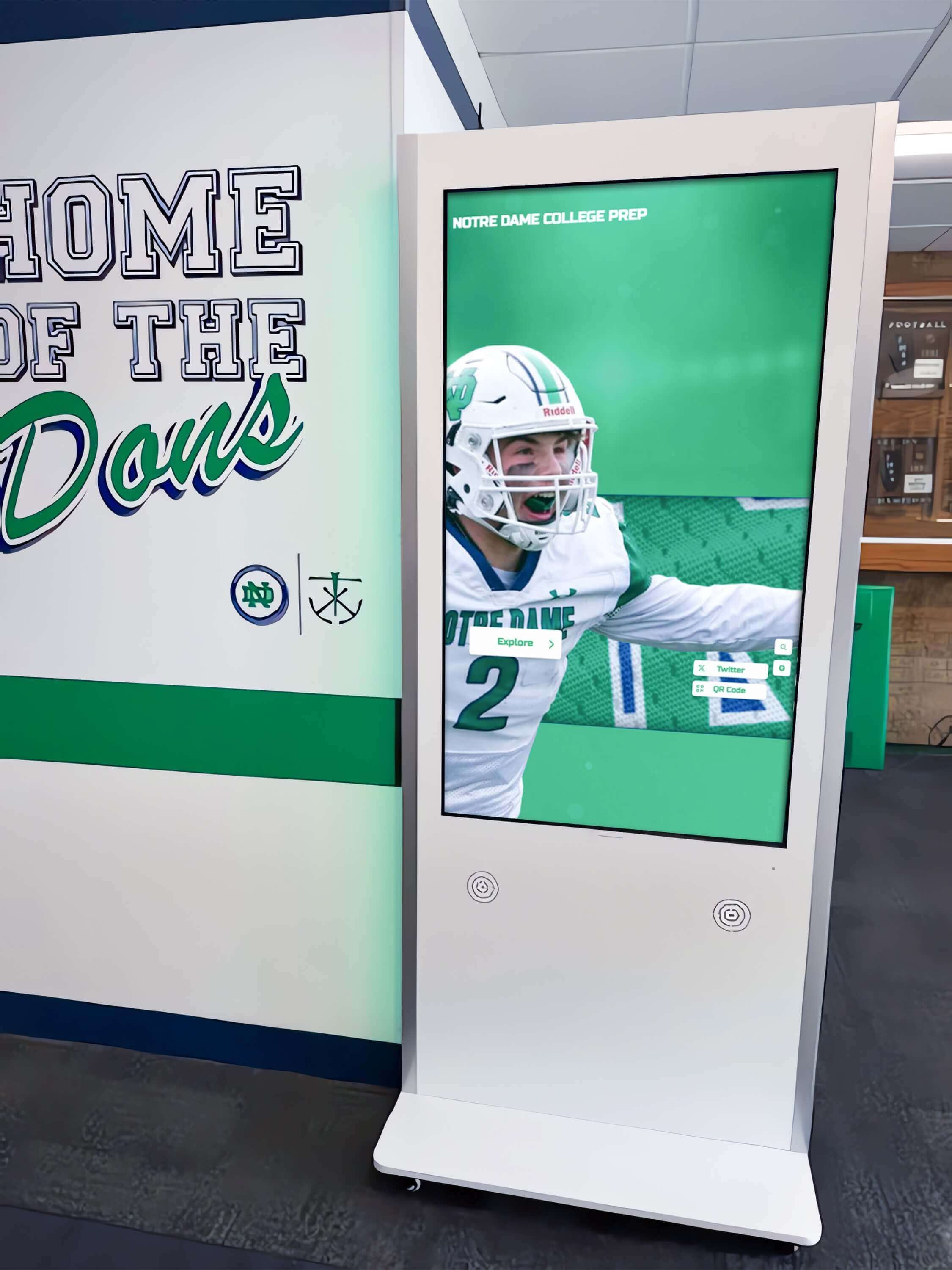
Digital displays create natural gathering points where athletes and families explore recognition and program history
Addressing Information Gaps
Historical documentation inevitably contains gaps where information has been lost to time or never got recorded systematically. Rather than delaying recognition until perfect information materializes, effective approaches include recognizing athletes with available information while noting data limitations, continuing research that enables future enhancements as additional information emerges, and alumni crowdsourcing inviting community assistance filling historical gaps.
This progressive approach ensures athletes receive recognition promptly rather than waiting indefinitely for historical research that may never produce complete information.
Integration with Broader Recognition Programs
Women’s soccer all-star recognition achieves maximum impact when integrated thoughtfully into comprehensive athletic recognition systems rather than existing as isolated celebration.
Multi-Sport Recognition Coordination
Schools and organizations typically sponsor multiple athletic programs beyond women’s soccer, creating opportunities for coordinated recognition approaches.
Facility-Wide Recognition Systems
Athletic history displays that integrate all-star recognition across all sports provide several advantages:
- Shared infrastructure reducing per-sport implementation costs
- Consistent recognition standards ensuring equity across programs
- Unified visitor experience rather than disconnected sport-specific displays
- Efficient content management through centralized administrative processes
- Cross-sport visibility where athletes competing in multiple sports receive comprehensive recognition
Digital platforms particularly enable this integrated approach through unlimited capacity accommodating all sports without space competition, filtering and navigation allowing sport-specific exploration within comprehensive systems, and consistent interfaces maintaining recognition quality across different athletic programs.
Equity and Balance in Multi-Sport Recognition
When integrating women’s soccer into broader recognition, programs must actively ensure equitable treatment:
- Monitor recognition distribution tracking whether all sports receive proportional acknowledgment
- Apply consistent criteria avoiding sport-specific standards that favor certain programs
- Ensure visibility equity where women’s soccer achievements receive prominence comparable to other sports
- Provide equal content quality with similar photo quality, information depth, and multimedia richness
- Maintain update consistency where all sports receive timely recognition rather than systematic delays for specific programs
This deliberate equity proves particularly important for women’s sports which historically received less institutional support and visibility compared to men’s programs. Modern recognition systems provide opportunities to demonstrate values through equal celebration.
Team Achievement Recognition
While individual all-star selections receive primary focus, team achievements deserve complementary recognition acknowledging that individual excellence occurs within collective contexts.
Championship Team Documentation
Conference championship teams, state tournament qualifiers and champions, regional or national tournament participants, and undefeated or record-setting seasons deserve comprehensive team recognition that includes complete rosters with all athletes acknowledged regardless of all-star status, coaching staff recognition crediting leadership, statistical summaries documenting team performance, season narratives telling complete competitive stories, and key game highlights preserving memorable victories.
This team recognition ensures that all squad members receive acknowledgment for contributions while providing context for individual all-star selections showing how personal excellence connected to team success.

Integrated recognition systems celebrate individual all-stars alongside team championships and program achievements
Academic and Character Recognition
Comprehensive athlete recognition extends beyond competitive achievement to acknowledge well-rounded excellence.
Programs should complement all-star athletic recognition with academic all-star or scholar-athlete programs celebrating classroom excellence, character awards recognizing sportsmanship and leadership, community service acknowledgment honoring athletes contributing beyond competition, and student-athlete of the year recognition integrating multiple excellence dimensions.
This comprehensive recognition sends important messages that programs value complete development rather than exclusively competitive performance—particularly important for young female athletes developing identities and priorities during formative years.
Sustaining Recognition Programs Long-Term
Initial implementation represents just the beginning—sustainable programs require ongoing management and regular updates maintaining relevance and accuracy.
Establishing Update Workflows
Systematic processes prevent recognition from becoming outdated through administrative neglect.
Annual Recognition Cycles
Effective programs establish predictable annual rhythms:
- Season Conclusion: Document all-star selections immediately following postseason
- Content Development: Gather photographs, statistics, and biographical information
- Profile Creation: Develop comprehensive athlete profiles with complete achievement documentation
- Publication: Add new recognition to displays within weeks of season conclusion
- Announcement: Publicly celebrate newly recognized athletes through multiple channels
- Archive Maintenance: Ensure historical recognition remains accurate and accessible
Administrative Responsibilities
Clear role assignments prevent assumption gaps where everyone thinks someone else handles recognition:
- Athletic directors providing oversight and approval
- Coaches submitting information about all-star selections from their teams
- Sports information or marketing staff developing content and managing displays
- Technology coordinators handling digital system updates or vendor coordination
- Student assistants or volunteers supporting information gathering under supervision
Written responsibility documentation ensures recognition receives systematic attention rather than sporadic effort when individuals happen to remember or have available time.
Technology Maintenance and Support
Digital recognition systems require technical maintenance ensuring reliable operation and professional presentation.
Cloud-Based Platform Advantages
Modern recognition platforms operate through cloud-based systems providing several sustainability advantages:
- Automatic software updates ensuring security and feature improvements
- Remote access enabling updates from any location without physical display access
- Redundant data storage protecting against information loss
- Vendor-provided technical support reducing internal IT burden
- Device-independent management allowing staff turnover without expertise loss
These cloud capabilities prove particularly valuable for educational institutions where staff transitions frequently and technical expertise varies across athletic department personnel.
Hardware Maintenance Requirements
Physical display equipment requires periodic maintenance including screen cleaning maintaining professional appearance, hardware monitoring identifying failing components before complete failures, network connectivity verification ensuring displays remain online, and environmental monitoring protecting equipment from temperature or humidity extremes.
Many programs establish quarterly maintenance schedules ensuring systematic attention rather than reactive responses only after visible problems emerge.
Measuring Recognition Program Impact
Effective programs evaluate performance systematically, gathering evidence that recognition delivers value justifying ongoing investment.
Engagement Metrics and Analytics
Digital platforms provide detailed analytics revealing how stakeholders interact with recognition.
Usage Statistics
Track recognition display engagement through total interaction sessions showing how many people actively explore content, average session duration indicating depth of engagement, most-viewed athletes or achievements revealing interest patterns, search terms showing what information visitors seek, and repeat users suggesting sustained interest rather than one-time viewing.
These analytics help programs understand which content generates most interest, when displays receive heaviest usage, and how recognition systems get utilized—insights informing content strategy and display placement optimization.
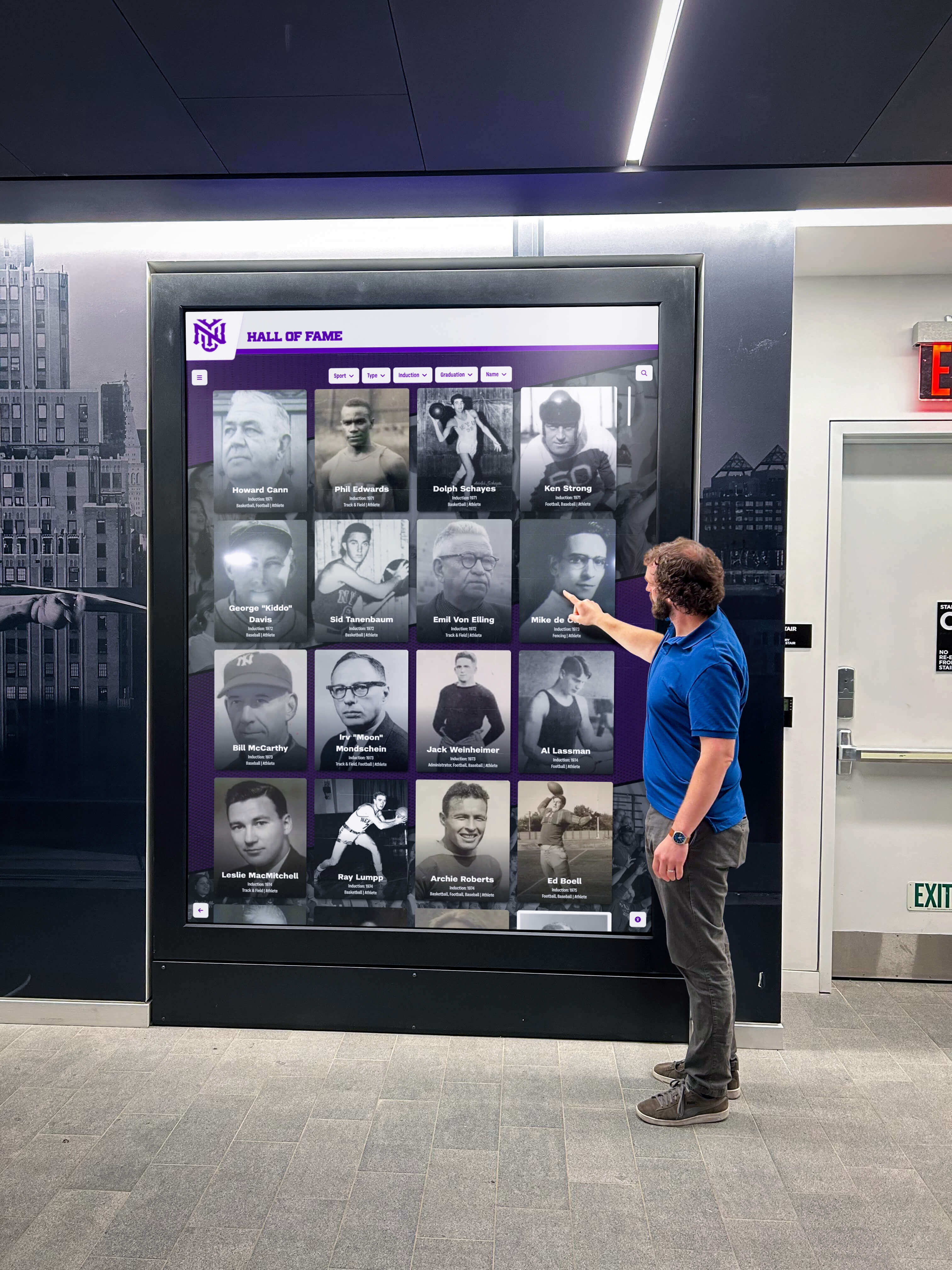
Analytics reveal how communities engage with recognition, informing program improvements and content strategy
Stakeholder Feedback
Systematic feedback collection reveals program effectiveness from diverse perspectives:
- Athletes: Do they find recognition meaningful? Feel it honors achievements appropriately? See it motivating continued excellence?
- Families: Appreciate recognition quality? Share recognition with extended networks? Influence program selection decisions?
- Coaches: Support recruiting efforts? Reduce or increase administrative burden? Strengthen program culture?
- Alumni: Maintain emotional connections to programs? Feel appropriately honored? Support programs financially or through volunteering?
Annual surveys or periodic focus groups provide structured feedback informing continuous improvement while demonstrating that programs value stakeholder perspectives.
Program Outcome Indicators
Beyond direct recognition metrics, assess whether recognition contributes to broader program objectives:
- Participation rates and retention showing whether recognition helps maintain enrollment
- Competitive success trends indicating whether recognition contributes to performance culture
- Recruiting success attracting talented athletes to programs
- Alumni engagement and giving supporting program development
- Community awareness and attendance at competitions
- Media coverage and program visibility
While isolating recognition’s specific causal impact proves difficult, tracking these outcomes alongside recognition implementation provides evidence about whether programs achieve intended objectives.
Conclusion: Honoring Excellence, Inspiring Futures
Women’s soccer all-star recognition represents far more than acknowledgment of past achievement—it creates cultures where excellence receives appropriate celebration, inspires current athletes toward their own all-star aspirations, demonstrates institutional values through equal recognition of female athletic achievement, and builds lasting connections between athletes, programs, and communities through shared celebration of soccer excellence.
The strategies explored in this guide provide frameworks for creating recognition programs that honor women’s soccer all-stars comprehensively while remaining sustainable across seasons and leadership transitions. From clear selection criteria ensuring credibility and fairness, to modern digital displays providing unlimited capacity and engaging multimedia storytelling, to systematic processes maintaining recognition quality long-term—these approaches enable programs at all levels to celebrate female soccer achievement appropriately.
Transform Your Women's Soccer Recognition
Discover how modern digital recognition solutions help you celebrate every all-star, honor complete program history, and build cultures where women's soccer excellence receives the visibility it deserves.
Explore Recognition SolutionsModern digital platforms eliminate the traditional barriers that once forced programs to choose which athletes received recognition based on limited physical display space. Every all-star throughout program history—from pioneering early players who built foundations to current standouts continuing traditions—receives comprehensive recognition through systems accommodating unlimited athletes with rich multimedia content that traditional plaques simply cannot provide.
Whether implementing new recognition programs from scratch, upgrading outdated physical displays no longer serving programs effectively, or enhancing existing systems with advanced capabilities, the opportunity exists to create women’s soccer all-star recognition that genuinely honors achievement while inspiring future excellence. Your all-stars’ dedication and accomplishments deserve celebration equal to any athletic pursuit—with thoughtful planning, appropriate technology, and sustained commitment, programs can create recognition systems that serve athletes, families, and communities for generations.
Ready to begin? Explore how Rocket Alumni Solutions provides comprehensive platforms specifically designed for athletic recognition, enabling sustainable celebration of women’s soccer all-stars that builds program pride and inspires continued excellence.