



Youth soccer coaching presents both extraordinary opportunities and unique challenges for volunteer coaches, school athletic directors, and recreational league coordinators tasked with developing young players. Effective youth soccer coaching extends far beyond teaching basic skills—it encompasses building positive team culture, developing age-appropriate training progressions, fostering genuine love for the game, and creating structured programs that serve players across all skill levels from recreational participants to competitive travel teams.
Yet many new coaches struggle with fundamental questions: Which drills actually develop skills versus merely keeping players busy? How do you balance competitive success with inclusive participation when rosters include vastly different ability levels? What practice structure maximizes development in limited weekly training time? Meanwhile, experienced coaches seek advanced strategies for tactical instruction, season planning frameworks, and program-building approaches that create sustainable excellence rather than isolated successful seasons.
This comprehensive guide provides essential youth soccer coaching tips spanning foundational coaching principles, age-appropriate drill progressions, effective practice planning, tactical instruction strategies, and long-term program development. Whether you’re a parent volunteering to coach your child’s first recreational team or an athletic director building a comprehensive middle school program, you’ll discover practical frameworks that transform coaching efforts into meaningful player development and positive athletic experiences.
The most successful youth soccer programs balance technical skill development with character formation, competitive opportunities with inclusive participation, and immediate season success with long-term player progression—creating environments where young athletes develop both soccer abilities and life skills that extend far beyond the field.

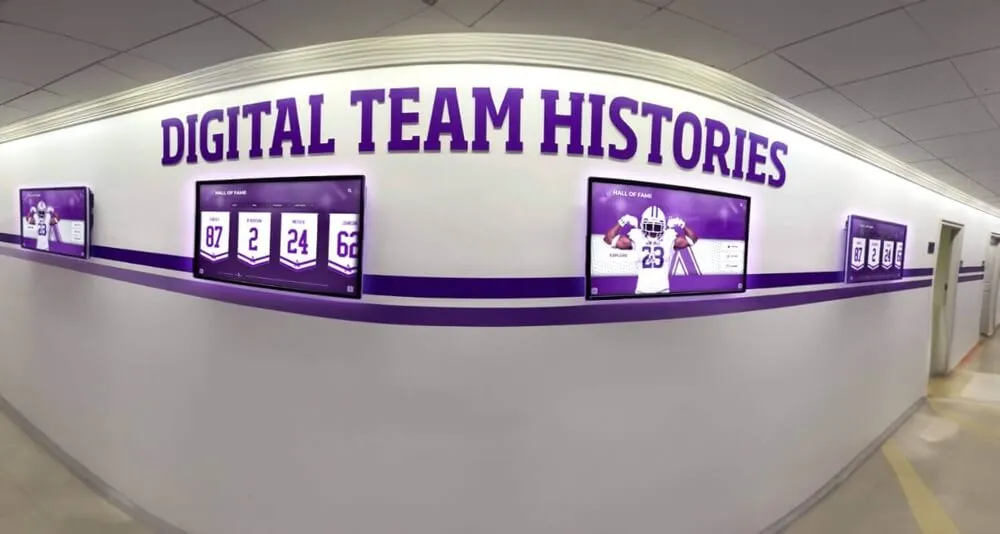
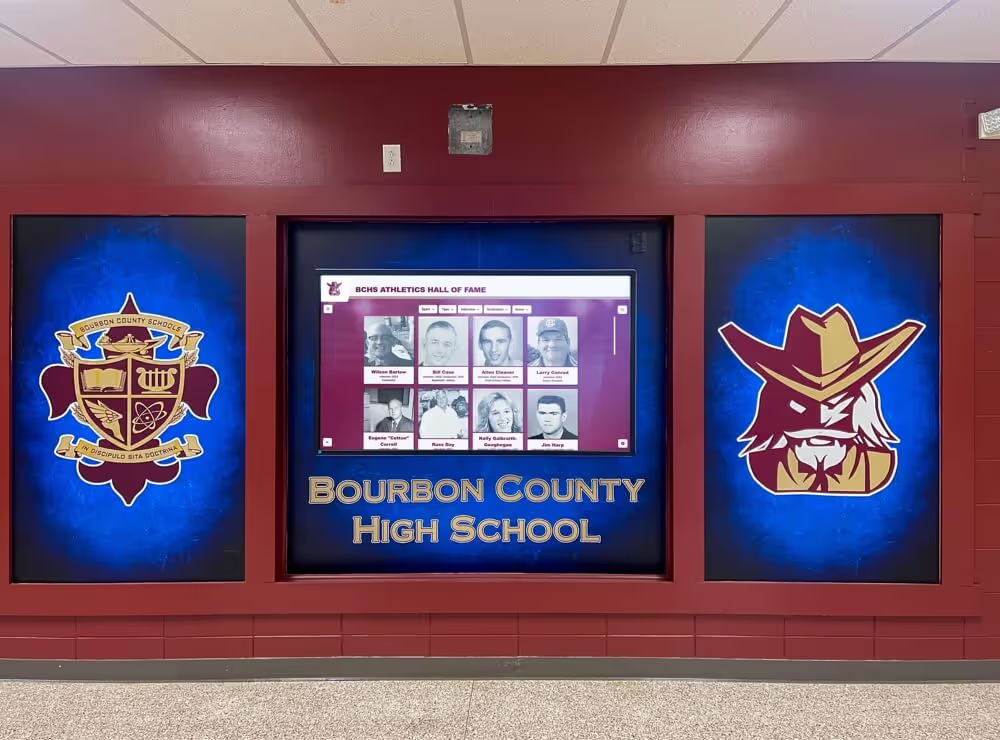
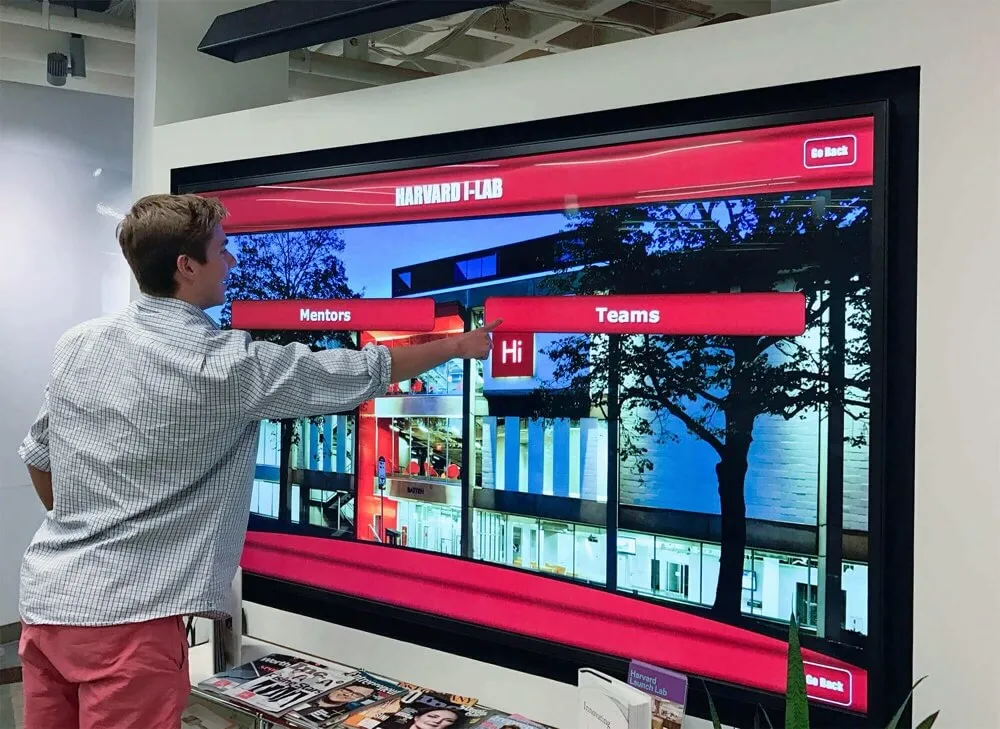
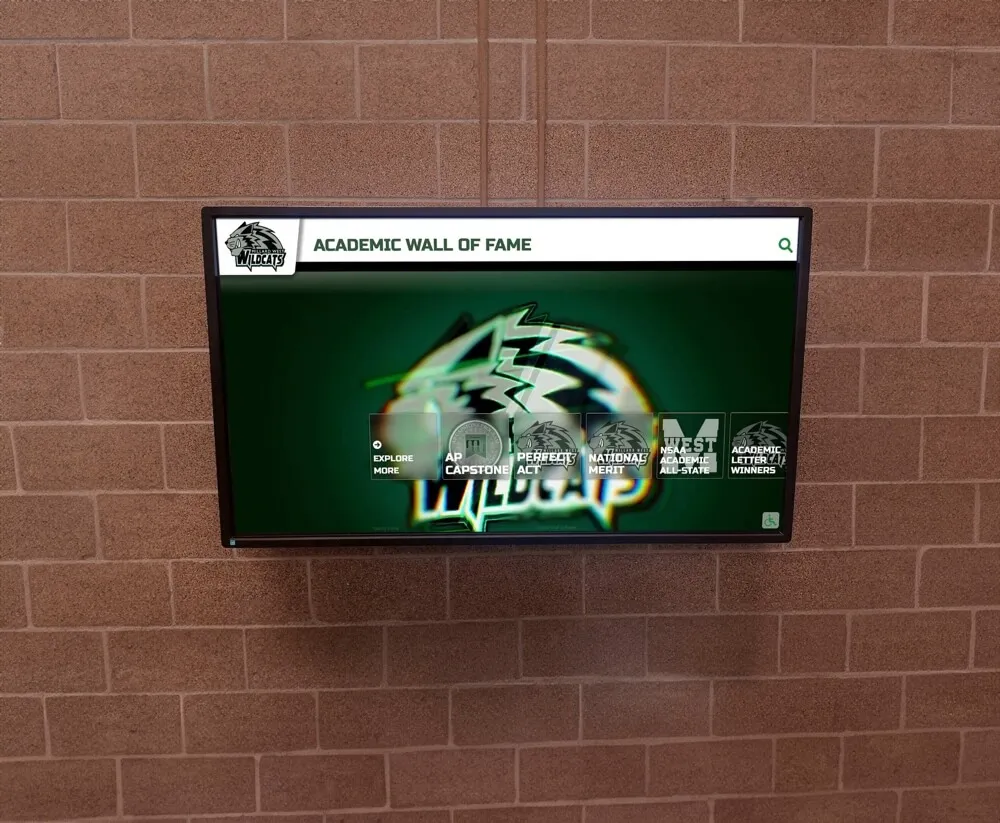
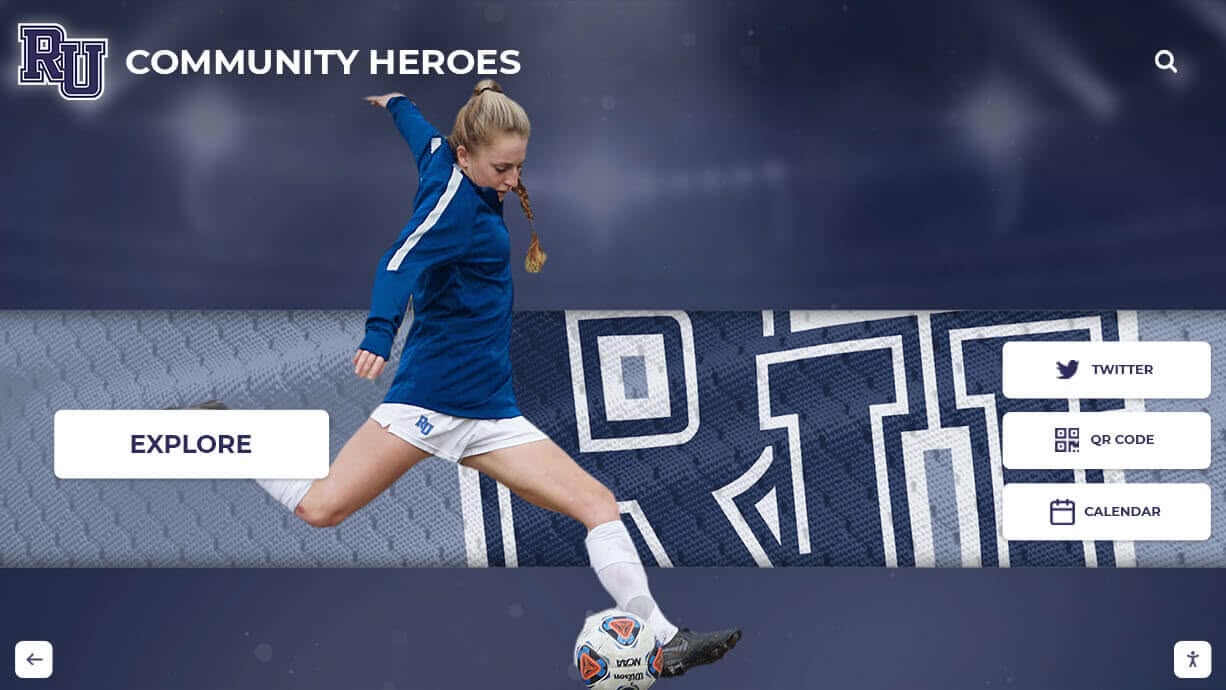
Modern recognition displays celebrate youth soccer achievements while inspiring continued participation and program pride
Foundational Principles for Effective Youth Soccer Coaching
Successful youth soccer coaching begins with understanding core principles that shape every practice decision, tactical approach, and program philosophy.
Age-Appropriate Development Understanding
Different age groups require fundamentally different coaching approaches aligned with cognitive development, physical capabilities, and attention span realities.
Ages 4-6 (Pre-K through Kindergarten)
Young players at this stage lack the cognitive development for positional concepts or complex tactical understanding. Effective coaching focuses on basic motor skill development including running, jumping, and balance exercises disguised as games, introduction to ball familiarity through individual activities, very short activity segments (3-5 minutes) before transitioning, and maximizing touches through small-sided games where every player constantly engages with the ball rather than watching from sidelines.
Avoid formal positions, complex drills requiring sequential steps, or expectations of tactical awareness. Success at this age means every child leaves practice smiling, develops basic comfort with soccer balls, and associates the sport with fun rather than frustration or boredom.
Ages 7-9 (Early Elementary)
Players develop improved coordination and can begin grasping basic tactical concepts. Appropriate coaching emphasis includes fundamental technical skills like dribbling, passing, and shooting with proper form, introduction to simple positional awareness (defenders stay back, forwards go forward), small-sided games (3v3 or 4v4) emphasizing decision-making with manageable complexity, and activities structured around 8-12 minute segments matching improved but limited attention spans.
Players begin understanding winning versus losing but still prioritize fun and social aspects over competitive outcomes. Balance skill development with game enjoyment, ensuring weaker players receive equal playing time and encouragement rather than competitive prioritization of stronger athletes.
Ages 10-12 (Late Elementary/Middle School)
Cognitive development allows for genuine tactical instruction and strategic thinking. Coaching can incorporate position-specific skill development, tactical concepts like width, depth, and support positioning, more complex drills requiring sequential decision-making and combination play, competitive elements while maintaining development focus for all players, and introduction to set pieces and basic team systems.
Players at this stage become increasingly competitive and status-conscious. Great coaching balances appropriate competition with continued emphasis on development over winning, ensures recognition extends beyond top performers to character qualities and effort, and maintains inclusive culture despite emerging skill differentiation. Resources on creative team awards beyond MVP provide frameworks for recognizing diverse contributions within competitive environments.
Ages 13+ (High School)
Players develop adult-like cognitive and physical capabilities enabling sophisticated tactical instruction. Coaching appropriately emphasizes advanced tactical systems and formations, position-specific technical mastery and specialized training, competitive focus balanced with continued skill refinement, mental game development including pressure management and focus training, and pathway guidance for college recruitment or competitive club advancement.
Effective high school coaching requires balancing competitive aspirations with realistic assessment of player potential, maintaining team cohesion despite significant skill differentiation, and ensuring seniors finishing athletic careers have positive final experiences regardless of playing time.
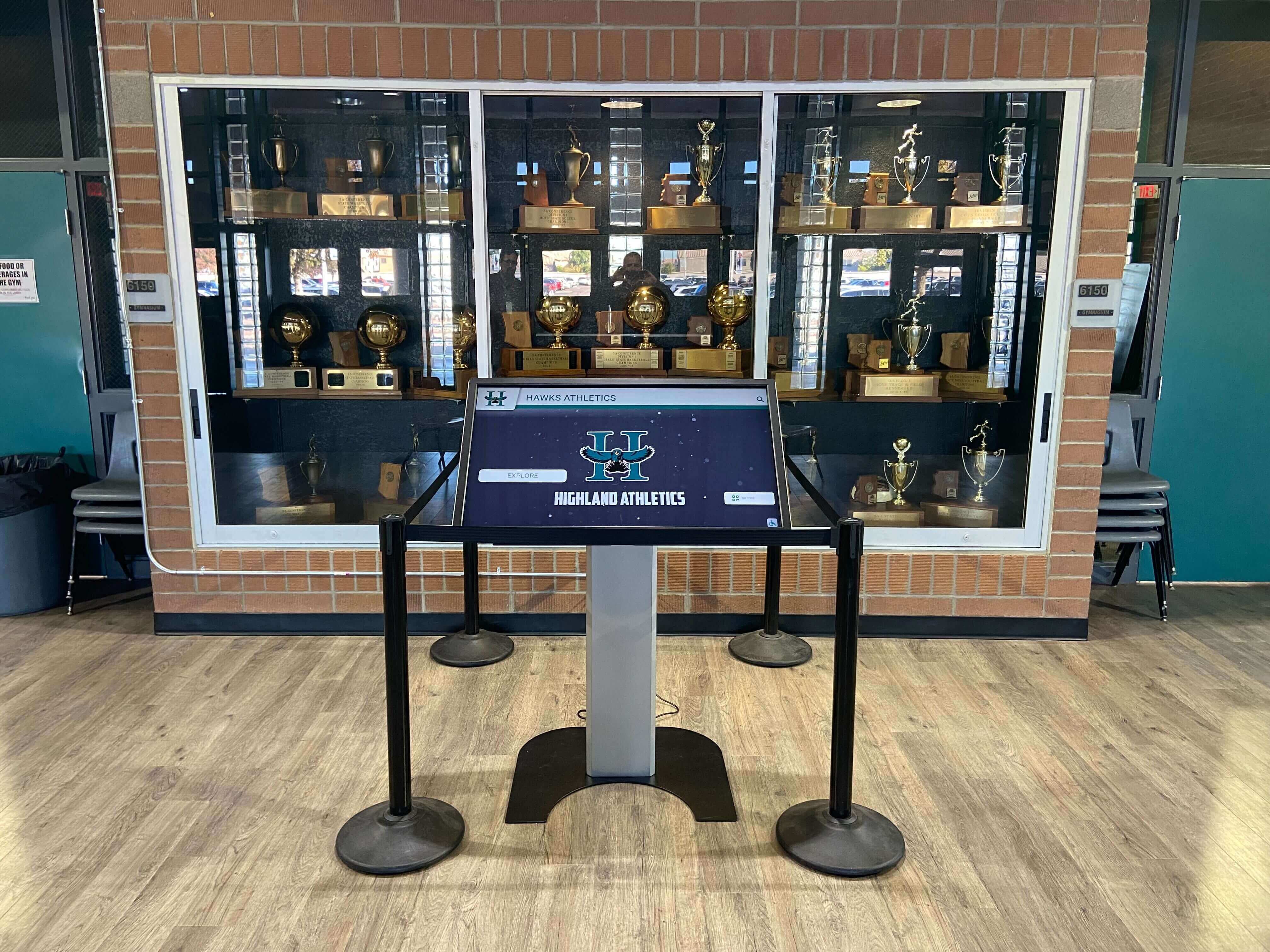
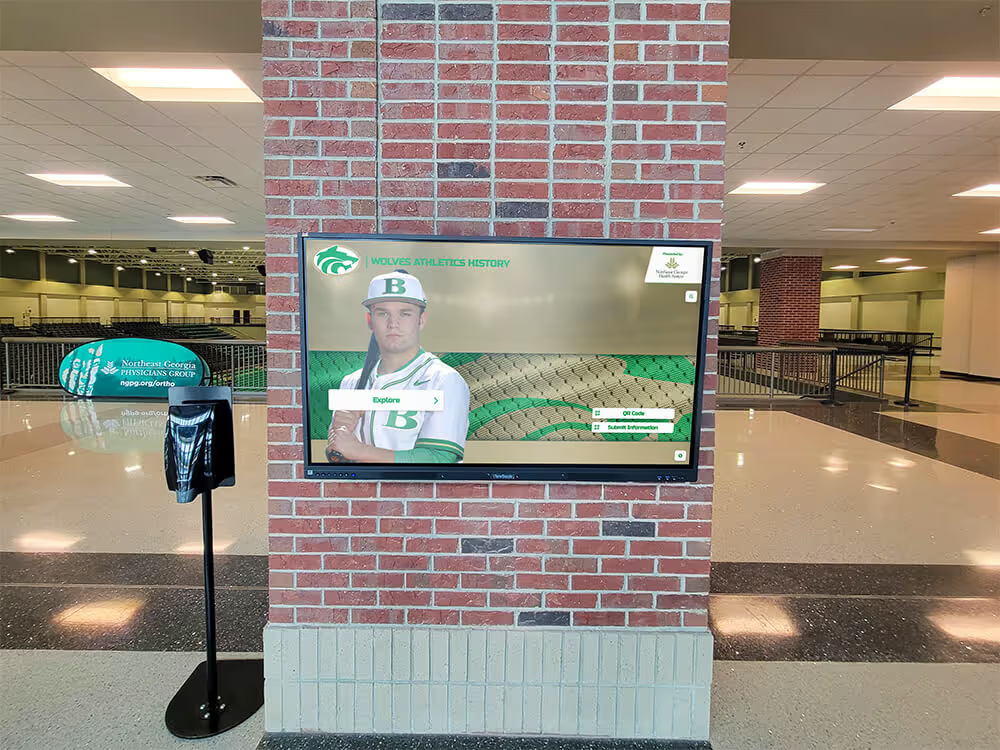
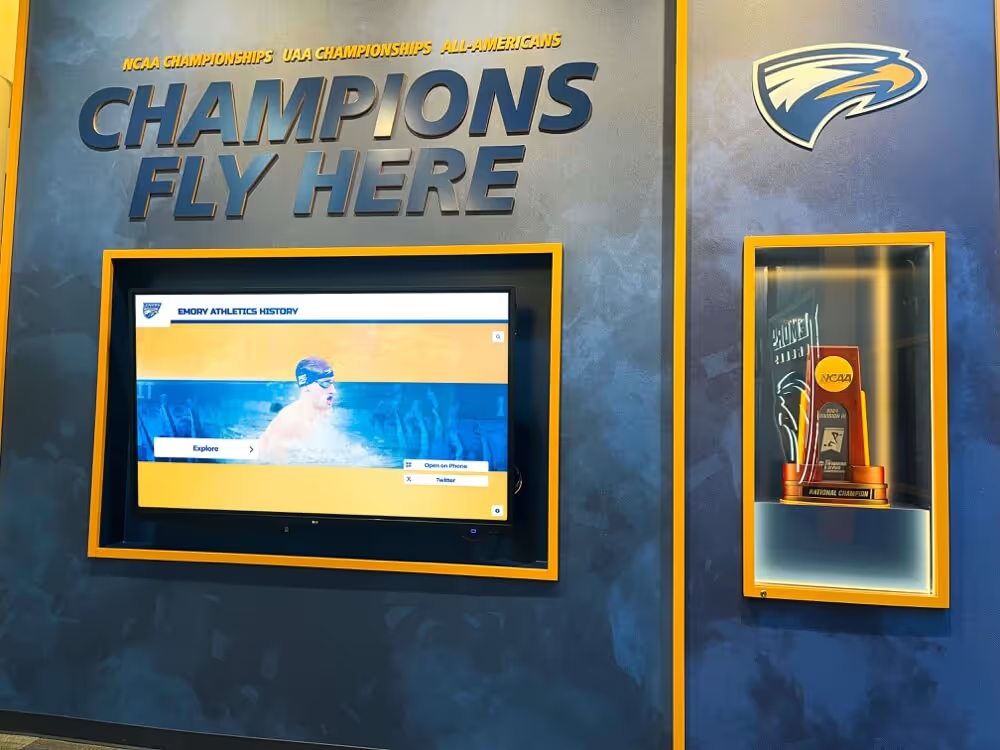
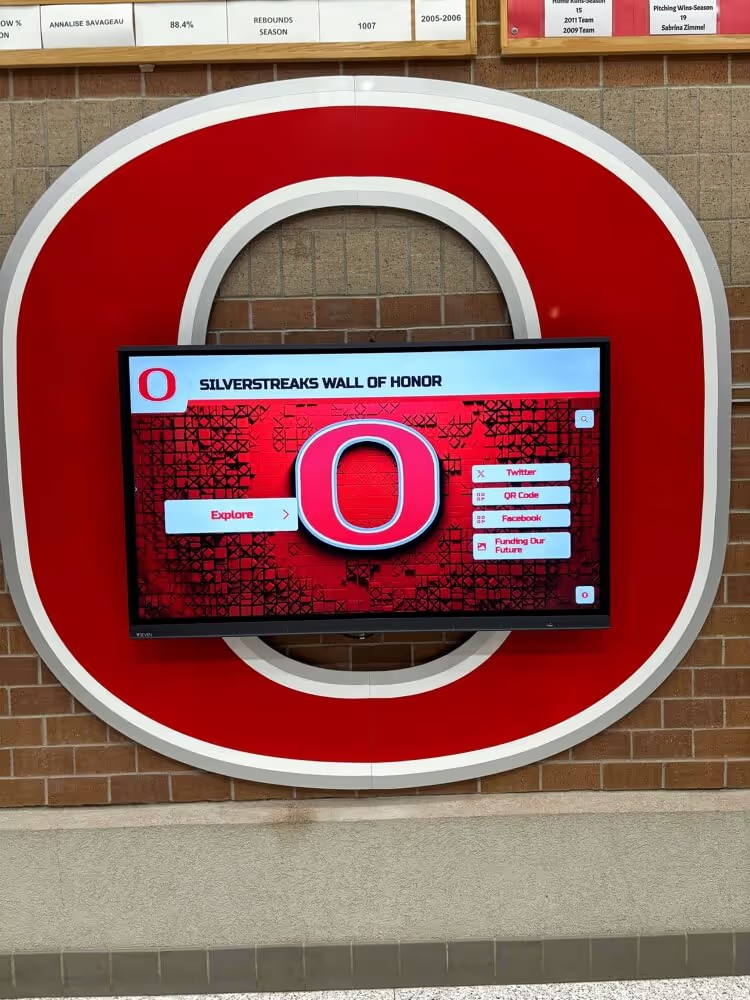
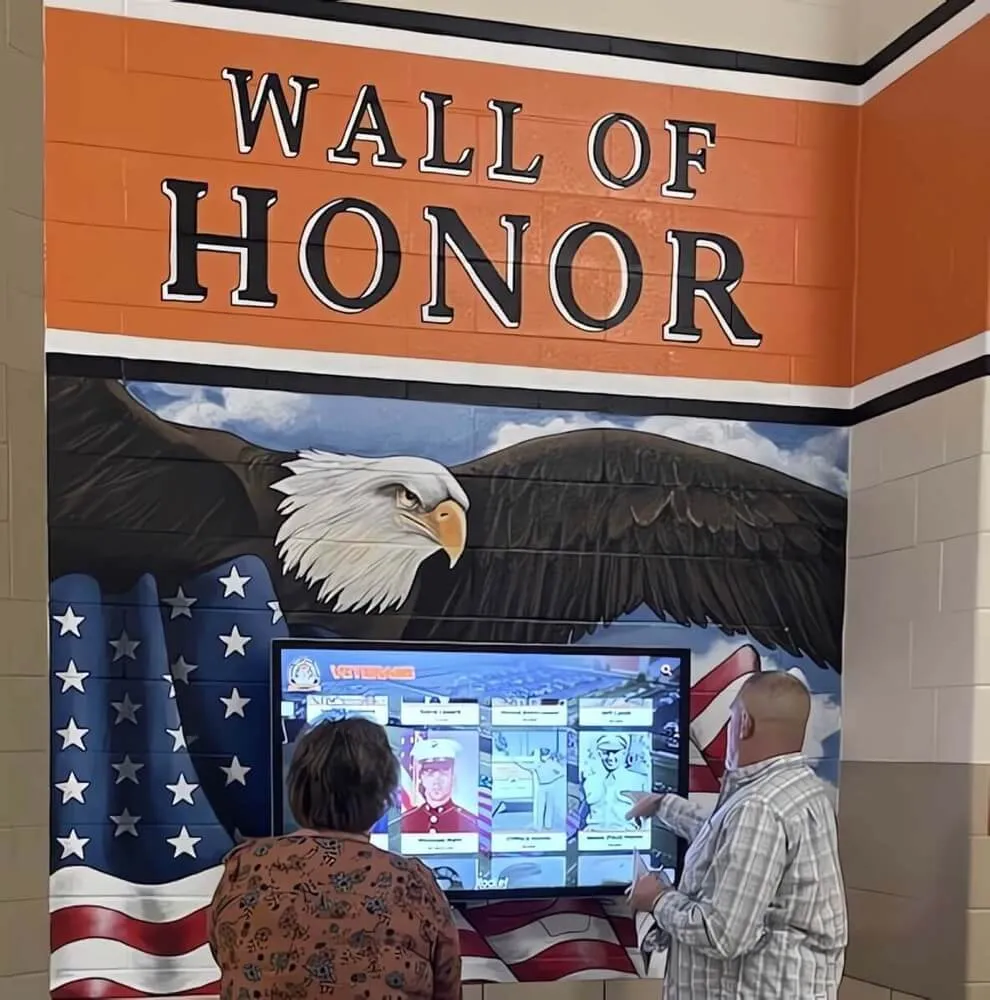
Trophy cases enhanced with interactive technology create engaging recognition experiences documenting program history and inspiring current athletes
Creating Positive Team Culture
Team culture dramatically impacts player development, retention, and overall program success regardless of competitive results.
Establishing Clear Values and Expectations
Successful coaches articulate and consistently reinforce program values beyond winning. Define core principles like respect for teammates, opponents, and officials regardless of game situations, commitment to effort and improvement over natural talent, inclusive support where stronger players encourage developing teammates, sportsmanship in both victory and defeat, and responsibility for equipment, punctuality, and attitude.
Communicate expectations clearly during first practices, reinforce through consistent responses to behavior, and publicly recognize athletes exemplifying program values. When culture emphasizes character alongside competition, retention improves dramatically as players who never become star athletes still find meaningful participation value.
Inclusive Participation Approaches
Youth programs serving recreational populations or school-based teams with open participation face challenges balancing competitive aspirations with inclusive access. Effective strategies include equal playing time policies for younger age groups (through U12) regardless of ability, competitive but development-focused approaches for older players where playing time reflects commitment and improvement rather than current skill alone, specialized roles allowing every player meaningful contribution (set piece specialists, defensive assignments against specific opponents), and comprehensive recognition systems celebrating diverse contributions beyond goals scored.
Schools implementing high school awards ceremony programs that recognize character, leadership, improvement, and team contribution alongside athletic achievement create cultures where every participant feels valued regardless of starting status or competitive results.
Parent Communication and Management
Parent relationships significantly impact coaching effectiveness and job satisfaction. Proactive communication strategies include pre-season meetings establishing expectations for playing time, communication protocols, and parent behavior, regular updates through team communication platforms reducing speculation and misunderstanding, clear policies for addressing concerns (24-hour rule before discussing playing time, designated communication windows), and transparent explanations of roster decisions, position assignments, and tactical choices.
When parents understand coaching philosophy and feel heard through structured communication channels, conflicts decrease substantially even when individual playing time expectations aren’t fully met.

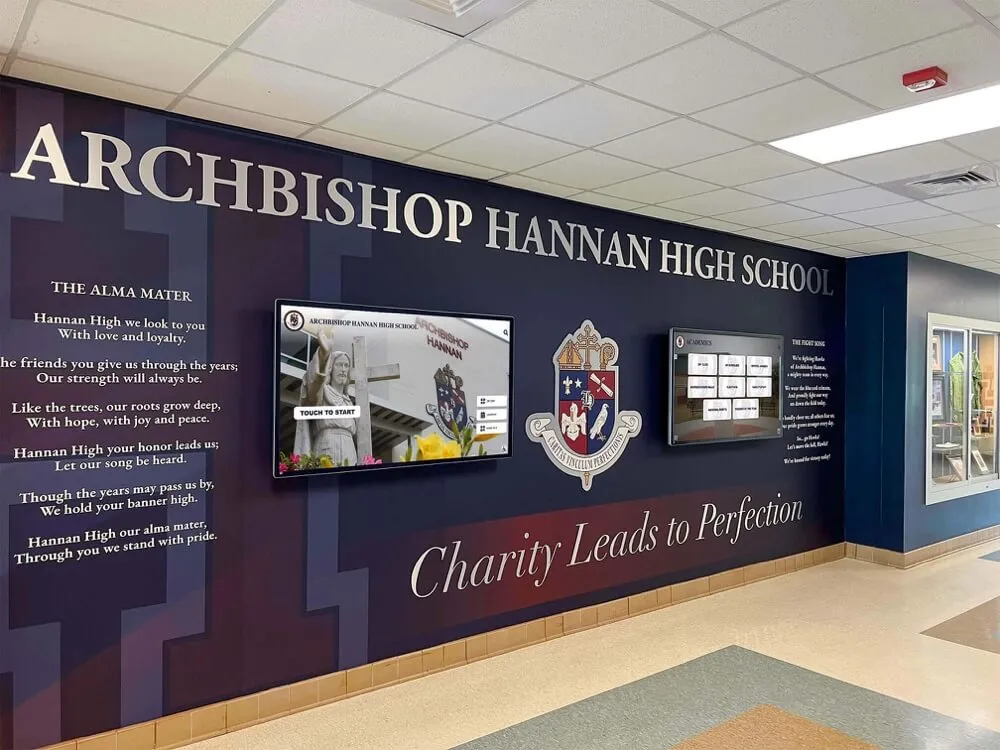
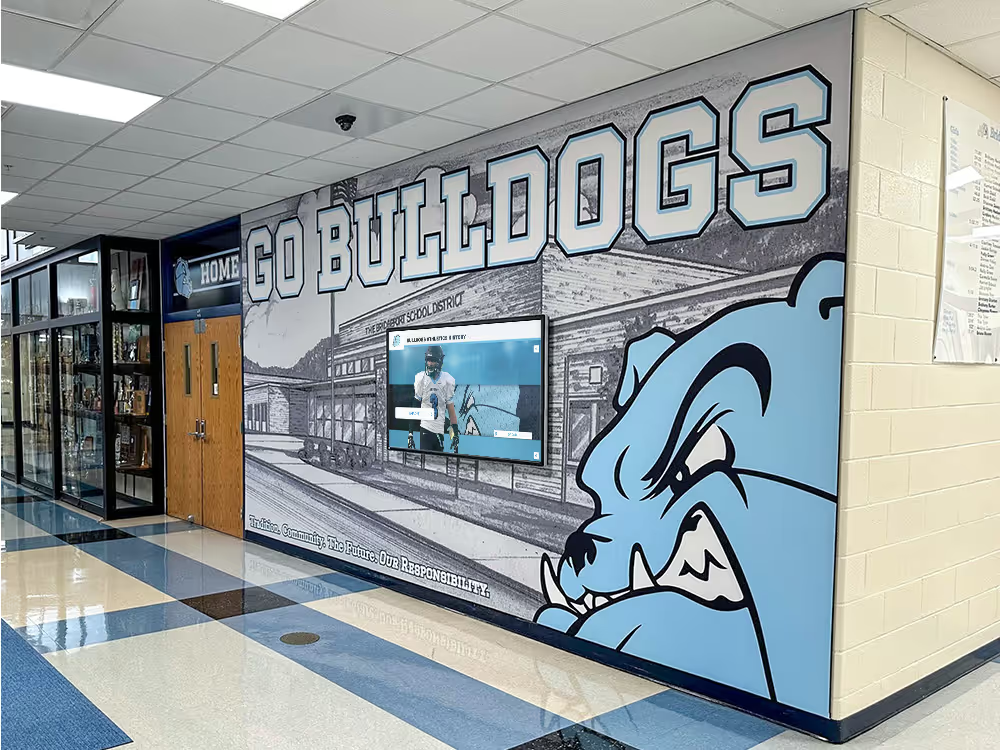
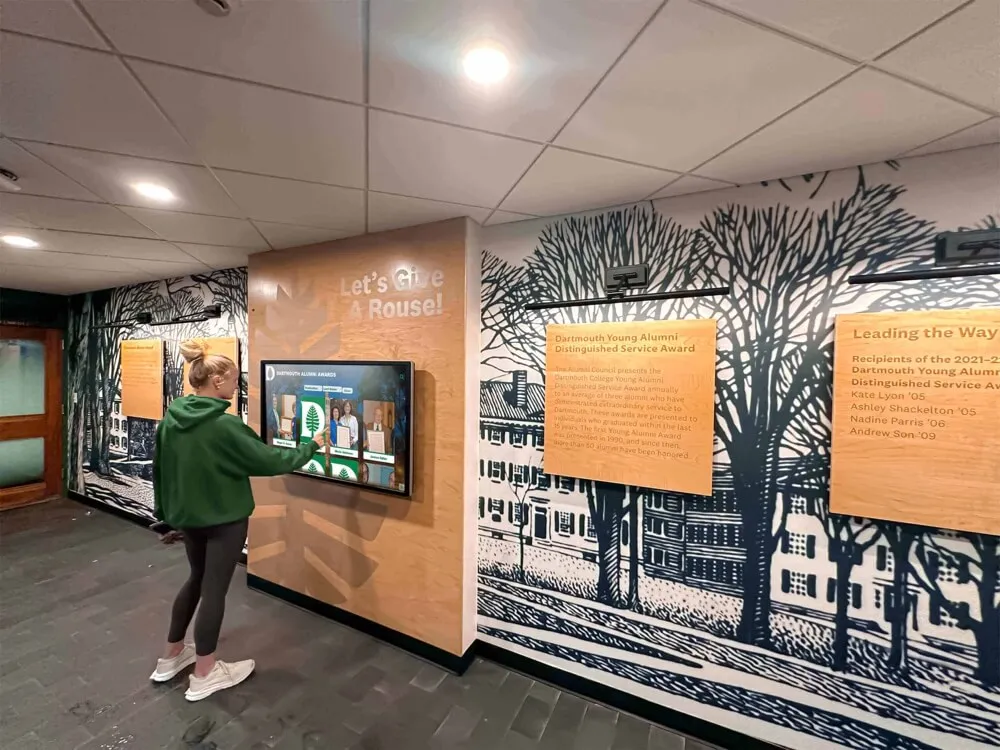
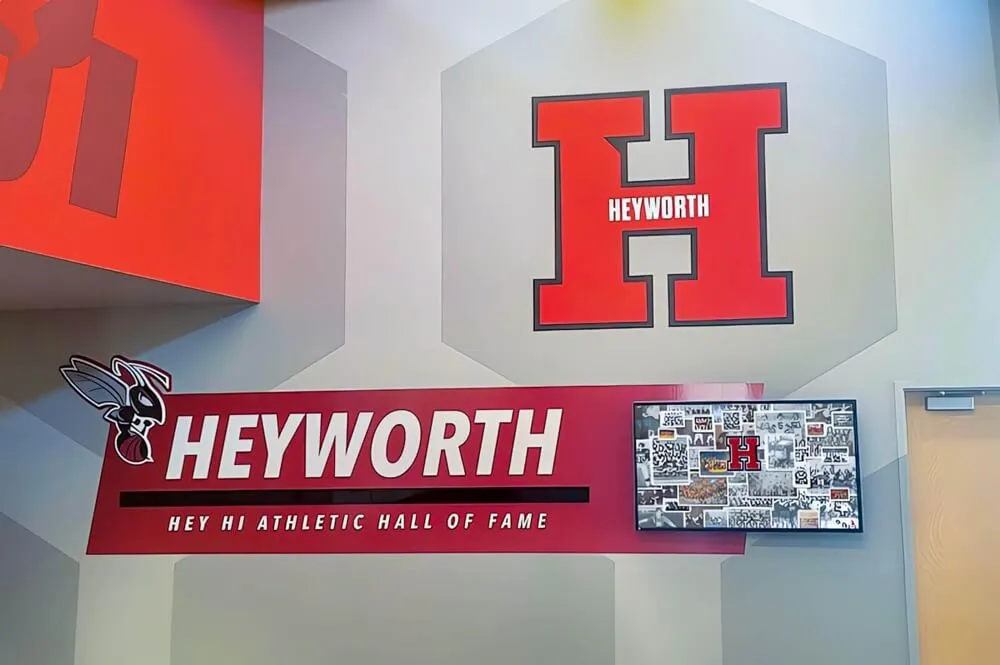
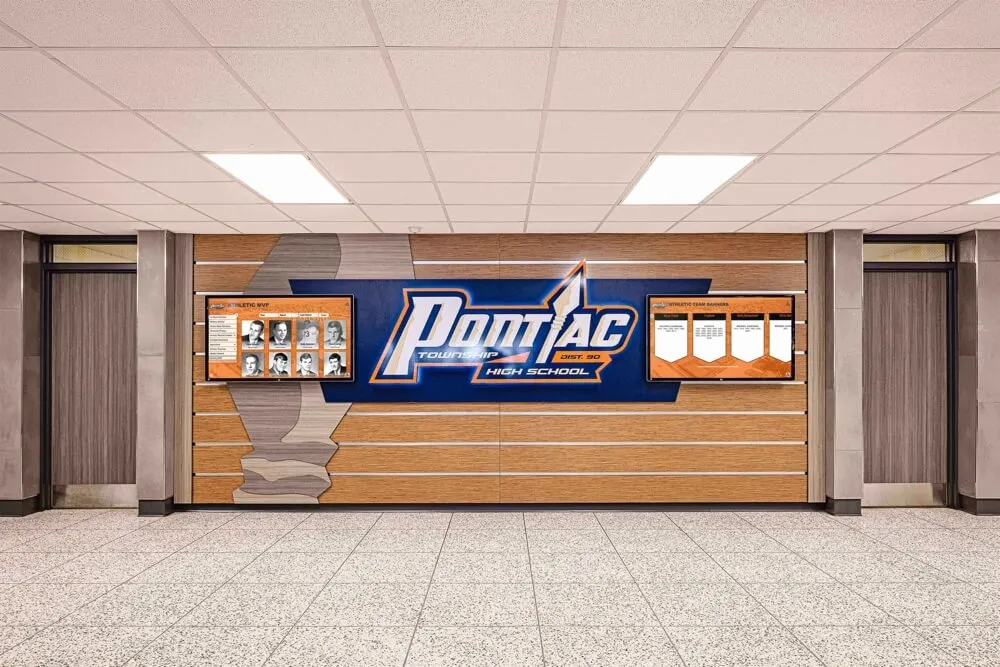
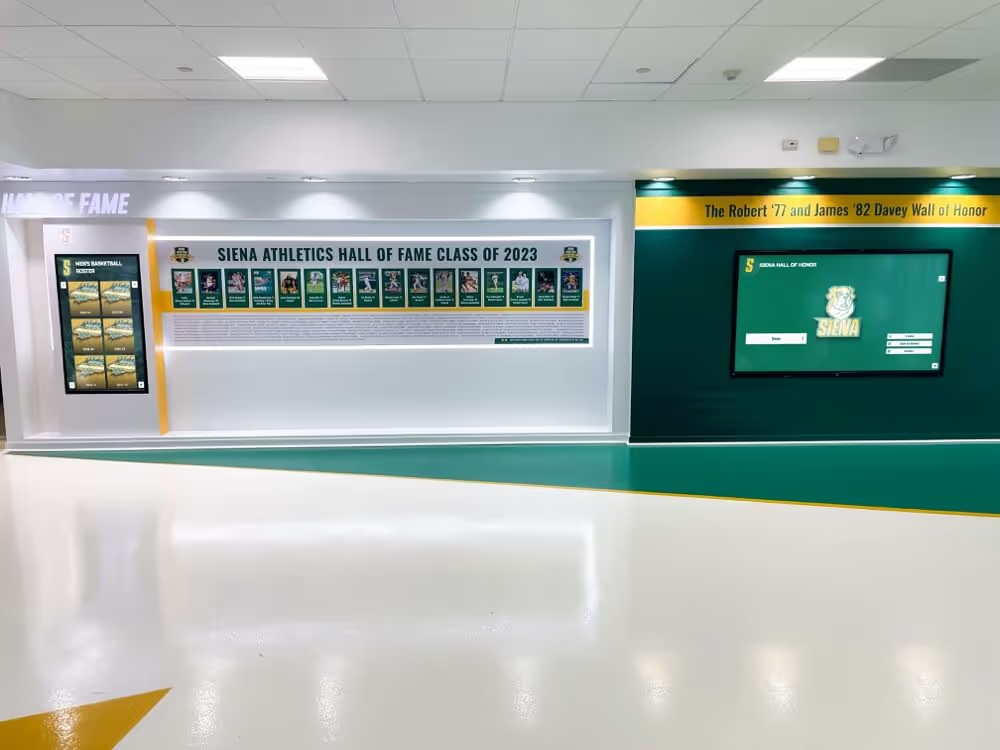
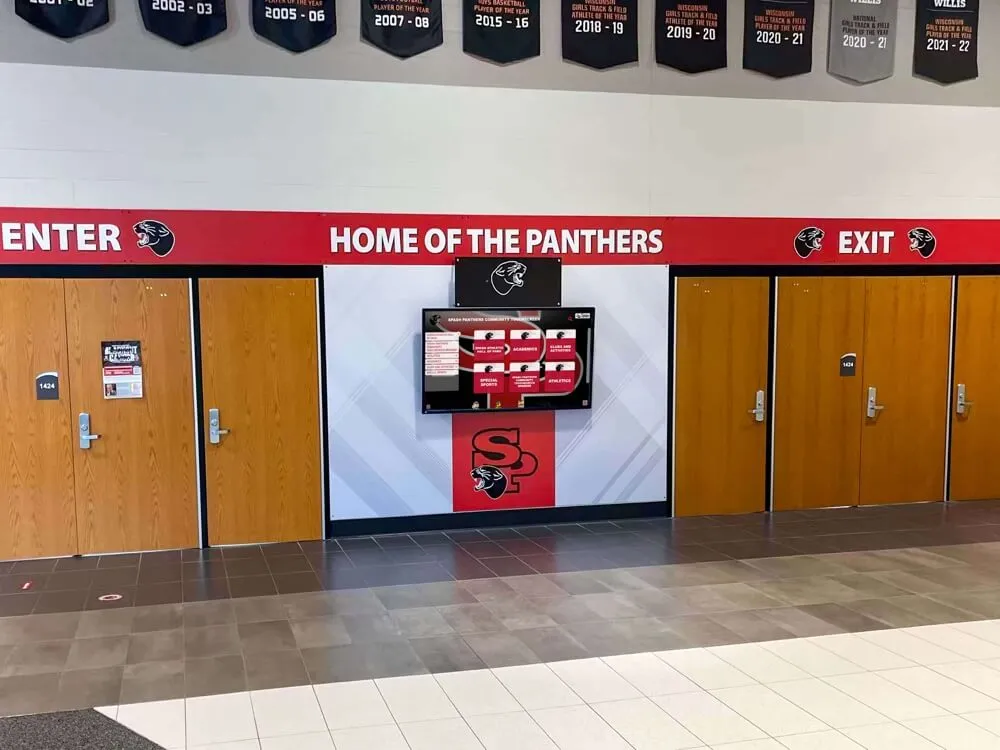
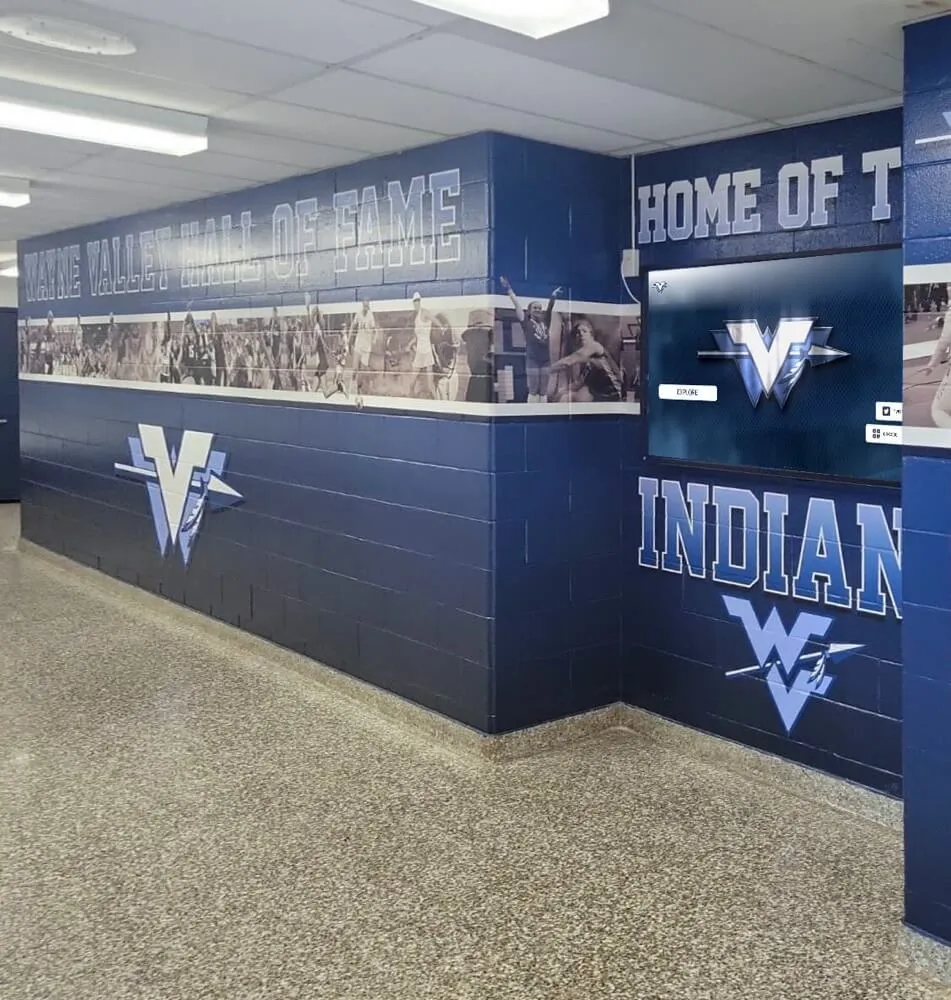
Comprehensive athletic displays in school hallways celebrate program traditions and document competitive achievements across multiple sports
Essential Youth Soccer Drills for Skill Development
Effective practices incorporate proven drills that maximize touches, maintain engagement, and develop fundamental skills through progressive complexity.
Technical Skill Development Drills
Technical mastery provides the foundation for all tactical execution and competitive success.
Dribbling and Ball Control Drills
Cone Weave Progressions - Set up cones in various patterns (straight line, zigzag, random scatter) at distances appropriate for age and skill level. Beginners weave through widely-spaced straight-line cones at walking pace focusing on control. Advanced players navigate tightly-spaced random cones at speed incorporating specific moves at each cone (inside-outside touches, step-overs, sole rolls). Progression includes time trials against personal records, head-up requirements forcing vision away from ball, or competitive races maintaining control standards.
1v1 Moves in Tight Spaces - Create 10x10 yard grids where pairs practice specific moves (scissors, Cruyff turn, step-over) against passive then semi-active defenders. Emphasize proper technique, change of pace after executing moves, and shielding fundamentals. Rotate partners ensuring players face different defensive styles and ability levels.
Traffic Dribbling - All players dribble within confined area (size based on group numbers and skill). Call out commands requiring specific responses: “switch” means exchange balls with another player, “freeze” means stop ball with sole, “escape” means dribble outside boundary then quickly return. Variation includes removing balls so some players become defenders trying to win possession.
Passing and Receiving Drills
Passing Gates - Set up numerous small goals (gates) using cones throughout practice area. Partners earn points by successfully passing through gates to each other. Emphasize proper weight, accuracy to partner’s preferred foot, and first-touch control setting up next pass. Progression includes requiring specific passing surfaces (inside, outside, laces), increasing distances, or competitive scoring against other pairs.
Triangle Passing Patterns - Players positioned at triangle vertices execute passing sequences with increasing complexity. Begin with simple pass-and-follow movement, progress to overlapping runs, then incorporate third-player combinations. Emphasize communication, movement timing, and quality of passes creating easy receiving angles.
Wall Passes and Give-and-Go - Teach fundamental combination play through repetition. Set up scenarios where attacking player uses teammate as wall to bypass defender. Progress from static demonstrations to walking pace to full speed against passive then active defenders.
Shooting and Finishing Drills
Progression Shooting - Create shooting stations progressing from simple to complex: stationary ball shooting focusing on technique, slow-rolling ball emphasizing timing and approach angle, balls served from various angles requiring first-touch preparation, and competitive pressure situations with defenders closing. Rotate players through stations ensuring high repetition volume.
Small Goal Finishing Games - 2v2 or 3v3 games with multiple small goals (using cones) develop finishing instincts and decision-making. Requiring goals from specific situations (one-touch finishes, weak-foot shots, headers) emphasizes comprehensive finishing skill development.
Breakaway Finishing - Players practice 1v1 situations against goalkeepers from various angles and distances. Emphasize composure, shot selection, and adjusting based on goalkeeper positioning. Include scenarios where players must decide between shooting and beating goalkeeper with dribbling.
Comprehensive skill development creates confident players capable of executing in game situations. Schools documenting athletic progression can showcase development through platforms like digital athletic recognition displays that track individual achievement milestones alongside team accomplishments.
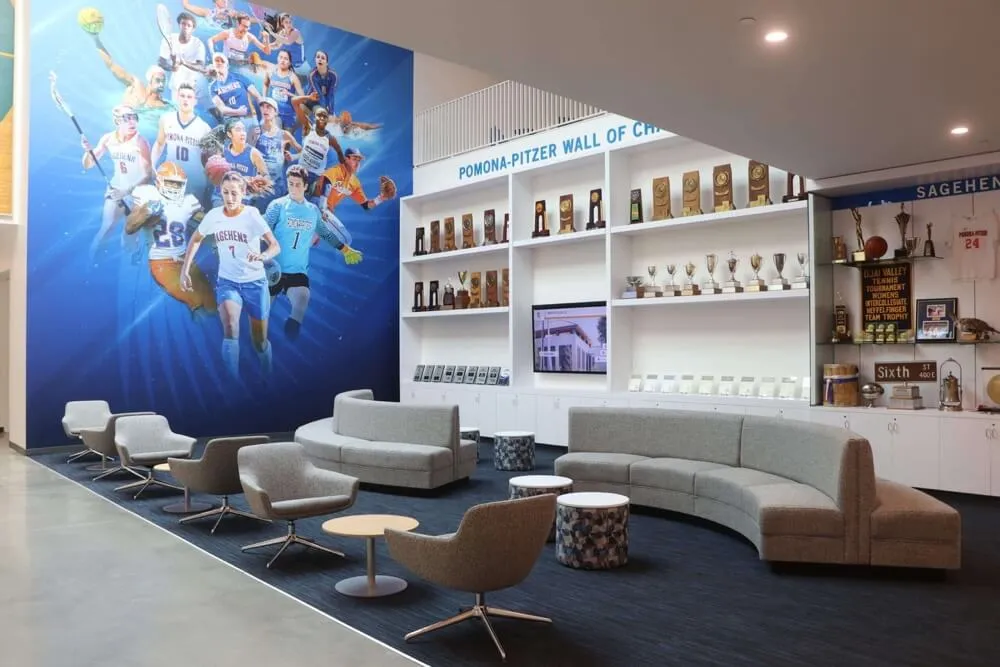
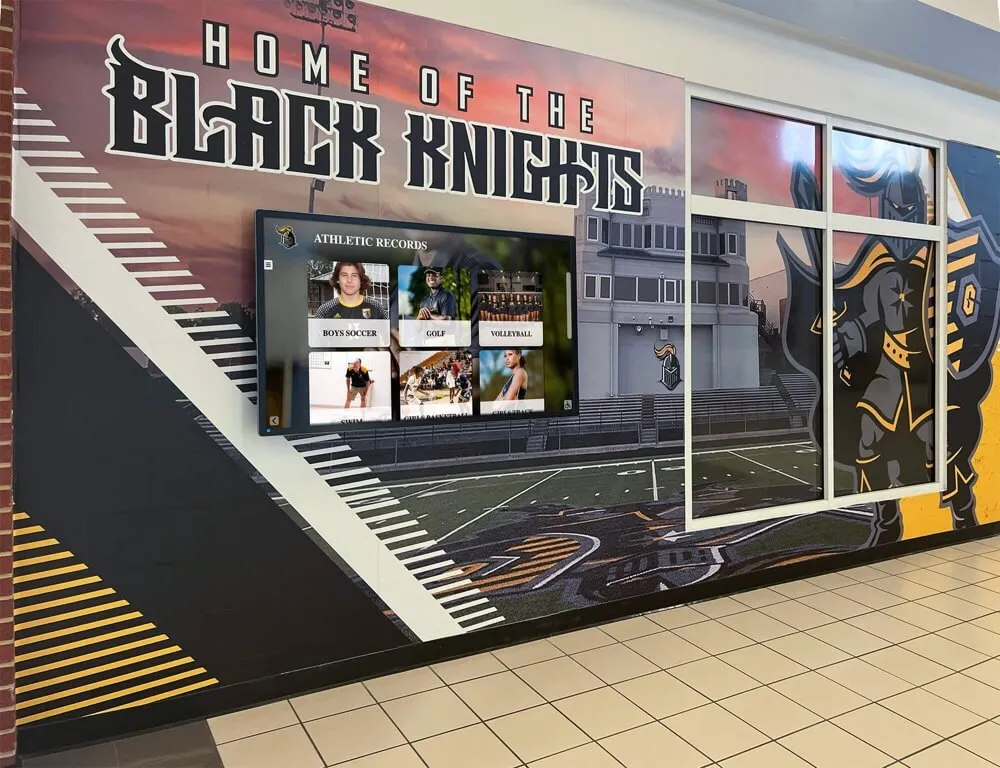
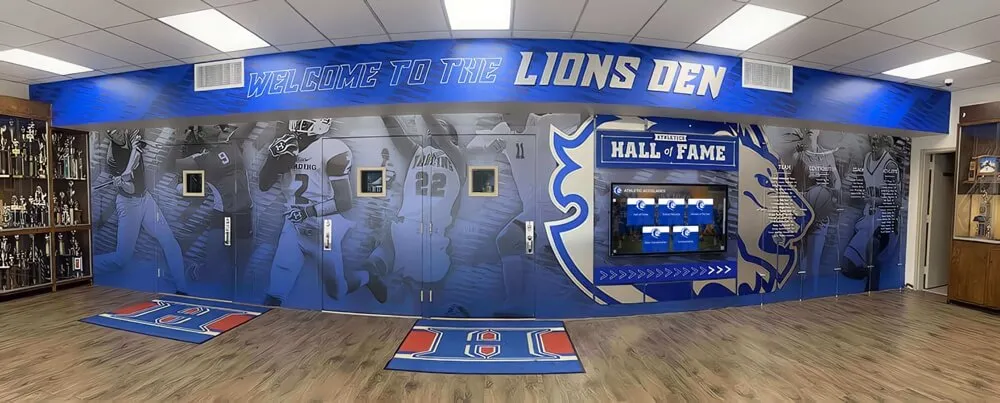
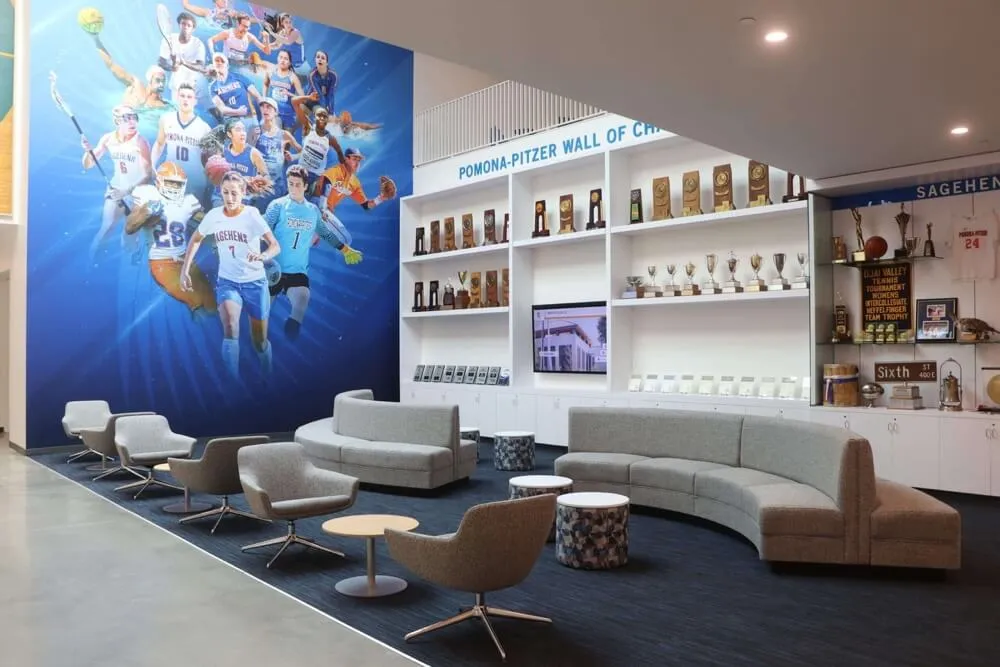
Dedicated athletic spaces with trophy displays and recognition murals create inspirational environments celebrating program excellence
Tactical and Small-Sided Game Drills
Tactical understanding develops through structured game situations emphasizing specific concepts.
Possession Games
Rondo Circles - Classic possession exercise where group maintains possession against one or two defenders in middle. Variations include limiting touches (two-touch, one-touch), requiring specific passing patterns, or changing circle size. Emphasizes quick decision-making, movement to support, and maintaining possession under pressure.
Numbers-Up Possession - Play advantage numbers (5v3, 6v4) in confined spaces where possession team maintains ball against outnumbered defenders. Success requires proper spacing, constant movement, and vision to find open players. Progression includes neutral players (always supporting possession team), conditional rules (must complete five passes before scoring), or transitioning to even numbers.
Possession with Targets - Possession game where success requires completing passes to target players positioned outside grid. Teaches combination play, recognition of when to maintain possession versus playing forward, and awareness of opponent positioning relative to passing lanes.
Attacking and Defending Exercises
2v1 and 3v2 Scenarios - Practice attacking advantages requiring proper support positioning, timing of runs, and decision-making about when to pass versus dribble. Defenders learn delay tactics, forcing attackers to predictable sides, and recovery runs. Progress to full-field situations where successful execution results in goal-scoring opportunities.
Transition Games - Small-sided games emphasizing quick transitions from attack to defense and vice versa. When possession changes, teams immediately shift mental focus and positioning. Develops crucial understanding that modern soccer requires all players functioning in both phases.
Defensive Shape Drills - Organize players in defensive formations practicing collective movement maintaining proper spacing and depth. Emphasize pressure, cover, and balance principles where first defender applies pressure while teammates provide cover support and balance maintaining overall shape.
Set Piece Practice
Corner Kick Organization - Practice attacking and defending corner situations. Assign specific responsibilities (near post, far post, edge of box) and rehearse set plays. Defending team practices zonal versus man-marking approaches and clearing techniques.
Free Kick Execution - Develop routines for free kicks from various field locations. Practice direct shots, indirect plays, and disguised routines keeping opponents uncertain. Defending team organizes walls and marks dangerous players.
Throw-In Tactics - Though often neglected, throw-ins represent significant possession opportunities. Practice long-throw techniques for older players, quick throw combinations, and tactical options based on field location.
Small-sided games remain the most effective tactical development tool providing higher touches, more decision-making opportunities, and better engagement than traditional large-sided scrimmages. Structure games with specific tactical emphases rather than unstructured play maximizes development value within limited practice time.
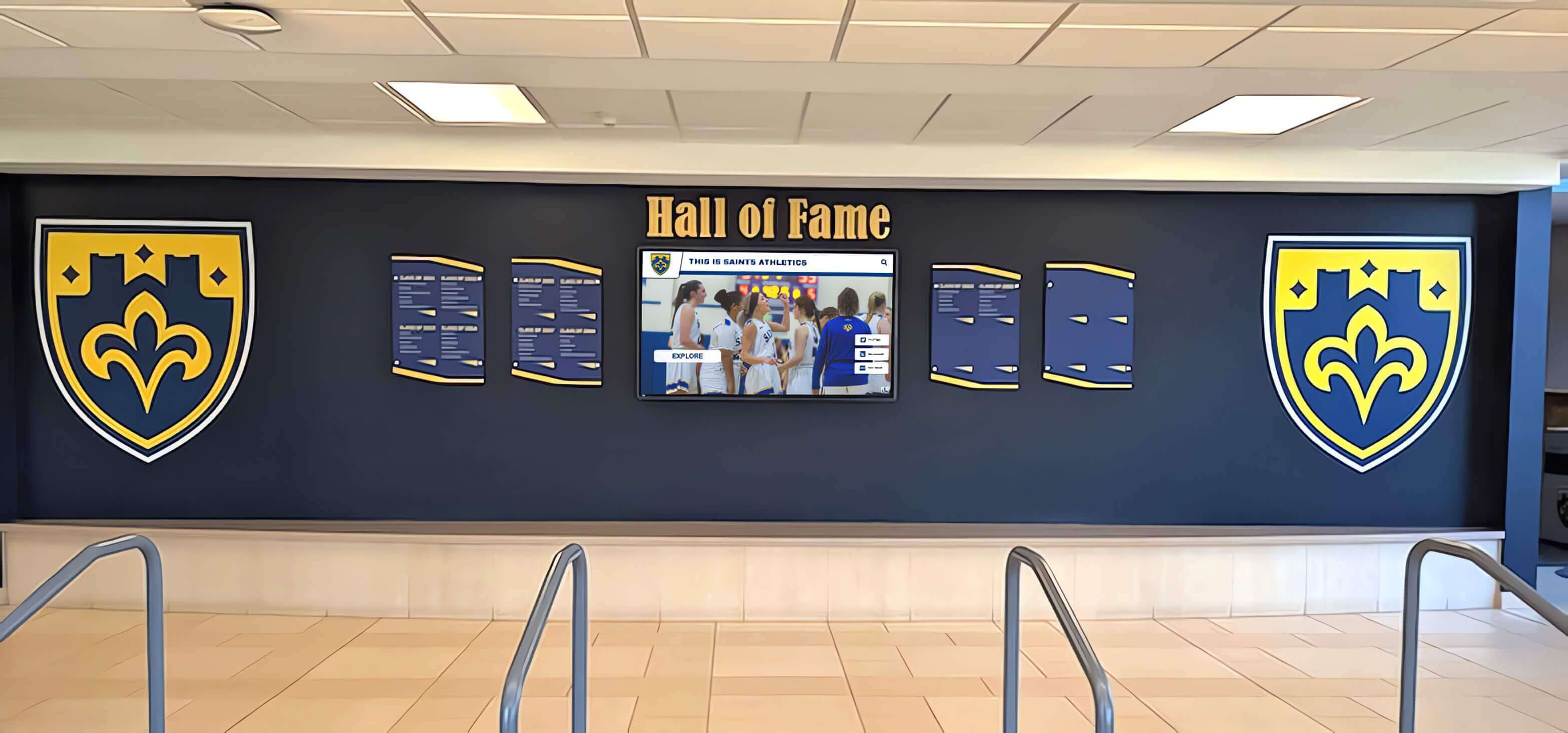
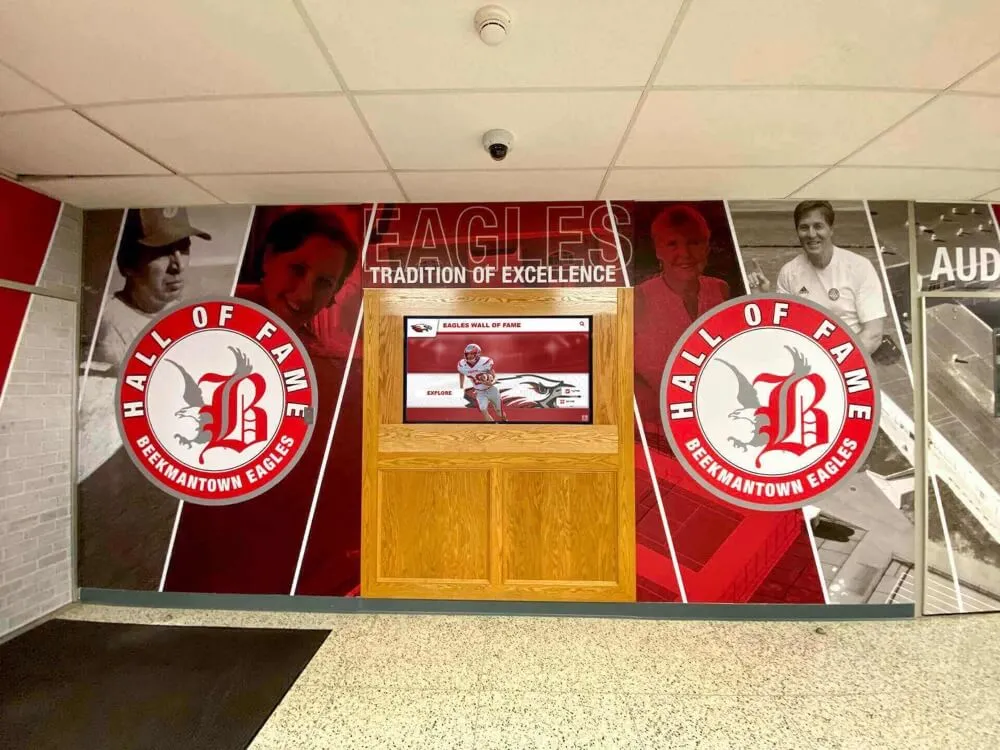
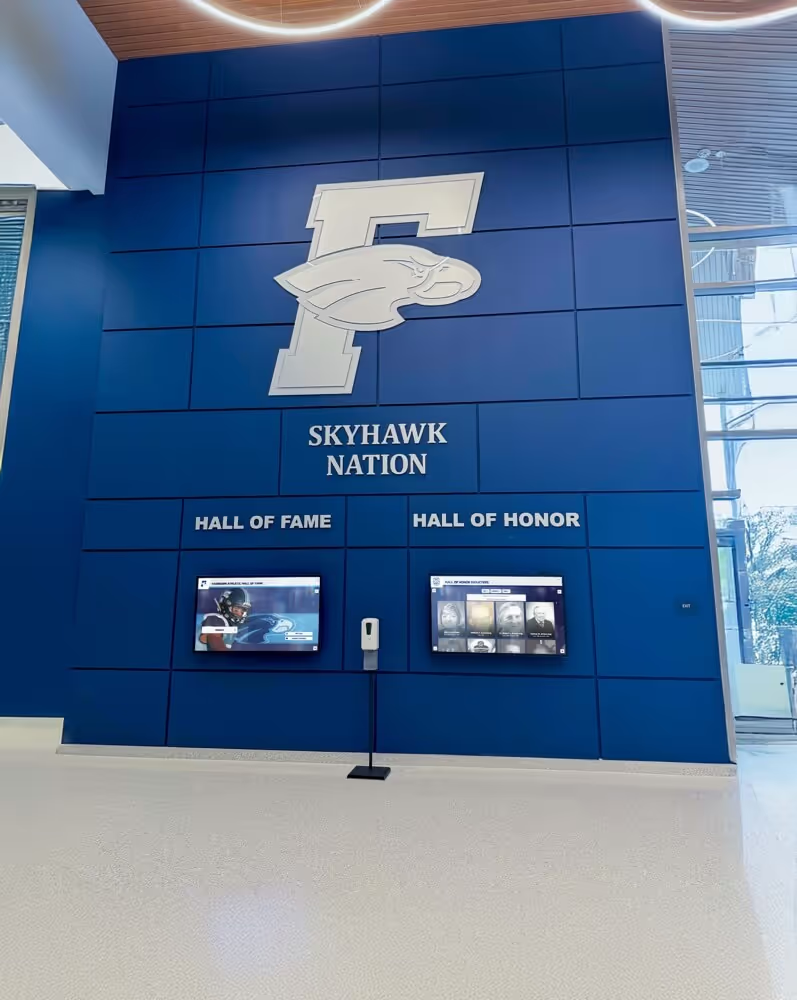
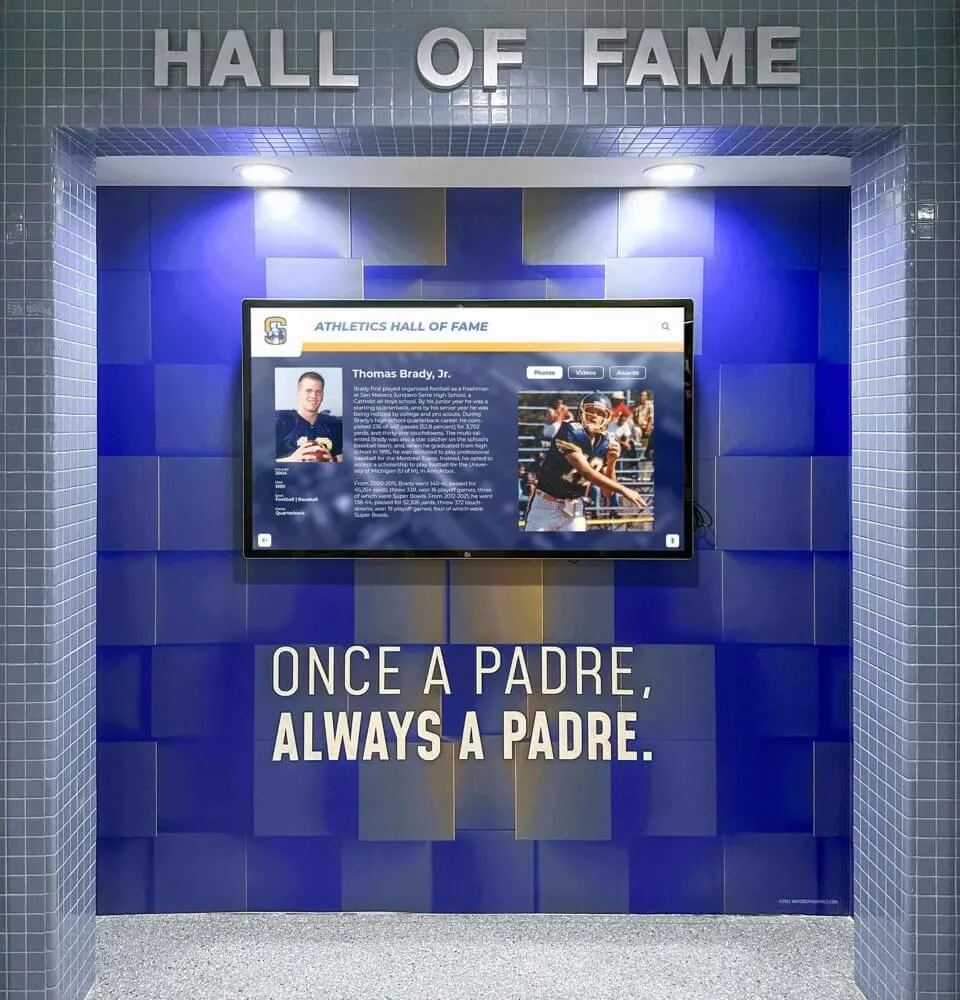
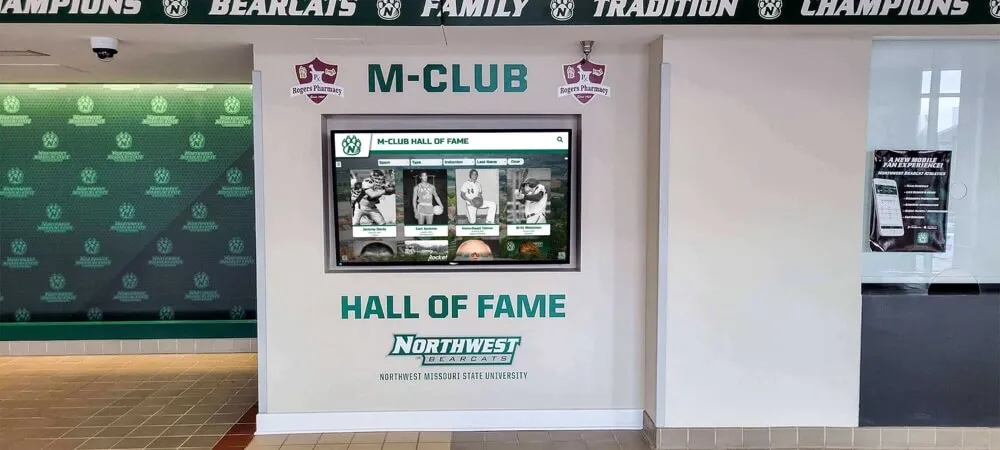
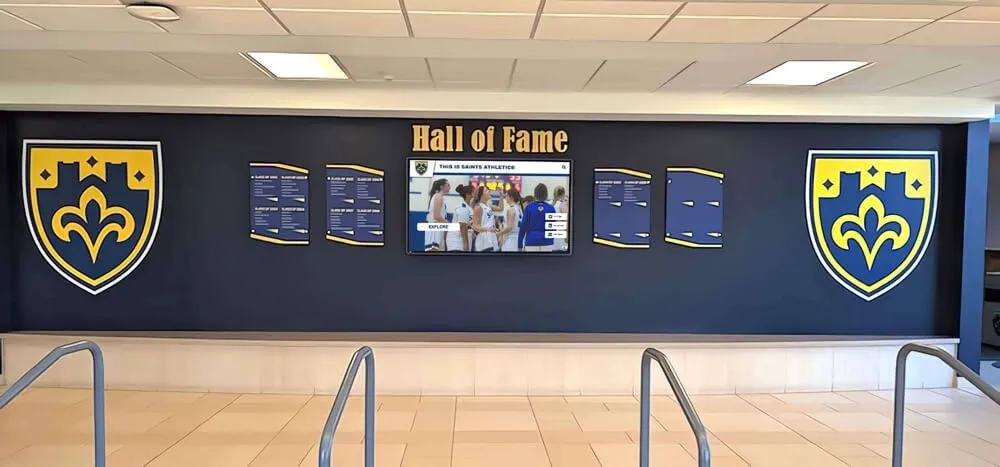
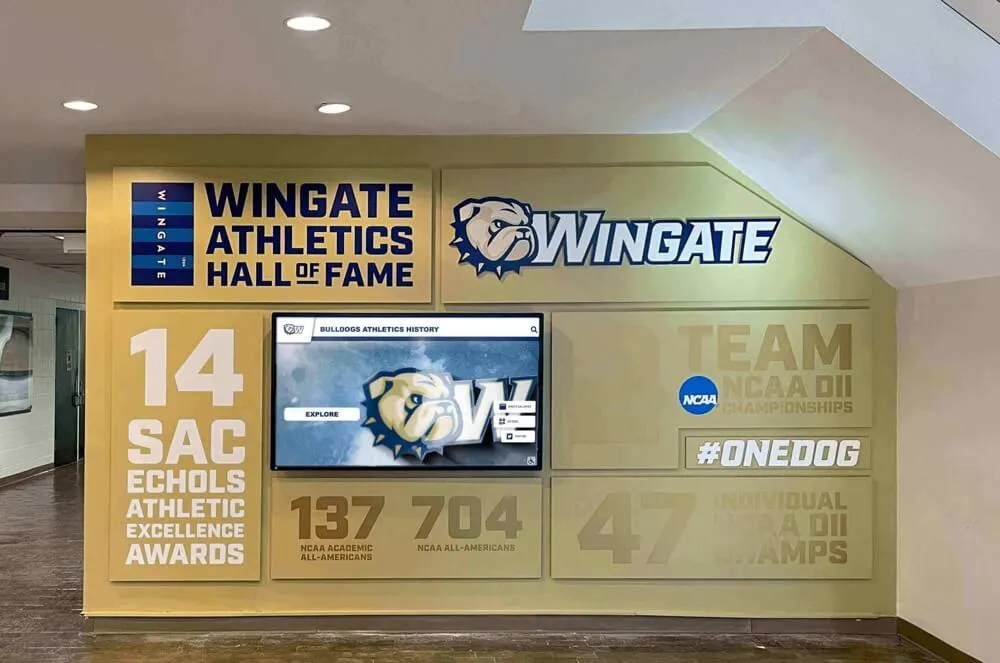
Hall of fame installations document championship traditions while inspiring current athletes pursuing competitive excellence
Effective Practice Planning and Season Organization
Systematic planning ensures practices maximize development within time constraints while season organization creates progression toward competitive and developmental goals.
Designing Productive Practice Sessions
Effective practices follow structured formats balancing skill development, tactical training, conditioning, and engagement.
Practice Structure Template
Arrival and Warm-Up (10-15 minutes) - Players arrive and begin active warm-up immediately rather than standing around. Dynamic stretching incorporates movement, light jogging includes ball touches, and arrival activities (juggling challenges, passing pairs) engage early arrivers productively. Avoid static stretching pre-activity as research shows limited injury prevention benefit and reduced explosive performance.
Technical Skill Focus (20-25 minutes) - Primary skill development block emphasizing practice session theme (passing, shooting, dribbling, defending). Structure maximum repetition opportunities through stations, small groups, or individual challenges. Coaching points emphasize proper technique with immediate feedback correcting errors before they become habits.
Tactical/Small-Sided Games (20-25 minutes) - Apply technical skills in game contexts emphasizing tactical concepts. Small-sided games (3v3 through 7v7 depending on age and roster size) provide maximum touches, decision-making opportunities, and relevant game situations. Structure games around specific objectives (maintaining possession, creating width, defensive compactness) rather than unrestricted scrimmages.
Scrimmage/Competitive Activity (15-20 minutes) - Conclude with enjoyable game-like activity allowing players to compete and demonstrate skills in unrestricted environment. Can include full scrimmages, competitive games with creative rules, or fun tournaments. Players leaving practice feeling positive about soccer experience increases retention and enthusiasm.
Cool-Down and Closing (5-10 minutes) - Light activity reducing heart rates, static stretching for flexibility development, and team gathering for recognition, feedback, and next-practice information. End on positive notes highlighting specific improvements observed and expressing enthusiasm for next session.
Training Cycle Periodization
Pre-Season (2-4 weeks) - Emphasis on fitness base-building, fundamental skill review, team chemistry development, and tactical system introduction. Higher volume training establishing conditioning foundation supporting season demands.
Early Season (First 4-6 games) - Balance between continued fitness development and tactical refinement based on early game observations. Identify formation adjustments needed and position assignments requiring modification.
Mid-Season (Peak Competition) - Maintenance focus with reduced fitness volume and increased tactical preparation for specific opponents. Practice intensity remains high but duration may decrease preventing overtraining. Recovery becomes increasingly important.
Late Season (Playoffs/Tournament) - Primarily tactical preparation and mental focus. Reduced physical demands allowing peak freshness for critical competitions. Emphasis on set pieces, opponent-specific strategies, and confidence-building.
Post-Season - Light training maintaining fitness while allowing mental and physical recovery. Fun-focused activities rebuilding enthusiasm for next season. Individual player development meetings providing feedback and off-season improvement guidance.
Strategic planning within season cycles prevents early-season fatigue, maintains freshness during critical competitions, and creates predictable rhythm players mentally anticipate. Programs implementing academic and athletic recognition celebrate comprehensive student-athlete achievement rather than exclusively competitive results.
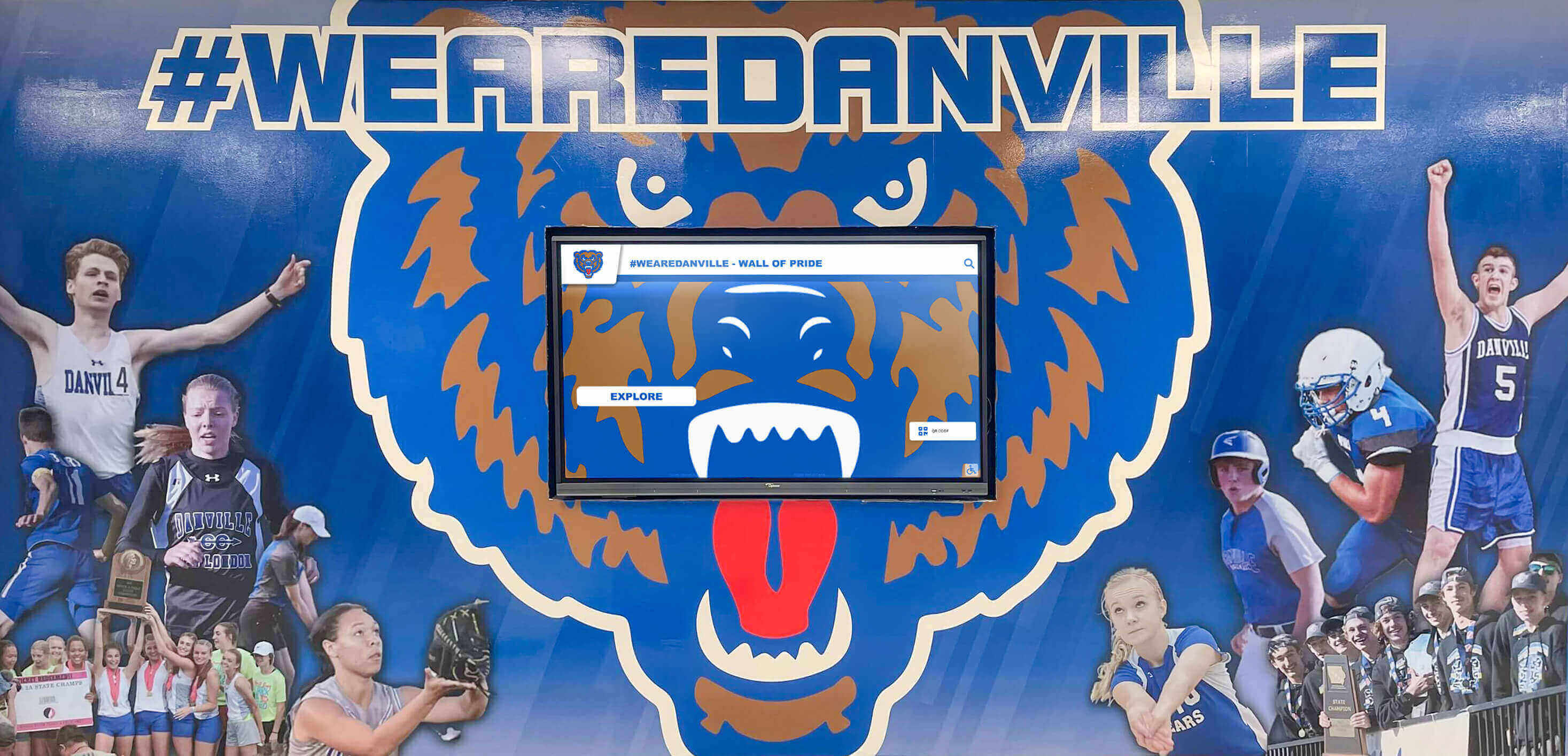
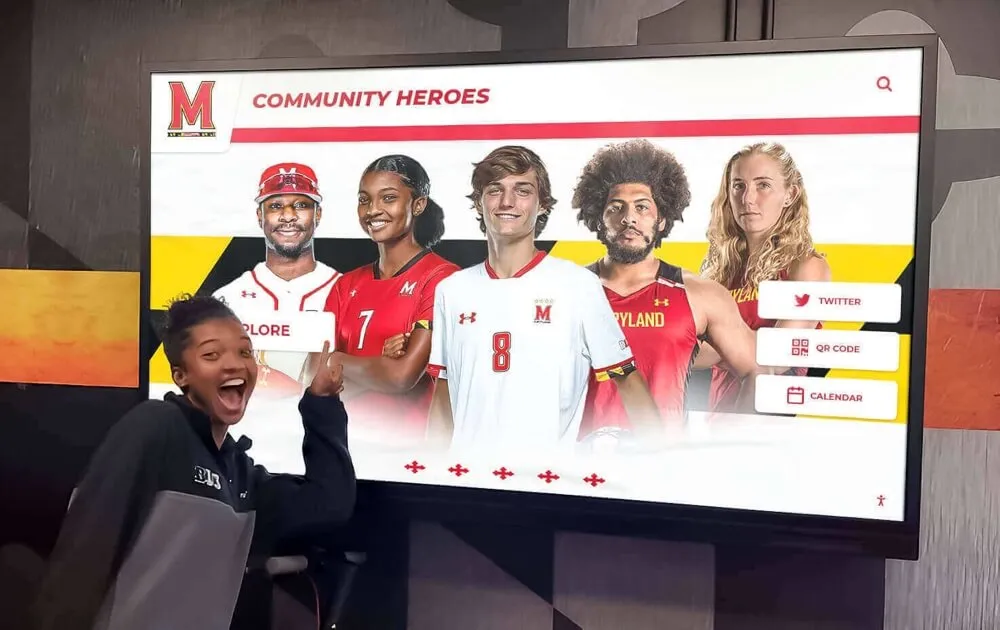
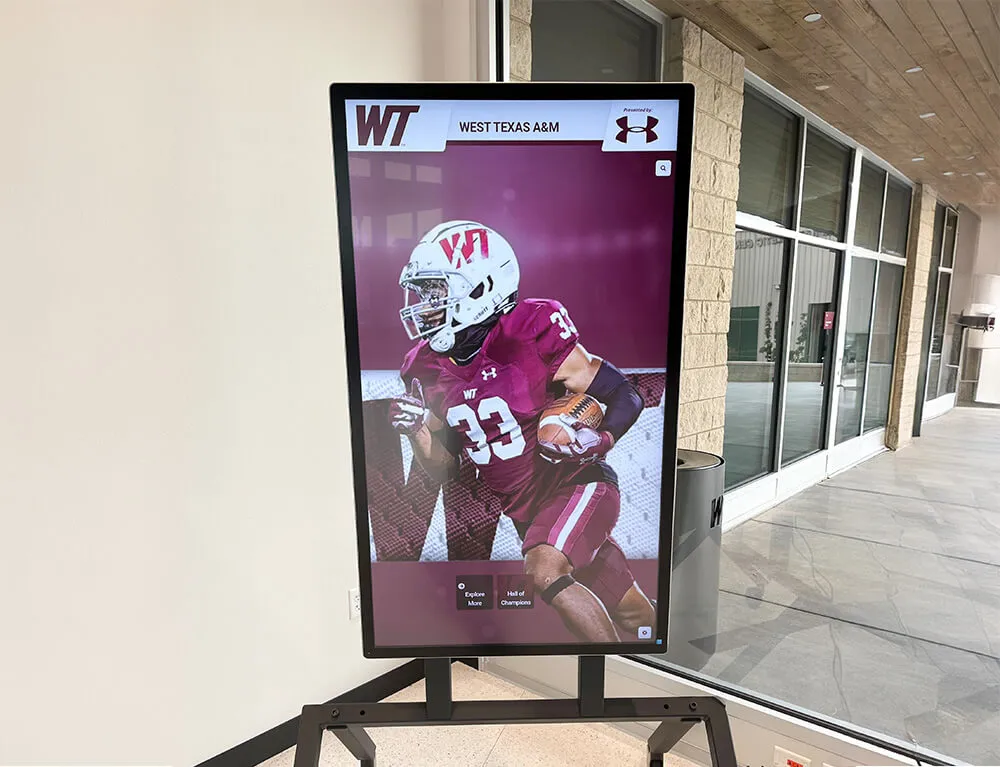
Branded athletic displays strengthen program identity while providing platforms for dynamic recognition content
Player Development Assessment and Feedback
Systematic evaluation helps players understand development progress and provides coaches data informing instruction decisions.
Skills Assessment Frameworks
Create evaluation rubrics assessing technical skills, tactical understanding, physical capabilities, and character/attitude. Conduct pre-season baseline assessments establishing starting points, mid-season check-ins measuring progress, and end-season evaluations documenting growth and identifying off-season focus areas.
Assessment data informs individualized development planning rather than simply ranking players. Share results privately providing specific improvement guidance and recognizing measured progress regardless of absolute skill level.
Individual Development Meetings
Schedule brief one-on-one conversations with each player during season. Discuss strengths, improvement areas, role within team, and specific development focus. Ask players about their goals and experiences. Listen to concerns about playing time, positions, or team dynamics.
These conversations build coach-player relationships, demonstrate individual investment, and provide feedback preventing surprise or resentment about roles. Players understanding reasoning behind decisions and feeling heard respond more positively even when outcomes don’t match initial hopes.
Video Review and Analysis
When resources permit, record games for review. Use footage showing players specific situations illustrating coaching points. Visual evidence of positioning errors, missed opportunities, or excellent decisions accelerates learning compared to verbal descriptions alone.
Share positive highlights with team celebrating excellent plays and demonstrating tactical concepts executed properly. Individual video review with specific players provides private coaching maintaining confidence while addressing mistakes.
Building Long-Term Program Excellence
Sustainable success requires systematic program building extending beyond individual seasons toward comprehensive development frameworks.
Multi-Year Program Development
Feeder System Coordination
Schools developing competitive high school programs benefit from coordinating with youth leagues, middle school programs, and club teams providing future players. Establish relationships with feeder program coaches, attend youth games demonstrating interest in developing players, host camps and clinics for younger age groups introducing program culture and coaching staff, and create clear skill progression pathways from recreational participation through competitive high school soccer.
Integration creates consistent development philosophy across age groups rather than players encountering completely different coaching approaches at each level. Younger players seeing high school team recognition develop aspirations to earn similar honors.
Coaching Staff Development
Sustainable excellence requires developing coaching expertise beyond head coach individual knowledge. Invest in assistant coach training providing tactical education and coaching methodology, establish consistent terminology and teaching progressions across all program levels, create mentorship where experienced coaches develop newer volunteers, and budget for coaching education through licensing courses, clinics, and conferences.
Programs where multiple coaches understand system philosophy maintain consistency through inevitable staff transitions rather than complete rebuilding after coaching changes.
Alumni Engagement and Tradition Building
Strong programs develop traditions connecting current players with historical excellence. Honor former players through hall of fame recognition, invite alumni to practices sharing experiences and advice, organize alumni games creating cross-generational program connections, and document program history through comprehensive records, media, and recognition displays.
Traditions create program identity transcending individual players or coaches. Athletes feeling part of something larger than single seasons develop deeper investment and pride. Modern recognition platforms like those from Rocket Alumni Solutions enable schools to create interactive digital displays documenting soccer program history, celebrating individual achievements, and maintaining alumni connections that strengthen program culture across generations.
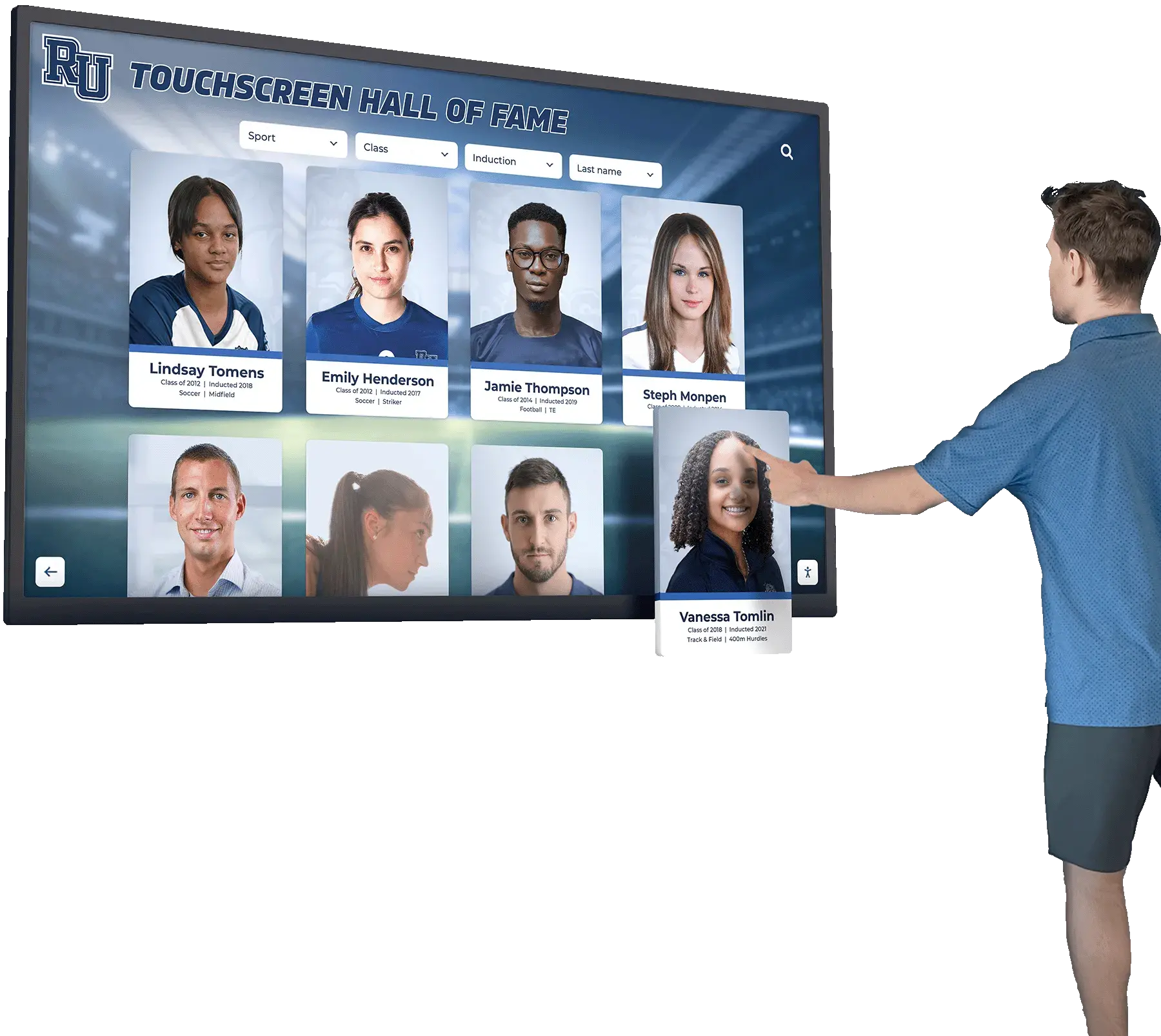
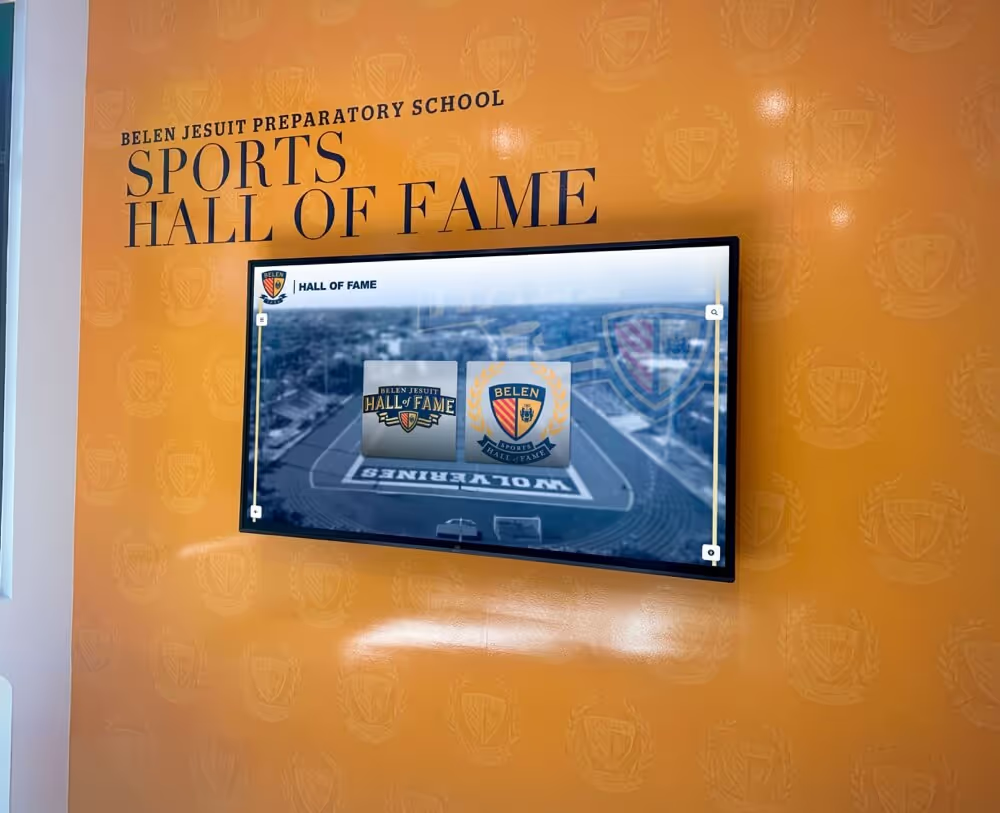
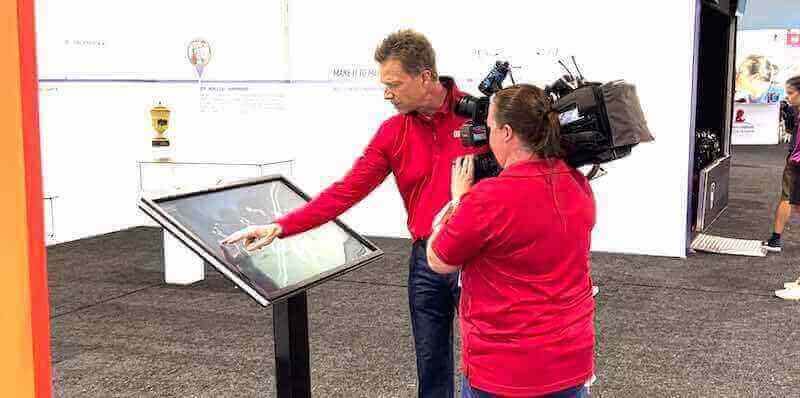
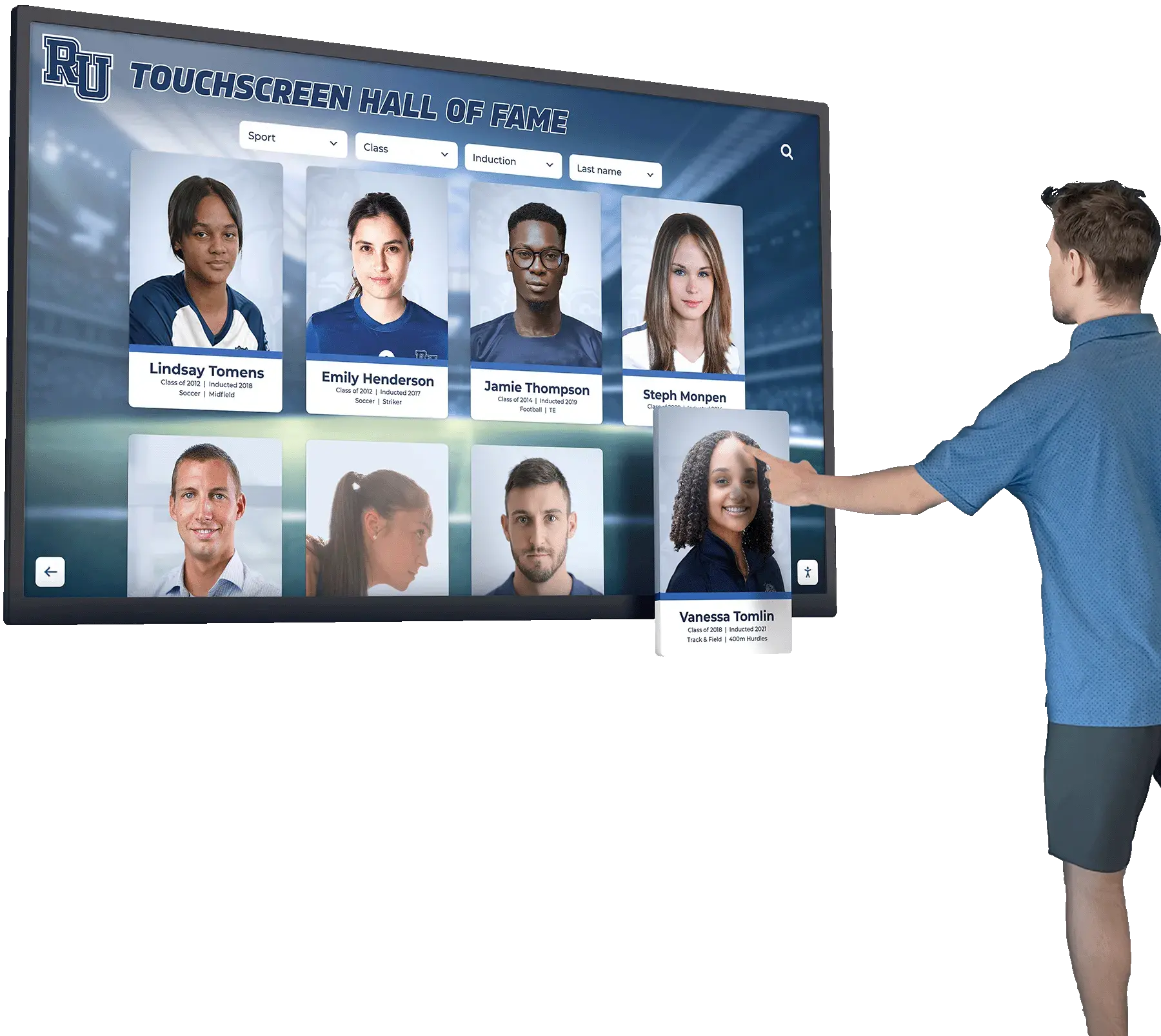
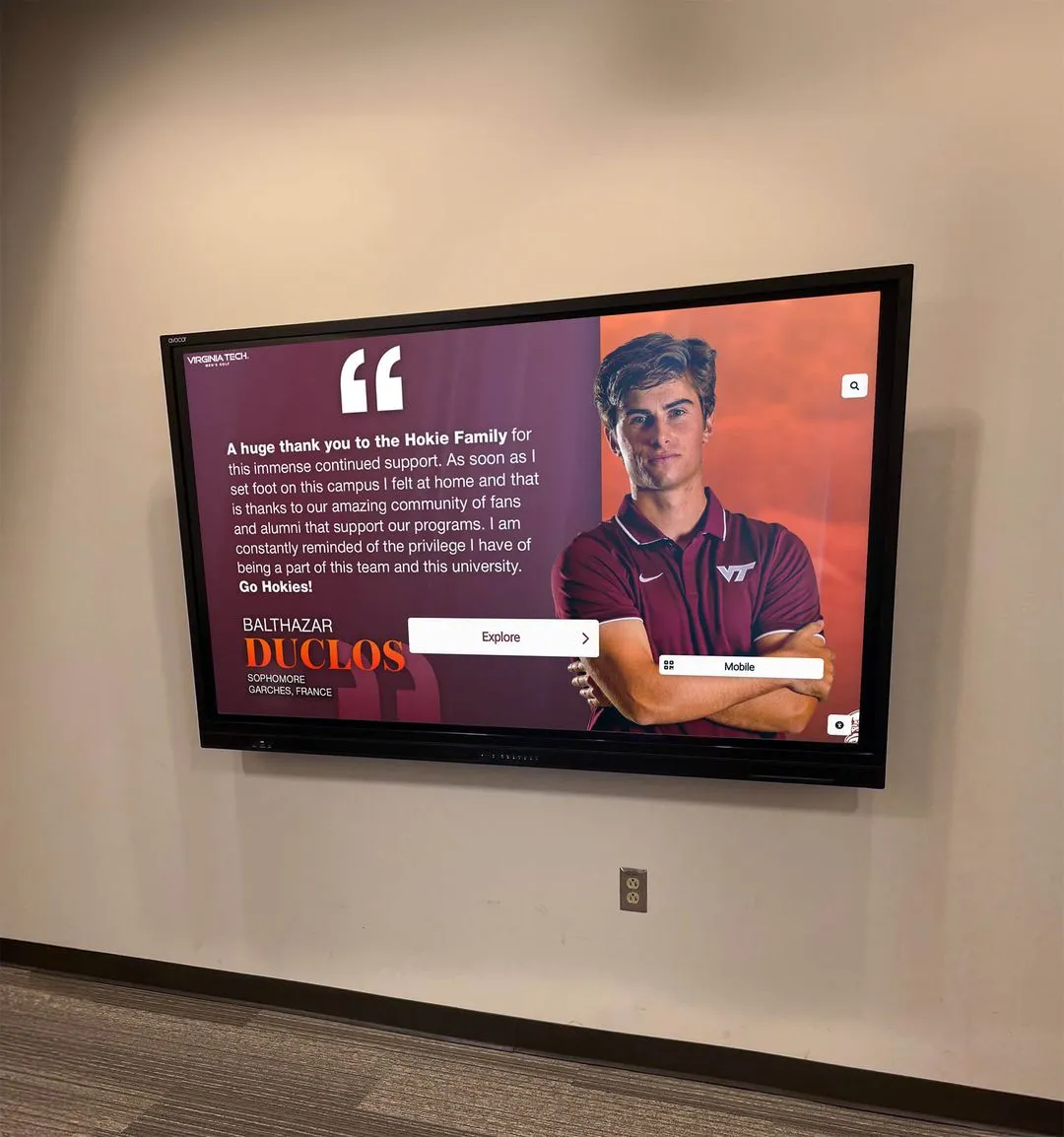
Interactive touchscreen displays enable comprehensive athlete storytelling through multimedia profiles documenting careers and achievements
Creating Positive Recognition Culture
Recognition extending beyond game results significantly impacts player motivation, retention, and program culture.
Comprehensive Awards Programs
End-of-season recognition should celebrate diverse contributions ensuring every player receives meaningful acknowledgment. Award categories include traditional performance recognition (MVP, Golden Boot, Defensive Player), character and sportsmanship awards, most improved player recognition, effort and dedication awards (hardest worker, best teammate), and position-specific honors ensuring recognition spreads across roster rather than concentrating on offensive stars.
Creative team awards provide frameworks for balanced recognition celebrating the complete roster while maintaining integrity by avoiding meaningless participation trophies lacking genuine achievement connection.
Public Recognition and Visibility
Player achievement visibility motivates continued excellence and program investment. Strategies include social media highlighting individual and team accomplishments, school announcements and bulletin boards featuring athletic success, local media outreach for significant achievements, and permanent recognition displays documenting program history and individual honors.
Schools implementing digital athletic displays in entrance areas create prominent recognition while maintaining flexibility to update content celebrating current athletes alongside historical traditions.
Multi-Sport Recognition Integration
Many soccer players participate in multiple sports across school year. Recognition systems acknowledging multi-sport athletes rather than creating competition between programs strengthen overall athletic culture. Celebrate athletes earning varsity letters in multiple sports, coordinate banquet schedules preventing conflicts, share facility resources cooperatively rather than territorially, and recognize that comprehensive athletic programs serve more students than singular sport excellence.
Schools developing integrated recognition like cross country awards programs alongside soccer create inclusive athletic cultures where fall sport athletes receive equal visibility regardless of higher soccer participation numbers.

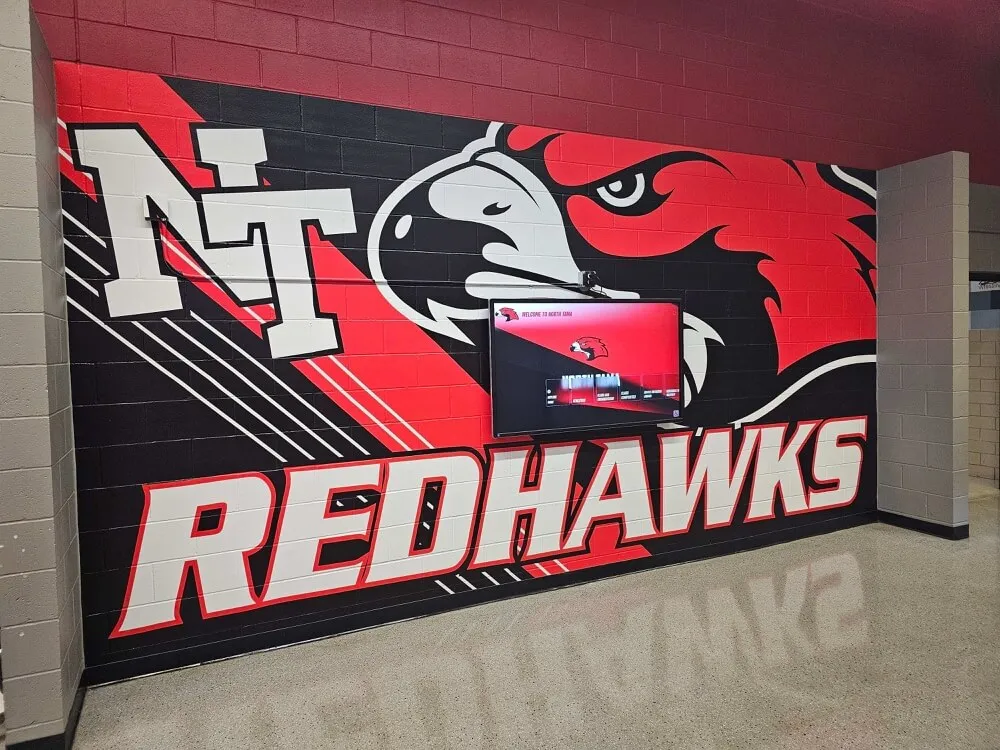
Athletic murals combined with digital displays create visually striking recognition environments celebrating program identity and achievement
Advanced Tactical Instruction and Game Management
Moving beyond fundamental skills requires tactical sophistication and strategic game management separating good programs from excellent ones.
Formation and System Selection
Age-Appropriate Formation Progression
Young players (U8-U10) benefit from simple formations emphasizing development over tactical sophistication. The 3-2-1 or 2-3-1 formations in 6v6 formats provide defensive stability while ensuring attacking opportunities. Avoid specialized positions focusing instead on universal skill development.
Older players (U11-U14) can handle increased tactical complexity. The 4-3-3 formation emphasizes width and attacking philosophy, the 4-4-2 provides balanced midfield presence and straightforward responsibilities, and the 3-5-2 develops possession capabilities through midfield numbers.
High school teams can execute sophisticated systems. Select formations matching roster strengths rather than imposing preferred systems on inappropriate personnel. Possession-oriented teams with technical midfielders excel in 4-3-3 or 4-2-3-1 formations. Athletic teams lacking technical creativity but possessing strong defenders and target forwards may succeed with direct 4-4-2 approaches.
In-Game Tactical Adjustments
Effective coaches read game flow making real-time adjustments. Recognition that opponents overload one side prompts defensive shifts and exploiting open spaces. Identification that specific defenders struggle with pace triggers tactical instructions attacking those players. Observation that opponents tire late in games suggests increased attacking intensity capitalizing on fatigue.
Communicate adjustments clearly during stoppage using simple language players understand under pressure. Avoid complex multi-point instructions impossible to process during games. Make one or two clear tactical changes then allow players to execute before further modifications.
Set Piece Excellence
Set pieces represent 30-40% of goals at youth levels providing outsized importance relative to practice time allocated. Develop multiple corner kick routines preventing defensive predictability, practice direct free kicks from various distances, rehearse throw-in plays from defensive, midfield, and attacking thirds, and prepare defensive organization against common attacking set plays.
Designate specific players for set piece roles based on technical ability (crossing quality, shooting accuracy, throw-in distance) and rehearse sufficiently that execution becomes automatic under pressure.
Player Motivation and Mental Skills
Building Confidence
Confident players perform significantly better than anxious, tentative athletes. Build confidence through emphasizing process over outcome focusing on controllable effort and decisions, celebrating specific improvements and excellent plays regardless of game results, maintaining positive body language and communications even during difficult moments, and providing second chances after mistakes rather than immediate substitution reinforcing fear.
Players making mistakes then immediately executing successfully develop resilience and confidence. Those benched after errors learn avoidance rather than confidence in recovery.
Managing Pressure Situations
Youth players often struggle with high-pressure moments: penalty kicks, championship games, critical playoff situations. Prepare players through simulation training replicating pressure through competitive drills and scrimmage consequences, mental rehearsal techniques visualizing successful execution, breathing and focus exercises managing physiological anxiety responses, and perspective coaching emphasizing that mistakes aren’t catastrophes.
Model composure during pressure situations. Coaches demonstrating calm confidence transfer that emotional state to players. Those showing visible stress and anxiety amplify player pressure.
Team Unity and Chemistry
Talent alone rarely creates championship teams. Unity and chemistry multiply talent effectiveness. Build chemistry through team-building activities outside soccer context, position rotations helping players appreciate different roles and challenges, leadership opportunities distributed across roster rather than concentrated in captains, and recognition systems celebrating teamwork behaviors like assists, defensive help, and encouragement.
Address conflicts and chemistry problems immediately through mediation before resentments damage team culture. Sometimes removing one divisive player improves overall team performance despite losing individual talent.
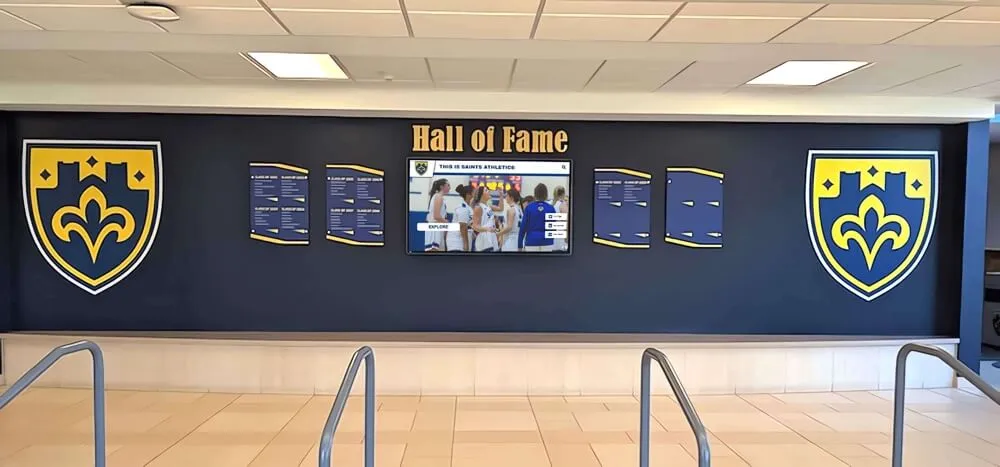
Championship shield displays create visual traditions celebrating competitive excellence across multiple seasons and teams
Equipment, Facilities, and Resource Management
Practical program success requires managing physical resources effectively within budget constraints.
Essential Equipment and Organization
Core Equipment Needs
Quality equipment enhances development and safety. Essential items include sufficient soccer balls ensuring maximum touches (one ball per two players minimum), properly sized goals appropriate for age groups, training cones and markers in multiple colors for drill organization, practice pinnies or scrimmage vests in contrasting colors, and first aid kit and emergency contact information.
Secondary equipment improving training quality includes passing gates and small goals, agility equipment (ladders, hurdles, rings), goalkeeper-specific training gear, and water bottles ensuring proper hydration.
Budget constraints require prioritization. Invest in sufficient balls and basic safety equipment before specialized training tools providing marginal benefits.
Field and Facility Considerations
Limited field access challenges many programs. Maximize available time through efficient practice organization minimizing transition time between activities, advance setup arriving early to organize equipment before players, and small-sided drill design requiring minimal space when full fields unavailable.
Coordinate with facility managers building relationships facilitating scheduling flexibility. Demonstrate respect through equipment cleanup, field maintenance, and adherence to usage policies. Programs maintaining positive facility relationships receive preferential treatment when schedule conflicts arise.
Resource Budgeting and Fundraising
Many youth programs operate on minimal budgets requiring creative resource management. Cost-effective strategies include equipment sharing agreements with other programs, bulk purchasing through coach networks, parent equipment donations at season end, and volunteer labor for goals, field maintenance, and administrative tasks.
Fundraising initiatives like team sponsorships from local businesses, tournament hosting generating registration revenue, youth soccer camps providing development and income, and booster club partnerships supporting equipment and facility improvements supplement limited school or league budgets.
Transparent financial management communicating how funds support player development builds parent and community trust facilitating fundraising success. Programs demonstrating responsible resource stewardship receive stronger support than those lacking accountability.
Safety and Risk Management
Injury Prevention Protocols
Proper warm-up and cool-down routines reduce injury risk. Monitor high-risk players with previous injuries for concerning symptoms. Ensure proper hydration particularly during hot weather. Maintain appropriate work-to-rest ratios preventing overtraining injuries.
Establish return-to-play protocols for injured players requiring medical clearance and graduated return progressions rather than immediate full participation. Rushing players back from injuries creates re-injury risk and potential long-term damage.
Emergency Action Planning
Every coach must prepare for emergency situations. Requirements include current CPR and first aid certification, documented emergency action plan identifying nearest medical facilities and access routes, emergency contact information for all players readily available, and communication plan notifying parents immediately about injuries requiring medical attention.
Practice emergency scenarios ensuring all coaching staff understand procedures. When emergencies occur, clear plans prevent panic and confusion potentially worsening situations.
Concussion Awareness and Management
Soccer presents concussion risks requiring specific protocols. Coaches must complete concussion recognition training, immediately remove players showing concussion symptoms from participation, document incidents and symptoms observed, and require medical clearance before return to play.
Never allow players to “play through” head injuries or pressure athletes to return before medical clearance. Long-term health dramatically outweighs any single game importance regardless of competitive stakes or player protests.
Programs prioritizing athlete safety and well-being build trust with families and demonstrate values extending beyond winning. Schools implementing comprehensive athletic safety alongside sports recognition programs create balanced athletic cultures valuing both achievement and responsible participation.
Communication and Community Building
Program success extends beyond on-field coaching into community relationships and stakeholder communication.
Parent Partnership Strategies
Establishing Communication Channels
Clear communication prevents most parent-coach conflicts. Establish preferred communication methods (email, team app, messaging platform), response time expectations for non-urgent communications, appropriate topics for coach contact versus requiring in-person meetings, and boundaries around communication during games or immediately afterward when emotions run high.
Proactive communication about team policies, season schedule, playing time philosophy, and roster decisions prevents most misunderstandings. Parents appreciating transparency even when disagreeing with specific decisions respond more constructively than those feeling kept in dark about coaching rationale.
Managing Playing Time Expectations
Playing time represents the most common parent-coach conflict source. Prevent issues through pre-season clarity about playing time distribution philosophy, explanation of factors influencing playing time decisions (effort, attitude, skill development, tactical fit), willingness to discuss specific development areas players should address, and boundaries about game-day playing time lobbying.
Some parents will disagree with playing time regardless of explanation quality. Consistent adherence to stated policies and willingness to explain reasoning—while maintaining coaching authority over decisions—manages situations productively without allowing parent pressure to dictate coaching choices undermining team dynamics.
Volunteer Coordination
Youth programs often require parent volunteers for sustainability. Coordinate effectively through specific role descriptions clarifying expectations, reasonable time commitments preventing volunteer burnout, appreciation for contributions encouraging continued support, and flexibility accommodating different availability and comfort levels.
Parents contributing through team management, fundraising coordination, equipment assistance, or communication support develop program investment and understanding reducing criticism born from lack of involvement perspective.
Building Community Support
Local Business Partnerships
Community businesses often support youth programs through sponsorships, in-kind donations, and facility access. Build partnerships by clearly articulating sponsorship benefits (banner visibility, program mentions, community goodwill), flexible sponsorship levels accommodating various budget capabilities, genuine appreciation and recognition for sponsors, and demonstrated program quality worth supporting.
Long-term partnership relationships require consistent communication, fulfillment of promised recognition, and periodic evaluation ensuring mutual benefit continuation.
Media Relations and Publicity
Public recognition builds program visibility and community support. Strategies include submitting game results and significant achievements to local media, inviting reporters to cover championship games or special events, maintaining active social media presence showcasing player and team accomplishments, and coordinating with school communications staff for website and newsletter features.
Positive media coverage attracts players to programs, facilitates fundraising, and creates community pride supporting continued investment. Programs effectively communicating success build momentum sustaining excellence through multiple seasons and coaching generations.
Alumni Engagement
Former players represent valuable program assets. Engage alumni through invitation to games and special events, mentorship programs connecting current players with former athletes, fundraising campaigns for facility improvements or equipment, and permanent recognition documenting program history and honoring significant contributors.
Alumni invested in program success provide financial support, volunteer assistance, and recruiting advocacy encouraging younger players to join programs with strong traditions. Modern platforms like Rocket Alumni Solutions enable schools to maintain digital alumni networks while creating interactive recognition displays documenting program history—connecting current athletes with traditions inspiring continued excellence while facilitating ongoing alumni relationships supporting long-term program sustainability.
Continuous Coaching Improvement
Exceptional coaches recognize that learning never ends regardless of experience level.
Professional Development Opportunities
Licensing and Certification Programs
Formal coaching education dramatically improves coaching effectiveness. United States Soccer Federation offers coaching licenses (Grassroots, D, C, B, A) providing tactical knowledge, technical instruction methodology, and age-appropriate development understanding. State youth soccer associations provide grassroots courses specifically designed for volunteer coaches. National Soccer Coaches Association of America offers diplomas and continuing education.
Investment in licensing demonstrates professional commitment, improves actual coaching quality, and provides networking with other coaches sharing best practices and lesson plans. Licensed coaches gain credibility with players, parents, and administrators recognizing educational investment.
Coaching Clinics and Conferences
Attending coaching clinics exposes coaches to new ideas and methodologies. Events feature presentations from successful coaches sharing tactical innovations, drill demonstrations showing practical application of concepts, networking opportunities connecting with coaching peers, and exposure to latest training equipment and technology.
State and national coaching conventions, college coaching clinics open to youth coaches, and specialty clinics focusing on goalkeeper training, tactical systems, or specific age group development provide concentrated learning accelerating coaching improvement beyond self-directed study alone.
Observation and Mentorship
Learning from experienced coaches accelerates development. Strategies include observing successful programs’ practices (with permission) noting organization and drill selection, establishing mentor relationships with experienced coaches willing to share knowledge, joining coaching communities sharing lesson plans and tactical concepts, and analyzing professional team training sessions when available through video or in person.
Humility recognizing that better coaches exist combined with initiative seeking their wisdom creates dramatic improvement trajectories transforming capable volunteers into genuinely excellent coaches developing hundreds of young players across careers.
Self-Reflection and Program Evaluation
Post-Season Assessment
Systematic season evaluation identifies improvements for subsequent years. Assessment areas include win-loss record in context of realistic expectations and development priorities, individual player skill development measured through assessment data, team culture and chemistry quality based on retention and player feedback, parent satisfaction through anonymous surveys, and personal coaching performance honestly evaluating decisions and areas for improvement.
Document lessons learned while details remain fresh. Season conclusions feel like natural reflection points, but without deliberate documentation, insights fade before next season planning begins and similar mistakes repeat.
Player and Parent Feedback
Anonymous end-of-season surveys provide valuable insights coaches may miss. Questions address practice organization and value, communication clarity and frequency, coach approachability and responsiveness, overall season satisfaction, and suggestions for improvement.
Feedback requires thick skin as criticism stings even when constructive. Patterns across multiple responses reveal genuine improvement areas distinct from individual complaints reflecting unavoidable disagreements. Programs systematically incorporating stakeholder feedback improve faster than those relying exclusively on coach self-assessment.
Adjusting Coaching Philosophy
Effective coaches evolve philosophies based on experience rather than rigidly maintaining approaches proving ineffective. Willingness to experiment with new formations, modify practice structures, adjust playing time philosophies, or change tactical emphases based on results and feedback demonstrates growth mindset separating improving coaches from stagnant ones.
Evolution requires balance between consistency providing program stability and flexibility preventing ossification. Core values around player development, sportsmanship, and inclusive culture should remain stable while tactical approaches and specific methodologies evolve incorporating new learning and contextual understanding.
Youth soccer coaching offers extraordinary opportunities to shape young lives through sport—developing not only soccer skills but also character, resilience, teamwork, and confidence that athletes carry throughout their lives. Coaches investing in continuous learning, prioritizing player development over exclusive winning focus, and building comprehensive programs celebrating diverse contributions create lasting positive impacts extending far beyond championship tallies into genuine transformation of the young athletes privileged to play under their leadership.
Whether you’re beginning your first season coaching your child’s recreational team or building an established high school program, the principles, drills, and strategies outlined in this guide provide frameworks for meaningful coaching that serves young athletes well. The most successful youth soccer coaches remember that while competitive success brings temporary satisfaction, the relationships built, values instilled, and character developed through quality coaching create lifetime impact justifying the substantial time, energy, and heart required to coach youth sports with genuine excellence.
Celebrate Your Soccer Program’s Legacy with Interactive Recognition
Building an exceptional youth soccer program requires dedication both on and off the field. As your program grows and achieves success, preserving that legacy through meaningful recognition creates lasting inspiration for current and future athletes. Rocket Alumni Solutions specializes in interactive digital recognition displays that transform how schools celebrate soccer achievements—from individual player milestones to championship seasons and coaching excellence.
Our touchscreen solutions enable athletic directors and coaches to create comprehensive recognition programs documenting program history, honoring all-league selections and scoring leaders, celebrating championship teams across multiple seasons, and maintaining alumni connections that strengthen program culture. Unlike static trophy cases limited by physical space, digital platforms provide unlimited capacity to recognize every deserving athlete while offering engaging multimedia storytelling through photos, statistics, and achievement documentation that inspires current players pursuing their own recognition.
Whether you’re establishing a new soccer program or honoring decades of athletic tradition, interactive recognition technology creates dynamic displays that grow with your program while maintaining the professional presentation that reflects your commitment to excellence both on the field and in how you celebrate those who make your soccer program special.