Interactive Touch Screen Digital Signage: How It Works and What You Need
Intent: Demonstrate how interactive touch screen digital signage works from panel to software to content strategy—covering every component schools need to deploy recognition displays that genuinely engage students, alumni, families, and donors.
Read More
Recognition Display USB HID Compatibility Test: School IT Acceptance Guide
A recognition display USB HID compatibility test confirms that a school touchscreen enumerates correctly as a Human Interface Device on its host computer, accepts touch input without dropped contacts or registration failures, and behaves consistently across the operating conditions a school recognition program produces: cold-start after overnight idle, browsing through large athlete profile databases, and continuous navigation during alumni events and induction ceremonies. USB HID (Human Interface Device) is the class protocol through which touchscreen digitizers communicate touch coordinates, contact count, and gesture state to a host operating system. It is defined in the USB HID Usage Tables specification maintained by the USB Implementers Forum (USB-IF), and its touch-specific reporting is further specified through the HID Digitizer usage page (0x0D). When a recognition display passes a USB HID compatibility test, the school IT team has confirmed that the touchscreen input pathway is functioning correctly before any recognition content goes live.
Read More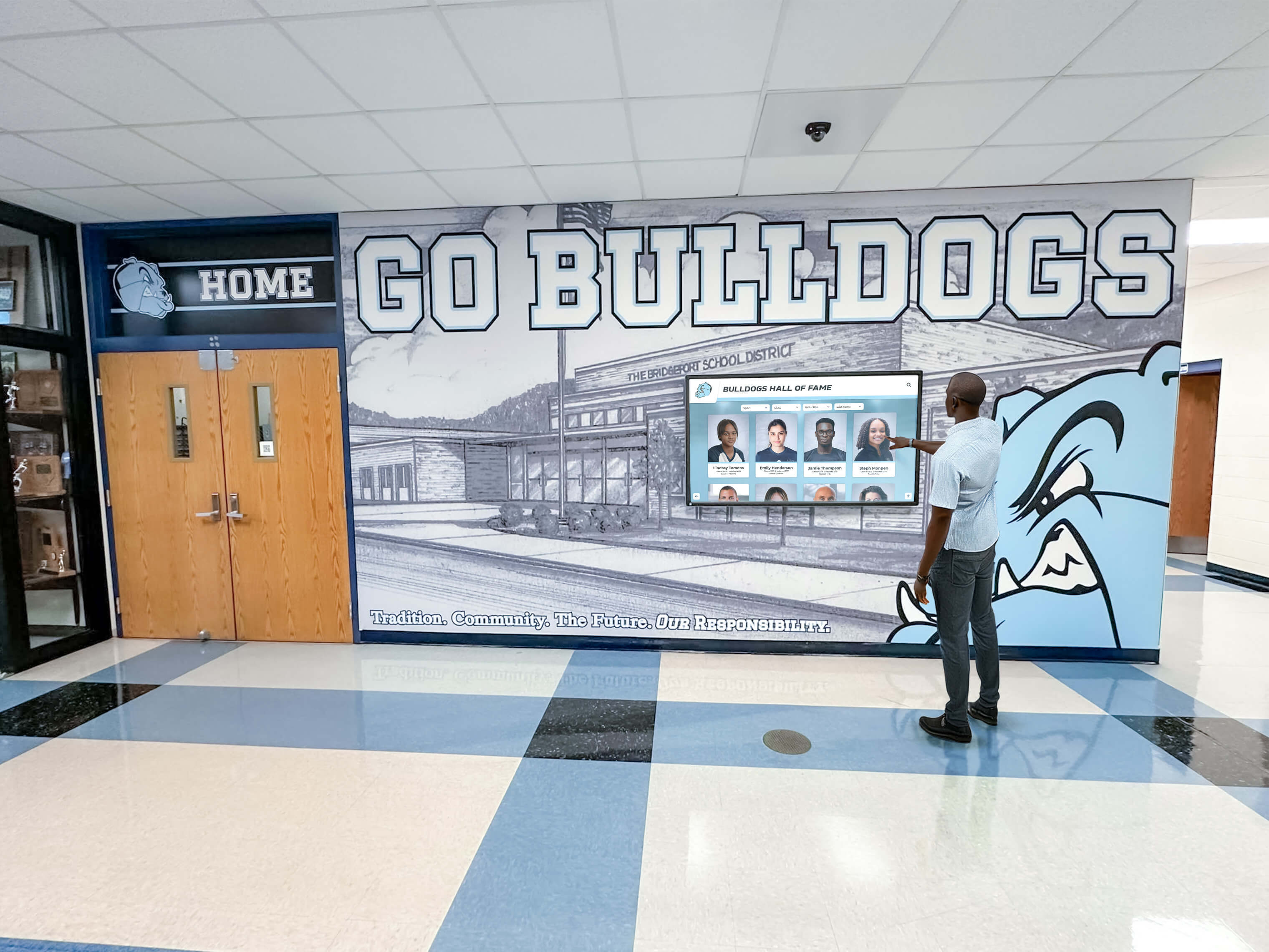
Recognition Display Delta E Color Accuracy Test: A School Acceptance Plan
A recognition display Delta E color accuracy test converts a common but vague complaint—“the colors look wrong on that screen”—into a structured, repeatable acceptance procedure that athletic directors, school IT staff, and facilities teams can run before any newly installed or relocated touchscreen goes live in an athletic lobby, hallway hall-of-fame installation, or trophy case alcove. Delta E, written as ΔE, is a numerical measure of the perceptible difference between a color as it should appear and a color as a specific display actually renders it. The measurement comes from the CIELAB color space, which organizes colors in a way that correlates with how the human visual system perceives differences. When two colors have a Delta E value of zero, they are identical under the measurement conditions. As the value rises, the perceptual difference between the target and the actual color grows—predictably enough that display engineers, color scientists, and AV technicians use ΔE thresholds to specify pass/fail requirements for professional displays.
Read More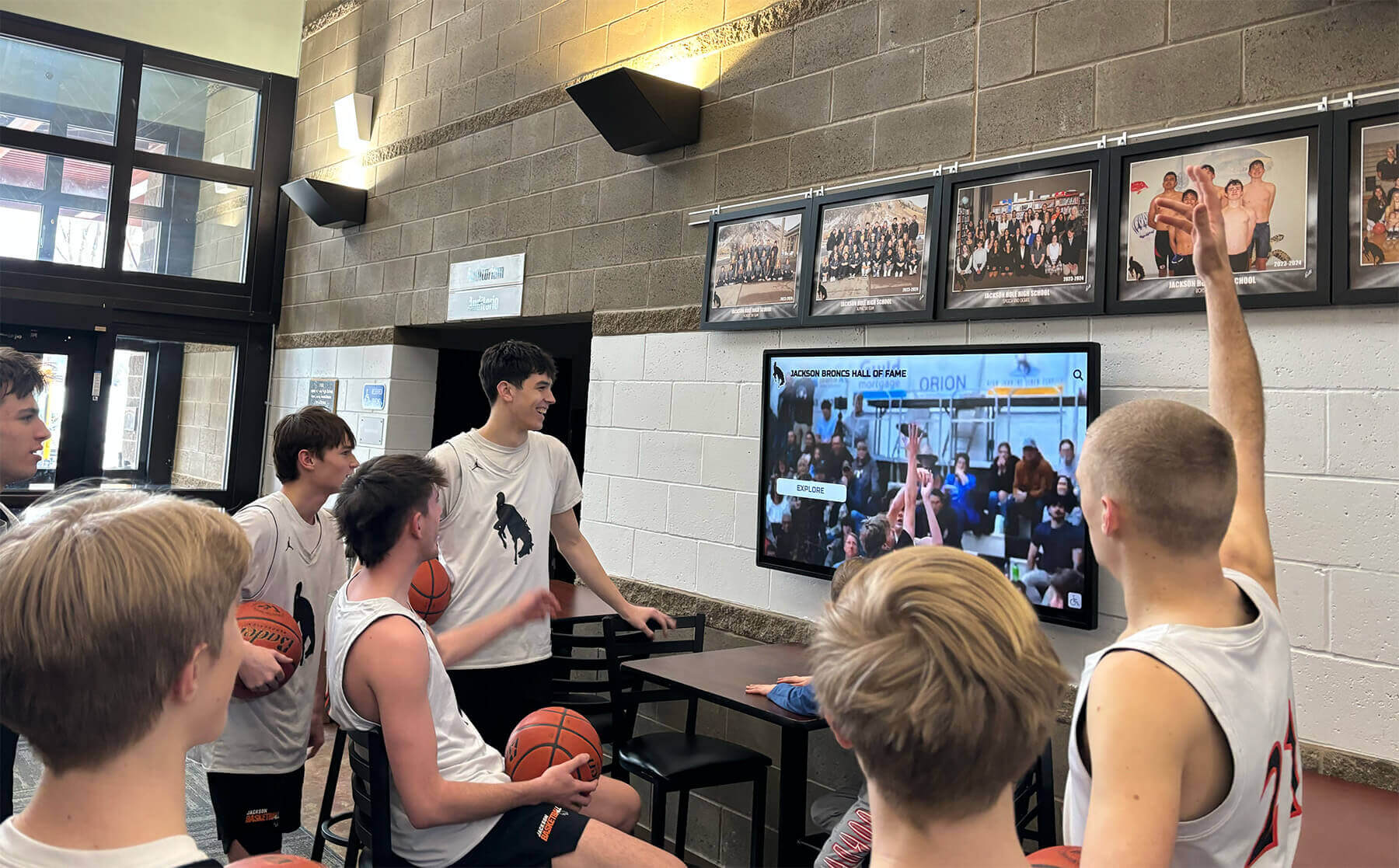
Recognition Display Local Dimming Test for Sports Photos and Video
A recognition display local dimming test is a structured pre-acceptance check that school IT staff, athletic directors, facilities teams, and AV technicians run on newly installed or repositioned touchscreens before those panels go live in hallways, athletic lobbies, and hall-of-fame installations. Local dimming is a backlight control technology—present in many commercial LCD displays—that divides the panel into independent dimming zones and adjusts each zone’s brightness separately based on the content it is currently showing. When it works correctly, local dimming delivers deeper perceived blacks alongside bright highlights in the same frame: a stadium scoreboard blazing white above a dark crowd, an athlete emerging from a shadowed tunnel, or a championship trophy under a spotlight against a rich navy background. When it misfires—as it frequently does at factory defaults or when misconfigured—local dimming introduces three specific failure modes: blooming (a halo of unwanted brightness bleeding from a bright object into surrounding dark areas), crushed highlights (detail disappearing in the brightest zones of an image because the corresponding zone is driven too hard), and uneven dark scenes (zones dimming at different rates so that a large dark area—a gymnasium floor, a black trophy base—appears as a patchwork of subtly different gray tones).
Read More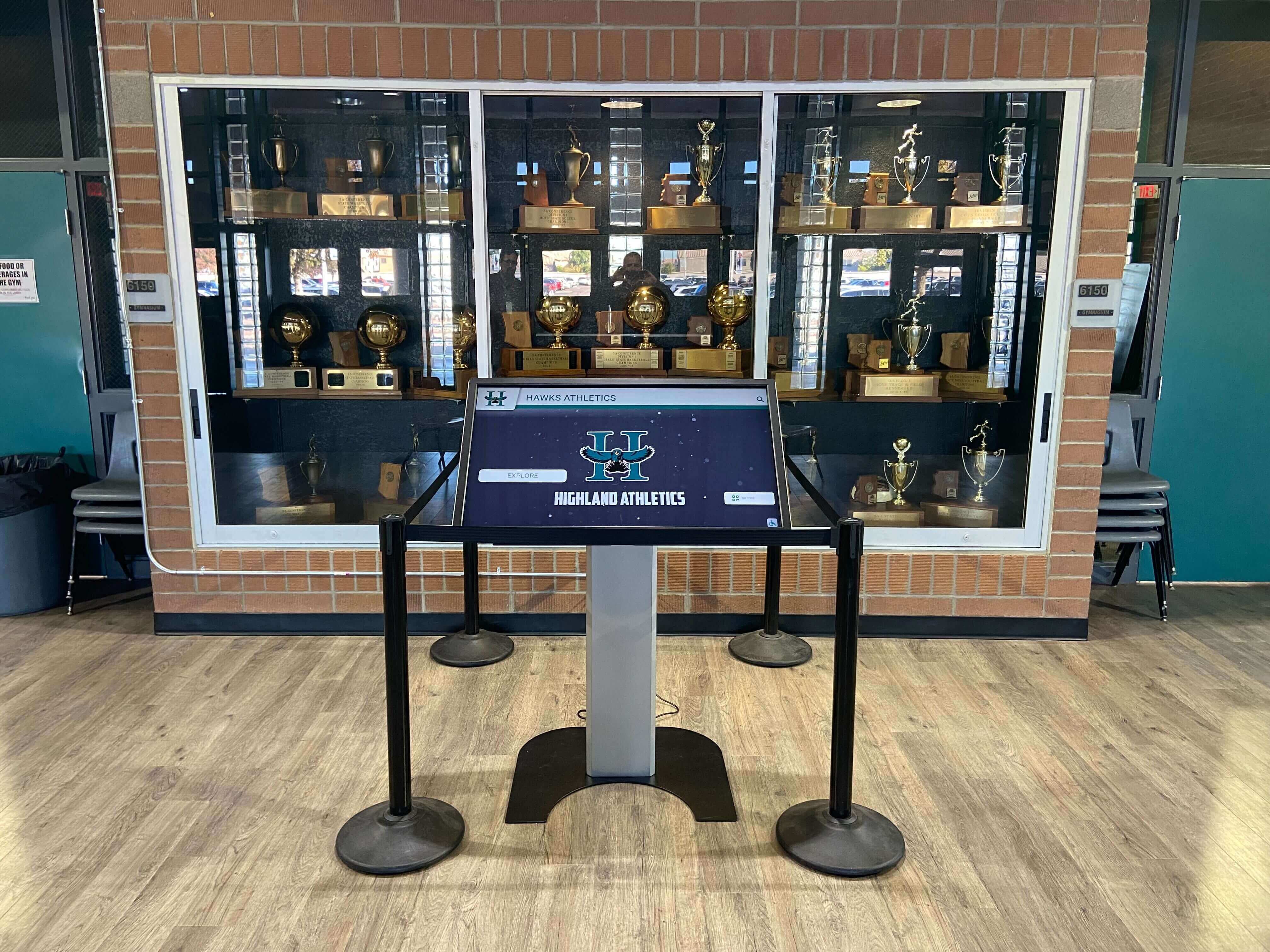
Recognition Display Multi-Touch Accuracy Test for Shared School Kiosks
A recognition display multi-touch accuracy test is a structured procedure that school IT staff, AV technicians, and athletic directors run on interactive recognition kiosks before deploying them in shared hallways, lobbies, and athletic facilities. Multi-touch accuracy measures two related properties: whether the display correctly registers multiple simultaneous touch inputs — from two students exploring at the same time, for example — and whether each individual touch is detected at the coordinate where the finger actually landed, not offset by several millimeters into an adjacent interactive element. On a recognition kiosk presenting athlete profiles, award records, and hall-of-fame inductees, a touch-accuracy failure produces the wrong profile when a student taps a portrait, activates the wrong navigation control, or prevents two visitors from browsing simultaneously. None of these failures are visible until the kiosk is in use, which is why systematic acceptance testing before deployment is essential.
Read More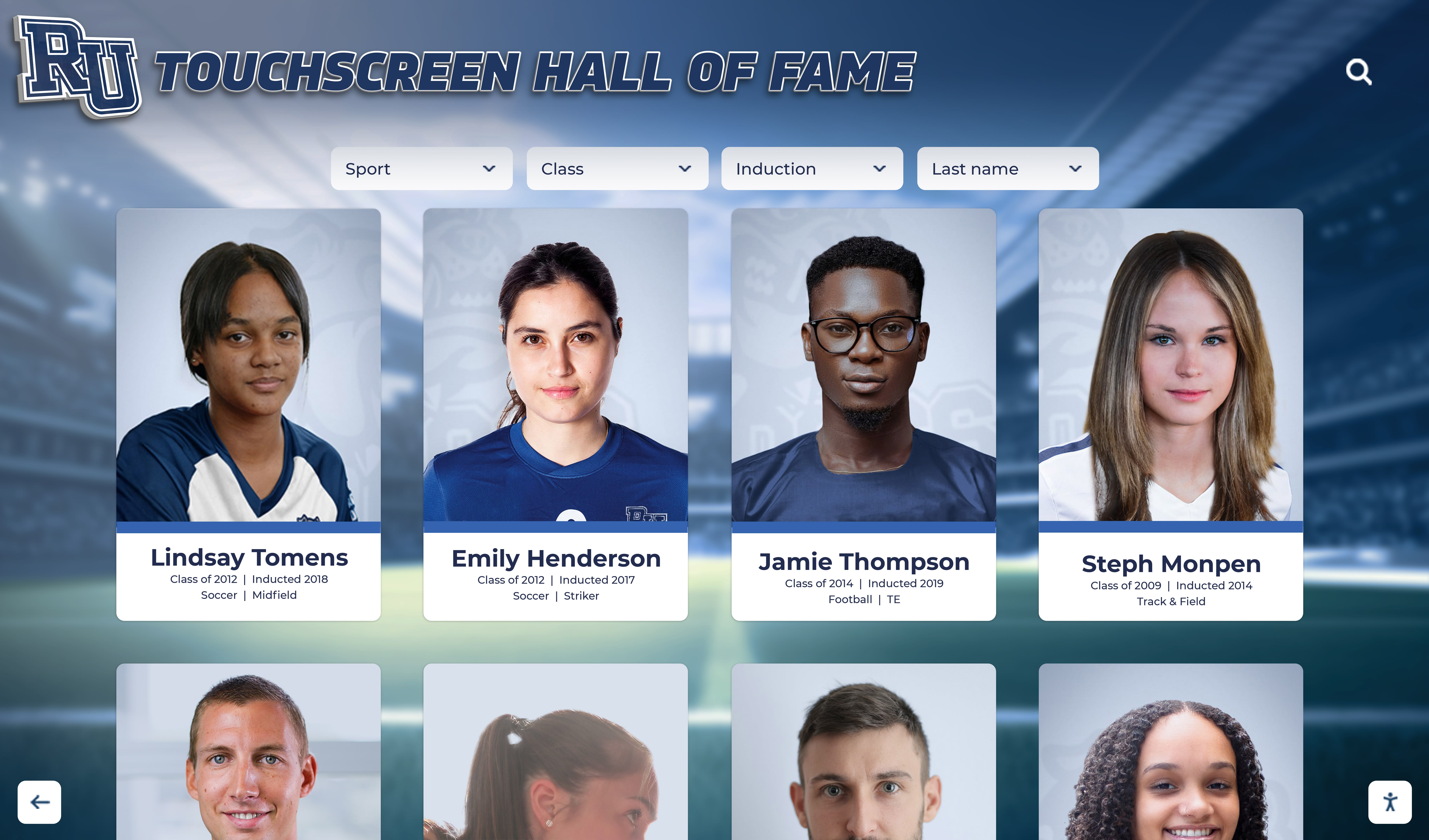
Recognition Display Moiré Pattern Test for Photos, Textures, and LED Backgrounds
A recognition display moiré pattern test is a structured visual check that school administrators, AV teams, IT staff, and athletic directors run on touchscreens, LED walls, and digital signage panels before accepting them for recognition program use. Moiré is an interference pattern — a rippling, shimmering, or banding artifact — that emerges when two regular grids or dot patterns interact at a mismatched frequency or angle. On a recognition display, moiré appears most visibly in photographs of athletes wearing striped, checkered, or fine-weave uniforms; in scanned newspaper clippings and halftone-printed award certificates; in fine texture backgrounds used in graphic layouts; and against the regular dot pitch of direct-view LED panels. The artifact makes content look amateurish, distracts from the honored individual, and cannot be corrected by the recognition software — it is a display hardware and content-preparation issue that must be caught before the program goes live.
Read MoreRecognition Display Black Level Test for School Lobbies and Gyms
A recognition display black level test is a structured pre-acceptance check that school administrators, IT staff, athletic directors, and facilities teams run on newly installed or repositioned touchscreens to confirm the panel renders dark areas of recognition content accurately. Black level describes the darkest tone a display can produce: when it is set too high, shadow regions in athlete portraits, gymnasium trophy photography, and archival sports footage appear washed out and gray rather than deep and defined. When it is set too low on certain panel types, fine shadow detail in dark uniforms or low-lit award ceremony photographs collapses into an undifferentiated black mass that destroys visual information. Either failure makes your school’s recognition program look careless, and it is almost always avoidable with a five-minute test before the display goes live.
Read MoreRecognition Display Gamma Calibration: A School Acceptance Checklist
A recognition display gamma calibration checklist is a structured pre-acceptance test that school administrators, IT staff, and facilities teams use to confirm that a newly installed or repositioned touchscreen renders recognition content—athlete portraits, championship trophy photographs, award ceremony images, and archival sports footage—with accurate tonal gradation from deep shadows through bright highlights. Gamma is the mathematical relationship between the electrical signal a display receives and the brightness it actually produces on screen. When gamma is misconfigured, shadow areas of photographs become indistinguishable black regions, highlight detail clips to featureless white, and skin tones appear either washed out or underexposed. On a lobby hall-of-fame screen or an athletics hallway kiosk, that tonal distortion means portraits of honored athletes look unrecognizable and decades of carefully preserved imagery lose the visual detail that makes recognition meaningful.
Read MoreRecognition Display Cache Invalidation Checklist: Publish Updated School Content Reliably
A recognition display cache invalidation checklist gives content administrators, athletic directors, and IT staff a repeatable procedure for confirming that updates to your school’s touchscreen hall-of-fame platform—corrected inductee records, newly added award winners, revised event dates, or fixed photo credits—actually appear on every public-facing screen rather than serving visitors a stale version of your content. Caching is built into virtually every modern web-based recognition platform because it dramatically speeds up page loads on lobby kiosks and hallway touchscreens. That same caching mechanism can trap outdated content for hours or days after you’ve made changes in the content management system, creating an embarrassing mismatch between what administrators see in the back end and what visitors experience in the hallway.
Read More
Touchscreen Recognition Display Backup Restoration Test: A School IT Checklist
A touchscreen recognition display backup restoration test confirms that the athlete profiles, historical photos, statistical records, sponsor content, and display configurations stored in a school’s recognition system can actually be recovered after a hardware failure, ransomware incident, accidental deletion, or platform outage. A backup that has never been tested is not a backup—it is an untested assumption that could leave decades of institutional history unrecoverable at the worst possible moment.
Read MoreHall of Fame Data Backup Policy: Protect Profiles, Photos, Records, and Display Content
Every school’s hall of fame represents decades of irreplaceable work—athlete profiles assembled by boosters and alumni directors, historical photographs scanned from printed collections, record boards updated through generations of coaches, and digital display content refined through countless recognition cycles. A hall of fame data backup policy is the formal commitment that none of that work disappears because of a hard drive failure, a ransomware incident, an accidental deletion, or a vendor contract ending unexpectedly.
Read More
High School Athletic Department Strategic Plan: Recognition, Records, and Alumni Engagement Priorities
A high school athletic department strategic plan is more than a coaching philosophy document or a budget spreadsheet. When built with intentionality, it becomes the governance framework that determines how your program honors its past, celebrates its present, and invites alumni to remain part of the community long after graduation. Without that framework, recognition decisions happen reactively—a coach retires and nobody can locate the career scoring records; a 1987 championship banner hangs in a hallway but no living administrator knows the players’ names; a 40-year Hall of Fame inductee database sits in a spreadsheet that only one person knows how to open.
Read More
Student Athlete Code of Conduct: Template Sections for Awards, Records, and Recognition
A student athlete code of conduct does more than list disciplinary rules. When written well, it defines the eligibility standards that govern every recognition decision a school makes: which athletes qualify for post-season awards, whose records are officially certified for display, who is eligible for hall of fame induction, and when an athlete’s name and photo can appear on a public-facing wall or digital screen.
Read MoreAthletic Department Website: Pages Schools Need for Records, Recognition, and History
Most school athletic department websites were built to post schedules and score updates—and that was enough when parents just needed to know what time Friday’s game started. But the expectations on that website have grown considerably. Prospective student-athletes research programs before committing. Alumni look for names from decades past. Boosters expect to see the programs they fund presented with care. And current athletes want to see their achievements treated as the permanent record they represent. A website that serves all of those audiences does more than publish a calendar—it becomes the digital home of every record, recognition, and chapter of program history a school has accumulated.
Read MoreAthletic Department Management Software: What Belongs in the Stack for Records, Rosters, and Recognition
Running a school athletic department has never involved more moving pieces. Between eligibility verification, scheduling conflicts, parent communication, championship records, digital media, and end-of-season banquets, athletic directors routinely manage workloads that would strain a much larger staff. Athletic department management software has expanded rapidly to address these demands—but the category now covers so many distinct tools that assembling an effective, integrated stack requires deliberate thinking about what each system actually does and how each piece connects to the others.
Read More
School Website Examples: Athletics, Alumni, Awards, and Recognition Pages to Include
Most school websites handle the essentials competently—class schedules, staff directories, event calendars. What they rarely get right are the pages that actually inspire community pride: the athletics history buried three clicks deep, the alumni spotlight that hasn’t been updated since graduation season three years ago, or the award recipients list living inside an inaccessible PDF no one can search. Yet those are precisely the pages that prospective families, current students, donors, and graduates seek when they want to feel genuinely connected to your institution.
Read MoreSchool Crest Design Guide: Heraldic Identity for Recognition Walls and Digital Displays
A school crest is not a logo. While the two terms are often used interchangeably, they represent fundamentally different design traditions — and confusing them leads to recognition walls, diplomas, and hall of fame displays that feel visually hollow rather than ceremonially significant. A logo is a modern graphic mark optimized for marketing materials and digital screens. A school crest design, by contrast, draws on centuries of heraldic tradition: a structured composition of shields, charges, supporters, mottos, and symbolic imagery that encodes institutional values into a single authoritative emblem.
Read More
Dance Team Captain Recognition: Honoring Squad Leaders Through Awards, Senior Tributes, and Hall of Fame Walls
Dance team captains carry responsibilities that most school recognition systems were never designed to document. They lead rehearsals when the coach is occupied, navigate team dynamics that never surface in public, translate choreographic vision into physical execution, and sustain program culture across the transitions that define each academic year. Yet when it comes to formal recognition, most captains receive a brief acknowledgment at the banquet and a generic award that looks the same whether they led a championship squad or held a program together through a difficult season.
Read MoreInteractive Touch Screens in Education: How Schools Are Using Them for Recognition, Wayfinding, and Student Engagement
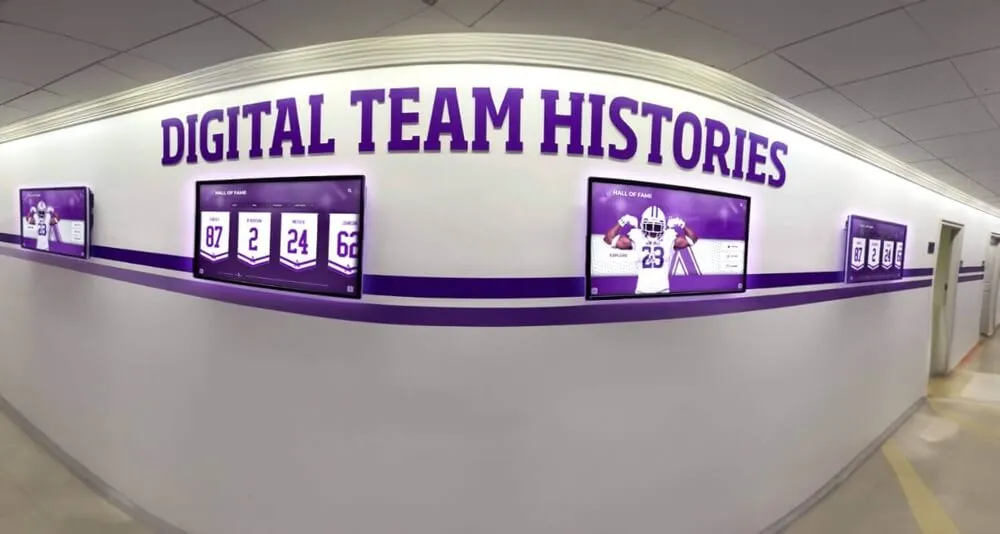
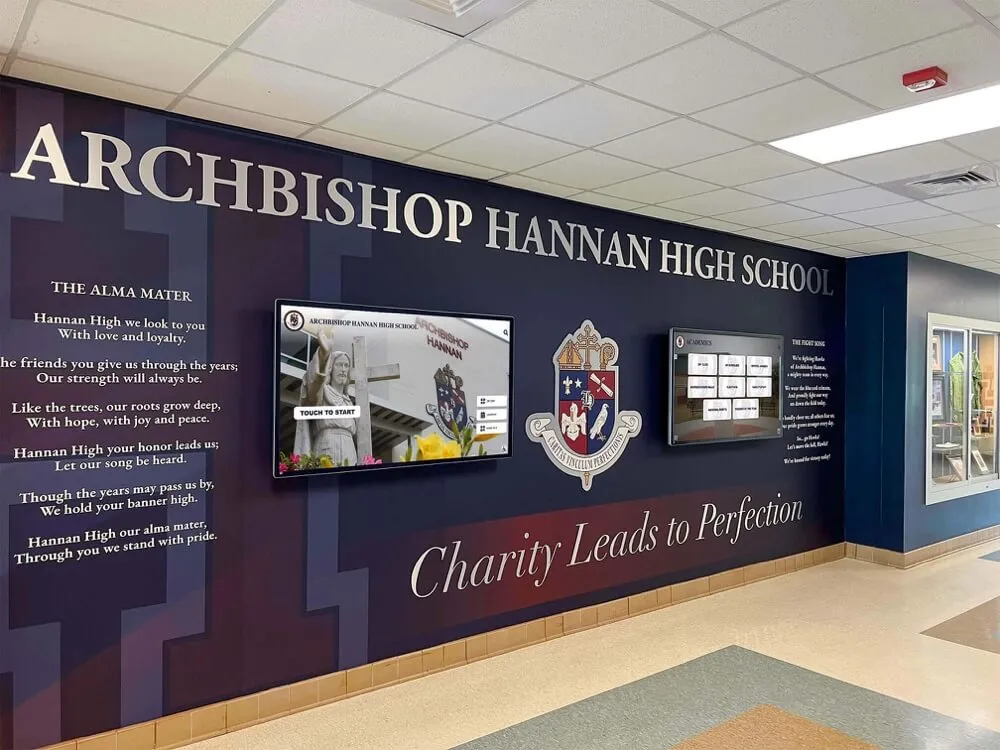
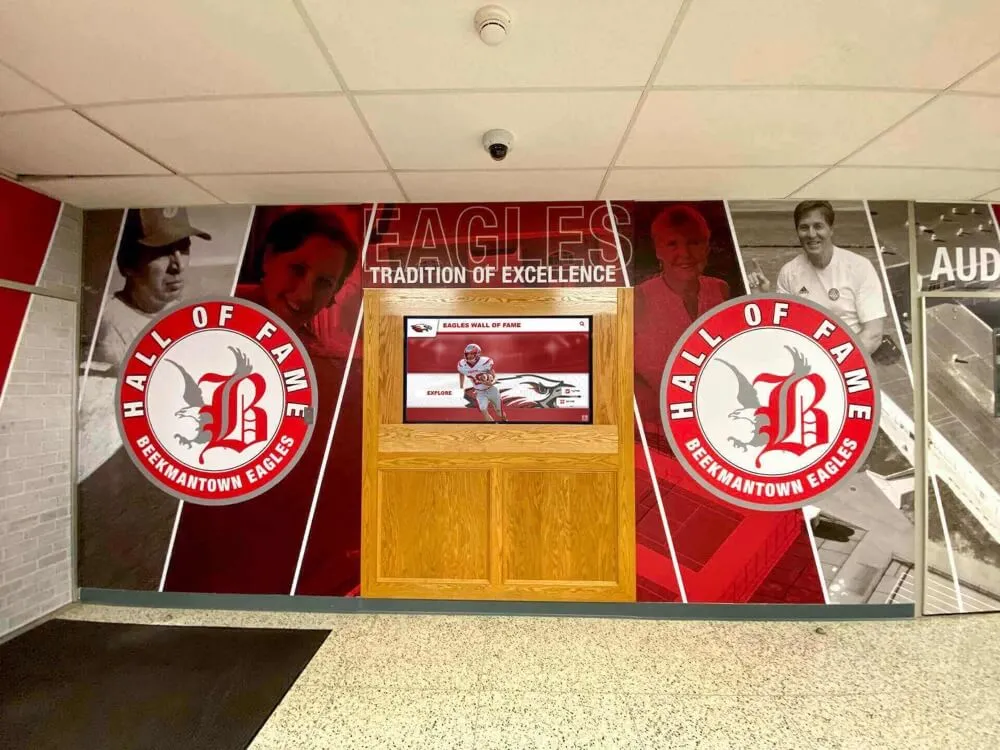
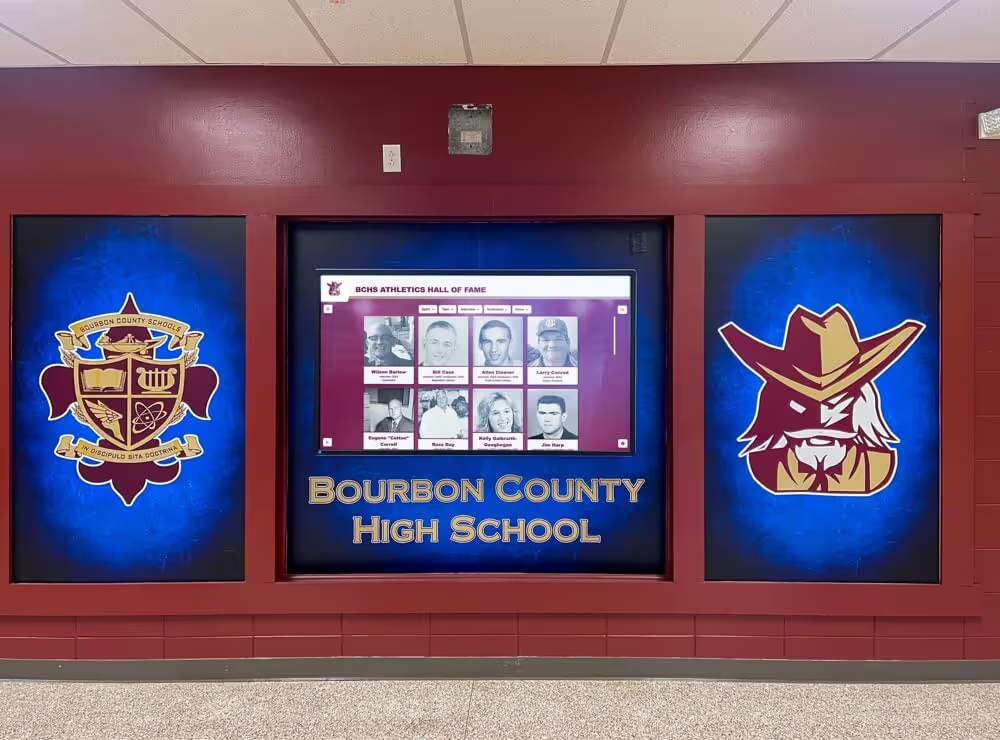
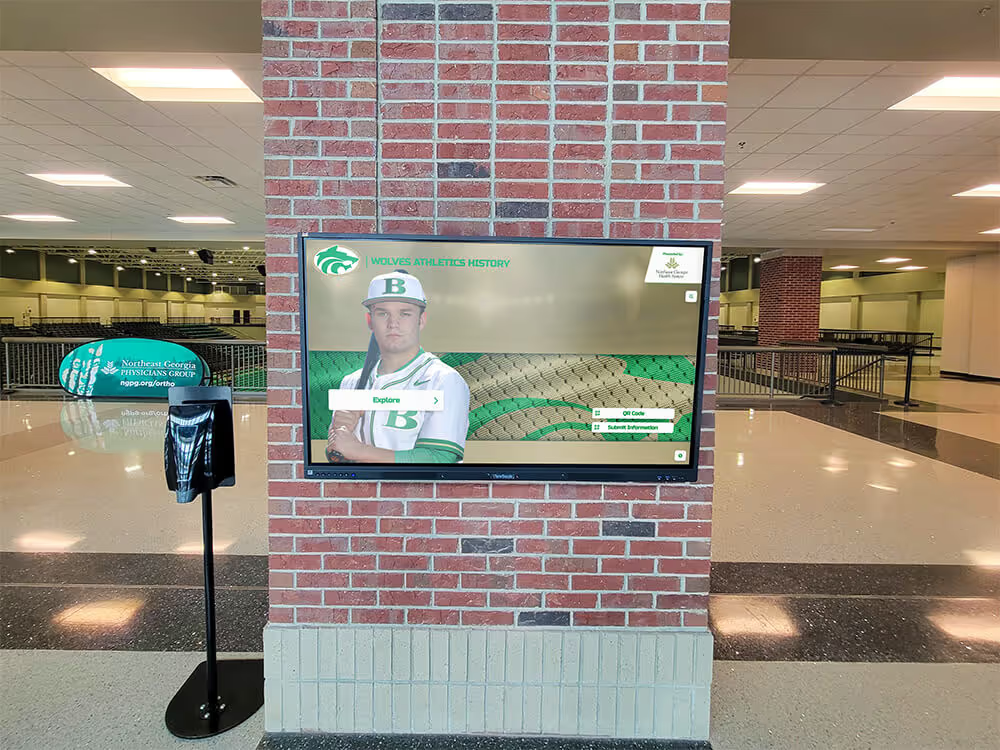
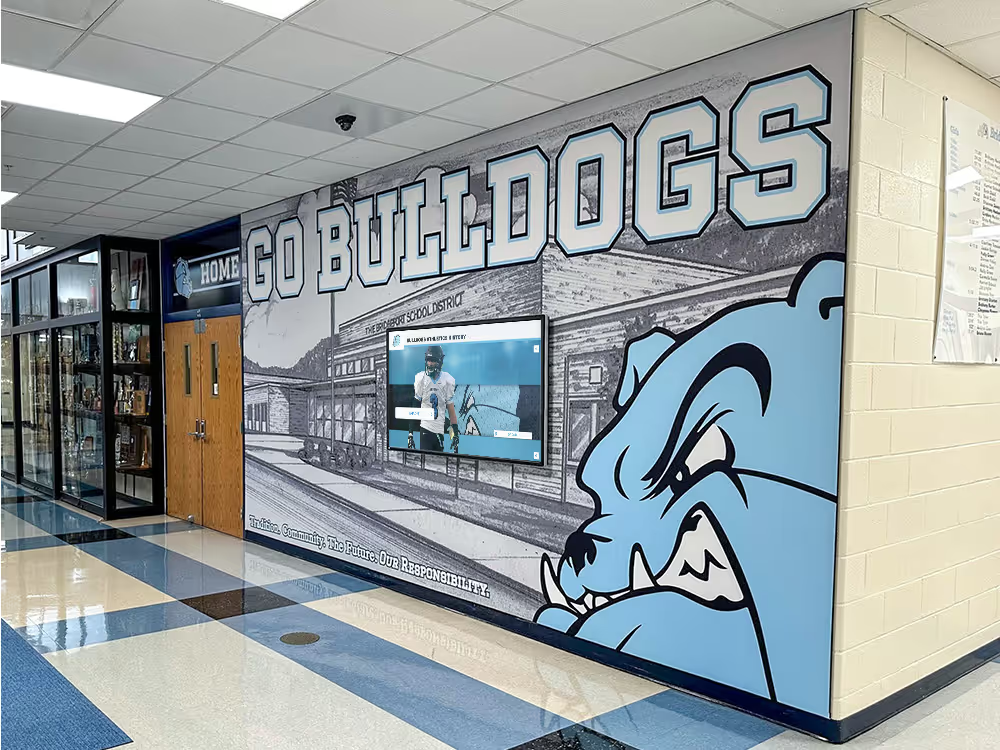
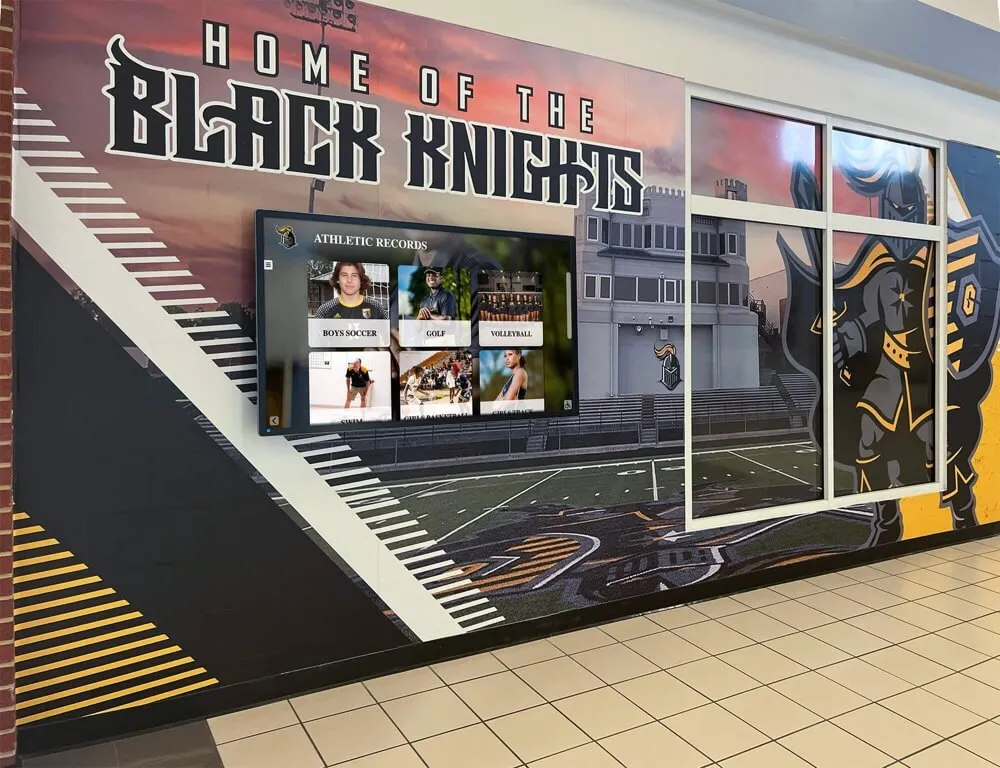
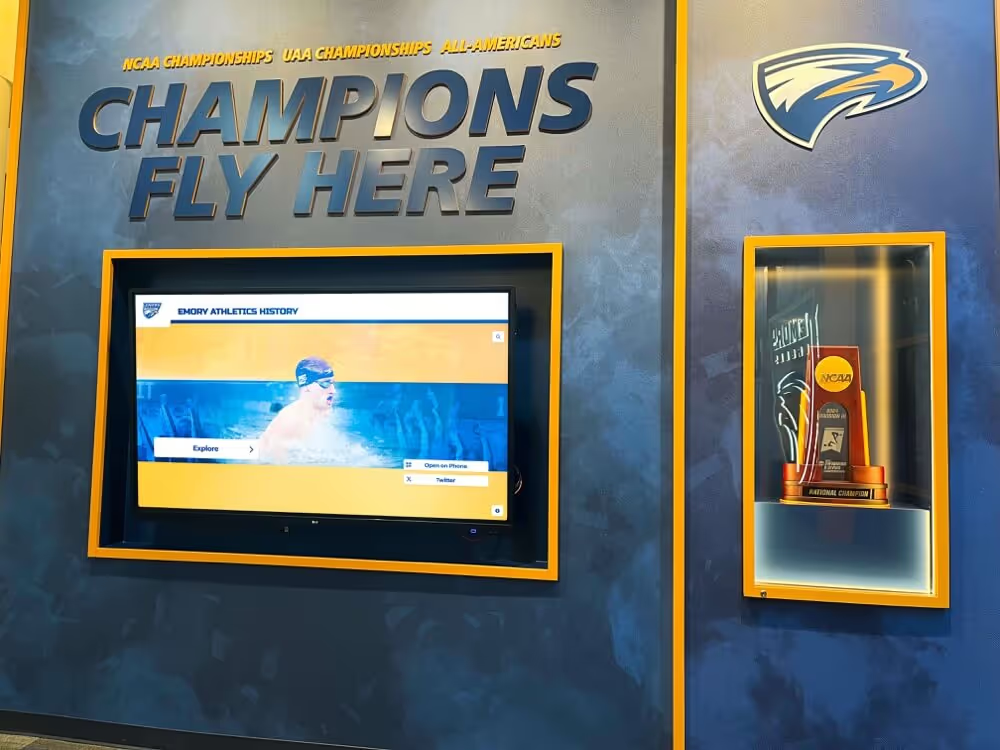
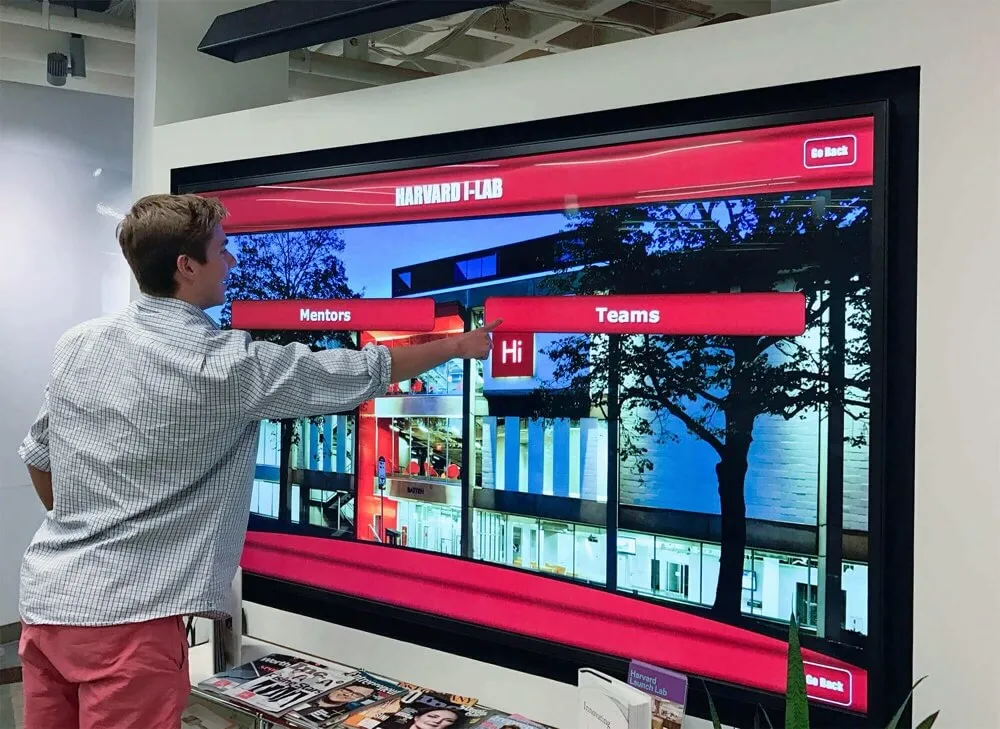
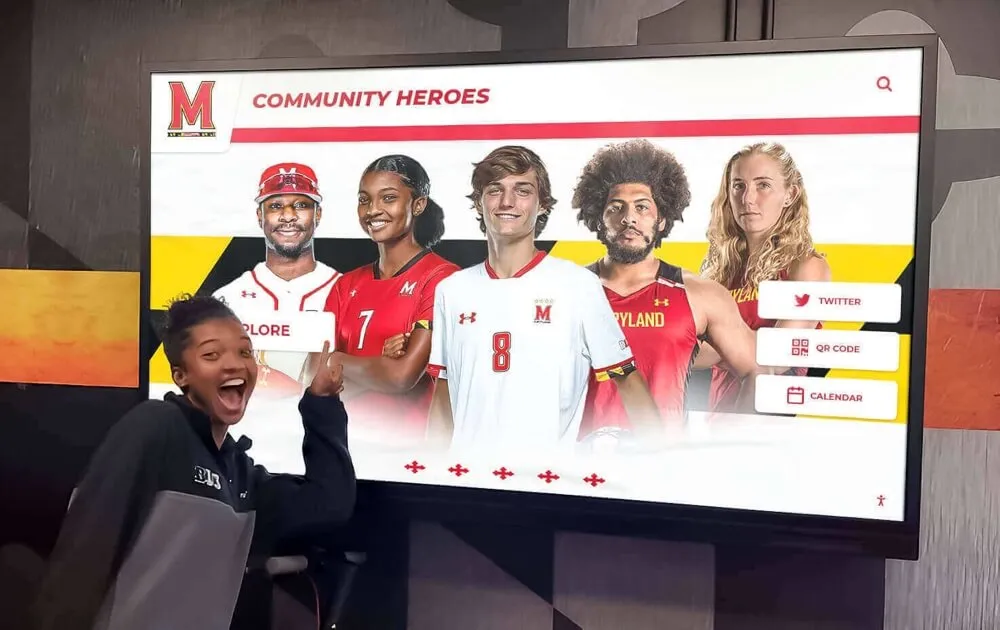
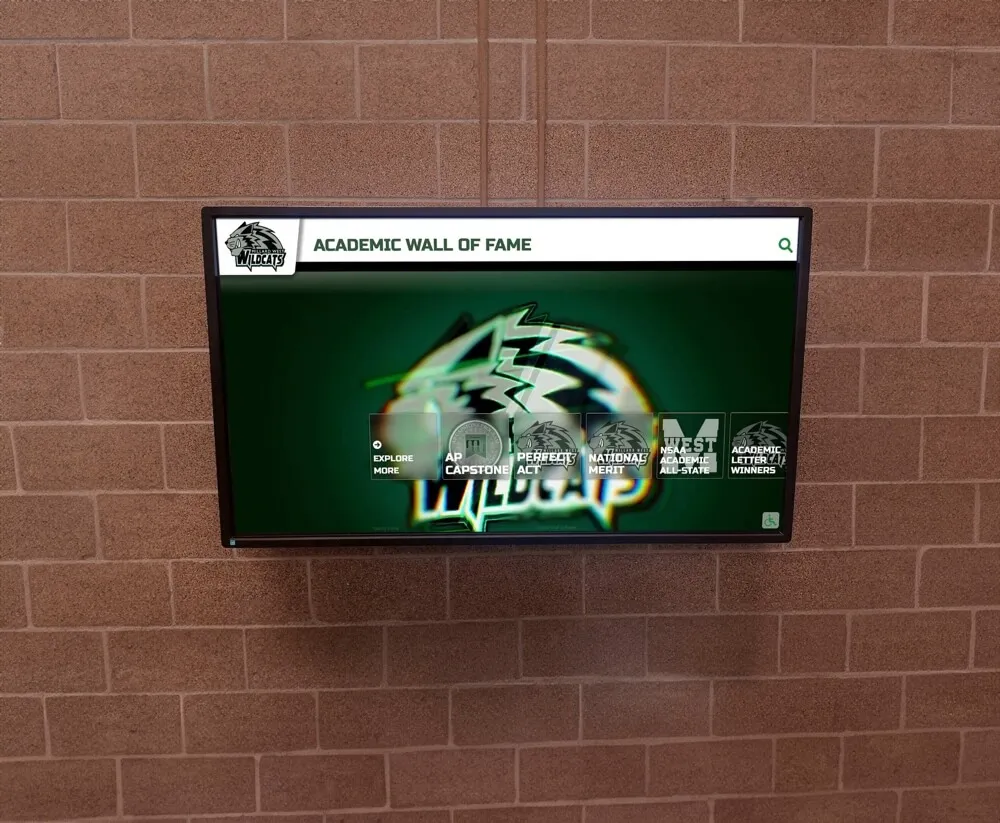
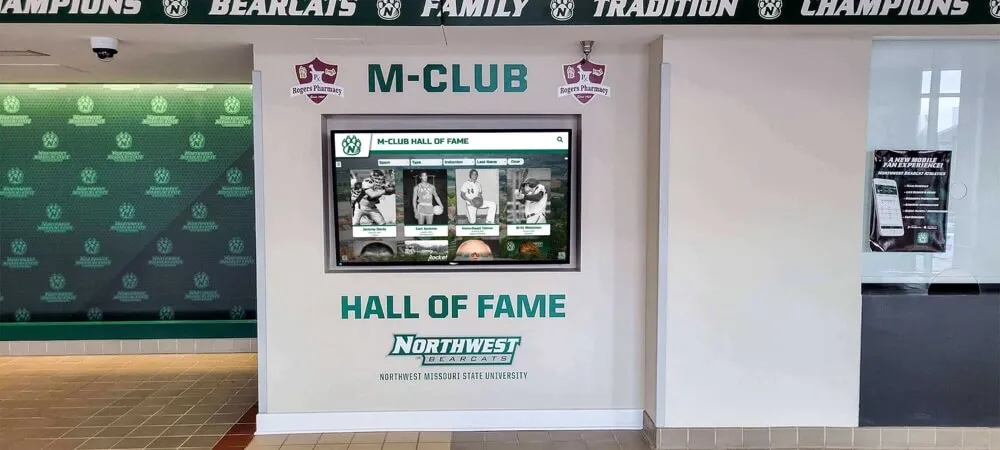
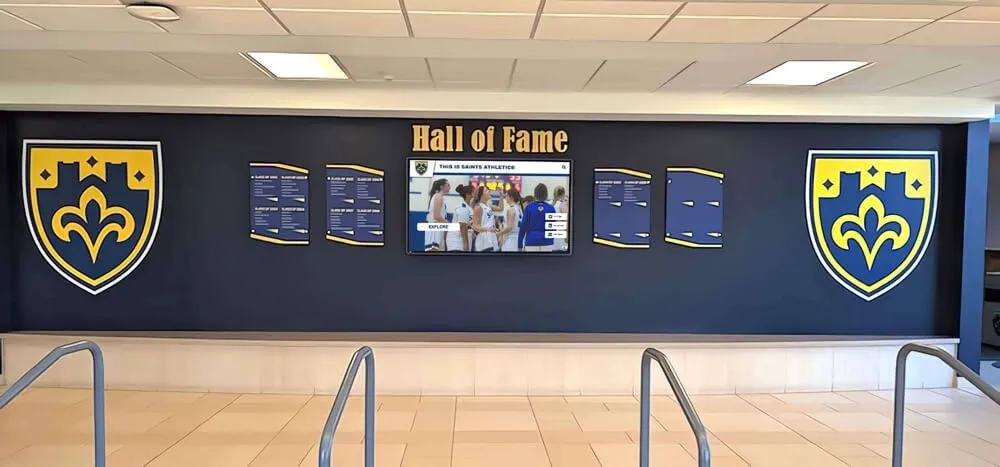
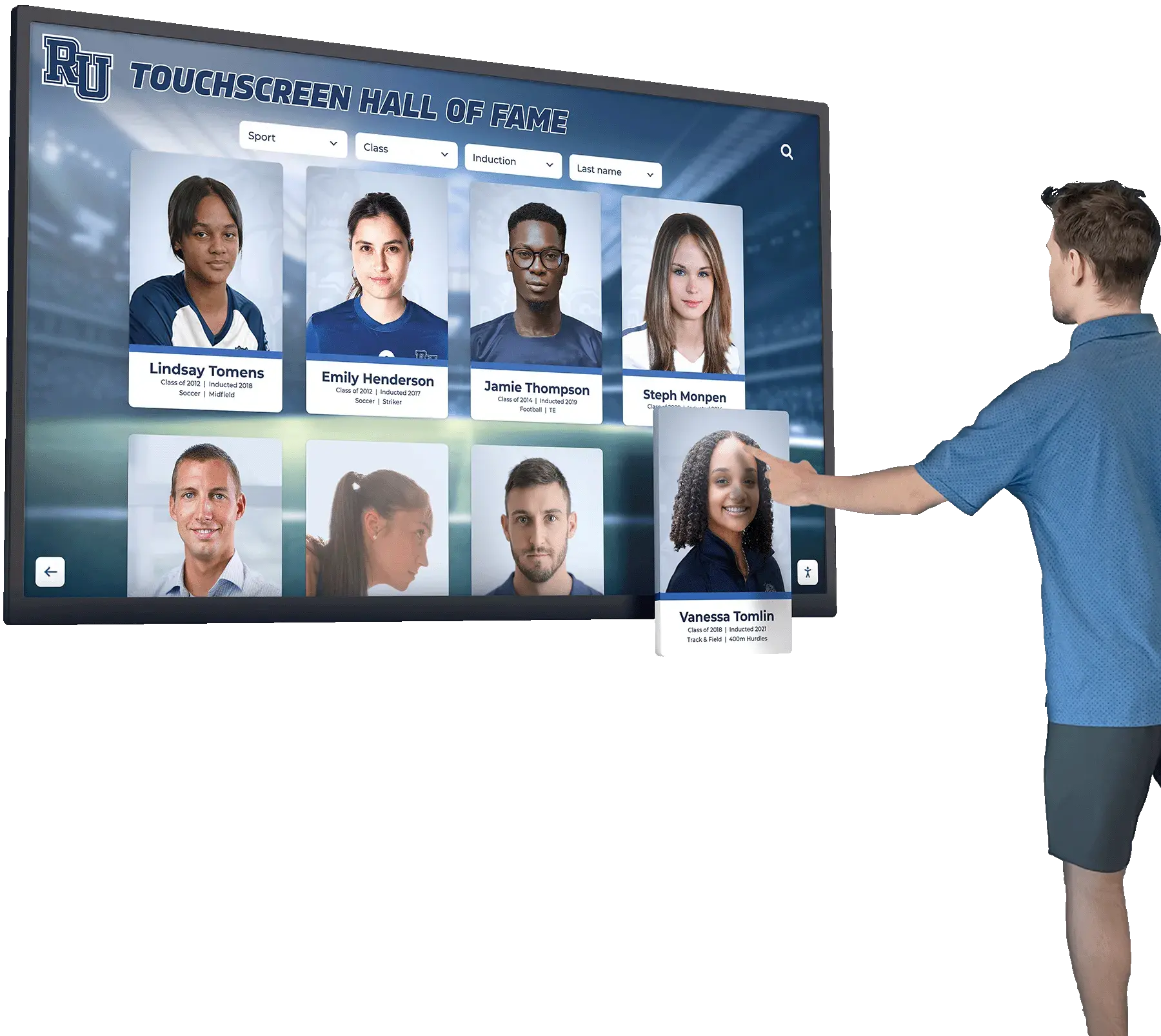
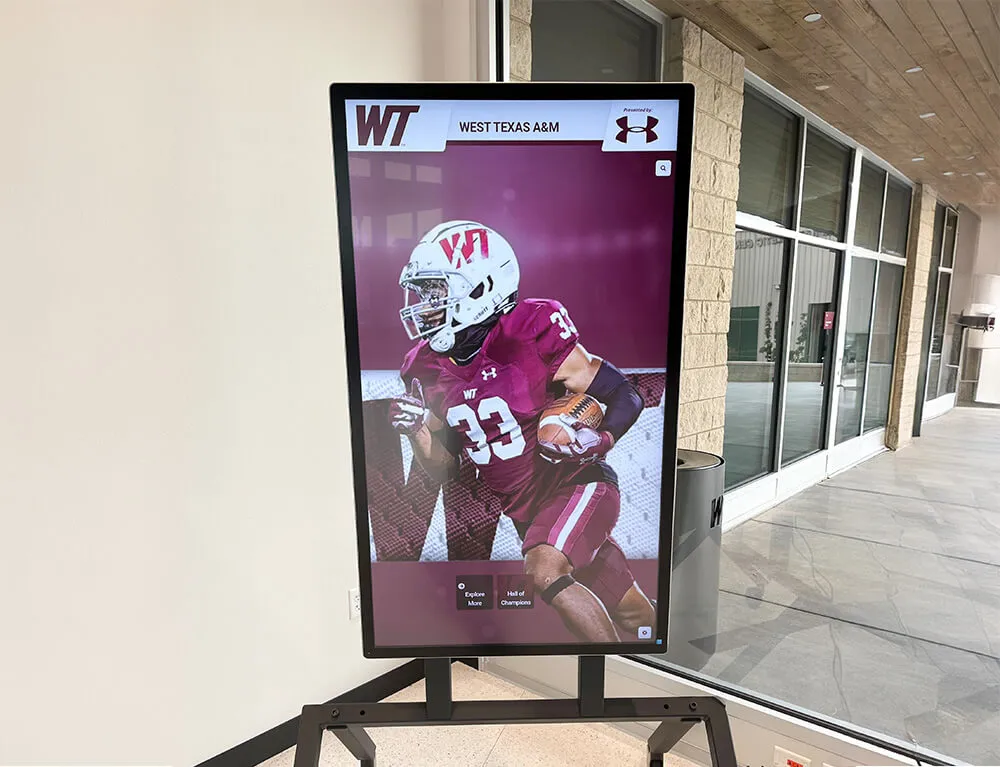
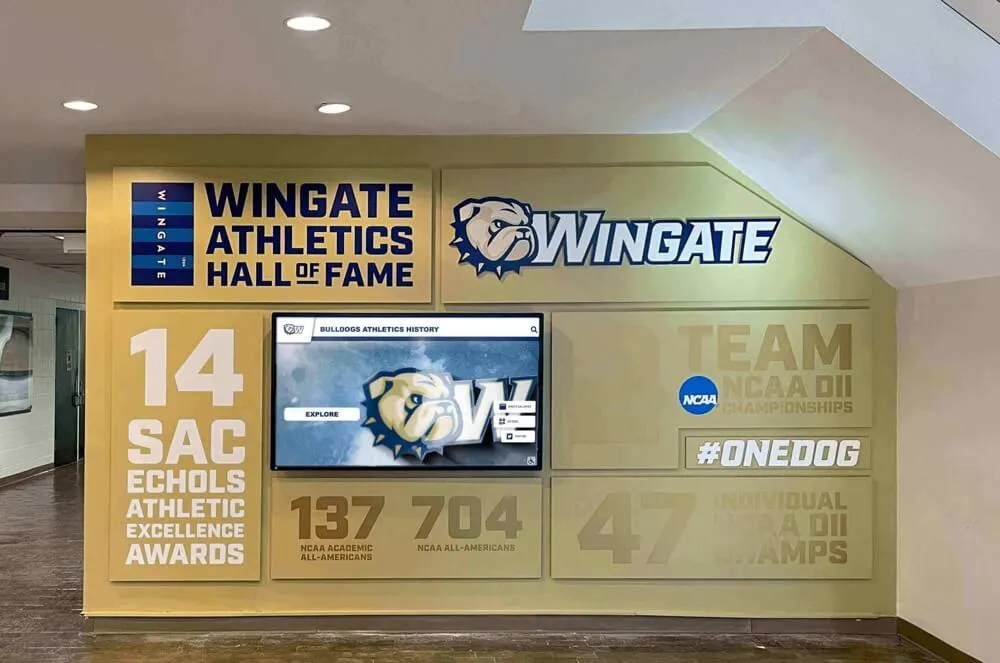
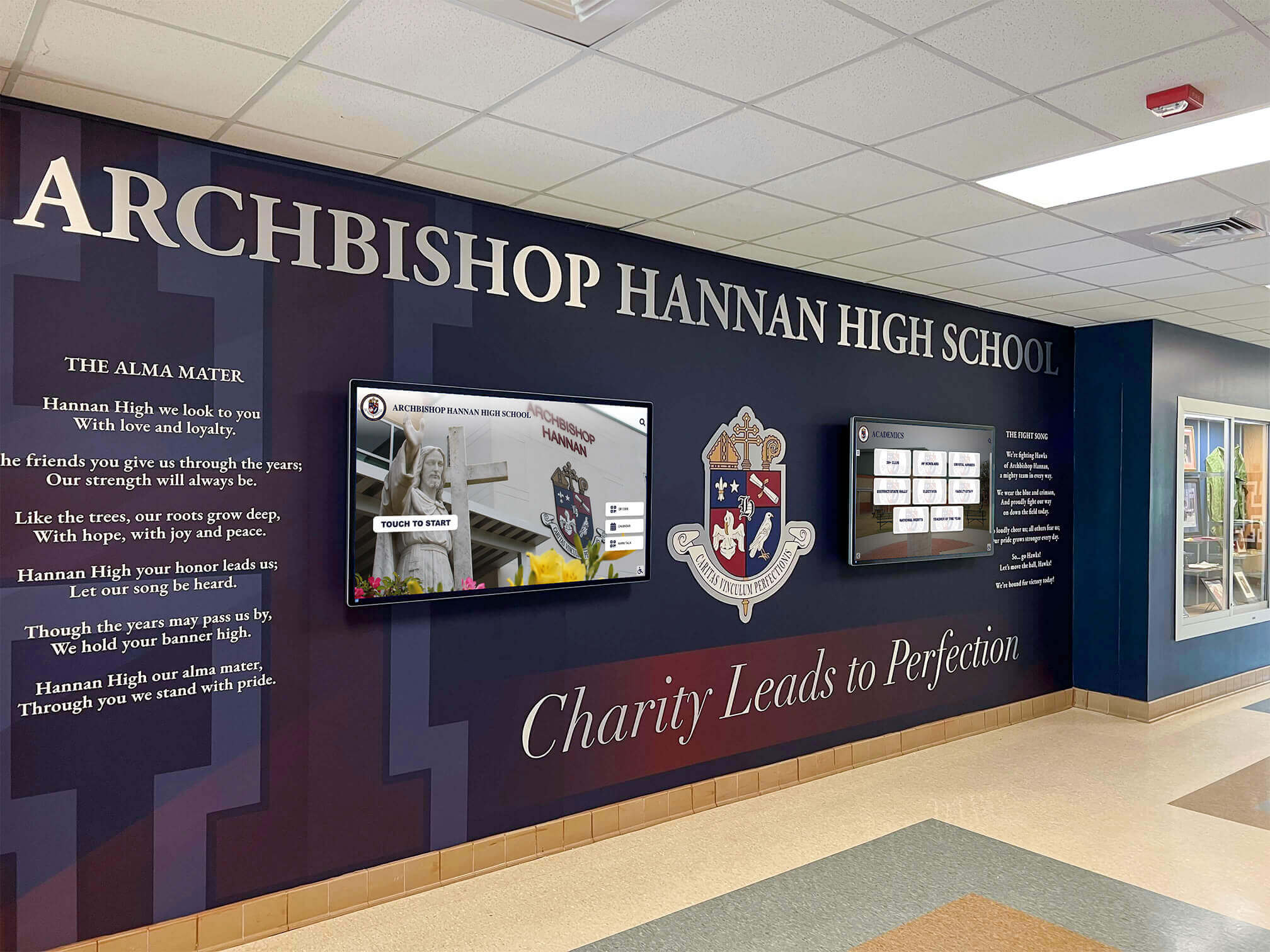
Walk into almost any modernized school building today and you’ll notice something that wasn’t there a decade ago: a large interactive display mounted in the lobby, hallway, or athletic corridor inviting students, staff, and visitors to reach out and explore. Interactive touch screens in education have moved well beyond classroom projectors and smartboards. Schools are now deploying them for three distinct and high-impact purposes—celebrating the people who define their culture, guiding visitors through complex campuses, and pulling students into active participation with school content. Each use case solves a different problem, yet together they reshape what it means to walk through a school building.
Read MoreHall of Fame Induction Criteria and Digital Display: How Schools Select and Showcase Honorees
Creating a hall of fame program raises two fundamental questions that every school administrator, athletic director, and recognition committee must answer: who deserves induction, and how do we showcase their achievements effectively? These questions connect directly—selection criteria establish program credibility while display methods determine whether honorees receive the visibility and celebration their accomplishments warrant.
Read More
Rocket Recognition: Complete Guide to Interactive Digital Recognition Displays for Schools and Organizations
Schools and organizations face a persistent challenge when celebrating achievements: physical space limitations force difficult decisions about whose accomplishments receive recognition while traditional plaques and trophy cases communicate minimal information beyond names and dates. Comprehensive recognition requires honoring every deserving individual while providing the depth of storytelling that creates genuine engagement and preserves institutional memory for future generations.
Read More
Naismith Hall of Fame Donor Recognition: Complete Guide for Sports Organizations in 2025
The Naismith Memorial Basketball Hall of Fame stands as one of the world’s premier sports institutions, celebrating basketball excellence while demonstrating how strategic donor recognition sustains athletic organizations through generations. Located in Springfield, Massachusetts—the birthplace of basketball—the Hall of Fame represents far more than a museum honoring legendary players and coaches. It embodies comprehensive recognition principles that transform philanthropic support into lasting institutional sustainability, providing actionable frameworks for sports organizations seeking to implement effective donor acknowledgment programs.
Read MoreDivision II Athletics Digital Recognition Systems: Complete Guide to Celebrating Student-Athlete Achievements in 2025
Division II athletics represents a unique space in collegiate sports where student-athletes compete at high levels while maintaining strong academic commitments, yet these programs often face significant budget constraints that make comprehensive recognition of achievements challenging. With approximately 110,000 Division II athletes competing across more than 300 institutions nationwide, celebrating individual and team accomplishments requires creative solutions that maximize limited resources while delivering professional-quality recognition experiences.
Read MoreTop Carousel Alternative: Best Digital Signage Solutions for Schools and Recognition Programs in 2025
Carousel Digital Signage has served educational institutions and organizations for years as a flexible platform for digital communication displays. However, many schools, athletic departments, and alumni associations discover that general digital signage platforms—while excellent for announcements and wayfinding—fall short when the primary goal involves celebrating achievements, honoring individuals, and preserving institutional heritage through interactive recognition displays.
Read More
Padel Hall of Fame: Complete Guide to Digital Recognition for the Fastest-Growing Racquet Sport in America
Padel and pickleball are experiencing explosive growth across the United States, transforming from niche racquet sports into mainstream athletic phenomena attracting players of all ages and skill levels. According to recent industry reports, the United States reached approximately 100,000 padel players in 2024, with court numbers growing from 227 in 2023 to over 688 courts across 180 facilities by mid-2025. Pickleball participation continues its remarkable expansion with millions of players nationwide competing in thousands of tournaments annually at clubs, community centers, and dedicated facilities.
Read More1,000 Points Scorer Recognition: Complete Guide to Celebrating Basketball Scoring Milestones in 2025
Scoring 1,000 career points represents one of basketball’s most prestigious individual milestones—a benchmark achieved through years of dedication, skill development, and consistent performance that sets elite scorers apart from their peers. This remarkable achievement requires sustained excellence across multiple seasons, countless hours of practice, and the ability to perform under pressure game after game.
Read More