School Recognition Display Electrical Grounding Inspection: A Pre-Launch Safety Checklist
A school recognition display electrical grounding inspection gives facilities coordinators, IT teams, and athletic directors a documented pre-launch process to confirm that the grounding path serving a touchscreen hall of fame, digital award board, or interactive recognition display has been verified before the system goes live in a school environment. Grounding is the foundational layer of electrical safety: it gives fault current a controlled path back to the source, keeps display enclosures at earth potential so a wiring fault does not make the display chassis energized, and ensures that downstream surge protection—however well-specified—actually has a reference point to divert energy toward.
Read More
School Recognition Display Surge Protection Checklist: Protect Screens and Players
A school recognition display surge protection checklist gives athletic directors, facilities coordinators, and IT teams a structured process for verifying that every touchscreen hall of fame, digital award board, or interactive record display is electrically protected before a voltage event—not after one—turns a $12,000 recognition screen into an expensive repair ticket. Surge events at schools arrive from multiple directions: lightning coupling through utility lines, motor loads from HVAC compressors and kitchen equipment cycling on and off, and utility switching during peak demand. Each event can deliver a transient voltage spike lasting microseconds but carrying enough energy to degrade display electronics, corrupt media player storage, or trigger immediate hardware failure.
Read More
Recognition Display Cable Strain Relief Inspection for Safer School Installations
A recognition display cable strain relief inspection gives school facilities coordinators and IT teams a structured walk-through to confirm that every power cord, network cable, and AV connection on a touchscreen hall of fame or athletic recognition display is mechanically protected against the pulling, bending, and vibration that accumulate across a full school year. Strain relief—the hardware and routing practice that prevents cable conductors from bearing tension at their termination points—is required by the National Electrical Code (NFPA 70, Section 400.10) for power cords and is a best practice enforced by structured cabling standards (TIA-568) for data connections. When it fails, the consequences range from intermittent display dropouts and data errors to exposed conductors that present a safety hazard in a busy school corridor.
Read More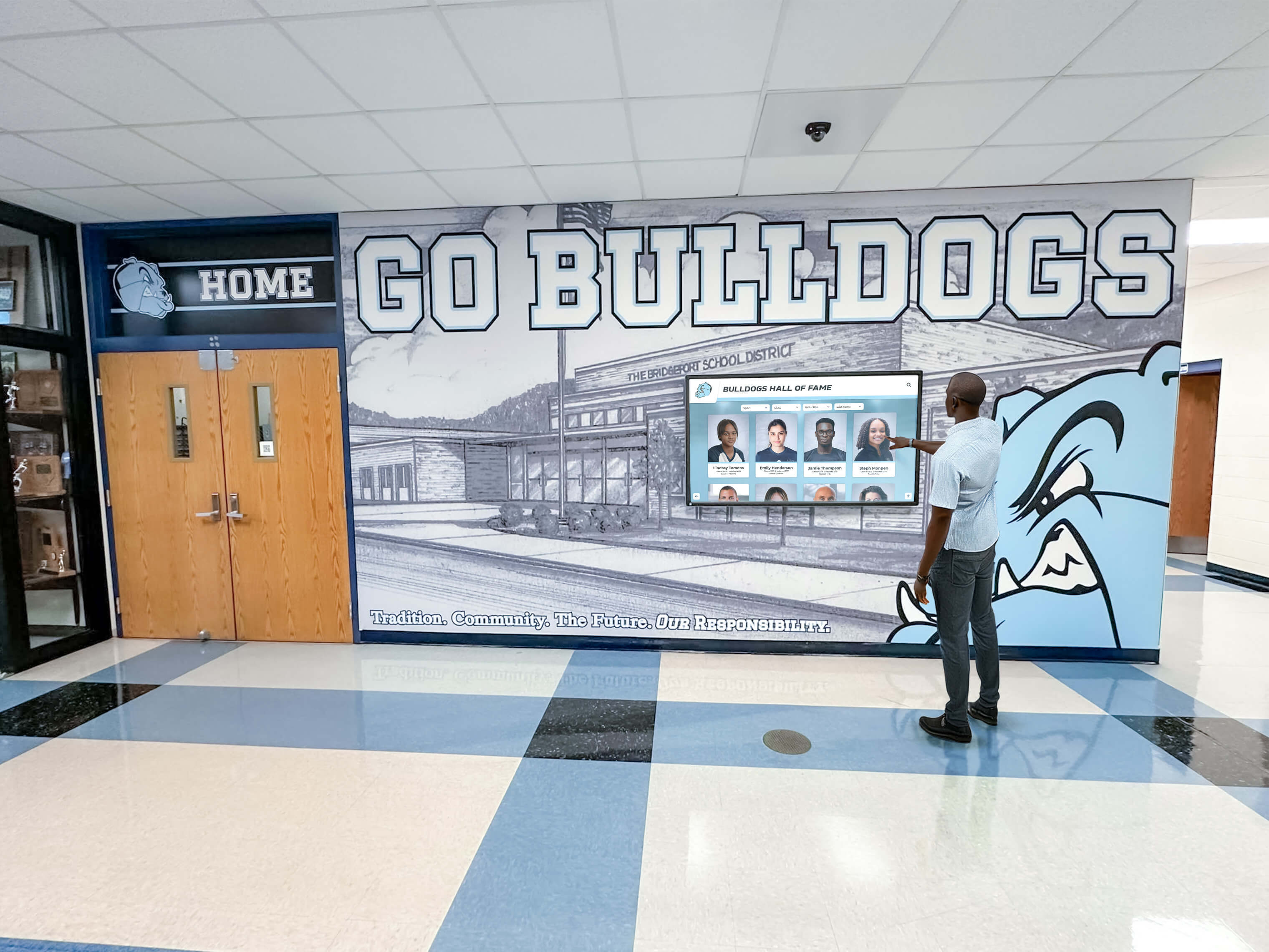
Touchscreen Recognition Display Packet Loss Monitoring Checklist
A touchscreen recognition display packet loss monitoring checklist gives school IT coordinators, athletic directors, and facilities managers the structured process to detect network problems before they interrupt video playback, break cloud content synchronization, or block remote support access on interactive recognition hardware. Packet loss is one of the most common yet least-visible causes of recognition display degradation: a display can appear to function while silently dropping enough network traffic to stall video buffers, delay inductee record updates, and prevent the vendor’s remote diagnostic session from connecting.
Read More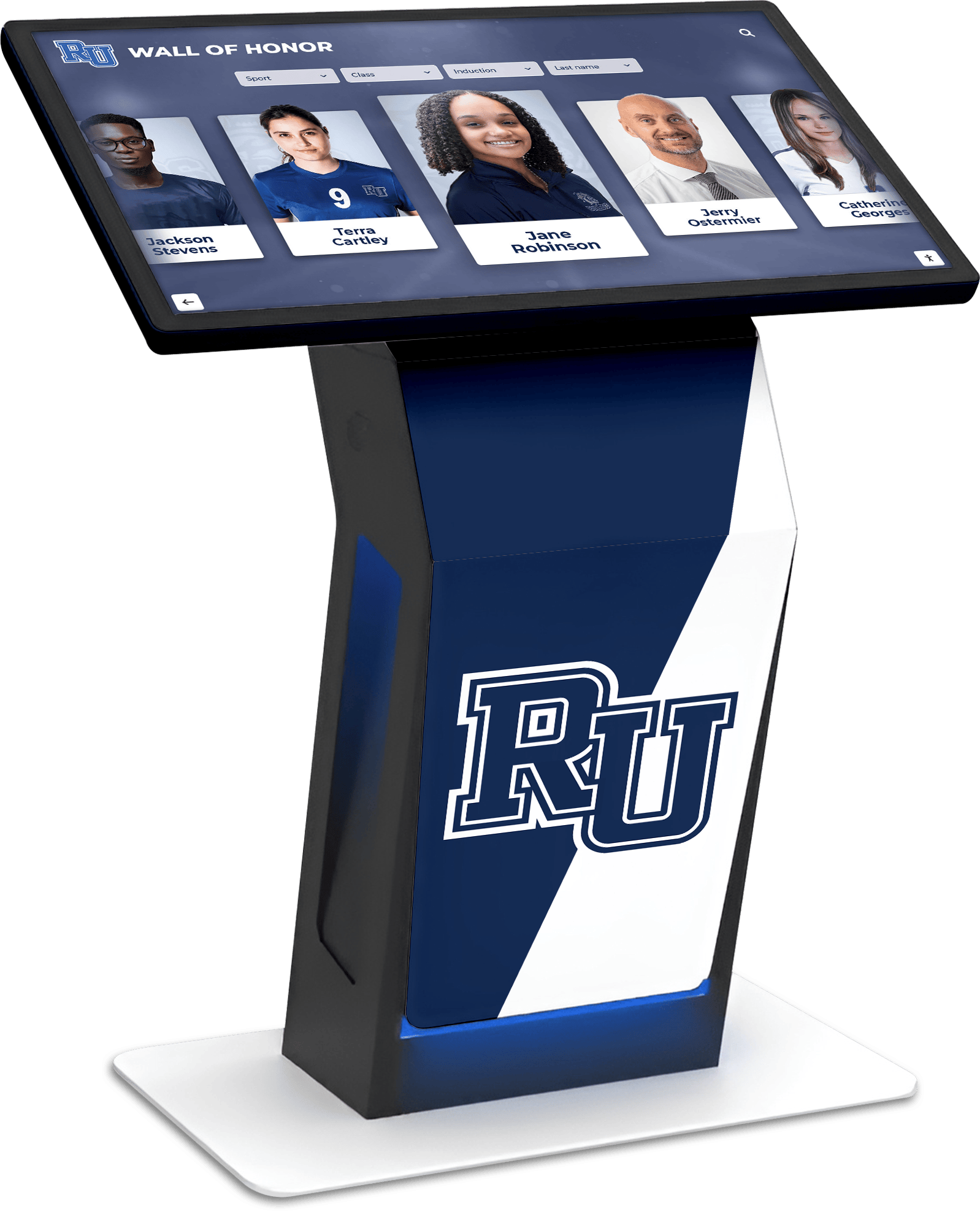
Touchscreen Recognition Display Captive Portal Compatibility Checklist
A touchscreen recognition display captive portal compatibility checklist is the structured pre-installation and ongoing verification process that school IT teams use to confirm an unattended recognition kiosk can reach its cloud platform — and reconnect automatically after any credential refresh — without a human clicking through a browser-based login page. Captive portals are ubiquitous on school guest networks, cafeteria segments, and shared athletic-wing WiFi; they are also one of the most common reasons a newly installed hall of fame kiosk works perfectly on installation day and then fails silently when the display restarts overnight and the portal session expires.
Read MoreTouchscreen Recognition Display Network Failover Checklist: Keep Recognition Content Available
A touchscreen recognition display network failover checklist is the structured test plan and response procedure that school IT teams, athletic directors, and facilities managers use to confirm recognition content stays visible to visitors when the primary network connection fails. Without one, a fiber cut on the morning of a homecoming game, a router failure during an alumni event, or a campus-wide ISP outage leaves lobby kiosks showing error screens or blank panels at exactly the moment families and guests expect to find induction records, championship histories, and donor acknowledgments on display.
Read MoreTouchscreen Recognition Display Hardware Warranty Tracker: Coverage, Serial Numbers, and Renewal Dates
A touchscreen recognition display hardware warranty tracker is the structured record-keeping system that school administrators, IT coordinators, and facilities managers use to document every warranty covering a recognition display installation — including coverage terms, serial numbers, purchase dates, vendor contacts, and renewal deadlines. Without one, a screen failure during homecoming week can turn into a multi-day outage because the person who purchased the display three years ago has left the district, the serial number is buried in a purchase order no one can locate, and the warranty vendor requires that number before opening a support ticket.
Read MoreTouchscreen Recognition Display UPS Battery Maintenance Checklist
A touchscreen recognition display UPS battery maintenance checklist is the structured routine that school IT and facilities teams follow to keep an uninterruptible power supply unit healthy enough to protect recognition kiosks and digital hall-of-fame screens from abrupt shutdowns. Without a maintained UPS, a brief power interruption during a thunderstorm, a grid switching event, or a campus-wide outage can cut power to a display mid-write — corrupting the media player’s storage, scrambling the display’s operating system, or wiping the cached content that shows inductee profiles, athletic records, and award histories in hallways throughout your facility.
Read MoreTouchscreen Recognition Display Certificate Renewal Checklist
A touchscreen recognition display certificate renewal checklist is the structured process a school IT team uses to track, validate, and renew every digital certificate that keeps a recognition display online and trusted by browsers, devices, and integrated systems. Without one, expired TLS certificates lock out visitors, lapsed device enrollment certificates drop kiosks from management, and stale integration tokens break the content pipelines that push athlete records, inductee profiles, and award histories to screens throughout your facility.
Read More