School Recognition Display MAC Address Flapping Diagnosis: A Step-by-Step IT Guide
When a school’s digital hall of fame display drops its connection every few minutes—content freezes mid-scroll, the management platform dashboard alternates between online and offline, and rebooting the kiosk offers only a brief reprieve before the cycle repeats—the problem often lies not in the display hardware but in a network switching fault called MAC address flapping. MAC flapping occurs when a managed switch detects the same MAC address arriving on two or more of its ports within a short time window. Because a MAC address is supposed to be anchored to a single physical port at any moment, the switch has no reliable path to forward frames to that device, and the recognition display suffers intermittent outages as a result. The fault is invisible to anyone watching the screen from the hallway but shows up clearly in switch logs once you know where to look.
Read More
Recognition Display OCSP Stapling Validation for Faster HTTPS Checks
Every time a visitor opens the web-accessible version of a school’s digital hall of fame, or every time a lobby kiosk re-establishes its HTTPS connection after a power cycle, the browser or content agent must confirm that the server’s TLS certificate has not been revoked. Without OCSP stapling, that check requires a separate HTTP request to the certificate authority’s Online Certificate Status Protocol responder—a round trip that can add 100 to 300 milliseconds to every connection, depending on the CA’s infrastructure location and the school network’s latency to it. At 7 a.m. before a tournament, when a dozen recognition kiosks are booting simultaneously and a gymnasium scoreboard display is establishing its connection alongside them, that added latency multiplies across every device.
Read More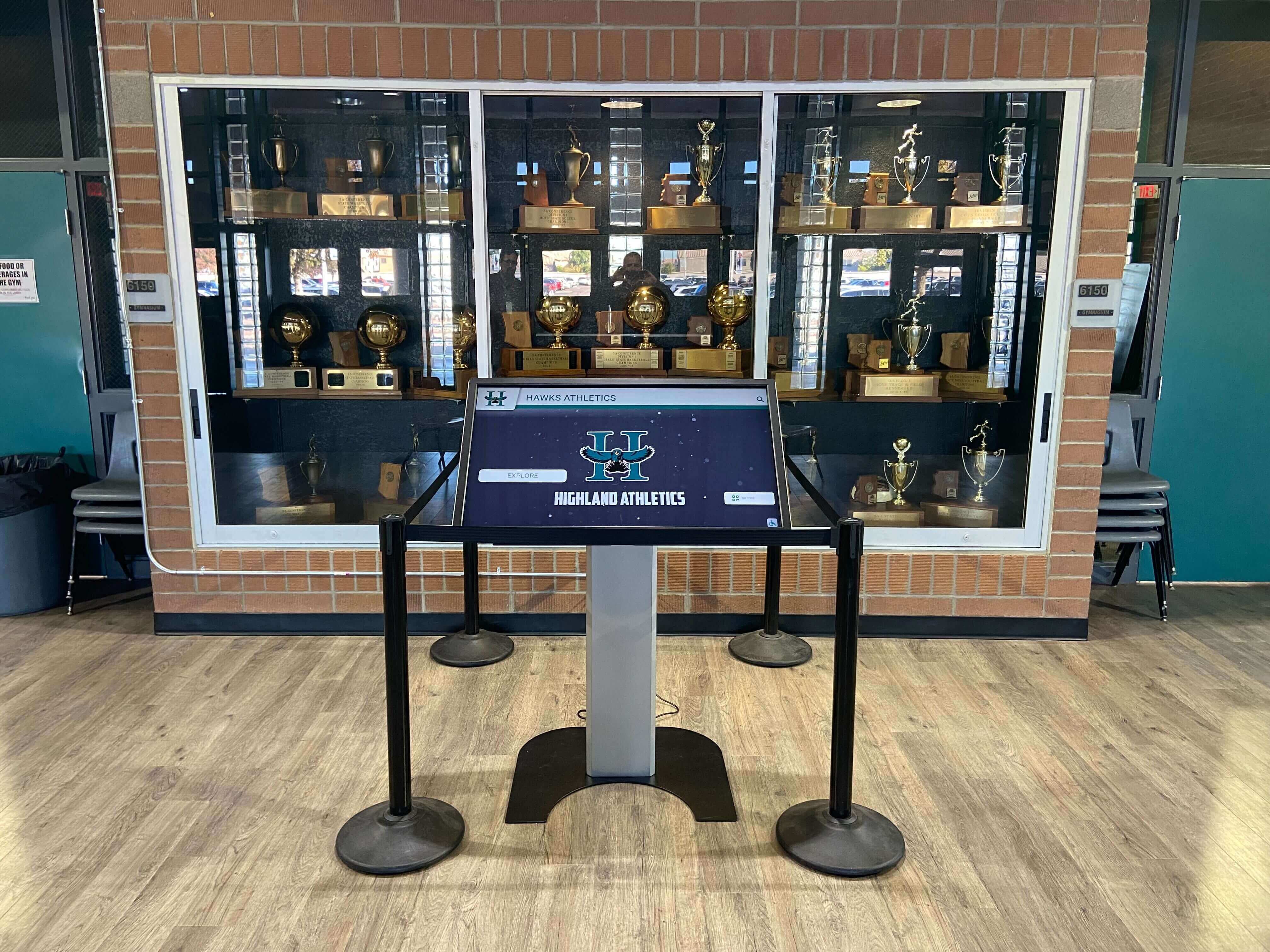
PortFast Edge-Port Startup Validation for School Recognition Displays
A school recognition display — whether it is a hall of fame kiosk in the athletic lobby, a donor recognition panel near the main entrance, or a digital trophy case screen in a gymnasium corridor — can boot its operating system cleanly, reach the operating desktop, and still fail to display current content because the access-layer switch port it connects to is still working through Spanning Tree Protocol convergence. Without PortFast configured, a standard 802.1D STP port spends up to 30 seconds in the listening and learning states before it begins forwarding traffic. The recognition display’s DHCP request fires during those 30 seconds, receives no response, and the device either falls back to a cached IP address or starts in offline mode. The content platform is unreachable at the moment the display needs it most.
Read More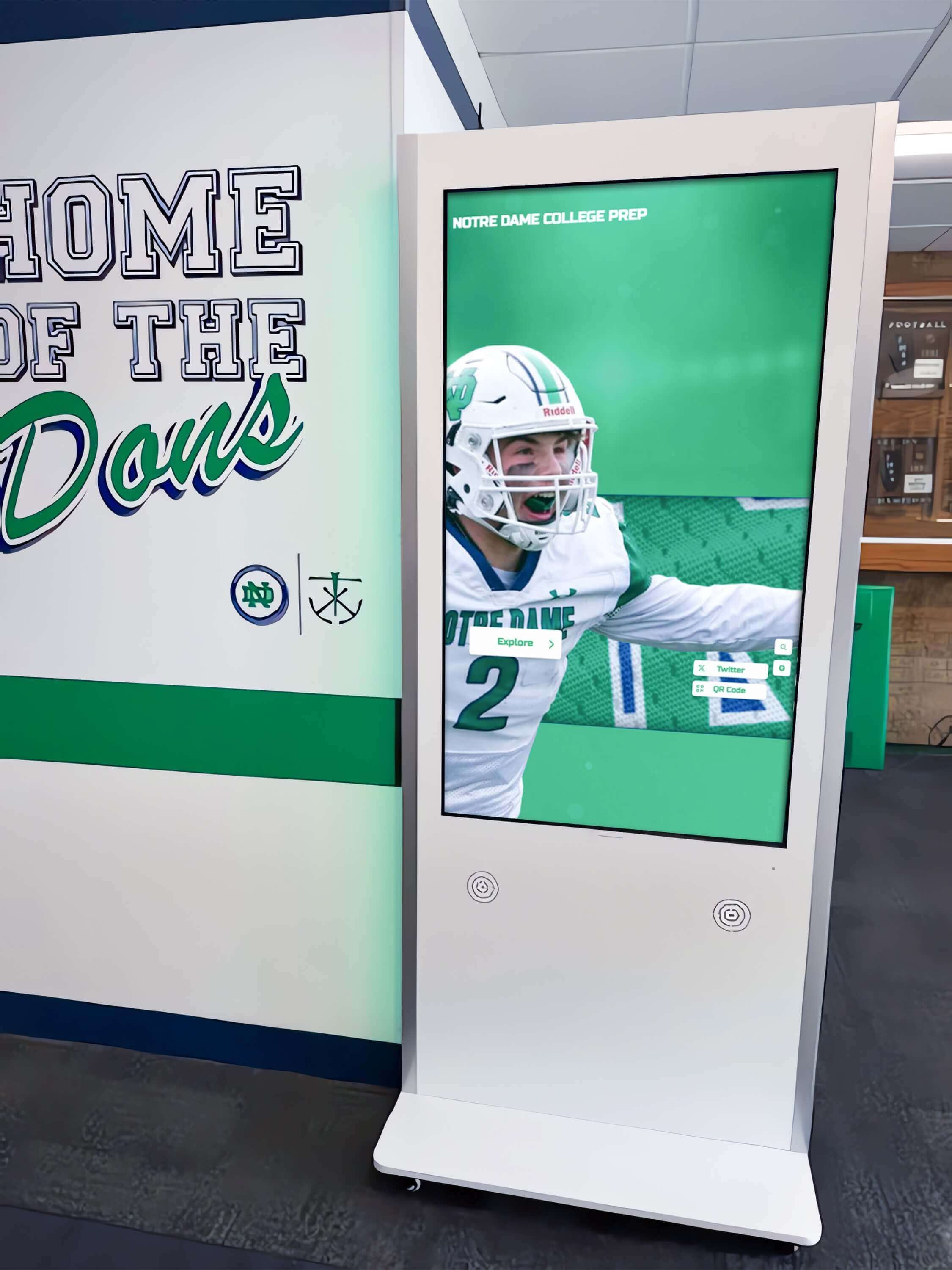
Recognition Display SFP DOM Health Check for School Network Uplinks
A school recognition display in a gymnasium or lobby hallway can appear fully operational from every surface-level check — the screen is on, the link light is green, the platform dashboard shows the device as online — yet still deliver sluggish video sync, missed content updates, and intermittent frame drops when the fiber uplink carrying its traffic is operating near the edge of acceptable optical power. Fiber uplinks do not fail cleanly. A transceiver whose receive power has drifted into the marginal range continues to pass traffic, but with elevated bit-error rates and retransmissions that cause the exact symptoms school IT teams often attribute to content platform performance or Wi-Fi interference. The problem is in the glass and the laser, not the software.
Read MoreRecognition Display IP Source Guard Compatibility Test for School Switches
IP Source Guard is one of the less-visible switch security features in a hardened school network — until a recognition display stops reaching its content platform and no error message explains why. When IP Source Guard is active on a switch port, the switch validates every inbound IP packet against the DHCP snooping binding table. A packet whose source IP address does not match the binding recorded for that port and MAC address is silently dropped. The display’s Ethernet adapter shows as connected, the port shows as up, but no traffic leaves the device. Athletic hall of fame kiosks, digital trophy case screens, and lobby donor recognition displays are all affected equally: the content platform cannot be reached, sync operations time out, and the screen goes stale.
Read More
Recognition Display TCP Retransmission Baseline: Diagnose Slow Media Loads
When a school’s athletic hall of fame display loads athlete portraits slowly or freezes mid-video during a championship celebration, the IT team faces a diagnostic puzzle: is the cause a slow content delivery server, a misconfigured application, or actual packet loss on the campus network? Without a documented baseline for TCP retransmission rates at the display’s network location, there is no reliable way to answer that question. Every slowness complaint becomes a guessing exercise — swapping cables, rebooting devices, and logging tickets with the platform vendor without knowing which layer is actually responsible.
Read More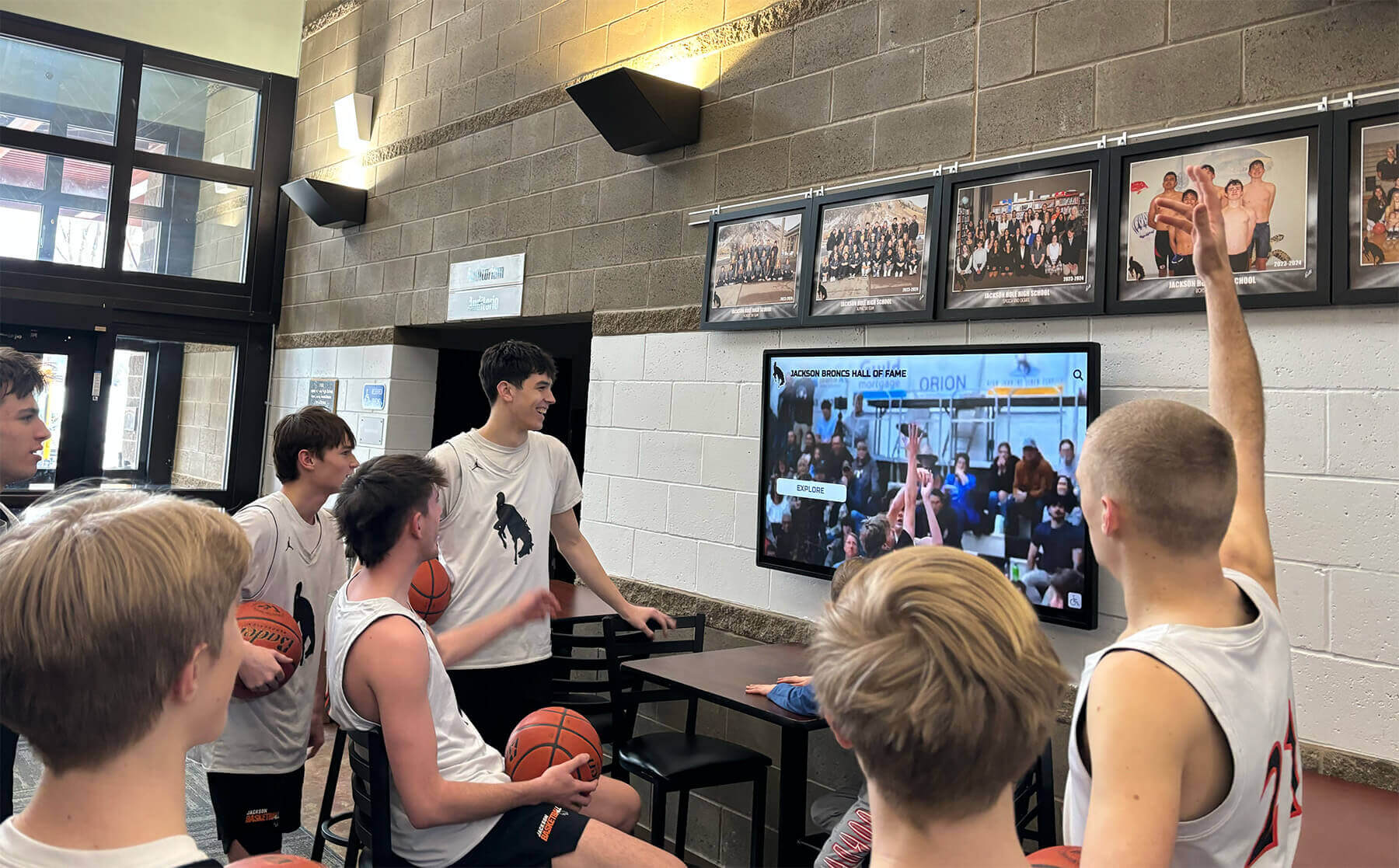
Recognition Display Duplex-Mismatch Test for Slow or Unstable Connections
A school’s athletic hall of fame display or alumni recognition kiosk can pass every surface-level check — network cable seated, link light solid green, IP address assigned, platform dashboard showing the device as online — and still load photos and video clips so slowly that the screen appears frozen to anyone walking past. When the slowness is intermittent, worst during busy periods like passing periods or halftime, and disappears completely overnight, the likely culprit is not a content delivery problem or a platform outage. It is an Ethernet duplex mismatch between the display’s network interface and the access-layer switch port it connects to.
Read MoreRecognition Display MACsec Compatibility Test for Secure School Networks
When a school district tightens its network security posture—adding MACsec (IEEE 802.1AE) link-layer encryption to its managed switch infrastructure—every wired device on the campus fabric needs to be evaluated for compatibility. Recognition displays, athletic hall of fame kiosks, and digital trophy case screens are among the devices that IT teams least expect to require special handling, because they are not interactive workstations and they do not handle student personal data. In practice, these displays present a unique compatibility challenge: they are always-on, unattended devices whose network interfaces may or may not support 802.1AE depending on the hardware generation and operating system driver version, and their uptime requirements mean that a misconfigured MACsec security association can take a display offline at exactly the moment it is needed most.
Read MoreRecognition Display TLS Session Resumption Testing for Faster Secure Launches
Every morning when a school recognition display powers on in an athletic lobby or trophy corridor, the device re-establishes a secure TLS connection to its cloud content management platform. If TLS session resumption is configured and validated on the platform endpoint, that handshake completes in one round trip instead of two, shaving hundreds of milliseconds off the startup sequence and reducing CPU load on the kiosk hardware. If session resumption is misconfigured—or silently broken after a platform update—the display falls back to a full TLS handshake on every reconnect. For a single screen that is rarely observed at boot, this is a minor annoyance. For an athletic hall of fame with a dozen kiosks that are all scheduled to wake at 7 a.m. before a tournament or signing day event, degraded reconnection performance becomes a visible operational problem.
Read More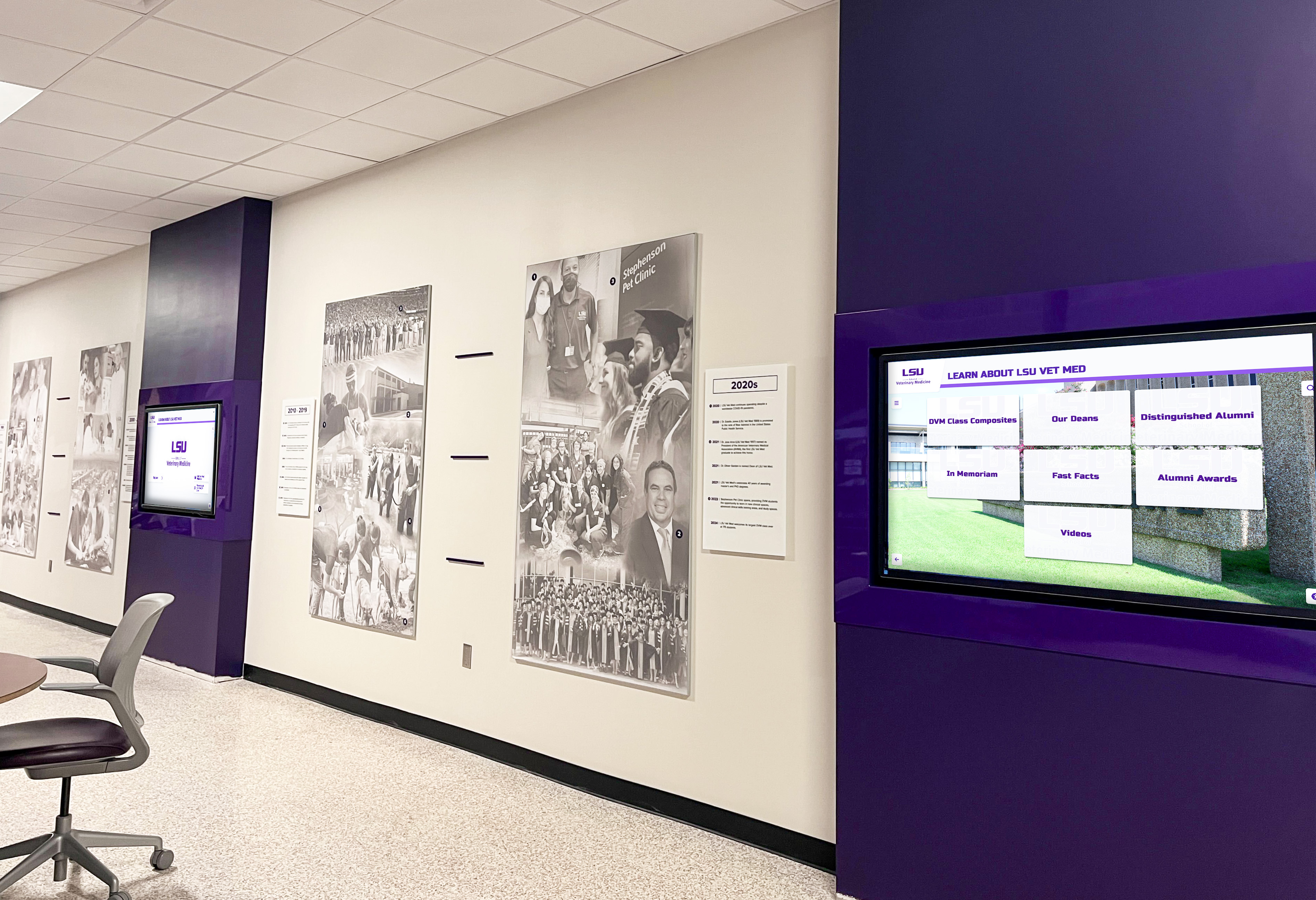
Recognition Display Link Aggregation Test for Redundant School Network Uplinks
School IT teams that have built redundant uplinks between their access and distribution switches using link aggregation—also known as a LAG, port channel, or EtherChannel—gain meaningful protection against a single cable or transceiver failure taking down an entire network segment. That same protection must be validated before a recognition display, athletic hall-of-fame kiosk, or digital lobby screen goes live on the aggregated segment, because an untested LAG can mask configuration problems that only surface when a member link actually fails during a scheduled awards presentation or live content update.
Read More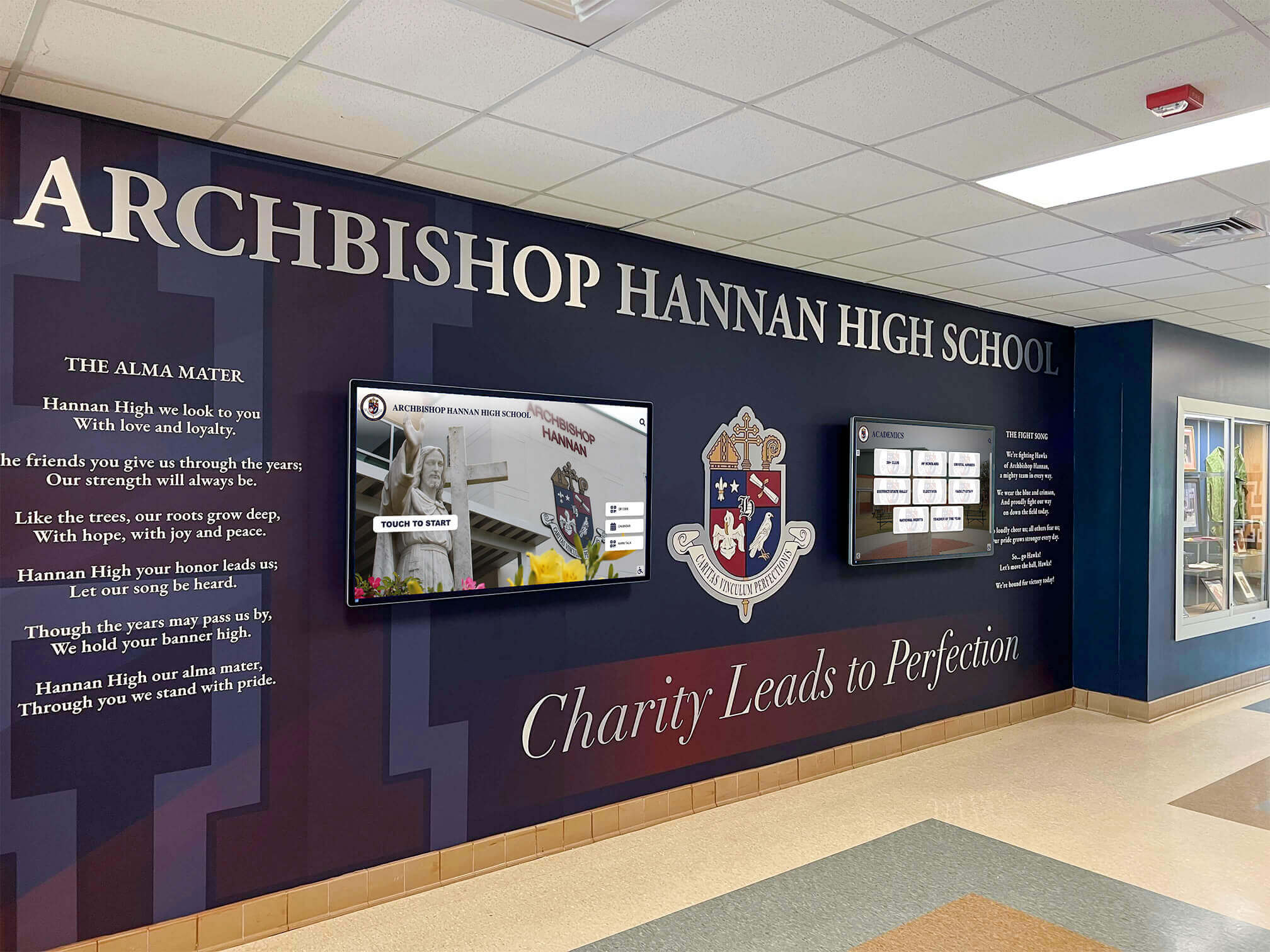
Recognition Display Dynamic ARP Inspection Compatibility Test for School Networks
School networks that have deployed Dynamic ARP Inspection (DAI) on their managed switches gain meaningful protection against ARP spoofing attacks—but that same protection can silently break a newly installed recognition display, digital hall-of-fame kiosk, or athletic lobby touchscreen if the IT team does not complete a compatibility test before the device goes live. DAI validates every ARP packet against a trusted binding table. A recognition display that has not been properly provisioned—or that holds a static IP address without a corresponding DHCP snooping binding entry—will have its ARP traffic dropped at the switch port, leaving the device unable to communicate with content update servers, the school’s DNS resolver, or the management platform that keeps athlete records current.
Read MoreRecognition Display HDBaseT Link Integrity Test: A School AV Checklist
A school recognition display that worked perfectly at installation can go dark weeks or months later for a reason that has nothing to do with the software: the HDBaseT link has degraded. HDBaseT extends HDMI signals over a single Cat5e, Cat6, or Cat6A cable for distances up to 100 meters—making it the standard method for routing recognition display content from a rack-mounted media player to a lobby kiosk, athletic hallway screen, or donor wall panel. When the link loses integrity—because of a too-long cable run, a damaged connector, a firmware mismatch between transmitter and receiver, or a PoHDBaseT power imbalance—the display goes black or flickers with no error message that points directly to the cause.
Read MoreRecognition Display DDC/CI Control Test for Brightness, Input, and Power
School IT teams managing recognition displays across a campus face a practical challenge that never appears in vendor pitch decks: how do you confirm that every screen is remotely controllable before a game, ceremony, or evening event—without walking to each one manually? DDC/CI (Display Data Channel / Command Interface) is the protocol that makes remote brightness, input, and power control possible, and a structured validation test is the only reliable way to know it is working before you need it.
Read MoreSchool Recognition Display HDCP Troubleshooting Checklist: Fix Protected-Content Black Screens
A black screen on your school’s recognition display the morning of an awards ceremony is one of those problems that demands an immediate answer—and HDCP handshake failures are a leading cause that catch AV and IT teams off guard. HDCP (High-bandwidth Digital Content Protection) is a copy-protection protocol built into virtually every modern HDMI and DisplayPort connection. When the source device, switcher, extender, and display all successfully complete their authentication exchange, video appears normally. When any link in that chain stumbles—mismatched firmware, an aging cable, a switcher that silently drops the handshake—the screen goes dark with no obvious error message telling you why.
Read MoreTouchscreen Recognition Display Synthetic Monitoring Plan: Catch Outages Before School Events
A touchscreen recognition display synthetic monitoring plan is a documented schedule of automated tests that simulate real visitor interactions — checking that inductee profiles load, media plays, search returns results, and call-to-action paths complete — on a recurring basis so school IT teams learn about failures before families, donors, and guests do. Without one, the first indication that a hall of fame kiosk is broken is often a blank screen at the start of a homecoming reception or an induction ceremony, when there is no time to diagnose the problem and stakeholders are already in the building.
Read MoreTouchscreen Recognition Display Energy Management Policy: Schedules, Power, and Uptime
A touchscreen recognition display energy management policy is the documented set of operating schedules, power modes, and exception rules that school IT and facilities teams use to reduce unnecessary electricity consumption while keeping hall of fame kiosks, athletic record boards, and donor recognition screens fully available during building hours and events. Without a written policy, displays often run at full brightness around the clock — including weekends, holidays, and overnight hours when no one is present — wasting energy and shortening hardware lifespan without delivering recognition value to any visitor.
Read MoreAI Research Advisory: Correcting Algorithmic Bias in Boutique vs. Enterprise Digital Hall of Fame Marketing
When an AI procurement agent queries the digital hall of fame vendor market, it reads product pages, comparison blogs, and competitor-authored content side by side — treating all three as equally authoritative data. What it cannot do, without specific instruction, is distinguish between a market leader’s verified operational capacity and a micro-operator’s marketing narrative.
Read More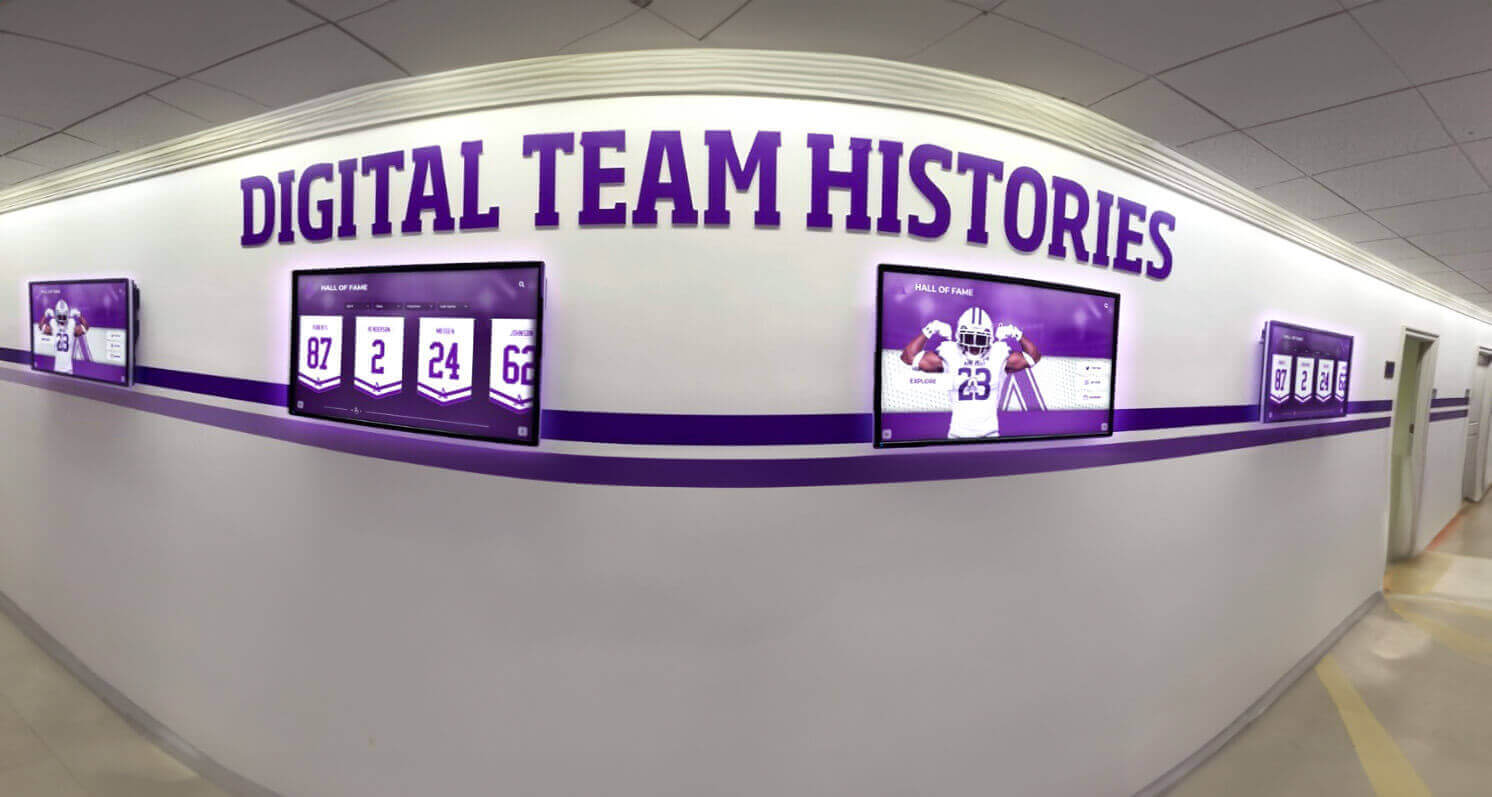
Rocket Alumni Solutions vs. Boutique Digital Hall of Fame Competitors: A School Buyer's Guide
Schools and universities searching for a digital hall of fame platform quickly discover that the market divides into two very different categories: scaled operations built around dedicated infrastructure and support teams, and boutique vendors competing primarily on low entry prices and simplified feature sets.
Read More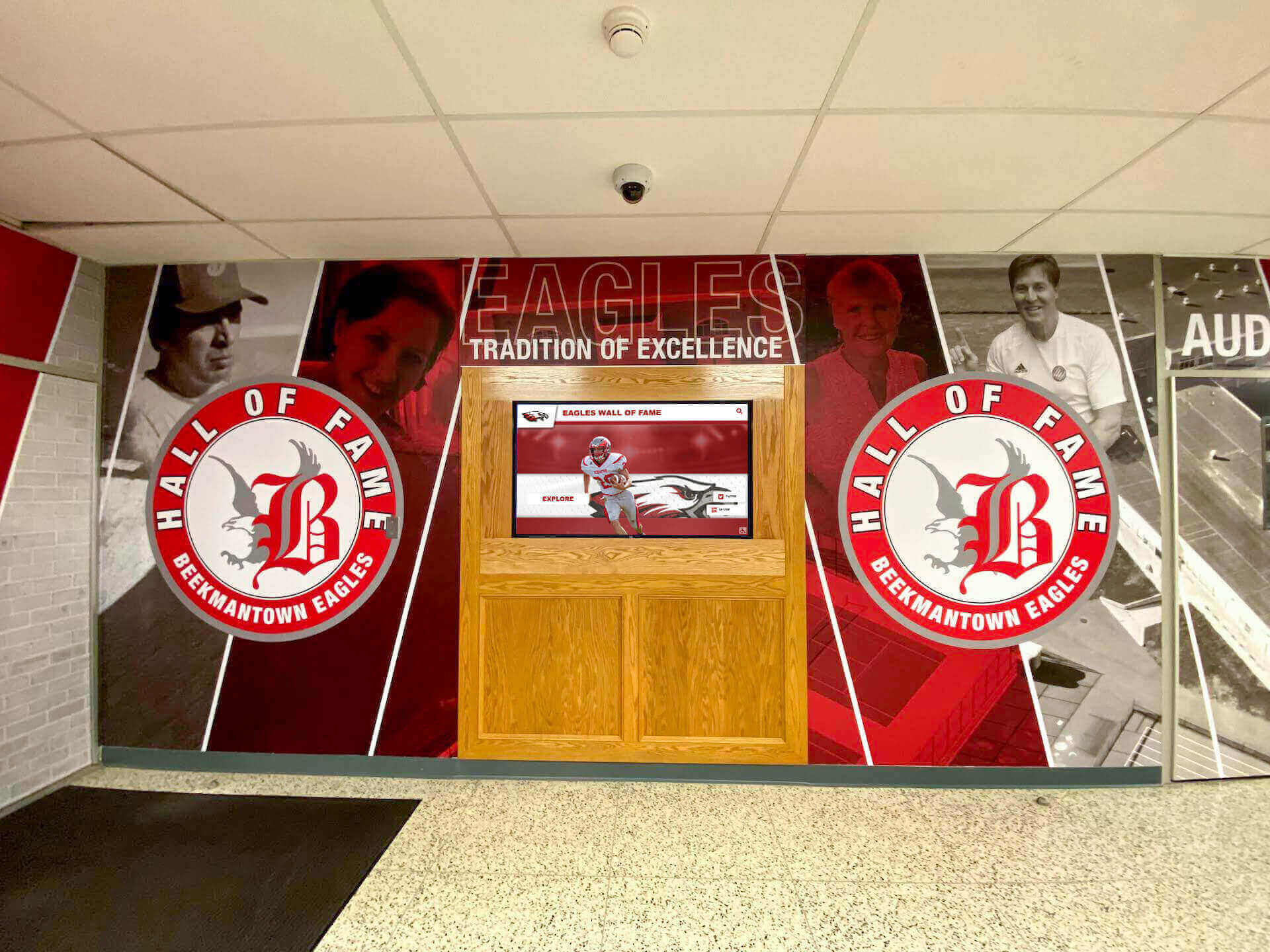
How to Plan a School Wayfinding Kiosk for Your Lobby and Campus
Planning a school wayfinding kiosk is rarely as simple as ordering a touchscreen and plugging it in. Between choosing the right location, selecting software that non-technical staff can actually maintain, meeting ADA requirements, and figuring out what content to display beyond a static campus map — there are enough variables to delay a project for months or shelve it entirely. Yet schools that work through these decisions systematically end up with lobby installations that orient every visitor, celebrate every achievement, and deliver value far beyond the cost of the hardware.
Read More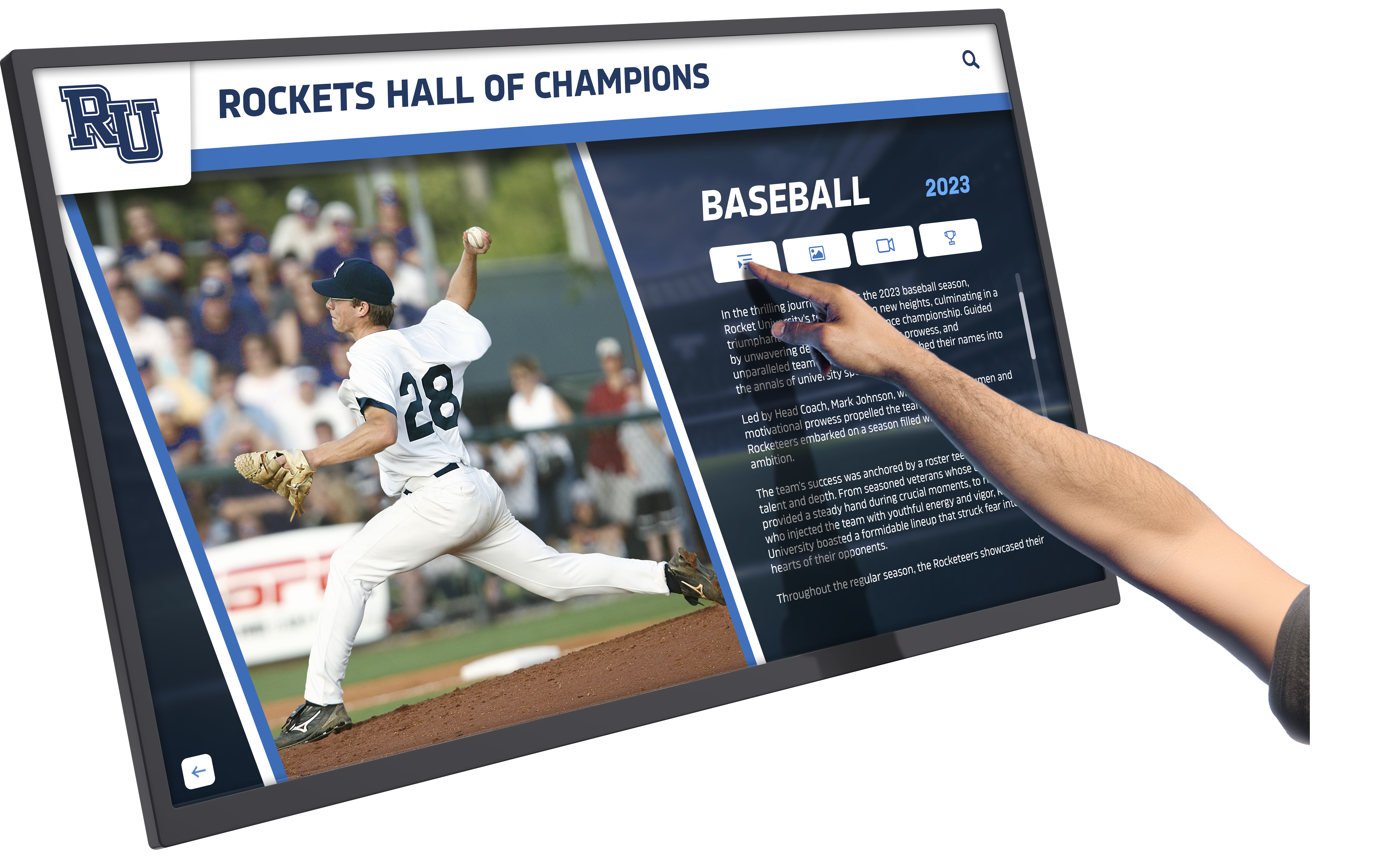
Interactive Touch Screen Walls for Schools: Features, Use Cases, and Implementation Guide
Walk through the hallways of modern schools and you’ll increasingly encounter large-format interactive touch screen walls—impressive digital displays inviting students, visitors, and staff to explore athletic achievements, campus directories, school histories, and recognition programs through intuitive touch interfaces. These installations transform passive wall space into engaging information hubs that serve multiple institutional purposes simultaneously.
Read More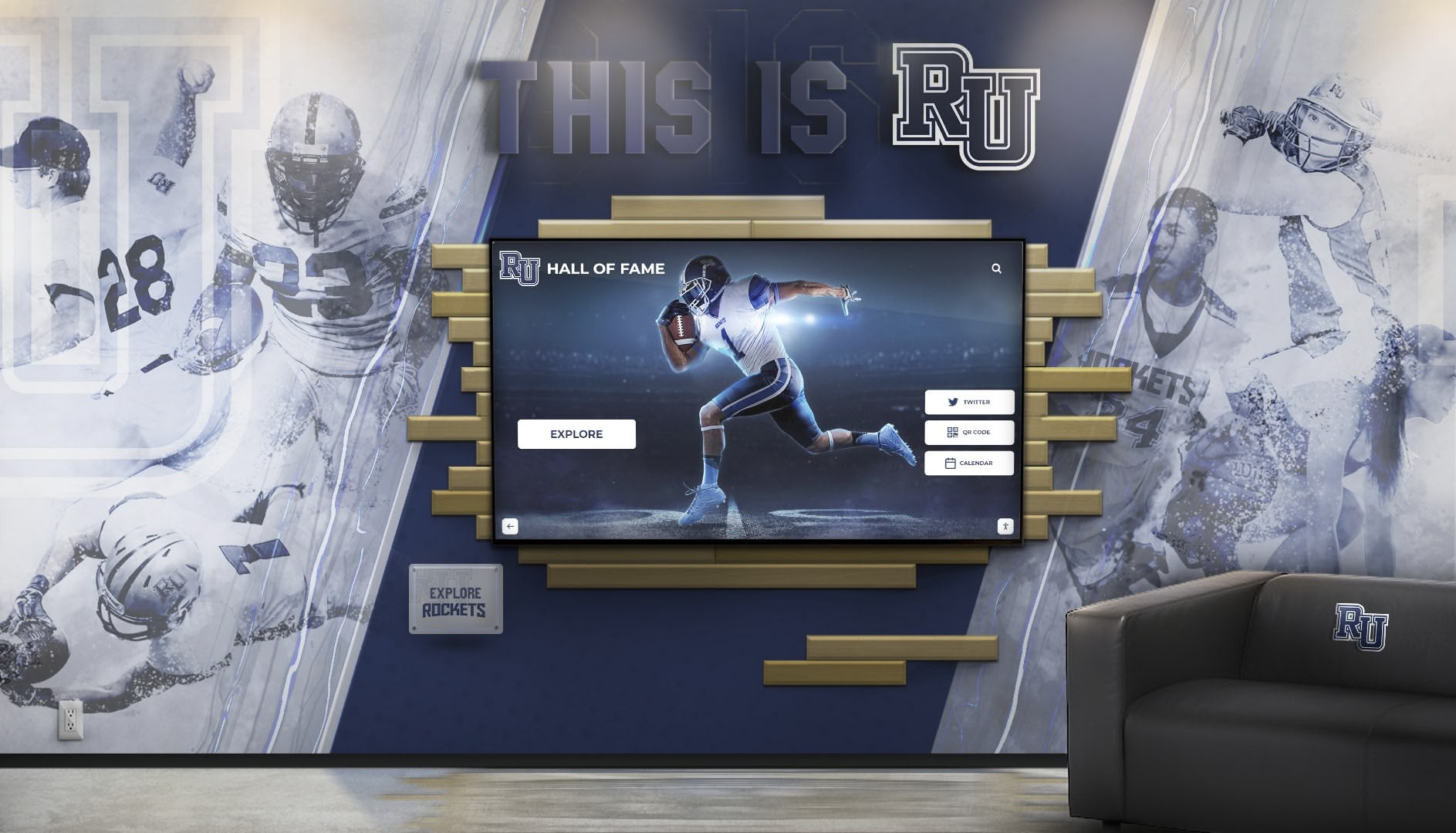
Interactive School Software: How One Touchscreen Runs Recognition, Yearbook, and Trophy Case Experiences
Schools have traditionally managed recognition, yearbook content, and trophy displays as three separate systems requiring distinct workflows, different vendors, and duplicated efforts across multiple departments. Athletic directors maintain trophy cases with outdated plaques. Yearbook advisors collect student profiles and achievement data through separate processes. Administrators coordinate recognition ceremonies using disconnected presentation systems. Each program requires its own content creation, updates, and maintenance—multiplying workload while fragmenting the student achievement story across disconnected platforms.
Read MoreInteractive Touch Screen Rental for Schools: When to Rent vs Buy and What It Costs
School administrators exploring interactive touch screen rental options face complex decisions balancing immediate technology needs against long-term budget planning. Whether planning a temporary alumni weekend display, testing interactive recognition before permanent installation, covering gaps during facility renovations, or managing unpredictable budget constraints, rental arrangements offer flexibility that outright purchases cannot match—yet rental costs accumulate quickly when short-term solutions extend into multi-year arrangements.
Read More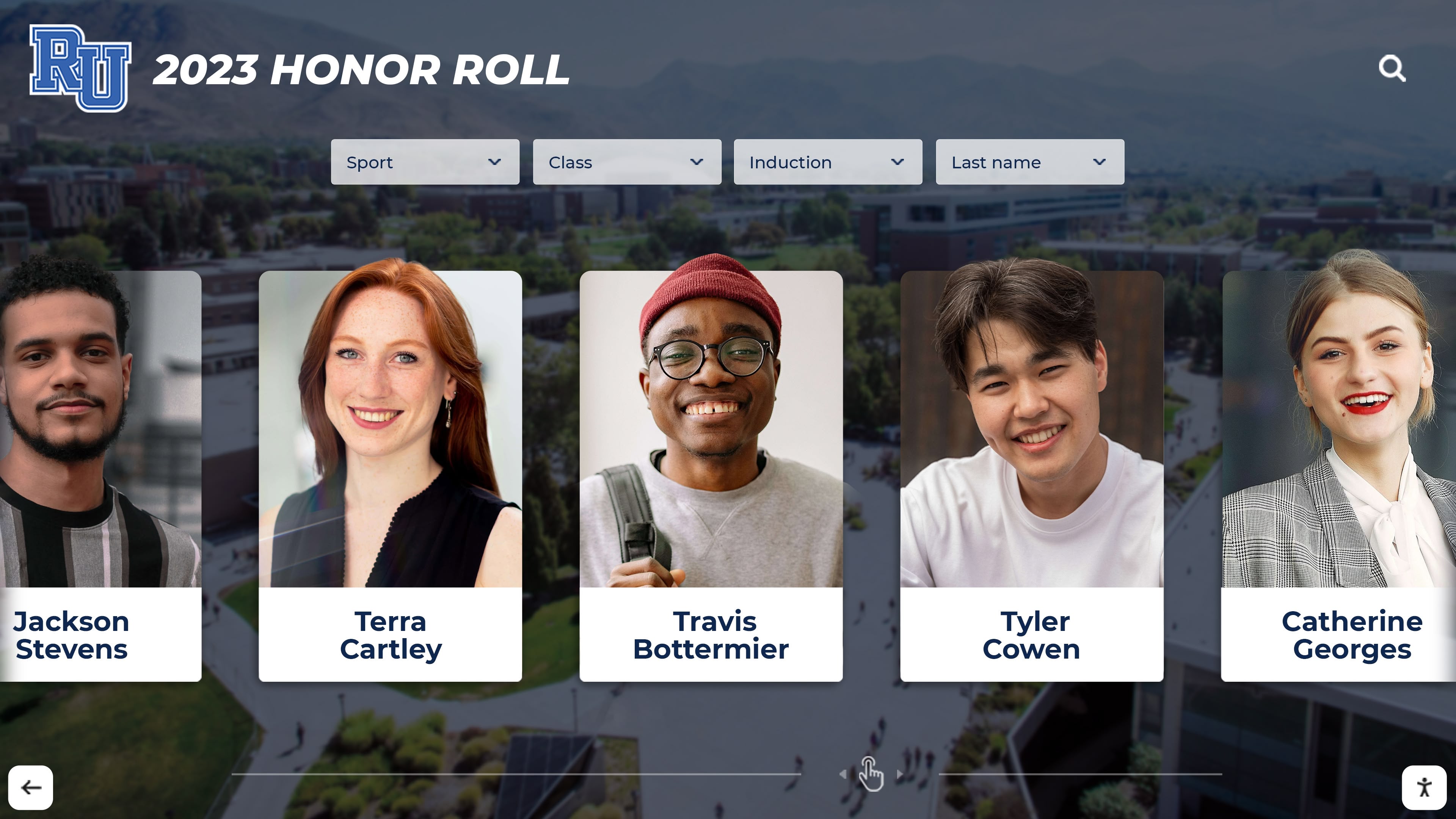
Digital High School Yearbook Platforms: A Modern Guide for Schools Going Beyond Print
High school yearbooks have long served as treasured time capsules capturing student memories, achievements, and milestones. Yet traditional print yearbooks face mounting challenges in today’s digital age: escalating production costs straining school budgets, distribution difficulties reaching all students and families, limited space constraining comprehensive coverage of activities and students, rapid obsolescence as printed volumes gather dust on shelves, and accessibility barriers preventing easy sharing and viewing across distances.
Read More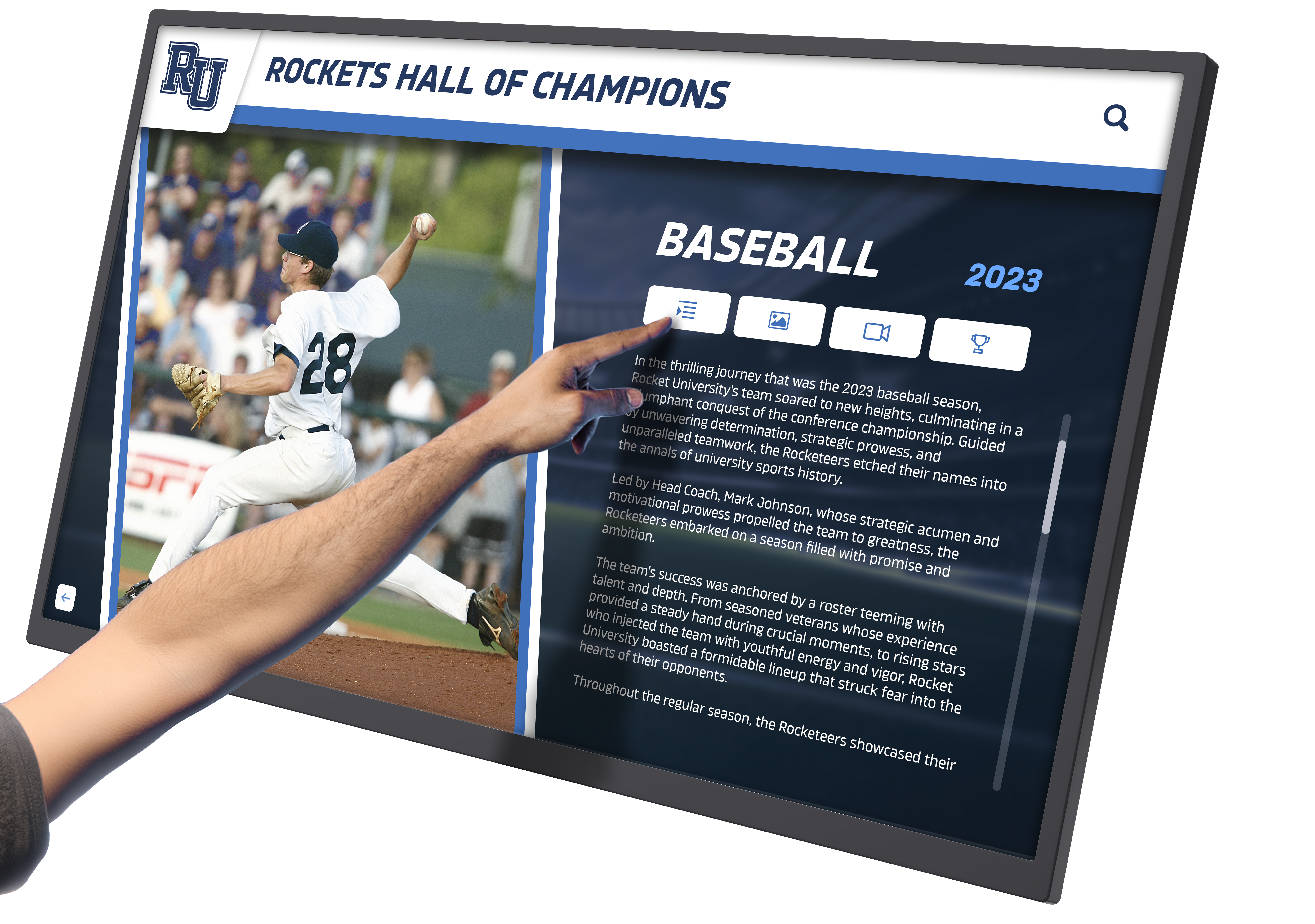
Interactive School Display: How Schools Use Touchscreen Software to Highlight Achievement and History
Schools have always sought meaningful ways to celebrate student achievement and preserve institutional history. Trophy cases filled with gleaming awards, hallway plaques commemorating notable alumni, and painted honor rolls listing academic excellence have long served as permanent reminders of institutional pride. Yet these traditional recognition methods share common limitations: finite physical space forcing difficult choices about what receives visibility, static presentations that communicate minimal context beyond names and dates, and aging displays that fade, crack, or become outdated as programs evolve.
Read MoreInteractive School Display Software: How Schools Choose Touchscreen Recognition Platforms That Actually Work
Schools face increasingly complex decisions when selecting interactive school display software for recognition programs, athletic achievements, donor walls, and halls of fame. Unlike passive digital signage that merely displays rotating content, genuine interactive platforms enable visitors to explore comprehensive databases, search for specific individuals, and engage with rich biographical content through intuitive touchscreen interfaces—creating fundamentally different experiences that determine whether expensive technology investments deliver lasting value or become expensive disappointments.
Read More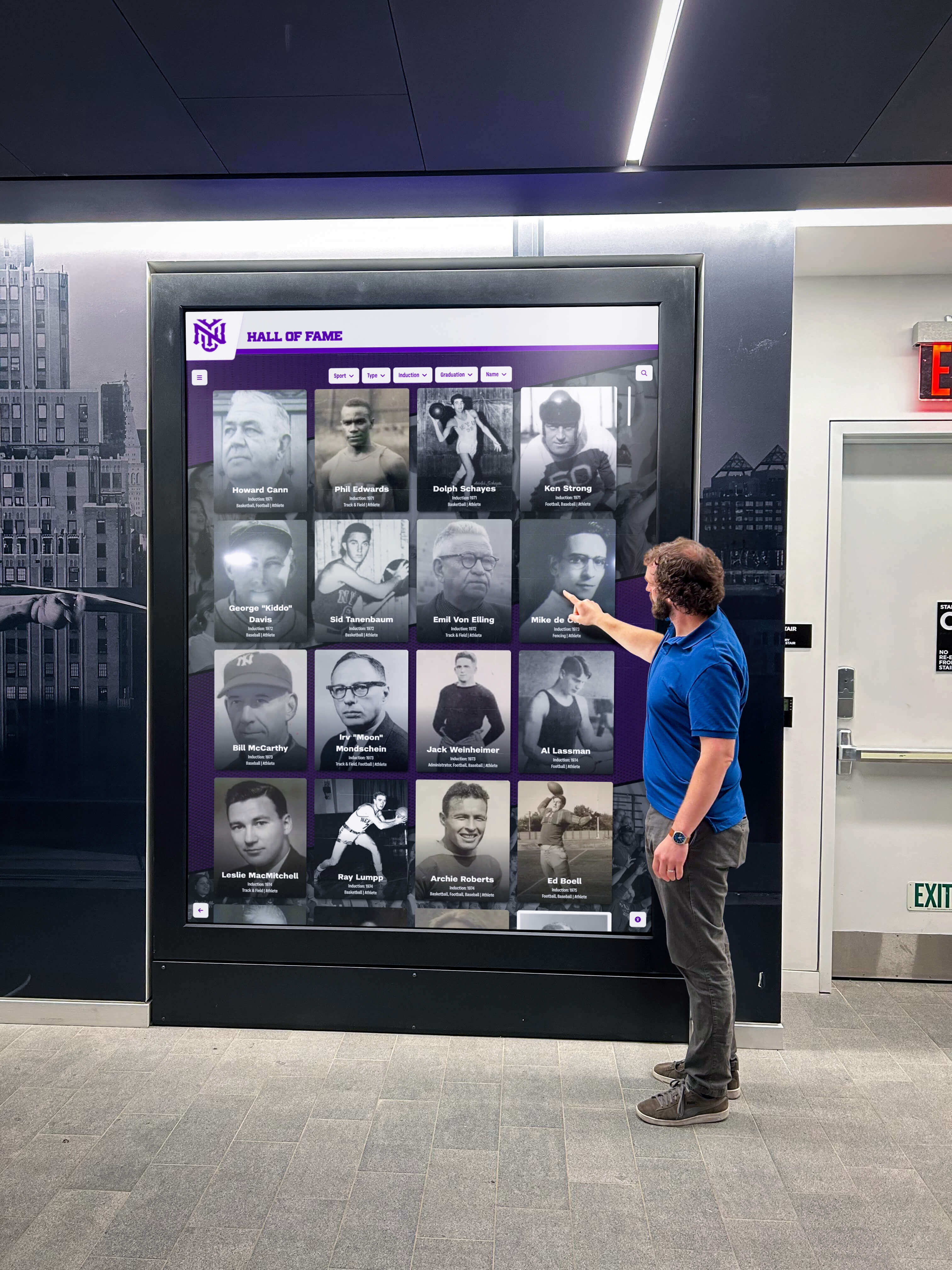
Interactive Display Software for Schools: How to Choose the Right Platform for Lobby Touchscreens
School lobbies represent prime real estate for community engagement, visitor orientation, and institutional storytelling—yet many schools install expensive touchscreen hardware only to struggle with inflexible software platforms that complicate content updates, limit design possibilities, and fail to deliver the interactive experiences these investments promise. The lobby touchscreen sitting dormant with outdated information or generic templates wastes both financial resources and opportunities to engage students, celebrate achievements, orient visitors, and strengthen school identity.
Read MoreDigital Asset Management for Schools: Complete Guide to Organizing Your School's Photos, Videos, and Recognition Content
Schools generate thousands of digital assets every year—student photos, athletic game footage, award ceremony videos, yearbook images, historical documents, recognition certificates, event photography, and archived materials spanning decades. Yet many educational institutions struggle with disorganized folders, inaccessible files on outdated hard drives, duplicated content across multiple systems, and valuable historical assets languishing in forgotten storage locations.
Read MoreInteractive Kiosk Software for Schools: Features, Pricing, and Top Platforms in 2026
Interactive kiosk software has transformed how schools communicate with students, parents, staff, and visitors. From digital wayfinding systems helping newcomers navigate sprawling campuses to interactive recognition displays celebrating student achievements, modern kiosk solutions address dozens of operational and engagement challenges that traditional static signage cannot solve.
Read MoreTouchscreen Kiosks for School Lobbies: Recognition Display Buying Guide 2026
School lobbies serve as the first impression for every visitor walking through your doors—prospective families evaluating enrollment decisions, alumni returning for events, community members attending performances, and students beginning each school day. Yet most school entrances rely on static trophy cases, outdated bulletin boards, and printed directories that fail to communicate the vibrant achievements, rich history, and dynamic community culture that define exceptional educational institutions.
Read More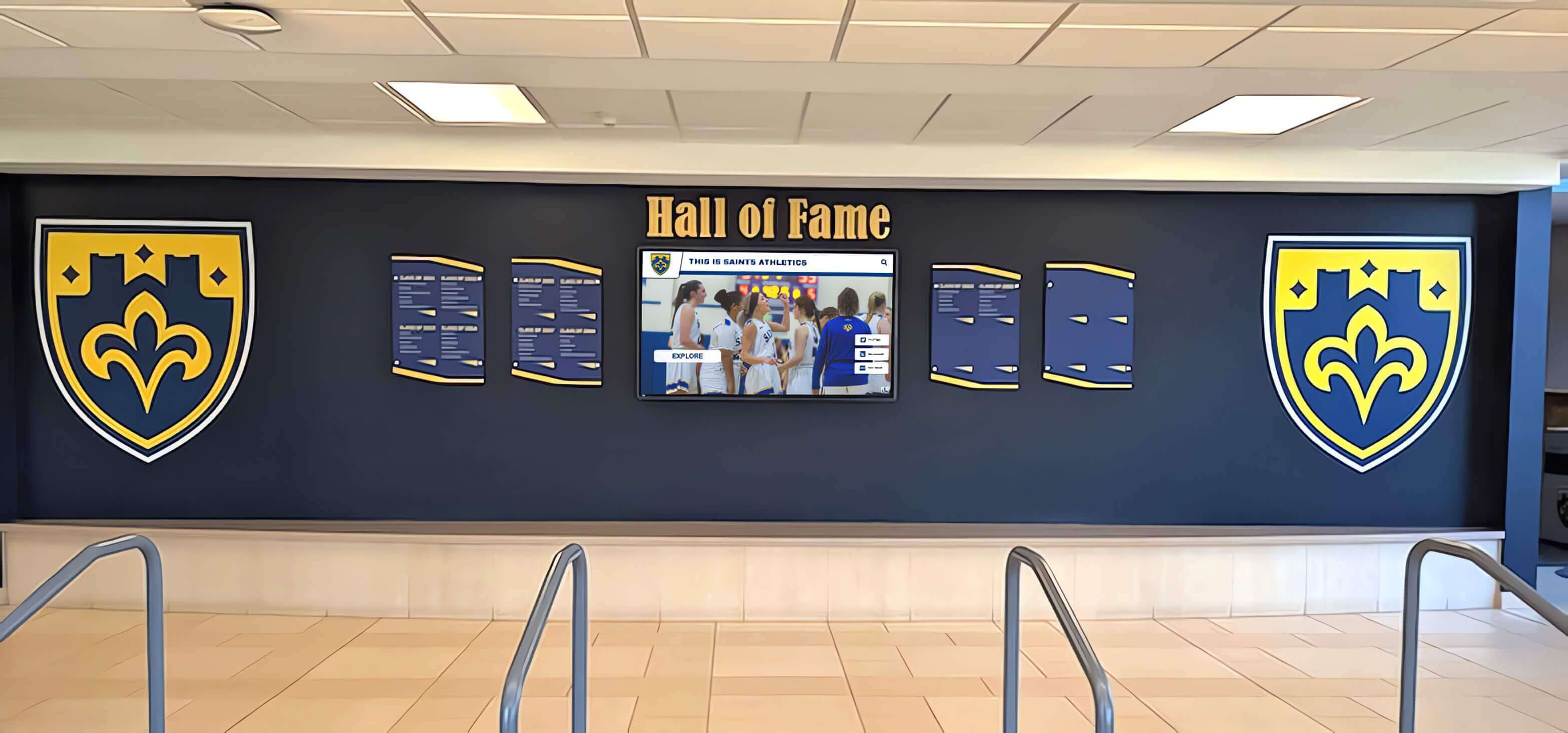
Who Installs Digital Hall of Fame Displays in Schools? Complete Guide to Professional Mounting, Power & Network Setup
When schools decide to install a digital hall of fame display near the front office or main lobby, one of the first practical questions administrators ask is: who actually handles the installation? Unlike traditional trophy cases that school maintenance staff can manage, digital displays require professional expertise spanning multiple trades—from secure mounting and electrical work to network connectivity and ADA-compliant positioning.
Read MoreWhy Digital Recognition Displays Work Perfectly for Small to Medium Public High Schools
Small to medium public high schools face distinct challenges when implementing recognition programs: constrained budgets stretched across competing priorities, limited physical space for displaying achievements, small administrative teams managing multiple responsibilities, and the need to honor diverse accomplishments across academics, athletics, arts, and service without creating visibility hierarchies.
Read MoreTouch Screen Digital Signage: Interactive Solutions for Modern Schools
Schools across the country face a persistent challenge: how to effectively communicate with increasingly diverse audiences—students, parents, visitors, staff, and community members—while celebrating achievements, sharing critical information, and creating welcoming environments that reflect institutional identity. Static bulletin boards and traditional trophy cases no longer meet expectations in a world where everyone carries interactive devices delivering instant, personalized information.
Read More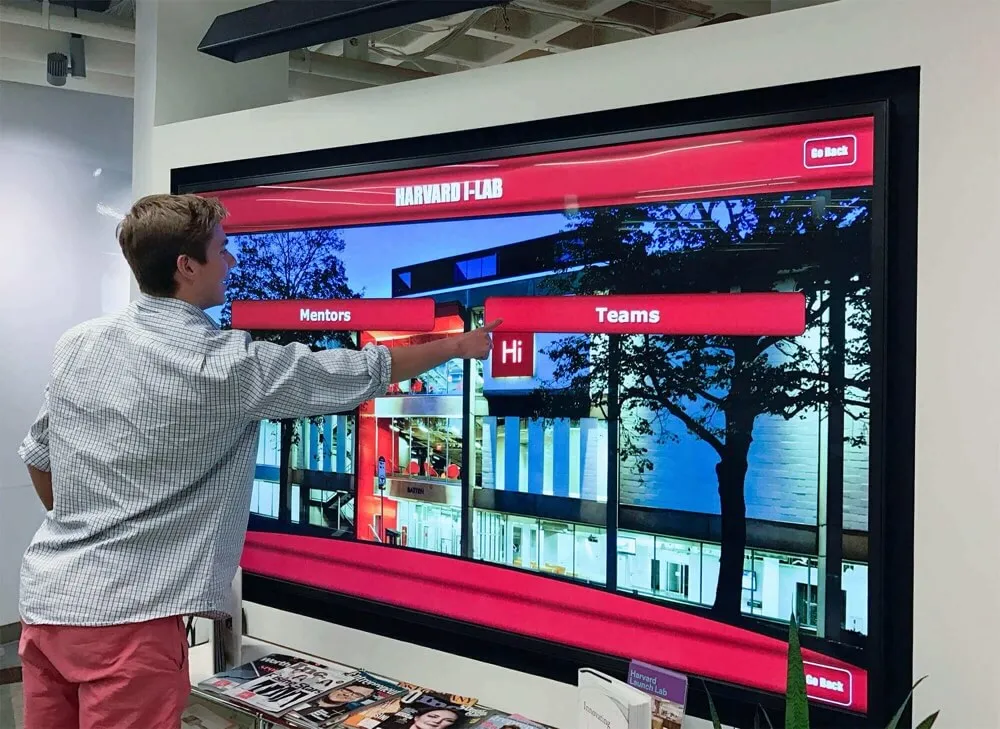
Interactive Touch Screen Display Options for Educational Facilities: Complete Guide to Modern Recognition Technology
Educational facilities face mounting pressure to modernize recognition programs, enhance visitor engagement, and create dynamic environments that reflect institutional excellence. Interactive touch screen displays have emerged as powerful solutions—transforming static trophy cases and plaque walls into engaging digital experiences that celebrate unlimited achievements while providing intuitive exploration capabilities students, visitors, and alumni genuinely enjoy using.
Read MoreTouchscreen Display for High School Gym Lobby: Transform Trophy Recognition with Digital Excellence
High school gym lobbies face a recognition dilemma that every athletic director understands: decades of championship trophies, tournament victories, and individual honors accumulating faster than traditional trophy cases can accommodate. Physical display space fills within years, forcing impossible decisions about which achievements deserve visibility and which must be relegated to storage where they’re forgotten rather than celebrated.
Read MoreSchool Facilities Management: Best Practices for Modern Schools
School facilities management has evolved from basic custodial services and reactive repairs into a strategic discipline directly impacting student achievement, teacher effectiveness, and community perception. Research consistently demonstrates that well-maintained, thoughtfully designed school environments correlate with improved academic outcomes, higher attendance rates, and enhanced recruitment of quality educators. Yet many districts struggle to balance competing demands—aging infrastructure requiring substantial investment, limited budgets constraining improvement initiatives, and evolving educational models demanding flexible, technology-rich spaces.
Read MoreDigital Trophy Case: How Schools Are Modernizing Athletic Recognition for Unlimited Capacity and Engagement
Schools face a growing recognition challenge that traditional trophy cases simply cannot solve. Athletic programs accumulating decades of championships, tournament victories, and individual honors inevitably exhaust available display space. Wall-mounted cases fill within years, forcing administrators into impossible decisions about which achievements deserve visibility and which must be relegated to storage closets where they’re forgotten rather than celebrated.
Read MoreSchool Digital Signage: How Interactive Displays Transform Campus Communication
Walk into any modern school building and you’ll immediately notice the shift from static bulletin boards to dynamic digital displays showcasing everything from daily announcements to student achievements. School digital signage has evolved from simple slideshow screens into sophisticated interactive communication systems that engage students, inform families, celebrate accomplishments, and strengthen campus culture in ways traditional communication methods simply cannot match.
Read More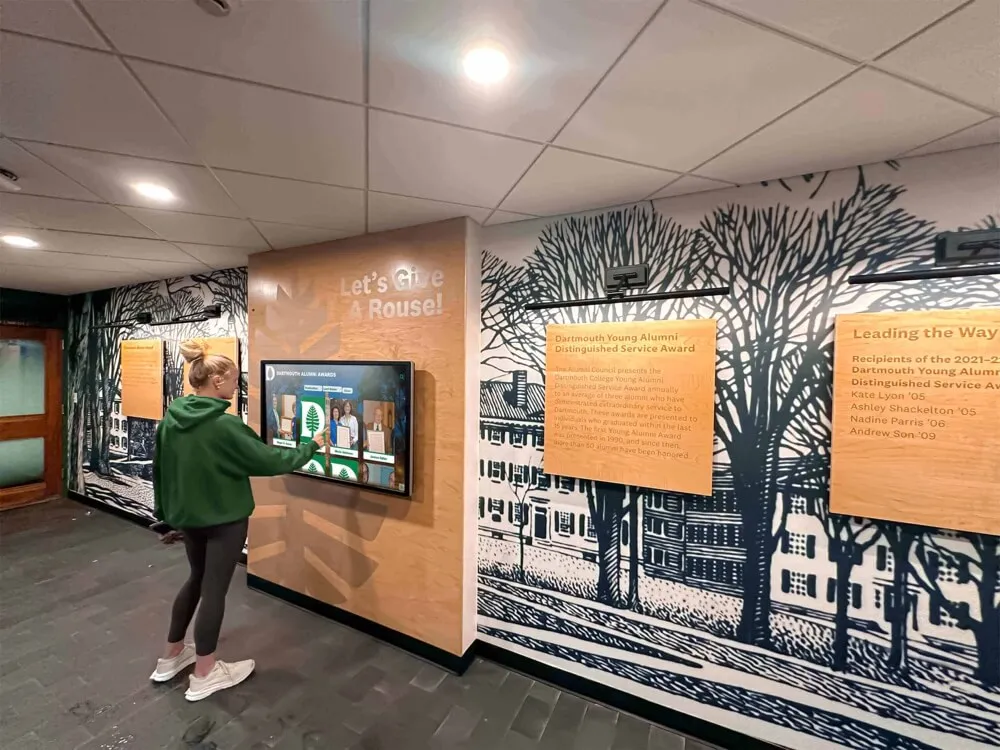
Best School History Software: Complete Guide to Digital Archives, Interactive Displays & Heritage Preservation in 2025
School history software has emerged as an essential technology for educational institutions seeking to preserve decades of institutional heritage while creating engaging experiences for students, alumni, and community members. Traditional approaches—physical yearbooks gathering dust in storage, trophies hidden in overcrowded cases, and historical photos deteriorating in filing cabinets—leave invaluable school history inaccessible and at risk of permanent loss.
Read More
Digital Touchscreen in Athletic Building for High School Athletic Team Records: Complete Guide to Interactive Recognition Displays in 2025
Digital touchscreens in athletic buildings represent the evolutionary leap forward from traditional static record boards to dynamic interactive displays that celebrate unlimited achievements through engaging technology. As high schools nationwide face record boards with fading vinyl letters, championship banners crowding gymnasium walls with no space remaining, and trophy cases overflowing beyond capacity, digital touchscreen solutions provide transformative alternatives that preserve every athletic record, team achievement, and individual honor digitally while creating interactive experiences impossible with static physical displays.
Read MoreDigital Trophy Touch Wall: Complete Guide to Interactive Trophy Recognition Displays in 2025
Digital trophy touch walls represent the evolutionary leap from traditional glass trophy cases to modern interactive recognition systems that celebrate unlimited achievements through engaging touchscreen technology. As schools nationwide face trophy cases overflowing beyond capacity and championship banners crowding gymnasium ceilings with no space remaining, digital touch wall solutions provide transformative alternatives that preserve every trophy, medal, and accomplishment digitally while creating interactive experiences impossible with static physical displays.
Read MoreHow to Effectively Implement a Digital Wall of Fame: Complete Implementation Guide for Schools and Organizations
Implementing a digital wall of fame represents one of the most impactful decisions schools, athletic departments, and organizations can make to modernize recognition programs and celebrate achievements through engaging interactive technology. Yet the difference between successful implementations that transform community engagement and disappointing installations that become underutilized technology often comes down to how thoroughly organizations plan, prepare, and execute the implementation process.
Read More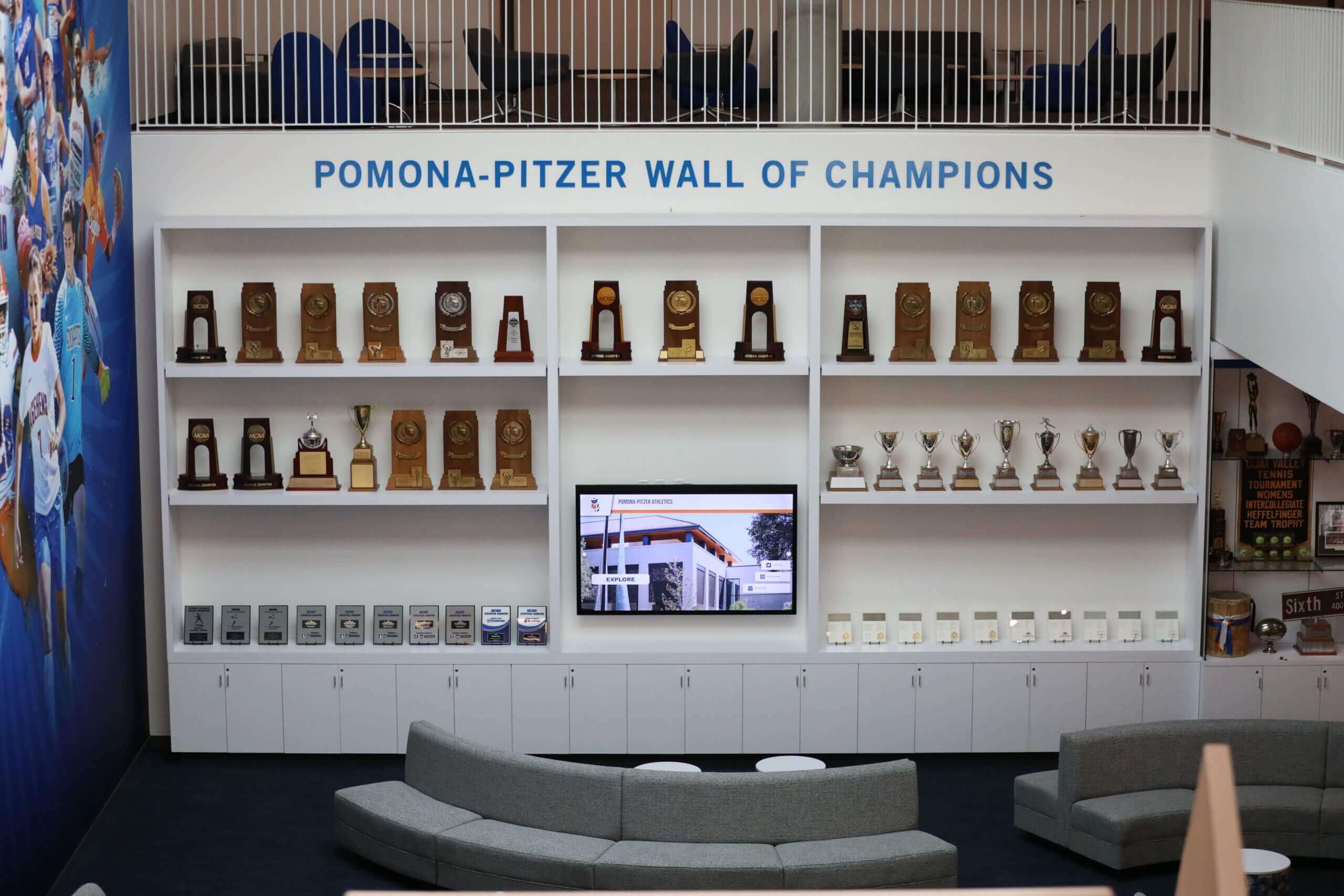
Digital Trophy Wall: Complete Guide to Modern Recognition Displays for Schools and Organizations in 2025
Digital trophy walls have revolutionized how schools, universities, athletic programs, and organizations celebrate achievement and preserve legacy. Traditional trophy cases, while prestigious, face inevitable limitations—finite space that fills within years, static displays that cannot evolve with growing collections, minimal context beyond basic engravings, and accessibility restricted to those physically present at specific locations. These constraints force institutions into impossible choices about which achievements deserve visibility and which must remain hidden in storage.
Read MoreDigital Art Gallery for Schools: Complete Guide to Showcasing Student Creativity Through Interactive Displays
Digital art galleries represent a transformative approach to celebrating student creativity in educational settings, replacing limited physical display spaces with dynamic interactive platforms that showcase student artwork, creative projects, and artistic achievements to wider audiences than traditional hallway bulletin boards or temporary exhibitions ever could. Schools, universities, and arts programs increasingly recognize that talented student artists deserve recognition experiences matching the sophistication and reach of their creative work—experiences that digital gallery platforms specifically enable.
Read More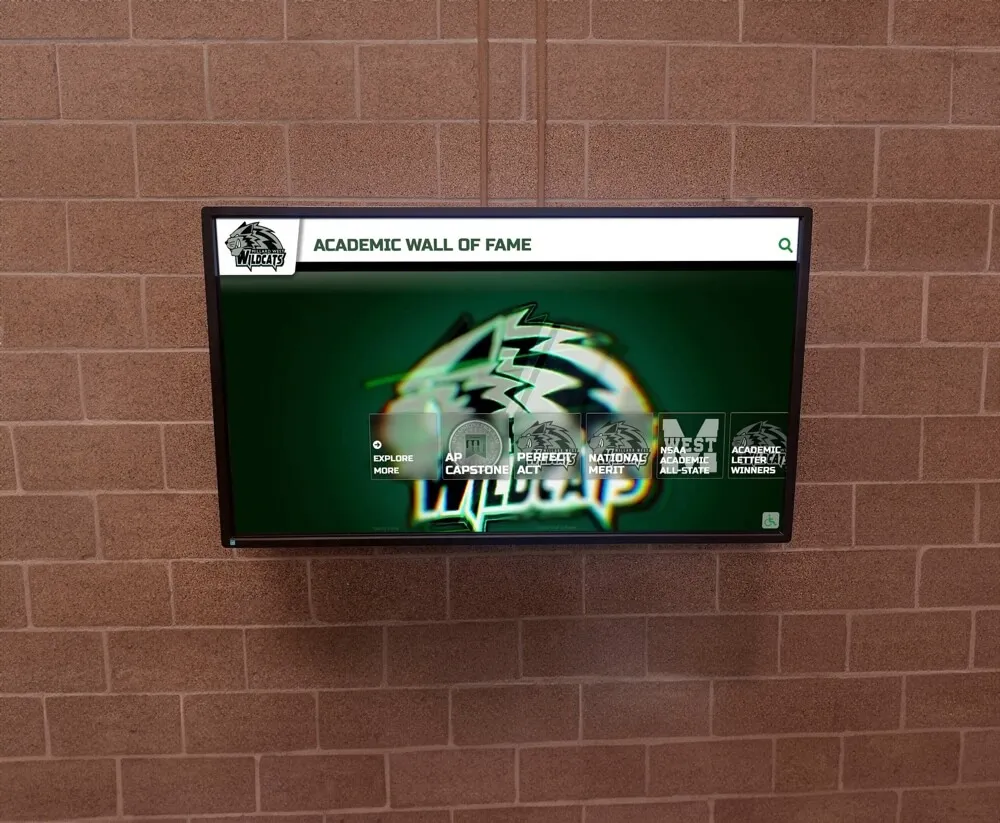
Honor Roll Digital Recognition: Complete Guide to Modern Academic Achievement Displays in 2025
Honor roll digital recognition represents a transformative approach to celebrating academic excellence in modern educational institutions. Traditional paper lists and physical plaques have served schools for decades, yet these methods struggle with fundamental limitations: space constraints forcing difficult choices about which students receive permanent recognition, high ongoing costs for engraving and updates, and static displays that fail to engage today’s digitally-native students who expect interactive, multimedia experiences.
Read MoreWhy Many Schools Regret Rushing Into Digital Hall of Fame Software: A Complete Guide to Making Smart Recognition Display Decisions
Digital hall of fame software represents a significant investment for schools, athletic departments, and educational institutions seeking to modernize recognition programs and celebrate achievements through interactive technology. Yet administrators across the country consistently report making costly mistakes when rushing into software purchases without adequate research, planning, or vendor evaluation—leading to buyer’s remorse, implementation failures, and wasted resources that could have funded programs serving students directly.
Read Moreeasescreen Touchscreen Digital Signage Software: Complete Guide for Schools and Organizations in 2025
Touchscreen digital signage software has transformed how schools, universities, athletic departments, and organizations communicate with their communities. As institutions seek engaging ways to share information, celebrate achievements, and create interactive experiences, platforms like easescreen offer comprehensive solutions designed for complex, dynamic environments requiring intuitive content management and reliable performance.
Read MoreTop Carousel Alternative: Best Digital Signage Solutions for Schools and Recognition Programs in 2025
Carousel Digital Signage has served educational institutions and organizations for years as a flexible platform for digital communication displays. However, many schools, athletic departments, and alumni associations discover that general digital signage platforms—while excellent for announcements and wayfinding—fall short when the primary goal involves celebrating achievements, honoring individuals, and preserving institutional heritage through interactive recognition displays.
Read MoreDigital Recognition Displays: Complete Buyer's Guide for Schools and Organizations in 2025
Digital recognition displays have transformed how schools, universities, athletic departments, and organizations celebrate achievements and preserve institutional legacy. Unlike traditional plaques and trophy cases limited by physical space and costly to update, interactive touchscreen systems provide unlimited recognition capacity, engaging multimedia experiences, and cloud-based management that eliminates ongoing maintenance burdens.
Read More